Introduction
Agromyzidae contains over 2500 species of small, morphologically similar flies whose larvae feed internally on plants, often as leaf or stem miners (Spencer, Reference Spencer1990; Winkler et al., Reference Winkler, Scheffer and Mitter2009). Nearly all species are very host-specific but a few highly polyphagous species have become important pests of agriculture and horticulture in many parts of the world. The key agromyzid pest species that pose a significant quarantine threat to agriculture and horticulture are: Liriomyza bryoniae (Kaltenbach), Liriomyza cicerina (Rondani), Liriomyza huidobrensis (Blanchard), Liriomyza sativae Blanchard, Liriomyza strigata (Meigen), Liriomyza trifolii (Burgess), Chromatomyia horticola (Goureau), Phytomyza syngenesiae Hardy and Amauromyza maculosa (Malloch) (Spencer, Reference Spencer1973, Reference Spencer1990; Nakamura et al., Reference Nakamura, Masuda, Mochizuki, Konishi, Tokumaru, Ueno and Yamaguchi2013). Typically, these polyphagous leafminers are considered to spread via the movement of infested plants, often on ornamentals such as chrysanthemum (Spencer, Reference Spencer and Kahn1989). While adult leafminers are free flying, immature life stages often occur within plant leaves, as eggs just below the surface, and as larvae and pupae within leaf mines or in adjacent soil (Spencer, Reference Spencer1973). Fully-formed mines should be readily visible to quarantine officials, however signs of early infestations are not always obvious and can be easily overlooked (Spencer, Reference Spencer and Kahn1989).
Liriomyza sativae
Only five of the more than 300 species of the genus Liriomyza are considered to be truly polyphagous (Spencer, Reference Spencer1973). Of these one of the most serious pests of vegetable and flower crops is L. sativae (CABI, 2013), which can cause agricultural crop losses of up to 80% (Spencer, Reference Spencer1973). Liriomyza sativae is highly polyphagous, having been recorded from at least nine plant families, although it appears to favour Cucurbitaceae, Fabaceae and Solanaceae (Spencer, Reference Spencer1973, Reference Spencer1990). Originally L. sativae was restricted to the Americas (Spencer, Reference Spencer1973; Scheffer & Lewis, Reference Scheffer and Lewis2005), but it is now much more widespread, having been introduced to (CABI, 2013): Europe; Africa; Middle east; Asia (China, India, Indonesia, Japan, Malaysia, Sri Lanka, Thailand, Vietnam); Oceania (American Samoa, Cook Islands, Federated States of Micronesia, French Polynesia, Guam, New Caledonia, Northern Mariana Islands, Samoa, Vanuatu); but to date it has not been recorded from Papua New Guinea (PNG) or from the Australian mainland (CABI, 2013). However, L. sativae has previously been detected from a single island in the Torres Strait – the body of water that separates Australia from PNG (discussed in greater detail below) – from a single plant that was destroyed (IPPC, 2008; CABI, 2013).
Australia's proximity to countries with different plant health statuses represents a tangible biosecurity risk to Australia's primary industries (Maynard et al., Reference Maynard, Hamilton and Grimshaw2004; Anderson et al., Reference Anderson, Deveson, Sallam and Congdon2010; Anderson & Congdon, Reference Anderson and Congdon2013). Recognition of this risk in Northern Australia led to the establishment of the Northern Australia Quarantine Strategy (NAQS). NAQS carries out plant health surveillance on Australia's northern coastline, islands of the Torres Strait, and countries to the near north, monitoring insect pests, plant diseases and weeds that might move onto the Australian mainland. On a routine NAQS plant health survey in 2008, carried out in collaboration with Papua New Guinea's National Agriculture Quarantine Inspection Authority (NAQIA), adult flies suspected to be a species of Liriomyza were collected from a heavily mined tomato plant on Warraber Island in the Torres Strait (IPPC, 2008). Initial identification, using external morphological characters, suggested the fly to be L. sativae which was later confirmed by dissection of male genitalia (examined by M. Malipatil).
Morphological identification
Generally, identification of leafminer species by morphological examination is problematic as only adult male specimens can be reliably identified, and there are no adequate diagnostic keys for the identification of eggs, larvae or pupae (Malipatil & Ridland, Reference Malipatil and Ridland2008). The primary method of identification from adult morphological characters is examination of the male genitalia; indeed, species confirmation cannot be achieved without the examination of adult males (e.g. Spencer, Reference Spencer1973; Lambkin et al., Reference Lambkin, Fayed, Manchester, La Salle, Scheffer and Yeates2008). To achieve morphological identification these characters must be examined using a high-power microscope, i.e. ×100 magnification (Malipatil & Ridland, Reference Malipatil and Ridland2008). Morphological identification of species is further complicated by the presence of cryptic species within many of the important polyphagous Liriomyza species (e.g. Scheffer, Reference Scheffer2000; Takano et al., Reference Takano, Iwaizumi, Nakanishi and Someya2008). Differentiation of some of these species requires the use of molecular techniques (e.g. Scheffer et al., Reference Scheffer, Wijesekara, Visser and Hallett2001, Reference Scheffer, Lewis and Joshi2006).
Molecular identification
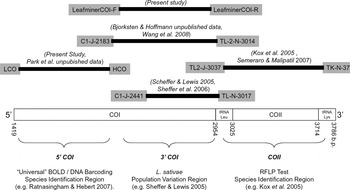
Due to the difficulties involved in morphological identification of leafminer specimens from most life stages, allozyme and restriction fragment length polymorphism (RFLP) tests have been used for identification of some Liriomyza species (summarized in Nakamura et al., Reference Nakamura, Masuda, Mochizuki, Konishi, Tokumaru, Ueno and Yamaguchi2013). In Australia, two molecular tests, have been previously adopted (summarized in Semeraro & Malipatil, Reference Semeraro and Malipatil2007) to potentially identify three exotic (to Australia) Liriomyza species – L. huidobrensis, L. sativae and L. trifolii – that have recently spread throughout Southeast Asia (these invasions are summarized in Andersen et al., Reference Andersen, Tran and Nordhus2008). These tests both apply PCR–RFLP methods to distinguish these species from each other and from a limited number of Australian endemic or currently established Liriomyza species. The first test (Bjorksten & Hoffmann, Reference Bjorksten, Hoffmann and Ridland2005) was developed to examine the mitochondrial cytochrome oxidase I (COI) gene region (fig. 1) to distinguish between eight Liriomyza species. Notably, Bjorksten & Hoffmann (Reference Bjorksten, Hoffmann and Ridland2005) also tested parasitoids to ensure these would not interfere with the leafminer PCR–RFLP test. Kox et al. (Reference Kox, van den Beld, Lindhout and de Goffau2005) developed an RFLP test for the mitochondrial cytochrome oxidase II (COII) gene region (fig. 1) to distinguished eight Liriomyza species of economic concern; an additional exotic pest species L. cicerina (chickpea leafminer) and endemic Liriomyza chenopodii (beet leafminer) were added to this test by Semeraro & Malipatil (Reference Semeraro and Malipatil2007). Additional alternative molecular identification PCR-based protocols employing species-specific primers (for the COI gene) have also been developed for a limited number of Liriomyza species (Miura et al., Reference Miura, Tagami, Ohtaishi and Iwasaki2004; Nakamura et al., Reference Nakamura, Masuda, Mochizuki, Konishi, Tokumaru, Ueno and Yamaguchi2013).
Regions of COI and COII mtDNA genes employed in previous RFLP, DNA barcoding and population genetic studies (black bars). Gene boundary numbering follows the complete mtDNA genome sequence of L. sativae (GenBank NC_015926, Yang et al., Reference Yang, Du, Wang, Cao and Yu2011); PCR primers employed in each study are indicated at the ends of each amplified region (grey boxes).

DNA barcoding (DNA sequence species identification) is potentially a much more informative method of molecular identification, as it directly characterizes a greater number of variable sites than the other molecular methods outlined above (e.g. Armstrong & Ball, Reference Armstrong and Ball2005), and can utilize the large number of reference specimens that are now present on DNA sequence databases (e.g. Blacket et al., Reference Blacket, Semeraro and Malipatil2012). In common with other invasive insect species (Boykin et al., Reference Boykin, Armstrong, Kubatko and De Barro2012) a variety of DNA regions have previously been utilized for DNA sequence identification of leafminers. The 3′ region of the mitochondrial COI gene (fig. 1) has been used both to identify agromyzid species in a DNA barcoding approach (Scheffer et al., Reference Scheffer, Lewis and Joshi2006) and assess genetic variation within L. sativae populations (Scheffer & Lewis, Reference Scheffer and Lewis2005; Scheffer et al., Reference Scheffer, Lewis and Joshi2006; Wang et al., Reference Wang, Du, He, Zheng and Lu2008); while the 5′ end of the mitochondrial COI (fig. 1), generally considered the ‘Universal’ DNA sequence identification region employed in DNA barcoding (Ratnasingham & Hebert, Reference Ratnasingham and Hebert2007), is beginning to be employed for leafminer identification (Bhuiya et al., Reference Bhuiya, Amin and Mazumdar2011; Maharjan et al., Reference Maharjan, Oh and Jung2014), with a large number of species (>300) now with reference DNA barcodes (BOLD, accessed March 2015).
All molecular identification tests outlined above employ PCR amplification of mitochondrial DNA (fig. 1) and rely on adequately preserved samples. Mitochondrial DNA is relatively robust to degradation and can often be obtained from old preserved (pinned) reference specimens (e.g. Strutzenberger et al., Reference Strutzenberger, Brehm and Fiedler2012). However, preservation of field collected soft bodied invertebrate samples (i.e. larvae/pupae) can prove difficult, relying on freezing or storing in ethanol which can often cause logistical issues (Moreau et al., Reference Moreau, Wray, Czekanski-Moir and Rubin2013), collecting in tropical environments adds even more challenges. Filter paper cards (FTA® cards) are an alternative that have been successfully employed in collecting invertebrate DNA (e.g. Régnier et al., Reference Régnier, Gargominy, Falkner and Puillandre2011) that is robust to storage conditions; however, FTA cards have not yet been widely utilized for field collection of larval insects.
Current study – objectives
The objectives of the present study were: (1) To confirm the initial morphological species identification of L. sativae from the Torres Strait, through DNA barcoding, and provide new locality/host records for additional specimens collected from recent NAQS surveys in the Torres Strait and PNG. (2) To demonstrate the effectiveness of preserving and transporting DNA from field collected insects on FTA cards sampled under tropical conditions. (3) To assess genetic variation present in any new L. sativae incursions detected compared with previously sampled populations throughout the world. (4) To compare the sequence similarity of a pair of novel agromyzid-specific DNA barcoding primers, and other previously employed universal primers, against agromyzid and hymenopteran parasitoid DNA sequences and (5) To test the DNA barcoding methods employed here on some other agromyzid species to assess their general applicability.
Materials and methods
Specimens examined
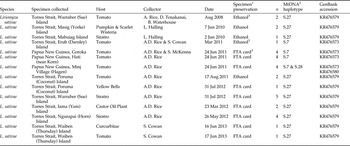
Initially, several adult male specimens were aspirated from the foliage of an infested tomato plant in August 2008 from Warraber Island in the Torres Strait and identified morphologically as L. sativae (determined by M. Malipatil), through dissecting and examining the male terminalia (table 1). Further NAQS surveys conducted over 5 years from eight islands across the Torres Strait as well as from the highlands of PNG (>1500 m elevation) resulted in additional Liriomyza (larvae and pupae, table 1), which could not be identified to species morphologically. Immature specimens collected from the field were preserved (table 1) in ethanol or squashed onto Whatman FTA® (FTA cards) and identified from DNA sequences (i.e. DNA barcoding), as outlined below. Duplicate adult and immature specimens have been lodged in insect reference collections (table 1). The DNA barcoding identification methods employed here (see below) were also tested on a number of other agromyzid species (table 2).
Liriomyza sativae specimens from the Torres Strait and Papua New Guinea examined through DNA barcoding.

1 Immature specimens (larvae/pupae) preserved in ethanol or FTA cards.
2 Haplotype names follow Scheffer & Lewis (Reference Scheffer and Lewis2005) for the 3′ region of COI.
3 Duplicate associated specimens: adults pinned and larvae/pupae in 70% ethanol in NAQS & VAIC (Victorian Agricultural Invertebrate Collection, DEDJTR Victoria) insect reference collections.
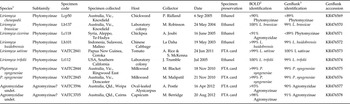
DNA barcoding identification of agromyzid leafminers.

1 Morphological species identification.
2 Best match (% similarity indicated) for 5′ section of COI amplified using PCR primers LCO/HCO (approx. 660 bp).
3 Best match (% similarity indicated) for 3′ section of COI amplified using PCR primers Leafminer F/R (approx. 700 bp).
DNA extraction
DNA was extracted from immature agromyzid specimens using a commercially available kit (DNeasy® Blood and Tissue Kit; Qiagen) following the manufacturers protocol. FTA card extractions included some extra steps modified from a Qiagen protocol: ‘Isolation of Total DNA from FTA and Guthrie Card’ (Qiagen, 2010). Briefly, a 2 mm2 paper square containing part of the specimen was removed from the FTA card using a single-use sterile disposable scalpel blade; care was taken to try to not remove the entire sample, to retain some for potential future extractions/PCR assays. The excised FTA card sample was incubated in ATL buffer (280 μl) and Proteinase K (20 μl) at 56°C for 1 h (vortexing every 15 min), then buffer AL (300 μl) was added and samples were incubated for 10 min at 70°C (vortexing every 3 min). Finally, ethanol (150 μl) was added and the sample was processed in a QIAGEN column according to the manufacturers DNeasy protocol, including a final ‘double’ DNA elution step, resulting in a final volume of 200 μl of DNA in AE buffer.
PCR amplification and sequencing
Two sections of the COI gene were examined in this study (fig. 1): (1) The ‘Universal’ DNA barcoding region – the 5′ region of COI – amplified using standard Folmer et al. (Reference Folmer, Black, Hoeh, Lutz and Vrijenhoek1994) primers, LCO/HCO (size 703 b.p.); (2) A non-overlapping second region – the 3′ region of COI – which has previously been examined in a large number of L. sativae (Scheffer & Lewis, Reference Scheffer and Lewis2005; Scheffer et al., Reference Scheffer, Lewis and Joshi2006) was amplified using novel primers that almost fully overlap with the previously published sequence data (size 738 b.p.). The new primers LeafminerCOI-F 5′-CATTATTAGYCAHGAATCWGG-3′ and LeafminerCOI-R 5′-TCTGCDGGAGGNGTATTTTG-3′, were designed using Primer 3 (Rozen & Skaletsky, Reference Rozen, Skaletsky, Krawetz and Misener2000) to match agromyzid sequences present on GenBank (including representatives of Chromatomyia, Ophiomyia, Liriomyza, Napomyza, Phytomyza: from Scheffer et al., Reference Scheffer, Winkler and Wiegmann2007; Winkler et al., Reference Winkler, Scheffer and Mitter2009; and Liriomyza: from Scheffer et al., Reference Scheffer, Lewis and Joshi2006; Wang et al., Reference Wang, Du, He, Zheng and Lu2008, Reference Wang, Lei, Wang, Dong and Ren2011).
The new agromyzid-specific primers used in the present study for the amplifications of the 3′ region of COI (fig. 1) have an advantage over universal PCR primers, such as LCO/HCO (see Supplementary table 1), in being less likely to co-amplify parasitoid DNA that may be present within the agromyzid pupae/larvae and might be co-amplified during PCR (e.g. Nakamura et al., Reference Nakamura, Masuda, Mochizuki, Konishi, Tokumaru, Ueno and Yamaguchi2013), potentially interfering with a DNA-barcoding specimen identification approach. Previous studies of leafminer parasitoids in Australia (Bjorksten et al., Reference Bjorksten, Robinson and La Salle2005; Lambkin et al., Reference Lambkin, Fayed, Manchester, La Salle, Scheffer and Yeates2008) and Southeast Asia (Rauf et al., Reference Rauf, Shepard and Johnson2000; Prijono et al., Reference Prijono, Robinson, Rauf, Bjorksten and Hoffmann2004; Fisher et al., Reference Fisher, Ubaidillah, Reina and La Salle2005; Tran, Reference Tran2009) have shown that the most common hymenopteran parasitoids belong to Chalcidoidea, Cynipoidea and Ichneumonoidea, with Eulophidae (Chalcidoidea) wasps being particularly abundant. The sequences of four pairs of primers for amplifying sections of COI in leafminers (fig. 1) were compared with previously obtained leafminer and hymenopteran parasitoid DNA sequences (from Chalcidoidea and Ichneumonoidea, available on GenBank) to assess primer and DNA sequence similarity (Supplementary table 1). However, these primers were not trialled experimentally on parasitoid DNA samples in the present study.
All PCR amplifications in the present study used 5 μl of template DNA in 25 μl PCR reactions (including: 1 × BSA, 1 × NEB ThermoPol Reaction Buffer, 2 mM MgCl2, 0.2 mM dNTPs, 0.5 μM of each primer & 1 unit of NEB Taq DNA Polymerase) performed in an Eppendorf thermocycler (epgradientS). PCR profiles for both primer pairs included an initial denaturing step of 94°C for 2 min, followed by 40 cycles of 30 s steps at 94, 50 and 72°C, with a final extension step of 72°C for 2 min. These primers and PCR conditions were employed to successfully amplify and sequence the two sections of COI (5′ & 3′) in a range of agromyzids, including both Phytomyzinae and Agromyzinae (table 2). DNA sequencing was conducted commercially on an ABI sequencer through Micromon (Monash University) and Macrogen (Korea).
Sequence comparison and phylogenetic analysis
DNA barcoding species identification of agromyzid species (identifying them from their best matches on public databases) was conducted using both the 5′ and 3′ regions of COI (fig. 1). Sequences from the 5′ region of COI (i.e. LCO/HCO) were compared with ‘All Barcode Records on Bold’, i.e. sequences >500 bp in length on the BOLD database (Ratnasingham & Hebert, Reference Ratnasingham and Hebert2007); while sequences from the 3′ region of COI (i.e. LeafminerCOI-F/R) were compared with previously published leafminer sequences on the NCBI GenBank database through Blastn Searches. All of the DNA sequences from the present study (n = 84) have been submitted to GenBank (tables 1 and 2).
Comparisons of DNA sequences and phylogenetic analyses were performed in MEGA 5.0 (Tamura et al., Reference Tamura, Peterson, Peterson, Stecher, Nei and Kumar2011). Genetic variation within L. sativae populations in the Torres Strait (n = 8) and PNG (n = 3) was assessed through generating a neighbour-joining tree (Supplementary fig. 1) that included previously published sequences (from the 3′ region of COI, which currently has the largest number of reference sequences available) from ‘L. sativae-W’ group (i.e. the group of L. sativae that has expanded its range beyond the Americas) specimens; from Scheffer & Lewis (Reference Scheffer and Lewis2005) n = 82, Scheffer et al. (Reference Scheffer, Lewis and Joshi2006) n = 107, Wang et al. (Reference Wang, Du, He, Zheng and Lu2008) n = 6, Yang et al. (Reference Yang, Du, Wang, Cao and Yu2011) n = 1. Sequences were compared using pairwise comparisons to account for sequence length differences between datasets (which varied from approximately 500 to 700 bp). The frequency and geographic distribution of haplotypes detected in the Torres Strait and PNG in the present study were compared with previously published examinations of genetic variation in L. sativae populations worldwide (table 3).
Liriomyza sativae haplotypes detected from the Torres Strait and Papua New Guinea compared with previously reported matching L. sativae haplotypes.

Haplotype names follow Scheffer & Lewis (Reference Scheffer and Lewis2005) (GenBank number in brackets), collection locations are indicated (haplotype frequency in brackets), ‘–’ indicates that haplotype was not detected in that study, an asterisk indicates that haplotype was the most common of all the L. sativae haplotypes collected in that study.
Results
DNA preservation
Preservation of DNA from immature leafminer samples collected from the field on FTA cards (Objective 2) proved highly effective in the present study, with successful amplification and DNA sequencing of all samples tested (tables 1 and 2). This included samples (e.g. P. syngenesiae, table 2) that were preserved on FTA cards stored at room temperature for up to 2 years, prior to DNA extraction. Field samples stored in ethanol appeared equally effective in preserving DNA, but created additional logistical issues during collection, requiring additional conditions for safe transport of ethanol in the field and postage of samples. Dry pinned adult material was not extensively tested here, however a DNA extraction from a leg of a single adult female, from Erub Island Torres Strait (collected at the same time as the larva, table 1), was trialled without success.
Molecular identification of L. sativae/genetic variation within populations
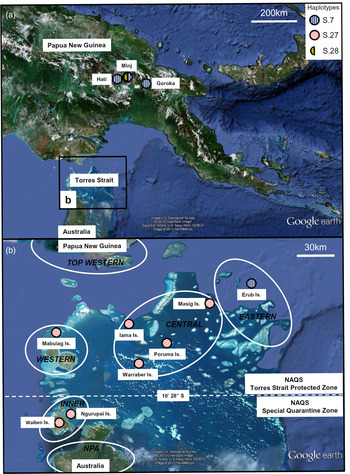
Sequencing two sections of COI (5′ and 3′ regions) in individuals of L. sativae collected from PNG and the Torres Strait allowed the larval/pupal field samples to be accurately identified to species (Objective 1). Haplotypes detected matched (100%) with three COI L. sativae haplotypes previously detected (fig. 2, tables 1 and 3). Two of the haplotypes ‘S.7’ and ‘S.28’ (haplotype names follow Scheffer & Lewis, Reference Scheffer and Lewis2005) were found in PNG (fig. 2), whereas the third haplotype, ‘S.27’, occurred solely in the Torres Strait (fig. 2), accounting for >95% of the Torres Strait samples (a single Torres Strait sample, from Erub Island, was found to possess haplotype S.7). A comparison with previous results (Objective 3) shows that Haplotype S.7 has been found from multiple locations in North America, Asia and the Middle East, where it was the most common haplotype detected (Scheffer & Lewis, Reference Scheffer and Lewis2005; Scheffer et al., Reference Scheffer, Lewis and Joshi2006; Wang et al., Reference Wang, Du, He, Zheng and Lu2008); Haplotype S.28 has previously only been detected from Southeast Asia (Scheffer & Lewis, Reference Scheffer and Lewis2005; Scheffer et al., Reference Scheffer, Lewis and Joshi2006); while Haplotype S.27 has previously been detected only once before, from Southeast Asia (Scheffer & Lewis, 2005).
(a) Map of Papua New Guinea and the Torres Strait indicating geographic sampling and L. sativae haplotypes detected (patterned circles, named in key at top right). (b) Map of the Torres Strait enlarged, indicating geographic sampling and L. sativae haplotypes detected (patterned circles); traditional island community groups (indicated by ovals) follow Anderson et al. (Reference Anderson, Deveson, Sallam and Congdon2010); the boundary of NAQS quarantine control zones (see text) is also indicated (dashed line).

DNA barcoding of leafminers
DNA barcoding species identification of a number of other agromyzid leafminers was conducted using both the 5′ and 3′ regions of COI (table 2). Each of these regions successfully amplified in all of the leafminer species tested here (Objective 5). Generally, both regions of COI appear similar in utility for DNA sequence species identification (table 2), with identifications using BOLD for the 5′ region of COI providing closer DNA matches in some cases (e.g. Agromyzinae, table 2). Interestingly, there are currently a large number of recently deposited DNA sequences on BOLD for the ‘Universal’ 5′ region of COI (that are not yet publically available) from various agromyzid species (many appear to be awaiting formal taxonomic identification) some of which are similar to the currently undetermined Agromyzinae species included in the present study (table 2).
A comparison of universal primers and the new leafminer primers (Objective 4) used in the present study (fig. 1, Supplementary table 1), against some previously sequenced dipteran leafminer and hymenopteran parasitoid DNA sequences for which the COI-tRNAleu region is available on GenBank (Supplementary table 1) indicates that commonly employed universal primers have >80% sequence match and high 3′ primer sequence similarity (the latter being especially important for primer specificity, see Qu et al., Reference Qu, Zhou, Zhang, Lu, Wang, Zhao, Yang and Zhang2012) to both leafminer and parasitoid DNA, while the new leafminer primers (fig. 1) are highly specific (>95% match/high 3′ similarity) for dipteran leafminers (both Agromyzidae and Drosophilidae), with low similarity to hymenopteran parasitoid COI sequences (<70% match/generally low 3′ sequence similarity). A comparison of Eulophidae COI DNA sequences (data from Burks et al., Reference Burks, Heraty, Gebiola and Hansson2011), for a much shorter section of COI available for many of the parasitoid genera previously detected in Liriomyza leafminers (Rauf et al., Reference Rauf, Shepard and Johnson2000; Bjorksten et al., Reference Bjorksten, Robinson and La Salle2005; Lambkin et al., Reference Lambkin, Fayed, Manchester, La Salle, Scheffer and Yeates2008; Tran, Reference Tran2009) (data not shown), show the same general patterns of primer/DNA similarity as indicated in Supplementary table 1.
Discussion
Liriomyza sativae populations in the Torres Strait and PNG
Previous invasive introductions of Liriomyza species into new areas vary genetically, from diverse (Philippines – Scheffer et al., Reference Scheffer, Lewis and Joshi2006) to very limited (China – He et al., Reference He, Zhang, Xiao, Wei and Kuang2002). Prior studies on introduced L. sativae populations have detected a great deal of genetic variation with a large number of haplotypes found worldwide (Scheffer & Lewis, Reference Scheffer and Lewis2005; Scheffer et al., Reference Scheffer, Lewis and Joshi2006; Wang et al., Reference Wang, Du, He, Zheng and Lu2008); however, the present study detected only three haplotypes, and these appear to be generally geographically localized (fig. 2, table 3). It seems that the two geographic areas surveyed here for L. sativae – PNG highlands and the Torres Strait islands – generally do not share a common source, with very little overlap of haplotypes between them. Indeed, across most of the Torres Strait (sampled in the present study from multiple sites over a 5-year period) it appears the introduction of L. sativae could have occurred from a single source, possibly even from a single individual, which has now spread (multiple times) to eight islands in the Torres Strait (fig. 2b). However, despite equivalent survey effort (from NAQS) L. sativae has still not yet been detected from certain sections of the Torres Strait, such as the ‘Top Western’ zone which lies within 4 km of PNG. The S.27 haplotype found in Torres Strait has previously only been detected once before (Scheffer & Lewis, Reference Scheffer and Lewis2005). Interestingly, the single possible exception to the Torres Strait/PNG genetic regionalization observed in the present study (i.e. Erub Island) comes from an area separated from the rest of Torres Strait by a deep water channel from a distinct community group (i.e. ‘Eastern’, fig. 2b). However, the haplotype detected (S.7) has previously been found to be among the most widespread and common haplotype detected around the world (Scheffer & Lewis, Reference Scheffer and Lewis2005; Scheffer et al., Reference Scheffer, Lewis and Joshi2006; Wang et al., Reference Wang, Du, He, Zheng and Lu2008); see table 3. Before drawing any conclusions regarding possible source populations additional genetic screening work on geographically adjacent possible L. sativae sources that have not yet been examined from Southeast Asia/Oceania is required to determine if the haplotypes detected in the present study are regionally common.
In Southeast Asia three common polyphagous invasive vegetable leafminer species of (L. sativae, L. trifolii and L. huidobrensis) have recently spread (summarized in Andersen et al., Reference Andersen, Tran and Nordhus2008), where they often co-occur within a single geographic region, but generally differ in their patterns of distribution (Andersen et al., Reference Andersen, Tran and Nordhus2008; Tantowijoyo & Hoffmann, Reference Tantowijoyo and Hoffmann2011; Xiang et al., Reference Xiang, Wang and Gao2012). In the present study, it might have been predicted that L. huidobrensis, present in the highlands of Indonesia (Tantowijoyo & Hoffmann, Reference Tantowijoyo and Hoffmann2010), may have been the first Liriomyza species detected from the highlands of PNG, however we actually found L. sativae, which is generally more common in lowlands (Rauf et al., Reference Rauf, Shepard and Johnson2000; Tantowijoyo & Hoffmann, Reference Tantowijoyo and Hoffmann2010, Reference Tantowijoyo and Hoffmann2011). One explanation for this may be that unlike some insect species that are likely to disperse primarily through natural means, such as wind, within the surveyed region (e.g. Anderson et al., Reference Anderson, Deveson, Sallam and Congdon2010; Anderson & Congdon, Reference Anderson and Congdon2013), introductions of Liriomyza species into new areas are most likely associated with human trade (Spencer, Reference Spencer and Kahn1989; Scheffer & Lewis, Reference Scheffer and Lewis2005). Therefore the species of Liriomyza that invades an area appears highly dependent on the movement of host plant material between areas by humans. If more than one polyphagous Liriomyza species is present within a region, species distributions appear to shift due to competition mediated through insecticide resistance (Gao et al., Reference Gao, Reitz, Wei, Yu and Lei2012) or differences in environmental tolerances (Huang & Kang, Reference Huang and Kang2007; Tantowijoyo & Hoffmann, Reference Tantowijoyo and Hoffmann2010; Wang et al., Reference Wang, Reitz, Xiang, Smagghe and Lei2014).
DNA barcoding identification
Species identification from immature specimens was possible in the present study through the collection of well-preserved DNA samples. It was not necessary to amplify the PCR target regions (fig. 1) in small sections which is often an indication of DNA degradation (e.g. Strutzenberger et al., Reference Strutzenberger, Brehm and Fiedler2012). Field sampling on FTA cards proved very effective for preservation of soft bodied immature leafminer specimens in the tropics, without requiring freezing or the transport of ethanol. FTA cards have previously been commonly employed in the preservation and identification of pathogens (e.g. Becker et al., Reference Becker, Franco, Simarro, Stich, Abel and Steverding2004) and have proven useful for preserving insect DNA (e.g. Harvey, Reference Harvey2005; Gómez & Uribe, Reference Gómez and Uribe2007; Karimian et al., Reference Karimian, Sedaghat, Oshaghi, Mohtarami, Sanei, Koosha, Akbari and Hashemi-Aghdam2011), including under extreme field conditions (i.e. present study). An extra advantage of using FTA cards for DNA preservation is that the samples become partially processed, helping to reduce associated biosecurity/biohazard risks (Karimian et al., Reference Karimian, Sedaghat, Oshaghi, Mohtarami, Sanei, Koosha, Akbari and Hashemi-Aghdam2011). The major disadvantage with using FTA cards is that specimens are morphologically destroyed. DNA barcoding should ideally obtain DNA using relatively nondestructive techniques to ensure a voucher specimen is available for future morphological examinations (Floyd et al., Reference Floyd, Lima, de Waard, Humble and Hanner2010). Therefore, best practice should be to try to also preserve morphological specimens for new range records (e.g. Martin, Reference Martin2004; Scheffer et al., Reference Scheffer, Lewis and Joshi2006), if possible, to provide reference specimens lodged in museum reference collections (as in the present study, table 1). The latter point being especially important as many agromyzid reference DNA sequences do not currently appear to be formally identified to species on public databases (e.g. see table 2).
Traditional Liriomyza species identification involves rearing immature specimens to adults, with only male specimens reliably identifiable morphologically (Parrella & Keil, Reference Parrella and Keil1984; Malipatil & Ridland, Reference Malipatil and Ridland2008); DNA barcoding provides an extremely useful alternative identification method that can be used for any lifestage. The present study provides the first DNA barcode reference specimen information for two Liriomyza species: L. chenopodii and L. cicerina (table 2); the DNA barcoding methods presented here appear generally applicable to identification of agromyzid leafminers (table 2), and should prove valuable in identifying leafminer species in the future. Indeed, the new primers presented here (LeafminerCOI-F/R) may even prove useful for DNA barcoding identification of other dipteran leafminers, such as Scaptomyza (Drosophilidae) (Supplementary table 1), with which immature agromyzid leafminers could potentially be confused, and should also help avoid potential co-amplification of parasitoid DNA (Supplementary table 1).
DNA barcoding identification of leafminers has to date been commonly based on the ‘non-universal’ 3′ region of COI (e.g. Scheffer et al., Reference Scheffer, Lewis and Joshi2006). In the present study, both halves of COI (5′ and 3′) proved valuable for DNA sequence species identification (table 2); and it appears useful to examine both the 5′ and 3′ sections of COI when identifying L sativae in newly invaded geographic regions, given the large amount of reference material available for the 5′ region of COI on BOLD (for species identification) and for the 3′ region on GenBank (for haplotype identification).
Conclusions
The present study documents a significant range extension of L. sativae from multiple hosts (including both cultivated vegetable crops and some common weeds) and geographic locations (table 1, fig. 2). However, this species still appears to be unknown from certain sections of the Torres Strait (fig. 2b), and also from the Australian mainland; although it has now been found very close: i.e. Ngurupai (Horn) and Waiben (Thursday) Islands within the ‘NAQS Special Quarantine Zone’ (fig. 2b). Additional surveys of these regions would ideally also collect endemic species, which might potentially be confused with Liriomyza, as reference specimens, along with their endemic parasitoid fauna which may prove useful in controlling L. sativae. This surveillance should assist in detecting new incursions shortly after they occur to potentially aid in the control of the spread of this serious pest.
Supplementary material
To view supplementary material (table and figure) for this article, please visit http://dx.doi.org/S0007485315000383
Acknowledgements
We gratefully acknowledge the assistance of Anthony Postle, Luke Halling, Sally Cowan, Stephen McKenna (NAQS), and Michael Berridge (DAFF) for collecting agromyzid flies (table 1); and David Tenakanai (NAQIA) and Barbara Waterhouse (NAQS) for assistance in the original survey and detection of L. sativae in the Torres Strait. We would also like to thank Ted Billy (NAQS) and Boggo Billy (Warraber Island) for host destruction, as well as the collectors of other agromyzid species: Peter Ridland (DPI Victoria), A. Joubi (ICARDA), La Daha (Hasanuddin University), Stephen McKenna (NAQS), John Trumble (UC Riverside), Anthony Postle (NAQS), and Michael Berridge (DAFF) & Jane Royer (DAFF) (table 2); Tracy Bjorksten and Ary Hoffmann (University of Melbourne) generously provided unpublished details of their PCR-RFLP test as well as samples and other assistance with our earlier PCR-RFLP test (Semeraro & Malipatil, Reference Semeraro and Malipatil2007, O.R.L. Project); Dolf deBoer (DEDJTR) provided initial assistance with the use of FTA cards; Peter Ridland, Ary Hoffmann and the BER editors and referees provided many helpful comments/suggestions regarding this study; finally, we acknowledge Google Earth for the images used in creating specimen maps (fig. 2).