




No CrossRef data available.
Article contents
New outpatient referrals to a tertiary paediatric cardiac centre: evidence of increasing workload and evolving patterns of referral
Published online by Cambridge University Press: 14 April 2005
Abstract
Objectives: To assess the volume and range of diagnosis in new patients referred to paediatric cardiac outpatient clinics. Methods: Data was collected prospectively, using a proforma completed at all outpatient clinics over a period of three months. Results: There were 526 new referrals, representing an increase of almost one-fifth compared to 5 years ago. Of the referrals, 78 percent came from hospital doctors, and 22 percent from general practitioners, with 221 of those referred being infants. A heart murmur was the most common reason for referral, representing almost two-thirds of cases. In 372 patients referred (71 percent), the heart was discovered to be structurally normal. The proportion of patients with normal hearts referred by general practitioners and hospital doctors were 81 percent, and 68 percent, respectively (p less than 0.004). There was considerable variation in the pattern of referral between doctors working in different hospitals. Conclusion: New referrals to centres dealing with congenital cardiac malformations are increasing alarmingly, with the majority of the children referred having normal hearts. This increase in demand for specialist services has important implications for resources and training.
Information
- Type
- Original Article
- Information
- Copyright
- 2005 Cambridge University Press
Although the prevalence of congenital cardiac malformations is probably static,1 referrals to out-patient clinics for specialist cardiologic opinion appear to be increasing. Non-specialists are increasingly reluctant to take responsibility for diagnosing normality, and there is a growing view that any child requiring cardiac assessment should be seen by a cardiologist.2 Previous studies have shown that between one-quarter and three-fifths of all newly referred patient have normal hearts.3, 4 The paediatric cardiac unit in Leeds, United Kingdom, provides care at a tertiary level to a population of 5.25 million. Outpatient services are provided in Leeds, as well as in outreach clinics at 19 surrounding hospitals. We assessed the volume of, and range of diagnosis in, new patients referred to the tertiary cardiac service over a period of three months.
Methods
Data was collected prospectively. A proforma was completed by the cardiologist seeing the patient at the time of the clinic between May 1 and July 31, 2002. We recorded the reason for referral, the address of the referring hospital, the status of the referring doctor, which could be a consultant, general practitioner, or a junior paediatrician, whether any discussion with a consultant had taken place in those instances of referral by a junior doctor, and the urgency of referral. Individual hospitals were contacted to obtain the details of population they serve. During the duration of the study, an echocardiogram was performed on all the newly referred patients.
Statistical analysis was performed using GB Stat (Dynamic Microsystems, Maryland, USA). Differences between observed frequencies between groups were compared with 2 times 2 contingency tables using Fisher's exact test.
Results
Over the period of 3 months, there were 526 new referrals, with 412 patients (78 percent) referred by hospital doctors, and 114 (22 percent) by general practitioners. The age of the patients is shown in Figure 1. Referrals were received from 123 consultants from 27 institutions, with the number of referrals per consultant ranging between 1 and 17. The reasons for referral are shown in Figure 2. By far the commonest reason for referral was previous auscultation of a cardiac murmur, accounting for 62 percent of referrals.

Figure 1. The range in age of the patients referred.

Figure 2. The reasons given for referral. The group labelled “other” consisted of reasons not included in the eight specified categories, such as an abnormal chest X-ray, or request for interventional closure of an atrial septal defect. The unclassified group included children referred with combination of two or more reasons given in the proforma.
Of the patients referred, 372 (71 percent) were found to have structurally normal hearts. The distribution of final diagnoses is shown in Figure 3, with the reasons given for referral of children subsequently found to have a normal heart shown in Figure 4. The majority of the letters of referral did not suggest a diagnosis, simply stating the presence of a physical sign, for example a murmur, or a symptom such as palpitations. Four-fifths (81 percent) of patients referred from general practitioners, and just over two-thirds (69 percent) of those referred by consultants, were found to have a normal heart, albeit that this difference is statistically significant (p less than 0.004).

Figure 3. The distribution of final diagnosis in our 526 new patients. The miscellaneous group included all other diagnoses.

Figure 4. The reasons given for referral in those children who were subsequently shown to have a normal heart.
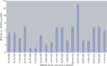
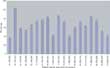
Considerable variation was observed in the patterns of referral from different referring hospitals, both in terms of the number of referrals per head of population, and the relative proportions of patients with normal hearts (Figs 5 and 6). At the extremes, all of the patients referred from one hospital were found to have normal hearts, in comparison with only one-third of patients referred from another. One-sixth (14 percent) of patients referred were considered to need urgent consultations, with half of these patients being found to have normal hearts. There were 128 referrals made by junior doctors, with only 17 percent revealing a record of prior discussion with a consultant.

Figure 5. The number of referrals for each 100,000 of the population from different centres of referral.

Figure 6. The proportion of patients subsequently found to have normal hearts referred from each of the 19 centres.
Discussion
In 1996, Tybulewicz et al.3 reported that the number of children referred with asymptomatic murmurs who were subsequently found to have normal echocardiograms had increased over the preceding five years. In our series, almost three-quarters of children referred for assessment of asymptomatic cardiac murmurs were subsequently shown to have normal hearts. The total number of new referrals logged over the three-month period of our study represents an increase by nearly one-fifth over a 5 year period, suggesting that the escalation in referrals seen by Tybulewicz et al. in 19963 is continuing.
New patients referred to the out-patient clinics are an increasing area of activity for those providing paediatric cardiac services at a tertiary level, amounting to more than 12 patients per cardiologist per week for our centre, with, on average, only three-tenths of those seen having any cardiac pathology. Usage of the specialist service provided in paediatric cardiology, however, varied markedly across the different general paediatric centres within our region. At one extreme, some district hospitals seem to place a total reliance on the paediatric cardiologist, whilst at the other extreme, attempts are made to triage patients using some level of locally developed special expertise. Although we do not have specific data on the number of patients who had an echocardiogram prior to referral, it is of interest that the centre with the highest percentage of referrals with genuine pathology employs a paediatrician with a special interest in cardiology who has developed basic skills in echocardiography, whereas the hospital placing total reliance on the tertiary centre had no local expertise. During the duration of our study, we performed an echocardiogram in all the newly referred patients. Whilst it is our view that clinical examination alone is adequate in many cases, it is increasingly our experience that parents are often dissatisfied if an echocardiogram is not performed, because many have been told that they are being “sent for a scan”, rather than for the specialist opinion of the paediatric cardiologist. In such circumstances we view the echocardiogram as therapeutic rather than diagnostic.
Conclusions
There appears to be widespread and increasing reluctance, or inability, to exclude cardiac pathology amongst those in the north of the United Kingdom providing general paediatric services. Demands on the specialist services provided in paediatric cardiology continue to increase relentlessly, and are difficult to meet. This steady change in patterns of referral should be taken into account when planning resources for the tertiary centres. Further development of the concept of a paediatrician with a special interest in cardiology for each secondary paediatric department is an important goal for the future.
References
Clark EB. Etiology of congenital cardiovascular cardiovascular malformations: epidemiology and genetics. Moss and Adam's Heart Disease in Infants, Children, and Adolescents Including the Fetus and Young Adult, 6th edn. Lippincott Williams and Wilkins, Philadelphia, 2001, pp 68–69.
Fifth report on provision of services for patients with heart disease. Heart 2002; 88 (Suppl III): iii1–iii59.
Tybulewicz AT, Rigby ML, Redington AN. Open-access paediatric echocardiography: changing role and referral patterns to a consultant-led service in a tertiary referral centre. Heart 1996; 75: 632–634.Google Scholar
Venugopalan P, Agarwal AK, Johnston WJ, Riveria E. Spread of heart diseases seen in an open-access paediatric echocardiography clinic. Int J Cardiol 2002; 84: 211–216.Google Scholar

The range in age of the patients referred.

The reasons given for referral. The group labelled “other” consisted of reasons not included in the eight specified categories, such as an abnormal chest X-ray, or request for interventional closure of an atrial septal defect. The unclassified group included children referred with combination of two or more reasons given in the proforma.

The distribution of final diagnosis in our 526 new patients. The miscellaneous group included all other diagnoses.

The reasons given for referral in those children who were subsequently shown to have a normal heart.
The number of referrals for each 100,000 of the population from different centres of referral.
The proportion of patients subsequently found to have normal hearts referred from each of the 19 centres.
 You have
Access
- 27
- Cited by