

Introduction
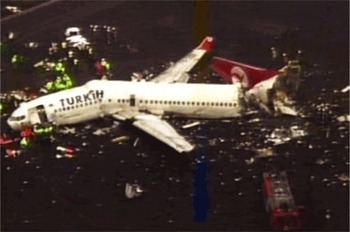
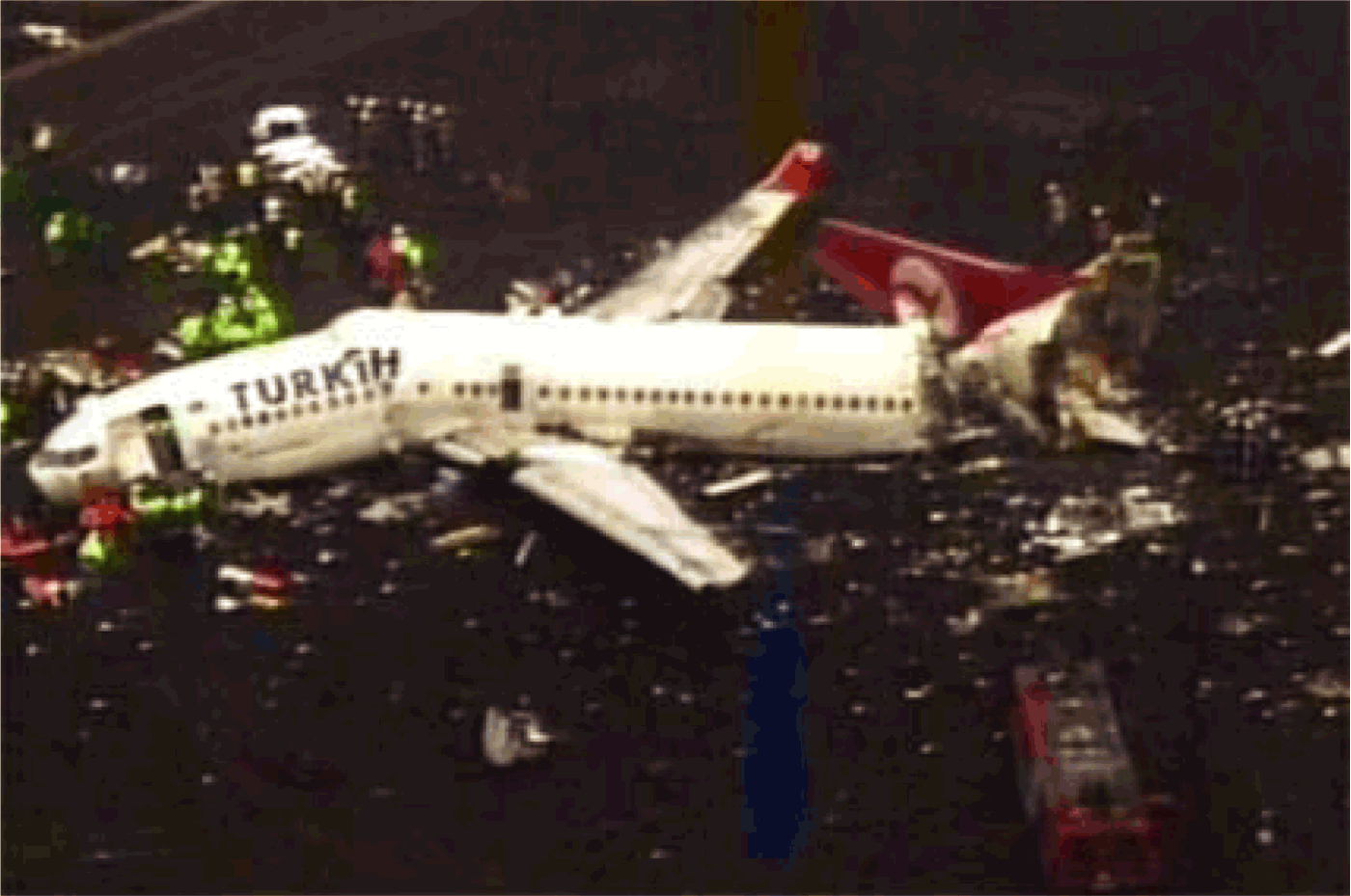
On 25 February 2009 at 10:26 hours, Turkish Airlines flight TK1951 crashed near Amsterdam Schiphol Airport, in the Netherlands, just before landing. The aircraft came to a rest in a field, about 1.5 kilometers from the runway. The fuselage was torn open just forward of the wings and forward of the tail fin (vertical stabilizer) at the last row of seas, breaking the airplane into 3 sections (Figure 1). The front section with the cockpit and first seven rows was most heavily damaged.1 Although initially, there were some problems with locating the precise site of the crash, after the crash. the medical response was rapid. Three helicopter trauma teams and 82 ambulances responded. Local farmers supplied agricultural machines to help evacuate the victims from the almost impassable field to the public road and the casualty clearing station.
(Color online) General view of the crashed airplane
This study describes the results of a retrospective study into the human outcomes of this airplane crash. The study aimed to answer two research questions: (1) How were the patients distributed among the hospitals; and (2) What injuries were there, how severe were the injuries, and how were they treated?
Methods
First, a retrospective analysis of the patients’ medical records was performed to assess how the patients were distributed among the hospitals, and to which hospitals they were transported. In addition, an analysis of ambulance records, emergency department records, and hospital records of all surviving victims was performed to retrieve information about: (1) prehospital triage; (2) time between the crash and arrival at the emergency department; (3) types and severities of injuries; (4) surgical procedures performed; (5) duration of hospital stay; (6) intensive care unit (ICU) admittance; (7) complications; (8) follow-up until discharge; and (9) hospital mortality. Data were recorded in a Microsoft Access® [Microsoft, Inc., Redmond, WA] database.
Hospitals were classified according to the trauma level classification of the Dutch Trauma association. Level-1 hospitals have all trauma care facilities; Level-2 hospitals have only “certain” trauma care facilities; and Level-3 hospitals only have basic trauma care facilities.
As is common for trauma registration in trauma centers, the types and severities of injuries were defined using the Abbreviated Injury Scale (AIS) and Injury Severity Score (ISS).Reference Goslings and Gouma2 The AIS is a standardized anatomical scoring system, in which injuries are scored on a scale from 1 through 6 for each body area: 1 = minor injury, 5 = critical injury, and 6 is lethal. The highest AIS scores are defined per body area, and the ISS is calculated by taking an individual’s 3 highest AIS scores, and adding up the square of each of these scores; thus resulting in an ISS score between 0 and 75.Reference Baker, O’Neill, Haddon and Long3
Results
The aircraft carried 135 people: 128 passengers and seven crew. Five passengers and four of the crew died at the scene of the accident. All 126 survivors were transported to hospitals.
Patient Distribution
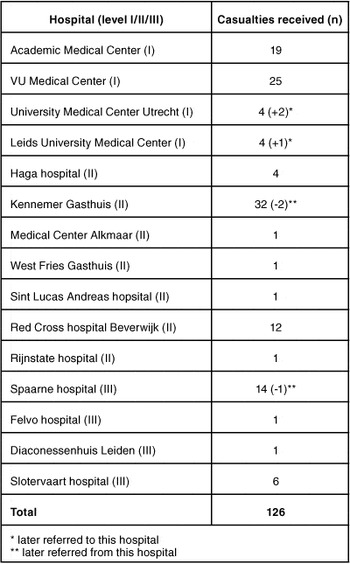
After being triaged according to the ‘Triage Sieve and Sort’ method, by the emergency medical personnel and evacuated from the scene of the accident, 124 patients were transported to 14 different hospitals (Table 1). These hospitals were Level-1, 2, or 3 hospitals. Two passengers left the scene of the accident by themselves, but reported to a hospital the next day. One of them reported to a hospital outside of the district in which the crash occurred. With the inclusion of this hospital, a total of 15 hospitals were involved (Table 1).
Overview of hospitals involved and number of casualties received by each hospital
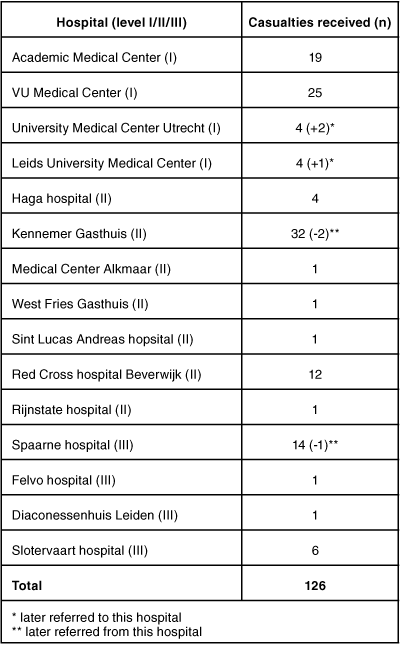
*later referred to this hospital
** later referred from this hospital
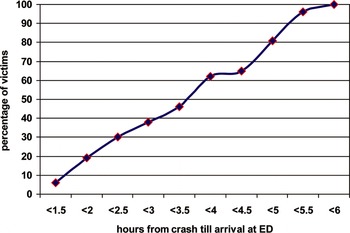
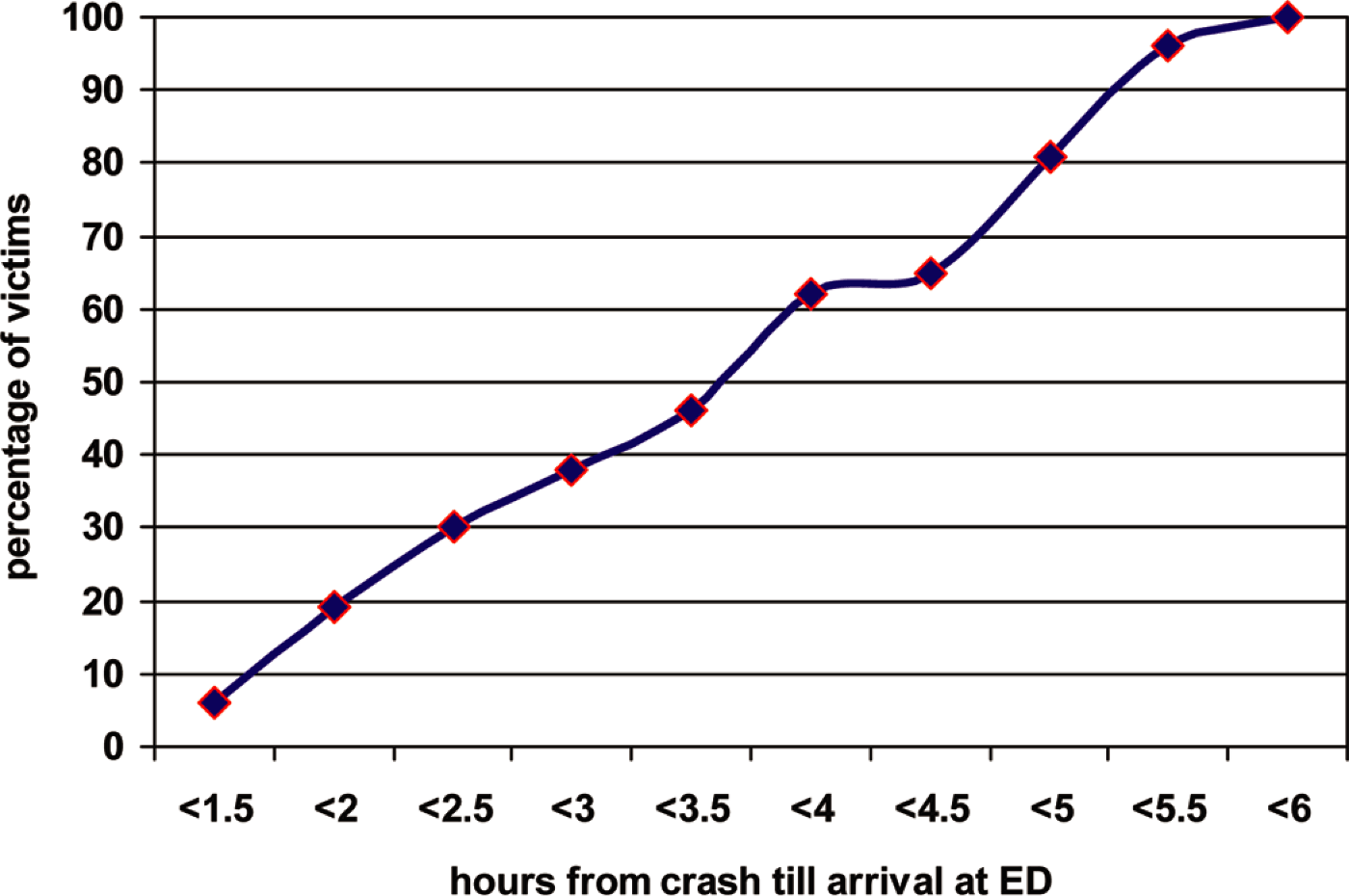
The first patient arrived at the emergency department at 11:40 hours, one hour and 14 minutes after the crash. The last patient (excluding the two who reported to hospital a day later) arrived at 16:13 hours (Figure 2). All 126 survivors of the crash, 83 men and 43 women, were included in this study. The mean of the ages was 38 years (range = 11 months–76 years). There were very few records of prehospital triage in most cases, and the in-hospital triage records also were missing. After admission, three patients were referred on to another hospital because of their type of injury: two went from a Level-2 hospital to a Level-1 hospital, and one went from a Level-3 hospital to a Level-1 hospital. For the analysis, data for these patients were abstracted from the medical records from the second hospital where they ultimately received treatment.
(Color online) Time from crash to arrival at ED
Injuries
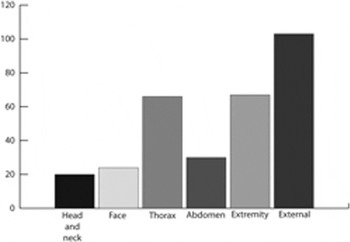
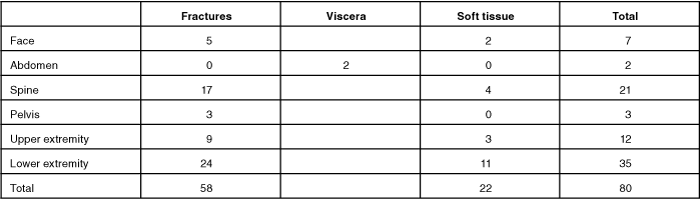
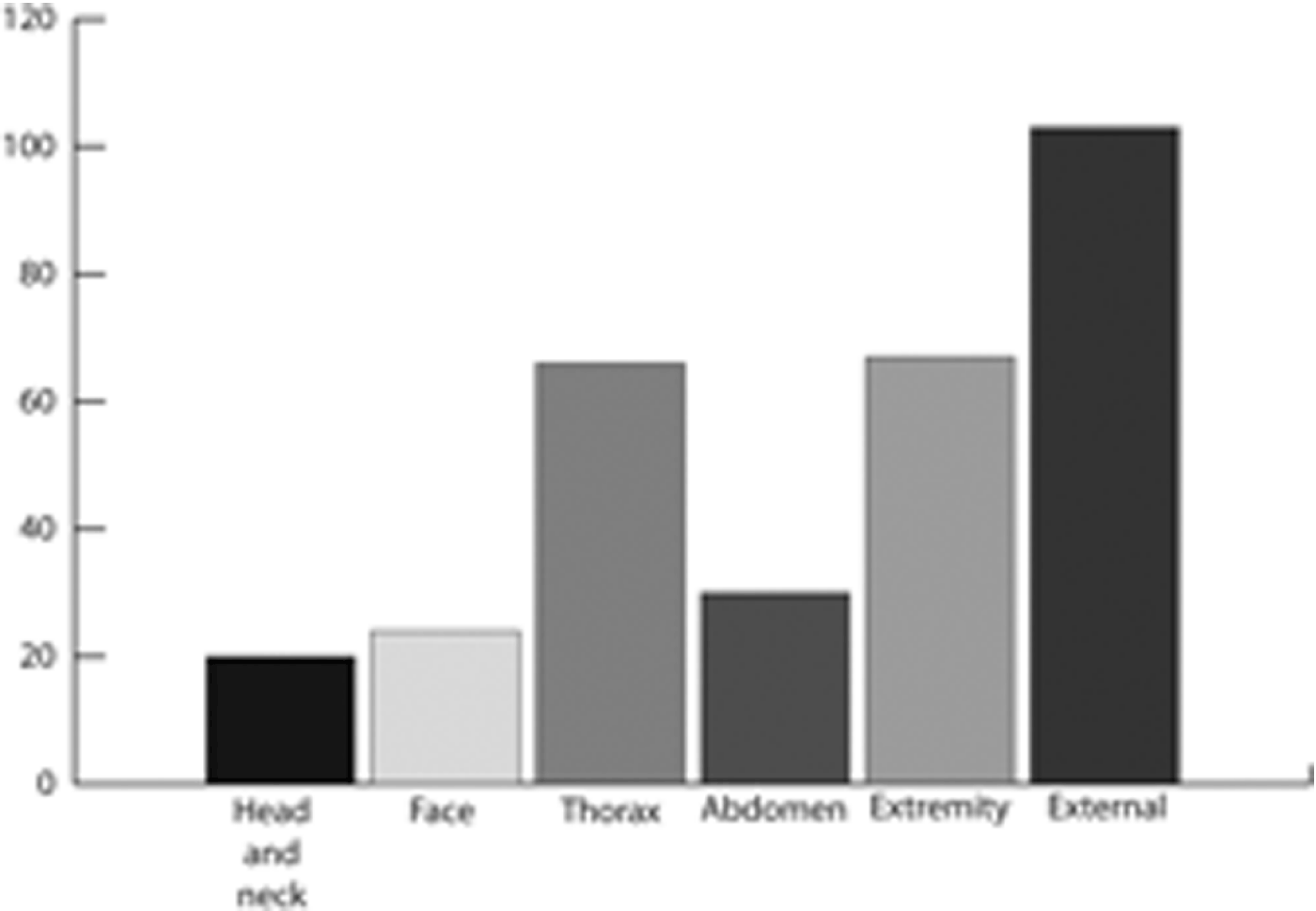
Of the 126 patients, 60 patients were discharged from the emergency department, and 66 were hospitalized for a median duration of 4 days (range = 1–104 days). Fourteen patients were admitted to an ICU, of whom, five required mechanical ventilation. The mean duration of ICU stay was seven days (range = 1–59 days, median = 2). Of the 126 patients, six were physically unharmed. The remaining 120 patients had a total of 305 injuries (Figure 3), and 75 of these patients had ≥3 injuries. The mean ISS score was 6.3 (range = 1–57), 13 patients were admitted with an ISS >15, and therefore were considered to be “multi-traumatized”.Reference Boyd, Tolson and Copes4 The most frequent injuries involved the head and face (92 injuries in 60 patients). These were mainly contusions and lacerations (48 injuries in 42 patients), cerebral concussion or contusion (20 injuries in 20 patients) and/or facial fractures (20 injuries in 14 patients). There were 35 spinal injuries (33 fractures) in 23 patients, of whom 10 patients required surgical stabilization of one or more fractures. Twenty patients had a total of 38 fractures of the extremities, 25 of which needed surgical treatment. Twenty-three patients underwent 80 surgical procedures during the first admission (Table 2). Fourteen patients required 28 surgical procedures on the day of the accident. Two patients immediately were transferred from the emergency department to the operating room due to life-threatening injuries. One of these patients suffered hemorrhagic shock due to pelvic fractures, intra-abdominal injuries, and severe injuries to extremities. Laparotomy was performed during which bleeding of the liver and spleen was treated. In addition, an external fixator was placed on the pelvis. The interventional radiologist performed embolization of both the internal iliac artery and the splenic artery because of persistent hemodynamic instability. The second patient also was in hemorrhagic shock due to pelvic and extremity injuries. The pelvic, femur, and lower leg fractures were stabilized with external fixators, and amputation of the foot was performed because of uncontrollable bleeding with irreparable injury to the foot.
Injuries by AIS region. (‘Head and neck’ includes cervical spine injuries; ‘thorax’ includes thoracic spine injuries; ‘abdomen’ includes lumbar spine injuries)
Surgical procedures carried out on 25 February 2009 on victims of the plane crash
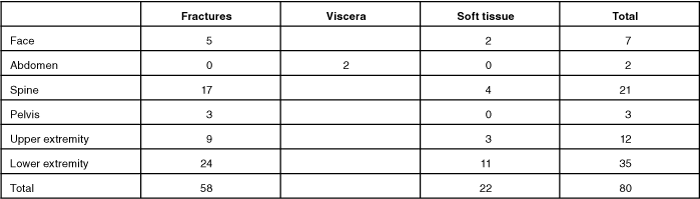
Six patients ≥5 operations during their hospital stay. All of these patients had a high ISS (between 13 and 57), and a combination of facial, extremity and spinal injuries. There was no in-hospital mortality.
Discussion
The crash received considerable attention from the national and international media, which initially reported on the fast emergency response, the extensive availability of the emergency services and the number of victims and fatalities. From that perspective, several aspects of this study are described below.
Patient Distribution
The first patient arrived at the hospital 74 minutes after the crash. Three and a half hours after the crash, half the patients had not yet reached a hospital. The circumstances at the scene, including the muddy ground and several patients being trapped in the wreckage, made it difficult to quickly evacuate the victims. As a result, the so-called ‘golden hour’ for the severely and critically injured patients had elapsed. The “golden hour” is an adage in trauma surgery, which states that all life-threatening injuries must be identified and treated in a hospital within one hour of the injury in order to minimize secondary morbidity and mortality. Even though there is no strong scientific evidence for this, the adage is widely supported.Reference Lerner and Moscati5 In fact, one of the fatalities was still alive when the first (helicopter) trauma team arrived 54 minutes after the crash, but died shortly thereafter. 6 However, since no autopsy was performed on this victim, or on any of the other fatally injured passengers, it is not possible to comment on whether this outcome was influenced by the golden hour having elapsed.
Hospitals in the area were able to quickly upscale to create greater capacity to treat the injured. Because of unclear information about the number of casualties, several hospitals were up-scaled according to the Dutch Hospital Disaster Plan (Dutch acronym: ZiROP). Up-scaling should only be done in response to an official request, and means that the capacity for regular (non-urgent) care is reduced to provide greater capacity for a relatively large number of severely injured patients. In the present case, the patients were widely distributed amongst the 14 hospitals that initially were involved, some of which only received a few or just one patient. Consequently, a number of hospitals lost regular care capacity unnecessarily. Further research is needed into the precise patient distribution during this event, as well as in regional and national patient distribution plans to evaluate their efficiency and feasibility. Other points to be considered in future research include the role of specialized major incident facilities, such as the Major Incident Hospital at the University Medical Center Utrecht, the Netherlands.
It is important to consider the decision to transfer the victims to a hospital. Considering that all of the occupants of the plane had suffered a high-energy trauma, the decision to treat all victims in a hospital would appear appropriate. However, this decision was not taken until several hours after the crash, whereupon all victims who initially had been attended to at casualty clearing stations eventually were transported to a hospital; only six patients remained physically unharmed by the crash and 66 people were hospitalized. This delay in transferring patients to hospital raises some concerns that will be addressed in further research into the prehospital triage system used.
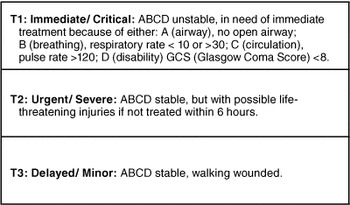
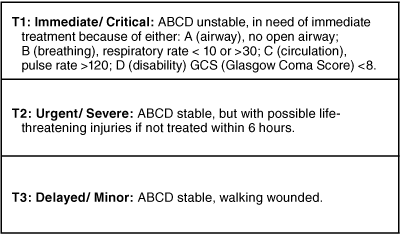
Finally, this study has identified some issues relating casualty triage. Prehospital triage records were not available in this retrospective analysis and, for most patients, the triage classification (Table 3) could not be linked to the ISS, because very few casualty triage tags were used. The evaluation report by the Dutch Public Order and Safety Directorate in cooperation with the Dutch Health Care Inspectorate mentions 35 T1 casualties. This figure is presumably derived from estimates issued by the hospital boards at an inquiry three days after the crash.7 However, it is unclear whether these estimates are based on prehospital or in-hospital triage. The analysis of patient records carried out in this study found 13 patients to be multi-trauma patients with an ISS of >15. Although not each T1 victim is necessarily a multi-trauma patient, this discrepancy between the estimated number of T1 casualties and the observed number of patients with an ISS >15 could indicate that there may have been some over-triage. Only three victims, all with spinal fractures, were referred to another hospital. One of these patients had an ISS of 17, and initially was taken to a Level-3 hospital. The other two patients, with an ISS of 8 and 9, respectively, were referred from a Level-2 hospital to a level 1 hospital. These observations will be addressed in a more in-depth study into the triage and distribution of the victims of this plane crash.
Triage classification according to MIMMS
Injuries
A remarkably large number of spinal injuries and head and face injuries were found in the victims of this plane crash. Eighteen percent of all victims had one or more spinal injuries. Further analysis of the type of spinal injuries might explain the trauma mechanism: either flexion-distraction injuries due to the body flailing over the 2-point waist belt in sudden horizontal deceleration or compression-type fractures due to the sudden vertical deceleration.
The head and facial injuries might be explained by the sudden impact, against which the passengers did not brace themselves since they had no idea they were going to crash and there had been no warning from the cockpit. Furthermore, there were few abdominal injuries. Only one patient needed a laparotomy and nine patients suffered renal contusion. These findings are in line with those from a study of a similiar plane crash in 1989 in the United Kingdom.Reference Rowles, Robertson and Roberts8 The nature of the trauma, namely high-speed deceleration while wearing a 2-point waist belt, would be expected to cause more injuries to the vulnerable intra-abdominal viscera. Further research into the structural damage to the airplane, as well as the biomechanical analysis of the injuries will be carried out to identify the cause of the injuries.
Conclusions
This study described patient distribution and injuries of victims of the February 2009 Turkish Airlines aircraft crash at Schiphol, the Netherlands, in which nine of the 135 occupants died and 120 were wounded. There was no in-hospital mortality. The analysis has shown that, even though the crash occurred in the most densely populated area of the Netherlands, with numerous hospitals nearby, a considerable period of time elapsed between the crash and the arrival of the victims at the hospitals. There were hardly any records found of the prehospital triage used and there appears to be a discrepancy in the estimated numbers of T1 patients. Finally, evaluation of the types of injuries has revealed a remarkable number of head/ facial injuries and spinal injuries. Further research is planned by the “Medical Research Turkish Airlines Crash” (MOTAC) study group into the triage, patient distribution, biomechanics of the injuries, and other relevant matters identified in the present study should provide greater insight into the events surrounding this aircraft crash.
Acknowledgments
Thanks to Teun Peter Saltzherr, who provided the database and performed some of the analysis.
Appendix
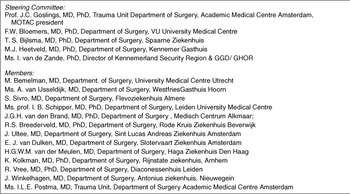
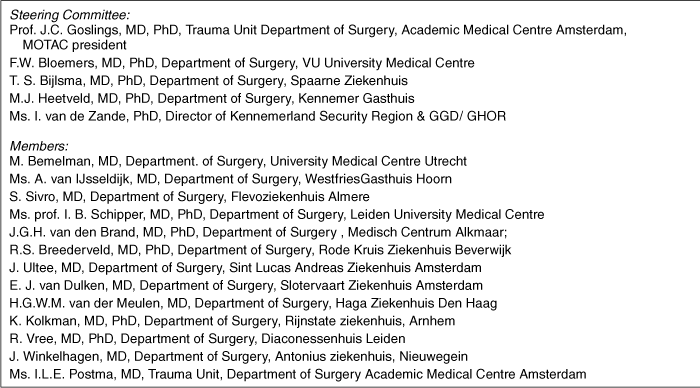
(Medical Research Turkish Airlines Crash) study group:
Abbreviations:
AIS = Abbreviated Injury Scale
ISS = Injury Severity Score
MOTAC = Medical Research Turkish Airlines Crash
ICU = intensive care unit
This article is a revised translation of: Winkelhagen J, Bijlsma TS, Bloemers FW, Heetveld MJ, Goslings JC: Airplane crash near Schiphol Airport 25 February 2009: injuries and casualty distribution. Ned Tijdschr Geneeskd. 2010;154:A1064. Dutch.