Introduction
Collection of metal ions from aqueous environments has been investigated to concentrate useful metal ions from nature and waste and to remove toxic metal ions as part of the remediation of contaminated water. In addition to membrane separation and precipitation for the collection of target metals (Divrikli et al., Reference Divrikli, Kartal, Soylak and Elci2007; Chen et al., Reference Chen, Luo, Hills, Xue and Tyrer2009; Jiang et al., Reference Jiang, Liang and Zhong2011), adsorption onto solids (adsorbents) is another useful way to collect metal ions and metal oxo ions from aqueous environments (Li et al., Reference Li, Wang, Wei, Zhang, Xu, Luan, Wu and Wei2002; Dabrowski et al., Reference Dαbrowski, Hubicki, Podkościelny and Robens2004; Guerra et al., Reference Guerra, Ferrreira, Pereira, Viana and Airoldi2010; Benkhatou et al., Reference Benkhatou, Djelad, Sassi, Bouchekara and Bengueddach2016; Attar et al., Reference Attar, Demey, Bouazza and Sastre2019). Various natural and synthetic ion exchangers are available for a variety of target ions to be collected. Parameters such as adsorbent–adsorbate interactions for adsorption from low concentration, capacity of the adsorption, and kinetics have been examined to find suitable adsorbents and conditions.
Some inorganic layered solids are known as ion exchangers, and they are characterized by greater chemical and thermal stabilities over organic and polymeric ion exchangers (Clearfield, Reference Clearfield, Alberti and Bein1996). Ion-exchangeable layered solids such as the smectite group of clay minerals (Okada et al., Reference Okada, Seki and Ogawa2014; Otunola and Ololade, Reference Otunola and Ololade2020), layered alkali silicates (Murakami et al., Reference Murakami, Nanba, Tagashira and Sasaki2006; Homhuan et al., Reference Homhuan, Imwiset, Sirinakorn, Bureekaew and Ogawa2017b; Sirinakorn et al., Reference Sirinakorn, Imwiset, Bureekaew and Ogawa2018a), layered alkali titanates (Komatsu et al., Reference Komatsu, Fujiki and Sasaki1982; Ide et al., Reference Ide, Sadakane, Sano and Ogawa2014), and layered double hydroxides (Miyata, Reference Miyata1983; Kaneko & Ogawa, Reference Kaneko and Ogawa2013; Mandel et al., Reference Mandel, Drenkova-Tuhtan, Hutter, Gellermann, Steinmetz and Sextl2013; Selvam et al., Reference Selvam, Inayat and Schwieger2014), are non-toxic and environmentally friendly adsorbents. Layered solids with various ion-exchange capacities are known, while the experimentally determined amounts of ions collected are not always consistent with the cation exchange capacities (CECs), which are derived from the chemical formula, probably due to the stability of the adsorbents, the pH dependence of the ion exchange sites, etc. The kinetics of the ion exchange and the ion selectivity have also been investigated (Googerdchian et al., Reference Googerdchian, Moheb and Emadi2012; Liu et al., Reference Liu, Yan, Zhang, Wang, Zhou and Zhou2016; Mousa et al., Reference Mousa, Simonescu, Patescu, Onose, Tardei, Culita, Oprea, Patroi and Lavric2016; Hong et al., Reference Hong, Xie, Mirshahghassemi and Lead2020).
Layered alkali silicates such as kanemite, makatite, octosilicate, magadiite, and kenyaite are composed of silicate sheets and charge-neutralizing alkali cations in the interlayer space (Schwieger et al., Reference Schwieger, Lagaly, Auerbach, Carrado and Dutta2004; Selvam et al., Reference Selvam, Inayat and Schwieger2014). The theoretical CEC values (derived from the chemical formulae) of magadiite and octosilicate are 2.2 and 3.7 meq/g (Lagaly et al., Reference Lagaly, Beneke and Weiss1975; Selvam et al., Reference Selvam, Inayat and Schwieger2014), which are large if compared with conventional inorganic ion exchangers such as zeolites and bentonite (~1.0 meq/g) (Auerbach et al., Reference Auerbach, Carrado and Dutta2004). The collection of Zn2+ (Hatsushika, Reference Hatsushika1996; Murakami et al., Reference Murakami, Nanba, Tagashira and Sasaki2006; Ide et al., Reference Ide, Ochi and Ogawa2011), Co2+ (Hatsushika, Reference Hatsushika1996; Ogawa and Takahashi, Reference Ogawa and Takahashi2007), Cu2+ (Murakami et al., Reference Murakami, Nanba, Tagashira and Sasaki2006; Mokhtar et al., Reference Mokhtar, Medjhouda, Djelad, Boudia, Bengueddach and Sassi2018), In3+ (Homhuan et al., Reference Homhuan, Bureekaew and Ogawa2017a), Eu3+ (Mizukami et al., Reference Mizukami, Tsujimura, Kuroda and Ogawa2002), and As3+ (Guerra et al., Reference Guerra, Pinto, Airoldi and Viana2008) by magadiite has been reported previously, while few reports exist on the ion exchange of octosilicate. Thus, in the present study, layered alkali silicates (magadiite and octosilicate) were examined for their ability to remove Pb2+ from aqueous solution. In addition, the kinetic aspects of Pb2+ adsorption on the various particle morphologies of layered alkali silicates (magadiite and octosilicate) were also investigated.
Experimental
Materials
Silica gel (SiO2•0.002H2O, silica gel 60, particle size of 0.063–0.100 mm, Merck KGaA, Darmstadt, Germany), sodium hydroxide pellets (NaOH >97%, Ajax Finechem, New South Wales, Australia), lead(II) acetate trihydrate ((CH3COO)2Pb·3H2O, abbreviated as Pb(ac)2, >99.5%, Merck KGaA, Darmstadt, Germany), and aqueous HNO3 solution (65%, Merck KGaA, Darmstadt, Germany) were used without further purification. Milli-Q water (ELGA, model: OS007BPM1, Type II 15 MΩ•cm, High Wycombe, UK) was used throughout.
Preparation of Magadiite and Octosilicate
Na-magadiite was prepared by the hydrothermal reaction of NaOH and SiO2 as reported previously (Kosuge et al., Reference Kosuge, Yamazaki, Tsunashima and Otsuka1992; Ide & Ogawa, Reference Ide and Ogawa2007). NaOH (4.14 g) was dissolved in water (150 mL) and 28.4 g of silica gel was added to the NaOH solution. The gel was stirred for 1 h at room temperature. The mixture was sealed in a Teflon-lined stainless steel bottle and treated hydrothermally at 150°C for 2 days. The product was collected by centrifugation, washed with a dilute aqueous solution of NaOH (pH 10.0), and dried in air at 40°C for 2 days. Na-octosilicate was prepared by a hydrothermal reaction as reported previously (Endo et al., Reference Endo, Sugahara and Kuroda1994). NaOH (25.8 g) was dissolved in water (150 mL) and 81.5 g of silica gel was added to the NaOH solution. The gel was stirred for 1 h at room temperature. The mixture was sealed in a Teflon-lined stainless steel bottle and treated hydrothermally at 100°C for 1 month. The product was collected by centrifugation and dried in air at 40°C for 2 days.
Adsorption of Pb 2+ from Aqueous Solution
Adsorption of Pb2+ onto the layered alkali silicates was examined by means of the reaction between the layered alkali silicates and aqueous solution of Pb(ac)2. A layered alkali silicate (0.1 g) was dispersed in water (25 mL) and stirred magnetically for 1 h. An aqueous solution of Pb(ac)2 (25 mL) was mixed with the aqueous suspension of the layered alkali silicates and the mixture was stirred magnetically at room temperature for 24 h. The initial concentration of Pb 2+ was 0.2, 0.6, 1.0, 2.2, 2.8, 3.6, and 4.0 mM for magadiite and 0.2, 0.6, 1.0, 3.7, 4.0, 5.0, and 6.0 mM for octosilicate. The solids were collected by centrifugation using models CR22N and R20A2 rotors, from Hitachi Koki (Tokyo, Japan) at 20,000 rpm (48,000×g) for 10 min and dried in air at 40°C for 2 days. The concentration of Pb2+ in the supernatant was determined by inductively coupled plasma-optical emission spectroscopy (ICP-OES), from Agilent Technologies 700 Series instrument (California, USA). Adsorption of Pb2+ onto the layered alkali silicates from acidic aqueous solution was also examined using the aqueous solution of the Pb(ac)2 (3.7 mM and pH = 2, which was adjusted by the addition of HNO3 solution).
The ion-exchange reactions were performed by varying reaction times (2, 5, 10, 30, 60, 120, and 180 min) in order to follow Pb2+ adsorption kinetics by the following condition: a layered alkali silicate (0.1 g) was dispersed in water (25 mL) and stirred magnetically for 1 h. Pb(ac)2 solution (25 mL, 2.2 mM for magadiite and 3.7 mM for octosilicate) was added into the suspension. The solids were collected by centrifugation using models CR22N and R20A2 rotors, Hitachi Koki (Tokyo, Japan) at 20,000 rpm (48,000×g) for 10 min after mixing for various times (2, 5, 10, 30, 60, 120 and 180 min) at room temperature. The concentration of Pb2+ in the supernatant was determined by ICP-OES.
Characterization
X-ray powder diffraction (XRD) patterns were recorded on a Bruker (Karlsruhe, Germany) NEW D8 ADVANCE X-ray powder diffractometer using Ni-filtered CuKα irradiation operated at 40 kV and 40 mA. Inductively coupled plasma-optical emission spectroscopy (ICP-OES) was performed on an Agilent Technologies (California, USA) 700 Series instrument. Calibration curves (R factor > 0.99) were made for each measurement using standard Pb(ac)2 solution. Scanning electron microscopy (SEM) was done using a JEOL (Tokyo, Japan) JSM-7610F scanning electron microscope for samples coated with Pt. Elemental mapping was obtained using an energy dispersive X-ray fluorescence spectrometer (X-Max 150 mm2, Oxford, UK) attached to the SEM.
Results and Discussion
Preparation of Magadiite and Octosilicate
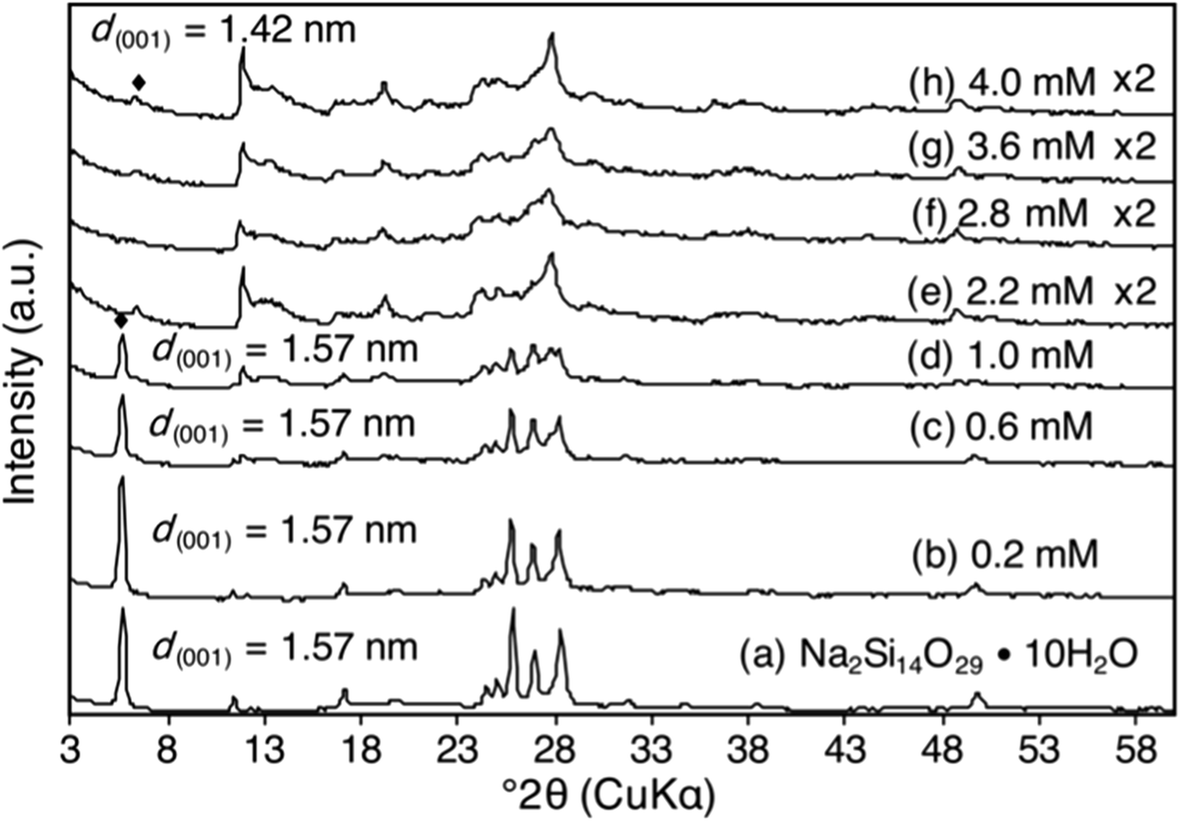
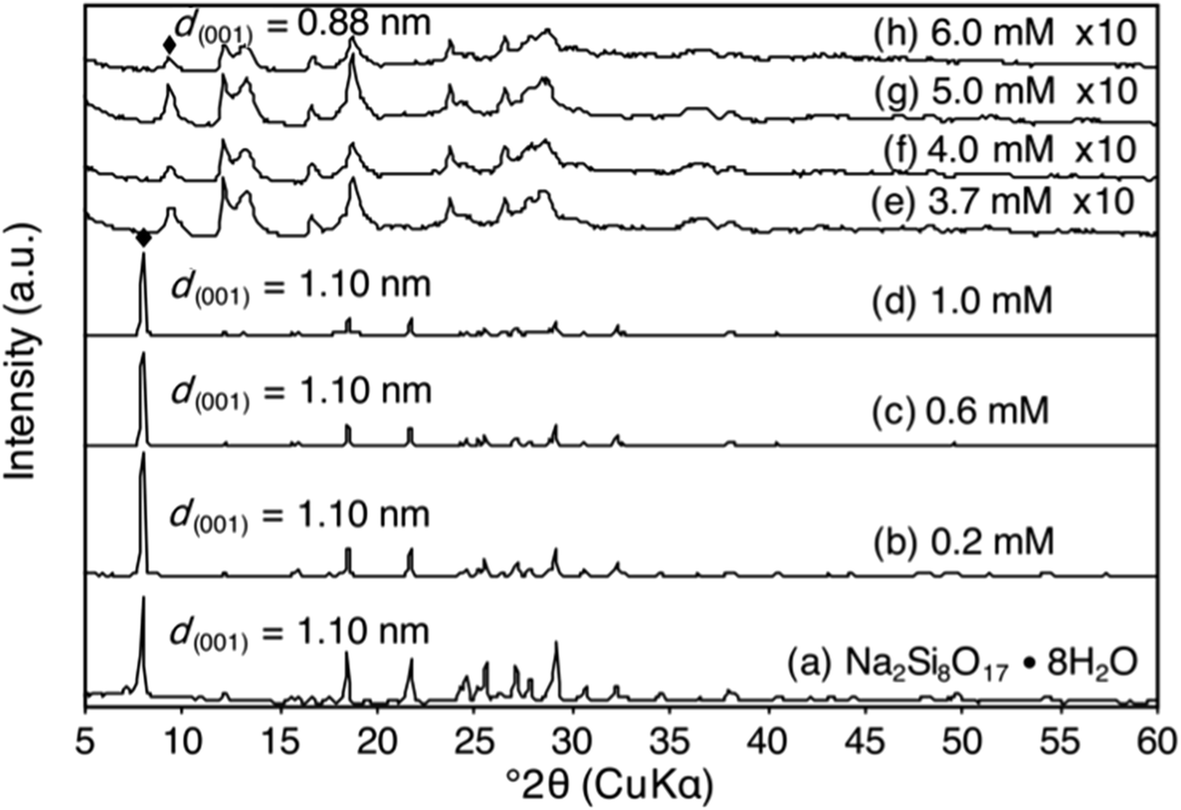
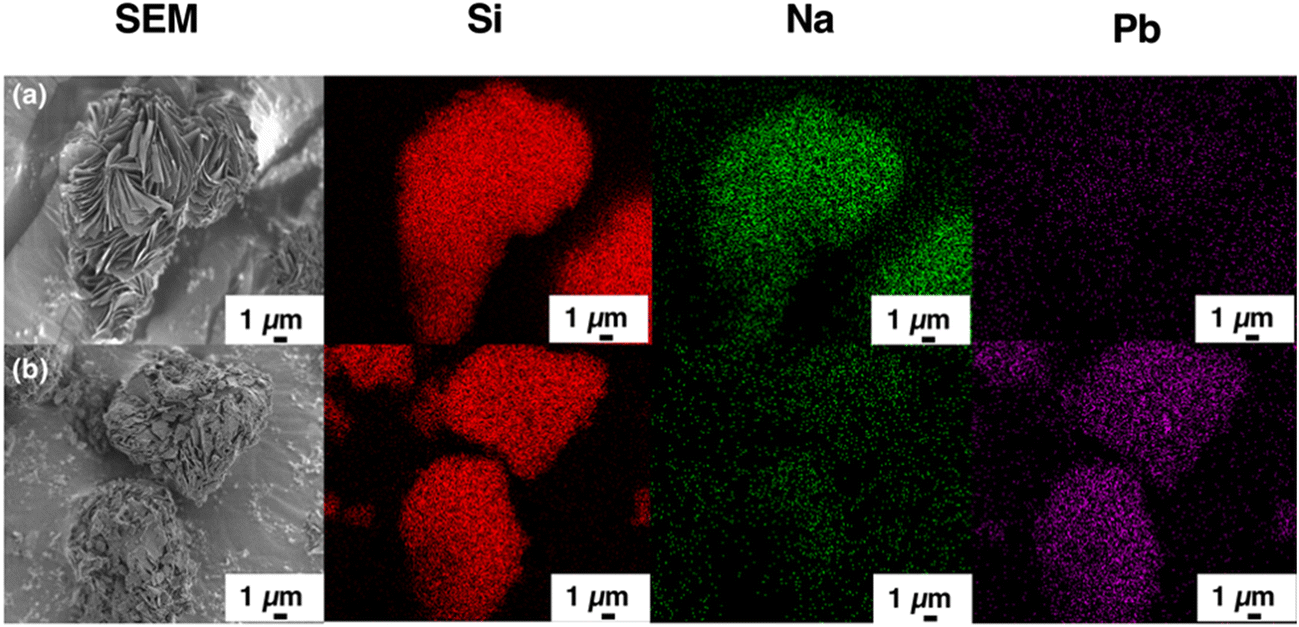
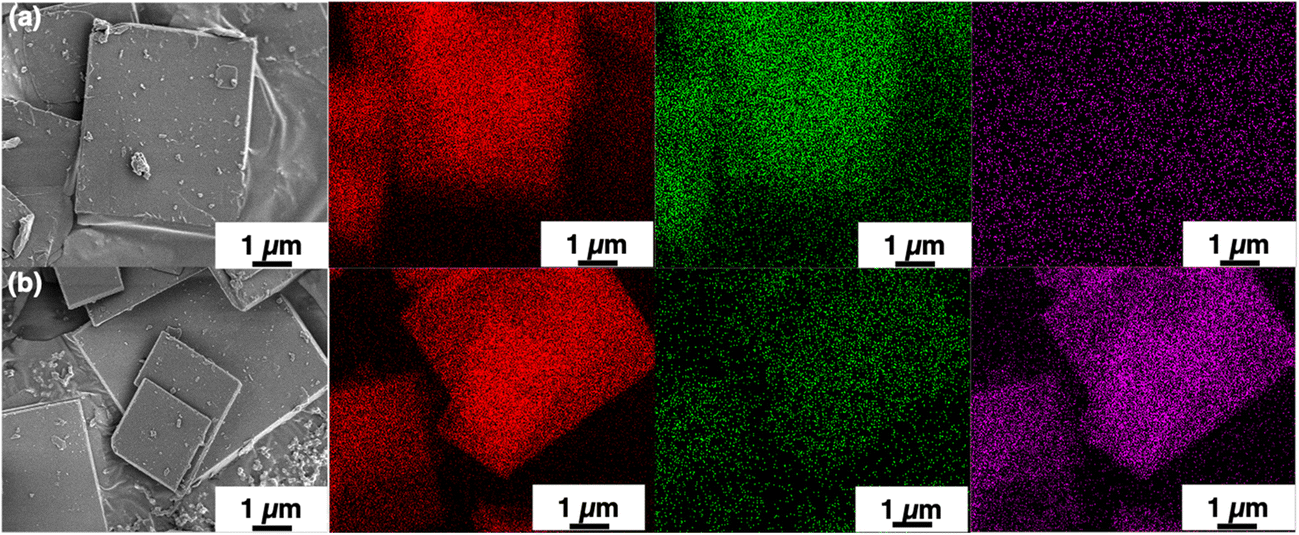
The formation of magadiite and octosilicate (Kosuge et al., Reference Kosuge, Yamazaki, Tsunashima and Otsuka1992; Endo et al., Reference Endo, Sugahara and Kuroda1994; Ide & Ogawa, Reference Ide and Ogawa2007) was confirmed by the XRD patterns (Figs. 1a and 2a) and SEM images (Figs. 3a and 4a).
XRD patterns of magadiite: a before and b–h after the reactions with initial aqueous solutions of Pb(ac)2 of b 0.2, c 0.6, d 1.0, e 2.2, f 2.8, g 3.6, and h 4.0 mM

XRD patterns of octosilicate: a before and b–h after the reaction the with initial aqueous solutions of Pb(ac)2 of b 0.2, c 0.6, d 1.0, e 3.7, f 4.0, g 5.0, and h 6.0 mM

SEM images and elemental mapping of magadiite: a before and b after the reaction with a Pb(ac)2 solution concentration of 4.0 mM

SEM images and elemental mapping of octosilicate: a before and b after the reaction with a Pb(ac)2 solution concentration of 6.0 mM

Adsorption of Pb 2+ on Magadiite and Octosilicate
The XRD patterns of magadiite and octosilicate after reaction with Pb2+ are shown in Figs. 1 and 2. The basal spacing (d 001) of magadiite decreased from 1.57 nm to 1.42 nm after the reaction with Pb2+, suggesting ion exchange between Pb2+ and Na in the interlayer space. The intensity of the d 001 reflection became weaker after the adsorption of Pb2+. The interlayer space was calculated from the observed basal spacing (1.42 nm) by subtracting the thickness of the silica layer of magadiite, which was estimated from the basal spacing of the H-magadiite (Rojo et al. Reference Rojo, Ruiz-Hitzky and Sanz1988), to be 0.30 nm, thus giving a final value of 1.12 nm. The observed basal spacing (1.42 nm) was similar to that (1.43 nm) reported for the Pb2+-exchanged magadiite (Hatsushika, Reference Hatsushika1996). The basal spacing (d 001) of octosilicate decreased from 1.10 nm to 0.88 nm after reaction with Pb2+, suggesting ion exchange between Na and Pb2+ in the interlayer space. Because the thickness of the silicate layer of octosilicate is 0.74 nm (Vortmann et al., Reference Vortmann, Rius, Siegmann and Gies1997), the interlayer space of the Pb2+-adsorbed octosilicate was estimated (by subtracting the thickness of the silicate layer from the observed basal spacing) to be 0.14 nm. The observed basal spacing (0.88 nm) is consistent with the value (0.85 nm) reported for Pb2+ exchanged octosilicate (Lim et al., Reference Lim, Jang, Park, Paek, Kim and Park2017). Those authors reported that the shrinkage of the basal spacing was caused by dehydration after the adsorption of Pb2+. The difference in the interlayer spaces for Pb2+ adsorbed magadiite (0.30 nm) and octosilicate (0.14 nm) in the present study was due to the difference in the hydration of the interlayer Pb2+ as well as the silicate framework deterioration.
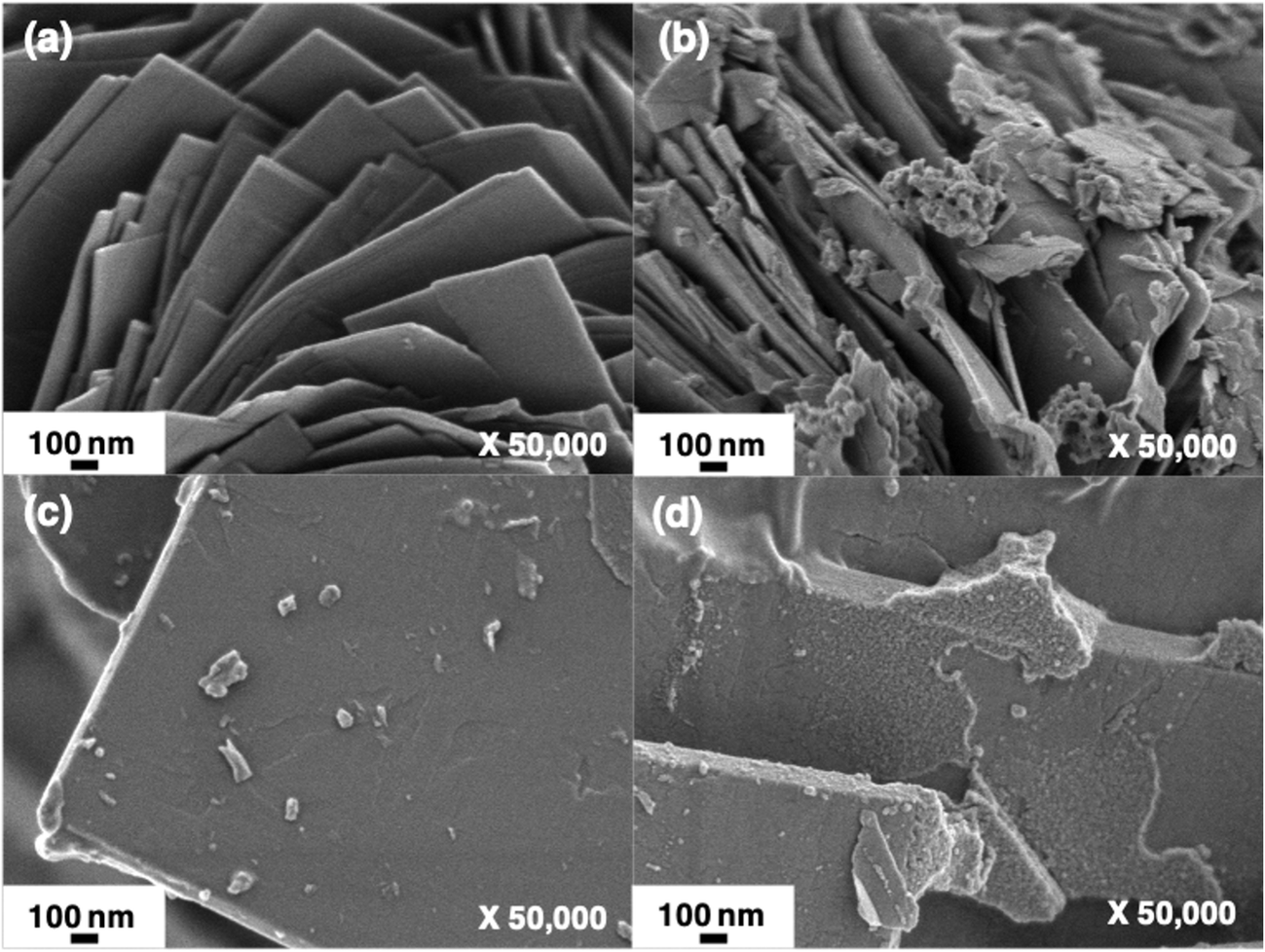
The SEM images and elemental mapping of magadiite (Fig. 3) and octosilicate (Fig. 4) before and after reaction with the aqueous solution of Pb(ac)2 (the initial concentration of 4.0 mM for magadiite and 6.0 mM of octosilicate) revealed that, even though the XRD peaks became weaker after the reaction with Pb2+ (Figs. 1 and 2), the flower-shaped morphology (4–5 μm) of magadiite composed of aggregated platy particles (1–2 μm) and the platy morphology of octosilicate (2–4 μm) were retained. Pb2+ was distributed homogeneously in/on the silicate particles for both magadiite (Fig. 3) and octosilicate (Fig. 4) systems, confirming the successful ion exchange.
Adsorption Isotherm of Pb 2+ on Magadiite and Octosilicate
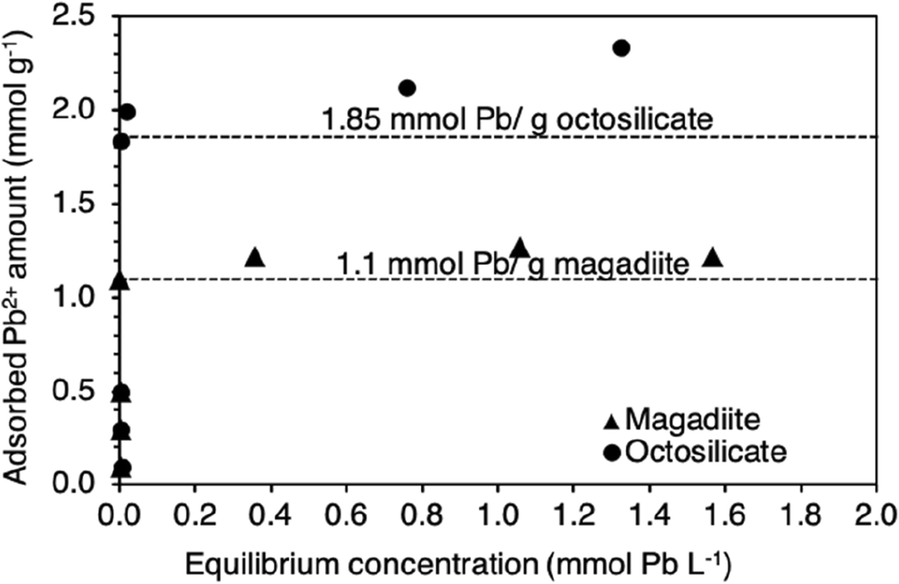
The adsorption isotherms of Pb2+ on magadiite and octosilicate (Fig. 5) were of type H, according to the classification by Giles et al. (Reference Giles, MacEwan, Nakhwa and Smith1960), suggesting significant affinity between Pb2+ and the layered alkali silicates. The ideal cation exchange capacities of magadiite (2.2 meq/g) and octosilicate (3.7 meq/g), which are derived from the chemical formulae (magadiite, Na2Si14O29·10H2O, and octosilicate, Na2Si8O17·8H2O), are shown by the dotted lines (Fig. 5) to confirm that the amounts of Pb2+ adsorbed were larger than the calculated CEC values, especially for octosilicate. The adsorption of Pb2+ on magadiite reached the theoretical CEC value (2.2 meq/g) when the initial concentration of Pb(ac)2 was 2.2 mM. When solutions of higher concentrations (2.8, 3.6, 4.0 mM) were used, the amounts of Pb2+ adsorbed were slightly more than the theoretical CEC value (2.2 meq/g) and the maximum amount of Pb2+ adsorbed was 1.27 mmol Pb/g magadiite (initial pH = 6.0). The adsorption of Pb2+ on octosilicate reached the theoretical CEC value (3.7 meq/g) when the initial concentration of Pb(ac)2 was 3.7 mM. When solutions of greater concentrations (4.0, 5.0, 6.0 mM) were used, the amounts of Pb2+ adsorbed were greater than the theoretical CEC (3.7 meq/g) and the maximum was 2.34 mmol Pb/g octosilicate (initial pH = 6.0).
Adsorption isotherms of Pb2+ on magadiite (triangle) and octosilicate (circle) from an aqueous solution at room temperature

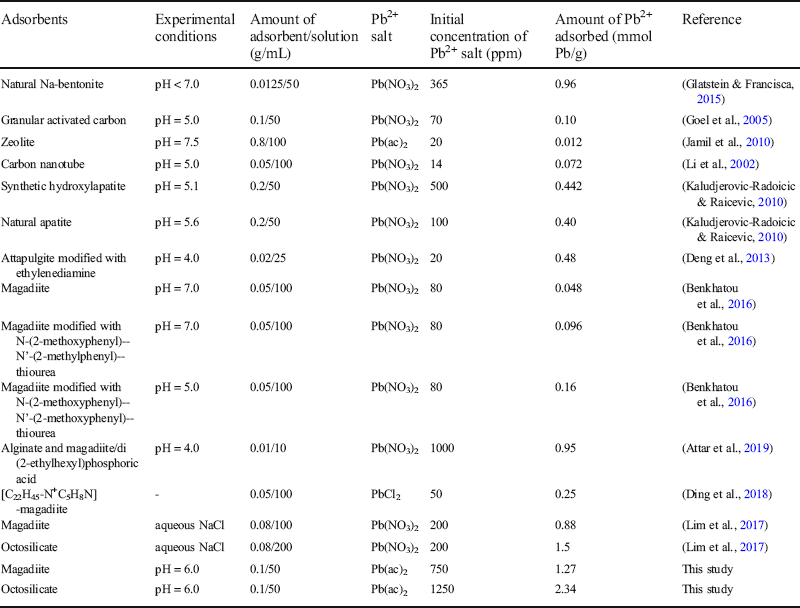
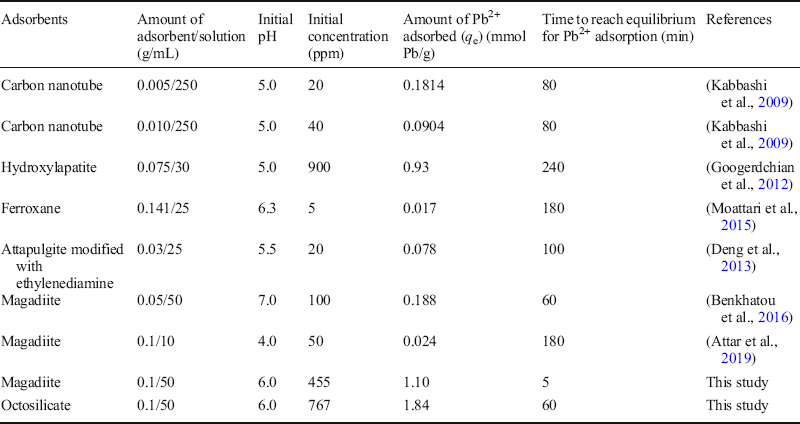
The reported collection of Pb2+ from aquous solution by means of ion exchangers such as Na-bentonite (Glatstein & Francisca, Reference Glatstein and Francisca2015), carbon nanotubes (Li et al., Reference Li, Wang, Wei, Zhang, Xu, Luan, Wu and Wei2002; Abbas et al., Reference Abbas, Al-Amer, Laoui, Al-Marri, Nasser, Khraisheh and Atieh2016; Aliyu et al., Reference Aliyu, Kariim and Abdulkareem2017), activated carbon (Goel et al., Reference Goel, Kadirvelu, Rajagopal and Garg2005; Chen et al., Reference Chen, Pan, Chen, Yu, Wang and Yan2014), fly ash (Al-Zboon et al., Reference Al-Zboon, Al-Harahsheh and Hani2011; Barbosa et al., Reference Barbosa, Lapa, Lopes, Gunther, Dias and Mendes2014), zeolite (Jamil et al., Reference Jamil, Ibrahim, Abd El-Maksoud and El-Wakeel2010), and natural apatite (Kaludjerovic-Radoicic & Raicevic, Reference Kaludjerovic-Radoicic and Raicevic2010) is summarized in Table 1. The amounts of Pb2+ adsorbed by magadiite (1.27 mmol/g) and octosilicate (2.34 mmol/g) in the present study were greater than those reported for other adsorbents (Table 1), confirming the advantages of using magadiite and, in particular, octosilicate, as very high-capacity adsorbents of Pb2+.
Examples of the amounts of Pb2+ adsorbed on layered alkali silicates and various other ion exchangers

Literature reports of the amount of Pb2+ adsorbed by magadiite vary widely (Table 1). Benkhatou et al. (Reference Benkhatou, Djelad, Sassi, Bouchekara and Bengueddach2016) reported 0.048 mmol Pb/g (initial pH = 7.0), whereas Lim et al. (Reference Lim, Jang, Park, Paek, Kim and Park2017) reported that the adsorption of Pb2+ from aqueous NaCl solution could reach as high as 0.97 mmol Pb/g magadiite and 1.5 mmol Pb/g octosilicate. The experimental conditions (pH, Pb2+ concentration, presence of competing ions, as well as the amount of adsorbent) may account for this difference. Because the negative charge of the layered alkali silicates is pH dependent (Schwieger et al., Reference Schwieger, Lagaly, Auerbach, Carrado and Dutta2004), protons may compete with Pb2+ for the exchange with Na at lower pH. For example, in the present study, the initial pH of the Pb(ac)2 solution was in the range 5.9–6.0 and that of the silicate suspension was in the range 9.5–10.0. After mixing the solution and the suspension, the pH of the mixture was in the range 6.1–8.8 for the magadiite system and 6.6–9.3 for the octosilicate system. After reaction for 24 h, the ranges became 5.6–9.0 for magadiite and 5.8–9.1 for octosilicate, so the proton was not exchanged with Na. The adsorption of Pb2+ under these conditions was 1.27 mmol/g for magadiite and 2.34 mmol/g for octosilicate (Table 1), but from acidic solution, the amounts adsorbed decreased to 0.32 (pH 3.64) and 0.34 (pH 3.95), respectively, confirming the important role of pH.
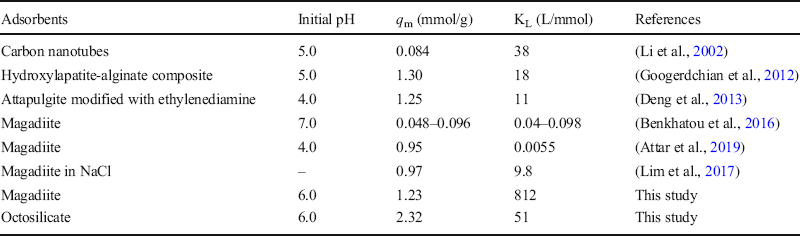
The Langmuir model (Langmuir, Reference Langmuir1918) was used to describe the adsorption isotherms, and the parameters are summarized in Table 2, together with the reported values. The Langmuir model is expressed as:
Langmuir parameters for the adsorption of Pb2+ on the layered alkali silicates and various other ion exchangers


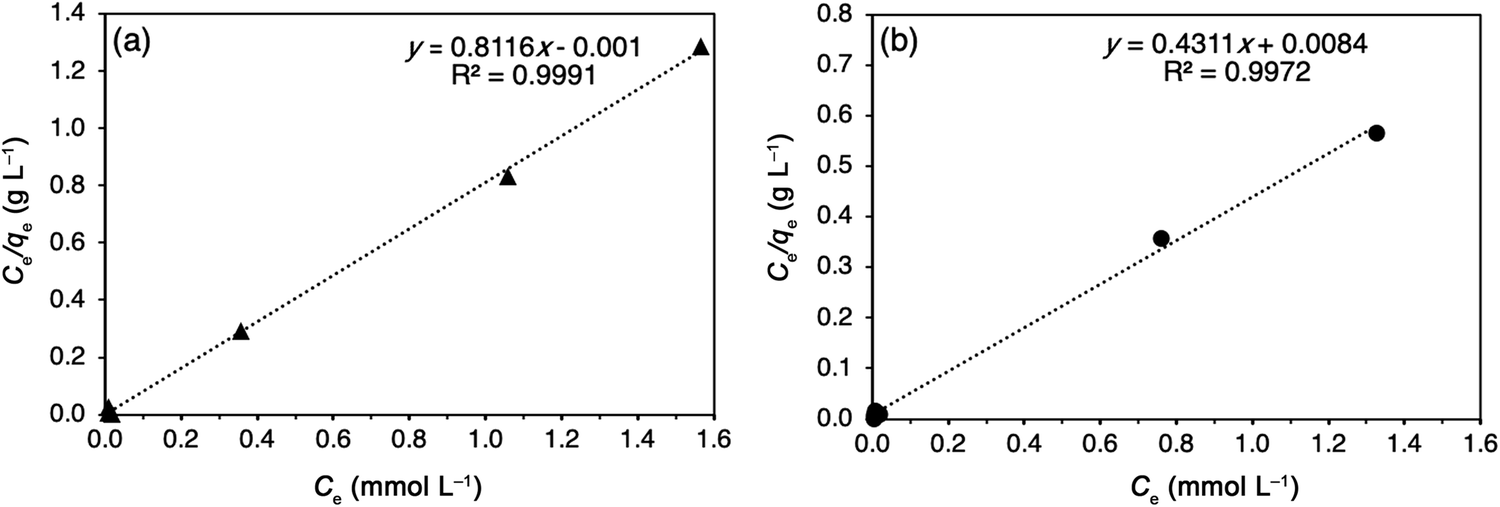
where C e is the equilibrium concentration (mmol/L), q e is the amount adsorbed (mmol/g), q m is the maximum adsorption capacity of the adsorbent (mmol/g), and KL is the Langmuir constant (L/mmol) related to the free energy of the adsorption (ΔG). By plotting C e/q e (vertical axis) versus C e (horizontal axis), the values of q m and KL were determined from the slope and intercept of the linear plot, respectively. The Langmuir plot (Fig. 6a) fitted magadiite with a high correlation coefficient (R2 = 0.9991). The Langmuir constant (KL), which may correlate with the ΔG value (the larger KL value corresponded to the more negative ΔG), was high (812 L/mmol) for magadiite when compared with the previous studes (Benkhatou et al., Reference Benkhatou, Djelad, Sassi, Bouchekara and Bengueddach2016; Lim et al., Reference Lim, Jang, Park, Paek, Kim and Park2017; Attar et al., Reference Attar, Demey, Bouazza and Sastre2019), suggesting the high affinity between the silicate surface and Pb2+ ions.
Langmuir plots of the adsorption of Pb2+ onto a magadiite (triangles) and b octosilicate (circles)

In the case of octosilicate, the Langmuir model was fitted with a high correlation coefficient (R2 = 0.9972) at concentrations between 0.6 and 6.0 mM (Fig. 6b). The deviation of the plot from the Langmuir model at concentrations of <0.6 mM has not been explained clearly thus far; the precipitation of Pb salt may have contributed to the change in the concentration of Pb2+. In order to discuss the point, the precipitation of Pb2+ salts was proposed as a mechanism for collection of Pb2+, in addition to the cation exchange. Precipitation of Pb salts may occur as a result of the change in pH caused by ion exchange. The Na released from the layered silicates caused an increase in pH as mentioned above; the pH of the Pb(ac)2 solution was in the range 5.9–6.0, while that of the suspension after the reactions between the Pb2+ and the layered silicates was in the range 5.6–9.0 for magadiite and 5.8–9.1 for octosilicate. The precipitation of Pb2(OH)Cl3 during the reaction between magadiite and Pb(II) nitrate in aqueous NaCl solution was reported by Lim et al. (Reference Lim, Jang, Park, Paek, Kim and Park2017). The precipitation of In(OH)3 during the reaction between layered alkali titanates and In(III) chloride in water was reported by Sirinakorn et al. (Reference Sirinakorn, Bureekaew and Ogawa2018b) and the precipitation of cadmium carbonate (Cd(CO3)2) during the reaction between layered alkali titanates and Cd(II) acetate in water was reported by Sirinakorn et al. (Reference Sirinakorn, Bureekaew and Ogawa2019). Pb(OH)2 precipiates from water at a pH of >6.5 (Baes & Mesmer, Reference Baes and Mesmer1976) and PbCO3 precipitates from water at pH < 9.5 (Taylor & Lopata, Reference Taylor and Lopata1984). The solubility product constants (Ksp) of Pb(OH)2 and PbCO3 are 1.2×10⁻¹⁵ and 7.4×10⁻¹⁴, respectively. In the present study, the pH of the suspension after the adsorption experiment was 5.6–9.0 for magadiite and 5.8–9.1 for octosilicate, so that the precipitation of Pb(OH)2 and/or PbCO3 was a plausible mechanism for the amount of Pb2+ adsorbed above the value of the CEC, especially in the case of octosilicate. The complicated Langmuir plot supported the hypothesis that the removal of Pb2+ by the reaction with octosilicate involved ion exchange and the precipitation of Pb salts.
Scanning electron microscopy images of magadiite and octosilicate before and after reaction with Pb(ac)2 solution of 4.0 mM for magadiite and 6.0 mM for octosilicate are shown in Fig. 7. Irregularly shaped particles <100 nm wide were observed on the edge surface of the silicate particles (Fig. 7b,d). The particles were thought to be Pb(OH)2 and/or PbCO3, though crystalline Pb(OH)2 and PbCO3 were not detected in the XRD patterns (Figs 1, 2) and showing the absence of Si in the small particles by SEM/EDX analyses was not possible.
SEM images of a magadiite and c octosilicate before and after the reaction with Pb(ac)2 solution at a concentration of b 4.0 mM for magadiite and d 6.0 mM for octosilicate

Kinetics of Adsorption of Pb 2+ on Magadiite and Octosilicate
Pb2+ adsorption on magadiite reached equilibrium within 5 min, while the adsorption of Pb2 + on octosilicate took 60 min to reach equilibrium. The reaction time reported for the adsorption of Pb2+ on magnetite (Hong et al., Reference Hong, Xie, Mirshahghassemi and Lead2020), hydroxylapatite (Dong et al., Reference Dong, Zhu, Qiu and Zhao2010; Googerdchian et al., Reference Googerdchian, Moheb and Emadi2012; Choudhury et al., Reference Choudhury, Mondal and Majumdar2015), ferroxane (Moattari et al., Reference Moattari, Rahimi, Rajabi, Derakhshan and Keyhani2015), attapulgite (Deng et al., Reference Deng, Gao, Liu, Hu, Wei and Sun2013), and carbon nanotubes (Wang et al., Reference Wang, Zhou, Peng, Yu and Yang2007; Kabbashi et al., Reference Kabbashi, Atieh, Al-Mamun, Mirghami, Alam and Yahya2009; Robati, Reference Robati2013) are summarized in Table 3. The short reaction time (5 min) for the removal of Pb2+ is an advantage of magadiite as an adsorbent. The particle morphology (platy particles a few μm wide for octosilicate and flower-like aggregates of platy particles 1–2 μm across for magadiite) affected the reaction time; the flower-like aggregates of magadiite particles were suitable for smooth diffusion of Pb2+. This characteristic is worthy of further investigation for the adsorption of various metal ions on magadiite.
Examples of the kinetics of adsorption of Pb2+ on various ion exchangers

Conclusions
Magadiite and octosilicate concentrated Pb2+ from aqueous solution at room temperature (25°C) under pH 6.0. The maximum amounts of Pb2+ adsorbed were 1.27 mmol Pb/g magadiite and 2.34 mmol Pb/g octosilicate, which were greater than the theoretical CEC values (2.2 meq/g for magadiite, 3.7 meq/g for octosilicate), suggesting the mechanisms of ion exchange and precipitation. The amounts of Pb2+ adsorbed on magadiite and octosilicate were large when compared with previous reports (carbon nanotube, activated carbon, fly ash, and clay minerals), confirming high-capacity adsorption of Pb2+ from aqueous solution by magadiite and octosilicate. Pb2+ adsorption reached equilibrium within 5 min for magadiite, another advantage for the collection of Pb2+ from water.
Acknowledgments
This work was supported by a Research Chair Grant 2017 (Grant FDA-CO-2560-5655) from the National Science and Technology Development Agency (NSTDA), Thailand and the Program Management Unit for Human Resources & Institutional Development, Research and Innovation, NXPO (Grant number B05F630117), Thailand. Two of the authors (D.A.S. and T.T.S.) acknowledge the Vidyasirimedhi Institute of Science and Technology for a scholarship for their PhD studies.
Funding
Funding sources are as stated in the Acknowledgments.
Declarations
Conflict of Interest
The authors declare that they have no conflict of interest.