(Re)engaging With Kollmuss and Agyeman's (Reference Kollmuss and Agyeman2002) Mind the Gap
As climate disruption and other planetary threats continue to appear almost daily as news stories, this article addresses the need for a new and different kind of story. We posit that the challenges of meeting and responding to these present and imminent environmental threats support a compelling case for environmental educators and researchers to work towards (re)storying current assumptions and practices in environmental education. It is crucial for environmental educators and researchers to do so, first by developing clearer understandings of the multiple and interconnected factors that encourage humans to actuate pro-environmental behaviours, and second, by applying those understandings as part of their professional praxis. Through (re)storying — which we propose to be a process of evaluating longstanding suppositions, synthesising gained understandings, and enacting fresh ideas — environmental educators and researchers have the opportunity to guide their students, colleagues and communities in making positive planetary change.
The exploration of how pro-environmental behaviour develops is not a new one for the discipline of environmental education research. Kollmuss and Agyeman (Reference Kollmuss and Agyeman2002) addressed the topic in their article ‘Mind the Gap: Why do people act environmentally and what are the barriers to pro-environmental behaviour?’ Clearly, the titular question was, and remains, fundamentally relevant, as Kollmuss and Agyeman's article currently stands as the most widely read paper in the journal Environmental Education Research, having been viewed electronically 64,900 times and garnered 1,600 citations, including 40 from the first four months of 2018 alone. Sixteen years after its publication, one can thus theorise that educators and researchers are still grappling with this question of what leads to pro-environmental behaviour, a question that is germane to all stages of environmental education, from early childhood to adult education.
The stated goal of Kollmuss and Agyeman (Reference Kollmuss and Agyeman2002, p. 240) was to ‘explain the gap between the possession of environmental knowledge and environmental awareness, and displaying pro-environmental behaviour’. In their discussion, the complexity of this investigation was clearly acknowledged, as well as the challenges of offering definitive conclusions, despite numerous studies based on a variety of theoretical frameworks. The article offered a review of past models of pro-environmental behaviour and its own proposed model in order to ‘open up a dialogue regarding the most effective ways environmental educators might help develop pro-environmental behavior at all levels in society’ (p. 240), based on an analysis of recent research findings.
Sixteen years later, this present article offers an updated discussion on the topic, with the first section investigating research on pro-environmental behaviour that has taken place since 2000. The second and third sections of the article consider more contemporary definitions of environmental knowledge, environmental awareness, and pro-environmental behaviour, all terms used by Kollmuss and Agyeman (Reference Kollmuss and Agyeman2002). Of course, for environmental educators and researchers, a critical issue to explore continues to be how pro-environmental behaviour in fact develops. We contend that it would be advantageous for environmental educators to acknowledge the ever-evolving complexity of the factors involved in understanding this development. In our planet's eco-systems, of which humans are a part, everything is linked in a vast web of interconnectedness. Working towards understanding and synthesising the intricacies of ecological interconnectedness — or the ways in which many and varied factors always influence the occurrence of any event — would allow environmental educators and researchers to apply it more deeply to explorations of why people act environmentally. The fourth and final sections of this article thus consider the idea of how we might (re)story interconnectedness to help us not only understand how pro-environmental behaviour emerges, but how to build our professional praxis around this understanding.
The Ongoing Search for an Understanding of What Leads to Pro-Environmental Behaviour
In exploring the factors that influence pro-environmental behaviour from a transdisciplinary perspective that includes research from the fields of education, psychology and sociology, it is anticipated that a wide range of factors will be seen to be significant. In this section, we review seminal literature exploring the factors that are said to influence pro-environmental behaviour.
Kollmuss and Agyeman (Reference Kollmuss and Agyeman2002) provided an overview of the psychological and sociological models developed from the 1970s through 1999, in order to explain what they call the attitude–action gap in pro-environmental behaviour.Footnote 1 Others have since offered similar reviews. Bamberg and Moser (Reference Bamberg and Möser2007) examined psycho-social determinants of pro-environmental behaviour in a meta-analysis that reviewed 46 studies of pro-environmental behaviours published between 1995 and 2006, with a key conclusion showing support for the ‘conception of pro-environmental behaviour as a mixture of self-interest and pro-social motives’ (p. 22). The same year, Chawla and Cushing (Reference Chawla and Cushing2007) offered a review of education towards pro-environmental behaviour in children and young people by comparing three additional areas of research on the development of pro-environmental behaviour: the socialisation of democratic skills/values; the development of an individual sense of competence; and how collective competence develops. Their review led them to suggest a model of environmental education based on teaching towards an engaged and political citizenry. Heimlich and Ardoin (Reference Heimlich and Ardoin2008) presented a thorough review of the literature concerning behaviour change and environmental education up until 2005, coming to the conclusion that ‘it is imperative that the field avoids unilateral assumptions’ (p. 231), as no individual acts from exactly the same motivation as another.
More recently, Osbaldiston and Schott (Reference Osbaldiston and Schott2012) executed a meta-analysis on 87 studies that took place between 1980 and 2009, looking at the most successful psychological approaches to encouraging pro-environmental behaviours. Unlike the meta-analyses cited previously, these studies were based on observation rather than self-reporting, and led to the conclusion that ‘the most effective treatments overall are using cognitive dissonance, setting goals, using prompts, and using social modelling’ (p. 279). The authors also noted increased effectiveness in using a combination of treatments such as ‘rewards and goals, instructions and goals, commitment and goals, prompts and making it easy, prompts and justifications, and dissonance and justifications’ (p. 279). Interestingly, Osbaldiston and Schott (Reference Osbaldiston and Schott2012) also observed that ‘there is no one treatment (a “silver bullet”) that is highly effective across all the possible PEBs [pro-environmental behaviours]’ (p. 280). Braun, Cottrell, and Dierkes (Reference Braun, Cottrell and Dierkes2018), who carried out an investigation of the efficacy of an outdoor education program on pro-environmental behaviour in students across four countries, agreed that ‘it seems reasonable that when trying to inspire people to act in an environmentally responsible manner, we must consider solutions outside of a single framework to possibly close the gap between attitudes, knowledge and action’ (p. 13). While these reviews cover a wide variety of theories, disciplines and methodologies, what they have in common is that they all acknowledge the complexity of understanding the development of pro-environmental behaviour, and the overlapping, transdisciplinarity and interconnectedness of all the factors involved.
Over the last 10 years, much of the literature about pro-environmental behaviour has examined more specific aspects of the development of pro-environmental behaviour. A number of studies were carried out on the effect of environmental identity, defined as a ‘psychological connection between oneself and the nonhuman natural environment’ (Kashima, Paladino, & Margetts, Reference Kashima, Paladino and Margetts2014, p. 64), and found that there is a positive correlation between the development of environmental identity and a higher level of pro-environmental behaviour (Kashima et al., Reference Kashima, Paladino and Margetts2014; Stapleton, Reference Stapleton2015; Whitmarsh & O'Neill, Reference Whitmarsh and O'Neill2010). Ernst, Blood, and Beery (Reference Ernst, Blood and Beery2017) looked at which variables — ‘environmental attitudes, locus of control, sense of personal responsibility, intention toward action’ (p. 156) — lead to pro-environmental behaviours, finding that environmental attitudes was the only variable that was able to significantly predict pro-environmental behaviours. Cooke, Fielding, and Louis (Reference Cooke, Fielding and Louis2016) used self-determination theory in their study of over 500 people, concluding that the factors of autonomy, relatedness and competence acted positively on motivation, and that motivation was indeed a predictor of pro-environmental behaviours (p. 651). Uitto, Boeve-de Pauw, and Saloranta (Reference Uitto, Boeve-de Pauw and Saloranta2015) analysed over 2,000 Finnish students and concluded that encouraging a strong sense of self-efficacy can result in more pro-environmental behaviour (p. 63). Finally, and perhaps unusually for environmental education research, Redondo and Puelles (Reference Redondo and Puelles2017) analysed an annual media survey of 10,000 people to look at gaps between environmental attitudes and behaviours, finding that higher levels of personal self-control in eating habits positively predicted higher levels of pro-environmental behaviour (p. 114). They posit that it is imperative for environmental educators not to view the ‘environmental gap as an isolated inconsistency’ (p. 115) but instead to see it similarly as a result of lack of personal self-control.
Environmental identity, environmental attitudes, motivation, self-efficacy, and self-control are important concepts associated with environmental education research into the development of pro-environmental behaviour — across the disciplines of education, behavioural psychology, sociology, and the sciences. Of course, there are still other factors to consider in this research. Kollmuss and Agyeman (Reference Kollmuss and Agyeman2002) employed environmental knowledge and environmental awareness as important concepts in their much cited article, and thus we posit that it is important to explore these terms now in a more contemporary context. It is to this effort that we turn in the next section.
Widening Environmental Knowledge and Environmental Awareness
Kollmuss and Agyeman (Reference Kollmuss and Agyeman2002) rightfully point out that the more traditional linear models of pro-environmental behaviour, which assume that if people are informed and knowledgeable about environmental issues their environmental awareness will increase and lead to higher engagement in pro-environmental behaviour, have been challenged by a substantial amount of research (p. 241). A number of studies they cite, as well as others published since then, show that simply increasing factual knowledge and/or raising awareness of environmental issues alone does not encourage people to act in a pro-environmental manner, although knowledge of issues is a prerequisite when an individual does engage in pro-environmental action (see Chawla & Cushing, Reference Chawla and Cushing2007; Heimlich & Ardoin, Reference Heimlich and Ardoin2008; Hines, Hungerford, & Tomera, Reference Hines, Hungerford and Tomera1987; Stern, Reference Stern2000).
It is important, however, that the concepts of environmental knowledge and environmental awareness undergo contemporising in this era of compound and multifaceted environmental issues. First, let us first consider environmental knowledge. Nearly 30 years ago, Volk and Hungerford (Reference Volk and Hungerford1990) surmised that the complications involved in trying to understand environmental behaviours contributed to overly simplistic linear models of knowledge = behaviour (p. 13). They believed then that these models were not sufficient to address the complexities of why people engage in pro-environmental behaviour. Kollmuss and Agyeman (Reference Kollmuss and Agyeman2002) themselves agreed that maintaining a simplistic definition of knowledge limits our ability to understand the complexity of pro-environmental behaviour, stating that ‘it might be necessary to distinguish between different levels of knowledge’ (p. 250).
According to Jensen (Reference Jensen2002), the definition of environmental knowledge should be widened to include ‘action oriented knowledge’ (p. 329). The four ‘dimensions’ of action-oriented knowledge identified are: (1) knowledge about the existence and parameters of an environmental issue (i.e., the facts); (2) knowledge about the root causes of the issues; (3) knowledge about possible solutions and change strategies; and (4) knowledge about personal strategies for achieving those solutions (including alternatives and visions). In encompassing these additional dimensions of knowledge, a new ‘landscape of extensive and coherent knowledge and insight’ (p. 332) is developed that can indeed lead to a change in environmental behaviour, if given the opportunity. Similarly, Frick, Kaiser, and Wilson (Reference Frick, Kaiser and Wilson2004) suggest that while knowledge is a necessary but not sufficient prerequisite for effective action, research has limited itself by narrowly defining environmental knowledge. They offer the following types of environmental knowledge as possible additional considerations for inclusion: system knowledge (knowledge of issues and facts), action-related knowledge (knowledge of how to effect required change), and effectiveness knowledge (understanding of the impact of one's actions) (p. 1599). Their research found that both action-related and effectiveness knowledge has a direct influence on pro-environmental behaviour while system knowledge has an indirect effect (p. 1606). Accordingly, when considering both Frick et al. (Reference Frick, Kaiser and Wilson2004) and Jensen (Reference Jensen2002), we note that if the definition of environmental knowledge is widened to include knowledge about potential actions and personal strategies, then the gap between environmental knowledge and pro-environmental behaviour may narrow.
This discussion now turns to a consideration of environmental awareness. Kollmuss and Agyeman (Reference Kollmuss and Agyeman2002) define environmental awareness as ‘knowing of the impact of human behaviour on the environment’ (p. 253), claiming that it has both cognitive and affective elements. This definition sits arguably close to both Jensen's (Reference Jensen2002) first dimension of action-oriented environmental knowledge, and Frick et al.’s (Reference Frick, Kaiser and Wilson2004) description of systems knowledge. We contend that in the present era, in which information about environmental issues has become readily accessible via a globally connected and always available web of information, the line between environmental awareness and environmental knowledge is very fine and not always identifiable. Accessibility to information has radically changed the potential for not only learning the facts (or untruths) about important environmental issues, but also for acting on our gained environmental knowledge. For instance, Paulo Gerbaudo (Reference Gerbaudo2012) writes in his book Tweets and the Streets: Social Media and Contemporary Activism that social media is the ‘means not simply to convey abstract opinions, but also to give a shape to the way in which people come together and act together’ (p. 4). In other words, the multifaceted possibilities for both environmental awareness and environmental knowledge, and even pro-environmental behaviour, have multiplied exponentially due to modern technology.
However, the question again is: What are the connections between environmental awareness and/or knowledge and the development of pro-environmental behaviour in the context of our current times? Before we return to that fundamental query, it will be helpful to also contemporise the meaning of pro-environmental behaviour. While there is unlikely to be a universally accepted definition that remains accurate and relevant over time and in all contexts, we propose that a well-considered description of pro-environmental behaviour is a fundamental requirement for continued exploration. Accordingly, we now turn to the task of creating a contemporary definition of pro-environmental behaviour.
Redefining Pro-Environmental Behaviour
As a starting point, Kollmuss and Agyeman's (Reference Kollmuss and Agyeman2002) definition of pro-environmental behaviour is ‘behaviour that consciously seeks to minimise the negative impact of one's actions on the natural and built world’ (p. 240). They cite general examples such as minimising consumption of energy/resources and producing less waste, and delineate that their study is focused ‘mostly on direct pro-environmental actions’ (p. 258) that have an immediate impact on the environment, such as recycling, purchasing organic food, or driving less. Indirect environmental actions are defined as actions that include monetary donations to or volunteering for environmental causes, environmental education or environmental writing. In short, a key notion of Kollmuss and Agyeman's (Reference Kollmuss and Agyeman2002) definition is that pro-environmental behaviour consists of deliberate actions that prevent the environment from being ‘directly’ harmed.
The simplicity and seeming clarity of this definition has conceivably had utility for researchers and educators over the years — in that Kollmuss and Agyeman's (Reference Kollmuss and Agyeman2002) article has been cited approximately 1,600 times. Although working within the parameters of direct action and indirect action may be an easy conceptualisation for some researchers and environmental educators to adopt, it may also have the effect of narrowing the scope for research or indeed planning for teaching and learning in the environmental education milieu. It is also questionable as to whether such a binary heuristic — that pro-environmental behaviour must be either direct or indirect action — provides a helpful platform to examine, in a contemporary context, why people act pro-environmentally.
In 2002, recycling and buying organic food were not universal behaviours and could have been considered a high-level action of pro-environmental behaviour by the average citizen of Minority World countries such as Australia. (We use the term ‘Minority World’ to describe what is often called the ‘First World’. For a discussion of the concept of the Minority World/Majority World terminology, refer to Alam, Reference Alam2008). Yet, 16 years later, these examples of direct action are now not uncommon. While this type of ‘direct’ pro-environmental behaviour as defined by Kollmuss and Agyeman (Reference Kollmuss and Agyeman2002) is certainly still relevant and important, and obviously a necessary component of any definition of pro-environmental behaviour, it is not sufficient. As pointed out by Courtenay-Hall and Rogers (Reference Courtenay-Hall and Rogers2002), activities such as educational outreach, environmental writing and environmental policy campaigning have arguably at least the same potential of having a direct impact on the environment (if not more) as the above-mentioned actions. Chawla and Cushing (Reference Chawla and Cushing2007) posit the idea that actions of pro-environmental behaviour should go far beyond traditional notions of what constitutes environmental behaviours, stating that ‘it is critical for schools and out-of-school environmental programs to prepare students for political action’ (p. 448).
We contend that since 2002, the options available for humans to engage in pro-environmental behaviour have multiplied extraordinarily and the direct/indirect dichotomy has less relevance. Actions such as recycling and using energy-efficient light bulbs, previously classified as direct actions, have now become habitual actions for many citizens in Minority World countries. It is also important to note that motivations for pro-environmental behaviours may be economic, such as recycling to avoid extra waste fees, or even personal, such as purchasing organic food due to perceived increased social status or health benefits. Even if certain actions or sets of actions are indeed conscious pro-environmental choices, the idea that they can be clearly classified as direct actions is questionable; living a zero waste lifestyle or actions taken to avoid fossil fuels by living off the grid and installing renewable energy sources have elements of both direct and indirect action. We contend that the reality of current pro-environmental behaviour is that what constitutes a direct or indirect action is increasingly interchangeable and interconnected, or even the same thing. Accordingly, the possibility of a much broader set of actions needs to be included in our definition of pro-environmental behaviour.
It is interesting to also consider the other terminology included in Kollmuss and Agyeman's (Reference Kollmuss and Agyeman2002) definition of pro-environmental behaviour. For example, in employing the word ‘behaviour’, is this term limited to a behaviourist interpretation such as an action or a reaction in response to a stimulus on a singular occasion? In some contexts, such as in the ‘Who Cares about the Environment’ report (NSW Office of Heritage and the Environment, 2017), pro-environmental behaviour is indeed defined by the number of times someone engages in a simple action such as recycling. We contend that a broader and more holistic definition of behaviour would be more appropriate to the complex and transdisciplinary nature of environmental education; for example, seeing behaviour as a series of thoughts, interactions and actions that occur in a sociocultural context.
Another question is whether to employ the word ‘consciously’ in our definition. We suggest that this term would seem to muddy, rather than clarify, the definition of pro-environmental behaviour, by limiting the possibilities of pro-environmental behaviours to those who are defined as acting in a ‘conscious’ manner. We posit that a person who acts intuitively, rather than consciously, in a pro-environmental manner, as a result of education or perhaps cultural influences such as traditional land management practices in Indigenous societies, should also be considered as displaying pro-environmental behaviour.
Following another line of thinking about consciousness, Wallin (Reference Wallin2017) suggests that current education research and practice is based on ‘the latent presumption that the world conforms to human thought, or rather, that the world exists by dint of our ability to think it’ (p. 1101, emphasis in the original). A posthumanist perspective offers the possibility of the ‘overcoming of human primacy’ (Ferrando, Reference Ferrando2013, p. 29) and affords the actions of all species in any definition of pro-environmental behaviour (see discussion in Snaza et al., Reference Snaza, Appelbaum, Bayne, Carlson, Morris, Rotas and Weaver2014). Humanism has dominated philosophy — including environmental education theory and practice — since the Enlightenment (see discussion in Chapter 1, Snaza & Weaver, Reference Snaza and Weaver2015). However, in the past three decades, posthumanist theory has emerged, attempting to redefine human structures, behaviour, and even consciousness in the more-than-human world. Posthumanist theory de-centres humans: ‘Posthumanism calls into question the essentializing binary between human and nonhuman . . . it throws anthropocentrism into doubt along with the categories and identities it underpins’ (C.A. Taylor, Reference Taylor, Taylor and Hughes2016, p. 5). Haraway (Reference Haraway and Haraway1991) stretches this philosophically by upending common parlance terms and instead classifying humans as ‘companion species’ rather than a superior species. Of course, as Snaza et al. (Reference Snaza, Appelbaum, Bayne, Carlson, Morris, Rotas and Weaver2014) posit, ‘the limits of posthuman thought remain requisite upon the role of the human as an albeit displaced actor in human-machine or human-animal assemblages’ (p. 46, emphasis in the original). However, regardless of the fact that we as humans cannot ever truly understand or identify whether a kangaroo exhibits pro-environmental behaviour, the term ‘consciously’ remains too narrow to include in our updated definition of pro-environmental behaviour.
To end this section, after reviewing and revising the terminology used in Kollmuss and Agyeman's (Reference Kollmuss and Agyeman2002) article, we include a helpful example of a reconceptualisation of a less binary idea of pro-environmental behaviour. Macy and Brown (Reference Macy and Brown2014) implicitly define pro-environmental behaviour as a combination of actions that ‘bring our lifestyles and consumption into harmony with the living systems of Earth’ (p. 4). They contend that there are three dimensions or types of such behaviours: holding actions to stop immediate environmental damage; structural transformations of society's commons (e.g., economics, food and energy supply); and activities that promote shifts in consciousness and values. These behaviours do not need to exist in isolation; rather, they complement and reinforce each other. Furthermore, ‘beginning at one naturally leads into either of the others’ (Macy & Johnstone, Reference Macy and Johnstone2012, p. 27). While holding actions would be those that are conventionally considered pro-environmental behaviour, it is important to add the behaviours of structural transformation and consciousness shifting to the definition of pro-environmental behaviour. Thus, employing best practice environmental education and research — with the goal of shifting consciousness — can be considered just as much of a pro-environmental behaviour as installing solar panels or planting trees.
Integrating Macy and Brown's (Reference Macy and Brown2014) definitions with inspiration from posthumanist theory (Ferrando, Reference Ferrando2013; Haraway, Reference Haraway and Haraway1991; Snaza et al., Reference Snaza, Appelbaum, Bayne, Carlson, Morris, Rotas and Weaver2014; C.A. Taylor, Reference Taylor, Taylor and Hughes2016), we thus suggest an updated definition of ‘pro-environmental behaviour’ to be: Behaviour that is enacted by an individual or collective of companion species that diminishes harm and contributes to the ecological health of the Earth.
Intertwining External and Internal Factors of Influence
Having provided an updated definition of pro-environmental behaviour, we return again to Kollmuss and Agyeman (Reference Kollmuss and Agyeman2002), who state that there are a wide variety of factors that affect pro-environmental behaviour in humans, including economic barriers and societal pressures. It is understandable that, due to this plethora of possible influential factors on pro-environmental behaviour, the authors attempt to wrestle them into expansive yet still manageable categories and, ultimately, their own suggested model. They do so by defining three types of factors: demographics, external, and internal factors. Institutional, economic, and social/cultural factors are named as influential external factors. Gender and education levels are separated out from external factors as the only categories to appear as demographic factors of influence. Internal factors make up a longer list: motivation, environmental knowledge, values, attitudes, environmental awareness, emotional involvement, locus of control, and responsibilities/priorities (p. 248).
Kollmuss and Agyeman (Reference Kollmuss and Agyeman2002) note the arbitrariness of the distinctions between the various influential factors, due to the fact that most of them are broadly and vaguely defined, interrelated, and often do not have clear boundaries (p. 248), which suggests an understanding of the interconnectedness between the many factors of influence. In fact, although they list the factors separately when defining each one, each factor's description includes direct linkages to other factors. When laid out in diagram form, the result is an interconnected web of influential factors leading to pro-environmental behaviour. Again, however, it seems that the Kollmuss and Agyeman's (Reference Kollmuss and Agyeman2002) desire to offer their readers simplicity, and practicality outweighs this nod towards complexity, as their proposed model does not convey this interconnectedness (p. 257). Again in the interest of contemporising the discussion, we suggest that the traditional separation into demographic/external/internal factors creates an additional and unnecessary tension, especially between external and internal factors of influence. Simplifying influential factors into categories such as internal and external no longer reflects the complexity of the interconnected nature of the factors that lead to pro-environmental behaviour. Chawla and Derr (Reference Chawla, Derr and Clayton2012) begin to address this complexity by theorising that pro-environmental behaviour develops more holistically, from influential ‘external’ factors such as immersion in nature, combined with an internal ‘sense of efficacy’ (p. 528). D. Taylor and Segal (Reference Taylor and Segal2015) consider pro-environmental behaviour through systems theory that recognises that ‘living systems have both an interior and an exterior dimension’ (p. 5), allowing for an integrated understanding of internal and external influences on life choices and behaviour. We would like to delve into this complexity even further in the following section, by offering a model that includes an intertwined network of influential facto
A Living Forest: (Re)Storying the Interconnectedness of Pro-Environmental Behaviour
. . . along with the other animals, the stones, the trees, and the clouds, we ourselves are characters within a huge story that is visibly unfolding all around us, participants within the vast imagination, or Dreaming, of the world. ( Reference AbramAbram, 1996, p. 163)
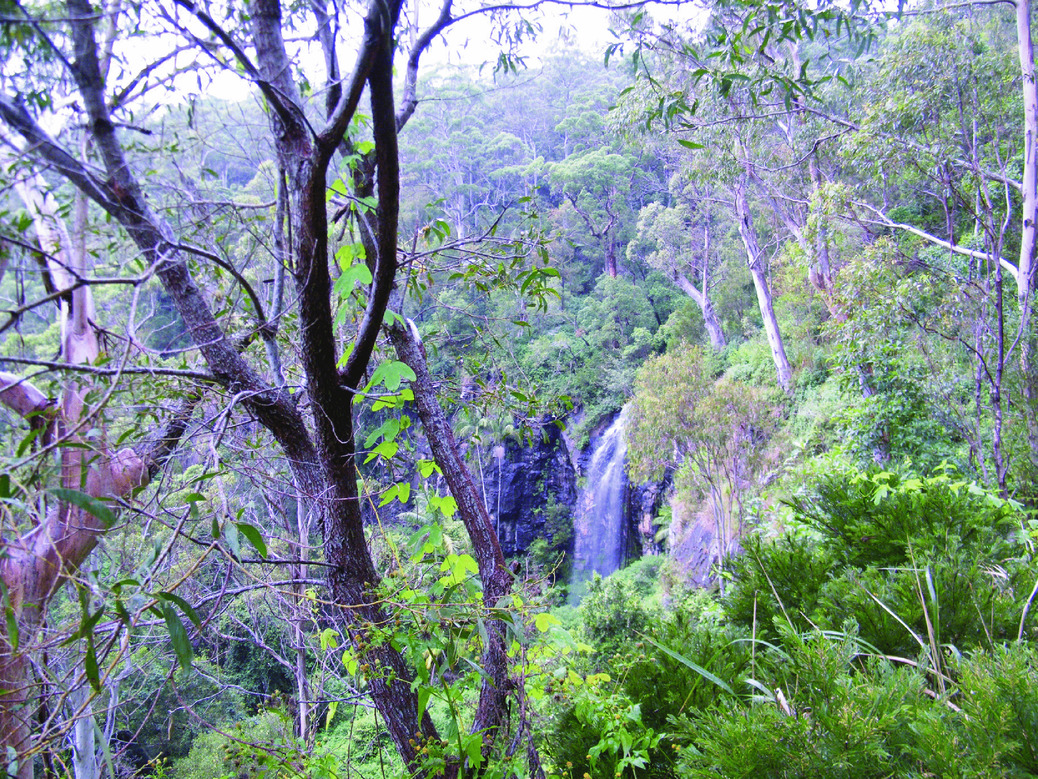
In his seminal book The Spell of the Sensuous, David Abram (Reference Abram1996) explores the extraordinary effect that language and story have had on human culture and its connection or disconnection to the natural world. We thus offer the opportunity to (re)story the development of pro-environmental behaviour. Rather than employing linear scaffolds such as those discussed by Kollmuss and Agyeman (Reference Kollmuss and Agyeman2002, pp. 241–247), and with a nod to posthumanist thinking, we model the development of pro-environmental knowledge on the structure of a living forest. This is distinct to a singular tree, as we heed Deleuze and Guatarri's (Reference Deleuze and Guattari1987) argument that knowledge is rhizomatic, not arborescent like a single tree. They go as far as to state that ‘many people have a tree growing in their heads, but the brain itself is much more a grass than a tree’ (p. 16), implying that the human brain is more suited to understand lived experience in an interconnected manner than as singular, unconnected incidences. To consider a forest is to consider an intricately complex and interconnected web of soil, fungi, plants, insects, animals, water, and air (see discussion in Wohlleben, Reference Wohlleben2015, pp. 49–55). Therefore, in this section, we explore how the different elements that combine together to result in pro-environmental behaviour can be (re)storied as the interconnected web of a living forest (see Figure 1).
Yugambeh country. Also known as the Knoll section of Tamborine National Park, with large flooded gums, Piccabeen groves and black skink lizards (photograph by Cutter-Mackenzie-Knowles).

For a forest to grow healthily it must be rooted in soil with appropriate nutrients such as nitrogen-fixing bacteria and mycorrhizal fungi (Maser, Claridge, & Trappe, Reference Maser, Claridge and Trappe2008), as well as receive appropriate amounts of water and sunlight; the development of pro-environmental behaviour is similar in its requirement for certain nutrients. There are a variety of influential sociocultural factors that provide the nutrients for the development of an individual or a community's pro-environmental behaviour. Gender, culture, ethnicity, education, religion, age, economic class, and disposition may act as nutritious humus in the formation of values that lead to pro-environmental behaviours (noting that in many cases these same factors may act as growth inhibitors in the same measure, in that they encourage values that do not support the growth of pro-environmental behaviour).
There are multiple and various species of plants and trees in a living forest, and this corresponds with our widened definition of environmental knowledge, which includes multiple and various types of knowledge of systems, actions, and effectiveness connected to pro-environmental behaviour (as per Frick et al., Reference Frick, Kaiser and Wilson2004). Stern's (Reference Stern2000) research suggests that human values such as ‘altruistic or self-transcendent values’ (p. 414) are also variables that can lead to significant pro-environmental behaviour. Accordingly, in our model, pro-environmental knowledge and values can be seen as the flora of the forest. A forest infrastructure is made up of ‘microsystems and megasystems of energy interchange, with every gradation in between, and with fractal-like complexity’ (Maser et al., Reference Maser, Claridge and Trappe2008, p. 2), and thus the interchange among the flora of variables that make up pro-environmental behaviour is constantly flowing as an individual and community deals with the intricacies of any environmental matter. What this represents is a complex web of communication or language not only within a single living entity itself but across/between all companion species (Wohleben, Reference Wohlleben2015).
Trees and plants grow with companion creatures and objects in a living forest. Throughout the forest, most species of plants (environmental knowledge and values), although they may be standing in nutrient-laden soil (influential factors), require the support of companion insects and animals for fertilisation and pollination. Thus, another crucial variable in the development of pro-environmental behaviour is agency. Kollmuss and Agyeman (Reference Kollmuss and Agyeman2002) make a minor reference to factors of agency when describing a barrier to pro-environmental behaviour as ‘lack of internal incentives’ (p. 257). Yet agency is a sociological concept that Doyle (Reference Doyle2015) calls ‘one of the big ideas in contemporary discourse about curriculum and teaching’ (p. 276), noting its importance as an integral theme in environmental education, and therefore in the development of pro-environmental behaviour. Bandura (Reference Bandura1997) defines agency as a form of self-efficacy, referring to an individual's belief in his/her ability to carry out the actions that are required in order to be followed by the desired results. Emirbayer and Mische (Reference Emirbayer and Mische1998) argue for a more dynamic discussion of the complexities of agency as a process of social engagement that depends on past and present experience, combined with future intentions (p. 963). Biesta and Tedder (Reference Biesta and Tedder2007) also propose that agency builds upon past actions, but emphasise that agency should be ‘understood as something that has to be achieved in and through engagement with particular temporal-relational contexts-for-action . . . [it] is not something that people have; it is something that people do’ (p. 136, emphasis in the original). This understanding of agency synthesises with our story: While we suggest that the forest creatures of personal agency are made up of a combination of intention, self-discipline,Footnote 2 and a sense of competence,Footnote 3 these personal characteristics can only be put into play as they interface and cross-pollinate with the knowledge, values and influential factors that are brought to the present experience.
What is the next part of the story of the forest? ‘So now the functional ripples of the tree-truffle-animal combination intersect with those of bacteria, leaves, lichens, and other soil organisms’ (Maser et al., Reference Maser, Claridge and Trappe2008, p. 226), eventually resulting in the blossoming of pro-environmental behaviour. These flowers and fruits of pro-environmental behaviour that have grown as a result of an interconnected combination of influential factors and experiences may be on a single plant or spread throughout the forest; they may be many or few; they may be large or small; they may stay on the tree or plant for a long time or fall to the ground after a day. Of course, the result of fruit falling or being consumed by animals or insects (who eventually die and get absorbed into the eco-system as well) is the eventual addition of more nutrients to the humus of the forest floor that encourages further growth, just as one act of pro-environmental behaviour may inspire others.
To expand our forest story one step further, it is important to note that the forest also interacts with sunlight, rain, oxygen, nitrogen, pollution, whereas under the ground, trees and plants are linked by a vast network of mycelium (Maser et al., Reference Maser, Claridge and Trappe2008). Both above and below the ground, the forest is linked to its place on the planet, with which it is intimately interconnected and by which it is invariably influenced. Pro-environmental behaviour, once developed, also interacts with its environment, and is affected by people, places, and new informational input. It is constantly changing and growing in one direction or another. ‘Forest ecosystems never reach a state of equilibrium, but rather advance from one semi stable state to another, which is precisely why sustainability is a moving target, not a fixed end point’ (Maser et al., Reference Maser, Claridge and Trappe2008, p. 5). Pro-environmental behaviours may adapt slightly or greatly to new conditions; they may come up against barriers or they may turn into ingrained life habits. But what they have done, whether slightly or profoundly, is affected the ongoing story of positive planetary change. Haraway (Reference Haraway2015) writes ‘we must change the story, the story must change . . . A common livable world must be composed, bit by bit, or not at all’ (p. 40, emphasis in the original).
Discussion and Conclusion
. . . we need stories (and theories) that are just big enough to gather up the complexities and keep the edges open and greedy for surprising new and old connections. ( Reference HarawayHaraway, 2015, p. 160)
A forest is essentially a collective; an assemblage of plants, trees, fungi, bacteria, creatures, objects, and sensations. Thus, we suggest that the story of the forest of pro-environmental behaviour could be eminently useful for further educational research into collective behaviours, as we propose that exploring and encouraging the development of collective pro-environmental behaviours may be another means of (re)storying towards new practices in environmental education and, indeed, new ecological norms. Chawla and Cushing (Reference Chawla and Cushing2007) suggest that environmental educators should pay attention to broad research that shows positive results from educational processes ‘that promote a child's basic sense of competence and sense of competence in working for common goals with a group’ (p. 448). Bandura (Reference Bandura1997) suggests that working as a collective lends itself to an emergence of greater results than would be possible if working as an individual (p. 478).
In the end, it is our intention that the story of a living forest will also aid in facilitating a deeper understanding of the complex and profound interconnectedness of the factors that lead to pro-environmental behaviours, which will in turn support environmental educators and researchers to develop their personal praxis to reflect this understanding. While this may be challenging in the current heavily siloed educational culture, environmental educators may use the idea of the interconnected forest to guide them in their practice; for instance, by designing multidisciplinary units of work for groups of students. A concrete example of this would be a waste education unit that, instead of being based on facts about recycling, starts from the story of how there is no ‘waste’ in the natural world, and then continues on to include multisensory and collective learning experiences about human-produced waste, using different disciplines such as science, art, health education, and language. If the story of the living forest of pro-environmental behaviour can be intertwined into pedagogy, it may inspire and encourage environmental educators to not only expand their repertoire of teaching tools, but gather strength to carry on as part of a deeply interconnected network of forest companions.
Author Biographies
Lisa Siegel is currently undertaking PhD research in the School of Education at Southern Cross University, where she is a member of the Sustainability, Environment & Education (SEE) Research Cluster. Her research is focused on the individual and collective life experiences of female environmental activists in Australia. Lisa tutors in the SCU School of Education and is currently the convenor of the Mid North Coast Sustainability Education Network.
Amy Cutter-Mackenzie-Knowles (formerly Cutter-Mackenzie) is a Professor at Southern Cross University, School of Education, in Sustainability, Environment and Education. She is the Deputy Head of School Research for the School of Education, as well as the Research Leader of the ‘Sustainability, Environment and Education’ (SEE) Research Cluster. Her current work is deeply engaged with children's ontologies in/as nature through socioecological and posthumanist theoretical framings. Two books in press by Amy are the ‘Research Handbook on Childhoodnature’ (with Malone & Barratt Hacking) and ‘Touchstones for Deterritorialising Socioecological Learning: The Anthropocene, Posthumanism and Commonworlds as Creative Milieux’ (with Lasczik, Wilks, Logan, Turner & Boyd).
Anne Bellert is a Senior Lecturer in Inclusive Education in the School of Education at Southern Cross University. She teaches inclusive pedagogy in initial teacher education courses at all levels, and also in postgraduate courses. Anne's research interests are in the fields of learning difficulties, effective teaching for literacy and numeracy, and reading comprehension. Anne and her colleagues have developed a new conceptual model for inclusive education — Sustainable Learning — and this work is currently being developed for several international projects and courses to reframe thinking about inclusive teacher education.