
Introduction
Modern society has benefited tremendously from the invention and popular utilization of Li-ion batteries.[Reference Whittingham1] One signature characteristic of Li-ion batteries is the outstanding rechargeability, with state-of-the-art commercial cells capable of thousands of cycles of repeated charge/discharge. This remarkable feat is made possible by the chemical nature of the charge/discharge processes: it is essentially an intercalation one. Both the anode and the cathode materials feature ionic channels that permit Li+ ions to go in and/or out at ease with minimum impacts to the structural and chemical integrity of the host materials. This feature, however, also unfortunately sets a limit to another important metric of battery performance, the maximum achievable capacities.[Reference Lu, Gallant, Kwabi, Harding, Mitchell, Whittingham and Shao-Horn2, Reference Zu and Li3] Significant price has to be paid in terms of structural complexities in order for the reversible intercalation to take place. Consider high-performance cathode material such as LiFePO4 as an example.[Reference Yuan, Wang, Zhang, Hu, Chen, Huang and Goodenough4] Heavy transition metals like Fe are necessary but do not directly contribute to the chemical conversion upon Li+ insertion and extraction. As a result, Li-ion batteries have almost reached their theoretical limit in terms of performance metrics (e.g., energy and power densities).[Reference Zu and Li3] There is a growing gap between the societal needs for energy storage and what the technology can deliver. The development of post-Li-ion batteries, ones that can offer significantly better performance, has become an urgent challenge. It is noted that as far as electrochemical energy storage is concerned, two other classes of technologies, fuel cells and supercapacitors, have also received significant attention.[Reference Akhtar, Sharma, Biswasa and Chandra5–Reference Kirubakaran, Jain and Nema10] These technologies, however, occupy very different application spaces from Li-ion batteries and are, therefore, not discussed in details in the present paper.
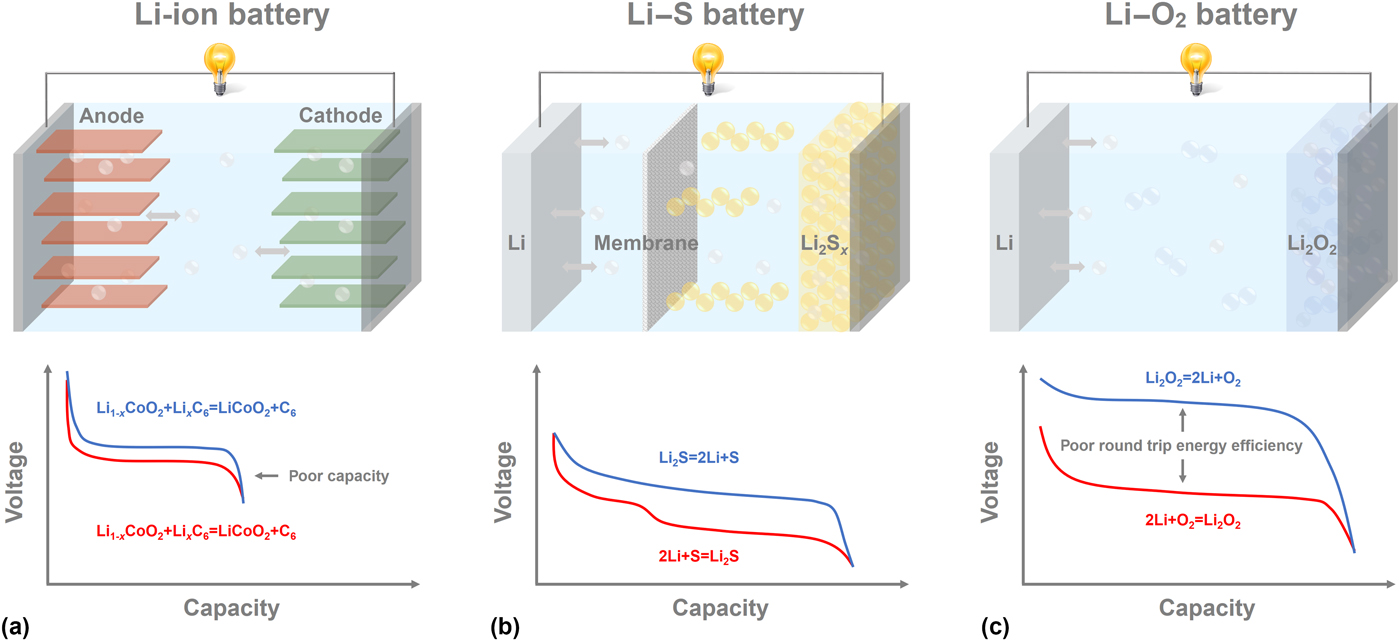
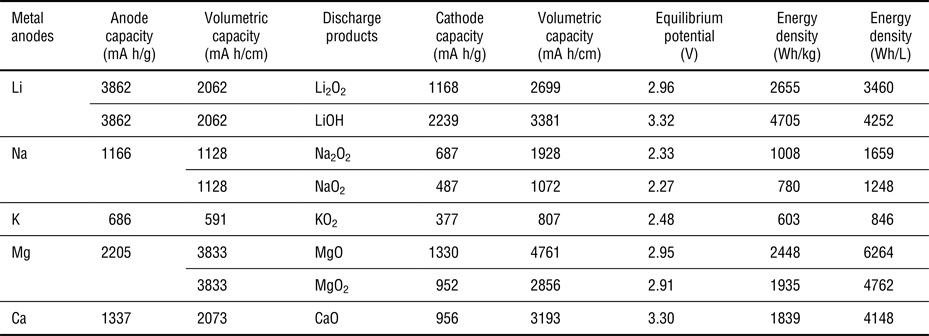
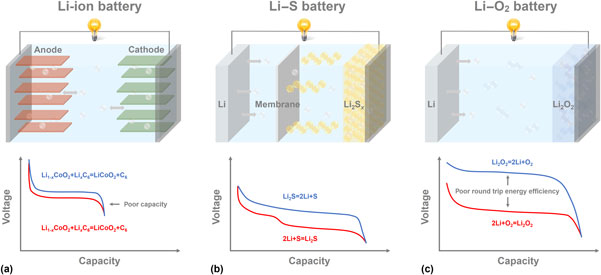
In the quest for post-Li-ion batteries, two technologies emerge as chief contenders, Li–S and Li–oxygen (O2) batteries (Fig. 1).[Reference Lu, Li, Park, Sun, Wu and Amine11, Reference Black, Adams and Nazar12] While they may vary dramatically in terms of technology readiness levels, both share a key commonality: they are based on conversion chemical reactions instead of intercalation ones. The underlying principles are easy to comprehend. Conversion chemical reactions make it possible to remove the “dormant” atoms necessary for the stability of intercalation electrode materials (such as heavy transition metal atoms in Li-ion battery cathode materials). Consequently, much higher capacities are expected.[Reference Lu, Gallant, Kwabi, Harding, Mitchell, Whittingham and Shao-Horn2] Indeed, by many estimates, Li–O2 batteries may enable the highest theoretical energy densities for Li-based electrochemical energy storage technologies.[Reference Zu and Li3, Reference Lu, Li, Park, Sun, Wu and Amine11, Reference Black, Adams and Nazar12] As far as conversion chemistry is concerned, the “holy grail” of this technology would be one that runs on ambient air. Such a technology would not only enable the highest capacity because half of the reactants (or products) can be drawn from (or exhausted into) the environment, but also feature much better safety. For these reasons, the most recent decade has witnessed an explosion of research, and hence, publications on the conversion chemistry-based energy storage technologies. It is noted, however, that metal–air battery is by no means a new idea as Zn–air battery has long been commercialized for applications where safety is of paramount importance.[Reference Li and Dai13] The latest round of research interest has been mostly fueled by the quest for ever higher capacities (Table I).[Reference Lu, Gallant, Kwabi, Harding, Mitchell, Whittingham and Shao-Horn2, Reference Zu and Li3, Reference Cheng and Chen14, Reference Wang, Xu, Xu and Zhang15]
Schematic illustrations of various battery technologies. State-of-the-art battery is represented by Li-ion batteries (a), which feature great traits in terms of rechargeability but face challenges in terms of capacity. Li–S batteries (b) and Li–O2 batteries (c) promise greater capacities but face distinct challenges.

Gravimetric and volumetric energy densities of metal–O2 batteries.

What underpins metal–air batteries is the chemical reactions that involve O2 and predominantly take place at the cathode.[Reference Cao, Lee, Liu and Cho16–Reference Zhang, Wang, Xie and Zhou18] This nature presents new opportunities and unique challenges. More often than not the process necessitates catalysts. Hence, the discussions on catalysis become highly relevant.[Reference Wang, Xu, Xu and Zhang15] It is within this context that the present paper is written. We aim to provide an account of topics on catalysis in the framework of metal–air batteries. In particular, we hope to organize the broad knowledge generated by the large number of publications in this field, so as to assess the advantages and disadvantages of catalysts used in metal–air systems. This paper is organized as follows. We will mainly focus on metal–O2 batteries. Significant attention will be given to the systems where heterogeneous catalysts are involved because they represent the mainstream research topic in this area. Due attention is paid to homogeneous catalysis, mainly within the context of using these homogeneous catalysts as redox mediators. Toward the end of this paper, we will briefly discuss the implications by other chemicals in ambient air (e.g., CO2 and/or N2) to the operations of metal–air batteries.
The role of catalysts in metal–air batteries
In many ways, a metal–air battery may be regarded as a hybrid between a battery (standard stripping and plating at the anode) and a fuel cell (conversion chemical reactions involving gases at the cathode). The challenges and opportunities presented by the fuel cell research are indeed shared by research on metal–air batteries, as well. From this point of view, it becomes relatively easy to appreciate the necessity of catalysts for the operation of metal–air batteries. The importance of catalysis for energy-related applications has been recently reviewed by Nørskov and co-workers.[Reference Seh, Kibsgaard, Dickens, Chorkendorff, Nørskov and Jaramillo19] As such, many similar discussions will not be repeated here. Instead, we focus our discussions on catalysis in metal–air batteries, where the presence of catalysts is mainly to facilitate the conversion between air (chiefly O2) and oxides (as well as peroxides, superoxides. or hydroxides, among others).[Reference Cheng and Chen14] As a matter of fact, a significant portion of research on fuel cells is devoted to improving the kinetics of oxygen reduction reactions (ORR). Similarly, great efforts have been attracted to studying oxygen evolution reactions (OER) for the electrolysis of H2O. While many parallels may be drawn between researches on these different technologies, there is a clear distinction for the topics discussed here. As will be seen below, the majority of existing efforts on metal–O2 batteries study O2 catalysis in non-aqueous solvents. New phenomena emerge in these systems. In particular, it becomes much more important for research on metal–O2 batteries to understand how the presence of reactive O2 species may induce the decomposition of the various components of a test cell, including the electrolytes.[Reference Luntz and McCloskey20, Reference Yao, Dong, Cheng and Wang21] Whether the catalysts utilized promote such parasitic chemical reactions is yet another important question that the community is eager to answer.[Reference Yao, Dong, Cheng and Wang21] To help appreciate the issues at hand, we will next use Li–O2 battery as a prototypical platform for our discussions.
The role of catalysts in Li–O2 batteries
The chemistry that governs metal–O2 batteries is the reversible conversion between molecular O2 and its reduced forms through a one, two, or four-electron process.[Reference Cheng and Chen14] Which process is preferred depends on the relative stability of the resulting products. For instance, it is desired to design a K–O2 battery that favors a one-electron process because KO2 (superoxide) is a stable product in aprotic solvents.[Reference Yu, Lau, Lei, Liu, Qin, Yang, Li, Curtiss, Zhai and Kang22] By comparison, Li–O2 is much better managed through a two-electron reaction pathway as the formation and decomposition of Li2O2 (peroxide) in aprotic electrolytes is much more reversible than Li2O and LiOH (oxide and hydroxide, respectively), which would favor a four-electron pathway. Na–O2 batteries could take either the one- or the two-electron pathway.[Reference Yadegari, Sun and Sun23] The different theoretical performance metrics that are enabled by the conversion are listed in Table I. It is seen that alkaline–O2 (i.e., Li–, Na–, K–O2) batteries generally offer high gravimetric energy densities. In contrast, alkaline earth–O2 (i.e., Mg– and Ca–O2) batteries are advantageous for their volumetric energy densities.[Reference Dong, Yao, Luo, Zhang, Hwang and Wang24] Importantly, both classes of batteries would feature significantly better theoretical performance than state-of-the-art Li-ion batteries do. In terms of technology readiness levels, alkaline earth–O2 batteries are much less developed. The strong cation–anion interactions between Mg2+ (and Ca2+) and Om2− (where m = 1 or 2), for example, make the solid discharge products difficult to decompose. Consequently, the test cells would be exceedingly difficult to recharge. While the poor kinetics does present new opportunities to study catalysis in Mg– and Ca–O2 batteries, researches on them are still in their infancy stage. For these reasons, we choose to focus our discussions on Li–O2 batteries, where significant research has been conducted and exciting progresses have been made.[Reference Lu, Gallant, Kwabi, Harding, Mitchell, Whittingham and Shao-Horn2, Reference Zu and Li3, Reference Lu, Li, Park, Sun, Wu and Amine11, Reference Black, Adams and Nazar12, Reference Cheng and Chen14, Reference Wang, Xu, Xu and Zhang15, Reference Luntz and McCloskey20, Reference Yao, Dong, Cheng and Wang21]
Catalysts for O2 chemistry in aprotic Li–O2 batteries
The conversion between Li+/Li features the lowest known equilibrium potential of any redox pairs at −3.04 V versus normal hydrogen electrode. When used as an anode, Li metal makes it possible to achieve high operation voltages. In addition, Li is the lightest metal and thus offers the highest gravimetric capacity (3860 mA h/g).[Reference Zu and Li3] These are the fundamental reasons why Li-based energy storage technology has been highly appealing. The real unique appeal of Li–O2 batteries, nevertheless, is found in the discharge product of solid Li2O2 on the cathode, which features one of the highest gravimetric capacities among all metal oxides.[Reference Lu, Gallant, Kwabi, Harding, Mitchell, Whittingham and Shao-Horn2] The operation principles of aprotic Li–O2 batteries are summarized in Table II.
Desired chemical reactions for non-aqueous Li–O2 batteries.

In principle, the two-electron reduction/oxidation between molecular O2 and peroxide (Li2O2) in aprotic electrolytes is expected to be highly reversible.[Reference Lu, Li, Park, Sun, Wu and Amine11, Reference Black, Adams and Nazar12] Consequently, we expect batteries based on the chemical conversion to be highly rechargeable. In reality, however, poor rechargeability has been a key issue faced by all Li–O2 test cells. In connection with this issue are the low round-trip efficiencies, defined as the ratios between the output energy and the input one (η = E output/E input; at constant charge capacity, η = V discharge/V recharge).[Reference Lu, Gallant, Kwabi, Harding, Mitchell, Whittingham and Shao-Horn2] A typical average discharge potential is 2.7 V versus Li+/Li, and that for recharge is approximately 4.0 V versus Li+/Li, yielding a representative round-trip efficiency of 65%. Nearly all existing efforts on Li–O2 batteries are either directed toward improving the rechargeability or increasing the round-trip efficiencies or both. Other issues such as poor rate performance (i.e., significantly lower capacities are observed when the charge/discharge rates are increased) and poor stability have their roots in the rechargeability and round-trip efficiencies, as well.[Reference Lu, Gallant, Kwabi, Harding, Mitchell, Whittingham and Shao-Horn2] Consider the rate performance as an example. As is dictated by the Butler–Volmer equation, faster kinetics demands greater overpotentials. When tested under faster discharge rates, the average discharge potential will further decrease from the 2.96 V versus Li+/Li equilibrium potential; similarly, greater recharge potential would be expected for faster recharge rates. Together, a lower discharge potential and a higher recharge potential would lead to a much worse round-trip efficiency. The connection between rechargeability and stability is self-evident.
In addition to the thermodynamic considerations as shown in Table II, kinetic factors in aprotic Li–O2 batteries are responsible for the poor rate performance, as well as the low round-trip energy efficiencies. This is because the conversion among the intermediates and the products features high-energy barriers, thereby resulting in low reaction rates for both ORR and OER.[Reference Lu, Gallant, Kwabi, Harding, Mitchell, Whittingham and Shao-Horn2] While it may be more obvious for some issues and less so for others, catalysis at the cathode plays a pivotal role in all issues faced by Li–O2 batteries.[Reference Cheng and Chen14, Reference Wang, Xu, Xu and Zhang15] It was recognized earlier on that catalysts may be critical to the decomposition of Li2O2, and hence, the recharge process. This is because Li2O2 is both electronically and ionically insulating. Its decomposition may incur high overpotentials due to the kinetic barriers.[Reference Lu, Gallant, Kwabi, Harding, Mitchell, Whittingham and Shao-Horn2, Reference Lu, Li, Park, Sun, Wu and Amine11] Indeed, one often observes a dramatic increase of recharge potentials, particularly toward the end of the process. Few known organic electrolytes could survive the high potentials needed to fully recover the discharge capacities (often >4.7 V versus Li+/Li). Thus, the parasitic decomposition of the electrolyte becomes relevant to the discussions, leading to the formation of undesired by-products such as organic carbonates.[Reference Luntz and McCloskey20, Reference Yao, Dong, Cheng and Wang21] These by-products are even more difficult to decompose than Li2O2. They accumulate over the repeated tests and contribute significantly to cell failures.[Reference McCloskey, Bethune, Shelby, Girishkumar and Luntz25] To address this concern, various catalysts have been introduced. Although many of them are effective in reducing the recharge overpotentials, the real role played by them in the test cells remains a debate.[Reference McCloskey and Addison26] More details on this discussion will be introduced in the next session. Before we do so, however, there is another issue that deserves additional attention, which concerns the need for catalysis during discharge. The same argument for recharge as presented above might be used to support the need for ORR catalysis. But the argument is further complicated by the ORR catalytic activity inherent to carbon, which is nearly ubiquitously used in most Li–O2 research.[Reference McCloskey and Addison26, Reference Thotiyl, Freunberger, Peng and Bruce27] It suffices to say here that the role of catalysts for ORR is even less clear than that for recharge. To provide a balanced view, the next subsection is organized as follows. We divide the discussions on catalysts for aprotic Li–O2 batteries based on their interactions with desired reactants and products (O2 and Li2O2), as well as their interactions with other components of the test cells (including carbon support and the electrolyte). The existing studies are grouped based on the form of catalysts used.
Heterogeneous catalysts in aprotic Li–O2 batteries and their side effects
Most catalysts with ORR and OER activities in aqueous solutions have been studied for their potential ORR and OER activities in non-aqueous solutions, especially for aprotic Li–O2 battery applications. In general, they may be categorized into three main groups: (i) metals and metal alloys; (ii) metal oxides and other metal compounds; and (iii) modified carbon with heteroatoms. While a majority of them are effective in improving the round-trip efficiencies and cycling performance, it remains unknown regarding how the catalysts function and whether the improved performance is through the desired mechanisms.
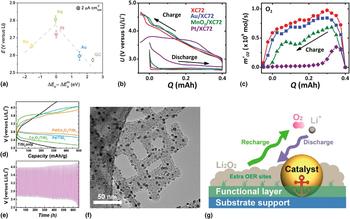
(1) Metal and metal alloy: Shao-Horn and co-workers pioneered researches on the catalytic activity of noble metal catalysts, including Pt, Pd, Ru, and Au, for ORR in a relatively stable electrolyte [0.1 M LiClO4 in 1,2-dimethoxyethane (DME)].[Reference Lu, Gasteiger and Shao-Horn28, Reference Lu, Gasteiger, Parent, Chiloyan and Shao-Horn29] The ORR activity was found to follow a volcano-type trend when the O2 adsorption energy was used as a descriptor. Among the catalysts studied by Shao-Horn and co-workers, Pt and Pd sit on the top of the volcano [Fig. 2(a)]; they were regarded as the most desired catalyst choice for ORR. The result would be consistent with researches on fuel cells for ORR in aqueous solutions. Subsequent studies by the same group found that Pt was also active toward OER.[Reference Lu, Gasteiger, Parent, Chiloyan and Shao-Horn29] These results would suggest that Pt is a desired bifunctional catalyst for Li–O2 battery applications, since as a single catalyst, it can effectively improve the round-trip efficiencies and the cyclability. However, quantitative analysis by McCloskey et al. later revealed that Pt is highly active toward catalyzing DME decomposition under these conditions [Figs. 2(b) and 2(c)].[Reference McCloskey, Scheffler, Speidel, Bethune, Shelby and Luntz30] As an irreversible process, DME decomposition is undesired. More importantly, the results greatly complicate the interpretation that Pt is an effective catalyst as the observed improvement may very well have been an artifact due to DME decomposition. The catalytic activity of Pt in decomposing DME was confirmed by several other studies as well.[Reference Gittleson, Ryu, Schwab, Tong and Taylor31, Reference Ma, Wu, Wang, Zhang, Zhang, Yan, Wei, Liu, Wang, Jiang, Fan, Xu and Peng32] Collectively, these results discourage further efforts of using Pt as a catalyst for Li–O2 battery applications, unless an electrolyte stable against Pt could be found. Similar results were also observed for Au [Figs. 2(b) and 2(c)].[Reference McCloskey, Scheffler, Speidel, Bethune, Shelby and Luntz30]
(a) The activities of Ru, Pd, Pt, and Au fit the volcano plot nicely for the prediction of ORR activities in aprotic electrolytes. Reproduced with permission from Ref. Reference Lu, Gasteiger and Shao-Horn28 (American Chemical Society, 2011). (b) Representative Li–O2 battery discharge and recharge data of Au, MnO2, and Pt on carbon (XC72 Vulcan). Reproduced with permission from Ref. Reference McCloskey, Scheffler, Speidel, Bethune, Shelby and Luntz30 (American Chemical Society, 2011). (c) Quantitative product detection of O2 during recharge of a Li–O2 battery. Reproduced with permission from Ref. Reference McCloskey, Scheffler, Speidel, Bethune, Shelby and Luntz30 (American Chemical Society, 2011). (d) Representative discharge/recharge data of various catalyst/substrate cathode combinations are shown to highlight the role of Pd and Co3O4 as catalysts for Li–O2 battery applications. Reproduced with permission from Ref. Reference Yao, Cheng, Xie, Dong and Wang40 (American Chemical Society, 2015). (e) The TiSi2/Co3O4/Pd system enables cyclability up to 126 cycles for Li–O2 battery operations. Reproduced with permission from Ref. Reference Yao, Cheng, Xie, Dong and Wang40 (American Chemical Society, 2015). (f) A representative transmission electron micrograph of the TiSi2/Co3O4/Pd combination. Reproduced with permission from Ref. Reference Yao, Cheng, Xie, Dong and Wang40 (American Chemical Society, 2015). (g) The catalyst design of TiSi2/Co3O4/Pd system is schematically illustrated to highlight the role of Pd and Co3O4. Reproduced with permission from Ref. Reference Yao, Cheng, Xie, Dong and Wang40 (American Chemical Society, 2015).
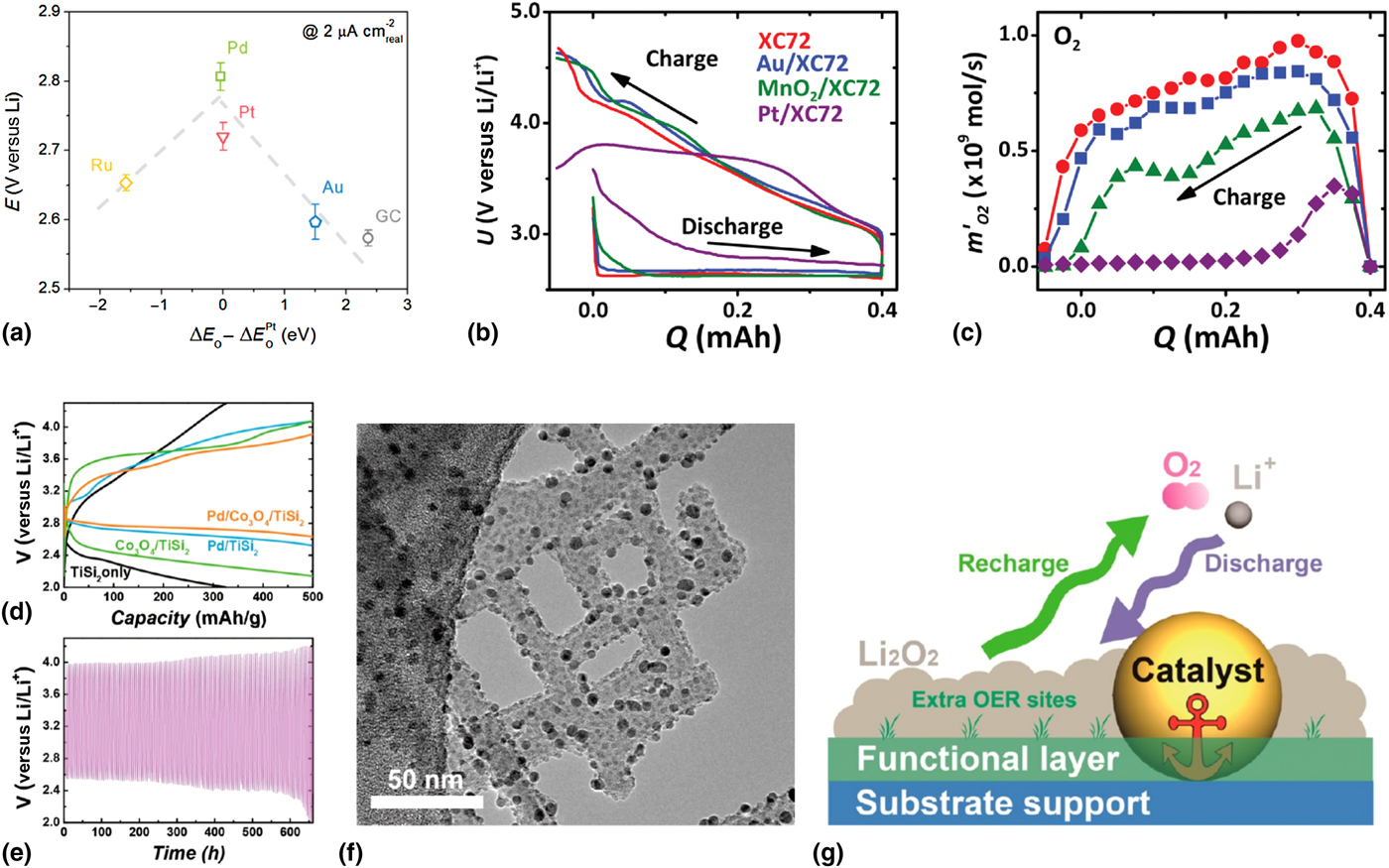
In contrast, other noble metals, including Pd, Ru, and Ir, are effective in promoting the reversible formation and/or the decomposition of Li2O2. For instance, Pd has proven active toward ORR in non-aqueous electrolytes, leading to decreased discharge overpotentials.[Reference Xie, Yao, Cheng, Madden, Dornath, Chang, Fan and Wang33] The catalytic effect has been applied to augment protected carbon cathode or non-carbon cathode, which are stable against parasitic chemical reactions but less active toward ORR. Ru has been shown as another highly effective catalyst toward both ORR and OER under Li–O2 battery operation conditions.[Reference Liao, Zhang, Wang, Li, Jian, Yu and Zhou34, Reference Xie, Yao, Madden, Jiang, Chou, Tsung and Wang35] Quantitative analysis supports the efficacy of Ru toward Li2O2 formation and decomposition with limited electrolyte decomposition or CO2 evolution.[Reference Xie, Yao, Madden, Jiang, Chou, Tsung and Wang35] The round-trip efficiencies in the Ru-based systems were generally much higher than other electrocatalysts. Similarly, Ir-based catalysts were recently reported to be unique in terms of promoting LiO2 formation.[Reference Lu, Lee, Luo, Lau, Asadi, Wang, Brombosz, Wen, Zhai, Chen, Miller, Jeong, Park, Fang, Kumar, Salehi-Khojin, Sun, Curtiss and Amine36] Different from Li2O2, LiO2 has been predicted to be thermodynamically unstable. But because its formation and decomposition only involve one electron, the process would be favored kinetically, meaning that low overpotentials for both discharge and recharge are expected. Nevertheless, it is noted that whether LiO2 is indeed the stable discharge product has been debated. For instance, McCloskey and co-workers argue that while LiO2 may not be the product of the process, their iodometric titration results suggest that O2 reduction as catalyzed by Ir-based catalysts is indeed efficient.[Reference Papp, Forster, Burke, Kim, Luntz, Shelby, Urban and McCloskey37] The implications of high cost by utilizations of precious metals such as Ru and Ir are yet another factor that deserves additional discussions.
(2) Metal compound: In many ways, the decomposition of Li2O2 draws similarities with OER in water oxidation. For this reason, early research on finding effective catalysts to reduce the recharge overpotentials of Li–O2 has been inspired by water oxidation catalysts, chiefly metal oxides. Toward this end, MnOx is one of the earliest studied materials as an OER catalyst for Li–O2 batteries.[Reference Debart, Paterson, Bao and Bruce38] However, it was later found active toward electrolyte decomposition as well, making it difficult to assess the true performance in catalyzing Li2O2 decomposition in non-aqueous electrolytes [Figs. 2(b) and (c)].[Reference McCloskey, Scheffler, Speidel, Bethune, Shelby and Luntz30] Subsequent research on screening catalysts for Li–O2 battery applications has placed more emphases on whether the catalysts promote parasitic chemical reactions. Among those studied, Fe2O3, Co3O4, and RuO2 stand out for their performance. For example, Fe2O3 was shown to exhibit good OER catalytic activity.[Reference Xie, Yao, Cheng, Madden, Dornath, Chang, Fan and Wang33, Reference Lu, Qin, Du, Luo, Wu, Ren, Wen, Miller, Miller and Amine39] A conformal coverage of FeOx was applied as a protecting layer on carbonaceous materials for better stability against carbon oxidation and catalytic activity toward OER.[Reference Xie, Yao, Cheng, Madden, Dornath, Chang, Fan and Wang33] Similarly, a thin layer of Co3O4 was found to serve dual functionalities of an OER catalyst and an adhesion layer for noble metal nanoparticle ORR catalysts [Figs. 2(d)–2(g)].[Reference Yao, Cheng, Xie, Dong and Wang40] Notably, RuOx has been shown as one of the best catalysts in reducing the overpotentials of both discharge and recharge and thus could be a good bi-functional catalyst.[Reference Jian, Liu, Li, He, Guo, Chen and Zhou41, Reference Li, Tang, Zhang, Liao, He, Golberg, Yamada and Zhou42]
More complex transition metal compounds such as perovskites have also been studied for Li–O2 battery applications. One of the earliest studies was carried out by Yu and co-workers, where La0.8Sr0.2MnO3 was used as a model material.[Reference Fu, Lin, Huang and Yu43] Nevertheless, quantitative product detection is needed to verify the efficacy of perovskite-based catalysts in Li–O2 battery operations.[Reference Luntz and McCloskey20, Reference Yao, Dong, Cheng and Wang21] Direct iodometric titration and back titration methods are reliable for the discharge process, whereas quantitative gas phase product detection by differential electrochemical mass spectrometry (DEMS) and gas chromatography-mass spectrometry are effective for the recharge process.[Reference Xie, Yao, Madden, Jiang, Chou, Tsung and Wang35, Reference Xie, Dong, Madden, Yao, Cheng, Dornath, Fan and Wang44, Reference McCloskey, Valery, Luntz, Gowda, Wallraff, Garcia, Mori and Krupp45] Representative DEMS data are shown in Fig. 2(c).
Metal nitrides and carbides such as TiN, TiC, Mo2C are popular non-oxide catalysts for non-aqueous Li–O2 batteries.[Reference Li, Ohnishi, Yamada, Kubota, Domen, Yamada and Zhou46, Reference Kundu, Black, Adams, Harrison, Zavadil and Nazar47] The different electronic structures of the d-orbitals of the metal center are expected to lead to adsorption/desorption behaviors different from oxides, and hence, different catalytic activities.[Reference Wang, Xu, Xu and Zhang15] The stability of these catalysts in the presence of reactive O2 species may be a potential concern that has sometimes been overlooked. For instance, Nazar and co-workers reported that Mo2C-based cathode/catalysts suffer oxidative reaction by releasing Mo-based anions into the electrolyte.[Reference Kundu, Black, Adams, Harrison, Zavadil and Nazar47] As a result, low Faradaic efficiencies were observed.
(3) Modified carbon: Ever since the initial report of Li–O2 battery by Abraham and Jiang, carbon has been widely applied as a cathode material.[Reference Thotiyl, Freunberger, Peng and Bruce27, Reference Abraham and Jiang48] Despite the instability issues as pointed out by numerous researchers that would result in the notorious carbonate by-products during cycling, its attributes such as inherent ORR catalytic activity and low cost have attracted by far the most research attention.[Reference Thotiyl, Freunberger, Peng and Bruce27] The lack of OER active sites on carbon, on the other hand, motivates researchers to modify carbon for bi-functionalities (both ORR and OER). The most popular strategy has been to dope the graphitic domains. In particular, the popularly studied N doping method has proven effective in decreasing overpotentials during recharge.[Reference Shui, Karan, Balasubramanian, Li and Liu49] The catalytic effects by pyridinic and pyrrolic nitrogen atoms were extensively studied.[Reference Guo, Shibuya, Akiba, Saji, Kondo and Nakamura50] Similar effects have been found in doping by P, as well.[Reference Cao, Wu, Jin, Tian, Strasser and Yang51] In such a strategy, the heteroatoms often serve as the active sites for ORR and/or OER reactions. As such, the achievable catalytic activity has been found dependent on the doping densities.[Reference Shui, Karan, Balasubramanian, Li and Liu49, Reference Guo, Shibuya, Akiba, Saji, Kondo and Nakamura50]
Nevertheless, within the context of metal O2 batteries, doping heteroatoms into graphitic domains of carbon does introduce defective sites. These sites are often reactive to O2 species. Moreover, these defective sites show catalytic activities toward electrolyte decomposition.[Reference Luo, Yao, Yang, Han, Chen, Geng, Vattipalli, Dong, Fan, Wang and Zhu52] Consequently, long cyclability by these modified carbon electrodes is rare in the literature. It remains a challenge to balance the desired benefit of improved discharge/recharge performance and the undesired parasitic chemical reactions.[Reference Yao, Dong, Cheng and Wang21] One direction of research that has not been reported is to utilize the doping scheme to improve the performance of carbon electrodes against parasitic chemical reactions. The idea is based on the fact that most carbon electrodes exhibit catalytic activity toward parasitic chemistry due to the inherent defects.[Reference Thotiyl, Freunberger, Peng and Bruce27, Reference Zhang, Chen, Zhou, Liu, Zeng, Zhang and Peng53, Reference McCloskey, Speidel, Scheffler, Miller, Viswanathan, Hummelshoj, Norskov and Luntz54] For instance, x-ray photoelectron spectroscopy studies have revealed the existence of carbonyl groups or hydroxyl groups or both on pristine carbon, particularly on the edge plane sites.[Reference Kundu, Wang, Xia and Muhler55] If dopants can be introduced to form stable C–N or C=N bonds to replace the labile C–O or C=O ones, much of the negative reactivity inherent to carbon may be significantly suppressed.
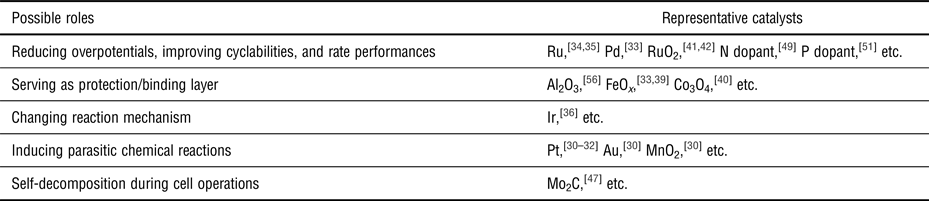
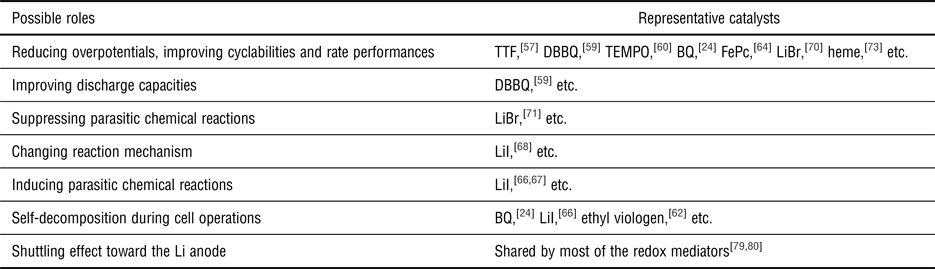
(4) Side effects of heterogeneous catalysts: The original idea of introducing heterogeneous catalysts was to reduce the overpotentials for both discharge and recharge, not necessarily simultaneously.[Reference Lu, Gallant, Kwabi, Harding, Mitchell, Whittingham and Shao-Horn2, Reference Lu, Gasteiger, Parent, Chiloyan and Shao-Horn29] Reduced overpotentials would not only translate to higher round-trip efficiencies, they also limit the highest applied potentials so as to limit undesired chemical reactions such as electrolyte and/or electrode decomposition.[Reference Luntz and McCloskey20, Reference Yao, Dong, Cheng and Wang21] Together, catalysts are expected to enable (i) higher round-trip efficiencies, (ii) better rate performance, and (iii) longer cycle lifetimes (Table III). The negative consequences of introducing catalysts have been the promotion of parasitic chemical reactions such as electrolyte decomposition and the decomposition of the catalyst compounds themselves (Table III).[Reference Yao, Dong, Cheng and Wang21, Reference McCloskey and Addison26, Reference McCloskey, Scheffler, Speidel, Bethune, Shelby and Luntz30] As such, it remains a critical debate whether it makes sense to introduce heterogeneous catalyst for Li–O2 battery operations. On the one hand, the parasitic chemical reactions catalyzed by catalyst additions do introduce artificial effects that complicate the studies of Li–O2 battery operations.[Reference Luntz and McCloskey20, Reference McCloskey and Addison26, Reference McCloskey, Scheffler, Speidel, Bethune, Shelby and Luntz30] Whether the various catalysts change the electrochemical behaviors of test cells through a conventional catalytic mechanism is unknown. On the other hand, the mounting evidence that the introduction of catalyst does indeed improve the performance metrics is indisputable.[Reference Xie, Yao, Cheng, Madden, Dornath, Chang, Fan and Wang33, Reference Lu, Lee, Luo, Lau, Asadi, Wang, Brombosz, Wen, Zhai, Chen, Miller, Jeong, Park, Fang, Kumar, Salehi-Khojin, Sun, Curtiss and Amine36, Reference Lu, Qin, Du, Luo, Wu, Ren, Wen, Miller, Miller and Amine39–Reference Jian, Liu, Li, He, Guo, Chen and Zhou41, Reference Shui, Karan, Balasubramanian, Li and Liu49, Reference Cao, Wu, Jin, Tian, Strasser and Yang51, Reference Lu, Lei, Lau, Luo, Du, Wen, Assary, Das, Miller, Elam, Albishri, Abd El-Hady, Sun, Curtiss and Amine56] Our view is that heterogeneous catalysts are likely to play positive roles in Li–O2 battery operations. But to understand how they function requires detailed mechanistic studies, and how to take advantage of their benefits while counteract their negative effects is a critical issue to address in the future.
Roles of heterogeneous catalysts.

Homogeneous catalysts in aprotic Li–O2 batteries and their side effects
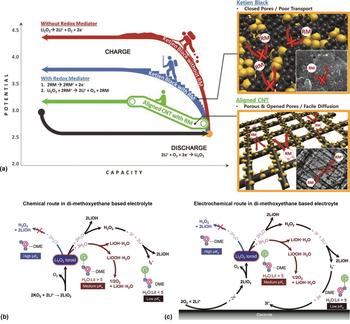
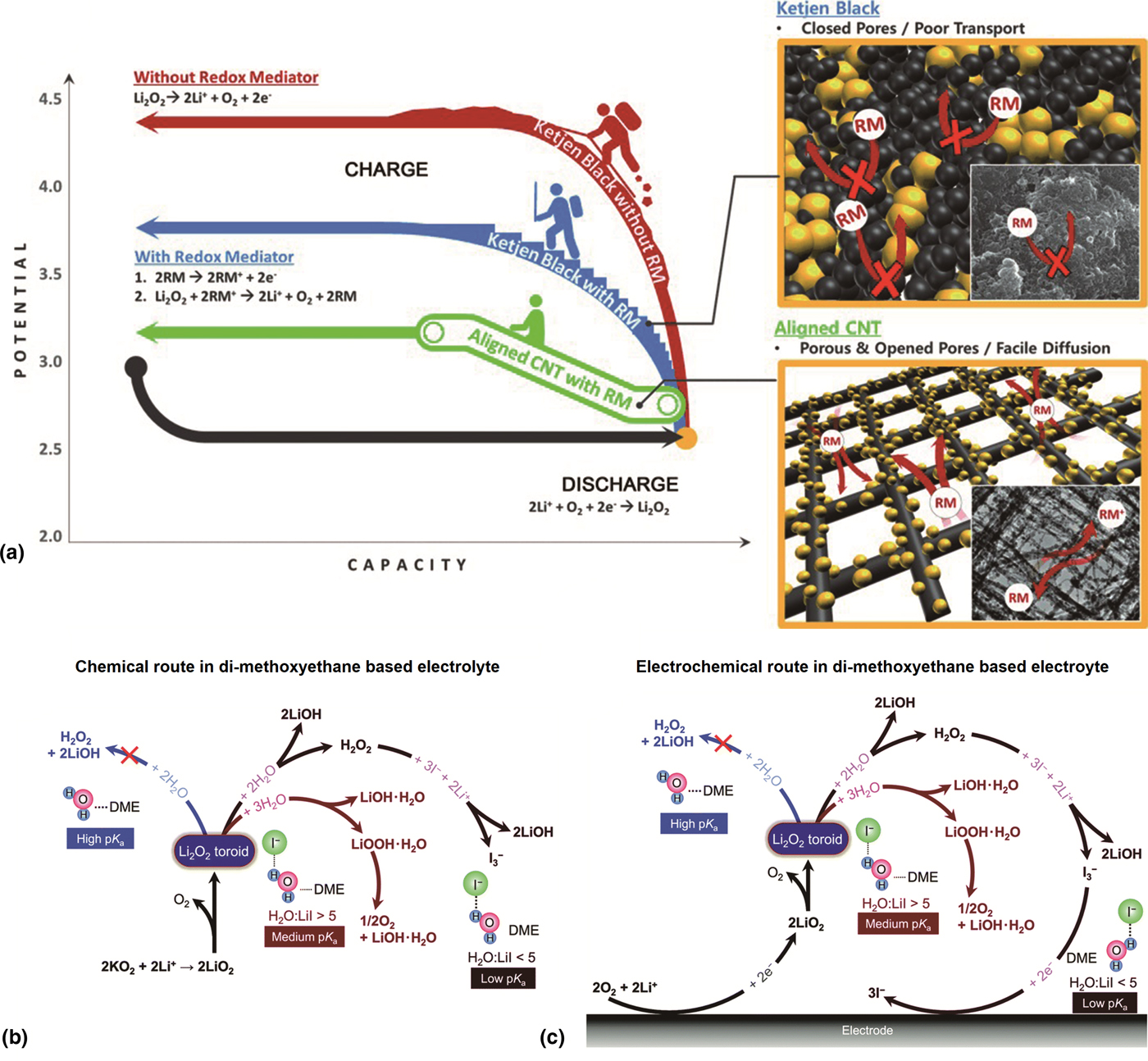
Homogeneous catalysts within the context of Li–O2 batteries are often referred as redox mediators. They are introduced to provide a solution-based pathway for charge transport to facilitate the formation and/or decomposition of Li2O2.[Reference Chen, Freunberger, Peng, Fontaine and Bruce57] The premise of their utilization is that, as a solvated species in the solution, charge transfer between them and the electrode is fast. Furthermore, their oxidized form can form intimate contacts with the solid-state products such as Li2O2 for easier oxidation of the latter. In a simplified hypothetical process [Fig. 3(a)], during recharge, the redox mediators are first oxidized at the electrode. The oxidized form then diffuses to Li2O2. Upon contact, they oxidize Li2O2 to release O2. In the process, they are reduced back to the original form, ready for re-oxidation at the electrode. That is, their chief role is to “mediate” charge transfer between the electrode and the Li2O2 solid, and hence, the name of redox mediator.[Reference Chen, Freunberger, Peng, Fontaine and Bruce57] One distinct feature of these catalysts is that their redox potentials must exceed the equilibrium potential of O2/Li2O2 to enable the chemical oxidation reactions, generally by at least 500 mV to overcome the kinetic barriers.[Reference Feng, He and Zhou58] While the majority of reports on redox mediators focus on their use for the recharge process, some systems are effective in improving the discharge kinetics, as well.[Reference Gao, Chen, Johnson and Bruce59] For the latter purpose of facilitating discharge, the reduction potentials of the redox mediators are expected to be lower than that of O2/Li2O2. Key to their utility is faster kinetics for the overall process (electron transfer from the electrode to redox mediators, followed by electron transfer from redox mediators to O2) than direct O2− formation on the electrode surfaces.[Reference Gao, Chen, Johnson and Bruce59] Other considerations for selecting redox mediators include solubility and stability. Below we use several specific examples to further discuss these considerations.
(a) Operation principles of recharge redox mediator in the case of LiI with carbonaceous cathode. During recharge, I− is first electro-oxidized to form I3−, which further chemically oxidize the Li2O2 to form O2. The recharge overpotential is reduced, and the round-trip efficiency is improved. Reproduced with permission from Ref. Reference Lim, Song, Kim, Gwon, Bae, Park, Hong, Kim, Kim, Kim, Lepro, Ovalle-Robles, Baughman and Kang65 (Wiley-VCH, 2014). (b) The positive and negative effects of LiI as a redox mediator in H2O contaminated aprotic Li–O2 batteries through chemical routes. Reproduced with permission from Ref. Reference Tulodziecki, Leverick, Amanchukwu, Katayama, Kwabi, Barde, Hammond and Shao-Horn67 (The Royal Society of Chemistry, 2017). (c) The positive and negative effects of LiI as a redox mediator in H2O-contaminated aprotic Li–O2 batteries through electrochemical routes. Reproduced with permission from Ref. Reference Tulodziecki, Leverick, Amanchukwu, Katayama, Kwabi, Barde, Hammond and Shao-Horn67 (The Royal Society of Chemistry, 2017).
(1) Organic redox mediator: Tetrathiafulvalene (TTF) was the first redox mediator reported in the literature for aprotic Li–O2 battery operations by Bruce and co-workers.[Reference Chen, Freunberger, Peng, Fontaine and Bruce57] The initial purpose of incorporating redox mediators was to decrease the recharge overpotentials. Significantly improved charging performance and better cycling performance was indeed observed. Different from direct charging, the electrochemical voltage–capacity plot exhibited a nearly flat plateau when TTF was present.[Reference Chen, Freunberger, Peng, Fontaine and Bruce57] This pioneering work inspired a number of studies on various organic redox couples, including 5,10-dimethylphenazine, 10-methylphenothiazine, tris[4-(diethylamino)phenyl]amine, and 2,2,6,6-tetramethylpiperidinyloxyl (TEMPO).[Reference Feng, He and Zhou58] Among them, TEMPO is well known as an oxidant in organic synthesis, which usually exhibits good stability and fast charge transfer rates.[Reference Bergner, Schurmann, Peppler, Garsuch and Janek60] Thanks to these attributes, TEMPO has been explored as a model catalyst for a number of other electrochemical systems such as Mg–O2 batteries.[Reference Shiga, Hase, Yagi, Takahashi and Takechi61] Redox mediators including TEMPO derivatives, ethyl viologen, and quinone derivatives (used for the discharge process) can also be grouped into this category.[Reference Gao, Chen, Johnson and Bruce59, Reference Lacey, Frith and Owen62] They have been shown to enable better electrochemical reduction kinetics than direct superoxide formation. As a result, they lead to higher discharge potentials. Taken as a whole, the introduction of redox mediators often helps to reduce the overpotentials for either the recharge or the discharge (sometimes both).
Another added benefit of redox mediators is improved capacity.[Reference Gao, Chen, Johnson and Bruce59] This is because the reduced form of redox mediators often features more uniform distribution within the electrolyte. It enables more even distribution of solid Li2O2 products, which translates to deeper discharge depth, and hence, higher capacity. Similar effect was observed in aprotic Mg–O2 battery discharge, where benzoquinone was applied in a DMSO-based electrolyte for ORR catalysis.[Reference Dong, Yao, Luo, Zhang, Hwang and Wang24] A significant reduction in overpotentials (up to 300 mV) was measured. Moreover, better discharge product distribution on the carbon paper cathode was observed. In comparison with other redox mediators, organic redox mediators feature good solubility. Up to 50 mM of concentrations can be readily achieved.[Reference Bergner, Schurmann, Peppler, Garsuch and Janek60] However, their chemical and electrochemical stability is an important concern. To date, few studies have carried out thorough product quantification to evaluate the efficiency of the redox mediator conversion. It is often not clear whether complete catalyst turnover can be achieved toward the end of each process. Nuclear magnetic resonance spectroscopy could be an effective method to quantify these processes.
(2) Organometallic compounds: The use of organometallic compound-based redox mediators has been inspired by research on OER catalysis in aqueous systems.[Reference Wang, Xu, Xu and Zhang15] A typical complex often consists of a metal center and a macrocyclic ligand. One key advantage of these organometallic redox mediators is the tunability of their redox potentials and charge transfer kinetics through modifying the molecular structures of the ligands.[Reference Matsuda, Mori, Hashimoto and Nakanishi63] But these complexes tend to be costly to synthesize and purify. They are also relatively less soluble in aprotic solvents, with a typical reported operation concentration of approximately 5 mM.[Reference Sun, Shen, Zhang, Yu, Yi, Yin, Wang, Huang, Wang, Wang and Goodenough64] The first demonstration of organometallic redox mediators is iron phthalocyanine (FePc) by Goodenough and co-workers.[Reference Sun, Shen, Zhang, Yu, Yi, Yin, Wang, Huang, Wang, Wang and Goodenough64] Electrochemical oxidation readily increases the valence of the Fe center, which subsequently reacts with Li2O2 to release O2 during recharge. An overpotential reduction and improved reversible capacity were reported. In addition to the phthalocyanine compound, the tetraphenyl porphyrin chelated metal complexes were systematically studied for their utility in Li–O2 batteries.[Reference Matsuda, Mori, Hashimoto and Nakanishi63] These results benefited efforts in screening redox mediators for other metal–air systems such as rechargeable Mg–O2 batteries.[Reference Dong, Yao, Luo, Zhang, Hwang and Wang24] For instance, CoTPP complex was applied as a recharge redox mediator to decrease the overpotential up to 300 mV. In addition to low solubility, the stability of most organometallic redox mediators is another important concern.
(3) Li halide: LiI and LiBr have been widely studied for Li–O2 battery operations. Of them, LiI is effective in enabling low recharge overpotentials (e.g., 900 mV in total) and unusually long cyclability (approximately 900 cycles).[Reference Lim, Song, Kim, Gwon, Bae, Park, Hong, Kim, Kim, Kim, Lepro, Ovalle-Robles, Baughman and Kang65] How LiI influences the Li–O2 battery operations has proven far more complex than serving as a simple redox mediator, however (Fig. 3).[Reference Burke, Black, Kochetkov, Giordani, Addison, Nazar and McCloskey66, Reference Tulodziecki, Leverick, Amanchukwu, Katayama, Kwabi, Barde, Hammond and Shao-Horn67] For instance, its presence has been reported to catalyze the formation of LiOH.[Reference Liu, Leskes, Yu, Moore, Zhou, Bayley, Kim and Grey68] LiOH is difficult to decompose and promotes electrolyte decomposition.[Reference Geng, Ding, Hor, Chien, Liu and Zong69] Its formation in an aprotic Li–O2 battery is highly undesirable. Moreover, LiI was found to undergo oxidation and form IO3−, the process of which competes with the desired Li2O2 decomposition reactions.[Reference Burke, Black, Kochetkov, Giordani, Addison, Nazar and McCloskey66] Taken as a whole, great cautions are necessary in order to use LiI as a redox mediator for the purpose of reducing overpotentials in Li–O2 battery operations. By comparison, LiBr as a redox mediator appears to play mostly positive roles in Li–O2 battery. For instance, a study by Aurbach and co-workers revealed that LiBr can serve as a redox mediator by forming Br3−/Br− redox couples during recharge.[Reference Kwak, Hirshberg, Sharon, Afri, Frimer, Jung, Aurbach and Sun70] The recharge potential was significantly reduced. LiBr facilitates the formation and decomposition of Li2O2, even in the presence of small amount of H2O. Furthermore, Liang and Lu reported that LiBr greatly suppresses the charging instabilities of Li–O2 batteries, especially at high charging rates.[Reference Liang and Lu71] The authors argued that the effect is due to fast kinetics of the Br3−/Br− redox couple. Importantly, the electrolyte used in these studies were reported stable against decomposition by Br2. The excess amount of Br− may be responsible for stabilizing the highly reactive Br2 species through Br3− formation. Nevertheless, future research is needed to further assess the potential detrimental effects of Br2 due to its oxidative nature. The reactivity of Br3− toward Li metal is yet another concern that deserves further attention.
(4) Other redox mediators: It was recently discovered that soluble metal ions can serve as redox mediators for Li–O2 batteries. For example, Sun and co-workers reported that Ru3+ dissolved in the electrolyte not only facilitates charge transfer to improve the rate performance, it also reduces the recharge and discharge overpotentials.[Reference Lee, Kwak and Sun72] The improvement may originate from the favorable redox potentials of Ru3+ for OER, as well as its strong affinity with O2 for ORR. Biomolecules commonly found in the metabolic systems have been applied as redox mediators, as well. To this end, Taylor and co-workers showed that the heme molecule, a common porphyrin cofactor in blood, works as a homogeneous catalyst to improve the recharge performance of Li–O2 batteries.[Reference Ryu, Gittleson, Thomsen, Li, Schwab, Brudvig and Taylor73] The promise of the heme for OER benefits from its strong interaction with O species. As a result, improved cycling performance and reduced overpotentials were both observed.
(5) H 2O impurities with mediator effects: Lately, there have been significant efforts in understanding the role of H2O as impurities or additives for Li–O2 battery operations. On the one hand, H2O is detrimental to the Li–O2 battery operations. For instance, excess amount of free H2O induces side reactions by converting Li2O2 to LiOH, which is predicted to be less reversible than Li2O2.[Reference Geng, Ding, Hor, Chien, Liu and Zong69, Reference Guo, Dong, Yuan, Wang and Xia74] Small amount of H2O was also found to induce parasitic chemical reactions toward organic electrolyte decomposition.[Reference Garcia, Horn and Rice75] On the other hand, H2O can be beneficial for aprotic Li–O2 battery operations under certain conditions. In this case, the role of H2O resembles that of a redox mediator by inducing a solution pathway. It was found by McCloskey and co-workers that a trace amount of H2O improves the discharge capacity and enhances the rate performance.[Reference Aetukuri, McCloskey, Garcia, Krupp, Viswanathan and Luntz76] It was also reported separately by Zhou and co-workers and Wang and co-workers that the discharge and recharge overpotentials can be reduced by adding H2O.[Reference Qiao, Wu, Yi, Sun, Guo, Yang, He and Zhou77, Reference Zhu, Liu, Rong, Chen, Yang, Jia, Yu, Karton, Ren, Xu, Adams and Wang78] Contrary to the previous arguments, Zhou and co-workers further proposed that H2O molecules help stabilize superoxide species through protonation, by which it enhances the overall stability of the cell.[Reference Qiao, Wu, Yi, Sun, Guo, Yang, He and Zhou77] Nevertheless, it is important to note that few studies report long cycling performance when high concentrations of H2O were present. The mechanistic role of H2O still needs further investigations.
(6) Side effects of homogeneous catalysts: Similar to heterogeneous catalysts, homogeneous ones exhibit both positive and negative effects on the operation of metal–air batteries (Table IV). First, how to efficiently transfer charges from the electrode to the O2 species (either molecular O2 during discharge or Li2O2 during recharge) via redox mediators remains an important concern. Indeed, few studies addressed this concern by quantitatively studying the decomposition of the redox mediators. For instance, quinone species have been introduced for Li–O2 batteries as an ORR catalyst.[Reference Gao, Chen, Johnson and Bruce59] However, quinone is known to undergo disproportionation reactions via an electrochemical–chemical process that may lead to incomplete turnover. For another example, many discharge redox mediators are not stable against electrochemical oxidation. During recharge, they may undergo decomposition to result in low Faradaic efficiencies. More research is needed to study these redox mediators such as alkyl viologens and quinones. Second, the introduction of redox mediators may lead to undesired parasitic chemical reactions. As illustrated above in the case of LiI, a much more complicated mechanistic process may take place to compete with the desired Li2O2 formation and decomposition reactions (Fig. 3).[Reference Burke, Black, Kochetkov, Giordani, Addison, Nazar and McCloskey66, Reference Tulodziecki, Leverick, Amanchukwu, Katayama, Kwabi, Barde, Hammond and Shao-Horn67] When this happens, it may significantly undermine the overall test cell performance and complicate the data interpretation. Third, soluble redox mediators may act as shuttles to transport charges between the cathode and the anode, thereby inducing self-discharge.[Reference Lee, Lee, Kim, Park and Kim79] Not only does the process decreases the Faradaic efficiencies, it may also lead to the decompositions of redox mediators and, worse still, the electrolyte and the electrode. One possible solution is to introduce protection layers on the Li anode, as has been pioneered by Kim and co-workers.[Reference Lee, Lee, Kim, Park and Kim79] Another approach is to immobilize the redox mediators onto the cathode. It was reported that when a TEMPO-derivative molecule was successfully anchored onto the carbon surface, the resulting system facilitated both discharge and recharge.[Reference Zhang, Sun, Xie, Zhao and Wang80] In a separate study, precipitated redox mediator TTF with LiCl additives was found to suppress the shuttling effect, leading to the improved test cell performance.[Reference Zhang, Sun, Zhao, Kretschmer and Wang81] Lastly, the toxicity issue and high cost of redox mediators as homogeneous catalysts represent another practical concern for the operation of Li–O2 batteries where catalysts are involved.
Roles of homogeneous catalysts.

Catalysts for O2 chemistry in aqueous Li–O2 batteries
Compared with aprotic Li–O2 batteries, the most appealing feature of aqueous Li–O2 batteries is its safety. The organic solvent-based electrolytes used in aprotic Li–O2 batteries are generally flammable and potentially toxic.[Reference Black, Adams and Nazar12] Aqueous electrolytes do not face these challenges. From a cell operation point of view, the electrolyte stability issues associated with organic electrolyte decomposition by reactive O2 species are not shared by aqueous electrolytes. This characteristic stipulates distinctly different design considerations for both the cathode and the catalyst.[Reference Black, Adams and Nazar12] For instance, how to enable Li metal as an anode material in aqueous electrolytes represents a new, important consideration. Li protection by pinhole-free coverage of solid-state Li+ conductive materials or through efficient passivation on the surface by additives is a possible solution, but significant research is needed before these approaches can be applied to practical batteries.[Reference Kozen, Lin, Pearse, Schroeder, Han, Hu, Lee, Rubloff and Noked82] Because LiOH is the likely product of discharge in aqueous Li–O2 batteries, the recharge process chiefly decomposes OH−. Catalysis is therefore of paramount importance, arguably more so than aprotic Li–O2 batteries.[Reference Geng, Ding, Hor, Chien, Liu and Zong69] The challenges and opportunities presented by research in this area are shared by that on water-splitting and fuel cells. Many of the progresses made in that parallel field can be readily borrowed in the study of aqueous Li–O2 batteries.
The desired chemical reactions for aqueous Li–O2 batteries are shown in Table V. Up to date, the majority of research efforts have been guided toward improving discharge and recharge at the O2 cathode, especially toward catalyst designs.[Reference Black, Adams and Nazar12, Reference Wang, Xu, Xu and Zhang15] One key difference between aprotic and aqueous Li–O2 batteries is that the discharge products in aqueous solutions usually form in the electrolyte as dissolved species (e.g., OH− from ORR), resulting in better mass transport. However, the ORR process in aqueous solutions involves four electrons, which is expected to feature higher activation energies.[Reference Lu, Gallant, Kwabi, Harding, Mitchell, Whittingham and Shao-Horn2] Without effective catalysts, the poor ORR activity would limit the power density of aqueous Li–O2 batteries; similarly, the high recharge overpotentials in the OER process would limit the round-trip energy efficiencies.[Reference Cheng and Chen14] Unlike discussions on the processes in aprotic Li–O2 batteries, the role played by catalysts is relatively well defined in aqueous Li–O2 batteries. The negative impacts by parasitic reactions on the electrodes and particularly within the electrolyte are less significant. The discussions on the catalysis for the O2 electrode in aqueous Li–O2 batteries may be categorized as metal, metal compound, and modified carbon catalysts. Homogeneous catalysts or redox mediators are much less studied in comparison with the heterogeneous catalysts.
Desired reactions for aqueous Li–O2 batteries.

Metal, metal compound, and carbon-based catalysts
These catalysts, especially precious metal-based ones, have been popularly studied in aqueous Li–O2 batteries, owing to their known ORR activities that have been discovered in research on fuel cells. A central theme of researches in this area is to find catalysts that can compete with Pt (and platinum group metals) in terms of performance but are much less expensive.[Reference Zhang, Imanishi, Shimonishi, Hirano, Takeda, Yamamoto and Sammes83] Among those that have been studied, Ag stands out, thanks to its low price and high activity in comparison with other noble metals.[Reference Guo, Hsu, Chu and Chen84] To further reduce the cost, alloying precious metals with other transition metals such as Co, Fe, Cu into bi-metallics (or tri-metallics) has been an idea that has been extensively explored.[Reference Guo and Sun85] The key to improve catalytic activity has been recognized as to tune the electronic structures on the bimetallic sites. Parallel research efforts have also been drawn to metal compounds for their low cost and tunable activity. Various binary (MOx) and ternary (e.g., spinels and perovskites) metal oxides have been investigated. For binary metal oxide catalysts, MnOx proved to be one of the most effective choices.[Reference Wang and Zhou86] While they have been studied for aprotic Li–O2 batteries in the early days, MnOx materials are not suitable for the non-aqueous systems as they have been shown to promote electrolyte decomposition.[Reference McCloskey, Scheffler, Speidel, Bethune, Shelby and Luntz30] The same concern is no longer valid for aqueous systems. Other metal oxide catalysts such as Co3O4 have been investigated in the same fashion for aqueous metal–O2 batteries.[Reference Esswein, McMurdo, Ross, Bell and Tilley87] Moreover, ternary metal oxides have been discovered to exhibit good ORR and/or OER activity in aqueous electrolytes to improve power density and energy efficiency.[Reference Wang, Zhao, Lu, Xu, Zhang, Ruoff, Stevenson and Goodenough88] For example, Suntivich et al. pioneered in this area by identifying a correlation between the ORR activity of perovskite catalysts and the electronic structures. The design principle for OER activity was later reported by the same group.[Reference Suntivich, Gasteiger, Yabuuchi, Nakanishi, Goodenough and Shao-Horn89] Another unique feature of aqueous Li–O2 batteries is the ORR activity of carbon cathode materials. The carbon-based cathode typically exhibits good catalytic activity toward Li2O2 formation in aprotic solvents.[Reference Lu, Li, Park, Sun, Wu and Amine11, Reference Thotiyl, Freunberger, Peng and Bruce27] The catalytic activity is much less active in aqueous solutions. To address this issue, doping carbon materials with heteroatoms such as N, S, and even P has been experimented and shown effective in improving cell performance for aqueous Li–O2 and Zn–O2 batteries.[Reference Yang, Jiang, Zhao, Zhu, Chen, Wang, Wu, Ma, Ma and Hu90] Nevertheless, readers must bear in mind that incorporating heteroatoms (as well as introducing defective sites) may also catalyze carbon electrode decomposition, especially at high recharge overpotentials. This would raise concerns over the stability of the carbon electrode materials, which is one of the most important challenges fuel cell researchers try to address.
Bifunctional catalysts
More broadly, in searching for catalysts for energy conversion and storage applications, one must balance considerations of a number of issues, including stability, overpotential, and current density.[Reference Cheng and Chen14] Ideally, one would desire catalysts that can work for both discharge and recharge processes. These catalysts are often referred to as bifunctional catalysts.[Reference Wang, Zhao, Lu, Xu, Zhang, Ruoff, Stevenson and Goodenough88] To this end, few of the studied catalysts have shown satisfying performance in terms of power density, energy efficiency, and cyclability.[Reference Lu, Li, Park, Sun, Wu and Amine11] It was hypothesized that frequent switching between oxidative and reductive conditions may contribute to rapid decays of catalytic activities.[Reference Lu, Li, Park, Sun, Wu and Amine11, Reference Li, Chai, Dai and Manthiram91] Approaches proposed to address this challenge include building three-electrode systems that can separate the reduction (for discharge) from the oxidation (for recharge) reactions so as to separately optimize the performance of the reduction and oxidation catalysts.[Reference Li, Chai, Dai and Manthiram91] Such an approach would unavoidably complicate the cell designs and introduce new engineering challenges.
Compared with Li–O2 batteries (aprotic or aqueous), rechargeable aqueous Zn–air batteries are much further developed for practical applications. Greater than 1000 reversible cycles of recharge have been successfully demonstrated with the help of effective catalysts.[Reference Li and Dai13] Continued research on Zn–O2 batteries is focused on improving catalyst stability and reducing the cost. The inherently high-energy densities of Li-based batteries, however, represent an important motivation for future efforts on the Li–O2 systems.[Reference Lu, Gallant, Kwabi, Harding, Mitchell, Whittingham and Shao-Horn2, Reference Lu, Li, Park, Sun, Wu and Amine11]
Catalysts in other metal–air battery systems
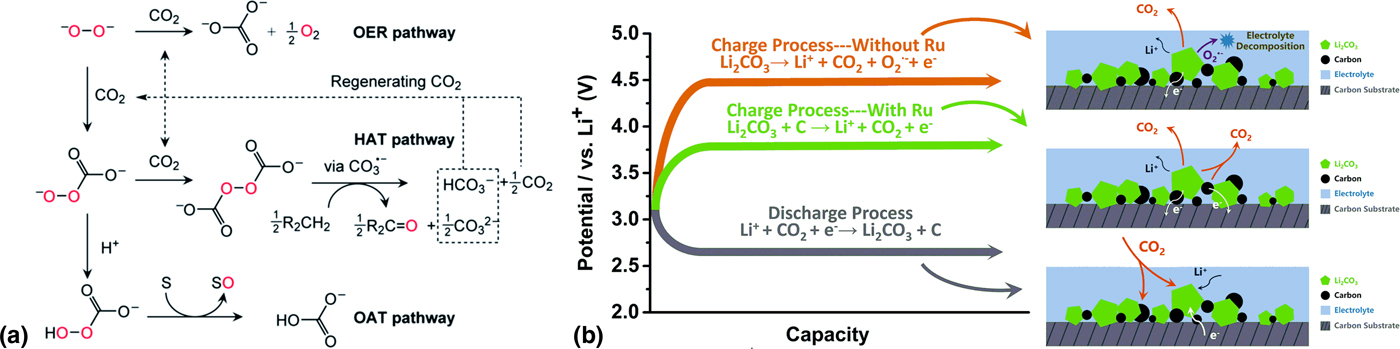
In addition to O2, other air components such as CO2 and N2 may serve as active materials to drive chemical reactions on the cathode, as well. Recently, proof-of-concept demonstrations of metal–CO2 battery, Li–N2 battery, and Li–SO2 battery have been reported.[Reference Lim, Park, Kim, Kim, Lee, Bae, Gwon and Kang92–Reference Ma, Bao, Shi, Yan and Zhang94] Discussions presented in the previous sections can be readily applied to these emerging systems. Among these new battery chemistries, metal–CO2 system has attracted particular attention as electrochemical reduction of CO2 represents one of the most actively pursued research problems. For energy storage applications, CO2 has been explored as an active cathode material to couple with alkaline or alkaline earth metals such as Li, Na, or Al on the anode.[Reference Al Sadat and Archer95, Reference Hu, Sun, Li, Zhao, Chen and Chen96] Interestingly, the discharge products of these systems would be side products that one seeks to avoid in the metal–O2 battery operations, namely carbonates.[Reference Luntz and McCloskey20, Reference Yao, Dong, Cheng and Wang21] Take Li–CO2 battery as an example. It has been demonstrated that the cell reaction relies on the reduction of CO2 to form Li2CO3 and C upon discharge (Fig. 4).[Reference Li, Guo, Yang, Liu, Wang and Xia97] Researchers have also showed that by using mixed gases of CO2 and O2, high capacities could be obtained on the platforms of Li–CO2/O2 and Al–CO2/O2.[Reference Al Sadat and Archer95] Note that the reaction products were found to be mainly metal carbonates in most cases. From previous discussions, we recall that accumulated carbonate species are detrimental to cell lifetimes because they are difficult to decompose upon recharge. Indeed, electrochemical oxidation of these metal carbonates generally requires large overpotentials, leading to undesired parasitic reactions such as electrolyte and/or electrode decomposition.[Reference Yao, Dong, Cheng and Wang21, Reference Geng, Ding, Hor, Chien, Liu and Zong69] In metal–CO2 batteries, these carbonates as major products pose great challenges for recharge, and hence, the cycling performance. As such, it becomes even more critical to find effective catalysts to facilitate this process for metal–CO2 batteries.
The complex superoxide/CO2/electrolyte interactions and strategies to address the stability issue in Li–CO2 batteries. (a) The mechanism of how CO2 promotes detrimental electrolyte decompositions in metal–air batteries. Reproduced with permission from Ref. Reference Zhang, Nava, Chow, Lopez, Wu, Britt, Nocera and Cummins99 (Creative Commons Corporation, 2017, https://creativecommons.org/licenses/by/3.0/legalcode). (b) A representative approach to suppress superoxide formation during the operation of Li–CO2 batteries by incorporating Ru-based catalyst. Reproduced with permission from Ref. Reference Yang, Qiao, He, Liu, Cheng, Zhu and Zhou93 (The Royal Society of Chemistry, 2017).
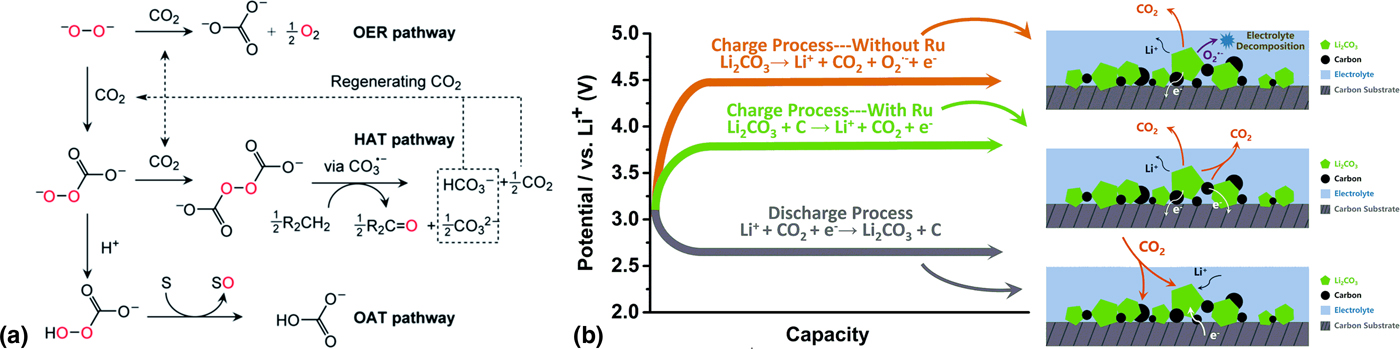
A representative demonstration was made by Zhou and co-workers, where the authors adopted Ru-based catalysts on the cathode for Li–CO2 battery.[Reference Yang, Qiao, He, Liu, Cheng, Zhu and Zhou93] Much better rechargeability than the catalyst-free system was observed, and over 70 galvanostatic cycles were reported. More importantly, Ru catalyst was found to facilitate a reversible discharge/recharge reaction as supported by the detection of CO2 from recharge by a combination of reactants consisting of Li2CO3 and C. By comparison, the authors argued that catalyst-free substrates generated reactive superoxide species during recharge [Fig. 4(b)]. In another demonstration, Chen and co-workers applied a Mo2C/CNT hybrid cathode prepared by a carbothermal reduction process for Li–CO2 batteries.[Reference Hou, Wang, Liu, Liu, Chou, Shi, Liu, Wu, Zhang and Chen98] Significantly improved round-trip efficiencies up to 77% were observed for the catalytic cathode, together with good cycling performance. Mo2C was found to change the reaction route such that insulating Li2CO3 formation was avoided. Using spectroscopic techniques, the authors revealed that oxalate species were formed and decomposed upon cycling. The potential required for Li2C2O4 decomposition was below 3.5 V versus Li+/Li, which leads to high round-trip efficiency.
In researching metal–O2, metal–CO2, and other metal–air batteries, one heavily, and sometimes solely, relies on the interpretation of the electrochemical data. Making sure that the electrochemical behaviors are indeed due to the formation and decomposition of the desired products is of critical importance. This is because most existing systems of these batteries are carried out in organic electrolytes with carbon-based electrode materials. The decomposition of test cell components (electrolyte, cathode, and anode) may generate artifacts that complicate and, more often than not, mislead the interpretation of the electrochemical data. In one example that shows unexpected chemical reactions may take place, Cummins and co-workers recently reported how CO2 may promote electrolyte decomposition in Li–O2 cells [Fig. 4(a)].[Reference Zhang, Nava, Chow, Lopez, Wu, Britt, Nocera and Cummins99] Such a mechanism may also be found in other metal–air battery systems, which could lead to undesired electrolyte and/or electrode decompositions. In addition, when conducting product analysis, researchers are suggested to differentiate the source of carbon in the possible carbonate by-products, whether it is from the electrode or the electrolyte. Within the same context, one must be careful to discern whether a catalyst intended to facilitate the formation and decomposition of the desired products actually improves the electrochemical performance by introducing undesired parasitic chemical reactions.[Reference Luntz and McCloskey20, Reference Yao, Dong, Cheng and Wang21]
Concluding remarks and outlook
Advanced batteries with performance metrics surpassing those of state-of-the-art Li-ion batteries are expected to feature chemical conversion rather than intercalation processes. Similar to other chemical transformations, these systems will benefit from, and often necessitate, catalysts. Metal–air batteries in both aprotic and aqueous electrolytes are good examples of such systems, on which significant research has been performed. This is a fertile field for materials research as many of these catalysts are heterogeneous. Their development will benefit tremendously from a detailed knowledge of materials. Just within the context of Li–O2 batteries, a large library of nanoscale catalysts has been studied and proven effective in promoting ORR and OER reactions. Nevertheless, the catalytic activity of these materials also presents new challenges. For instance, they not only promote the desired chemical reactions but also activate parasitic chemical processes that would undermine the stability and cyclability of the test batteries. To understand the effects of catalysts in metal–air batteries is therefore of great significance.
One future direction is to find catalysts that are only active toward the desired reactions. This is particularly urgent when future batteries indeed rely on ambient air, but not pure gases such as O2 or N2, as the reactive reagent. A universally active catalyst would promote chemical reactions with not only the active gases (e.g., O2 or N2) but also ambient gases such as H2O and CO2 when the cells are operated under true ambient conditions. The side reactions compete with the main reactions in reducing the achievable capacities. They also complicate the overall process to lead to poor cyclability and short cell lifetime. Moreover, how to reduce the reactivity of the catalysts with the electrolytes is another critical task.
Another direction for future research is to find electrolyte systems that are tolerant to the existing catalysts. Significant knowledge has been learned on the reaction mechanisms that underpin electrolyte decomposition by metal–air battery catalysts.[Reference Yao, Dong, Cheng and Wang21] Chemical modifications to the electrolyte molecules may be introduced to further stabilize them against the various decomposition pathways. Alternatively, one may seek non-organic electrolyte systems to eliminate the various decomposition possibilities altogether, as has been demonstrated very recently by us using the “water-in-salt” system.
In addition, understanding both the positive and the negative effects caused by the catalysts is of great importance, as there is a critical need to bridge the gap between researches on functional materials and their practical applications for electrochemical energy storage. The gap is the result of the complex nature of the chemical reactions during cell operations. As discussed frequently in the present paper, the interpretations of the electrochemical behaviors are not always straightforward as the apparent phenomena can be easily confounded by artifacts. Future research on catalysts in metal–air batteries should involve critical evaluations of the efficacy of the catalyst by rigorous product analyses. We caution that great care must be taken to ensure that a comprehensive view of the positive and negative effects of the catalysts in the chemical transformations need to be established so as to evaluate the true potentials of the catalysts to the advancement of energy storage technologies.
Lastly, comparing the reported catalytic performances in metal–air battery systems between literature reports is extremely difficult at the current stage.[Reference Noked, Schroeder, Pearse, Rubloff and Lee100] Among the numerous approaches in testing catalysts, a standard testing condition has yet to be defined and accepted broadly by the community, including the choice of the electrolyte, the choice of the cathode substrate, the choice of the salts, their concentrations, the gravimetric and areal current densities used, the loading of active materials, the volume of the electrolyte, and the geometric factors, among others. These testing conditions will not only influence the thermodynamics of the system by varying the equilibrium electrochemical potentials but also affect the kinetics and mass transport. They work together to complicate the data interpretation if not well defined. This is why accurate comparisons between literature reports are challenging. To further evaluate the efficacy of the catalysts in metal–air batteries, it is important to report the actual current as well as the normalized current density, the mass loading of the catalysts and the cathode material, the volume of the electrolyte, as suggested by Noked et al.[Reference Noked, Schroeder, Pearse, Rubloff and Lee100] Operating test cells following widely accepted measurement protocols is necessary for reasonable assessments of the catalytic effects.
Acknowledgments
The authors acknowledge financial support from Boston College. The authors thank Dr. Xiahui Yao, Yanyan Zhao, Qingmei Cheng, Jingru Luo, and Xizi Zhang for helpful discussions.