





1 Introduction
In his monograph On Numbers and Games [Reference Conway12], Conway introduced a real closed field
 ${\mathbf {No}}$
of surreal numbers containing the reals and the ordinals as well as a great many less familiar numbers, including
 $-\omega $
,
 $\omega /2$
,
 $1/\omega $
, and
 $\sqrt {\omega }$
, to name only a few. Indeed,
 ${\mathbf {No}}$
is so remarkably inclusive that, subject to the proviso that numbers—construed here as members of ordered fields—be individually definable in terms of sets of NBG (von Neumann–Bernays–Gödel set theory with Global Choice), it may be said to contain “All Numbers Great and Small” [Reference Ehrlich23, Reference Ehrlich24, Reference Ehrlich26, Reference Ehrlich29].
 ${\mathbf {No}}$
also has a rich algebraico-tree-theoretic structure which was brought to the fore by Ehrlich [Reference Ehrlich25, Reference Ehrlich26] and further developed and explored in [Reference van den Dries and Ehrlich20, Reference Ehrlich27–Reference Ehrlich29, Reference Ehrlich and Kaplan31, Reference Fornasiero33, Reference Fornasiero34]. This simplicity hierarchical (or s-hierarchical) structure depends upon
 ${\mathbf {No}}$
’s structure as a lexicographically ordered full binary tree and arises from the fact that the sums and products of any two members of the tree are the simplest possible elements of the tree consistent with
 ${\mathbf {No}}$
’s structure as an ordered group and an ordered field, respectively, it being understood that x is simpler than y just in case x is a predecessor of y in the tree.
Among the remarkable s-hierarchical features of
 ${\mathbf {No}}$
is that much as the surreal numbers emerge from the empty set of surreal numbers by means of a transfinite recursion that provides an unfolding of the entire spectrum of numbers great and small (modulo the aforementioned provisos), the recursive process of defining
 ${\mathbf {No}}$
’s arithmetic in turn provides an unfolding of the entire spectrum of ordered fields (ordered K-vector spaces; ordered abelian groups) in such a way that an isomorphic copy of every such system either emerges as an initial substructure of
 ${\mathbf {No}}$
–a substructure of
 ${\mathbf {No}}$
that is an initial subtree of
 ${\mathbf {No}}$
–or is contained in a theoretically distinguished instance of such a system that does. More specifically, in [Reference Ehrlich26] Ehrlich showed that:
Proposition 1.1. Every ordered vector space over an Archimedean ordered field is isomorphic to an initial subspace of
 ${\mathbf {No}}$
; in particular, every divisible ordered abelian group is isomorphic to an initial subgroup of
 ${\mathbf {No}}$
.
Proposition 1.2. Every real closed ordered field is isomorphic to an initial subfield of
 ${\mathbf {No}}$
.
These results were obtained with the aid of the following more general results from [Reference Ehrlich26] that provide necessary and sufficient conditions for an ordered K-vector space (ordered field) to be isomorphic to an initial K-subspace (subfield) of
 ${\mathbf {No}}$
.
Proposition 1.3. An ordered K-vector space is isomorphic to an initial subspace of
 ${\mathbf {No}}$
if and only if K is isomorphic to an initial subfield of
 ${\mathbf {No}}$
.
Proposition 1.4. An ordered field K is isomorphic to an initial subfield of
 ${\mathbf {No}}$
if and only if K is isomorphic to a truncation closed, cross sectional subfield of a power series field
 ${\mathbb R}((t^{\Gamma }))_{\mathbf {On}}$
where
 $\Gamma $
is isomorphic to an initial subgroup of
 ${\mathbf {No}}$
.
In [Reference van den Dries and Ehrlich20], van den Dries and Ehrlich subsequently established:
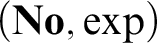
Proposition 1.5. The exponential field
 $({\mathbf {No}}, \exp )$
of surreal numbers is an elementary extension of the exponential field
 $({\mathbb R}, e^{x})$
of real numbers, where
 $\exp $
is the recursively defined exponential function on
 ${\mathbf {No}}$
developed by Kruskal [Reference Conway12, page 38] and Gonshor [Reference Gonshor36, Chapter 10].
This result is obtained as a corollary of:
Proposition 1.6. The field of surreal numbers equipped with restricted analytic functions (defined via Taylor series expansion) and with
 $\exp $
is an elementary extension of the field of real numbers with restricted analytic functions and real exponentiation.
Like a recent related work by the current authors [Reference Ehrlich and Kaplan31], this is a sequel to [Reference Ehrlich26]. Following some preliminary material in §2–§5, and piggybacking on Propositions 1.1–1.4, necessary and sufficient conditions are established for an ordered exponential field to be isomorphic to an initial exponential subfield of
 ${\mathbf {No}}$
. These conditions make use of the conception of a transserial Hahn field, which is an adaptation for sets and proper classes of Schmeling’s [Reference Schmeling47] conception of a transseries field (see Remark 6.3). It is shown that an ordered exponential field K is isomorphic to an initial exponential subfield of
 ${\mathbf {No}}$
if and only if K is isomorphic to a truncation closed, cross sectional exponential subfield of a transserial Hahn field
 ${\mathbb R}((t^{\Gamma }))_{\mathbf {On}}$
. As a byproduct of this result, we show that every transserial Hahn field admits a truncation closed logarithmic field embedding into
 ${\mathbf {No}}$
, but that this embedding can not in general be taken to be initial. In light of the growing body of work relating transseries and surreal numbers [Reference Aschenbrenner, van den Dries and van der Hoeven3–Reference Bagayoko, van der Hoeven and Mantova8, Reference Berarducci and Mantova10, Reference Berarducci and Mantova11, Reference Costin and Ehrlich13, Reference Costin, Ehrlich and Friedman14], this result on embeddings of transserial Hahn fields is of independent interest.
Using the characterization above, it is further shown that a wide range of ordered exponential fields are isomorphic to initial exponential subfields of
 ${\mathbf {No}}$
. These include all models of the theory
 $T ({\mathbb R}{}_{\mathrm {an}},e^{x})$
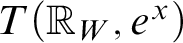
of real numbers with restricted analytic functions and exponentiation [Reference van den Dries, Macintyre and Marker21], a result previously established by Fornasiero [Reference Fornasiero34], and, more generally, all models of the theory
 $T({\mathbb R}_W, e^x)$
of real numbers with a convergent Weierstrass system W [Reference Denef and Lipshitz17, Reference van den Dries19] and exponentiation. Of these, those we call trigonometric-exponential fields are found to be of particular significance. More specifically, it is shown that the exponential functions on initial trigonometric-exponential subfields of
 ${\mathbf {No}}$
, which includes
 ${\mathbf {No}}$
itself, extend to canonical exponential functions on their surcomplex counterparts. The proof of this uses the precursory result that trigonometric-exponential initial subfields of
 ${\mathbf {No}}$
and trigonometric ordered initial subfields of
 ${\mathbf {No}}$
, more generally, admit canonical sine and cosine functions. This is shown to apply to the members of a distinguished family of initial exponential subfields of
 ${\mathbf {No}}$
isolated by van den Dries and Ehrlich ([Reference van den Dries and Ehrlich20], Corollary 5.5), to the image of the canonical map of the ordered exponential field
 ${\mathbb T}^{LE}$
of transseries into
 ${\mathbf {No}}$
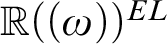
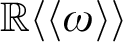
[Reference Aschenbrenner, van den Dries and van der Hoeven4], which is shown to be initial, and to the ordered exponential fields
 ${\mathbb R}((\omega ))^{EL}$
and
 ${\mathbb R}\langle \langle \omega \rangle \rangle $
, considered by Berarducci and Mantova ([Reference Berarducci and Mantova11]; also see [Reference Kuhlmann40–Reference Kuhlmann and Tressl42]), which are likewise shown to be initial.
Some of the methods employed in Sections 6–10 are adaptations or expansions of methods developed by Ressayre [Reference Ressayre, Clote and Krajicek46], van den Dries, Macintyre and Marker [Reference van den Dries, Macintyre and Marker21, Reference van den Dries, Macintyre and Marker22], and D’Aquino, Knight, Kuhlmann and Lange [Reference D’Aquino, Knight, Kuhlmann and Lange15] in their treatments of truncation closed embeddings into Hahn fields of ordered exponential fields and ordered fields with additional structure more generally. However, as is evident from Proposition 1.4, even in the case of an ordered field K the existence of a truncation closed embedding into a Hahn field does not suffice to establish the existence of an initial embedding into
 ${\mathbf {No}}$
. This inadequacy is even more pronounced in the case of an initial embedding of an ordered exponential field K into
 ${\mathbf {No}}$
, since besides the properties required for an initial embedding of K as an ordered field, conditions must be placed on the logarithmic or exponential structure of K. As it turns out, the condition T4 from Schmeling’s thesis [Reference Schmeling47] on transseries plays an essential role. We thank the anonymous referee for pointing us towards this connection (see Remark 9.1), and for their many other helpful suggestions which have greatly improved the paper.
Throughout the paper the underlying set theory is NBG, which is a conservative extension of ZFC in which all proper classes are in bijective correspondence with the class of all ordinals (cf. [Reference Mendelson43]). By “set-model” (“class-model”) we mean a model whose universe is a set (a proper class). The theories in the languages treated in Sections 10 and 11 admit quantifier elimination, with the consequence that the results in those sections regarding class-models of such theories and elementary embeddings of models into class-models of such theories are provable in NBG. For this and details on formalizing the theory of surreal numbers in NBG more generally, see [Reference Ehrlich24].
2 Preliminaries I: surreal numbers
By a tree
 $(A, < _s)$
we mean a partially ordered class such that for each
 $x \in A$
, the class
 $\{ y \in A:y < _s x\}$
of predecessors of x, written ‘
 $\operatorname {pr}_A (x)$
’, is a set well-ordered by
 $ < _s $
. A maximal subclass of A well-ordered by
 $ < _s $
is called a branch of the tree. Two elements x and y of A are said to be incomparable with respect to
 $<_s$
if
 $x \ne y$
,
 $x\not < _s y$
and
 $y\not < _s x$
. An initial subtree of
 $(A, < _s)$
is a subclass
 $A'$
of A with the induced order such that for each
 $x \in A'$
,
 $\operatorname {pr}_{A'} (x) = \operatorname {pr}_A (x)$
. The tree-rank of
 $x \in A$
, written ‘
 $\rho _A (x)$
’, is the ordinal corresponding to the well-ordered set
 $(\operatorname {pr}_A (x), <_s)$
; the
 $\alpha $
th level of A is
 $\big \{ x \in A:\rho _A (x) = \alpha \big \}$
; and a root of A is a member of the zeroth level. If
 $x, y \in A$
, then y is said to be an immediate successor of x if
 $x < _s y$
and
 $\rho _A (y) = \rho _A (x) + 1$
; and if
 $(x_{\alpha })_{\alpha < \beta }$
is a chain in A (i.e., a subclass of A totally ordered by
 $ < _s $
), then y is said to be an immediate successor of the chain if
 $x_{\alpha } < _s y$
for all
 $\alpha < \beta $
and
 $\rho _A (y)$
is the least ordinal greater than the tree-ranks of the members of the chain. The length of a chain
 $(x_{\alpha })_{\alpha < \beta }$
in A is the ordinal
 $\beta $
.
A tree
 $(A, < _s)$
is said to be binary if each member of A has at most two immediate successors and every chain in A of limit length has at most one immediate successor. If every member of A has two immediate successors and every chain in A of limit length (including the empty chain) has an immediate successor, then the binary tree is said to be full. Since a full binary tree has a level for each ordinal, the universe of a full binary tree is a proper class.
Following [Reference Ehrlich26, Definition 1], a binary tree
 $(A, < _s)$
together with a total ordering
 $ < $
defined on A will be said to be lexicographically ordered if for all
 $x, y \in A$
, x is incomparable with y with respect to
 $<_s$
if and only if x and y have a common predecessor lying between them (i.e., there is a
 $z \in A$
such that
 $z<_s x$
,
 $z<_s y$
and either
 $x<z<y$
or
 $y<z<x$
). The appellation “lexicographically ordered” is motivated by the fact that:
 $(A, <, < _s)$
is a lexicographically ordered binary tree if and only if
 $(A, <, < _s)$
is isomorphic to an initial ordered subtree of the lexicographically ordered canonical full binary tree
 $(B, < _{lex(B)}, < _B)$
, where B is the class of all sequences of
 $ - $
’s and
 $ + $
’s indexed over some ordinal,
 $x < _B y$
signifies that x is a proper initial subsequence of y, and
 $(x_{\alpha })_{\alpha < \mu } < _{lex(B)} (y_{\alpha })_{\alpha < \sigma }$
if and only if
 $x_{\beta } = y_{\beta } $
for all
 $\beta < $
some
 $\delta $
, but
 $x_{\delta } < y_{\delta }$
, it being understood that
 $ - < \textit {undefined} < + $
[Reference Ehrlich26, Theorem 1]. Note that every binary tree admits a lexicographic ordering.
Let
 $(A, <, < _s)$
be a lexicographically ordered binary tree. If
 $(L, R)$
is a pair of subclasses of A for which every member of L precedes every member of R, then we will write ‘
 $L < R$
’. Also, if x and y are members of A, then ‘
 $x < _s y$
’ will be read “x is simpler than y”; and when
 $x \in I = \big \{ y \in A:L < \{ y \} < R\big \}$
is such that
 $x < _s y$
for all
 $y \in I \setminus \{ x \}$
, then we will denote this simplest member of A lying between the members of L and the members of R by ‘
 $\{ L\, | \, R\}$
’. Following Conway’s game-theoretic terminology, the members of L and R are called the left options of x and the right options of x respectively. For all
 $x \in A$
, by ‘
 $L_{s(x)} $
’ we mean
 $\{ a \in A:a < _s x\text { and }a < x \}$
and by ‘
 $R_{s(x)} $
’ we mean
 $\{ a \in A:a < _s x\text { and }x < a \}$
.
The following proposition collects together a number of properties of, or results about, lexicographically ordered binary trees that will be appealed to in subsequent portions of the paper.
Proposition 2.1 ([Reference Ehrlich26], Theorem 2; [Reference Ehrlich28], Proposition 2.3)
Let
 $(A, <, < _s) $
be a lexicographically ordered binary tree.
-
(i) For all
 $x \in A$
,
$x = \{ L_{s(x)} \, | \, R_{s(x)} \}$
;
-
(ii) for all
$x, y \in A$
,
$x < _s y$
if and only if
$L_{s(x)} < \{ y \} < R_{s(x)} $
and
$y \ne x$
; and -
(iii) for all
$x \in A$
and all
$L, R \subseteq A$
with
$L < \{x\} < R$
,
$x = \{ L \, | \, R \}$
if and only if L is cofinal with
$L_{s(x)} $
and R is coinitial with
$R_{s(x)}$
if and only if
$\{ y \in A: L < \{y\} < R\} \subseteq \{ y \in A: L_{s(x)} < \{y\} < R_{s(x)}\}$
Footnote
1
.


Let
 $({\mathbf {No}}, <, < _s)$
be the lexicographically ordered binary tree of surreal numbers constructed in any of the manners found in the literature (cf. [Reference Ehrlich25–Reference Ehrlich27, Reference Ehrlich29]), including simply letting
 $({\mathbf {No}}, <, < _s) =(B, < _{lex(B)}, < _B)$
. Central to the development of the s-hierarchical theory of surreal numbers is the following result where a lexicographically ordered binary tree
 $(A, <, < _s)$
is said to be complete [Reference Ehrlich26, Definition 6] if whenever L and R are subsets of A for which
 $L < R$
, there is an
 $x \in A$
such that
 $x = \{ L\, | \, R \}$
.
Proposition 2.2 ([Reference Ehrlich26], Theorem 4 and Proposition 2)
A lexicographically ordered binary tree is complete if and only if it is full if and only if it is isomorphic to
 $({\mathbf {No}}, <, < _s)$
.
 ${\mathbf {No}}$
’s canonical class
 $\mathbf {On}$
of ordinals consists of the members of the “rightmost” branch of
 $({\mathbf {No}}, <, < _s)$
, i.e., the unique branch of
 $({\mathbf {No}}, <, < _s)$
whose members satisfy the condition:
 $x<y$
if and only if
 $x<_sy$
.
By a cut in an ordered class
 $(A, <)$
we mean a pair
 $(X, Y)$
of subclasses of A where
 $X<Y$
and
 $X \cup Y=A$
. If
 $A \subsetneq A'$
,
 $(X, Y)$
is a cut in A, and
 $X<\{z\}<Y$
where
 $z \in A' \setminus A$
, we say z realizes the cut
 $(X, Y)$
. If z realizes a cut in A, on occasion we denote the cut by
 $(A^{<z}, A^{>z})$
where
 $A^{<z}= \{a\in A:a<z\}$
and
 $A^{>z}= \{a\in A:a>z\}$
. For
 $A\subsetneq {\mathbf {No}}$
and for
 $x \in {\mathbf {No}}$
, we say that x is the simplest element realizing a cut in A if
 $x\not \in A$
and if
 $x = \{ A^{<x}\, |\, A^{>x} \}$
. Note that if A is an initial subclass of
 ${\mathbf {No}}$
and if x is the simplest element realizing a cut in A, then
 $A \cup \{x\}$
is also initial.
2.1 The ordered field
${{\mathbf {No}}}$

With the lexicographically ordered full binary tree
 $({\mathbf {No}}, <, < _s)$
of surreal numbers now at hand, the s-hierarchical ordered field of surreal numbers may be introduced as follows, where in the definitions of
 $+$
,
 $-$
and
 $\cdot $
, the set-theoretic brackets that enclose the sets of “left-sided options” and “right-sided options” are omitted in accordance with custom.
Theorem 2.1 (Conway [Reference Conway12]; Ehrlich [Reference Ehrlich26])
 $({\mathbf {No}},+,\cdot ,<,<_{s})$
is an ordered field when
 $+$
,
 $-$
and
 $\cdot $
are defined by recursion as follows where
 $x^L$
,
 $x^R$
,
 $y^L$
and
 $y^R$
are understood to range over the members of
 $L_{s(x)}$
,
 $R_{s(x)}$
,
 $L_{s(y)}$
and
 $R_{s(y)}$
, respectively.
-
Definition of x+y
$$ \begin{align*} x+y\ = \ \{x^L+y,\, x+y^L\, |\, x^R+y,\, x+y^R\}. \end{align*} $$
-
Definition of −x
$$ \begin{align*} -x\ = \ \{-x^R\, |\, -x^L\}. \end{align*} $$
-
Definition of xy
$$ \begin{align*}xy\ &= \ \{x^Ly +xy^L-x^Ly^L,\, x^Ry+xy^R-x^Ry^R\, | \\&\qquad x^Ly+xy^R -x^Ly^R,\, x^Ry+xy^L-x^Ry^L\}. \end{align*} $$


2.2 Conway names
Let
 ${\mathbb D}$
be the set of all surreal numbers having finite tree-rank, and
 $$ \begin{align*} {\mathbb R}\ = \ {\mathbb D}\cup \big \{ \{ L\, | \, R \}: (L, R)\text{ is a Dedekind gap in }{\mathbb D} \big \}, \end{align*} $$
whereby a Dedekind gap
 $(L, R)$
in
 $\mathbb {D}$
we mean a pair of nonempty subsets
 $L, R$
of
 ${\mathbb D}$
where
 $L<R$
,
 $L \cup R ={\mathbb D}$
, L has no greatest member and R has no least member.
The following result regarding the structure of
 ${\mathbb R}$
is essentially due to Conway [Reference Conway12, pages 12, 23–25].
Proposition 2.3.
 ${\mathbb R}$
(with
 $ +, -, \cdot $
and
 $ < $
defined à la
 ${{\mathbf {No}}}$
) is isomorphic to the ordered field of real numbers defined in any of the more familiar ways,
 ${\mathbb D}$
being
 ${{\mathbf {No}}}$
’s ring of dyadic rationals (i.e., rationals of the form
 $m/2^n $
where m and n are integers);
 $$ \begin{align*} n\ = \ \{ 0,\dots,n - 1 \, | \, \varnothing \}\ \text{ and }\ - n\ = \ \{ \varnothing \, |\, - (n - 1),\dots,0\} \end{align*} $$
for each positive integer n,
 $0 = \{ \varnothing \, | \, \varnothing \}$
, and the remainder of the dyadics are the arithmetic means of their left and right predecessors of greatest tree-rank; e.g.,
 $1/2 = \{ 0 \, | \, 1 \}$
.
 ${\mathbb R}$
is the unique Dedekind complete initial subfield of
 ${\mathbf {No}}$
. Henceforth, all references to the reals are understood to be references to
 ${\mathbb R}$
.
A striking s-hierarchical feature of
 ${\mathbf {No}}$
is that every surreal number can be assigned a canonical “proper name” that is a reflection of its characteristic s-hierarchical properties. These Conway names or normal forms are expressed as formal sums of the form
 $$ \begin{align*} \sum_{\alpha < \beta } r_{\alpha}\omega ^{y_{\alpha} }, \end{align*} $$
where
 $\beta $
is an ordinal,
 $(y_{\alpha })_{\alpha < \beta } $
is a strictly decreasing sequence of surreals, and
 $(r_{\alpha })_{\alpha < \beta } $
is a sequence of nonzero real numbers, the Conway name of an ordinal being just its Cantor normal form, it being understood that
 $0$
is the empty sum indexed over
 $\alpha <\beta =0$
[Reference Conway12, pages 31–33] and [Reference Ehrlich26, Sections 3.1 and 5].
Every nonzero surreal x is the sum of three components, each of which can be succinctly characterized in terms of the Conway name of x: the purely infinite component of x, whose terms solely have positive exponents; the real component of x, whose sole term (if it is not the empty sum) has exponent
 $0$
; and the infinitesimal component of x, whose terms solely have negative exponents. Notice that
 $0$
, being the empty sum, may be regarded as purely infinite.
The surreal numbers having Conway names of the form
 $\omega ^y$
are called leaders since they denote the simplest positive members of the various Archimedean classes of
 ${\mathbf {No}}$
. More formally, they may be inductively defined by the formula
 $$ \begin{align*} \omega^{y}\ = \ \Big\{ 0,\, n\omega^{y^L}\, \Big|\, \frac{1}{2^n}\omega^{y^R} \Big\}, \end{align*} $$
where n ranges over the positive integers and
 $y^L$
and
 $y^R$
range over the elements of
 $L_{s(y)}$
and
 $R_{s(y)}$
, respectively. For use in the proof of Lemma 7.3, we need the following lemma:
Lemma 2.1. Let
 $x = \sum _{\alpha < \beta } r_{\alpha }\omega ^{y_{\alpha } } \in {\mathbf {No}}$
, let
 $\sigma <\beta $
, let
 $z: = \sum _{\alpha < \sigma } r_{\alpha }\omega ^{y_{\alpha } }$
, and let
 $\varepsilon \in \{\pm 1\}$
be the sign of
 $r_{\sigma }$
. Then
 $z+\varepsilon \omega ^{y_{\sigma }} \leqslant _s x$
.
Proof. By replacing x with
 $-x$
if need be, we may assume that
 $r_{\sigma }$
is positive, so
 $\varepsilon = 1$
. It suffices to find a representation
 $\{L\, |\,R\}$
of
 $z+\omega ^{y_{\sigma }}$
with
 $L<\{x\}<R$
, for the result then follows by Proposition 2.1. As above, we have
 $$ \begin{align*} \omega^{y_{\sigma}}\ = \ \Big\{ 0,\, n\omega^{y_{\sigma}^L}\, \Big|\, \frac{1}{2^n}\omega^{y_{\sigma}^R} \Big\}, \end{align*} $$
where n ranges over the positive integers and
 $y_{\sigma }^L$
and
 $y_{\sigma }^R$
range over the elements of
 $L_{s(y_{\sigma })}$
and
 $R_{s(y_{\sigma })}$
, respectively. We also have
 $$ \begin{align*} z\ = \ \Big\{ \sum_{\alpha < \sigma_0 } r_{\alpha}\omega ^{y_{\alpha} }+ q_L \omega^{y_{\sigma_0}} \, \Big|\, \sum_{\alpha < \sigma_0 } r_{\alpha}\omega ^{y_{\alpha} }+ q_R \omega^{y_{\sigma_0}} \Big\}, \end{align*} $$
where
 $\sigma _0$
ranges over ordinals less than
 $\sigma $
and
 $q_L$
and
 $q_R$
range over rational numbers with
 $q_L<r_{\sigma _0}<q_R$
[Reference Ehrlich26, Theorem 15]. The formula for addition yields
 $$ \begin{align*} z+\omega^{y_{\sigma}}\ &= \ \Big\{\sum_{\alpha < \sigma_0 } r_{\alpha}\omega ^{y_{\alpha} }+ q_L \omega^{y_{\sigma_0}}+\omega^{y_{\sigma}},\, z+n\omega^{y_{\sigma}^L}\, \Big|\, \\&\qquad \sum_{\alpha < \sigma_0 } r_{\alpha}\omega ^{y_{\alpha} }+ q_R \omega^{y_{\sigma_0}}+\omega^{y_{\sigma}},\, z+\frac{1}{2^n}\omega^{y_{\sigma}^R}\Big\}, \end{align*} $$
where n,
 $y_{\sigma }^L$
,
 $y_{\sigma }^R$
,
 $\sigma _0$
,
 $q_L$
, and
 $q_R$
are as above. It is straightforward to verify that x lies between the left and right options in the above representation, so
 $z+\omega ^{y_{\sigma }}\leqslant _s x$
.⊣
We note that Lemma 2.1 is a consequence of [Reference Gonshor36, Theorem 5.12], though translating Gonshor’s statement for our purposes requires a bit of background.
2.3 Infinite sums
There is a notion of convergence in
 ${\mathbf {No}}$
for sequences and series of surreals that can be conveniently expressed using normal forms written as above with dummy terms. Let
 $x\in {\mathbf {No}}$
and for each
 $y\in {\mathbf {No}}$
, let
 $r_{y}(x)$
be the coefficient of
 $\omega ^y$
in the normal form of x, it being understood that
 $r_{y}(x)=0$
, if
 $\omega ^y$
does not occur. Also let
 $(x_n)_{n \in {\mathbb N}}$
be a sequence of surreals written in normal form. Following Conway (and adopting notation of Siegel [Reference Siegel49, page 432]), we say that
 $(x_n)_{n\in {\mathbb N}}$
converges to x if
 $$ \begin{align*} r_y (x)\ = \ \lim _{n\rightarrow \infty }r_y (x_{n}),\ \text{ for all } y\in{\mathbf{No}}, \end{align*} $$
and we also write
 $$ \begin{align*} x\ = \ \sum_{n=0}^{\infty }x_n \end{align*} $$
to mean the partial sums of the series converge to x.
Among the convergent sequences and series of surreals are those whose mode of convergence is quite distinctive: for each
 $y\in {\mathbf {No}}$
, there is an
 $m\in {\mathbb N}$
such that
 $r_{y}(x_n)=r_{y}(x_m)$
for all
 $n\geqslant m$
. Thus, for each
 $y\in \bf {No}$
,
 $$ \begin{align*} r_y (x)\ = \ \lim _{n\rightarrow \infty }r_y (x_{n})\ = \ r_{y}(x_m), \end{align*} $$
where m depends on y.
Conway [Reference Conway12, page 40], calls this mode of convergence absolute convergence, and he (also see [Reference Siegel49, pages 432–434]) proves the following result:
Proposition 2.4. Let f be a formal power series with real coefficients, i.e., let
 $$ \begin{align*} f (x) \ = \ \sum_{n=0}^{\infty }r_nx^n. \end{align*} $$
Then
 $f (\varepsilon )$
is absolutely convergent for all infinitesimals
 $\varepsilon $
in
 ${\mathbf {No}}$
.
Conway proof make use of a classical combinatorial result of Neumann [Reference Neumann45, pages 206–209],[Reference Siegel49, Lemma 3.2], [Reference Alling1, pages 260–266]); and, indeed, as Conway indicates, his proof is a straightforward adaptation to
 ${\mathbf {No}}$
of a classical proof of Neumann [Reference Neumann45, page 210] and [Reference Alling1, page 267] about Hahn fields (see below) and division rings of formal power series more generally.
2.4 Distinguished ordered binary subtrees of
${\mathbf {No}}$

Henceforth, the class of
 ${\mathbf {No}}$
’s leaders will be denoted ‘
 $Lead_{{\mathbf {No}}}$
’ or ‘
 $\omega ^{{\mathbf {No}}}$
’ and the class of
 ${\mathbf {No}}$
’s purely infinite numbers will be denoted ‘
 ${\mathbf {No}}_{\operatorname {PI}}$
’.
 $\mathbf {Oz}$
is the canonical integer part of
 ${\mathbf {No}}$
consisting of the surreals whose Conway names have no negative exponents and whose coefficient for any term whose exponent is
 $0$
is an integer [Reference Conway12, page 45].
 $Lead_{{\mathbf {No}}}$
,
 ${\mathbf {No}}_{\operatorname {PI}}$
and
 $\mathbf {Oz}$
all have ordered tree structures inherited from
 $({\mathbf {No}}, <, < _s)$
. In the subsequent discussion we will appeal to the following results about these substructures of
 $({\mathbf {No}}, <, < _s)$
, that come from [Reference Ehrlich28, page 3, Note 2], [Reference Ehrlich26, page 1245, Theorem 11] and [Reference Bagayoko and van der Hoeven5], respectively.
Lemma 2.2.
 $(\mathbf {Oz}, <\restriction _{ \mathbf {Oz}}, < _{s}\restriction _{\mathbf {Oz}})$
is an initial subtree of
 $({\mathbf {No}}, <, < _s)$
.
Lemma 2.3.
 $(Lead_{{\mathbf {No}}}, <\restriction _{ Lead_{{\mathbf {No}}}}, < _{s}\restriction _{ Lead_{{\mathbf {No}}} })$
is a lexicographically ordered full binary tree.
Lemma 2.4.
 $({\mathbf {No}}_{\operatorname {PI}}, <\restriction _{ {\mathbf {No}}_{\operatorname {PI}}}, < _{s}\restriction _{ {\mathbf {No}}_{\operatorname {PI}}})$
is a lexicographically ordered full binary tree.
Corollary 2.1. The following are lexicographically ordered full binary trees:
-
(i)
$(Lead_{\mathbf {No}}^{>1}, <\restriction _{ Lead_{\mathbf {No}}^{>1}}, < _{s}\restriction _{ Lead_{\mathbf {No}}^{>1} })$
, -
(ii)
$({\mathbf {No}}_{\operatorname {PI}}^{>0}, <\restriction _{ {\mathbf {No}}_{\operatorname {PI}}^{>0}}, < _{s}\restriction _{{\mathbf {No}}_{\operatorname {PI}}^{>0} })$
, -
(iii)
$(Lead_{\mathbf {No}}^{<1}, <\restriction _{ Lead_{\mathbf {No}}^{<1}}, < _{s}\restriction _{ Lead_{\mathbf {No}}^{<1} })$
, and -
(iv)
$({\mathbf {No}}_{\operatorname {PI}}^{<0}, <\restriction _{ {\mathbf {No}}_{\operatorname {PI}}^{<0}}, < _{s}\restriction _{{\mathbf {No}}_{\operatorname {PI}}^{<0}})$
.


3 Preliminaries II: surreal exponentiation
The Kruskal–Gonshor surreal exponential function
 $\exp $
[Reference Gonshor36, Chapter 10] is defined by recursion as follows:
 $$ \begin{align*} \exp (x)\,{=}\, \Big\{ 0,\, (\exp x^L) [x-x^L]_{n},\, (\exp x^R) [x-x^R]_{2n+1}\, \Big|\, \frac{\exp x^L}{[x^L-x]_{2n+1}},\, \frac{\exp x^R}{[x^R-x]_{n}}\Big\}, \end{align*} $$
where
 $x^L$
and
 $x^R$
range over
 $L_{s(x)}$
and
 $R_{s(x)}$
respectively, n ranges over
 ${\mathbb N}$
, and
 $[y]_{n}$
denotes
 $1+y+\frac {y^2}{2!}+\cdots +\frac {y^n}{n!}$
for all surreal y, it being understood that expressions containing terms of the form
 $[y]_{2n+1}$
are to be included only when
 $[y]_{2n+1}>0$
. Recall that, being an elementary extension of
 $({\mathbb R},e^x)$
(Proposition 1.5),
 $({\mathbf {No}},\exp )$
satisfies the condition:
 $\exp (x)> x^n$
for each positive infinite surreal number x and each natural number n.
While the definition of
 $\exp $
is quite complicated for the general surreal case, the following result of Gonshor [Reference Gonshor36, pages 149–157] shows it reduces to more revealing and manageable forms for the three theoretically significant cases.
Proposition 3.1. Let
 $\exp $
be the Kruskal–Gonshor exponential on
 ${\mathbf {No}}$
.
-
(i)
$\exp (x)=e^x$
for all
$x \in {\mathbb R}$
; -
(ii)
$\exp (x) = \sum _{\ n =0 }^{\infty }x^{n}/{n!}$
for all infinitesimal x; -
(iii) if x is purely infinite, then
where
$$ \begin{align*} \exp (x)\ = \ \Big \{ 0,\, (\exp x^L)(x-x^L)^{n}\, \Big|\, \frac{\exp x^R}{(x^R-x)^n}\Big \}, \end{align*} $$
$x^L$
and
$x^R$
now range over all purely infinite predecessors of x with
$x^L<x<x^R$
.


The significance of cases (i)–(iii) accrues from the fact that for an arbitrary surreal number x,
 $$ \begin{align*} \exp (x)\ = \ \exp(x_P)\cdot \exp(x_R)\cdot \exp(x_I) \end{align*} $$
where
 $x_P$
,
 $x_R$
and
 $x_I$
are the purely infinite, real and infinitesimal components of x, respectively.
From an algebraic point of view, it is already clear from Proposition 3.1 (i)–(ii) what
 $\exp (x)$
is for real and infinitesimal values of x. To shed further algebraic light on
 $\exp (x)$
when x is purely infinite we turn to the following additional result of Gonshor [Reference Gonshor36, Theorem 10.9]
Proposition 3.2. The restriction of
 $\exp $
to the class of purely infinite surreal numbers is an isomorphism of ordered groups onto
 $Lead_{\mathbf {No}}$
.
Thus far, only an inductive definition of log for surreals of the form
 $\omega ^{\gamma }$
has appeared in print. Nevertheless, since each positive surreal x, written in normal form, has a unique decomposition of the form
 $$ \begin{align*} x\ = \ \omega^{\gamma} r(1+\varepsilon), \end{align*} $$
where
 $\omega ^{\gamma }$
is a leader, r is a positive member of
 ${\mathbb R}$
and
 $\varepsilon $
is an infinitesimal,
 $\log (x)$
may be obtained for an arbitrary positive surreal x from the equation
 $$ \begin{align*} \log(x)\ = \ \log(\omega^{\gamma})+\ln(r)+ \sum_{k=1}^{\infty } \frac{ (-1)^{k-1} \varepsilon^{k}}{k}, \end{align*} $$
where
 $\log (\omega ^{\gamma })$
is inductively defined by
 $$ \begin{align*} \big \{ \log(\omega^{\gamma^{L}})+n,\, \log(\omega ^{\gamma^R})-\omega ^{\frac{\gamma^R-\gamma}{n}}\, \big|\, \log(\omega ^{\gamma^R})-n,\, \log(\omega ^{\gamma^L})+\omega ^{\frac{\gamma- \gamma^L}{n}} \big\}, \end{align*} $$
where
 $\gamma ^L$
and
 $\gamma ^R$
range over the left and right predecessors of
 $\gamma $
, respectively, and n ranges over the positive integers.
The logarithm of a leader can be described more explicitly using Gonshor’s map
 $h:{\mathbf {No}} \to {\mathbf {No}}^{>0}$
, defined as follows [Reference Gonshor36, page 172]:
 $$ \begin{align*} h(s) \ = \ \Big\{0,\, h(s^L)\, \Big|\, h(s^R),\, \frac{1}{k}\omega^{s}\Big\}, \end{align*} $$
where
 $s^L$
ranges over
 $L_{s(x)}$
, where
 $s^R$
ranges over
 $R_{s(x)}$
, and where k ranges over the positive integers. Note that h is strictly increasing and that
 $h(s) \prec \omega ^s$
for each s. The map h is related to logarithms by the following result of Gonshor [Reference Gonshor36]:
Proposition 3.3. Let
 $\gamma = \sum _{\alpha <\beta } r_{\alpha } \omega ^{s_{\alpha }}\in {\mathbf {No}}$
. Then
 $$ \begin{align*} \log \omega^{\gamma}\ = \ \sum_{\alpha<\beta} r_{\alpha} \omega^{h(s_{\alpha})}. \end{align*} $$
In particular, we have
 $\log \omega ^{\omega ^s}= \omega ^{h(s)}$
for each
 $s \in {\mathbf {No}}$
.
3.1 s-hierarchical ordered exponential fields
Following [Reference Ehrlich26, Definition 3],
 ${(A,+, \cdot , <,<_{s},0,1) }$
is said to be an s-hierarchical ordered field if (i)
 $(A,+, \cdot , <,0, 1)$
is an ordered field; (ii)
 $(A,<,<_{s})$
is a lexicographically ordered binary tree; and (iii) for all
 $x,y\in A$
 $$ \begin{align*} x+y\ = \ \{ x^{L}+y,\, x+y^{L} \, | \, x^{R}+y,\, x+y^{R}\} \end{align*} $$
and
 $$ \begin{align*} xy\ &= \ \{x^{L}y+xy^{L}-x^{L}y^{L},\, x^{R}y+xy^{R}-x^{R}y^{R} \,| \\&\qquad \,x^{L}y+xy^{R}-x^{L}y^{R},\, x^{R}y+xy^{L}-x^{R}y^{L}\}, \end{align*} $$
where
 $x^L$
,
 $x^R$
,
 $y^L$
and
 $y^R$
are understood to range over the members of
 $L_{s(x)}$
,
 $R_{s(x)}$
,
 $L_{s(y)}$
and
 $R_{s(y)}$
, respectively.
Extending this idea, we will say
 $(A,+, \cdot , \exp , <,<_{s},0,1) $
is an s
-hierarchical ordered exponential field if (i)
 $(A,+, \cdot , \exp , <,0,1) $
is an ordered exponential field; (ii)
 $(A,+, \cdot , <,<_{s},0,1) $
is an s-hierarchical ordered field; and (iii) for all
 $x \in A$
 $$ \begin{align*} \exp (x)\,{=}\, \Big\{ 0,\, (\exp x^L) [x-x^L]_{n}, \, (\exp x^R) [x-x^R]_{2n+1}\, \Big|\, \frac{\exp x^L}{[x^L-x]_{2n+1}},\, \frac{\exp x^R}{[x^R-x]_{n}}\Big\}, \end{align*} $$
where
 $x^L$
and
 $x^R$
range over
 $L_{s(x)}$
and
 $R_{s(x)}$
respectively, n ranges over
 ${\mathbb N}$
, and
 $[y]_{n} =:1+y+\frac {y^2}{2!}+\cdots +\frac {y^n}{n!}$
for all surreal y, it being understood that expressions containing terms of the form
 $[y]_{2n+1}$
are to be included only when
 $[y]_{2n+1}>0$
.
In virtue of the definitions of Conway’s field operations and the definition of the Kruskal–Gonshor surreal exponential function, No is of course an s-hierarchical ordered exponential field. Moreover, extending the argument for initial subfields of No from [Reference Ehrlich26, page 1236], it is evident that
Proposition 3.4. Every initial exponential subfield of No is itself an s-hierarchical ordered exponential field.
As such, much as the recursive unfolding of the s-hierarchical ordered field of surreal numbers generates a recursive unfolding of all the initial subfields of the surreals, the recursive unfolding of the s-hierarchical ordered exponential field
 $(\mathbf {No}, \exp )$
gives rise to a recursive unfolding of all the initial exponential subfields of
 $(\mathbf {No}, \exp )$
, the characterization of which is one of the central focuses of the paper.
Following [Reference Ehrlich26, Definition 7], a mapping
 $f: A \rightarrow A'$
between two lexicographically ordered binary trees is said to be s
-hierarchical if for all
 $x = \{L\, |\, R\} \in A$
,
 $f(x) = \{f (L)\, |\, f (R)\}$
. If, in addition, A and
 $A'$
are s-hierarchical structures (ordered fields; ordered groups; ordered vector spaces; etc.) and the mapping is an embedding (of ordered fields; ordered groups; ordered vector spaces; etc) it is said to be an s
-hierarchical embedding.
If
 $f: A \rightarrow A'$
is an s-hierarchical mapping, then f is the unique initial ordered tree embedding of A into
 $A'$
[Reference Ehrlich26, Lemma 1]. Moreover, an inductive argument shows that an s-hierarchical mapping of s-hierarchical ordered fields is an s-hierarchical embedding [Reference Ehrlich26, Lemma 2]. By combining the inductive argument for s-hierarchical ordered fields with a similar inductive argument for
 $\exp x$
, in which the induction hypothesis is that the desired property holds for all the
 $\exp x^L$
’s and
 $\exp x^R$
’s, one may establish for s-hierarchical ordered exponential fields the analog of the just-said result for s-hierarchical ordered fields. Collecting these results together, we have:
Proposition 3.5. (i) Every s-hierarchical mapping between s-hierarchical ordered exponential fields is an s-hierarchical embedding; (ii) if
 $f: A \rightarrow A'$
and
 $g: A \rightarrow A'$
are s-hierarchical mappings, then
 $f = g$
and
 $f(A)$
is initial.
Let A be an s-hierarchical ordered exponential field. Extending the concepts of universality and maximality for s-hierarchical ordered fields [Reference Ehrlich26, page 1239] to s-hierarchical ordered exponential fields, A will be said to be universal if for each s-hierarchical ordered exponential field B, there is an s-hierarchical embedding
 $f: B \rightarrow A$
, and A will be said to be maximal if there is no s-hierarchical ordered exponential field that properly contains A as an initial exponential subfield.
In virtue of Proposition 3.5 and the fact that there is an s-hierarchial mapping of every lexicographically ordered binary tree into
 $(\mathbf {{No}},<,<_{s})$
(see the proof of [Reference Ehrlich26, Theorem 5]), we also have:
Proposition 3.6. No is (up to isomorphism) the unique universal and the unique maximal s-hierarchical ordered exponential field.
4 Preliminaries III: ordered abelian groups
Let
 $\Gamma $
be an ordered abelian group. For
 $x,y \in \Gamma $
, we set
 $$ \begin{align*} x \preccurlyeq y\ &:\Longleftrightarrow\ |x|<n|y|\text{ for some }n \in{\mathbb N}\\ x \prec y\ &:\Longleftrightarrow\ n|x|<|y|\text{ for all }n \in{\mathbb N}\\ x \asymp y\ &:\Longleftrightarrow\ x\preccurlyeq y\text{ and }y \preccurlyeq x (\text{equivalently, if} x \preccurlyeq y \text{ and } x\not\prec y). \end{align*} $$
Then
 $\asymp $
is an equivalence relation on
 $\Gamma \setminus \{0\}$
and the equivalence classes corresponding to
 $\asymp $
are called the Archimedean classes of
 $\Gamma $
. We say that
 $\Gamma $
is Archimedean if
 $\Gamma \setminus \{0\}$
consists of exactly one Archimedean class.
4.1 Hahn groups
Let
 ${\mathbb R}((t^S))_{\mathbf {On}}$
be the ordered group of power series (defined á la Hahn [Reference Hahn37]) consisting of all formal power series of the form
 $\sum _{\alpha < \beta } r_{\alpha } t^{s_{\alpha }}$
where
 $(s_{\alpha })_{\alpha < \beta \in \mathbf {On}}$
is a possibly empty descending sequence of elements of an ordered class S and
 $r_{\alpha } \in {\mathbb R} \setminus \{0\}$
for each
 $\alpha < \beta $
. When S is a set, then
 ${\mathbb R}((t^S))_{\mathbf {On}}$
is a set as well, and it is often simply written
 ${\mathbb R}((t^S))$
. When S is a proper class, then
 ${\mathbb R}((t^S))_{\mathbf {On}}$
is also a proper class. We call S the value class of
 ${\mathbb R}((t^S))_{\mathbf {On}}$
. In the literature, the appellation “Hahn group” is usually reserved for those structures
 ${\mathbb R}((t^S))_{\mathbf {On}}={\mathbb R}((t^S))$
, where S is a set. However, we refer to
 ${\mathbb R}((t^S))_{\mathbf {On}}$
as a Hahn group whether S is a set or a proper class.Footnote
2
For a subclass
 $B \subseteq S$
, we let
 $t^B$
denote the class
 $\{t^b:b \in B\}$
. A subgroup
 $\Gamma $
of
 ${\mathbb R}((t^S))_{\mathbf {On}}$
is said to be cross sectional if
 $\{t^s : s \in S \} \subseteq \Gamma $
.
Let
 $y = \sum _{\alpha < \beta } r_{\alpha } t^{s_{\alpha }}$
be an element of
 ${\mathbb R}((t^S))_{\mathbf {On}}$
. We let
 $\operatorname {supp}(y): = \{s_{\alpha }:\alpha <\beta \}\subseteq S$
denote the support of y, so
 $\operatorname {supp}(y)$
is empty if and only if
 $y = 0$
. We also set
 $c(y):= s_0 = \max \operatorname {supp}(y)$
, so
 $c(y)$
is the unique element of S with
 $y \asymp t^{c(y)}$
. An element
 $x \in {\mathbb R}((t^S))_{\mathbf {On}}$
is said to be a truncation of y if
 $x = \sum _{\alpha < \sigma } r_{\alpha } t^{s_{\alpha }}$
for some
 $\sigma \leqslant \beta $
. Given
 $s \in S$
, let
 $\sigma \leqslant \beta $
be the least ordinal such that
 $s_{\sigma }\leqslant s$
, and let
 $y_{>s}$
be the truncation
 $\sum _{\alpha < \sigma } r_{\alpha } t^{s_{\alpha }}$
. Then
 $y-y_{>s} \preccurlyeq t^s$
, and
 $y - y_{>s} \asymp t^s$
if and only if
 $s \in \operatorname {supp}(y)$
. A subgroup
 $\Gamma $
of
 ${\mathbb R}((t^S))_{\mathbf {On}}$
is said to be truncation closed if every truncation of every member of
 $\Gamma $
is itself a member of
 $\Gamma $
. Let
 $\Gamma $
be a truncation closed subgroup of
 ${\mathbb R}((t^S))_{\mathbf {On}}$
. We define the
 $\Gamma $
-truncation of y, denoted
 $y_{\Gamma }$
, as follows:
-
1. if
$\sum _{\alpha \leqslant \sigma } r_{\alpha } t^{s_{\alpha }}$
belongs to
$\Gamma $
for each
$\sigma < \beta $
, then we let
$y_{\Gamma } := y$
and -
2. otherwise, let
$\beta _0<\beta $
be least such that
$\sum _{\alpha \leqslant \beta _0} r_{\alpha } t^{s_{\alpha }}$
does not belong to
$\Gamma $
. Then we let
$y_{\Gamma }:= \sum _{\alpha < \beta _0} r_{\alpha } t^{s_{\alpha }}$
.


Note that
 $y_{\Gamma }$
may or may not belong to
 $\Gamma $
. Of course,
 $y_{\Gamma } \in \Gamma $
if
 $y \in \Gamma $
. If the second case holds and
 $\beta _0$
is a successor ordinal, then
 $y_{\Gamma } \in \Gamma $
. If
 $\Gamma = {\mathbb R}((t^{S'}))_{\mathbf {On}}$
for some subclass
 $S' \subseteq S$
, then
 $y_{\Gamma }$
always belongs to
 $\Gamma $
.
Lemma 4.1. Let
 $\Gamma $
be a truncation closed divisible subgroup of
 ${\mathbb R}((t^S))_{\mathbf {On}}$
and let
 $y,y' \in {\mathbb R}((t^S))_{\mathbf {On}}$
. If y and
 $y'$
realize the same cut over
 $\Gamma $
, then
 $y_{\Gamma } = y^{\prime }_{\Gamma }$
.
Proof. Suppose that
 $y_{\Gamma } \neq y^{\prime }_{\Gamma }$
and let
 $\sum _{\alpha <\beta } r_{\alpha } t^{s_{\alpha }}$
be the greatest common truncation of y and
 $y'$
in
 $\Gamma $
. Without loss of generality, we may assume that
 $\sum _{\alpha <\beta } r_{\alpha } t^{s_{\alpha }}$
is not equal to
 $y_{\Gamma }$
, so there is
 $r_{\beta } \in {\mathbb R}\setminus \{0\}$
and
 $s_{\beta } \in S$
such that
 $z: = \sum _{\alpha \leqslant \beta } r_{\alpha } t^{s_{\alpha }}\in \Gamma $
is a truncation of y but not
 $y'$
. Note that
 $r_{\beta } t^{s_{\beta }} = z-\sum _{\alpha <\beta } r_{\alpha } t^{s_{\alpha }}$
belongs to
 $\Gamma $
. We have
 $$ \begin{align*} y- z\ \prec\ r_{\beta} t^{s_{\beta}},\qquad y'- z\ \succcurlyeq\ r_{\beta} t^{s_{\beta}}. \end{align*} $$
If
 $y-z$
and
 $y'-z$
have opposite signs, then z is between y and
 $y'$
. Suppose that
 $y-z$
and
 $y'-z$
are both positive. Take
 $n>0$
such that
 $y'-z> \frac {r_{\beta }}{n} t^{s_{\beta }}$
. Then
 $y<z+\frac {r_{\beta }}{n} t^{s_{\beta }}<y'$
. Since z and
 $r_{\beta } t^{s_{\beta }}$
belong to
 $\Gamma $
and since
 $\Gamma $
is divisible, we see that
 $z+\frac {r_{\beta }}{n} t^{s_{\beta }}$
belongs to
 $\Gamma $
, so y and
 $y'$
do not realize the same cut over
 $\Gamma $
. The case that
 $y-z$
and
 $y'-z$
are both negative is similar.⊣
4.2 Hahn spaces
Let
 $\boldsymbol {k}$
be an Archimedean ordered field, that is, an ordered field with an Archimedean underlying ordered additive group. We uniquely identify
 $\boldsymbol {k}$
with a subfield of
 ${\mathbb R}$
. Via this identification, we view
 ${\mathbb R}((t^S))_{\mathbf {On}}$
as an ordered
 $\boldsymbol {k}$
-vector space when convenient (such as in Lemma 4.2 below).
Definition 4.1. A Hahn space over
 $\boldsymbol {k}$
is an ordered
 $\boldsymbol {k}$
-vector space
 $\Gamma $
such that for all
 $a,b \in \Gamma \setminus \{0\}$
with
 $a \asymp b$
, there is
 $r \in \boldsymbol {k}$
with
 $a-rb \prec b$
.
See [Reference Aschenbrenner, van den Dries and van der Hoeven2, Section 2.3] for more information on Hahn spaces. Any ordered
 ${\mathbb R}$
-vector space, including the Hahn group
 ${\mathbb R}((t^S))_{\mathbf {On}}$
, is a Hahn space over
 ${\mathbb R}$
.
Lemma 4.2. Let
 $\Delta \subseteq \Gamma \subseteq {\mathbb R}((t^S))_{\mathbf {On}}$
be
 $\boldsymbol {k}$
-vector spaces and suppose that
 $\Gamma $
is a Hahn space over
 $\boldsymbol {k}$
and
 $\Delta $
is truncation closed. Let
 $y \in \Gamma \setminus \Delta $
, and let
 $z \in \Delta $
be a truncation of y. Then
 $z = y_{\Delta }$
if and only if
 $y-z \not \asymp a$
for all
 $a \in \Delta $
.
Proof. Write
 $y = \sum _{\alpha < \beta } r_{\alpha } t^{s_{\alpha }} \in \Gamma $
and take
 $\beta _0 < \beta $
with
 $z = \sum _{\alpha < \beta _0} r_{\alpha } t^{s_{\alpha }} \in \Delta $
. If
 $z \neq y_{\Delta }$
, then
 $z + r_{\beta _0} t^{s_{\beta _0}}= \sum _{\alpha \leqslant \beta _0} r_{\alpha } t^{s_{\alpha }}$
belongs to
 $\Delta $
as well, so
 $ y-z \asymp r_{\beta _0} t^{s_{\beta _0}} \in \Delta $
. Conversely, suppose that
 $y - z \asymp a$
for some
 $a \in \Delta $
. Since
 $\Gamma $
is a Hahn space over
 $\boldsymbol {k}$
, there is some
 $r \in \boldsymbol {k}$
with
 $y-z-ra \prec a$
. Thus,
 $ra = r_{\beta _0} t^{s_{\beta _0}}+ \varepsilon $
, where
 $\varepsilon \prec t^{s_{\beta _0}}$
. Since
 $\Delta $
is truncation closed, we see that
 $r_{\beta _0} t^{s_{\beta _0}} \in \Delta $
, so
 $z + r_{\beta _0} t^{s_{\beta _0}}$
is a truncation of y contained in
 $\Delta $
which strictly extends z. Thus,
 $z \neq y_{\Delta }$
.⊣
4.3 Initial subgroups and subspaces of
${\mathbf {No}}$

For
 $y \in {\mathbf {No}}$
with
 $y \neq 0$
, we let
 $c(y)$
denote the unique element of
 ${\mathbf {No}}$
such that
 $y \asymp \omega ^{c(y)}$
. This agrees with our Hahn group definition above, where we identify
 ${\mathbf {No}}$
with the Hahn group
 ${\mathbb R}((\omega ^{\mathbf {No}}))_{\mathbf {On}}$
. This also agrees with the map c defined by Gonshor [Reference Gonshor36]. Let
 $\Gamma $
be an initial divisible subgroup of
 ${\mathbf {No}}$
. The value class of
 $\Gamma $
is the class
 $$ \begin{align*} S\ : = \ \{s \in {\mathbf{No}}: \omega^s \in \Gamma\}. \end{align*} $$
Then S is an initial subclass of
 ${\mathbf {No}}$
and
 $\Gamma $
is a truncation closed, cross sectional subgroup of
 ${\mathbb R}((\omega ^S))_{\mathbf {On}}$
[Reference Ehrlich and Kaplan31, Theorem 5.1]. Thus, each
 $\gamma \in {\mathbf {No}}$
has a
 $\Gamma $
-truncation
 $\gamma _{\Gamma }$
.
Let
 $\boldsymbol {k}$
be an Archimedean ordered field. Our identification of
 $\boldsymbol {k}$
with a subfield of
 ${\mathbb R}$
allows us to view
 $\boldsymbol {k}$
as an initial subfield of
 ${\mathbf {No}}$
. In fact, this identification
 $\boldsymbol {k} \hookrightarrow {\mathbb R}\subseteq {\mathbf {No}}$
is the unique initial ordered field embedding
 $\boldsymbol {k}\to {\mathbf {No}}$
[Reference Ehrlich26, Theorem 8]. We view
 ${\mathbf {No}}$
as a
 $\boldsymbol {k}$
-vector space via this embedding. By Proposition 1.3, we get that every ordered
 $\boldsymbol {k}$
-vector space
 $\Gamma $
admits an initial
 $\boldsymbol {k}$
-linear embedding into
 ${\mathbf {No}}$
. For future use, we record the induction step in the proof of this result [Reference Ehrlich26, pages 1241–1242]:
Lemma 4.3. Let
 $\Gamma $
be an initial ordered
 $\boldsymbol {k}$
-vector subspace of
 ${\mathbf {No}}$
and let
 $x \in {\mathbf {No}}\setminus \Gamma $
. Suppose that x is the simplest element realizing a cut over
 $\Gamma $
. Then the
 $\boldsymbol {k}$
-vector subspace
 $\Gamma +\boldsymbol {k} x \subseteq {\mathbf {No}}$
is initial. In particular, if S is the value class of
 $\Gamma $
and if
 $s \in {\mathbf {No}}\setminus S$
is the simplest element realizing a cut over S, then
 $\Gamma +\boldsymbol {k} \omega ^s$
is initial.
5 Preliminaries IV: Hahn fields
Let K be an ordered field. The Archimedean classes of K as well as the relations
 $\preccurlyeq $
,
 $\prec $
, and
 $\asymp $
are defined with respect to the underlying ordered additive group of K. We say that an element
 $x \in K$
is infinite if
 $x \succ 1$
and infinitesimal if
 $x \prec 1$
. A cross section for K is a multiplicative subgroup
 $\mathfrak {M} \subseteq K^{>0}$
such that for each
 $x \in K\setminus \{0\}$
there is exactly one
 $\mathfrak {m} \in \mathfrak {M}$
with
 $x \asymp \mathfrak {m}$
.
Let
 $\Gamma $
be an ordered abelian group. Then the Hahn group
 ${\mathbb R}((t^{\Gamma }))_{\mathbf {On}}$
is in fact a Hahn field [Reference Hahn37] when multiplication is defined à la polynomials with
 $t^{\gamma _1} t^{\gamma _2} = t^{\gamma _1 + \gamma _2}$
for all
 $\gamma _1, \gamma _2 \in \Gamma $
. We call
 $\Gamma $
the value group of
 ${\mathbb R}((t^{\Gamma }))_{\mathbf {On}}$
. Like the nonzero surreals written in normal form, each element x of a Hahn field is the sum of three easily recognizable components: the purely infinite component of x, whose terms solely have positive exponents; the real component of x, whose sole term (if it is not the empty sum) has exponent
 $0$
; and the infinitesimal component of x, whose terms solely have negative exponents. Again, as in the surreal case,
 $0$
, being the empty sum, may be regarded as purely infinite. We remark that the purely infinite component of x coincides with the truncation
 $x_{>0}$
, where
 $0$
is the identity element of the value group
 $\Gamma $
, and that x is itself purely infinite just in case
 $x = x_{>0}$
. As we noted above, following Proposition 2.4 in the surreal case, infinite sums of the form
 $$ \begin{align*} \sum_{n=0}^{\infty }r_n\varepsilon^n \end{align*} $$
are well-defined in Hahn fields for infinitesimal elements
 $\varepsilon \in {\mathbb R}((t^{\Gamma }))_{\mathbf {On}}$
, in virtue of a classical result of Neumann [Reference Neumann45].
Let K be a truncation closed, cross sectional subfield of
 ${\mathbb R}((t^{\Gamma }))_{\mathbf {On}}$
. The set
 ${\mathbb R}_K= \{r\ \in {\mathbb R} : rt^0 \in K \}$
is an Archimedean ordered field, which we will call the coefficient field of K. Note that
 ${\mathbb R}_K$
is isomorphic to the residue class field of K with respect to the Archimedean valuation.Footnote
3
The multiplicative subgroup
 $t^{\Gamma }\subseteq K^{>0}$
is a canonical cross section for K.
The following result, which is employed in the proof of Proposition 1.4, is critical in the proof of the main theorem.
Proposition 5.1 ([Reference Ehrlich26], Theorem 18; [Reference Ehrlich29], Theorem 14)
If K is a truncation closed, cross sectional subfield of a Hahn field
 ${\mathbb R}((t^{\Gamma }))$
and
 $\imath :\Gamma \rightarrow {\mathbf {No}}$
is an initial group embedding, then the mapping that sends
 $$ \begin{align*} \sum_{\alpha < \beta} r_{\alpha} t^{\gamma_{\alpha}}\ \in\ K \end{align*} $$
to the surreal number having Conway name
 $$ \begin{align*} \sum_{\alpha < \beta} r_{\alpha} \omega^{\imath(\gamma_{\alpha})} \end{align*} $$
is an initial embedding of K into
 ${\mathbf {No}}$
.
If K is an initial subfield of
 ${\mathbf {No}}$
, then by [Reference Ehrlich26, Theorem 18], the class
 $$ \begin{align*} \Gamma\ : = \ \{\gamma \in {\mathbf{No}}:\omega^{\gamma} \in K\} \end{align*} $$
is an initial subgroup of
 ${\mathbf {No}}$
, which we call the value group of K, and K is a truncation closed, cross sectional subgroup of
 ${\mathbb R}((\omega ^{\Gamma }))_{\mathbf {On}}$
.
6 Transserial Hahn fields
A logarithm on an ordered field K is an ordered group embedding
 $\log :K^{>0}\to K$
which satisfies
 $\log y\leqslant y-1$
for
 $y \in K^{>0}$
. An ordered logarithmic field is an ordered field equipped with a logarithm. We denote the functional inverse of
 $\log $
by
 $\exp $
, where it is defined. If
 $K= (K,\log )$
is an ordered logarithmic field and
 $\log $
is surjective onto K, then K is called an ordered exponential field.
Definition 6.1. A logarithmic Hahn field is an ordered Hahn field
 ${\mathbb R}((t^{\Gamma }))_{\mathbf {On}}$
equipped with a logarithm
 $\log $
which satisfies the following axioms:
-
1.
$\log $
extends the natural logarithm on
${\mathbb R}^{>0}$
; -
2.
$\log t^{\gamma }$
is purely infinite for each
$\gamma \in \Gamma $
; and -
3.
$\log (1+\varepsilon ) = \sum _{n=1}^{\infty } (-1)^{n-1}\varepsilon ^n/n$
for all infinitesimal
$\varepsilon \in {\mathbb R}((t^{\Gamma }))_{\mathbf {On}}$
.


Remark 6.1. Let
 ${\mathbb R}((t^{\Gamma }))_{\mathbf {On}}$
be an ordered Hahn field, and let
 $\log : t^{\Gamma }\to {\mathbb R}((t^{\Gamma }))$
be an ordered group embedding. If
 $\log t^{\gamma }$
is purely infinite and
 $\log t^{\gamma } \prec t^{\gamma }$
for each
 $\gamma \in \Gamma ^{>0}$
, then there is a unique logarithm on
 ${\mathbb R}((t^{\Gamma }))_{\mathbf {On}}$
which extends
 $\log $
and makes
 ${\mathbb R}((t^{\Gamma }))_{\mathbf {On}}$
into a logarithmic Hahn field. This logarithm (which we also denote by
 $\log $
) is given by setting
 $$ \begin{align*} \log\big(rt^{\gamma}(1+\varepsilon)\big)\ : = \ \ln r + \log t^{\gamma}+ \sum_{n=1}^{\infty } (-1)^{n-1} \varepsilon^n/n \end{align*} $$
for
 $r\in {\mathbb R}^{>0}$
,
 $\gamma \in \Gamma $
, and
 $\varepsilon \prec 1$
.
Definition 6.2 (Schmeling, Definition 2.2.1 [Reference Schmeling47])
A transserial Hahn field is a logarithmic Hahn field
 ${\mathbb R}((t^{\Gamma }))_{\mathbf {On}}$
which satisfies the additional axiom:
-
(T4) For every sequence
$(\gamma _n)_{n \in {\mathbb N}}$
in
$\Gamma $
such that
$\gamma _{n+1}\in \operatorname {supp}(\log t^{\gamma _n})$
for each n, there is an
$n_0\in {\mathbb N}$
such that for all
$n\geqslant n_0$
, we have
$$ \begin{align*} \big|\log t^{\gamma_n} - (\log t^{\gamma_n})_{>\gamma_{n+1}}\big|\ = \ t^{\gamma_{n+1}}. \end{align*} $$


Remark 6.2. Schmeling introduced axiom (T4) so that certain compositions of transseries are well-defined; see [Reference Schmeling47, Remark 2.2.3]. For us, however, the utility of axiom (T4) comes from its connection to the existence of
 $\Delta $
-atomic elements, introduced in Section 6.2. Lemmas 6.11 and 6.12 clarify the connection between axiom (T4) and the existence of these elements.
Remark 6.3. Schmeling uses the terminology transseries field instead of transserial Hahn field. While Schmeling’s transseries fields are always sets, we allow for transserial Hahn fields which are proper classes. Our terminology is chosen partially for this additional generality and partially to avoid any confusion that may arise by employing both “transseries field” and “field of transseries,” which have distinct meanings.
For the remainder of this section, we let
 ${\mathbb T}= {\mathbb R}((t^{\Gamma }))_{\mathbf {On}}$
be a logarithmic Hahn field. We use the notation
 ${\mathbb T}$
to bring “transseries” to mind, but much of this section does not require axiom (T4), so we do not assume this axiom until it is needed.
Lemma 6.1. Let
 $a \in {\mathbb T}$
be positive and infinite. Then
 $\log a$
is positive and infinite and
 $\log a \prec a$
.
Proof. Let
 $n \in {\mathbb N}$
be given. We need to show that
 $n<\log a$
and that
 $n \log a < a$
. To see that
 $n < \log a$
, use that
 $a> \exp n\in {\mathbb R}$
and that
 $\log $
is strictly increasing, so
 $\log a> \log (\exp n) = n$
. To see that
 $n \log a < a$
, we first note that
 $\log a\leqslant a-1< a$
, and we apply this to
 $a/(n+1)$
in place of a to get
 $$ \begin{align*} (n+1)\big(\log a - \log(n+1)\big)\,{=}\, (n+1)\log\big(a/(n+1)\big)\ <\ (n+1)\big(a/(n+1)\big)\,{=}\, a. \end{align*} $$
Since
 $ \log (n+1)\prec \log a$
, we have
 $(n+1)\big (\log a - \log (n+1)\big )> n\log a$
, so
 ${n\log a <a}$
.⊣
Lemma 6.2. Let
 $u \in {\mathbb T}^{>0}$
with
 $u \asymp 1$
. Then
 $\log u \preccurlyeq 1$
. Moreover, for each
 $z \in {\mathbb T}$
with
 $z\preccurlyeq 1$
,
 $\exp z$
is defined and
 $\exp z \asymp 1$
.
Proof. Take
 $r \in {\mathbb R}^{>0}$
and
 $\varepsilon \prec 1$
with
 $y = r(1+\varepsilon )$
. Then
 $$ \begin{align*} \log y \ = \ \ln r + \log(1+\varepsilon). \end{align*} $$
Since
 $\ln r \in {\mathbb R}$
and
 $\log (1+\varepsilon )\prec 1$
, we see that
 $\log y \preccurlyeq 1$
. Now let
 $z \in {\mathbb T}$
with
 $z\preccurlyeq 1$
. Take
 $r' \in {\mathbb R}$
and
 $\varepsilon ' \prec 1$
with
 $z = r'+\varepsilon '$
. Then
 $\exp r' = e^{r'} \in {\mathbb R}^{>0}$
and
 $\exp \varepsilon ' = \ \sum _{n=0}^{\infty } (\varepsilon ')^n/n!\asymp 1$
, so
 $\exp z = e^{r'}\exp \varepsilon ' \asymp 1$
.⊣
Lemma 6.3. Let
 $y \in {\mathbb T}^{>0}$
and suppose that
 $\log y$
is purely infinite. Then
 $y \in t^{\Gamma }$
.
Proof. Take
 $\gamma \in \Gamma $
and
 $u \in {\mathbb T}^{>0}$
with
 $u \asymp 1$
and
 $y = ut^{\gamma }$
. Then
 $$ \begin{align*} \log y\ = \ \log t^{\gamma}+ \log u. \end{align*} $$
Since
 $\log y$
and
 $\log t^{\gamma }$
are purely infinite and
 $\log u \preccurlyeq 1$
by Lemma 6.2, we must have
 $\log u = 0$
, so
 $u=1$
and
 $y = t^{\gamma }$
.⊣
Lemma 6.4. Suppose that
 $\log (t^{\Gamma })$
is a truncation closed subgroup of
 ${\mathbb T}$
. Then
 $\log ({\mathbb T}^{>0})$
is also truncation closed.
Proof. Let
 $y \in {\mathbb T}^{>0}$
and take
 $\gamma \in \Gamma $
and
 $u \in {\mathbb T}^{>0}$
with
 $u \asymp 1$
and
 $y = ut^{\gamma }$
. Then
 $$ \begin{align*} \log y\ = \ \log t^{\gamma}+ \log u. \end{align*} $$
Let x be a truncation of
 $\log y$
. Since
 $\log t^{\gamma }$
is purely infinite and
 $\log u \preccurlyeq 1$
by Lemma 6.2, we either have that x is a truncation of
 $\log t^{\gamma }$
or that
 $x = \log t^{\gamma }+ z$
, where
 $z \preccurlyeq 1$
is a truncation of
 $\log u$
. In the first case, we have
 $x \in \log (t^{\Gamma })$
by our assumption that
 $\log (t^{\Gamma })$
is truncation closed. In the second case, Lemma 6.2 gives that
 $z \in \log ({\mathbb T}^{>0})$
, so
 $\log t^{\gamma } + z$
belongs to
 $\log ({\mathbb T}^{>0})$
as well.⊣
6.1 Subfields parametrized by subspaces of
$\Gamma $

Let
 $\boldsymbol {k}$
be an Archimedean ordered field. If
 $\log (t^{\Gamma })$
is a
 $\boldsymbol {k}$
-subspace of
 ${\mathbb T}$
, then we view
 $\Gamma $
as an ordered
 $\boldsymbol {k}$
-vector space, where
 $r\gamma $
is the unique element of
 $\Gamma $
with
 $\log t^{r\gamma } = r\log t^{\gamma }$
for
 $r \in \boldsymbol {k}$
and
 $\gamma \in \Gamma $
. We will say that
 $\Gamma $
is an ordered
 $\boldsymbol {k}$
-vector space to mean that
 $\log (t^{\Gamma })$
is a
 $\boldsymbol {k}$
-subspace of
 ${\mathbb T}$
, where the operation of scalar multiplication on
 $\Gamma $
is assumed to be the operation described above. For the remainder of this section, we assume that
 $\Gamma $
is an ordered
 $\boldsymbol {k}$
-vector space. It follows easily from Lemma 6.2 that then
 $\log ({\mathbb T}^{>0})$
is a
 $\boldsymbol {k}$
-subspace of
 ${\mathbb T}$
. For
 $r \in \boldsymbol {k}$
and
 $y \in {\mathbb T}^{>0}$
, we let
 $y^r$
be the unique element of
 ${\mathbb T}^{>0}$
with
 $\log y^r \,{=}\, r\log y$
. Let
 $\Delta $
be a
 $\boldsymbol {k}$
-subspace of
 $\Gamma $
and set
 ${\mathbb T}_{\Delta }:={\mathbb R}((t^{\Delta }))_{\mathbf {On}} \subseteq {\mathbb T}$
. Note that the
 ${\mathbb T}_{\Delta }$
-truncation of y lies in
 ${\mathbb T}_{\Delta }$
for each
 $y \in {\mathbb T}$
.
Definition 6.3. We say that
 $\Delta $
is a logarithmic
 $\boldsymbol {k}$
-subspace of
 $\Gamma $
if
 $ \log (t^{\Delta })\subseteq {\mathbb T}_{\Delta }$
. We say that
 $\Delta $
is an exponential
 $\boldsymbol {k}$
-subspace of
 $\Gamma $
if
 $\log (t^{\Delta }) = \log (t^{\Gamma }) \cap {\mathbb T}_{\Delta }$
.
Lemma 6.5. If
 $\Delta $
is a logarithmic
 $\boldsymbol {k}$
-subspace of
 $\Gamma $
, then
 $\log ({\mathbb T}_{\Delta }^{>0})\subseteq {\mathbb T}_{\Delta }$
. If
 $\Delta $
is an exponential
 $\boldsymbol {k}$
-subspace of
 $\Gamma $
, then
 $\log ({\mathbb T}_{\Delta }^{>0}) = \log ({\mathbb T}^{>0})\cap {\mathbb T}_{\Delta }$
.
Proof. Suppose that
 $\Delta $
is a logarithmic
 $\boldsymbol {k}$
-subspace of
 $\Gamma $
, let
 $x \in {\mathbb T}_{\Delta }^{>0}$
and take
 $\delta \in \Delta $
,
 $r \in {\mathbb R}^{>0}$
, and
 $\varepsilon \in {\mathbb T}_{\Delta }$
with
 $\varepsilon \prec 1$
such that
 $x = rt^{\delta }(1+\varepsilon )$
. Then
 $$ \begin{align*} \log x \ = \ \log t^{\delta} + \ln r + \log(1+\varepsilon). \end{align*} $$
We have
 $\log t^{\delta } \in {\mathbb T}_{\Delta }$
by assumption and
 $\ln r \in {\mathbb R}\subseteq {\mathbb T}_{\Delta }$
. We also have
 $$ \begin{align*} \log(1+\varepsilon) \ = \ \sum_{n=1}^{\infty } (-1)^{n-1} \varepsilon^n/n\ \in\ {\mathbb T}_{\Delta}, \end{align*} $$
since this sum exists in
 ${\mathbb T}$
and consists of elements from
 ${\mathbb T}_{\Delta }$
.
Now suppose that
 $\Delta $
is an exponential
 $\boldsymbol {k}$
-subspace of
 $\Gamma $
and let
 $y \in \log ({\mathbb T}^{>0})\cap {\mathbb T}_{\Delta }$
. We need to show that
 $y\in \log ({\mathbb T}_{\Delta }^{>0})$
. Take
 $r \in {\mathbb R}$
and
 $\varepsilon \prec 1$
with
 $y = y_{>0}+r+\varepsilon $
. We have
 $e^r \in {\mathbb R}^{>0} \subseteq {\mathbb T}_{\Delta }^{>0}$
, and we have
 $$ \begin{align*} \exp \varepsilon \ = \ \sum_{n =0 }^{\infty }\varepsilon^n/n!\ \in\ {\mathbb T}_{\Delta}^{>0}, \end{align*} $$
since this sum exists in
 ${\mathbb T}^{>0}$
and consists of elements from
 ${\mathbb T}_{\Delta }$
. Thus, r and
 $\varepsilon $
belong to
 $\log ({\mathbb T}_{\Delta }^{>0})$
. Since
 $\log ({\mathbb T}^{>0})\cap {\mathbb T}_{\Delta }$
is a subgroup of
 ${\mathbb T}_{\Delta }$
containing y, r, and
 $\varepsilon $
, it follows that
 $y_{>0} \in \log ({\mathbb T}^{>0})\cap {\mathbb T}_{\Delta }$
. Since
 $y_{>0}$
is purely infinite, Lemma 6.3 gives that
 $y_{>0} \in \log (t^{\Gamma }) \cap {\mathbb T}_{\Delta }$
. Thus,
 $y_{>0} \in \log (t^{\Delta }) \subseteq \log ({\mathbb T}_{\Delta }^{>0})$
, as
 $\Delta $
is an exponential
 $\boldsymbol {k}$
-subspace of
 $\Gamma $
. We conclude that
 $y \in \log ({\mathbb T}_{\Delta }^{>0})$
.⊣
By Lemma 6.5, the subfield
 ${\mathbb T}_{\Delta }$
of
 ${\mathbb T}$
is a logarithmic Hahn field whenever
 $\Delta $
is a logarithmic
 $\boldsymbol {k}$
-subspace of
 $\Gamma $
. If
 ${\mathbb T}$
is a transserial Hahn field, then so is
 ${\mathbb T}_{\Delta }$
.
Lemma 6.6. Let
 $\Delta $
be an exponential
 $\boldsymbol {k}$
-subspace of
 $\Gamma $
and let
 $y \in {\mathbb T}^{>0}$
with
 $c(y) \not \in \Delta $
. Then
 $\log y$
and
 $\log t^{c(y)}$
realize the same cut over
 ${\mathbb T}_{\Delta }$
.
Proof. We may, of course, assume that
 $y \neq t^{c(y)}$
. Take
 $u \in {\mathbb T}^{>0}$
with
 $u \asymp 1$
and
 $uy = t^{c(y)}$
. Then
 $\log u + \log y = \log t^{c(y)}$
. Suppose that
 $\log y < \log t^{c(y)}$
(the case when
 $\log y>\log t^{c(y)}$
is similar). Suppose towards contradiction that
 $\log y < a< \log t^{c(y)}$
for some
 $a \in {\mathbb T}_{\Delta }$
. Then
 $0 < a- \log y<\log u \preccurlyeq 1$
, so by Lemma 6.2, we may take
 $z \in {\mathbb T}^{>0}$
with
 $z \asymp 1$
and
 $\log z = a-\log y$
. Then
 $\log (yz) = a \in {\mathbb T}_{\Delta }$
, so
 $yz \in {\mathbb T}_{\Delta }^{>0}$
since
 $\Delta $
is an exponential
 $\boldsymbol {k}$
-subspace of
 $\Gamma $
. Since
 $z \asymp 1$
, this gives
 $c(y) \in \Delta $
, a contradiction.⊣
Lemma 6.7. Let
 $\Delta $
be a logarithmic
 $\boldsymbol {k}$
-subspace of
 $\Gamma $
with
 $t^{\Delta ^{>0}} \subseteq \log (t^{\Delta })$
and let
 $y \in {\mathbb T}$
with
 $c(y) \not \in \Delta $
. Then the cut that y realizes over
 ${\mathbb T}_{\Delta }$
is completely determined by the cut that y realizes over
 $\log ({\mathbb T}_{\Delta }^{>0})$
.
Proof. We may assume that
 $y>0$
. Let
 $a \in {\mathbb T}_{\Delta }$
with
 $a < y$
. We need to find an element of
 $\log ({\mathbb T}_{\Delta }^{>0})$
between a and y. If
 $a\leqslant 0$
, then
 $a\leqslant \log 1<y$
, so we may assume that
 $a>0$
. Take
 $\delta \in \Delta $
with
 $a \asymp t^{\delta }$
and take
 $r \in \boldsymbol {k}^{>0}$
with
 $a<r t^{\delta }$
. Since
 $c(y) \not \in \Delta $
, we have
 $t^{\delta } \prec y$
, so
 $rt^{\delta } < y$
and it remains to show that
 $rt^{\delta } \in \log ({\mathbb T}_{\Delta }^{>0})$
. If
 $\delta \leqslant 0$
, then
 $rt^{\delta } \preccurlyeq 1$
, so
 $r t^{\delta } \in \log ({\mathbb T}_{\Delta }^{>0})$
by Lemma 6.2. If
 $\delta>0$
, then using our assumption that
 $t^{\Delta ^{>0}} \subseteq \log (t^{\Delta })$
, we have
 $t^{\delta } = \log t^{\gamma }$
for some
 $\gamma \in \Delta $
. Since
 $\Delta $
is a
 $\boldsymbol {k}$
-subspace of
 $\Gamma $
, we see that
 $rt^{\delta } = \log t^{r\gamma } \in \log (t^{\Delta })$
. A similar argument shows that for
 $b \in {\mathbb T}$
with
 $b>y$
, we can an element of
 $\log ({\mathbb T}_{\Delta }^{>0})$
between b and y.⊣
As the reader will recall, a family of structures
 $(A_{\alpha })_{\alpha <\beta }$
where
 $\beta \leqslant \mathbf {On}$
is said to be a continuous chain if
 $A_{\sigma }\subseteq A_{\alpha }$
for all
 $\sigma <\alpha <\beta $
and if
 $A_{\alpha } = \bigcup _{\sigma <\alpha }A_{\sigma }$
for each infinite limit ordinal
 $\alpha <\beta $
.
Lemma 6.8. If
 $\Delta $
is a logarithmic
 $\boldsymbol {k}$
-subspace of
 $\Gamma $
then there is a smallest exponential
 $\boldsymbol {k}$
-subspace of
 $\Gamma $
containing
 $\Delta $
, which we denote by
 $\Delta ^E$
. If
 ${\mathbb T}_{\Delta }$
is a transserial Hahn field, then so is
 ${\mathbb T}_{\Delta ^E}$
.
Proof. We construct a continuous chain
 $(\Delta _{\alpha })_{\alpha < \mathbf {On}}$
of logarithmic
 $\boldsymbol {k}$
-subspaces of
 $\Gamma $
by setting
 $$ \begin{align*} \Delta_0\ &: = \ \Delta,\qquad \Delta_{\alpha+1}\ : = \ \big\{\gamma \in \Gamma: \log t^{\gamma} \in {\mathbb T}_{\Delta_{\alpha}}\big\},\qquad\\ \Delta_{\alpha}\ &: = \ \bigcup_{\beta<\alpha}\Delta_{\beta} \text{ when } \alpha>0 \text{ is a limit ordinal.} \end{align*} $$
Note that by induction on
 $\alpha $
,
 $\Delta _{\alpha +1}$
is indeed a logarithmic
 $\boldsymbol {k}$
-subspace of
 $\Gamma $
containing
 $\Delta _{\alpha }$
for each ordinal
 $\alpha $
. Set
 $\Delta ^E:= \bigcup _{\alpha <\mathbf {On}}\Delta _{\alpha }$
. We claim that
 $\Delta ^E$
is an exponential
 $\boldsymbol {k}$
-subspace of
 $\Gamma $
. To see this, let
 $\gamma \in \Gamma $
with
 $\log t^{\gamma } \in {\mathbb T}_{\Delta ^E}$
. Since
 $\operatorname {supp}(\log t^{\gamma })$
is a set, it must be contained in some
 $\Delta _{\alpha }$
, so
 $\log t^{\gamma } \in {\mathbb T}_{\Delta _{\alpha }}$
and
 $\gamma \in \Delta _{\alpha +1}\subseteq \Delta ^E$
. To see that
 $\Delta ^E$
is minimal, note that for each
 $\alpha $
, any exponential
 $\boldsymbol {k}$
-subspace of
 $\Gamma $
containing
 $\Delta _{\beta }$
for each
 $\beta <\alpha $
must contain
 $\Delta _{\alpha }$
. By induction, we see that any exponential
 $\boldsymbol {k}$
-subspace of
 $\Gamma $
containing
 $\Delta _0= \Delta $
must contain
 $\Delta ^E$
.
Now suppose that
 ${\mathbb T}_{\Delta }$
satisfies axiom (T4). We will prove by induction on
 $\alpha <\mathbf {On}$
that
 ${\mathbb T}_{\Delta _{\alpha }}$
also satisfies (T4). This is clear if
 $\alpha $
is a limit ordinal. Suppose that
 ${\mathbb T}_{\Delta _{\alpha }}$
satisfies (T4) and let
 $\gamma _0,\gamma _1,\ldots \in \Delta _{\alpha +1}$
be as in the statement of (T4). Then
 $\log t^{\gamma _0} \in {\mathbb T}_{\Delta _{\alpha }}$
by definition, so
 $\gamma _1 \in \Delta _{\alpha }$
. This gives
 $\gamma _n \in \Delta _{\alpha }$
for all
 $n>0$
. Since
 ${\mathbb T}_{\Delta _{\alpha }}$
satisfies (T4), we have
 $$ \begin{align*} \big|\log t^{\gamma_n} - (\log t^{\gamma_n})_{>\gamma_{n+1}}\big|\ = \ t^{\gamma_{n+1}} \end{align*} $$
for all n greater than some
 $n_0$
. Thus,
 ${\mathbb T}_{\Delta _{\alpha +1}}$
satisfies (T4) as well.⊣
At various points, we will need to impose additional assumptions on
 $\Gamma $
, namely that
 $\log (t^{\Gamma })$
is truncation closed and that
 $t^{\Gamma ^{>0}} \subseteq \log (t^{\Gamma })$
. We already made use of the latter property (with
 $\Delta $
in place of
 $\Gamma $
) in Lemma 6.7. The following lemma shows that if
 $\Gamma $
enjoys these properties, then we can find a logarithmic
 $\boldsymbol {k}$
-subspace
 $\Delta \subseteq \Gamma $
which enjoys the same properties while still being a set. It is worth mentioning that any exponential
 $\boldsymbol {k}$
-subspace
 $\Delta \subseteq \Gamma $
inherits these properties from
 $\Gamma $
, but that if
 $\Gamma $
is a proper class, then it may not be possible to find a nontrivial exponential
 $\boldsymbol {k}$
-subspace of
 $\Gamma $
whose universe is a set. This is a consequence of negative results of van der Hoeven [Reference van der Hoeven38] and Kuhlmann–Kuhlmann–Shelah [Reference Kuhlmann, Kuhlmann and Shelah39] regarding exponentials on Hahn fields.
Lemma 6.9. Let A be a subset of
 $\Gamma $
. Then A is contained in a logarithmic
 $\boldsymbol {k}$
-subspace
 $\Delta \subseteq \Gamma $
whose universe is a set. Moreover, if
 $\log (t^{\Gamma })$
is truncation closed and
 $t^{\Gamma ^{>0}} \subseteq \log (t^{\Gamma })$
, then
 $\Delta $
may be chosen so that
 $\log (t^{\Delta })$
is truncation closed and
 $t^{\Delta ^{>0}} \subseteq \log (t^{\Delta })$
.
Proof. Let
 $\Delta _0$
be the
 $\boldsymbol {k}$
-subspace of
 $\Gamma $
generated by A and for each n, let
 $\Delta _{n+1}$
be the
 $\boldsymbol {k}$
-subspace of
 $\Gamma $
generated by
 $\Delta _n$
and
 $\bigcup _{\delta \in \Delta _n} \operatorname {supp}(\log t^{\delta })$
. Let
 $\Delta _{\omega }: = \bigcup _n \Delta _n$
. We note that
 $\Delta _{\omega }$
is a
 $\boldsymbol {k}$
-subspace containing A whose universe is a set, and we claim that
 $\Delta _{\omega }$
is a logarithmic
 $\boldsymbol {k}$
-subspace of
 $\Gamma $
. Indeed, let
 $\delta \in \Delta _{\omega }$
and take n with
 $\delta \in \Delta _n$
. Then
 $\log t^{\delta } \in {\mathbb T}_{\Delta _{n+1}}\subseteq {\mathbb T}_{\Delta _{\omega }}$
. If we only require
 $\Delta $
to be a logarithmic
 $\boldsymbol {k}$
-subspace of
 $\Gamma $
, then we may take
 $\Delta = \Delta _{\omega }$
, but for the “moreover” part of the lemma, we have to do a bit more work.
Suppose
 $\log (t^{\Gamma })$
is truncation closed and
 $t^{\Gamma ^{>0}} \subseteq \log (t^{\Gamma })$
. Given
 $\Delta _{\omega }$
as above, we define an increasing chain
 $(\Delta _{\omega ,n})_{n \in {\mathbb N}}$
of
 $\boldsymbol {k}$
-subspaces of
 $\Gamma $
as follows:
-
1. Let
$\Delta _{\omega ,0}$
be the
$\boldsymbol {k}$
-subspace of
$\Gamma $
generated by the set
$$ \begin{align*} B_0\ : = \ \{\gamma \in \Gamma: \log t^{\gamma}\text{ is a truncation of }\log t^{\delta} \text{ for some }\delta \in \Delta_{\omega}\}. \end{align*} $$
-
2. For each n, let
$\Delta _{\omega ,n+1}$
be the
$\boldsymbol {k}$
-subspace of
$\Gamma $
generated by the set
$$ \begin{align*} B_{n+1}\ : = \ \Delta_{\omega,n}\cup \{\gamma \in \Gamma: \log t^{\gamma} \in t^{\Delta_{\omega,n}^{>0}}\}.\end{align*} $$


Note that
 $\Delta _{\omega }$
is contained in
 $B_0 \subseteq \Delta _{\omega ,0}$
, since
 $\log t^{\delta }$
is a truncation of itself for
 $\delta \in \Delta _{\omega }$
. We claim that each
 $\Delta _{\omega ,n}$
is a logarithmic
 $\boldsymbol {k}$
-subspace of
 $\Gamma $
. Since
 $\log (t^{\Delta _{\omega ,n}})$
is equal to the
 $\boldsymbol {k}$
-subspace of
 ${\mathbb T}$
generated by
 $\log (t^{B_n})$
, it suffices to show that
 $\log (t^{B_n}) \subseteq {\mathbb T}_{\Delta _{\omega ,n}}$
for each n. This holds for
 $B_0$
since each element in
 $\log (t^{B_0})$
is a truncation of some element in
 $\log (t^{\Delta _{\omega }})\subseteq {\mathbb T}_{\Delta _{\omega }}$
, and so
 $\log (t^{B_0}) \subseteq {\mathbb T}_{\Delta _{\omega }}$
. Note that
 $t^{\Delta _{\omega ,n}^{>0}} \subseteq \log (t^{B_{n+1}})$
by our assumption that
 $t^{\Gamma ^{>0}} \subseteq \log (t^{\Gamma })$
. Thus, we have the equality
 $$ \begin{align*} \log(t^{B_{n+1}}) \ = \ t^{\Delta_{\omega,n}^{>0}}\cup \log(t^{\Delta_{\omega,n}}).\end{align*} $$
Assuming that
 $\Delta _{\omega ,n}$
is a logarithmic
 $\boldsymbol {k}$
-subspace of
 $\Gamma $
, this gives
 $\log (t^{B_{n+1}}) \subseteq {\mathbb T}_{\Delta _{\omega ,n}}$
, so
 $\Delta _{\omega ,n+1}$
is a logarithmic
 $\boldsymbol {k}$
-subspace of
 $\Gamma $
as well. Next, we claim that
 $\log (t^{\Delta _{\omega ,n}})$
is truncation closed for each n. First, let
 $\gamma ,\delta \in \Delta _{\omega ,0}$
be given. We will show that
 $(\log t^{\gamma })_{>\delta } \in \log (t^{\Delta _{\omega ,0}})$
. Take
 $\gamma _1,\ldots ,\gamma _m \in B_0$
and
 $r_1,\ldots ,r_m \in \boldsymbol {k}$
with
 $\gamma = r_1\gamma _1+\cdots +r_m\gamma _m$
, so
 $$ \begin{align*} (\log t^{\gamma})_{>\delta}\ = \ \big(r_1\log t^{\gamma_1}+\cdots+r_m \log t^{\gamma_m}\big)_{>\delta} \ = \ r_1(\log t^{\gamma_1})_{>\delta}+\cdots+r_m (\log t^{\gamma_m})_{>\delta}. \end{align*} $$
Since
 $\log (t^{B_0})$
is truncation closed by construction, each
 $(\log t^{\gamma _i})_{>\delta }$
is in
 $\log (t^{B_0})$
. Thus,
 $(\log t^{\gamma })_{>\delta } \in \log (t^{\Delta _{\omega ,0}})$
, so
 $\log (t^{\Delta _{\omega ,0}})$
is truncation closed. Now, let n be given and assume that
 $\log (t^{\Delta _{\omega ,n}})$
is truncation closed. We will show that
 $\log (t^{\Delta _{\omega ,n+1}})$
is truncation closed. As with
 $\Delta _{\omega ,0}$
, it suffices to show that
 $\log (t^{B_{n+1}})$
is truncation closed, and this holds since
 $\log (t^{B_{n+1}}) = t^{\Delta _{\omega ,n}^{>0}}\cup \log (t^{\Delta _{\omega ,n}})$
is the union of truncation closed sets. Now we let
 $\Delta := \bigcup _n \Delta _{\omega ,n}$
, so
 $\Delta $
is a logarithmic
 $\boldsymbol {k}$
-subspace of
 $\Gamma $
and
 $\log (t^{\Delta })$
is truncation closed. To see that
 $t^{\Delta ^{>0}} \subseteq \log (t^{\Delta })$
, let
 $\delta \in \Delta ^{>0}$
and take n with
 $\delta \in \Delta _{\omega ,n}^{>0}$
. Then
 $t^{\delta } \in \log (t^{\Delta _{\omega ,n+1}}) \subseteq \log (t^{\Delta })$
. It remains to note that
 $\Delta $
is a set.⊣
6.2
$\Delta $
-paths

We continue to assume that
 $\Gamma $
is an ordered
 $\boldsymbol {k}$
-vector space. We fix a proper logarithmic
 $\boldsymbol {k}$
-subspace
 $\Delta \subseteq \Gamma $
. A
 $\Delta $
-path in
 ${\mathbb T}$
is a sequence
 $(y_n)_{n\in {\mathbb N}}$
in
 ${\mathbb T}$
such that:
-
1. each
$y_n$
is a positive infinite element; -
2.
$c(y_n) \not \in \Delta $
for each n; and -
3.
$y_{n+1} = \big |\log y_n - (\log y_n)_{{\mathbb T}_{\Delta }}\big |$
for each n.


Note that if
 $(y_n)_{n\in {\mathbb N}}$
is a
 $\Delta $
-path, then so is any of its tails
 $(y_n)_{n\geqslant n_0}$
. The definition of a
 $\Delta $
-path is motivated by the Main Lemma in [Reference Ressayre, Clote and Krajicek46, page 286].
Lemma 6.10. Let
 $(y_n)_{n\in {\mathbb N}}$
be a
 $\Delta $
-path in
 ${\mathbb T}$
. Then
 $c(y_0),c(y_1),\ldots \in \Gamma $
are
 $\boldsymbol {k}$
-linearly independent over
 $\Delta $
.
Proof. Take
 $n\geqslant 0$
,
 $\delta \in \Delta $
, and
 $r_0,\ldots ,r_n\in \boldsymbol {k}$
with
 $$ \begin{align*} r_0c(y_0) + \cdots+r_nc(y_n) + \delta \ = \ 0. \end{align*} $$
Then
 $y_0^{r_0}\cdots y_n^{r_n}t^{\delta } =u$
for some
 $u \in K^{>0}$
with
 $u \asymp 1$
. We have
 $$ \begin{align*} r_0\log y_0 + \cdots+r_n \log y_n+ \log t^{\delta} \ = \ \log u. \end{align*} $$
For each m, we have
 $\log y_m = (\log y_m)_{{\mathbb T}_{\Delta }}+\varepsilon _m y_{m+1}$
where
 $\varepsilon _m = \pm 1$
. Set
 $$ \begin{align*} a\ : = \ r_0 (\log y_0)_{{\mathbb T}_{\Delta}}+ \cdots+ r_n(\log y_n)_{{\mathbb T}_{\Delta}}+\log t^{\delta}\ \in\ {\mathbb T}_{\Delta}, \end{align*} $$
so
 $r_0\log y_0 + \cdots +r_n \log y_n+ \log t^{\delta }=r_0\varepsilon _0y_1+\cdots + r_n \varepsilon _n y_{n+1} +a$
. Since
 $u \asymp 1$
, we have
 $\log u \preccurlyeq 1$
, so
 $$ \begin{align*} r_0\varepsilon_0y_1+\cdots + r_n \varepsilon_n y_{n+1} +a \ = \ \log u\ \preccurlyeq\ 1. \end{align*} $$
Since
 $y_m \succ \log y_m \succcurlyeq y_{m+1} \succ 1$
by Lemma 6.1 and since
 $y_m \not \asymp a$
for each m, this is only possible if each
 $r_m = 0$
.⊣
A
 $\Delta $
-path
 $(y_n)_{n\in {\mathbb N}}$
is said to be
 $\Delta $
-atomic if
 $y_n = t^{c(y_n)}$
for each n. Finding a
 $\Delta $
-atomic
 $\Delta $
-path seems difficult in general, but if
 ${\mathbb T}$
is a transserial Hahn field, then any
 $\Delta $
-path has a
 $\Delta $
-atomic tail.
Lemma 6.11. Let
 $(y_n)_{n\in {\mathbb N}}$
be a
 $\Delta $
-path in
 ${\mathbb T}$
. If
 ${\mathbb T}$
is a transserial Hahn field, then there is an
 $n_0 \in {\mathbb N}$
such that
 $(y_n)_{n\geqslant n_0}$
is
 $\Delta $
-atomic.
Proof. Since
 $$ \begin{align*} t^{c(y_{n+1})}\ \asymp\ y_{n+1}\ = \ \big|\log y_n- (\log y_n)_{{\mathbb T}_{\Delta}}\big|, \end{align*} $$
we have
 $c(y_{n+1}) \in \operatorname {supp}(\log y_n)$
for each n, so (T4) gives
 $n_0 \in {\mathbb N}$
such that
 $$ \begin{align*} t^{c(y_{n+1})}\ = \ \big|\log y_n- (\log y_n)_{{\mathbb T}_{\Delta}}\big| \ = \ y_{n+1} \end{align*} $$
for all
 $n\geqslant n_0$
. Thus,
 $(y_n)_{n\geqslant n_0}$
is
 $\Delta $
-atomic⊣.
Given a
 $\Delta $
-path
 $(y_n)_{n\in {\mathbb N}}$
, we let
 $\Delta _{(y_n)}$
denote the
 $\boldsymbol {k}$
-linear span of
 $\Delta \cup \big \{c(y_0),c(y_1),\ldots \big \}$
in
 $\Gamma $
. Here is a sort of converse to Lemma 6.11:
Lemma 6.12. Let
 $(y_n)_{n\in {\mathbb N}}$
be a
 $\Delta $
-atomic
 $\Delta $
-path in
 ${\mathbb T}$
. Then
 $\Delta _{(y_n)}$
is a logarithmic
 $\boldsymbol {k}$
-subspace of
 $\Gamma $
. Moreover, if
 ${\mathbb T}_{\Delta }$
is a transserial Hahn field, then so is
 ${\mathbb T}_{\Delta _{(y_n)}}$
.
Proof. First, let
 $\gamma \in \Delta _{(y_n)}$
. We need to show that
 $\log t^{\gamma } \in {\mathbb T}_{\Delta _{(y_n)}}$
. Take
 $\delta \in \Delta $
and
 $r_0,\ldots ,r_n \in \boldsymbol {k}$
with
 $\gamma = \delta + r_0c(y_0)+\cdots + r_n c(y_n)$
. Then
 $$ \begin{align*} \log t^{\gamma} \,{=} \,\log t^{\delta} + r_0 \log t^{c(y_0)} + \cdots + r_n \log t^{c(y_n)}\,{=}\, \log t^{\delta} + r_0 \log y_0 + \cdots + r_n \log y_n, \end{align*} $$
so it suffices to show that
 $\log y_n \in {\mathbb T}_{\Delta _{(y_n)}}$
for each n. We have
 $$ \begin{align*} \log y_n\ = \ (\log y_n)_{{\mathbb T}_{\Delta}}\pm y_{n+1}\ = \ (\log y_n)_{{\mathbb T}_{\Delta}}\pm t^{c(y_{n+1})} \ \in \ {\mathbb T}_{\Delta_{(y_n)}} \end{align*} $$
for each n, as desired.
Now, let
 $\gamma _0,\gamma _1,\ldots \in \Delta _{(y_n)}$
be as in the statement of (T4), and take
 $\delta \in \Delta $
and
 $r_0,\ldots ,r_k \in \boldsymbol {k}$
with
 $\gamma _0 = \delta +r_0c(y_0) + \cdots +r_kc(y_k)$
. Then
 $$ \begin{align*} \log t^{\gamma_0} \ &= \ \log t^{\delta}+r_0\log y_0+\cdots+r_k \log y_k\ \\& = \ \log t^{\delta}+r_0\big((\log y_0)_{{\mathbb T}_{\Delta}}\pm y_1\big) + \cdots+r_k\big((\log y_k)_{{\mathbb T}_{\Delta}}\pm y_{k+1}\big). \end{align*} $$
Thus,
 $\gamma _1$
is in the support of
 $\log t^{\delta }$
or some
 $(\log y_m)_{{\mathbb T}_{\Delta }}$
or some
 $y_{m+1}$
, where
 $m \leqslant k$
. In the first two cases, we would have
 $\gamma _n \in \Delta $
for all
 $n>0$
, and we could conclude that
 $$ \begin{align*} \big|\log t^{\gamma_n} - (\log t^{\gamma_n})_{>\gamma_{n+1}}\big|\ = \ t^{\gamma_{n+1}} \end{align*} $$
for all n greater than some
 $n_0$
, since
 ${\mathbb T}_{\Delta }$
satisfies (T4). Thus, we may assume that
 $\gamma _1 \in \operatorname {supp} y_{m+1}$
, so
 $t^{\gamma _1} = y_{m+1}$
, since
 $(y_n)_{n\in {\mathbb N}}$
is
 $\Delta $
-atomic. Thus,
 $\gamma _2$
is in the support of
 $$ \begin{align*} \log y_{m+1} \ = \ (\log y_{m+1})_{{\mathbb T}_{\Delta}}\pm y_{m+2}. \end{align*} $$
Again, if
 $\gamma _2$
is in the support of
 $(\log y_{m+1})_{{\mathbb T}_{\Delta }}$
, then we are done, so we may assume that
 $t^{\gamma _2} = y_{m+2}$
. Continuing in this way, we see that either
 $\gamma _n \in \Delta $
eventually (in which case we are done), or
 $t^{\gamma _n} = y_{m+n}$
for all
 $n>0$
. In this second case, we note that since
 $\log y_{m+n}=(\log y_{m+n})_{{\mathbb T}_{\Delta }}\pm y_{m+n+1} =(\log y_{m+n})_{{\mathbb T}_{\Delta }}\pm t^{\gamma _{n+1}}$
, we have
 $(\log y_{m+n})_{>\gamma _{n+1}} = (\log y_{m+n})_{{\mathbb T}_{\Delta }}$
. Thus
 $$ \begin{align*} \big|\log t^{\gamma_n} - (\log t^{\gamma_n})_{>\gamma_{n+1}}\big|\ = \ \big|\log y_{m+n} - (\log y_{m+n})_{>\gamma_{n+1}}\big|\ = \ y_{m+n+1} \ = \ t^{\gamma_{n+1}} \end{align*} $$
for all
 $n>0$
. We conclude that
 ${\mathbb T}_{\Delta _{(y_n)}}$
satisfies (T4).⊣
With some additional assumptions on
 $\Delta $
, we can find
 $\Delta $
-paths easily:
Lemma 6.13. Suppose that
 $\Delta $
is an exponential
 $\boldsymbol {k}$
-subspace of
 $\Gamma $
and that
 $\log (t^{\Gamma })$
is truncation closed. Let
 $y \in {\mathbb T}$
be positive and infinite with
 $c(y)\not \in \Delta $
. Define the sequence
 $(y_n)_{n\in {\mathbb N}}$
by
 $$ \begin{align*} y_0\ : = \ y,\qquad y_{n+1}\ : = \ \big|\log y_n - (\log y_n)_{{\mathbb T}_{\Delta}}\big|. \end{align*} $$
Then
 $(y_n)_{n\in {\mathbb N}}$
is well-defined (that is, each
 $y_n$
is nonzero) and
 $(y_n)_{n\in {\mathbb N}}$
is a
 $\Delta $
-path.
Proof. Let
 $n \geqslant 0$
be given and suppose that
 $y_n$
is a positive infinite element and that
 $c(y_n) \not \in \Delta $
. We need to show that
 $y_{n+1}$
is positive and infinite and that
 $c(y_{n+1}) \not \in \Delta $
. First, we claim that
 $\log y_n\not \in {\mathbb T}_{\Delta }$
. Since
 $\Delta $
is an exponential
 $\boldsymbol {k}$
-subspace of
 $\Gamma $
, if
 $\log y_n$
were in
 ${\mathbb T}_{\Delta }$
, then
 $\log y_n$
would be in
 $\log ({\mathbb T}_{\Delta }^{>0})$
, giving
 $y_n \in {\mathbb T}_{\Delta }^{>0}$
, a contradiction. Since
 $(\log y_n)_{{\mathbb T}_{\Delta }}$
is in
 ${\mathbb T}_{\Delta }$
, it follows that
 $y_{n+1}$
is nonzero. Since
 ${\mathbb T}_{\Delta }$
is a Hahn space over
 ${\mathbb R}$
, Lemma 4.2 gives that
 $$ \begin{align*} y_{n+1} \ = \ \big|\log y_n - (\log y_n)_{{\mathbb T}_{\Delta}}\big| \ \not\asymp\ t^{\delta} \end{align*} $$
for any
 $\delta \in \Delta $
, which gives
 $c(y_{n+1}) \not \in \Delta $
. To see that
 $y_{n+1}$
is infinite, suppose towards contradiction that
 $$ \begin{align*} y_{n+1} \ = \ \big|\log y_n - (\log y_n)_{{\mathbb T}_{\Delta}}\big| \ \preccurlyeq\ 1. \end{align*} $$
Since
 $\log (t^{\Gamma })$
is truncation closed,
 $\log ({\mathbb T}^{>0})$
is as well by Lemma 6.4, so
 $(\log y_n)_{{\mathbb T}_{\Delta }} \in \log ({\mathbb T}^{>0})$
. Since
 $(\log y_n)_{{\mathbb T}_{\Delta }} \in {\mathbb T}_{\Delta }$
and
 $\Delta $
is an exponential
 $\boldsymbol {k}$
-subspace of
 $\Gamma $
, we have
 $(\log y_n)_{{\mathbb T}_{\Delta }} \in \log ({\mathbb T}_{\Delta }^{>0})$
. Take
 $z \in {\mathbb T}_{\Delta }^{>0}$
with
 $(\log y_n)_{{\mathbb T}_{\Delta }} = \log z$
. Then
 $$ \begin{align*} \log y_n - \log z\ = \ \log(y_n/z) \ \preccurlyeq\ 1. \end{align*} $$
Lemma 6.2 gives
 $y_n/ z \asymp 1$
, so
 $y_n \asymp z \in {\mathbb T}_{\Delta }$
, a contradiction.⊣
7 The surreals as a logarithmic Hahn field
Making use of Conway names, Conway [Reference Conway12, page 33]; also see [Reference Alling1, Reference Ehrlich23, Reference Ehrlich26] showed that
 ${\mathbf {No}}$
has the structure of a Hahn field
 $ {\mathbb R}((\omega ^{\mathbf {No}}))_{\mathbf {On}}$
. Moreover, by item (i) of Proposition 3.1,
 $\log $
extends the natural logarithm on
 ${\mathbb R}^{>0}$
. Furthermore, since
 $\log $
is analytic, an inductive definition of
 $\log (1+\varepsilon ) = \sum _{n=1}^{\infty } (-1)^{n-1}\varepsilon ^n/n$
for all infinitesimal
 $\varepsilon \in {\mathbf {No}}$
can be provided in the manner discussed in [Reference Fornasiero32]. Accordingly, since
 $\log (\omega ^{\gamma })$
is purely infinite by Proposition 3.2, we have the following:
Proposition 7.1. The surreal numbers are a logarithmic Hahn field.
We will see in Proposition 7.2 below that the surreal numbers are even a transserial Hahn field.
7.1 Extending logarithmic subspaces of
${\mathbf {No}}$

In this subsection, let
 $\boldsymbol {k}$
be an Archimedean ordered field. Note that
 $\log \omega ^{r\delta } =r\log \omega ^{\delta }$
for each
 $r \in \boldsymbol {k}$
and each
 $\delta \in \Delta $
(this is an easy consequence of Proposition 3.3). Let
 $\Delta $
be an initial logarithmic
 $\boldsymbol {k}$
-subspace of
 ${\mathbf {No}}$
. Then
 ${\mathbf {No}}_{\Delta } = {\mathbb R}((\omega ^{\Delta }))_{\mathbf {On}}$
is an initial logarithmic Hahn subfield of
 ${\mathbf {No}}$
.
Lemma 7.1. Let
 $z \in \omega ^{\Delta ^{>0}}\setminus \log (\omega ^{\Delta })$
and suppose that
 $y \in \log (\omega ^{\Delta })$
for all
 $y \in \omega ^{\Delta ^{>0}}$
with
 $y <_s z$
. Let
 $\gamma \in {\mathbf {No}}$
with
 $\omega ^{\gamma } = \exp z$
. Then
 $\gamma $
is the simplest element realizing a cut over
 $\Delta $
and
 $\Delta +\boldsymbol {k} \gamma $
is an initial logarithmic
 $\boldsymbol {k}$
-subspace of
 ${\mathbf {No}}$
.
Proof. By [Reference Berarducci and Mantova10, Theorem 3.8], we have
 $$ \begin{align*} \omega^{\gamma} \ = \ \exp z\ = \ \{z^k,\, \exp z_L\, |\, \exp z_R\}, \end{align*} $$
where k ranges over the positive integers and
 $z_L$
,
 $z_R$
range over the predecessors of z in
 $\omega ^{\Delta ^{>0}}$
with
 $z_L<z<z_R$
. By assumption,
 $\exp z_L$
and
 $\exp z_R$
are in
 $\omega ^{\Delta }$
for all such
 $z_L$
and
 $z_R$
. Of course,
 $z^k\in \omega ^{\Delta }$
, so
 $$ \begin{align*} \omega^{\gamma} \ = \ \{0,\, \omega^{\gamma_L}\, |\, \omega^{\gamma_R}\}, \end{align*} $$
where
 $\gamma _L$
and
 $\gamma _R$
range over elements of
 $\Delta $
with
 $\gamma _L<\gamma <\gamma _R$
. Since the map
 $x \mapsto \omega ^x:{\mathbf {No}}\to {\mathbf {No}}$
preserves simplicity by [Reference Ehrlich26, Theorem 12], it follows that
 $\gamma $
is the simplest element realizing a cut over
 $\Delta $
. Thus,
 $\Delta +\boldsymbol {k} \gamma $
is initial by Lemma 4.3. To see that
 $\Delta +\boldsymbol {k}\gamma $
is a logarithmic
 $\boldsymbol {k}$
-subspace of
 ${\mathbf {No}}$
, let
 $\delta \in \Delta $
and let
 $r \in \boldsymbol {k}$
. Since
 $\Delta $
is a logarithmic
 $\boldsymbol {k}$
-subspace of
 ${\mathbf {No}}$
and
 $\log \omega ^{\gamma } = z\in {\mathbf {No}}_{\Delta }$
, we see that
 $\log \omega ^{\delta +r\gamma } = \log \omega ^{\delta } + r\log \omega ^{\gamma } \in {\mathbf {No}}_{\Delta }$
.⊣
Lemma 7.2. Suppose that
 $\omega ^{\Delta ^{>0}} \subseteq \log (\omega ^{\Delta })$
. Let
 $z \in {\mathbf {No}}_{\Delta }$
be purely infinite with
 $z \not \in \log (\omega ^{\Delta })$
and suppose that
 $y \in \log (\omega ^{\Delta })$
for every proper truncation y of z. Let
 $\gamma \in {\mathbf {No}}$
with
 $\omega ^{\gamma } = \exp z$
. Then
 $\gamma $
is the simplest element realizing a cut over
 $\Delta $
and
 $\Delta +\boldsymbol {k} \gamma $
is an initial logarithmic
 $\boldsymbol {k}$
-subspace of
 ${\mathbf {No}}$
.
Proof. By [Reference Berarducci and Mantova10, Theorem 3.8], we have
 $$ \begin{align*} \omega^{\gamma} \ = \ \exp z\ = \ \big\{0,\, \exp (z_{>\delta}+q_L\omega^{\delta})\, \big|\, \exp(z_{>\delta}+q_{ R}\omega^{\delta})\big\}, \end{align*} $$
where
 $\delta $
ranges over
 $\operatorname {supp}(z)$
and where
 $q_L$
and
 $q_R$
range over rational numbers with
 $q_L\omega ^{\delta }< z-z_{>\delta }<q_R\omega ^{\delta }$
. Let
 $\delta \in \operatorname {supp}(z)$
, so
 $z_{>\delta } \in \log (\omega ^{\Delta })$
by assumption. Since z is purely infinite,
 $\delta $
is positive, so
 $\omega ^{\delta } \in \log (\omega ^{\Delta })$
by assumption. As
 $\log (\omega ^{\Delta })$
is a
 $\boldsymbol {k}$
-subspace of
 ${\mathbf {No}}$
, this gives
 $z_{>\delta }+q\omega ^{\delta } \in \log (\omega ^{\Delta })$
for each
 $q \in {\mathbb Q}$
. As in the previous lemma, we have
 $$ \begin{align*} \omega^{\gamma} \ = \ \{0,\, \omega^{\gamma_L}\, |\, \omega^{\gamma_R}\}, \end{align*} $$
where
 $\gamma _L$
and
 $\gamma _R$
range over elements of
 $\Delta $
with
 $\gamma _L<\gamma <\gamma _R$
. Again, this shows that
 $\gamma $
is the simplest element realizing a cut over
 $\Delta $
, so
 $\Delta +\boldsymbol {k} \gamma $
is initial by Lemma 4.3. As in the previous lemma,
 $\Delta +\boldsymbol {k}\gamma $
is a logarithmic
 $\boldsymbol {k}$
-subspace of
 ${\mathbf {No}}$
since
 $\log \omega ^{\gamma } = z \in {\mathbf {No}}_{\Delta }$
.⊣
Corollary 7.1.
 $\Delta ^E$
is an initial exponential
 $\boldsymbol {k}$
-subspace of
 ${\mathbf {No}}$
.
Proof. Note that
 $\log (\omega ^{{\mathbf {No}}})$
consists of all purely infinite members of
 ${\mathbf {No}}$
, so
 $\Delta $
is itself an exponential
 $\boldsymbol {k}$
-subspace of
 ${\mathbf {No}}$
if and only if each purely infinite element in
 ${\mathbb T}_{\Delta }$
is also in
 $\log (\omega ^{\Delta })$
. Suppose that
 $\Delta \neq \Delta ^E$
. We will find an initial logarithmic
 $\boldsymbol {k}$
-subspace
 $\Gamma $
of
 ${\mathbf {No}}$
which is contained in
 $\Delta ^E$
and which properly contains
 $\Delta $
. First, if
 $\omega ^{\Delta ^{>0}}\not \subseteq \log (\omega ^{\Delta })$
, then choose
 $z \in \omega ^{\Delta ^{>0}}\setminus \log (\omega ^{\Delta })$
such that
 $y \in \log (\omega ^{\Delta })$
for all
 $y \in \omega ^{\Delta ^{>0}}$
with
 $y <_s z$
. Let
 $\gamma \in {\mathbf {No}}$
with
 $\omega ^{\gamma } = \exp z$
. Then
 $\gamma \in \Delta ^E$
, and
 $\Gamma : = \Delta +\boldsymbol {k} \gamma \subseteq \Delta ^E$
is an initial logarithmic
 $\boldsymbol {k}$
-subspace of
 ${\mathbf {No}}$
by Lemma 7.1.
Now, suppose that
 $\omega ^{\Delta ^{>0}}\subseteq \log (\omega ^{\Delta })$
and let
 $z \in {\mathbf {No}}_{\Delta } \setminus \log (\omega ^{\Delta })$
be purely infinite. We may assume that
 $y \in \log (\omega ^{\Delta })$
for every proper truncation y of z. Let
 $\gamma \in {\mathbf {No}}$
with
 $\omega ^{\gamma } = \exp z$
. Then
 $\gamma \in \Delta ^E$
, and
 $\Gamma : = \Delta +\boldsymbol {k} \gamma $
is an initial logarithmic
 $\boldsymbol {k}$
-subspace of
 ${\mathbf {No}}$
by Lemma 7.2.⊣
Before proceeding, we need the following corollary of Proposition 3.3.
Corollary 7.2. Let
 $\gamma \in {\mathbf {No}}\setminus \Delta $
. Then
 $\log \omega ^{\gamma _{\Delta }}$
is a truncation of
 $\log \omega ^{\gamma }$
belonging to
 ${\mathbf {No}}_{\Delta }$
.
Proof. Let
 $\gamma = \sum _{\alpha <\beta } r_{\alpha } \omega ^{s_{\alpha }}$
and take
 $\beta _0 \leqslant \beta $
with
 $\gamma _{\Delta } = \sum _{\alpha <\beta _0} r_{\alpha } \omega ^{s_{\alpha }}$
. Proposition 3.3 gives
 $$ \begin{align*} \log \omega^{\gamma}\ = \ \sum_{\alpha<\beta} r_{\alpha} \omega^{h(s_{\alpha})},\qquad \log \omega^{\gamma_{\Delta}}\ = \ \sum_{\alpha<\beta_0} r_{\alpha} \omega^{h(s_{\alpha})}. \end{align*} $$
Since h is strictly increasing, we see that
 $\log \omega ^{\gamma _{\Delta }}$
is a truncation of
 $\log \omega ^{\gamma }$
. To see that
 $\log \omega ^{\gamma _{\Delta }}$
belongs to
 ${\mathbf {No}}_{\Delta }$
, let S be the value class of
 $\Delta $
. Then
 $\Delta $
is a truncation closed, cross sectional
 $\boldsymbol {k}$
-subspace of
 ${\mathbb R}((\omega ^S))_{\mathbf {On}}$
by [Reference Ehrlich and Kaplan31, Theorem 5.1], so
 $\omega ^{s_{\alpha }}$
belongs to
 $\Delta $
for each
 $\alpha <\beta _0$
. Since
 $\Delta $
is a logarithmic
 $\boldsymbol {k}$
-subspace of
 ${\mathbf {No}}$
, we have
 $\log \omega ^{\omega ^{s_{\alpha }}}= \omega ^{h(s_{\alpha })} \in {\mathbf {No}}_{\Delta }$
for each
 $\alpha <\beta _0$
. Thus, the sum
 $\sum _{\alpha <\beta _0} r_{\alpha } \omega ^{h(s_{\alpha })}$
belongs to
 ${\mathbf {No}}_{\Delta }$
as well.⊣
Lemma 7.3. Suppose that
 $\omega ^{\Delta ^{>0}} \subseteq \log (\omega ^{\Delta })$
and let
 $(z_n)_{n \in {\mathbb N}}$
be a
 $\Delta $
-path in
 ${\mathbf {No}}$
. Suppose also that:
-
1.
$z_0$
is the simplest element realizing a cut over
${\mathbf {No}}_{\Delta }$
; -
2.
$c(z_n)_{\Delta } \in \Delta $
for each n; and -
3.
$\Delta _{(z_n)}$
is a Hahn space over
$\boldsymbol {k}$
.


Then
 $(z_n)_{n\in {\mathbb N}}$
is
 $\Delta $
-atomic and
 $\Delta _{(z_n)}$
is an initial logarithmic
 $\boldsymbol {k}$
-subspace of
 ${\mathbf {No}}$
.
Proof. We set
 $\Delta _0:= \Delta $
and for each n, we set
 $$ \begin{align*} \gamma_n\ : = \ c(z_n),\qquad \Delta_{n+1}\ : = \ \Delta_n+\boldsymbol{k} \gamma_n. \end{align*} $$
We will show by induction on n that
 $z_n = \omega ^{\gamma _n}$
and that
 $\gamma _n$
is the simplest element realizing a cut over
 $\Delta _n$
. If we can show this, then Lemmas 4.3 and 6.12 give us that
 $\Delta _{(z_n)}$
is an initial logarithmic
 $\boldsymbol {k}$
-subspace of
 ${\mathbf {No}}$
.
We begin with
 $n = 0$
. We have
 $z_0>0$
and
 $\gamma _0 = c(z_0) \not \in \Delta $
since
 $(z_n)_{n\in {\mathbb N}}$
is a
 $\Delta $
-path. Thus,
 $z_0$
and
 $\omega ^{\gamma _0}$
realize the same cut over
 ${\mathbf {No}}_{\Delta }$
, so
 $z_0 \leqslant _s \omega ^{\gamma _0}$
by our simplicity assumption 1 on
 $z_0$
. Since
 $\omega ^{\gamma _0}$
is a leader,
 $z_0$
is positive, and
 $\omega ^{\gamma _0}$
and
 $z_0$
are Archimedean equivalent (i.e.,
 $\omega ^{\gamma _0} \asymp z_0$
), this gives
 $z_0 = \omega ^{\gamma _0}$
. Our simplicity assumption also gives that
 $z_0 = \omega ^{\gamma _0}$
is the simplest element realizing a cut over
 $\omega ^{\Delta }$
, so
 $\gamma _0$
is the simplest element realizing a cut over
 $\Delta $
by [Reference Ehrlich26, Theorem 12].
Now let
 $n\geqslant 0$
. We make the inductive assumption that the following hold:
-
(i)
$z_m = \omega ^{\gamma _m}$
for
$m\leqslant n$
; -
(ii)
$\gamma _m$
is the simplest element realizing a cut over
$\Delta _m$
for
$m \leqslant n$
; and -
(iii) There are
$s_0>s_1>\cdots >s_{n-1} \in {\mathbf {No}}$
with
$\gamma _m = (\gamma _m)_{\Delta }\pm \omega ^{s_m}$
and
$\gamma _{m+1} = h(s_m)$
for
$m< n$
.


Assumption (ii) and Lemma 4.3 give us that
 $\Delta _{n+1}$
is initial. Assumption (iii) holds trivially for
 $n = 0$
.
For
 $m \leqslant n$
, let
 $S_m \subseteq {\mathbf {No}}$
be the value class of
 $\Delta _m$
. Since
 $\Delta _m$
is initial for
 $m \leqslant n$
by (ii) and Lemma 4.3, we see that each
 $S_m$
is initial and that
 $\Delta _m$
is a truncation closed, cross sectional subspace of
 ${\mathbb R}((\omega ^{S_m}))_{\mathbf {On}}$
for
 $m \leqslant n$
; see [Reference Ehrlich and Kaplan31, Theorem 5.1]. Moreover, (iii) gives that
 $S_m = S_0\cup \{s_0,s_1,\ldots ,s_{m-1}\}$
for
 $m \leqslant n$
.
Take
 $s \in {\mathbf {No}}$
with
 $\gamma _n- (\gamma _n)_{\Delta }\asymp \omega ^s$
. We will show that
 $s<s_{n-1}$
, that
 $\gamma _n = (\gamma _n)_{\Delta }\pm \omega ^s$
, and that
 $\gamma _{n+1} = h(s)$
, thereby proving (iii) with
 $s_n:= s$
. We will use this to prove (i) and (ii). First note that
 $\gamma _n- (\gamma _n)_{\Delta }\not \asymp \delta $
for any
 $\delta \in \Delta $
by Lemma 4.2, so
 $s\not \in S_0$
. If
 $n = 0$
, then the relation
 $s<s_{n-1}$
holds trivially. If
 $n>0$
, then
 $\gamma _n=h(s_{n-1})$
, so
 $$ \begin{align*} \omega^s\ \asymp\ \gamma_n- (\gamma_n)_{\Delta}\ \preccurlyeq\ \gamma_n\ = \ h(s_{n-1})\ \prec\ \omega^{s_{n-1}}, \end{align*} $$
where the last inequality follows from the definition of h. Thus,
 $s<s_{n-1}$
as desired. Since
 $s\not \in S_0$
and
 $s<s_{n-1}<s_{n-2}<\cdots < s_0$
, it follows that
 $s \not \in S_n$
.
To see that
 $\gamma _n = (\gamma _n)_{\Delta }\pm \omega ^s$
, take
 $r\in {\mathbb R}\setminus \{0\}$
and
 $z \prec \omega ^s$
with
 $\gamma _n = (\gamma _n)_{\Delta }+ r\omega ^s+z$
. Let
 $\varepsilon \in \{\pm 1\}$
be the sign of r. We claim that
 $\gamma _n$
and
 $(\gamma _n)_{\Delta }+\varepsilon \omega ^s$
realize the same cut over
 $\Delta _n$
. Suppose towards contradiction that there is
 $\delta \in \Delta _n$
lying between
 $\gamma _n$
and
 $(\gamma _n)_{\Delta }+\varepsilon \omega ^s$
. Then
 $\delta - (\gamma _n)_{\Delta }$
lies between
 $r\omega ^s+z$
and
 $\varepsilon \omega ^s$
, so
 $\omega ^s \asymp \delta - (\gamma _n)_{\Delta }\in \Delta _n$
. This gives
 $s \in S_n$
, a contradiction. It follows from our claim and Lemma 2.1 that
 $(\gamma _n)_{\Delta }+\varepsilon \omega ^s \leqslant _s \gamma _n$
, so
 $(\gamma _n)_{\Delta }+\varepsilon \omega ^s = \gamma _n$
since
 $\gamma _n$
is the simplest element realizing a cut over
 $\Delta _n$
by (ii).
Now, we show that
 $\gamma _{n+1} = h(s)$
. First, we claim that
 $\log \omega ^{(\gamma _n)_{\Delta }} = (\log \omega ^{\gamma _n})_{{\mathbf {No}}_{\Delta }}$
. Since
 $\log \omega ^{(\gamma _n)_{\Delta }}\in {\mathbf {No}}_{\Delta }$
is a truncation of
 $\log \omega ^{\gamma _n}$
by Corollary 7.2, it suffices to show that
 $\log \omega ^{\gamma _n}-\log \omega ^{(\gamma _n)_{\Delta }}\not \asymp \omega ^{\delta }$
for any
 $\delta \in \Delta $
; see Lemma 4.2. Since
 $\gamma _n = (\gamma _n)_{\Delta }\pm \omega ^s$
, we have
 $$ \begin{align*} \log \omega^{\gamma_n}-\log \omega^{(\gamma_n)_{\Delta}} \ = \ \log \omega^{\pm\omega^s}\ = \ \pm \omega^{h(s)}. \end{align*} $$
Thus, it suffices to show that
 $h(s) \not \in \Delta $
. If
 $h(s)$
were in
 $\Delta $
, then since
 $h(s)>0$
, we would have
 $\omega ^{h(s)} = \log \omega ^{\omega ^s}\in \log (\omega ^{\Delta })$
by assumption, so
 $\omega ^s \in \Delta $
. This would give
 $s \in S_0$
, since
 $\Delta $
is a cross sectional subspace of
 ${\mathbb R}((\omega ^{S_0}))_{\mathbf {On}}$
, a contradiction. Thus,
 $\log \omega ^{(\gamma _n)_{\Delta }} = (\log \omega ^{\gamma _n})_{{\mathbf {No}}_{\Delta }}$
as claimed. With this claim taken care of, we may apply our inductive assumption
 $z_n = \omega ^{\gamma _n}$
to get
 $$ \begin{align*} z_{n+1}\ &= \ \big|\log z_n- (\log z_n)_{{\mathbf{No}}_{\Delta}}\big|\ = \ \big|\log \omega^{\gamma_n}- (\log \omega^{\gamma_n})_{{\mathbf{No}}_{\Delta}}\big|\ \\&= \ \big|\log \omega^{\gamma_n}- \log \omega^{(\gamma_n)_{\Delta}}\big|\ = \ \omega^{h(s)}. \end{align*} $$
This establishes both that
 $\gamma _{n+1} = h(s)$
and that
 $z_{n+1} = \omega ^{\gamma _{n+1}}$
, taking care of (i) and (ii). It remains to show that
 $\gamma _{n+1} = h(s)$
is the simplest element realizing a cut over
 $\Delta _{n+1}$
. Since
 $\Delta _{n+1}$
is initial, we know that its value class
 $S_n\cup \{s\}$
is initial as well. Therefore, all predecessors of s lie in
 $S_n$
. Since
 $\omega ^{S_0} \subseteq \Delta $
and
 $\Delta $
is a logarithmic
 $\boldsymbol {k}$
-subspace of
 ${\mathbf {No}}$
, we have
 $\omega ^{h(S_0)} = \log (\omega ^{\omega ^{S_0}}) \subseteq \omega ^{\Delta }$
, so
 $h(S_0) \subseteq \Delta $
. Since
 $$ \begin{align*} h(S_n) \ = \ h(S_0) \cup \big\{h(s_0),\ldots,h(s_{n-1})\big\}\ = \ h(S_0) \cup \{\gamma_1,\ldots,\gamma_n\}, \end{align*} $$
we have
 $h(S_n) \subseteq \Delta _{n+1}$
. Additionally, we have
 $$ \begin{align*} \omega^s\ = \ \big|\gamma_n- (\gamma_n)_{\Delta}\big|\ \in\ \Delta_{n+1} \end{align*} $$
and so
 $\frac {1}{k}\omega ^s \in \Delta _{n+1}$
for each k. Since all left and right options in the definition of
 $h(s)$
lie in
 $\Delta _{n+1}$
, we see that
 $\gamma _{n+1} = h(s)$
is the simplest element realizing a cut over
 $\Delta _{n+1}$
.⊣
7.2 Surreal numbers as transseries
In this subsection, we use the extension lemmas established in the previous subsection with
 ${\mathbb R}$
in place of
 $\boldsymbol {k}$
to prove the following:
Proposition 7.2. The surreal numbers are a transserial Hahn field.
Proposition 7.2 was first proven by Berarducci and Mantova, in the course of establishing a derivation on the surreal numbers [Reference Berarducci and Mantova10, Theorem 8.10]. While their proof uses their nested truncation rank, our proof relies instead on logarithmic and exponential
 ${\mathbb R}$
-subspaces and
 $\Delta $
-paths.
Proof of Proposition 7.2. The surreal numbers are a logarithmic Hahn field by Corollary 7.1. Thus,
 ${\mathbf {No}}_{\Delta }$
is also a logarithmic Hahn field whenever
 $\Delta $
is a logarithmic
 ${\mathbb R}$
-subspace of
 ${\mathbf {No}}$
. Our task is to show that
 ${\mathbf {No}}$
satisfies axiom (T4). Let
 $\Delta \subseteq {\mathbf {No}}$
be an initial logarithmic
 ${\mathbb R}$
-subspace and suppose that
 ${\mathbf {No}}_{\Delta }$
satisfies (T4). Such a subspace exists, for example
 $\Delta = \{0\}$
. We will find an initial logarithmic
 ${\mathbb R}$
-subspace
 $\Gamma \subseteq {\mathbf {No}}$
properly containing
 $\Delta $
such that
 ${\mathbf {No}}_{\Gamma }$
satisfies (T4).
First, if
 $\Delta $
is not an exponential
 ${\mathbb R}$
-subspace of
 ${\mathbf {No}}$
, then we let
 $\Gamma := \Delta ^E$
. Then
 $\Gamma $
is initial by Corollary 7.1 and
 ${\mathbf {No}}_{\Gamma }$
satisfies (T4) by Lemma 6.8. Now, suppose that
 $\Delta $
is an exponential
 ${\mathbb R}$
-subspace of
 ${\mathbf {No}}$
. Let
 $\gamma \in {\mathbf {No}}^{>0} \setminus \Delta ^{>0}$
be the simplest element realizing a cut over
 $\Delta $
. Then
 $z_0:= \omega ^{\gamma }$
is the simplest element realizing a cut over
 ${\mathbf {No}}_{\Delta }$
. For each n, let
 $$ \begin{align*} z_{n+1}\ : = \ \big|\log z_n - (\log z_n)_{{\mathbf{No}}_{\Delta}}\big|. \end{align*} $$
Then
 $(z_n)_{n\in {\mathbb N}}$
is a
 $\Delta $
-path in
 ${\mathbf {No}}$
by Lemma 6.13. To see that
 $c(z_n)_{\Delta } \in \Delta $
for each n, let n be given and note that
 $\log \omega ^{c(z_n)_{\Delta } } \in {\mathbf {No}}_{\Delta }$
by Corollary 7.2. Since
 $\Delta $
is an exponential
 ${\mathbb R}$
-subspace of
 ${\mathbf {No}}$
, this gives
 $\log \omega ^{c(z_n)_{\Delta } } \in \log (\omega ^{\Delta })$
, so
 $c(z_n)_{\Delta } \in \Delta $
. Thus, we may apply Lemma 7.3 to see that
 $(z_n)_{n\in {\mathbb N}}$
is
 $\Delta $
-atomic and that
 $\Gamma : = \Delta _{(z_n)}$
is an initial logarithmic
 ${\mathbb R}$
-subspace of
 ${\mathbf {No}}$
. Lemma 6.12 tells us that
 ${\mathbf {No}}_{\Gamma }$
satisfies (T4).⊣
8 Transserial embeddings
Let
 ${\mathbb T}={\mathbb R}((t^{\Gamma }))_{\mathbf {On}}$
be a logarithmic Hahn field and let
 $\imath :\Gamma \to {\mathbf {No}}$
be an ordered group embedding. Then
 $\imath $
induces an ordered field embedding
 $\tilde {\imath }:{\mathbb T} \to {\mathbf {No}}$
given by
 $$ \begin{align*} \tilde{\imath}\Big(\sum_{\alpha<\beta}r_{\alpha} t^{\gamma_{\alpha}} \Big)\ = \ \sum_{\alpha<\beta}r_{\alpha} \omega^{\imath(\gamma_{\alpha})}. \end{align*} $$
The image of the map
 $\tilde {\imath }$
is
 ${\mathbf {No}}_{\imath (\Gamma )}$
. If
 $\imath $
is an initial embedding (that is, an embedding with initial image), then so is
 $\tilde {\imath }$
by Proposition 5.1.
We say that
 $\imath $
is a
 $\log $
-embedding if
 $$ \begin{align*} \tilde{\imath}(\log t^{\gamma})\ = \ \log\omega^{\imath(\gamma)} \end{align*} $$
for each
 $\gamma \in \Gamma $
. If
 $\imath :\Gamma \to {\mathbf {No}}$
is a
 $\log $
-embedding, then
 $\tilde {\imath }(\log x)= \log \tilde {\imath }(x)$
for all
 $x \in {\mathbb T}^{>0}$
. Indeed, let
 $x\in {\mathbb T}^{>0}$
be given and take
 $\gamma \in \Gamma $
,
 $r \in {\mathbb R}^{>0}$
, and
 $\varepsilon \prec 1$
with
 $x = rt^{\gamma }(1+\varepsilon )$
. We have
 $$ \begin{align*} \tilde{\imath}(\log x) \ &= \ \tilde{\imath}(\log t^{\gamma}) +\tilde{\imath}(\ln r)+ \tilde{\imath}\Big(\sum_{n=1}^{\infty } (-1)^{n-1} \varepsilon^n/n\Big)\\ &= \ \log \omega^{\imath(\gamma)} + \ln r + \sum_{n=1}^{\infty } (-1)^{n-1}\tilde{\imath}(\varepsilon)^n/n\ = \ \log \tilde{\imath}(x),\end{align*} $$
where the second equality uses that
 $\tilde {\imath }$
is a
 $\log $
-embedding and that
 $\tilde {\imath }$
is
 ${\mathbb R}$
-linear and respects infinite sums. Finally, we define a transserial embedding to be any embedding
 ${\mathbb T}\to {\mathbf {No}}$
of the form
 $\tilde {\imath }$
for some
 $\log $
-embedding
 $\imath $
. By Proposition 7.2, the surreal numbers are a transserial Hahn field, so we have the following:
Fact 8.1. If
 $\ {\mathbb T}$
admits a transserial embedding into
 ${\mathbf {No}}$
, then
 ${\mathbb T}$
is a transserial Hahn field.
In Proposition 8.4 below, we prove a converse to Fact 8.1: any transserial Hahn field admits a transserial embedding into
 ${\mathbf {No}}$
. Before proving Proposition 8.4, we provide sufficient conditions for when a transserial Hahn field admits an initial transserial embedding into
 ${\mathbf {No}}$
in Theorem 8.1. A corollary of this theorem, Corollary 8.1, is used both in the proof of Proposition 8.4 and in our main result: Theorem 9.1. We remark on the necessity of the conditions in Theorem 8.1 at the end of this section.
8.1 Initial transserial embeddings
In this subsection, we prove the following:
Theorem 8.1. Let
 $\boldsymbol {k}$
be an Archimedean ordered field, let
 ${\mathbb T} = {\mathbb R}((t^{\Gamma }))_{\mathbf {On}}$
be a transserial Hahn field, and suppose that
 $\Gamma $
is a Hahn space over
 $\boldsymbol {k}$
, that
 $\log (t^{\Gamma })$
is truncation closed, and that
 $t^{\Gamma ^{>0}} \subseteq \log (t^{\Gamma })$
. Then
 ${\mathbb T}$
admits an initial transserial embedding into
 ${\mathbf {No}}$
.
For the remainder of this subsection, we fix a transserial Hahn field
 ${\mathbb T} = {\mathbb R}((t^{\Gamma }))_{\mathbf {On}}$
and an Archimedean ordered field
 $\boldsymbol {k}$
. We assume that
 $\Gamma $
is a Hahn space over
 $\boldsymbol {k}$
, that
 $\log (t^{\Gamma })$
is truncation closed, and that
 $t^{\Gamma ^{>0}} \subseteq \log (t^{\Gamma })$
. The assumption that
 ${\mathbb T}$
satisfies (T4) will not be used until the proof of Proposition 8.3.
Proposition 8.1. Let
 $\Delta $
be a logarithmic
 $\boldsymbol {k}$
-subspace of
 $\Gamma $
and let
 $\imath :\Delta \to {\mathbf {No}}$
be an initial
 $\log $
-embedding. Then
 $\imath $
extends uniquely to an initial
 $\log $
-embedding
 $\jmath :\Delta ^E \to {\mathbf {No}}$
.
Proof. We first show that any such embedding is unique. Let
 $\jmath _1,\jmath _2:\Delta ^E \to {\mathbf {No}}$
be any two
 $\log $
-embeddings extending
 $\imath $
and let
 $(\Delta _{\alpha })_{\alpha <\mathbf {On}}$
be the continuous chain of logarithmic
 $\boldsymbol {k}$
-subspaces of
 $\Gamma $
in the proof of Lemma 6.8. We know that
 $\jmath _1$
and
 $\jmath _2$
agree with each other (and with
 $\imath $
) on
 $\Delta _0 = \Delta $
. If
 $\jmath _1$
and
 $\jmath _2$
agree on
 $\Delta _{\beta }$
for all
 $\beta $
less than a limit ordinal
 $\alpha $
, then they agree on
 $\Delta _{\alpha }$
as well. We will show that if they agree on
 $\Delta _{\alpha }$
, then they must agree on
 $\Delta _{\alpha +1}$
. Let
 $\gamma \in \Delta _{\alpha +1}$
. Then
 $$ \begin{align*} \log\omega^{\jmath_1(\gamma)}\ = \ \tilde{\jmath}_1(\log t^{\gamma})\ = \ \tilde{\jmath}_2(\log t^{\gamma})\ = \ \log\omega^{\jmath_2(\gamma)}, \end{align*} $$
where the middle equality follows from the fact that
 $\log t^{\gamma } \in {\mathbb T}_{\Delta _{\alpha }}$
. Injectivity of the logarithm yields
 $\jmath _1(\gamma ) = \jmath _2(\gamma )$
. Thus,
 $\jmath _1$
and
 $\jmath _2$
agree on
 $\Delta ^E$
.
We now show that such an embedding exists. Suppose that
 $\Delta \neq \Delta ^E$
, so
 $\log (t^{\Delta }) \neq \log (t^{\Gamma })\cap {\mathbb T}_{\Delta }$
. It is enough to show that
 $\imath $
can be extended to an initial
 $\log $
-embedding
 $\imath ^*:\Delta ^*\to {\mathbf {No}}$
where
 $\Delta ^*$
is a logarithmic
 $\boldsymbol {k}$
-subspace of
 $\Delta ^E$
properly containing
 $\Delta $
. We choose an element
 $x \in \log (t^{\Gamma })\cap {\mathbb T}_{\Delta }$
with
 $x \not \in \log (t^{\Delta })$
as follows:
-
1. If
$t^{\Delta ^{>0}}\not \subseteq \log (t^{\Delta })$
, then we let x be an element of
$t^{\Delta ^{>0}}\setminus \log (t^{\Delta })$
which is simplest in the following sense: for each
$y \in t^{\Delta ^{>0}}$
, if
$\tilde {\imath }(y) <_s \tilde {\imath }(x)$
, then
$y \in \log (t^{\Delta })$
. -
2. If
$t^{\Delta ^{>0}}\subseteq \log (t^{\Delta })$
, then we let x be an element of
$\log (t^{\Gamma })\cap {\mathbb T}_{\Delta }$
with
$x\not \in \log (t^{\Delta })$
such that every proper truncation of x is in
$\log (t^{\Delta })$
.


Since
 $t^{\Delta ^{>0}}\subseteq t^{\Gamma ^{>0}}\subseteq \log (t^{\Gamma })$
and
 $\log (t^{\Gamma })$
is truncation closed, we can always find an element satisfying one of these conditions. Let
 $\gamma \in \Gamma $
with
 $t^{\gamma } = \exp x$
, so
 $\gamma \in \Delta ^E \setminus \Delta $
. Let
 $z:= \tilde {\imath }(x)$
and let
 $\gamma ^* \in {\mathbf {No}}$
with
 $\omega ^{\gamma ^*}= \exp z$
. We claim that
 $\gamma ^*$
realizes the same cut over
 $\imath (\Delta )$
that
 $\gamma $
realizes over
 $\Delta $
. To see this, take
 $\delta \in \Delta $
and note that
 $$ \begin{align*} \delta < \gamma\ &\Longleftrightarrow\ t^{\delta}<t^{\gamma}\ \Longleftrightarrow\ \log t^{\delta} < x\ \Longleftrightarrow\ \tilde{\imath}(\log t^{\delta})<z\\ &\Longleftrightarrow\ \log\omega^{\imath(\delta)}<z\ \Longleftrightarrow\ \omega^{\imath(\delta)}< \omega^{\gamma^*}\ \Longleftrightarrow\ \imath(\delta)< \gamma^*. \end{align*} $$
We set
 $\Delta ^* := \Delta +\boldsymbol {k}\gamma $
, and we extend
 $\imath $
to an ordered
 $\boldsymbol {k}$
-vector space embedding
 $ \imath ^*: \Delta ^*\to {\mathbf {No}}$
by setting
 $\imath ^*(\gamma ):= \gamma ^*$
. Then
 $\imath ^*(\Delta ^*) = \imath (\Delta ) + \boldsymbol {k}\gamma ^*$
is an initial logarithmic
 $\boldsymbol {k}$
-subspace of
 ${\mathbf {No}}$
; this follows from Lemma 7.1 if x is chosen as in (1) and from Lemma 7.2 if x is chosen as in (2). It remains to show that
 $\Delta ^*$
is a logarithmic
 $\boldsymbol {k}$
-subspace of
 $\Gamma $
and that
 $\imath ^*$
is a
 $\log $
-embedding. Consider an element
 $\delta + r\gamma $
where
 $\delta \in \Delta $
and where
 $r \in \boldsymbol {k}$
. We have
 $$ \begin{align*} \tilde{\imath}^*(\log t^{\delta + r\gamma})\ &= \ \tilde{\imath}(\log t^{\delta}+ rx)\ = \ \log\omega^{\imath(\delta)}+rz\ \\&= \ \log\omega^{\imath(\delta)}+ \log\omega^{r\gamma^*}\ = \ \log\omega^{\imath^*(\delta+r\gamma)}. \end{align*} $$
This completes the proof.⊣
Proposition 8.2. Let
 $\Delta $
be an exponential
 $\boldsymbol {k}$
-subspace of
 $\Gamma $
whose universe is a set, let
 $\imath :\Delta \to {\mathbf {No}}$
be an initial
 $\log $
-embedding, and let
 $(y_n)_{n\in {\mathbb N}}$
be a
 $\Delta $
-atomic
 $\Delta $
-path in
 ${\mathbb T}$
. Then
 $\imath $
extends to an initial
 $\log $
-embedding
 $\jmath :\Delta _{(y_n)}\to {\mathbf {No}}$
.
Proof. For each n, set
 $d_n:= (\log y_n)_{{\mathbb T}_{\Delta }}$
and let
 $d_n^*:= \tilde {\imath }(d_n) \in {\mathbf {No}}_{\imath (\Delta )}$
. Let
 $z_0\in {\mathbf {No}}$
be an element realizing the same cut over
 $\tilde {\imath }({\mathbb T}_{\Delta }) = {\mathbf {No}}_{\imath (\Delta )}$
that
 $y_0$
realizes over
 ${\mathbb T}_{\Delta }$
(we can find such an element because
 $\Delta $
is a set). We arrange that
 $z_0$
is the simplest element in this cut. We define a sequence
 $(z_n)_{n\in {\mathbb N}}$
in
 ${\mathbf {No}}$
, starting with
 $z_0$
, by setting
 $$ \begin{align*} z_{n+1}\ : = \ |\log z_n-d_n^*|\ \text{ for all }n. \end{align*} $$
We claim that
 $z_n$
realizes the same cut over
 $\tilde {\imath }({\mathbb T}_{\Delta })$
that
 $y_n$
realizes over
 ${\mathbb T}_{\Delta }$
for each
 $n\in {\mathbb N}$
. This holds by assumption for
 $n = 0$
, so we assume that this holds for a given n, and we will show that this holds for
 $n+1$
. Since
 $\Delta $
is an exponential
 $\boldsymbol {k}$
-subspace of
 $\Gamma $
, we have
 $t^{\Delta ^{>0}} \subseteq \log (t^{\Delta })$
, so by Lemma 6.7, it is enough to show that
 $z_{n+1}$
realizes the same cut over
 $\log \tilde {\imath }({\mathbb T}_{\Delta }^{>0})$
that
 $y_{n+1}$
realizes over
 $\log ({\mathbb T}_{\Delta }^{>0})$
. Moreover, since
 $y_{n+1} = |\log y_n - d_n|$
and
 $z_{n+1} = |\log z_n-d_n^*|$
, this reduces to showing that
 $\log y_n - d_n$
and
 $\log z_n - d_n^*$
realize the same cut over
 $\log ({\mathbb T}_{\Delta }^{>0})$
and
 $\log \tilde {\imath }({\mathbb T}_{\Delta }^{>0})$
, respectively. Since
 $d_n$
is a truncation of
 $\log y_n$
and
 $\log ({\mathbb T}^{>0})$
is truncation closed, we have
 $d_n \in \log ({\mathbb T}^{>0})$
. Thus,
 $d_n \in \log ({\mathbb T}_{\Delta }^{>0})$
, since
 $\Delta $
is an exponential
 $\boldsymbol {k}$
-subspace of
 $\Gamma $
, so for
 $a \in \log ({\mathbb T}_{\Delta }^{>0})$
, we have
 $$ \begin{align*} \log y_n-d_n<a\ \Longleftrightarrow\ y_n<\exp(a+d_n), \end{align*} $$
where
 $\exp (a+d_n) \in {\mathbb T}_{\Delta }^{>0}$
. Since
 $\imath $
is assumed to be a
 $\log $
-embedding, we have
 $\tilde {\imath }\big (\exp (a+d_n)\big ) = \exp \tilde {\imath }(a+d_n)$
. In light of our inductive assumption on
 $y_n$
, this gives
 $$ \begin{align*} \log y_n<a+d_n\ &\Longleftrightarrow \ y_n< \exp(a+d_n)\ \Longleftrightarrow \ z_n< \exp \tilde{\imath}(a+d_n)\ \\&\Longleftrightarrow \log z_n - d_n^*<\tilde{\imath}(a), \end{align*} $$
as desired.
Now that we know that
 $z_n$
realizes the same cut over
 $\tilde {\imath }({\mathbb T}_{\Delta })$
that
 $y_n$
realizes over
 ${\mathbb T}_{\Delta }$
for each n, we may deduce that each
 $z_n$
is positive and infinite with
 $c(z_n) \not \in \imath (\Delta )$
. Moreover, Lemma 4.1 tells us that
 $d_n^* = (\log z_n)_{\tilde {\imath }({\mathbb T}_{\Delta })}$
for each n. Thus,
 $(z_n)_{n\in {\mathbb N}}$
is an
 $\imath (\Delta )$
-path in
 ${\mathbf {No}}$
. We claim that
 $c(z_n)_{\imath (\Delta )} \in \imath (\Delta )$
for each n. By Corollary 7.2, we see that
 $\log \omega ^{c(z_n)_{\imath (\Delta )}}$
is a truncation of
 $\log \omega ^{c(z_n)}$
belonging to
 ${\mathbf {No}}_{\imath (\Delta )}$
, so
 $\log \omega ^{c(z_n)_{\imath (\Delta )}}$
is even a truncation of
 $(\log \omega ^{c(z_n)})_{{\mathbf {No}}_{\imath (\Delta )}}$
. Since
 $\log \omega ^{c(z_n)}$
and
 $\log z_n$
realize the same cut over
 ${\mathbf {No}}_{\imath (\Delta )}$
by Lemma 6.6, this tells us that
 $\log \omega ^{c(z_n)_{\imath (\Delta )}}$
is a truncation of
 $(\log z_n)_{{\mathbf {No}}_{\imath (\Delta )}} = d_n^*$
. Since
 $d_n^* = \tilde {\imath }(d_n)$
and
 $d_n$
belongs to the truncation closed set
 $\log (t^{\Delta })$
, we see that
 $\log \omega ^{c(z_n)_{\imath (\Delta )}}$
belongs to
 $ \tilde {\imath }\big (\log (t^{\Delta })\big )= \log (\omega ^{\imath (\Delta )})$
. Thus,
 $c(z_n)_{\imath (\Delta )}$
belongs to
 $\imath (\Delta )$
. Using Lemma 7.3, this allows us to conclude that
 $(z_n)_{n\in {\mathbb N}}$
is
 $\imath (\Delta )$
-atomic and that
 $\imath (\Delta )_{(z_n)}$
is an initial logarithmic
 $\boldsymbol {k}$
-subspace of
 ${\mathbf {No}}$
.
To finish the proof, we need to show that the map
 $\jmath :\Delta _{(y_n)}\to {\mathbf {No}}$
which extends
 $\imath $
and sends
 $c(y_n)$
to
 $c(z_n)$
for each n is a
 $\log $
-embedding. Since
 $y_n = t^{c(y_n)}$
and
 $z_n = \omega ^{c(z_n)}$
for each n, the only part which is not routine is checking that this map is order-preserving. Let
 $m\leqslant n\in {\mathbb N}$
, let
 $\delta \in \Delta $
, and let
 $r_m,\ldots ,r_n\in \boldsymbol {k}$
with
 $r_m \neq 0$
. We need to show that
 $r_mc(y_m) + \cdots +r_nc(y_n) + \delta> 0 \Longleftrightarrow r_mc(z_m) + \cdots +r_nc(z_n) + \imath (\delta ) > 0$
. We have
 $$ \begin{align*} r_mc(y_m) + \cdots+r_nc(y_n) + \delta> 0\ &\Longleftrightarrow \ y_m^{r_m}\cdots y_n^{r_n}t^{\delta} \succ 1\ \\&\Longleftrightarrow\ r_m\log y_m + \cdots+r_n\log y_n+ \log t^{\delta}> 0. \end{align*} $$
For each k, we have
 $\log y_k =d_k+\varepsilon _k y_{k+1}$
where
 $\varepsilon _k = \pm 1$
. Set
 $a:= r_md_m+ \cdots + r_nd_n+\log t^{\delta }\in {\mathbb T}_{\Delta }$
, so
 $$ \begin{align*} r_m\log y_m + \cdots+r_n\log y_n+ \log t^{\delta}>0\ \Longleftrightarrow\ r_m\varepsilon_my_{m+1}+\cdots + r_n \varepsilon_n y_{n+1} +a> 0. \end{align*} $$
Likewise,
 $$ \begin{align*} r_mc(z_m) + \cdots+r_nc(z_n) + \imath(\delta)> 0\ \Longleftrightarrow\ r_m\varepsilon_mz_{m+1}+\cdots + r_n \varepsilon_n z_{n+1} +\tilde{\imath}(a)> 0. \end{align*} $$
Since
 $y_k \succ \log y_k \succcurlyeq y_{k+1}$
and
 $y_k \not \asymp a$
for each k, there are only two possibilities. Either
 $y_{m+1} \prec a$
, in which case
 $$ \begin{align*} r_m\varepsilon_my_{m+1}+\cdots + r_n \varepsilon_n y_{n+1} +a> 0\ \Longleftrightarrow \ a>0, \end{align*} $$
or
 $y_{m+1} \succ a$
, in which case
 $$ \begin{align*} r_m\varepsilon_my_{m+1}+\cdots + r_n \varepsilon_n y_{n+1} +a> 0\ \Longleftrightarrow \ r_m\varepsilon_my_{m+1}>0 \ \Longleftrightarrow \ r_m\varepsilon_m>0. \end{align*} $$
The same case distinction applies for the
 $z_i$
’s. Since
 $z_{m+1}$
realizes the same cut over
 $\tilde {\imath }({\mathbb T}_{\Delta })$
that
 $y_{m+1}$
realizes over
 ${\mathbb T}_{\Delta }$
, we see that
 $y_{m+1} \prec a\Longleftrightarrow z_{m+1} \prec \tilde {\imath }(a)$
, so
 $$ \begin{align*} r_mc(y_m) + \cdots+r_nc(y_n) + \delta> 0\hspace{1.5pt} \! \Longleftrightarrow\hspace{1.5pt} \! a>0\hspace{1.5pt} \! \Longleftrightarrow\hspace{1.5pt} \! r_mc(z_m) + \cdots+r_nc(z_n) + \imath(\delta) > 0 \end{align*} $$
in the first case and
 $$ \begin{align*} r_mc(y_m) + \cdots+r_nc(y_n) + \delta> 0\ &\Longleftrightarrow\ r_m\varepsilon_m>0\ \\&\Longleftrightarrow\ r_mc(z_m) + \cdots+r_nc(z_n) + \imath(\delta) > 0 \end{align*} $$
in the second.⊣
Proposition 8.3. Let
 $\Delta $
be a logarithmic
 $\boldsymbol {k}$
-subspace of
 $\Gamma $
whose universe is a set, and let
 $\imath :\Delta \to {\mathbf {No}}$
be an initial
 $\log $
-embedding. Then
 $\imath $
extends to an initial
 $\log $
-embedding
 $\jmath :\Gamma \to {\mathbf {No}}$
.
Proof. It suffices to extend
 $\imath $
to an initial
 $\log $
-embedding of some logarithmic
 $\boldsymbol {k}$
-subspace
 $\Delta ^*$
of
 $\Gamma $
where
 $\Delta ^*$
is a set which properly contains
 $\Delta $
. We first handle the case that
 $\Gamma $
is itself a set. If
 $\Delta \neq \Delta ^E$
, then we use Proposition 8.1 to extend
 $\imath $
to an initial
 $\log $
-embedding
 $\jmath :\Delta ^E \to {\mathbf {No}}$
. Note that
 $\Delta ^E$
is a set, since it is contained in
 $\Gamma $
. If
 $\Delta = \Delta ^E$
, then take
 $\gamma \in \Gamma ^{>0} \setminus \Delta ^{>0}$
and let
 $$ \begin{align*} y_0\ : = \ t^{\gamma},\qquad y_{n+1}\ : = \ \big|\log y_n - (\log y_n)_{{\mathbb T}_{\Delta}}\big|\ \text{ for each } n. \end{align*} $$
Then
 $(y_n)_{n\in {\mathbb N}}$
is a
 $\Delta $
-path by Lemma 6.13. Using Lemma 6.11, we may replace
 $(y_n)_{n\in {\mathbb N}}$
with a tail and arrange that
 $(y_n)_{n\in {\mathbb N}}$
is
 $\Delta $
-atomic. Since
 $\Delta $
is a set, Proposition 8.2 allows us to extend
 $\imath $
to an initial
 $\log $
-embedding
 $\jmath :\Delta _{(y_n)} \to {\mathbf {No}}$
.
Now we handle the case that
 $\Gamma $
is a proper class. Take
 $y \in \Gamma \setminus \Delta $
and apply Lemma 6.9 with
 $\Delta \cup \{y\}$
in place of A to get a logarithmic
 $\boldsymbol {k}$
-subspace
 $\Gamma _0 \subseteq \Gamma $
properly containing
 $\Delta $
such that
 $\Gamma _0$
is a set,
 $\log (t^{\Gamma _0})$
is truncation closed, and
 $t^{\Gamma _0^{>0}} \subseteq \log (t^{\Gamma _0})$
. Applying the previously handled case with
 $\Gamma _0$
in place of
 $\Gamma $
, we extend
 $\imath $
to an initial
 $\log $
-embedding of some logarithmic
 $\boldsymbol {k}$
-subspace
 $\Delta ^*\subseteq \Gamma _0$
which properly contains
 $\Delta $
.⊣
Proof of Theorem 8.1. Applying Proposition 8.3 with
 $\{0\}$
in place of
 $\Delta $
, noting that the map
 $0 \mapsto 0$
is an initial
 $\log $
-embedding, gives an initial
 $\log $
-embedding
 $\imath :\Gamma \to {\mathbf {No}}$
. Then
 $\tilde {\imath }:{\mathbb T}\to {\mathbf {No}}$
is an initial transserial embedding.⊣
8.2 General transserial embeddings
The following is an important corollary of Theorem 8.1:
Corollary 8.1. Let
 ${\mathbb T}={\mathbb R}((t^{\Gamma }))_{\mathbf {On}}$
be a transserial Hahn field and suppose that
 ${\mathbb T}$
contains a truncation closed, cross sectional, exponential subfield K. Then
 ${\mathbb T}$
admits an initial transserial embedding into
 ${\mathbf {No}}$
.
Proof. We verify that
 ${\mathbb T}$
satisfies the conditions of Theorem 8.1. Let
 ${\mathbb R}_K$
be the coefficient field of K, that is,
 ${\mathbb R}_K= \{r\ \in {\mathbb R} : rt^0 \in K \}$
. Since K is cross sectional, we have
 $t^{\Gamma } \subseteq K$
, so
 $\log (t^{\Gamma }) \subseteq K$
. Since K is an exponential field, each purely infinite element
 $a\in K$
belongs to
 $\log (t^{\Gamma })$
by Lemma 6.3. Since
 $r \log t^{\gamma }$
is a purely infinite element of K for each
 $r \in {\mathbb R}_K$
and each
 $\gamma \in \Gamma $
, we see that
 $\log (t^{\Gamma })$
is an
 ${\mathbb R}_K$
-subspace of K. Since
 $t^{\gamma }$
is a purely infinite element of K whenever
 $\gamma \in \Gamma ^{>0}$
, we have
 $t^{\Gamma ^{>0}} \subseteq \log (t^{\Gamma })$
. If a is a truncation of some element in
 $\log (t^{\Gamma })$
, then
 $a \in K$
, since K is truncation closed, and a is purely infinite, so
 $a\in \log (t^{\Gamma })$
. Thus
 $\log (t^{\Gamma })$
is truncation closed. It remains to show that
 $\Gamma $
is a Hahn space over
 ${\mathbb R}_K$
. Let
 $\gamma ,\delta \in \Gamma \setminus \{0\}$
with
 $\gamma \asymp \delta $
. Take
 $r \in {\mathbb R}$
with
 $\gamma -r\delta \prec \delta $
. We need to show that
 $r \in {\mathbb R}_K$
. By replacing
 $\delta $
with
 $-\delta $
and r with
 $-r$
if need be, we may assume
 $\delta>0$
. Then
 $p\delta <\gamma $
for all
 $p\in {\mathbb R}_K^{<r}$
and
 $q\delta> \gamma $
for all
 $q\in {\mathbb R}_K^{>r}$
. As
 $\log $
is strictly increasing, we have
 $$ \begin{align*} \{\log t^{p\delta}:p\in {\mathbb R}_K^{<r}\}\ <\ \log t^{\gamma}\ <\ \{\log t^{q\delta}:q\in {\mathbb R}_K^{>r}\}. \end{align*} $$
As
 $\log t^{p\delta }/\log t^{\delta } = p$
for
 $p \in {\mathbb R}$
, we may divide everything above by
 $\log t^{\delta }>0$
to get
 $$ \begin{align*} {\mathbb R}_K^{<r}\ <\ \frac{\log t^{\gamma }}{\log t^{\delta}}\ <\ {\mathbb R}_K^{>r}. \end{align*} $$
Thus, the residue of
 $\frac {\log t^{\gamma }}{\log t^{\delta }}$
is r, so
 $r \in {\mathbb R}_K$
.⊣
Using Corollary 8.1, we can establish a converse to Fact 8.1:
Proposition 8.4. Every transserial Hahn field admits a transserial embedding into
 ${\mathbf {No}}$
.
Proof. The proof relies on the following construction of Schmeling [Reference Schmeling47, Subsection 2.3.2]: given a transserial Hahn field
 ${\mathbb T}={\mathbb R}((t^{\Gamma }))_{\mathbf {On}}$
, Schmeling defines an ordered group
 $\Gamma _{\exp }$
which extends
 $\Gamma $
and a logarithm on
 ${\mathbb T}_{\exp } := {\mathbb R}((t^{\Gamma _{\exp }}))_{\mathbf {On}}$
which extends the logarithm on
 ${\mathbb T}$
such that
 ${\mathbb T}$
is contained in
 $\log ({\mathbb T}_{\exp }^{>0})$
. The precise definitions of
 $\Gamma _{\exp }$
and
 ${\mathbb T}_{\exp }$
are not needed for our purpose. Though Schmeling’s transserial Hahn fields are always sets, his construction works just as well for proper classes.
Let
 ${\mathbb T} = {\mathbb R}((t^{\Gamma }))_{\mathbf {On}}$
be a transserial Hahn field. We define an increasing chain of ordered abelian groups
 $(\Gamma _n)_{n\in {\mathbb N}}$
and a corresponding chain of transserial Hahn fields
 $({\mathbb T}_n)_{n\in {\mathbb N}}$
, where
 ${\mathbb T}_n = {\mathbb R}((t^{\Gamma _n}))_{\mathbf {On}}$
, as follows:
 $$ \begin{align*} \Gamma_0\ : = \ \Gamma,\qquad {\mathbb T}_0\ : = \ {\mathbb T},\qquad \Gamma_{n+1}\ : = \ (\Gamma_n)_{\exp},\qquad {\mathbb T}_{n+1}\ : = \ ({\mathbb T}_n)_{\exp}, \end{align*} $$
where
 $(\Gamma _n)_{\exp }$
and
 $({\mathbb T}_n)_{\exp }$
are defined à la Schmeling. We let
 ${\mathbb T}_{\omega } : = \bigcup _n {\mathbb T}_n$
, so
 ${\mathbb T}_{\omega }$
is an exponential field, but not necessarily a transserial Hahn field (since an increasing union of Hahn fields is not a Hahn field in general). We also let
 $\Gamma _{\omega }:= \bigcup _n \Gamma _n$
, so
 ${\mathbb R}((t^{\Gamma _{\omega }}))_{\mathbf {On}}$
is a transserial Hahn field, with the unique logarithm which extends the logarithm on each subfield
 ${\mathbb T}_n$
. Note that
 ${\mathbb T}_{\omega }$
is a truncation closed, cross sectional subfield of
 ${\mathbb R}((t^{\Gamma _{\omega }}))_{\mathbf {On}}$
, so by Corollary 8.1,
 ${\mathbb R}((t^{\Gamma _{\omega }}))_{\mathbf {On}}$
admits an initial transserial embedding into
 ${\mathbf {No}}$
. The restriction of this embedding to
 ${\mathbb T}$
is itself a transserial embedding, as is easily verified.⊣
Remark 8.1. Let K be a truncation closed, cross sectional logarithmic subfield of a transserial Hahn field
 ${\mathbb T}$
and let
 $\imath :{\mathbb T}\to {\mathbf {No}}$
be a transserial embedding into
 ${\mathbf {No}}$
. Then
 $\imath (K)$
is a truncation closed logarithmic subfield of
 ${\mathbf {No}}$
, so K is a field of transseries in the sense of Berarducci and Mantova [Reference Berarducci and Mantova11, page 3561]. Schmeling refers to any logarithmic subfield of a transserial Hahn field as a field of transseries, though most natural examples (increasing unions of transserial Hahn fields, grid-based transseries, etc.) are truncation closed, cross sectional logarithmic subfields of some appropriately chosen transserial Hahn field. Thus, Berarducci and Mantova’s definition of a field of transseries essentially corresponds to Schmeling’s (as Berarducci and Mantova conjecture in [Reference Berarducci and Mantova11]).
The proof of Proposition 8.4 shows that every transserial Hahn field
 ${\mathbb T}$
is contained in a larger transserial Hahn field which admits an initial transserial embedding into
 ${\mathbf {No}}$
. Though the restriction of this embedding to
 ${\mathbb T}$
is still transserial, it may not be initial. One may ask whether
 ${\mathbb T}$
itself admits an initial transserial embedding into
 ${\mathbf {No}}$
. The next example shows that this is not the case in general.
Example 8.1. Let
 $\Gamma $
be the ordered group
 $$ \begin{align*} \Gamma\ : = \ \bigoplus_{n \in {\mathbb N}}{\mathbb Z} \gamma_n, \end{align*} $$
where
 $\gamma _0 \succ \gamma _1 \succ \cdots $
. We define a logarithm on
 ${\mathbb R}((t^{\Gamma }))_{\mathbf {On}}$
by first setting
 $$ \begin{align*} \log t^{k_0\gamma_0+\cdots+k_n\gamma_n}\ : = \ k_0t^{\gamma_1}+\cdots+k_n t^{\gamma_{n+1}} \end{align*} $$
for each element
 $k_0\gamma _0+\cdots +k_n\gamma _n \in \Gamma $
and by then extending to
 ${\mathbb R}((t^{\Gamma }))_{\mathbf {On}}$
using Remark 6.1. Note that
 $\log t^{\gamma _n} = t^{\gamma _{n+1}}$
and that
 $\log t^{\gamma }$
is purely infinite for each
 $\gamma \in \Gamma $
. A straightforward computation gives that
 $\log t^{\gamma }\prec t^{\gamma }$
for each
 $\gamma \in \Gamma ^{>0}$
, so
 ${\mathbb R}((t^{\Gamma }))_{\mathbf {On}}$
is a logarithmic Hahn field. We claim that
 ${\mathbb R}((t^{\Gamma }))_{\mathbf {On}}$
is even a transserial Hahn field. To see this, let
 $(\delta _n)_{n\in {\mathbb N}}$
be as in the statement of (T4), so
 $\delta _{n+1} \in \operatorname {supp} \log (t^{\delta _n})$
for each n. We see that
 $\delta _1 = \gamma _{m+1}$
for some m. Then the only element in
 $\operatorname {supp}(\log t^{\delta _1})$
is
 $\gamma _{m+2}$
, so
 $\delta _2 = \gamma _{m+2}$
. More generally,
 $\delta _n = \gamma _{m+n}$
for each
 $n>1$
, and
 $\log t^{\delta _n} = t^{\delta _{n+1}}$
for all
 $n>1$
. In particular, (T4) holds.
Now we claim that there is no initial transserial embedding
 ${\mathbb R}((t^{\Gamma }))_{\mathbf {On}}\to {\mathbf {No}}$
. It is enough to show that there is no initial ordered group embedding
 $\Gamma \to {\mathbf {No}}$
. Suppose towards contradiction that
 $\imath :\Gamma \to {\mathbf {No}}$
is an initial ordered group embedding. Then
 $1 \in \imath (\Gamma )$
, since
 $\Gamma $
is nontrivial and
 $\imath $
is initial. Since
 $\Gamma $
has no least positive element, we see that
 $1/2^n \in \imath (\Gamma )$
for each
 $n \in {\mathbb N}$
. Take
 $\gamma \in \Gamma $
with
 $\imath (\gamma ) = 1$
. Then
 $\gamma /2^n \in \Gamma $
for each
 $n \in {\mathbb N}$
, but there is no element of
 $\Gamma $
which can be divided by 2 arbitrarily many times.
Given this negative result, one may ask for whether the conditions in Theorem 8.1 are necessary. That is, if
 ${\mathbb T} = {\mathbb R}((t^{\Gamma }))_{\mathbf {On}}$
is a transserial Hahn field which admits an initial transserial embedding into
 ${\mathbf {No}}$
, then is
 $\Gamma $
necessarily a Hahn space over some Archimedean ordered field
 $\boldsymbol {k}$
? Is
 $\log (t^{\Gamma })$
necessarily truncation closed? Does
 $\log (t^{\Gamma })$
necessarily contain
 $t^{\Gamma ^{>0}}$
? As it turns out, only the second condition is necessary.
Remark 8.2. Let
 ${\mathbb T} = {\mathbb R}((t^{\Gamma }))_{\mathbf {On}}$
be a transserial Hahn field and let
 $\imath :\Gamma \to {\mathbf {No}}$
be an initial
 $\log $
-embedding. Then
 $\log (t^{\Gamma })$
is truncation closed. To see this, let
 $\gamma \in \Gamma $
and write
 $\imath (\gamma ) = \sum _{\alpha <\beta } r_{\alpha } \omega ^{s_{\alpha }}\in {\mathbf {No}}$
. Then
 $$ \begin{align*} \log \omega^{\imath(\gamma)}\ = \ \sum_{\alpha<\beta} r_{\alpha} \omega^{h(s_{\alpha})}, \end{align*} $$
by Proposition 3.3. If
 $a \in {\mathbb T}$
is a truncation of
 $\log t^{\gamma }$
, then
 $\tilde {\imath }(a) = \sum _{\alpha <\beta _0} r_{\alpha } \omega ^{h(s_{\alpha })}$
for some
 $\beta _0\leqslant \beta $
. Since
 $\imath (\Gamma )$
is truncation closed, there is a
 $\delta \in \Gamma $
with
 $\imath (\delta ) = \sum _{\alpha <\beta _0} r_{\alpha } \omega ^{s_{\alpha }}$
. Then
 $$ \begin{align*} \log \omega^{\imath(\delta)}\ = \ \sum_{\alpha<\beta_0} r_{\alpha} \omega^{h(s_{\alpha})}\ = \ \tilde{\imath}(a), \end{align*} $$
again by Proposition 3.3. Since
 $\imath $
is a
 $\log $
-embedding, we have
 $\log t^{\delta } = a$
.
Example 8.2. Let
 $\Gamma $
be the ordered group
 $$ \begin{align*} \Gamma\ : = \ {\mathbb R} \gamma_0 \oplus \bigoplus_{n \in {\mathbb N}^{>0}}{\mathbb Q} \gamma_n, \end{align*} $$
where
 $\gamma _0 \succ \gamma _1 \succ \cdots $
. As in Example 8.1, we may define a logarithm on
 ${\mathbb R}((t^{\Gamma }))$
which makes it into a transserial Hahn field by setting
 $$ \begin{align*} \log t^{r\gamma_0+q_1\gamma_1 \cdots+q_n\gamma_n}\ : = \ rt^{\gamma_1}+q_1t^{\gamma_2}+\cdots+q_n t^{\gamma_{n+1}} \end{align*} $$
for
 $r \in {\mathbb R}$
and
 $q_1,\ldots ,q_n \in {\mathbb Q}$
. Note that
 $\Gamma $
is not a Hahn space over
 ${\mathbb Q}$
, since
 $\sqrt {2} \gamma _{0} \asymp \gamma _{0}$
, but
 $\sqrt {2} \gamma _{0} -q \gamma _{0}\not \prec \gamma _{0}$
for any
 $q \in {\mathbb Q}$
. Note also that
 $t^{\gamma _0} \not \in \log (t^{\Gamma })$
. Nevertheless, there is an initial
 $\log $
-embedding
 $\imath :\Gamma \to {\mathbf {No}}$
, given by
 $$ \begin{align*} \imath(r\gamma_0 + q_1\gamma_1+ \cdots+q_n \gamma_n) \ : = \ r+q_1\omega^{-1}+ \cdots+q_n \omega^{-n} \end{align*} $$
for
 $r \in {\mathbb R}$
and
 $q_1,\ldots ,q_n \in {\mathbb Q}$
. One may verify that
 $\imath (\Gamma )$
is initial using the characterization of initial subgroups of
 ${\mathbf {No}}$
in [Reference Ehrlich and Kaplan31, Theorem 5.1]. To see that
 $\imath $
is a
 $\log $
-embedding, one needs to use the identity
 $$ \begin{align*} \log \omega^{\omega^{-n}}\ = \ \omega^{\omega^{-n-1}}. \end{align*} $$
This identity is well-known, and it can be proven by induction on n using Gonshor’s map h and Proposition 3.3. We leave the full details to the reader.
Open Question. What is a set of conditions that are individually necessary and collectively sufficient for a transserial Hahn field to admit an initial transserial embedding into
 ${\mathbf {No}}$
?
9 Initial embeddings of ordered exponential fields
We now turn to our promised characterization of which ordered exponential fields are isomorphic to initial exponential subfields of
 ${\mathbf {No}}$
.
Theorem 9.1. Let A be an ordered exponential field. Then A is isomorphic to an initial exponential subfield of
 ${\mathbf {No}}$
if and only if A is isomorphic to a truncation closed, cross sectional exponential subfield K of a transserial Hahn field
 ${\mathbb T}$
.
Proof. Let K be an initial exponential subfield of
 ${\mathbf {No}}$
and let
 $\Gamma $
be the value group of K. Then K is a truncation closed, cross sectional subfield of the Hahn field
 ${\mathbb R}((\omega ^{\Gamma }))_{\mathbf {On}}$
by 1.4. For each
 $\gamma \in \Gamma $
, we have
 $\omega ^{\gamma } \in K^{>0}$
, so
 $\log \omega ^{\gamma } \in K \subseteq {\mathbb R}((\omega ^{\Gamma }))_{\mathbf {On}}$
. Since
 ${\mathbf {No}}$
is a transserial Hahn field by Proposition 7.2, we see that
 ${\mathbb R}((\omega ^{\Gamma }))_{\mathbf {On}}$
is a transserial Hahn field as well.
For the converse, let K be a truncation closed, cross sectional exponential subfield of a transserial Hahn field
 ${\mathbb T}$
. By Corollary 8.1,
 ${\mathbb T}$
admits an initial transserial embedding into
 ${\mathbf {No}}$
. The image of K under this embedding is initial by Proposition 5.1.⊣
Remark 9.1. An earlier version of this work did not characterize the initial exponential subfields of
 ${\mathbf {No}}$
using transseries. We instead introduced a condition referred to as molecularity, which essentially required that the field K in the statement of Theorem 9.1 be “built out of” exponential subspaces and atomic elements. We thank the anonymous referee for pointing out the connection to Schmeling’s transseries, which greatly simplified both the statement and the proof of Theorem 9.1.
Ressayre ([Reference Ressayre, Clote and Krajicek46]; also see [Reference D’Aquino, Knight, Kuhlmann and Lange15]) showed if A is a real closed exponential field with residue class field
 ${\mathbb R}_A$
and value group
 $\Gamma $
, then A is isomorphic to a truncation closed, cross sectional subfield K of a Hahn field
 ${\mathbb R}((t^{\Gamma }))_{\mathbf {On}}$
, where the logarithm of
 $t^{\gamma } \in K$
is purely infinite for each
 $\gamma \in \Gamma $
. It is an open question whether every model of the theory
 $T ({\mathbb R},e^{x})$
of real numbers with exponentiation is isomorphic to a truncation closed, cross sectional exponential subfield of a transserial Hahn field (or even of a logarithmic Hahn field). As such, contrary to what is stated in [Reference Ehrlich30], the following remains an
Open Question. Is every model of
 $T ({\mathbb R},e^{x})$
isomorphic to an initial exponential subfield of
 ${\mathbf {No}}$
?
However, while this question remains open, in the following section it is shown there are distinguished classes of models of
 $T ({\mathbb R},e^{x})$
having additional structure that are isomorphic to initial exponential subfields of
 ${\mathbf {No}}$
. We remark that the main difficulty seems to be showing that every
 $A \models T ({\mathbb R},e^{x})$
admits an embedding into a Hahn field
 ${\mathbb R}((t^{\Gamma }))_{\mathbf {On}}$
which sends the exponential of each infinitesimal
 $\varepsilon \in A$
to the series
 $\sum _{n=0}^{\infty } \varepsilon ^n/n!$
. If Ressayre’s embedding theorem can be amended to also satisfy this condition, then the methods in the next section can likely be used to provide a positive answer to the above question.Footnote
4
10 Exponential fields which define convergent Weierstrass systems
Let
 $I = [-1,1]$
. Given n, an open neighborhood
 $U \supseteq I^n$
, and a real analytic function
 $f:U\to {\mathbb R}$
, we define a corresponding restricted analytic function
 $\bar {f}:U \to {\mathbb R}$
by
 $$ \begin{align*} \bar{f}(x)\ : = \ \left\{\begin{array}{cc}f(x)&\text{if }x\in I^n,\\0&\text{otherwise.}\end{array}\right. \end{align*} $$
Let
 ${\mathcal C}^{\omega }_r$
denote the family of all restricted analytic functions (of any arity) and let
 ${\mathcal F}\subseteq {\mathcal C}^{\omega }_r$
.
-
(i) Let
${\mathcal L}{}_{\mathcal {F}}$
be the language
$(+,\cdot ,-,0,1,<,\bar {f}\in {\mathcal F})$
and let
${\mathbb R}{}_{\mathcal {F}}$
be the natural expansion of
${\mathbb R}$
to an
${\mathcal L}{}_{\mathcal {F}}$
-structure. Let
$T{}_{\mathcal {F}}$
be the complete
${\mathcal L}{}_{\mathcal {F}}$
-theory of
${\mathbb R}{}_{\mathcal {F}}$
. -
(ii) Let
${\mathcal L}{}_{\mathcal {F},\operatorname {exp}}$
be the language
${\mathcal L}{}_{\mathcal {F}}\cup \{\exp \}$
and let
${\mathbb R}{}_{\mathcal {F},\operatorname {exp}}$
be the expansion of
${\mathbb R}{}_{\mathcal {F}}$
by the total exponential function. Let
$T{}_{\mathcal {F},\operatorname {exp}}$
be the complete
${\mathcal L}{}_{\mathcal {F},\operatorname {exp}}$
-theory of
${\mathbb R}{}_{\mathcal {F},\operatorname {exp}}$
.


Lemma 10.1. Let
 $\Gamma $
be a divisible ordered abelian group (whose universe is a set or a proper class). Then the Hahn field
 ${\mathbb R}((t^{\Gamma }))_{\mathbf {On}}$
admits a natural expansion to a model of
 $T{}_{\mathcal {F}}$
. In this expansion, the interpretation of any restricted analytic function agrees with its Taylor series expansion.
Proof. It suffices to show this in the case that
 ${\mathcal F} = {\mathcal C}^{\omega }_r$
; the result follows for arbitrary families
 ${\mathcal F}$
by taking a reduct. If
 $\Gamma $
is a set, this is a result of van den Dries, Macintyre and Marker [Reference van den Dries, Macintyre and Marker21]. If
 $\Gamma $
is a proper class, then we have
 $\Gamma = \bigcup _{\alpha < \mathbf {On}}\Gamma _{\alpha }$
where
 $(\Gamma _{\alpha })_{\alpha <\mathbf {On}}$
is an increasing family of divisible ordered abelian subgroups of
 $\Gamma $
whose universes are sets. Then
 ${\mathbb R}((t^{\Gamma }))_{\mathbf {On}}= \bigcup _{\alpha <\mathbf {On}}{\mathbb R}((t^{\Gamma _{\alpha }}))$
. Moreover, since
 $T_{{\mathcal C}^{\omega }_r}$
is model complete [Reference van den Dries18, Reference Gabrielov35], the union of a continuous chain of set-models of
 $T_{{\mathcal C}^{\omega }_r}$
is a model of
 $T_{{\mathcal C}^{\omega }_r}$
as well [Reference Ehrlich24, page 41, (i)].⊣
In particular,
 ${\mathbf {No}}$
admits a natural expansion to a model of
 $T{}_{\mathcal {F}}$
, where the restricted analytic functions are interpreted via Taylor series expansion. This is also, of course, a consequence of Proposition 1.6.
Let
 ${\mathcal F}{}^{\mathrm {df}}\subseteq {\mathcal C}^{\omega }_r$
be the collection of all restricted analytic functions which are
 $0$
-definable in the structure
 ${\mathbb R}{}_{\mathcal {F}}$
. Let
 $K \models T{}_{\mathcal {F}}$
and let
 $A\subseteq K$
. We say that A is
 ${\mathcal F}$
-closed if A is a real closed subfield of K which is closed under all functions
 $\bar {f} \in {\mathcal F}{}^{\mathrm {df}}$
. We let the
 ${\mathcal F}$
-closure of A be the smallest
 ${\mathcal F}$
-closed subfield of K containing A. Given an
 ${\mathcal F}$
-closed subfield
 $A \subseteq K$
and an element
 $y \in K$
, we let
 $A\langle y\rangle $
be the
 ${\mathcal F}$
-closure of
 $A\cup \{y\}$
. Note that
 ${\mathcal F}{}^{\mathrm {df}}$
is closed under taking partial derivatives, so the following is a consequence of [Reference Mourgues and Ressayre44, Lemma 3.5] and [Reference van den Dries, Macintyre and Marker22, Lemma 3.3].
Lemma 10.2. Let
 $\Gamma $
be a divisible ordered abelian group whose universe is a set and let A be a truncation closed subset of
 ${\mathbb R}((t^{\Gamma }))$
. Then the
 ${\mathcal F}$
-closure of A is truncation closed.
We say that
 $T{}_{\mathcal {F}}$
defines a convergent Weierstrass system if the family
 $$ \begin{align*} \big\{f(a+x):\bar{f}\in {\mathcal F}{}^{\mathrm{df}}\text{ and } a\in I^n\big\} \end{align*} $$
forms a convergent Weierstrass system, as defined in [Reference van den Dries19]. Note that if
 ${\mathcal F}= {\mathcal C}^{\omega }_r$
, then
 $T{}_{\mathcal {F}}$
defines a convergent Weierstrass system. Indeed, the definitions and methods in [Reference van den Dries19] are based on techniques developed in [Reference Denef and van den Dries16] in the case
 ${\mathcal F} = {\mathcal C}^{\omega }_r$
. The notion of a general Weierstrass system was introduced in [Reference Denef and Lipshitz17]. Our main result in this section is the following:
Theorem 10.1. Suppose that
 $T{}_{\mathcal {F}}$
defines a convergent Weierstrass system and that the restriction
 $\overline {\exp }$
is in
 ${\mathcal F}{}^{\mathrm {df}}$
. Then any model
 $K\models T{}_{\mathcal {F},\operatorname {exp}}$
admits an initial
 ${\mathcal L}{}_{\mathcal {F},\operatorname {exp}}$
-elementary embedding into
 ${\mathbf {No}}$
.
In preparation for the proof of Theorem 10.1, we devote the next subsection to proving a simpler result:
Theorem 10.2. Suppose that
 $T{}_{\mathcal {F}}$
defines a convergent Weierstrass system. Then any model
 $K\models T{}_{\mathcal {F}}$
admits an initial
 ${\mathcal L}{}_{\mathcal {F}}$
-elementary embedding into
 ${\mathbf {No}}$
.
In [Reference Fornasiero34], Fornasiero proves that every model of
 $T_{{\mathcal C}^{\omega }_r,\exp }$
admits an initial
 ${\mathcal L}_{{\mathcal C}^{\omega }_r,\exp }$
-elementary embedding into
 ${\mathbf {No}}$
. Fornasiero’s proof involves constructing direct embeddings into
 ${\mathbf {No}}$
, whereas we invoke Corollary 8.1 above after first finding an embedding into a suitable transserial Hahn field. Both proofs, of course, make essential use of o-minimality and quantifier elimination results. Fornasiero also proves that every model of
 $T_{{\mathcal C}^{\omega }_r}$
admits an initial
 ${\mathcal L}_{{\mathcal C}^{\omega }_r}$
-elementary embedding into
 ${\mathbf {No}}$
, again using a different method from our own.
10.1 Initial embeddings of models of
$T{}_{\mathcal {F}}$

In this subsection, we assume that
 $T{}_{\mathcal {F}}$
defines a convergent Weierstrass system, and we fix a model
 $K\models T{}_{\mathcal {F}}$
whose universe is a set or a proper class. As any convergent Weierstrass system contains all constant functions
 $x \mapsto r$
, we may naturally identify
 ${\mathbb R}$
with a subfield of K. The following result, [Reference van den Dries19, Theorem 1.7], is key:
Proposition 10.1.
 ${\mathbb R}{}_{\mathcal {F}}$
admits quantifier elimination in the language
 ${\mathcal L}_{{\mathcal F}{}^{\mathrm {df}}} \cup \{(-){}^{-1}\}$
, where
 $(-){}^{-1}$
is interpreted as multiplicative inversion away from zero.
Corollary 10.1. Let A be an
 ${\mathcal F}$
-closed subclass of K and let
 $y \in K\setminus A$
. Then A is an
 ${\mathcal L}{}_{\mathcal {F}}$
-elementary substructure of K and the complete
 ${\mathcal L}{}_{\mathcal {F}}$
-type of y over A is determined by the cut of y in A.
Proof. By the same argument as in [Reference van den Dries, Macintyre and Marker21], a subclass
 $A\subseteq K$
is an elementary substructure of K if and only if A is
 ${\mathcal F}$
-closed, so the
 ${\mathcal F}$
-closure of A is the same as the
 ${\mathcal L}{}_{\mathcal {F}}$
-definable closure of A. Since
 $T{}_{\mathcal {F}}$
is o-minimal, the complete
 ${\mathcal L}{}_{\mathcal {F}}$
-type of y over A is determined by the cut of y in A.
The following fact is an immediate consequence of [Reference van den Dries, Macintyre and Marker21, Corollary 3.7]:
Fact 10.1. Let A be an
 ${\mathcal F}$
-closed subclass of K, let
 $\mathfrak {M}$
be a cross section for A, and let
 $\mathfrak {m} \in K$
be such that
 $\mathfrak {m} \not \asymp a$
for all
 $a \in A$
. Then
 $\mathfrak {M} \times \mathfrak {m}^{\mathbb Q}$
is a cross section for
 $A\langle \mathfrak {m}\rangle $
.
Let
 ${\mathbb R}((t^{\Gamma }))_{\mathbf {On}}$
be a Hahn field, viewed as a model of
 $T{}_{\mathcal {F}}$
as described in Lemma 10.1. Let A be an
 ${\mathcal F}$
-closed subclass of K, let
 $\imath :A\to {\mathbb R}((t^{\Gamma }))_{\mathbf {On}}$
be an
 ${\mathcal L}{}_{\mathcal {F}}$
-elementary embedding, and suppose that
 $\imath (A)$
is a truncation closed, cross sectional
 ${\mathcal L}{}_{\mathcal {F}}$
-substructure of
 ${\mathbb R}((t^{\Gamma }))_{\mathbf {On}}$
. Note that
 ${\mathbb R}$
is contained in A and that
 $\imath $
is
 ${\mathbb R}$
-linear. Let
 $y \in K \setminus A$
. A partial development of y over A is an element
 $\sum _{\alpha <\beta }r_{\alpha }t^{\gamma _{\alpha }} \in {\mathbb R}((t^{\Gamma }))_{\mathbf {On}}$
such that
 $\sum _{\alpha \leqslant \sigma }r_{\alpha }t^{\gamma _{\alpha }} \in A$
and
 $$ \begin{align*} y -\imath{}^{-1}\Big(\sum_{\alpha\leqslant \sigma}r_{\alpha}t^{\gamma_{\alpha}}\Big)\ \prec\ \imath{}^{-1}(t^{\gamma_{\sigma}}). \end{align*} $$
for each
 $\sigma < \beta $
. One easily verifies that any two partial developments of y over A are either equal or one is a truncation of the other, and that any truncation of a partial development is itself a partial development. Thus, there is a maximum partial development of y over A, called the development of y over A and denoted
 $D^{\imath }_A(y)$
. These developments behave much like the truncations considered in Section 4. Indeed, if K is itself a subfield of
 ${\mathbb R}((t^{\Gamma }))_{\mathbf {On}}$
and
 $\imath :A\to {\mathbb R}((t^{\Gamma }))_{\mathbf {On}}$
is the identity map, then the development of y over A is easily seen to coincide with the A-truncation of y.
-
1. If
$D^{\imath }_A(y)$
belongs to
$\imath (A)$
, then for any
$$ \begin{align*} y - \imath{}^{-1}\big(D^{\imath}_A(y)\big) \ \not\asymp \ \imath{}^{-1}(t^{\gamma}) \end{align*} $$
$\gamma \in \Gamma $
.
-
2. If
$D^{\imath }_A(y)$
does not belong to
$\imath (A)$
, then
$D^{\imath }_A(y)$
realizes the same cut over
$\imath (A)$
that y realizes over A.


Proof. For (1), suppose towards contradiction that
 $D^{\imath }_A(y)$
belongs to
 $\imath (A)$
and that we can find
 $\gamma \in \Gamma $
with
 $$ \begin{align*} y - \imath{}^{-1}\big(D^{\imath}_A(y)\big) \ \asymp \ \imath{}^{-1}(t^{\gamma}). \end{align*} $$
Take
 $r \in {\mathbb R}\setminus \{0\}$
such that
 $$ \begin{align*} y - \imath{}^{-1}\big(D^{\imath}_A(y)\big) -r \imath{}^{-1}(t^{\gamma})\ \prec \ \imath{}^{-1}(t^{\gamma}). \end{align*} $$
Then
 $D^{\imath }_A(y)+r t^{\gamma }\in \imath (A)$
is a partial development of y over A which strictly extends
 $D^{\imath }_A(y)$
, a contradiction.
For (2), suppose towards contradiction that there is an
 $a \in A$
with
 $a<y$
and
 $\imath (a)> D^{\imath }_A(y)$
(the same argument will work in the case that
 $b>y$
and
 $\imath (b)< D^{\imath }_A(y)$
for some
 $b \in A$
). Let
 $z = \sum _{\alpha < \sigma }r_{\alpha }t^{\gamma _{\alpha }}$
be the greatest common truncation of
 $\imath (a)$
and
 $D^{\imath }_A(y)$
. Then
 $z \in \imath (A)$
, since z is a truncation of
 $\imath (a)$
and
 $\imath (A)$
is truncation closed. Since
 $D^{\imath }_A(y) \not \in \imath (A)$
, we see that z is a proper truncation of
 $D^{\imath }_A(y)$
, so take
 $r \in {\mathbb R}\setminus \{0\}$
and
 $\gamma \in \Gamma $
such that
 $z+rt^{\gamma }$
is a truncation of
 $D^{\imath }_A(y)$
properly extending z. Then
 $z+rt^{\gamma }$
is not a truncation of
 $\imath (a)$
by the maximality of z, so
 $$ \begin{align*} \imath(a)- (z +rt^{\gamma}) \ \succcurlyeq\ t^{\gamma}\ \succ \ D^{\imath}_A(y)- (z +rt^{\gamma}). \end{align*} $$
Since
 $\imath (a)> D^{\imath }_A(y)$
, this gives
 $\imath (a)> z +rt^{\gamma }$
. Since
 $a<y$
, we have
 $$ \begin{align*} y - \imath{}^{-1}(z+rt^{\gamma})\ >\ a- \imath{}^{-1}(z+rt^{\gamma}) \ \succcurlyeq\ \imath{}^{-1}(t^{\gamma}). \end{align*} $$
This contradicts that
 $z+rt^{\gamma }$
, being a truncation of
 $D^{\imath }_A(y)$
, is a partial development of y.⊣
Proposition 10.2.
K admits a truncation closed, cross sectional
 ${\mathcal L}{}_{\mathcal {F}}$
-elementary embedding into a Hahn field
 ${\mathbb R}((t^{\Gamma }))_{\mathbf {On}}$
.
Proof. Fix a cross section
 $\mathfrak {M}\subseteq K^{>0}$
, let
 $\Gamma $
be an isomorphic copy of the ordered group
 $\mathfrak {M}$
, written additively, and let
 $\eta :\Gamma \to \mathfrak {M}$
be an ordered group isomorphism witnessing this. Let us assume that we have an embedding
 $\imath :A \to {\mathbb R}((t^{\Gamma }))_{\mathbf {On}}$
where
-
(i) A is an
${\mathcal F}$
-closed subclass of K,
$\imath (A)$
is truncation closed, and
$\imath $
is
${\mathcal L}{}_{\mathcal {F}}$
-elementary and -
(ii)
$\imath (\mathfrak {m}) = t^{\eta (\mathfrak {m})}$
for each
$\mathfrak {m} \in \mathfrak {M} \cap A$
.


Such an embedding exists: since
 $T{}_{\mathcal {F}}$
defines a convergent Weierstrass system, we have
 ${\mathbb R}\subseteq K$
and so the identification of
 ${\mathbb R}$
with
 $\{rt^0:r\in {\mathbb R}\}$
is such an embedding (where
 $\Gamma = \{0\}$
). If
 $A = K$
then we are done, so we assume that
 $A \neq K$
and show any such embedding
 $\imath $
can be properly extended to an embedding
 $\jmath :B\to {\mathbb R}((t^{\Gamma }))_{\mathbf {On}}$
with the same properties. We consider two possibilities:
Case 1: Suppose
 $\mathfrak {M} \cap A \neq \mathfrak {M}$
. Take
 $\mathfrak {m} \in \mathfrak {M} \setminus A$
and let
 $\gamma := \eta (\mathfrak {m})$
, so
 $t^{\gamma }$
realizes the same cut over
 $\imath (\mathfrak {M}\cap A) = t^{\eta (\mathfrak {M}\cap A)}$
that
 $\mathfrak {m}$
realizes over
 $\mathfrak {M}\cap A$
. One easily verifies that
 $t^{\gamma }$
actually realizes the same cut over
 $\imath (A)$
that
 $\mathfrak {m}$
realizes over A, so by o-minimality,
 $\imath $
extends to an
 ${\mathcal L}{}_{\mathcal {F}}$
-elementary embedding
 $$ \begin{align*} \jmath:A\langle \mathfrak{m}\rangle\to {\mathbb R}((t^{\Gamma}))_{\mathbf{On}} \end{align*} $$
which sends
 $\mathfrak {m}$
to
 $t^{\gamma } = t^{\eta (\mathfrak {m})}$
. Since the class
 $\imath (A)\cup \{t^{\gamma }\}$
is truncation closed, Lemma 10.2 tells us that
 $\jmath \big (A\langle y \rangle \big ) = \imath (A)\langle t^{\gamma } \rangle $
is truncation closed as well. Using Fact 10.1, we see that
 $\mathfrak {M} \cap A\langle \mathfrak {m}\rangle = (\mathfrak {M} \cap A) \times \mathfrak {m}^{\mathbb Q}$
, and that
 $\jmath (\mathfrak {n}\mathfrak {m}^q) = t^{\eta (\mathfrak {n})}t^{q\gamma }= t^{\eta (\mathfrak {n}\mathfrak {m}^q)}$
for each
 $\mathfrak {n} \in \mathfrak {M} \cap A$
and each
 $q\in {\mathbb Q}$
. Thus,
 $\jmath $
also satisfies (i) and (ii).
Case 2: Suppose
 $\mathfrak {M} \cap A = \mathfrak {M}$
, so
 $\imath (A)$
is cross sectional. Let
 $y \in K\setminus A$
. We claim that
 $D^{\imath }_A(y) \not \in \imath (A)$
. If
 $D^{\imath }_A(y)$
were in
 $\imath (A)$
, then we could take
 $\mathfrak {m} \in \mathfrak {M}$
with
 $y- \imath {}^{-1}\big (D^{\imath }_A(y)\big ) \asymp \mathfrak {m}$
. Since each
 $\mathfrak {m} \in \mathfrak {M}$
is equal to
 $\imath {}^{-1}(t^{\eta (\mathfrak {m})})$
, this would contradict the first part of Lemma 10.3. Thus,
 $D^{\imath }_A(y) \not \in \imath (A)$
as claimed, and so
 $D^{\imath }_A(y)$
realizes the same cut over
 $\imath (A)$
that y realizes over A by the second part of Lemma 10.3. By o-minimality,
 $\imath $
extends to an
 ${\mathcal L}{}_{\mathcal {F}}$
-elementary embedding
 $$ \begin{align*} \jmath:A\langle y \rangle\to {\mathbb R}((t^{\Gamma}))_{\mathbf{On}} \end{align*} $$
which sends y to
 $D^{\imath }_A(y)$
. As all truncations of
 $D^{\imath }_A(y)$
are in
 $\imath (A)$
, the class
 $\imath (A)\cup \big \{D^{\imath }_A(y)\big \}$
is truncation closed. Thus,
 $\jmath \big (A\langle y \rangle \big ) = \imath (A)\big \langle D^{\imath }_A(y)\big \rangle $
is truncation closed as well by Lemma 10.2, so
 $\jmath $
satisfies condition (i). Condition (ii) holds for
 $\jmath $
since it holds for
 $\imath $
.⊣
Proof of Theorem 10.2. By Proposition 10.2, we may identify K with a truncation closed, cross sectional
 ${\mathcal L}{}_{\mathcal {F}}$
-elementary substructure of a Hahn field
 ${\mathbb R}((t^{\Gamma }))_{\mathbf {On}}$
. As
 $\Gamma $
is divisible, we may fix an initial ordered group embedding
 $\imath :\Gamma \to {\mathbf {No}}$
by Proposition 1.1. Then the induced ordered field embedding
 $$ \begin{align*} \sum_{\alpha<\beta} r_{\alpha} t^{\gamma_{\alpha}} \mapsto \sum_{\alpha<\beta} r_{\alpha} \omega^{\imath(\gamma_{\alpha})}:K\to {\mathbf{No}} \end{align*} $$
is initial by Proposition 5.1. Since each restricted analytic function in
 ${\mathcal F}{}^{\mathrm {df}}$
agrees with its Taylor series expansion in both
 ${\mathbb R}((t^{\Gamma }))_{\mathbf {On}}$
and in
 ${\mathbf {No}}$
, the embedding above is an
 ${\mathcal L}_{{\mathcal F}{}^{\mathrm {df}}}$
-embedding. By Proposition 10.1, the image of this embedding is
 ${\mathcal L}{}_{\mathcal {F}}$
-elementary.⊣
10.2 Convergent Weierstrass systems with an entire exponential function
In this subsection, we assume that
 $T{}_{\mathcal {F}}$
defines a convergent Weierstrass system and that
 $\overline {\exp }$
is in
 ${\mathcal F}{}^{\mathrm {df}}$
. We fix a model
 $K \models T{}_{\mathcal {F},\operatorname {exp}}$
whose universe is a set or a proper class. Note that K is an ordered logarithmic field, as defined earlier. We note here some basic consequences of the theory
 $T{}_{\mathcal {F},\operatorname {exp}}$
:
-
1. If
$a \in K^{>0}$
and
$a \asymp 1$
, then
$\log a \preccurlyeq 1$
. To see this, take
$r \in {\mathbb R}$
with
$r>1$
and
$r{}^{-1} <a<r$
. Then
$-\ln r<\log a<\ln r$
, so
$\log a \preccurlyeq \ln r \asymp 1$
. -
2. If
$a \in K$
and
$a \preccurlyeq 1$
, then
$\exp a \asymp 1$
. This can be shown using an argument similar to (1). -
3. If
$a \in K$
is positive and infinite, then
$\log a$
is also positive and infinite and
$\log a \prec a$
. The proof of this is identical to the proof of Lemma 6.1, using that K contains the exponential field
${\mathbb R}$
as an elementary substructure.


The method used in [Reference van den Dries, Macintyre and Marker21] gives the following:
Proposition 10.3.
 ${\mathbb R}{}_{\mathcal {F},\operatorname {exp}}$
admits quantifier elimination in the language
 ${\mathcal L}_{{\mathcal F}{}^{\mathrm {df}},\exp }\cup \{\log \}$
.
Definition 10.2. A development triple
 $(A,\Delta ,\imath )$
consists of an
 ${\mathcal F}$
-closed subclass
 $A\subseteq K$
, an
 ${\mathbb R}$
-vector subspace
 $\Delta \subseteq A$
with
 $\exp (\Delta ) \subseteq A$
, and an
 ${\mathcal L}{}_{\mathcal {F}}$
-elementary embedding
 $\imath :A\to {\mathbb R}((t^{\Delta }))_{\mathbf {On}}$
such that
-
(i)
$\imath (A)$
is truncation closed, -
(ii)
$\imath (\exp \delta ) = t^{\delta }$
for each
$\delta \in \Delta $
, and -
(iii)
$\imath (\delta )$
is purely infinite for each
$\delta \in \Delta $
.


We say that a development triple
 $(A,\Delta ,\imath )$
is an
 $\exp $
-development triple if for each
 $a \in A$
, there is a
 $\delta \in \Delta $
with
 $a-\delta \preccurlyeq 1$
.
The definition of a development triple is inspired by [Reference D’Aquino, Knight, Kuhlmann and Lange15]. Our development triples are slightly different from the ones in [Reference D’Aquino, Knight, Kuhlmann and Lange15], as we insist that our substructures A be
 ${\mathcal F}$
-closed. Let
 $(A,\Delta ,\imath )$
be a development triple. Then condition (ii) tells us that
 $\{\exp \delta :\delta \in \Delta \}$
is a cross section for A and that
 $\imath (A)$
is cross sectional. Since
 $\delta \prec \exp \delta $
for
 $\delta \in \Delta ^{>0}$
, it follows from (ii) that
 $\imath (\delta )\prec t^{\delta }$
. Thus, by Remark 6.1, there is a unique logarithm on
 ${\mathbb R}((t^{\Delta }))_{\mathbf {On}}$
which makes
 ${\mathbb R}((t^{\Delta }))_{\mathbf {On}}$
a logarithmic Hahn field and which satisfies
 $\log t^{\delta } = \imath (\delta )$
. We call this logarithm the induced logarithm on
 ${\mathbb R}((t^{\Delta }))_{\mathbf {On}}$
. We say that
 $(A,\Delta ,\imath )$
is transserial if
 ${\mathbb R}((t^{\Delta }))_{\mathbf {On}}$
, equipped with the induced logarithm, is a transserial Hahn field.
Lemma 10.4. Let
 $(A,\Delta ,\imath )$
be a development triple. Then A is closed under
 $\log $
and
 $\imath :A \to {\mathbb R}((t^{\Delta }))_{\mathbf {On}}$
is a logarithmic field embedding with respect to the induced logarithm on
 ${\mathbb R}((t^{\Delta }))_{\mathbf {On}}$
. Moreover,
 $(A,\Delta ,\imath )$
is an
 $\exp $
-development triple if and only if A is closed under
 $\exp $
.
Proof. First, if
 $a \asymp 1$
, then take
 $r\in {\mathbb R}^{>0}$
and
 $\varepsilon \prec 1$
with
 $a = r(1+\varepsilon )$
. We have
 $ \log (1+\varepsilon ) \in A$
and
 $\imath \big (\log (1+\varepsilon )\big ) = \log \imath (1+\varepsilon )$
, since A is
 ${\mathcal F}$
-closed and
 $\imath $
is an
 ${\mathcal L}{}_{\mathcal {F}}$
-elementary embedding. Since
 $\ln r\in {\mathbb R}$
and
 $\imath $
is the identity on
 ${\mathbb R}$
, it follows that
 $ \log a \in A$
and
 $\imath (\log a) = \log \imath (a)$
.
Now let a be arbitrary and take
 $\delta \in \Delta $
with
 $\imath (a) \asymp t^{\delta }$
. Since
 $t^{\delta } = \imath (\exp \delta )$
, we have
 $a\asymp \exp \delta $
, so take
 $u \in A^{>0}$
with
 $u \asymp 1$
and
 $a = u\exp \delta $
. Then
 $\log u \in A$
by the previous case, so
 $\log a = \log u + \delta $
is in A as well. Since
 $\imath (a) = \imath (u)t^{\delta }$
, we have
 $$ \begin{align*} \log \imath(a)\ = \ \log \imath(u)+ \log t^{\delta} \ = \ \imath(\log u) + \imath(\delta) \ = \ \imath(\log u +\delta)\ = \ \imath(\log a). \end{align*} $$
Finally, suppose that
 $(A,\Delta ,\imath )$
is an
 $\exp $
-development triple, let
 $a \in A$
, and take
 $\delta \in \Delta $
,
 $r \in {\mathbb R}$
, and
 $\varepsilon \prec 1$
with
 $a = \delta +r+ \varepsilon $
. Then
 $\exp a = \exp (\delta )\exp (r)\exp (\varepsilon )$
, where
 $\exp \delta \in A$
by assumption,
 $\exp r \in {\mathbb R}\subseteq A$
, and
 $\exp \varepsilon \in A$
since A is
 ${\mathcal F}$
-closed. Conversely, suppose that A is closed under
 $\exp $
, take
 $a \in A$
, and let
 $\delta \in \Delta $
with
 $\imath (\exp a) \asymp t^{\delta }$
. Then
 $\exp a \asymp \exp \delta $
by (ii), so take
 $u \in A^{>0}$
with
 $u \asymp 1$
and
 $\exp a = u\exp \delta $
. Taking logarithms gives
 $a - \delta = \log u \preccurlyeq 1$
.
Lemma 10.5. Let
 $(A,\Delta ,\imath )$
be a transserial development triple and let
 $y \in K\setminus A$
with
 $D^{\imath }_A(y) \not \in \imath (A)$
. Then
 $(A,\Delta ,\imath )$
can be extended to a transserial development triple
 $(B,\Delta ,\jmath )$
with
 $y \in B$
.
Proof. Lemma 10.3 tells us that
 $D^{\imath }_A(y)$
realizes the same cut over
 $\imath (A)$
that y realizes over A, so by o-minimality, we may extend
 $\imath $
to an
 ${\mathcal L}{}_{\mathcal {F}}$
-elementary embedding
 $$ \begin{align*} \jmath: A\langle y\rangle\to {\mathbb R}((t^{\Delta}))_{\mathbf{On}} \end{align*} $$
which sends y to
 $D^{\imath }_A(y)$
. We set
 $B:= A\langle y \rangle $
and we claim that
 $(B,\Delta ,\jmath )$
is a development triple. Since
 $\Delta $
remains unchanged, conditions (ii) and (iii), as well as the condition that
 ${\mathbb R}((t^{\Delta }))_{\mathbf {On}}$
is a transserial Hahn field, hold immediately. To see that
 $\jmath (B) = \imath (A)\big \langle D^{\imath }_A(y)\big \rangle $
is truncation closed, note that the class
 $\imath (A) \cup \big \{D^{\imath }_A(y)\big \}$
is truncation closed since all truncations of
 $D^{\imath }_A(y)$
are in
 $\imath (A)$
and use Lemma 10.2.⊣
Lemma 10.6. Let
 $(A,\Delta ,\imath )$
be a transserial development triple and let
 $a \in A$
be such that
 $a- \delta \succ 1$
for all
 $\delta \in \Delta $
. Then
 $(A,\Delta ,\imath )$
can be extended to a transserial development triple
 $(B,\Gamma ,\jmath )$
with
 $a-\gamma \preccurlyeq 1$
for some
 $\gamma \in \Gamma $
.
Proof. By assumption, the purely infinite part
 $\imath (a)_{>0}$
of
 $\imath (a)$
is not in
 $\imath (\Delta )$
, so let
 $\gamma := \imath {}^{-1}\big (\imath (a)_{>0}\big )$
. Then
 $a - \gamma \preccurlyeq 1$
. We let
 $\Gamma $
be the
 ${\mathbb R}$
-subspace
 $\Delta + {\mathbb R}\gamma \subseteq A$
and we let
 $B:=A\langle \exp \gamma \rangle $
. We claim that
 $\exp \gamma \not \asymp \exp \delta $
for any
 $\delta \in \Delta $
. Suppose otherwise, and let
 $\delta \in \Delta $
and
 $u \in K$
with
 $u \asymp 1$
and
 $\exp \gamma = u\exp \delta $
. Then
 $\gamma = \log u + \delta $
, so
 $\gamma - \delta = \log u \preccurlyeq 1$
. Since
 $a - \gamma \preccurlyeq 1$
, it follows that
 $a - \delta \preccurlyeq 1$
, a contradiction. Since
 $\{\exp \delta : \delta \in \Delta \}$
is a cross section for A, this claim tells us that
 $\exp \gamma \not \asymp y$
for any
 $y \in A$
.
We now turn to defining an embedding
 $\jmath : B\to {\mathbb R}((t^{\Gamma }))_{\mathbf {On}}$
. We claim that
 $t^{\gamma }$
realizes the same cut over
 $\imath (A)$
that
 $\exp \gamma $
realizes over A. To see this, let
 $y \in A^{>0}$
and take
 $\delta \in \Delta $
with
 $y \asymp \exp \delta $
. Then
 $\imath (y) \asymp \imath (\exp \delta ) = t^{\delta }$
, so
 $$ \begin{align*} y< \exp \gamma\ \Longleftrightarrow \ \exp \delta \prec \exp \gamma\ \Longleftrightarrow\ \delta < \gamma\ \Longleftrightarrow\ t^{\delta} \prec t^{\gamma}\ \Longleftrightarrow\ \imath(y) < t^{\gamma}. \end{align*} $$
By o-minimality,
 $\imath $
extends to an
 ${\mathcal L}{}_{\mathcal {F}}$
-elementary embedding
 $$ \begin{align*} \jmath:B \to {\mathbb R}((t^{\Gamma}))_{\mathbf{On}} \end{align*} $$
which sends
 $\exp \gamma $
to
 $t^{\gamma }$
.
We need to show that
 $\big (B,\Gamma ,\jmath \big )$
is a transserial development triple. Since
 $\imath (A) \cup \{t^{\gamma }\}$
is a truncation closed class, Lemma 10.2 gives that
 $\jmath (B) = \imath (A)\langle t^{\gamma } \rangle $
is truncation closed. Given
 $\delta \in \Delta $
and
 $r \in {\mathbb R}$
, our definition of
 $\jmath $
gives
 $$ \begin{align*} \jmath\big(\exp (\delta+r\gamma) \big) \ = \ \imath(\exp \delta)\jmath(\exp \gamma)^r\ = \ t^{\delta} (t^{\gamma})^r\ = \ t^{\delta+r\gamma}, \end{align*} $$
so (ii) is satisfied. Since
 $\imath (\gamma )$
is purely infinite, (iii) is satisfied. Thus,
 ${\mathbb R}((t^{\Gamma }))_{\mathbf {On}}$
with the induced logarithm is a logarithmic Hahn field. Note that
 $\Gamma = \Delta ^E$
, where
 $\Delta ^E\subseteq \Gamma $
is constructed as in Lemma 6.8 with
 ${\mathbb R}$
in place of
 $\boldsymbol {k}$
. Since
 ${\mathbb R}((t^{\Delta }))_{\mathbf {On}}$
is a transserial Hahn field, the second part of Lemma 6.8 gives that
 ${\mathbb R}((t^{\Gamma }))_{\mathbf {On}}$
is also a transserial Hahn field.⊣
Proposition 10.4. Let
 $(A,\Delta ,\imath )$
be a transserial
 $\exp $
-development triple with
 $D^{\imath }_A(x) \in \imath (A)$
for all
 $x\in K$
and let
 $y \in K\setminus A$
. Then
 $(A,\Delta ,\imath )$
can be extended to a transserial development triple
 $(B,\Gamma ,\jmath )$
with
 $y \in B$
.
Proof. By assumption,
 $D^{\imath }_A(y)$
is in
 $\imath (A)$
, so it suffices to find a transserial development triple
 $(B,\Gamma ,\imath )$
containing
 $\big | y- \imath {}^{-1}\big (D^{\imath }_A(y)\big )\big |$
. Thus, by replacing y with
 $\big | y- \imath {}^{-1}\big (D^{\imath }_A(y)\big )\big |$
, we may assume that y is positive and that
 $y \not \asymp a$
for any
 $a \in A$
(this uses Lemma 10.3). By replacing y with
 $y{}^{-1}$
if need be, we may also arrange that y is infinite. We construct a sequence
 $(y_n)_{n\in {\mathbb N}}$
of infinite elements of K by setting
 $$ \begin{align*} y_0\ : = \ y,\qquad y_{n+1}\ : = \ \big| \log(y_n) -\imath{}^{-1}\big(D^{\imath}_A(\log y_n)\big)\big|. \end{align*} $$
Since A is closed under exponentiation by Lemma 10.4, we see that each
 $y_n\in K \setminus A$
. Lemma 10.3 tells us that each
 $y_n \not \asymp a$
for any
 $a \in A$
. For each n, let
 $d_n := \imath {}^{-1}\big (D^{\imath }_A(\log y_n)\big )\in A$
and let
 $\varepsilon _n = \pm 1$
be the sign of
 $\log y_n - d_n$
, so
 $\log y_n = \varepsilon _n y_{n+1}+ d_n$
. Exponentiating gives
 $$ \begin{align*} y_n \ = \ \exp(\varepsilon_n y_{n+1}) \exp(d_n). \end{align*} $$
If
 $y_{n+1}$
were not infinite, then we would have
 $\exp (\varepsilon _n y_{n+1}) \asymp 1$
and
 $y_n \asymp \exp d_n\in A$
, a contradiction, so each
 $y_n$
is infinite.
Claim 1: Let n be fixed. We claim that
 $y_n \not \asymp a$
for any
 $a \in A\langle y_0,\ldots ,y_{n-1}\rangle $
. We may assume that this holds for
 $m<n$
, in which case, Fact 10.1 tells us that the class
 $$ \begin{align*} \big\{\exp(\delta)y_0^{r_0}\cdots y_{n-1}^{r_{n-1}}: \delta \in \Delta\text{ and }r_0,\ldots,r_{n-1} \in {\mathbb R}\big\} \end{align*} $$
is a cross section for
 $A\langle y_0,\ldots ,y_{n-1}\rangle $
, so it is enough to show that
 $y_n \not \asymp a$
for any a in this cross section. Suppose towards contradiction that we can find
 $\delta \in \Delta $
,
 $r_0,\ldots ,r_{n-1} \in {\mathbb R}$
, and
 $u \in K$
with
 $u\asymp 1$
such that
 $$ \begin{align*} uy_n\ = \ \exp(\delta)y_0^{r_0}\cdots y_{n-1}^{r_{n-1}}. \end{align*} $$
Taking logarithms gives
 $$ \begin{align*} \log u + \log y_n\ = \ \delta +r_0 \log y_0+ \cdots + r_{n-1}\log y_{n-1}. \end{align*} $$
Set
 $a:= \delta +r_0 d_0+\cdots +r_{n-1} d_{n-1}-d_n \in A$
, so
 $$ \begin{align*} a+r_0 \varepsilon_0 y_1+ \cdots + r_{n-1} \varepsilon_{n-1}y_n - \varepsilon_n y_{n+1}\ = \ \log u. \end{align*} $$
Since
 $y_m \succ \log y_m \succcurlyeq y_{m+1}$
and
 $y_m \not \asymp a$
for each m, we have
 $$ \begin{align*} y_{n+1}\ \preccurlyeq \ a+r_0 \varepsilon_0 y_1+ \cdots + r_{n-1} \varepsilon_{n-1}y_n - \varepsilon_n y_{n+1}\ = \ \log u\ \preccurlyeq\ 1, \end{align*} $$
contradicting that
 $y_{n+1}$
is infinite. This concludes the proof of Claim 1.
Now, set
 $\gamma _n:= \log y_n$
for each n and set
 $$ \begin{align*} \Gamma \ : = \ \Delta + {\mathbb R} \gamma_0 + {\mathbb R}\gamma_1+\cdots. \end{align*} $$
Claim 2: We claim that there is an
 ${\mathcal L}{}_{\mathcal {F}}$
-elementary embedding
 $$ \begin{align*} \jmath: A\langle y_0,y_1,\ldots\rangle\to {\mathbb R}((t^{\Gamma}))_{\mathbf{On}} \end{align*} $$
which extends
 $\imath $
and which sends
 $y_n = \exp \gamma _n$
to
 $t^{\gamma _n}$
for each n. Suppose that we have an
 ${\mathcal L}{}_{\mathcal {F}}$
-elementary embedding
 $A\langle y_0,\ldots ,y_{n-1}\rangle \to {\mathbb R}((t^{\Gamma }))_{\mathbf {On}}$
which extends
 $\imath $
and which sends
 $y_m$
to
 $ t^{\gamma _m}$
for each
 $m<n$
. By Claim 1 and Fact 10.1, the class
 $$ \begin{align*} \big\{\exp(\delta)y_0^{r_0}\cdots y_{n-1}^{r_{n-1}}: \delta \in \Delta\text{ and }r_0,\ldots,r_{n-1} \in {\mathbb R}\big\} \end{align*} $$
is a cross section for
 $A\langle y_0,\ldots ,y_{n-1}\rangle $
. Given
 $\delta \in \Delta $
and
 $r_0,\ldots ,r_{n-1} \in {\mathbb R}$
, we have
 $$ \begin{align*} \exp(\delta)y_0^{r_0}\cdots y_{n-1}^{r_{n-1}} < y_n\ &\Longleftrightarrow\ \delta+r_0\log y_0+\cdots+r_{n-1} \log y_{n-1}< \log y_n\\ &\Longleftrightarrow\ \delta+r_0\gamma_0+\cdots+r_{n-1} \gamma_{n-1}< \gamma_n\ \\&\Longleftrightarrow\ t^{\delta+r_0\gamma_0+\cdots+r_{n-1} \gamma_{n-1}}< t^{\gamma_n}. \end{align*} $$
Since
 $y_n \not \asymp a$
for any
 $a \in A\langle y_0,\ldots ,y_{n-1}\rangle $
by Claim 1, this is enough to show that
 $y_n$
realizes the same cut over
 $A\langle y_0,\ldots ,y_{n-1}\rangle $
that
 $t^{\gamma _n}$
realizes over its image. By o-minimality, we may extend our embedding
 $A\langle y_0,\ldots ,y_{n-1}\rangle \to {\mathbb R}((t^{\Gamma }))_{\mathbf {On}}$
to an embedding
 $A\langle y_0,\ldots ,y_n\rangle \to {\mathbb R}((t^{\Gamma }))_{\mathbf {On}}$
by sending
 $y_n$
to
 $t^{\gamma _n}$
. This concludes the proof of Claim 2.
Let
 $B:= A\langle y_0,y_1,\ldots \rangle $
. It remains to establish that
 $(B,\Gamma ,\jmath )$
is a transserial development triple. Since the class
 $\imath (A) \cup \{t^{\gamma _0},t^{\gamma _1},\ldots \}$
is truncation closed and
 $$ \begin{align*} \jmath(B)\ = \ \imath(A)\langle t^{\gamma_0},t^{\gamma_1},\ldots\rangle, \end{align*} $$
the image
 $\jmath (B)$
is truncation closed by Lemma 10.2. Let n be fixed. By definition, we have
 $$ \begin{align*} \jmath(\exp \gamma_n)\ = \ \jmath(y_n)\ = \ t^{\gamma_n}. \end{align*} $$
Since
 $\gamma _n= \log y_n = \varepsilon _n y_{n+1}+ d_n$
, we have
 $$ \begin{align*} \jmath(\gamma_n) \ = \ \varepsilon_n \jmath(y_{n+1})+ D^{\imath}_A(\log y_n)\ = \ \varepsilon_n t^{\gamma_{n+1}}+ D^{\imath}_A(\log y_n). \end{align*} $$
Let
 $\delta \in \operatorname {supp}\big (D^{\imath }_A(\log y_n)\big )$
. We claim that
 $\delta> \gamma _{n+1}$
. By definition of
 $D^{\imath }_A(\log y_n)$
, we have
 $$ \begin{align*} \log y_n - \imath{}^{-1}\big(D^{\imath}_A(\log y_n)\big) \ \prec\ \imath{}^{-1}(t^{\delta})\ = \ \exp \delta, \end{align*} $$
so
 $y_{n+1} \prec \exp \delta $
. Taking logarithms gives
 $\gamma _{n+1} = \log y_{n+1} < \delta $
, as desired. Since
 $\gamma _{n+1}> 0$
, this tells us that
 $\jmath (\gamma _n)$
is purely infinite. It follows that
 $\imath (\gamma )$
is purely infinite for each
 $\gamma \in \Gamma $
, so
 $(B,\Gamma ,\jmath )$
is a development triple. Moreover, since
 $\gamma _{n+1}\not \in \Delta $
, this also tells us that
 $D^{\imath }_A(\log y_n)$
is the maximal truncation of
 $\jmath (\gamma _n)$
contained in
 ${\mathbb R}((t^{\Delta }))_{\mathbf {On}}$
, that is,
 $$ \begin{align*} D^{\imath}_A(\log y_n) \ = \ \jmath(\gamma_n)_{{\mathbb R}((t^{\Delta}))_{\mathbf{On}}}. \end{align*} $$
Thus,
 $$ \begin{align*} \big|\log t^{\gamma_n}- (\log t^{\gamma_n})_{{\mathbb R}((t^{\Delta}))_{\mathbf{On}}}\big|\ &= \ \big|\log t^{\gamma_n}- \jmath(\gamma_n)_{{\mathbb R}((t^{\Delta}))_{\mathbf{On}}}\big|\ \\&= \ \big|\log t^{\gamma_n}- D^{\imath}_A(\log y_n) \big|\ = \ t^{\gamma_{n+1}} \end{align*} $$
for each n, and we see that
 $(t^{\gamma _n})_{n\in {\mathbb N}}$
is a
 $\Delta $
-atomic
 $\Delta $
-path. Since
 ${\mathbb R}((t^{\Delta }))_{\mathbf {On}}$
is a transserial Hahn field and
 $\Gamma = \Delta _{(t^{\gamma _n})}$
, Lemma 6.12 gives that
 ${\mathbb R}((t^{\Gamma }))_{\mathbf {On}}$
is also a transserial Hahn field.
Corollary 10.2.
K admits a truncation closed, cross sectional
 ${\mathcal L}{}_{\mathcal {F}}$
-elementary logarithmic field embedding into a transserial Hahn field
 ${\mathbb R}((t^{\Gamma }))_{\mathbf {On}}$
.
Proof. We need to find a transserial development triple
 $(K,\Gamma ,\jmath )$
, for then
 $\jmath :K\to {\mathbb R}((t^{\Gamma }))_{\mathbf {On}}$
will be such an embedding. By Lemma 10.4, any such triple is an
 $\exp $
-development triple. Note that
 $({\mathbb R},\{0\}, \operatorname {id})$
is a transserial development triple, where
 $ \operatorname {id}$
is the identity map on
 ${\mathbb R}$
, so it suffices to show that any transserial development triple
 $(A,\Delta ,\imath )$
with
 $A \neq K$
can be extended to a strictly larger transserial development triple. Let
 $(A,\Delta ,\imath )$
be given. If
 $D_A(y) \not \in A$
for some
 $y \in K\setminus A$
, then we use Lemma 10.2. If
 $(A,\Delta ,\imath )$
is not an
 $\exp $
-development triple, then there is
 $a \in A$
with
 $a- \delta \succ 1$
for all
 $\delta \in \Delta $
, so we may use Lemma 10.6. If
 $(A,\Delta ,\imath )$
is an
 $\exp $
-development triple and
 $D_A(x) \in A$
for all
 $x \in K\setminus A$
, then we take any
 $y \in K\setminus A$
and apply Proposition 10.4.⊣
Proof of Theorem 10.1. By Corollary 10.2, we may identify K with a truncation closed, cross sectional
 ${\mathcal L}{}_{\mathcal {F}}$
-elementary logarithmic subfield of a transserial Hahn field
 ${\mathbb R}((t^{\Gamma }))_{\mathbf {On}}$
. Corollary 8.1 provides an initial transserial embedding
 ${\mathbb R}((t^{\Gamma }))_{\mathbf {On}}\to {\mathbf {No}}$
. Since transserial embeddings preserve infinite sums and logarithms, the restriction of this embedding to K is an
 ${\mathcal L}_{{\mathcal F}{}^{\mathrm {df}},\exp }$
-embedding. The restriction of this embedding to K is initial by Proposition 1.1 and
 ${\mathcal L}{}_{\mathcal {F},\operatorname {exp}}$
-elementary by Proposition 10.3.⊣
10.3 Examples
We collect below some consequences of Theorem 10.1. First, if
 ${\mathcal F} = {\mathcal C}^{\omega }_r$
, then
 $T{}_{\mathcal {F}}$
defines a convergent Weierstrass system, so we have the following:
Corollary 10.3. Let
 ${\mathbb R}{}_{\mathrm {an,exp}}$
be the expansion of
 ${\mathbb R}$
by all restricted analytic functions and the total exponential function and let
 ${\mathcal L}{}_{\mathrm {an,exp}}$
be the corresponding language. If K is elementarily equivalent to
 ${\mathbb R}{}_{\mathrm {an,exp}}$
then K admits an initial
 ${\mathcal L}{}_{\mathrm {an,exp}}$
-elementary embedding into
 ${\mathbf {No}}$
.
By [Reference van den Dries19, 5.4], the collection of all differentially algebraic analytic functions which converge in a neighborhood of 0 form a convergent Weierstrass system. This provides another example:
Corollary 10.4. Let
 ${\mathbb R}_{\operatorname {da},\exp }$
be the expansion of
 ${\mathbb R}$
by all differentially algebraic restricted analytic functions and the total exponential function and let
 ${\mathcal L}_{\operatorname {da},\exp }$
be the corresponding language. If K is elementarily equivalent to
 ${\mathbb R}_{\operatorname {da},\exp }$
then K admits an initial
 ${\mathcal L}_{\operatorname {da},\exp }$
-elementary embedding into
 ${\mathbf {No}}$
.
By [Reference van den Dries19], if
 ${\mathcal F} = \big \{\overline {\exp },\overline {\rule{0pt}{7pt}\sin },r\in {\mathbb R}\big \}$
, then
 $T{}_{\mathcal {F}}$
defines a convergent Weierstrass system (where, as the reader will recall,
 $\overline {\exp }$
and
 $\overline {\rule{0pt}{7pt}\sin }$
are the restrictions of
 $\exp $
and
 $\sin $
to the interval
 $[-1,1]$
). The domains of
 $\exp $
and
 $\sin $
here don’t matter, so long as they are closed intervals. This gives us the following:
Corollary 10.5. Let
 ${\mathbb R}_{\operatorname {trig},\exp }$
be the expansion of
 ${\mathbb R}$
by
 $\sin \restriction _{[0,2\pi ]}$
, a constant for each
 $r \in {\mathbb R}$
, and the total exponential function and let
 ${\mathcal L}_{\operatorname {trig},\exp }$
be the corresponding language. If K is elementarily equivalent to
 ${\mathbb R}_{\operatorname {trig},\exp }$
then K admits an initial
 ${\mathcal L}_{\operatorname {trig},\exp }$
-elementary embedding into
 ${\mathbf {No}}$
.
The method that van den Dries uses in the case
 ${\mathcal F} = \big \{\overline {\exp },\overline {\rule{0pt}{7pt}\sin },r\in {\mathbb R}\big \}$
has been generalized by Sfouli, who provides sufficient conditions on
 ${\mathcal F}$
under which
 $T{}_{\mathcal {F}}$
defines a convergent Weierstrass system [Reference Sfouli48]:
Lemma 10.7 (Sfouli)
Suppose that
 ${\mathcal F}$
satisfies the following two properties:
-
(i) If
$\bar {f}:I^n\to {\mathbb R}$
is in
${\mathcal F}$
, then there is
$\bar {g}:I^n\to {\mathbb R}$
in
${\mathcal F}$
such that either
$\bar {f}+i\bar {g}$
or
$\bar {g}+i\bar {f}$
is holomorphic on the interior of
$I^{2n}\subseteq {\mathbb C}^n$
. -
(ii) If
$\bar {f}:I^n\to {\mathbb R}$
is in
${\mathcal F}$
, then there is
$\varepsilon \in (0,1)$
and
$\bar {g}:I^n\to {\mathbb R}$
in
${\mathcal F}$
such that
$\bar {f}(x) = \bar {g}(\varepsilon x)$
for all
$x \in I^n$
.


Then
 $T{}_{\mathcal {F}}$
defines a convergent Weierstrass system.
Sfouli goes on to show that the family
 ${\mathcal F}_{\operatorname {har}}$
of all restricted harmonic functions
 $\bar {f}:I^2\to {\mathbb R}$
satisfies these properties. While
 $\exp \restriction _{[-1,1]}$
is not in
 ${\mathcal F}_{\operatorname {har}}$
, it is in
 ${\mathcal F}_{\operatorname {har}}{}^{\mathrm {df}}$
since it can be obtained by evaluating the harmonic function
 $e^x\cos (y)$
at
 $y=0$
. Thus, we have the following:
Corollary 10.6. Let
 ${\mathbb R}_{\operatorname {har},\exp }$
be the expansion of
 ${\mathbb R}$
by all restricted harmonic functions and the total exponential function and let
 ${\mathcal L}_{\operatorname {har},\exp }$
be the corresponding language. If K is elementarily equivalent to
 ${\mathbb R}_{\operatorname {har},\exp }$
then K admits an initial
 ${\mathcal L}_{\operatorname {har},\exp }$
-elementary embedding into
 ${\mathbf {No}}$
.
11 Trigonometric fields and surcomplex exponentiation
At the mini-workshop on surreal numbers, surreal analysis, Hahn fields and derivations held in Oberwolfach in 2016, the following question was raised: “Let
 $i = \sqrt {-1}$
. Is there a good way to introduce
 $\sin $
and
 $\cos $
on
 ${\mathbf {No}}$
and an exponential map on
 ${\mathbf {No}}[i]$
?” [Reference Berarducci, Ehrlich and Kuhlmann9, page 3315]. In this section we make some observations related to this question.
Let
 $T_{\operatorname {trig}}$
be the theory of the real field expanded by
 $\sin \restriction _{[0,2\pi ]}$
and
 $\cos \restriction _{[0,2\pi ]}$
. We call a model
 $$ \begin{align*} \big(K,\sin\restriction_{[0,2\pi]},\cos\restriction_{[0,2\pi]}\big) \models T_{\operatorname{trig}} \end{align*} $$
a trigonometric ordered field. Let K be such a field. Then K is real closed, so there is a discrete subring
 $Z \subseteq K$
such that for all
 $a\in K$
there is a
 $d \in Z$
with
 $d\leqslant a < d+1$
. Following tradition, we call Z an integer part of K. Using this integer part, we may extend sine and cosine to all of K by setting
 $$ \begin{align*} \sin (a + 2\pi d)\ : = \ \sin a,\qquad\cos (a + 2\pi d)\ : = \ \cos a \end{align*} $$
where
 $a \in [0, 2\pi )$
and where
 $d \in Z$
. Since K may have many integer parts, the extension of
 $\sin $
and
 $\cos $
to K is not necessarily unique (indeed, if
 $\sin _1$
and
 $\sin _2$
arise from different integer parts, then they have different zero classes). However, in the case that K is an initial trigonometric subfield of
 ${\mathbf {No}}$
, there is a canonical choice of integer part, in view of the following lemma:
Lemma 11.1. Let K be an initial subfield of
 ${\mathbf {No}}$
. Then
 $\mathbf {Oz} \cap K$
is the unique integer part of K which is an initial subtree of
 ${\mathbf {No}}$
.
Proof. By [Reference Ehrlich26, Theorem 20],
 $\mathbf {Oz}\cap K$
is an integer part of K and an initial subtree of
 ${\mathbf {No}}$
. Let Z be an integer part of K which is an initial subtree of
 ${\mathbf {No}}$
. By [Reference Ehrlich and Kaplan31, Theorem 6.5], an initial subring of
 ${\mathbf {No}}$
is discrete if and only if it is a subring of
 $\mathbf {Oz}$
, so Z is a subring of
 $\mathbf {Oz}\cap K$
. To see that
 $Z = \mathbf {Oz}\cap K$
, let
 $a \in \mathbf {Oz} \cap K$
and take
 $d \in Z$
with
 $d\leqslant a < d+1$
. The only element of
 $\mathbf {Oz} \cap K$
in the interval
 $(a-1,a]$
is a itself, so d is necessarily equal to a. Thus,
 $a \in Z$
.⊣
Proposition 11.1. If K is an initial trigonometric ordered subfield of
 ${\mathbf {No}}$
, then K admits unique sine and cosine functions arising from an initial integer part, namely, those arising from
 $\mathbf {Oz} \cap K$
.
We refer to the sine and cosine functions in Proposition 11.1 as the canonical sine and cosine functions on K.Footnote 5
11.1 Trigonometric-exponential fields
By
 $T_{\operatorname {trig},\exp }$
we mean the theory of the real field expanded by
 $\sin \restriction _{[0,2\pi ]}$
, the total exponential function, and a constant symbol for each real number. We call a model
 $$ \begin{align*} \big(K,\sin\restriction_{[0,2\pi]},\exp\big) \models T_{\operatorname{trig},\exp} \end{align*} $$
a trigonometric-exponential field. Let K be such a field. Then
 $\cos \restriction _{[0,2\pi ]}$
is 0-definable in K, so K may be naturally viewed as an expansion of a trigonometric ordered field.
Since K is real closed,
 $K[i]$
is algebraically closed (where i is a square root of
 $-1$
). Let
 $$ \begin{align*} S_{ K} \ : = \ \big\{a+bi:a \in K, b\in [0,2\pi)_K\big\}\ \subseteq\ K[i]. \end{align*} $$
Then
 $S_{ K} $
admits a natural group structure given by addition of the real parts and addition modulo
 $2\pi $
of the imaginary parts. More precisely:
 $$ \begin{align*} (a+bi)+(c+di) \ = \ \left\{\begin{array}{ll} (a+c) + (b+d)i& \text{ if } b+d<2\pi,\\ (a+c) + (b+d-2\pi)i& \text{ if } b+d\geqslant2\pi.\end{array}\right. \end{align*} $$
The class
 $S_{ K} $
, as well as its group structure is 0-definable in K, where we identify
 $K[i]$
with
 $K^2$
via the usual correspondence
 $a+bi\mapsto (a,b)$
. The multiplication on
 $K[i]$
is also 0-definable in K, and we denote by
 $K[i]^{\times }$
the multiplicative group
 $K[i]\setminus \{0\}$
. We define a map
 $$ \begin{align*} E: S_{ K} \to K[i]^{\times},\qquad E(x+iy)\ = \ (\exp x)(\sin y+i\cos y). \end{align*} $$
Then E is also 0-definable in K, and so the
 ${\mathcal L}_{\operatorname {trig},\exp }$
-sentence “E is a group isomorphism” is a consequence of
 $T_{\operatorname {trig},\exp }$
, since it is true in
 ${\mathbb R}$
.
We now fix an integer part
 $Z\subseteq K$
and extend
 $\sin $
and
 $\cos $
to all of K, as is done above. We define a map:
 $$ \begin{align*} a+ib\mapsto (\exp a)(\cos b+ i \sin b):K[i]\to K[i]^{\times}. \end{align*} $$
Note that this map extends the map
 $\exp :K\to K^{>0}$
, so we denote this map by
 $\exp $
as well. Using the fact that E is a group isomorphism and that sine and cosine are periodic with period
 $2\pi $
, we have the following:
Proposition 11.2. The map
 $\exp :K[i]\to K[i]^{\times }$
is a surjective group homomorphism with kernel
 $ 2\pi iZ$
.
Since the extension of
 $\exp $
depends on the extensions of sine and cosine, it depends on the choice of the integer part Z. However, we have the following corollary to Proposition 11.1:
Corollary 11.1. If K is an initial trigonometric-exponential subfield of
 ${\mathbf {No}}$
, then
 $K[i]$
admits a unique exponential function arising from an initial integer part, namely, that arising from
 $\mathbf {Oz} \cap K$
.
We refer to the exponential in Corollary 11.1 as the canonical exponential function on
 $K[i]$
. Questions still remain as to how “robust” the canonical exponential function is:
Open Question. Let K be an initial trigonometric-exponential subfield of
 ${\mathbf {No}}$
and let
 $\exp $
be any exponential on
 $K[i]$
which extends the map E on
 $S_K$
and which satisfies the identity
 $\lVert \exp (a+bi)\rVert = \exp a$
, where
 $\lVert a+bi\rVert := \sqrt {a^2+b^2} \in K$
for
 $a+bi \in K[i]$
. Then the class
 $$ \begin{align*} Z\ : = \ \big\{ z \in K[i]: \exp(y) = 1\, \Rightarrow\, \exp(yz) = 1\text{ for all } y\in K[i]\big\} \end{align*} $$
is a discrete subring of K. Thus, if we require Z to be initial, then Z is a subring of
 $\mathbf {Oz} \cap K$
by [Reference Ehrlich and Kaplan31, Theorem 6.5]. Under what conditions is Z an integer part of K? That is, under what conditions, including the requirement that Z be initial, ensure that
 $\exp $
coincides with the canonical exponential function on
 $K[i]$
?
By Corollary 10.5 any trigonometric-exponential field K admits an initial embedding into
 ${\mathbf {No}}$
. However, this initial embedding may not be unique, so there may not be a way to equip
 $K[i]$
with a canonical exponential function in general.
Open Question. Given a trigonometric-exponential field K and an initial embedding
 $\imath :K\to {\mathbf {No}}$
, let
 $Z_{\imath }:= \imath {}^{-1}(\mathbf {On}\cap K)$
and let
 $\exp _{\imath }$
be the exponential on
 $K[i]$
arising from the integer part
 $Z_{\imath }$
. If
 $\imath ,\jmath $
are different initial embeddings
 $K\to {\mathbf {No}}$
, then how different can the exponentials
 $\exp _{\imath }$
and
 $\exp _{\jmath }$
be? Are they isomorphic? Do the exponential fields
 $(K[i],\exp _{\imath })$
and
 $(K[i],\exp _{\jmath })$
have the same first order theory?
11.2 Surcomplex exponentiation
For each ordinal
 $\alpha $
, let
 $$ \begin{align*} {\mathbf{No}}(\alpha)\ : = \ \big\{x \in {\mathbf{No}} : \rho_{{\mathbf{No}}}(x)<\alpha\big\}. \end{align*} $$
By Proposition 1.6,
 ${\mathbf {No}}$
is a trigonometric-exponential field. Moreover, by [Reference van den Dries and Ehrlich20, Corollary 5.5],
 ${\mathbf {No}}(\alpha )$
is a trigonometric-exponential subfield of
 ${\mathbf {No}}$
whenever
 $\alpha $
is an epsilon number (that is, whenever
 $\omega ^{\alpha } = \alpha $
). Furthermore,
 ${\mathbf {No}}(\alpha )$
is initial for each
 $\alpha $
. Thus, in virtue of Corollary 11.1, we have the following:
Theorem 11.1. The surcomplex numbers
 ${\mathbf {No}}[i]$
admits a canonical exponential function with kernel
 $2\pi i\mathbf {Oz}$
. Moreover,
 ${\mathbf {No}}(\alpha )[i]$
admits a canonical exponential function with kernel
 $2\pi i\big (\mathbf {Oz}\cap {\mathbf {No}}(\alpha )\big )$
for each epsilon number
 $\alpha $
.
12 Initial embeddings of some distinguished fields of transseries
Berarducci and Mantova [Reference Berarducci and Mantova11] introduced the exponential ordered field
 ${\mathbb R}\langle \langle \omega \rangle \rangle $
of omega-series. It is the smallest exponential subfield of
 ${\mathbf {No}}$
containing
 ${\mathbb R}$
and
 $\omega $
that is closed under
 $\exp $
,
 $\log $
and taking infinite sums. They further isolated the exponential subfields
 ${\mathbb R}((\omega ))^{LE}$
and
 ${\mathbb R}((\omega ))^{EL}$
of
 ${\mathbf {No}}$
that are isomorphic to the exponential ordered fields of LE-series [Reference Aschenbrenner, van den Dries and van der Hoeven2–Reference Aschenbrenner, van den Dries and van der Hoeven4, Reference van den Dries, Macintyre and Marker22] and EL-series [Reference Kuhlmann40–Reference Kuhlmann and Tressl42], respectively. The system of LE-series in turn is isomorphic to the exponential ordered field
 ${\mathbb T}^{LE}$
of logarithmic-exponential transseries. In this section, we prove that
 ${\mathbb R}\langle \langle \omega \rangle \rangle $
,
 ${\mathbb R}((\omega ))^{LE}$
and
 ${\mathbb R}((\omega ))^{EL}$
, which are models of
 $T ({\mathbb R}{}_{\mathrm {an,exp}})$
, and hence, models of
 $T_{\operatorname {trig},\exp }$
, are initial. The methods employed for the proofs are different from the methods used in Sections 9 and 10, and only depend on material from the preliminary sections.
For a subclass
 $X \subseteq {\mathbf {No}}$
, we let
 $X^{\operatorname {rc}}$
be the smallest real closed subfield of
 ${\mathbf {No}}$
containing X. We say that X is closed under sums if the sum of every summable sequences of elements in X is contained in X. We let
 $X^{\Sigma }$
be smallest subclass of
 ${\mathbf {No}}$
which contains X and which is closed under sums. For the rest of this section, let K be an initial subfield of
 ${\mathbf {No}}$
.
Lemma 12.1.
 $K^{\Sigma }$
is an initial subfield of
 ${\mathbf {No}}$
. If K is also real closed, then so is
 $K^{\Sigma }.$
Proof. Using Neumann’s Lemma, e.g., [Reference Alling1, pages 260–261], we see that
 $K^{\Sigma }$
is indeed an ordered field. Let
 $\Gamma $
be the value group of K, so
 $\Gamma $
is initial and K is a truncation closed, cross sectional subfield of
 ${\mathbb R}((\omega ^{\Gamma }))_{\mathbf {On}}$
by [Reference Ehrlich26, Theorem 18]. Then
 $K^{\Sigma }$
is also a truncation closed, cross sectional subfield of
 ${\mathbb R}((\omega ^{\Gamma }))_{\mathbf {On}}$
, so
 $K^{\Sigma }$
is initial as well, again by [Reference Ehrlich26, Theorem 18]. If, in addition, K is real closed, then
 ${\mathbb R}_K$
is real closed and
 $\Gamma $
is divisible. Thus,
 $K^{\Sigma } = {\mathbb R}_K((\omega ^{\Gamma }))_{\mathbf {On}}$
is also real closed.⊣
Lemma 12.2. If K is real closed and X is a subset of
 ${\mathbf {No}}$
each of whose members is the simplest element of
 ${\mathbf {No}}$
that realizes a cut in K, then
 $(K\cup X)^{\operatorname {rc}}$
is initial.
Proof. This readily follows by iterating the result for the case where X is a singleton established by the first author in [Reference Ehrlich29, pages 8, 37–38, Theorem 7].⊣
Lemma 12.3. If K is an initial real closed subfield of
 ${\mathbf {No}}$
then
 $\big (K \cup \exp (K)\big )^{\operatorname {rc}}$
is initial.
Proof. We prove this by induction on the tree-rank of
 $x \in K$
. If
 $\rho _{{\mathbf {No}}}(x) = 0$
, then
 $x = 0$
and
 $K \cup \{\exp (0)\} = K$
is initial by assumption. Fix
 $x \in K$
with
 $\rho _{{\mathbf {No}}}(x) = \alpha>0$
and suppose that
 $$ \begin{align*} K_{\alpha}\ : = \ \big(K \cup \{\exp y:y \in K,\ \rho_{{\mathbf{No}}}(y)<\alpha\}\big)^{\operatorname{rc}} \end{align*} $$
is initial. Then since
 $[x-x^L]_n$
,
 $[x-x^R]_{2n+1}$
,
 $\frac {1}{[x^R-x]_n}$
,
 $\frac {1}{[x^L-x]_{2n+1}}$
,
 $\exp x^L$
, and
 $\exp x^R$
are all in
 $K_{\alpha }$
, we see that
 $\exp x$
is the simplest element in
 ${\mathbf {No}}$
realizing a cut in
 $K_{\alpha }$
. By Lemma 12.2,
 $$ \begin{align*} K_{\alpha+1}\ = \ \big(K_{\alpha} \cup \{\exp x:x \in K,\ \rho_{{\mathbf{No}}}(x) = \alpha\}\big)^{\operatorname{rc}} \end{align*} $$
is initial. Taking the union of the
 $K_{\alpha +1}$
over all
 $\alpha \in \{\rho _{{\mathbf {No}}}(x):x \in K\}$
, we see that
 $\big (K \cup \exp (K)\big )^{\operatorname {rc}}$
is initial.⊣
Lemma 12.4. Suppose that K is an initial real closed subfield of
 ${\mathbf {No}}$
, that K contains
 ${\mathbb R}$
, and that K is closed under sums. Then
 $\big (K \cup \log (K^{>0})\big )^{\operatorname {rc}}$
is initial.
Proof. Let
 $\Gamma $
be the value group of K. Then
 $\Gamma $
is an initial divisible subgroup of
 ${\mathbf {No}}$
. We first claim that
 $\log (K^{>0})\subseteq \big (K \cup \log (\omega ^{\Gamma })\big )^{\operatorname {rc}}$
. For
 $x \in K^{>0}$
, we may write
 $x = r\omega ^{\gamma }(1+\varepsilon )$
for some
 $r \in {\mathbb R}^{>0}$
, some
 $\gamma \in \Gamma $
, and some
 $\varepsilon \in K$
with
 $\varepsilon \prec 1$
. We have
 $\ln r \in {\mathbb R} \subseteq K$
and, since K is closed under sums, we have
 $$ \begin{align*} \log \varepsilon\ = \ \sum_{k=1}^{\infty } \frac{ (-1)^{k-1} \varepsilon^{k}}{k}\in K. \end{align*} $$
Thus,
 $\log x \in K+ \log (\omega ^{\Gamma })\subseteq \big (K \cup \log (\omega ^{\Gamma })\big )^{\operatorname {rc}}$
.
We will now show that
 $ \big (K \cup \log (\omega ^{\Gamma })\big )^{\operatorname {rc}}$
is initial by induction on the simplicity of
 $\gamma \in \Gamma $
. If
 $\rho _{{\mathbf {No}}}(\gamma ) = 0$
, then
 $\omega ^{\gamma } = 1$
and so
 $K \cup \{\log (1)\} = K$
is initial by assumption. Fix
 $\gamma \in \Gamma $
with
 $\rho _{{\mathbf {No}}}(\gamma ) = \alpha>0$
and suppose that
 $$ \begin{align*} K_{\alpha}\ : = \ \Big(K\cup \big\{\log \omega^{\delta} :\delta \in \Gamma,\ \rho_{{\mathbf{No}}}(\delta)<\alpha\big\}\Big)^{\operatorname{rc}} \end{align*} $$
is initial. Using that K is cross sectional and that
 $\Gamma $
is divisible, we see that
 $\omega ^{\gamma ^L}\kern-1.2pt$
,
 $\omega ^{\gamma ^R}\kern-1.2pt$
,
 $\omega ^{\frac {\gamma ^R-\gamma }{n}}$
, and
 $\omega ^{\frac {\gamma -\gamma ^L}{n}}$
are all in
 $K\subseteq K_{\alpha }$
. Since
 $\log \omega ^{\gamma ^L}$
,
 $\log \omega ^{\gamma ^R}$
are also in
 $K_{\alpha }$
, we have
 $\log \omega ^{\gamma }$
is the simplest element in
 ${\mathbf {No}}$
realizing a cut in
 $K_{\alpha }$
. By Lemma 12.2,
 $$ \begin{align*} K_{\alpha+1}\ = \ \Big(K_{\alpha} \cup \big\{\log \omega^{\gamma}:\gamma \in \Gamma,\ \rho_{{\mathbf{No}}}(\gamma) = \alpha\big\}\Big)^{\operatorname{rc}} \end{align*} $$
is initial. By taking the union of the
 $K_{\alpha +1}$
over
 $\alpha \in \{\rho _{{\mathbf {No}}}(\gamma ):\gamma \in \Gamma \}$
, we deduce that
 $\big (K \cup \log (\omega ^{\Gamma })\big )^{\operatorname {rc}}$
is initial.⊣
The following definitions are due to Berarducci and Mantova [Reference Berarducci and Mantova11]:
-
(i)
${\mathbb R}\langle \langle \omega \rangle \rangle $
is the smallest subfield of
${\mathbf {No}}$
containing
${\mathbb R}(\omega )$
and closed under
$\exp $
,
$\log $
, and sums. -
(ii)
${\mathbb R}((\omega ))^{LE}$
is the union
$\bigcup _{n} X_n$
where
$X_0 = {\mathbb R}(\omega )$
and
$$ \begin{align*} X_{n+1}\ = \ \big(X_n \cup \exp (X_n) \cup \log(X_n^{>0})\big)^{\Sigma}. \end{align*} $$
-
(iii)
${\mathbb R}((\omega ))^{EL}$
is the union
$\bigcup _{n} Y_n$
where
$Y_0 = {\mathbb R}\big (\omega ,\log (\omega ),\log _2(\omega ),\ldots \big )$
and
$$ \begin{align*} Y_{n+1}\ = \ \big(Y_n \cup \exp (Y_n) \cup \log(Y_n^{>0})\big)^{\Sigma}. \end{align*} $$


Theorem 12.1. The fields
 ${\mathbb R}\langle \langle \omega \rangle \rangle $
,
 ${\mathbb R}((\omega ))^{LE}$
, and
 ${\mathbb R}((\omega ))^{EL}$
are all initial.
Proof. Lemmas 12.1–12.4 show that
 ${\mathbb R}\langle \langle \omega \rangle \rangle $
is initial. Since
 ${\mathbb R}((\omega ))^{LE}$
is real closed, it is also equal to the union
 $\bigcup _{n} K_n$
where
 $$ \begin{align*} K_0\ : = \ \big({\mathbb R} \cup \{\omega\}\big)^{\operatorname{rc},\Sigma},\qquad K_{n+1} \ : = \ \big(K_n \cup \exp(K_n) \cup \log(K_n^{>0})\big)^{\operatorname{rc},\Sigma}. \end{align*} $$
Lemmas 12.1–12.4 likewise show that this is an initial subfield of
 ${\mathbf {No}}$
. As for
 ${\mathbb R}((\omega ))^{EL}$
, we first build a subfield
 $L_0$
by setting
 $$ \begin{align*} L_{0,0}\ &: = \ \big({\mathbb R} \cup \{\omega\}\big)^{\operatorname{rc},\Sigma},\qquad L_{0,m+1}\ : = \ \big(L_m \cup \log(L_m^{>0})\big)^{\operatorname{rc},\Sigma},\qquad \\&\qquad\qquad\quad L_0\ : = \ \Big(\bigcup_m L_{0,m+1}\Big)^{\operatorname{rc},\Sigma}. \end{align*} $$
Note that
 ${\mathbb R}\big (\omega ,\log (\omega ),\log _2(\omega ),\ldots \big )\subseteq L_0 \subseteq {\mathbb R}((\omega ))^{EL}$
. Now, we repeat the same process above: that is, we set
 $$ \begin{align*} L_{n+1}\ : = \ \big(L_n \cup \exp(L_n) \cup \log(L_n^{>0})\big)^{\operatorname{rc},\Sigma} \end{align*} $$
and observe that
 ${\mathbb R}((\omega ))^{EL} = \bigcup _nL_n$
.⊣
Corollary 12.1.
 ${\mathbb R}\langle \langle \omega \rangle \rangle $
,
 ${\mathbb R}((\omega ))^{LE}$
, and
 ${\mathbb R}((\omega ))^{EL}$
are all models of
 $T_{\operatorname {trig},\exp }$
. Thus, by Corollary 11.1, these fields all admit a canonical exponential function on their algebraic closures.
Proof.
 ${\mathbb R}\langle \langle \omega \rangle \rangle $
,
 ${\mathbb R}((\omega ))^{LE}$
, and
 ${\mathbb R}((\omega ))^{EL}$
are all closed under exponentiation by definition. Additionally,
 ${\mathbb R}\langle \langle \omega \rangle \rangle $
,
 ${\mathbb R}((\omega ))^{LE}$
, and
 ${\mathbb R}((\omega ))^{EL}$
are all increasing unions of Hahn fields (this is by definition for
 ${\mathbb R}((\omega ))^{LE}$
and
 ${\mathbb R}((\omega ))^{EL}$
, and this is the case for
 ${\mathbb R}\langle \langle \omega \rangle \rangle $
by [Reference Berarducci and Mantova11, Remark 4.24 and Corollary 4.28]). Since each restricted analytic function on
 ${\mathbf {No}}$
agrees with its Taylor series expansion, this gives that
 ${\mathbb R}\langle \langle \omega \rangle \rangle $
,
 ${\mathbb R}((\omega ))^{LE}$
, and
 ${\mathbb R}((\omega ))^{EL}$
are all closed under restricted analytic functions and so these three fields are elementary
 ${\mathcal L}{}_{\mathrm {an,exp}}$
-substructures of
 ${\mathbf {No}}$
by Proposition 10.3. In particular, they are all models of
 $T_{\operatorname {trig},\exp }$
.⊣
By [Reference Berarducci and Mantova11, Theorem 4.11],
 ${\mathbb R}((\omega ))^{LE}$
is the image of the canonical embedding
 $\imath :{\mathbb T}^{LE} \rightarrow {\mathbf {No}}$
which sends x to
 $\omega $
(see [Reference Aschenbrenner, van den Dries and van der Hoeven4] for an explicit definition of
 $\imath $
). Thus, we have the following:
Corollary 12.2. The image of the canonical embedding
 $\imath :{\mathbb T}^{LE} \rightarrow {\mathbf {No}}$
is initial.



