Introduction
Decades of cumulative literature suggest that the child’s early environment independently alters developmental trajectories and uniquely accounts for significant variance in cognitive outcomes above and beyond genetic influences. Reference Guinosso, Johnson and Riley1 Simultaneously, there has been an increasing interest in the role of environmental and pharmacologic exposures prenatally as well as across generations.
Exposure to general anesthesia, specifically fluorinated anesthetics, prenatally or during pediatric surgical procedures has been linked to adverse cognitive, emotional, and behavioral outcomes. Reference Sprung, Flick and Katusic2–Reference Jevtovic-Todorovic, Hartman and Izumi5 Such agents may trigger neuroapoptosis, or neuronal cell death, above and beyond that which occurs during typical brain development, Reference Lu, Yon, Carter and Jevtovic-Todorovic6 and this excessive cell death is linked to long-term neurocognitive deficits in rats and non-human primates. Reference Creeley and Olney7 Most research on the topic of prenatal anesthesia exposure and neurodevelopmental outcomes has been completed through animal models, and the generalizability of those findings to humans is limited. Reference Ju, Yang and Morey8–Reference Murphy, McGaughy, Croxson and Baxter10 However, some retrospective studies have investigated this association among young children with mixed results. Wilder et al. and Sprung et al. found an increased risk of learning impairment or a diagnosis of Attention-Deficit Hyperactivity Disorder (ADHD) among children with prolonged and repeated, not single exposure, to anesthesia before the age of 4. Reference Sprung, Flick and Katusic2,Reference Wilder, Flick and Sprung3 Ko et al., however, did not find an increased risk for ADHD among children with single or multiple exposures to anesthesia before the age of 3. Reference Ko, Liaw and Huang11 Ing et al. evaluated the association between prenatal anesthesia exposure and behavioral outcomes at age 10 among 22 exposed children within the Raine cohort who were followed to ten years of age, finding differences in the CBCL Externalizing scale, although no significant differences were found in other scales after correction for multiple comparisons. Reference Ing, Landau and DeStephano12
In a related but distinct body of literature composed mainly of animal studies, evidence has suggested that the potential impacts of general anesthesia may not be limited to those directly exposed but may also be evident in future generations of (unexposed) animal offspring or children, a phenomenon referred to as intergenerational inheritance. Reference Ju, Yang and Xu9,Reference Chalon, Tang, Ramanathan, Eisner, Katz and Turndorf13 Past literature proposes that the biological impact of such exposures may trigger epigenetic reprogramming of parental germ cells through the dysregulation of DNA methylation, Reference Jarred, Bildsoe and Western14 which is implicated in multigenerational cognitive and behavioral deficits. Reference Senaldi and Smith-Raska15 Epigenetic abnormalities are transmitted from mother to child and can alter gene expression, thereby disrupting typical fetal development. Reference Senaldi and Smith-Raska15 In a study by Chalon et al., pregnant mice (the F0 generation) were exposed to clinical levels of halothane and enflurane. Reference Chalon, Tang, Ramanathan, Eisner, Katz and Turndorf13 Both the mother (F0) and the offspring (F1) showed impairment throughout the completion of maze trials designed to assess learning and cognitive ability. Researchers also examined the grandpups (F2) of the F0 generation and found similar learning deficits in males when compared to controls. They hypothesized that the germ cells of the F1 generation underwent epigenetic reprogramming after exposure to the anesthetic agents in utero, thereby directly affecting the neurodevelopment of the F2 generation.
To the best of our knowledge, no study has examined the intergenerational effects of general anesthesia, including fluorinated agents, in humans. However, some have investigated the effects of other neuroendocrine disruptors like smoking and diethylstilbestrol on the neurodevelopmental outcomes of grandchildren of the exposed. Golding et al. found that prenatal smoking (nicotine exposure) was predictive of symptoms related to Autism Spectrum Disorder (ASD), as well as diagnoses of ASD in grandchildren. Reference Golding, Ellis and Gregory16 Kioumourtzoglou et al. reported that use of diethylstilbestrol during the first trimester of pregnancy was related to a diagnosis of ADHD in grandchildren. Reference Kioumourtzoglou and Weisskopf17 Both studies suggest the neurotoxic effects of the neuroendocrine disrupters were inherited through germline transmission of epigenetic abnormalities.
Furthermore, Golding et al. reported interactions by sex, with only grandsons, not granddaughters, of smokers showing significantly greater odds of receiving a diagnosis of ASD. Granddaughters, however, were more likely than grandsons to exhibit repetitive behaviors. In animal models, the intergenerational effects of anesthesia are found almost exclusively in male offspring. Reference Ju, Yang and Morey8 Given that the prevalence of disorders such as ADHD and ASD is much higher in boys than girls, Reference Zablotsky, Black and Maenner18 it is also important to consider the sex-specific effects of fluorinated anesthesia exposures in humans.
The present study expands the literature on intergenerational effects of exposure to anesthetics and the literature on prenatal exposure to fluorinated anesthetics by examining (1) associations between maternal exposure to surgery during critical early life stages and (2) children’s exposure to fluorinated anesthetics during in utero development with children’s cognitive developmental and educational outcomes between infancy and ages 4 and 7 years.
Methods
The prospective Collaborative Perinatal Project (CPP; 1959–1965) enrolled approximately 48,000 women (55,000 pregnancies) seeking prenatal care across 12 sites in the United States. Women were followed through pregnancy and their children through age 7. Postnatal study visits at ages 8 months, 4 years, and 7 years supplied the outcome data for the present study. Further details about the CPP have been discussed at length. Reference Niswander and Gordon19 The present cohort study included all women who delivered liveborn singleton children who had data for at least one outcome variable.
Because the present study used de-identified data from public datasets, the Institutional Review Board determined the study was exempt from review.
Exposure variables
Two sets of exposure variables were created. First, maternal surgical history, as a proxy for exposure to general anesthesia, was reported by the woman as part of her lifetime past medical history and collected at the time of CPP enrollment via interview. Given that these reports reflected the 1920s to the 1960s, we could reasonably assume that outpatient general anesthesia was uncommon. As such, we included the following types of surgeries and only if they required hospitalization to capture procedures that would likely have used general anesthesia: cardiovascular; pulmonary; endocrine; genitourinary; gynecologic; neurologic; abdominal/gastrointestinal; breast; skin, head, neck or extremity; and “splenic disease and surgery.” Using the reported surgery date and the woman’s age at enrollment, we classified surgery as occurring during her early childhood (1–5 years), mid-childhood (6–8 years), puberty (9–16 years) and adult (17+ years) time periods. Surgery during these women’s infancy was too rare in this cohort to enable robust analyses. Binary variables were created to indicate exposure to surgery during each of these time periods versus no surgery during the time period.
Second, data on children’s exposure to specific anesthetic agents during in utero development were prospectively collected from the time of maternal enrollment in the study (enrollment in prenatal care) through delivery of the infants. These data were abstracted from the medical records onto the original CPP forms and records from the Slone Epidemiology Center of Boston University. Reference Heinonen, Slone and Shapiro20 Only gaseous agents were considered in the present study. We categorized agents as fluorinated (halothane, penthrane, or fluromar) or other (ether, nitrous oxide, ethylene, trichloroethylene, cyclopropane, chloroform, vinyl ether, somnoform, alcoform, anesthol, ethyl chloride). Although some of these agents have fallen out of favor in routine clinical use, some are still used regularly, and, newer popular formulations like sevoflurane potentiate the same neurotransmitter receptors as older products like halothane. Reference Stucke, Stuth and Tonkovic-Capin21,Reference Son22 All exposures from the month before the last menstrual period to the day of delivery were considered. Women and their fetuses were considered ever exposed to fluorinated agents if they ever received one or more of the listed fluorinated agents, all others were considered unexposed. Exposure to the other agents was also a binary (ever/never) variable and served as a control variable for the analyses. Trimester-specific exposure was not examined because exposure was uncommon in the first trimester.
Outcome variables
Global cognitive ability
At 8 months, children were assessed using the Bayley Scales of Mental and Motor Development (mental and motor scores). Reference Bayley23 This was an early version of the Bayley, for which raw summed scores are used, and the age range of the children at the time of testing was very narrow (several weeks). At the 4 and 7-year visits, the standardized Stanford-Binet Intelligence Scales Reference Terman and Merrill24 and standardized Wechsler Intelligence Scale for Children (WISC) Reference Wechsler25 , respectively, were administered to assess Intelligence Quotient (IQ, mean=100, SD=15 based on norms). The Stanford-Binet generated a single IQ score. The WISC has two subscales: Performance and Verbal IQ. Both of these were examined individually and combined for a full-scale IQ score. Raw scores were normed based on published guidelines to form a continuous score. Higher scores indicated better performance.
Educational outcomes
The Wide Range Achievement Test (WRAT) was administered at the 7-year visit (mean=100, SD=15 based on norms). Reference Jastak and Jastak26 This test assesses arithmetic, spelling, and reading capabilities, producing a continuous total score for each construct. Higher scores indicated better performance.
Separate binary variables were created based on maternal report for the following at age 7: whether the child had been placed in a special school (“a special program for retarded [children] not in public school”) or was not enrolled in school at all versus enrolled in a mainstream school classroom, whether the child had ever repeated a grade versus never repeated a grade (among those enrolled in school), and whether the child was ever enrolled in a special, remedial or speech class versus in a mainstream classroom. For the WRAT and all cognitive outcome measures, if the child was unable to be fully evaluated, they did not receive a score and so were excluded from our analysis for that outcome. Reference Hardy27
Covariates
Because of their hypothesized relationship with maternal surgery or exposure to fluorinated anesthetic agents and child neurodevelopment outcomes, child birth year, study site, maternal race and ethnicity (White, Black, Asian, Puerto Rican, other, as per the original CPP codes), number of cigarettes smoked per day at the time of study enrollment, maternal birth year, maternal number of years of education (continuous) and parity were included as confounders selected a priori. Reference Bombardier, Fuchs, Lillard and Warner28–Reference Huaqing Qi and Kaiser30 All were collected at the first prenatal visit, and the child’s date of birth was recorded at delivery. The child’s age (not corrected for gestational age at birth) at the time of the Bayley assessment was included in the models for that outcome to account for small differences in age at the time of the assessment.
Statistical analyses
Univariate statistics were employed to describe the sample and the prevalence of each of the exposures and outcomes. Chi-square tests and two-sample t-tests were used to test associations between confounders and exposure variables.
Logistic regression, utilizing Generalized Estimating Equations to account for women with more than one CPP pregnancy, was used to examine the relationship between our exposure variables (maternal lifetime exposure to surgery by life stage and children’s in utero exposure to fluorinated anesthetics) and binary outcomes. Linear regression was used to examine the relationships between the two exposure variables and our continuous outcomes: full-scale (Stanford-Binet, WISC), performance and verbal IQ (WISC), WRAT, and Bayley development scores. The lifetime surgery models included individual variables for each maternal exposure period. The fluorinated anesthetic models included an additional term for exposure to non-fluorinated general anesthetics, in addition to the confounders described previously. Because of prior literature suggesting sex-specific effects, we tested interaction terms including sex and the exposure in each model and reported results stratified by sex when interaction p-values were <0.05. For testing interactions with sex, we defined 4 interaction terms between sex and surgery during each time period. We then tested the overall interaction with all 4 surgery variables simultaneously, using a contrast statement, evaluated by the Wald test. The significance of the interaction between fluorinated anesthetic exposure during pregnancy and sex was evaluated by a single interaction term of sex*fluorinated anesthetic (p<0.05 was considered statistically significant). When there was no statistically significant interaction, sex was retained in the model as a confounder. In addition, we conducted an analysis in which we subtracted the coefficient for non-fluorinated anesthetics from the coefficient for fluorinated anesthetics (using the “Estimate” statement in SAS Proc Genmod) in an attempt to control implicitly for any effect on the fetus of the surgical procedure as well as the condition requiring surgery. Analyses were conducted using SAS 9.4 (SAS Institute, Inc).
Results
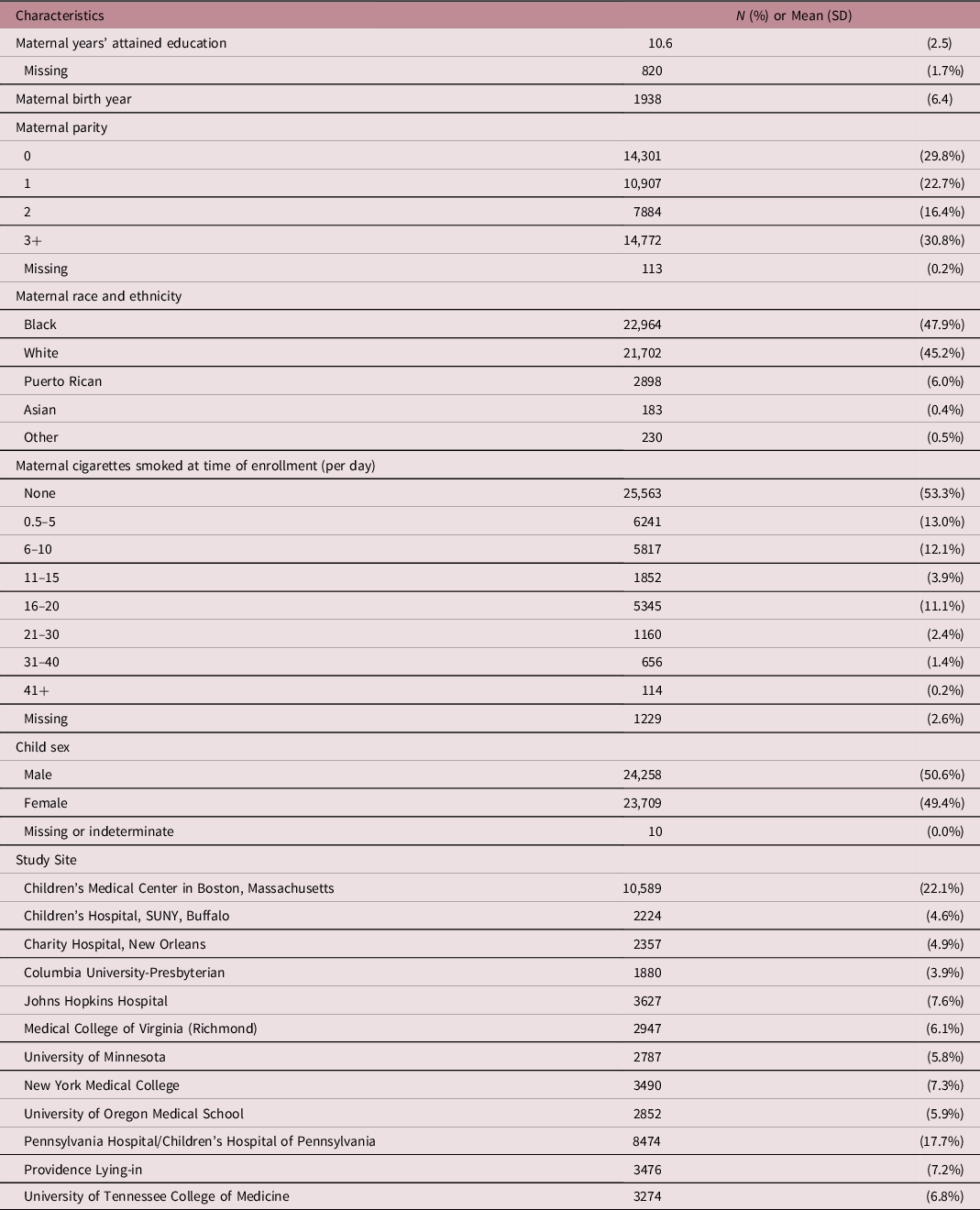
Of the 47,977 children with any outcome data, 4600 (10%) of their mothers had exposure to surgery during hospitalization likely requiring general anesthesia as a young child, 3944 (8%) in mid-childhood, 7225 (15%) during puberty, and 7812 (16%) as an adult. Women might have had surgery in multiple time periods, so these fractions are not additive. There were 410 (0.9%) children who were exposed to fluorinated anesthetics in utero or the month before conception. Almost half of the mothers in the study were Black (47.9%), and the median years of education was 11 (IQR=9,12) (Table 1).
Maternal and child characteristics, Collaborative Perinatal Project (USA, 1959–1973, N = 47,977)

All confounders save for maternal parity and cigarettes smoked per day were related to pregnancy exposure to fluorinated anesthetics. Notably, there were differences by metrics of socioeconomic status. Black women had the highest rate of exposure to fluorinated anesthetics during pregnancy or the month before conception, and exposed women had fewer years of education on average compared to unexposed women. Maternal lifetime exposure to surgery yielded opposite associations with socioeconomic confounders. White women had the highest proportion exposed to surgery across all time points, although the difference was most pronounced in early childhood. For all time points, women exposed to surgery had higher attained years of education on average compared to unexposed women, with the largest gap also present among those exposed in early childhood (Table S1).
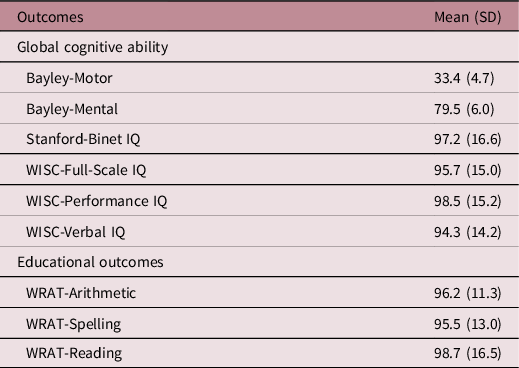
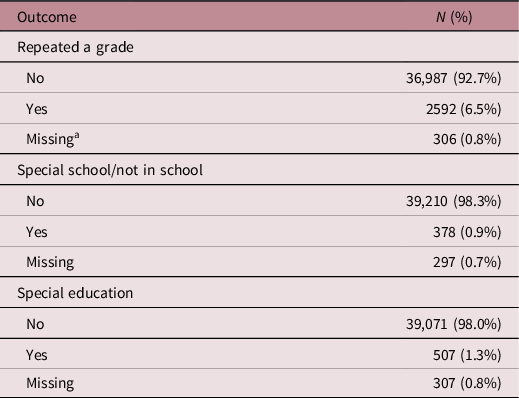
Children in this sample had nearly average IQ scores overall (mean total scores of 97.2 and 95.7 on the Stanford-Binet and WISC IQ tests respectively) (Table 2). More than 6% of the sample had repeated a grade by age 7, about 1% of the sample was in a special education program, and 1% were in a special school or not in school at all at age 7 (Table 3).
Descriptive statistics for cognitive and educational (continuous) outcomes, Collaborative Perinatal Project (USA, 1959–1973)

WISC, Wechsler Intelligence Scale for Children; WRAT, Wide Range Achievement Test.
At 8 months the range of children with exposure and outcome data was 43,184–43,193.
At 4 years there were 37,917.
At 7 years the range was 39,453–39,838.
Frequency table for educational (binary) outcomes, Collaborative Perinatal Project (USA, 1959–1973)

a Number refers to the number of children present at that visit who were not missing data for that outcome variable. 39,885 children had a 7-year visit.
Exposure-outcome relationships
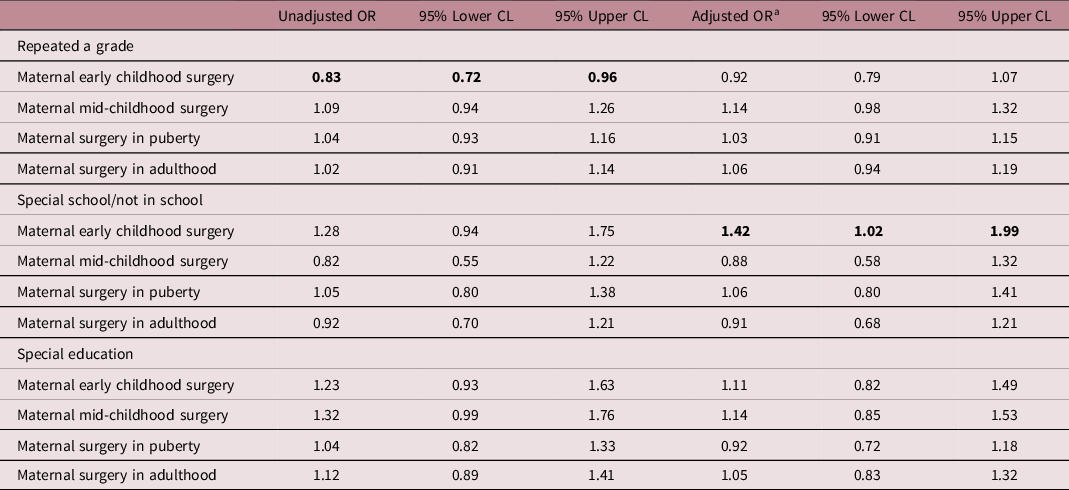
Some outcome variables were associated with maternal lifetime exposure to surgery (especially surgery during early childhood), whereas prenatal exposure to fluorinated anesthetics was associated with only one outcome. Unadjusted models often displayed large associations; however, most diminished after confounders were included. Results from both the unadjusted and adjusted models are shown in Tables 4–7. For the models where interactions with sex were tested, only the results from models with statistically significant interactions are reported in the text only.
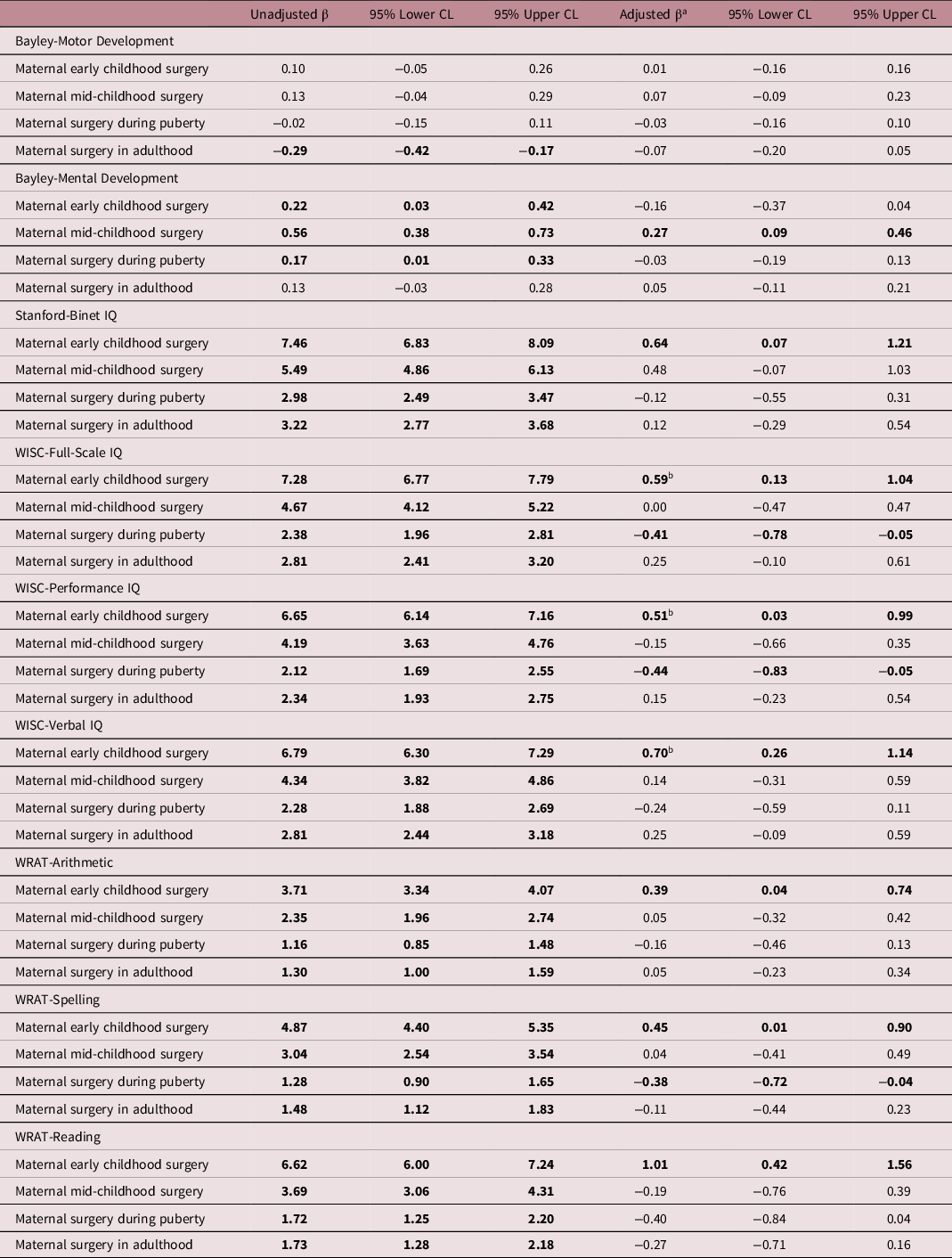
Maternal lifetime exposure to surgery and global cognitive ability and educational (continuous) outcomes, Collaborative Perinatal Project (USA, 1959–1973)

WISC, Wechsler Intelligence Scale for Children; WRAT, Wide Range Achievement Test.
Bold figures denote statistical significance (p<0.05).
a Adjusted for child birth year, sex, study site, maternal race/ethnicity, number of cigarettes smoked per day at the time of study enrollment, maternal birth year, maternal number of years of education (continuous) and parity. Models for the Bayley also adjusted for age at the time of testing.
b This model had statistically significant interactions with sex. Sex-specific models are reported in the text.
Maternal lifetime exposure to surgery and educational (binary) outcomes, Collaborative Perinatal Project (USA, 1959–1973)

Bold figures denote statistical significance (p<0.05).
a Adjusted for child birth year, sex, study site, maternal race/ethnicity, number of cigarettes smoked per day at the time of study enrollment, maternal birth year, maternal number of years of education (continuous) and parity.
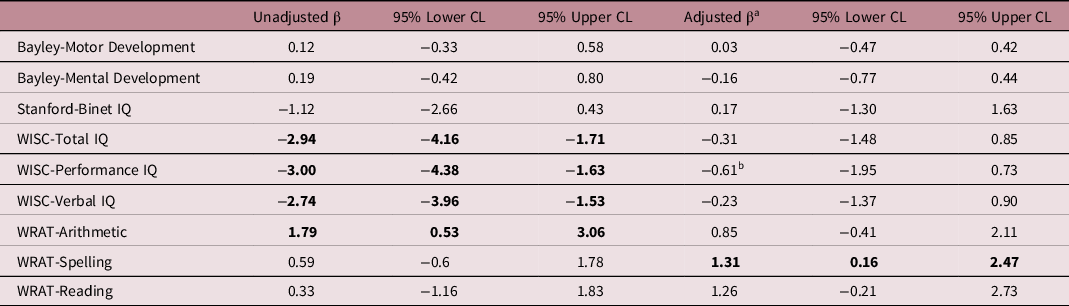
Pregnancy exposure to fluorinated anesthetics and global cognitive ability and educational (continuous) outcomes, Collaborative Perinatal Project (USA, 1959–1973)

WISC, Wechsler Intelligence Scale for Children; WRAT, Wide Range Achievement Test.
Bold figures denote statistical significance (p < 0.05).
a Adjusted for child birth year, sex, study site, maternal race/ethnicity, number of cigarettes smoked per day at the time of study enrollment, maternal birth year, maternal number of years of education (continuous) and parity. Models for the Bayley also adjusted for age at the time of testing.
b This model had statistically significant interactions with sex. Sex-specific models are reported in the text.
Pregnancy exposure to fluorinated anesthetics and educational (binary) outcomes, Collaborative Perinatal Project (USA, 1959–1973)

a Adjusted for child birth year, sex, study site, maternal race/ethnicity, number of cigarettes smoked per day at the time of study enrollment, maternal birth year, maternal number of years of education (continuous) and parity.
b Generalized estimating equations effect estimates not calculable due to sparse data, so model was run without clustering.
Results pertaining to exposure to maternal lifetime surgical history
Models pertaining to global cognitive ability showed small positive associations with maternal exposure to surgery in early and mid-childhood that were attenuated but still statistically significant after adjustment for covariates (Table 4). Mental development (Bayley mental scores) at 8 months was positively associated with maternal exposure to surgery during mid-childhood, as was IQ at 4 and 7 years with maternal surgery in early childhood with betas ranging from 0.51 to 0.71 and 95% confidence intervals excluding the null. Conversely, both full-scale WISC (adj β = –0.41, 95% CI: –0.78, –0.05) and performance WISC (adj β=–0.44, 95% CI: –0.83, –0.05) IQ scores were negatively associated with exposure to surgery during puberty.
There were statistically significant sex-specific interactions with maternal lifetime surgery history for models pertaining to performance, verbal and full-scale WISC at age 7 (p for all interactions <0.05). Upon inspection of sex-specific models, positive associations were confined to maternal exposure during early childhood and among boys (adjusted betas ranged from 0.87 to 1.02, 95% CIs from 0.19 to 1.64), but not girls.
Maternal exposure to surgical procedures in early childhood was associated with both positive and negative educational outcomes at age 7. Children of mothers exposed to surgical procedures in early childhood were more likely to attend a special school or to not be enrolled in school at all compared to the unexposed (adj OR=1.42, 95% CI: 1.02, 1.98) (Table 5). Maternal exposure to surgery during puberty was negatively associated spelling (adj β = –0.38, 95% CI: –0.72, –0.04) abilities at age 7 for children (Table 4). In contrast, maternal exposure to surgery in early childhood had small, positive associations with spelling, reading, and arithmetic scores on the WRAT (adj betas ranging from 0.39 to 1.01, and CIs from 0.01 to 1.56).
Results pertaining to child exposure to specific anesthetic agents during in utero development
Initially, there were no observed associations between prenatal exposure of children to fluorinated anesthetics and cognitive outcomes in adjusted models (Table 6). However, after stratifying by child sex, prenatal exposure to fluorinated anesthetics was related to poorer WISC performance IQ in boys (adj β = –1.97, 95% CI: –3.88, –0.06), not girls, at age 7 years (p for interaction=0.02). Also, there was a small positive association between prenatal exposure to fluorinated anesthetics and spelling abilities (adj β=1.31, 95% CI: 0.16, 2.47), but no statistically significant associations were detected for other outcomes (Table 7).
When comparing those exposed to fluorinated anesthetics in utero to those exposed to other anesthetics in utero, results (Supplemental Tables 2, 3) were similar to the results shown in Tables 6 and 7. That is, effect estimates were of very similar magnitude and direction (e.g., only WRAT spelling was statistically significant upon adjustment, adj β=1.30, 95% CI: 0.09, 2.51).
Discussion
In this large prospective US cohort study of women enrolled during prenatal care and their children followed to age 7 years, we found inconsistent evidence of effects of maternal exposure to surgery or prenatal exposure to fluorinated agents on child developmental and educational outcomes. Analyses yielded mixed, sometimes contradicting results, with maternal exposure to surgery displaying both positive and negative associations with specific child outcomes differing by maternal age of exposure. There was some evidence of effect measure modification by child sex. Estimates were often attenuated as to no longer be statistically significant after adjustment for covariates, suggesting that confounding factors such as socio-demographics played a role and that despite control, residual confounding remained a possibility.
Select results from our study support past animal literature displaying an intergenerational relationship between maternal anesthetic exposure and adverse offspring or children’s cognitive outcomes. Specifically, results indicating a negative relationship between maternal exposure to surgery during puberty and children’s IQ are in line with studies such as those conducted by Ju et al. Reference Ju, Yang and Morey8,Reference Ju, Yang and Xu9 Both found that adult rats exposed to anesthetic agents, as well as their male progeny, underperformed controls in tasks assessing learning and cognitive functioning. Furthermore, germ cells of the exposed rats underwent the process of epigenetic reprogramming, evidenced by increased DNA methylation (and reduced gene expression) in both parent and offspring. Multigenerational studies in humans on the effects of other neuroendocrine disrupters have also implicated epigenetic inheritance through germline transmission. Reference Golding, Ellis and Gregory16,Reference Kioumourtzoglou and Weisskopf17 Furthermore, puberty is a time of many epigenetic changes, Reference Han, Zhang and Kaushal31 and it may be a critical window for maternal reproductive health, especially as it pertains to outcomes among subsequent generations.
On the other hand, we observed several positive associations between maternal surgery exposure and child cognitive and academic outcomes, especially among mothers who were exposed during early childhood. Maternal exposure to surgery in early childhood was positively related to IQ at age 4 and 7 and arithmetic, spelling, and reading abilities at age 7. Although this is in direct contrast with past indications of a negative relationship between anesthetic exposure and cognitive functioning, this may not be an effect of anesthesia exposure per se. Mothers exposed to surgery at any age, particularly early childhood, had higher educational attainment compared to mothers who never underwent a surgical procedure. The elective nature of surgeries occurring in early childhood (e.g., tonsillectomies) and the era of the study would indicate that low-income and Black families would have had disproportionately poorer access to surgery, whereas, conditions requiring surgery in older pediatric populations are more likely to be urgent (e.g., appendicitis). Reference Coulter and McPherson32 Furthermore, there is a strong association between socioeconomic status and cognitive functioning, Reference Duncan and Magnuson33 and relationships may be due in part to residual confounding.
In terms of our findings pertaining to prenatal direct pediatric exposure to fluorinated anesthetic agents, we observed a positive association with WRAT spelling scores and a negative association with performance IQ scores on the WISC (which was specific to boys). The finding related to WRAT spelling scores is unique among the literature. Meanwhile, our finding pertaining to performance WISC is generally in line with the findings of Wilder et al. and Hu et al. who found that children with multiple postnatal exposures to anesthesia in early childhood were more likely than unexposed children to have a learning disability or neurodevelopmental disorder such as ADHD. Reference Wilder, Flick and Sprung3,Reference Hu, Flick and Zaccariello4 Ing et al. also recently reported some negative effects, but related to behavior. In that study, children exposed to anesthesia in utero had higher CBCL externalizing behavior scores than unexposed children. They reported higher CBCL total problems (p = 0.009) and internalizing problems (p = 0.05) as well, but these were not statistically significant after Bonferroni correction for multiple comparisons. On the other hand, they also reported no significant differences in measures of expressive and receptive language, global cognitive ability, and motor function.
The prenatal period is one of rapid brain growth, with phenomena such as cell proliferation and synaptogenesis starting at the third trimester of pregnancy and lasting through the second year of life. Studies on animal models suggest that the brain is especially vulnerable to environmental influences within this window of heightened neural plasticity, Reference Rice and Barone34 linking anesthesia exposure to reduced synapse functioning in regions such as the hippocampus and amygdala, Reference Jevtovic-Todorovic, Hartman and Izumi5,Reference Rampil, Moller and Bell35 which play an active role in cognitive and behavioral development. For this reason, we would expect children in our cohort exposed to anesthesia in utero to show similar trends in impairment. However, our findings are more consistent with three large retrospective studies recently reviewed by Graham, all of which found no associations between anesthesia exposure between the third trimester and age 2 and neurodevelopmental abnormalities, as well as animal studies like Murphy et al., which observed no negative effects on attentional processing in a rat model. Reference Murphy, McGaughy, Croxson and Baxter10,Reference Graham36
This study has many strengths, including its unique dataset with almost 50,000 pregnancies, which was advantageous to statistical power. Another asset is the generalizability of our findings, as our sample includes racially and socio-economically diverse women from 12 US sites. Next, our outcome variables were collected by trained psychologists utilizing standardized scales, thereby increasing the reliability and validity of the results. Finally, the longitudinal nature of this study is important for being able to evaluate whether any observed relationships between exposures and outcomes may potentially be causal.
It is important to note several limitations, including the age of the dataset. This study took place in the late 1950s/early 1960s, and healthcare and educational policies have evolved. Medicaid in 1965 increased access to surgical procedures for persons of lower socioeconomic status. Reference Mitchell and Cromwell37 Early childhood education programs also increased school readiness and cognitive performance among young children in poverty. Reference Currie and Thomas38,Reference Ayoub, O’Connor, Rappolt-Schlictmann, Vallotton, Raikes and Chazan-Cohen39 Thus, the magnitude of the relationships between maternal educational attainment and race and ethnicity, exposure to surgery and our outcome variables have shifted over time, and we may not find the same magnitude positive associations between IQ, academic functioning, and maternal exposure to surgery if the CPP were conducted today. Furthermore, medical practices have also changed dramatically and many of the anesthetic agents used in the 1960s have since been replaced, thereby challenging the generalizability of our findings to the effects of anesthesia in use today. However, halothane and other fluorinated gases used at the time, like their successors, are GABA agonists, and they might have similar neurotoxic effects. Reference Stucke, Stuth and Tonkovic-Capin21 We also do not know for certain what anesthetic agent was used for lifetime exposure to surgery or even if some of the procedures were done under local or spinal/epidural anesthesia, however, we only included procedures that required hospitalization, when general anesthesia was most common method of sedation. Given that fluorinated agents were not approved for use by the Food and Drug Administration until 1958, most of the early life maternal anesthesia exposure was probably to other agents. Additionally, there are many confounding factors that we were unable to account for given what was available to us in the CPP dataset. Factors such as maternal and paternal history of mental health are strong predictors of child neurodevelopment and may account for some of the significant associations we found. Reference Weijers, Van Steensel and Bögels40 We also lacked data about lead exposure. Confounding by indication is also a possibility in this study. In fact, associations may have been biased downward because surgery may have addressed a maternal health condition that otherwise would have been harmful to the child. Next, previous studies have indicated a dose-dependent relationship between anesthesia exposure and neurocognitive outcomes in children. Reference Wilder, Flick and Sprung3 We were unable to stratify data by number of exposures, nor did we have data on exposure dose, which may have limited our ability to accurately detect a relationship between anesthesia exposure and neurodevelopmental outcomes. As well, we did not correct for multiple comparisons in this analysis, which is in keeping with current practice in epidemiology, for the reasons given by Rothman. Reference Rothman41 However, we recognize that numerous associations were evaluated in the absence of a strong expectation for which ones would be statistically significant. We also examined a broad range of exposure windows because of the lack of prior human studies to provide clear guidance as to a narrower critical window. Therefore, our results should be considered exploratory and should be replicated in other populations. As well, the age of our outcome measures may raise questions about their ability to measure the indicated outcome with the high quality one would expect today. Finally, there were many different outcome variables in this study, increasing the likelihood of type 1 error, which is the false rejection of the null hypothesis, and some of our outcomes were rare, making it difficult to detect small associations with precision.
In conclusion, this large prospective cohort study offers mixed evidence of direct effects of prenatal exposure to fluorinated anesthetics and of potential epigenetic intergenerational effects from maternal exposure to anesthetic agents on child developmental and educational outcomes. Because of the secondary nature of this analysis, the rarity of some outcomes, and other limitations mentioned previously, these findings should be interpreted cautiously. However, they provide a basis for future prospective human studies to continue to build upon this evidence and that from animal models to further develop this line of research. Although limited evidence of sex-specific associations came from the present study, future studies should continue to evaluate whether child sex is an effect measure modifier. Control for influential socio-demographic confounders should also be a feature of future research given the potentially strong effect they can have in determining exposure and outcome.
Supplementary material
To view supplementary material for this article, please visit https://doi.org/10.1017/S2040174422000472
Acknowledgments
We would like to thank and acknowledge the women and children who participated in this study.
Financial support
The research reported in this publication was supported by the Escher Family Fund at Silicon Valley Community Foundation. The content is solely the responsibility of the authors.
Conflict of interest
None.
Ethical standards
Because the present study used de-identified data from public datasets, the Institutional Review Board determined the study was exempt from review.