


There is broad scholarly agreement that the development of representative political institutions was a critical part of the process of European state formation. Conceding a degree of control to a representative assembly has long been believed to have allowed rulers to raise more tax revenue, something that was critical in an era of incessant warfare.Footnote 1 The presence of assemblies also arguably facilitated access to credit.Footnote 2 Finally, some would suggest further that the presence of a strong representative assembly helped secure property rights and thus lay a foundation for economic growth.Footnote 3 But if a representative assembly was such a useful institution why did strong representative assemblies not become the norm much earlier across the European continent? There may be multiple answers to this question, but I emphasize one in particular—in an era of difficult communications and travel, it was often prohibitively costly for representatives to attend an assembly meeting and nearly impossible for constituents to monitor the actions of their representatives if they did attend. This simple fact placed geographically compact polities in an advantageous position with respect to their larger neighbors. In smaller polities, it was less costly to sustain an assembly and, in particular, the type of representative assembly that could meet sufficiently frequently to exert control over expenditure. Although prominent work in political science investigates the development of representative institutions and constitutional government in Europe, this question of geographic scale has largely escaped attention within this debate.Footnote 4
The proposition that either democracy or republican government will be more likely to be sustained in small polities is an old one, and scholars who have subscribed to this argument have emphasized several different mechanisms, including the effect of scale on opportunities for participation, the ability of citizens to know one another, and the heterogeneity of a population.Footnote 5 In this article, I make a more specific claim about the ability of polity members to sustain a representative assembly that is able to exercise a significant degree of control over expenditure decisions. To develop my argument, I propose a simple theoretical framework that draws on two separate insights from the literature on corporate finance. First, actors (firms, state, or other) seeking to raise finance may need to agree to having their future actions be subject to outside control. Second, although the literature on corporate finance emphasizes that control of this type may be useful, it also emphasizes that those who exercise control may find it costly to engage in. This implies then that an institution that allows for outside control will be associated with greater access to finance, but we will only observe this institution in equilibrium if ongoing costs for those who must exercise control are sufficiently low. The question is how important geographic scale was as a source of these ongoing costs in medieval and early modern Europe.
My empirical analysis provides the first broad view of the long-run evolution of representative institutions in Europe prior to the French Revolution. In debates about “size and democracy,” scholars frequently refer to lessons provided by ancient polities, such as Athens and Rome, as well as to more recent experience of republics founded in the late eighteenth century. What is often ignored is that the five centuries of European history prior to the French Revolution provide another valuable setting in which to consider these issues. Following a period of institutional development in the thirteenth century, Europe throughout these five hundred years was characterized by a bewildering variety of representative assemblies that also varied extensively in the types of prerogatives they enjoyed. Although none of these polities could be characterized as democracies, and they were almost inevitably dominated by narrow elites, this early history of representative government certainly still provides an important opportunity to investigate what determines whether a representative assembly can survive and exert a degree of control over an executive.
To test the hypothesis about geographic scale as a determinant of representative institutions, I use an original data set on representative assemblies in 24 European states between 1250 and 1800.Footnote 6 For each state in each period (of half-century duration), the data set records whether an assembly existed, information about specific prerogatives, and the frequency with which the assembly met. This secondary data set is derived from information in historical sources covering the experience with representative institutions in individual European states. To test propositions about the effect of geographic scale on constitutional control, I pair the data on representative institutions with information from a geographic information system (GIS) data set recording state boundaries and city populations in Europe over this time period.Footnote 7 I also complement this with data on representative assemblies in French provinces—a test of my hypothesis that relies on geographic variation within a single polity.
I present four specific types of evidence to test my core arguments. The first involves an investigation of whether geographically compact polities were more likely to sustain a representative assembly that exercised control over expenditures. As I argue, there are firm reasons to believe that this intensive form of political representation could only be maintained if an assembly met frequently, and frequent meetings were less costly in small polities. I use two different measures of geographic scale: (1) the log distance that we would expect a randomly drawn individual to have to travel in order to attend an assembly meeting, and (2) the natural log of a country's area in square kilometers. My estimates include controls for population size, war frequency, and also several different measures of the level of urbanization. The estimation results for the expenditure prerogative suggest a robust negative correlation, with an implied effect of large magnitude. I am not able to control for polity fixed effects in this estimation because of the very high degree of persistence observed in the expenditure prerogative over time. I am, however, able, to examine whether the correlation continues to hold when excluding certain subsamples of the data—the smallest states, the largest states, city-states—that might be correlated with unobserved factors driving the result. I also show that the results are not likely to be driven by a problem of reverse causality whereby rulers in states without constraining assemblies were more likely to subsequently expand their territories.
The second type of evidence I present involves a more general investigation of the correlation between geographic scale and three separate assembly characteristics: (1) whether an assembly existed, (2) whether it exercised effective veto power over taxation, and (3) whether it exercised control over expenditures. As I discuss in detail later, although medieval and early modern assemblies in the latter category would need to meet frequently, there is no reason to believe that the exercise of veto power over taxation required frequent meetings. Assemblies often authorized new taxes at infrequent intervals of once every three, four, or even ten years. If we found that veto power over taxation was also primarily present in small polities, then we might believe that a causal mechanism other than the one I suggested is driving the results. In practice, this does not appear to have been the case; large states were no less likely to have assemblies with veto power over taxation than were their smaller neighbors.
The third type of evidence I present involves a direct test of the relationship been geographic scale and the frequency with which an assembly met. I am able to demonstrate that there exists a negative correlation between geographic scale and the frequency of assembly meetings, both when conducting an estimation in levels, as well as when conducting an estimation in first differences that removes any unobserved factors specific to each polity. I also show that these results are unlikely to be biased by the fact that polities with weak assemblies had a greater tendency to expand.
The fourth and final piece of empirical evidence I present involves the behavior of French provincial assemblies during the Renaissance. Although France had a national representative institution, the Estates General, it also had a large number of provincial estates that bargained with French monarchs over taxation. Several interesting conclusions are apparent from these data. As one would expect to be the case if geographic scale influenced the intensity of political representation, the estates of individual French provinces met more frequently than did the Estates General. It can be further demonstrated that estates in smaller French provinces, on average, met more frequently than did those in larger provinces. These results suggest that the principal problem in France may not have been a general weakness of representative institutions; it may have instead been the fact that France was simply too big to sustain an active national assembly. We can also use the French data as an opportunity to provide an out-of-sample forecast of my cross-polity regressions. As it turns out, the cross-polity estimates are actually an extremely good predictor of the frequency with which French provincial assemblies met. Finally, we can perform one further robustness test of my argument. If we drop the French Estates General from my data set and instead substitute data from thirteen French provincial assemblies to the pooled analysis, then we obtain almost identical inferences about the correlation between geographic scale and meeting frequency.
My empirical tests provide a strong indication that geographic scale was a critical factor determining whether a state could sustain a representative institution that would facilitate access to finance. There do, however, remain other possible explanations that I cannot adequately test with the data at my disposal. For these, we can nonetheless refer to other forms of evidence. For example, one might suggest that larger polities found it more difficult to maintain strong representative assemblies because they had more heterogeneous populations. Without denying the importance of this preference heterogeneity mechanism in many contexts, it would seem difficult to use this to account for the observed correlation between size and constitutional control in medieval and early modern Europe. Large polities such as France were heterogeneous, and in France, the persistence of regional sentiment may well have hindered the operation of the French Estates General. But the smallest European polities—the city-states—were also very heterogeneous in terms of the wealth holdings of their citizens. All available evidence on wealth and income inequality in medieval European cities shows extremely high levels of inequality.Footnote 8 Within city-states, inequalities in wealth were a continual source of violent protest. The Republic of Genoa experienced 54 major revolts in the two hundred years between 1259 and 1528 (Epstein Reference Epstein1996). This is a frequency of conflict that belies the idea that the maintenance of active representative institutions during this period was dependent on the existence of a stable civic culture.
The remainder of this article is organized as follows. The next two sections lay out the historical background, as well as the assumptions underlying the hypothesis that geographic scale will determine the format of political representation. The following section presents the data on geographic scale and representative assemblies that I use to test the argument. Then the estimation results regarding assembly prerogatives and meeting frequency are discussed. The next two sections analyze French provincial assemblies and consider reverse causality and other endogeneity concerns. The final section concludes.
SCALE AND REPRESENTATION IN EARLY MODERN EUROPE
Representative assemblies were a widespread feature of rule in medieval and early modern Europe. Although the English parliamentary experience is the most frequently studied, it is now recognized that a very large number of European states had representative assemblies that often enjoyed significant prerogatives.Footnote 9 Here I briefly summarize what is believed about the functions of assemblies and how geographic scale may have influenced the format of political representation. I then develop three explicit testable predictions of my argument, in addition to identifying several potential confounding factors.
Functions of Representative Assemblies
What was the effect of having a representative assembly on a state's ability to raise finance for war? It has been observed that the per capita tax burden was significantly higher in Great Britain (after 1688) and in the Dutch Republic, two states with strong representative assemblies, when compared with Castile and France, two states for which it is generally argued that assemblies exerted less of a constraint on executive actions.Footnote 10 One potential problem with using these outcomes to infer a causal effect of representative assemblies is that Great Britain and Holland may have had higher per capita tax burdens for other reasons. If there is a fixed cost to a public good such as defense, then in a smaller polity the per capita cost of this good will logically be higher. Also, a representative assembly and a higher tax burden may each be outcomes that depend on the willingness of a political elite to agree to finance. What is needed then is an explanation of why, holding constant exogenous influences on the willingness of a political elite to contribute, the presence of a representative assembly would actually increase the ability of an executive to raise finance.
One possible reason why an assembly might have an effect on the ability to raise finance is if it could exercise control over how finance was used. Although many European assemblies had the right to consent to or refuse new taxes, in practice those that gained the greatest reputations for delivering revenues also enjoyed this further prerogative. With some simplification, we can divide European assemblies into two broad types. In a first category, there were assemblies that had the power to consent to or refuse taxation but that did not exercise any subsequent control over how taxes were spent. Examples of this pattern would be the Cortes of Castile or (during certain periods) the French Estates General. In a second category, there were those assemblies that could refuse or accept new taxation but that also exerted a degree of direct control over expenditures. This control involved two features: (1) regular auditing to ascertain the state of public finances, and (2) frequent intervention in decisions regarding not only taxation, but also spending and debt. This second type of assembly was a characteristic of the city-states of Europe and of a select few other polities. In my sample, these include the Dutch Republic, Great Britain (after 1688), the Estates of Saxony, and the Estates of Brandenburg (prior to 1650). But if assemblies of this type were more effective in raising finance, then it raises a question—why did they exist in some places but not others?
Importance of Geographic Scale
Although previous political economy work emphasized the impact of giving a representative assembly a control right over finance, it proceeded under the implicit assumption that once granted, it was relatively costless for an assembly to exercise this right. This might be a viable assumption for some polities in Europe during this period, but it is not tenable for others given the high travel and communications costs that prevailed. Spufford (Reference Spufford2002, ch. 4) suggests that following the collapse of the Roman Empire, the European road network continued to deteriorate and reached its nadir during the twelfth century. From this point, a series of small improvements occurred, but it was not until the eighteenth century—the end of the period considered in this study—that major improvements involving paved roads occured in many countries. As one striking example, Spufford notes that there was no bridge across the Rhine at Cologne from the collapse of the Roman-built bridge until a railway bridge was built in the same location during the nineteenth century. In this context of difficult transport and communication, there was an obvious difference in size between self-governing cities, other small polities, and large territorial states. In France during medieval times, it regularly took travelers two weeks to travel from the Mediterranean Coast to Paris (Reyerson 1997). In contrast, in Holland none of the cities that had voting rights in the Estates of Holland during the sixteenth century lay more than a day's travel time from the Hague (Tracy Reference Tracy1990). In small city-states, the barriers of geographic scale were lower still.
There are some historians who have emphasized that in Europe before the nineteenth century, costs of travel and communication were a significant barrier to maintaining an active representative assembly. The work of Wim Blockmans (Reference Blockmans1976, Reference Blockmans1978, Reference Blockmans and Allmand1998) is particularly important in this regard. Blockmans emphasizes how representative assemblies in small European regions, such as Flanders, tended to meet with a high degree of frequency, whereas assemblies in large polities such as France tended to meet less frequently, sometimes suffered from chronic absenteeism, and consisted of members who complained about travel costs.Footnote 11 The observation by Blockmans that geographic scale was an obstacle to organizing meetings of the French Estates General parallels that of a number of other historians.Footnote 12 His observation also fits with the contrast observed by other historians between the Cortes of Castile and the Estates of Holland. Both assemblies maintained a practice where representatives were bound by strict mandates from their constituents. In Holland, this proved to be no obstacle to the functioning of the estates because representatives could continuously refer back to their home cities. In a polity the size of Castile, this was simply not feasible. James Tracy (Reference Tracy2002) argues that “The parliaments of the separate Low Countries provinces met more frequently than in any other part of Europe; this is certainly because of the fact that distances were not so great as in large kingdoms such as Naples and Castile.”Footnote 13 The numerous city-states of medieval and early modern Europe provide the strongest contrast to far-flung polities such as Castile or France, where assemblies met infrequently. In city-states, it was common to have town councils meet every week, and there are clear indications of how small size could facilitate their frequent meetings. City councils could often be convened by a town crier or by a simple device such as sounding a bell. The city council of fourteenth-century Siena was known as the Council of the Bell for precisely this reason (Bowsky Reference Bowsky1981).
The problem of geographic scale was arguably crucial not only because it raised costs for representatives, but also because it raised costs for citizens of monitoring the actions of their representatives when and if they did attend an assembly. The historical evidence I cite thus far supports the notion that there could be significant costs to attending a representative assembly. For an individual town that needs to send a representative to an assembly meeting, funding costs of travel could prove prohibitive. But if this was the only obstacle to sustaining an assembly, then it would seem to suggest several solutions. First, the size of constituencies could be enlarged to reduce per capita costs of sending a representative. Second, an assembly might also be structured so that it met for longer periods at more infrequent intervals to minimize travel costs. Finally, an assembly could also delegate authority to a standing committee of a limited number of representatives. There is evidence that decisions like these led to assemblies being effectively “captured” by executives. Individual towns or constituencies found it increasingly difficult to monitor the actions of their representatives. The end result then was that geographic scale still posed an important constraint on the ability to sustain constitutional control of an executive.
Moving toward Testable Predictions
The discussion preceding used historical observations to suggest that maintaining a certain type of representative assembly—one that could exert control over expenditure—could deliver increased access to war finance, but this institution might only be sustainable in a geographically compact polity. Before proceeding with the empirical evidence, it is also useful to examine the problem in a more abstract setting in order to make explicit the mechanisms in operation and the assumptions on which any predictions are based. To do this, we can draw on two basic insights from the literature on corporate finance. First, when investors are uncertain about their preferences over future alternative actions, and they also know that these preferences may not coincide with those who manage a firm, then managers of the firm may need to cede a degree of control over future decisions in order to attract finance.Footnote 14 Second, to effectively exercise control, outside investors will need to regularly monitor, and monitoring is costly to engage in because it involves effort that could be used for other purposes.
Now consider one scenario that draws on the previous two observations and applies them in a premodern European context.Footnote 15 An executive (either a monarch or ruling magistrate) seeks to obtain war finance, either to defend against a threat or to pursue a possible opportunity. The executive shares a common interest with a representative citizen in not having his polity lose a military conflict, but he also enjoys an additional private benefit from the pursuit of military activities in the form of personal prestige or “ego-rents.”Footnote 16 In this scenario, the executive needs to obtain consent from the representative citizen to obtain finance.Footnote 17 In this model, the optimal level of war finance from the point of view of the representative citizen is not known in advance of the citizen's decision whether to consent to a given level of taxation. The optimal level depends on a state variable that is realized only after the citizen's decision, and even then it is not publicly observed. The state variable can be taken to represent features such as the immediacy of a military threat (or opportunity) or the situation regarding finances. The combination of an unobserved state variable with the executive's incentive to obtain as much war finance as possible creates a moral hazard problem. The moral hazard problem can be addressed if the citizen first agrees to a notional level of war finance (a set of taxes), but the executive gives the citizen a control right allowing the citizen to authorize or refuse expenditures. The final assumption in the model is that the citizen must pay an exogenously specified monitoring cost in order to observe the realization of the state variable. If the citizen cannot observe the state variable, then there is no benefit from exercising control over expenditures.
Under the previous set of assumptions, we observe that any factor that increases exogenous monitoring costs will make it less likely that we observe a representative assembly that exercises control over expenditures. Because the executive's moral hazard problem remains unsolved in this case, it also implies that citizens will be less likely to consent to a high level of taxation. I suggest that in premodern Europe, geographic scale was an important determinant of exogenous monitoring costs. We can use the previous framework to produce three empirically testable predictions:
1. Assemblies in large polities will be less likely to exercise a prerogative to control expenditures.
2. Assemblies in large polities will tend to meet less frequently. This is a complementary way to test the same argument because effective monitoring will require frequent meetings.
3. The prerogative to consent to or refuse taxation will not depend on exogenous monitoring costs, and therefore, we should not observe a correlation between geographic scale and the presence of this prerogative.
Confounding Factors
The theoretical mechanism proposed previously provides one reason why we might expect to observe a correlation between geographic scale and the format of political representation. However, there are several reasons why we might expect to observe such a correlation even if geographic scale did not matter in the way I suggest.
A first possibility is that small polities may have had more active representative assemblies because they were at greater risk of invasion, and so their rulers may have had a greater incentive to concede control to an assembly in order to raise war finance. I attempt to control for this possibility in my statistical tests (albeit imperfectly) by including a measure of war frequency as an independent variable in my regressions. However, it is entirely plausible that the effect of external risk would actually operate in the opposite direction. As long as a population fears the effect of invasion, then the higher the level of external risk, the greater the likelihood that it would agree to increased taxation even without the concession that a representative assembly could then control spending. Were this the case, it would imply a bias against finding in favor of my core hypothesis.Footnote 18
A second possibility is that small polities, by virtue of having small populations, faced higher per capita costs of defense, and per capita costs influenced the format of political representation. If citizens agreed to higher tax rates in order to meet these costs, then they should also logically be more willing to bear the substantial cost of maintaining a representative assembly in order to ensure that their taxes were used to greatest advantage.Footnote 19 I attempt to control for this possibility by using data on overall population sizes in my statistical tests. However, it should also be pointed out that as with external risk, the effect of per capita defense costs should logically be more ambiguous than the preceding argument implies. The reason is that higher per capita defense costs might make citizens less willing to consent to taxation in the first place.
A third possibility is that small polities in Europe also tended to be more heavily urbanized, and there are reasons to believe that urbanized, commercial societies might have a greater need for an active representative assembly that could help regulate commerce.Footnote 20 In my statistical tests, I deal with this possibility in multiple ways, examining whether any results are robust to the exclusion of city-states and to the inclusion of the best available controls for urbanization.
A fourth possibility involves reverse causality; the format of political representation might determine subsequent changes in geographic scale. In particular, it might be the case that executives unconstrained by representative assemblies are more likely to pursue military adventures that result in territorial expansion, raising the cost of maintaining an assembly in future periods.Footnote 21 I explicitly consider this possibility at the end of this article, finding, based on one empirical test, that there is no evidence for “reverse causality” of this form.
SYSTEMATIC EVIDENCE ON SCALE AND REPRESENTATION
There have so far been only limited attempts to compile systematic quantitative evidence on the development of representative assemblies in Europe prior to 1800. This is unfortunate given the broad variety of assemblies that existed during this period and the potential insights that could be drawn from their experience. Among political historians, there is actually a significant body of work produced during the postwar period on the structure, prerogatives, and functioning of representative assemblies in medieval and early modern Europe. I drew on this work to compile a data set on the existence, prerogatives, and functioning of representative assemblies in a broad sample of European polities. The sources used are as follows.Footnote 22 Given the difficulties of interpretation and the varying precision of the information on which they are based, it is certain that my data are characterized by substantial measurement error. Yet, however imperfect this data set may be, it is also the case that it provides us with a broad picture of the evolution of representative institutions in Europe of the sort that has not existed previously.
The sample of countries in the representative institutions data set consists of most large states in Europe, as well as a number of smaller states, including small principalities, kingdoms, and city-states. Among this latter category, the experience of Italian city-states is the best known, but there were also autonomous cities in other parts of Europe, particularly in the Low Countries, parts of Germany, and Switzerland. For the purposes of this article, however, I am obliged to exclude most of these autonomous cities from the subsequent analysis because of insufficient GIS data about their exact geographic scale.Footnote 23
Prerogatives of Representative Assemblies
I focused on three separate questions involving the presence and prerogatives of a representative assembly. For each state for each period, I coded a “yes” or “no” response based on the sources listed in footnote 19:
1. Is there a representative assembly? This condition is satisfied if there is a collective body at the level of the state that met with some regularity and had at least a consultative role in decision making.
2. Is there a representative assembly, the consent of which is sought in order to levy taxes? This is a more restrictive classification for representative institutions. In many cases, assemblies had the right to veto certain taxes but not others. The preceding question is coded “yes” for those cases where this prerogative applied to a large share of a country's taxation.
3. Is there a representative assembly that directly controls decisions regarding spending? Representative assemblies with the most extensive financial privileges played a direct role in monitoring and making spending decisions.
A summary of the evidence I collected is presented in Table 1, although this summary table cannot track all changes in institutions over time. A quick glance at Table 1 reveals an interesting feature of the data—it is striking how the prerogative to control spending was present almost exclusively in small states such as city-states or principalities. In contrast, it does not appear that there was as strong a relationship between state size and presence of the prerogative that an assembly could consent to or refuse new tax levies.
Descriptive Statistics on Representative Assemblies

Notes: “Assembly” refers to whether a representative assembly existed. “Taxes” records whether an assembly's consent was required for levying new taxes. “Spending” records whether an assembly had a prerogative over expenditures. “Frequency” refers to the number of meetings in a fifty-year period divided by fifty. The measure is averaged across the sample years (1250–1800), and it is censored at a maximum of 1. “Polity scale” refers to the average of the polity scale measure in kilometers from 1250 to 1800. See text for a description of the measurement of the polity scale.
Summary Statistics for Variables

Intensity of Political Representation
My data on meeting frequency are drawn from a wide variety of secondary sources, all of which are listed in footnote 19. The quality of this information varies from one polity to the next. In some cases, such as France or England, we have a complete listing of meetings by national representative institutions. In other cases, the evidence is much more approximative. The data are nonetheless useful for addressing broad variation in the intensity of representative activity. I coded a measure of the frequency of assembly meetings that ranges from 0 (no meetings) to 1, which represents a meeting taking place at least once a year. Because some representative assemblies actually met more frequently than once a year, this measure is artificially censored. I opted for this approach because of the difficulty of measuring activity at intraannual frequencies. The data, which are presented in summary form in Table 1, show significant variation in meeting frequencies across states, with assemblies in smaller states on average meeting more frequently. There was also significant variation in meeting frequencies over time in some states, although this is not reflected in the Table 1 averages.
Geographic Scale
I suggested that geographic scale was an obstacle to maintaining an intensive form of political representation in medieval and early modern Europe. To empirically evaluate this argument, we need to establish which geographic measures are most relevant and where we might find data covering such an early time period. The previous theoretical framework takes the case of a representative citizen facing an exogenous cost of monitoring an executive. As an empirical measure, we might ideally want to know the expected cost for a randomly drawn constituent to attend an assembly. Being able to establish this quantity would require knowing a polity's boundaries and the geographic distribution of all members of its population. Not surprisingly, we lack complete data of this sort for Europe during this period. We can, however, make use of two proxy measures.
My first measure of geographic scale is the natural log of the distance (as the crow flies) that we would expect a randomly drawn urban citizen to have to travel to an assembly if it were held in a country's capital city. In what follows, I refer to this measure as the polity scale. This will be a good proxy for my ideal measure (the distance for a randomly drawn citizen to travel) to the extent that the geographic distribution of the urban population is reflective of the geographic distribution of a country's rural population.
My second measure of geographic scale is the natural log of a polity's area in square kilometers. The greater the extent to which a polity's population is uniformly distributed across its territory, the more accurate this measure will be as a proxy.
Country averages for the polity scale measure and area in square kilometers are presented in Table 1. The averages provide a good idea of the cross-country variation in these measures; however, this presentation averages away variation over time. A closer inspection of variation in log area over time shows that there is in fact very little in the data. If we regress the measure of log area on a set of country dummies, then we observe that fully 93% of the variation is accounted for exclusively by cross-country variation. In contrast, a regression of the polity scale on a set of dummy variables for each polity produced an r squared of 0.75.
The use of each geographic scale measure as a proxy for travel costs is based on the implicit assumption that travel occurred on a route approximating a straight line from the location in question to a country's capital. But it should be acknowledged that in some cases this will be misleading. Natural obstacles such as mountain ranges could oblige individuals to follow a more circuitous route. Alternatively, features such as navigable rivers could dramatically reduce travel costs. This is particularly important given that throughout the period considered in this article, travel by water was much speedier than travel by land, and important scholarly accounts have emphasized how access to, and the development of, water transport influenced the process of state formation.Footnote 24 Unfortunately, modifying my two geographic scale measures to take account of the availability of water transport would be a very large task indeed. The Euratlas GIS data set records the locations of rivers, but we would also need to know whether (and when) they were navigable, and in which direction, because a navigable river would not necessarily provide a quick route to the location of an assembly. It may be easier to proxy for the availability of water transport by sea by distinguishing between coastal and landlocked polities, as I discuss later. Given the difficulty in constructing a measure of access to water transport (particularly by river), it is important to consider how my statistical results might be biased by a failure to control for the availability of water transport. If polities covering a large area had numerous opportunities for water transport, whereas smaller polities did not, say, because they were located in mountainous regions, then we would be less likely to believe that a finding in support of my hypotheses actually reflects the influence of monitoring costs. It is worth noting that existing discussions of the subject do not suggest such a pattern. So, for example, Koenigsberger (Reference Koenigsberger1992) emphasizes how small geographic scale and access to water transport went hand in hand in facilitating an intensive form of political representation in Holland, whereas in Castile an extensive land mass combined with limited access to water transport to prevent more frequent meetings of the Cortes.
In addition to providing several measures of geographic scale, the combined GIS data set of polity boundaries and urban populations also allows for constructing two different urbanization measures that will be useful as control variables in my analysis. The first variable regional urbanizationis the percentage of the population living in towns or cities.Footnote 25 Unfortunately, it is only possible to measure this variable for regions corresponding to modern country boundaries because we lack estimates of the total population (urban + rural) for some polities in my data set. This can nonetheless serve as a proxy measure for urbanization across broad regions.
I also make use of a second urbanization measure—urban potential. Based on the measure proposed by Jan de Vries (Reference de Vries1984) in his important study of urbanization in preindustrial Europe, the urban potential of an individual city is simply the total population of all cities in the data set weighted by the distance of each of these cities from the city in question.Footnote 26 This gives a sense of whether a city is located within an urbanized region where there are numerous other large cities or whether it is indeed located in a much more sparsely populated zone. To get a measure of urban potential specific to each of my twenty four polities, I then take the average of the urban potential values for each city within a polity.
ESTIMATES FOR ASSEMBLY PREROGATIVES
I hypothesized that geographic scale should place limitations on the ability of a polity to sustain a representative assembly that exercises a control right over expenditures. I also hypothesized that geographic scale should pose less of a constraint on the ability to maintain an assembly with the prerogative of consenting to new taxation. In the medieval and early modern periods, exercise of the first prerogative necessitated frequent meetings, whereas exercise of the second did not.
Control of Expenditure
I test the first of the two hypotheses by using a pooled specification of the following form, where y is a binary variable indicating whether a control right over expenditure is present.

In this specification, the probability of observing that there is an assembly with control of expenditures is modeled as a function of S, a measure of geographic scale (either the polity scale or log area) that has coefficient β, a matrix of controls X with coefficient vector γ, and finally a function of time G(Tt). I estimate the equation using a logit model, including a cubic function of time in order to control for common time effects in the sample.Footnote 27 Within the set of controls, I use two specific measures of urbanization: regional urbanization and urban potential, each of which has been described in detail previously. These are important to the extent we believe that more commercialized polities would have a greater need for maintaining active representative assemblies that could regulate commerce. The set of controls also includes the total population of a polity living within towns and cities—urban population. This is used as the best available proxy for a polity's total population. Its inclusion is based on the possibility that polities with larger populations will face smaller per capita costs of raising an army, and this might influence incentives to establish and maintain a representative assembly that exercises control over expenditures. Unfortunately, estimates of total population exist for only a small subsection of my sample countries.Footnote 28 The final control variable included in X is the number of years in each 50-year period in which a given state is at war. This is an imperfect proxy for what we would ideally like to measure—exogenous risk.Footnote 29
Although the preceding specification includes controls for unobserved time effects, it does not control for unobserved country effects. This choice is dictated by the fact that almost all observed variation in the spending prerogative occurs between countries and not within countries over time. As a second best strategy, I also run the estimation while excluding several different subsamples of the data—excluding the smallest states, the largest states, and city-states. The idea here is that certain types of states may have had other unobserved features that are not controlled for in my regressions.
Table 3 reports logit estimates of Equation (1) with standard errors adjusted to allow for arbitrary within-polity correlation of errors.Footnote 30 For each of the two geographic scale measures, I report six different specifications. The first controls only for common time effects. The three subsequent specifications exclude alternative subsamples of the data to examine whether the results are influenced by a particular set of countries.Footnote 31 The final specifications then consider whether the estimate of β in Equation (1) is robust to the inclusion of different control variables.
Logit Estimates of Probability of Having an Assembly with Prerogative To Monitor and Make Expenditure Decisions

Notes: Heteroskedastic consistent standard errors clustered to allow arbitrary within-country correlation. Estimates include a cubic function of time, but time coefficients are not reported.
Considering first the specifications using log area, we can see that the coefficient on this variable is negative and statistically significant in the base specification in column 1. In terms of predicted probabilities, if we consider the base specification in the first column of Table 3, then a polity at the 25th percentile of the scale distribution (a polity of approximately thirty thousand square kilometers) would be estimated to have a 0.42 chance of having an assembly that exercised a control right over expenditure. At the 50th percentile of the distribution, this estimated probability would drop to .20, and at the 75th percentile, it would drop to .04. The specifications in columns 2, 3, and 4 exclude different subsamples of the data. When excluding the smallest quartile of polities, we observe that the coefficient on log area is now slightly smaller than in the base specification, but it remains statistically significant (p = .03). When excluding the largest quartile of polities, we observe that the coefficient on log area is highly significant and similar in magnitude to the base specification. In column 4, excluding the 5 city-states from the sample also produces a negative and statistically significant coefficient on log area.Footnote 32 The final two estimates in columns 5 and 6 consider whether the correlation between log area and the presence of a spending prerogative is robust to the inclusion of control variables for population, urbanization, and war incidence. None of the control variables are statistically significant, and their inclusion does not significantly attenuate the coefficient on log area. Unreported estimates in which the urbanization and population controls were entered separately instead of collectively produced very similar results. The regressions in Table 3 suggest a robust negative correlation between the log areaof a polity and the probability that it will have an assembly that exercises a control right with regard to expenditures. Although this result is strongest when including city-states and the smallest states more generally in the estimation, there is little to suggest here that the correlation is driven exclusively by these polities.
When we turn to the specifications that use the polity scale variable, we continue to observe a negative correlation between geographic scale and the presence of an assembly that exercises a control right over expenditures. In the base specification in column 7, the coefficient on polity scale is negative and highly significant. In terms of predicted probabilities, at the 25th percentile of the size distribution, the estimated probability of having an assembly with control of expenditures is .38; at the median of the size distribution, this probability drops to .20, and at the 75th percentile it drops to .09. Turning to the specifications in columns 8 through 10, which consider different subsamples of the data, we continue to observe a negative and statistically significant coefficient on polity scale when excluding the smallest quartile of polities. When excluding the largest quartile of polities, the coefficient on polity scale is close to statistical significance (p = .08). However, when we exclude city-states from the sample, we observe that the coefficient on the polity scale measure is no longer statistically significant. Finally, estimates in columns 11 and 12 consider whether any correlation between the polity scale measure and the presence of an expenditure prerogative is robust to the addition of control variables. The addition of controls for urbanization and population in column 11 leaves the result little changed. When using war years as a control (in column 12), the coefficient on the polity scale variable is substantially smaller, and it is no longer statistically significant, but the inclusion of this variable results in a reduction in the sample size by almost two thirds.
I referred previously to the fact that my two measures of geographic scale are imperfect proxies for travel costs because, among other reasons, they do not take into account the availability of water transport. Dealing with this question effectively for river transport would present a considerable challenge. For the case of water transport by sea, we can at least use a crude proxy for the availability of this form of transport by distinguishing between polities whose capitals were oceanic ports, as opposed to inland cities. I reestimated the specifications in columns 1 and 7 from Table 3 and found that after taking account of this distinction, the estimated coefficient on log areawas larger.Footnote 33 The estimated coefficient for policy scale remained very similar to that in the original estimation. This is at least some evidence that failing to control for access to water transport has not led me to falsely conclude that geographic scale mattered for the form of political representation.
What overall conclusion can we draw from the regressions in Table 3? There is consistent evidence of a negative correlation between geographic scale and an intensive form of political representation in which a representative assembly controls expenditure. But does this then imply a causal effect of scale on representation? It might be the case that small polities had other features that were more important in determining the format of political representation. In these regressions, I controlled for one such possibility, that small polities were more heavily urbanized. I also showed that the relationship between scale and representation holds if one excludes the smallest or largest states in the sample, so any unobserved features common to them are not driving the observed result. Finally, I provided some evidence that the negative correlation between scale and representation is robust to the exclusion of the five city-states from the sample of twenty four countries. In addition to the possibility that unobserved factors are biasing my estimates, there also exists the possibility of reverse causality. To give this issue a more complete treatment, I first proceed with my other core estimation results before returning to the issue of reverse causality.
Generalized Estimation of Assembly Prerogatives
So far, I focused on one specific prerogative of a representative assembly—the exercise of a control right over expenditures. I did so because I suggested that such a prerogative could only be exercised if an assembly met frequently, and the costs of meeting frequently would be increasing in the geographic scale of a polity. But my data set also records other features of political representation—whether any type of assembly existed, and whether an assembly had veto power over taxation—a prerogative that could be sustained even in an assembly that met infrequently. If the causal mechanism that I proposed in this article is to hold, we would expect to not observe as strong a negative correlation between the presence of these other prerogatives and geographic scale. To examine this possibility, we can repeat the specifications in Table 3 with a different dependent variable—the presence or absence of an assembly with veto power over taxation. The results in some specifications show a negative and statistically significant coefficient on geographic scale, but the implied magnitude of this effect is small (for details, see the supplementary online Appendix at http://www.journals.cambridge.org/psr2010009).
I also conducted a more generalized test of the relationship between geographic scale and the different types of political representation observed in medieval and early modern Europe. To do this, I used my assemblies data set to construct a variable denoted representation with the following four values: 0 if a polity had no assembly, 1 if a polity had an assembly but lacked tax and spending prerogatives, 2 if the polity had an assembly with veto power over taxation but not control of spending, and 3 if the assembly had control of both taxation and spending.Footnote 34 I then used a multinomial logit model to estimate the following equation while setting the base category to 0. As with the Table 3 regressions, the specifications also included a cubic function of time, and all standard errors are clustered to allow for arbitrary intrapolity correlation:

To make the multinomial logit results as easy to interpret as possible, in Table 4 I present predicted probabilities from the estimates while relegating the raw regression coefficients to the technical Appendix. Each line of Table 4 shows the predicted probability that an assembly will fall into a specific category, given a certain specified geographic scale. The predicted probabilities here are from a specification that does not include urbanization or population, but the results of such a specification (shown in detail in the third section of the online Appendix) were very similar. Geographic scale is specified at different percentiles of the sample distribution for polity scale and log area. The results continue to suggest both a negative and a significant correlation between geographic scale and the presence of an expenditure prerogative. The implied magnitude of this effect is also quite large and consistent with the results obtained previously using a binary logit estimation.Footnote 35
Predicted Probabilities from Multinomial Logit Estimates of Assembly Prerogatives

Notes: The table reports predicted probabilities and their associated standard errors based on estimates of Equation (2), excluding controls. The base outcome is no representative assembly. Each scale variable is considered at the 10th, 25th, 50th, 75th, and 90th percentiles of the sample distribution. Full results of these estimates with raw coefficients are reported in the online Appendix.
What do the estimation results imply about the relationship between geographic scale and other types of assemblies? In the multinomial logit model by construction, the probabilities of an assembly fitting into each of the four categories must sum to one. This then implies that if the probability of observing an assembly with an expenditure prerogative declines as scale increases, then some combination of the other three probabilities must be increasing in geographic scale. Interestingly, across the two sets of estimates (i.e., using either polity scale or log area), there is relatively little evidence that the probability of not having an assembly (representation = 0) or of having an assembly with no prerogatives (representation = 1) increases substantially with geographic scale. We instead observe that it is the probability of having an assembly with veto power over taxation (representation = 2) that is estimated to increase as a country gets larger. This result does not contradict my core theoretical argument to the extent that an assembly with veto power over taxation could be sustained with infrequent meetings. It should also be cautioned that this result about scale and veto power over taxation does not appear particularly robust to alternative modeling choices. If we exclude from the sample all cases where there was an assembly with control of expenditure, and we then use a binary logit model to estimate the probability of observing an assembly with veto power over taxation, we do not observe a statistically significant correlation between this prerogative and geographic scale.Footnote 36
ESTIMATES FOR MEETING FREQUENCY
I argued previously that in order to exercise certain prerogatives, such as a control right over expenditures, then an assembly would need to meet frequently, but the possibility to meet frequently was constrained by geographic scale. In this section, I extend the analysis by directly testing the prediction that assemblies in large states will meet less frequently. There are two important reasons for this additional test. The first reason is that in a context where there is an inevitable degree of measurement error in my data, an indication of how frequently an assembly met provides us with an alternative method of proxying for the degree of actual control exerted over expenditures. There may be cases where I inaccurately classified an expenditure prerogative for a given polity, but data on meeting frequency may be more reliable, or the reverse may also be the case. The second reason is that even if there was absolutely no measurement error in either my prerogatives or frequency measures, for the purposes of this article it would still be very useful to investigate the correlates of meeting frequency. If the presence of a control right over expenditure is the ultimate outcome in which we are most interested, but it does not exhibit significant within polity variation, then it could be useful to examine the correlates of a feature such as meeting frequency if frequent meetings were a necessary condition for maintaining a control right. In theoretical terms, if an assembly is to engage in activities such as monitoring public finances (verifying the state of the world) and taking corrective actions, then it seems implausible that this could occur with infrequent meetings. Empirically, my data set strongly suggests that frequent meetings were necessary to sustain control of expenditures. There is only one example in the data of a polity where an assembly had a control right over expenditure, but it met less frequently than once a year (Saxony).
To investigate the correlates of meeting frequency, I use the data described previously that for each state for each fifty-year period record the estimated frequency with which an assembly met, with values ranging from 0 (implying there was no assembly) to at least once per year (coded as 1). I use the same set of control variables as in the Table 3 and 4 regressions, although in this case the shift from logit estimation to ordinary least squares estimation allows me to use a more general specification for common time effects by including period dummies in the regression.Footnote 37 The fact that meeting frequency exhibits significant within polity variation also allows me to adopt a specification that controls for unobserved country effects.Footnote 38 I estimate Equation (3) in both levels and first differences using my two alternative measures of geographic scale. In the estimation in levels, the estimate of β is potentially biased by the presence of the polity fixed effect, ui. The alternative procedure of first differencing the data removes this polity fixed effect, but at the potential cost of reducing the degree of variation in my key variables of interest:

Table 5 reports twelve different specifications of Equation (3) with standard errors clustered by polity. I consider first the estimates using the log area measure of geographic scale. In the base specification (column 1), when estimating in levels, we observe a negative and highly significant correlation with meeting frequency. The magnitude of this implied effect is also relatively large. An assembly in a polity at the 25th percentile of the size distribution is estimated to meet more than once every 2 years (frequency = 0.55). A polity at the 75th percentile of the distribution is estimated to meet less than once every three years (frequency = 0.30). This result remains little changed when including the urbanization and population controls in the regression. The implied effect of scale is actually significantly larger in the specification that includes a control for war frequency, although it should again be emphasized that the inclusion of this variable may introduce bias by excluding a substantial number of sample observations. When we move to the specifications in columns 4, 5, and 6, which are first difference estimations, the coefficient on log area remains negative, although it is not statistically significant at conventional levels (p values range from .08 to .10). This is not particularly surprising. Given the high degree of persistence in the log area measure, there is relatively little variation remaining after first differencing the data, so the estimates are considerably less precise.
Ordinary Least Squares Estimates of Meeting Frequency

Notes: Estimates reported alternatively in levels and in first differences. Heteroskedastic standard errors clustered to adjust for arbitrary within-country correlation. Period dummies included in all estimates but not reported.
If we turn to the specifications that use the polity scale measure, then we continue to see a negative correlation between scale and meeting frequency, and in this case, the correlation is statistically significant in both the levels and first differences specifications. In the base specification in levels (column 7), an assembly in a polity at the 25th percentile of the scale distribution would be estimated to meet more than once every two years (frequency = 0.54), whereas an assembly in a polity at the 75th percentile of the scale distribution would be estimated to meet only once every three years (frequency = 0.35). In the specification in levels that includes the urbanization and population controls (column 8), the coefficient on polity scale is no longer statistically significant, nor are the coefficients on the control variables. In column 9, we again observe a larger implied effect of geographic scale in the specification that includes war frequency as a control (the p value on the coefficient is .10).
When we consider the specifications using polity scale that are estimated in first differences, we see that the coefficient on this variable is negative and statistically significant in all three specifications. In the specification without controls, the coefficient on polity scale is now smaller than in the estimation conducted in levels. In the two specifications including controls, the polity scalecoefficient is actually larger when estimating in first differences. Although the results do vary from specification to specification, this suggests that at least in the case of this dependent variable and this scale measure, failure to control for polity fixed effects is not a substantial source of bias for my estimates.
As I did with the estimates of assembly prerogatives, one crude way of considering the effect of access to water transport is to reestimate the two base specifications in Table 5 (columns 1 and 7) while including a dummy variable for polities whose capital was an oceanic port, in addition to an interaction term between this dummy variable and the relevant geographic scale measure. For both the log area and the polity scale measures, estimated coefficients were slightly smaller in magnitude than in the base specification.Footnote 39
As a final step in the analysis, we might also want to ask a more basic question—within the data, which changes in the polity scale variable appear to be producing the negative correlation between changes in polity scale and changes in meeting frequency? Changes in the polity scale measure could have been driven by increases in territory size, but they might also have been driven by changes in the distribution of the urban population within a fixed territory. In practice, we observe several cases of countries that expanded their size during the sixteenth and seventeenth centuries and that had assemblies that began to met less frequently. Prussia, Piedmont, and the Kingdom of Naples are examples of this phenomenon. There were also instances where a country shrunk in size, such as Poland in the first half of the sixteenth century, and its assembly began to meet more frequently. Finally, in England, there was a nearly 50% significant reduction in the polity scale measure between 1500 and 1600, tied mainly to the rapid growth of London. This change immediately preceded a sharp increase in the frequency of parliamentary meetings.
EVIDENCE FROM FRENCH PROVINCIAL ASSEMBLIES
My focus in this article involves the effect of geographic scale on representation at the level of an independent polity. But if there is an effect of scale on representation at the national level, then we might logically also expect to see a similar result for assemblies meeting in sub-national jurisdictions. France provides an important opportunity to explore this possibility. In addition to having a national representative institution, the Estates General, it also had a substantial number of provincial estates. There is some evidence on the frequency with which these assemblies met, and we can also construct measures of the geographic scale of these provinces. Examination of this evidence will serve several important purposes. First, we can use this evidence to assess an out-of-sample forecast from the Table 5 estimates. Based on these estimates, we have predictions for how frequently an assembly would meet given a polity's size. Does the French provincial evidence demonstrate that these forecasts are accurate? Second, we can investigate whether there is a statistically significant correlation between scale and representation within the French provincial sample. Finally, we can consider the following possibility. Say that we substitute the French provincial data for the data on the French Estates General used in the rest of this article. Does this change our inferences regarding the effect of scale on representation? This final analysis is particularly helpful to the extent that there is any uncertainty about the appropriate level of focus for representative institutions. For example, the Holy Roman Empire had an imperial diet, but rather than include this in my 24 polity sample, I instead included several polities that were constituent parts of this loosely held empire. One might potentially make a similar argument for France.
Although space constraints prevent a more complete historical discussion of France's provincial estates, it will nonetheless be useful to briefly describe how they emerged, what functions they fulfilled, and to what extent they retained authority in the face of a steady advance of monarchical authority. It is widely acknowledged that during the Renaissance, a great many French provinces had active, estates-based assemblies that tended to local affairs while also serving as the critical venue within which the crown would negotiate with local elites regarding taxation. J. Russell Major (Reference Major1960) in his classic study Representative Institutions in Renaissance France, 1421–1559, insisted on the fact that when it came to consultation over taxation, the provincial estates actually played a more significant role than did the Estates General itself. Other authors suggested why this may have been the case; in a polity on the scale of France and in an era of high transport and communication costs, it was much easier for French kings to have their agents negotiate with individual provincial assemblies than it would have been to sustain frequent meetings of the Estates General.Footnote 40 However, there were also natural limitations on the fiscal control functions that could be accomplished by a provincial assembly. A provincial assembly could, if this privilege was granted, exercise veto power over taxes collected within its region. What it could not do was exercise effective surveillance and control over royal expenditures to the extent that these were spread over a vast territory. The issue of what happened to the French provincial estates after the Renaissance has been an issue of debate since the nineteenth century. The traditional view, expressed by observers such as Tocqueville, is that during the sixteenth, seventeenth, and eighteenth centuries the provincial estates gradually fell victim to steadily encroaching royal power. As the administrative capabilities of the monarchy grew, it could levy impositions without need for prior consultation, or so the argument goes. But recently, careful historical work demonstrated how numerous provincial estates retained influence right up until 1789, and the reason they did so is that the crown continued to need them to aid in levying taxes.Footnote 41 There is also evidence that French monarchs were able to use the provincial estates as intermediaries through which they would borrow funds (Potter and Rosenthal Reference Potter and Rosenthal1997).
My goal in this section is not to form an overall judgment regarding France's provincial estates. I instead focus on a more narrow question—does available evidence allow us to judge whether geographic scale was a factor in determining how frequently French provincial assemblies met? No comprehensive data set exists on this topic, but we can make use of a list of meeting frequencies for thirteen French provincial assemblies in the fifteenth century that was constructed by Wim Blockmans (Reference Blockmans1976) using a number of different nineteenth- and early twentieth-century sources. To facilitate comparison with my cross-country data, I artificially censored the frequency measures for French provinces to take a maximum of 1.Footnote 42 I also used the Euratlas GIS database to provide an estimate of the area in square kilometers for the majority of these provinces. For the remaining cases I produced an estimate based on the size of current regions. Individually, the French provinces cover areas ranging from seven to seventy thousand square kilometers, or roughly between the 10th and 50th percentile of the size distribution in my cross-country data set. The meeting frequencies and geographic scale for each French province are shown in Figure 1.
Meeting Frequency of French Provincial Estates

We can conduct three different analyses using the French provincial data. The first analysis is to consider an out-of-sample forecast of my cross-polity regressions. To do this, I ran a cross-sectional regression of meeting frequency on log area using the period from 1450 to 1500 from my cross-country data set. The result of this regression is reported in the first column of Table 6. Using this estimate, we can then produce a forecast of meeting frequency for each of the thirteen French provinces based on their log area. This forecast is represented by the trend line in Figure 1. As can be seen, for a number of provinces there is quite a striking correspondence between the forecast from the cross-polity regression and the actual meeting frequencies. There are only two major outliers; these were the Estates of Brittany and Normandy that met much more frequently than the expectation based on their large size.
Meeting Frequency Estimates

Notes: Ordinary least squares estimates with heteroskedastic consistent standard errors. The “countries only” estimate is based on the period from 1450 to 1500. The “countries and French provinces” estimate adds French provinces while removing the French Estates General.
A second analysis we can conduct is to investigate the relationship between scale and representation within the sample of thirteen French provinces, excluding any information or prediction from the cross-country sample. In an OLS regression of meeting frequency on log area, the coefficient on log area is negative and approximately of the same magnitude (−0.068) as that seen in my cross-polity regressions. However, in this small sample of thirteen observations, it has a relatively large standard error (0.085) and is not statistically significant. Repeating the regression after excluding Brittany and Normandy as outliers results in a much stronger relationship. After this change, the coefficient on log area is −0.25, its standard error is only 0.05, and the r square of the regression is 0.65.
As a final step, we can conduct an experiment where we replace the observation for the French Estates General in the cross-polity sample with all thirteen observations for the different French provincial Estates (including Normandy and Brittany). We can then examine the relationship between meeting frequency and log area in the new sample of thirty-three observations. The estimate of this equation is shown in the second column of Table 6. As can be seen, the results are strikingly close to those obtained when considering only cross-polity evidence, including the French Estates General. This is further powerful evidence in favor of the link between geographic scale and the intensity of political representation.
Several important conclusions can be drawn from the French provincial evidence. For one, we observe a relationship between scale and representation even when looking at units within a single country, an investigation that does not involve a comparison between tiny city-states and much larger entities. We can further conclude that very large polities often described as having weak representative institutions may have in fact had strong assemblies, but just not at the national level. Rather than suffering from a general weakness of representative institutions, the more fundamental problem may have been that France was simply too big to sustain an active assembly at the national level.
ENDOGENEITY CONCERNS
The preceding estimates demonstrated that there is a strong negative correlation between geographic scale and the intensity of political representation. There are two concerns that one might have before suggesting that this result is causal: (1) both scale and representation may have been caused by an omitted factor, or (2) political institutions may have determined geographic scale. So far, I provided significant evidence regarding the first possibility, and here I briefly summarize that evidence. I then present the results of several additional tests that can allow us to make judgments about the issue of reverse causality.
A first possibility is that both scale and representation may have been determined by an omitted factor. So, for example, if a number of the smallest states in my sample were city-states, these polities may have had other characteristics that led them to maintain active representative assemblies and to not expand their territories. If the political elite of a city-state was concentrated on commerce, then they may have needed an active representative assembly to regulate commercial affairs, and they may have concentrated on trade rather than territorial expansion. There are potential prima facie problems with this type of argument. It is known that the Italian city-states in my sample did engage in territorial expansion, although this was less characteristic of city-states north of the Alps. In addition, the evidence I presented strongly suggests that the correlation between scale and representation was not driven by only one type of polity. We can see this first by noting that the correlation remains consistent when including controls for urbanization. We also have evidence that it remains robust when excluding the smallest quartile of states from the sample or when excluding city-states. In this article, I also presented evidence from first difference estimates that remove unobserved and fixed country effects from the data. Finally, the evidence on French assemblies shows us that even within a single polity, we continue to observe that within smaller territories, representative assemblies tended to meet more frequently. Overall, the evidence against this form of endogeneity bias appears strong even if it may not be incontrovertible.
Although I just documented the reasons why my statistical results are robust to a number of different potential omitted variables, it is worth considering one further possibility explicitly. One can draw a distinction within medieval and early modern Europe between small polities that were formed as part of a bottom-up process whereby groups asserted their independence from some overarching authority, as opposed to larger polities formed by an accretion of conquered territories. It is worth considering what exogenous features allowed “bottom-up” polities to form in some places but not others. This is a question that is of inherent interest. It is also relevant to the extent that these exogenous features may have subsequently directly favored the maintenance of an intensive form of political representation. Say it was the case that for some idiosyncratic reason individuals in one area had a high level of trust in one another. We would expect such a community to more easily overcome barriers to collective action to establish its independence. We might also expect such a community to find it easier to subsequently maintain an active representative assembly. Were this the case, we might then inaccurately conclude that it was small geographic scale, instead of a high initial level of trust, that allowed for maintenance of an intensive form of political representation. This potential endogeneity critique would apply most directly to the city-states within my sample, but I already showed that my statistical results are generally robust to excluding city-states from my regressions. There is also another important feature to note here; the appearance of city-states was rarely purely a bottom-up process because it was instead also favored by a prior collapse of princely authority. Elsewhere (Stasavage Reference Stasavage2011) I argued that the development of the majority of Europe's city-states in a central band running from northern Italy to the Low Countries was attributable to the specific manner in which the Carolingian Empire collapsed during the mid-ninth century. To the extent that city-state development was influenced by this external factor, it would minimize the potential bias in my estimates induced by the fact that these polities emerged only in localities that had certain special characteristics.
The second major possibility of bias in my estimates would involve reverse causality. Existing theoretical work suggests that leaders who are less institutionally constrained will prefer and be able to expand their territories so as to garner more rents. There might also be a more static version of this account. Perhaps, at some initial point in time, different types of political regimes emerged—a republican variant where cities asserted their autonomy and a monarchical/absolutist variant where large states were formed by conquest, and after that point, leaders sought to maintain their size. The evidence I presented on changes in scale and changes in meeting frequency argues against this more static variant—a constant effect of initial conditions would be removed by the first differencing procedure. In addition, the French evidence also argues against this particular form of reverse causality because France did actually have active assemblies despite being a large monarchy. The problem was that France could not sustain a similar intensity of representation at the national level. Finally, this argument about states inheriting absolutism or republicanism as a result of the manner in which they were born also seems contradicted by one further piece of evidence; if the argument were to hold, we would also expect to observe that large states had weak assemblies across all dimensions, including with regard to veto power over taxation, but this was clearly not the case.
We can also consider an additional way to examine the possibility of reverse causality by examining the dynamic relationship between geographic scale and the format of political representation. If the contemporaneous correlation between geographic scale and political representation is being driven by the fact that the latter causes the former, then using the time structure of the data, we might well expect to observe that the correlation of current political regime with future geographic scale is even stronger. To test this possibility, Angrist and Pischke (Reference Angrist and Pischke2009) recommend estimating an equation of the following form, where R denotes a measure of political representation (either the presence of a prerogative or frequency of meetings). If the coefficient β2 is statistically significant, then this could be consistent with the interpretation that my main results might exhibit a bias due to reverse causality:

I performed the test described previously for each of the first difference specifications in Table 5 in which the polity scale measure was used (full results are shown in the online Appendix). The coefficient β2 was actually positive in all cases, although it was not statistically significant (with p values ranging from .14 to .15 in the regressions using the polity scale measure). This suggests that if anything, a high frequency of assembly meetings appears to have been associated with an increase in future geographic scale—the exact opposite of the reverse causality hypothesis. I also used the same test to examine (in a logit setting) whether my estimates in Table 3 regarding a spending prerogative might be biased by reverse causality and found that the coefficient β2 was never statistically significant, while the β1 coefficient remained significant.
What can we conclude from this analysis? Once we control for current geographic scale, there is essentially no indication that polities with weaker representative assemblies tended to grow at a faster rate than those with assemblies that met frequently and that exercised control over expenditure.
CONCLUSION
In this article, I argued that for a significant part of European history, geographic scale posed a serious constraint on the possibility of maintaining an active representative assembly. It did so because in larger polities individuals found it more costly to attend meetings of an assembly and, equally important, because constituents found it more costly to monitor their representatives. Geographic scale thus played a critical role in determining the type of political institutions that could be sustained. My conclusions have implications both for the specific process of European state formation, as well as for our more general understanding of the functioning of democratic institutions. For Europe, it has long been suggested that the development of representative institutions was a critical part of state formation, and a major reason for this involved the role that representative institutions played in allowing sovereigns to raise finance for war. My study demonstrates that although an institution such as a representative assembly may indeed have helped reduce transaction costs between sovereigns and citizens, the maintenance of an active assembly was itself dependent on ongoing transactions costs. In light of my evidence, it also would be particularly interesting to ask whether the emergence of active representative assemblies in large polities beginning in the late eighteenth century was dependent on improvements in communications and travel technologies. These changes would have lowered costs of traveling to an assembly, and equally important, they would have lowered costs for constituents seeking to monitor their representatives. Today, in wealthy countries, modern technologies make it possible to sustain active representative assemblies even in large polities, but there are certainly still areas of the globe where geographic scale is relevant for the reasons considered in this article. Existing work, such as that by Herbst (Reference Herbst2000), analyzes how scale hinders attempts by African governments to “broadcast” their power, but it might also consider how scale also hinders attempts by citizens to constrain rulers. In the end, irrespective of whether we are considering a context in which distance still matters, or one in which modern technologies have made it less relevant, the specific empirical findings of this article help contribute to a more general message. Accountability does not just depend on the formal establishment of an institution; it also depends critically on the ongoing costs that individuals face in collecting, processing, and acting on information.
 .
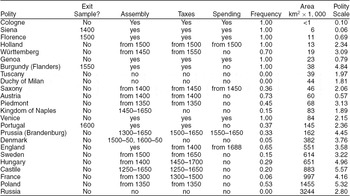
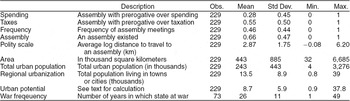
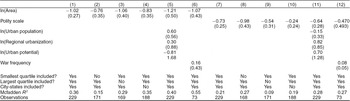
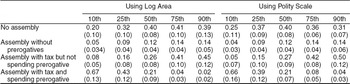
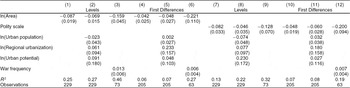
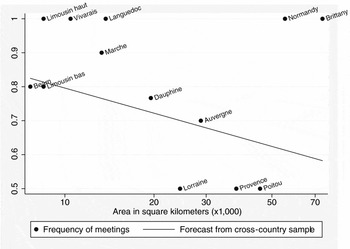
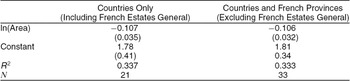




Comments
No Comments have been published for this article.