Remote monitoring for patients with cardiac implantable electronic devices, which include pacemakers, defibrillators, and loop recorders, has revolutionised the ability to recognise adverse events, ensure adequate device function, and optimise programming efficiently. Advantages of this evolving technology include early recognition of atrial and ventricular arrhythmias, identification of lead malfunction, and evaluation of battery status. Remote monitoring decreases the amount of outpatient visits and emergency room visits; therefore, improving safety and potentially quality of life.Reference Hernandez-Madrid, Lewalter, Proclemer, Pison, Lip and Blomstrom-Lundqvist 1 The value of routine surveillance in the adult population for arrhythmia burden and heart failure management has been well described; however, there are limited data in the paediatric population with channelopathies or arrhythmias in patients with CHD who receive remote monitoring following implantation of cardiac implantable electronic devices.
The purpose of this review was to summarise past, present, and future remote monitoring options; the goals, benefits, and pitfalls of their use; and optimisation of remote monitoring in children and those with CHD who require intervention with cardiac implantable electronic devices.
History of remote monitoring technology
Early transtelephonic versions of remote monitoring for cardiac implantable electronic devices were developed in the 1970s. This required an analogue phone line, a transmitter, and transcutaneous electrodes attached to the patient. There was minimal obtainable data, including real-time crude estimate of battery status, surface rhythm, and evidence of sensing, only if the intrinsic rate was faster than the programmed rate, and capture. This technology did not have storing or tracking ability of previous arrhythmias or lead diagnostic data. The information went directly to a server that was accessed by a clinician who had to be present at the time of transmission to download and evaluate data. In the late 1990s, remote interrogation was developed utilising inductive technology, which transmitted information via a radiofrequency link. This also required an analogue phone line; only later, a cellular option became available. This technology could collect real-time data and had the ability to store and track data such as trends of lead performance and tracings of previous arrhythmias. The information was sent utilising a wand that was placed over the patient’s device to a transceiver and onto a secured website. The greatest benefit of this new technology was the ability to store data that could be accessed at a later time. Today’s technology involves wireless transmission and does not rely on the patient to initiate transmission of data. A transceiver receives the data, which are then sent to a web-based central repository. This technology is currently available for all implantable cardioverter-defibrillators, implantable loop recorders, and most pacemakers. The change to a wireless system allows the transmissions to occur automatically for routine or asymptomatic evaluation and decreases the burden of the patient. Patients continue to have the ability to initiate a transmission with symptoms.
Although the general term “remote monitoring” is commonly used to describe this technology, there is a difference between remote interrogation and true remote monitoring. Remote interrogation refers to scheduled routine transmissions. Information obtained with a remote interrogation is nearly identical to that of an in-person interrogation. The specific term, remote monitoring, refers to an alert-based system that transmits data automatically for any device malfunction or clinical events. The current system used for most cardiac implantable electronic devices utilises both of these systems. Remote interrogation is scheduled by the clinical staff on a routine basis with the added assurance that device malfunction or clinical events will be alerted even without symptoms utilising the automatic system or remote monitoring.
What are the benefits of remote monitoring?
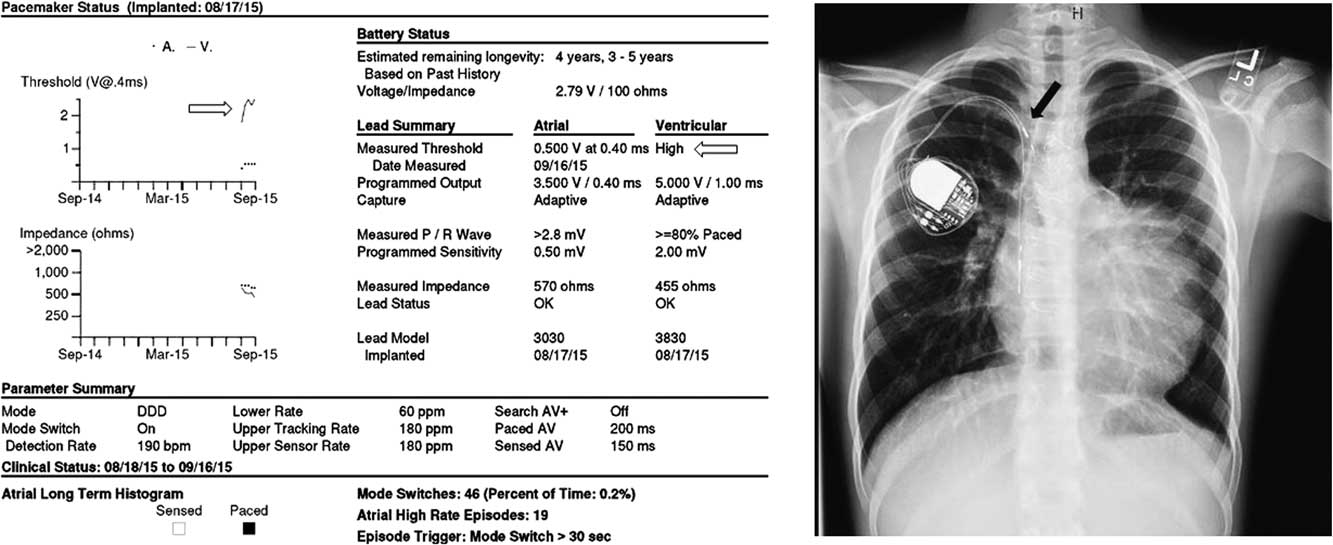
In general, remote monitoring within the paediatric population has been largely influenced by adult guidelines.Reference Boyer, Silka and Bar-Cohen 2 Although there are currently no specific large paediatric research trials for remote monitoring, one would assume that these benefits would be higher in children as they have more complications with cardiac implantable electronic devices than adults.Reference Atallah, Erickson and Cecchin 3 A multicentre, prospective, randomised trial evaluated 1997 patients who had undergone defibrillator implantation and were enrolled in either remote monitoring or in office device evaluation. Over an 18-month period, a total of 966 events occurred. The median time frame for a clinical decision for the remote monitoring patient population was 4.6 days compared with 22 days for patients who did not have remote monitoring.Reference Crossley, Boyle, Vitense, Chang and Mead 4 An example of the benefit of expedient identification of a device malfunction is shown in Figure 1.
A printout of remote monitoring (left) from a 16-year-old patient with congenitally corrected transposition and complete heart block who experienced syncope one week following device implantation. It demonstrates acute rise in ventricular pacing threshold (open arrows). Subsequent chest radiograph (right) shows that the ventricular lead has dislodged to the superior caval vein (solid arrow).

Remote monitoring decreases the need for in-person interrogation and increases the efficiency of health care.Reference Landolina, Perego and Lunati 5 Remote monitoring also decreases costs of transportation, time off from work or school for patients and families, and the time spent during clinic visits for the clinical staff.Reference Calo, Gargaro and De Ruvo 6 Remote monitoring has proven to decrease inappropriate shocks with the alert-based automatic system.Reference Guedon-Moreau, Lacroix and Sadoul 7 Remote monitoring increases overall patient satisfaction and most importantly patient survival.Reference Hindriks, Elsner and Piokowski 8 , Reference Saxon, Hayes and Gilliam 9
Paediatric data suggest that remote monitoring is a benefit to the paediatric and CHD population, although there is an overall low likelihood of adverse events for this population. A retrospective review of 615 remote monitoring transmissions revealed 16% to have adverse events with 11% requiring clinical intervention. This study demonstrated earlier detection of actionable events due to remote monitoring.Reference Malloy, Gingerich, Olson and Atkins 10 Dechert and colleagues reviewed their experience with remote monitoring in the paediatric population with CHD. Owing to low actionable events, a more frequent than a 90-day monitoring schedule was not of significant benefit.Reference Dechert, Serwer, Bradley, Dick and LaPage 11
What are the problems with remote monitoring?
Although there are significant benefits with remote monitoring, there are some potential downsides. There can be challenges in developing an efficient workflow for remote monitoring, as it requires review of multiple websites each day, according to how many device companies are utilised. In addition, these transmissions include a large amount of data that take significant time to review and process. Certain patients tend to send multiple transmissions due to symptoms, also adding to the work load. Calling back and triaging patients are often required. Finally, there are no re-programming capabilities remotely; therefore, patients do require an in-office evaluation if re-programming is needed.
What are the goals of remote monitoring?
Clear goals of remote monitoring should be established. These can be tailored to the individual needs of the practice, but they should always emphasise patient/family education and clinical care. Education on remote monitoring should begin before or at the time of device implantation. Education should include the scheduling of transmissions and the expectations of remote monitoring capabilities. Hands-on instructions and demonstration of the remote monitoring equipment allows the patient to see the equipment before going home. Demonstration of the alert tones should be included as well as what to do if an alert occurs. Once a patient is discharged home, scheduling a “test run” for a transmission is helpful, so that patients can practise before actually needing it.
Clinical care should also be a major goal of remote monitoring. For normal transmissions, it is desirable to notify the patient that it was received either by e-mail or by phone call. A clear follow-up plan should be developed for abnormal results. This may include a triage phone call if an abnormality is detected or if a patient has symptoms. In some practices, this is accomplished by the physician, and in other practices a nurse practitioner or an other allied professional may contact the family. In addition, follow-up for non-compliant patients should occur routinely. At each clinic visit, it is customary to review patients’ remote monitoring history and encourage patients to remain compliant.
Keys to a successful remote monitoring programme
A successful remote monitoring programme requires dedicated resources. The staff who participate in remote monitoring should be knowledgeable about device issues and be trained in cardiac implantable electronic devices. Training can include specialty certifications such as cardiac device specialist, industry-specific training, or courses through the Heart Rhythm Society or other similar professional organisations. The remote monitoring team should remain updated on device changes, hardware alerts and recalls, evolution of devices, and remote monitoring technology. The staff should be clear communicators with both patients and other clinical staff members and be willing to provide education to the patient on remote monitoring. Finally, establishing a clear and reasonable schedule for transmissions is helpful.
Third-party vendors can perform remote monitoring but may take away efficient follow-up. An internal practice of remote monitoring surveillance is instrumental to a successful programme. In addition, utilising an internal staff will support a relationship with the patient and the family, which is important for continuity. If possible, providing all remote monitoring equipment before discharge is important and can make patients and families more comfortable with the process. This may not always be feasible for various practices and involves discussion with industry personnel.
Future directions
At present, there is an estimated 3 million patients with implantable cardiac devices. Although a small fraction are paediatric and CHD patients, this is a growing population. To best serve a patient population, device companies have made advancements in the remote monitoring technology, making it more accessible and intuitive to patients. Most current devices have moved away from utilising analogue service and now use cellular signals. Cellular applications are now available to review and send transmissions for certain device companies.
Advances in technology provide many benefits to the paediatric and CHD population. Owing to the variety of indications for cardiac devices in the paediatric and CHD population, there can be a wide variation in the actionable events that a provider may be required to evaluate. Issues specific to a paediatric and CHD population include higher risk of lead malfunction due to non-conventionally placed hardware. In addition, there is a higher percentage of patients with devices that are non-verbal or unable to describe symptoms. This places an increased burden on their caregivers. For these reasons, remote monitoring is essential in the paediatric and CHD population for optimal device function and clinical care.
Conclusion
Remote monitoring in the paediatric population has multiple benefits including improved care, greater convenience, and more efficient identification of clinically significant concerns/events. Remote monitoring improves patient outcomes and can be especially beneficial to paediatric and CHD patients. With continued improvement in technology and programmatic dedication of resources to remote monitoring, remote monitoring will continue to revolutionise care of patients with cardiac implantable electronic devices.
Acknowledgements
None.
Financial Support
This research or review received no specific grant from any funding agency or from commercial or not-for-profit sectors.
Conflicts of Interest
None.
Ethical Standards
The authors assert that all referenced work contributing to this review complies with the ethical standards of biomedical or medicolegal investigation.