Introduction
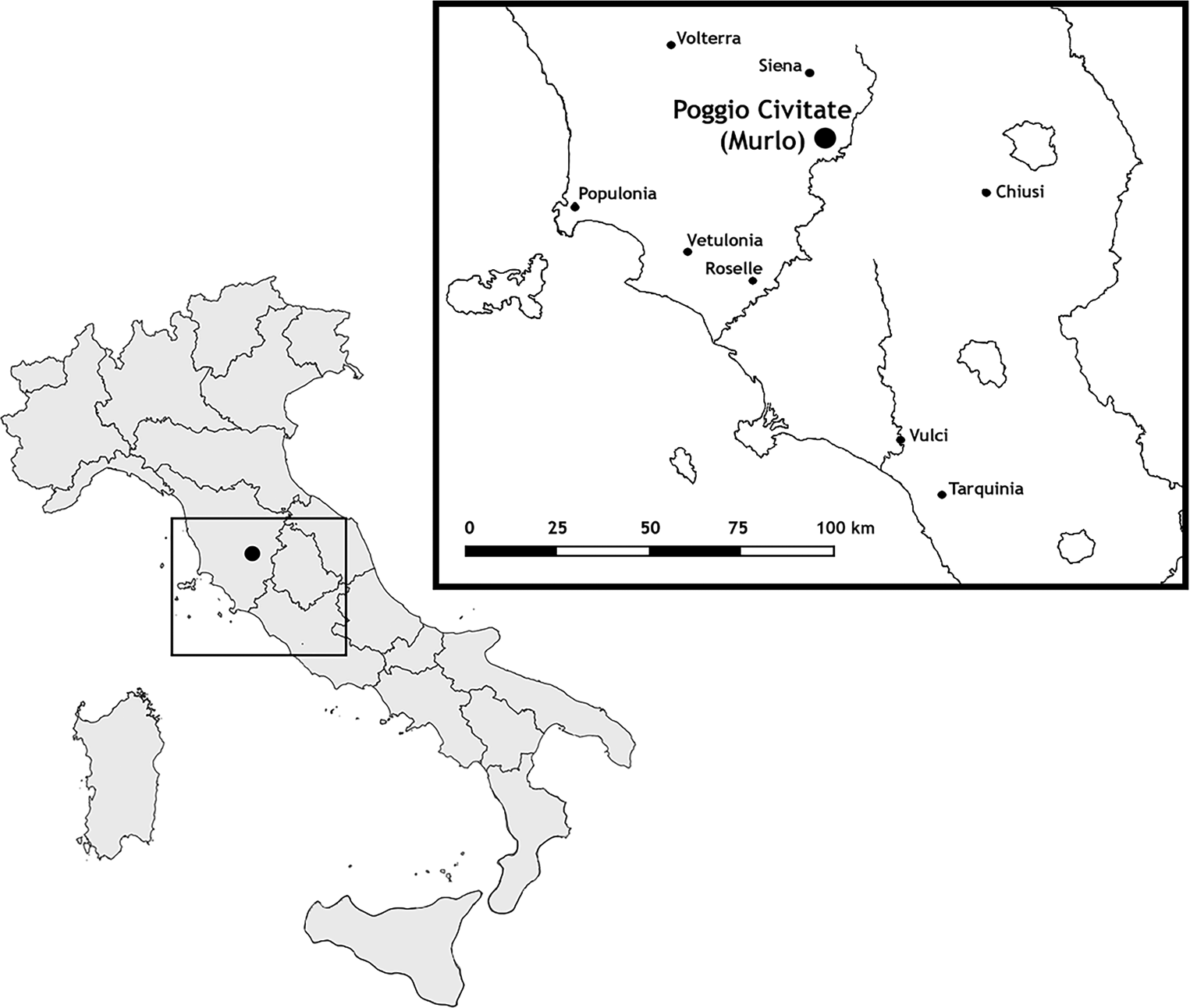
Poggio Civitate (in the municipality of Murlo), located approximately 25 km south of the city of Siena (Figure 1), is an Etruscan hilltop site inhabited from the late eighth to the end of the sixth century bc. It is a rare example of a settlement occupied by both the elite and the non-elite, whose habitation produced, over five decades of excavation, an abundance of material cultural and faunal remains.
Map of Tuscany showing the location of Poggio Civitate and other major Etruscan settlements.

Initial analysis of c. 4000 faunal specimens (Kansa & MacKinnon, Reference Kansa and MacKinnon2014) indicated that animal exploitation at Poggio Civitate focused primarily on food production and the use of animal products in various industrial activities, as would be expected in a settlement context. Preliminary analysis also showed spatial differences across the site in terms of the species and body parts found in the elite and non-elite areas. Since that analysis, some 10,000 further specimens have been identified and added to the database. These support our initial observation that a relatively higher proportion of large wild animals that would have been hunted (as opposed to trapped) are represented in the elite areas. Here, we examine this trend, drawing on zooarchaeological data, iconography, and artefactual evidence to gain a deeper understanding of the role of hunting and trophy display in Etruscan elite society.
In addition to providing food and raw materials, animals were used in sacrifice and ritual, and there is evidence from the Etruscan period, particularly in funerary contexts, that whole animals or parts of animals were used in such ways (Rafanelli, Reference Rafanelli and Turfa2013; Rask Reference Rask2014). The inhabitants of Poggio Civitate certainly engaged in these practices, although they are difficult to identify on a large settlement site. Indeed, hunting itself can be described as a ritualized activity, imbued with meaning about roles and expectations, traditional dress and other trappings, as well as related feasts and festivities. Although not necessarily a ritual, the hunt itself can be a means of reinforcing social status and bringing prestige to the hunter. While other studies have considered hunting during the Etruscan period in terms of subsistence and as an elite pastime (Camporeale, Reference Camporeale1984; De Grossi Mazzorin, Reference De Grossi Mazzorin1989, Reference De Grossi Mazzorin, Brandt and Karlsson2001; Riedel, Reference Riedel1991; Cattabriga & Curici, Reference Cattabriga, Curci and Hohenstein2007), we aim, through this article, to initiate a conversation about the social and ideological significance of hunting and associated feasting and trophy display.
Background
Images of hunting wild animals are well documented in central Italy from the ninth century bc onwards (Camporeale, Reference Camporeale1984). Human figures depicted with spears, standing close to animals that appear to be wild boar (Sus scrofa) or red deer (Cervus elaphus) stags, are found on objects such as a sword scabbard from Tarquinia and a lunate ‘razor’ from Vetulonia (Camporeale, Reference Camporeale1984: 26). Such ‘razors’ are sometimes found with fibulae, attached to them by being threaded through their small, non-functional handles, suggesting that they are not associated with shaving but may have served as ornamental bangles. If so, they may reflect the role of hunting as a feature of social identity construction as early as the ninth or eighth centuries bc (Camporeale, Reference Camporeale1991: 59). Some degree of scholarly debate remains as to whether members of the Roman aristocracy of an early period engaged in prestige hunting (Green, Reference Green1996). Be that as it may, the incorporation of hunting scenes on a range of materials plausibly connected to elite behaviour and the display of personal identity leaves little doubt that the Etruscan elite hunted and did so enthusiastically as early as the ninth or eighth century bc.
Iconography of the seventh century bc indicates that such hunting practices evolved in tandem with other aspects of elite identity and display. Most visible displays and ostentatious consumption of this period focus on the ideologies of fertility and reproduction (Damgaard Andersen, Reference Damgaard Andersen1993; Pieraccini, Reference Pieraccini2014). This is, however, likely to reflect the fact that most of the visible materiality of this period is associated with funerary ideology; indeed, fertility and familial inheritance are central concerns to emerging aristocratic families, discernible in mortuary behaviour. When it is possible to see aspects of elite display beyond the realm of funerary ideology, hunting appears to be an important feature of how elites communicated status within the community of Poggio Civitate.
Archaeological and Iconographic Evidence for Elite and Non-elite Spaces at Poggio Civitate
The abundant archaeological remains excavated over five decades at Poggio Civitate provide an opportunity to investigate Etruscan hunting practices through a multidisciplinary approach that combines iconographic, archaeological, and zooarchaeological evidence. The hilltop site had three major phases of monumental building and development before it was suddenly and violently destroyed in the final years of the sixth century bc. This event, and the subsequent abandonment of meaningful occupation of the hilltop, leaves an archaeological record of unusual clarity, especially of the site's intermediate phase of development (Tuck, Reference Tuck2017).
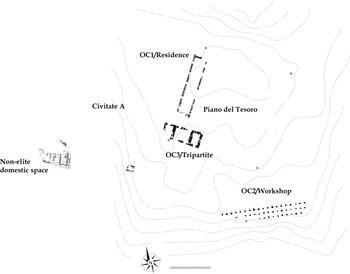
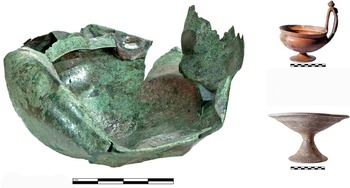
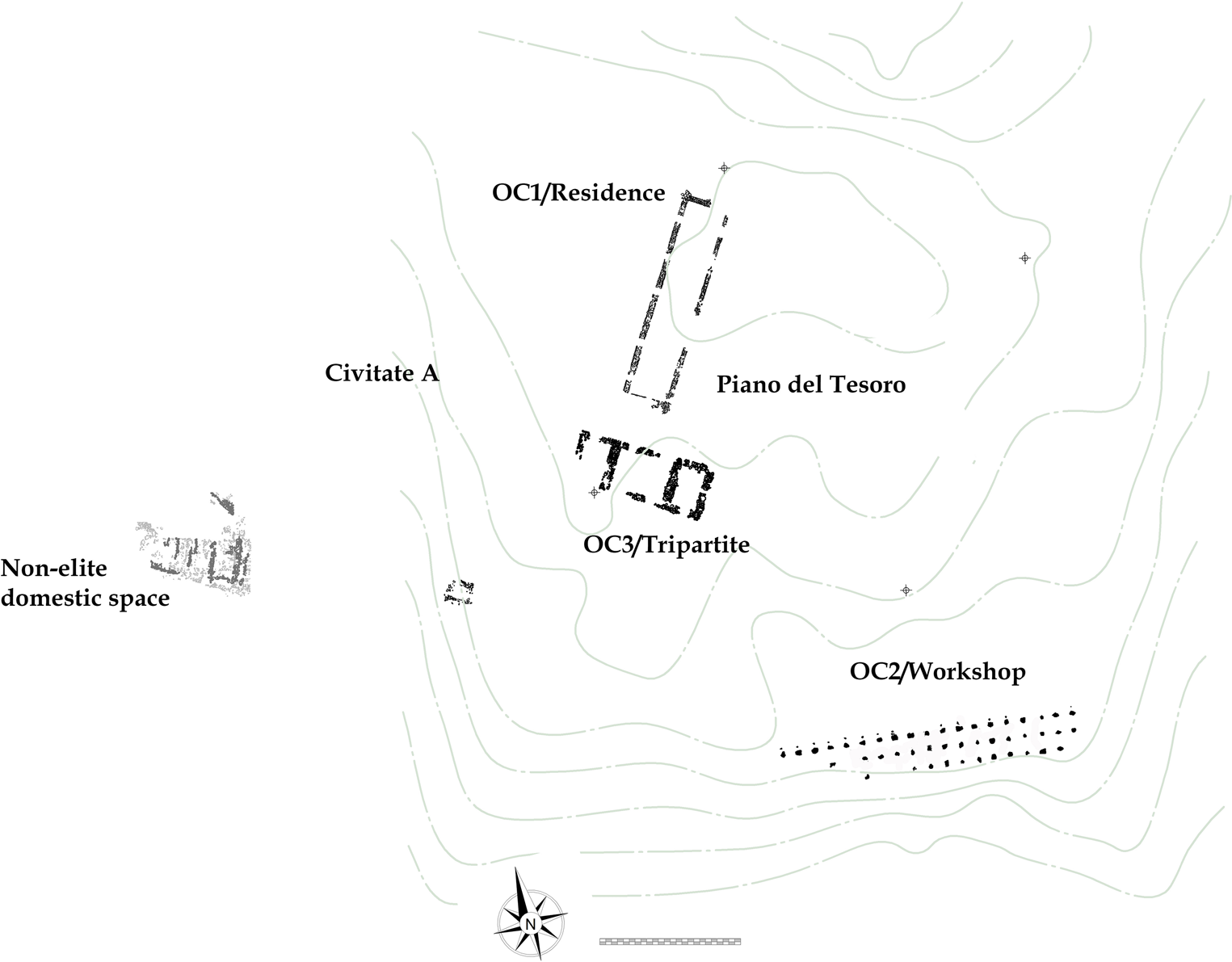
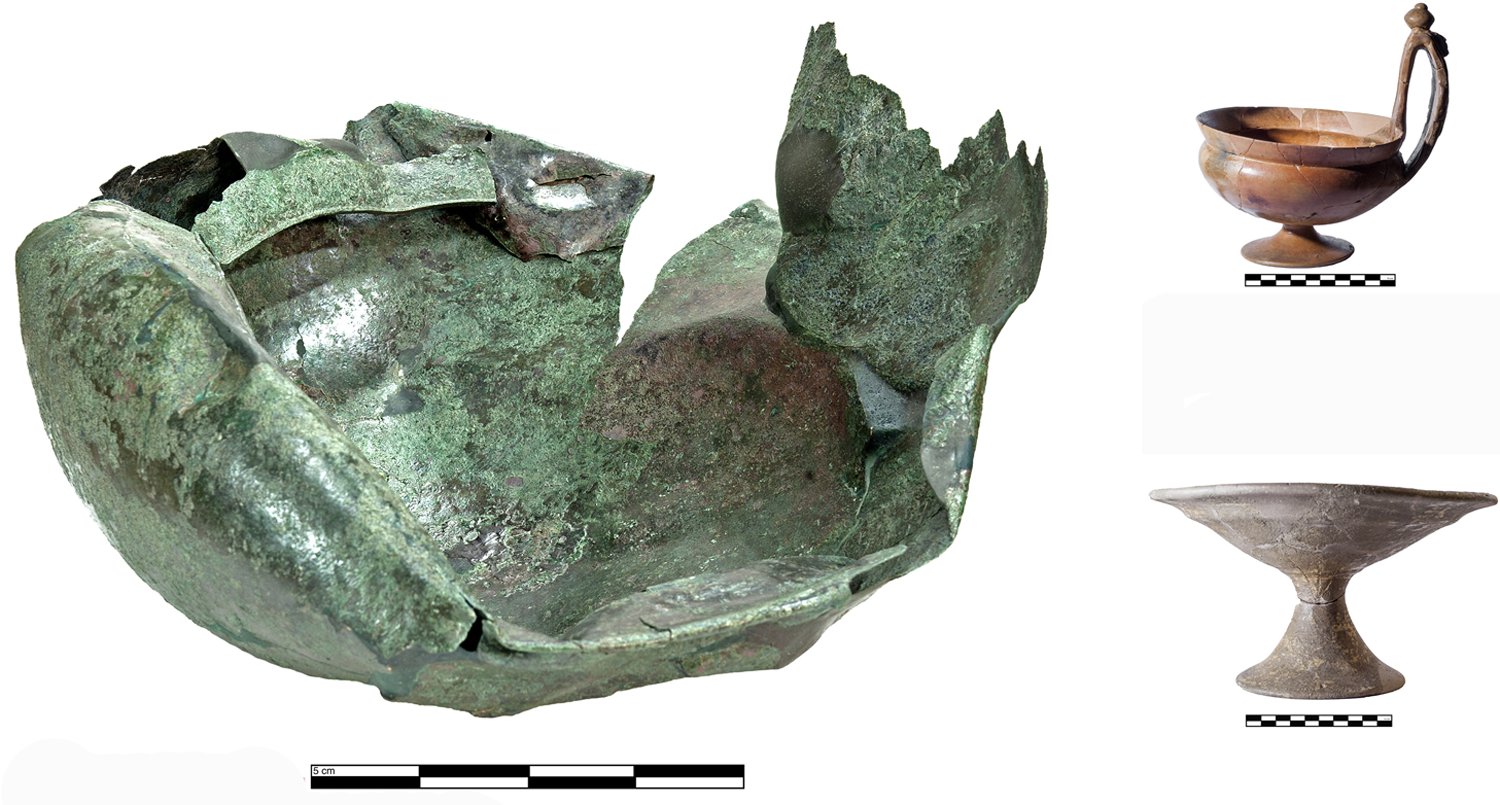
The intermediate phase, which is the focus of this research, dates from approximately 675–650 bc to the end of the seventh or beginning of the sixth century bc (Nielsen & Tuck, Reference Nielsen and Tuck2008). It consisted of three monumental structures that stood atop a plateau (Figure 2) and that represented different aspects of elite obligation and behaviour. The Orientalizing Complex Building 1/Residence (OC1/Residence) served as the domicile of the community's elite family; its assemblage contained imported and locally manufactured luxury items as well as a range of cooking wares and banquet equipment (Figure 3). The total volume of banqueting equipment recovered from the building's vicinity, including bronze vessels, imported Greek wares, local fine wares, as well as humbler ceramics, could easily have served over 100 participants. Since we do not know precisely what constituted a typical setting for one individual at a banquet, the number of participants could have been considerably lower; it nevertheless remains clear that one feature of life at Poggio Civitate involved the community's elite family providing communal banquets and engaging in them (Tuck, Reference Tuck and Gleba2020). Immediately adjacent to the south and perpendicular to the OC1/Residence was a structure with a tripartite division of its interior space, Orientalizing Complex Building 3/Tripartite (OC3/Tripartite). While this building was not as well preserved as the OC1/Residence, materials collected from its preserved floor surface along with its overall architectural design suggest that it served as a religious structure or was an early form of temple (Nielsen & Tuck, Reference Nielsen and Tuck2001). Finally, located along the southern edge of the plateau was Orientalizing Complex Building 2/Workshop (OC2/Workshop). This structure housed various manufacturing activities, including the production of architectural roofing materials, small-scale bronze casting, ceramic production, fibre processing and weaving, as well as the processing of animals for food and other products (Tuck, Reference Tuck2014).
Plan of Poggio Civitate's intermediate phase.
Bronze cauldron and representative ceramics from the OC1/Residence.
Recent excavations in an area to the south and west of the plateau revealed evidence of non-elite housing contemporary with this complex of three structures (Tuck et al., Reference Tuck, Kreindler and Huntsman2013). These dwellings were identified in an area prone to erosion and are not well preserved, but simple cooking wares and other staples of daily life were found within and around the surviving foundation walls. The comparison of overall living space between the best preserved of these houses and the OC1/Residence is instructive: non-elite houses consisted of an interior space of approximately 12–14 m2 while that of the OC1/Residence is twenty times larger, with a floor space of approximately 240 m2 (Tuck, Reference Tuck2017: 240–41).
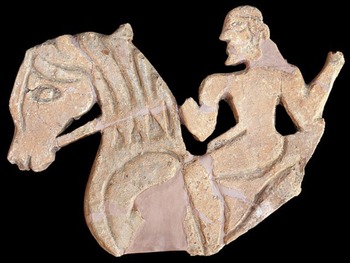
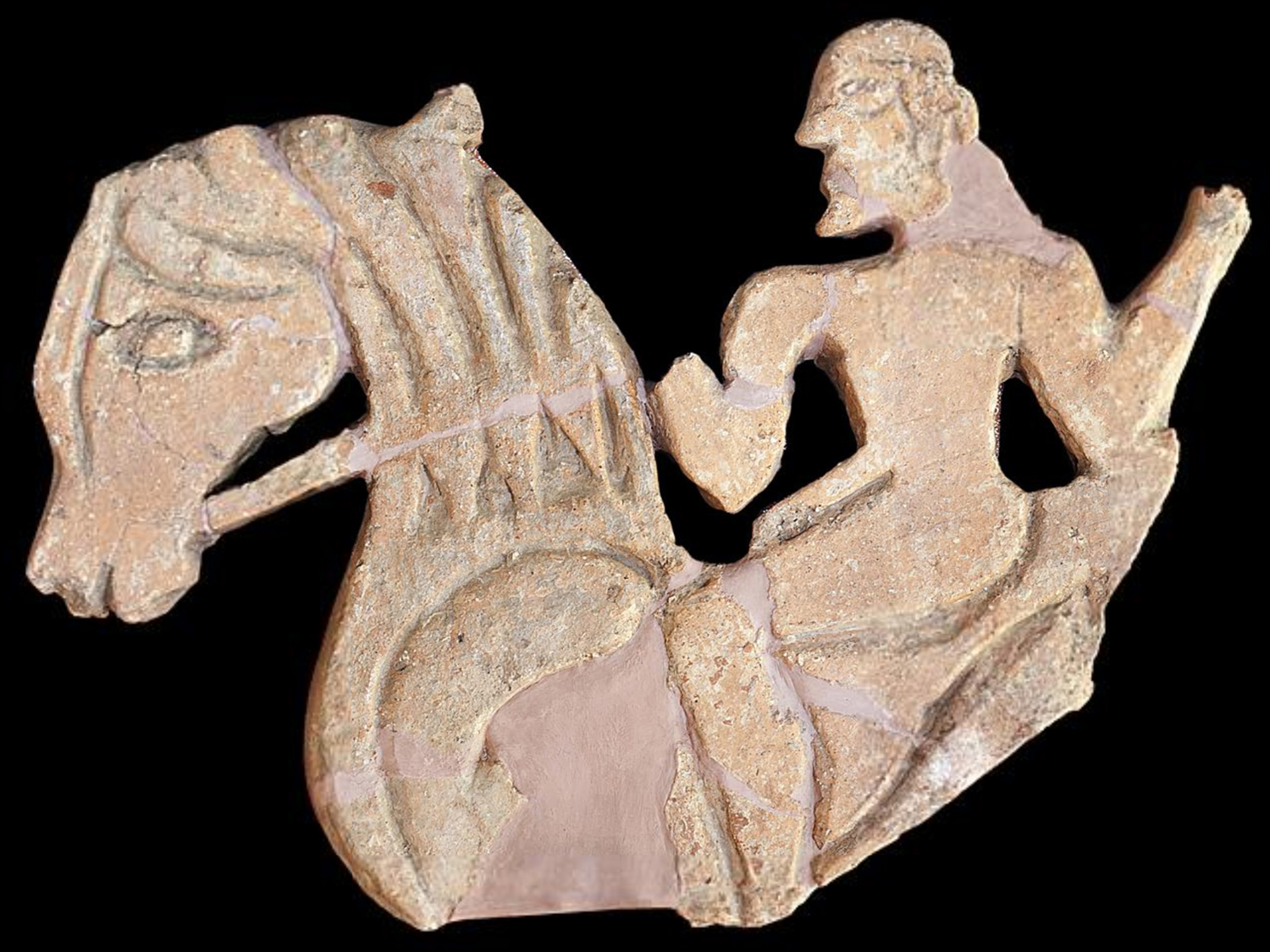
The OC1/Residence and the other two buildings on the plateau were lavishly decorated in terracotta. All three buildings had a sculpted lateral sima (guttering above the cornice) consisting of antefixes depicting an Etruscan fertility divinity paired with waterspouts in the form of felines. Atop the buildings were a series of ‘cut out’ akroteria (decorative elements on the pediment), most of which took the form of stylized lotus palmettes (Rystedt, Reference Rystedt1983). This combination of images is consistent with aspects of aristocratic identity of this early period, which sought to connect personal family ancestry with this type of fertility divinity (Damgaard Andersen, Reference Damgaard Andersen, Niemeyer and Rolle1996; Tuck, Reference Tuck, Counts and Arnold2010). However, a few elements of the sculptural display of the OC1/Residence suggest that the building communicated additional ideation and themes. Some akroteria take forms other than lotus palmettes. One example, PC-19690284 (Tuck, Reference Tuck and Tuck2012c), depicts a human figure astride a horse or hippocamp (Figure 4). The lower part of the sculpture is missing, making it difficult to determine what type of animal is shown. Representations of human figures riding both types of animals are known from this period, but Rystedt (Reference Rystedt1984: 369–70) argues that the image represents a horse and rider rather than a hippocamp and connects the image to the idea of elite hunting as a feature of aristocratic display.
Intermediate phase akroterion depicting a horse and rider (PC-19690284). This element of the building's decorative scheme would have been attached to the ridge and been visible from either side of the building. Figural examples of such akroteria are unusual at Poggio Civitate.
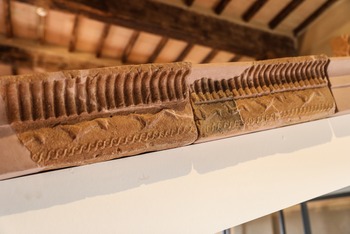
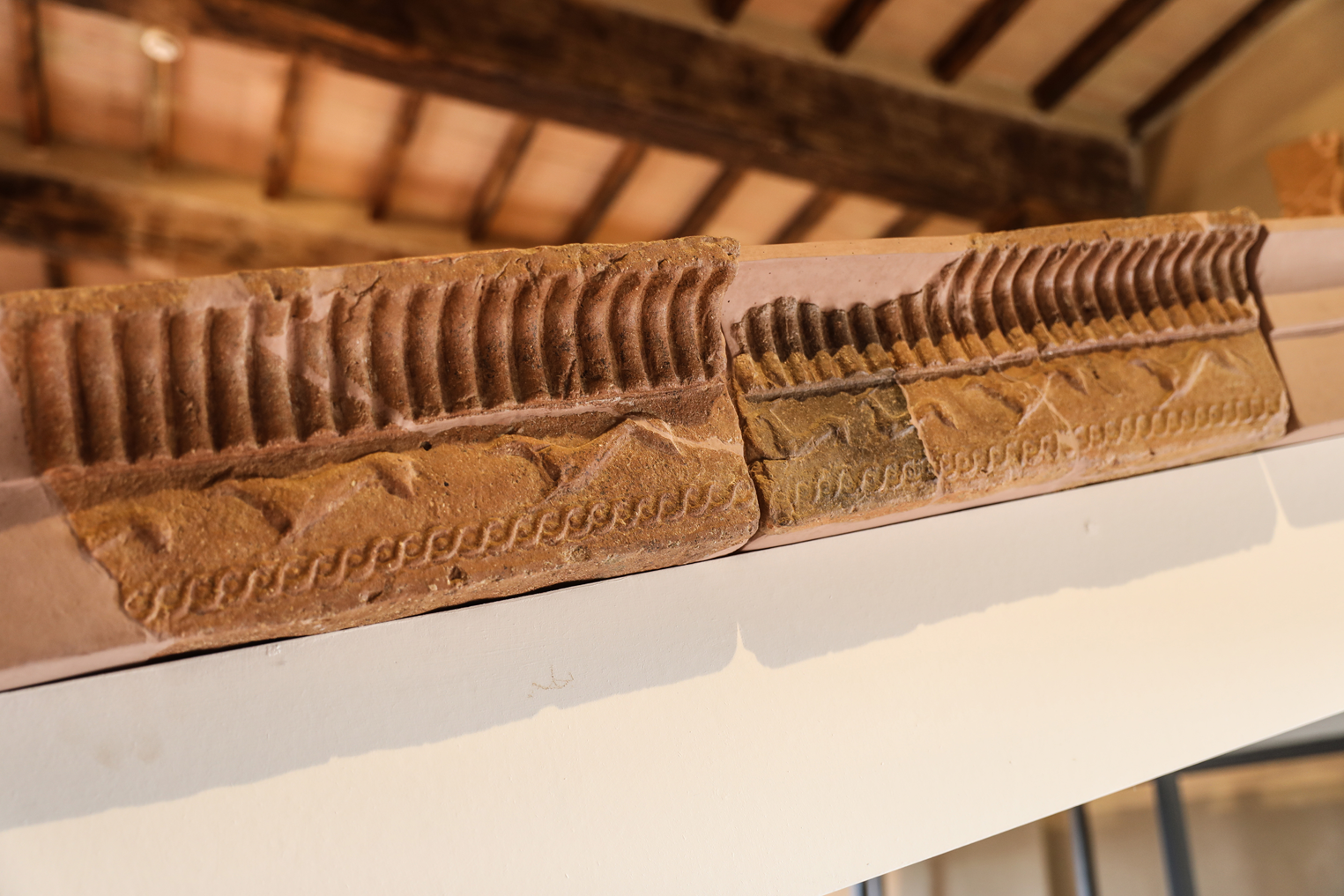
An even clearer expression of hunting is incorporated in the iconography of the site's final phase. Following a fire that obliterated the three buildings of the intermediate period, the elite household was re-imagined at a remarkable scale (Stopponi, Reference Stopponi1985: 64–69). The resulting structure, begun around the turn of the seventh to the sixth century bc, consisted of four wings surrounding a colonnaded courtyard. Each wing was 60 m long and was covered by a terracotta roof ornamented with larger than life-size images of male and female figures and an array of animals; some were fantastic, such as griffons, sphinxes, and hippocamps, and others were drawn from the everyday experience of the inhabitants, such as horses and boar. Another feature of the building's decoration consisted of a sculpted raking sima depicting a series of hunting dogs chasing large rabbits or hares (Figure 5; Stopponi, Reference Stopponi1985: 116–18). While animals such as the boar on the roof are not explicitly linked to hunting, those of the raking sima can be construed as linked to such practices.
Raking sima of the final phase (late seventh–early sixth century bc). This element of the building's decorative scheme would have ornamented the gables of the building's exterior.
Integrating the Zooarchaeological Evidence
The faunal remains recovered since the mid-1960s at Poggio Civitate have been systematically analysed since 2011. Analytical methods and an assessment of collection bias across the various excavation areas are described in Kansa and MacKinnon (Reference Kansa and MacKinnon2014). The full database catalogue of animal bones is published online in Open Context (Tuck, Reference Tuck2012a). At more than 14,000 identified specimens, it is one of the largest Etruscan animal bone assemblages analysed to date, comparable to the assemblage from the slightly later (sixth–fourth century bc) Etruscan site of Il Forcello (Bagnolo San Vito) near Mantova (Trentacoste, Reference Trentacoste2014). The present study focuses on the faunal remains from the OC1/Residence and the OC2/ Workshop. Analysis of a small assemblage of animal bones from the third structure on the plateau, the OC3/Tripartite building, was presented in Kansa and MacKinnon (Reference Kansa and MacKinnon2014) and no other remains from that area have come to light since then. The most intriguing observation from the OC3/Tripartite building was a shed milk tooth from an equid, making it not inconceivable that horses may at some point have been kept in or near the building. Its proximity to the OC1/Residence and the clear value of horses in hunting depicted in the site's iconography (Root, Reference Root1973), point to the keeping of horses for prestige by the site's elite.
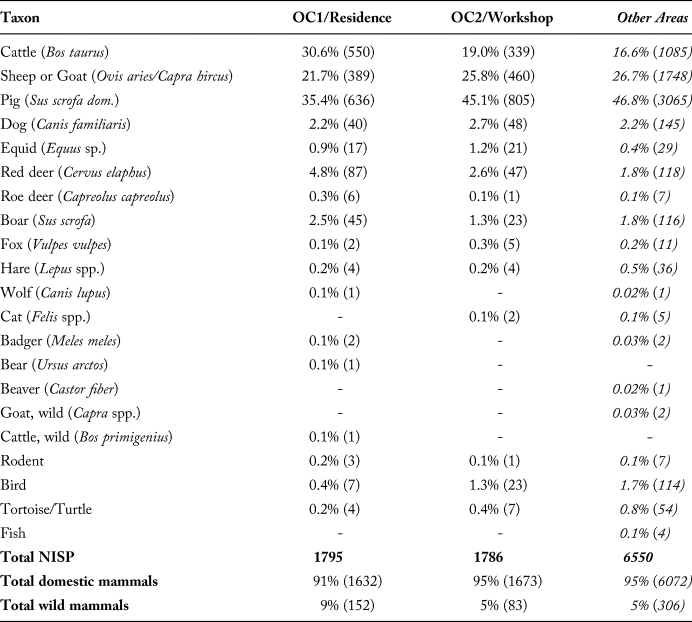
Most faunal remains from all areas of Poggio Civitate belong to domestic pigs, sheep, and cattle (Table 1), kept for a wide range of products such as milk, wool, labour, and dung while alive, and slaughtered for meat, hides, grease, sinews, and bones for tool-making and other purposes. Ongoing faunal analysis supports the interpretation of Poggio Civitate as a self-sufficient site with, among other features, sheep herded locally and exploited for wool, and beef from prime-age cattle reflecting elite consumption, such as at banquets (Kansa & MacKinnon, Reference Kansa and MacKinnon2014; see also Gleba, Reference Gleba2007; Cutler et al., Reference Cutler, Dimova and Gleba2020; Trentacoste et al., Reference Trentacoste, Lightfoot, Le Roux, Buckley, Kansa and Esposito2020). In addition to domestic food animals, the faunal assemblage contains a range of wild animals, which would have been hunted or trapped in the settlement's surroundings (Table 1). These make up about six per cent of the overall assemblage, suggesting that hunting and trapping were not for subsistence but for other purposes such as sport and industrial activities. Wild animals are found in similarly small numbers in most Etruscan assemblages, but several factors, including preservation, excavation practices, and the very small size of many assemblages, which contain too few wild specimens to draw informative comparisons, make detailed inter-site comparisons a challenge.
Relative occurrence of taxa (showing percentage and number of individual specimens (NISP) counts with articulating and pairing specimens removed) in the OC1/Residence and OC2/Workshop, compared to all other areas (largely non-elite contexts). This table reports numbers similar to those in Table 2 in Kansa and MacKinnon (Reference Kansa and MacKinnon2014), with several key differences. The 2014 table used straight NISPs (for example, that table reports four wolf specimens rather than the two indicated here because two of the four come from the same individual). In addition, this table considers more restricted areas for the OC1/Residence and the OC2/Workshop with fewer trenches included in each area than in the 2014 report. Given this, some specimens considered part of the OC1/Residence and OC2/Workshop in the initial analysis are reported here as part of ‘Other Areas’. Note that this table does not include some 3300 additional specimens that were identified to size category only (e.g. ‘large mammal’).
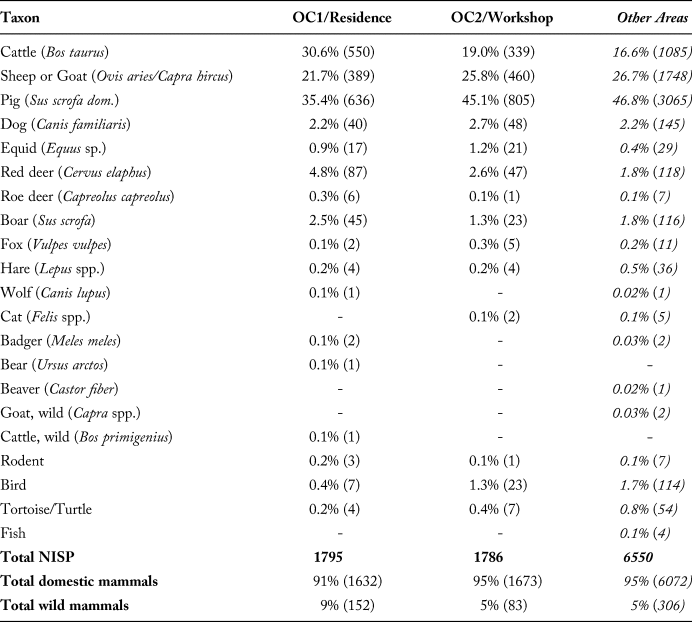
Nevertheless, wild boar and red deer are the most common wild mammals found in Etruscan assemblages and this holds true at Poggio Civitate, where red deer and wild boar would have been available for hunting in the woodlands and open meadows surrounding the site. Their importance in the hunt is reflected in such iconography as the hunting scene involving boar and stags revealed by multispectral reflectometry and UV fluorescence imaging from an almost blank wall in Tarquinia's Tomb of the Blue Demons (Adinolfi et al., Reference Adinolfi, Carmagnola, Cataldi, Marras and Palleschi2019). Red deer are associated with wealthy rural sites (MacKinnon, Reference MacKinnon and Campbell2014), and this applies to Poggio Civitate. At the urban centre of Spina, wild animals, particularly red deer and boar, make up ten per cent of the faunal assemblage, prompting Trentacoste (Reference Trentacoste2014: 37) to suggest that this surprisingly high proportion of wild animals at an urban site relates to elite displays of power and wealth rather than subsistence. At Poggio Civitate, the relative proportion of red deer and other large wild mammals in the OC1/Residence (nine per cent) is nearly double that in the OC2/Workshop and other areas of the site (five per cent), prompting further investigation into the function of these animals and the implications of their presence in the different areas of the site.
Kansa and MacKinnon's initial (Reference Kansa and MacKinnon2014) faunal analysis supported an interpretation of elite activities like hunting and banqueting associated with the OC1/Residence, while the OC2/Workshop was a place where more mundane industrial activities took place. Here, we explore aspects of these initial observations in more detail by adding further faunal data as well as integrating artefactual and iconographic evidence. Unlike elite funerary contexts, Poggio Civitate provides the opportunity to consider not only the iconographic representation of such elite behaviour, but the direct, physical evidence of the actions themselves.
This study draws on data from trenches associated with the OC1/Residence and OC2/Workshop. Zooarchaeological data for the OC1/Residence came from Rect-5, Rect-7, and areas to the north-east of the OC1/Residence where deposits thought to be associated with the OC1/Residence were recovered, including trenches designated T-17, T-18, and T-19. These trenches are located within the area of the OC1/Residence as well as along the northern flank of the plateau, where building debris was deposited to level the area before the subsequent construction phase. Data for the OC2/Workshop came from trenches T-23, T-25, T-26, and T-27, encompassing the floor area of the building as well as areas immediately to the north and south of the structure, where debris associated with daily industrial activities was recovered. The zone to the north of the OC2/Workshop appears to have been an open, flat area where manufacturing activity took place alongside the workshop space. T-27 differs in that it is located to the south of the OC2/Workshop, an area where the hill drops sharply and where material seems to have washed downhill after the destruction of the OC2/Workshop. Faunal remains from these two areas together make up nearly 4000 of the 10,000+ specimens identified to at least genus level (see Table 1), and it is these two datasets that serve as the basis of our analysis. However, several thousand additional specimens came from other high concentrations of faunal remains located immediately north of the OC2/Workshop and, approximately 90 m from the OC2/Workshop, immediately north-east of the OC1/Residence. These animal bone concentrations are associated with other materials connected to the domestic function of the OC1/Residence building and with industrial activities housed in the OC2/Workshop. We note in our discussion where we draw on finds from these broader contexts.
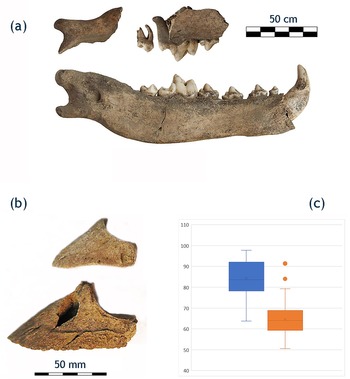
Although pigs, sheep, and cattle dominate the assemblages from both areas (Table 1), the assemblages from the OC1/Residence and the OC2/Workshop differ in the relative proportions and types of wild animals: the OC1/Residence assemblage comprises a greater relative proportion of large wild mammals, with twice as many red deer and wild boar as the OC2/Workshop assemblage, as well as the only examples of wolf, wild cattle (aurochs), and bear thus far excavated at the site. The wolf and aurochs are distinguished from their domestic counterparts on the basis of their large size well outside the domestic range (Figure 6). This stands in contrast to other areas of the site, particularly the OC2/Workshop, where the non-domestic portion of the assemblage comprises more birds and smaller wild mammals.
a) Elements of a wolf jaw from the OC1/Residence (photograph by Bob Nisbet); b) a third phalanx from an aurochs, specimen number PC-02640, shown in comparison to a domestic cattle third phalanx from Poggio Civitate and c) plotted against measurements of third phalanges of Near Eastern wild cattle dated to the seventh millennium bc (blue; data from a search of Bos third phalanx measurements in Open Context). The specimen discussed in the text and one additional specimen from Poggio Civitate (the two orange dots) are both much larger than the rest of the population at Poggio Civitate (shown in orange; n = 47) and fall well within the size range of the Near Eastern wild cattle (shown in blue; n = 10).

While the motives associated with hunting are not described in any of the scant Etruscan written record, it is possible to correlate some features of Poggio Civitate's faunal assemblage to aspects of modern hunting behaviours. Cartmill observes:
‘You can kill cows in the dairy barn, but you cannot hunt them. Hunting is thus by definition an armed confrontation between the human world and the untamed wilderness, between culture and nature; and it has been defined and praised and attacked in those terms throughout Western history, from antiquity onward.’ (Cartmill, Reference Cartmill1995: 774)
Thus, while Poggio Civitate yielded considerable evidence of the slaughter and exploitation of a variety of animals, the butchering of domesticated pigs, sheep, goats, and cows for meat and other products carries different symbolic weight than killing wild animals in the hunt. An exception to this is the ownership and control of domesticated animals slaughtered in the context of ritual events and consumed at resulting communal meals, which can reflect similar themes of elite control and largesse (see Becker, Reference Becker, Gleba and Becker2009).
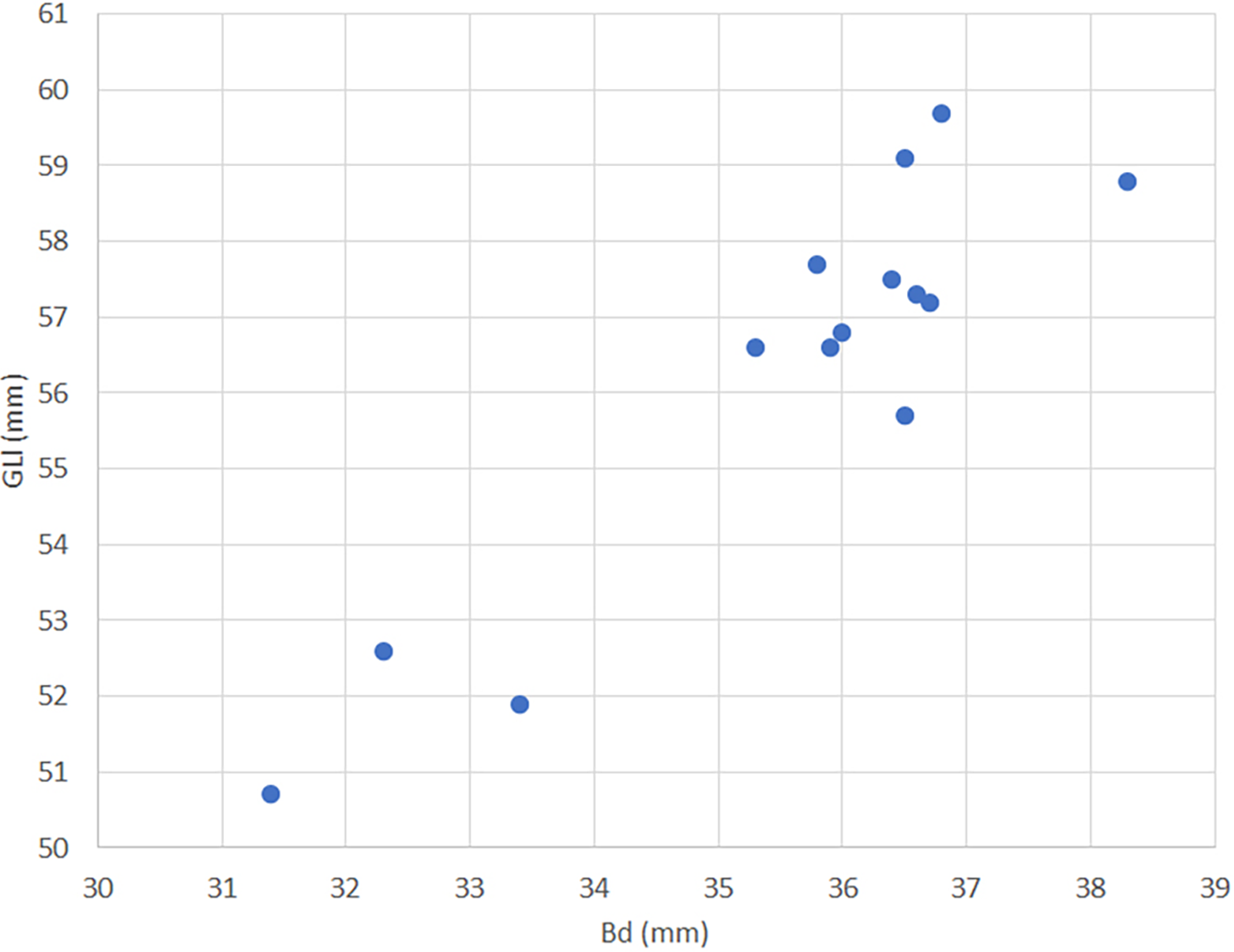
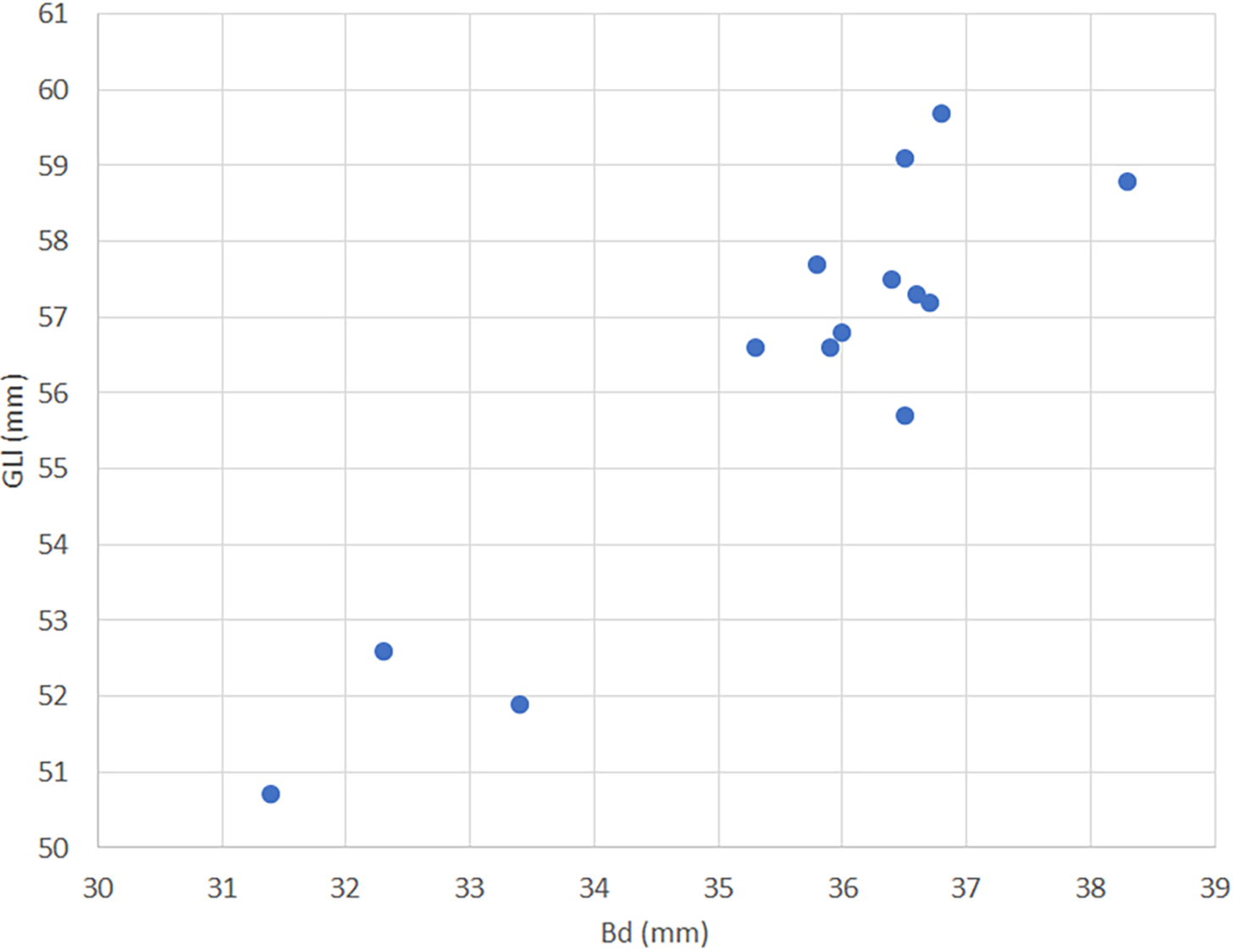
The contrasting assemblages contain a range of nuance and variation. Some animals present in the OC1/Residence are wild but do not represent any sort of physical threat, namely red deer. Red deer is the most abundant wild animal encountered in Poggio Civitate's skeletal assemblage (Table 1) and is represented by elements from all parts of the skeleton, indicating they were, at least sometimes, butchered on site. Several examples in Etruscan iconography depict what appear to be tamed or captured deer, suggesting that deer may have been led to the site ‘on the hoof’, for example for sacrifice (see Rask, Reference Rask2014: 300–03), although this is unlikely to be the case for large red deer. Biometrical data from Poggio Civitate indicates a preference for stags. The red deer population was highly sexually dimorphic and measurements on the astragalus clearly separate into two sizes, with males more than twice as common as females (Figure 7), a pattern Trentacoste (Reference Trentacoste2014: 141) also observed at Il Forcello and suggesting that males were the preferred prey, possibly for the use of their antlers for various products. Likewise, evidence at Poggio Civitate for bone and antler-working activities, observed in both areas, indicates their value in industrial activities. Furthermore, the sheer size of stags alone may have motivated the choice of quarry—both for the amount of meat they would provide for feasts, and for the prestige the kill would bring to the hunter. Given the relatively high proportion of deer bones in the wild assemblage, hunting or capturing deer for various purposes (food, sacrifice, prestige, raw materials) seems to have been frequently practised by the inhabitants of Poggio Civitate. As there are twice as many deer in the OC1/Residence than in the OC2/Workshop assemblage, these activities seem to be more closely associated with elite behaviour.
Red deer astragalus measurements, showing two distinct groups that suggest hunting at Poggio Civitate focused on males.
Wild boar hunts involve greater risk to a hunting party than do those of red deer. We see throughout ancient Greek narratives, with which the Etruscans may have been familiar, references to boar hunting; and finds of armour such as helmets decorated with boar's tusks are also known (Mödlinger, Reference Mödlinger2013). A frequent simile employed in the Iliad likens reckless, wild violence among young warriors with a boar. To wit: ‘Like when a boar or a lion turns back and forth in the midst of hounds and huntsmen, bearing itself with strength, and they stand against it in wall-like array, supporting each other; and they thrust out thronging spears from their hands; and its glorious heart does not fear or feel terror, and its own heroism kills it …’ (Iliad 12.41–46). In Homer, and in present-day Tuscany, boar hunting is a violent, stylized, male-dominated activity that results not only in the distribution of boar meat throughout the community but also memorializes the event of the kill through trophies that survive well past the hunt itself.
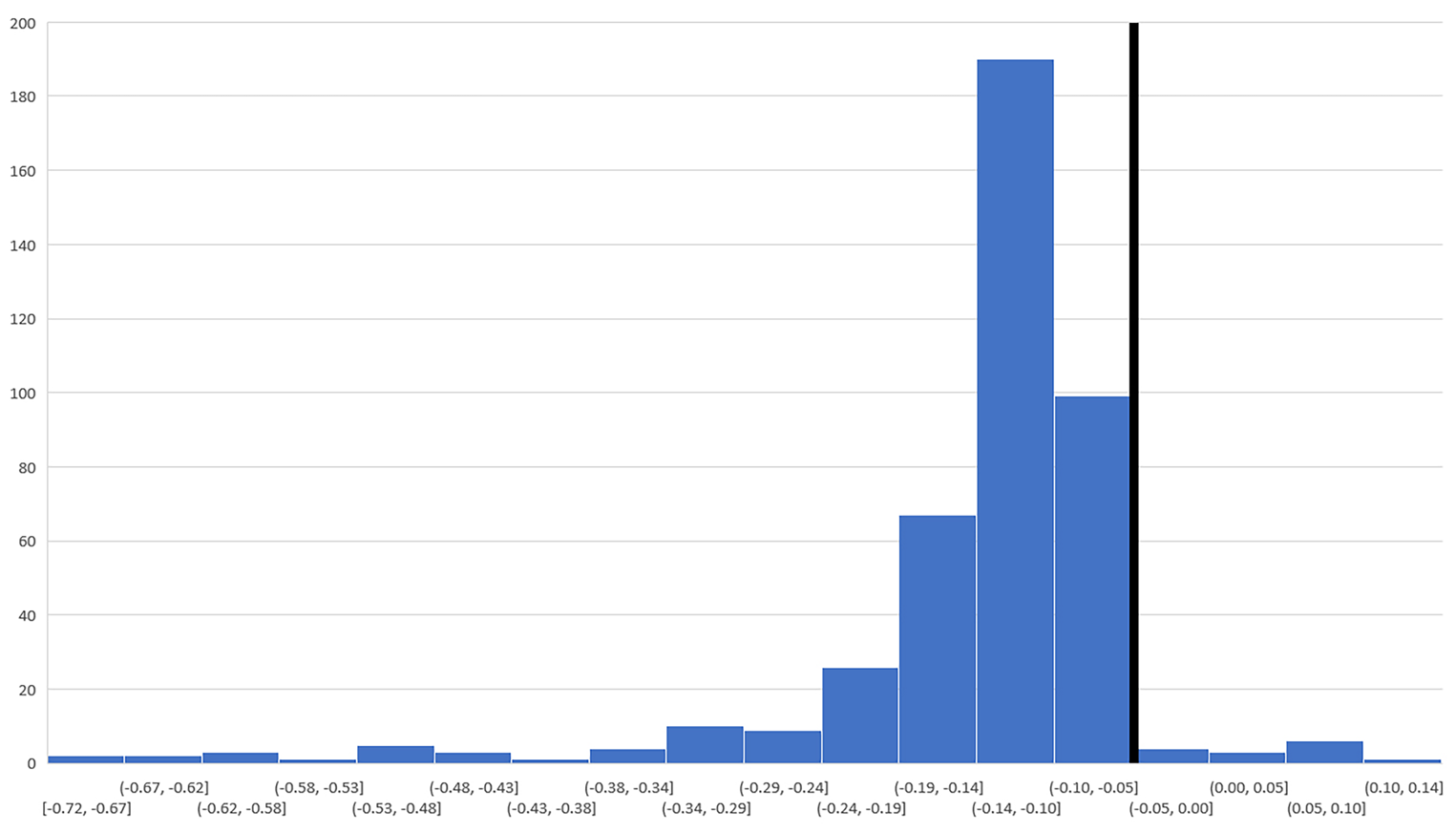
The large size of several specimens of wild boar in the faunal assemblage suggests that boar hunting served not only to acquire meat but also as a mechanism of social display linked to virility and (human) male dominance (Figure 8). Such behaviour is very much in evidence today in surveys of images published in English-language hunting magazines, in which the typically white male hunter is frequently posed dominating the dead animal. The animal is often made to look as though it were alive, amplifying the narrative of a powerful animal's submission to the more powerful hunter (Kalof & Fitzgerald, Reference Kalof and Fitzgerald2003).
Measurements of select pig specimens, compared using a Log ratio method. The y-axis shows the number of specimens in each group. The ‘standard’ used here (the black line at ‘0’ on the chart) represents measurements from a modern Turkish wild boar population (Payne & Bull, Reference Payne and Bull1988). The Poggio Civitate data shows a small number of very large Sus scrofa, which are likely to be wild boar. Of the 4723 Sus scrofa in the assemblage, four per cent (185) were identified as boar because of their large size, but most could not be measured because of breakage. The broad range of specimens on the left reflects exploitation of young animals.
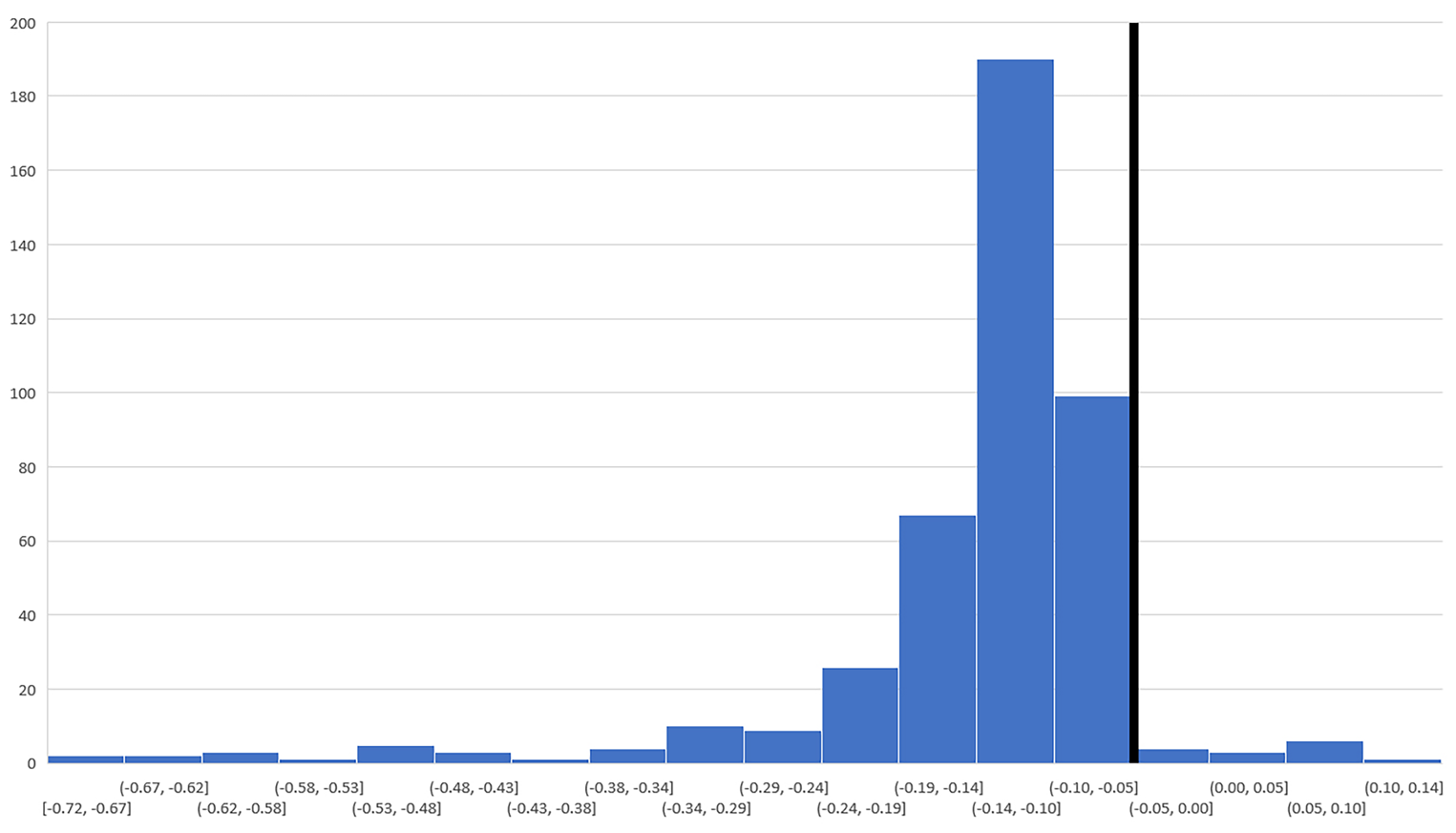
A similar form of performative human male dominance is visible from a further sample from Poggio Civitate, found immediately to the north-west of the OC1/Residence, albeit one probably unconnected to the acquisition of meat: PC-19720523 consists of most of the lower jaw of a wolf (Canis lupus) (Figure 6a). Both the left and right mandibles were recovered, suggesting that they were still attached to the skin of the wolf's jaw; these are two separate bones that most probably would have been disassociated were they not kept together intentionally in some way, i.e. by skin. The presence of the wolf's jaw alone suggests its function as a trophy. The skin of the animal, still attached to the skull, would have made for an impressive display. Archaeologically, one would expect the skull to be preserved but not the more -perishable pelt; yet there is no evidence for the wolf's cranium. The mandible is denser than the fragile parts of the skull and thus may have survived better; even if the mandibles and the cranium were once attached to the pelt, the cranium may have come loose. We also see this preservation bias in skulls of domestic dogs in the Poggio Civitate faunal assemblage, where there are half as many cranial bones as mandibles. Alternatively, the ceremonial use of jaw bones of wolves and other predatory animals is known from Native American contexts and the possibility of similar behaviour in this Etruscan context should be considered (Seeman, Reference Seeman, Chacon and Dye2007: 176). In a review of animal remains from Central European archaeological contexts, Choyke (Reference Choyke, Campana, Crabtree, deFrance, Lev-Tov and Choyke2010) highlights how head and foot elements used as amulets and talismans acted to merge animal attributes like ferocity and speed with human characteristics. This is one potential explanation for the presence of a third phalanx of wild cattle, the only bone from an aurochs identified in the faunal assemblage to date (PC-02640-02; Kansa, Reference Kansa and Tuck2012) (Figure 6b); it may have been kept as an amulet associated with the power and prestige of the killing of such a formidable beast.
The use of wolfskins within the Roman military is well documented. According to Polybius (Histories 6.22.3), light, quick-moving infantry often covered unornamented helmets with wolfskins, and the wolf was likely to have been the emblem of such velites-style infantry before the standardization of the eagle (Pliny, Natural History 10.16). However, the use of such wolfskins did not include the wolf's head in the Republican era (Gilliver, Reference Gilliver2007: 10). At least one representation of an Etruscan figure wearing a wolfskin with its head still attached exists in Tarquinia's Tomb of the Orcus II, dated to the final quarter of the fourth century bc (Steingräber et al., Reference Steingräber, Ridgway and Serra Ridgway1986: 329–30). In this mythological scene, the Etruscan figure Aitas (an Etruscan transliteration of the Greek Hades) sits enthroned with a wolfskin over his shoulders and head, providing a model for how Poggio Civitate's wolfskin may have appeared if worn by a member of the household.
To judge by the representation of Aitas, figures of commanding authority might wear such a garment, and the OC1/Residence was a household for just such an authoritative member of the community. However, wolves within such environments are not merely trophy animals, they are also highly intelligent competitors for resources. Wolves famously prey on sheep, to say nothing of the physical harm they might do to an isolated human. Indeed, the psychological scars of millennia of human interaction with wolves are still visible in modern society, even with the competitive balance now tipped dramatically in favour of humans. The killing of a wolf and the display of its pelt would thus reflect not only the protection of resources, but also the power of a leading male and the benefit of his ability to protect the ‘weaker’ members of the broader community as well as the man's desire to align his identity with the wolf's perceived qualities (Fritts et al., Reference Fritts, Stephenson, Hayes, Boitani, Mech and Boitani2003: 290–93). A similar argument for the protection of resources may be extended to deer and boar, since both can harm crops and thus hunting them would not only reduce their numbers but also bring prestige to their hunter.
Kalof and Fitzgerald's (Reference Kalof and Fitzgerald2003) examination of modern trophy hunting photography and display of killed animals may also shed light on another feature of hunting at Poggio Civitate. While most ‘prestige’ animals described above cluster in and around the OC1/Residence, other types of hunted animals concentrate within and around the OC2/Workshop. Although the numbers are very small, the relative abundance of fox remains shows that they are sparse within the OC1/Residence, but slightly more abundant in other areas of the site, including at least one cluster of forelimb paw bones possibly attached to a pelt in the broader OC2/Workshop area. This disproportionate representation may be due to a different perception of foxes compared to larger canids such as wolves. Foxes prey on smaller animals such as birds and hares, thus competing to some degree with human populations, but they represent no threat to humans. Their hunting or trapping and killing would therefore not have served the display of male strength and virtue but another purpose such as the procurement of pelts. Cats, tortoises, and especially birds show a similar pattern, being three times more abundant in trenches related to the broader area of the OC2/Workshop than in the OC1/Residence. Thus, in the same manner that Kalof and Fitzgerald (Reference Kalof and Fitzgerald2003: 118) explain the way in which hunted nuisance animals are usually not featured in images that emphasize white male dominance, it is possible that the concentration of remains of these smaller animals within the OC2/Workshop reflects their trapping or hunting for food and/or hides, but the absence of any prestige value attached to their killing.
We know that the inhabitants of Poggio Civitate kept horses and donkeys, and at least some were kept regularly in the environs of the settlement: shed milk teeth have been found in the faunal assemblage, having most probably fallen out of a living foal's mouth while on site. Although horses were ridden, as reflected in iconography at the site (Root, Reference Root1973), ten per cent of the equid specimens, including horses and donkeys, have cut marks related to various processing activities, including skinning, carcass disarticulation, and bone working. Thus, although iconographically the horse appears to have been a key participant in the hunt, zooarchaeological evidence shows that it was neverthe-less exploited for meat and raw materials like other domestic animals upon its death. Notably, equids are the only large animal that is not more abundant in the OC1/Residence than in the OC2/Workshop and the rest of the site (see Table 1). Similarly, although iconography indicates that dogs participated in the hunt, cut marks consistent with decapitation, skinning, and dismembering on ten per cent of the dog specimens show that they too were butchered upon death, suggesting that dogs were processed for products such as skins and perhaps also meat. Dog remains are found in roughly equal proportions in both the OC1/Residence and the OC2/Workshop, but the OC1/Residence has a higher number of jaw bones, including at least three individuals from the same context (T-19) as the wolf jaw. Thus, dogs may have been an element of trophy display, perhaps linked to their involvement in the hunt.
Hunting, Trophies, and Identity at Poggio Civitate
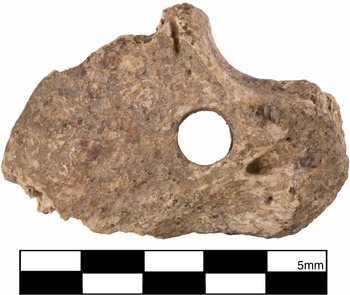
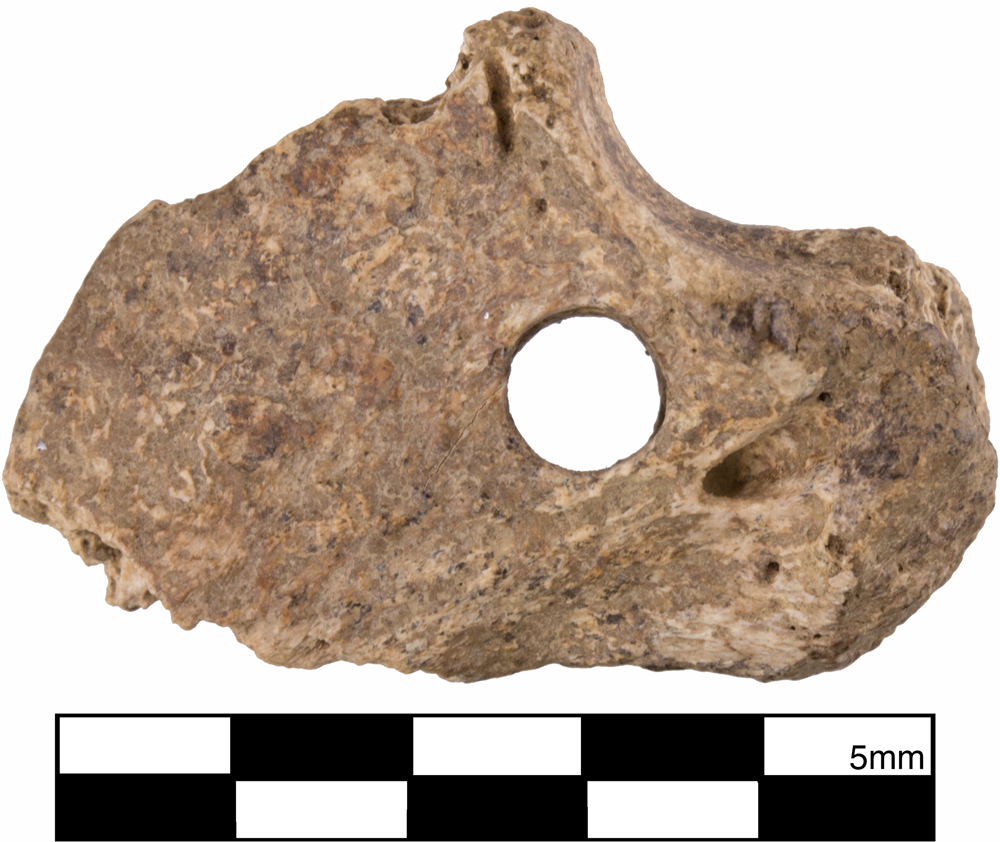
The provision of meat to a larger community would understandably bring a degree of prestige to the individuals responsible for a successful hunt. While evidence of hunting abounds within Poggio Civitate's bone assemblage, there are also traces of a related set of behaviours. Not only do animals such as red deer provide food, but their bones and antlers are also frequently converted into a range of high-status items, such as ornamented handles and decorative plaques and inlays for furniture, regardless of whether the ultimate users of such objects recognized their original relationship to hunted animals. Other features of the elite household suggest that the social prestige attached to hunting was amplified by the conversion of some killed animals into trophies. The OC1/Residence wolf pelt may have been a feature of this household on long-term display. If such trophy taking was driven by motives similar to those seen among modern hunters, we may reasonably see such actions as reflecting members of the household using these animals as props in the performance of a range of male dominance rituals. By its display, even in a semi-private space such as the OC1/Residence, the trophy of the killed wolf shows its killer as a protector of the household and defender of the larger community. Another example of a similar kind of trophy may be a pendant (PC-19960050) perforated by a single hole made in the third phalanx (the bone that the claw attaches to) of a bear, recovered some distance from the OC1/Residence (Tuck, Reference Tuck and Tuck2012b; Figure 9). The hole could have allowed its suspension from a cord, linking the wearer to the bear. This powerful portable item could also be passed to others, such as from parent to child, thus transferring this public enforcement of status and power.
A bear third phalanx, PC-19960050, with a carefully drilled hole (photograph by Bob Nisbet).
These two types of trophies, one contained within the semi-private space of an elite residence and the other a portable feature of personal adornment, may both relate to a desire to show an association with, and mastery over, the animals from which they came. It is especially telling that even in environments where hunting is unnecessary to supply meat to a community—whether ancient as in Poggio Civitate or in the present-day region—hunting remains a ritualized social occasion, dominated by men, that results in the acquisition of both meat and trophies to be displayed and shared with the community. From fragmentation patterns and cut marks, we know that the people of Poggio Civitate prepared and consumed boar and red deer. Whether the same applied to the less common wild animals such as wolf and bear cannot be established as so few specimens were recovered, but there is no reason why these taxa could not have been consumed; like the others, their size would support a large, communal meal. Consuming animals that are uncommon and difficult to acquire suggests a degree of affluence (Ervynck et al., Reference Ervynck, Van Neer, Hüster-Plogman and Schibler2003: 429) and keeping the head or foot bones as trophies would be a prominent marker of that status.
Conclusion
Several studies have considered ways the ruling family of Poggio Civitate employed domestic architecture to justify their position within the community (e.g. Tuck, Reference Tuck, Counts and Arnold2010; O'Donoghue, Reference O'Donoghue2013). Other views have focused on evidence of collective behaviours associated with such elite performance (e.g. Meyers, Reference Meyers2013; Tuck, Reference Tuck2017). One such behaviour, collective banqueting, may be understood as serving two purposes. It is an opportunity to display largesse and enhance prestige for those providing the collective meal but is also a feature of elite obligation. The material and social advantages of control over the larger community require that some form of reciprocal benefit befall the governed, one that is likely to have frequently been in the form of banqueting. A careful consideration of the zooarchaeological remains from Poggio Civitate reveals yet another dimension of the orchestrated way in which elite identity was constructed and maintained (Tuck, Reference Tuck and Gleba2020).
Cartmill (Reference Cartmill1993: 197) describes how hunting in the modern world is a symbolic behaviour that involves a ‘special sort of animal, killed in a specific way for a particular reason’. That animal must be wild and free, and the kill must be premeditated, violent, and direct. This requires a different mindset from the more mundane and often cyclical slaughter of livestock or trapping of wild animals. Furthermore, compared to raising livestock, hunting wild, often dangerous, animals is not energy efficient. This makes it an activity that involves a conspicuous waste of time and energy, in addition to putting the hunter in physical danger. A successful hunt demonstrates not only the prowess of the hunter but his freedom to engage in such pursuits because of his social status; thus the hunt must be commemorated through an image of the kill itself or a trophy from the kill. This use of gendered language is cautiously intentional. While male and female predators hunt and kill prey, the distinctly human process of converting prey into trophies to memorialize success and display domination over the killed creature is often rooted in gendered social roles (see Kalof & Fitzgerald, Reference Kalof and Fitzgerald2003, 116–17). In central Italy of the Etruscan period, this pattern holds. While exceptions exist—primarily related to the representation of the myth of Atalanta (see Boardman, Reference Boardman1983: 16–18)—equipment associated with hunting and representations of hunting appear almost exclusively within the masculine realm (see Camporeale, Reference Camporeale, Fiumi and Giustarini1979, Reference Camporeale1984).
At Poggio Civitate, the hunting of larger, sometimes dangerous game animals provided the practical resource of protein-rich meat for the elite banquet as well as a social arena in which the power of the hunter and domination over the killed animal could be performed. Within this behaviour, it is likely that the second part of the equation—domination over the killed animal—was totemized in the form of trophies that could be worn or displayed within and around the household of the ruling family. In this way, the animal remains from Poggio Civitate reveal yet another dimension of the complex inter-relationship between the community's elites, those that they governed, and the natural world both groups inhabited and exploited for their mutual benefit.
Acknowledgements
The authors would like to thank Dr Chris Conroy and Dr Carla Cicero, curators at the Museum of Vertebrate Zoology at the University of California, Berkeley, for providing access to the mammal and bird collections for comparative analysis of certain specimens.