The inflammatory process has received growing attention in the last decades for its implications with regard to some dangerous human health disorders such as cardiovascular disease, cancer, obesity and diabetes (Hotamisligil, Reference Hotamisligil2006). Inflammation is also very harmful in farm animals and it can occur for several reasons (Bertoni et al. Reference Bertoni, Trevisi, Han and Bionaz2008): the immune response to bacteria, viruses, fungi or parasites; the response to tissue damage (e.g. trauma, injuries, burns, digestive bacteria endotoxins) and to oxidative stress (Gruys et al. Reference Gruys, Toussaint, Landman, Tivapasi, Chamanza, VanVeen and Wensing1999), which could reiterate the process (Rimbach et al. Reference Rimbach, Minihane, Majewicz, Fisher, Pallauf, Virgli and Weinberg2002).
The interest in these aspects of inflammation continues to increase because not only can it be more dangerous than useful, but it can also reiterate itself, reducing the productive and reproductive efficiency of the cow as reviewed by Ingvartsen et al. (Reference Ingvartsen, Dewhurst and Friggens2003). Moreover, dairy cows are often susceptible, at calving time, to inflammations (Cappa et al. Reference Cappa, Trevisi and Bertoni1989; Sordillo et al. Reference Sordillo, Pighetti and Davis1995; Bionaz et al. Reference Bionaz, Trevisi, Calamari, Librandi, Ferrari and Bertoni2007). Pro-inflammatory cytokines—the main mediators of inflammation—trigger a sequence of events involving several organs and tissues, consequences of which are several endocrine and metabolic changes. Between them, they are responsible for a peculiar phenomenon at the liver level: e.g. a deviation of synthesis with an increase of many positive acute-phase proteins (APP: i.e. haptoglobin, ceruloplasmin, serum amyloid A etc.) and in turn a reduction of the negative APP, including apolipoproteins (Fleck, Reference Fleck1988). These changes do not have important effects on liver cell integrity, as demonstrated by the mild variations of liver enzymes (Bertoni et al. Reference Bertoni, Trevisi, Han and Bionaz2008). Changes of APP parameters have been utilized to monitor the inflammatory consequences on the liver functionality. An aggregated index (liver activity index or LAI) of three parameters (albumins, lipoproteins as total cholesterol and retinol-binding protein as vitamin A) in the first month of lactation has been set up by Trevisi et al. (Reference Trevisi, Calamari and Bertoni2001). The cows with low values of LAI (e.g. high inflammatory status) have shown a lower dry matter intake (Trevisi et al. Reference Trevisi, Calamari and Bertoni2002), a lower energy efficiency (Trevisi et al. Reference Trevisi, Gubbiotti and Bertoni2007) and a lower milk yield and fertility (Bertoni et al. Reference Bertoni, Trevisi, Han and Bionaz2008).
The importance of increasing our knowledge of cow homeostatic capacity and of the relationships between immune system parameters, oxidative stress, and mammary gland defence capacity, has been emphasized (Ingvartsen et al. Reference Ingvartsen, Dewhurst and Friggens2003). Within this framework, this paper aimed to explore some of these relations and to assess whether liver functionality defined by the LAI index (Trevisi et al. Reference Trevisi, Calamari and Bertoni2001; Bertoni et al. Reference Bertoni, Trevisi, Han and Bionaz2008) could be correlated with blood and udder immune and inflammatory status.
Materials and Methods
Animals, management and diet
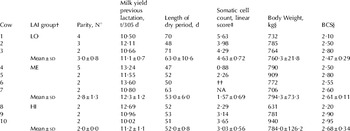
The research was carried out using 10 multiparous (2·6±1·0 parity) Italian-Friesian dairy cows, of average genetic merit, at the Università Cattolica del S. Cuore. Cows were housed in artificially lighted and ventilated tie-stalls. This barn was maintained under constant climatic conditions: ~20°C, 60–70% relative humidity, 14 h of light and 10 h of dark (light: 6·00–20·00). Main cow characteristics are described in Table 1.
Main characteristics of dairy cows utilized in the research, grouped according to liver activity index (LAI)

† LO=low LAI index; ME=medium LAI index; HI=high LAI index
‡ Average of last 2 weeks before dry off
§ Body condition score at 30 d before calving
†† NA=Not available
The feed-diet characteristics were almost constant during the trial. Cows were individually fed ad libitum with forages and concentrate. On average, dry cows received daily 9–12 kg of grass hay, 8–10 kg of maize silage and 1–2 kg of concentrate. After calving, the daily diet included 2 kg of grass hay and 3 kg of alfalfa, while concentrate and maize silage were gradually increased (the latter to 22 kg). Forages were offered in two equal meals at 7·30 and 19·30, while concentrate was distributed by an autofeeder in equal meals: two in the dry period (10·30 and 22:30) and eight in the lactating period (one every 3 h).
All cows were treated at drying-off with a dry-cow intramammary preparation (penethamate hydroiodide, bentamin penicillin, framycetin sulphate) and intramuscular treatments with tylosin. Milking procedures included cleaning of the teat with a clorexidine-moistened paper towel, forestripping and milking cluster attachment.
Health status
Occurrence of all health problems (e.g. retained placenta, metritis, ketosis, mastitis), drug treatments, and outcomes of two gynaecological visits were accurately recorded for each cow throughout the entire experimental period. In addition, rectal temperature was measured every morning at feeding time. Herd manager, milkers and practitioner were responsible for clinical disease monitoring.
Sampling procedure and sample preparation
Blood sampling was carried out before feed distribution in the morning. Samplings were performed at 30, 15, 10, 5, 2 d (±1 d) prior to calving, at calving and then at 2, 5, 10, 15, 25, 30 d after calving (±1 d); quarter milk samples (QMS) were taken only after calving with the same schedule as blood samples and immediately delivered to the laboratory in a refrigerated box.
Li-heparin and K3-EDTA tubes were immediately cooled in an ice-water bath, then Li-heparin tubes were centrifuged at 3520 g for 16 min; plasma samples were divided into five aliquots stored at −20°C until further analyses. Serum for lysozyme and N-acetyl-β-glucosaminidase (NAGase) analyses was obtained from centrifugation of blood at 3520 g at room temperature for 16 min, then aliquoted into two 500-μl tubes, and immediately frozen at −80°C for the enzyme analyses. Whey was obtained from skimmed milk by centrifugation at 60 000 g at 4°C for 30 min then stored and processed as described for serum.
Polymorphonuclear lymphocytes (PMN) were isolated from blood by blood hypotonic lysis (Piccinini et al. Reference Piccinini, Binda, Belotti, Casirani and Zecconi2004, Reference Piccinini, Binda, Belotti, Casirani and Zecconi2005).
Leucocyte counts
Blood samples were analysed by the means of a haemocytometer with specific settings for bovine blood (MS4, Melet Schloesing Laboratories, France).
Biochemical assays
The parameters on plasma were analysed at 37°C using a clinical auto-analyzer (ILAB 600, Instrumentation Laboratory, Lexington MA, USA) according to methods previously described by Bionaz et al. (Reference Bionaz, Trevisi, Calamari, Librandi, Ferrari and Bertoni2007) and Bertoni et al. (Reference Bertoni, Trevisi, Han and Bionaz2008). Assays included liver tests: functional (total bilirubin) and biochemical [aspartate aminotransferase (GOT/AST), γ-glutamyl-transferase (GGT), lactate dehydrogenase (LDH), alkaline phosphatase (ALP)]; inflammatory response tests: haptoglobin, reactive oxygen metabolites (ROM), thiol groups, total antioxidant activity; immunological tests: globulins, haemolytic complement, sialic acid and other tests: albumin, cholesterol as lipoprotein index, paraoxonase, vitamins A and E as an index of the corresponding carrier proteins. Sialic acid was determined by a colorimetric assay kit purchased from Roche (Roche Diagnostics GmbH, Penzberg, Germany), adapting it to the ILAB 600 conditions, while the haemolytic complement was determined using the analytical method described by Barta & Barta (Reference Barta, Barta and Barta1993).
In addition to the previous markers, lysozyme was assessed in duplicate by the procedure described by Metcalf et al. (Reference Metcalf, Gallin, Nauseef and Root1986) with slight modifications (Piccinini et al. Reference Piccinini, Binda, Belotti, Casirani and Zecconi2004, Reference Trevisi, Calamari and Bertoni2005) and NAGase was assessed in duplicate by the procedure described by Kitchen et al. (Reference Kitchen, Middleton and Salmon1978) with slight modifications (Piccinini et al. Reference Piccinini, Binda, Belotti, Casirani and Zecconi2004, Reference Trevisi, Calamari and Bertoni2005).
Respiratory burst (RB) was assessed by luminol-enhanced chemiluminescence as previously described (Piccinini et al. Reference Piccinini, Binda, Belotti, Casirani and Zecconi2004, Reference Trevisi, Calamari and Bertoni2005).
Milk bacteriological analysis
At the laboratory, an aliquot (0·01 ml) of each QMS was spread on blood agar plate. Colonies were isolated and identified by official methods according to National Mastitis Council (NMC, 1999). Somatic cell counts (SCC) were performed on a Bentley Somacount 150 (Bentley Instruments, Chaska MN, USA).
Data handling
Data were retrospectively grouped into three classes on the basis of LAI as described elsewhere (Trevisi et al. Reference Trevisi, Calamari and Bertoni2001; Bertoni et al. Reference Bertoni, Trevisi, Han and Bionaz2008): low (LO, cows with the lowest values of LAI, n=3), medium (ME, cows with intermediate values of LAI, n=4) and high (HI, cows with the highest values of LAI, n=3). This index includes the average blood levels (5, 15 and 30 days in milk) of albumin, lipoproteins (indirectly measured as total cholesterol) and retinol-binding protein (RBP, indirectly measured as vitamin A) (Bertoni et al. Reference Bertoni, Trevisi, Han and Bionaz2008).
Statistical analysis
To assess the pattern of the different blood and milk components during the periparturient period by different LAI groups, data were analysed using the MIXED procedure of SAS 9.1 (SAS Institute, Cary NC, USA). To verify the study hypothesis a relatively simple model was applied which included the interaction between time from calving (days in milk, DIM) and LAI groups (LAIg) and the random effects accounting for variance within cows. Effects of repeated samples were accounted for by choosing the appropriate covariance structure by Akaike's information criteria.
Results
Data description
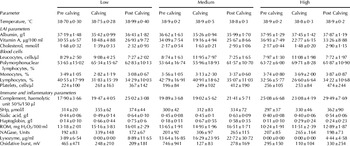
Overall 275 blood samples and 208 QMS were considered. None of the cows showed signs of any clinical diseases, mastitis included. Table 2 reports the distribution of bacteriological results obtained by culturing QMS in the three groups of cows considered. These analyses showed that overall udder health was good. Indeed, major pathogens (environmental Streptococci) were isolated in few quarters (1·5–2·4%), while nearly 50% of the quarters were infected with coagulase-negative Staphylococci. They are considered opportunistic pathogens, and they are not generally associated with a significant increase of clinical and subclinical mastitis frequency. A large set of markers has been assessed as reported in the Material and Methods section, but only some of them showed to be significantly influenced (α=0·05) by time from calving and LAI classification (blood leucocyte counts and oxidative burst, blood lysozyme, NAGase, complement, sialic acid, haptoglobin and ROM) (Table 3). Similarly, when milk samples were considered (Table 4), the interaction DIM and LAIg was always statistically significant for all the markers included in the table.
Distribution of bacteriological results from 208 quarter milk samples by the groups as defined by liver activity index (LAI)

Mean values (±sd) for temperature and blood immunological and inflammatory markers (see text for key to abbreviations) observed during follow-up period (±30 days from calving) in cows classified by liver activity index (LAI) (all the interactions between time from calving x LAI group were statistically significant at α=0·05)

Mean values for milk immunological and inflammatory markers observed during follow-up period (±30 days from calving) in cows classified by liver activity index (LAI) (all the interactions between time from calving×LAI group were statistically significant at α=0·05)

Blood parameters
All the curves obtained by plotting time from calving and LAI groups were analysed. However, blood leucocyte counts and oxidative burst, blood lysozyme and NAGase curves showed large overlapping among the three LAI group curves. Therefore, they were not further considered. Instead, we focused on four blood parameters (complement, sialic acid, haptoglobin and ROM) and on three milk parameters (SCC, lysozyme and NAGase) that showed larger and more consistent differences among LAI groups during the follow-up period.
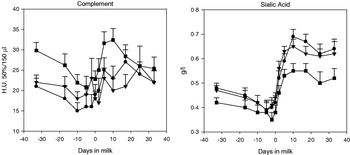
Cows classified in the high-LAI group (Fig. 1) showed consistently higher levels of complement activity, whilst in comparison the other two groups (low and medium) showed overall lower levels. Only around calving, the three groups showed values that largely overlapped. Complement values showed an increasing trend after calving in low and medium groups while in the high group the peak observed at 10 d after calving was followed by a decrease.
Blood complement and sialic acid mean values (+ se) observed during follow-up period (±30 d from calving) by liver activity index (LAI) classification (• low, ▾ medium, ▪ high).

When sialic acid was considered (Fig. 1), we observed lower levels in the high-LAI group, while the other two groups showed similar higher mean values. In all the three groups mean values were lower before calving than after calving, with larger increases for low and medium LAI groups.
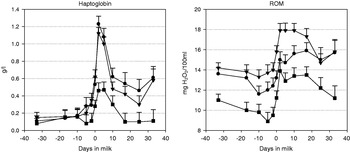
Levels of haptoglobin (Fig. 2) were very similar before calving in the three groups of cows; however, as calving came closer, some differences could be observed. Indeed, immediately after calving, there was a large increase in haptoglobin values both in low-and medium-LAI groups and only a slight increase in high-LAI group. At 10 DIM, a general decrease of haptoglobin values was observed, but only high LAI group achieved the pre-calving value by 20 DIM, while in the other two groups, values remained higher than pre-calving ones.
Blood haptoglobin and reactive oxygen metabolites (ROM) mean values (+se) observed during follow up period (±30 d from calving) by liver activity index (LAI) classification (• low, ▾ medium, ▪ high).

The pattern of ROM (Fig. 2) was very similar in the three groups of cows. However, the mean levels were clearly different during the whole follow-up period. Indeed, the high-LAI group showed the lowest levels, while the medium group showed the highest. In all three groups an increase could be observed moving towards calving, then values started to decrease in the high-LAI group, but not in the other experimental groups.
Milk parameters
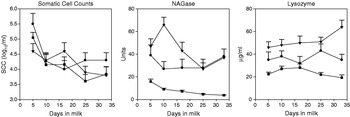
Figure 3 shows the mean SCC values after calving in the three groups of cows. In all the groups the observed values were below 100 000 cells/ml (Log 5), in the first sample after calving. The pattern was similar in the three groups even though cows in the high-LAI group showed lower values overall.
Milk somatic cell counts, N-acetyl-β-d-glucosaminidase (NAGase)and lysozyme mean values (+se) observed after calving by liver activity index (LAI) classification (• low, ▾ medium, ▪ high).

A completely different pattern was observed when milk NAGase was considered (Fig. 3). Indeed, cows in the high-LAI group showed significantly lower levels of the enzyme in all samples. On the contrary, cows in the medium group showed significantly higher values of NAGase between 5 and 20 DIM.
Milk lysozyme (Fig. 3) was significantly lower in the high-LAI group, while values in the medium group were always the highest among the three groups of cows. The trend was increasing in medium-LAI group, while it was decreasing in the high-LAI group and erratic in the low-LAI group.
Discussion
The periparturient period is one of the most critical periods in the productive life of the dairy cow. It has been demonstrated that in this period some impairment of immune defences can be observed (Mallard et al. Reference Mallard, Dekkers, Ireland, Leslie, Sharif, Van Kampen, Wagter and Wilkie1998; Piccinini et al. Reference Piccinini, Binda, Belotti, Casirani and Zecconi2004). This impairment could increase the frequency of production and reproductive diseases (Ingvartsen et al. Reference Ingvartsen, Dewhurst and Friggens2003). However, field studies showed that both blood and milk immune and inflammatory response during periparturient period are significantly influenced by herd factors (Piccinini et al. Reference Piccinini, Binda, Belotti, Casirani and Zecconi2005). Namely, the role of nutrition and metabolism on immune system and inflammatory response is also widely accepted and, for some aspects, also demonstrated (Ingvartsen et al. Reference Ingvartsen, Dewhurst and Friggens2003; Lacetera et al. Reference Lacetera, Scalia, Bernabucci, Ronchi, Pirazzi and Nardone2005). If identifying accurate markers to define the immune and inflammatory status of the cow is still a matter of discussion, then the need for accurate markers to define the metabolic status of the cow is even more controversial. However, the availability of these markers will increase our capability to identify cows at risk and thus prevent further diseases (Ingvartsen et al. Reference Ingvartsen, Dewhurst and Friggens2003; Whist et al. Reference Whist and Østerås2007) and/or metabolic deviations (Bertoni et al. Reference Bertoni, Trevisi, Han and Bionaz2008). This paper aimed to explore some of these relationships and to assess whether liver functionality defined by the LAI index (as a metabolic index) could be correlated with blood and udder immune and inflammatory status.
This study was performed with a relatively small number of cows; however, very frequent samplings were performed to carefully identify the changes in the parameters considered. Cow characteristics are described in Table 1 and, as expected, some differences among cows can be seen. Indeed, high-LAI and medium-LAI groups included mainly younger cows. Since LAI index is related to cow liver activity, age-related differences were expected, and these data suggest that young cows could have a higher liver activity.
The present results confirm that blood changes observed around calving (±30 d from calving) significantly affect the pattern of several cellular and humoural immune (complement, lysozyme) and inflammatory markers (sialic acid, haptoglobin, ROM, SCC, NAGase). Moreover, these changes could be associated with the hepatic response to inflammatory stimuli, i.e. reduction of usual protein synthesis (and related indices), the so-called negative APP (Bertoni et al. Reference Bertoni, Trevisi, Han and Bionaz2008).
When two markers related to innate immunity (complement) and inflammation (sialic acid) were considered, we observed consistently higher values for haemolytic complement and lower values for sialic acid in the high-LAI group. Complement is considered as a primer for humoural immune response; being a natural adjuvant, it increases B-cell activation and promotes B-functions (Mastellos & Lambris, Reference Mastellos and Lambris2002). Therefore, theoretically, high-LAI cows were shown to be better protected against infections. Sialic acid is a part of the larger chemical family of glycans and it is generally considered as a marker for APP release. Its measurement is used to assess disease risk in humans, and its increase is associated with several diseases (Varki, Reference Varki2008). The pattern observed in the high-LAI group for these two parameters suggests that cows in this group have higher immune capacity still before calving and, thus, lower inflammatory stimulus and consequently status. This is the desirable status, and the reduction of the immune capacity indicates that cows are more susceptible to infectious and metabolic diseases.
These observations are supported by the pattern of two other markers of inflammatory status (haptoglobin and ROM) which showed lower values in high-LAI cows when compared with the other two LAI groups.
Haptoglobin is an APP which increases several times during infection and inflammation around calving, also without clinical symptoms (Bionaz et al. Reference Bionaz, Trevisi, Calamari, Librandi, Ferrari and Bertoni2007). It has been proposed as one of the most useful markers for acute inflammation in dairy cows (Humblet & Godeau, Reference Humblet and Godeau2005; Aring et al. Reference Åkerstedt, Persson-Waller, Bach Larsend, Forsbäck and Sternesjö2006; Bertoni et al. Reference Bertoni, Trevisi, Han and Bionaz2008). ROM are markers for reactive oxygen substances produced by cells and they are currently used in human medicine to assess the risk for many diseases, and their assessment is considered a useful tool to monitor oxidative stress (Conner & Grisham, Reference Conner and Grisham1996). The consistent ROM low levels during the follow-up period and the lower and short-lasting haptoglobin peak around calving suggest again that cows in the high-LAI group can cope more efficiently with pathogens or with tissue damage during the periparturient period, avoiding the consequences of an increase in oxidative stress on tissues.
It appears furthermore, worthwhile to underscore that previous better conditions of the high-LAI cows allows a very modest loss of usual liver function as suggested by albumin, lipoprotein and RBP levels (Bertoni et al. Reference Bertoni, Trevisi, Han and Bionaz2008).
The pattern observed for the blood parameters is reflected in milk parameters. Indeed, SCC was below 100 000 cells/ml in all groups, out of first sampling in the low-LAI group. More interesting is the observation of a consistent and significant reduction of NAGase and lysozyme in the high-LAI group when compared to the other two groups. The pattern of these enzymes in milk is different from the one observed in blood, confirming that the major source in milk is mammary gland epithelial cells (Piccinini et al. Reference Piccinini, Binda, Belotti, Casirani and Zecconi2005, Reference Trevisi, Calamari and Bertoni2007). Moreover, a previous study showed that, after calving, such levels are highly correlated to a reduced frequency of mastitis (Piccinini et al. Reference Piccinini, Binda, Belotti, Daprà and Zecconi2007).
Conclusions
The need for accurate and suitable markers to assess metabolic, immune and inflammatory status in dairy cows is recognized worldwide, but still a general consensus on the markers to be used has not been reached. The present study confirms that a liver functionality index could be related to the immune and inflammatory status both at blood and milk level. Indeed, cows with the highest liver functionality index have also the highest levels of some immune markers and the lowest levels for inflammatory markers already before calving. In this study we did not find any association between udder health and the LAI index, but this could be influenced by the low number of cows in the study. The next step will be to investigate the association between the LAI index and the immune and inflammatory markers with a large number of periparturient cows characterized as being healthy or having subclinical or clinical production diseases.
This research was supported by MIUR (Italian Ministry for Education, University and Research) Project PRIN 2003 - prot. 2003071432_004.