This Supplement is based on the following Basic Principles: (1) In 2008, mortality prior to discharge from the hospital after congenital and paediatric cardiac surgery is approximately 4% overall in Europe and North America. In order to assess better the quality of care involving the remaining 96% of patients, we must agree on universally accepted definitions of morbidity and complications. (2) Not all complications are caused by medical error and not all medical error results in complications. (3) Not all complications are medical negligence or medical malpractice. (4) Many subtypes of complications exist. (5) The application of the definitions of complications into registries and databases requires certain basic rules. The Congenital Heart Surgery Databases of The European Association for Cardio-Thoracic Surgery and The Society of Thoracic Surgeons previously have published rules for the assessment of mortality and morbidity and this Supplement builds upon the foundation of these two publications.
This Supplement to Cardiology in the Young titled: “Databases and The Assessment of Complications associated with the Treatment of Patients with Congenital Cardiac Disease” includes 29 manuscripts and both a Long List of Complications and a Short List of Complications, with consensus-based definitions provided in each List. Therefore, in this Supplement, we provide a Long List of Complications and a Short List of Complications: (1) The Long List of Complications presented in Part IV of this Supplement contains and defines 2836 terms and is named: “The Long List of Complications of The Multi-Societal Database Committee for Pediatric and Congenital Heart Disease”, with the abbreviated short name: “Multi-Societal Long List of Complications”. (2) The Short List of Complications presented in Table 11 of this manuscript contains and defines 56 terms. This Short List of Complications in Table 11 provides the latest version of the Short List of Complications prepared for The Congenital Heart Surgery Databases of The European Association for Cardio-Thoracic Surgery and The Society of Thoracic Surgeons. This version is a draft work in progress that was developed by updating the current version 2.50 Short List of Complications of The Society of Thoracic Surgeons and The European Association for Cardio-Thoracic Surgery, so that the new Short List of Complications shown in Table 11 is consistent and harmonized with the Multi-Societal Long List of Complications published in Part IV of this Supplement.
Acknowledgements
Although the acknowledgements section of a manuscript is usually at the end of the manuscript, I would like to begin this article with the acknowledgments because of their extreme importance. This Supplement truly represents a multi-institutional and multi-disciplinary collaborative effort involving numerous participants. Therefore, prior to beginning this Introductory Manuscript to this Supplement to Cardiology in the Young titled: “Databases and The Assessment of Complications associated with the Treatment of Patients with Congenital Cardiac Disease”, I would like to begin by thanking the following sponsors of this Supplement (Table 1):
• The Children’s Heart Foundation (http://www.childrensheartfoundation.org/)
• The Society of Thoracic Surgeons (http://www.sts.org/)
• The VPS, LLC (The Virtual Pediatric Intensive Care Unit Systems, Limited Liability Company) (http://www.myvps.org)
• The World Society for Pediatric and Congenital Heart Surgery (http://www.wspchs.org/)
The Children’s Heart Foundation provided US$100,000 to support this research initiative and fund the publication of this Supplement. The Society of Thoracic Surgeons funded the meetings of The Multi-Societal Database Committee for Pediatric and Congenital Heart Disease in 2007 and 2008. The VPS, LLC (The Virtual Pediatric Intensive Care Unit Systems, Limited Liability Company) funded the meetings of The Multi-Societal Database Committee for Pediatric and Congenital Heart Disease in 2005 and 2006. The World Society for Pediatric and Congenital Heart Surgery provided US$25,000 towards the publication of this Supplement.
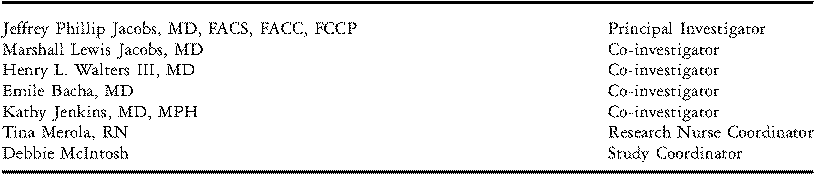
Table 2 lists the recipients of the research Grant from The Children’s Heart Foundation titled: “Congenital Heart Disease Multi-Societal Database Project to Create a Universal Encyclopedia for Definitions of Preoperative Risk Factors and Postoperative Complications Related to Congenital Heart Surgery and Interventions”. This Supplement addresses the portion of this Grant related to Complications; the portion of the Grant related to Preoperative and Preprocedural Factors is currently in progress and undergoing ongoing investigation.
In addition to funding the meetings of The Multi-Societal Database Committee for Pediatric and Congenital Heart Disease in 2007 and 2008, The Society of Thoracic Surgeons provided important administrative support for this initiative. I would like to thank Fred H. Edwards, MD, for his outstanding leadership as Chair of the Database Workforce of The Society of Thoracic Surgeons; it has been a true pleasure for me to Chair the Congenital Heart Surgery Database Taskforce of The Society of Thoracic Surgeons under the leadership of Fred. I would also like to thank Cynthia Shewan, Linda Breen, and Amy Dancisak for their massive efforts and crucial administrative support for this initiative.
I would also like to acknowledge Thomas B. Rice, MD and Randall C. Wetzel, MD, and their colleagues at The VPS, LLC (The Virtual Pediatric Intensive Care Unit Systems, Limited Liability Company). The leadership provided by Tom and Randall is responsible for the creation of The Multi-Societal Database Committee for Pediatric and Congenital Heart Disease.
It is very important to acknowledge that the idea to produce this Supplement originally came from Tjark Ebels, M.D., Ph.D., FECTS, of Groningen University Medical Centre, Groningen, The Netherlands. Tjark told me by e-mail that in order for surgeons truly to evaluate and compare morbidity and complications, we must create a universal “Dictionary of Complications” associated with the treatment of patients with congenital cardiac disease. It was this e-mail from my good friend Tjark that inspired this research initiative and culminated in the publication of this Supplement.
Part IV of this Supplement provides “The Dictionary of Definitions of Complications associated with the Treatment of Patients with Congenital Cardiac Disease”. As we developed the Long List of Complications that appears in Part IV of this Supplement, Emile Antoine Bacha, MD, a member of the Editorial Board of this Supplement, agreed to merge a list of Complications generated from work done by Emile and colleagues during their research into intraoperative complications, with the Long List of Complications utilized by The European Association for Cardio-Thoracic Surgery and The Society of Thoracic Surgeons. I offer special thanks to Emile and his colleagues for all of their support and hard work to facilitate this project.
I would like to thank the Editorial Board of this Supplement (Table 3), all of whom spent many hours supporting the production of this Supplement. I would like to especially acknowledge the hours of work and effort contributed by Marshall Lewis Jacobs, MD, Bohdan Maruszewski, MD, and Henry L. Walters III, MD as members of the Executive Editorial Committee. Marshall, Bohdan, and Hal all played a major leadership role in the creation of this Supplement. Without their efforts, the creation of this publication would not have been possible.
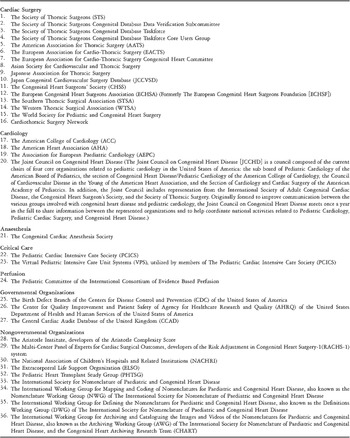
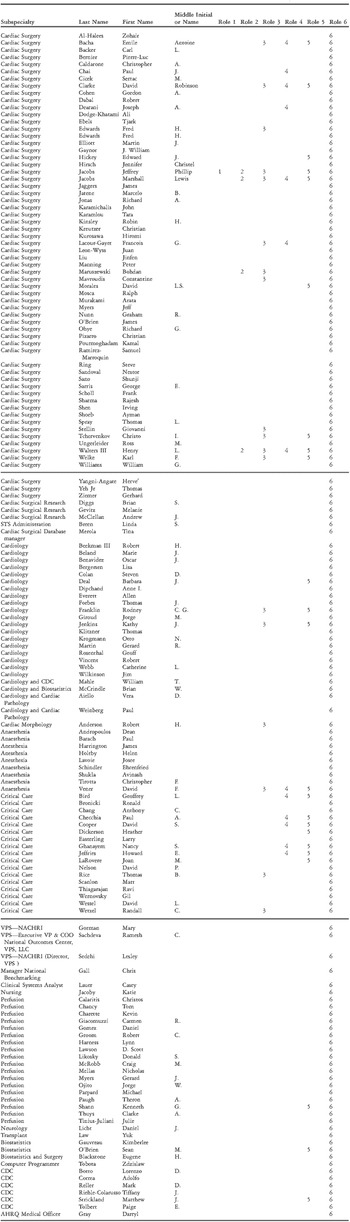
Table 4 lists the various organizations and Societies whose members have participated in the meetings and activities of The Multi-Societal Database Committee for Pediatric and Congenital Heart Disease and Table 5 lists the various participants themselves. I would like to thank each of these participants listed in Table 5 for their support and help in the completion of this Supplement, and I apologize if I have inadvertently and mistakenly left anyone off this list.
I would like to thank Constantine (Gus) Mavroudis, MD, Francois G. Lacour-Gayet, MD, and Martin J. Elliott, MD for their leadership over the last 15 years in the science of the analysis of outcomes of surgical intervention for congenital cardiac disease. Clearly, all of the accomplishments published in this Supplement stand on the shoulders of the initial efforts of Gus, Francois, and Martin.
Each of the multiple authors that contributed to this Supplement took valuable time away from their personal and professional lives in order to contribute to this initiative. I place high value on the support that this effort received from all of these authors. I also place high value on the sacrifices made by the professional colleagues and family members of these authors in order to create time for these authors to think and write.
I would like to thank Ted Baker, Bob Anderson, Gil Wernovsky, and the team at Cardiology in the Young, for their support, and for the opportunity to publish this Supplement. On a personal note, I would like to congratulate Bob for his ability to remain massively involved in the academic world of professionals caring for patients with congenitally malformed hearts, even after his official “retirement”. I would again like to thank Bob for his support, friendship, mentorship, professional guidance, and advice over the past 11 years. Bob has played a major role in the development of my own career, and I am appreciative for all that he has done for me. He placed an amazingly high level of trust in me when I was very young, and I appreciate this support.
I would especially like to thank Felicity Gil and Nicki Marshall of Cardiology in the Young for their incredible editorial support. Without their help, this project would not have been possible. I would also like to thank Daniel Edwards and Rebecca Curtis of Cambridge University Press for their support. Along with all of the other authors of this Supplement, I am thankful for the support in the production of the figures and images that we received from Gemma Price of The Great Ormond Street Hospital for Children NHS Trust (GOSH) and the University College London (UCL) Institute of Child Health (ICH).
I also acknowledge the contributions of several investigators who contributed significantly:
• Tina Merola, Tracey Cox, Debbie McIntosh, Dawn Cristello, and Amanda Kenney of The Congenital Heart Institute of Florida, Cardiac Surgical Associates, All Children’s Hospital and Children’s Hospital of Tampa, and the University of South Florida, Saint Petersburg and Tampa, Florida, United States of America
• Janet Kreutzer, of The Congenital Heart Institute of Florida, Children’s Hospital of Tampa, and the University of South Florida, Saint Petersburg and Tampa, Florida, United States of America,
• Jean Wilhelm Kas Sheehan, Diane Krasnopero, Jennifer Carapellucci, and Kristin Rosenberg of The Congenital Heart Institute of Florida, All Children’s Hospital, and the University of South Florida, Saint Petersburg and Tampa, Florida, United States of America.
• Melanie Gevitz and Karen Graham of Children’s Memorial Hospital, Northwestern University Feinberg School of Medicine, Chicago, Illinois, United States of America
Finally, I would like to thank my current partners, Jim Quintessenza and Paul Chai, and, and my former partners, Victor Morell and Harald Lindberg, for their constant support and guidance, and my wife Stacy, and children Jessica and Joshua, for their understanding and patience. It continues to be an ongoing fact, as I have emphasized in previous Supplements to Cardiology in the Young, that all of the family members of the authors of the reviews included in this Supplement are owed a debt of gratitude, because writing manuscripts markedly decreases the time available with them. Unfortunately, even with the passage of time, these periods of writing and editing are showing no signs of disappearance.
Background
In 2000, a landmark publication from the Institute of Medicine (IOM) estimated that as many as 98,000 people die in any given year from medical errors that occur in hospitals. The following text is taken directly from this report:Reference Kohn, Corrigan and Donaldson1
“Health care is not as safe as it should be. A substantial body of evidence points to medical errors as a leading cause of death and injury.• Sizable numbers of Americans are harmed as a result of medical errors. Two studies of large samples of hospital admissions, one in New York using 1984 data and another in Colorado and Utah using 1992 data, found that the proportion of hospital admissions experiencing an adverse event, defined as injuries caused by medical management, were 2.9 and 3.7 percent,Reference Brennan, Leape and Laird2 respectively. The proportion of adverse events attributable to errors (i.e., preventable adverse events) was 58 percent in New York, and 53 percent in Colorado and Utah.Reference Thomas, Studdert and Newhouse3• Preventable adverse events are a leading cause of death in the United States. When extrapolated to the over 33.6 million admissions to US hospitals in 1997, the results of these two studies imply that at least 44,000 and perhaps as many as 98,000 Americans die in hospitals each year as a result of medical errors.4 Even when using the lower estimate, deaths in hospitals due to preventable adverse events exceed the number attributable to the 8th-leading cause of death.5 Deaths due to preventable adverse events exceed the deaths attributable to motor vehicle accidents (43,458), breast cancer (42,297) or AIDS (16,516).6”
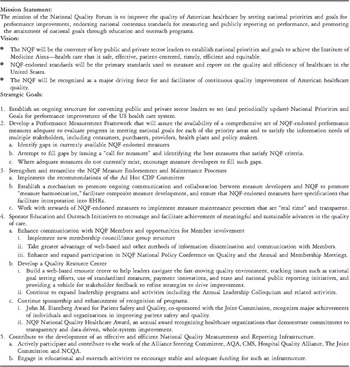
The Institute of Medicine report has generated significant interest in the evaluation of the quality of medical care. The public, our patients, insurance companies, and the government, all desire transparent disclosure of the outcomes of medical and surgical treatments. In the United States of America, this concept is best exemplified by The National Quality Forum. Table 6 presents the Mission Statement, Vision Statement, and Strategic Goals of The National Quality Forum of the United States of America. The following text is taken directly from the web site of The National Quality Forum7:
“The National Quality Forum (NQF) is a not-for-profit membership organization created to develop and implement a national strategy for health care quality measurement and reporting. A shared sense of urgency about the impact of health care quality on patient outcomes, workforce productivity, and health care costs prompted leaders in the public and private sectors to create the NQF as a mechanism to bring about national change.Established as a public-private partnership, the NQF has broad participation from all parts of the health care system, including national, state, regional, and local groups representing consumers, public and private purchasers, employers, health care professionals, provider organizations, health plans, accrediting bodies, labor unions, supporting industries, and organizations involved in health care research or quality improvement. Together, the organizational members of the NQF will work to promote a common approach to measuring health care quality and fostering system-wide capacity for quality improvement.”
Part of the responsibility of being a professional is self-regulating the profession, taking measures to improve the state of the art in this profession, and in the process, “raising the bar”.Reference Jacobs8, Reference Cohen, Jacobs and Quintessenza9 John Edmund Mayer, Jr, the immediate past President of The Society of Thoracic Surgeons, has emphasized the importance of professional responsibility and accountability.Reference Bonchek, Harley and Wilbur10, Reference Mayer11 These professional responsibilities of self-regulation, as well as maintenance and propagation of a body of knowledge, are fundamental. Sir William Osler stated:12, 13
“You are in this profession as a calling, not as a business; as a calling which exacts from you at every turn self-sacrifice, devotion, love and tenderness to your fellow-men. Once you get down to a purely business level, your influence is gone and the true light of your life is dimmed. You must work in the missionary spirit, with a breadth of charity that raises you far above the petty jealousies of life.”
The Multi-Societal Database Committee for Pediatric and Congenital Heart Disease
Over the past five decades, tremendous progress had been made in the diagnosis and treatment of patients with congenital cardiac malformations. Survival is now expected for many patients with lesions previously considered untreatable. Mortality is a necessary, but insufficient, definition of outcome. As mortality ceases to be effective as a primary measure of outcome, and as new, frequently non-surgical, treatments emerge, new indicators are needed to describe the results of treatments for patients with congenitally malformed hearts. Description of outcomes requires true multi-disciplinary involvement, and should include input from surgeons, cardiologists, anaesthesiologists, intensivists, perfusionists, neurologists, educators, primary care physicians, nurses, physician assistants, ultrasonographers, physical therapists, patients, families, governmental representatives, and all other interested parties.Reference Jacobs, Franklin and Jacobs14–Reference Jacobs, Haan and Edwards25
The Multi-Societal Database Committee for Pediatric and Congenital Heart Disease was established in 2005 with the goal of providing the infrastructure, spanning geographical and subspecialty boundaries, for collaboration between health care professionals interested in the analysis of outcomes of treatments provided to patients with congenital cardiac disease, with the ultimate aim of improvement in the quality of care provided to these patients. The purpose of these collaborative efforts is to promote the highest quality comprehensive cardiac care to all patients with congenital heart disease, from the fetus to the adult, regardless of the patient’s economic means, with an emphasis on excellence in teaching, research and community service. This 2008 Supplement to Cardiology in the Young that you are about to read is a product of the efforts of The Multi-Societal Database Committee for Pediatric and Congenital Heart Disease, which in this Introductory manuscript will be occasionally referred to as the Multi-Societal Database Committee.
The Multi-Societal Database Committee for Pediatric and Congenital Heart Disease has held four annual retreats, each lasting two days, in 2005, 2006, 2007, and 2008:
1. The First Annual Meeting of The Multi-Societal Database Committee for Pediatric and Congenital Heart Disease. Chicago, Illinois, Chicago Hilton, Thursday August 25, 2005 and Friday August 26, 2005. (At the inception of this first meeting, the meeting was named the “VPS/STS/PCICS Combined Database Meeting”. VPS=The Virtual Pediatric Intensive Care Unit Systems, STS=The Society of Thoracic Surgeons, PCICS=The Pediatric Cardiac Intensive Care Society.)
2. The Second Annual Meeting of The Multi-Societal Database Committee for Pediatric and Congenital Heart Disease. Chicago, Illinois, Thursday August 17, 2006 and Friday, August 18, 2006.
3. The Third Annual Meeting of The Multi-Societal Database Committee for Pediatric and Congenital Heart Disease. Hotel George in Washington, DC, Thursday September 27, 2007 and Friday, September 28, 2007.
4. The Fourth Annual Meeting of The Multi-Societal Database Committee for Pediatric and Congenital Heart Disease. Omni Mount-Royal Hotel, Montreal, Canada, Saturday October 4, 2008 and Sunday October 5, 2008.
Table 4 lists the various organizations and Societies whose members have participated in the meetings and activities of The Multi-Societal Database Committee for Pediatric and Congenital Heart Disease and Table 5 lists the various participants themselves. I would like to thank each of these participants listed in Table 5 for their support and help in the completion of this Supplement, and I apologize if I have inadvertently and mistakenly left anyone off this list.
At the first meeting of the Multi-Societal Database Committee, initial discussions took place about the possibility of linking together the various databases of the subspecialties of paediatric cardiac surgery, paediatric cardiology, paediatric cardiac anaesthesia, and paediatric critical care. The Multi-Societal Database Committee rapidly realized that it would be essential to collaborate in multiple areas:
• Use of a common language and nomenclature
• Use of a database with an established uniform core dataset for collection of information
• Incorporation of a mechanism of evaluating case complexity
• Availability of a mechanism to assure verification of the completeness and accuracy of the data collected
• Collaboration between medical and surgical subspecialties,
• Standardization of protocols for life-long longitudinal follow-up.
Each of these six areas is discussed in detail in this Supplement. Initial discussions of the Multi-Societal Database Committee identified that it was essential for the various subspecialty databases to use identical nomenclature in order to allow them to communicate with each other with meaning. Various lists of terminology would need to be harmonized:
• Diagnoses
• Procedures
• Complications
• Preoperative Factors
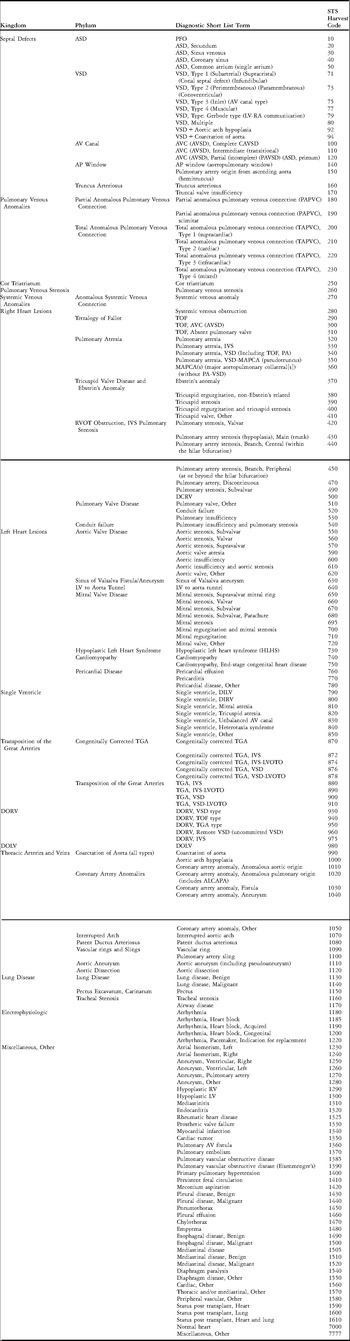
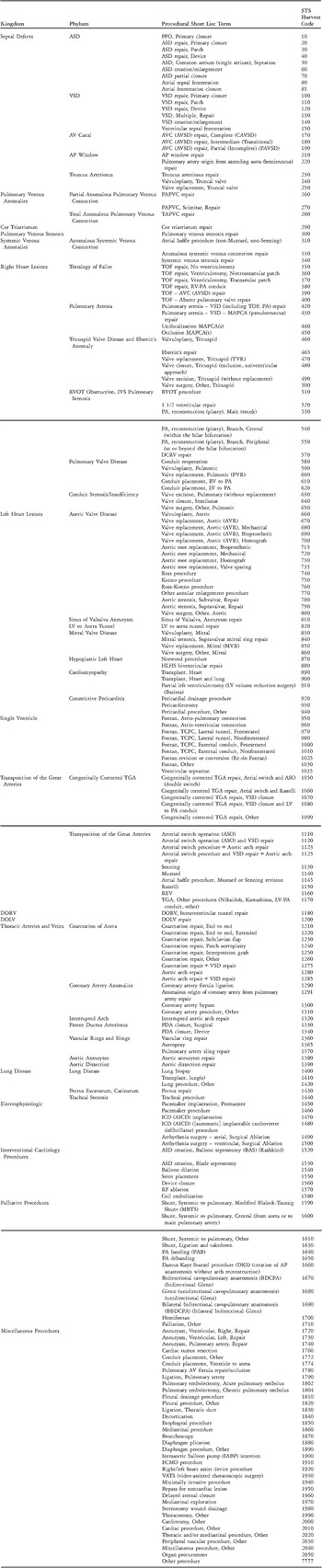
The Multi-Societal Database Committee agreed to use The International Pediatric and Congenital Cardiac Code (IPCCC) (http://www.ipccc.net/) as the basis of communication. Mature and well developed Short Lists and Long Lists of Diagnoses and Procedures are available via The International Pediatric and Congenital Cardiac Code, and these diagnostic and procedural lists have been incorporated into the various subspecialty databases and harmonized. For example, the Short Lists of Diagnoses and Procedures of the version of the International Paediatric and Congenital Cardiac Code derived from the nomenclature of the International Congenital Heart Surgery Nomenclature and Database Project of The European Association for Cardio-Thoracic Surgery and The Society of Thoracic Surgeons (Tables 7 and 8) is now used in the following databases:
• The Congenital Heart Surgery Database of The Society of Thoracic Surgeons
• The Congenital Heart Surgery Database of The European Association for Cardio-Thoracic Surgery
• The “IMPACT”, (IMproving Pediatric and Adult Congenital Treatment) Database of Congenital Cardiology of The American College of Cardiology
• The Congenital Heart Disease Database of The Congenital Cardiac Anesthesia Society
• The Virtual Pediatric Intensive Care Unit Systems, utilized by members of The Pediatric Cardiac Intensive Care Society
Because the diagnostic and procedural lists in The International Pediatric and Congenital Cardiac Code are matured and functional, the Multi-Societal Database Committee adopted these lists and harmonized them across their databases. The Multi-Societal Database Committee then elected to focus on developing a mature list of Complications and defining these complications. After completing the initiative related to Complications, which is the focus of this Supplement, the Multi-Societal Database Committee then plans to focus on Preoperative Factors. The project dealing with Preoperative Factors will follow the publication of this Supplement. The term “Preoperative Factors” will be used, rather than the term “Preoperative Risk Factors”, because, as pointed out by Marshall Jacobs: We do not yet know if these factors are all associated with risk; indeed, the purpose of studying these factors is to determine if they are associated with risk.
Finally, the Multi-Societal Database Committee for Pediatric and Congenital Heart Disease realizes that, ultimately, in order to link the various databases of our subspecialties, each database must incorporate a shared set of Unique Patient Identifier Fields compliant with the Health Insurance Portability and Accountability Act (HIPAA) of the federal government of the United States of America. Efforts are ongoing to incorporate these shared Unique Patient Identifier Fields into all of the various databases of our subspecialties.Reference Jacobs, Haan and Edwards25
Complications
The Multi-Societal Database Committee for Pediatric and Congenital Heart Disease offers the following definition of the term “Complication”:
“A complication is an event or occurrence that is associated with a disease or a healthcare intervention, is a departure from the desired course of events, and may cause, or be associated with, suboptimal outcome. A complication does not necessarily represent a breech in the standard of care that constitutes medical negligence or medical malpractice. An operative or procedural complication is any complication, regardless of cause, occurring (1) within 30 days after surgery or intervention in or out of the hospital, or (2) after 30 days during the same hospitalization subsequent to the operation or intervention. Operative and procedural complications include both intraoperative/intraprocedural complications and postoperative/postprocedural complications in this time interval.”
The Multi-Societal Database Committee for Pediatric and Congenital Heart Disease offers the following definition of the term “Adverse Event”:
“An adverse event is a complication that is associated with a healthcare intervention and is associated with suboptimal outcome. Adverse events represent a subset of complications. Not all medical errors result in an adverse event; the administration of an incorrect dose of a medication is a medical error, but it does not always result in an adverse event. Similarly, not all adverse events are the result of medical error. A child may develop pneumonia after an atrial septal defect repair despite intra- and peri-operative management that is free of error. Complications of the underlying disease state, which are not related to a medical intervention, are not adverse events. For example, a patient who presents for medical care with metastatic lung cancer has already developed a complication (Metastatic spread) of the primary lung cancer without any healthcare intervention. Furthermore, complications not associated with suboptimal outcome or harm are not adverse events and are known as no harm events. The patient who receives an incorrect dose of a medication without harm has experienced a no harm event, but not an adverse event.”
Based on the above definitions, it is apparent that The Multi-Societal Database Committee for Pediatric and Congenital Heart Disease has taken an inclusive approach to defining the universe of complications. Complications may or may not be associated with healthcare intervention and may or may not be associated with suboptimal outcome. Meanwhile, adverse events must be associated with healthcare intervention and must be associated with suboptimal outcome.
This Supplement is based on the following Basic Principles:
1. In 2008, mortality prior to discharge from the hospital after congenital and paediatric cardiac surgery is approximately 4% overall in Europe and North America. In order to assess better the quality of care involving the remaining 96% of patients, we must agree on universally accepted definitions of morbidity and complications.
2. Not all complications are caused by medical error and not all medical error results in complications.
3. Not all complications are medical negligence or medical malpractice.
4. Many subtypes of complications exist.
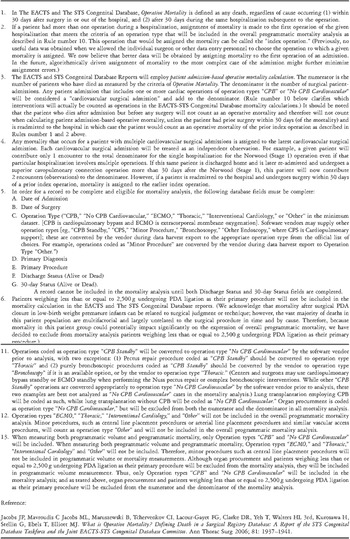
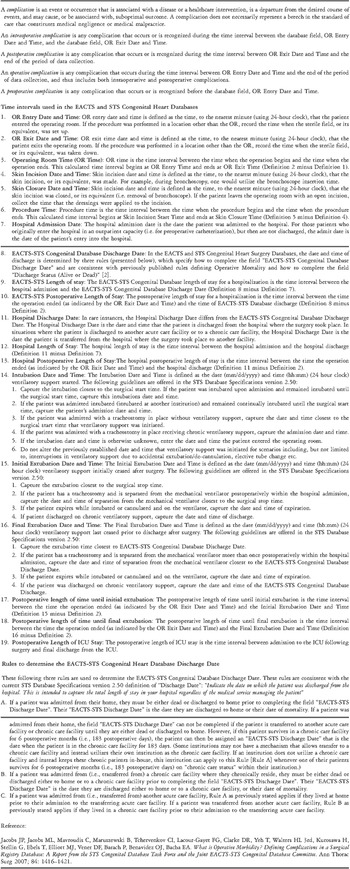
5. The application of the definitions of complications into registries and databases requires certain basic rules. The Congenital Heart Surgery Databases of The European Association for Cardio-Thoracic Surgery and The Society of Thoracic Surgeons previously have published rules for the assessment of mortality and morbidity in the following manuscripts (Tables 9 and 10). This Supplement builds upon the foundation of these two publications:Reference Jacobs, Mavroudis and Jacobs21, Reference Jacobs, Jacobs and Mavroudis22
Jacobs JP, Mavroudis C Jacobs ML, Maruszewski B, Tchervenkov CI, Lacour-Gayet FG, Clarke DR, Yeh T, Walters HL 3rd, Kurosawa H, Stellin G, Ebels T, Elliott MJ. What is Operative Mortality? Defining Death in a Surgical Registry Database: A Report of the STS Congenital Database Taskforce and the Joint EACTS-STS Congenital Database Committee. Ann Thorac Surg 2006; 81: 1937–1941.
Jacobs JP, Jacobs ML, Mavroudis C, Maruszewski B, Tchervenkov CI, Lacour-Gayet FG, Clarke DR, Yeh T, Walters HL 3rd, Kurosawa H, Stellin G, Ebels T, Elliott MJ, Vener DF, Barach P, Benavidez OJ, Bacha EA. What is Operative Morbidity? Defining Complications in a Surgical Registry Database: A Report from the STS Congenital Database Task Force and the Joint EACTS-STS Congenital Database Committee. Ann Thorac Surg 2007; 84: 1416–1421.
The Difference between a Short List and a Long List
Obviously, a Short List is short and a Long List is long. Each type of list is designed to serve a different purpose. A Long List is designed to support research studies, academic databases, echocardiography software, and electronic medical records. A Short List is designed to support registries, the assessment of outcomes, and initiatives designed to improve quality.
In this Supplement, we provide a Long List of Complications and a Short List of Complications, with consensus-based definitions provided in each List:
• The Long List of Complications presented in Part IV of this Supplement contains and defines 2836 terms and is named: “The Long List of Complications of The Multi-Societal Database Committee for Pediatric and Congenital Heart Disease”, with the abbreviated short name: “Multi-Societal Long List of Complications”. Although the act of navigating a list with 2836 terms can initially seem quite daunting, it can become quite simple and enjoyable with the aid of computerized navigation tools designed to support the hierarchal structure of the list.
• The Short List of Complications presented as Table 11 of this manuscript contains and defines 56 terms. This Short List of Complications in Table 11 provides the latest version of the Short List of Complications prepared for The Congenital Heart Surgery Databases of The European Association for Cardio-Thoracic Surgery and The Society of Thoracic Surgeons. This version is a draft work in progress that was developed by updating the current version 2.50 Short List of Complications of The Society of Thoracic Surgeons and The European Association for Cardio-Thoracic Surgery, so that the new Short List of Complications shown in Table 11 is consistent and harmonized with the Multi-Societal Long List of Complications published in Part IV of this Supplement.
The Organizational Structure of this Supplement: “Databases and The Assessment of Complications associated with the Treatment of Patients with Congenital Cardiac Disease”
This Supplement is divided into four parts. Part I is an Overview and contains 3 manuscripts:
• This Introductory Manuscript that you are now reading
• An updated primer about Nomenclature and Databases that functions as a summary of this entire Supplement presented as a single manuscript
• A manuscript that discusses the importance of the globalization of these efforts, written by the Governing Council of The World Society for Pediatric and Congenital Heart Surgery, one of the sponsors of this Supplement
Part II addresses Databases, Complications, and Morbidity and is divided into five sections:
• Nomenclature
• Database
• Stratification of complexity and other biostatistical topics
• Verification of data
• Longitudinal follow-up
Part III discusses “organ specific complications” and has individual chapters discussing complications related to each of the following “organ systems”:
• Cardiac complications
• Arrhythmic complications
• Complications relating to perfusion and extracorporeal circulation
• Pulmonary complications
• Renal complications
• Haematological and infectious complications
• Neurological complications
• Gastrointestinal complications
• Congenital cardiac surgical complications of the integument, vascular system, vascular-line(s), and wounds
• Endocrinal complications
• Complications related to the transplantation of thoracic organs
• Anesthetic complications
Part IV of this Supplement provides “The Dictionary of Definitions of Complications associated with the Treatment of Patients with Congenital Cardiac Disease”. The Dictionary in Part IV has two components. Table 1 in Part IV provides the list of 43 “Organ Systems” by which the 2836 terms in Table 2 in Part IV are organized. In Table 2 in Part IV, each of these 2836 terms is assigned to an “organ system”, listed, defined, and given alphanumeric codes in both The International Pediatric and Congenital Cardiac Code and the 9th revision of the International Classification of Diseases.
The Process of Peer Review and Creating the Long List of Complications
The process of peer review and creating this Long List of Complications is described in detail below:
1. In 2000, an initial Long List of Complications was created based on The International Congenital Heart Surgery Nomenclature and Database Project of The European Association for Cardio-Thoracic Surgery and The Society of Thoracic Surgeons published in the Supplement to The Annals of Thoracic Surgery in April 2000.
2. In 2005, this Long List of Complications was merged with a similar list generated from work done by Emile Bacha and colleagues during their research into intraoperative complications. I offer special thanks to Emile and his colleagues for all of their support and hard work to facilitate this project.
3. Also in 2005, the first annual meeting of The Multi-Societal Database Committee for Pediatric and Congenital Heart Disease was held in Chicago, Illinois, at the Chicago Hilton on Thursday August 25, 2005 and Friday August 26, 2005. (At the inception of this first meeting, the meeting was named the “VPS/STS/PCICS Combined Database Meeting”. VPS=The Virtual Pediatric Intensive Care Unit Systems, STS=The Society of Thoracic Surgeons, PCICS=The Pediatric Cardiac Intensive Care Society.) The Multi-Societal Database Committee agreed to take on the task of creating a comprehensive listing of complications and defining these complications.
4. In 2005, the product of steps 1 and 2 above was a new Long List of Complications. This new list was then divided into 7 portions broken down by “Organ Systems”. Each portion was then assigned to a multidisciplinary subcommittee of the The Multi-Societal Database Committee for Pediatric and Congenital Heart Disease.
5. The Subcommittees studied, reviewed, and modified their terms and definitions and presented updated versions at the 2006 meeting of the Congenital Heart Surgery Database Taskforce of The Society of Thoracic Surgeons at the 2006 meeting of the The American Association for Thoracic Surgery (AATS) in Philadelphia. At this meeting in Philadelphia, each Subcommittee presented their controversial and challenging areas and topics and also presented potential areas of overlap with other Subcommittees.
6. Based on the discussion at the 2006 meeting of the Congenital Heart Surgery Database Taskforce of The Society of Thoracic Surgeons in Philadelphia, each Subcommittee then further researched and revised their lists and definitions.
7. Hal Walters and I then combined the revised lists from the Subcommittees, rectified any remaining inconsistencies in definition or classification between Subcommittees, fused these 7 portions back into one list, and assigned the appropriate codes from the 9th revision of the International Classification of Diseases (ICD-9 Codes) and the appropriate cross-mapped terms from the Short List of Complications of the version of the International Paediatric and Congenital Cardiac Code derived from the nomenclature of the International Congenital Heart Surgery Nomenclature and Database Project of The European Association for Cardio-Thoracic Surgery and The Society of Thoracic Surgeons. Rodney Franklin then assigned appropriate alphanumeric codes from The International Pediatric and Congenital Cardiac Code. I would like especially to thank Hal Walters and Rodney Franklin who spent many, many, many, hours on this task. This work would not have been possible without the efforts of Hal and Rodney.
8. These definitions were reviewed again in Chicago, Illinois during the second annual meeting of The Multi-Societal Database Committee for Pediatric and Congenital Heart Disease held in Chicago on Thursday August 17, 2006 and Friday, August 18, 2006. Terms and definitions were extensively debated and modified at this meeting in order to build consensus.
9. These definitions were reviewed again in San Diego at the 2007 meeting of the Congenital Heart Surgery Database Taskforce of The Society of Thoracic Surgeons at the 2006 meeting of The Society of Thoracic Surgeons in Philadelphia on Saturday January 27, 2007. Again, terms and definitions were extensively debated and modified at this meeting in order to build consensus.
10. These definitions were reviewed again in Washington, DC on Saturday May 5, 2007 at the 2007 meeting of the Congenital Heart Surgery Database Taskforce of The Society of Thoracic Surgeons at the 2007 meeting of the The American Association for Thoracic Surgery (AATS). Again, terms and definitions were extensively debated and modified at this meeting in order to build consensus.
11. Final review of the terms and definitions presented in Part IV of this Supplement took place at the third annual meeting of The Multi-Societal Database Committee for Pediatric and Congenital Heart Disease at Hotel George in Washington, DC on Thursday September 27, 2007 and Friday, September 28, 2007.
12. Hal Walters then confirmed and updated the assignment of appropriate alphanumeric codes from the 9th revision of the International Classification of Diseases ICD-9 Code. Rodney Franklin then confirmed and updated the assignment of appropriate alphanumeric codes from The International Pediatric and Congenital Cardiac Code. Again, I would like especially to thank Hal Walters and Rodney Franklin who spent many, many, many, hours on this task. This work would not have been possible without the efforts of Hal and Rodney.
13. The remaining manuscripts in Parts I, II, and III were written by members of The Multi-Societal Database Committee for Pediatric and Congenital Heart Disease. Each manuscript was peer reviewed by a minimum of 2 members of the Multi-Societal Database Committee who were not authors on that particular manuscript.
14. The above efforts culminated in this publication of this Supplement to Cardiology in the Young titled: “Databases and The Assessment of Complications associated with the Treatment of Patients with Congenital Cardiac Disease”, which includes 29 manuscripts and both a Long List of Complications and a Short List of Complications, with consensus-based definitions provided in each List. Therefore, in this Supplement, we provide a Long List of Complications and a Short List of Complications: (1) The Long List of Complications presented in Part IV of this Supplement contains and defines 2836 terms and is named: “The Long List of Complications of The Multi-Societal Database Committee for Pediatric and Congenital Heart Disease”, with the abbreviated short name: “Multi-Societal Long List of Complications”. (2) The Short List of Complications presented in Table 11 of this manuscript contains and defines 56 terms. This Short List of Complications in Table 11 provides the latest version of the Short List of Complications prepared for The Congenital Heart Surgery Databases of The European Association for Cardio-Thoracic Surgery and The Society of Thoracic Surgeons. This version is a draft work in progress that was developed by updating the current version 2.50 Short List of Complications of The Society of Thoracic Surgeons and The European Association for Cardio-Thoracic Surgery, so that the new Short List of Complications shown in Table 11 is consistent and harmonized with the Multi-Societal Long List of Complications published in Part IV of this Supplement.
Future Directions
The Multi-Societal Long List of Complications and the associated definitions provided in Part IV of this Supplement, and in reality, all of the material published in this Supplement, represent a work in evolution. In essence, this Supplement provides a snap shot of the current state of the art of Databases and The Assessment of Complications associated with the Treatment of Patients with Congenital Cardiac Disease, as of October, 2008. The terms in the dictionary and the associated definitions are in continuous evolution and will continue to develop and mature. This Supplement, and especially Part IV of this Supplement, is a fluid document that represents a work in progress. For example, in the “Organ System” titled “Cardiopulmonary bypass and Mechanical support”, five main groups of complications exist and are defined:
• Cardiopulmonary bypass complication
• ECMO complication
• IABP complication
• VAD complication
• VAD complication-INTERMACS Registry
(ECMO = extracorporeal membrane oxygenation, IABP = intra-aortic balloon pump, VAD = ventricular assist device) This section of the Multi-Societal Long List of Complications demonstrates that this document is still a “work-in progress”. The first four groups of complications in the list above were prepared by the Multi-Societal Database Committee working in collaboration with The International Consortium for Evidence-Based Perfusion (http://www.bestpracticeperfusion.org/). The fifth group of complications in the list above is taken from the INTERMACS Registry (http://www.intermacs.org/). The International Consortium for Evidence-Based Perfusion and the INTERMACS Registry are described below in quotes taken directly from their own websites on October 13, 2008:
“The International Consortium for Evidence-Based Perfusion (ICEBP) partners and collaborates with perfusion societies, professional medical societies, interested clinicians and industry to improve continuously the delivery of care and outcomes for our patients.Vision of the ICEBPTo achieve this mission, we will:• Evaluate current practice through a dedicated international perfusion registry.• Develop and publish evidence based guidelines, and support their integration into clinical practice.• Identify gaps in the medical literature and empower clinical teams to conduct research in areas where evidence is lacking.• Identify gaps between current and evidence-based clinical practice to promote the improvement in patient care.”
“INTERMACS is a national registry for patients who are receiving mechanical circulatory support device therapy to treat advanced heart failure. This registry was devised as a joint effort of the National Heart, Lung and Blood Institute (NHLBI), the Centers for Medicare and Medicaid Services (CMS), the Food and Drug Administration (FDA), clinicians, scientists and industry representatives in conjunction with the University of Alabama at Birmingham (UAB) and United Network for Organ Sharing (UNOS). ”
This example demonstrates that the Multi-Societal Long List of Complications is truly still a “work-in progress”. The list of Complications in the “Organ System” titled “Cardiopulmonary bypass and Mechanical support” still will require further work so that the portion of the list prepared by the Multi-Societal Database Committee working in collaboration with The International Consortium for Evidence-Based Perfusion can be fully harmonized with the portion of the list incorporated from the INTERMACS Registry. Clearly, this Dictionary is a living, breathing document that will continue to evolve.
Future goals and initiatives of The Multi-Societal Database Committee for Pediatric and Congenital Heart Disease include the following projects and initiatives:
1. Providing the infrastructure, spanning geographical and subspecialty boundaries, for collaboration between health care professionals interested in the analysis of outcomes of treatments provided to patients with congenital cardiac disease, with the ultimate aim of improvement in the quality of care provided to these patients
2. Maintaining, preserving, and updating the Long List of Complications of The Multi-Societal Database Committee for Pediatric and Congenital Heart Disease
3. Developing and defining a similar List of Preoperative and Preprocedural Factors
4. Studying the relationship between clinical and administrative databases
5. Incorporating into our Database a shared set of Unique Patient Identifier Fields compliant with the Health Insurance Portability and Accountability Act of the United States of America, and all other related local, national, and international governmental regulations.
6. Developing additional strategies to link our Databases
7. Creating standardized strategies for longitudinal follow-up of our patients
8. Assuring that all of these efforts span subspecialty boundaries
9. Assuring that all of these efforts span geographic boundaries by improving the Globalization of efforts of The Multi-Societal Database Committee for Pediatric and Congenital Heart Disease.
Europe and North America are very well represented in these efforts. Increasing the involvement from Africa, Asia, Australia and Oceania, and South America, is of extreme importance. The geographical boundaries of our efforts must be expanded. To date, unfortunately, meetings of the MultiSocietal Database Committee have been held only in North America. Meetings must be held in other continents, mimicking the efforts of The International Society for Nomenclature of Paediatric and Congenital Heart Disease, developers of the International Paediatric and Congenital Cardiac Code. The International Society for Nomenclature of Paediatric and Congenital Heart Disease has met in Argentina, Brazil, Canada, Italy, Japan, the United States of America, and Poland. The Multi-Societal Database Committee for Pediatric and Congenital Heart Disease must mimic this globalized approach exemplified by The International Society for Nomenclature of Paediatric and Congenital Heart Disease. The analysis of outcomes of treatments provided to patients with congenital cardiac disease, and the improvement in the quality of care provided to these patients, is truly a global challenge and responsibility.
In the final analysis, The Multi-Societal Database Committee for Pediatric and Congenital Heart Disease has devoted a great deal of energy to the international collaborative efforts to standardize the assessment of outcomes of patients undergoing treatment for congenital cardiac disease. I feel strongly that this international collaboration MUST span traditional geographic and subspecialty boundaries. In this way, we, as congenital cardiac surgeons, physicians, and health care professionals, will not only improve our profession and the lives of our patients—we will also foster global collaboration and understanding, and therefore improve the world.
Sponsorship for the Supplement to Cardiology in the Young titled: “Databases and The Assessment of Complications associated with the Treatment of Patients with Congenital Cardiac Disease”

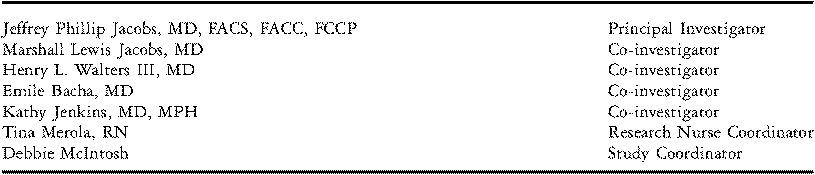
Recipients of the research Grant from The Children’s Heart Foundation titled: “Congenital Heart Disease Multi-Societal Database Project to Create a Universal Encyclopedia for Definitions of Preoperative Risk Factors and Postoperative Complications Related to Congenital Heart Surgery and Interventions”
The Editorial Board for the Supplement to Cardiology in the Young titled: “Databases and The Assessment of Complications associated with the Treatment of Patients with Congenital Cardiac Disease”

The 36 organizations and Societies whose members have participated in the meetings and activities of The Multi-Societal Database Committee for Pediatric and Congenital Heart Disease

Participants in the meetings and activities of The Multi-Societal Database Committee for Pediatric and Congenital Heart Disease

Roles: 1 = Editor, 2 = Executive Editorial Committee, 3 = Editorial Board, 4 = Subcommittee Chair, 5 = First author on manuscript, 6 = Participant in the meetings or activities or publications of The Multi-Societal Database Committee for Pediatric and Congenital Heart Disease
Legend: AHRQ = Agency for Healthcare Research and Quality (AHRQ) of the United States of America
CDC = Centers for Disease Control and Prevention (CDC) of the United States of America
CDC = Centers for Disease Control and Prevention (CDC) of the United States of America
COO = Chief Operating Officer
NACHRI = The National Association of Children’s Hospitals and Related Institutions
STS = The Society of Thoracic Surgeons
VP = Vice President
VPS = Virtual Pediatric Intensive Care Unit Database System
The Mission Statement, Vision Statement, and Strategic Goals of The National Quality Forum (NQF) of the United States of America7

Short List of Diagnoses of the version of the International Paediatric and Congenital Cardiac Code derived from the nomenclature of the International Congenital Heart Surgery Nomenclature and Database Project of The European Association for Cardio-Thoracic Surgery and The Society of Thoracic Surgeons

Short List of Procedures of the version of the International Paediatric and Congenital Cardiac Code derived from the nomenclature of the International Congenital Heart Surgery Nomenclature and Database Project of The European Association for Cardio-Thoracic Surgery and The Society of Thoracic Surgeons

Rules to Define Operative MortalityReference Jacobs, Mavroudis and Jacobs21

Rules to Define Operative MorbidityReference Jacobs, Jacobs and Mavroudis22

Short List of Complications prepared for The Congenital Heart Surgery Databases of The European Association for Cardio-Thoracic Surgery and The Society of Thoracic Surgeons This Table (Table 11) provides the latest version of the Short List of Complications prepared for The Congenital Heart Surgery Databases of The European Association for Cardio-Thoracic Surgery and The Society of Thoracic Surgeons. This version is a draft work in progress that was developed by updating the current version 2.50 Short List of Complications of The Society of Thoracic Surgeons and The European Association for Cardio-Thoracic Surgery, so that the new Short List of Complications shown in Table 11 is consistent and harmonized with The Long List of Complications of The Multi-Societal Database Committee for Pediatric and Congenital Heart Disease published in Part IV of this Supplement.