Introduction
In 2000, the Organisation for Economic Co-operation and Development (OECD) launched the Programme for International Student Assessment (PISA), which evaluates education worldwide by triennial assessment of the mathematics, science and reading literacy skills of 15-year-old students (OECD, 2016). PISA stimulated educational research because the reports provided authentic and viable methods for Australian academics to examine Australian students’ performance. Interest increased after it became clear that Australian results were both declining and relatively poor compared to other high-performing OECD nations (Waldow et al., Reference Waldow, Takayama and Sung2014). Australia's declining international rankings generated consistent negative publicity. The media discourse was critical for the Australian education system and focused on the performance of all stakeholders, including teachers, school leadership and neoliberal policies.
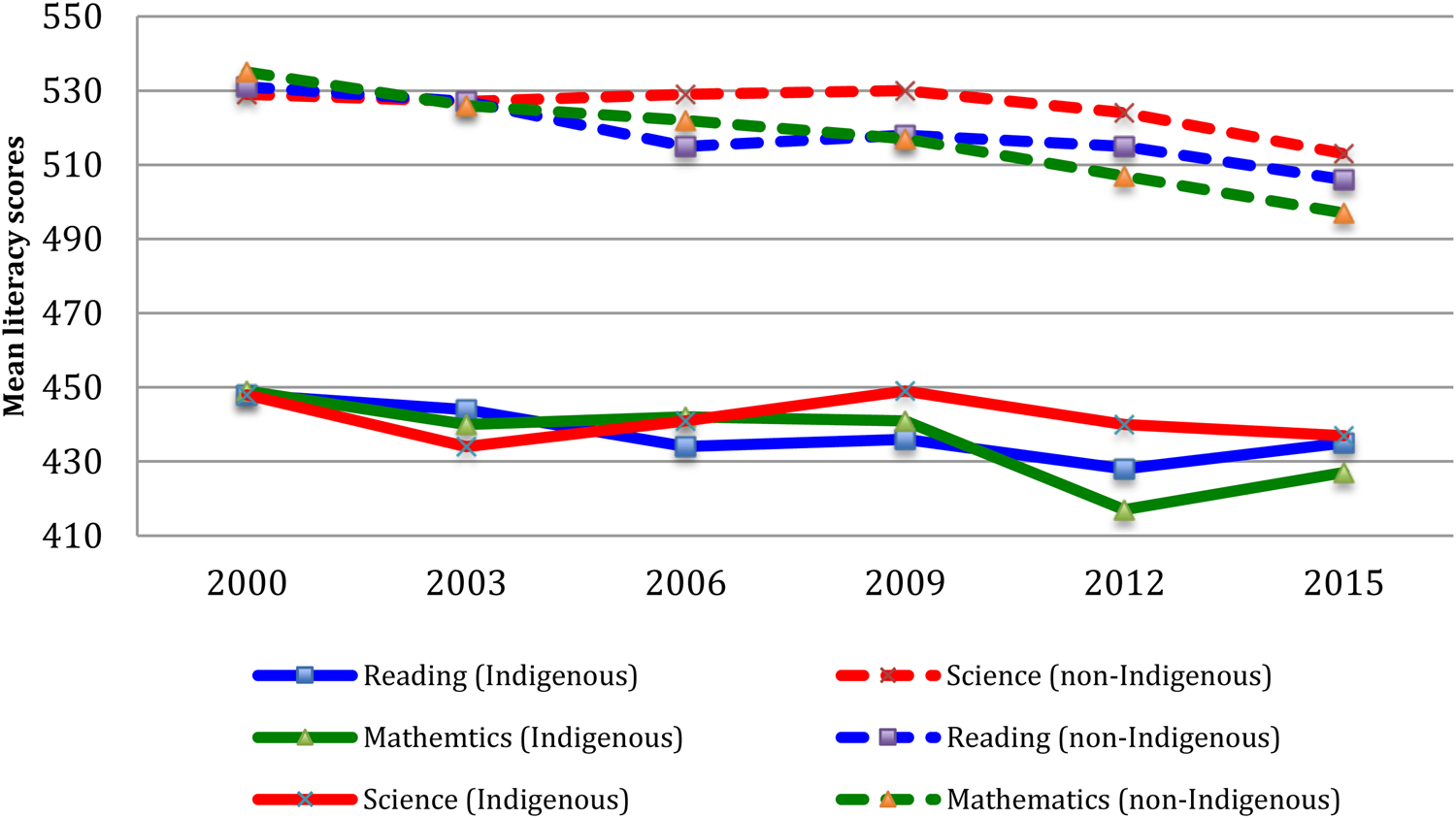
Analysis of the rich array of PISA data showed many students who had the poorest performance were Indigenous Australians (Dreise and Thomson, Reference Dreise and Thomson2014). These students were, on average, two and a half years behind non-Indigenous students. Figure 1 shows the mean test scores in the tested subject areas and that the gap between Indigenous and non-Indigenous student results has remained relatively similar since 2000, despite a slight upturn in PISA 2015 reading and mathematics literacy scores.
Indigenous and non-Indigenous PISA results as mean scores 2000–2015.

This study aims to better understand discourse framing Indigenous performance in PISA by investigating the attention it received in Australian academia and mainstream media. After reviewing the academic literature, the study investigates coverage in two national and 11 metropolitan high-circulation newspapers from 2001 to 2015. To develop a theoretical framework to help understand this lack of attention, this paper focuses on the following two research questions:
(1) What is the positioning of Indigenous education within Australia's media discourse on PISA?
(2) What theoretical insights can be used to help explain the findings related to the media attention given to Indigenous PISA performance?
Background
Australian educational research on PISA
Since publication of PISA's first results in 2000, a significant body of literature has emerged. The main drivers of this research have been the many articles in the print and television media and the 2009 release of Australia's poor and declining scores. In the last 3 years alone (2015–2017), there have been eight peer-reviewed articles with a sole focus on Australian students’ PISA performance.
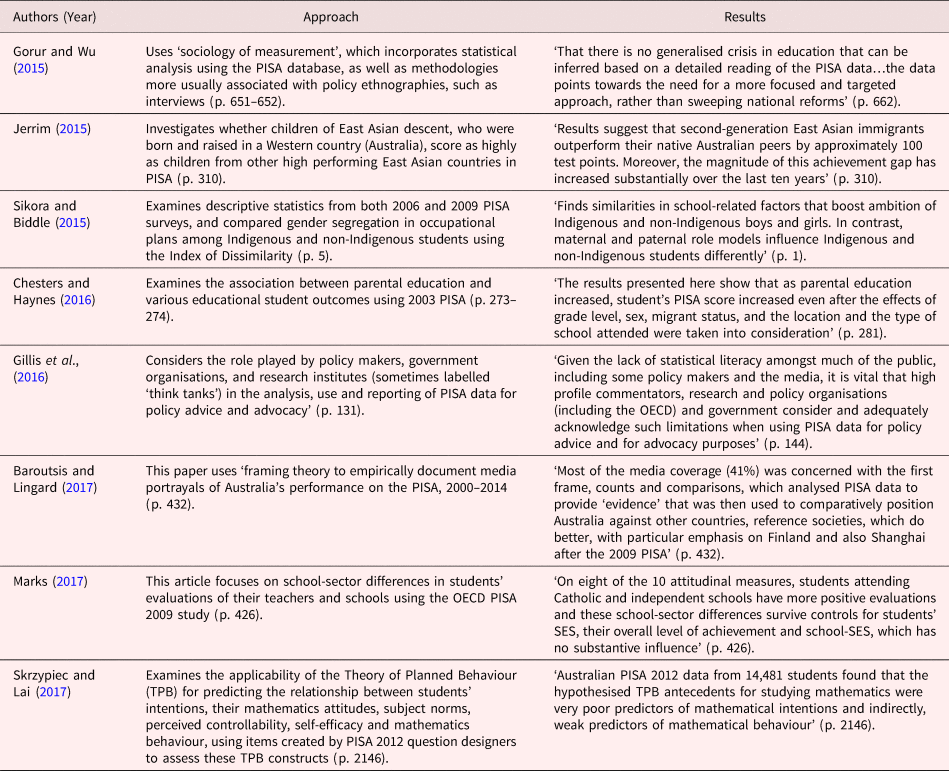
Table 1 summarises the eight articles on PISA and the three main themes: government and non-government school funding, education inequality and teaching quality. There is a lack of research exploring Indigenous performance in PISA. We explore the three themes to understand what educational issues have attracted more academic interest than Indigenous PISA performance.
The eight peer reviewed journal articles published since the 2015 round of PISA

The first theme is the difference in funding between government and non-government schools. Education academics have reported on the level of public funding for non-government schools (Dowling, Reference Dowling2008; Forsey et al., Reference Forsey, Proctor, Stacey, Koinzer, Nikolai and Waldow2017) and mostly agree that it is a flawed, complicated system (Connors, Reference Connors2007) that continues to undermine the government schooling system in Australia. The funding of schools is an important determinant of student educational performance. The literature has also argued that the growing divide between government and non-government school funding in Australia has wider implications for segregation and multiculturalism (Butler et al., Reference Butler, Ho and Vincent2017; Rowe and Lubienski, Reference Rowe and Lubienski2017), the socioeconomic status background of each sector (Watson and Ryan, Reference Watson and Ryan2010) and student educational outcomes (Perry and McConney, Reference Perry and McConney2013).
The second theme is inequality in the Australian schooling system (Kenway, Reference Kenway2013; Yates, Reference Yates2013). This theme has appeared repeatedly in the literature, while the Federal Government has introduced educational policy interventions with the intention to reduce the causes of Australia's educational inequality. For example, one policy is the promotion of ‘school choice’ under neoliberal ideology and practices. Many academics have examined the problematic nature of ‘school choice’ (Windle, Reference Windle2014; Angus, Reference Angus2015) and shown that the Australian schooling system has fallen short in fairness and equity, which has further been linked to the decline in Australian PISA results (Lingard, Reference Lingard2016). Surprisingly there is little, or no explicit, discussion of the iniquitous ‘gap’ between Indigenous and non-Indigenous students.
The third theme is teacher quality. There is concern that teacher quality may have fallen in recent years, and this correlates with the decline of Australia's PISA performance (Leigh and Ryan, Reference Leigh and Ryan2008; Treagust et al., Reference Treagust, Won, Petersen and Wynne2015). Leigh and Ryan (Reference Leigh and Ryan2008) found the academic aptitude of new teachers had fallen considerably over the past two decades. Recent initiatives to ensure quality teaching in Australian schools include the introduction of professional standards for teachers and the evaluation of teachers against those standards (Mayer et al., Reference Mayer, Mitchell, Macdonald and Bell2005). However, many academics have questioned the effectiveness of initiatives in teacher professional development (Bowe and Gore, Reference Bowe and Gore2017), teacher accountability (Thompson, Reference Thompson2014) and an oversupply of teachers (Dinham, Reference Dinham2013), which are combining to work against teacher quality (p. 92).
School funding, issues of inequity and teacher quality are also dominant in academic research on PISA. However, there is a notable lack of attention to, and neglect of, the performance of Indigenous Australian students in PISA. This neglect is surprising as the lowest performers are disproportionately from an Indigenous background (Thomson, Reference Thomson2016); there have been numerous policies to address Indigenous underperformance (Gray and Beresford, Reference Gray and Beresford2008); and Indigenous education research has increased for almost two decades (Mellor and Corrigan, Reference Mellor and Corrigan2004).
Indigenous Australian PISA results
Since the initiation of PISA in 2000 only four empirical research studies have investigated the achievement gap between Australian Indigenous and non-Indigenous students in PISA (McConney et al., Reference McConney, Oliver, Woods-McConney and Schibeci2011; Woods-McConney et al., Reference Woods-McConney, Oliver, McConney, Maor and Schibeci2013; Song et al., Reference Song, Perry and McConney2014; Sikora and Biddle, Reference Sikora and Biddle2015). McConney et al. (Reference McConney, Oliver, Woods-McConney and Schibeci2011) analysed science literacy performance in PISA 2006 and found that Indigenous students’ interest in science was equal to their non-Indigenous peers, while not having the same educational outcomes as other Australians. The researchers argued school science curriculum should acknowledge and publicly value Indigenous Australian science knowledge, and incorporate it into professional learning for teachers. Woods-McConney et al. (Reference Woods-McConney, Oliver, McConney, Maor and Schibeci2013) examined and compared factors associated with science literacy and with science engagement for Indigenous and non-Indigenous 15-year-old students in Australia and New Zealand and found consistent patterns of influence on engagement in science for Indigenous and non-Indigenous students in both countries. Socioeconomic status, time spent on science lessons and study and the character of science teaching explained variations in science literacy.
Song et al. (Reference Song, Perry and McConney2014) found the achievement gap between Indigenous and non-Indigenous students in PISA 2009 was related to unequal allocations and differences in the rates at which home and school resources are converted into positive educational outcomes. The study also found the achievement gap is substantially larger in Australia than in New Zealand, and is related to greater inequity in the allocation of school resources. Sikora and Biddle (Reference Sikora and Biddle2015) used PISA 2006 and 2009 data to investigate educational and occupational expectations of Indigenous and non-Indigenous youth. They found similarities in school-related factors that boost ambition of Indigenous and non-Indigenous boys and girls. In contrast, maternal and paternal role models influence Indigenous and non-Indigenous youth differently.
These four studies on Indigenous PISA results are largely comparative in their approach, and examine the extent to which the achievement gap between Indigenous and non-Indigenous students can be measured or attributed to various influencing factors both within and outside the school environment. There has been very little academic, empirical attention on Indigenous performance in PISA. This paper examines this neglect by analysing PISA discourse in the Australian media and the attention on Indigenous student performance.
Methodology
The sample
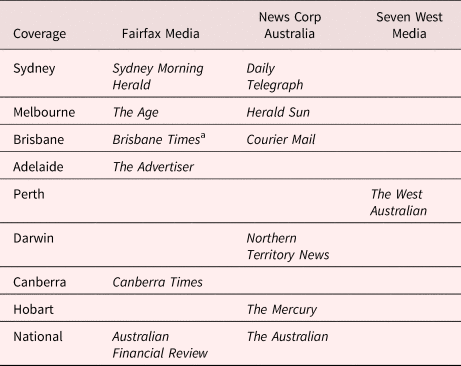
The sample for this study is two national and 11 metropolitan newspapers across a 15-year period, 2001–2015. Table 2 shows the newspapers represent a broad range of coverage and ownership. News Corp Australia takes a conservative news agenda, while Fairfax Media has a more central liberal bias (McKnight, Reference McKnight2010, p. 310).
Newspaper media ownership and their origin

a Publication began in 2007, online only.
Metropolitan newspapers were selected from the capital cities of each Australian state or territory to gain the largest possible coverage of the nation's newspaper readership, complemented by including the only two national daily newspapers, The Australian and The Australian Financial Review. The timeframe, 2001–2015, covers the period from the first PISA results in 2000 to the most recent in 2015.
Data collection
The total number of PISA newspaper articles obtained provides a broad overview of the PISA discourse in Australian newspaper media. We follow this with a more specific analysis of the PISA articles which provide a focus on Indigenous performance, and further correlate this reported discourse in relation to the timing of specific PISA rounds and the greater politico-educational landscape.
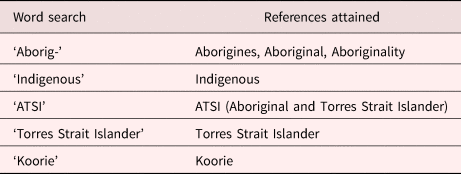
Articles were retrieved using the media database Factiva, through keyword searches for ‘PISA’ in the selected Australian newspapers between 2001 and 2015. Because Factiva did not provide search results for the online newspaper, the Brisbane Times, articles were collected using the Brisbane Times’ online search capability. Using ‘PISA’ as the search term, 684 PISA articles were retrieved, and 287 of these articles were relevant to the study by showing a clear focus on the international assessment. Articles that made only passing reference to PISA were excluded. Each of the 287 PISA focused articles was examined in a systematic, methodological manner to determine which articles also focused on Indigenous Australian PISA performance using the ‘Find’ option in Microsoft Word to search for individual Indigenous references in full text. Keyword searches also included other terms appropriate to Indigenous Australians (see Table 3) and were also shortened to consider short form and stemmed words.
Word search and references

When the context of a reference had a focus on Indigenous student performance in PISA, the entire article was then analysed to determine its overall focus. An article with a whole focus on Indigenous student PISA performance was then added to a separate Word file. Of the 287 PISA articles, only 10 articles had a focus on Indigenous PISA performance, which represents 3% of the total sample.
Data analysis
The articles were analysed using thematic analysis to identify, analyse and report on themes that emerged (Braun and Clarke, Reference Braun and Clarke2006, p. 6). The themes emerged from the 10 newspaper articles on Indigenous student PISA performance. This study followed Braun and Clarke's (Reference Braun and Clarke2006) six-step process for thematic analysis in social sciences: the researcher ‘familiarised’ themselves with the data; systematically coded the data to generate ‘general initial codes’; established ‘potential themes’ through the negotiation of similar and overlapping codes; reviewed the potential themes against the coded data; defined and named each theme to clearly outline the theme's central concept and lastly, reported the story the data tells across the themes.
Results
Non-Indigenous PISA articles
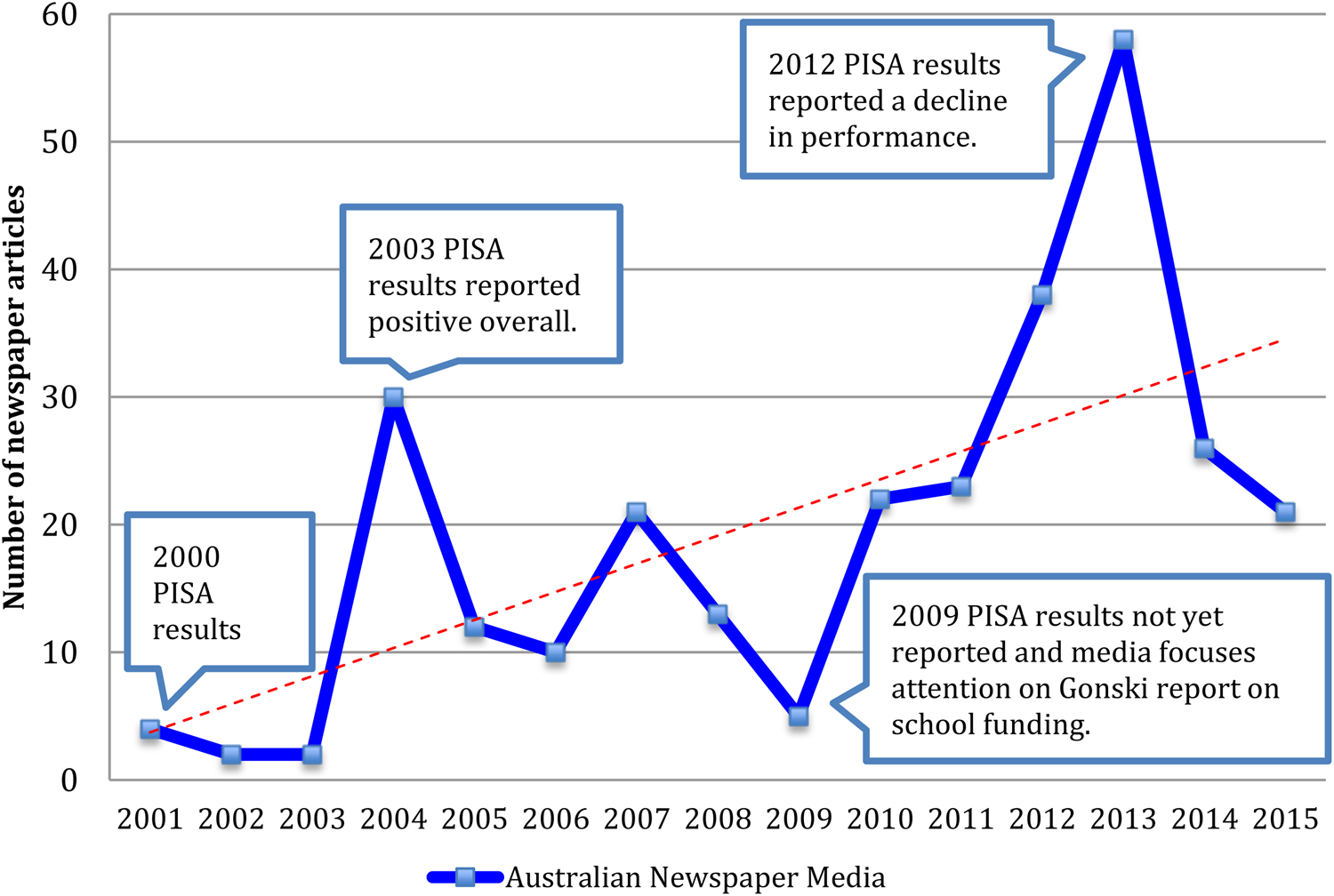
The intensity of reporting on Australian students’ PISA performance has increased over time, as shown in figure 2. This increase can largely be attributed to the rise in prominence and significance of PISA in both national media across Australia and internationally across other OECD countries (Breakspear, Reference Breakspear2014, p. 7).
Total number of Australian PISA newspaper articles published each year between 2001 and 2015 (n = 287).

There is a saw-tooth pattern with a peak in PISA focused articles nearly every year following a PISA round. Figure 2 shows the highest article increase in 2004, with an increase in 28 focused PISA articles compared to the preceding two years. The highest peak in 2013 saw 58 PISA oriented articles published, higher than any other year.
There are two distinct reporting peaks in PISA articles (one in 2004 and the other in 2013) and one distinct reporting trough in 2009. The peak in 2004 is associated with the newfound interest in the PISA performance results from the Australian print media, partly attributed to the high performance and initially high international ranking of Australian students in 2000 and 2003 PISA.
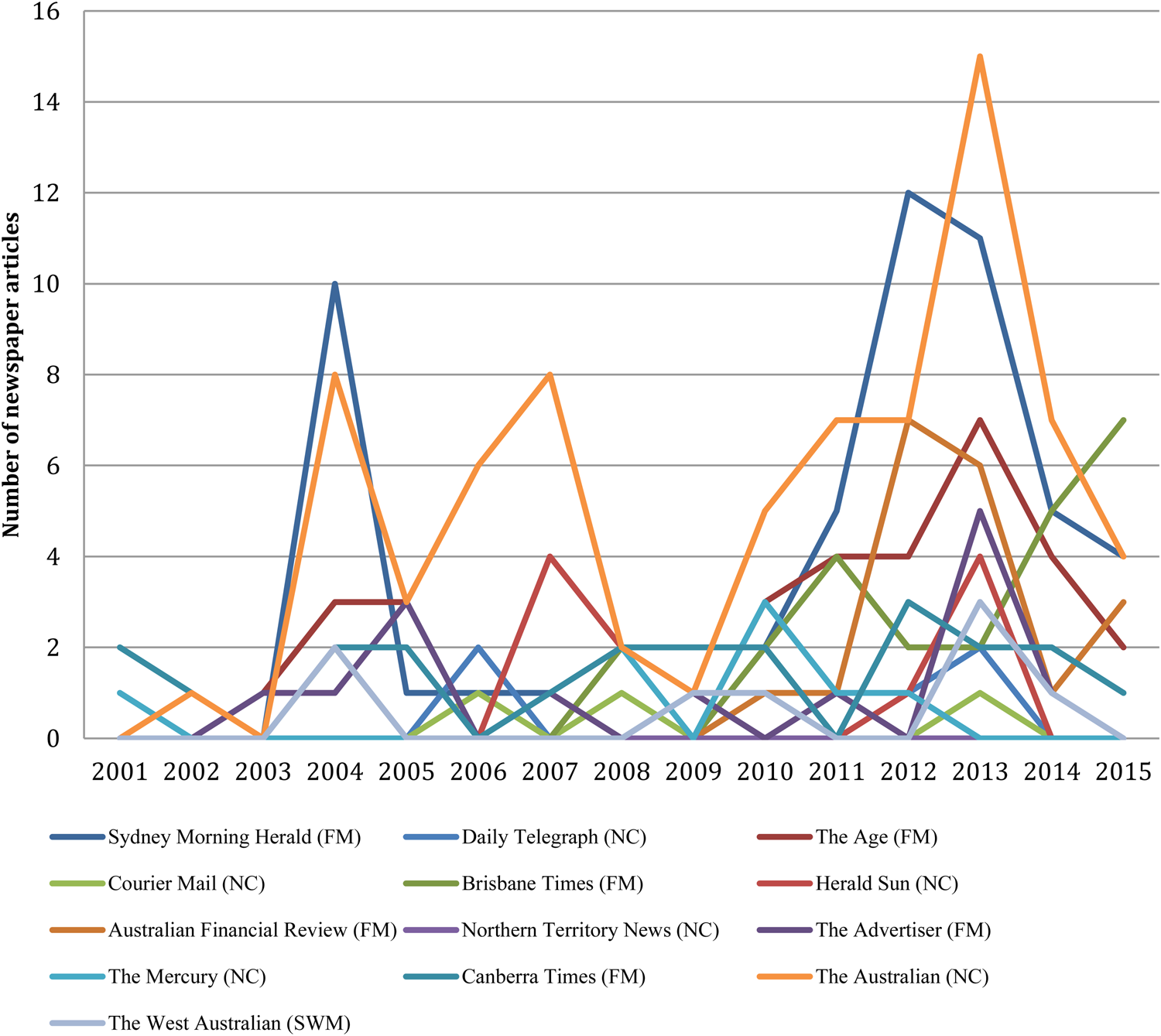
The large majority of PISA articles reporting on 2000 and 2003 results voiced appreciation and positive affirmation to the nation's education system, its teachers and students. Media headlines included: ‘Australia's education system gets full marks’ (O'Connor, Reference O'Connor2004); ‘Aussies get high marks in a world test’ (Buckingham, Reference Buckingham2004) and ‘Australian students read the way’ (Wilson-Clark, Reference Wilson-Clark2004). These positive PISA news stories make no acknowledgement of the gap between Indigenous and non-Indigenous performance despite it being well established in PISA reporting and highlighted in the executive summary and media release on each cycle. Not a single media article before 2004 addresses Indigenous performance in PISA. There is a clear imbalance in media attention towards Indigenous PISA performance in this period. In 2009 there is a clear trough in newspaper coverage with only five PISA articles as the PISA results for 2009 had not yet been released, and it was 2 years since the release of previous PISA results in 2007. The focus of each article was also different (figure 3).
Number of Australian PISA newspaper articles between 2001 and 2015 (n = 287).

In 2013 the second distinct peak of PISA newspaper coverage is attributed to the decline in Australian PISA results. Australian students were now ranked 13th in reading, down from 9th in 2009; 17th in science, down from 10th and 19th in mathematics, down from 14th. These results confirmed the declining trend that had been occurring in reading, science and mathematics for nearly a decade. Despite 2013 having just over 20% of the total PISA articles, only 2% of articles had an Indigenous PISA focus for 2013.
This peak in PISA reporting reflects the broader educational discourse in the lead up to the release of PISA results in 2013. The release of Gonski's Review of Funding for Schooling—Final Report, highlighted the inequity within the educational system and recommended changes to funding to ensure equality for all students (Gonski et al., Reference Gonski, Boston, Greiner, Lawrence, Scales and Tannock2011). A total of 48 of the 58 PISA articles in 2013 refer to the Gonski report and call for the government, in light of the decline in 2013 PISA results, to commit to, at least parts of, the Gonski school funding package.
Findings and discussion
To better understand the lack of media reporting on PISA performance of Indigenous students, this discussion is divided into three parts: thematic analysis; media bias and Indigenous Australians in the media.
Thematic analysis
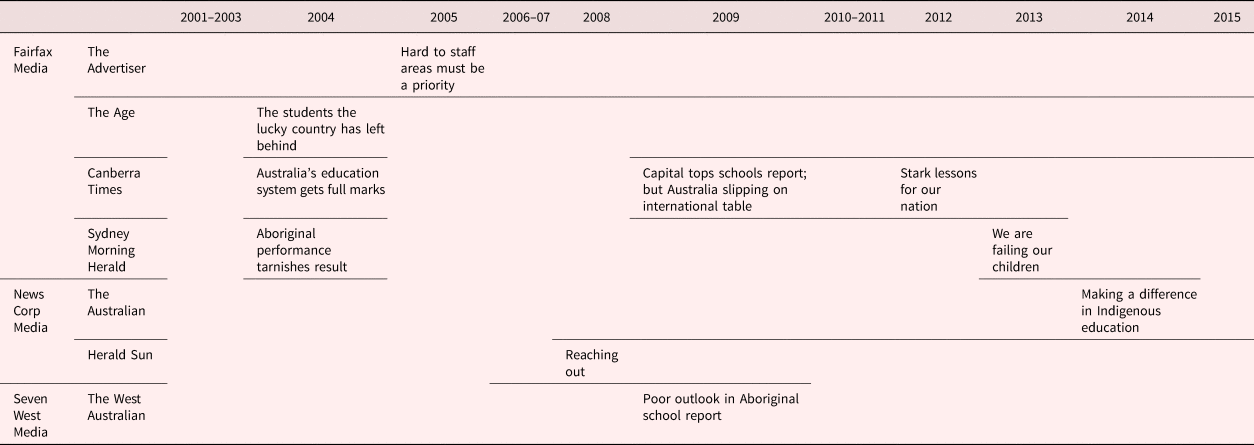
Only 10 newspaper articles on Indigenous students in PISA formed the sample for this analysis, with seven of the articles published by Fairfax Media newspapers, two by News Corp Media newspapers and one by the Seven West Media newspaper (see Table 4). One newspaper, the Canberra Times, had three of the 10 articles.
The title given to the Australian Indigenous PISA newspaper articles published across the sample between 2001–2015 (n = 10)

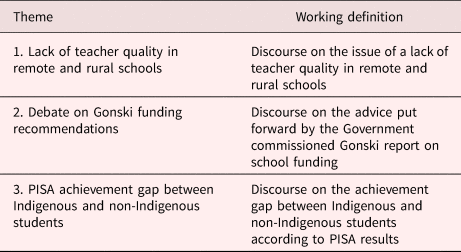
It might be expected the mass media would specifically report on the large discrepancy between Indigenous student PISA scores and their non-Indigenous peers. While this does occur, not all articles address this issue with in-depth insight or analysis. Rather the articles, recognising the need to address the issue of Indigenous PISA performance, provided limited in-depth discussion that focused on embarrassing educational dilemma. From the limited discourse of only 10 articles there are three specific themes (see Table 5):
Outline of the central concept and boundaries attributed to each of the three themes for this thematic analysis

A 2004 article in The Sydney Morning Herald titled ‘Aboriginal performance tarnishes result’ documented the issue associated with poor Indigenous student results and the effect it was having on the overall Australian PISA results. For the author, Doherty, the results themselves were not problematic for Indigenous student populations, but for the impact on the nation's academic prestige. She notes ‘students are performing above the national average in reading, mathematics, science and problem-solving but share with the rest of the country a poor record on Aboriginal education’ (Doherty, Reference Doherty2004). The language used shows that for the author, Aboriginal education is tarnishing and letting down the rest of the country's otherwise positive results in the 2003 PISA.
The first theme argues that a lack of teacher quality in remote and rural schools is having a major influence on the Indigenous student PISA performance.
The issue we are trying to address here is quality of teaching, not quantity of teaching, in remote schools and therefore the incentive programs need to focus on the recruitment and retention of teachers who have capacity to contribute to the achievement of identified educational outcomes (Penfold, Reference Penfold2014).
The focus on quality teaching in both metropolitan and national newspapers is interesting, as it has been identified as a cause for concern across the teaching profession in Australia. Reasons for the lack of quality teaching in remote and rural school settings are largely undiscussed in the media discourse. However, some discourse identifies the need for government and education authorities to identify and rectify a lack of quality teaching in remote and rural schools. One journalist's reflection outlines the potential future benefits of addressing this issue in remote and rural schools:
Putting money into ‘hard to staff’ schools would have long-term benefits for the nation: extra teachers now will always represent a saving in terms of lower costs in the future, in terms of unemployment and social welfare, incarceration and disengagement from the community (O'Connor, Reference O'Connor2004).
The language creates a negative ideological discourse towards students in rural and remote schools (which are highly populated by Indigenous students): without increased monetary support, rural and remote students will be left with a very poor future outlook. This shows how the media is capable of a bias: that students in these schools are potentially problematic, particularly in relation to future ‘costs’ to the rest of society if the issue is not addressed.
Similar to the first theme, the second theme argues for increased government funding, explicitly to address the Gonski report recommendations. Two metropolitan newspaper articles in 2012 and 2013 argued that the latest PISA results confirm serious inequity within Australia's education system, and therefore the need to commit to the most recent recommendations from the 2011 Gonski Review of Funding for Schooling—Final Report. However, both articles describe the federal government as uncommitted on the proposed funding recommendations:
The findings are likely to further fuel debates around school funding, reinvigorated this week by the Abbott government's shifting positions on the Gonski ‘needs-based’ funding model…the Northern Territory will not be required to distribute the funding to schools with the most disadvantaged students (Tovey and Patty, Reference Tovey and Patty2013).
This discourse has again highlighted the issue surrounding the first and second themes, where current funding is either inadequate or misdirected and seen as having a direct effect on the Indigenous educational dilemma. While the Gonski report might present a case for radical restructuring of the school education funding model, analysis of the media discourse shows its implementation remains unclear (Keating and Klatt, Reference Keating and Klatt2013).
The third theme focuses on the achievement gap between Indigenous and non-Indigenous students, and is referenced in five newspaper articles. While this represents half of the sample, the discourse provides little examination of the two and a half year achievement gap existing between Indigenous and non-Indigenous students according to PISA. One article, by journalist Trevor Cobbold, provides some critical dialogue on the various achievement gaps in Australia's 2012 PISA results:
These achievement gaps are a social calamity. A shameful social injustice is being perpetrated on the disadvantaged in Australia. It effectively denies them access to further education, well-paying jobs, positions of power and influence in society and an extended healthy life (Cobbold, Reference Cobbold2012).
The analysis also highlighted how the language and tone used delivers an ominous outlook for Australia's disadvantaged students, consistent with the negative outlook apparent in the first theme. The Indigenous PISA media discourse in the last 15 years has pitched a single message to its Australian readers—there is a stark educational disparity between Indigenous and non-Indigenous students according to PISA indicators that has not improved and warrants further attention in terms of teacher quality and monetary investment. However, while this is an important message, it becomes almost inconsequential when less than one article a year is published on Indigenous PISA performance, and some newspapers failed to publish a single focused article. In comparison, on average nearly 20 articles a year were published on non-Indigenous PISA issues with a yearly high of 57 non-Indigenous PISA articles in 2013. There is almost a complete paucity in media reporting that is not relative to the magnitude of this educational outcomes issue, or the social implications that it has for Indigenous youth, communities and Australian society.
The analysis highlights the lack of attention to Indigenous PISA education performance, six newspapers failed to address Indigenous performance in any way: The Brisbane Times, The Courier Mail, The Daily Telegraph, The Mercury, The Australian Financial Review and The Northern Territory News. News Corp newspaper articles have been silent on Indigenous PISA reporting. There are only 10 Indigenous PISA articles in the sample over 15 years, during which Australian educational policy has clearly defined Indigenous education as a priority area and the Council of Australian Governments (COAG) has produced numerous policies and practices to address the alarmingly high levels of Indigenous inequality and entrenched disadvantage (see e.g. COAG Reform Council, 2010). While Indigenous inequality and disadvantage has become more pronounced and evident in the trend of Australian PISA results, the media shows bias and neglect on this issue.
Indigenous PISA performance is one of the outstanding features of the Australian national performance profile and therefore deserved more attention by the media. This finding suggests mass media bias in what they do and do not print, that is consistent with other research. For example, other research has shown that the majority of newspaper articles involving Indigenous Australians are focused predominately on Indigenous athletes in sport (Hallinan and Judd, Reference Hallinan and Judd2009).
In the Northern Territory, where Indigenous Australians are 25.5% of the population, the highest proportion of any state or territory (Australian Bureau of Statistics, 2016), News Corp's Northern Territory News did not produce a single article that focused on Indigenous PISA results between 2001 and 2015 (see Table 4). In comparison Fairfax Media's Canberra Times produced 30% of the articles that focused on Indigenous PISA results between 2001 and 2015, from a territory that has the lowest proportion of Australia's Aboriginal people (Australian Bureau of Statistics, 2016). If the reporting were proportional to the minority status we would expect in the Northern Territory an article count that is comparable with the state's Indigenous population. This comparison further suggests that the lack of reporting on Indigenous PISA performance is not only inherent to News Corp newspapers, but is across all three owners of print media in Australia.
The media neglect of Indigenous PISA performance results is even more evident given the high number of articles on general Australian PISA performance. For example, between 2001 and 2015 the two nationally distributed Fairfax Media and News Corp newspapers, The Australian Financial Review and The Australian, published 96 articles on national Australian PISA performance. Of these articles, only one from The Australian examined the PISA performance for Indigenous students in PISA.
Here again the analysis showed the language in many media articles attempts to deflect responsibility from the governments upon which responsibility rests. While there is a strong feature critiquing teacher quality and the achievement gap, which is a central issue in the larger proportion of articles, there remains little critical analysis of the issues that have been raised in the thematic analysis. This lack of critical media discourse and attention to the Indigenous PISA performance points to the existence of bias in Australian mainstream media. As shown in previous studies that investigated Indigenous representation in the media, there have been continuous and unequivocal attempts to isolate and misrepresent Indigenous Australians through the controlled media discourse.
Media bias
Media bias, defined as: any form of preferential or unbalanced treatment by personnel within the mass media, in the selection of events and stories that are reported, and how they are covered (Lee, Reference Lee2005, p. 45) can help understanding of the lack of Indigenous PISA reporting in Australian media. Bias can happen in a number of ways: which stories are selected, selection bias (White, Reference White1950), how much attention is given to a story, coverage bias (Stempel, Reference Stempel1969), and how a story is reported, statement bias (Hofstetter, Reference Hofstetter1976). Media bias is well documented and continues to cause considerable international debate in the current media landscape i.e. the ‘fake news’ debate (Allcott and Gentzkow, Reference Allcott and Gentzkow2017). Our analysis suggests that all three biases are evident in the reporting examined.
The theory of liberal bias suggests that the media supports liberal causes and thinking and thereby influences readers to prefer liberal over conservative positions and beliefs (D'Alessio and Allen, Reference D'Alessio and Allen2000, p. 134). For example, Lichter et al.’s (Reference Lichter, Rothman and Lichter1990) United States study combined survey data with content analysis and argued that journalists project their shared, predominantly liberal views onto media coverage. Numerous studies have found there is a larger portion of media personnel who espouse their liberal attitudes to media coverage (Kohut, Reference Kohut2004; Groseclose and Milyo, Reference Groseclose and Milyo2005).
Studies have also investigated the conservative bias of the media, arguing that the media shapes public opinion in a manner that preserves the hegemony of society's ruling interests (Lichter, Reference Lichter, Kenski and Jamieson2017, p. 403). Bagdikian (Reference Bagdikian2004) argued that the concentration of the media is increasing and proposed that media owners and advertisers both shape the news directly and indirectly, through biases linked to media production. These biases include professional routines that define news to favour the rich and powerful, such as through overreliance on official sources to marginalise opposing opinions (Lichter, Reference Lichter, Kenski and Jamieson2017, p. 406). Similarly our analysis provides evidence for the marginalising practices of the media with nine of 10 Indigenous PISA newspaper articles failing to include Indigenous sources in their coverage.
Debate over media bias includes societal functions, including racial bias within mass media. Studies in the United States and Europe have argued that the media has promoted racial stereotyping and also regularly marginalised non-white voices (van Dijk, Reference Van Dijk1991; Jakubowicz et al., Reference Jakubowicz, Goodall, Marin, Mitchell and Seneviratne1994). For example, Henry and Tator (Reference Henry and Tator2002) provided a critical discourse analysis of case studies in Canadian and English-language press, showing how the media produces, reproduces and disseminates racist thinking. They argue that these kinds of racial bias are not isolated, and reflect a set of core assumptions, hypotheses and world views held by many who work in the mass media (p. 4). In our analysis this is evident in both extent and nature of media coverage on Indigenous PISA performance.
Australia has one of the most concentrated media ownership structures in the world (Newman et al., Reference Newman, Fletcher, Kalogeropoulos, Levy and Nielsen2017, p. 116) with Rupert Murdoch's News Corp having owned roughly 70% of the newspaper industry, and Fairfax Media with most of the rest (Griffen-Foley, Reference Griffen-Foley2002). Few researchers have investigated bias in the wider media, although there are studies on the ideological stance of newspapers (McKnight, Reference McKnight2010; Hobbs and Owen, Reference Hobbs and Owen2016), and their coverage of environmental issues (Beder, Reference Beder and White2004), minority groups (Kabir, Reference Kabir2006) and religions in Australia (Richardson, Reference Richardson1996).
While much of the available literature is on the American mass media and its political allegiances, there is research worldwide. It is therefore likely that in Australia, with its concentration of media ownership one of the highest in the world (Newman et al., Reference Newman, Fletcher, Kalogeropoulos, Levy and Nielsen2017), media bias and control not only exists but has substantial influence on issues reported on by mass media. Certainly our analysis here identified trends in relation to media ownership and the issues it chooses to ignore and report on.
Indigenous Australians in the Media
Our findings are consistent with widespread research on the connection between Indigenous Australians and the mass media. The general trend of media coverage defines Indigenous people as a threat or problem, and almost always negative and associated with anti-social activities (Jakubowicz and Seneviratne, Reference Jakubowicz and Seneviratne1996; Meadows and Molnar, Reference Meadows and Molnar2002). Historically research has also found there has been little change in the low level of use of Indigenous sources in media stories about Indigenous affairs (Hippocrates and Meadows, Reference Hippocrates and Meadows1996; Meadows et al., Reference Meadows, Hippocrates and van Vuuren1997). Another study by Bullimore (Reference Bullimore1999) found there is a considerable lack of Aboriginal voices in two of Australia's major newspapers, The Sydney Morning Herald and The Australian: ‘when Aboriginal voices did occur, they were mostly outnumbered by the voices of elite actors (such as academics, government officials etc.), or were mediated by white voices that appear on behalf of, and instead of, Aboriginal voices’ (p. 75). While this study does not refer to bias operating in the Australian media, it shows that the media makes a legitimate attempt to marginalise the views on Indigenous peoples through their underrepresentation in the reporting of Indigenous affairs. As stated earlier we have found similar evidence reflected in our analysis with all but one article from the three major news corporations failing to provide Indigenous sources in their reporting.
Many studies have attempted to further understand the role, nature and processes used by the mass media to help shape and construct dominant ideas and assumptions about Indigenous Australians and their place in society. Simmons and Lecouteur (Reference Simmons and Lecouteur2008) used a discourse-analytical approach to explore the ways in which a particular formulation, ‘the possibility of change’, was repeatedly implicated in descriptions of two ‘riots’ that received widespread media attention in Australia: one involving Indigenous, and the other involving non-Indigenous community members (p. 667). Their analysis of the media discourse demonstrated how, for the event involving Indigenous Australians, ‘change’ was repeatedly represented as an unachievable outcome. In contrast, descriptions of problems within the non-Indigenous community regularly represented ‘change’ as an achievable outcome. The study labelled this practice ‘as a modern form of racism, which uses more subtle language techniques so racist discourse may be plausibly denied’ (p. 684). This example shows that while bias is not mentioned, the media and its systems of representation are not unequivocally neutral, and the messages delivered within a discourse are invariably complex in nature and implications. As our analysis has shown, articles on Indigenous PISA performance use language that displays Indigenous education in a negative light, either as ‘challenging’ or ‘problematic’ for the nation.
Indigenous Australians have been further affected by how the media frames stories (McCallum, Reference McCallum2016; McCallum and Waller, Reference McCallum, Waller, Budarick and Hans2017). McCallum (Reference McCallum2007) performed a news frame analysis of seven Australian newspapers, from January 2000 to June 2006, reporting on incidents of ‘Indigenous violence’. Over the 6-year period, stories on Indigenous violence featured at regular intervals through stories of substance abuse, domestic violence and child abuse in remote communities. McCallum (Reference McCallum2007) suggested that narrow and stigmatising portrayals of Indigenous Australians were used by the media, who ‘sought to actively drive political agendas in Indigenous affairs through the construction of mediated public crises’ (p. 1). Again while bias is not mentioned, this study argued that seven newspapers played both a regular and active role in delineating chosen messages to their public audience.
While the words ‘media bias’ do not appear, it is clear the media decides what to report. Biases manifest in various ways, and although subtle, are clearly an observable phenomenon. Ewart (Reference Ewart1997) interviewed journalists from a regional newspaper and importantly found that the journalists were largely uninterested in reporting on Indigenous Australians and Aboriginal affairs, as they weren't considered news by the newspaper's editorial hierarchy (p. 112). When an issue was deemed newsworthy, Ewart (Reference Ewart1997) states that ‘race or colour are usually mentioned where Indigenous Australians are involved in issues with negative slants, but seldom are subjects of stories described as Anglo Saxons’ (p. 115). The self-described practices of these representative journalists show that their reporting is undoubtedly manipulated by higher editorial powers, showing how the discourse can be easily forfeited to inherent biases of the media. Our analysis has shown that across a 15 year period a mere 10 newspaper articles reported on Indigenous PISA performance, illustrating a clear disregard for the educational issue across the Australian mainstream media.
Conclusion
It is almost a decade since the Melbourne Declaration on Educational Goals for Young Australians (2008) appeared. In this landmark document the authors highlighted that there needed to be a commitment to action for Indigenous youth. The Declaration noted, ‘For Australian schooling to promote equity and excellence, governments and all school sectors must improve educational outcomes for indigenous youth’ (Ministerial Council on Education, Employment, Training and Youth Affairs, 2008, p. 15). The document went further and identified that ‘Meeting the needs of young Indigenous Australians and promoting high expectations for their educational performance requires strategic investment’ (p. 15).
This ‘strategic investment’ also meant undertaking research into addressing this inequality and improving educational outcomes. While a wave of research in the area ensued, by both Indigenous and non-Indigenous academics, research specifically related to Indigenous PISA reporting was strangely neglected. The research reported here is an attempt to redress some of this neglect by reporting on Indigenous PISA performance in the Australian mass media between 2001 and 2015. The main finding to emerge from the research is the existence of bias in the reporting of Indigenous PISA performance in Australian mainstream media. Australian mass media has not seen the performance of Indigenous youth as worthy of significant reporting and analysis. Further investigation, examining media and political power structures, is needed into why Indigenous PISA performance is not reported. Given the stark feature the neglect of Indigenous education has created in the Australian educational landscape, recurrent and productive research, as well as unbiased media and informed political attention is needed, to redress the gross educational injustice it reflects.
Edward Rock Davis is a PhD student at the University of Sydney. His PhD programme focuses on developments in fields of comparative education, education policy and practice and globalisation. He has a particular interest in the Programme for International Student Assessment (PISA).
Rachel Wilson is a Senior Lecturer in Research Methodology, Educational Assessment and Evaluation at the University of Sydney. She has broad interests across educational evidence, policy and practice. Rachel also has a particular interest in trends in educational participation and standards.
John Robert Evans is a Professor of Indigenous Health Education at the University of Technology Sydney. He has broad interests across Indigenous health and education, exercise science and coaching.