Introduction
Most people with dementia live in their own homes in the community. They need support and care in everyday life, and they are dependent on informal care, mainly provided by spouses and adult children, but also by neighbors or friends. Although caregiving is satisfying for most informal caregivers because they care about their loved ones, it is also very burdensome (Cuijpers, Reference Cuijpers2005; Pinquart and Sorensen, Reference Pinquart and Sorensen2007; Peeters et al., Reference Peeters, Van Beek, Meerveld, Spreeuwenberg and Francke2010). People with dementia and their caregivers have to cope with impaired daily functioning and changing roles, often with a negative impact on their health condition (Lyketsos et al., Reference Lyketsos, Lopez, Jones, Fitzpatrick, Breitner and Dekosky2002; Aalten, Reference Aalten2004; Pinquart and Sorensen, Reference Pinquart and Sorensen2007). Many psychosocial supporting interventions for people with dementia and their caregivers have been developed in the last decades (Dröes, Reference Dröes2010; Moniz-Cook et al., Reference Moniz-Cook, Vernooij-Dassen, Woods and Orrell2011). Evidence for the effectiveness of these interventions, being even more effective than pharmacological therapies, has been published (Acton and Kang, Reference Acton and Kang2001; Brodaty and Arasaratnam, Reference Brodaty and Arasaratnam2012; Brodaty et al., Reference Brodaty, Green and Koschera2003). In recent years, psychosocial interventions have focused on both the person with dementia and the informal caregiver (also referred to as the “dyad” in this paper). Directing the dyad is seen as most effective because of the mutual influence between the person with dementia and the informal caregiver. For instance, behavioral symptoms of dementia may increase the caregiver burden; caregiver management strategies will influence both the behavior of the person with dementia and the feelings of competence and mood of the caregiver (De Vugt et al., Reference De Vugt2004). The effects of psychosocial intervention programs have been studied in a previous review that included publications up to 2005 (Smits et al., Reference Smits, Lange, Droes, Meiland, Vernooij-Dassen and Pot2007). The authors found that psychosocial intervention programs may contribute to the quality of life of both members of the dyad, and may decrease caregivers’ mental health problems. The effects on most other functional and behavioral domains, however, are moderate or inconsistent. Some interventions led to statistically significant effects in subgroups only. Currently, a wide range of psychosocial programs are offered to people with dementia and their caregivers. Some of these have been evaluated in randomized controlled trials (RCTs). The purpose of our current study was to update Smits et al.'s (Reference Smits, Lange, Droes, Meiland, Vernooij-Dassen and Pot2007) systematic review, and to provide the current best evidence about psychosocial programs for the dyads that involve face-to-face contact between professional caregivers and both the patient and the caregiver. We describe the program characteristics and the measured effects on both members of the dyads. These outcomes are related to the intervention components of the programs.
Method
Search strategy
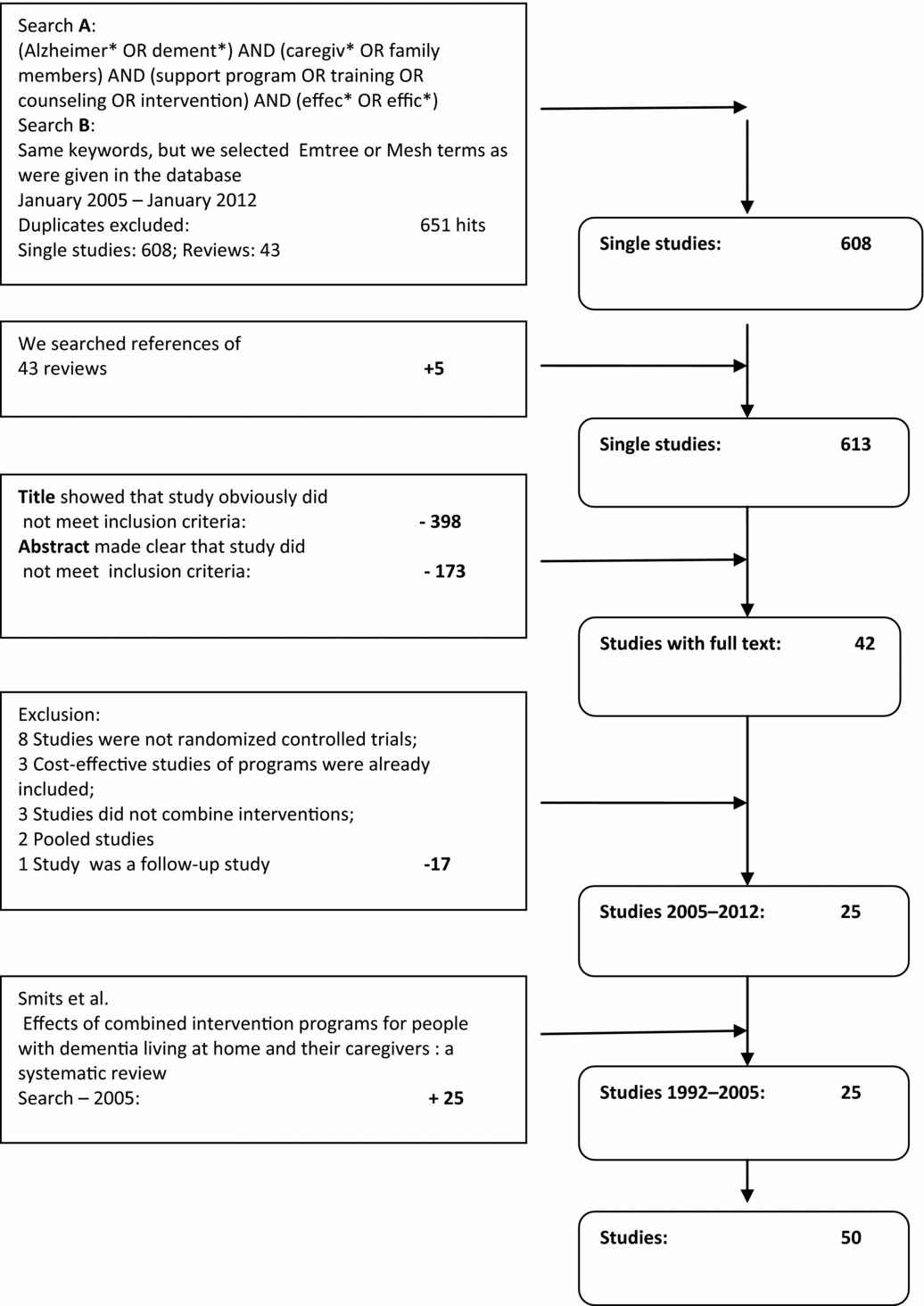
We searched the databases Psychinfo, Embase, Medline, and Cinahl for single studies and reviews, and the Cochrane Library for systematic reviews. Since we built on the review of Smits et al. Reference Smits, Lange, Droes, Meiland, Vernooij-Dassen and Pot(2007), our search covered publications from January 2005 to January 2012. We used the same search string with the following keywords: (Alzheimer* OR dementia) AND (caregiv* OR family members) AND (support program OR training OR counselling OR intervention) AND (effec* OR effic*) as well as Mesh or Emtree terms to ensure that the search was as complete as possible (Thompson et al., Reference Thompson, Spilsbury, Hall, Birks, Barnes and Adamson2007; Furlan et al., Reference Furlan, Pennick, Bombardier and Van Tulder2009; Higgins and Green, Reference Higgins and Green2011). Any systematic reviews that we found were searched for mention of additional single RCTs involving psychosocial interventions (Figure 1).
Flow chart of identification of studies.

Inclusion criteria
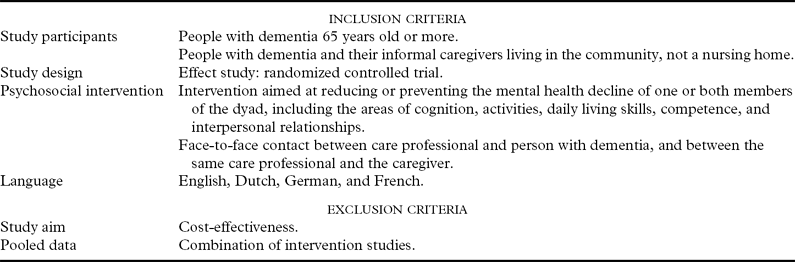
We included effect studies evaluating dyadic psychosocial interventions for both older people with dementia living in the community and their caregivers. A broad definition of psychosocial interventions was used. Interventions that encompass other treatment components than psychosocial ones – such as environmental modifications and exercise – were also included. The interventions had to involve face-to-face contact between a care professional and the person with dementia as well as the informal caregiver and the same care professional. In addition, the interventions had to target psychosocial outcomes, improving mental health or well-being. In contrast with Smits et al. Reference Smits, Lange, Droes, Meiland, Vernooij-Dassen and Pot(2007), we included only RCTs in our current review. We excluded RCTs involving respite interventions, and technological devices, as well as cost-effectiveness studies, studies among nursing home residents, and integrated studies where results could not be related to a specific intervention or program (Table 1).
Inclusion and exclusion criteria
Selection of studies
First, one reviewer (NL) screened the titles against the inclusion criteria and discarded obviously irrelevant publications. Second, two pairs of reviewers (NL/AEP and NL/JG) independently assessed the abstracts of the remaining publications and the additional studies found in the reviews. Any discrepancies were resolved by consensus of all three reviewers. Finally, NL/AEP and NL/JG examined potentially relevant articles in full text.
Quality assessment
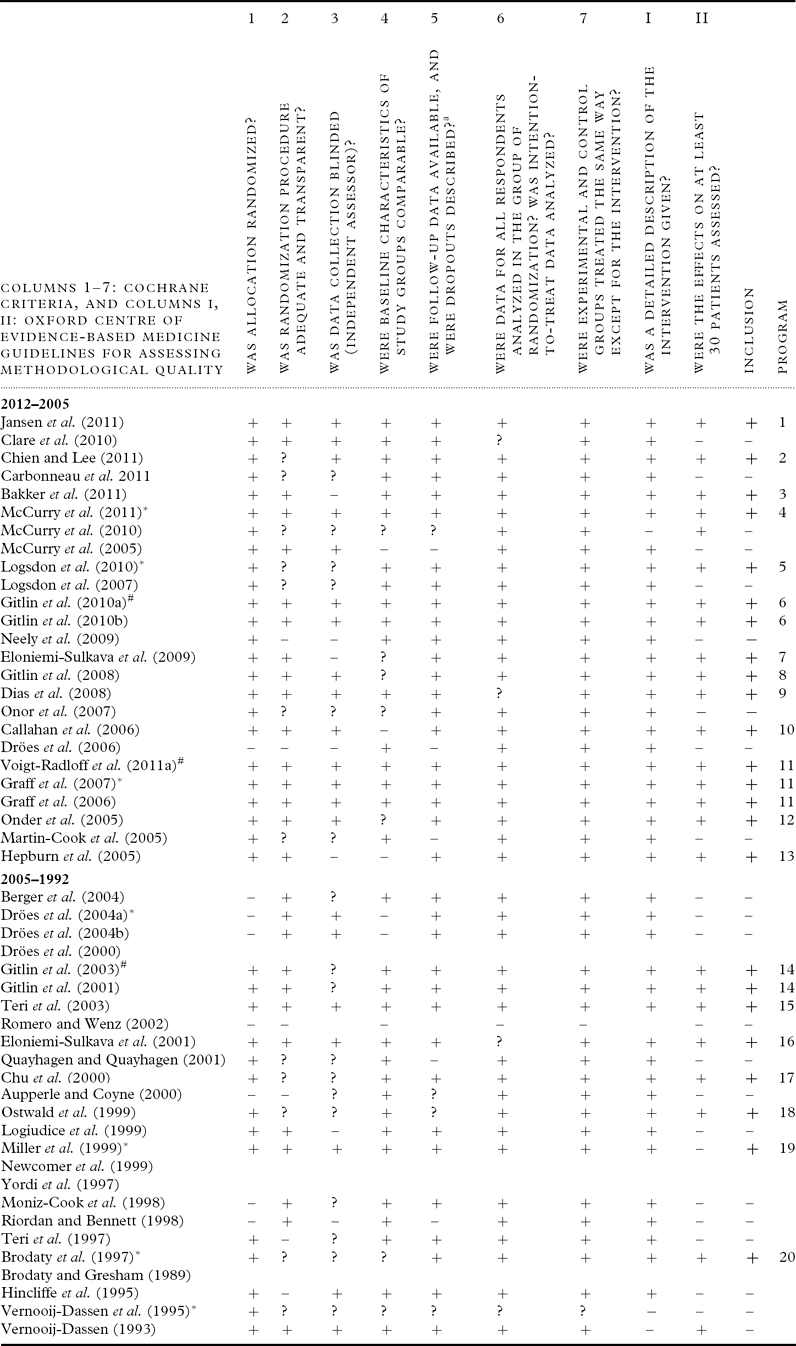
The two pairs of reviewers (NL/AEP and NL/JG) independently assessed all publications (that is, those resulting from the current search and any additional ones included in Smits et al.'s (Reference Smits, Lange, Droes, Meiland, Vernooij-Dassen and Pot2007) review) for methodological quality by using the Cochrane rating criteria for RCTs (Higgins and Green, Reference Higgins and Green2011). The items “blinding of participants” and “blinding of therapists” were not scored because blinding is not feasible for the type of intervention studied. We added the following two items from the Oxford Centre of Evidence-based Medicine guidelines to the Cochrane criteria: the specific components of the intervention should be described, and the experimental and control groups must each have a minimum of 30 participants (www.cebm.net; Olazarán et al., Reference Olazarán2010; Table 2). If information was missing, we contacted the corresponding authors of the publication for such information.
Quality assessment of studies meeting the inclusion criteria
Notes: aWere follow-up data for a sufficient proportion of all included patients available and were dropouts described? (loss of 20% for short-term follow-up and 30% for long-term follow-up (>6 months)).
+: Low risk, –: high risk, ~: not applicable, ?: no information given.
*Programs are published in more than one publication.
#Programs are studied again in a new study design and population.
Data analysis
We used several strategies for data analysis to do justice to the variety of programs and studies. First, we described the intervention programs by delivery characteristics (e.g. dose, mode of delivery, group vs. individual, adaptability/control), intervention components, and targeted functional domains (Czaja et al., Reference Czaja, Schulz, Lee and Belle2003). The intensity of contact in the program was rated on a scale ranging from 1 to 4, with 1 representing “1–2 sessions” and 4 representing “more than 10 sessions” (Brodaty et al., Reference Brodaty, Green and Koschera2003). Second, for all outcomes of interest, we assessed the strength of the body of evidence using the Grades of Recommendation, Assessment, Development and Evaluation Working Group (GRADE) approach, as recommended in the Cochrane Handbook 5.1 (Higgins and Green, Reference Higgins and Green2011). The strongest evidence comes from one or more good-quality RCTs. Limitations in the design suggesting bias may warrant downgrading the quality of the evidence of the RCT to moderate or even lower. We assessed the quality of the body of evidence as “low,” “moderate,” or “high” for each outcome category. If the data warranted it, we quantitatively compared studies for the same targeted psychosocial outcome with the Review Manager (software version 5.1) (Higgins and Green, Reference Higgins and Green2011). The standardized mean difference was used to compare effect sizes if the studies used different instruments to measure the outcome of interest. A random effects model analysis was applied for the statistical heterogeneity of the studies. Data obtained after intervention (or at 12 months for the programs that lasted one year or more) were used for this analysis. Pooled estimates were not calculated because of the clinical and statistical heterogeneity between the studies.
Results
Literature search and quality assessment
For the period 2005–2012, the search strategy led to 608 single studies and five additional studies in the reviews. After the inclusion and exclusion criteria were applied, 25 publications remained. Smits et al. Reference Smits, Lange, Droes, Meiland, Vernooij-Dassen and Pot(2007) included 25 publications from the period 1992 to 2005. Therefore, in total 50 publications were judged on methodological quality (Figure 1). These 50 publications concerned 41 intervention programs. Table 2 shows the outcomes for the methodological quality criteria per study and the final judgment for inclusion. Finally, 20 dyadic psychosocial programs studied in 23 RCTs were included in this review. Thus, three RCTs were replication studies of intervention programs that were already studied in an earlier RCT.
Program characteristics
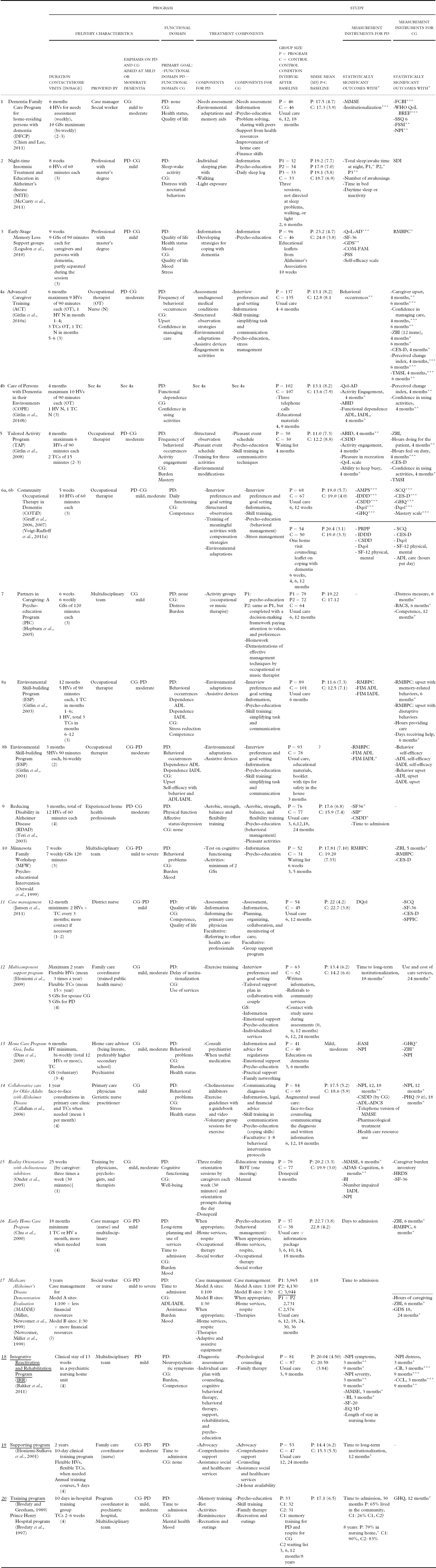
Table 3 shows the characteristics of each program (the numbers in square brackets in the text below correspond with the program numbers in Table 3). On the basis of delivery characteristics, programs can be classified in the following three categories:
1. Short-period, intensive programs, consisting of six to ten home visits [six programs: 2, 4a, 4b, 5, 6a, 6b, 8, 9] or group sessions [four programs: 1, 3, 7, 10] during a period of five weeks to six months with scheduled topics. All these programs explicitly target both members of the dyad.
2. Long-lasting programs, that is, case management up to 2 years, with home visits and telephone contact [six programs: 11, 13, 14, 15, 16, 17] or in combination with a group session [one program: 12]. The intervention components of these programs primarily target the caregiver, and to a lesser extent the person with dementia.
3. Other programs with temporary hospitalization [three programs: 18, 19, 20]. The Integrative Reactivation and Rehabilitation (IRR) program involves hospitalization of the person with dementia for at least 13 weeks and limited supervision or training of the caregiver [18]. The supporting program and the training program include residence for both members of the dyad for ten days, with focus on both [19, 20]. (Numbers of short-period programs are written in standard font, long-lasting programs in italics, and other programs are underlined.)
Description of programs and studies included in the review
Notes: Dosage/intensity: 1 = minimal; (1–2 sessions), 2 = moderate (3–5 sessions), 3 = medium high (6–10 sessions), 4 = high/intensive (>10 sessions; Brodaty et al., Reference Brodaty, Green and Koschera2003).
*Significant p = 0.05; **p = 0.01, ***p = 0.001.
Explanation of abbreviations: ABID = Agitated Behavior In Dementia, Alzheimer Disease Cooperative Study; ADAS = Alzheimer Disease Assessment Scale; ADL-ADCS = Activities of Daily Living-Alzheimer Disease Cooperative Study Group; ADL = Activities of Daily Living; AMPS = Assessment of Motor and Process Skills; BACS = Beliefs About Caregiving Scale; BI = Barthel Index; CB = Caregiver Burden; CCL = Caregiver Competence List; CES-D = Centre of Epidemic Studies – Depression; CG = Caregiver; CSDD = Cornell Scale Depression in Dementia; COM-FAM = Communication and Interpersonal Relationships, subscale of Family Assessment Measure; DQoL = Dementia Quality of Life instrument; EQ5D = Euro-Quality of Life 5D; EASI = Everyday Abilities Scale for India; FCBI = Family Caregiving Burden Inventory; FIM = Functional Independent Measure; FSSI = Family Support Services Index; GDS = Geriatric Depression Scale; GHQ = General Health Questionnaire; GS = Group Session; HRDS = Hamilton Rating Depression Scale; HV = Home Visit; IADL = Instrumental Activities of Daily Living; IDDD = Interview for Deterioration in Daily Living Activities in Dementia; Performance scale; Initiative scale; MMSE = Mini-Mental State Examination; NPI = Neuro-Psychiatric Inventory; PD = Person with Dementia; PHQ = Patient Health Questionnaire; PRPP = Perceive Recall Plan and Perform System of Task Analysis; PSS = Perceived Stress Scale; QoL-AD = Quality of Life – Alzheimer's Disease Scale; RMBPC = Revised Memory and Behavioral Problems Checklist; SCQ = Sense of Competence Questionnaire; SDI = Sleep Distress Interview; SF-12 (20, 36) HSQ = Short Form Health Survey Questionnaire, Physical scale, Mental scale; SIP = Sickness Impact Profile; SPPIC Self-Perceived Pressure Informal Care; SSQ = Social Support Questionnaire; TC = Telephone Contact; TSMI = Task Management Strategy Index; WHO QoL BREF = World Health Organization Quality of Life Measure-Brief version; ZBI = Zarit Burden Interview.
Most programs consist of multiple treatment components, including information, training for activities of daily life (ADL), walking or exercise, and environmental adaptations for the person with dementia; and information, psycho-education, skills training, and coping strategies for the caregiver. Targeted functional domains include behavioral problems, cognitive functioning, mood, independence in daily activities, sleep, and quality of life of the person with dementia; and mood, burden, competence, and quality of life of the caregiver. The intervention targets of two programs, the Reality Orientation Program [15] and the Sleep-Supporting Intervention [2], involve one single functional domain. The other programs target two or more functional domains for change. Some programs aim at reducing the time to institutionalization [12, 16, 17, 19, 20].
All 20 programs claim to tailor their interventions to the dyad's needs. Eight of the 20 programs start with a needs assessment for the caregiver, and some programs also assess the needs of the person with dementia, using an interview or structured observation, followed by individual goal setting [1, 2, 4, 6, 8, 11, 12, 18]. In contrast, the other 12 programs immediately start with treatment sessions and tailor the content to the clients during the program.
Study characteristics and strength of the body of evidence
The studies varied with regard to measurement instruments, control conditions, and/or time to follow-up (Table 3). “Usual care” and “waiting list” are the most often used control conditions [1, 4a, 5, 6a, 7, 8a, 9, 10, 11, 15, 17, 19, 18, 20]. Some studies use information leaflets for the informal caregiver [3, 4b, 8b, 12, 13, 16], or one to three face-to-face contacts, or telephone contacts [2, 6b, 12, 14, 20] in the control condition. Following the GRADE approach, four limitations influence the strength of the body of evidence. Two of them, lack of blinding of participants and therapists as well as indirectness of evidence (the control condition is usual care), are realistic for studies in the current field. The other two limitations are apparent in the studies: a short follow-up period or heterogeneity of results (e.g. significant outcomes at different follow-up moments) [12, 14, 19, 20]. Although all studies targeted both members of the dyad, two studies had outcome measures for the person with dementia only [9] or for the caregiver only [7].
Effects of dyadic psychosocial programs
Eleven of the 23 studies concerning ten programs showed statistically significant positive effects for both members of the dyad [1, 3, 4a, 4b, 5, 6a, 8b, 14, 18, 19, 20]. Four studies showed statistically significant effects for the person with dementia only [2, 9, 12, 15], and six studies found statistically significant effects for the caregiver only [13, 7, 8a, 10, 16, 17]. This was partly because these studies had no effect on outcomes of interest for the other person of the dyad, and partly because outcomes were not measured for the other person of the dyad (Table 3). The two remaining studies did not show any statistically significant effects [6b, 11].
Effects on the person with dementia
Behavioral problems
Eight of the 23 studies, concerning eight programs, measured behavioral problems [4b, 5, 8a, 10, 13, 14, 15, 18] (Figure 2). The strength of the body of evidence for this outcome is moderate. Three of the eight studies had positive outcomes for behavioral problems (neuropsychiatric symptoms) [5, 14, 18]: one short-period program, one long-lasting program, and one program with hospitalization. The three programs comprised different intervention components for each member of the dyad. The other five studies that did not show statistically significant effects on behavioral problems involved programs with comparable intervention components, both short-period programs [4b, 8a, 10] and long-lasting programs [13, 15]. There was no evident relationship between intervention components and the outcome of “behavioral problems.” The IRR program with hospitalization [18] showed positive effects on people with mild dementia, but high scores on behavioral problems. For example, the long-lasting Collaborative Care program [14] showed positive effects on people with moderate dementia and regular behavioral problems, and the short-period TAP program [5] showed positive effects on people with moderate dementia and regular behavioral problems.
Person with dementia outcomes: behavioral problems.
Mood
Six of the 23 studies, involving five programs, measured the mood of the person with dementia as a separate outcome [3, 5, 6a, 6b, 9, 14] (Figure 3). The body of evidence for this outcome is strong because of longer follow-up periods and comparison with a control condition other than usual care, although there is heterogeneity in the results of the studies on the Community Occupational Therapy in Dementia (COTiD) program [6a, 6b]. Three of the six studies showed statistically significant positive effects on the mood of the person with dementia [3, 6a, 9]; these were all short-period programs: one group program for early-stage dementia, and two individual programs with home visits for mild and moderate dementia. In all three programs the professional involved the person with dementia actively in group sessions [3], activities [6a], or exercise [9]. The study on the long-lasting Collaborative Care program showed a trend toward positive effects on mood, although this was not statistically significant [14]. The two remaining studies, both involving a short-period program, did not show a statistically significant effect [5, 6b], although they comprise intervention components comparable to those of the programs with statistically significant effects.
Person with dementia outcomes: mood.
Daily activities
Ten of the 23 studies, involving eight programs, measured independence and engagement in ADL [4b, 5, 6a, 6b, 8a, 8b, 13, 14, 15, 18] (Figure 4). The strength of the body of evidence for this outcome is moderate. Five of the ten studies showed statistically significant positive effects [4b, 5, 6a, 8b, 18]. Four of these concern short-period programs in which the professional actively involves both the person with dementia and the caregiver in skill training [4b, 5, 6a, 8b]. The intervention components in these programs are daily activity training, choosing meaningful (pleasant or purposeful) activities, and environmental adaptations for the person with dementia; and psycho-education and skills training for the caregiver. Whereas these four studies measured instrumental ADL (IADL), the outcome of the fifth study [18], concerning the IRR program, was personal care, measured with the Barthel Index. One other study, the long-lasting Reality Orientation [15] program, shows a trend toward positive effect on personal care, also measured with the Barthel Index. Of the four remaining studies, two long-lasting programs [13, 14] showed no statistically significant effects. The other two were trials of COTiD and the Environmental Skill-Building Program [6b, 8a], and thus they had inconsistent results.
Person with dementia outcomes: ADL/IADL.
Quality of life
Eight of the 23 studies, concerning seven programs, measured the quality of life of the person with dementia [3, 4b, 5, 6a, 6b, 9, 11, 18] (Figure 5). The body of evidence for this outcome is moderate to strong. Four of the eight programs showed a statistically significant better quality of life of the person with dementia [3, 5, 6a, 9]. Another study showed a trend toward better quality of life [4b]. These are all short-period programs: one group program for people with early dementia [3], and four individual programs with home visits and training [4b, 5, 6a, 9]. These studies also showed positive effects on two other outcomes: mood [3, 6a, 9] and ADL/IADL dependency [4b, 5, 6a]. The three remaining studies showed no statistically significant effects on the quality of life [6b, 11, 18]. Two of these studies did not show any significant effect [6b, 11]. The third study of the IRR program with hospitalization did not show effect on quality of life, although it was effective for behavioral problems [18].
Person with dementia outcomes: quality of life.
Institutionalization
We studied “institutionalization” or “time to admission” for seven studies [1, 9, 12, 16, 17, 19, 20]. The body of evidence for this outcome is moderate to strong. One short-period program [1], one long-lasting program [12], and two programs with hospitalization [19, 20] significantly reduced institutionalization or the time to institutionalization. Another program, the long-lasting Early Home Care program [16], also had significant effects, although for a subgroup with a Mini-Mental State Examination (MMSE) of less than 23 only. The short-period Reducing Disability program [9] showed a trend toward delaying institutionalization. The Medicare Alzheimer's Disease Demonstration program [17] showed no significant effects. The data for this outcome were not suited for quantitative comparison. In more recent studies “institutionalization” is less often studied. Next, it is more often included as an outcome measure in studies of long-lasting programs.
Effects for the caregiver
Mood
Nine studies involving eight programs measured the mood of the caregiver as a secondary outcome [4a, 5, 6a, 6b, 10, 11, 14, 15, 17] (Figure 6). The body of evidence for this outcome is moderate to strong. Two studies of short-period programs showed significant positive effects after the intervention [4a, 6a]; another study, the long-lasting Collaborative Care program, showed significant effects at 18 months, but not at earlier intervals [14]. A study of the Tailored Activity program showed a trend toward positive effects, but statistical significance was not reached [5]. The intervention components of these four programs include information, psycho-education, and communication skills training for the caregiver. The other five studies involving both short-period and long-lasting programs did not show statistically significant effects [11, 6b, 10, 15, 17]. Four of these programs lack the communication skills-training component [10, 11, 15, 17].
Caregiver outcomes: mood.
Perceived burden and competence
Seventeen studies involving 15 programs measured the perception of providing care with burden and/or competence questionnaires: burden [1, 3, 4a, 5, 7, 8a, 8b, 10, 11, 13, 14, 15, 16, 17, 18], competence [4a, 4b, 5, 6a, 6b, 7, 8a, 11, 18], or both [4a, 5, 7, 8a, 11, 18] (Figure 7). The strength of the body of evidence for this outcome is moderate. Thirteen studies, eight short-period programs [1, 3, 4a, 4b, 6a, 7, 8a, 10], four long-lasting programs [13, 14, 16, 17], and one program with hospitalization [18] showed significant positive effects for burden/competence, although not at all moments of follow-up. The programs with statistically significant effects included varying intervention components. The remaining four studies without significant effects involve both short-period programs and long-lasting programs [5, 8b, 11, 15]. It is not clear which intervention components of the 15 programs are effective and which are not. Six of the 17 studies measured burden and perceived competence. In three studies, the scores for the two concepts were in the same direction: both concepts had significant effects [4a, 18] or both had non-significant effects [11]. The other three studies had statistically significant effects for one outcome [5, 7, 8a].
Caregiver outcomes: burden and/or competence.
Quality of life
Ten studies measured the quality of life of the caregiver [1, 4a, 4b, 6a, 6b, 8a, 11, 13, 15, 20] (Figure 8). The body of evidence for these studies is moderate. Seven of the ten studies found statistically significant effects [1, 4a, 4b, 6a, 8a, 13, 20]. The programs are from all three categories. These seven studies also showed significant effects on other outcomes. Three other studies showed no statistically significant effect on the quality of life of the caregiver [6b, 11, 15]. Two of the programs, Case Management [11] and COTiD program [6b] showed no significant effects on any outcome, and the Reality Orientation program only showed significant effects on outcomes for the person with dementia [15]. The intervention components of this program focus primarily on the “cognition” of the person with dementia, and do not involve caregiver feelings.
Caregiver outcomes: quality of life.
Discussion
Psychosocial interventions for both people with dementia and their caregivers may have a beneficial impact for both members of the dyad or only one of them. We targeted psychosocial interventions for the dyad in this review. In addition to the meta-analysis of Brodaty and Arasaratnam (Reference Brodaty and Arasaratnam2012), this meta-analysis builds on previous reviews by extending the focus to also include outcomes for the people with dementia. The terms “non-pharmacological” and “psychosocial” are commonly used interchangeably. In this study, we used the term psychosocial intervention to indicate interventions in which contact between the professional and both the person with dementia and the caregiver was central, with or without other treatment components. In practice these interventions are complementary to other interventions that may be pharmacological, technological, or providing respite care for the caregiver. We searched for effects for both members of the dyad, but unfortunately the data were too diverse, and it was not possible to relate outcomes for both the person with dementia and the caregiver.
Smits et al. Reference Smits, Lange, Droes, Meiland, Vernooij-Dassen and Pot(2007) conclude that “general health appears to be the most promising target for dyadic programs” for caregivers. In our review, we can be more specific: Programs with intervention components that are related to the targeted functional domains are promising, especially for the outcomes of ADL/IADL dependency and competence, adding to better quality of life for both members of the dyad. The increasing number of moderate to good effect studies of psychosocial interventions for people with dementia and their informal caregivers reflects the need for evidence-based interventions for this target group.
Many studies show domain-specific effects, that is, there are statistically significant effects on the outcomes corresponding with the functional domain that the intervention aims to improve. This is the case especially for the outcomes “activity and functional dependence of the person with dementia” and “competence of the caregiver” [4b, 5, 6a, 9], and for the outcome “sleep” in the study of the sleep program [2]. The effects of other outcomes are more heterogeneous, and any relation with the treatment components and delivery characteristics is less evident. Programs of all three categories, i.e. short-period programs, long-lasting programs, and programs with hospitalization, had positive effects on behavioral problems of the person with dementia and on mood and burden of the caregiver. Pinquart and Sorensen Reference Pinquart and Sorensen(2006) have already mentioned the domain-specific effects of intervention components for the caregiver, such as counseling and psycho-education for active engagement of the caregiver. In this review we found support for the effectiveness of skills training for the activities of the person with dementia and communication skills training for the caregiver. This can explain the effect sizes being larger than those of other programs that merely emphasize the role of the caregiver to train the person with dementia. Active training for activities focused directly on both members of the dyad adds to beneficial effects. All psychosocial intervention programs in this review tailored the intervention to the needs and personal situation of the dyad. Based on this review, we did not find that a structured needs assessment at the start of an intervention is better than tailoring the intervention during the sessions. Further, no effects can be unequivocally attributed to the intensity and duration of the program. Perhaps this will depend on the needs of the person with dementia and/or caregiver and the targeted functional domain of the program. Pinquart and Sorensen Reference Pinquart and Sorensen(2006) and Brodaty et al. Reference Brodaty, Green and Koschera(2003) found that longer interventions are more likely to improve mood of the caregiver. Next, Brodaty and Arasaratnam Reference Brodaty and Arasaratnam(2012) recommend in their review on caregiver interventions that short-period programs were most effective for behavioral and psychological problems of the person with dementia, and also most effective for botheration, stress, or self-efficacy of the caregiver.
Heterogeneity of effects
Our review also yielded some conflicting results. COTiD is probably the most illustrative example of this. In the COTiD study [6], Graff et al. Reference Graff, Vernooij-Dassen, Thijssen, Dekker, Hoefnagels and Rikkert(2006) show large effect sizes for all outcome measures, including mood, quality of life, daily functioning, and competence, but these effects were not replicated in successive studies of the same program (Voigt-Radloff et al., Reference Voigt-Radloff2011a). Next, Gitlin et al. (Reference Gitlin, Winter, Burke, Chemett, Dennis and Hauck2008, Reference Gitlin, Winter, Dennis, Hodgson and Hauck2010a) have demonstrated a decrease in behavioral occurrences of the person with dementia in two studies [4a, 5]; however, the Care of Persons with dementia in their Environments (COPE) study [4b], with comparable intervention components, does not show this effect (Gitlin et al., Reference Gitlin, Winter, Dennis, Hodgson and Hauck2010b). Differences in findings in interventions with comparable treatment components might be explained in several ways. Contrary to pharmacological treatment, psychosocial interventions in general and dyadic interventions in particular are of a different nature. The question is, can we expect to find clearly defined effects on the total group of caregivers of such complex interventions as included in this meta-analysis. These interventions consist of various treatment components, and the effects will depend on different aspects, such as the specific needs of the caregivers and people with dementia and the fit with the targeted functional domain of the program. In addition, the competencies of the professionals involved and the relationship between care professional, person with dementia, and informal caregiver may also play a role. Next, the quality of the intervention may influence outcomes. Leontjevas et al. Reference Leontjevas, Gerritsen, Koopmans, Smalbrugge and Vernooij-Dassen(2012) advocate a process evaluation of the sampling quality and the intervention quality of trials. Such evaluations guarantee valid outcomes and, in the case of effective programs, guide implementation of the program (Moniz-Cook and Manthorpe, Reference Moniz-Cook and Manthorpe2009; Grol and Wensing, Reference Grol and Wensing2011). Recruitment strategies have to take into account the fact that participants may differ in several respects, which results in different amounts of improvement. For example, the stage of dementia, the extent of behavioral problems, the mental health of the caregivers, their knowledge, skills, and earlier support may all differ. If caregivers do not know much about dementia, psycho-education may be a very effective tool. However, if they already know all the ins and outs of the disease, one can expect that psycho-education will not be very effective. Often research participants are already involved in a support network and belong to a help-seeking group (Schoenmakers et al., Reference Schoenmakers, Buntinx and Delepeleire2010). The intervention quality depends on experienced trainers and support during the intervention. Next, cultural background of participants and trainers as well as the healthcare system in a country influences the effects of a program (Voigt-Radloff et al., Reference Voigt-Radloff2011b).
We did not distinguish between the perceived burden and competence as separate outcomes because the instruments used to measure these concepts in the studies overlap in content. Since it may be important to differentiate between these concepts, developing a new instrument with good psychometric properties may be important. Perceived burden and competence may have different relationships with stressors such as behavior problems (Graff et al., Reference Graff, Vernooij-Dassen, Thijssen, Dekker, Hoefnagels and Olderikkert2007; Gitlin et al., Reference Gitlin, Winter, Burke, Chemett, Dennis and Hauck2008), and perceived competence might be easier to improve because it concerns a skill.
We found a relationship with other functional domains: Studies with positive effects on quality of life also had positive effects on other outcome domains for the caregiver as well as for the person with dementia.
Limitations
Results should be interpreted cautiously because of the differences in the programs and studies. First, all studies used validated measurement instruments, but sometimes they used different combinations of subscales, which made results difficult to compare [4a, 4b, 5, 7, 8a, 8b]. Second, the duration of the programs was five weeks to two years. We chose to compare the results up to one year after the intervention because this was the time most likely to do justice to the program. The natural decline due to the dementia may decrease the effects of long-lasting programs more than the effects of short-period programs. Two long programs [12, 14] and one short program [7] had no significant effects directly after completion of the program, but they did at later follow-up times. The quantitative comparison was also made within more homogeneous subgroups according to the program characteristics, the stage of dementia, and the duration of follow-up, but that did not change the overall figure.
Implications for research
Functional domains of a psychosocial intervention should focus on the needs of the dyad. A structured needs assessment of both members of the dyad before the start to determine whether the intervention is appropriate is challenging because of difficulties in recruitment. However, it might be expected that focusing an intervention on the needs of the dyad would lead to stronger and more realistic effects, which is important in daily practice.
More research into measuring the effects of different dosages, frequency, and intervention components or combinations of components is needed. The outcome “institutionalization” needs more attention. Although studies with a long follow-up are expensive, this is a minor problem compared to huge costs for institutional care for a growing number of people with dementia in the next decades. For some programs cost-effective studies are available [5, 6a, 17], and results about cost-effectiveness are needed for choosing appropriate programs for clients with dementia and their caregivers. The heterogeneity of results in this review raises several questions. Did the psychosocial interventions meet the specific needs of the caregivers and dementia patients who were involved in different studies? Has the interventions been delivered and received in the proposed way? Were the appropriate instruments used for measuring the effects of the complex interventions included in this review, or do we need more individualized outcomes to measure the effects of this kind of interventions? Moreover, individualized analyses, such as time series, might also be an option, in which the person has its own control.
Implications for practice
A generic conclusion about the program that works best is not possible because of the broad range of outcomes. Programs that target behavioral problems and/or ADL/IADL dependency seem to be promising. Active training for activities and communication skills improves results for both members of the dyad. This review underscores the need to evaluate key treatment variables and key characteristics of the dyad to determine which form of treatment may be more compatible and thus more likely to be beneficial to the person with dementia and the caregiver (Coon et al., Reference Coon, Thompson, Steffen, Sorocco and Gallagher-Thompson2003). Choosing an intervention depends on several arguments. The intervention has to meet the problems that a dyad experiences, thus the primary targeted functional domain should match those problems. Other criteria for choosing an intervention for a dyad are stage of mild or moderate dementia, costs, and availability and feasibility of the program. For example, the IRR program is effective for reducing behavioral problems for persons with relatively mild dementia, but the IRR program with (temporarily) hospitalization is an expensive and intrusive program [18]. Thus, this program should be restricted to persons with dementia with severe neuropsychiatric symptoms. Other programs are merely aimed at maintaining functional abilities for the person with dementia and supporting the caregiver to handle the behavioral symptoms and cope with the dementia process and their role as a caregiver [5, 6a, 4a, 4b, 3, 8a, 9, 10]. The preventive character of these less expensive programs over limited time makes these programs suitable for broad application for dyads that recognize these problems. Next, some interventions aimed chiefly at supporting the caregiver in his/her caregiver role for a longer time [1, 12, 19, 13, 14, 7, 17]. When needs of a couple on a certain moment primarily are experienced by the caregiver, these interventions are appropriate, when needed in combination with the limited, short-term programs.
Since a clinician has to determine which program works for which dyad, matching the goals of a program with the needs of both members of the dyad is necessary to support them in their daily lives. Reflection on the results during the program is also necessary, and adaptation or a change to other support programs may be required.
Conflict of interest
None.
Description of authors’ roles
Netta Van't Leven, Anna-Eva Prick, Jacomine de Lange, and Anne Margriet Pot contributed to the study design. Netta Van't Leven, Anna-Eva Prick, and Hanny Groenewoud screened the papers and extracted data from the studies. Pepijn Roelofs assisted analysis. Netta Van't Leven with Anna-Eva Prick drafted the manuscript; all the authors revised the manuscript critically, and read and approved the final version.