Introduction
Breast cancer (BC) is the most common cancer in women worldwide, and approximately 12% of women will be diagnosed with the disease over their lifetime (Bray et al., Reference Bray, Ferlay, Soerjomataram, Siegel, Torre and Jemal2018; Waks & Winer, Reference Waks and Winer2019). Despite improvements in treatment and supportive care, psychological problems and somatic symptoms are still commonly reported by BC patients, particularly those who receive chemotherapy (Chu et al., Reference Chu, Wong, Chen, Shin, Chen and Lu2021; Godinho-Mota et al., Reference Godinho-Mota, Mota, Gonçalves, Soares, Schincaglia, Prado and Freitas-Junior2021). Furthermore, increased side effects of adjuvant chemotherapy have been proven to be related to psychological distress and emotional suppression in BC patients, and these problems do not significantly decrease over time (Alquraan et al., Reference Alquraan, Alzoubi, Rababa'h, Karasneh, Al-Azzam and Al-Azayzih2020; Brown et al., Reference Brown, Richards, Vohra, Kanu, Stevens, Sasane and McAneny2021).
Emotional disclosure is a term used to describe the release of previously unshared or unexpressed feelings and thoughts, resulting in reduced psychological work of inhibition (McInnerney et al., Reference McInnerney, Kupeli, Stone, Anantapong, Chan and Candy2019; Pennebaker & Beall, Reference Pennebaker and Beall1986). Expressing emotions has been suggested as a psychological treatment, and numerous studies have shown that the process of disclosure is associated with improvements in physical and mental health (Bantum & Owen, Reference Bantum and Owen2009; McInnerney et al., Reference McInnerney, Kupeli, Stone, Anantapong, Chan and Candy2019).
Expressive writing (EW) is one of the first systematically evaluated kinds of emotional disclosure interventions. EW is a method developed by Pennebaker and Beall (Reference Pennebaker and Beall1986) to facilitate disclosure through writing about one's traumatic feelings or stress-related upsetting feelings for four consecutive days, 20 min each day. Since the first EW study was published in 1986, numerous studies have emerged to explore the potential effectiveness of EW in various groups of people, such as cancer patients (Zachariae & O’ Toole, Reference Zachariae and O’ Toole2015; Zhou, Wu, An, & Li, Reference Zhou, Wu, An and Li2015), Parkinson's disease (Corum, Cash, & Lageman, Reference Corum, Cash and Lageman2014), and students (Hijazi, Tavakoli, Slavin-Spenny, & Lumley, Reference Hijazi, Tavakoli, Slavin-Spenny and Lumley2011).
Although writing treatment has generally been considered beneficial, the results from numerous meta-analyses have identified little effect on cancer patients (McInnerney et al., Reference McInnerney, Kupeli, Stone, Anantapong, Chan and Candy2019; Mogk, Otte, Reinhold-Hurley, & Kröner-Herwig, Reference Mogk, Otte, Reinhold-Hurley and Kröner-Herwig2006; Zachariae & O’ Toole, Reference Zachariae and O’ Toole2015). Given its cost-effectiveness, convenience and ease of implementation by nurses in the clinic, numerous studies have been conducted to test the factors that may moderate the effectiveness of EW interventions. For example, a recently published randomized controlled trial conducted by Wu et al. (Reference Wu, Liu, Zheng, Zheng, Xu, Chen and Zhou2021) explored the effects of prolonged EW on health outcomes in BC patients receiving chemotherapy to help understand how the dosage of the writing intervention might moderate its effectiveness.
EW interventions produce a wealth of data on participants' feelings and thoughts that end up in the written texts. These linguistic data are particularly useful for exploring the mechanisms of the writing action and for improving EW methodologies. Previous studies on essays from EW have identified associations between the patterns of language use and health outcomes (Bantum & Owen, Reference Bantum and Owen2009; Pennebaker & Stone, Reference Pennebaker and Stone2003). For example, Niles, Byrne Haltom, Lieberman, Hur, and Stanton (Reference Niles, Byrne Haltom, Lieberman, Hur and Stanton2016) found that positive and negative emotional word use was correlated with physical and psychological symptoms. This is in accordance with the findings from Laccetti (Reference Laccetti2007) that positive emotional word use was positively correlated with emotional well-being in women with advanced BC. Furthermore, Pulverman, Lorenz, and Meston (Reference Pulverman, Lorenz and Meston2015) also identified that language changes in EW may predict mental health in women with a history of childhood sexual abuse.
However, relevant research is absent among Chinese BC patients, whose culture particularly discourages emotional disclosure (Louie, Oh, & Lau, Reference Louie, Oh and Lau2013; Ting & George, Reference Ting and George2012). Given the different cultural beliefs about cancer and forms of emotional expression in Chinese BC patients, understanding the association between the patterns of affective word use and health outcomes within this population will help to identify medical and informational needs that clinicians can intervene in with future services. Previous studies with Chinese or Chinese immigrants have shown a number of specific cultural values associated with emotional expression (Chen & Zhou, Reference Chen and Zhou2019; Chen, Zhang, Chen, & Li, Reference Chen, Zhang, Chen and Li2012; Luo, Tamis-Lemonda, & Song, Reference Luo, Tamis-Lemonda and Song2013). For example, Lu, Man, You, and LeRoy (Reference Lu, Man, You and LeRoy2015) identified positive associations between ambivalence over emotional expression and depressive symptoms in Chinese BC survivors. Asian individuals benefited more from EW than Caucasians (Lu & Stanton, Reference Lu and Stanton2010). Furthermore, Chen and Zhou (Reference Chen and Zhou2019) found that cultural values were uniquely associated with emotional expressivity in Chinese American immigrant parents.
Based on these findings of the relationship between the patterns of affective word use and health outcomes, one might infer that any barriers to emotional disclosure could inhibit cognitive processing of traumatic events and thereby would influence individuals to express their emotions and feelings about traumatic events. Previous studies have identified the relationship between external constraints (e.g. social constraints) and the level of expressing one's emotions in relation to traumatic events (Martin et al., Reference Martin, Greene, Harrell, Mwendwa, Williams, Horton and Taylor2020). According to this view, one could expect internal constraints to have similar consequences as external constraints. Someone may not be naturally inclined to express their emotions through writing or talking with others. Therefore, it is also essential to identify stable individual differences in the tendency to express feelings and emotions that could influence the effects of writing interventions.
To address this idea, the main objective of the current study was to explore whether emotional expressivity and the patterns of language use could predict benefits from EW interventions in Chinese BC patients, whose culture strongly discourages emotional disclosure. Emotional expressivity has been defined as the extent to which a person outwardly displays emotions regardless of valence or channel (Kring, Smith, & Neale, Reference Kring, Smith and Neale1994). People with lower levels of emotional expressivity are associated with depression, social anhedonia and other psychological impairments (Leung, Couture, Blanchard, Lin, & Llerena, Reference Leung, Couture, Blanchard, Lin and Llerena2010; Sloan, Strauss, & Wisner, Reference Sloan, Strauss and Wisner2001). Conversely, higher levels of emotional expressivity have been linked to greater pleasure from social interactions (Kring et al., Reference Kring, Smith and Neale1994). The importance of individual differences in emotional expressivity in psychology and clinical practice and its possible role in physical and psychological health have long been recognized (Jacobson, Hill, Pettit, & Miranda, Reference Jacobson, Hill, Pettit and Miranda2015).
Based on the literature reviewed above, the present study tested the following four hypotheses among Chinese BC patients receiving chemotherapy: (1) BC patients with higher levels of emotional expressivity tended to report higher levels of positive or negative affect words in texts; (2) those who have higher levels of emotional expressivity would demonstrate greater improvements in health outcomes after the EW intervention compared to those who tend to be less emotionally expressive; (3) those who used more positive or less negative affect words in texts would demonstrate greater improvements in health outcomes after the EW intervention; (4) the patterns of affective word use would mediate emotional expressivity in exerting an impact on health outcomes after EW interventions.
Methods
Design
This study was a secondary analysis, using data collected initially from a multicentre randomized controlled trial (Wu et al., Reference Wu, Liu, Zheng, Zheng, Xu, Chen and Zhou2021), in which we examined the effects of a prolonged EW intervention (12 sessions) on health outcomes in BC patients receiving chemotherapy and comparing the effects to that of a classical EW intervention (four sessions). Using a descriptive, correlational design, the emotional expressivity of patients and the patterns of affective word use in EW texts were analysed in the present study to explore whether emotional expressivity and the patterns of language use could predict the benefits of EW. This study was registered in the Chinese Clinical Trial Register (ChiCTR) (registration number: ChiCTR1800016278, at http://www.chictr.org.cn/).
Participants
BC patients receiving chemotherapy were randomly recruited from five tertiary hospitals in Guangdong Province in China. Eligibility criteria were: (1) BC patients diagnosed by pathology; (2) patients undergoing chemotherapy with chemotherapy cycles continuing for more than 1 month; (3) patients who were able to write Chinese and physically able to write by hand for more than 20 min at a time; (4) patients with Chinese fluency and a primary education and above; (5) female patients with an age older than 18 years; (6) patients who were expected to survive for more than 6 months; and (7) patients who provided signed informed consent.
A total of 112 participants were randomly assigned to the prolonged EW group or the EW group (n = 56 per group). The sample size was calculated based on the Functional Assessment of Cancer Therapy-Breast Cancer Version (FACT-B), which is the primary outcome of the randomized trial. Power analysis revealed that 56 participants per group would yield 80% power to test the hypothesis with an estimated effect size of d = 0.58 derived from previous studies (Craft, Davis, & Paulson, Reference Craft, Davis and Paulson2013; Stanton, Reference Stanton2002) and considering an expected dropout rate of 20%. For the current study, two participants in the prolonged EW group were excluded from analysis, including one participant lost to follow-up at 3 months and one participant who died from disease at the 6-month follow-up. Four participants in the EW group were excluded from the analysis: three participants were lost to follow-up at 1, 3 and 6 months, and one discontinued chemotherapy. Thus, 54 BC patients in the prolonged EW group and 52 in the EW group in the primary study finished the writing intervention and the planned 6-month health outcome assessment.
The participants were an average of 43.07 years old (s.d. = 9.14, range = 26–69). A total of 95.2% were married, 51.8% were being treated as inpatients, 89.2% had medical insurance. For the cancer stage: 18.1% were at stage I, 51.8% were at stage II, 27.7% were at stage III and 2.4% were at stage IV. The average number of completed chemotherapy cycles was 3.17 (s.d. = 2.09, range = 1–10) [for a diagram of the participant flow through the research, see Wu et al. (Reference Wu, Liu, Zheng, Zheng, Xu, Chen and Zhou2021)].
Instruments
Emotional expressivity
The emotional expressivity of the BC patients was assessed using the Chinese version of the Emotional Expressivity Scale (EES), which is a 17-item self-report instrument (Chan et al., Reference Chan, Wang, Huijie, Shi, Wang, Liu and Huang2010). It was designed to test the extent to which people outwardly display their emotions (Kring et al., Reference Kring, Smith and Neale1994). A six-point Likert-type scale (6 = always true and 1 = never true) was used to indicate the extent to which each item applies to each participant. A higher score indicates that a participant is more likely to display their emotions to others. The Cronbach's α of EES was 0.91, and the test-retest reliability was 0.90.
Quality of life
The participant's quality of life (QOL) was investigated by using the FACT-B (Brady et al., Reference Brady, Cella, Mo, Bonomi, Tulsky, Lloyd and Shiomoto1997). The 36-item self-report instrument was invented to assess the multidimensional health-related QOL of patients with various stages of BC. Each item is rated on a scale from 0 to 4 to indicate how accurately each statement represents the BC patients' personal condition over the past week. The total QOL score of the FACT-B ranged from 0 to 144. Higher scores on the scale indicate higher QOL. The FACT-B has been widely used in EW interventions among BC patients (Craft et al., Reference Craft, Davis and Paulson2013; Gellaitry, Peters, Bloomfield, & Horne, Reference Gellaitry, Peters, Bloomfield and Horne2010). The validity of the scale in BC patients was reported to be 92% (Stanton, Reference Stanton2002) and 92.5% (Craft et al., Reference Craft, Davis and Paulson2013).
Physical health-related outcomes
Physical health-related outcomes were assessed using the 26-item Symptoms Assessment Inventory for Breast Cancer Patients Receiving Chemotherapy (SAI-B) (WEN Cuiju et al., Reference WEN Cuiju, Yue, Dong, Xinying, Ping, Sanli and Shengyan2012). The SAI-B was invented to assess the severity and impact of symptoms among BC patients who are receiving chemotherapy. A five-point Likert-type scale was used, and BC patients were required to indicate the worst instance of each symptom during the last cycle of adjuvant chemotherapy (0 = ‘not present’ to 4 = ‘very serious’). The Cronbach's α of the SAI-B in Chinese BC patients has been reported to be 0.818, the content validity index was 0.977 and the test-retest reliability was 0.745 (WEN Cuiju et al., Reference WEN Cuiju, Yue, Dong, Xinying, Ping, Sanli and Shengyan2012).
Psychological well-being
Psychological well-being was assessed using the Hospital Anxiety and Depression Scale (HADS), which is a 14-item self-report instrument (Zigmond & Snaith, Reference Zigmond and Snaith1983). The HADS was invented as a brief instrument to assess the severity of both depression and anxiety symptoms. Respondents are required to indicate the extent to which they felt each particular feeling (e.g. scared, sadness) over the past month on a scale from 0 to 3. The HADS has been widely used to assess the psychological health of BC patients in EW (Mosher et al., Reference Mosher, Duhamel, Lam, Dickler, Li, Massie and Norton2012; Park & Yi, Reference Park and Yi2012).
A brief general information questionnaire was used before randomization in the primary study to assess occupation, educational level, age, marital status, types of medical expense payment and some potentially relevant medical variables, such as treatment approach, cancer stage and number of completed chemotherapy cycles. The FACT-B, SAI-B and HADS were used at baseline and 1, 3 and 6 months after the final writing session, and the EES was used at baseline to investigate the emotional expressivity of the BC patients.
Procedures
Potential participants were identified by a trained research assistant at each study site. The research was described to the participants using a standardized script. At the time of enrolment, written informed consent was obtained, and randomization was conducted.
Participants in the EW group were required to write for at least 20 min a day for four consecutive days (four sessions) based on Pennebaker's prompt (Pennebaker & Beall, Reference Pennebaker and Beall1986). The prolonged EW group used a modified prompt: write for at least 20 min three times a week over a 4-week period (12 sessions); participants can choose whether to write on consecutive days or not. Participants in each group were all required to write about their traumatic feelings or stress-related upsetting feelings about BC based on the standard instructions from Pennebaker and Beall (Reference Pennebaker and Beall1986). The writing instructions for each session were the same, and participants could choose to write about different topics or the same topic each time. An experienced psychology counsellor could be consulted upon request by the BC patients during the writing intervention process. The questionnaires were collected by a trained research assistant through an online survey platform (www.wjx.cn). After the final writing session, the participants were required to hand in their writing texts. For additional details of the research procedures, see Wu et al. (Reference Wu, Liu, Zheng, Zheng, Xu, Chen and Zhou2021).
Data analysis
The following steps were conducted to analyse Chinese words that resulted from writing texts. First, the texts were tokenized using the THU Lexical Analyser for Chinese (Natural Language Processing and Computational Social Science Laboratory of Tsinghua University, 2017). THULAC was developed by the Natural Language Processing and Computational Social Science Laboratory of Tsinghua University and has been widely used as a Chinese tokenizer.
Second, LIWC2015 software was used to calculate the percentages of positive affect words (e.g. happy, love) or negative affect words (e.g. sad, hurt) among the total words in each writing text (Pennebaker, Both, & Boyd, Reference Pennebaker, Both and Boyd2015). LIWC (Linguistic Inquiry and Word Count) has been widely used for psychological text analysis to explore different types of word samples in English or other languages (Agosti & Rellini, Reference Agosti and Rellini2007; Francis & Pennebaker, Reference Francis and Pennebaker1993; Piolat, Booth, Chung, Davids, & Pennebaker, Reference Piolat, Booth, Chung, Davids and Pennebaker2011). In our study, the Simplified Chinese version of the LIWC2015 Dictionary (SCLIWC) was used, which is a translation of the LIWC English dictionary and has been adapted according to culturally relevant Chinese forms of emotional expression by researchers from the Chinese Academy of Sciences (Gao, Hao, Li, Gao, & Zhu, Reference Gao, Hao, Li, Gao and Zhu2013). SCLIWC has been identified to have good reliability and validity to capture culturally relevant emotional expressions and has been widely used for Chinese text analysis (Gao et al., Reference Gao, Hao, Li, Gao and Zhu2013; Su et al., Reference Su, Xue, Liu, Wu, Chen, Chen and Zhu2020).
In addition, although LIWC has been widely used for text analysis, it cannot capture all of the nuances of writing texts. For example, LIWC cannot discriminate between the use of ‘happy’ and ‘not happy’. Both sentences received the same positive emotionality score. To address these important nuances, two postgraduate research assistants independently reviewed each text manually to effectively identify negative and positive modifiers (i.e. not happy). During the process, first, the ‘negate’ category in LIWC software was used to identify negations in each text. Then, two research assistants independently reviewed each identified negation manually to judge whether the meaning of the calculated emotional words needed to be changed. A standard form was used to record the modification in each text. Disagreements were resolved by consensus or a third person. Finally, a total of 471 positive or negative emotion words calculated by LIWC software were modified due to negations and idiomatic language in China.
All data were tested for homogeneity and normality of variances. To test the relationship between EES and affective word use (hypothesis 1), the data were analysed using Pearson correlation analysis in SPSS 20.0 (IBM, USA). To test whether EES and the patterns of affective word use predicted health outcomes (hypotheses 2 and 3), the data were analysed using the latent variable growth curve model (LGCM) in AMOS 23.0 (IBM, USA). In addition, according to the findings of our previous analysis based on the data of this randomized controlled trial, there was no significant difference in the FACT-B, SAI-B and HADS scores between the prolonged EW group (12 sessions) and the standard EW group (four sessions) at any time point (Wu et al., Reference Wu, Liu, Zheng, Zheng, Xu, Chen and Zhou2021). It was shown that the writing dosage does not moderate the effects of EW. Therefore, subjects in the two groups were not analysed separately in the current study. Furthermore, to test the direct and/or indirect effects of the patterns of affective word use mediating EES for exerting an impact on health outcomes in EW, the data were analysed using a structural equation model in Mplus version 7.4 (hypothesis 4). In the analysis, the 6-month postintervention FACT-B, SAI-B and HADS scores for each participant were used. A two-sided p < 0.05 was considered statistically significant.
Results
A total of 158 227 Chinese words that resulted from the EW intervention were analysed. No participants sought psychotherapy or counselling during the writing intervention process. The first hypothesis of our study that BC patients with higher levels of emotional expressivity tended to report higher levels of positive or negative affect words in texts was not supported (r = 0.067, 0.065, p = 0.549, 0.559, respectively).
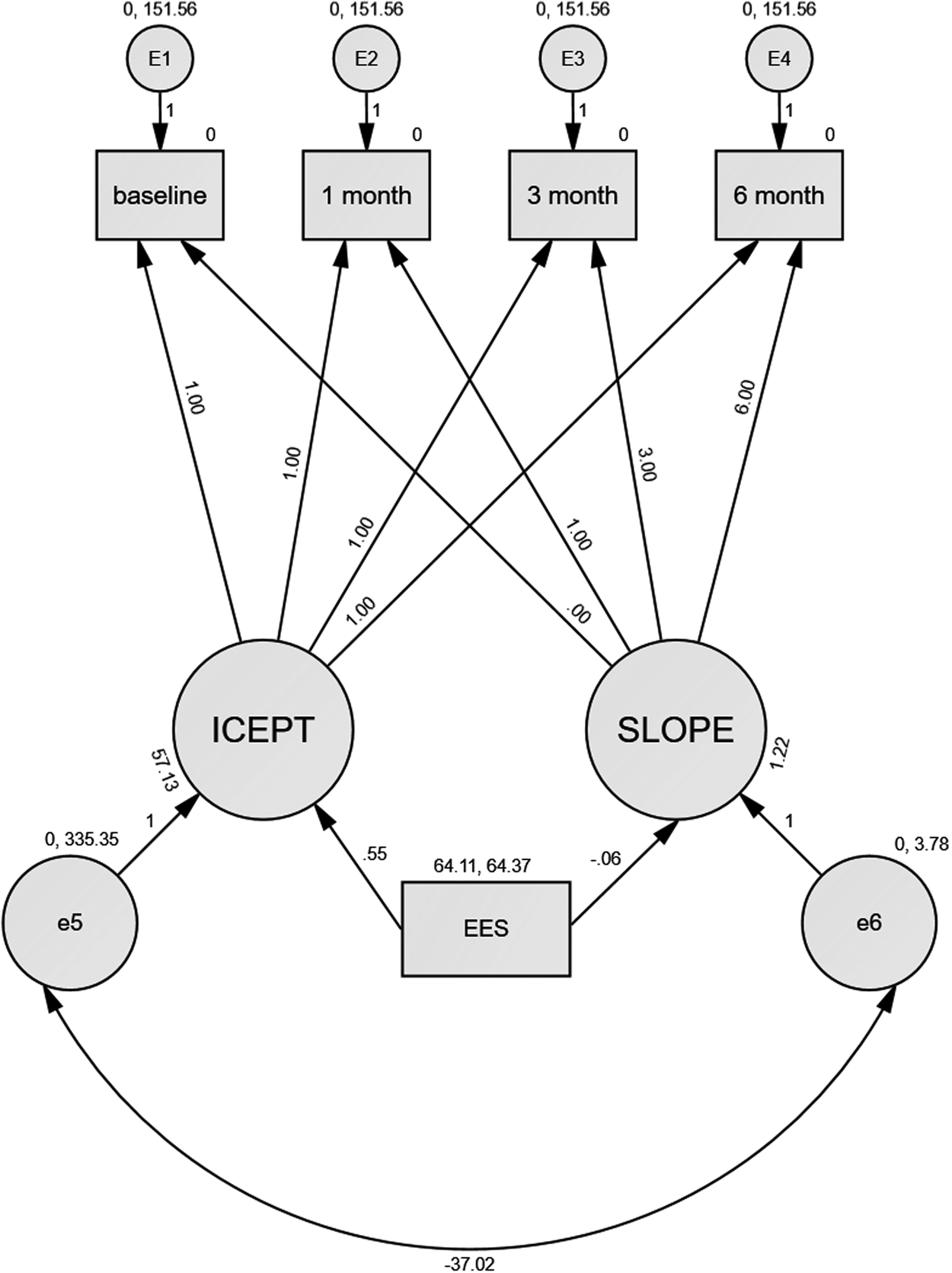
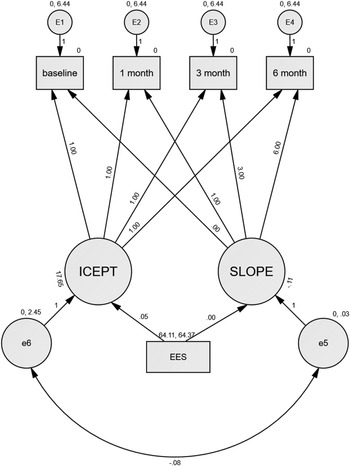
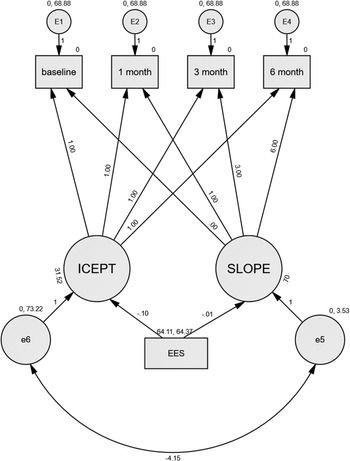
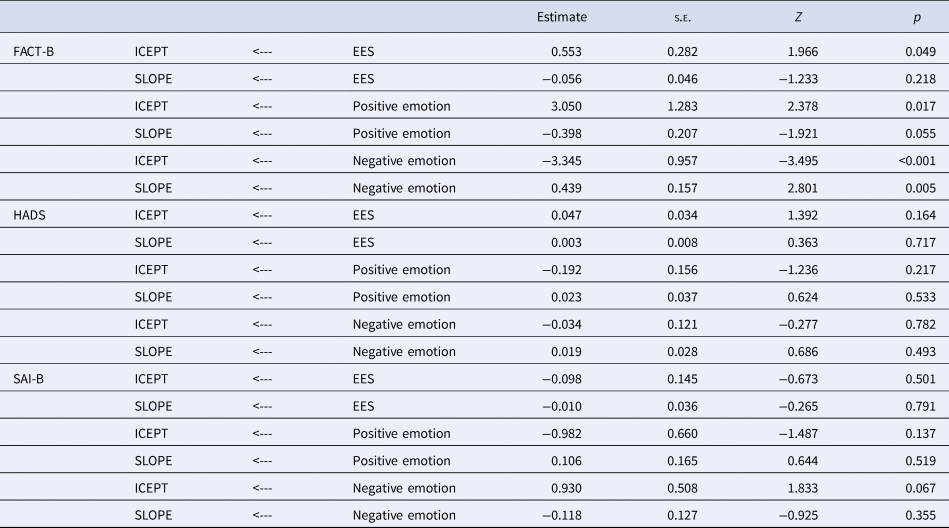
For the second hypothesis that those who have a higher level of emotional expressivity would demonstrate greater improvements in health outcomes after the EW intervention, the latent variable growth curve model showed that the level of emotional expressivity has a significant effect on FACT-B scores (p = 0.049) but did not have a significant slope (p = 0.218) (Table 1 and Fig. 1). The results indicating that the higher level of emotional expressivity, the higher FACT-B scores identified, but the influence of emotional expressivity in the change in FACT-B scores was not statistically significant over time. In addition, no significant difference was identified in HADS and SAI-B (all p > 0.05) (Table 1, Figs 2 and 3).
LGCM for EES and FACT-B.

LGCM for EES and HADS.

LGCM for EES and SAI-B.

The effects of emotional expressivity and patterns of affective word use on health outcomes in EW interventions

FACT-B, Functional Assessment of Cancer Therapy-Breast Cancer Version; HADS, The Hospital Anxiety and Depression Scale; SAI-B, Symptoms Assessment Inventory for Breast Cancer Patients Receiving Chemotherapy; EES, Emotional Expressivity Scale.
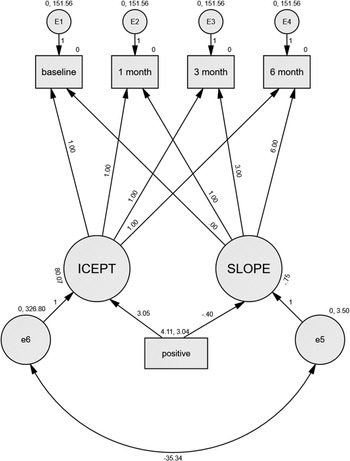
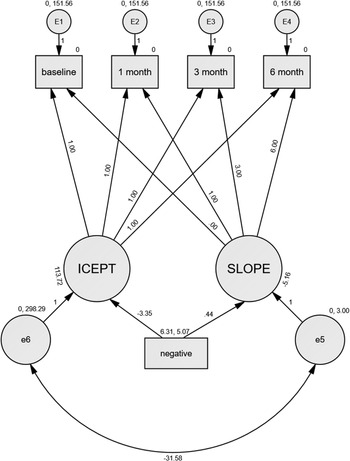
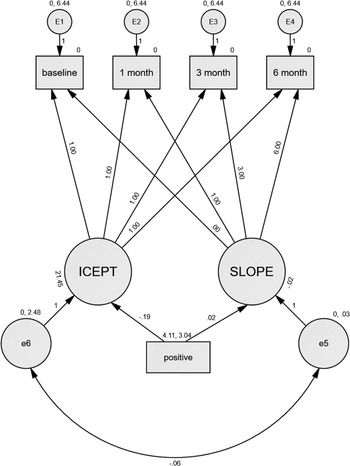
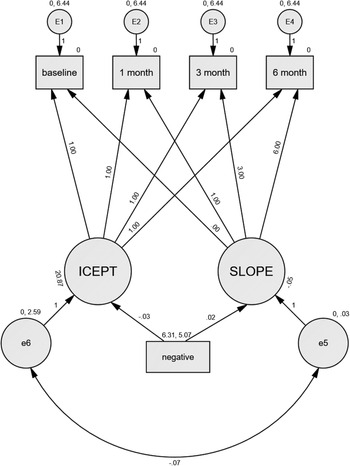
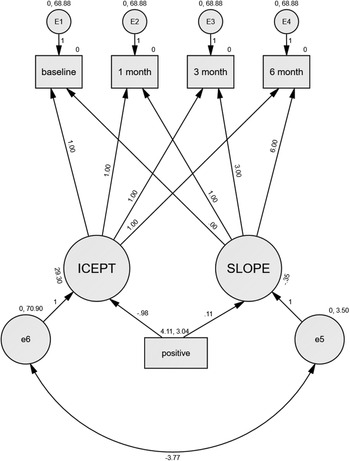
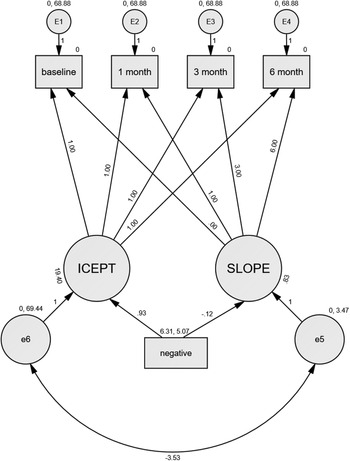
Then, the third hypothesis of our study that BC patients who used more positive or less negative affect words in texts would demonstrate greater improvements in health outcomes after EW was demonstrated on one of the measured variables and there were no significant differences on two other measures. The data were analysed by the latent variable growth curve model, and the results showed that the level of positive emotion has a significant effect on FACT-B scores (p = 0.017) but did not have a significant slope (p = 0.055) (Table 1 and Fig. 4). In addition, Table 1 and Fig. 5 also showed that the level of negative emotion has a significant effect on FACT-B scores (p < 0.001) and a statistically significant slope was identified (p = 0.005), indicating that the higher level of negative emotion, the faster the FACT-B scores declined over time. However, no significant difference was identified in HADS and SAI-B (all p > 0.05) (Table 1, Figs 6–9).
LGCM for positive emotion and FACT-B.

LGCM for negative emotion and FACT-B.

LGCM for positive emotion and HADS.

LGCM for negative emotion and HADS.

LGCM for positive emotion and SAI-B.

LGCM for negative emotion and SAI-B.

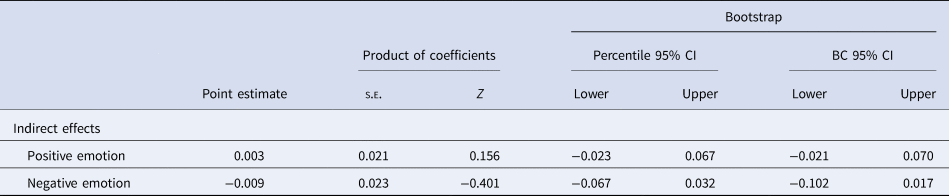
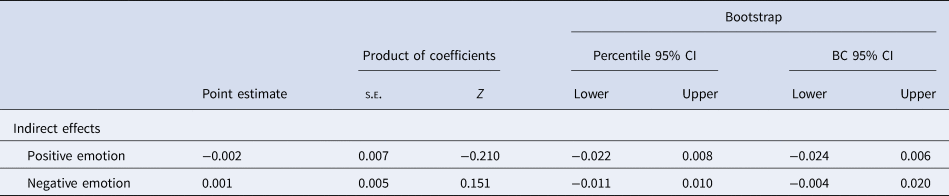
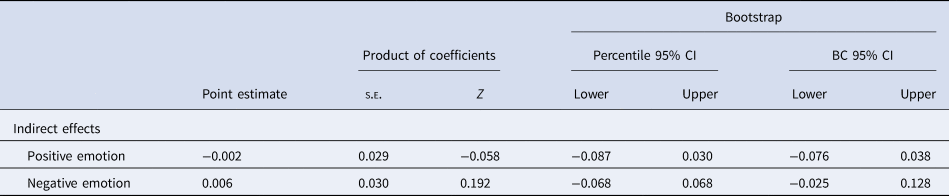
Furthermore, as shown in Tables 2–4, the patterns of affective word use did not mediate the effects of emotional expressivity on health outcomes after the EW intervention in BC patients receiving chemotherapy (all p > 0.05).
The direct and/or indirect effects of patterns of affective word use mediating EES in exerting an impact on FACT-B in EW interventions at 6-months follow-up (bootstrap = 1000)

EES, Emotional Expressivity Scale; FACT-B, Functional Assessment of Cancer Therapy-Breast Cancer Version; EW, expressive writing.
*p < 0.05; **p < 0.01; ***p < 0.001.
The direct and/or indirect effects of patterns of affective word use mediating EES in exerting an impact on HADS in EW intervention at 6-months follow-up (bootstrap = 1000)

EES, Emotional Expressivity Scale; HADS, The Hospital Anxiety and Depression Scale; EW, expressive writing.
*p < 0.05; **p < 0.01; ***p < 0.001.
The direct and/or indirect effects of patterns of affective word use mediating EES in exerting an impact on SAI-B in EW intervention at 6-months follow-up (bootstrap = 1 000)

EES, Emotional Expressivity Scale; SAI-B, Symptoms Assessment Inventory for Breast Cancer Patients Receiving Chemotherapy; EW, expressive writing.
*p < 0.05; **p < 0.01; ***p < 0.001.
Discussion
In contrast to prior studies on linguistic analysis following EW that primarily focused on Caucasian populations, our study focused on a Chinese BC survivor population whose culture particularly discourages emotional disclosure. The present study adds to the existing literature by exploring whether emotional expressivity and the patterns of language use could predict benefits from EW interventions and the possible interaction between the two variables. Our hypothesis that BC patients with higher levels of emotional expressivity tended to report higher levels of positive or negative affect words in texts was not supported. Consistent with our hypotheses, this study found that emotional expressivity and the patterns of affective word use were related to QOL but there were no significant differences on two other measures. In addition, our findings suggest that the patterns of affective word use did not mediate the effects of emotional expressivity on health outcomes in EW interventions in Chinese BC patients.
Consistent with previous data on Caucasian populations, our study also identified correlations between the patterns of affective word use and health outcomes in Chinese BC patients. The present study showed that BC patients who used more negative emotional words reported lower levels of QOL over time, which is supported by Niles et al. (Reference Niles, Byrne Haltom, Lieberman, Hur and Stanton2016), who identified that negative emotional word use was significantly positively correlated with increased depression. Sullivan, Leifker, and Marshall (Reference Sullivan, Leifker and Marshall2018) found that men's posttraumatic stress disorder symptom severity was associated with the expressivity of negative emotions. Our findings are also in accordance with the results by Pennebaker and Chung (Reference Pennebaker, Chung, Friedman and Silver2007), who reported that very high negative word use was associated with less benefit from EW. A possible explanation for this is that perhaps participants who overuse negative emotion words are generally higher in negative affect and use the EW intervention as a ruminative process that could inhibit the achievement of closure through the writing intervention (Niles et al., Reference Niles, Byrne Haltom, Lieberman, Hur and Stanton2016; Pennebaker & Chung, Reference Pennebaker, Chung, Friedman and Silver2007).
To test the hypothesis that EW might be contraindicated for Chinese BC patients who do not typically express emotions, the possible role of emotional expressivity was analysed in the present study. Consistent with our hypothesis, BC patients with higher levels of emotional expressivity demonstrated higher FACT-B scores than those who tended to be less emotionally expressive. This is in accordance with previous findings that women with high emotional expressivity experienced relatively low levels of distress (Zakowski, Valdimarsdottir, & Bovbjerg, Reference Zakowski, Valdimarsdottir and Bovbjerg2001). Niles, Haltom, Mulvenna, Lieberman, and Stanton (Reference Niles, Haltom, Mulvenna, Lieberman and Stanton2014) also found that young adult participants high in emotional expressivity experienced a significant reduction in anxiety after EW.
However, other studies have identified different patterns of results as in our study. Namely, that writing interventions are more effective for those who are reluctant or unable to express emotions. Lu and Stanton (Reference Lu and Stanton2010) investigated the moderating effects of ambivalence over emotional expression on EW in 130 undergraduates. The EW intervention showed greater reductions in negative affect for highly ambivalent undergraduates than for less ambivalent undergraduates. Solano, Donati, Pecci, Persichetti, and Colaci (Reference Solano, Donati, Pecci, Persichetti and Colaci2003) examined the effects of EW on 40 patients after bladder papilloma resection and found that compared to those low in alexithymia, writing intervention significantly reduced psychological and physical symptoms for those high in alexithymia.
In addition, the hypothesis that BC patients with higher levels of emotional expressivity tended to report higher levels of positive or negative affect words in texts was not demonstrated in our study. Previous studies have identified a link between emotional expressivity and psychological and physical symptoms in writing interventions (Niles et al., Reference Niles, Haltom, Mulvenna, Lieberman and Stanton2014; Zakowski et al., Reference Zakowski, Valdimarsdottir and Bovbjerg2001). Our research and previous evidence also showed that the patterns of language use in texts could predict the intervention effects of EW (Niles et al., Reference Niles, Byrne Haltom, Lieberman, Hur and Stanton2016; Sullivan et al., Reference Sullivan, Leifker and Marshall2018). However, the failed demonstrated hypothesis from our study suggests that BC patients with high levels of emotional expressivity do not mean that they will express more emotions through writing compared to those with low levels of emotional expressivity. This was also supported by the results from our study that the patterns of affective word use did not mediate the effects of emotional expressivity on health outcomes in EW interventions. This is perhaps because people differ individually in the extent to which they express their emotions (Trierweiler, Eid, & Lischetzke, Reference Trierweiler, Eid and Lischetzke2002). Emotions could be expressed in various ways, such as body cues, facial cues, verbal or EW. Perhaps not all expressive people like to express their feelings in writing. Therefore, it is suggested that matching a person's naturally selected disclosure approach with an assigned intervention is beneficial.
The study has some limitations. First, although LIWC2015 calculated the percentages of positive or negative affect words among the total words in each writing text, the information from the prolonged EW group was much richer and possibly more nuanced than that from the standard EW group, which may have produced some biases in the study. In addition, because this study investigated writing interventions and emotional expression in Chinese BC patients, it is unclear how these findings would generalize to Caucasian or other cultures. However, BC patients in our study were recruited from five large tertiary hospitals from four different cities in China, which could demonstrate the generalization of the findings in Chinese BC patients.
In conclusion, the current study is the first to test the relationship between emotional expressivity and health outcomes in EW in Chinese BC patients and its role in influencing the patterns of affective word use in writing texts. The findings of the present study support the hypothesis that the level of emotional expressivity and the pattern of affective word use could be factors that moderate the effects of EW on QOL of BC patients, which may help clinicians identify the individuals most likely to benefit from writing exercises in China. However, a relationship between emotional expressivity and linguistic changes in EW was not demonstrated and additional research is necessary to identify possible factors that may moderate the patterns of affective word use in EW that could be used to enhance the positive effects of writing interventions.
Data
The data that support the findings of this study are available from the corresponding author upon reasonable request.
Acknowledgements
We expressed our sincere gratitude to all the study participants and clinic staffs in the five tertiary hospitals for their support to the study.
Author contributions
YW and CZ were responsible for the design of the research. YW, DY, BJ, LL, CL, WL and XL collected and analysed the data. YW wrote the manuscript. All authors read and approved the final manuscript.
Financial support
This project was funded by the Natural Science Foundation of Guangdong Province (No.2020A1515110894). The funder had no role in study design, data collection and analysis, decision to publish, or preparation of the manuscript.
Conflict of interest
None.
Ethical standards
The study was approved by the involved hospitals including the Medical Ethics Committee of Nanfang Hospital (reference number: NFEC-2018-049), Cancer Center of Guangzhou Medical University (reference number: 2018-003), Shenzhen People's Hospital (reference number: 2018-029), Affiliated Hospital of Guangdong Medical University (reference number: PJ2018-029) and The First Affiliated Hospital of Shantou University Medical College (reference number: 2018-039). Written informed consent was obtained from each participant prior to the study.