Introduction
Psychotic disorders typically emerge during adolescence or early adulthood (Kessler et al. Reference Kessler, Amminger, Aguilar-Gaxiola, Alonso, Lee and Ustun2007), yet research suggests that a substantial minority have a first episode in old age (Howard et al. Reference Howard, Rabins, Seeman and Jeste2000). However, compared with earlier adult-onset psychosis, little is known about the epidemiology of very late-onset schizophrenia-like psychosis (VLOSLP).
Compared with psychotic disorders with a younger age-at-onset, VLOSLP has consistently been found to be more common in women than men (Castle & Murray, Reference Castle and Murray1991; Howard et al. Reference Howard, Almeida and Levy1994; Almeida et al. Reference Almeida, Howard, Levy and David1995). VLOSLP patients also have higher levels of premorbid functioning across educational and occupational domains (Castle et al. Reference Castle, Wessely, Howard and Murray1997), lower morbid psychosis risk amongst relatives (Howard et al. Reference Howard, Graham, Sham, Dennehey, Castle and Levy1997), and differing symptomatology, with fewer negative symptoms, compared with those with an earlier age-at-onset (Almeida et al. Reference Almeida, Howard, Levy and David1995). Several potential risk factors have been associated with VLOSLP, including hearing impairment (Cooper et al. Reference Cooper, Kay, Curry, Garside and Roth1974; Cooper & Curry, Reference Cooper and Curry1976), visual impairment (Cooper & Porter, Reference Cooper and Porter1976), early adversity (Gurian et al. Reference Gurian, Wexler and Baker1992; Fuchs, Reference Fuchs1994, Reference Fuchs1999; Reulbach et al. Reference Reulbach, Bleich, Biermann, Pfahlberg and Sperling2007), social isolation (Kay & Roth, Reference Kay and Roth1961; Pearlson et al. Reference Pearlson, Kreger, Rabins, Chase, Cohen and Wirth1989), and premorbid schizotypal traits (Kay & Roth, Reference Kay and Roth1961). However, these findings have not consistently replicated and epidemiological support for this is lacking (Brunelle et al. Reference Brunelle, Cole and Elie2012).
Most studies of risk factors for VLOSLP have been cross-sectional, with small, unrepresentative samples, making it difficult to draw valid conclusions. Further, most epidemiological research has focused on psychotic disorders beginning before 65 years old, meaning that the epidemiology of psychotic disorders in older adults has remained relatively neglected. Most epidemiological studies of VLOSP have focused on prevalence, with 1-year estimates ranging from 0.1% to 0.5% (Howard et al. Reference Howard, Rabins, Seeman and Jeste2000), with less research on incidence and how this varies in relation to putative risk factors for VLOSLP. Synthesizing current evidence on the incidence of VLOSLP may highlight consistent themes, which could help to provide insight into the etiology of late-life psychosis, or gaps in the literature requiring examination.
Aims and hypotheses
We aimed to synthesize the literature on the incidence of very late-onset affective and non-affective psychotic disorders, and how this varied by age and sex. Consistent with the previous literature, we hypothesized that the incidence of very late-onset psychotic disorders would increase with age, and would be higher amongst women than men. Additionally, where data were available, we sought to explore variation in incidence by family history of psychopathology, socio-economic status (SES), ethnicity, migrant status, sensory impairment, social isolation, marital status, education, employment history, sensory impairment, and traumatic life events. We expected higher incidence rates amongst migrant groups, given similar findings in younger adults (Kirkbride et al. Reference Kirkbride, Errazuriz, Croudace, Morgan, Jackson and Boydell2012), and amongst those with: a family history of psychotic disorders, lower SES, the experience of traumatic life events, and sensory impairment.
Methods
We conducted this systematic review following PRISMA guidelines (Moher et al. Reference Moher, Liberati, Tetzlaff and Altman2009; see Supplementary Table S1), including pre-registering our protocol (http://www.crd.york.ac.uk/PROSPERO, registration number: CRD 42016035720).
Search strategy
We systematically searched PubMed, PsychInfo, and Web of Science databases using terms covering three main areas: ‘late-onset’, ‘incidence’, and ‘psychosis’ (see Supplementary Fig. S1). We adapted search terms for each database using database-specific MeSH headings. We searched bibliographies of included citations and directly contacted authors to request data, where appropriate. We restricted our review to English language papers published between January 1960 and March 2016.
Eligibility criteria
Although VLOSLP usually refers to those aged over 60 years, we restricted our search to those aged 65 years and older because this is typically the upper age cut-off in epidemiological studies of ‘adult-onset’ psychosis, which have been widely reviewed (McGrath et al. Reference McGrath, Saha, Welham, El Saadi, MacCauley and Chant2004; Kirkbride et al. Reference Kirkbride, Errazuriz, Croudace, Morgan, Jackson and Boydell2012; Van der Werf et al. Reference Van der Werf, Hanssen, Köhler, Verkaaik, Verhey and van Winkel2012). Other eligibility criteria were as follows:
1. Contained incidence data, or data from which incidence rates could be derived (numerator and denominator).
2. Attempted to conduct a population-based epidemiological study, irrespective of quality (see below).
3. Cases first diagnosed with psychotic disorders after age 65 (incident cases).
4. Excluded those with dementia, organic or drug-induced psychoses.
Screening
We screened citation titles to assess whether they met eligibility criteria, with definite or possible citations forwarded to abstract, and subsequently, full-text review. One researcher (JS) screened studies and extracted data. A second researcher (JBK) screened a randomly selected 10% sample, with 99.8% inter-rater agreement, Cohen's k = 0.88, p = <0.001.
Database management and data extraction
We stored extracted data in a spreadsheet, adapted from a previous systematic review (Kirkbride et al. Reference Kirkbride, Errazuriz, Croudace, Morgan, Jackson and Boydell2012). Data were divided into study-level data about study characteristics, rate-level data about incidence rates, and meta-level data on time period and study quality (see below).
Exposures and outcomes
Our primary outcome was the incidence per 100 000 person-years at risk of a non-organic psychotic disorder in those aged 65 and above. Included studies used a range of diagnostic classifications, including International Classification of Diseases (ICD)-8 to ICD-10, Diagnostic and Statistical Manual of Mental Disorders (DSM)-III-R, and DSM-IV. Although the classification of psychotic disorders varies between diagnostic classifications and editions, we assumed sufficient commonalities to pool citations according to the following diagnostic outcomes: (i) non-affective psychotic disorders (ICD-10 F20–F29 or equivalent, including schizophrenia, schizophreniform disorder, schizoaffective disorder, delusional disorder, and brief and unspecified psychoses), (ii) schizophrenia (ICD-10 F20 or equivalent), (iii) affective psychoses (ICD-10 F30–39 or equivalent, excluding depression without psychosis).
Where available, we extracted incidence data in relation to the following exposures: age, sex, ethnicity, SES, migrant status, marital status, education, employment, sensory impairment such as deafness or blindness, traumatic life events (childhood or adulthood), and family history of psychopathology.
Where incidence rates were not explicitly reported, we derived them from ancillary information where possible (i.e. numerator, denominator, standard errors). Where citations reported overlapping data from the same study, the rate or citation providing the most pertinent information for each specific analysis was considered primary.
Study quality
Two independent raters (JS and JBK) rated the study quality according to five criteria, with 87% inter-rater agreement, Cohen's k = 0.61, p = <0.001. Discrepancies were dealt with via consensus agreement. We used a quality scale adapted from a previous systematic review (Kirkbride et al. Reference Kirkbride, Errazuriz, Croudace, Morgan, Jackson and Boydell2012) to assess five key indicators of epidemiological quality: defined catchment area, accurate denominator, population-based case ascertainment, standardized research diagnoses, and well-defined inclusion and exclusion criteria (see Supplementary Table S2).
Data analysis
We first conducted a narrative synthesis of published incidence data on very late-onset psychotic disorders, particularly important given the substantial heterogeneity observed between incidence estimates (generally, I 2 = ⩾0.90). Where three or more citations provided incidence data which could be pooled, we conducted random-effects meta-analyses using the DerSimonian & Laird (Reference DerSimonian and Laird1986) method to obtain pooled estimates. Incidence rates were transformed to their natural logarithm and entered into meta-analyses with corresponding standard errors. Where possible, to allow the pooling of incidence rates for those aged 65 and above, estimates reported from the same citation for different age bands were aggregated into an overall age 65+ rate. We also carried out random-effects meta-regressions to explore whether variation in incidence was associated with sex, study quality, or case ascertainment period. We examined evidence of publication bias via visual inspection of funnel plots and formal testing using Egger's test of bias. We conducted meta-analyses in Stata version 13 using the metan command. Funnel plots and Egger's bias test were conducted using metafunnel and metabias packages. Random-effects meta-regressions were conducted using the metareg package.
Results
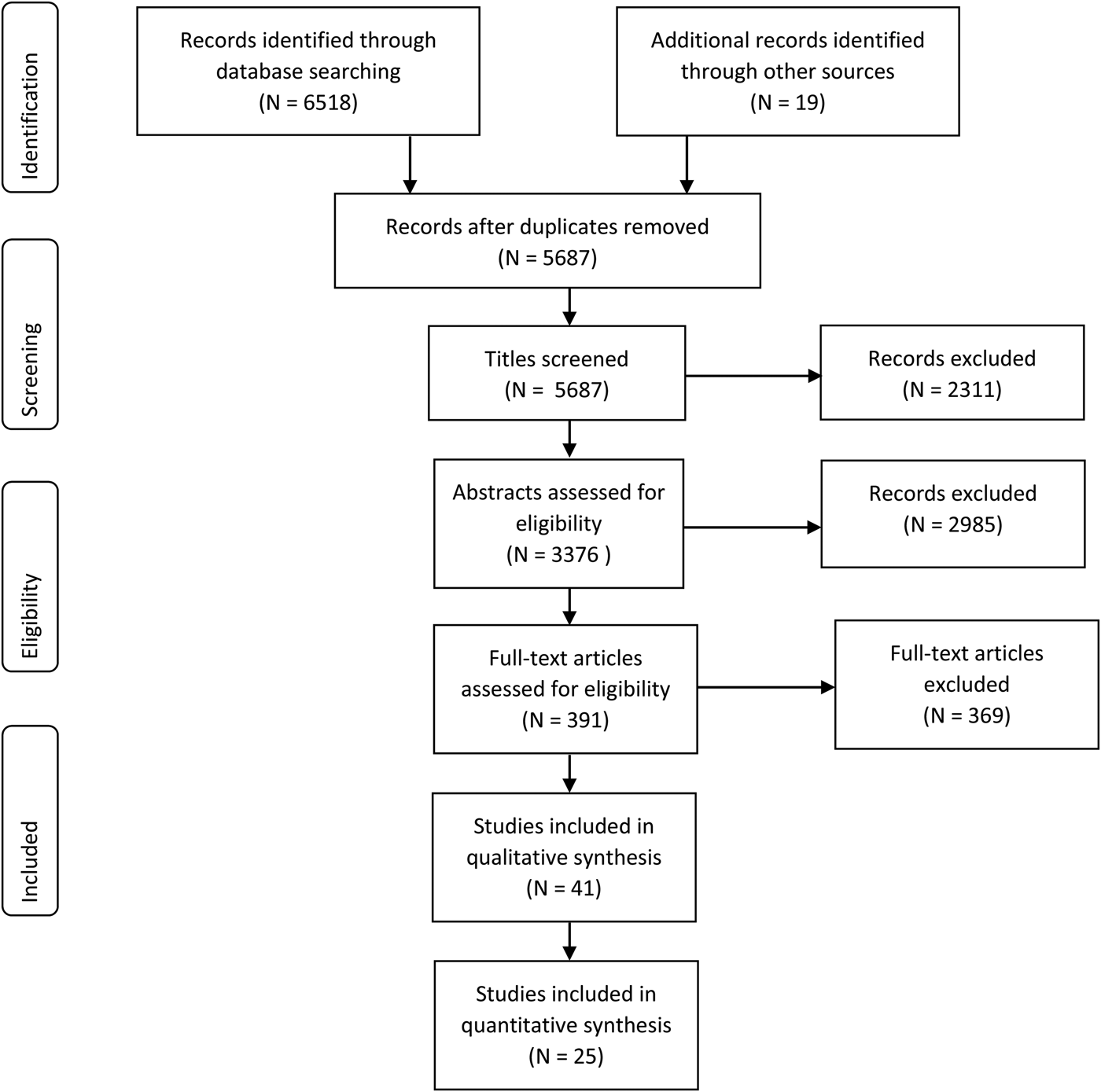
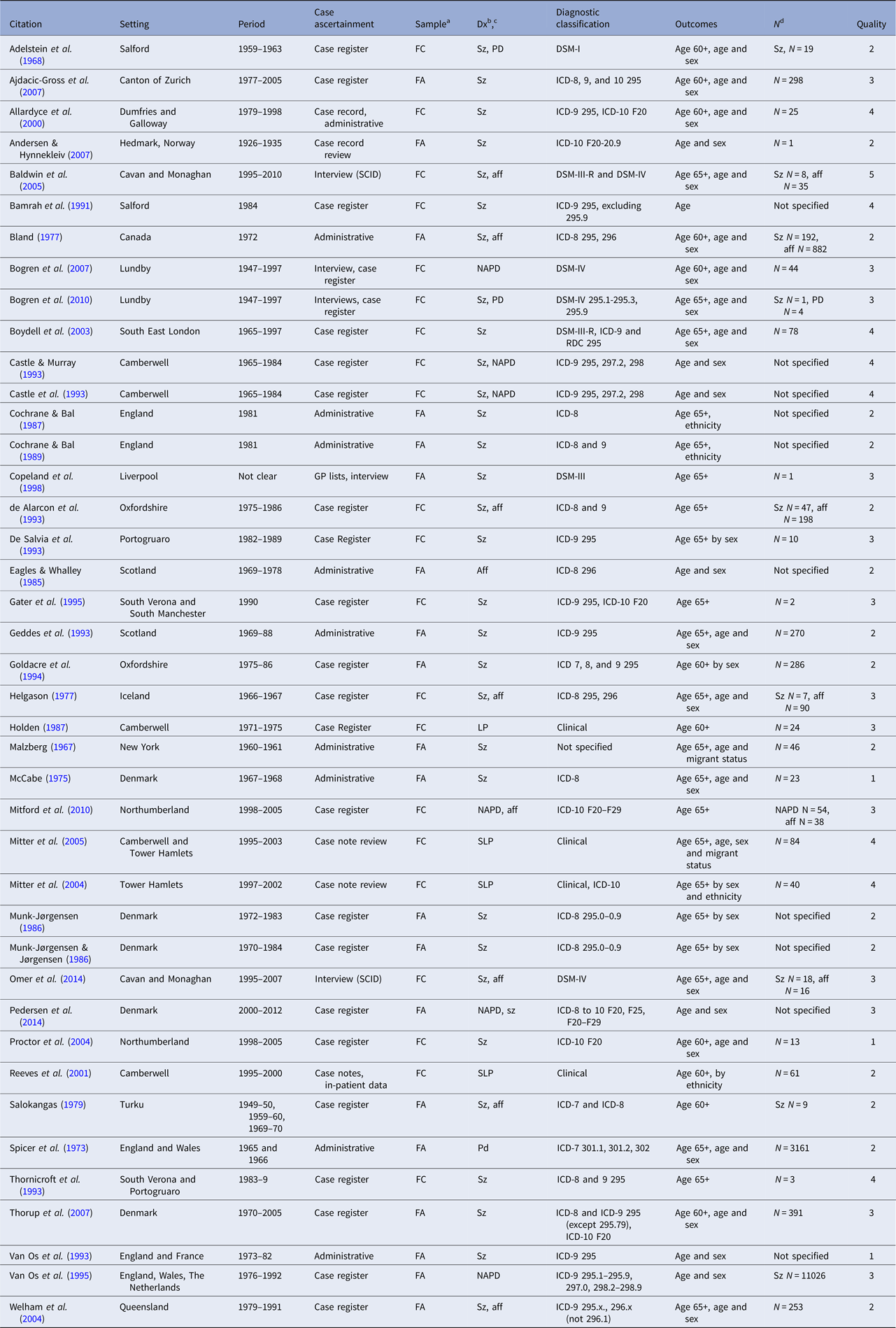
We retrieved 5687 citations, of which 41 – published between 1967 and 2014 – met eligibility criteria (Fig. 1; Table 1; Supplementary Fig. S2). Four authors provided original data (Van Os et al. Reference Van Os, Howard, Takei and Murray1995; Baldwin et al. Reference Baldwin, Browne, Scully, Quinn, Morgan and Kinsella2005; Bogren et al. Reference Bogren, Mattisson, Isberg, Munk-Jørgensen and Nettelbladt2010; Pedersen et al. Reference Pedersen, Mors, Bertelsen, Waltoft, Agerbo and McGrath2014) and Van der Werf et al. (Reference Van der Werf, Hanssen, Köhler, Verkaaik, Verhey and van Winkel2012) provided further unpublished data from studies ascertained as part of a previous systematic review.
PRISMA flow diagram.

Citation characteristics table

a FA, FC: first admission, first contact.
b Dx: diagnoses (only those included in this review).
c Sz, aff, NAPD, PD, SLP, LP: schizophrenia, affective psychotic disorder, non-affective psychotic disorder, psychotic depression, schizophrenia-like psychosis, late paraphrenia.
d N: number of cases aged 60 or 65 and above.
Included studies covered case ascertainment periods ranging from 1926 to 2010 (Baldwin et al. Reference Baldwin, Browne, Scully, Quinn, Morgan and Kinsella2005; Andersen & Hynnekleiv, Reference Andersen and Hynnekleiv2007 [including unpublished supplemental data]). Most citations reported incidence across the lifespan, whereas only eight focused specifically on older adults (Holden, Reference Holden1987; Castle et al. Reference Castle, Wessely and Murray1993; Van Os et al. Reference Van Os, Howard, Takei and Murray1995; Copeland et al. Reference Copeland, Dewey, Scott, Gilmore, Larkin and Cleave1998; Reeves et al. Reference Reeves, Sauer, Stewart, Granger and Howard2001; Mitter et al. Reference Mitter, Krishnan, Bell, Stewart and Howard2004, Reference Mitter, Reeves, Romero-Rubiales, Bell, Stewart and Howard2005; Mitford et al. Reference Mitford, Reay, McCabe, Paxton and Turkington2010). We rated 22% of citations as high quality (rated 4–5), 71% as average quality (rated 2–3), and 7% as poor quality (rated 0–1) (see Table 1).
Incidence by age and sex
Non-affective psychotic disorders
Seven citations reported the incidence of non-affective psychotic disorders in older adults (Van Os et al. Reference Van Os, Howard, Takei and Murray1995; Reeves et al. Reference Reeves, Sauer, Stewart, Granger and Howard2001; Mitter et al. Reference Mitter, Krishnan, Bell, Stewart and Howard2004, Reference Mitter, Reeves, Romero-Rubiales, Bell, Stewart and Howard2005; Bogren et al. Reference Bogren, Mattisson, Isberg, Munk-Jørgensen and Nettelbladt2010; Mitford et al. Reference Mitford, Reay, McCabe, Paxton and Turkington2010; Pedersen et al. Reference Pedersen, Mors, Bertelsen, Waltoft, Agerbo and McGrath2014). Studies were conducted in Sweden, England, Wales, and Denmark, and were rated as high (29%) or average (71%) quality. Three non-overlapping studies provided overall incidence rates of non-affective psychotic disorders in those aged 65 and above (Reeves et al. Reference Reeves, Sauer, Stewart, Granger and Howard2001; Mitter et al. Reference Mitter, Krishnan, Bell, Stewart and Howard2005; Mitford et al. Reference Mitford, Reay, McCabe, Paxton and Turkington2010). The reported incidence of non-affective psychotic disorders in Northumberland was 14.3 per 100 kpy [95% confidence interval (CI) 10.5–18.1] in those aged 65 and above, compared with 17.8 (95% CI 15.5–20.0) in those aged below 65 (Mitford et al. Reference Mitford, Reay, McCabe, Paxton and Turkington2010). A study conducted in Tower Hamlets, London, provided a rate of 31.4 per 100 kpy (95% CI 25.4–38.8) (Mitter et al. Reference Mitter, Krishnan, Bell, Stewart and Howard2005), and in Camberwell, London, a rate of 39.9 per 100 kpy (95% CI 31.1–51.3) was reported in those aged 60 and above (Reeves et al. Reference Reeves, Sauer, Stewart, Granger and Howard2001).
Incidence was higher amongst older women than men in five studies reporting rates of non-affective psychotic disorders by sex (Van Os et al. Reference Van Os, Howard, Takei and Murray1995; Reeves et al. Reference Reeves, Sauer, Stewart, Granger and Howard2001; Mitter et al. Reference Mitter, Krishnan, Bell, Stewart and Howard2004; Bogren et al. Reference Bogren, Mattisson, Isberg, Munk-Jørgensen and Nettelbladt2010; Pedersen et al. Reference Pedersen, Mors, Bertelsen, Waltoft, Agerbo and McGrath2014). Three studies reporting incidence by age provided evidence of increasing rates with older age (Van Os et al. Reference Van Os, Howard, Takei and Murray1995; Mitter et al. Reference Mitter, Reeves, Romero-Rubiales, Bell, Stewart and Howard2005; Pedersen et al. Reference Pedersen, Mors, Bertelsen, Waltoft, Agerbo and McGrath2014). In a study conducted in Denmark, incidence peaked in younger adulthood, followed by an additional increase after age 65 (Pedersen et al. Reference Pedersen, Mors, Bertelsen, Waltoft, Agerbo and McGrath2014). Another study reported increasing rates from age 60 in men and women in England, Wales, and the Netherlands (Van Os et al. Reference Van Os, Howard, Takei and Murray1995), while Mitter et al. (Reference Mitter, Reeves, Romero-Rubiales, Bell, Stewart and Howard2005) reported a slight decrease in incidence with age amongst older men, but substantial increases for women.
Schizophrenia
We identified 23 non-overlapping citations conducted between 1926 and 2010 providing data on the incidence of schizophrenia amongst older adults (Malzberg, Reference Malzberg1967; Adelstein et al. Reference Adelstein, Downham, Stein and Susser1968; Bland, Reference Bland1977; Helgason, Reference Helgason1977; Salokangas, Reference Salokangas1979; Bamrah et al. Reference Bamrah, Freeman and Goldberg1991; de Alarcon et al. Reference de Alarcon, Seagroatt, Sellar and Goldacre1993; De Salvia et al. Reference De Salvia, Barbato, Salvo and Zadro1993; Geddes et al. Reference Geddes, Black, Whalley and Eagles1993; Thornicroft et al. Reference Thornicroft, Bisoffi, De Salvia and Tansella1993; Gater et al. Reference Gater, Amaddeo, Tansella, Jackson and Goldberg1995; Van Os et al. Reference Van Os, Howard, Takei and Murray1995; Copeland et al. Reference Copeland, Dewey, Scott, Gilmore, Larkin and Cleave1998; Allardyce et al. Reference Allardyce, Morrison, McCreadie, van Os, Kelly and Murray2000; Boydell et al. Reference Boydell, van Os, Lambri, Castle, Allardyce and McCreadie2003; Proctor et al. Reference Proctor, Mitford and Paxton2004; Welham et al. Reference Welham, Thomis and McGrath2004; Baldwin et al. Reference Baldwin, Browne, Scully, Quinn, Morgan and Kinsella2005; Ajdacic-Gross et al. Reference Ajdacic-Gross, Lauber, Warnke, Haker, Murray and Rössler2007; Andersen & Hynnekleiv, Reference Andersen and Hynnekleiv2007; Thorup et al. Reference Thorup, Waltoft, Pedersen, Mortensen and Nordentoft2007; Bogren et al. Reference Bogren, Mattisson, Isberg, Munk-Jørgensen and Nettelbladt2010; Pedersen et al. Reference Pedersen, Mors, Bertelsen, Waltoft, Agerbo and McGrath2014). Quality ranged from low (4%), to average (74%) or high (22%). Eight citations were excluded from the meta-analysis as they provided data on overall incidence aged 60+, rather than aged 65+ (Adelstein et al. Reference Adelstein, Downham, Stein and Susser1968; Bland, Reference Bland1977; Salokangas, Reference Salokangas1979; Allardyce et al. Reference Allardyce, Morrison, McCreadie, van Os, Kelly and Murray2000; Proctor et al. Reference Proctor, Mitford and Paxton2004; Ajdacic-Gross et al. Reference Ajdacic-Gross, Lauber, Warnke, Haker, Murray and Rössler2007; Andersen & Hynnekleiv, Reference Andersen and Hynnekleiv2007; Thorup et al. Reference Thorup, Waltoft, Pedersen, Mortensen and Nordentoft2007) (see Supplementary Figs S3–5 for additional analyses including these citations). Another citation was excluded due to including a provisional case who did not meet full DSM-III-R criteria (Copeland et al. Reference Copeland, Dewey, Scott, Gilmore, Larkin and Cleave1998). This citation reported a rate of 3 per 100 kpy (95% CI 0–110.7) in Liverpool. Three citations could not provide an age 65+ rate due to lack of corresponding standard errors and/or sample size data, although findings on incidence by age and sex are reported in the following sections (Malzberg, Reference Malzberg1967; Bamrah et al. Reference Bamrah, Freeman and Goldberg1991; Pedersen et al. Reference Pedersen, Mors, Bertelsen, Waltoft, Agerbo and McGrath2014).
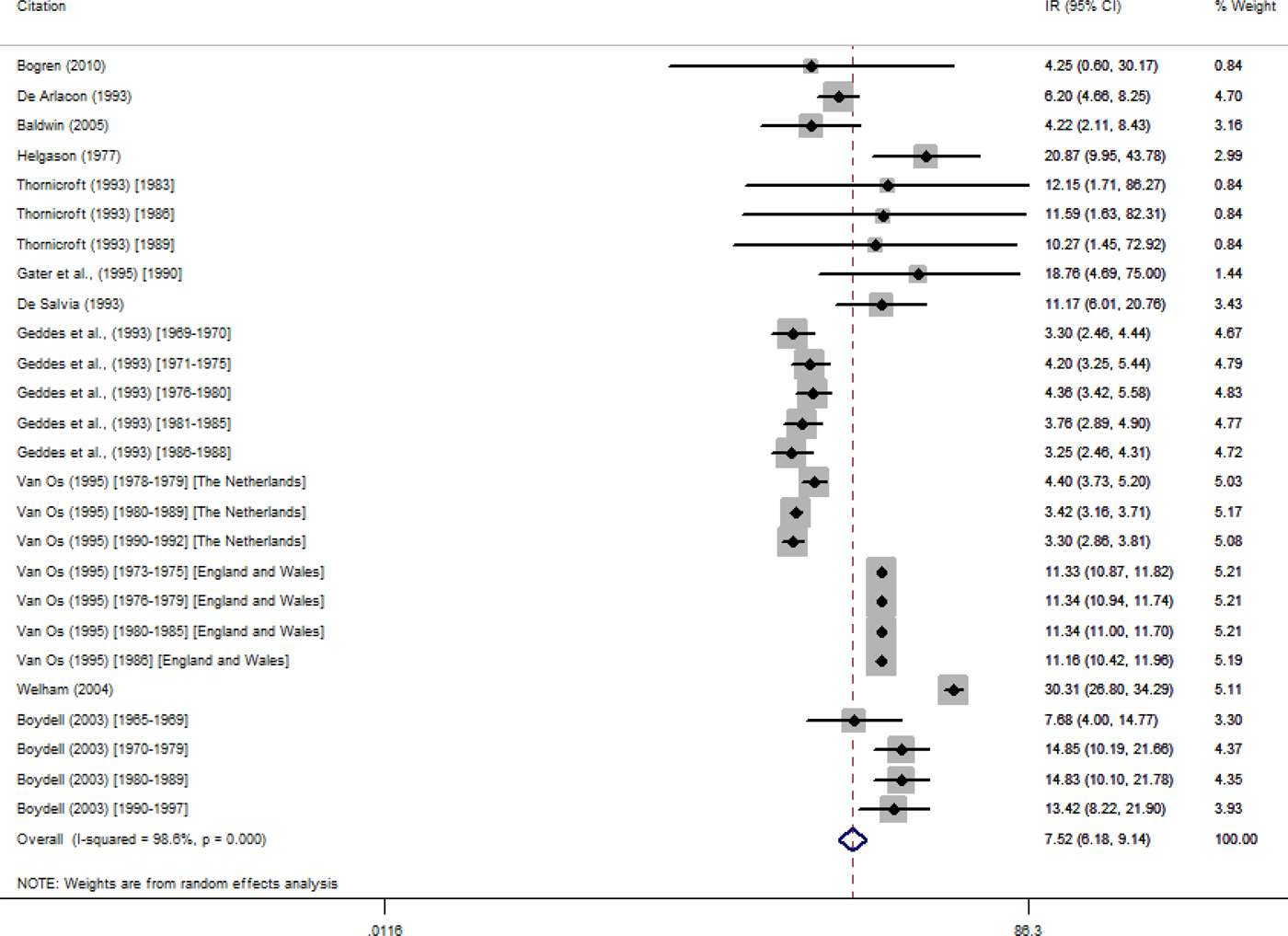
The remaining 11 citations provided 26 estimates (due to several citations reporting separate estimates for different time periods) of schizophrenia incidence in those aged 65 and above, which could be pooled in a meta-analysis (Helgason, Reference Helgason1977; de Alarcon et al. Reference de Alarcon, Seagroatt, Sellar and Goldacre1993; De Salvia et al. Reference De Salvia, Barbato, Salvo and Zadro1993; Geddes et al. Reference Geddes, Black, Whalley and Eagles1993; Thornicroft et al. Reference Thornicroft, Bisoffi, De Salvia and Tansella1993; Gater et al. Reference Gater, Amaddeo, Tansella, Jackson and Goldberg1995; Van Os et al. Reference Van Os, Howard, Takei and Murray1995; Boydell et al. Reference Boydell, van Os, Lambri, Castle, Allardyce and McCreadie2003; Welham et al. Reference Welham, Thomis and McGrath2004; Baldwin et al. Reference Baldwin, Browne, Scully, Quinn, Morgan and Kinsella2005; Bogren et al. Reference Bogren, Mattisson, Isberg, Munk-Jørgensen and Nettelbladt2010). Quality was average (73%) or high (27%). The pooled incidence of schizophrenia was 7.5 per 100 kpy (95% CI 6.2–9.1; I 2 = 0.99) (Fig. 2).
Forest plot of incidence rates of schizophrenia in those aged 65 and above. Incidence rate per 100 000 person-years at risk.
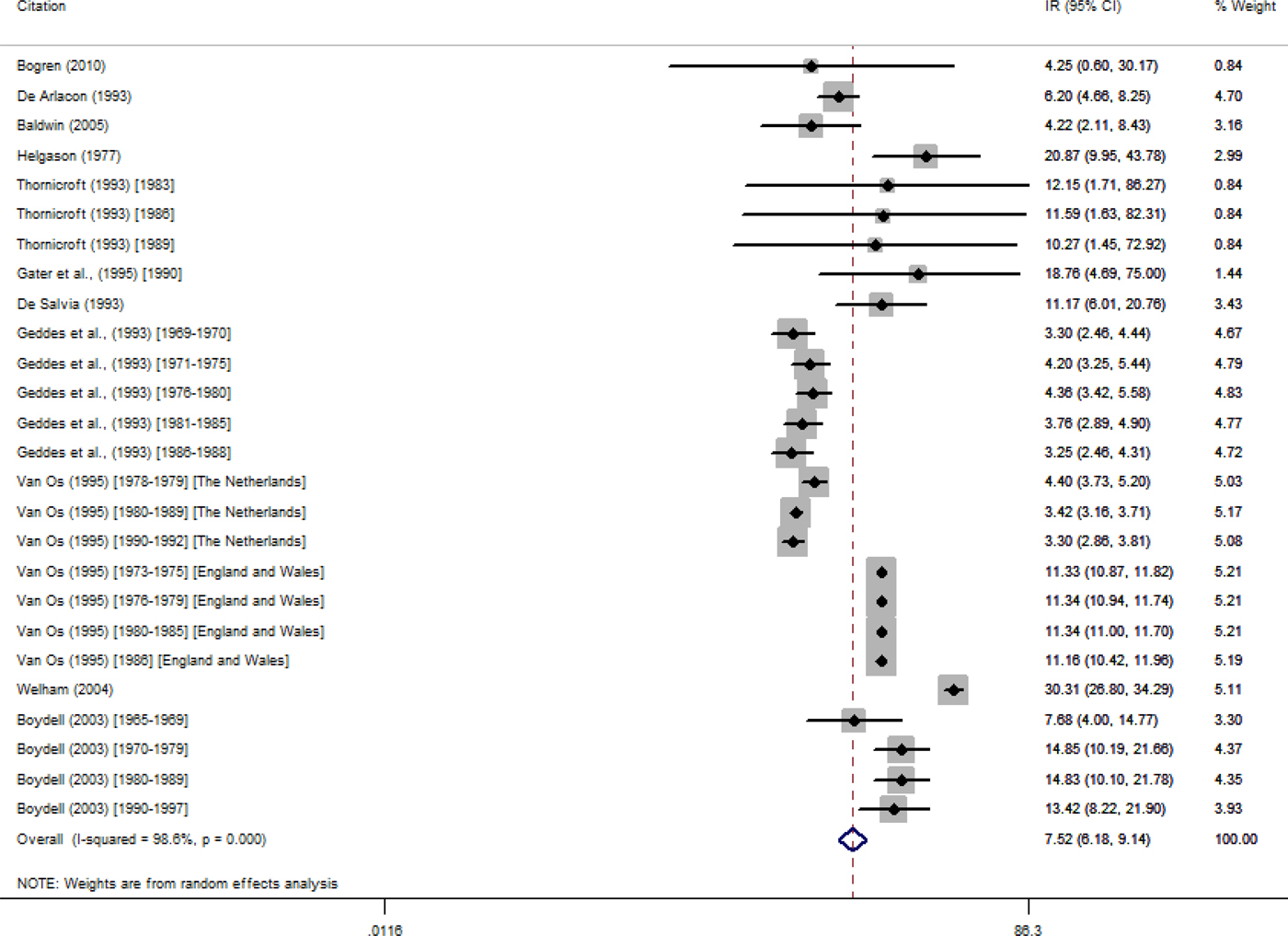
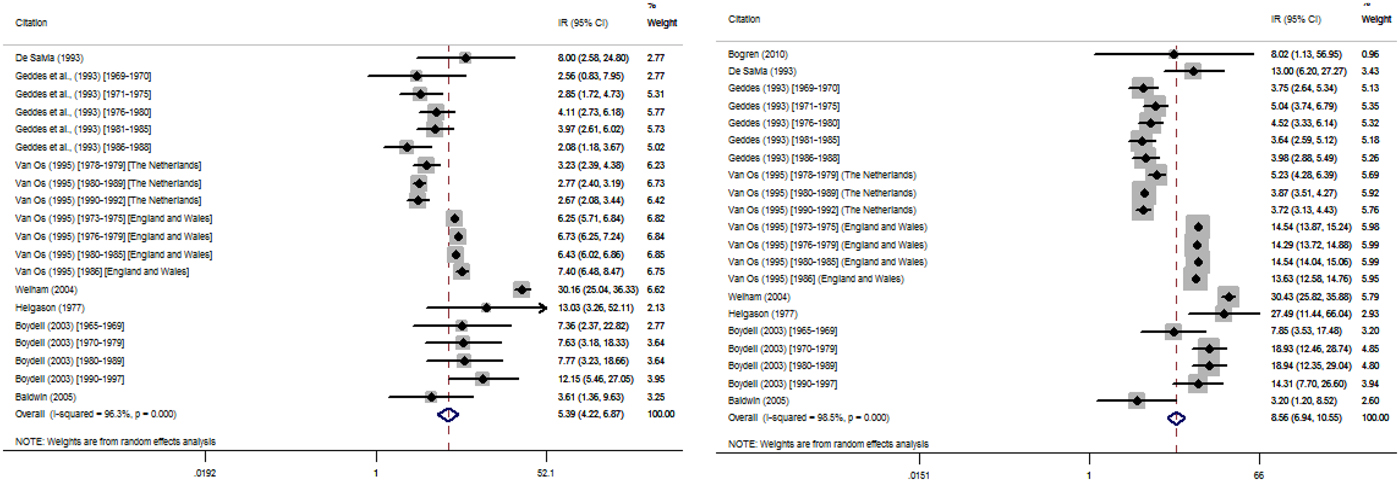
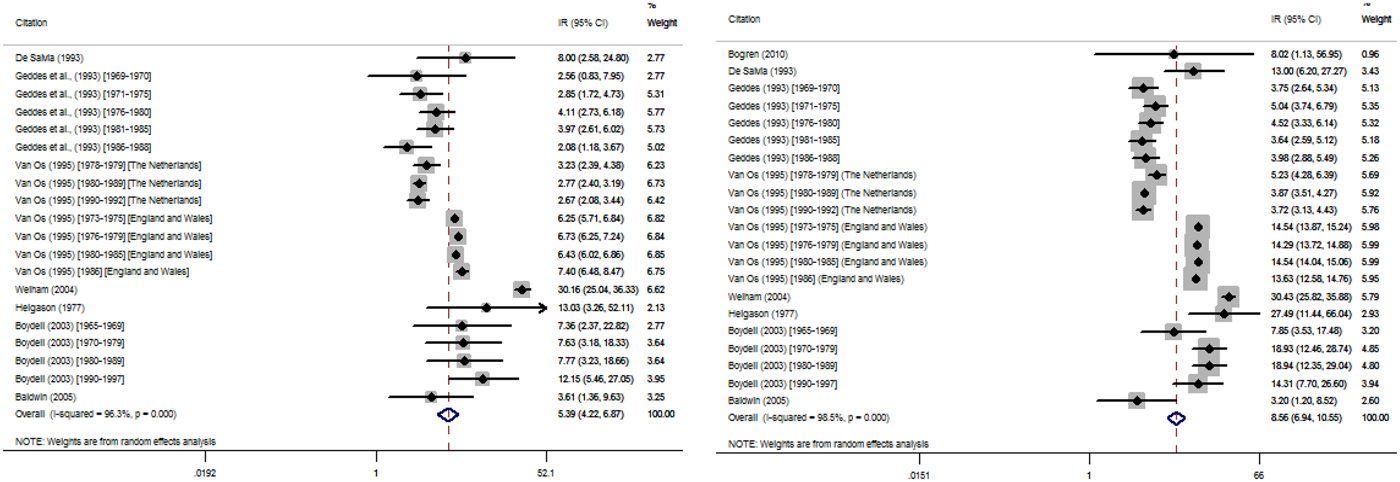
Estimates ranged from 3.3 per 100 kpy (95% CI 2.5–4.4) in Scotland (Geddes et al. Reference Geddes, Black, Whalley and Eagles1993) to 30.31 per 100 kpy (95% CI 26.8–34.3) in Australia (Welham et al. Reference Welham, Thomis and McGrath2004). Pooled rates were higher in women than men, based on 41 estimates from eight suitable citations (women: 8.6 per 100 kpy; 95% CI 6.9– 10.6; I 2 = 0.99, men: 5.4 per 100 kpy; 95% CI 4.2–6.9, I 2 = 0.96) (Fig. 3) (Helgason, Reference Helgason1977; de Salvia et al. Reference De Salvia, Barbato, Salvo and Zadro1993; Geddes et al. Reference Geddes, Black, Whalley and Eagles1993; Van Os et al. Reference Van Os, Howard, Takei and Murray1995; Boydell et al. Reference Boydell, van Os, Lambri, Castle, Allardyce and McCreadie2003; Welham et al. Reference Welham, Thomis and McGrath2004; Baldwin et al. Reference Baldwin, Browne, Scully, Quinn, Morgan and Kinsella2005; Bogren et al. Reference Bogren, Mattisson, Isberg, Munk-Jørgensen and Nettelbladt2010). A meta-regression indicated that this sex difference approached statistical significance [odds ratio (OR) = 1.6, 95% CI 1.0–2.5, p = 0.052]. Visual inspection of funnel plots of standard error against log incidence rates and formal testing via Egger's test did not provide evidence of publication bias (p = 0.9) (Supplementary Fig. S6).
Forest plot of incidence rates of schizophrenia in those aged 65 and above by sex. Left: male, right: female. Incidence rate per 100 000 person-years at risk.
Fifteen citations reported the incidence of schizophrenia by age and sex (Adelstein et al. Reference Adelstein, Downham, Stein and Susser1968; Bland, Reference Bland1977; Helgason, Reference Helgason1977; Bamrah et al. Reference Bamrah, Freeman and Goldberg1991; Geddes et al. Reference Geddes, Black, Whalley and Eagles1993; Van Os et al. Reference Van Os, Howard, Takei and Murray1995; Allardyce et al. Reference Allardyce, Morrison, McCreadie, van Os, Kelly and Murray2000; Boydell et al. Reference Boydell, van Os, Lambri, Castle, Allardyce and McCreadie2003; Proctor et al. Reference Proctor, Mitford and Paxton2004; Welham et al. Reference Welham, Thomis and McGrath2004; Baldwin et al. Reference Baldwin, Browne, Scully, Quinn, Morgan and Kinsella2005; Ajdacic-Gross et al. Reference Ajdacic-Gross, Lauber, Warnke, Haker, Murray and Rössler2007; Andersen & Hynnekleiv, Reference Andersen and Hynnekleiv2007; Bogren et al. Reference Bogren, Mattisson, Isberg, Munk-Jørgensen and Nettelbladt2010; Pedersen et al. Reference Pedersen, Mors, Bertelsen, Waltoft, Agerbo and McGrath2014). While incidence mostly peaked amongst younger adults (e.g. Helgason, Reference Helgason1977; Proctor et al. Reference Proctor, Mitford and Paxton2004; Pedersen et al. Reference Pedersen, Mors, Bertelsen, Waltoft, Agerbo and McGrath2014), the pattern amongst older adults varied considerably across studies. Three citations broadly found increasing rates with age for men and women after age 65 (Allardyce et al. Reference Allardyce, Morrison, McCreadie, van Os, Kelly and Murray2000; Boydell et al. Reference Boydell, van Os, Lambri, Castle, Allardyce and McCreadie2003; Proctor et al. Reference Proctor, Mitford and Paxton2004), whereas three citations reported decreases with age (Bland, Reference Bland1977; Andersen & Hynnekleiv, Reference Andersen and Hynnekleiv2007; Pedersen et al. Reference Pedersen, Mors, Bertelsen, Waltoft, Agerbo and McGrath2014). One paper reported relatively stable rates with age, although few cases were identified (Bogren et al. Reference Bogren, Mattisson, Isberg, Munk-Jørgensen and Nettelbladt2010). In a study conducted in Salford (UK), incidence increased up to age 80 in both sexes, followed by a decline (Adelstein et al. Reference Adelstein, Downham, Stein and Susser1968), whereas in a study in Queensland (Australia), incidence decreased from age 65 to 75, followed by an increase in both men and women (Welham et al. Reference Welham, Thomis and McGrath2004). In several studies, no consistent pattern emerged by age (Helgason, Reference Helgason1977; Baldwin et al. Reference Baldwin, Browne, Scully, Quinn, Morgan and Kinsella2005), or mixed findings were observed over time (Bamrah et al. Reference Bamrah, Freeman and Goldberg1991; Geddes et al. Reference Geddes, Black, Whalley and Eagles1993; Van Os et al. Reference Van Os, Howard, Takei and Murray1995; Ajdacic-Gross et al. Reference Ajdacic-Gross, Lauber, Warnke, Haker, Murray and Rössler2007).
Affective psychoses
Eleven non-overlapping citations provided data on the incidence of affective psychoses in older adults (Adelstein et al. Reference Adelstein, Downham, Stein and Susser1968; Spicer et al. Reference Spicer, Hare and Slater1973; Bland, Reference Bland1977; Helgason, Reference Helgason1977; Salokangas, Reference Salokangas1979; Eagles & Whalley, Reference Eagles and Whalley1985; de Alarcon et al. Reference de Alarcon, Seagroatt, Sellar and Goldacre1993; Welham et al. Reference Welham, Thomis and McGrath2004; Baldwin et al. Reference Baldwin, Browne, Scully, Quinn, Morgan and Kinsella2005; Bogren et al. Reference Bogren, Mattisson, Isberg, Munk-Jørgensen and Nettelbladt2010; Mitford et al. Reference Mitford, Reay, McCabe, Paxton and Turkington2010). Studies were conducted between 1951 and 2010 and quality was average (91%) or high (9%). Studies were conducted in England, Wales, Scotland, Ireland, Finland, Iceland, Canada, Australia, and Costa Rica.
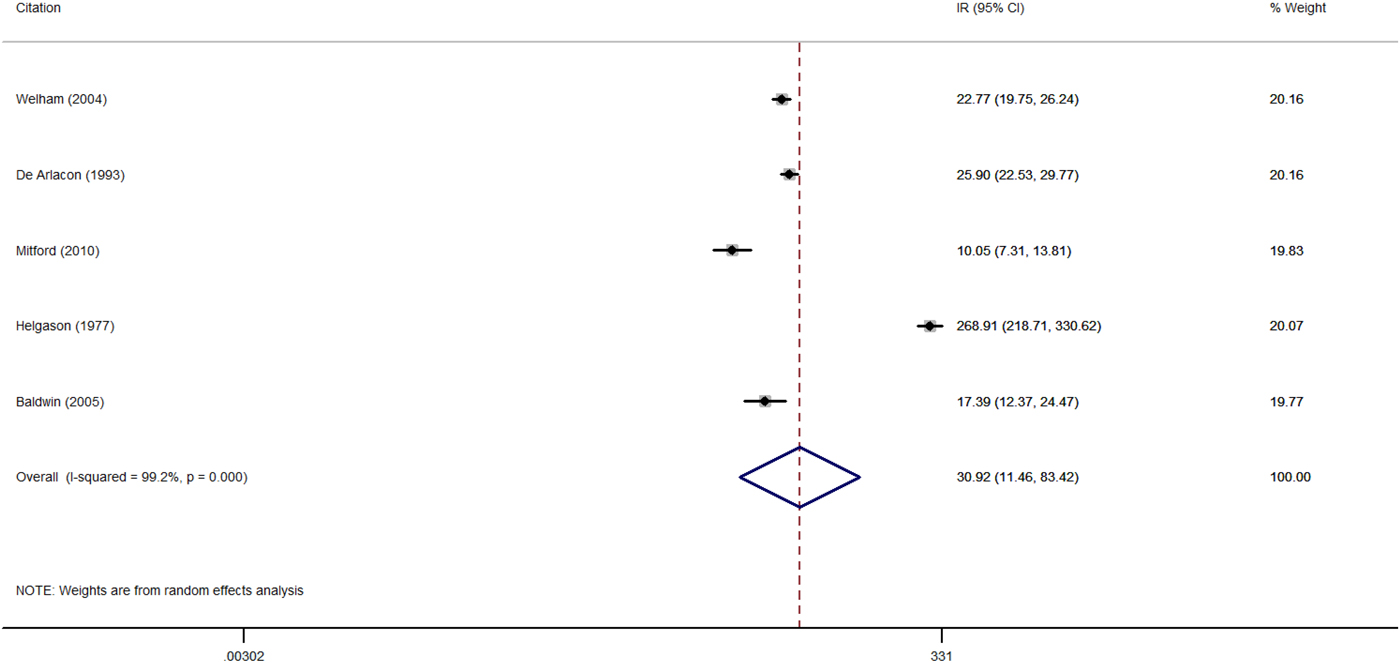
Five citations provided sufficient data to estimate an overall rate of affective psychosis in those aged 65 and above (Pooled incidence rate: 30.9 per 100 kpy, 95% CI 11.5–83.4; I 2 = 0.99; Fig. 4) (Helgason, Reference Helgason1977; de Alarcon et al. Reference de Alarcon, Seagroatt, Sellar and Goldacre1993; Welham et al. Reference Welham, Thomis and McGrath2004; Baldwin et al. Reference Baldwin, Browne, Scully, Quinn, Morgan and Kinsella2005; Mitford et al. Reference Mitford, Reay, McCabe, Paxton and Turkington2010). Four of these citations used ICD-8 and -9 diagnostic codes 296 and one used ICD-10 codes F30–F32.3. Four estimates lay between 10.1 per 100 kpy (95% CI 7.3–13.8) (Mitford et al. Reference Mitford, Reay, McCabe, Paxton and Turkington2010), and 25.9 (95% CI 22.5–29.8) (de Alarcon et al. Reference de Alarcon, Seagroatt, Sellar and Goldacre1993), with one study in Iceland reporting a substantially higher rate (268.9 per 100 kpy; 95% CI 218.7–330.6) (Helgason, Reference Helgason1977). Two further citations could not be included in the meta-analysis (Bland, Reference Bland1977; Bogren et al. Reference Bogren, Mattisson, Isberg, Munk-Jørgensen and Nettelbladt2010). Bogren et al. (Reference Bogren, Mattisson, Isberg, Munk-Jørgensen and Nettelbladt2010) only provided incidence data on more narrowly defined psychotic depression (excluding transient affective psychoses and bipolar disorder with psychosis): no cases of psychotic depression were identified in older males, whereas the rate for females was 16 per 100 kpy (95% CI 4.0–64.2). Bland (Reference Bland1977) reported an estimated incidence of affective psychoses in those aged 60 and above (rather than age 65) of 34.6 per 100 kpy (95% CI 32.4–36.9).
Forest plot of incidence rates of affective psychosis in those aged 65 and above. Incidence rate per 100 000 person-years at risk.

Three citations provided six estimates of the incidence of affective psychoses by sex (Helgason, Reference Helgason1977; Welham et al. Reference Welham, Thomis and McGrath2004; Baldwin et al. Reference Baldwin, Browne, Scully, Quinn, Morgan and Kinsella2005). Pooled incidence was higher amongst women (50.3 per 100 kpy; 95% CI 6.4–396.9; I 2 = 0.99) than men (35.1; 95% CI 9.8–125.5; I 2 = 0.97), although CIs around these estimates were wide, partially driven by the Icelandic study (Helgason, Reference Helgason1977) (Supplementary Fig. S7). There was no evidence from meta-regression that the incidence of affective psychosis differed between older men and women (OR = 1.22, 95% CI 0.03–49.35).
Eleven citations reported rates of affective psychoses amongst both younger and older adults (Adelstein et al. Reference Adelstein, Downham, Stein and Susser1968; Spicer et al. Reference Spicer, Hare and Slater1973; Bland, Reference Bland1977; Helgason, Reference Helgason1977; Salokangas, Reference Salokangas1979; Eagles & Whalley, Reference Eagles and Whalley1985; de Alarcon et al. Reference de Alarcon, Seagroatt, Sellar and Goldacre1993; Welham et al. Reference Welham, Thomis and McGrath2004; Baldwin et al. Reference Baldwin, Browne, Scully, Quinn, Morgan and Kinsella2005; Bogren et al. Reference Bogren, Mattisson, Isberg, Munk-Jørgensen and Nettelbladt2010; Mitford et al. Reference Mitford, Reay, McCabe, Paxton and Turkington2010). Interestingly, five citations reported the highest rates in older adults compared with amongst younger adults (Helgason, Reference Helgason1977; Salokangas, Reference Salokangas1979; Eagles & Whalley, Reference Eagles and Whalley1985; de Alarcon et al. Reference de Alarcon, Seagroatt, Sellar and Goldacre1993; Mitford et al. Reference Mitford, Reay, McCabe, Paxton and Turkington2010). Two further studies reported the highest rates of more narrowly defined psychotic depression after age 65 (Adelstein et al. Reference Adelstein, Downham, Stein and Susser1968; Bogren et al. Reference Bogren, Mattisson, Isberg, Munk-Jørgensen and Nettelbladt2010). Conversely, three studies reported highest rates of affective psychoses amongst young or middle-aged adults (Bland, Reference Bland1977; Welham et al. Reference Welham, Thomis and McGrath2004; Baldwin et al. Reference Baldwin, Browne, Scully, Quinn, Morgan and Kinsella2005). After age 65, four citations reported a decrease in incidence with age (Adelstein et al. Reference Adelstein, Downham, Stein and Susser1968; Spicer et al. Reference Spicer, Hare and Slater1973; Bland, Reference Bland1977; Helgason, Reference Helgason1977), which was more substantial amongst women in two studies (Adelstein et al. Reference Adelstein, Downham, Stein and Susser1968; Helgason, Reference Helgason1977). One study broadly reported increased incidence in older men, but a slight decrease with age in women (Eagles & Whalley, Reference Eagles and Whalley1985). No consistent pattern by age emerged in two further studies (Welham et al. Reference Welham, Thomis and McGrath2004; Baldwin et al. Reference Baldwin, Browne, Scully, Quinn, Morgan and Kinsella2005).
Incidence by migrant status
Only five non-overlapping studies reported incidence by migrant status (Malzberg, Reference Malzberg1967; Cochrane & Bal, Reference Cochrane and Bal1987; Reeves et al. Reference Reeves, Sauer, Stewart, Granger and Howard2001; Mitter et al. Reference Mitter, Krishnan, Bell, Stewart and Howard2004, Reference Mitter, Reeves, Romero-Rubiales, Bell, Stewart and Howard2005). These studies related to non-affective psychotic disorders (Reeves et al. Reference Reeves, Sauer, Stewart, Granger and Howard2001; Mitter et al. Reference Mitter, Krishnan, Bell, Stewart and Howard2004; Reference Mitter, Reeves, Romero-Rubiales, Bell, Stewart and Howard2005), or schizophrenia (Malzberg, Reference Malzberg1967; Cochrane & Bal, Reference Cochrane and Bal1987). Studies were conducted between 1960 and 2003 and were of average (60%) or high quality (40%). The incidence of non-affective psychotic disorders in older adults was generally substantially higher for those of black ethnicities compared with baseline populations (those of white British ethnicity) (Cochrane & Bal, Reference Cochrane and Bal1987; Reeves et al. Reference Reeves, Sauer, Stewart, Granger and Howard2001; Mitter et al. Reference Mitter, Krishnan, Bell, Stewart and Howard2004), whereas the pattern was less consistent amongst Asian migrants. For example, Mitter et al. (Reference Mitter, Krishnan, Bell, Stewart and Howard2004) reported a higher incidence amongst Black African elders in Tower Hamlets, 260 per 100 kpy (95% CI 55–750), compared with an incidence of 32 per 100 kpy amongst White British-born elders (95% CI 20–45). Conversely, incidence was lower amongst Bangladeshi elders (25 per 100 kpy; 95% CI 4–89). A higher incidence of schizophrenia was reported amongst white migrants to the New York State from other regions of the USA compared with those born in the New York State between ages 65 and 74, although this was not observed in those aged 75 and above (Malzberg, Reference Malzberg1967).
Incidence by time period and study quality
Given the substantial heterogeneity observed between estimates, we examined whether the incidence of any outcomes varied by time period of case ascertainment or study quality. It was only possible to carry out meta-regressions on overall incidence rates of schizophrenia (N = 11) and affective psychoses (N = 5), due to insufficient data in other categories. Variation in study quality amongst these citations was slightly narrower than variation across citations included in the entire study [study quality: schizophrenia [N = 11]: average (73%), high (27%); affective psychosis [N = 5]: average (80%), high (20%); all citations [N = 41]: poor (7%), average (71%), or high (22%)] (see Table 1).
Using random-effects meta-regressions, we found no evidence that study quality or time of case ascertainment (using mid-year) influenced incidence rates of schizophrenia or affective psychosis in those aged 65 and above [study quality: affective psychosis OR = 1.37 (95% CI 0.32–5.78), schizophrenia: OR = 1.55 (95% CI: 0.77–3.13)], [case ascertainment period: affective psychosis OR = 0.92 (95% CI 0.83–1.02), schizophrenia: OR = 1.00 (95% CI 0.95–1.05)].
Discussion
Summary of principal findings
In the largest systematic review of the incidence of VLOSLP to date, we found evidence of a substantial burden of disorder which increased with age after 65 years old. Our review revealed substantial heterogeneity in estimates of incidence, which may have been driven by the relative absence of robust epidemiological studies in this field compared with adult-onset psychosis. Where the evidence was most consistent, we found higher rates of non-affective psychosis, including schizophrenia in older women than men, and higher rates of non-affective psychosis in migrant groups. The overall pooled incidence of affective psychosis reported in those over 65 years was high. We failed to identify any epidemiological study which had investigated the incidence of VLOSLP by several putative risk factors, including SES, social isolation or sensory impairments. Taken together, these findings point toward a lack of a robust epidemiological evidence base important in informing etiology and public mental health about variation in the incidence of VLOSLP.
Strengths and weaknesses
To our knowledge, this is the first study to systematically review the literature on the incidence of affective and non-affective psychotic disorders specifically amongst older adults. Strengths of this review include pre-registration of our study and a thorough literature search involving comprehensive search terms, bibliography searches, and contacting authors directly to request additional data. We used strict eligibility criteria, including only epidemiological studies focused on new cases of psychotic disorders in old age.
We noted some limitations inherent to the studies included in this review. First, many citations did not provide standard errors or CIs around estimates, limiting insight into the precision of estimates and preventing the pooling of incidence rates. Second, variation in age bands across studies hindered our ability to pool some estimates. Third, although we rated few studies as poor, certain quality criteria were consistently lacking across studies. For example, only 30% of included studies attempted to validate diagnoses against operationalized research criteria, which may have affected their validity and contributed to the high levels of between-study heterogeneity observed here. Additionally, only 5% of studies took a population-based approach to case ascertainment, with reliance on hospital admissions common across studies, which may have led to underestimates of incidence.
Several limitations of our review should also be considered. First, pooled incidence rates should be interpreted cautiously, and alongside our narrative review, given high levels of heterogeneity between estimates. Second, due to our inclusion of only published English language papers, we may have missed relevant unpublished papers and those published in other languages, although findings from our funnel plot and Egger's test did not indicate publication bias. Third, although we examined incidence in relation to study quality, there was a high tendency to the mean amongst quality ratings, which may have influenced findings about the lack of association between incidence and study quality.
Meaning of findings
The lack of epidemiological research focused on VLOSLP incidence highlights the need for further high-quality, primary research examining incidence variation in relation to a range of potential risk factors for VLOSLP, including SES, sensory impairment, social isolation, and traumatic life events. This could have important implications for our understanding of the etiology of VLOSLP and could help to inform public mental health and service commissioning and planning.
The relatively low incidence of schizophrenia observed amongst older adults in this review (vis-à-vis younger adults) could reflect ‘true’ rates in this group. Overall rates of non-affective psychotic disorders identified in this review were substantially higher than those for schizophrenia alone, suggesting that older adults are more likely to be diagnosed with other non-affective psychotic disorders, perhaps due to atypical clinical presentation; such patients often present as highly delusional, but lacking negative symptoms and thought disorder (Pearlson et al. Reference Pearlson, Kreger, Rabins, Chase, Cohen and Wirth1989). Alternatively, given that many included citations did not attempt to ascertain cases from the community and often relied on hospital admissions, it is possible that some studies underestimated the true incidence of VLOSLP. This bias could be particularly problematic in older adults experiencing psychotic phenomena, given that they may be less likely to contact services due to higher levels of functioning (Kay & Roth, Reference Kay and Roth1961), and a lack of social contact (Castle & Murray, Reference Castle and Murray1993). Our study found relatively high rates of affective psychoses after age 65 years old, which again may reflect differing symptomatic presentation of psychotic disorders in later life.
Our finding of higher incidence rates of non-affective psychotic disorders amongst older women compared with men distinguishes psychotic disorders with late-onset from those with an earlier age-at-onset. Data from this review suggest that the previously identified peak in incidence amongst women in middle age (Häfner et al. Reference Häfner, Riecher-Rössler, Der Heiden, Maurer, Fätkenheuer and Löffler1993; Coid et al. Reference Coid, Kirkbride, Barker, Cowden, Stamps and Yang2008) may be maintained into older age. The mechanisms underlying the higher rates of psychosis observed in middle-aged and older women are unclear. It is possible that changing social roles and demands experienced by women in middle age and later in life could be implicated. Additionally, the anti-dopaminergic properties of estrogen may operate as a protective factor against the development of psychosis in younger women, and the drop in estrogen in middle age could lead to an increased risk of psychosis (Riecher-Rössler & Häfner, Reference Riecher-Rössler and Häfner1992; Häfner, Reference Häfner2003).
VLOSLP incidence was generally higher amongst migrant groups than baseline populations, which corresponds with the literature on psychosis in adults under age 65 (Kirkbride et al. Reference Kirkbride, Errazuriz, Croudace, Morgan, Jackson and Boydell2012). Various potential explanations for this association have been put forward, including stressors experienced prior to, during, and post-migration (Cantor-Graae et al. Reference Cantor-Graae, Pedersen, McNeil and Mortensen2003; Veling et al. Reference Veling, Selten, Susser, Laan, Mackenbach and Hoek2007; Morgan & Hutchinson, Reference Morgan and Hutchinson2009; Kirkbride et al. Reference Kirkbride, Errazuriz, Croudace, Morgan, Jackson and Boydell2012). Further research is needed to examine the association between migration and psychosis incidence in older adults and to explore whether migration imparts the same social stressors on older adults as at other ages.
Conclusion
Our research highlighted a substantial and increasing incidence of disorder after 65 years old, with some evidence of higher rates in women and migrants. The dearth of research on other putative risk factors for VLOSLP, such as sensory impairments, SES, or social adversities highlight the need for further high-quality research designed to precisely delineate the descriptive epidemiology of different psychotic disorders in older adults using large population-based cohorts. Only via robust, evidence-based research will it be possible to provide appropriate mental health services for those who experience a first episode of psychosis later in life; our study provides some quantification of this burden, but suggests more research is urgently required given the aging population profiles of many countries.
Supplementary material
The supplementary material for this article can be found at https://doi.org/10.1017/S0033291717003452
Acknowledgements
The authors would like to thank Professor John Waddington, Professor Jim van Os, Dr Margriet van der Werf, Dr Mats Bogren, and Professor Carsten Bøcker Pedersen for providing data used in this review.
Financial support
This work was supported by the Medical Research Council (J.S., grant number 159842), and a Sir Henry Dale Fellowship (J.B.K., grant number 101272/Z/13/Z), jointly funded by the Wellcome Trust and the Royal Society.
Declaration of Interest
None.