The hallmark of psychopathy is deficient emotional responding. Extensive debate surrounds the underlying nature of this deficit; however, the range of findings supports that the psychopathic emotional deficit is multifaceted. Youth with psychopathic traits show emotional deficits that are generalized across emotion categories and modalities (e.g., facial and vocal; Dawel, O'Kearney, McKone, & Palermo, Reference Dawel, O'Kearney, McKone and Palermo2012), but most pronounced for sadness (Blair, Colledge, Murray, & Mitchell, Reference Blair, Colledge, Murray and Mitchell2001) and fear (Dadds et al., Reference Dadds, Perry, Hawes, Merz, Riddell, Haines and Abeygunawardane2006; Marsh & Blair, Reference Marsh and Blair2008). One extensively studied domain of emotional functioning in psychopathy is in the neurocognitive systems modulating fear (Fowles, Reference Fowles1980; Gray, Reference Gray1987). Individuals with psychopathic traits show reduced psychophysiological (i.e., electrodermal and cardiovascular) responding when anticipating punishment and a failure to learn to inhibit a punished response when a reward-oriented response set is primed (Blair, Reference Blair2001; Newman, Patterson, & Kosson, Reference Newman, Patterson and Kosson1987).
Adults high on psychopathic traits show deficient aversive startle potentiation that is thought to reflect dysfunction in the defensive motivational system, that is, the amygdala (Blair, Reference Blair2003; Patrick, Reference Patrick, Herve and Yuille2007), and compared with nonpsychopathic individuals they show attenuated startle potentiation to unpleasant stimuli (Blair, Reference Blair2013; Levenston, Patrick, Bradley, & Lang, Reference Levenston, Patrick, Bradley and Lang2000). Studies using the startle modulation paradigm among children and adolescents with antisocial behavior, differentiated on the basis of psychopathic or callous–unemotional (CU) traits (i.e., lack of empathy/guilt), have produced mixed findings (e.g., Fanti, Panayiotou, Lazarou, Michael, & Georgiou, Reference Fanti, Panayiotou, Lazarou, Michael and Georgiou2016; Syngelaki, Fairchild, Moore, Savage, & van Goozen, Reference Syngelaki, Fairchild, Moore, Savage and van Goozen2013). Several studies have failed to replicate among youth the finding that individuals scoring high on psychopathic traits show deficient fear-potentiated startle (e.g., Syngelaki et al., Reference Syngelaki, Fairchild, Moore, Savage and van Goozen2013). For example, Fanti et al. (Reference Fanti, Panayiotou, Lazarou, Michael and Georgiou2016) found deficits in fear potentiated startle for only a subset of antisocial children with CU traits who also scored high on insensitivity to punishment and low on behavioral inhibition, characteristics associated with primary psychopathy (Lykken, Reference Lykken1995). Thus, these findings support that there might be heterogeneous groups of children with CU traits showing distinct patterns of startle reactivity.
There is accumulating empirical support for heterogeneity in CU traits and psychopathy in the identification of primary and secondary subtypes, or variants. Whereas most contemporary conceptualizations of psychopathy derive from Cleckley's (Reference Cleckley1941) case studies and have come to be known as primary psychopathy, conceptualizations of secondary psychopathy derive from Karpman's (Reference Karpman1941) clinical work. While phenotypically indistinguishable with regard to callous, conning, and antisocial behaviors, Karpman (Reference Karpman1941) viewed the lack of an affective deficit, which was conceptualized as a dispositional deficit in emotional responsiveness and by Lykken (Reference Lykken1995) as a failure to experience anticipatory fear/arousal, in secondary psychopathy as a key distinction from primary psychopathy. Other features in the nomological network of early theoretical secondary psychopathy subtypes included an acquired disturbance in emotional functioning (i.e., hostility, anxiety, and depression) stemming chiefly from abusive parenting or other environmental adversity, impulsivity, and greater amenability to treatment (Karpman, Reference Karpman1941, Reference Karpman1948).
The dominant strategy for uncovering psychopathy and CU variants in contemporary subtyping research is various clustering methods, but the range of indicators included in such analyses vary considerable, from general personality traits (Hicks, Markon, Patrick, Krueger, & Newman, Reference Hicks, Markon, Patrick, Krueger and Newman2004; Hicks, Vaidyanathan, & Patrick, Reference Hicks, Vaidyanathan and Patrick2010) to psychopathy facets (Mokros et al., Reference Mokros, Hare, Neumann, Santtila, Habermeyer and Nitschke2015) to a combination of psychopathy/CU factors with (a) anxiety symptoms; (b) indices of childhood maltreatment/trauma exposure; (c) posttraumatic stress symptoms; (d) behavioral inhibition/sensation seeking; and/or (e) antisocial behavior, predominating in the juvenile literature (Bennett & Kerig, Reference Bennett and Kerig2014; Kahn et al., Reference Kahn, Frick, Youngstrom, Kogos Youngstrom, Feeny and Findling2013; Kimonis, Skeem, Cauffman, & Dmitrieva, Reference Kimonis, Skeem, Cauffman and Dmitrieva2011; Mokros et al., Reference Mokros, Hare, Neumann, Santtila, Habermeyer and Nitschke2015). Similar to the broader field where there is considerable disagreement and dispute over how psychopathy is conceptualized (Lilienfeld, Watts, Francis Smith, Berg, & Latzman, Reference Lilienfeld, Watts, Francis Smith, Berg and Latzman2015), in the younger empirical subfield of psychopathy subtypes, there is no single established approach to operationalizing psychopathy variants. However, across approaches, there is remarkable consistency with studies of youth consistently identifying at least two high psychopathy or CU subtypes, a primary variant with no notable history of social or environmental adversity in childhood and low to average anxiety levels, and a secondary variant with a marked history of maltreatment/ traumatic exposure and pronounced internalizing symptoms (anxiety and depression; Kahn et al., Reference Kahn, Frick, Youngstrom, Kogos Youngstrom, Feeny and Findling2013; Kimonis et al., Reference Kimonis, Skeem, Cauffman and Dmitrieva2011; Vaughn, Edens, Howard, & Smith, Reference Vaughn, Edens, Howard and Smith2009).
Across CU subtyping studies, primary and secondary variants do not differ significantly in their overall levels of CU traits (Cecil et al., Reference Cecil, Lysenko, Jaffee, Pingault, Smith, Relton and Barker2014; Fanti, Demetriou, & Kimonis, Reference Fanti, Demetriou and Kimonis2013; Kahn et al., Reference Kahn, Frick, Youngstrom, Kogos Youngstrom, Feeny and Findling2013; Kimonis, Frick, Cauffman, Goldweber, & Skeem, Reference Kimonis, Frick, Cauffman, Goldweber and Skeem2012; Kimonis et al., Reference Kimonis, Skeem, Cauffman and Dmitrieva2011). This is consistent with Karpman's (Reference Karpman1948) assertion that the two variants are almost indistinguishable clinically (p. 457). However, at least one study has reported differences between CU variants across CU trait dimensions. In an incarcerated adolescent male sample, Kimonis, Fanti, Isoma, and Donoghue (Reference Kimonis, Fanti, Isoma and Donoghue2013) found that primary CU variants scored significantly higher than secondary variants and low CU groups on the unemotional scale of the Inventory of Callous–Unemotional Traits that measures restricted and shallow affective experience and expression. Another important difference they identified was in the specific maltreatment experiences of CU variants; secondary variants reported experiencing greater sexual abuse than primary variants and controls, whereas primary variants reported greater neglect. Within an adolescent community mental health sample, Kahn et al. (Reference Kahn, Frick, Youngstrom, Kogos Youngstrom, Feeny and Findling2013) also found higher rates of sexual abuse, as well as physical abuse, among secondary variants. Apart from these preliminary findings suggesting distinctions in the CU trait profiles and types of maltreatment experienced by variants, the vast majority of prior subtyping studies used total scores, and further research is needed to examine possible differences.
In support of Karpman's (Reference Karpman1948) perspective that deficits in affective functioning are a primary distinguishing feature between psychopathy subtypes, support is accumulating for differences between psychopathy/CU variants across various indices of deficient emotional functioning. For example, secondary CU variants failed to show reduced attentional orienting to negative stimuli that was characteristic of primary variants (Kimonis et al., Reference Kimonis, Frick, Cauffman, Goldweber and Skeem2012). Similarly, Dadds, Kimonis, Schollar-Root, Moul, and Hawes (Reference Dadds, Kimonis, Schollar-Root, Moul and Hawes2016) found that maltreatment moderated the association between CU traits and emotional recognition among a clinic-referred sample of children. That is, youth high on CU traits with moderate or high levels of maltreatment history (i.e., secondary variants) failed to show the emotion recognition deficits that characterized those with low maltreatment levels (i.e., primary variants). Thus, investigating the co-occurrence between CU traits and maltreatment in relation to emotional processing is of great importance.
There has been relatively little focus on whether fear and aversive startle potentiation deficits differentiate psychopathy variants, especially among youth. This is an important focus of study as associations between startle deficits and psychopathic/CU traits may be obscured by including greater proportions of individuals with secondary psychopathy that fail to show the same deficits in emotional arousal as primary variants. To illustrate, among a sample of female offenders, Sutton, Vitale, and Newman (Reference Sutton, Vitale and Newman2002) found that secondary variants, classified by high psychopathy and anxiety scores, were similar to nonpsychopaths in that they failed to show the attenuated reflex magnitude to unpleasant images displayed by primary psychopathy variants. Comparing variants differentiated on the basis of anxiety, on affective startle modulation, may be problematic as prior work has linked anxiety to exaggerated startle potentiation to aversive stimuli and general overreactivity of the defensive system (e.g., Fanti, Panayiotou, Kyranides, & Avraamides, Reference Fanti, Panayiotou, Kyranides and Avraamides2015; Grillon, Reference Grillon2002; Lang, Bradley, & Cuthbert, Reference Lang, Bradley and Cuthbert1998). To avoid this confound, and in the context of remarkable convergence in subtyping findings across approaches, maltreatment was used to distinguish CU variants in the present study rather than anxiety. Together, these findings suggest that primary and secondary psychopathy/CU variants might be associated in opposite directions with aversive startle potentiation, pointing to distinct deficits in emotional and defensive regulation.
The Present Study
It is now well established that psychopathy is a heterogeneous construct that likely develops through multiple trajectories, at least one of which is thought to be rooted in the experience of adverse early life events, known as secondary psychopathy (for a review, see Skeem, Poythress, Edens, Lilienfeld, & Cale, Reference Skeem, Poythress, Edens, Lilienfeld and Cale2003). Emerging research supports that adult and juvenile secondary psychopathy/CU variants fail to show deficits in orienting to and recognizing emotion that characterize their primary counterparts (Bagley, Abramowitz, & Kosson, Reference Bagley, Abramowitz and Kosson2009; Kimonis et al., Reference Kimonis, Frick, Cauffman, Goldweber and Skeem2012). To date, only one study has examined differences in fear-potentiated startle between psychopathy variants (Sutton et al., Reference Sutton, Vitale and Newman2002), and it focused on adult female offenders who notoriously fail to show emotional deficits observed among male populations, possibly attributable to a greater representation of secondary variants (Hicks et al., Reference Hicks, Vaidyanathan and Patrick2010; Vitale & Newman, Reference Vitale and Newman2001). The present study expands upon this research and fills a gap in knowledge by examining affective startle modulation among a sample of male juvenile offenders. We hypothesize that primary variants will show attenuated aversive startle potentiation due to their emotional underarousal, whereas secondary CU variants will show greater startle potentiation to aversive stimuli, consistent with prior findings of heightened emotional reactivity. We further hypothesize that primary CU variants will show greater unemotional traits and a history of neglect relative to secondary variants that will show greater physical and sexual abuse histories, consistent with prior research (Kahn et al., Reference Kahn, Frick, Youngstrom, Kogos Youngstrom, Feeny and Findling2013; Kimonis et al., Reference Kimonis, Fanti, Isoma and Donoghue2013). In testing these hypotheses, we aim to contribute new knowledge toward developing an etiological model of emotional processes associated with psychopathy.
Method
Participants
Participants included 238 male juvenile offenders housed in a secure confinement facility in the Southeastern United States. Youth between the ages of 14 and 18 years (M age = 16.8, SD = 1.11) who were not diagnosed with an intellectual disability or a psychotic disorder were eligible to enroll in the study. One hundred youth self-identified as Caucasian (42%), 85 as African American (36%), 40 as Hispanic (17%), 3 as Native American (0.1%), and 10 as mixed race/ethnicity (4%), an ethnic composition that is representative of youth incarcerated in this region of the United States (Snyder & Sickmund, Reference Snyder and Sickmund2006).
Procedure
A university institutional review board and the Florida Department of Juvenile Justice approved all study procedures. Youth assented to participate, and parental informed consent was obtained by telephone for youth under age 18. The majority of parents/guardians contacted consented to their child's participation in the study (89%); the youth assent rate was 88%. Four youth were discharged before the study protocol could be completed. Study assessments for the larger study took place over the course of two sessions that occurred on separate days. In Session 1, youth completed a 1- to 2-hr set of study questionnaires presented in randomized order on a laptop computer, and researchers completed a comprehensive review of each youth's institutional files. In Session 2, psychophysiological measures were taken while the participant performed computer tasks. Participants were compensated with $10 for their participation in each of the two sessions ($20 total), which was provided upon release from the facility due to institutional policy.
Measures
Clustering variables
CU traits
CU traits were assessed using the self-report version of the 24-item Inventory of Callous–Unemotional Traits (ICU; Frick, Reference Frick2004). ICU items, such as “I do not show my emotions to others,” are rated on a 4-point Likert scale from 0 (not at all true) to 3 (definitely true), with higher scores indicating greater CU traits. The construct validity of ICU scores is supported in community, clinic-referred, and incarcerated youth samples. For example, ICU total scores are associated with aggression, delinquency, and psychosocial impairment, as well as deficits in emotional responding on psychophysiological measures (Fanti, Frick, & Georgiou, Reference Fanti, Frick and Georgiou2009; Kimonis, Frick, Skeem, et al., Reference Kimonis, Frick, Skeem, Marsee, Cruise, Muñoz and Morris2008). Factor analytic studies support three independent subfactors (i.e., uncaring, callousness, and unemotional) in addition to a general CU factor (i.e., three-factor bifactor model; Essau, Sasagawa, & Frick, Reference Essau, Sasagawa and Frick2006; Fanti et al., Reference Fanti, Frick and Georgiou2009; Kimonis, Frick, Skeem, et al., Reference Kimonis, Frick, Skeem, Marsee, Cruise, Muñoz and Morris2008). In the present study, internal consistency of ICU total scores was good (α = 0.82), acceptable for uncaring (α = 0.77) and callous (α = 0.78) subscales, and insufficient for the unemotional subscale (α = 0.58).
Childhood maltreatment
The Childhood Trauma Questionnaire (CTQ; Bernstein & Fink, Reference Bernstein and Fink1998) is a 28-item self-report measure assessing different types of childhood maltreatment, producing five clinical subscales each consisting of 5 items: physical abuse, sexual abuse, emotional abuse, physical neglect, and emotional neglect. In addition, 3 items are used for the minimization/denial scale. CTQ items are rated on a 5-point scale from never true to very often true. CTQ subscales were internally consistent in past research with α coefficients ranging from 0.80 to 0.97 (Bernstein et al., Reference Bernstein, Fink, Handelsman, Foote, Lovejoy, Wenzel and Ruggiero1994). In addition, CTQ scores demonstrated a test–retest correlation of 0.88, and convergence with the Childhood Trauma Interview (Bernstein & Fink, Reference Bernstein and Fink1998). Prior studies with juvenile offender samples report adequate internal consistency of CTQ scores with the exception of physical neglect (Krischer & Sevecke, Reference Krischer and Sevecke2008). Similarly, internal consistency was good for the CTQ total score (α = 0.87), acceptable to good across the majority of the subscales (physical abuse, α = 0.78; sexual abuse, α = 0.84; emotional abuse, α = 0.77; emotional neglect, α = 0.84), and marginal for physical neglect (α = 0.62) in the present study.
Antisocial–aggressive behavior
Participants' self-report of aggression was measured using the Peer Conflict Scale (Marsee et al., Reference Marsee, Barry, Childs, Frick, Kimonis, Muñoz and Lau2011). The Peer Conflict Scale is a 40-item self-report scale that includes 20 items measuring reactive aggression (10 reactive overt items, e.g., “When someone hurts me, I end up getting into a fight,” and 10 reactive relational items, e.g., “If others make me mad, I tell their secrets”) and 20 items measuring proactive aggression (10 proactive overt items, e.g., “I start fights to get what I want,” and 10 proactive relational items, e.g., “I gossip about others to become popular”). Items are rated on a 4-point scale from 0 (not at all true) to 3 (definitely true), and scores are calculated by summing the items to create four subscales. Internal consistency was excellent for total overt aggression scores (α = 0.91).
Outcome variables
Anxiety
The Revised Children's Manifest Anxiety Scale (RCMAS; Reynolds & Richmond, Reference Reynolds and Richmond1985) is a 37-item standardized measure designed to assess anxiety in youth between the ages of 6 and 19 years. The youth responds to each question (e.g., “I worry about what is going to happen”) with a “Yes” or “No” answer. The RCMAS is internally consistent (α = 0.85; Reynolds & Richmond, Reference Reynolds and Richmond1985) and possesses moderate test–retest reliability over a 9-month period (r = .63; Reynolds, Reference Reynolds1981). In the present study, RCMAS total scores demonstrated good internal consistency (α = 0.86).
Picture-startle paradigm
Stimuli for the affective picture-startle paradigm consisted of 60 images drawn from the International Affective Picture System (Center for the Study of Emotion and Attention, 1999), including 20 aversive, 20 pleasant, and 20 neutral images. Pictures were selected on the basis of normative ratings of valence, arousal, and appropriateness for the age of the study sample. The aversive category consisted of 10 victim (scenes depicting threat to others, e.g., individuals being attacked) and 10 threat (scenes depicting direct threat to viewer, e.g., aimed weapons or attacking animals) images. Pleasant images consisted of 10 nurture (scenes depicting affiliative/attachment objects, e.g., babies or small animals) and 10 action (scenes depicting thrill and adventure activities, e.g., skydiving or whitewater rafting) pictures. Neutral images included a variety of affectively neutral pictures depicting mundane buildings and common household objects (Bernat, Patrick, Benning, & Tellegen, Reference Bernat, Patrick, Benning and Tellegen2006).
Each image was presented for 6 s, followed by an intertrial interval of 12 s. A small white fixation cross was presented in the center of the screen for 6 s prior to each picture display. In order to elicit the startle blink reflex, acoustic startle probes were delivered at various intervals during the picture-viewing procedure. Startle probes consisted of a 50-ms burst of white noise with approximately 10 μs rise time, delivered binaurally at a volume of 105 dB via Sennheiser headphones. Noise probe volume was calibrated prior to each session using a Radio Shack audiometer. Probes were delivered during the 6-s viewing period for 54 of the 60 picture trials, and occurred with equal frequency 3, 4, or 5 s after picture onset. On three of the nonprobed picture trials, startle probes were delivered during the intertrial interval 1, 1.5, or 2 s following picture offset; on the remaining three trials, no startle probes were presented. Preceding the main picture series in which responses were recorded, a practice series of three probed picture trials was presented in order to familiarize participants with the picture and startle probe stimuli and to allow for habituation of large initial blink responses, after which final instructions were given and the task commenced.
Three pseudorandom picture presentation orders were utilized and counterbalanced across participants. Each order consisted of three blocks of 20 picture trials; each block included 18 probed pictures, 1 intertrial interval startle trial, and 1 nonprobed trial. Among the 18 probed pictures in each block, each valence category (aversive, pleasant, and neutral) and thematic content category (victim, threat, nurture, and action) was represented equally; that is, 6 aversive images (3 victim, 3 threat), 6 pleasant images (3 nurture, 3 action), and 6 neutral images were probed per block. Participants were seated in a dimly lit testing room directly in front of a flat-screen LCD computer monitor, upon which picture stimuli were presented. Participants were instructed that they would be viewing a series of pictures, and to view each image for the entire time it was onscreen. They were also advised that they would periodically hear loud noise clicks via the headphones, which could be disregarded. A Dell Latitude E6400 laptop computer running E-Prime 2.0 software (Psychology Software Tools, Inc.) controlled stimulus presentation. A second Dell laptop running AcqKnowledge 4.1 (Biopac Systems, Inc.) software controlled physiological data acquisition and synchronization with stimulus presentation.
Psychophysiological data acquisition and reduction
Physiological signals (electromyography [EMG]) were recorded digitally at a sampling rate of 1000 Hz during the picture-viewing task and processed offline using AcqKnowledge 4.1 software. Blink EMG responses to noise probes were measured according to established guidelines (Blumenthal et al., Reference Blumenthal, Cuthbert, Filion, Hackley, Lipp and Van Boxtel2005) using a pair of Biopac 4-mm shielded Ag-AgCl electrodes (model EL 254S) filled with NaCl electrolyte gel, positioned over the orbicularis oculi muscle under the left eye. The first electrode was placed directly beneath the pupil, with the second electrode placed adjacent to and lateral to the first. Following data collection, a 10- to 500-Hz digital bandpass filter was applied to raw EMG signals; filtered EMG signals were then rectified and smoothed using a 10-ms moving average. The magnitude of the startle blink response to the noise probe was scored using an algorithm in AcqKnowledge. The peak of the blink response was quantified as the maximum point occurring within a window 30–120 ms following the onset of the noise probe, relative to the median level of activity recorded during a 50-ms baseline period preceding probe onset. To deal with large interindividual differences in overall startle magnitude, raw blink response data were standardized across trials for each participant by converting to T scores, which were used in the analyses reported here.
Plan of analyses
Correlational analyses were initially used to examine the interrelationship between main study variables. Latent profile analysis (LPA) using Mplus 6.1 statistical software (Muthén & Muthén, Reference Muthén and Muthén2010) was then used to identify distinct groups of individuals based on their scores on CU traits, maltreatment, and antisocial–aggressive behavior. LPA is an extension of latent class analysis used to identify subgroups within a larger population on continuous measures (Muthén & Muthén, Reference Muthén and Muthén2010). The Bayesian information criterion (BIC), Lo–Mendel–Rubin (LMR) statistic, posterior probabilities, and entropy values are used as statistical criteria to identify the optimal number of groups to retain (Nylund, Asparouhov, & Muthen, Reference Nylund, Asparouhov and Muthen2007). The model with the lowest BIC value is preferred. A nonsignificant chi-square value (p > .05) for the LMR statistic suggests that a model with one fewer class is preferred. Average posterior probabilities and entropy values equal to or greater than 0.70 indicate clear classification and greater power to predict class membership (Nagin, Reference Nagin2005).
A repeated measures analysis of variance (ANOVA) was conducted to examine the effects of the picture manipulation on startle modulation. To test study aims, ANOVAs were carried out to investigate how the identified groups differed on startle reactivity to aversive and pleasant pictures, and on patterns of aggressive behavior. For startle outcomes, two sets of analyses were conducted examining the effect of picture manipulation and identified groups on startle modulation during (a) aversive and pleasant images (valence), and (b) threat, victim, action, and nurture images (content specific). ANOVAs were also used to compare groups on ICU and CTQ subscales. Post hoc Bonferroni tests were used in all ANOVAs and partial eta squares (η2 = 0.01–0.06 small effect, η2 = 0.06–0.14 medium effect, η2 > 0.14 large effect; Cohen, Reference Cohen1988) and standardized mean difference effect sizes (Cohen d; d = 0.20 small effect, d = 0.50 medium effect, d = 0.80 large effect; Cohen, Reference Cohen1992) are reported.
Results
Descriptive statistics
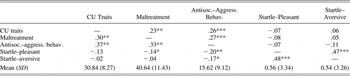
Table 1 presents descriptive statistics and correlations among the main study variables. The three clustering variables were moderately intercorrelated based on zero-order correlations. Before proceeding with the ANOVA comparisons, we tested the distribution of the standardized residuals of each variable under investigation against the grouping variables. The assumption of normal distribution of residuals was adequately met since the skewness of the standardized residuals for the startle measures were small and below 1, ranging from 0.21 (victimization) to 0.39 (threat).
Descriptive statistics and correlational analyses between main study variables

Note: In the bottom half we report zero-order correlations and in the top half partial correlations controlling for the other clustering variables. CU, Callous–unemotional traits.
*p < .05. **p < .01. ***p < .001.
Identifying groups based on LPA
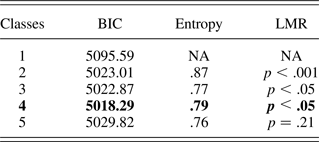
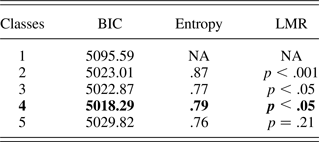
To identify the optimal number of groups to retain, five LPA models were estimated, ranging from one to five groups (Table 2). The BIC statistic decreased from the three-group to the four-group model and increased from the four-group to the five-group model. The LMR statistic fell out of significance for the five-group model, suggesting that the four-group model better fit the data. The mean posterior probability scores for the four identified groups ranged from .79 to .93 and the entropy value was .79, suggesting that the groups were well separated.
Model fit statistics
Note: BIC, Bayesian information criterion; LMR, Lo–Mendel–Rubin statistic. The bold class values indicate the model fit the data better.
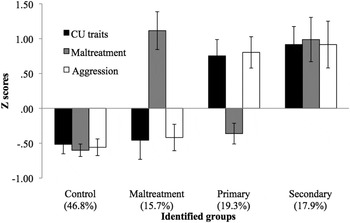
Figure 1 shows standardized scores (z scores) by class on each of the three measures included in the analysis that formed the groups. As seen in the figure, the majority of the sample scored low on all three measures under investigation (n = 111) and was termed the control group. Individuals in the second group, labeled the maltreated group, were exposed to high levels of maltreatment but scored below average on CU traits and antisocial–aggressive behavior (n = 37). Individuals in the third group, labeled primary psychopathy, scored high on CU traits and antisocial–aggression but low on maltreatment (n = 46). Finally, individuals in the fourth group scored high on all three measures under investigation, and were labeled as secondary psychopathy (n = 42). The identified groups did not differ in terms of age, F (3, 227) = 0.62, p = .60, η 2 = 0.01, or ethnicity, χ2 (12, N = 232) = 8.15, p = .77.
Groups formed with latent profile analysis.

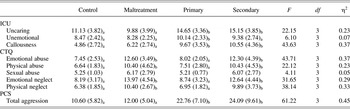
Table 3 presents findings from ANOVAs comparing the identified groups on ICU and CTQ subscales. Findings suggested that youth in both the primary and the secondary CU variant groups scored higher on the uncaring and callousness subscales compared to control and maltreatment groups; however, primary CU variants scored highest on the unemotional subscale. Further, youth in the maltreatment and secondary CU groups scored higher on emotional and physical abuse and neglect than primary CU variants and controls. The groups were not significantly differentiated on sexual abuse.
Comparisons between the identified groups on subscales of the questionnaires used in latent profile analysis

Note: Estimated marginal means (standard deviations) are provided. Different subscripts denote significant differences between groups in post hoc pairwise comparisons. All F statistics are significant at the p < .01 level, except sexual abuse. ICU, Inventory of Callous–Unemotional Traits; CTQ, Child Trauma Questionnaire; PCS, Peer Conflict Scale.
Anxiety
ANOVA was also used to compare the identified groups on RCMAS anxiety T scores. Findings indicated that only the secondary (M = 61.88, SE = 1.73) group scored significantly higher than the control (M = 53.09, SE = 1.09; p < .001) group on anxiety, F (3, 228) = 6.33, p < .001, η 2 = 0.08, and was the only group whose T score was higher than 60, which denotes clinically significant symptoms (Reynolds & Richmond, Reference Reynolds and Richmond1985). The maltreatment (M = 57.17, SE = 1.94) and primary CU (M = 56.72, SE = 1.75) groups scored similarly on anxiety.
Emotional manipulation check
Startle modulation: Emotional valence effects
Startle index variables were difference scores computed by subtracting the startle amplitude (T scores) during neutral pictures from the startle amplitude during aversive and pleasant pictures. Hence, in the following analyses, responses to neutral pictures are treated as the baseline affective condition. Repeated measures ANOVAs were conducted with startle modulation as the dependent variable and the three levels of picture type as the independent variable. Greenhouse–Geisser corrected effects are reported. The results showed that differences in modulation were significant between types of images, F (2, 198) = 3.71, p < .05, ε = 0.99: post hoc comparisons indicated that pleasant (M = 50.22, SE = 0.13; p < .05) and aversive (M = 50.20, SE = 0.13; p < .05) pictures resulted in significantly larger startle responses compared to neutral (M = 49.58, SE = 0.13) pictures.
Startle modulation: Content-specific effects
Repeated measures ANOVAs were conducted with startle modulation as the dependent variable and the five levels of picture type as the independent variable (threat, victim, nurture, action, and neutral). Greenhouse–Geisser corrected effects are reported. The results showed that differences in modulation were significant between types of images, F (4, 196) = 3.14, p = .01, η2 = 0.02, ε = 0.95: post hoc comparisons indicated that victim (M = 50.35, SE = 0.19; p < .01; d = 0.44) and action (M = 50.56, SE = 0.20; p < .05; d = 0.55) pictures resulted in significantly larger startle responses compared to neutral (M = 49.63, SE = 0.13) pictures, with moderate effect sizes. The average scores of threat (M = 50, SE = 0.20; ns; d = 0.22) and nurture (M = 49.83, SE = 0.21; ns; d = 0.12) pictures were higher than neutral pictures, although the difference was not significant with small effect sizes.
To take into account the hypothesized low startle reactivity of the primary psychopathy group, these analyses were repeated including only the control, maltreated, and secondary groups. These analyses resulted in an increase in F statistic, F (4, 196) = 4.55, p < .001, η2 = 0.03, ε = 0.94, and suggested that threat (M = 50.38, SE = 0.23; p < .05; d = 0.52), victim (M = 50.41, SE = 0.22; p < .01; d = 0.55), and action (M = 50.62, SE = 0.22; p < .001; d = 0.66) pictures resulted in significantly larger startle responses compared to neutral (M = 49.40, SE = 0.14) pictures, with higher effect sizes than the prior analysis. Nurture (M = 49.78, SE = 0.23; ns; d = 0.20) pictures remained nonsignificantly different from neutral pictures.
Group comparisons on startle modulation: Emotional valence effects
Startle–aversive pictures
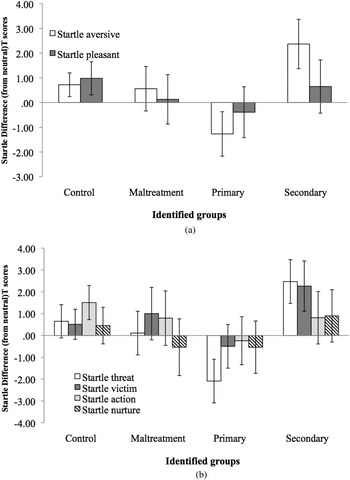
Findings from the ANOVA comparing the identified groups on startle modulation suggested a main effect for group, F (3, 196) = 8.91, p < .001, η2 = 0.12. As depicted in Figure 2a, individuals in the primary CU group (M = –1.27, SE = 0.48) scored lower on startle modulation compared to individuals in the control (M = 0.58, SE = 0.32; d = 0.60; p < .01), maltreated (M = 0.56, SE = 0.47; d = 0.65; p = .05), and secondary (M = 2.36, SE = 0.50; d = 1.21; p < .001) groups as indicated by medium to large effect sizes, with the difference between primary and secondary groups being the largest. The secondary group scored higher on startle modulation compared to individuals in the control (d = 0.58; p < .05) and maltreated (d = 0.65; p = .06) groups, as indicated by medium effect sizes.
Analysis of variance findings comparing the identified groups on startle modulation for (a) aversive and pleasant and (b) all emotions.

Startle–pleasant pictures
The between-groups comparison for startle modulation to pleasant images was not significant, F (3, 196) = 1.86, p = .14, η2 = 0.03. For comparison purposes, these findings are also reported in Figure 2a. Only the difference between the control and primary groups approached significance (d = 0.31; p = .10).
Group comparisons on startle modulation: Content-specific effects
Startle–threatening pictures
Findings from the ANOVA comparing the identified groups on startle potentiation to threat suggested a main effect for group, F (3, 196) = 9.63, p < .001, η2 = 0.13. As depicted in Figure 2b, individuals in the primary group (M = –2.08, SE = 0.59) showed lower startle potentiation compared to individuals in the control (M = 0.65, SE = 0.39; d = 0.55; p < .01), maltreated (M = 0.11, SE = 0.60; d = 0.37; p = 0.06), and secondary (M = 2.47, SE = 0.62; d = 0.76; p < .001) groups, with the difference between primary and secondary groups being the largest. The secondary group showed greater startle potentiation compared to individuals in the control (d = 0.35; p < .08) and maltreated (d = 0.39; p < .07) groups, although these differences only approached significance.
Startle–victim pictures
Findings from the ANOVA comparing the identified groups on startle potentiation to victim pictures suggested a main effect for group, F (3, 196) = 3.65, p = .01, η2 = 0.06. As depicted in Figure 2b, only individuals in the primary group (M = –0.45, SE = 0.58) significantly differed from individuals in the secondary (M = 2.26, SE = 0.60; d = 0.46; p < .01) group by showing reduced startle potentiation.
Startle–pleasant pictures
The between-groups comparisons for action, F (3, 196) = 1.98, p = .12, η2 = 0.03, and nurture, F (3, 196) = 1.21, p = .31, η2 = 0.02, pictures were not significant. For comparison purposes these findings are also reported in Figure 2b, showing that the identified groups did not differ on the two measures of startle to pleasant images, as suggested by overlapping 95% confidence intervals.
Discussion
The present study sheds light on inconsistencies in the literature in the association between juvenile psychopathic traits and startle reactivity. It suggests that the pattern of reduced startle blink reflex magnitude while viewing aversive relative to neutral stimuli may be specific to youth presenting with primary psychopathic traits, meaning those that do not have a demonstrable history of childhood adversity, in this case maltreatment. Our findings are consistent with a growing body of research supporting that a subset of individuals with psychopathic traits present with pronounced histories of social and environmental adversity (Kahn et al., Reference Kahn, Frick, Youngstrom, Kogos Youngstrom, Feeny and Findling2013; Kimonis et al., Reference Kimonis, Skeem, Cauffman and Dmitrieva2011; Vaughn et al., Reference Vaughn, Edens, Howard and Smith2009), and expands upon this literature to suggest they show distinct biomarkers from primary variants. Consistent with a preliminary literature, secondary CU variants showed enhanced aversive startle potentiation relative to primary variants and nonpsychopathic controls. The current findings point to the critical importance of taking heterogeneity into account when investigating psychopathic traits. Aggregating these highly divergent populations, which fail to significantly differ in their scores across global CU measures, risks cancelling out effects where they do exist.
Consistent with our findings, Sutton et al. (Reference Sutton, Vitale and Newman2002) also reported that adult female secondary psychopathy variants showed intact fear-potentiated startle, whereas primary psychopathy variants exhibited attenuated reflex magnitudes during aversive pictures. Our findings are also consistent with a body of research generated by Newman and colleagues finding that adult psychopathic offenders high on anxiety, being one of the common factors used to operationalize secondary psychopathy in addition to maltreatment history, do not show deficits in passive avoidance learning, modulation of responses to emotional and neutral stimuli, and fear-potentiated startle response that are observed among low-anxious psychopathic individuals (Newman, Patterson, Howland, & Nichols, Reference Newman, Patterson, Howland and Nichols1990; Newman & Schmitt, Reference Newman and Schmitt1998; Newman, Schmitt, & Voss, Reference Newman, Schmitt and Voss1997). Together, this literature supports our hypothesis that primary, but not secondary, variants will show emotional deficits believed by many to be core to the psychopathic personality (Cleckley, Reference Cleckley1941). This absence of aversive startle potentiation is thought to reflect diminished amygdala activity, which is associated with CU traits among antisocial youth (Marsh et al., Reference Marsh, Finger, Mitchell, Reid, Sims, Kosson and Blair2008; Viding, McCrory, & Seara-Cardoso, Reference Viding, McCrory and Seara-Cardoso2014).
Although this cross-sectional study cannot conclusively address etiological issues, on the basis of our results, we offer two speculative hypotheses that could be tested in future research. One possibility is that differences in emotional processing between CU variants signals differences in temperament and/or neurocognitive functioning. Theories of moral development suggest that both “too high” and “too low” levels of emotional reactivity can impair conscience development and related complex social emotions of guilt and empathy that are key indicators of CU traits (Kochanska, Reference Kochanska1993, Reference Kochanska1995, Reference Kochanska1997). Whereas children with a fearless temperament (i.e., primary variants) and reduced amygdala activity may be insufficiently engaged by important socializing cues, highly emotionally reactive, dysregulated children (i.e., secondary variants) might miss these cues because they are easily overwhelmed in negatively charged situations where such cues tend to be elicited (e.g., parental anger and peer distress; see Frick & Morris, Reference Frick and Morris2004; Hoffman, Reference Hoffman1994; Young, Fox, & Zahn-Waxler, Reference Young, Fox and Zahn-Waxler1999). Consistent with this hypothesis, secondary psychopathy variants in the present study showed enhanced startle blink magnitude when viewing aversive images relative to primary and control groups. Thus, current findings suggest that amygdala dysfunction, revealed through poor startle potentiation, may contribute to the heterogeneity of psychopathy/CU subtypes. Future neuroimaging studies are needed to formally test this possibility. In short, our results would be consistent with the possibility that the two variants differ on key dispositional factors that are linked to CU traits and associated antisocial behavior via divergent mechanisms. These findings provide evidence for the principle of equifinality by showing that divergent mechanisms of high and low emotional reactivity may have the same phenotypic outcomes of aggressive behavior and psychopathic traits.
Another possibility that would be consistent with our results is that these differences in emotional processing signal differences in experience. Specifically, childhood maltreatment may influence emotional sensitivity among those with secondary psychopathy. There is evidence that maltreatment adversely affects the development of the hypothalamus–pituitary–adrenocortical system, which regulates emotional and particularly fearful responding (Doom, Cicchetti, & Rogosch, Reference Doom, Cicchetti and Rogosch2014). In turn, individuals with a history of childhood maltreatment show increased startle reactivity (Jovanovic et al., Reference Jovanovic, Blanding, Norrholm, Duncan, Bradley and Ressler2009), along with phenotypic expressions of callousness; when confronted with a distressed peer, maltreated children showed less sadness or concern, offered less help, and were more likely to withdraw from or aggress against the peer (Klimes-Dougan & Kistner, Reference Klimes-Dougan and Kistner1990; Main & George, Reference Main and George1985). However, other research has found that infants raised in severely impoverished social and emotional environments show a blunted pattern of emotional (i.e., cortisol) reactivity (Carlson & Earls, Reference Carlson and Earls1997; Gilles, Berntson, Zipf, & Gunnar, Reference Gilles, Berntson, Zipf and Gunnar2000), which may persist into adulthood (van der Vegt, van der Ende, Kirschbaum, Verhulst, & Tiemeier, Reference van der Vegt, van der Ende, Kirschbaum, Verhulst and Tiemeier2009). Genetically sensitive, longitudinal research is needed to explore how differences in emotional processing among primary and secondary variants of psychopathy/CU relate to temperamental, neurocognitive, genetic, and environmental factors, and their interactions.
Longitudinal research may inform whether the pattern of emotional hyperreactivity observed in secondary CU variants precedes the onset of adverse life experiences, develops as a result of them, or both. This knowledge can inform whether dispositional factors or differences in the psychobiological sequelae of adverse experiences are what differentiates secondary CU variants from maltreated youth who do not develop psychopathic traits. Our findings suggest that maltreated youth low on CU traits were undifferentiated from secondary CU variants in the types of maltreatment they had experienced, despite marked differences in their levels of aggression. Research is needed to clarify whether the timing or chronicity of adverse experiences influence developmental outcomes, and whether the lack of an available and supportive caregiver to buffer the effects of stressors on a child who is hypersensitive to such experiences may provide the perfect storm for developing secondary CU traits.
It is noteworthy that the level of startle reactivity to aversive images among maltreated youth was also only marginally different (p = .06) from secondary variants, as it also was for threatening images, specifically, relative to both CU variants. This may be a function of using maltreatment to distinguish CU variants. Several prior studies have operationalized secondary psychopathy on the basis of anxiety scores (e.g., Cecil et al., Reference Cecil, Lysenko, Jaffee, Pingault, Smith, Relton and Barker2014); however, using childhood maltreatment instead of anxiety to differentiate CU variants within clustering analyses was an important strength of the current study given established associations between negative affectivity and increased startle potentiation to fear (Patrick, Reference Patrick2001; Vaidyanathan, Hall, Patrick, & Bernat, Reference Vaidyanathan, Hall, Patrick and Bernat2011; Vanman, Mejia, Dawson, Schell, & Raine, Reference Vanman, Mejia, Dawson, Schell and Raine2003). Regardless, the constructs of anxiety and trauma are inextricably linked and difficult to disentangle both conceptually and methodologically. For example, while exposure to violent acts is seen as inherently “traumatic,” these acts only cause traumatic reactions in vulnerable individuals, typically those with high anxiety and negative emotionality. Conversely, highly anxious and emotional individuals are more likely to perceive a range of events as traumatic and respond adversely. It is important that the field continue to investigate the best diagnostic specifiers for primary and secondary psychopathy/CU variants.
Our findings are consistent with past research suggesting that primary and secondary variants are indistinguishable in their overall levels of CU/psychopathic traits (Hicks et al., Reference Hicks, Markon, Patrick, Krueger and Newman2004; Vassileva, Kosson, Abramowitz, & Conrod, Reference Vassileva, Kosson, Abramowitz and Conrod2005). This finding is important because CU traits have increasingly been used to designate an important subgroup of antisocial youths at heightened risk for early-onset, persistent, and aggressive conduct problems, and are incorporated into the DSM-5 diagnosis of conduct disorder (Frick, Ray, Thornton, & Kahn, Reference Frick, Ray, Thornton and Kahn2014). Youth scoring high on CU traits could fall into either primary or secondary groups, which may be relevant to their course, prognosis, and treatment needs, although these are questions in need of further study. One nuance in the CU trait profiles was that primary variants scored higher on the unemotional subscale, but not other ICU subscales, relative to secondary variants, similar to Kimonis et al. (Reference Kimonis, Fanti, Isoma and Donoghue2013); however, this finding should be interpreted cautiously given concerns raised about the psychometric properties of this ICU subscale (e.g., Ray, Frick, Thornton, Steinberg, & Cauffman, Reference Ray, Frick, Thornton, Steinberg and Cauffman2015).
The results of this study must be considered within the context of several study limitations. First, the current study is limited to male juvenile offenders and findings may not generalize to girls or to community samples. Second, as noted previously, etiological inferences cannot be drawn from this cross-sectional study. That is, patterns of emotional processing may reflect dispositional differences in emotionality or, alternatively, may relate to exposure to dangerous home and neighborhood environments (see Kimonis, Frick, Muñoz, & Aucoin, Reference Kimonis, Frick, Muñoz and Aucoin2008). Third, deficient response modulation has been offered as an alternative explanation of the psychopathic fear deficit, which could not be tested in this study's design (Baskin-Sommers, Curtin, & Newman, Reference Baskin-Sommers, Curtin and Newman2011; MacCoon, Wallace, & Newman, Reference MacCoon, Wallace and Newman2004; Patterson & Newman, Reference Patterson and Newman1993). Fourth, the CTQ measure of maltreatment is restricted in scope by assessing only experienced abuse and neglect but not observed adverse events such as domestic or community violence that may be particularly relevant to CU traits (Cecil et al., Reference Cecil, Lysenko, Jaffee, Pingault, Smith, Relton and Barker2014; Kimonis, Frick, Skeem, et al., Reference Kimonis, Frick, Skeem, Marsee, Cruise, Muñoz and Morris2008). It is also based solely on self-report, requiring retrospective recall of events that may have occurred many years earlier and were not validated by other methods. Fifth, pleasant pictures were associated with potentiated startle in the present study, whereas they have been associated with startle inhibition in prior adult studies. This is likely due to our elimination of erotic images that could not be presented to youth, and prior findings that action pictures can sometimes potentiate startle response (Bernat et al., Reference Bernat, Patrick, Benning and Tellegen2006).
Implications for future research and practice
Models to explain antisocial behavior need to consider the many differences between antisocial youth with and without high levels of CU traits. Our results further suggest that youth high on CU traits can also be disaggregated into important subgroups that differ in their emotional reactivity. These results help shape etiologic hypotheses to address in future research. Future prospective studies could follow two groups of children: those with emerging predictors of later CU traits in very early childhood, such as a fearless temperament (Barker, Oliver, Viding, Salekin, & Maughan, Reference Barker, Oliver, Viding, Salekin and Maughan2011) and reduced face preference (Bedford Pickles, Sharp, Wright, & Hill, et al., Reference Bedford, Pickles, Sharp, Wright and Hill2015), with or without exposure to adversity. Fortunately, there are methods for assessing these constructs, as well as CU traits, in very young children (Kimonis et al., Reference Kimonis, Fanti, Hadjicharalambous, Mertan, Goulter and Katsimicha2016).
Such prospective studies could inform the development of effective prevention programs for CU traits by identifying factors that may reduce the risk for atypical conscience development in young children with early presenting risk factors. For example, Kochanska and colleagues proposed that the parent–child relationship, in particular the responsiveness toward each other, may be critical for socializing children with a fearless temperament (Kochanska, Reference Kochanska1997; Kochanska & Murray, Reference Kochanska and Murray2000). In support of this proposal, an intervention focused on enhancing attachment security and parental responsiveness reduced conduct problems to below clinically significant levels among a sample of young children (M age = 3.87 years) with CU features (Kimonis, Bagner, Linares, Blake, & Rodriguez, Reference Kimonis, Bagner, Linares, Blake and Rodriguez2014). In contrast, preventive interventions for secondary CU traits might focus on young children exposed to chronic adversity with heightened levels of emotionality.
More immediately, our findings can shape hypotheses about targeted intervention for psychopathic juvenile offenders to evaluate in future research. At the outset, it is important to recognize that a growing body of research indicates that intensive treatment meaningfully reduces risk of violence and other criminal behavior for youth with psychopathic traits (for a review, see Skeem, Polaschek, & Manchak, Reference Skeem, Polaschek, Manchak, Skeem, Douglas and Lilienfield2009). However, it is possible that even greater gains may be made if treatment is targeted to the CU variants identified in this study. For example, secondary CU variants may benefit from cognitive behavioral interventions that are most effective for treating exposure to traumatic events and stress-related disorders (e.g., anxiety and depression; see Chaffin & Friedrich, Reference Chaffin and Friedrich2004; Kaslow & Thompson, Reference Kaslow and Thompson1998; Ollendick & King, Reference Ollendick and King1998). For primary variants, recent efforts to target deficient emotion processing skills to prevent or remediate high levels of CU traits (Dadds et al., Reference Dadds, Allen, McGregor, Woolgar, Viding and Scott2014; Dadds, Cauchi, Wimalaweera, Hawes, & Brennan, Reference Dadds, Cauchi, Wimalaweera, Hawes and Brennan2012; Datyner, Kimonis, Hunt, & Armstrong, Reference Datyner, Kimonis, Hunt and Armstrong2015) may prove most effective. Increasing the salience of others' distress cues attenuated laboratory-based aggression for youth scoring high on psychopathic traits (van Baardewijk, Stegge, Bushman, & Vermeiren, Reference van Baardewijk, Stegge, Bushman and Vermeiren2009). In summary, several promising interventions have emerged for youth with CU and psychopathic traits. These efforts are likely to be enhanced if they consider the heterogeneity among high CU youth and appropriately tailor treatment to their individual needs.