Over forty years ago Bas van Fraassen argued that time is a logical space, an abstract structural representation of events. From this insight came pioneering work in the semantic view of scientific theories (theories represent the world through mathematical structures called models) and development of constructive empiricism (the aim of science is to produce empirically adequate theories). His philosophical efforts have been beset, however, by a historical paradox that plagues all structuralist accounts of scientific representation. Scientific Representation: Paradoxes of Perspective is largely van Fraassen’s attempt to dissolve this paradox on the basis of a novel thesis: Scientific representation is perspectival.
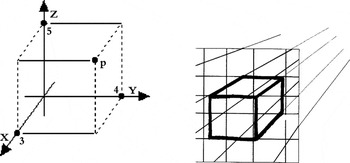
The book begins with the observation that many of our representations (e.g., sculptures, drawings, photographs) are perspectival: As much as they trade for their success on selective resemblance, they trade for their success on selective distortion, as contextually determined and highlighted by their use to represent something. As used in science, mathematical models successfully represent phenomena (observable objects, events, and processes) through structural resemblance and distortion by abstraction and idealization. However, in the “official formulation” of a scientific theory, its mathematical models “are generally not perspectival representations” (p. 86); they are meant to provide something akin to a “God’s eye view” of what phenomena are like independent of contexts of measurement. Perspectivity enters in their use to predict what phenomena look like in measurement outcomes of experiments. Measurement outcomes are claimed to be perspectival representations of the phenomena measured, trading for success on structural resemblance as well as on distortion from (inter alia) the limited range of instrumentation and the indefiniteness of results. A helpful analogy is the representation of an observable cube in a Cartesian frame of reference (Figure 1). In depicting the cube as having parallel lines, the mathematical model is intended to represent what the phenomenon is like from no point of view; however, the model (in conjunction with laws of projection) has a use to predict what the cube will look like in any photograph (where its lines appear to converge).
“Frame of Reference vs. Perspective” (p. 67)

Van Fraassen’s anti-metaphysics depends upon the claim that since it is the use of a representation – not what is represented – that determines its selective resemblance and non-resemblance, structural resemblance need not be understood as resemblance to real structure. Certainly phenomena exist, but their structural representation amounts only to our description of them. However, if our knowledge of the structure of phenomena is constituted in the practice of science as van Fraassen suggests, there seems to be an independence of phenomena from the content of their scientific representation. Two related issues come to the fore: How do theoretical terms acquire meaning (the problem of coordination)? How is abstract structure linked to concrete reality?
The second part of the book (with the exception of a chapter on van Fraassen’s view of instrumentation as “engines of creation” rather than “windows on the invisible world”) is largely an attempt to solve the problem of coordination. “Coordination must determine how measurement can establish a value for what is measured” (p. 121). The problem is to identify what is measured (e.g., the referent of the subject term in the assertion “the temperature of the water is 17°”) without presupposing the theoretical term (“temperature”) to which it is coordinated. Van Fraassen argues that the identification of what is measured depends on which of two points of view one adopts. Viewed from within the historical process, what is measured is identified by a measurement procedure introduced by an emerging theory within a background of prior theory and measurement, there being “no presuppositionless starting point for coordination” (emphasis van Fraassen’s) (p. 137). The measurement procedure is required to satisfy certain coherence conditions that leave much leeway for choice based on pragmatic desiderata, and involves new (unstable) empirical regularities. When judgments guided by the measurement procedure become well calibrated, the new theory is accepted as describing the measurement procedure. It is only when viewed here from above the historical process that what is measured is a physical magnitude that characterizes the phenomena measured, identified by a theoretical term.
To understand how measurement establishes a value for what is measured, van Fraassen returns to the original insight that informs much of his work. Common to its family of mathematical models, a theory presents a logical space that represents a range of possible characteristics of phenomena within its domain; a theory describes a particular measurement procedure if one of the dimensions of this space is identified with the physical magnitude measured. His crucial claim is that in order to use a model of a theory to predict what phenomenon will look like in the context of a measurement procedure, “[w]e have to locate our situation in the theory’s logical space in a way that is similar to our ‘We are here’ with respect to a map” (p. 261). When measurements are made, the information content (“appearances”) of repeated measurement outcomes is analyzed and abstracted into an “official measurement outcome” (emphasis van Fraassen’s) (p. 166) called a data model. The phenomenon measured is thereby located in a specific region of the theory’s logical space, which characterizes it in terms of the physical magnitude (e.g., the temperature of the water is 17°).
The book’s third part is intended to show how this account of coordination avoids a historical problem with structuralist views of representation in philosophy of science. Surveying the early “picture theory” of science proffered by Boltzmann and Hertz through the aspirant structuralism of Russell and Carnap, van Fraassen highlights the paradox Weyl clearly identified: If scientific representation is structural, then no distinction cuts across isomorphism; yet, such distinctions are made in the practice of science. Required to dissolve the paradox is additional information not expressed by a proposition that could be part of a scientific theory. Van Fraassen points out that orienting oneself to logical space is expressible as an indexical judgement such as “this in front of me, is there in logical space.” Such indexical judgements, he claims, add the requisite information to cut across isomorphism.
This suggests a resolution to the second issue of how abstract structure is linked to concrete reality (made poignant by the book’s fourth part that claims contemporary science rejects the requirement that a theory must explain how appearances are produced from reality). Van Fraassen argues that an experimenter’s assertion that a data model is a representation of a phenomenon expresses an act of locating the phenomenon in the theory’s logical space. And “in a context in which a given [data] model is someone’s representation of a phenomenon, there is for that person no difference between the question whether a theory fits that representation and the question whether that theory fits the phenomenon” (emphasis van Fraassen’s) (p. 260). For if the experimenter asserts the difference, she lands in pragmatic inconsistency much like Moore’s Paradox: “It is so, but I do not believe it is so.” This solution, however, seems incomplete. As van Fraassen acknowledges, it is not incoherent for anyone else to deny the link between the theory and the phenomenon. How, then, does a data model go from being my representation to being our representation?
A natural way to make sense of this move is in terms of acceptance: In the practice of science, a data model is accepted as representing the phenomenon measured. But this presupposes an aim and a criterion for successfully achieving it. Van Fraassen’s observation “the dictate of repeatability ensures that scientifically admissible experimental results are public” (p. 276) is suggestive, particularly in light of his omission that this dictate must involve the belief that repeated measurement outcomes are repeatable. Perhaps constructive empiricism should be modified to incorporate an additional aim: In its practice science aims to give us data models summarizing repeatable measurement outcomes; their acceptance involves as belief only that the measurement outcomes summarized are repeatable.
Van Fraassen’s creative solution to the historical paradox that bedevils structural representation is sure to engender lively debate and stimulate new avenues of research in philosophy of science. But his new book should appeal to an even wider audience. Because it draws from a variety of disciplines such as technology, photography, and art to provide a general account of representation, it will be profitably read by any philosopher working in this area.
The reviewer would like to thank Kathleen Okruhlik and Ben Hill for their helpful comments and suggestions.