Mortuary practices are expressions of social ideals and realities. Archaeologists have long recognized the potential for mortuary archaeology to contribute to our understandings of social inequality (Binford Reference Binford1971; Childe Reference Childe1945; Kroeber Reference Kroeber1927; Saxe Reference Saxe1970). Subsequent investigations expanded the scope of mortuary studies to encompass the relationship between the living and the dead expressed through elaborate, multistage funerary and commemorative rituals (O’Shea Reference O’Shea1984; Parker Pearson Reference Parker Pearson1993; Shanks and Tilley Reference Shanks, Tilley and Ian Hodder1982). Archaeologists now recognize that mortuary rituals are conducted by and for the living. They can involve large or limited numbers of people, take place in highly visible or restricted places, and can be multistage, unfolding over days or generations. The choices made by the living produce a highly variable and complex mortuary record that relates to but does not simply reflect social organization (see Brück Reference Brück2004; Cannon Reference Cannon1989; Cerezo-Roman Reference Cerezo-Roman2014; Fowler Reference Fowler2005; Keswani Reference Keswani2004; Kuijt Reference Kuijt2008; Quinn and Beck Reference Quinn and Beck2016). To analyze these complex rituals, archaeologists look at body treatment, context of burial, burial architecture, accompaniments, and the nature of reopening, revisiting, and commemorative rituals.
Mortuary patterns in the Valley of Oaxaca exhibit a great deal of diversity along these variables. In this article, we focus on burials from the site of Monte Albán dating to the Late Preclassic through the Classic periods. Manzanilla (Reference Manzanilla and Plunket2002) notes that burials recovered from the Oaxaca barrio at Teotihuacan were distinctive due to extended body position, a high frequency of multiple burials, and the use of formal tombs. Many of these distinguishing characteristics have deep roots extending back to the earliest known burials in the Valley of Oaxaca found associated with the first sedentary communities (Flannery and Marcus Reference Flannery and Joyce2005).
Although not unique to Oaxaca, residential burial was the primary context for inhumations during the Late Preclassic through Classic periods (González Licón Reference González Licón2011, Reference González Licón and Acosta Ochoa2012; Lind Reference Lind2017; Lind y Urcid Reference Lind and Urcid2010; Martínez López Reference Martínez López1998, Reference Martínez López, Robles García and Rivera Guzmán2011; Martínez López et al. Reference Martínez López, Winter and Markens2014; Middleton et al. Reference Middleton, Feinman and Molina Villegas1998; Urcid Reference Urcid2005, Reference Urcid, Herrera and Lira2020). However, it was not uncommon for burials to be found in public spaces, including public buildings (Urcid Reference Urcid2005). Residential mortuary practices centered around household ancestors with the presence of multiple burials, conjugal pairs, and tombs indicating that individuals selected for residential burial were kept close and remembered or commemorated through continued interaction, possibly even the reopening of these contexts during the addition of new burials. There are documented examples of this practice starting in the Late Preclassic (Martínez López Reference Martínez López, Robles García and Rivera Guzmán2011:324). As with burials of children, the social status of adults interred in households was marked through location with household heads buried in tombs or multiple burials and other household members buried in simple graves (Gonzalez Licón Reference González Licón2003).
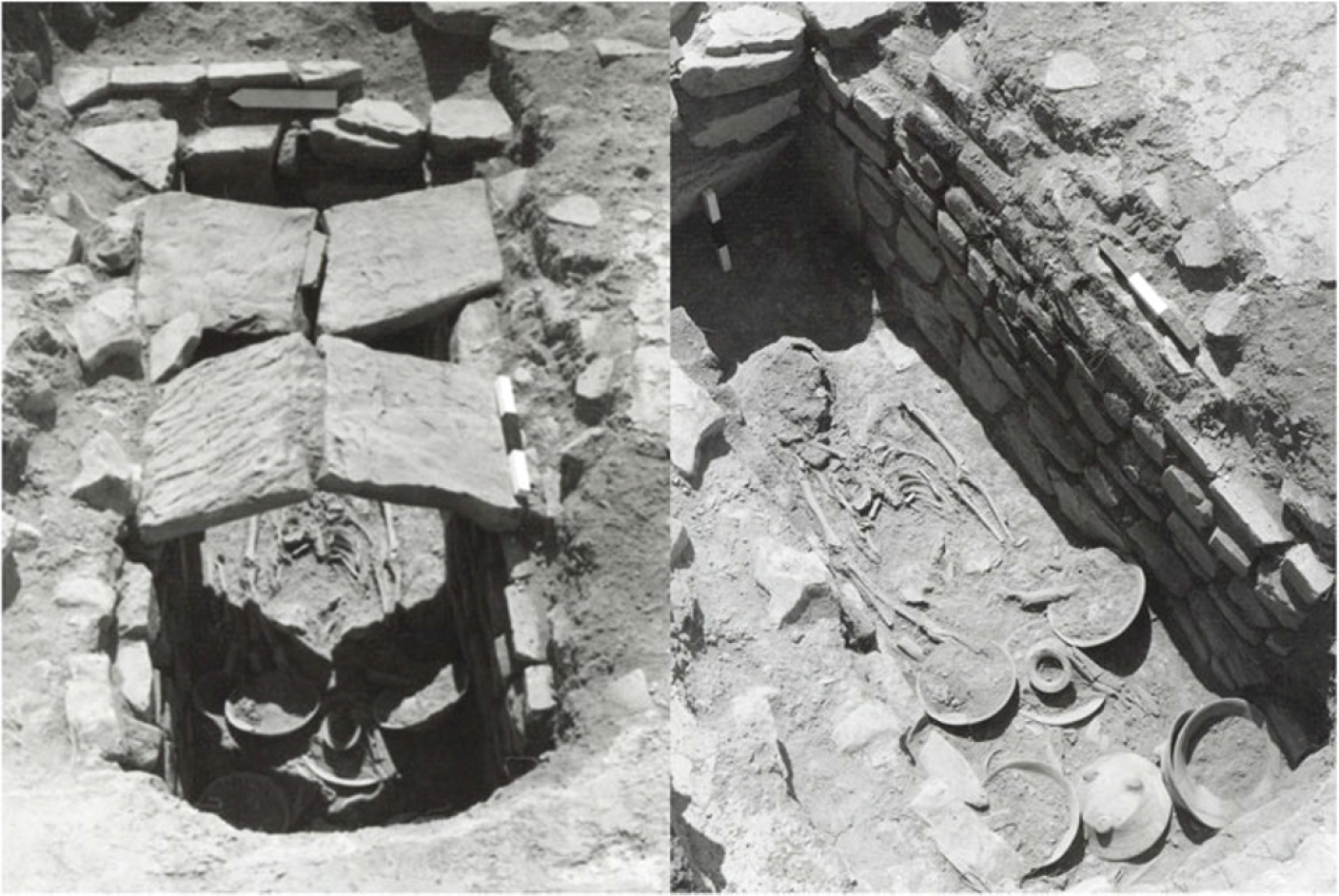
The founding of Monte Albán around 500 BC and the subsequent increases in population density and social, political, and economic inequality resulted in the association of certain practices with particular identities, most notably age and status. Burials were also an expression of inequality within households. Formal tombs were present at Monte Albán from its earliest occupation and marked a period of diversification in burial practices (Martínez López Reference Martínez López, Robles García and Rivera Guzmán2011). Tombs generally had a rectangular form with the roof and walls made from stone or adobe. The floor plan of tombs could be simple with a single chamber or more elaborate with the addition of an antechamber, doors, niches, and wall murals (Figure 1). Their location varied but, in general, they were associated with residences located below floors in rooms or the central patio, as well as public spaces. In comparison, the bodies placed in simple graves are generally found in an extended position. Some of these burials were stone-lined, while others consisted of a simple hole dug in the ground. Tombs are typically interpreted as materializing status differences because tomb size correlates with other status markers such as the number of offerings, residence size, and higher levels of meat in the diet (Gonzalez Licón Reference González Licón2003; Winter Reference Winter and Plunket2002,Reference Winter1995). Based on these differences, it is believed that formal tombs were reserved for household members (Joyce Reference Joyce, Julia and Rosemary2004; Markens and Martínez López Reference Markens, Martínez López, Rodríguez, Morell-Hart and King2024; Martínez López et al. Reference Martínez López, Winter and Markens2014; Urcid Reference Urcid2005; Winter Reference Winter1974).
Tomb 196. Photographs taken by Heribert Sierra Foti.

In contrast with cemeteries, residential tombs and simple graves reinforced a connection between the descendants, the deceased, and their home (Adams and King Reference Adams and King2011; McAnany Reference McAnany and Plunket2002). Deceased ancestors offered protection to the remaining members of their households and received offerings in exchange (Joyce Reference Joyce, Susan and Timothy2020; Lind and Urcid Reference Lind and Urcid1983). Most importantly, deceased ancestors were considered mediators who could petition gods and negotiate with them on behalf of their descendants (Joyce Reference Joyce2010). After their passing, ancestors remained active members of the household due to their unique position as mediators with the supernatural realm.
While tombs could be revisited to place a newly deceased head of household or to remove certain bones (see Feinman et al. Reference Feinman, Nicholas and Baker2010; Joyce Reference Joyce2010; Lind and Urcid Reference Lind and Urcid2010), Markens and Martínez López (Reference Markens, Martínez López, Rodríguez, Morell-Hart and King2024) have argued that the opening of the tomb might have been less frequent than initially thought. They argue that the arduous process of unsealing tombs would have discouraged descendants from routinely reopening them. Tombs were likely flooded during the rainy season, thus limiting the timeframe when they could be reopened. Markens and Martínez López argue that instead of revisiting the tomb to venerate their ancestors, people used the space directly above the tomb, thus celebrating their ancestor in a setting accessible all year long (see Urcid Reference Urcid, Herrera and Lira2020).
This interpretation indicates that offerings in tombs were likely placed there when laying a newly deceased member of the family. Those offerings varied depending on the social status of the interred individuals as well as the celebrants, but generally included ceramics, thought to have held food and beverages, many of them plant-based (Martínez López et al. Reference Martínez López, Winter and Markens2014; Winter Reference Winter1995). Often, the food left and shared with the deceased was meant to connect the living with a new entity: the powerful ancestor (Belmar et al. Reference Belmar, Quiroz, Carrasco and Pavlovic2020; McNeil Reference McNeil, John and Carrasco2010; Nelson Reference Nelson and Tamary2003). Scherer (Reference Scherer2015:173), describing Maya mortuary rituals, explains that “[to] ensure that the souls of the dead are content, great care is taken in regard to the treatment of the body at the funeral and the selection of its burial place.” Funerals and mortuary offerings were essential to establish and maintain a good relationship with ancestors, who could greatly influence the living.
Studying the final meals placed along with the deceased allows us to examine the connection between the dead and the living at Monte Albán and the Valley of Oaxaca in a way that has yet to be fully explored (Markens and Martínez López Reference Markens, Martínez López, Rodríguez, Morell-Hart and King2024). Burying a dead loved one must have been very stressful for the descendants. While still grieving the loss of a household member, the living had to ensure their transformation into an ancestor would be a successful one. The foods and plants placed there, like the other mortuary offerings, had the power to appease the ancestors (McNeil Reference McNeil, John and Carrasco2010), which could then dramatically impact the life of the remaining household members. Funerals and the placement of mortuary offerings were crucial events that had the potential to drastically impact descendants’ lives. These events were also influenced by religious beliefs, economic systems, political structures, and social norms.
Methodology
The food remains recovered from burials and tombs generally fall in two sometimes overlapping categories: a shared mortuary meal and/or an offering to the dead or deities (Bouby and Marinval Reference Bouby and Marinval2004; Cooremans Reference Cooremans2008). Meals were often consumed by close relatives of the deceased and shared with the dead during funerals or near the tomb on certain days like the anniversary of their passing (Pollock Reference Pollock and Tamary2003; Prufer and Hurst Reference Prufer and Jeffrey Hurst2007). Such shared meals and offerings had different purposes. Often, they were meant to nourish the dead and give them strength for their journey to the afterlife (Beauclair et al. Reference Mariana, Scheel-Ybert, Bianchini and Buarque2009; Fourteau-Bardaji et al. Reference Fourteau-Bardaji, Marinval, Ruas, Marguerie and Ferdière1993). In other cases, the food left behind was meant to protect the dead: evil spirits could eat the food offerings instead of the soul of the deceased, giving the departed enough time to travel safely to the afterlife (Beauclair et al. Reference Mariana, Scheel-Ybert, Bianchini and Buarque2009). The food left and shared with the deceased strengthened the connection between the living and a new entity: the powerful deceased or the venerated ancestor (Belmar et al. Reference Belmar, Quiroz, Carrasco and Pavlovic2020). Those offerings were also meant to appease the dead: if they were not fed properly, they might decide to become hostile and plague the living (McNeil Reference McNeil, John and Carrasco2010; Wiessner Reference Wiessner, Dietler and Hayden2001). Härke (Reference Härke, Jensen and Nielsen1997:20) goes as far as considering such offerings a “legal and social contract between the living and the dead,” where offerings were exchanged to obtain the protection of the deceased.
Some studies have highlighted strong differences between the plants found in domestic and mortuary botanical assemblages. VanDerwarker and colleagues (Reference VanDerwarker, Bardolph, Hoppa, Thakar, Martin, Jaqua, Biwer and Gill2016) advocate for a focus on those differences, to better understand ancient practices and beliefs. Similarly, Cutright (Reference Cutright, Colleen and Johnson2011:83) theorizes that food elements placed in burials consisted of a “restricted subset of daily cuisine,” meaning that the living placed emphasis on foods with strong ritual power. Cavallaro (Reference Cavallaro2013:65–66) argues that every plant placed as an offering had a symbolic meaning: after all, the “delicious” foods were sacrificed instead of being eaten by the living.
In this article, we focus on the use of plants in Zapotec, or Binningula’sa’, mortuary practices and ancestors’ veneration. To do so, Bérubé identified starch grains (polymers and sugar glucose; Hardy et al. Reference Hardy, van de Locht, Wilson, Tugay and Hodder2013) and phytoliths (inorganic silica bodies; Piperno Reference Piperno2006; Shillito Reference Shillito2013) produced by plants used in mortuary offerings at Monte Albán, following an approach never previously used at this site. Found in soils and on artifacts, these microbotanical residues provide data on foodways, rituals, feasts, and plant consumption (Abramiuk et al. Reference Abramiuk, Dunham, Scott Cummings, Yost and Pesek2011; Aceituno and Loaiza Reference Aceituno and Loaiza2014; Aceituno and Martín Reference Aceituno and Guillermo Martín2017; Ciofalo et al. Reference Ciofalo, Keegan, Pateman, Pagán-Jiménez and Hofman2018; Dickau et al. Reference Dickau, Ranere and Cooke2007; Musaubach and Berón Reference Musaubach and Berón2016).
The samples examined were collected from eight formal tombs and seven simple graves excavated during the Proyecto Especial Monte Albán (PEMA) 1992–1994, led by Marcus Winter of INAH Oaxaca. The samples examined cover nearly the whole sequence of occupation of Monte Albán, from the Late Preclassic up to the Early Postclassic (300 BC–AD 1250).
In this study, we examined two types of samples: microbotanical extractions from artifacts (48) and sediment samples (27). Microbotanical extractions from artifacts yield starches and phytoliths still adhering to the surface of objects or in their crevices. To recover these residues, paleoethnobotanists generally follow a three-step wash process including a dry, a wet, and a sonicated wash (Atchinson and Fullagar Reference Atchinson, Fullagar and Fullagar1998; Logan et al. Reference Logan, Hastorf and Pearsall2012). In this study, we followed a protocol developed by Morell-Hart (Reference Morell-Hart2015) and slightly modified (Bérubé Reference Bérubé2023). During the dry wash, we slowly removed the residues adhering to the artifact surface while wearing a fresh set of powder-free gloves. Botanical residues obtained from the dry wash can inform us about the immediate environment surrounding the artifact (Mickleburgh and Pagán-Jiménez Reference Mickleburgh and Pagán-Jiménez2012). Because these objects had been previously washed during the PEMA, only a few artifacts still had residues that could be recovered during the dry wash. The wet wash is quite similar to the dry wash, with the addition of distilled or Ultra-Pure water. For this study, we used sterile water for injections produced by PiSA and available in Mexican drugstores. The wet wash allows researchers to recover residues located on the surface of the artifact, thus offering valuable information likely associated with artifact use. Finally, for the sonicated wash, paleoethnobotanists use ∼30 kHz sound waves to drive out residues still adhering to the artifacts, often lodged in crevices and pores of the artifact material. For this study, we used a handheld sonicator produced by Kinga. This wash allows us to recover microbotanical residues still lodged in the artifact, offering the possibility to examine residues most closely associated with artifact use (see Morell-Hart et al. Reference Morell-Hart, Joyce and Henderson2014; Pearsall et al. Reference Pearsall, Chandler-Ezell and Zeidler2004).
When examining microbotanical residues obtained from an artifact, it is currently impossible to determine if those correspond to the last use of the artifact, or it they result from the “superposition of distinct events of food deposition” (Belmar et al. Reference Belmar, Quiroz, Carrasco and Pavlovic2020:54–55; translation by author). In other words, there is no way to be certain that the microbotanical residues recovered from those artifacts come from mortuary offerings and not from a domestic meal consumed one week before the interment of the dead. To address this issue, when possible, we examined sediment samples recovered from the same graves and tombs as the artifacts and, in a few cases, from the same vessels. This allowed us to compare the results obtained from the artifact extractions and the sediment samples, to verify if some vessels might have provided drastically different results. A total of eight artifacts were matched directly with sediment samples. We encourage readers to keep in mind that the plants identified in this study were likely placed as food mortuary offerings, but there is no certainty.
We also examined phytoliths from sediment samples, a practice that allows a better understanding of the plants present in the archaeological contexts (Pearsall et al. Reference Pearsall, Duncan, Chandler-Ezell, Ubelaker and Zeidler2020; Perry et al. Reference Perry, Dickau, Zarrillo, Holst, Pearsall, Piperno and Jane Berman2007; Rowe and Kershaw Reference Rowe and Kershaw2008; VanDerwarker et al. Reference VanDerwarker, Bardolph, Hoppa, Thakar, Martin, Jaqua, Biwer and Gill2016; Zimmermann Reference Zimmermann2019). During the PEMA, excavators collected samples for future phytolith and pollen research. The late Margaret Houston catalogued those samples in 2000 and 2001. Her notes greatly helped us during the selection of samples for this study. Those samples (weighing approximately 200 g each) were placed in plastic bags, then sealed in paper envelopes that were wrapped in another layer of plastic to seal them. We selected these envelopes at the INAH lab in Cuilapam de Guerrero. These samples were then exported to the McMaster Paleoethnobotanical Research Facility (MPERF), where we processed them to examine starches and isolate phytoliths. To do so, we followed an eight-step protocol established by Morell-Hart (Reference Morell-Hart2018) in consultation with Dolores Piperno and Rob Cuthrell to isolate phytoliths from sediment samples (Bérubé Reference Bérubé2023).
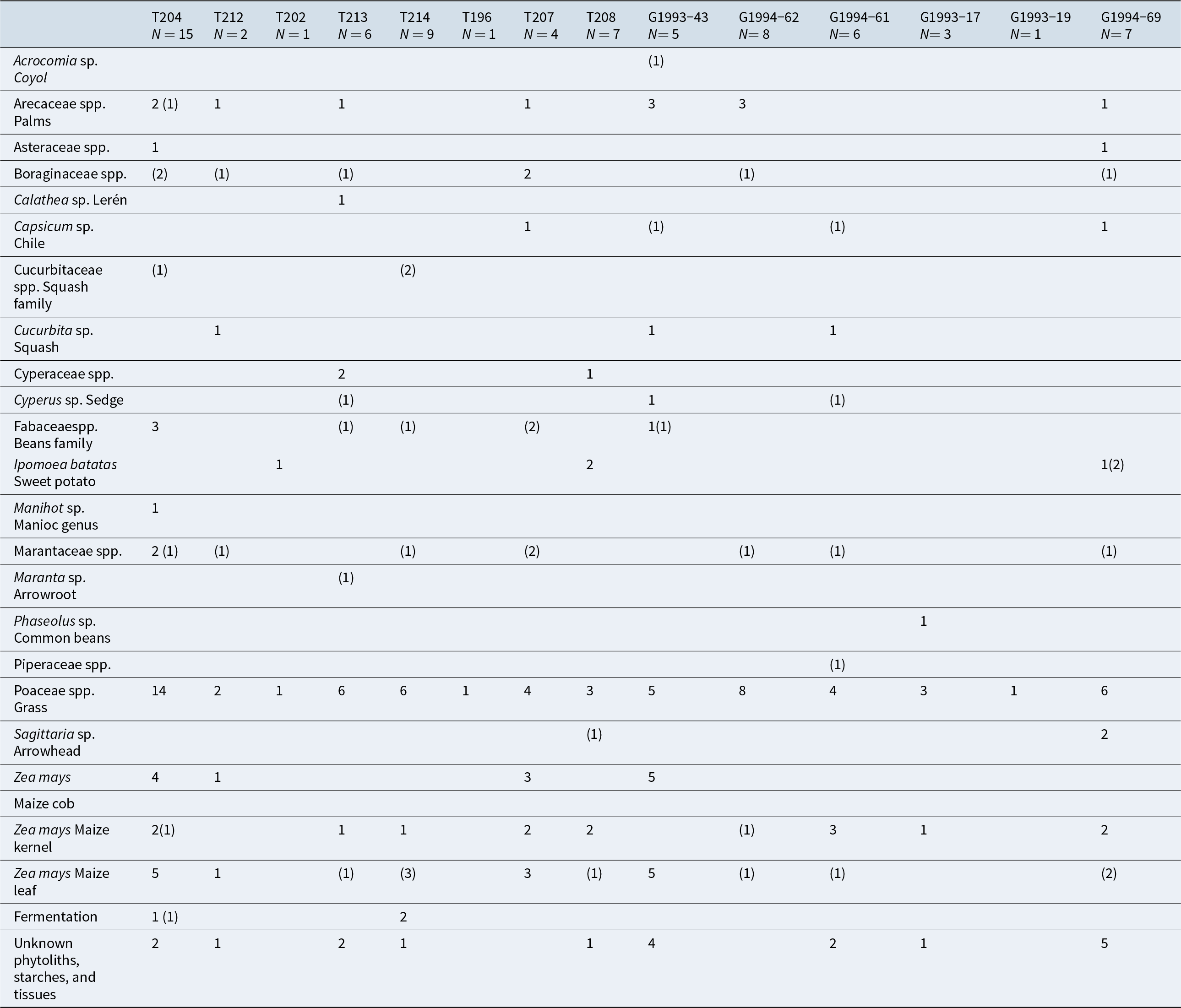
The samples were analyzed at the MPERF using a ZEISS polarizing transmitted light microscope at 400× (AB fraction and artifacts wash) and 200× (S fraction) (Morell-Hart Reference Morell-Hart2015, Reference Morell-Hart2018). Pictures of the microbotanical remains were taken throughout the process using the ZEISS Zen software. Microbotanical residues were identified using the MPERF reference collection, published materials (e.g., Ball et al. Reference Ball, Gardner and Anderson1999; Duncan et al. Reference Duncan, Deborah M. and Robert A.2009; Messner Reference Messner2011; Pearsall and Piperno Reference Pearsall and Piperno1993; Piperno Reference Piperno2006; Piperno and Holst Reference Piperno and Holst1998; Torrence and Barton Reference Torrence and Barton2006), and online resources (e.g., Pearsall et al. Reference Pearsall, Biddle, Chandler-Ezell, Collins, Duncan, Grimm and Hart2006). For the sediment samples (AB and S fractions), we stopped examining each slide after reaching 100 microbotanical remains. We also ignored the grass (Poaceae sp.) elongate and bulliform phytoliths, as they are ubiquitous and contribute little information (Strömberg et al. Reference Strömberg, Dunn, Crifò, Harris, Croft, Su and Scott2018). In this study, we identified 6,333 microbotanical remains and 24 taxa from the 75 samples examined (see Table 1). The results are presented following their chronology.
Taxa Repartition per Mortuary Context.

Table 1 Long description
The table reports how many analyzed samples from each mortuary context contained identifiable plant taxa, with some counts marked as tentative identifications. Grass family remains are the most widespread and abundant, appearing in all contexts and reaching the highest counts in T204 and in several graves. Maize is also frequent but varies by context: maize cobs occur in T204, T212, T207, and especially in grave G1993-43, while maize kernels and leaves appear across multiple tombs and graves with notable concentrations in T204 and G1993-43. Palm family remains occur in several contexts, with higher counts in graves G1993-43 and G1994-62 and smaller occurrences in some tombs. Beans family remains are present in a subset of contexts, most prominently in T204 and with smaller or tentative occurrences in T213, T214, T207, and G1993-43. Sweet potato is rare, appearing in T202, T208, and G1994-69, and other taxa such as sedges, squash, chile, arrowhead, and manioc occur only sporadically. Several contexts also include unidentified phytoliths, starches, or tissues, with higher counts in G1994-69 and G1993-43. Because some identifications are tentative and the number of samples examined differs by context, comparisons should be interpreted as differences in observed occurrences rather than direct measures of abundance.
Notes: Numbers indicate the number of samples where a taxon was identified. Numbers in parenthesis are tentative identifications (cf.). G: Grave, N: Number of samples examined, T: Tomb.
Late Preclassic
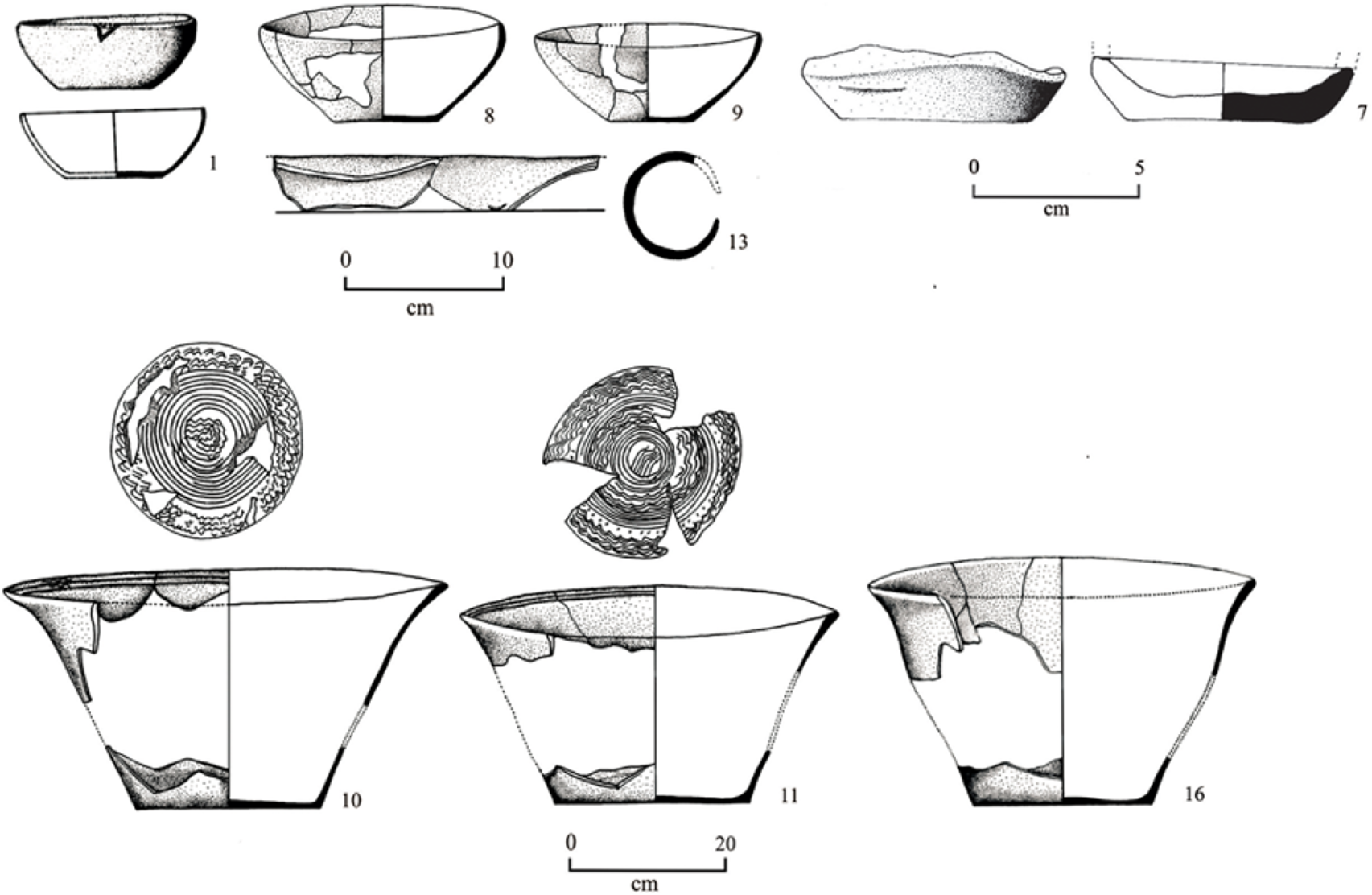
From this period, we examined Tomb 204, a context with multiple uses, the last one corresponding to the Pe phase (300–100 BC). There, archaeologists encountered the incomplete remains of an individual in four different bone concentrations (Martínez López et al. Reference Martínez López, Winter and Markens2014:125–150) alongside ceramic vessels (Figure 2). We identified the presence of three microbotanical types of remains produced by maize: starch grains (produced by kernels), wavy-top rondels (produced by cobs), and cross-body phytoliths (likely produced by leaves) (Bozarth Reference Bozarth1993; Mulholland et al. Reference Mulholland, Rapp and Ollendorf1988). It is important to note that, in Oaxaca, cross-body phytoliths can also be produced by other Zea grasses, such as teosinte. We argue that the cross-body phytoliths found in this study likely come from maize (see Bérubé et al. Reference Bérubé, David Hepp and Morell-Hart2020) given that the presence of maize is well-documented at the site (Houston Reference Houston1983) and that we identified maize starch grains and wavy-top rondels.
Tomb 204, drawing of examined vessels.

Object 7 (conical bowl) contained remains of maize and species from the beans family (Fabaceae spp.) in both the extraction from the artifact and the sediment sample taken from inside the vessel. This finding indicates that the remains recovered from the extracted vessels likely correspond to its last use. The presence of maize remains near the skull and the painted tomb floor could indicate that maize cobs were placed in the tomb as offerings. We identified one fermented starch grain in Object 16 (Figure 3) and one other potentially fermented starch grain in Object 1, indicating that these two bowls likely contained alcoholic beverages or fermented in situ. These were identified based on the experimental study by Wang and colleagues (Reference Wang, Liu, Georgescu, Le, Ota, Tang and Vanderbilt2017). The starches from Monte Albán showed signs of a depression at the center, which is quite similar to some starches obtained by Wang and colleagues (Reference Wang, Liu, Georgescu, Le, Ota, Tang and Vanderbilt2017; Figure 3) after fermentation. This damage might have resulted from enzymatic digestion or gelatinization, two important processes in alcohol production. The starch grain from Object 1 shows a very limited depression that is consistent with the experimental results reported by Wang et alia Reference Wang, Liu, Georgescu, Le, Ota, Tang and Vanderbilt2017, although not pronounced enough to be identified with confidence. Currently, there is no experimental study that dictates the number of starch grains showing damage consistent with fermentation to accurately identify the presence of alcohol in archaeological samples. We argue that the presence of a fermented starch grain (along with two additional examples in Tomb 214) and one potentially fermented starch grain from washed vessels remains an important finding and warrants consideration as potential evidence of alcoholic offerings. The fermented starch grain from Object 16 was also found along starch grains of maize and from a plant belonging to the squash family (Cucurbitaceae spp.), which might hint at the presence of a fermented maize beverage or an alcoholic beverage containing maize and squash.
Remains from Tomb 204. (A and B) Conical bowl (Obj. 16); (C) cf. Zea mays leaf phytolith (transmitted light); (D) fermented starch grain (transmitted light).

Terminal Preclassic
We examined one mortuary context dating to the Nisa phase (100 BC–AD 250), Grave 1994-61, and one from the Tani phase (AD 250–350), Grave 1994-62. Grave 1994-61 was found on the North Platform, near the VG complex, one of the most restricted areas of the entire site (Martínez López et al. Reference Martínez López, Winter, Antonio Juarez and Winter1995:204–208). It contained the remains of an infant (three months old) that was accompanied by eight ceramic vessels and two green stone beads. Considering the location of the burial, the fact that infant burials are relatively rare at Monte Albán, and the high number of ceramic vessels placed as offerings, it is possible that this infant was of a prominent lineage, though buried in a simple grave. The presence of maize starch grains, produced by kernels, in three vessels (Objects 1, 2, 4) hints at the presence of other edible items placed as offerings to the deceased infant. Considering the young age of the deceased, the presence of remains of maize kernels from three vessels could perhaps indicate the presence of atole, a weaning food that could be consumed by a young infant.
Grave 1994-62 contained the remains of a male adult aged between 20 and 25 years old (Martínez López et al. Reference Martínez López, Winter, Antonio Juarez and Winter1995:206–212). Funerary participants placed offerings alongside the deceased including four ceramic vessels, and a shell necklace (Object 4) atop the ribs, vertebrae, and clavicles of the individual. Remains of palms (Arecaceae spp.) and grass (Poaceae spp.) were found under the shell necklace, above, and under the burial.
Early Classic
We examined seven contexts dating to the Pitao phase (AD 350–500): Tombs 212, 202, 213, and 214, as well as Graves 1993-17, 1993-19, and 1993-43. In Tomb 212, archaeologists encountered concentrations of bones from at least three adults (Martínez López et al. Reference Martínez López, Winter and Markens2014:252–260). The results obtained demonstrate that different botanical remains were placed in the tomb and some were likely placed directly on its floor. Those plants include maize, squash, palms, and grasses, along with unknown remains from the Marantaceae and Boraginaceae families.
In the antechamber of Tomb 202, archaeologists found the remains of an adult 40–45 years old. The mortuary offering consisted of three ceramic vessels, an obsidian blade, two bone artifacts, and a shell ornament (Martínez López et al. Reference Martínez López, Winter and Markens2014:112–117). A ceramic vessel (Object 12) found on the west wall of the tomb contained two starch grains of sweet potato (Ipomoea batatas), as well as phytoliths produced by grass.
Tomb 213 contained the remains of four incomplete individuals accompanied by an offering of five ceramic vessels (Martínez López et al. Reference Martínez López, Winter and Markens2014:261–277). The vessels found in this tomb contained different edible plants including maize, arrowroot or another tuber (cf. Maranta sp.), and palms. The presence of lerén (Calathea sp.) in the tomb’s access might indicate that botanical offerings were placed near the entry.
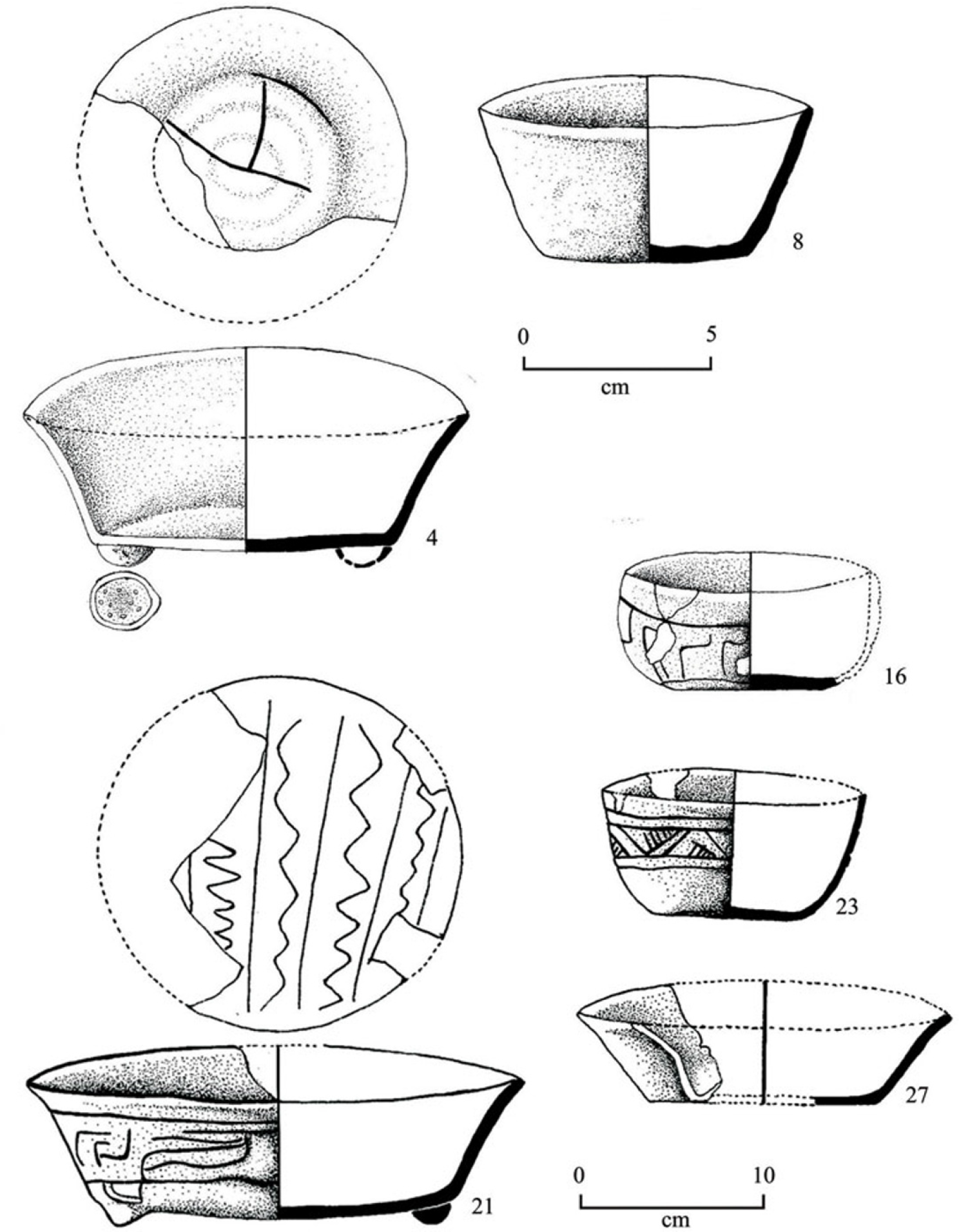
Tomb 214 is a multiple interment that contained incomplete remains of at least 12 adults spread on four different levels (Martínez López et al. Reference Martínez López, Winter and Markens2014:278–300). The mortuary offering consisted of 23 ceramic vessels (Figure 4). We identified plants from the bean family and from the arrowroot family under the bones, which might indicate that botanical remains were placed under the deceased. Objects 4 (conical bowl) and 15 (pot) contained fermented starches, potentially indicative of the presence of alcoholic beverages in this tomb. Based on the low recovery of botanical remains, it is possible that some of these vessels (Objects 23 and 27) might have contained other products such as meat or fish, with plants being either absent or in small quantity.
Tomb 214, drawing of examined vessels.

Grave 1993-17 contained the remains of a child aged 8–9 years old (Martínez López et al. Reference Martínez López, Winter, Antonio Juarez and Winter1995:109). The deceased was accompanied by four ceramic vessels and a shell ornament. Beans were identified in a small hemispherical bowl (Object 2) and maize in a conical bowl (Object 1).
In grave 1993-19 (Martínez López et al. Reference Martínez López, Winter, Antonio Juarez and Winter1995:115–116), archaeologists found the remains of an adult woman, accompanied by a single ceramic vessel placed at the side of the body. We identified the presence of grass phytoliths in the vessel, which might have been used to scour the bowl.
Grave 1993-43 is the last burial featured in this study that dates to the Pitao phase (Martínez López et al. Reference Martínez López, Winter, Antonio Juarez and Winter1995:151–175), a period marked by the strong influence of the Teotihuacan culture in religious and economic spheres. In this multiple burial, archaeologists found the skulls of 18 children and adolescents, as well as some adult bones, including humeri, femurs, tibias, clavicles, and fibulae (Martínez López et al. Reference Martínez López, Winter, Antonio Juarez and Winter1995:151). The skulls “are probably Zapotec” but this interment differs from the traditional graves found at Monte Albán (Winter Reference Winter and Everlyn1998:167). The critical differences of note are the rarity of subadult burials at Monte Albán and the absence of any other burial containing the skulls of multiple children (Winter Reference Winter and Everlyn1998:165). The human remains were accompanied by a large ceramic vessel and “fragments of a Teotihuacán-style mosaic object” (Winter Reference Winter and Plunket2002:77).
It is important to note that mosaic fragments of this type are rare at Monte Albán (Winter Reference Winter and Everlyn1998:167). Winter (Reference Winter and Everlyn1998, Reference Winter and Plunket2002) and Martínez López et al. (Reference Martínez López, Winter, Antonio Juarez and Winter1995) make the connection between this grave and another at the Central Mexican site of Teotihuacan, where the remains of 18 children, possibly sacrificial victims, were found under an altar (Jarquín Pacheco and Martínez Vargas Reference Pacheco and Martínez Vargas1991; López Austin et al. Reference Austin1991). Jarquín Pacheco and Martínez Vargas (Reference Pacheco and Martínez Vargas1991) explain the presence of the remains of 18 children in the Teotihuacán burial as related to the 18-month calendar, with one child representing each month. They have suggested that the children buried and possibly sacrificed at Teotihuacan served as an offering to the rain deity.
Martínez López and colleagues (Reference Martínez López, Winter, Antonio Juarez and Winter1995:162) suggest that the 18 skulls recovered in Grave 1993-43 might come from a second depository context, and the skulls would have been unearthed and reburied in this mass grave context. The skulls were recovered from three arbitrary levels. The burial of these skulls was likely a relatively public ritual rather than a private mortuary ritual due to the unique nature of this grave at Monte Albán, the high number of skulls buried during the same event, and the clear ties to Teotihuacan-style practices. This event was simultaneously more public in nature while also restricted in terms of participant status. It took place in a public setting, the North Platform, indicating the potential for a larger set of participants than a typical household mortuary ceremony. However, the nature of the setting itself, the North Platform and near the VG complex, was likely reserved for the elite (see Joyce Reference Joyce, Brenda and Zedeño2009:38). It is therefore possible to think that only nobles were allowed to participate in this event.
We examined sediment remains recovered near five of these skulls found on levels 2 and 3. Although these samples were processed with chemicals that usually destroy starch grains (see Bérubé Reference Bérubé2023), he was able to recover some starch grains that survived the chemical digestion and heating process (similarly to Wyatt et al. Reference Wyatt, Jarzen, Hare, Emery, Antonia and Kitty2012).
We were able to identify a wide array of plants from this grave: remains of maize leaves and cobs, squash (Figure 5), palms, and sedge; and potential remains from coyol (Acrocomia sp.) and chile; and remains from the bean and grass families. The potential chile starch was flattened and lenticular, similar to a red blood cell (Perry et al. Reference Perry, Dickau, Zarrillo, Holst, Pearsall, Piperno and Jane Berman2007). It is however a little small (15 µm rather than the usual 20–25 µm), thus warranting a tentative identification. The presence of palms might perhaps indicate that the skulls were wrapped in a petate, mortuary mats used to wrap the body of the deceased and avoid any direct contact with the soil. In this case, the petates might have served as mortuary bundles to transport the skulls. It is difficult to assess the nature of the botanical assemblage recovered from Grave 1993-43. It is possible that the remains identified in this study inform us about the plants placed alongside the skulls of the deceased, serving as additional offerings along with the large ceramic vessel. However, it is possible that the plants found here came from the sediment fill or from the sediment collected from the previous graves when the skulls were reburied (Martínez López et al. Reference Martínez López, Winter, Antonio Juarez and Winter1995:162).
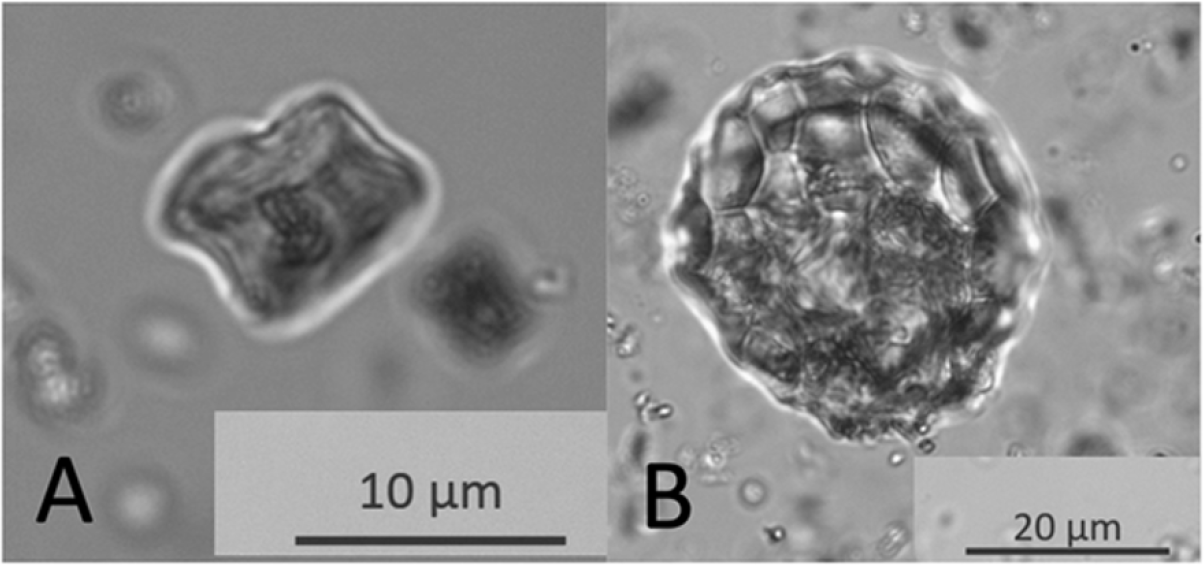
Remains from Grave 1993-43. (A) Zea mays cob phytolith (sediment recovered near Skull 16) (transmitted light); (B) Cucurbita sp. phytolith (sediment recovered near Skull 18) (transmitted light).

Late Classic
Two tombs (196 and 207) date to the Peche (AD 500–650) and Xoo phases (AD 650–850), while Grave 1994-69 dates to the terminal phase of Xoo. Tomb 212 contained the remains of five adults and there were two offerings in this multiple interment: an incomplete obsidian ornament and a fragment of worked bone (Martínez López et al. Reference Martínez López, Winter and Markens2014:38–53). The lithic ornament was found near the roof of the tomb. The remains recovered from the microbotanical extraction highlighted the presence of grass and damaged starch grains, indicating the lithic ornament might also have been used as a tool to process grass and possibly other plants. We suggest that this change in function might have occurred after the ornament was broken. While it may no longer have been used as an ornament for aesthetic reasons, it still offered a sharp edge ideal for food preparation. The data obtained from this tomb does not directly inform us about botanical offerings placed to accompany the deceased.
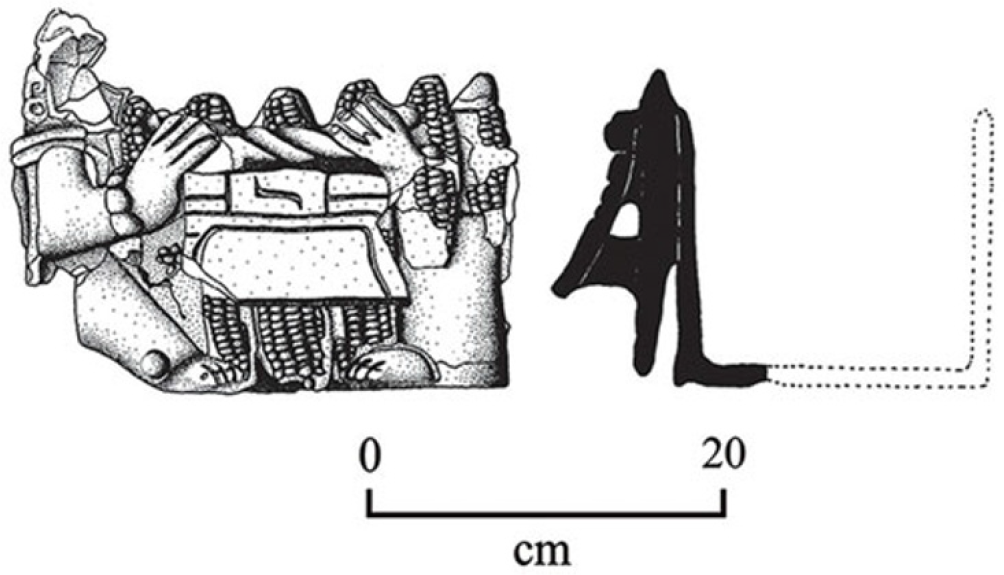
In Tomb 207, archaeologists found the remains of four adults (Martínez López et al. Reference Martínez López, Winter and Markens2014:172–188). The mortuary offering was split in two different concentrations of objects: one that starts in the tomb’s access and continues through the entry to the chamber (one effigy vessel, five ceramic vessels, worked bones and shells) and a second one found in the NW niche of the tomb (12 ceramic vessels). One of the artifacts examined (Object 1) was found in the access to the tomb and is an effigy vessel representing two individuals holding corn cobs (Figure 6).
Effigy vessel from Tomb 207.

The incense burner in the niche might have been used to burn a mixture composed of maize, palms, and possibly cordia (Boraginaceae spp.). The shallow carved bowl could have been used to prepare different foods, including maize and chile pepper. This time, the chile starch matched in size and shape to the diagnostic grains (Perry et al. Reference Perry, Dickau, Zarrillo, Holst, Pearsall, Piperno and Jane Berman2007).
Grave 1994-69 (Martínez López et al. Reference Martínez López, Winter, Antonio Juarez and Winter1995:223–227) was found in the residence of the famous Tomb 7. There, archaeologists recovered the remains of an adult woman missing her skull (Martínez López et al. Reference Martínez López, Winter, Antonio Juarez and Winter1995:223). The removal of bones from mortuary contexts, including cranial bones, has been reported elsewhere in Oaxaca (see Feinman et al. Reference Feinman, Nicholas and Baker2010; Lind and Urcid Reference Lind and Urcid2010; Markens and Martínez López Reference Markens, Martínez López, Rodríguez, Morell-Hart and King2024; McCafferty and McCafferty Reference McCafferty, McCafferty, Zborover and Kroefges2015; Rivera Gúzman Reference Rivera Guzmán2014; Urcid Reference Urcid2005). These archaeologists have argued that these bones sometimes served as amulets and often played an important role in veneration of ancestors. Considering this practice has been documented at numerous sites in Oaxaca, it is likely that the skull from the deceased individual in Grave 1994-69 was removed for similar purposes.
The mortuary offering consisted of six ceramic vessels. These vessels contained an array of edible plants, including maize, chile pepper, sweet potato, and the edible tuber of arrowhead (Sagittaria sp.), as well as plants from the Asteraceae spp. family (ajenjo, anis, epazotillo). The arrowhead starches were identified based on Messner’s observations (Reference Messner2011) and from contemporary samples. The starch grains tended to be more oval-shape, showed fissures, and their hila were in a “semi-eccentric position” with “radial marks extending out from the hilum.” These plants were mixed together in different ways, perhaps hinting toward the presence of different dishes placed as offerings. This grave is the only one containing sweet potato and arrowhead, potentially highlighting highly elaborate mortuary practices, or indicative of culinary diversity detected from traces of dishes prepared during the artifacts’ use-life.
Overall, we found evidence of maize, chile pepper, grass, palms, elements of the sunflower family, all locally available plants, that could not be identified to the species (Asteraceae spp.). Arrowhead, however, needed to be imported as it could not grow immediately around the site, and sweet potato is a lowlands-preferring plant. It is also possible that funerary participants interred vessels with the deceased that had been used prior to death.
Early Postclassic
Tomb 208 dates to the Liobaa phase (AD 850–1250). In this context, archaeologists encountered the remains of eight adults and one subadult (15–20 years old; Martínez López et al. Reference Martínez López, Winter and Markens2014:189–218). The mortuary offering consists of multiple artifacts (ceramic vessels [50], lithic [9], and shell [27]). Starches of sweet potato were recovered in two vessels, alongside maize and possible arrowhead (less defined radial marks). Those findings suggest that mortuary offerings could consist of a mix of local and foreign plants.
Discussion
This study allowed us to identify plants likely used as mortuary offerings at Monte Albán. We found more botanical remains in hemispherical and conical bowls. This might suggest that these vessels were preferred containers for plants chosen to accompany the deceased. However, it is also possible that funerary participants interred vessels with the deceased that had been used prior to death. It is worth noting that certain miniature vessels (Figure 7) contained remains of maize and sweet potato, two edible plants. Due to their size, we argue that these vessels might have contained symbolic food offerings. This is similar to contemporary Zapotec practices, where the deceased are offered small tortillas, maize kernels, beans, a piece of cloth, and a needle, among other things.
Remains from Tomb 208. (A and B) Miniature bowl (Obj. 23); (C and D) Zea mays starch.

Plant-use in mortuary contexts was highly diverse, in terms of species included as well as their placement within the grave. These results led us to suggest that differences in plant taxa offered in funerary settings may be attributed to personal preferences of the deceased and living participants in mortuary rituals. The deceased individual placed in Tomb 204 might have craved manioc (Manihot sp.), while the people burying the infant found in Grave 1994-61 might have thought that maize kernels and squash were perhaps better suited for an infant. It is also possible these findings relate to the availability of preferred plants at the time of the death of the interred individuals, or the reuse of utilized vessels in mortuary contexts.
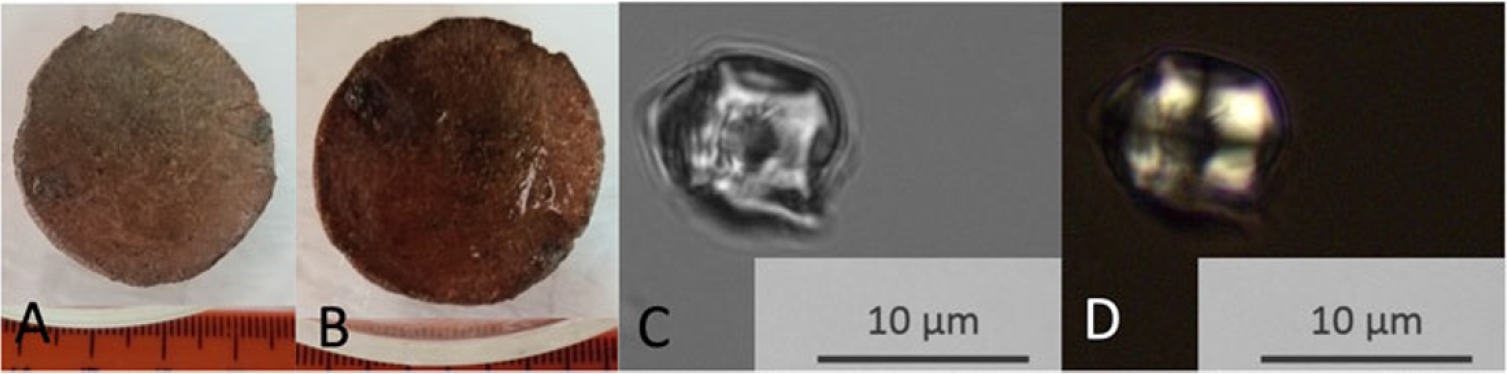
Maize appears to have been the most important plant used as a mortuary offering at Monte Albán. It was ubiquitous, found in most of the tombs and graves, and its absence from a few burials could be due to the limited number of samples taken from those contexts. The repetitive use of maize in burials from the start of Monte Albán’s history (Tomb 204) follows an established tradition that persists today (see Rojas Reference Rojas2016). The presence of maize leaves could perhaps hint at the presence of tamales, a food wrapped in maize leaves before being steamed. In the access of Tomb 207, archaeologists recovered an effigy vessel decorated with maize cobs (Figure 8). We examined this vessel and identified the presence of maize starches (produced by kernels) and phytoliths (produced by leaves and cobs). We suggest that the presence of this vessel in a tomb could have played a key role in a ritual petitioning of venerated ancestors for a good harvest.
Remains from the effigy vessel (Tomb 207). (A and B) Zea mays starches (transmitted light, polarized light); (C and D) Zea mays cob phytoliths (transmitted light).

While maize dominated the botanical assemblages, the diversity of other plant varieties is striking, with a total of 24 different taxa identified. This includes plants often encountered in the traditional Zapotec diet, such as chile, squash, and beans, as well as plants that might have been used for ornamental purposes, like sedge and grass. Palms were identified in 50% of the mortuary contexts. We suggest that this might demonstrate the use of petates. The most surprising find is the presence of arrowhead, an aquatic plant, in Grave 1994-69 and potentially in Tomb 208 as well. This plant needs water all year long to survive, and was unlikely to have grown at Monte Albán. This plant might perhaps have been placed in Grave 1994-69 to connect the deceased ancestor with Cociyo, the Zapotec rain deity.
There were no clear differences between the botanical assemblages found in simple graves and in formal tombs. Most of the plants found in this study have been encountered in both contexts. In formal tombs, we identified on average 6.125 taxa/context. For simple graves (excluding Grave 1993-43), we found 5.8 taxa/context. These results demonstrate the absence of marked differences between simple graves and formal tombs with one exception: the presence of traces of fermentation from two tombs (204 and 214). Evidence of fermentation was absent from simple graves. While these results are preliminary and might be challenged by future analyses, we suggest that alcoholic beverages could have been a rare mortuary offering at Monte Albán and possibly reserved exclusively for people buried in tombs or by the people taking part in the mortuary rituals associated with tomb burials, thus perpetuating differences in social status in the afterlife through plants.
Based on the results obtained, we argue that most plants placed as mortuary offerings might not have served to replicate the social status of the deceased, differentiating between the highest level of elites and lesser elites. Other elements of the burials, such as the architecture and other mortuary offerings (greenstone, shells, ceramic vessels, etc.) might have allowed celebrants to replicate social standings in the afterlife. Food offerings may still be connected with status, particularly meat. Future research should examine the place of meat in funerary offerings, considering data obtained by González Licón (Reference González Licón2003) showing that the people placed in formal tombs ate more meat than those placed in simple graves. This could perhaps offer us a way to see how certain ingredients and meal preparations may have differed from simple graves and formal tombs.
Conclusion
At Monte Albán (e.g., Joyce Reference Joyce, Susan and Timothy2020; Lind and Urcid Reference Lind and Urcid2010), and in numerous cultures around the world (e.g., Belmar et al. Reference Belmar, Quiroz, Carrasco and Pavlovic2020; McNeil Reference McNeil, John and Carrasco2010), offerings were used by the living to create a bridge with the dead as they transitioned to their new role as ancestors. These powerful new entities could protect their descendants, negotiate with spirits, and petition deities. The transformation of the deceased into ancestors was a crucial moment for grieving families, and plants played a key role in ensuring the establishment and the maintenance of this essential connection. This study allows us to better understand the plants selected by the inhabitants of the Zapotec capital to create and maintain a bridge between the living and the dead, an aspect that had never been studied previously at the site.
By examining phytoliths and starch grains recovered from mortuary contexts, this study allowed us to identify plants used to accompany the deceased at Monte Albán. Maize was likely the most important plant placed as an offering, reinforcing its importance in Zapotec (Binningula’sa’) ritual practices. Vessels placed as offerings likely contained food and drinks made with maize. Remains of cobs and leaves were also found near bodies and in the vicinity of the 18 skulls interred in Grave 1993-43, suggesting this plant played a very important role in mortuary practices. There was a great diversity of plants identified in this study, and it was impossible to observe a recurrent pattern in their uses, perhaps suggesting that personal preferences or availability of plants at the time of death drove the selection of plants as mortuary offerings. The results obtained suggest that plants were used in a similar fashion in both simple graves and formal tombs, even though the individuals interred in each context did not have the same social standing. This indicates that plants used as mortuary offerings may not have served to reinforce the social status of “greater” and “lesser” elites in noble households.
This study offers new evidence of the use of plants in mortuary practices at Monte Albán. We suggest that the presence of palm remains near the bodies in numerous contexts could demonstrate the presence of petates, mortuary mats. In this study, we also identified plants generally used for their ornamental properties (such as sedge and grasses), informing us about the plants used to arrange and decorate mortuary contexts. Additional data on the food elements placed in these contexts in Monte Albán and in the Valley of Oaxaca would allow us to better understand the connection between deceased ancestors and the living, and on the role of food to create and maintain a connection between these entities. Samples from the 1972–1973 excavations led by Marcus Winter, the 1991 project led by Ernesto González Licón, and additional samples from the PEMA still await to be examined at the INAH laboratory in Cuilapam de Guerrero. We suggest it would be best to combine paleoethnobotanical data, zooarchaeological analysis, lipid analysis, and entomoarchaeology. This would allow us to engage with all ingredients in Oaxacan cuisine, and with the numerous combinations that make it unique. Whether simple or elaborate, dishes included in offerings allowed one last opportunity to share a meal with the dead; one last time to socialize with loved ones or powerful members of the household through food. This study has refocused our attention on those dishes, shared with the dead centuries ago.
Acknowledgments
The authors would like to thank the Consejo del INAH that allowed this project to go on (Permiso 401.1S.3-2019/1321) and Dr. Marcus Winter of the Centro INAH Oaxaca who authorized analysis of samples collected during his project. Bérubé would like to thank his supervisor, Dr. Shanti Morell-Hart, and his committee members: Drs. Andy Roddick, Verónica Pérez-Rodríguez, and Marc Levine. Finally, thank you for to our reviewers and to the organizers of this special issue, Drs. Marijke Stoll and Pedro Guillermo Ramón Celis.
Funding Statement
This study was funded by the Conseil de recherches en sciences humaines du Canada under Grant CRSH-752-2019-1225, the Ontario Graduate Scholarship, the Fonds de recherche du Québec – Société et culture under grant FQRSC-277618, McMaster University, the Anthropology Department, and the Graduate Students’ Association.
Data Availability Statement
The full data can be obtained from http://hdl.handle.net/11375/28509.
Competing Interests
The authors declare none.