Diabetes is one of the most common metabolic diseases worldwide, and its prevalence is increasing in all countries. It is estimated that 10 % (578 million people) by 2030 and 11 % (700 million people) by 2045 will suffer from diabetes(Reference Saeedi, Petersohn and Salpea1). Managing diabetes can pose challenges, involving self-care and the potential for long-term complications along with ensuing psychological concerns such as anxiety, depression and sleep disturbances(Reference Fanelli, Raschi and Hafez2). This can impact physical, psychological and general well-being, resulting in decreased quality of life (QoL)(Reference Trikkalinou, Papazafiropoulou and Melidonis3). Symptoms such as reduced energy, fatigue, irritability, depression and delayed psychosexual maturation are common among patients with diabetes(Reference Bąk, Marcisz-Dyla and Młynarska4), and there is a high prevalence of depression and anxiety in this population compared with the general population(Reference Herhaus, Kruse and Hinz5). A strong relationship between depression, anxiety, stress and QoL has been reported among adults with type 2 diabetes mellitus (T2DM)(Reference Abualhamael, Baig and Alghamdi6). On the other hand, sleep disturbances are prevalent among these patients, which can have a negative effect on their overall QoL(Reference Luyster and Dunbar-Jacob7).
A substantial body of evidence indicates that the gut microbiota plays a crucial role in the development of metabolic diseases including T2DM(Reference Sasidharan Pillai, Gagnon and Foster8). In patients with T2DM, the high levels of gram-negative bacteria such as Bacteroides, Ruminococcus and Veillonella and the low relative abundances of Bifidobacterium, Roseburia, Faecalibacterium and Lachnospira as well as destruction of Zonula occludens-1 (ZO-1) and Occludin proteins in tight junctions by oxidative stress can result in the penetration of endotoxins(Reference Chelakkot, Ghim and Ryu9–Reference Gurung, Li and You11). Chronic hyperglycaemia and hyperinsulinemia by reducing jejunal motility lead to increased absorption and decreased clearance of endotoxins(Reference Gomes, de Assis Costa and Alfenas12). The increased levels of endotoxins lead to psychological disorders and sleep disturbances via increasing cortisol levels and decreasing brain-derived neurotrophic factor (BDNF) and melatonin. Furthermore, endotoxins by enhancing the levels of inflammatory cytokines such as TNF-α and IL-18 increase the activity of the hypothalamus–pituitary–adrenal (HPA) axis, ultimately increasing cortisol levels and preventing deep sleep(Reference Chmielarz, Sobieszczańska and Środa-Pomianek13–Reference Van den Boogaard, Ramakers and van Alfen15). Additionally, systemic inflammation in T2DM through increasing the activity of the enzyme indoleamine 2,3-dioxygenase, reducing serum tryptophan (TRP) levels and subsequently serum serotonin and melatonin levels can lead to increased kynurenine (KYN) levels(Reference Cho, Savitz and Dantzer16,Reference Kozieł and Urbanska17) . Activation of the KYN pathway has been associated with depression and sleep disturbance(Reference Cho, Savitz and Dantzer16). Additionally, risk factors such as chronic inflammation and HPA axis dysregulation are recognised as contributors to anxiety in this group(Reference Luca, Nemeroff, Ressler, Pine and Rothbaum18–Reference Vogelzangs, Beekman and De Jonge20). Persistent high blood sugar and hyperinsulinemia can diminish the sensitivity of the HPA axis to cortisol-mediated negative feedback, raising the risk of anxiety and depressive disorders(Reference Gragnoli21,Reference Janssen22) .
In recent years, functional foods have gained considerable global attention because they can positively impact the gut–brain axis and enhance mental well-being(Reference Alkhatib, Tsang and Tiss23,Reference Temple24) . They contain biologically active ingredients that have significant health-promoting or disease-preventing effects when consumed regularly as part of a balanced diet(Reference Temple24,Reference Brown, Poudyal and Panchal25) . Date seeds, the main by-product of date fruit consumption and processing, are known as excellent functional foods because they are rich in bioactive compounds such as flavonols, polyphenolic compounds and carotenoids, as well as dietary fibres, minerals and vitamins (including vitamin A, B1, B2, C, E, K and folate)(Reference Moslemi, Dehghan and Khani26,Reference Osaili, Swaidan and Al-Nabulsi27) . The most commonly identified phenolic acids in date seed extracts include gallic acid, ferulic acid, caffeic acid, p-coumaric acid and chlorogenic acid, while flavonoids such as catechin, epicatechin, quercetin and rutin have also been frequently detected(Reference Al-Farsi and Lee28–Reference Habib and Ibrahim30). Furthermore, date seeds exhibit diverse amino acid composition depending on the stage of maturation(Reference Alkhoori, Kong and Aljaafari31). Numerous studies have reported health benefits of date seeds. In fact, the favourable effects of date seeds on hyperglycaemia, inflammation, learning impairments, memory, oxidative stress and hyperlipidemia have been demonstrated in limited clinical trials and animal studies(Reference Moslemi, Dehghan and Khani26,Reference Ahmed, Ahmed and Darwish32–Reference Samir, Youssef and Mohamed36) . However, to our knowledge, no research has been conducted on the effects of date seed powder (DSP) on inflammation, metabolic endotoxemia and mental health in patients with T2DM. Therefore, the present clinical trial aimed to assess the impact of an 8-week DSP supplementation on metabolic endotoxemia, sleep quality, QoL, depression, anxiety and HPA axis of T2DM patients.
Methods
Study design and participants
The present clinical trial followed a triple-blinded, placebo-controlled and randomised design. A total of forty-six T2DM patients, consisting of twenty-nine females and seventeen males aged between 30 and 50 years, were enrolled in the study. These patients had fasting plasma glucose levels ≥ 126 mg/dl(Reference Petersmann, Müller-Wieland and Müller37). During the period from May 2022 to October 2022, patient recruitment was conducted among individuals referred to the Iranian Diabetes Society, Afzalipour Hospital, and other clinics in Kerman, Iran.
Inclusion criteria were a T2DM history for over 6 months, 25 ≤ BMI < 35 and no weight changes during the last 3 months, currently using oral antidiabetic medication and continuing to use it during the intervention, maintaining a stable level of physical activity and adhering to a regular dietary regimen. Participants who had received insulin, glucocorticoids, laxatives, weight loss medications, lipid-lowering agents, non-steroidal anti-inflammatory medications, multivitamins or antioxidants within the 3 months prior to the commencement of the study, also those who took sleeping drugs or antidepressant regularly (more than once a week), had an average intake of caffeine more than 400 mg/d, had sleep disorders (insomnia), and had mental disorders such as depression and chronic fatigue for at least 3 months were excluded. Additionally, participants who used antibiotics, prebiotics or probiotics, had a history of intestinal, pulmonary, hepatic, renal, cardiac or infectious diseases, suffered from thyroid problems, were under radiotherapy or chemotherapy for cancers, followed any kinds of diets within the past 6 months, were pregnant or breast-feeding, smoked or drank alcohol, had regular vigorous intensity activities, were professional athletes, experienced gastrointestinal issues during the research, or expressed reluctance to consume DSP and any changes in diet, lifestyle, class or dose of hypoglycemic drugs were also excluded from the study.
This investigation was done according to the guidelines laid down in the Declaration of Helsinki. All patients provided written informed consent before recruitment. Approval for the study protocol was granted by the Ethical Committee of Tabriz University of Medical Sciences (IR.TBZMED.REC.1402.939) and registered on the Iranian Registry of Clinical Trials website (https://www.irct.ir/,IRCT20150205020965N10).
Randomisation and blinding
Following a 2-week run-in period, a total of forty-six individuals were randomly assigned to either the placebo group or the intervention group, with an equal number of participants (n 23) in each group. The random allocation was conducted using a sequence of numbers generated by the random allocation software (RAS) in collaboration with an independent researcher. By utilising the blocking method with block sizes of 2 and 4, randomisation was carried out. The patients were matched based on age, sex and BMI. The allocation process was concealed from the participants, study supervisor, and individuals engaged in outcome evaluation and data analysis. Patients were allocated in a 1:1 ratio to receive either DSP or placebo, with packaging matched by an individual not involved in the study. The patients were given DSP and maltodextrin in indistinguishable opaque packaging, which were then enclosed in separate boxes by an independent researcher. A computer-generated randomisation list was used to assign numbers to the boxes. These boxes were then securely delivered to the supervisor of the study in sealed envelopes. In the run-in phase, patients were asked to follow the recommended diet and physical activity level.
Sample size
The sample size calculation was carried out based on the study of Jubayer et al. (Reference Jubayer, Kayshar and Rahaman38) using GPOWER software. A minimum of nineteen participants were calculated to be required in each group, with a statistical power of 95 % and a confidence level of 95 %. Accounting for a dropout rate of 20 %, the sample size was adjusted to twenty-three subjects per group.
Intervention
Patients in two groups, intervention and placebo, were given either a DSP supplement (5 g/d, twice a day, Flavinea Co) or maltodextrin (5 g/d, twice a day, Jiujiang Hurirong Trade Co) as a placebo, consumed both with semisolid foods, for 8 weeks. None of the companies had any role in the study design or analysis. The supplements were odourless and flavourless powders, provided in similar packages. Half of the packages were given at the beginning of the trial and the rest at 4 weeks. Diabetic diet recommendations (reducing the consumption of simple carbohydrates, replacing complex carbohydrates instead of simple carbohydrates and including carbohydrate-rich foods from whole grains, fruits, vegetables and low-fat milk) were given to the patients. They were also asked to refrain from consuming any type of polyphenol or prebiotic supplements and products containing these compounds 2 weeks before the start of the study. Participants were contacted twice a week to ensure adherence to physical activity and diet, and to gather information about possible side effects. Additionally, a checklist was provided for participants to mark after each consumption of the prescribed powders to evaluate for cases of non-compliance. Adherence to the regular consumption of powders (DSP or placebo) was also determined by counting packages, and also a loss of more than 10 % of the packages was considered non-compliance and, consequently, resulted in exclusion from the study.
Chemical analysis of date seed powder (Phoenix dactylifera)
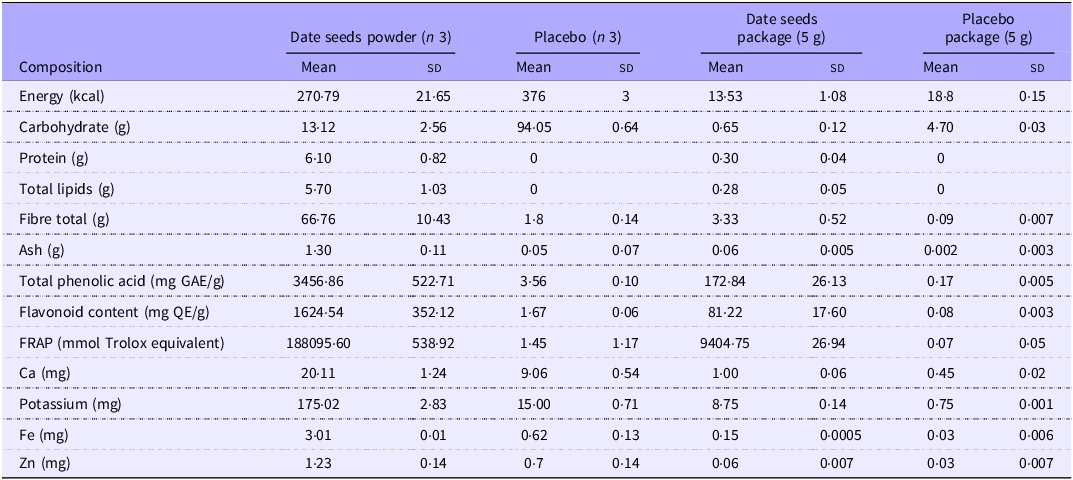
Commercial samples of DSP and maltodextrin were obtained from Iran and China, respectively. DSP was analysed for phenolic content and flavonoids using colorimetric methods(Reference Saptarini, Pratiwi and Maisyarah39). In the current study, only total phenolic content, total flavonoid content and total antioxidant capacity (FRAP assay) were quantified using colorimetric methods. Individual polyphenolic compounds were not analysed due to methodological constraints. Composition and antioxidant content per 100g of DSP were determined in triplicate (Table 1).
Chemical composition, total phenolic acid and flavonoid content of date seeds and placebo (100 g) and each supplement package

GAE: galllic acid equivallent; FRAP: ferric reducing ability of plasma.
Assessment of physical activity, dietary intake and anthropometric parameters
Participants completed a demographic questionnaire before starting the study. For the assessment of physical activity and dietary intake, the International Physical Activity Questionnaire (IPAQ)(Reference Craig, Marshall and Sjostrom40) and a 3-d food record(Reference Yang, Kim and Hwang41) were applied before and after intervention, respectively. Food records were analysed using ‘Nutritionist 4’ software (First Databank, Hearst Corp). Physical activity level of the patients were converted to metabolic equivalent task hours per d (MET-hour/d). Anthropometric indices were measured at the beginning and end of the study. Body weight was measured in light clothing without footwear (Seca, to the nearest 0·1 kilograms).
Laboratory analysis
Venous blood specimens (10 ml) were obtained prior to and after the trial, following an overnight fast lasting 12–14 h. Following centrifugation of samples at 2500 rpm for 10 min using a Beckman Avanti J-25 centrifuge (Beckman Coulter) at room temperature, the serum was isolated and kept at −70°C until further examinations. Fasting blood sugar and high-sensitivity C-reactive protein (hs-CRP) were determined by kit (Pars-Azmone). Levels of IL-18 (intraassay < 4 %, interaassay < 4 % and catalog no: E-EL-H0235), IL-10 (intraassay < 6 %, interaassay < 5 % and catalog no: Dy214, R&D SYSIEM), cortisol (intraassay < 7 %, interaassay < 6 % and catalog no: 3625–300, Monobind), TRP (intraassay < 5 %, interaassay < 7 % and catalog no: MAK254, SIGMA), adrenocorticotropic hormone (ACTH) (intraassay < 4 %, interaassay < 6 % and catalog no:KAO916), BDNF(intraassay < 6 %, interaassay < 5 % and catalog no: Dy248, R&D SYSIEM), KYN (intraassay < 8 %, interaassay < 10 % and catalog no: CSB-E13659h) and endotoxin (intraassay < 10 %, interaassay < 12 % and catalog no: MBS452438, MY BIOSOURCE) were determined using an ELISA kit.
Sleep quality assessment
To evaluate the quality of sleep, the Pittsburgh Sleep Quality Index (PSQI) questionnaire was employed. This index measures the sleep quality experienced during the preceding month and encompasses seven component scales. Each scale is assigned a score ranging from 0 to 3, thereby yielding a total PSQI score that spans from 0 to 21. Scores above 5 on the PSQI are indicative of inferior sleep quality(Reference Saleh-Ghadimi, Dehghan and Sarmadi42).
Assessment of quality of life
To evaluate the QoL, the medical outcomes study Short Form 36 (SF-36) was employed. The SF-36 is a self-rated measure of functioning, health status and well-being that has been widely used to estimate QoL in the general population, as well as in patients with various medical conditions. It contains eight component domains: physical functioning, role-physical, bodily pain, general health, vitality, social functioning, role-emotional and mental health. Each dimension is measured on a 0 to 100 scale, with higher values reflecting a better QoL(Reference Saleh-Ghadimi, Dehghan and Sarmadi42). This instrument has been translated and validated for assessing QoL in Iran(Reference Montazeri, Goshtasebi and Vahdaninia43).
Assessment of depression, anxiety and stress
To evaluate depression, anxiety and stress, the twenty-one-item Depression, Anxiety, and Stress Scale (DASS-21) was used. The DASS-21 is a questionnaire consisting of twenty-one items that measures depression, anxiety and stress levels using three subscales, each consisting of seven items. Participants rate each question on a scale ranging from 0 to 3. Higher scores within each subscale indicate greater severity of depression, anxiety and stress(Reference Parkitny and McAuley44). The Persian version of this questionnaire has demonstrated reliability and validity among Iranians(Reference Samani and Joukar45).
Primary and secondary outcomes
The primary objective of this study was to assess the effects of the DSP on the levels of fasting plasma glucose, endotoxin, cortisol, TRP, IL-18, IL-10, hs-CRP and ACTH, as well as sleep quality and DASS scores. QoL and weight changes were designated as secondary outcomes. Covariates included the baseline levels of measured biochemical markers, weight changes and energy intake.
Statistical analysis
Analyses were performed using SPSS software version 17.0. Qualitative data were represented by frequency (percent) and quantitative data by mean and standard deviation. Normality was assessed through the Kolmogorov–Smirnov test and variance homogeneity through Levene’s test. Between-group comparisons were done with unpaired t tests or Mann–Whitney U test, and post-intervention ANCOVA. Within-group comparisons were performed with paired t tests or Wilcoxon signed-rank test. A significance threshold of P < 0·05 was applied to all tests. Mean changes of markers between the groups were calculated via the following formula ((Intervention values – Control values)/Control values) × 100.
Results
Participants
In total, forty-six patients were randomly allocated into the intervention, of whom forty-three (twenty-two in the DSP group and twenty-one in the placebo group) completed the study. Three patients dropped out: one from the intervention group relocated, one from the intervention group did not consume the supplement as planned, and one from the placebo group changed their medication. Additionally, one patient in the placebo group was excluded due to a diet change (Figure 1). The number of dropouts did not differ between two groups (P = 0·621). The participation rate in this study was 93 %. None of the patients reported serious complaints, including experienced gastrointestinal problems or intolerance to DSP following the DSP supplementation.
Diagram of study.

Baseline characteristics
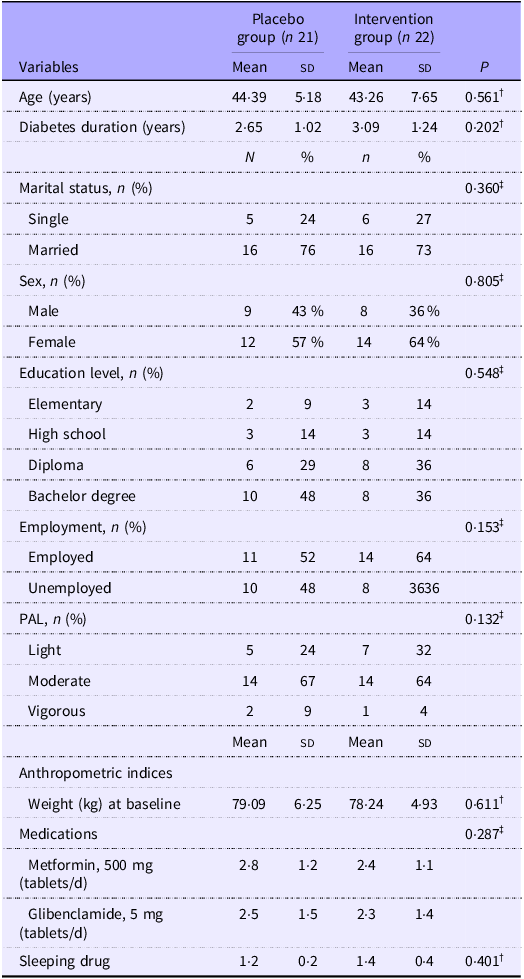
Table 2 shows the characteristics of the subjects at baseline. The mean ages of patients in the placebo and intervention groups were 44·39 (sd 5·18) and 43·26 (sd 7·65) years, respectively. There was no statistically significant difference between the intervention and placebo groups in terms of their demographic characteristics or diabetes duration, drug history and physical activity level (Table 2), dietary intakes (Table 3), mental health measurements (Tables 4 and 5) and biomedical parameters (Table 6) (P > 0·05).
Baseline characteristics of the study participants

PAL, physical activity level.
* Data are presented as mean (sd).
† Independent sample t test.
‡ χ 2 tests.
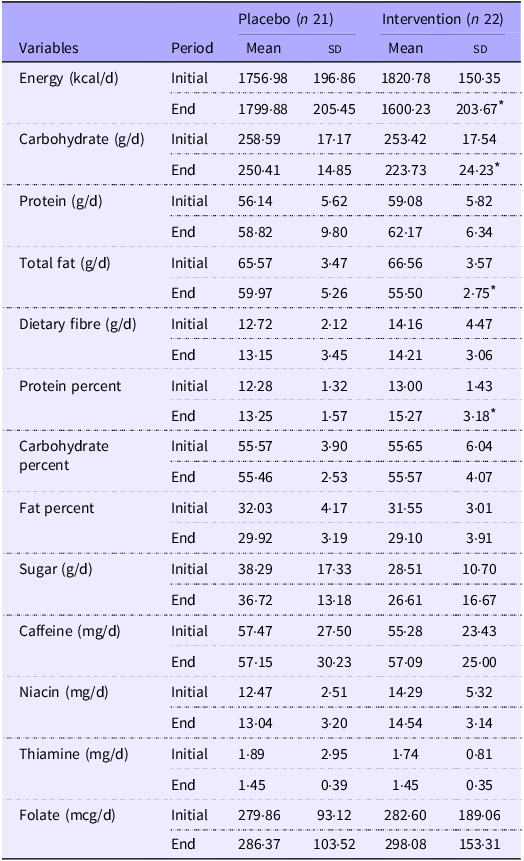
Dietary intakes of patients at baseline and at the end of the study

SD, standard deviation.
* P < 0·05, paired Student’s t test.
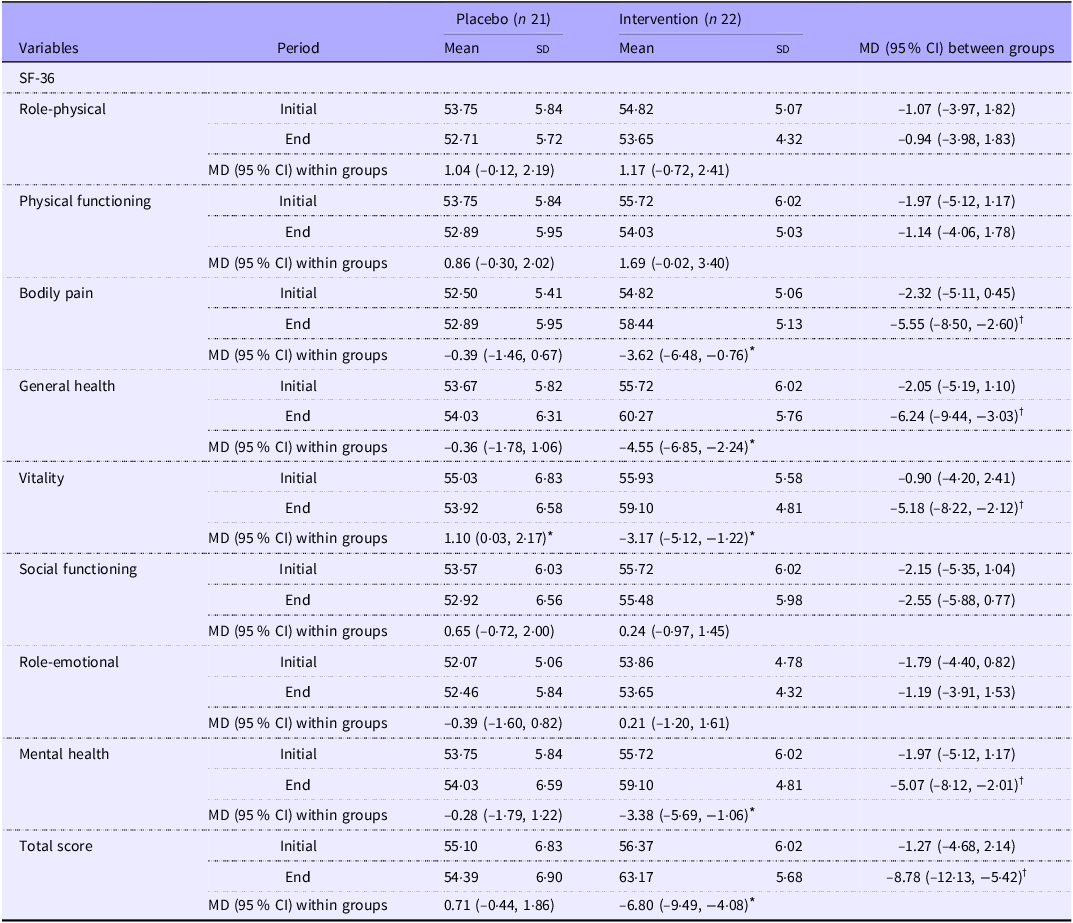
Health-related quality of life of the participants at baseline and at the end of study

SF-36, Short Form-36.
Data are expressed in means (sd). MD, mean difference.
* P < 0·05, tests for difference within groups were conducted by paired Student’s t test.
† P < 0·05, tests for difference between groups were conducted by independent Student’s t test at baseline. Tests for difference between groups were conducted by ANCOVA. Adjusted for diabetes duration, energy intake, weight changes and baselines values with ANCOVA.
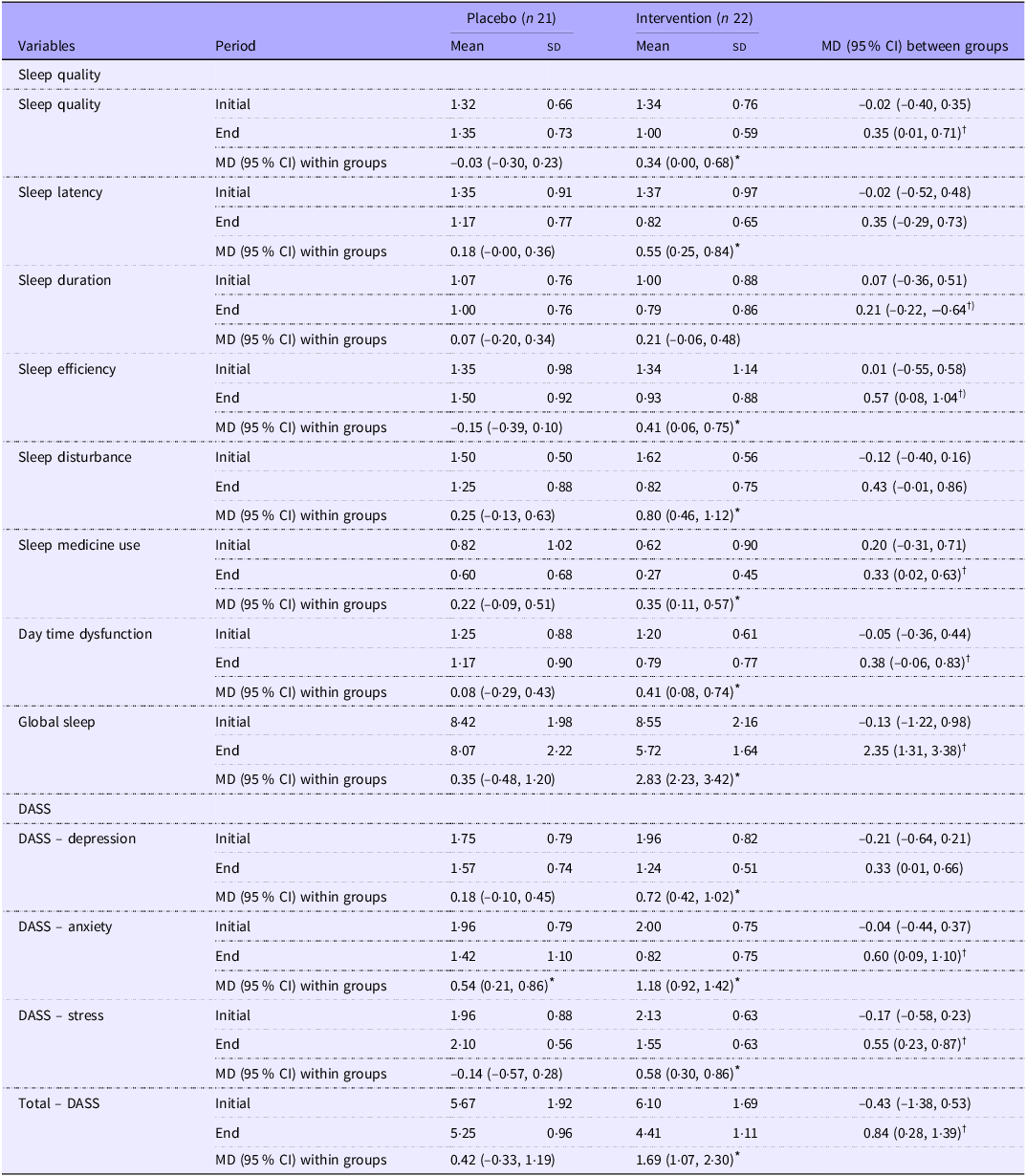
Sleep quality and DASS scale of the participants at baseline and at the end of study

DASS, Depression, anxiety and stress scale. Data are expressed in means (sd). MD, mean difference.
* P < 0·05, tests for difference within groups were conducted by paired Student’s t test.
† P < 0·05, tests for difference between groups were conducted by independent Student’s t test at baseline. Tests for difference between groups were conducted by ANCOVA. Adjusted for diabetes duration, energy intake, weight changes and baselines values with ANCOVA.
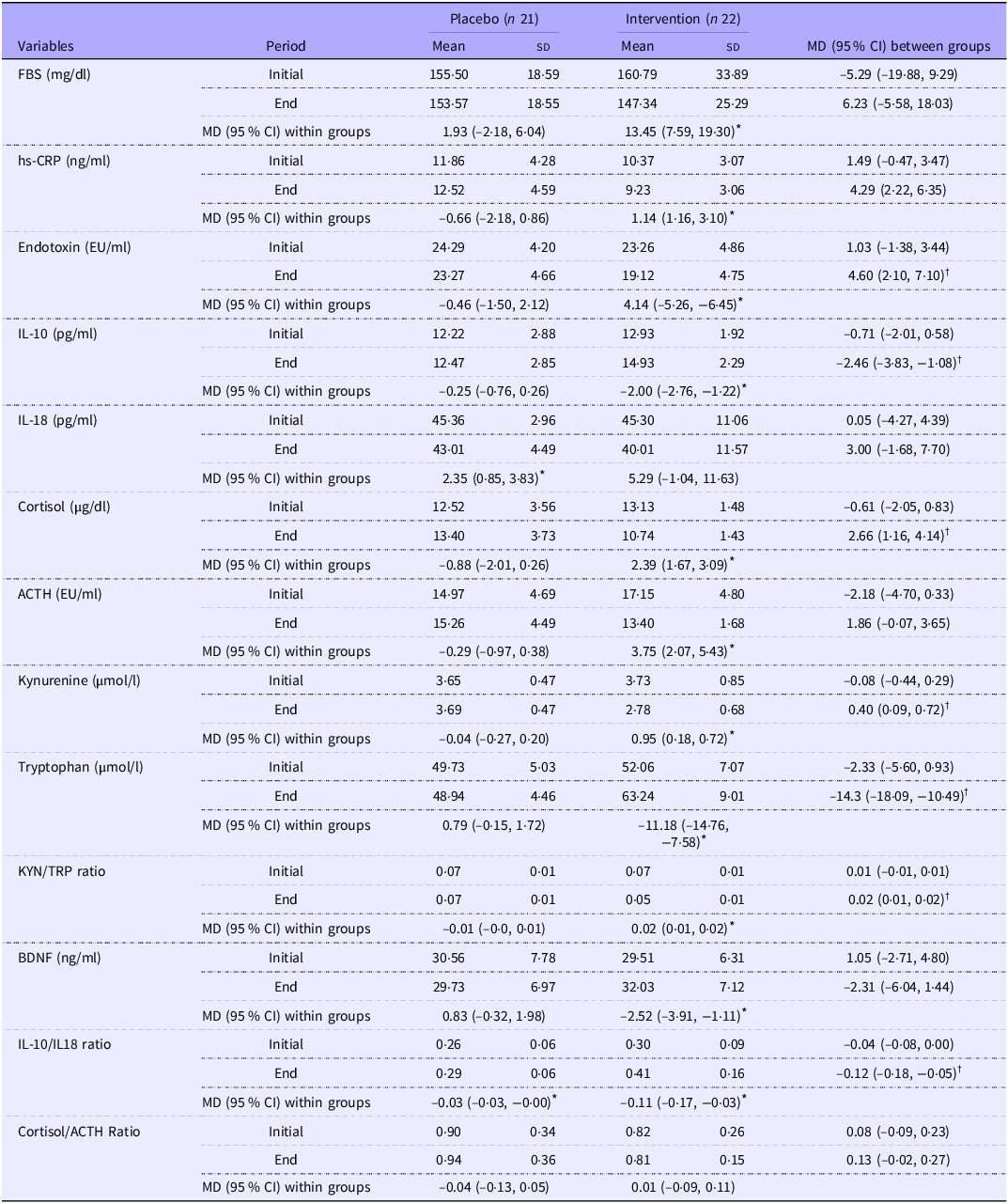
Changes in biochemical parameters and hypothalamus–pituitary–adrenal axis activities of patients at baseline and end of the study

FBS, fasting blood sugar; Hs-CRP, high-sensitivity C-reactive protein; ACTH, adrenocorticotropic hormone; HbA1c, glycosylated Hb; KYN/TRP, kynurenine/tryptophan; BDNF, brain-derived neurotrophic factor.
All values are presented as mean (sd). MD, mean difference.
* P < 0·05, tests for difference within groups were conducted by paired Student’s t test.
† P < 0·05, tests for difference between groups were conducted by independent Student’s t test at baseline. Tests for difference between groups were conducted by ANCOVA. Adjusted for diabetes duration, energy intake, weight changes and baselines values with ANCOVA.
Lifestyle and anthropometric indices
After 8 weeks intervention, the mean of body weight and BMI significantly reduced in the intervention group (78.24 (4.93) to 75.05 (3.34), 29.21 (2.37) to 28.02 (2.08), respectively) compared with placebo group , respectively). DSP group showed significant changes in energy, carbohydrate, total fat, sugar intake and protein percent compared with placebo group after adjusting for confounding factors post-intervention (P < 0·05). Changes in other nutrients were not significant between groups. The dietary intake did not significantly change during the intervention period, except for energy, carbohydrate, and total fat intake, as well as protein percentage, which showed significant changes in the intervention group (P < 0·05). The intakes of macronutrients and micronutrients did not significantly change in the placebo group compared with baseline (P > 0·05, paired Student’s t test).
Mental health
According the SF-36 questionnaire, at the end of the trial, the intervention group presented significant improvements when compared with those of the placebo group in total score (15·93 %, P < 0·04) and the scores of the bodily pain, vitality, general health and mental health (ANCOVA adjusted for baseline and confounding factors (P < 0.05). At week 8, patients in the DSP group showed significant changes from baseline in total score, mental health, vitality, bodily pain and general health in the intervention group compared with baseline. However, the scores of the mentioned scales of the SF-36 were not significantly changed during the intervention period in the placebo group except for vitality (P < 0·05, paired Student’s t test, Table 4).
The comparisons of the two groups at 8 week identified significant differences in the PSQI total score (–27·90 %, P < 0·04) and subscales score including sleep quality, sleep duration, sleep efficiency, sleep medicine use and day time dysfunction between groups (ANCOVA adjusted for baseline and confounding factors, Table 5). PSQI total score and all mentioned scores of PSQI were significantly lower in the DSP group than in the baseline except for sleep duration. However, the scores of the mentioned scales of the PSQI were not significantly changed during the intervention period in the placebo group (P < 0·05, paired Student’s t test, Table 5).
Significant difference between the groups was observed in DASS – stress, DASS – anxiety and total DASS scores (–15·93 %, P < 0·05) after post-intervention groups (ANCOVA adjusted for baseline and confounding factors, Table 5). DASS – anxiety decreased significantly in both groups compared with the baseline (P < 0·05), with a more notable reduction in the intervention group; but total DASS score and all of the subscales of DASS decreased significantly in the DSP group (P < 0·05, paired Student’s t test, Table 5).
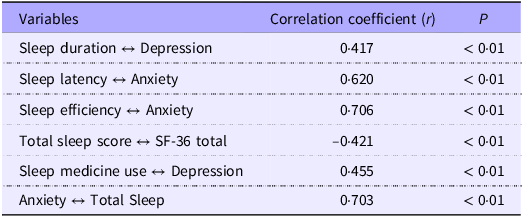
Correlation analysis revealed that several sleep quality parameters, including sleep duration, latency and efficiency, were significantly associated with DASS components, particularly anxiety and depression (P < 0·01) (Table 7). Moreover, a significant inverse correlation was found between the overall QoL score (SF-36) and total sleep score (r = –0·421, P < 0·01). These findings suggest that the observed improvements in mental health and QoL following DSP supplementation may be mediated by its regulatory effects on sleep and stress-related pathways, potentially via modulation of the HPA axis.
Correlation between sleep-related variables and DASS scores and quality of life (SF-36)

DASS, Depression, anxiety and stress scale; SF-36, Short Form-36.
All correlations are statistically significant at P < 0·01.
Biochemical parameters
Table 6 shows the biochemical parameters at baseline and after 8 weeks for the two groups. The mean levels of endotoxin (–4·15 EU/mL; −17 %, P < 0·03), cortisol (–2·66 µg/dl; −21 %, P < 0·04), KYN (–0·91µmol/l; −25 %, P < 0·03) concentrations and KYN:TRP ratio (–0·02; −28 %, P < 0·02) were significantly lower in the DSP group in comparison with the placebo post-intervention. Significant increase in IL-10 (2·46 pg/ml; 20 %, P < 0·04), and TRP (14·30 µmol/l; 29 %, P < 0·03), concentrations and IL10:IL18 ratio (0·12; 46 %, P < 0·01) was observed in the DSP group compared with placebo (ANCOVA adjusted for baseline and confounding factors). Fasting blood sugar, hs-CRP, IL-18, ACTH, BDNF and cortisol:ACTH ratio were changed in the intervention group; however, they were not significant after adjusting for confounding factors (P > 0·05). Within-group changes of all of mentioned parameters except IL-18 and cortisol:ACTH ratio in the intervention group were significant. Only IL-18 and IL10:IL18 ratio changes were significant in the placebo group (P < 0·05, paired Student’s t test).
Discussion
It is recognised that the gut microbiome and microbial dysbiosis may contribute to chronic low-level inflammation which increases the risk of psychological disturbances such as mood, sleep and cognition disorders in T2DM patients(Reference Faghfouri, Afrakoti and Kavyani46,Reference Tabrizi, Khalili and Homayouni-Rad47) . The present clinical trial investigated the effects of DSP supplementation on anxiety- and depression-like behaviours, sleep quality and TRP–KYN metabolism in patients with T2DM for the first time. According to our findings, DSP supplementation compared with placebo led to significant improvements in QoL, sleep quality, stress, anxiety and depression. Furthermore, supplementation with DSP significantly decreased serum endotoxin, KYN, and cortisol levels, and KYN:TRP ratio and increased serum IL-10 and TRP levels, and Il-10/IL-18 ratio. However, changes in fasting blood sugar, hs-CRP, IL-18, ACTH, BDNF and cortisol:ACTH ratio were not significant.
In our study, DSP supplementation significantly reduced inflammatory biomarkers. The beneficial effects of DSP on metabolic endotoxemia and inflammation might be due to its high fibre content and high levels of phenolic compounds. Polyphenols have anti-inflammatory effects by impacting enzymatic systems and signalling pathways involved in controlling inflammation(Reference Krawczyk, Burzynska-Pedziwiatr and Wozniak48). The flavonol class of flavonoids contains polyphenols that have strong anti-inflammatory and antioxidative properties(Reference Jazvinšćak Jembrek, Oršolić and Karlović49). In agreement with our findings, a recent study among middle-aged women showed that the expression of key pro-inflammatory mediators including IL-1β and transforming growth factor-β, as well as cyclo-oxygenases (COX-1 and COX-2), as the main mediators of inflammation, were significantly reduced after consuming date palm seed (2·5 g of steeped of date palm seed) for 14 d(Reference Isworo50). Furthermore, in an experimental study with a pre- and post-test and a control group design, after the delivery of date seed steeping (3 g/kg and 5 g/kg), levels of IL-6 and CRP decreased, and the lymphocyte count increased significantly in Wistar rats(Reference Saryono, Sumeru and Proverawati51). These findings support that the anti-inflammatory activity of date seed is related to the inhibition of one or more intracellular signalling pathways involved in the effects of some chemical mediators of inflammation. The lack of changes in CRP and IL-18 concentrations between groups might be due to factors such as the dosage of the supplement, the length of the study, the number of participants or differences in the stage of the disease.
Physical and mental complications may affect QoL in patients with T2DM(Reference Al-Shehri, Taha and Bahnassy52). In the present study, DSP supplementation significantly improved QoL in our patients. It is possible that DSP exerts a beneficial effect on QoL due to its content of bioactive compounds such as phenolic and flavonoid compounds with excellent antioxidant properties(Reference Habib, El-Fakharany and Souka53,Reference Hilary, Tomás-Barberán and Martinez-Blazquez54) . Bioactive compounds may positively affect physiological functions related to both physical and mental health status, particularly vascular inflammation, coagulation factors and endothelial function, which are impaired in patients with diabetes(Reference Bonaccio, Di Castelnuovo and Bonanni55,Reference Romain, Chung and Marín-Cascales56) . A study involving overweight and obese volunteers showed that those who received 900 mg/d of a polyphenol-rich supplement for 16 weeks experienced significant improvements in QoL compared with those who received a placebo(Reference Romain, Chung and Marín-Cascales56). Another study involving 13 818 women found that higher intake of flavonoids at midlife was related to greater odds of healthy ageing, based on higher survival at older ages free of chronic diseases and maintenance of health-related QoL(Reference Samieri, Sun and Townsend57).
In patients with T2DM, impaired sleep quality is also commonly observed, which leads to many deleterious effects causing a profound effect on health-related QoL(Reference Surani, Brito and Surani58). The current study showed that DSP supplementation contributed to a significant improvement in sleep quality. As far as we know, there is no clinical trial assessing the effect of DSP on sleep quality. Date seed contains a substantial amount of dietary fibre, primarily composed of lignin and resistant starch(Reference Hamada, Hashim and Sharif59). Evidence suggests that dietary fibre by producing SCFA in the gut can indirectly affect sleep disorders via influencing neurotransmitter release by enterochromaffin cells, suppressing the production of pro-inflammatory cytokines and promoting anti-inflammatory cytokines, as well as affecting the genetic regulation of sleep through the circadian system(Reference Haarhuis, Kardinaal and Kortman60). In a randomised controlled trial on T2DM obese women, daily consumption of 10 g/d of resistant dextrin as a prebiotic compared with placebo during an 8-week period was associated with improved sleep quality(Reference Saleh-Ghadimi, Dehghan and Sarmadi42). Additionally, in a 30-d clinical trial on patients with subclinical sleep disorders, a polyphenol botanical blend (containing at least 120 mg polyphenols) v. placebo could improve sleep quality and insomnia severity(Reference Tubbs, Kennedy and Alfonso-Miller61). Findings from a meta-analysis examining the effects of polyphenol-rich interventions on sleep disorders revealed that the administration of polyphenols (more than 4 weeks) can lead to a reduction in the time taken to fall asleep and an increase in the total duration of sleep(Reference Wang, Liu and Ding62). The exact mechanisms through which polyphenols affect sleep disorders remain uncertain, and there is a lack of consensus on this matter. It is possible that polyphenols may enhance the activity of the neurotransmitterγ-aminobutyric acid (GABA) at the GABAA receptors, alter cell signalling pathways related to stress response, upregulate antioxidant enzymes, activate nuclear factor erythroid 2-related factor 2/electrophiles pathway and possibly modulate histaminergic arousal system(Reference Wang, Liu and Ding62,Reference Yoon and Cho63) .
In the current study, DSP supplementation led to significant improvements in depression, anxiety and total DASS. Our findings were consistent with the study by Bikri et al., in which daily treatment with a lyophilised aqueous extract of the date seed (LAE-DS, 2000 mg/kg) could attenuate the elevated anxiety levels in streptozotocin-diabetic rats after a 24-d treatment period(Reference Bikri, Aboussaleh and Berrani64). The rich source of polyphenols in DSP may be effective in the modulation of depression and anxiety. TNFα, NF-KB and vascular endothelial growth factor signalling pathways are among the many signalling pathways linked to the antidepressant effect of P-coumaric acid, a phenolic acid that has been extensively studied in depression(Reference Yu, Zhang and Xiao65). A recent systematic review reported that the consumption of Mediterranean diets abundant in polyphenols was significantly associated with improvements in depression risk and depression symptoms(Reference Bayes, Schloss and Sibbritt66). This relationship can be due to the role of polyphenols in controlling inflammation-related depression, reducing oxidative stress, and modulating the HPA axis function(Reference Tayab, Islam and Chowdhury67). HPA axis malfunction is related to sleep disorders, depression and anxiety(Reference Asarnow68). Additionally, several naturally occurring flavonoids, such as apigenin, exhibit a modest and specific affinity for benzodiazepine receptors. These compounds may have the anxiolytic-like effects of polyphenols without the negative side effects, according to their pharmacological profile, which points to a partial agonistic activity(Reference Bouayed69). Although the reductions observed in DASS-21 subscale and total scores in the intervention group were statistically significant, and they did not reach the minimal clinically important difference, typically reported as 3–5 points per subscale(Reference Ng, Trauer and Dodd70,Reference Belialov, Veltishchev and Volel71) . This may be due to the relatively low baseline scores in our sample, which limited the potential for large clinical changes. Nevertheless, the consistent pattern of improvement and significant between-group differences, particularly in anxiety and total scores, suggest potential psychological benefits warranting further investigation in populations with higher baseline symptom severity.
In our study, serum levels of endotoxin, KYN, cortisol and the KYN:TRP ratio reduced and serum concentrations of IL-10, TRP, and BDNF, and the IL-10:IL-18 ratio increased following DSP supplementation compared with the placebo. No human research has been conducted on the effect of DSP on the HPA axis, to our knowledge. However, the findings of animal models of anxiety and depression showed that, in comparison with the control group, the administration of spine date seed extract with a high concentration to rats was associated with a decrease in the serum concentrations of corticotropin-releasing hormone, ACTH, cortisol, IL-1β, and IL-6(Reference Cui72). Indeed, our results are consistent with the findings of several studies exploring the effects of prebiotic and polyphenolic compounds. In a trial conducted by Saleh-Ghadimi et al on women with T2DM, consuming 10 g/d of resistant dextrin, as a prebiotic and functional food, resulted in a notable decrease in IL-18, IL-6, TNF-ɑ and cortisol levels, and the KYN:TRP ratio, and a significant increase in IL-10 levels in the intervention group compared with the placebo group(Reference Saleh-Ghadimi, Dehghan and Sarmadi42). There are also studies on probiotics with null results. In a randomised controlled trial involving individuals diagnosed with major depressive disorder, subjects were randomly assigned to receive either the probiotic (d L. helveticus R0052 and B. longum R0175), prebiotic (galactooligsaccharide) or placebo for 8 weeks(Reference Kazemi, Noorbala and Azam73). The results indicated that neither the probiotics nor the prebiotics had any significant impact on the levels of cortisol, TNF-α, IL-1β, IL-6 and IL-10. This difference can be related to the study population, the type and dose of supplement used, and the duration of the study. In a randomised, placebo-controlled cross-over study, volunteers at high CVD risk were randomised to consume 500 ml of polyphenol-rich pomegranate pure juice or 500 ml of a placebo drink containing a similar amount of energy(Reference Tsang, Smail and Almoosawi74). Compared with the placebo, pomegranate juice consumption did not significantly reduce urinary free cortisol levels, but it significantly decreased cortisol:cortisone ratio in both urine and saliva. Yu et al conducted a 6-week study on 108 adult males diagnosed with major depressive disorder who were instructed to consume either 1000 mg/d of curcumin or a placebo(Reference Yu, Pei and Zhang75). In comparison with the placebo group, supplementation with curcumin, a polyphenolic compound, decreased inflammatory cytokines including IL-1β and TNF-α levels, increased plasma BDNF levels and decreased salivary cortisol concentrations.
Pro-inflammatory cytokines are potent modulators of corticotropin-releasing hormone which stimulates HPA activity characterised by increases in ACTH and cortisol, both of which are reported to be elevated in major depression(Reference O’Brien, Scott and Dinan76). Additionally, pro-inflammatory cytokines induce KYN pathway enzymes, which lead to the formation of neuroactive metabolites associated with several psychiatric disorders(Reference Więdłocha, Marcinowicz and Janoska-Jaździk77). Apart from cytokines, endotoxin and glucocorticoids also induce KYN synthesis by affecting the enzymes of the metabolic pathway of the conversion of TRP to KYN. An increase in KYN is associated with a decrease in serotonin synthesis(Reference Wirthgen and Hoeflich78). Both prebiotics and polyphenols regulate the composition and function of microbiota and cause the production of SCFA which are involved in inflammation modulation(Reference Zhang, Chen and Zhu79). SCFA reduce the transcription of metabolic pathway enzymes involved in TRP into KYN transformation(Reference Li80). The findings of our study indicated that the improvement in mental health among individuals with T2DM may be attributed to the normalisation of HPA function by DSP. Also, dietary polyphenols may regulate the HPA axis’s activity, normalise glucocorticoid levels, promote BDNF synthesis and neurogenesis, suppress monoamine oxidase isoform activity, restore neurotransmitter balance, lessen clinical symptoms and improve cognitive impairments(Reference Jazvinšćak Jembrek, Oršolić and Karlović49) (Figure 2).
The probability mechanism of effect of DSP on anxiety- and depression-like behaviours, sleep quality and QoL. DSP, date seed powder; QoL, quality of life; KYN, kynurenine; BDNF, brain-derived neurotrophic factor; TRP, tryptophan; GABA, γ-aminobutyric acid.

To the best of our knowledge, the present trial appears to be the first human study aimed to investigate the effectiveness of DSP supplementation along with dietary recommendations in T2DM patients. Considering possible confounding factors, frequent visits of patients and follow-up phone calls for increasing compliance are the main strengths of the present trial. Nevertheless, the present study had some limitations such as a relatively short supplementation period, not assessing detailed profiling of individual phenolic compounds in the DSP using techniques such as HPLC or LC-MS/MS due to limited funding, and the subjective assessment of dietary intake and physical activity. As self-reported 3-d food records are prone to bias, these findings should be interpreted in the context of the Iranian cultural and dietary background, which may limit the generalisability of the results to populations with different lifestyles or nutritional habits. Furthermore, in future studies with larger sample sizes, it is suggested that researchers analyse urinary biomarkers of polyphenol intake. In addition, long-term follow-up studies are recommended to understand the long-term effects of intervention, study the composition of the gut microbiome and measure the production of SCFA for understanding the underlying mechanisms of DSP effects. Furthermore, it is recommended that future studies consider the analysis of DSP’s active ingredients, such as flavonoids, polyphenolic compounds and carotenoids, which are presumed to contribute to its antioxidant activity.
Conclusion
In summary, the present data showed that supplementation with DSP as a functional food improved the QoL, sleep quality, anxiety, and depression by decreasing endotoxin, KYN, and cortisol as stress hormone and increasing IL-10 and TRP levels through targeting gut–brain axis. This clinical trial provides a new insight into the possible beneficial psychological action of DSP. To confirm our results, further studies are recommended.
Acknowledgements
The authors sincerely thank the patients who participated in the present study.
The present study was supported by School of Nutrition and Food Sciences and the Vice Chancellor of Research of Tabriz University of Medical Sciences (IR.TBZMED.REC.1402.939). Zahra Momeniyan conducted this research as part of her Master of Science (MSc) dissertation (grant number: 73241).
As a team, all authors contributed to the conception and design of the study. P.D, F.A.S, Z.M, H.T, and H.A conceived and developed the idea for the study and under the supervision of P.D, revised the manuscript. Final approval of the manuscript was obtained from all authors.
The authors declared no conflicts of interest.
Data will be made available on request.