Visual artists play a significant role in our intellectual exploration and interpretation of Antarctica (Fox, Reference Fox2005). This was true at the time of the earliest recorded expeditions and continues to be so. The Antarctic Treaty, signed in 1959, established the parameters for human activity of signatory states below 60° southern latitude. Its implementation had a pivotal impact upon artists’ access to and critical engagement with the continent. This paper considers the relationships between the Treaty and visual artists’ work, and the trajectories of artistic presence in Antarctica over the last 60 years. To advance the discussion, I present examples of contemporary visual art and findings from my research into the value of visual artists working in Antarctica, which is a project international in scope comprised of a literature review, an online survey and semi-structured interviews with Antarctic researchers, arts and culture professionals and the public.
A continent for arts and science
Historically, visual art in Antarctica was bound to scientific endeavours (Andrews, Reference Andrews2007). “Freedom of scientific investigation”, enshrined in Article II of the Treaty, cemented science as the dominant Antarctic discourse (Elzinga, Reference Elzinga, Dodds, Hemmings and Roberts2017). Thereafter, artists found only occasional opportunities to work in Antarctica until 1982. The US National Science Foundation (NSF) was the first to formally establish an annual artists and writers’ programme (Guthridge, Reference Guthridge and Fox Rogers2007), with Australia and New Zealand following suit. By the early 21st century, the National Antarctic Programmes (NAPs) of Britain and Argentina were supporting similar annual arts programmes, although neither lasted more than 10 years. The NAPs of other Treaty signatory states, including Chile, Ecuador, France, Germany, the Republic of Korea, South Africa, Sweden and Uruguay have supported artists on a more sporadic basis.
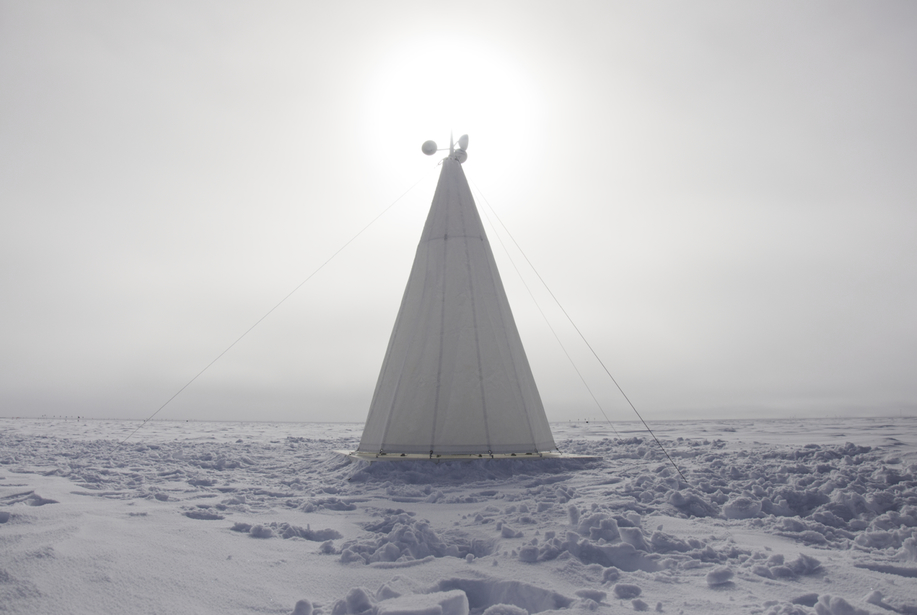
Engaging with Antarctic science is often required of NAP-supported artists. Recent NSF recipient, Donald Fortescue, framed his arts proposal as a component of his doctoral degree. Working closely with the IceCube Neutrino Observatory team, his thesis explores congruencies between science and art (Fortescue, Reference Fortescue2019). He adopts the language of science, describing the temporary installation of his artwork (Fig. 1) at the South Pole as “deploying his instruments” to listen to “transduction of the changing atmospheric pressure of the Polar plateau” (Fortescue, Reference Fortescue2018).
Donald Fortescue. Instrument (90°S). 2016. ©the artist. Reprinted with permission.

Some artists seize the opportunity to be embedded within a field research team, echoing earlier days of exploration where artists had dual, or multiple, roles. Gabby O’Conner and Laura Von Rosk have been employed for specific science-focused tasks, whilst also using the experience and their observations to create artwork (Stevens, O’Connor, & Robinson, Reference Stevens, O’Connor and Robinson2019; Von Rosk, Reference Von Rosk2019). In my interviews with scientists who have worked with artists, there is agreement that the artists’ ideas and insights, and their visual, technical, analytical and practical skills were both valuable to the fieldwork and particularly successful in engaging audiences. Yet, currently, embedding artists within field teams is not common practice in NAPs.
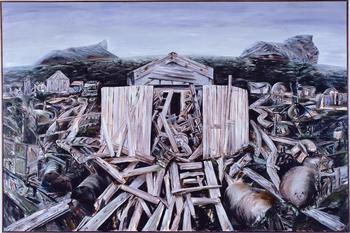
A recurrent theme within the interviews is the ability of artists to perceive things unnoticed by others. One scientist recounted how the experience of seeing the work of Jan Senbergs altered the course of her career. The artist’s paintings, which drew attention to the detritus of human presence in Antarctica (Fig. 2), made a lasting impression. The emotional impact of the artwork provided the impetus to refocus her ecological research towards understanding and minimising human environmental impacts on the continent.
Jan Senbergs. Heard Island Icon (Admiralty Hut). 1987. Acrylic on canvas, 224 x 335cm. ©the artist. Image courtesy the artist and Niagara Galleries, Melbourne. Collection Tasmanian Museum and Art Gallery. Purchased with funds provided by the ANZ Bank Bicentennial Art Commission, 1987. Reprinted with permission.

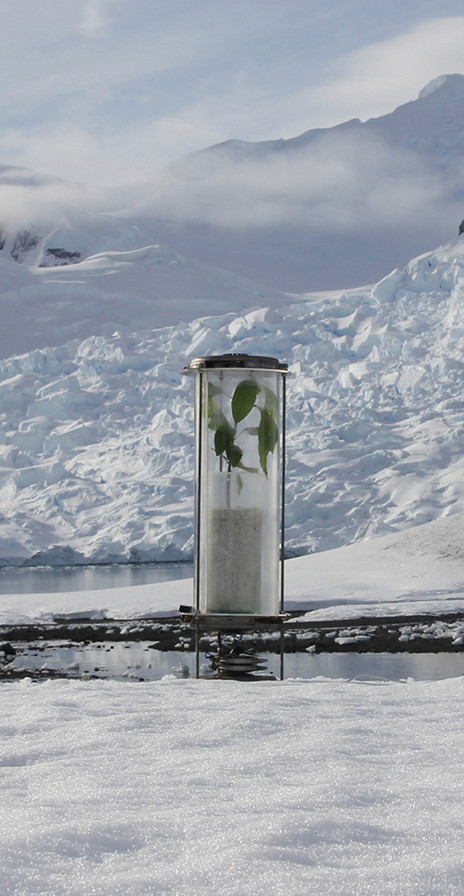
Scientists and artists who participated in interviews insisted that art in Antarctica should not be at the service of science, and that art and science are intellectual endeavours of equal value. However, science remains the dominant Antarctic discourse. This is not without critique. Nadim Samman and Alexander Ponomarev conceptualised the Reference Ponomarev2017 ‘Antarctic Biennale’ as an effort to develop Antarctica as a distinctly cultural space (Ponomarev, Reference Ponomarev2017). The Biennale saw a community of artists and scholars travel to Antarctica on a chartered tourist ship. Although a non-governmental and privately sponsored initiative, permits were required for the artists’ activity to comply with environmental and biosecurity protocols. In a work referencing the tropical past of the continent, Paul Rosero Contreras “planted” a cocoa sapling in Antarctica. Sealed within its own life-sustaining capsule, the foreign matter could not contaminate the Antarctic biosphere (Fig. 3).
Paul Rosero Contreras. Arriba! 2017. ©the artist. Reprinted with permission.

Valuing Antarctica
The Protocol on Environmental Protection to the Antarctic Treaty (1991) introduced the idea of Antarctic “wilderness” and “aesthetic” values into the Antarctic Treaty System (ATS), which provided a strong rationale for engaging artists in NAPs. A working paper submitted by Chile to an Antarctic Treaty Consultative Meeting (ATCM) proposed that members support “trips by writers and artists to the polar continent…in order to promote their direct contact with the aesthetic values of Antarctica” (Chile, 1996, p. 2). Delegates were supportive and adopted a resolution which recognised that “Antarctica had been the subject of significant works of art”, and recommended the “[p]romotion of understanding and appreciation of the values of Antarctica [through] the contribution of writers, artists and musicians” (Resolution 2, 1996). This was an important landmark, strengthening the case for artists’ presence.
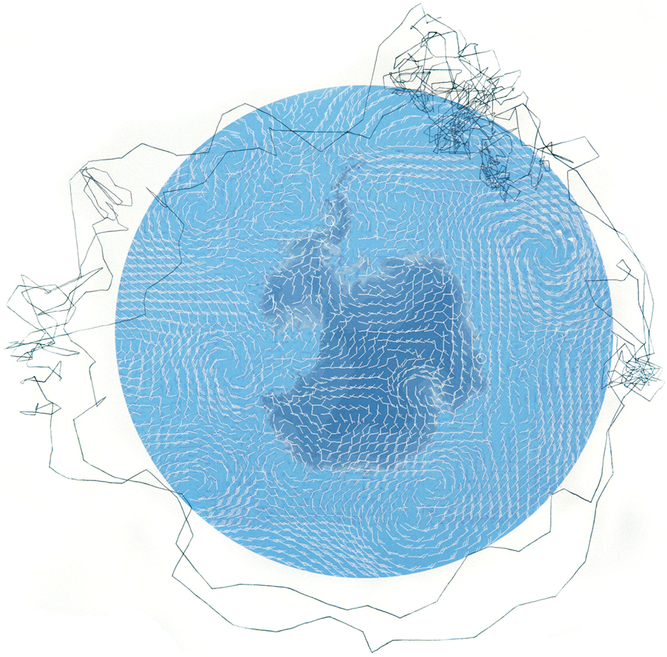
A notion of wilderness is captured in the work of Chris Drury who travelled south with the British Antarctic Survey in 2006–2007. Combining a map of the continent, GPS data of a tagged albatross, and wind and ocean current data, his print Albatross articulates interconnections within the natural world in a conceptually and aesthetically skilled artwork (Fig. 4). The image tells the story of the remarkable flight range of a single bird and alludes to complex relationships between biosphere, hydrosphere and atmosphere. The albatross circles the continent, gliding on the westerly winds, following the circumpolar current and feeding from the bio-rich waters of the Southern Ocean’s polar front (Drury, Reference Drury2007). Drury reminds us that the forces of nature transcend boundaries. In this context, fixed cartographies of Antarctica and the protections that the ATS offers have limitations. Evidence of devastation to albatross populations, killed as a bycatch of longline fishing in areas north of 60° south latitude, prompted international efforts to regulate the industry and inspired wildlife artist Bruce Pearson to apply his art to the cause.
Chris Drury. Albatross. 2007. ©the artist. Reprinted with permission.

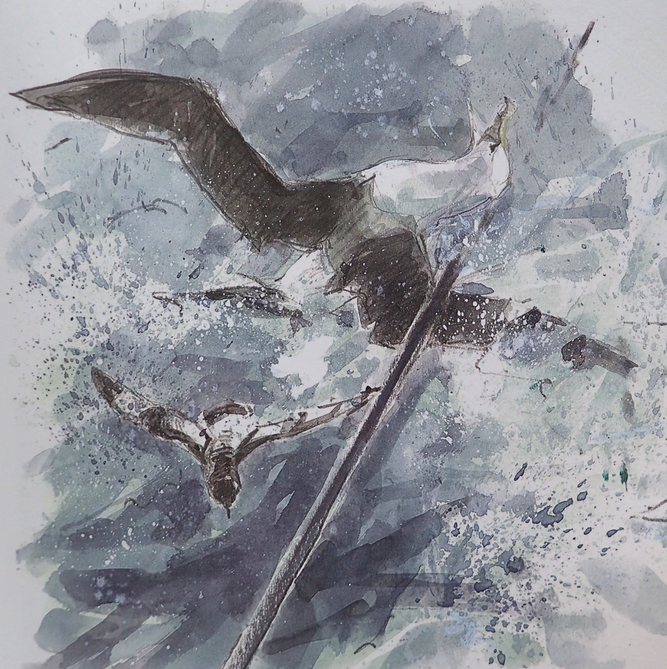
Pearson worked as a field assistant in the 1970s ringing albatrosses nesting in the Sub-Antarctic region. “Every moment I was not required for an assistant’s task, I was sketching [their] movement and behavioural nuances” (Pearson, Reference Pearson2012, p. 13). He experienced a personal sense of loss realising that bycatch fatalities must have happened to “my birds” (Pearson, Reference Pearson2012, p. 15). Troubled Waters (Reference Pearson2012) tracks Pearson’s story of these iconic birds. Through his work, he fosters public awareness and appreciation of wildlife and conservation (Fig. 5).
Bruce Pearson. Collision: shy albatross and trawler cable. 2010. ©the artist. Reprinted with permission.

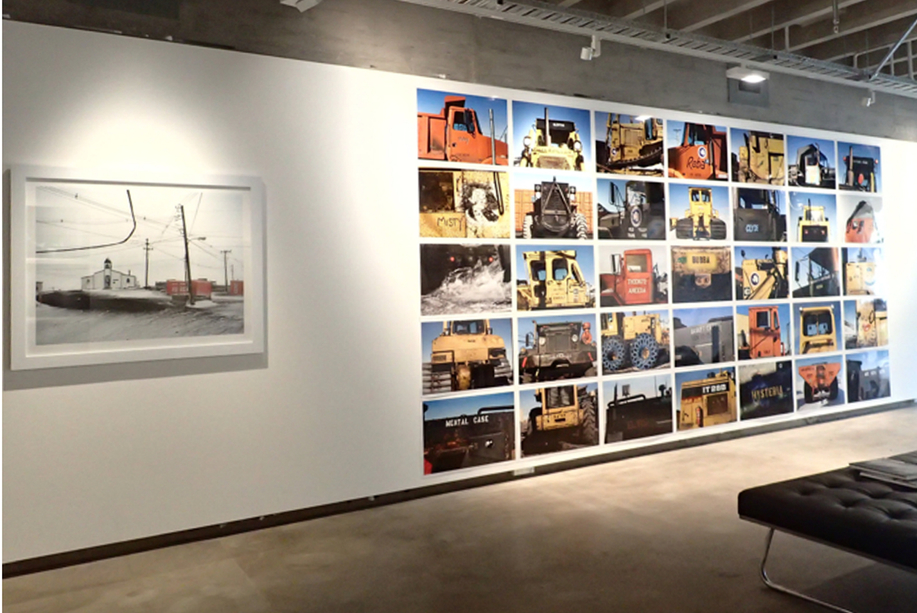
Environmental protection and concern for the impact of human presence in Antarctica were recurring themes in audience responses I collected during the exhibition Phantasm: Discovering Antarctica (Fig. 6), in which Anne Noble uses photography to explore the cultural construction of the continent (Noble, Reference Noble2018). What was striking in all responses was that people valued seeing facets of human activity that they had not considered before, even though they experienced strong negative emotions in response to some images. In particular, the artworks Piss Poles, Bitch in Slippers, and Chapel of the Snows triggered, in some people, feelings of repulsion, anger, and shock. Respectively, these artworks depicted approved sites for outdoor urination, vehicles painted with female names, and webs of overhead power cables. Although participants found elements of the images uncomfortable, they appreciated being confronted with subject matter that they found challenging. The work stimulated deep critical thinking amongst the audience. Describing the exhibition as “rewarding”, one participant stated that their “thoughts about Antarctica have evolved further because of it”. For others, contemplating ideas about the Antarctic environment led them to question the impact of their own lifestyle upon the natural world.
Anne Noble exhibition, Phantasm - Discovering Antarctica. 1 December 2018 – 20 January 2019. Centre for Contemporary Art, Christchurch. The artworks in the image are, Chapel of the Snows (left) and Bitch in Slippers (right). Reprinted with permission.

Terra clima
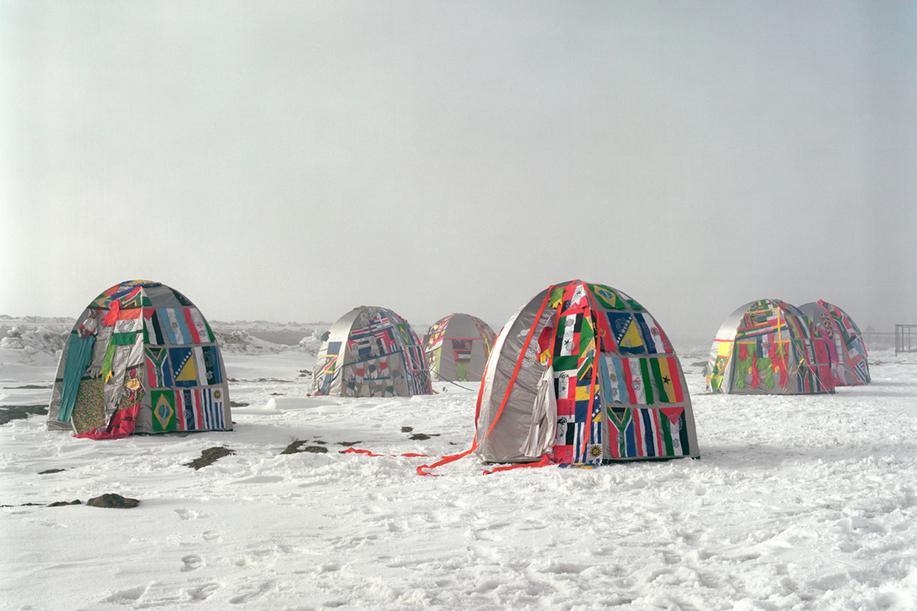
Antarctica has been described as a natural laboratory. The emphasis on climate science positions the continent as a bellwether for possible environmental futures (O’Reilly, Reference O’Reilly2013). Lucy and Jorge Orta engage directly with the humanitarian implications of climate change. For the artists, “Antarctica is a symbol of the unification of world citizens” (Orta & Orta, Reference Orta and Orta2017, p. 4), a place beyond conventional geopolitical architectures. In their temporary Antarctic installation of 2007 Antarctic Village - No Borders (Fig. 7), they used tents adorned with national flags as signifiers of an international encampment, “a place of welcome for those fleeing conflict or environmental catastrophes” (University of the Arts London, 2014). They draw on the Antarctic Treaty’s values of peaceful collaboration and “freezing” of territorial claims to explore complex geopolitical, humanitarian and environmental imperatives. Through reframing Antarctica, they stress the realities and urgency of an escalating climate refugee crisis. For the artists, their work is a vehicle for developing public awareness and triggering action on sustainability issues.
Lucy + Jorge Orta. Antarctic Village – No Borders. 2007. Ephemeral installation of Antarctic Village, North, South, East and West villages across the Antarctic Peninsula from March to April 2007. ©the artists. Reprinted with permission.

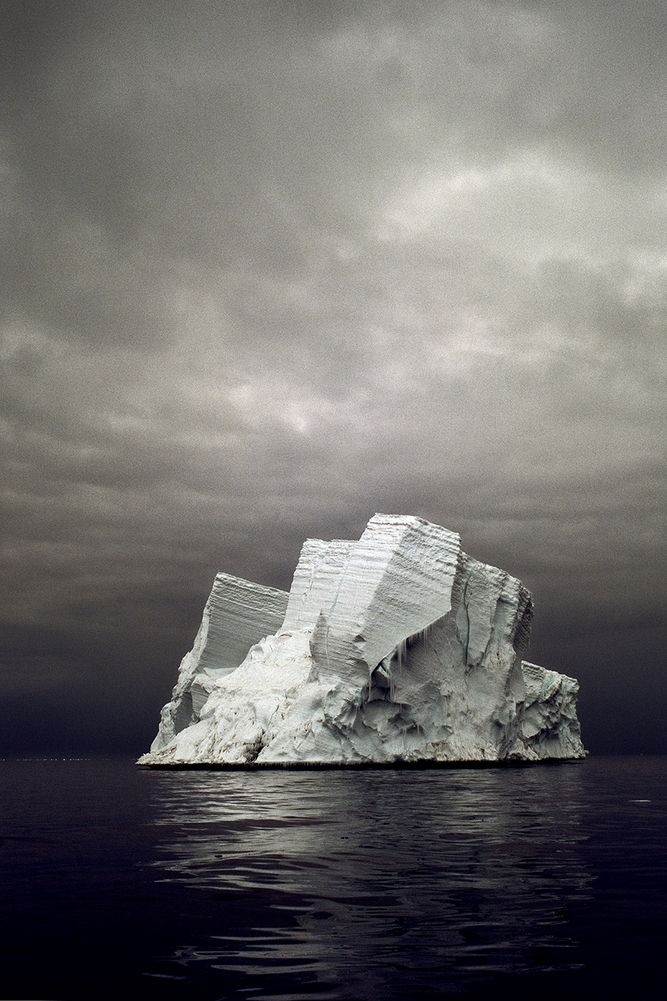
Concern for the impact of climate change is also central to the work of Camille Seaman and Lisa Roberts (Roberts, Reference Roberts2015; Seaman, Reference Seaman2014). Importantly, Seaman’s Native American heritage and Roberts’ Aboriginal Australian heritage inform their practice. For Seaman, the polar icebergs she photographs are not only a physical manifestation of the breath of our ancestors, they are our ancestors (Fig. 8). She considers every aspect of the natural world as part of her family. Perceiving the world and all life on Earth as connected and interdependent fosters awareness about the delicate balances within nature, and the life-threatening consequences of climate change. Respecting interdependence is vital in restoring balance in humanity’s relationship with nature. Roberts demonstrates that reconnecting indigenous perspectives with Antarctic scientific research and art offers powerful ways to interpret and communicate knowledge and values (Roberts & Gladstone, Reference Roberts and Gladstone2017). She seamlessly fuses science, arts and environmental knowledge, challenging Western traditions of discipline separation. To prevent escalation of global environmental catastrophes, indigenous values and perspectives need to be embedded within, and at the forefront of, environmental research and policy.
Camille Seaman. Stranded Iceberg II, Cape Bird, Antarctica. 2006. ©the artist. Reprinted with permission.

Rise and fall
Over 200 visual artists have participated in NAP-supported residencies since their inception. The International Polar Year (IPY) 2007–2008 and organisational anniversaries have also made important contributions. During the IPY, the South African National Antarctic Programme supported the Interpolar Transnational Art Science Constellation (ITASC) project. Artists Pol Taylor (Chile), Thomas Mulcaire and Ntsikelelo Ntshingila (South Africa), installed ITASC Catabatic Experimental Platform for Antarctic Culture, a mobile research unit designed to support collaborative research between art and science (Hug, Reference Hug2009). Installed in 2005 to mark the 25th anniversary of the Alfred Wegener Institute, Lutz Fritsch’s Library in the Ice remains a cultural retreat at Neumayer Station (Alfred Wegener Institute, 2005). In tourism, Keith Shackleton was artist in residence on board the first Antarctic tourist ship in 1969. When the industry expanded in the late 1990s Quark Expeditions, a polar tour operator, and arts agency Theme Media, developed an artist residency partnership. The partnership, which ran until a change in management between 2007–2008, enabled artists from around the world to work on board Antarctic cruise ships.
An international cohort of artists was a defining feature of the Argentinian NAP ‘Art in Antarctica’ programme, 2006-2016. Argentina’s call for, "the development of art projects in Antarctica on the basis of international cooperation" (Argentina, 2013, p. 5), was recognised and adopted as a resolution during ATCM XXXVI (Resolution 5, 2013, p. 305). In the 21st century, cultural representation diversified to some extent, with the Argentinian programme, the Theme Media and Quark Partnership, and the Antarctic Biennale contributing the most in this respect (Argentina, 2015; Ponomarev, Reference Ponomarev2017). They have enabled artists to work in Antarctica from countries including: Brazil, Bulgaria, Canada, China, Czech Republic, Denmark, Ecuador, India, Italy, Japan, Mexico, Morocco, Netherlands, Russia, South Africa, Spain, Switzerland, United Arab Emirates and Uruguay. Notably, not all artists were residents of Treaty signatory states, which raises questions about the authority of the ATS and the freedoms and obligations of visitors from non-signatory states.
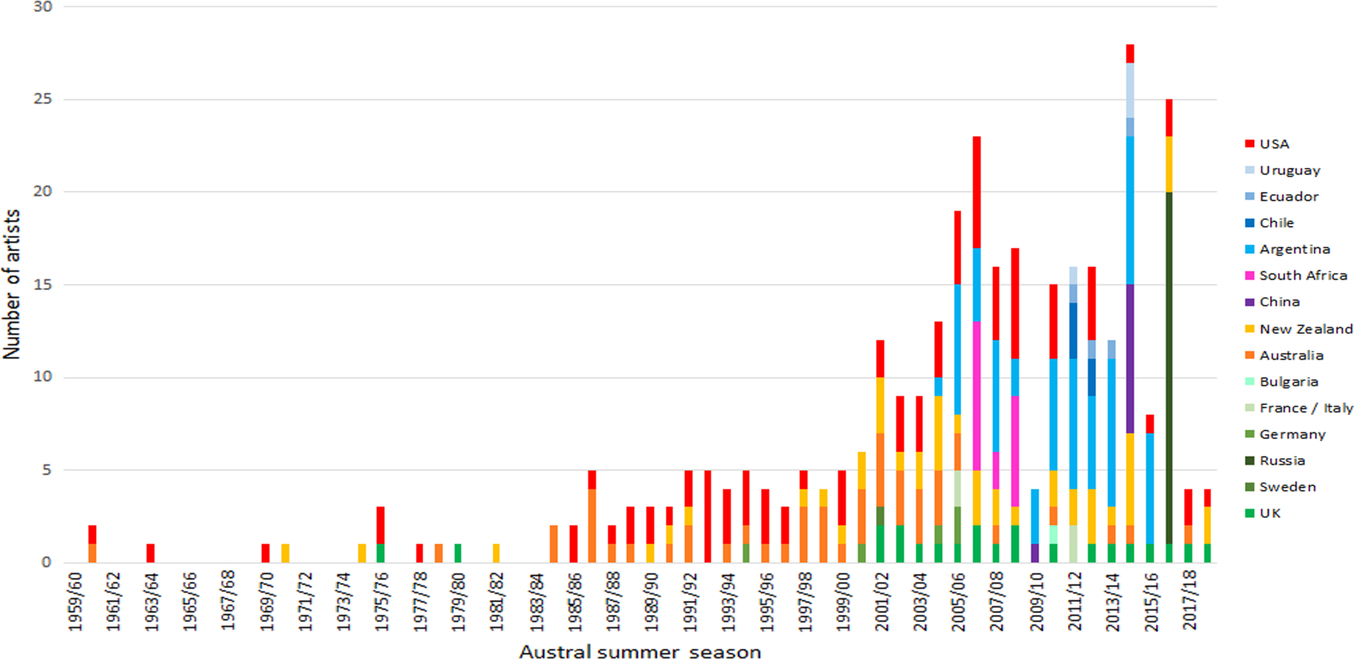
An average of 14 artists per year worked in Antarctica from the 2000/01 season to 2016/17, reaching a peak of 28 in 2014/15 (Fig. 9). These calculations currently exclude those who have participated in Antarctic tourism artist residency programmes, as numbers for this area require verification. Whilst increases may paint a picture of a vibrant, thriving international Antarctic visual arts scene, the number and cultural diversity of artists working in Antarctica has declined since the programmes described came to an end. Since 2016/17, the numbers have reduced to four visual artists per season; and in 2019, the NSF restricted their artist programme to US residents only.
The number of visual artists who have worked in Antarctica each austral summer season, since the signing of the Treaty. Numbers are attributed to the state that supported the artist, which does not necessarily reflect the artists' nationality.

In conclusion
ATCM resolutions (R2, 1996; R5, 2013) formally recognise the contribution of the arts. Artists contribute critically to Antarctic cultural, scientific and environmental discourses, and to public engagement. However, the number of visual artists working in Antarctica has declined dramatically since 2017, and programmes open to international artists have ceased. If the situation is left unaddressed, there is a risk of an irrevocable lacuna within the Antarctic cultural narrative.
Advocacy is needed to enable NAPs and scientists to recognise the value of involving artists in their programmes, both embedded within science teams and as researchers in their own right. The model of international Antarctic science collaborations that harness expertise and resources for collective benefit could be applied to the arts. International collaboration is a founding principle of the Antarctic Treaty. Signatory states could support international Antarctic arts collaborations to achieve collective benefits and wider reach. Could a new ATCM resolution go further than the last in securing Treaty Consultative Parties’ commitment to support artists? Following the example of the IPY it is time for an ‘International Year of Antarctic Arts’, which takes seriously the artistic and cultural dimensions of the polar continent and its elemental, spiritual and representational entanglements with planet Earth.
Acknowledgements
I acknowledge with thanks the artists who granted permission to include images of their artwork. My sincere thanks to the editor, Daniela Liggett and Patrick Shepherd (University of Canterbury), and the two anonymous reviewers who provided constructive comments on earlier versions of this article.
I gratefully acknowledge the support of a University of Canterbury doctoral scholarship, which made this research possible.