The number of large fires in the Western United States doubled between 1984 and 2015. Reference Abatzoglou and Williams1 In 2020, California experienced the largest number and size of wildfires in the state’s history. There were 9639 individual fires that burned a total of 4 397 809 acres, equal to 4% of the total area in the state. This included 5 of the 6 largest fires in California since 1932 when accurate records began, and the first gigafire, the August Complex fire, that burned over 1 million acres across 7 counties.
Major fire incident base camps involve thousands of personnel and provide services to firefighters who work in shifts and return to camp either at night or in the morning after a long day of intense physical work in extreme heat and smoke. The Emergency Medical Services Authority (EMSA) is contracted by the California Department of Forestry and Fire Protection (CAL FIRE) through an inter-agency agreement to provide medical care in fire incident base camps to the firefighters, emergency managers, vendors, and others who support the response.
Medical Support
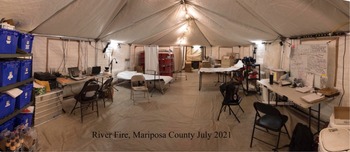
The California Medical Assistance Team (CAL-MAT) evaluates and treats firefighters and other support personnel for common ambulatory medical problems and emergency treatment within a 20 by 40-foot tent at the incident base camp (Figure 1). The pharmacy and equipment lists are included in the on-line appendix. The average CAL-MAT fire incident base camp team consists of 11 personnel: a physician, a non-physician provider (eg, a nurse practitioner or a physician assistant), 1 to 2 nurses, and 6 to 8 emergency medical technicians (EMTs), or paramedics. Fire personnel may present for medical evaluation at all times of the day, depending on when their team is back at the incident base; most seek treatment during the morning or evening. Additional medical support is provided by an ambulance on site from the local jurisdiction to provide Advanced Life Support (ALS) transport to the nearest acute care hospital emergency department (ED), and pre-positioned emergency medical services (EMS) resources (“line medics”) that operate under their local accreditation and are stationed near the fire lines to transport serious injuries. These ambulances transport patients directly to an ED based on local protocols. Air evacuation from the fire line may also be an option for life-threatening injuries or if prolonged ground transport time is anticipated and if conditions permit aircraft landing.
CAL-MAT tent setup. Some storage bins and medication cabinets are not seen.

There are little data describing medical care provided at wildland fires. Gallanter and Bozeman published a description of medical visits for a 19-day Disaster Medical Assistance Team (DMAT) support mission for a Florida wildfire in 1998 in a fire camp that averaged about 1400 personnel. Reference Gallanter and Bozeman2 There were 3404 visits to the medical tent, with one-third being preventive visits for sunscreen and other non-prescription items and the remainder consisting of minor injuries and illnesses with a very low transfer rate to the ED (8 patients; 0.2%). The most common problems were foot related (15%) and rash or itching (14%). There was a low incidence of sprains and strains (2%).
Squire et al. described injuries and illness among 2000 firefighters over 50 days at a large fire in Los Angeles County. Reference Squire, Chidester and Raby3 Care was provided by fire line paramedic-firefighters, and data were extracted from ambulance patient care records (PCRs) for 64 patients and from the command medical tracking sheet for 118 patients. Extremity injuries accounted for 24%, smoke inhalation for 17%, and poison oak for 11% of patient contacts. Fifty percent of these patients were transported to the ED and 10% to urgent care centers.
Amster et al. retrospectively interviewed a sample of 204 firefighters and 68 police officers who responded to a large wildfire in Israel, to determine occupational complaints and estimate their exposure to smoke. Reference Amster, Fertig and Baharal4 While 87% had symptoms such as irritation of eyes and throat, fatigue, cough, and headache, only 9 (3.3%) received medical attention, and 4 of those (1.5% of total) were hospitalized. Hospital diagnoses included smoke inhalation, epistaxis, exposure to fire retardant, and a dislocated shoulder. Seventeen percent of firefighters reported psychological stress-related symptoms.
This paper describes the experience providing clinical care over the 2020 California fire season for wildfire responders and staff within large incident base camps. These data provide information on clinical needs to support a large wildfire response. A complementary article (Backer et al., Medical Support for California Wildfire Response, Disaster Medicine and Public Health Preparedness, in publication) describes the organization, resources, and management structure for these operations and describes other forms of medical support necessary for a wildfire response. The California experience provides one model of medical support for other entities that must respond to the rising incidence of large wildland fires.
Methods
Deployment data were collected from operational situation status reports. Clinical data were extracted retrospectively from PCRs. No personal health information was extracted. Exemption from full IRB review was granted by the State of California Committee for the Protection of Human Subjects (CPHS). Data include only visits requiring an evaluation by a provider at the incident base camp medical tent and exclude personnel who were transported to an ED from the fire line or visits solely for self-care products.
Data were extracted by staff and questions resolved by authors (HB, CW). These authors also determined the categories for data extraction. Data and summary statistics were derived in Excel spreadsheets.
Results
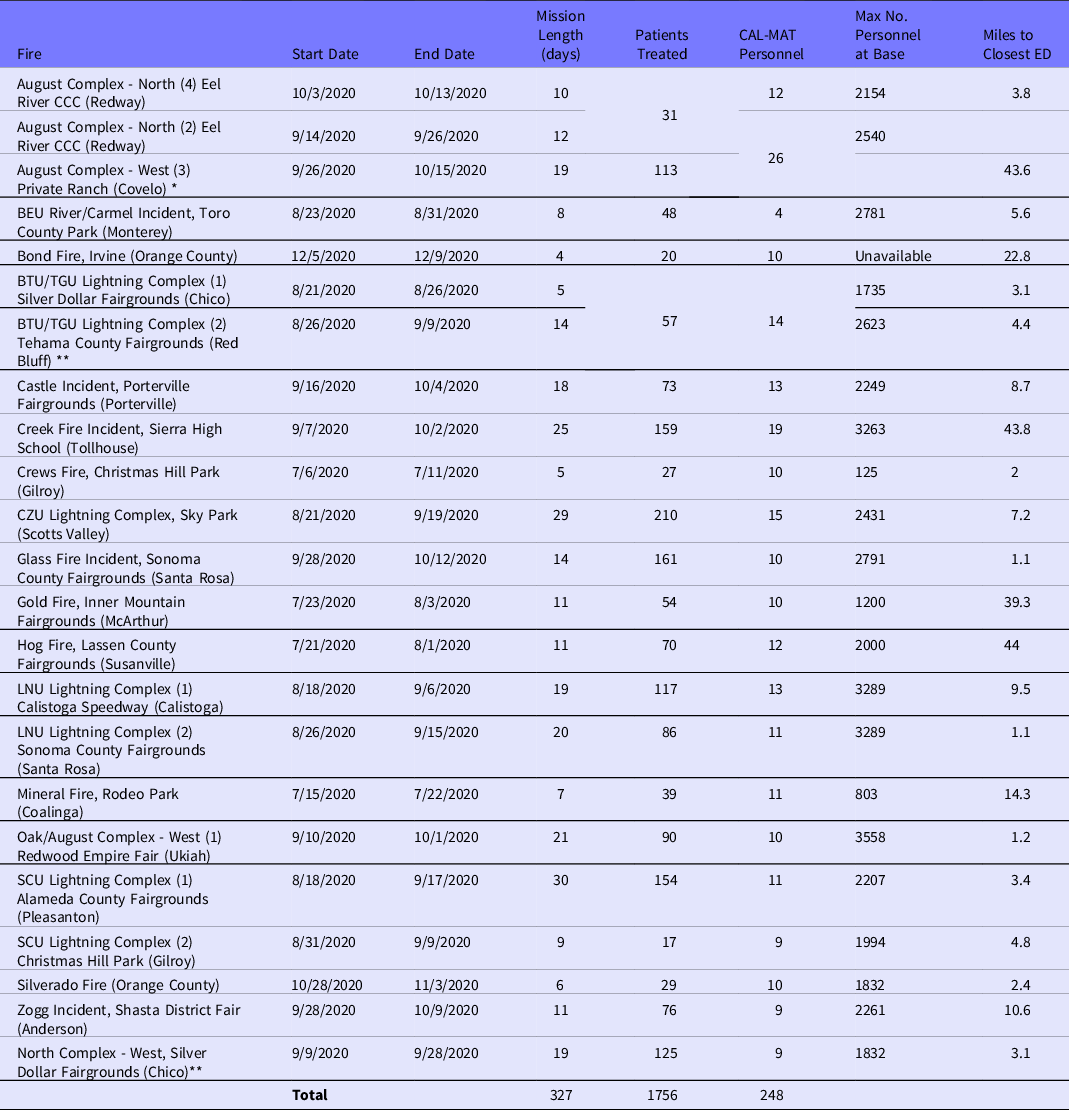
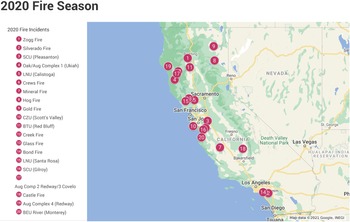
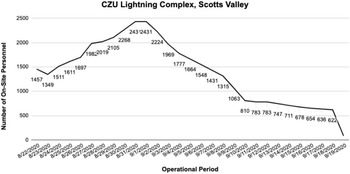
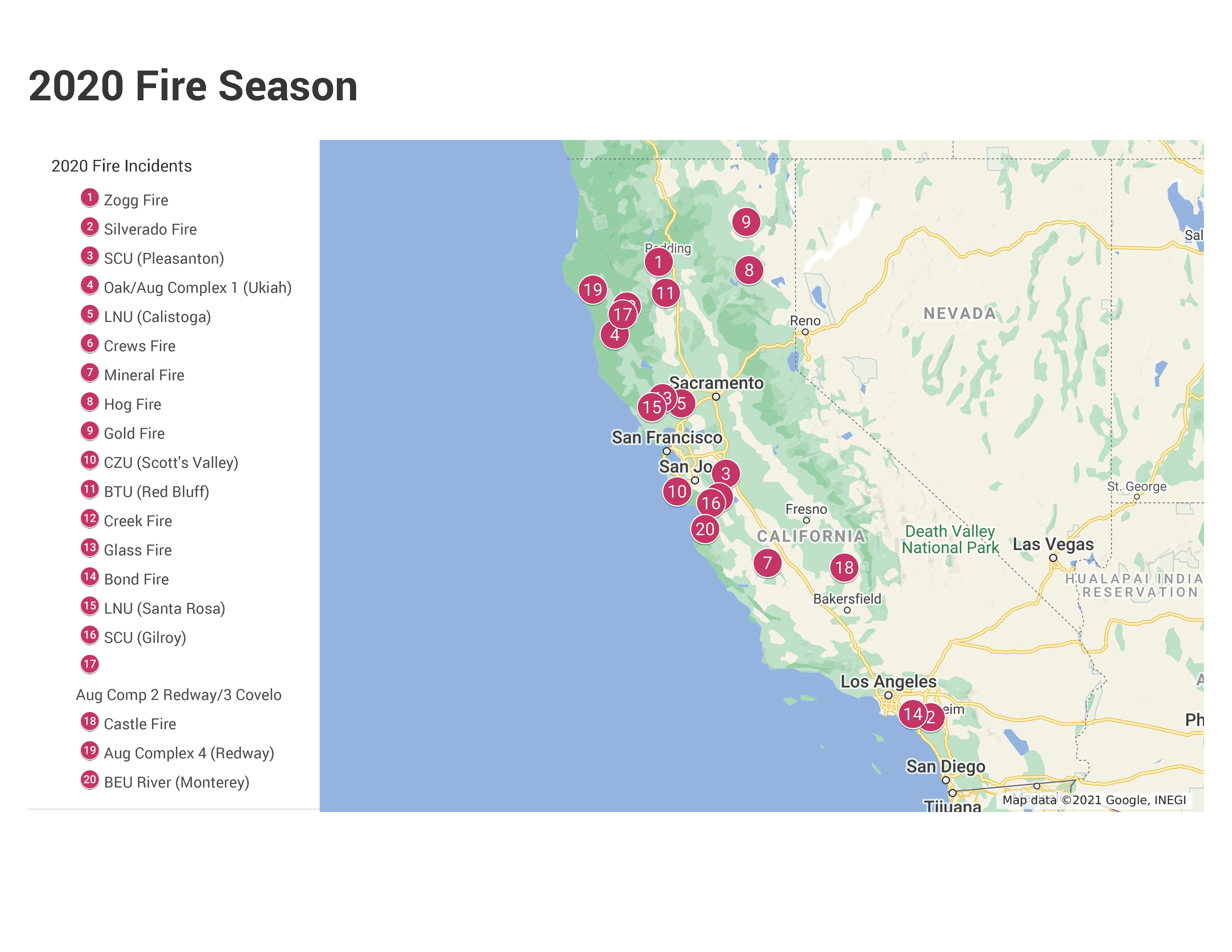
During the 2020 California fire season, which extended from July through December, CAL-MAT deployed to 21 missions at 23 CAL-FIRE base camp sites in Northern California and Southern California (Table 1 and Figure 2). Not all incident base camps represent new deployments, since, in 2 incidents, base camps were relocated due to approaching fire or distance to fire lines. Incident base camps have a rapid increase in staff and, at their peak, usually included 2000-3000 (mean 1702) personnel (Figure 3).
Summary of CAL-MAT mission deployment during the 2020 California fire season

* August complex camp changed sites to Covelo and later reopened to provide a second camp for this fire.
** Camp was moved to Red Bluff.Patient care records could not be distinguished between sites at the same fire, so patient numbers are combined for these sites.
Locations CAL-MAT medical units within CAL FIRE incident base camps.

Typical time course of personnel build-up at a California wildfire incident base camp.

A total of 248 personnel were deployed from July to December 2020. The average mission length per site was 14 days (4-30 days) and the median was 12 with a total of 327 days of deployment.
Medical Care
For the operational period July 15, 2020, to December 9, 2020, the cumulative number of patients seen at all sites was 1719 with PCRs available for 1631 (95%). Records were not available for 1 site. Of these, 1466 (90%) were male and 158 (10%) were female. The mean age of patients at all sites was 34 years old, ranging from 17-80 years of age. Frontline firefighters comprise the younger end of this spectrum. While exact numbers are not available, at least two-thirds of patients were frontline firefighters from CAL FIRE, local fire departments providing mutual aid from around the state, and the California National Guard. Others were support personnel from California Conservation Corps and service contractors. Using the mean number of all personnel in fire camps during the camp operation, only 4.7% of personnel visited the medical tents. The multiple agencies have varying screening, fitness, and age requirements.
An average of 84 (range 17-210) patients were seen at each incident deployment. One hundred forty-two were repeat visits for re-evaluation. Busiest times were in the morning or late afternoon/early evening when firefighters returned to base camp. These do not include visits by firefighters for non-prescription medical supplies who were not registered to be seen by a clinician. The data are limited regarding evacuations from the fire lines as this is coordinated by local fire agencies through the CAL FIRE Medical Unit Leader (MEDL) and incident Safety Officer and is not readily available. Estimates ranged from 5-10 evacuations per incident, which represents a very small percentage of responder personnel. These personnel were transported to a local ED for treatment according to state regulations but infrequently required hospitalization.
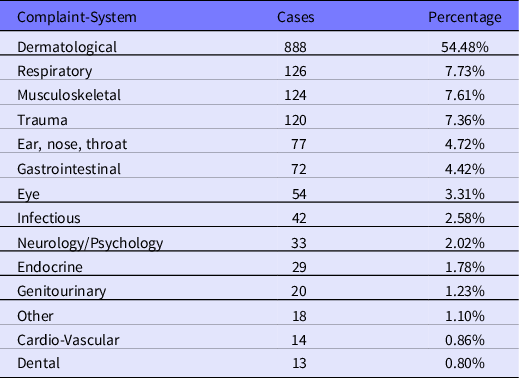
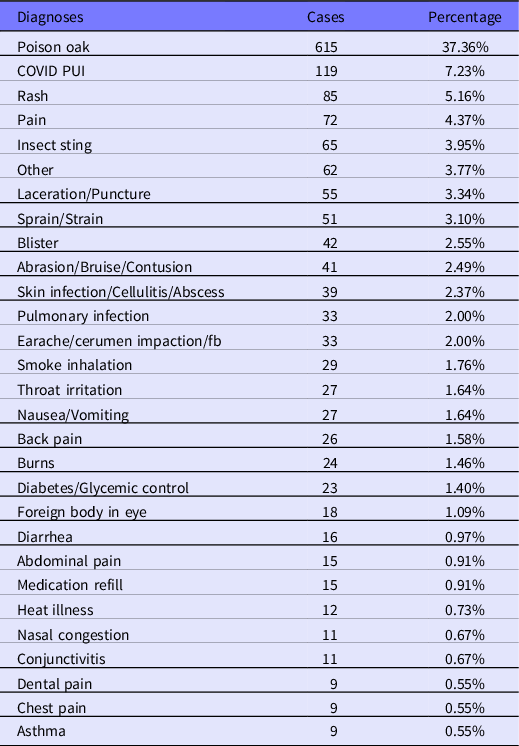
The primary complaint by system and the common clinical diagnoses are shown in Tables 2 and 3. Dermatological problems (53%) constitute most visits. The next most common categories were respiratory (7.7%), musculoskeletal (7.6%) complaints, and minor trauma (7.4%). The most frequent diagnosis at every site was rhus dermatitis from poison oak. Other dermatological diagnoses included fungal infections, insect bites and stings, superficial trauma to the skin, and infection of superficial wounds. Since this was during a period of high transmission of COVID-19 and before vaccination was available, symptoms suggesting possible COVID-19 infection 5 were common. Minor trauma, sprains and strains, and joint pain were frequent but far less than poison oak and other rashes. Where not specified, the diagnosis of pain was usually localized to extremities. Common foot problems included blisters and ingrown toenails. Combining categories suggest that 15-20% of visits can be attributed to minor trauma. Similarly, up to 10% of all visits, including categories of pulmonary, throat, and eye irritation, could be attributed to smoke.
Categories of medical complaints for patients seen by health care provider in CAL-MAT medical tent at CAL FIRE incident base camp 2020 (N = 1631)

Diagnoses recorded on patient care record for patients seen by health care provider in CAL-MAT medical tent of CAL FIRE incident base camp 2020 (N = 1631)

Of all patients evaluated in the medical tent, 74 (4.5%) were transferred to a local ED for further evaluation or treatment. Forty-three (58%) of the 74 patients were sent for evaluation and treatment of illness, including 4 for potential COVID-19 infection and 3 for complications of poison oak. Thirty-one (42%) were transferred for injuries, primarily orthopedic injury or pain that required radiologic imaging. Three were transferred for burn treatment. The nearest ED from a remote base camp can be a long drive along mountain roads. Four of the base camps were 40 miles or longer from the nearest hospital ED (see Table 1).
The great majority (84.5%) of fire personnel treated at the medical tent were able to return to full duty. Only a small number were removed from duty or given limited duty (2.6% and 0.7%, respectively). An additional 1.4% of patients seen were demobilized (removed from their fire assignment), often because they were already scheduled to leave and return to their home agency or due to the need for a COVID-19 person under investigation evaluation (see Table 4).
Disposition of patients after evaluation and treatment in the CAL-MAT medical tent

* Demobilize means that the patient left the fire camp and returned home.
** Off duty means that the patient took 24 hours off or was scheduled off for 24 hours but remained at the fire camp.
Discussion
Controlling large wildland fires is a complex and dangerous endeavor involving thousands of personnel from local, state, and federal agencies. Fire incident base camps provide services to firefighters who return to camp after a long period of intense physical work over difficult terrain in extreme heat and smoke. Emergency medical care is an important support function for both the firefighters and for the incident base camp personnel. Fortunately, severe injuries and burns are infrequent, but minor injuries and medical problems are both common and expected, and high-quality medical care at the incident base camp has become an integral service over the past several years. Some remote base camps can be nearly a 1-hour drive from the nearest hospital ED.
The predominance of rhus dermatitis was a surprise and has not been described in the literature with this frequency. Pacific poison oak, or Toxicodendron diversilobum, occurs throughout California in the form of a ground plant, vine, or large shrub. In some areas, it is the most common shrub and underbrush that firefighters must walk through or remove. This experience confirms the ubiquitous risk of contact dermatitis in the low elevation of the mountains throughout California. Reportedly, urushiol oil can be vaporized in smoke and can cause severe respiratory irritation. 6 Despite thousands of fire personnel exposed daily to smoke, there were very few severe pulmonary problems or mucosal inflammation suggestive of inhalational reaction to the oil. While exposure to inhaled urushiol oil can be prevented by a high-level respirator, these are not worn regularly. This suggests that a mucosal/pulmonary response to aerosolization is uncommon. It is not clear whether aerosolized oil accounted for any of the skin exposures to poison oak. Some providers believed that more diffuse erythema rather than blisters in streaks was caused by smoke exposure; alternatively, diffuse reaction could be caused by a higher degree of allergenicity.
There is a paucity of high-quality evidence on the optimal treatment for rhus dermatitis, but based on available literature, a 2–3-week course of oral or injectable steroids for significant cases was the recommended protocol to avoid rebound from a shorter course. Reference Freeman, Scuchismita, Shofner and Kimball7–Reference Epstein14 Oral, parenteral, and topical steroids were by far the most common medications used at the fire camp medical sites. There was concern that this may result in immune suppression on top of the toxic effects of smoke and increase the risk of COVID-19 infection. This concern was greater when faced with persistent or recurrent episodes of exposure and rash, which were regularly observed, since firefighters and support personnel often spend more than 2 weeks at a fire or sequentially travel from 1 fire to another. There is no evidence or guidance of when the risk of repeated steroid courses warrants demobilization of a firefighter. The frequency of poison oak exposure required routine use of preventive measures, including barrier creams and post-exposure soaps and wipes, but, due to insufficient vendor inventory, there was not a reliable supply of these products available.
Exposure to wildfire smoke is associated with airway inflammation, cell toxicity, oxidative stress, and increased risk of respiratory infections, including susceptibility to COVID-19. Reference Navarro, Clark and Hardt15,Reference Main, Wolkow and Tait16 Despite the known effects of wildfire smoke and high rates of COVID-19 during summer and fall of 2020, respiratory problems represented a small percentage of our medical visits (126; 7.7%). Eight of 74 transfers to the ED were for pulmonary problems, including asthma and potential COVID-19 infection. Smoke inhalation was recorded as the cause of symptoms in 29 visits. Asthma was the diagnosis in 9 visits, while 19 visits documented use of albuterol. Many other visits such as congestion or throat and ocular irritation may likely be attributed to fire smoke, but we freely dispensed over-the-counter eye wash, eye drops, throat lozenges, and antihistamines for self-treatment of these symptoms.
The fire season of 2020 occurred during high levels of COVID-19 transmission in California and prior to the arrival of vaccine. A separate tent was designated at each site for short-term isolation of symptomatic individuals or to closely monitor the rest of the team without demobilizing an entire strike team of 18 firefighters if someone were suspected of being COVID-19-positive. The tent was used for 15 firefighters and another 27 were isolated in a hotel room for suggestive symptoms. One of the most common reasons to demobilize a firefighter during 2020 was for isolation, quarantine, or symptoms of suspected COVID-19. Because common smoke irritation symptoms could mimic mild COVID-19 illness, prior to demobilizing these personnel for testing and isolation (before testing on site was available), a recheck of symptoms occurred after 24 hours in a hotel or the isolation tent. If clinically resolved, symptoms were attributed to smoke. Despite the thousands of personnel at the incident base camps, there were no large-scale outbreaks of COVID-19 at the 2020 fire camps. During the latter part of the season, CAL-MAT acquired the ability to perform testing with both a rapid antigen test (Binax, Abbott) and a confirmatory molecular test (ID NOW, Abbott).
Heat illness is a significant risk for wildland firefighters due to high environmental temperatures, protective clothing, working in steep terrain, carrying heavy loads, and bouts of intense exertion. Reference Sol, West, Domitrovich and Ruby17 The very small number of significant heat-related illness and dehydration observed is likely because this was closely monitored on the fire lines and treated early. Rehydration is stressed by the fire agencies.
Only a small percent of visits resulted in limited duty or time off, likely reflecting the commitment and incentives to remain on active full duty. Less than 5% of patients were referred to a local ED for evaluation and treatment from the medical tent. One common reason was for diagnostic radiology. Radiology in the setting of a fire camp is not practical given the short duration, austere environment, small medical team, and availability of transport to local medical care. Serologic testing is limited to a glucometer and basic electrolyte panel (iSTAT Chem8+, Abbott).
General medical problems occurred among the large population in a fire camp, which included managers and contractors. Three patients were transferred to an ED for evaluation of chest pain; 10 patients for evaluation and treatment of abdominal pain, vomiting, or diarrhea; 1 for acute neurological symptoms; and 3 for genitourinary symptoms. Thus, it is important to maintain a moderate formulary and an advanced life support capability to respond to and stabilize a wide spectrum of medical problems.
Because there are few studies and the data sources are highly heterogeneous, it is difficult to compare California’s experience with other published information on acute medical problems in wildland firefighters.
Gallanter and Bozeman’s report Reference Gallanter and Bozeman2 from a DMAT team at a Florida wildfire is most comparable to California’s experience, but their visitation rate (2270 visits in a camp of 1400) was much higher than ours, even excluding preventive visits, and their ED transfer rate (8 patients; 0.2%) was much lower. Foot-related problems (15%) were more common than our experience, perhaps related to the humidity. They reported a low incidence of sprains and strains (2%).
Squire et al. described injuries and illness from a fire in Southern California managed with a different care model using paramedics on the fire line. Reference Squire, Chidester and Raby3 This care structure likely resulted in a much higher percent of ED transfers (50%) and use of oxygen and intravenous fluids. They also describe higher rates of extremity injury (24%), smoke inhalation (17%), and lower incidence of poison oak (11%). Their patient encounters may not have included less urgent problems that could have been treated in an incident base camp medical tent. Our data did not include fire line evacuations, but the numbers were not thought to be as high.
The retrospective interview of responders to a wildfire in Israel by Amster et al. Reference Amster, Fertig and Baharal4 found ubiquitous symptoms of smoke irritation (87%), but few (3.3%) seeking medical attention. This supports our approach of freely providing access to self-care products to relieve common symptoms from smoke. Their results also suggest the need for evaluation and management of stress-related symptoms, which is not included in our medical support at wildfires.
Britton et al. did not directly report medical problems encountered at wildfires but examined injuries among federal wildland firefighters over 5 years from a national occupational database to determine association with age, season, and year. Reference Britton, Lynch, Torner and Peek-Asa18 Most pertinent is that they found slip/trip/falls as the most common mechanism of injury, followed by injuries due to machinery and equipment, and environmental factors. While minor trauma was a common reason for our visits, CAL-MAT did not attempt to calculate or compare our injury/illness rates.
Other studies look at the health risk of firefighters in a broader perspective that cannot be compared to our acute care. Groot recently published a review of articles pertaining to occupational health impacts of wildfires. Reference Groot, Caturay, Khan and Copes19 Firefighters in both wildland and urban settings face common acute risks from smoke, trauma, and heat and common long-term risk of cardiovascular and pulmonary disease, but the relative risks are unique to the environment. Reference Britton, Lynch and Ramirez20,21 There are data comparing wildland firefighting with all fire responses and with other occupations. Mechanisms of injury and death have been compared to other emergency responders Reference Suyama, Rittenberger, Patterson and Hostler22 and to other dangerous professions. Major causes of firefighter death tracked in 5 different surveillance systems were associated with aviation, vehicles, medical events, and entrapments or burnovers. Reference Butler, Marsh, Domitrovich and Helmkamp23 However, according to the National Bureau of Labor Statistics, it is not one of the top causes of occupational death or serious injury. 24
There is increasing interest and research into the acute and long-term impact of wildfire smoke on the general population as well as for occupational risk to firefighters. Reference Groot, Caturay, Khan and Copes19,Reference Adetona, Reinhardt and Domitrovich25–Reference Kobziar and Thompson34
Limitations
The data were extracted from medical records with possible errors in categorizing visits. The limited number of diagnoses used does not capture the most accurate description for each visit. This analysis could not reliably separate frontline firefighters from other support personnel. Most importantly, we could not accurately evaluate injury rates, because we could not document the injuries or illnesses with evacuations from the fire lines, since these are often coordinated by local fire agencies. Additionally, many firefighters likely did not present to the medical tent for evaluation because of the fear of being demobilized from the incident or because they attributed symptoms of illness to smoke exposure.
Conclusion
Emergency medical care supplemented by EMS resources is an important support function for large wildfires. This initial collection of data has allowed objective analysis of common medical needs of personnel deployed to fire incident base camps in California. At the California wildfires, dermatological problems, mainly rhus dermatitis, were the most frequent diagnosis, followed by minor trauma, while acute pulmonary problems were fewer than expected. It is too early to determine a full picture of risk of medical problems encountered from wildland fires, but the 2020 California wildfire assessment adds important information to the literature. To improve data collection in the future, we plan to obtain more accurate categorization of diagnoses by the provider at the time of treatment and attempt to track fire line evacuations for serious illness or injury.
Supplementary material
To view supplementary material for this article, please visit https://doi.org/10.1017/dmp.2021.321
Acknowledgments
The authors would like to thank Dr Dave Duncan (EMSA Director), Craig Johnson (Chief of the Disaster Medical Service Division), Michael Frenn (CAL-MAT Program Manager), and the rest of the EMSA staff for their support, dedication, and hard work in managing CAL-MAT deployments in 2020, as well as Dr Asha Devereaux (San Diego CAL-MAT Medical Director), a leader in CAL-MAT, and Chief Thom Porter, CAL FIRE Director.
Author contributions
All authors contributed to the development of the manuscript and provided content for this article.
Conflicts of interest
None of the authors report any conflicts of interest.