




No CrossRef data available.
Disinhibition and borderline personality disorder
Published online by Cambridge University Press: 12 December 2005
Abstract
We review different conceptions of inhibitory control that may be relevant to the regulatory problems featured in borderline personality disorder (BPD). These conceptions have often been framed with regard to personality traits of inhibitory control, but can also be related to cognitive measures of response suppression as well as affect regulation. Reactive behavioral inhibition is relatively unstudied in relation to BPD. A substantial amount of literature links executive function problems with BPD, but that literature has not isolated executive response inhibition nor been controlled for other personality disorder symptoms of antisociality, attention-deficit/hyperactivity disorder (ADHD), or depression, anxiety, or posttraumatic symptoms. We therefore conducted a study of this question looking at BPD symptoms in an adult sample with a small number of BPD subjects and other disorders. Results indicated that symptoms of BPD were correlated with response inhibition (measured by stop signal reaction time) even after controlling for the overlap of stop inhibition with ADHD, antisociality, and other Axis II disorder symptoms. We conclude by hypothesizing discrete developmental routes to BPD, based on different mechanism breakdowns, which would be amenable to empirical investigation at the cognitive or trait level of analysis.
Portions of this work were supported by National Institute of Mental Health Grant R01-MH63146 (J.N., PI).
Information
- Type
- Research Article
- Information
- Copyright
- © 2005 Cambridge University Press
The issue of inhibition or disinhibition as a core element in patients with borderline personality disorder (BPD) has been emphasized relatively recently by several theorists, many of them from a personality perspective (Coccaro et al., 1989; Depue & Lenzenweger, 2001, 2005; Trull, 2001). Although we note this psychobiology of personality perspective throughout, we argue that a full appreciation of the complexity of disinhibition in BPD entails different levels of analysis, including experimental assessment of cognitive control, an approach underutilized in studies of BPD. Such reflection of different levels of analysis is appropriate and necessary from the point of view of developmental psychopathology (Cicchetti & Dawson, 2002). At the same time, such an analysis will lead us into a consideration of multiple pathways to BPD, and in turn, a multiple pathway approach to BPD is congruent with a developmental psychopathology perspective as well (Cicchetti & Rogosch, 1996).
Before the specific explication of the diagnosis of BPD as finally set forth in DSM-III (American Psychiatric Association, 1980), conceptions of BPD fell essentially into two broad categories on the basis of symptom features. The first conceptualization was that patients in the borderline realm were people who probably were suffering from some form of psychosis related to schizophrenia (Deutsch, 1942; Knight, 1953). Despite repeated attempts by these patients to mobilize a wide array of defenses, the anxiety related to the psychosis (and the transient symptoms of psychosis) kept breaking through (Hoch & Polatin, 1949). This idea of BPD as part of the schizophrenic spectrum remained in force to some degree until DSM-III and the publication of a paper by Spitzer, Endicott, and Gibbon (1979), which clarified that BPD and schizoptypal personality disorder, which could be considered as a forme fruste of schizophrenia, were mostly separate, although at times comorbid, disorders.
The second conceptualization was that these patients' emotional lability and transient flights into psychosis were not representative of schizophrenia but were, in fact, a stable state of instability (Schmideberg, 1947). This instability could, in some ways, imply that these were people who were not able to control, that is, inhibit, their emotional fluctuations and overreactions, even when those overreactions could lead to transient flights into psychosis. But Frosch (1964), who called these individuals “psychotic characters,” believed that despite distortions of reality and transient psychotic experiences, patients with BPD never really lost their ability to test reality. In this latter conceptualization, these patients were borderline because they appeared to occupy the border between neurosis and psychosis.
The idea of patients in this category actually being considered as character disorders, that is, as people whose emotional lability and chronic interpersonal difficulties were embedded in persistent and immutable ways of perceiving and relating to the environment, was finally put forth by both Kernberg (1967) and Grinker, Werble, and Drye (1968). In both of these works, lack of control of emotions, especially anger and rage, that could lead to disordered interpersonal relationships, were thought to be key aspects of the disorder, setting the stage for one portion of our subsequent discussion on inhibition and affect regulation.
Gunderson and Singer's (1975) paper on “defining borderline patients” established the current way patients with BPD are diagnosed, even though there have been some changes in the ensuing editions of the DSM. Among the six features that they identified as criteria for this disorder, three could be thought of as resulting from disinhibited behavior, thought, or affect: (a) the presence of intense affect, usually depressive or hostile, (b) a history of impulsive behavior, and (c) relationships that vacillate between transient superficiality and intense dependency. In the current version of the DSM (American Psychiatric Association, 1994), we can consider five of the nine criteria as possibly having their origin in some way related to potential disinhibition of mood or behavior: (a) unstable, intense, and vacillating interpersonal relationships; (b) impulsivity; (c) recurrent suicidal or self-mutilating behavior; (d) affective instability; and (e) inappropriate or intense anger or problems controlling one's anger. However, it is important to note that for many of these symptoms, alternative mechanisms (notably, constitutionally or experientially driven, strong negative affect) are possible, and disinhibition in some form is not the only possible or even a necessary explanation. Further, despite these various features of BPD that could be related to a weak inhibitory mechanism, levels of analysis other than the interpersonal were largely neglected, with very little research to explore possible organic, neuroanatomic, neurophysiologic, or neurocognitive mechanisms.
However, doing so quickly led to potential links to other putative disinhibitory disorders. Andrulonis et al. (1981) were among the first to suggest a possible organic etiology similar to that found in attention-deficit/hyperactivity disorder (ADHD) might be of etiological significance among male borderline patients. That idea was supported by van Reekum, Links, and Federov (1994), especially in relationship to these patients' impulsive behavior. Supportive data were also reported by Fossatti, Novella, Donati, Donini, and Maffei (2002), who found that retrospectively assessed childhood ADHD symptoms was worse in adult patients with BPD than with other personality disorder diagnoses, including other Cluster B disorders. This idea of a link between ADHD and later BPD is of central relevance to our discussion because of the large literature attributing ADHD to a breakdown in types of inhibitory control (Nigg, 2001) and recent clarification of the fact that ADHD can persist into adulthood in many cases, with features that may overlap, at least superficially, with those of BPD (Wender, Wolf, & Wasserstein, 2001).
Most etiological studies of impulsivity or disinhibition as a core element of BPD have emphasized the neurotransmitter level of analysis, with an emphasis on serotonin (Coccaro et al., 1989; deVegvar, Siver, & Trestman, 1994). The neurotransmitter substrates of key temperament or personality traits remain under investigation. Yet, these traits show some parallels between BPD and other disorders. For example, the personality trait of Constraint or Conscientiousness, clearly related to ADHD (Nigg et al., 2002) is also thought to be related to BPD (Trull, 2001), and may entail serotonergic mechanisms (Depue & Lenzenweger, 2005; Depue & Spoont, 1986). Zanarini, Kimble, and Williams (1994) argued that a number of nonfocal neurological abnormalities among patients with BPD can point to fundamental structural or neuroanatomical variations, that might overlap with those more usually related to inhibitory control as we describe shortly (Teicher, Ito, Glod, Schiffer, & Gelbard, 1994). Thus, consideration of neuroanatomic or neurophysiological concominants of BPD has led to speculation of a linkage with ADHD as well as to personality traits. In turn, personality trait-level analyses also show parallels in the correlates of these two disorders. The potential overlap of mechanisms of inhibition in BPD versus in ADHD therefore remains one open question by which we might evaluate the promise of a formulation of BPD that addresses inhibitory control systems. We return to this point later.
Another line of thought that might relate disinhibition to BPD emanates from the long-standing emphasis on the interpersonal level of analysis and the eventual interest in trauma and BPD. As with much of psychiatry during the first two-thirds of the 20th century, the environmental contributions to the development of BPD initially were thought to derive from intrapsychic factors, especially a strong aggressive drive and failed attempts to defend against the expression of those aggressive wishes. The inability to contain the aggressive drive could be viewed as resulting from a weak inhibitory control or regulatory mechanism, of the sort today associated with affect regulation (Bell & Wolfe, 2004; Eisenberg & Spinrad, 2004). However, in early psychodynamic theory, the lack of inhibition was not viewed as genetically or constitutionally driven; rather, it was thought to derive from the way the parents failed to teach the infant how to modify and ameliorate strong aggressive drives and wishes (Hoch & Polatin, 1949; Kernberg, 1967, 1975; Klein, 1948). These ideas were then expanded to capture the nature of the family environment of the young child who was later to develop BPD, leading first to an interest in attachment and separation/individuation (Adler & Buie, 1979; Mahler, 1972; Masterson, 1972; Winnicott, 1960), as well as in what we presently term object relations (Fairbairn, 1952; Kernberg, 1976; Modell, 1963), and finally culminating in consideration of the impact of early maltreatment or abuse upon inner representations of others (Nigg et al., 1991) and on the symptoms of BPD (Herman & van der Kolk, 1987; Silk, Lee, Hill, & Lohr, 1995; Zanarini et al., 2002). Later, however, Kernberg (1996) was to reemphasize how important the predisposed constitutional aspects of aggression and/or negative affectivity were in the development of BPD (Kernberg, 1996; Kernberg & Caligor, 2005). Thus, in current thinking, temperament and personality diatheses are viewed as important, yet questions remain about the role of trauma or abuse in BPD etiology as well. This theoretical set of questions may suggest more than one pathway to BPD. Inhibitory mechanisms may be important in one or more such pathways.
The role of abuse is potentially important to a disinhibition perspective in BPD due to this theme of disrupted mechanisms of affect regulation during early development. As the research and theory of abuse (particularly sexual abuse) unfolded, several studies found that patients with BPD experienced childhood sexual abuse more frequently than patients with major depression (Ogata et al., 1990) and other personality disorders (Yen et al., 2002; Zanarini et al., 1997). The theory that BPD resulted from some form of abuse, sexual, physical, or emotional, took hold during the latter half of the 1980s and early 1990s. Certainly abuse could provide an explanation for many of the interpersonal and affective symptoms of the disorder (Silk et al., 1995). Yet, the abuse theory would suggest that the lack of inhibition did not reside initially in the patient, but rather in the perpetrator of the abuse (Silk et al., 1995; Silk, Nigg, Westen, & Lohr, 1997), but then was carried forward in a failure to consolidate self regulation in the abused child who later goes on to develop BPD.
A recent study by Bierer et al. (2003), however, suggested that a history of sexual abuse was not specific to BPD per se, but rather was associated with several personality disorders. Further, a meta-analysis of 21 studies and 2,500 patients from 1980 to 1995 found a correlation of 0.28 between childhood sexual abuse and the BPD diagnosis (Fossatti, Madeddu, & Maffei, 1999). That overall correlation, although reasonably robust, was weaker than might have been expected given the number of individual studies that linked childhood abuse with BPD. It may be that the lower than expected correlation masks the effects of certain kinds of trauma. For example, chronic abuse may be a risk factor for BPD, whereas single abuse incidents may not be, as in Terr's (1991) description of Type I and Type II trauma and trauma response in children. Indeed, a slightly larger effect (r = .37) was observed when the presence of chronic abuse was examined (only done in a handful of studies). However, most moderators, which a trauma theory would suggest should be related to BPD outcome, were not related (e.g., use of force, early age of abuse). In contrast, it may be that the heavy reliance on inpatients in many studies may have resulted in the most severe patients, and those more likely to have a history of maltreatment, being overrepresented. It is important to note, in fact, that whereas many studies have looked at the incidence of trauma in BPD samples, relatively few have looked at the predictive frequency of BPD diagnosis after early trauma. Abuse may well be a nonspecific early correlate of BPD in some, and perhaps many instances, and may reflect one route to the dysregulation that characterizes BPD. Other routes to BPD doubtless also exist.
Thus, current thinking is that “childhood sexual abuse is neither necessary nor sufficient for the development of borderline personality disorder” (Zanarini et al., 1997, p. 1105), but we also know that abuse experiences in many borderline patients seem to play a pivotal role in the eventual development of the disorder. It has recently been demonstrated that the effect of maltreatment on later mood dysregulation or disorder depends on genotype of the child (Caspi et al., 2002; Kaufman et al., 2004) as well as on the degree of social support available (Kaufman et al., 2004). To the extent such moderator effects or gene–environment interaction effects occur in BPD, studies of main effects of sexual abuse on BPD might be expected to yield only small effects. In all, then, as noted earlier, consideration of the interactions of multiple levels of analysis, including genetic and social support contributors, will ultimately be needed.
For our purposes, what is important is that a possible role of abuse in BPD, although still unclear as to its extent, is consistent with the possibility of a pathway through cognitive and neural mechanisms involved in inhibition or suppression of behavior, cognition, or affect. For example, early developing neural plasticity renders possible many avenues for the impact of abuse from subtle and not so subtle aspects of brain functioning (Posner et al., 2003; Teicher et al., 1994), to impact on brain structure (Driessen et al., 2000) and neurotransmitter functioning (Cicchetti & Rogosch, 2001; Rinne, Westenberg, den Boer, & van den Brink, 2000). These neurodevelopmental effects provide a framework for understanding and reacting to the world that could lead to many aspects of behavior that might facilitate the development of BPD (Cicchetti, 2002; Pollak, Cicchetti, Klorman, & Brumaghim, 1997). The development toward BPD thus may be rooted in breakdowns of key neural systems involved in self-regulation (Cicchetti, 2002), and early trauma could be consistent with such a breakdown. For instance, it is notable that early trauma may alter development of the hippocampus, amygdala, and frontal cortex (Teicher et al., 2003) and also potentially of the cerebellar vermis (Teicher, Andersen, Polcari, Anderson, & Navalta, 2002). These regions are important in various conceptions of inhibitory control of behavior and affect (Nigg & Casey, in press).
Although trauma may result in neurobiological changes in inhibitory control, current conceptions of inhibition in BPD have emphasized the neurobiology of personality, building on a century-long tradition (Eysenck, 1947; Gray, 1971). Modern models have become sophisticated, if still speculative, as neurobiological understanding of personality has deepened (Cloninger, 1987; Depue & Collins, 1999; Depue & Lenzenweger, 2005; Siever & Davis, 1991; Zuckerman, 1991) and statistical descriptions of the relations among various personality trait models have been accomplished (Depue & Lenzenweger, 2005; Watson, Clark, & Harkness, 1994; Zuckerman, Kuhlman, Joireman, Teta, & Kraft, 1993). This has resulted in the beginnings of integration of factor analytic-based and psychobiological and temperament approaches to the structure of personality (for an overview, see Nigg, 2000).
In contrast to an extensive study of trauma and of personality trait markers in BPD, relatively few studies have begun to consider cognitive control, or formal experimental laboratory measures of inhibitory control, in an effort to isolate inhibitory mechanisms in BPD. We approach this issue via our own model of the structure of inhibitory control of behavior and then present new experimental laboratory data relevant to the question of inhibition and BPD.
Impulsivity and Disinhibition as Potential Core Features in BPD
What is disinhibitory psychopathology? Concepts of inhibition
Impulsivity and dysregulated behavior and affect are major features of BPD that have led directly to speculation that it may be a disinhibitory disorder. Crucially, impulsivity and disinhibition are distinct concepts. Impulsive behavior means a hasty, ill-considered response in a context where careful responding would be appropriate. Numerous mechanisms have been invoked to account for impulsive behavior, such as low arousal, excess reward response, and breakdown of various kinds of inhibition processes that help to regulate behavior. We focus on the last set of ideas here.
The concept of disinhibitory psychopathology dates at least to the landmark theory paper by Gorenstein and Newman (1980), who suggested that antisocial behavior, substance use, ADHD, and other impulse control disorders may share a common diathesis in a faulty septal–hippocampal behavioral inhibition system. That system, described at that time by Gray (1971), represented one approach to inhibition in psychopathology. Gray himself (1971, 1991) suggested that failure of that behavioral inhibition system might be related to disorders as diverse as mania, hyperkinesis, and other impulse control disorders. Later, Quay (1988) emphasized a role of this system in ADHD, although Nigg (2001) questioned the applicability of Gray's model of the behavioral inhibition system to ADHD generally, suggesting it might best apply to ADHD with comorbid conduct disorder. Schachar, Tannock, and Logan (1993) and Barkley (1997) both emphasized behavioral inhibition in their theory of ADHD, but they referenced a frontal executive ability rather than a subcortical or reactive response. It therefore is important to distinguish executive response inhibition from reactive behavioral inhibition (Eisenberg & Spinrad, 2004; Nigg, 2000, 2001; Rothbart & Bates, 1998). However, it remains unclear to what extent various personality trait measures tap reactive versus effortful processes; laboratory tests of such operations are therefore needed as well.
These various conceptions require that we pause to delineate the different meanings of “inhibition” in relation to psychopathology. Doing so is intended to enable us to (a) isolate distinct hypotheses that may be relevant to BPD, (b) consider critically the potential overlap or distinction between BPD and developmental disorders of impulse control especially ADHD, and (c) draw upon developmental theory to highlight a developmental psychopathology perspective on BPD.
First, confusion has arisen concerning the term inhibition itself, because the metaphor of neural action (in which the firing of a neuron can inhibit the action of another neuron at the synapse) has been too readily applied to cognitive or mental operations (such as “inhibiting” a behavior or a thought). The problem with this attempted isomorphism is one of knowledge versus speculation. Thus, we know from physiological recordings that some synapses have inhibitory effects on neighboring neurons, in effect raising their firing thresholds. In contrast, for many cognitive or mental operations, when a response is prevented or suppressed, it often is unclear whether the mechanism is truly an inhibitory mechanism versus some other mechanism. Consider the simplistic analogy of driving an automobile: to slow the car, one can apply the brake, or one can merely remove one's foot from the gas. Likewise, some behavior or cognition may be stopped simply by withdrawing activation, rather than by an active inhibition process. The mechanism involved requires scrutiny when considering specific operational measures of inhibitory control, impulsivity, and the like.
Second, however, the problem of whether a mechanism is truly inhibitory differs for cognitive versus motor operations. Thus, many tasks purport to tap inhibition or suppression of mental contents, such as the negative priming task, the Stroop Task, and others (see Nigg, 2000, for detailed discussion). As noted in the prior paragraph, many of these tasks can be explained via such alternate mechanisms as withdrawal of activation, leaving some controversy as to the operative mechanisms they activate. In contradistinction to these are tasks in which people must interrupt a prepared motor response on a cue (such as a Stop Task or Go/No-Go Task). In those motor tasks, it is clearer that a prepared action is interrupted. To avoid confusion, it has been suggested that different terminology be employed than inhibition (e.g., MacLeod, Dodd, Sheard, Wilson, & Bibi, 2003), but as long as it is recognized that we are referring to the interruption or suppression of a response, we can avoid confusion for our purposes here.
Third, as just implied, another process relevant to our discussion is the process by which we inhibit or suppress mental contents (e.g., getting thoughts out of mind, or keeping interfering information out of working memory). Some filtering occurs automatically, whereas other filtering requires effort or resources. From the viewpoint of psychopathology, we can refer to this as the ability to control cognitive interference (Sarason, Pierce, & Sarason, 1996). Cognitive interference is most noteworthy in disorders such as posttraumatic stress disorder (PTSD; in which thoughts, images, or even flashbacks of traumatic events intrude into working memory), and anxiety disorders (in which worries intrude into goal-oriented thought processes; Eysenck & Calvo, 1992; Segal, 1996). This type of mechanism would seem of obvious relevance as one hypothesis in BPD, in view of evidence that at least one etiological stream may involve trauma, abuse, or high anxiety.
Fourth, building on this last point, it is essential to recognize that reactive processes can act to interrupt goal-directed thought as well as goal directed behavior and to redirect attention. Thus, when we encounter a sign of possible punishment, cost, or danger, or an unexpected event occurs, we spontaneously interrupt what we are doing to consider this information. That spontaneous interruption, which we term reactive behavioral inhibition, enables reflection on and avoidance of the danger that may be signified.1
This interruption of exploratory behavior in the service of inspecting novelty should not be confused with the “freeze” response in which all behavior is suppressed, which occurs in the face of immediate and certain danger. The latter, fear system response is generally agreed to be neurally distinct from the anxiety inhibitory response (Depue & Lenzenweger, 2005; Gray, 1971). Some psychopathology may entail low fear rather than low anxiety.
More recent neurobiological theories of personality and personality disorders have refined these earlier models, taking advantage of more recent human and animal research (Depue & Lenzenweger, 2001). Trait theories generally agree on the general structure of at least three major personality or temperament traits. One is an “Approach” trait (e.g., Extraversion, surgency) that, from a neurobiological perspective, is related to reward-based or appetitive systems with dopaminergic influence. Second is a “Negative Affect” trait governed by withdrawal or response to anticipated negative consequences and closely related to the conception of reactive inhibition described earlier (although, as noted, it may be useful to subdivide into an anxiety response and a fear response, each with distinct profiles of reactive inhibition or interruption of behavior). A third trait, which Depue and Lenzenweger (2005) term “nonaffective constraint,” probably is closely related to the big five conception of conscientiousness (Digman, 1990) and to the temperamental conception of effortful control (Eisenberg et al., 2005; Eisenberg & Spinrad, 2004; Kochanska, Murray, & Harlan, 2000). However, nonaffective constraint likely includes elements of both reactive impulse control and effortful control (Eisenberg et al., 2005). For our purposes, the point is that there are ample neurobiological, personality, and temperament data to support a distinction between (a) regulatory mechanisms associated with spontaneous shut down of behavior in response to anxiety or fear and (b) effortful or deliberate control or shut down of behavior that is not heavily dependent on affective arousal but is instead oriented toward longer term goals.
Fifth, then, is that this effortful form of response inhibition, distinct from reactive behavioral inhibition, exists. It enables us to interrupt behavior or suppress thoughts by deliberate effort, in response to goals or other strategic considerations. This “executive” inhibition or suppression of behavior differs from reactive behavioral inhibition in two important respects. Executive inhibition is conceptualized as a relatively top-down (conceptually, frontal or cortical rather than subcortical mediated) process, and it can involve relatively little anxiety. It likely is related, at least partially, to the idea of “nonaffective” constraint or control just noted (Depue & Lenzenweger, 2005).
The deliberate suppression of thoughts comes into play in an effort to control cognitive interference (Harnishfeger, 1995). Closely related is the ability to protect working memory, which may depend on intact functioning of dorsolateral prefrontal cortex and anterior cingulate cortex. The deliberate suppression or interruption of cued behavior comes into play to maintain organized sequences of actions (executive functions) in complex behavior, and to support ongoing pursuit of an eventual goal held in working memory (Logan, 1994). The circuit that supports suppression of motor behavior for strategic reasons appears to involve right inferior frontal gyrus, orbital–prefrontal cortex, and the caudate in the striatum (Aron, Fletcher, Bullmore, Sahakian, & Robbins, 2003; Casey, Tottenham, & Fossella, 2002). However, cerebellar–prefrontal networks are likely also involved (Nigg & Casey, in press). As a result, to evaluate inhibitory function in BPD, we eventually must consider (a) executive functioning as a general group of abilities, (b) deliberate control of cognitive interference, and (c) deliberate or strategic interruption, prevention, or suppression of cued behavior, an ability that can be shaped by both temperament and socialization experiences.
The cognitive operations of effortful control therefore can be viewed through the lens of personality (via traits of constraint, conscientiousness, or effortful control) or through the lens of experimental measurement (via cognitive control, executive function, response inhibition). Rothbart and Bates (1998) pointed out that both the personality trait of constraint or conscientiousness and effortful control of attention were related to the same anterior neural networks. Yet, as detailed in the review by Nigg (2000), the relations between experimental and trait measures are modest. In the case of BPD, the personality traits have begun to be well studied, but experimental measurement of inbibitory control has barely begun.
These personality links are noteworthy when it comes to sorting out relations among different forms of psychopathology and BPD. Low constraint, for example, is strongly associated with ADHD (Nigg et al., 2002) and with antisocial behavior. Neuroticism or negative affectivity is also related to both BPD and ADHD, as well as other types of psychopathology such as anxiety and depression (Eisenberg et al., 2005). Many conceptions suggest that BPD may lie at the confluence of poor trait inhibitory control and strong negative affect (Depue & Lenzenweger, 2001; Trull, Widiger, Lynam, & Cota, 2003). Thus, both executive control systems and reactive control systems may be related to broad personality traits as well as to discrete cognitive operations that support or influence those traits. Analysis at the trait level (or, perhaps at the level of lower order facet traits specifically related to types of impulsive responding) can help set the broad stage for BPD or its subtypes, in work that is already well underway in several labs (Livesley, Jang, & Vernon, 1998; Trull, 2001). In turn, analysis at the level of discrete cognitive operations can help to isolate component operations that may be dysfunctional in BPD or in subtypes of BPD, or that may be shared dysfunctions in BPD and other disorders of impulse control. Because experimental measures, extensively used in the case of disorders such as ADHD and antisocial personality, have been so little used in BPD, we emphasize that approach here.
Related disinhibitory disorders and BPD
We have noted that other conditions besides BPD are theorized to involve breakdowns in various inhibitory mechanisms. It is important to mark these potential overlaps in more detail. First and most obvious, BPD is often considered in relation to antisocial personality disorder (ASPD). ASPD and BPD are both theorized to involve executive dysfunction, as well as hostility and impulsive aggression. One distinction is that ASPD occurs more often in males, BPD more often in females. Another potential clinical distinction is that ASPD may more often involve hostility turned toward others, whereas in BPD hostility may be turned toward self as often as toward others, although this feature is difficult to assess via an inhibitory model. Overlapping with the antisocial construct, psychopathy is a trait involving callous disregard for others. It is not likely to involve executive dysfunction but rather dysfunction in arousal mechanisms (Raine, 1996), or in a low fear response, or perhaps in attentional mechanisms that enable rule breaking to go on unimpeded by cues that would signal the need for more adaptive behavior (MacCoon, Wallace, & Newman, 2004).
In contrast, ASPD may involve verbal IQ deficits as well as executive deficits from early in development (Lynam & Henry, 2001; Morgan & Lilienfeld, 2000; Nigg & Huang–Pollock, 2003). Whether BPD in some sense is a gender-moderated outcome of vulnerability to antisocial or earlier conduct problems is unclear, but BPD-related deficits in IQ and executive functioning would be expected under such a formulation. On balance, consideration of antisociality is important in assessing developmental mechanisms in BPD. Likewise, substance use and abuse overlap heavily with ASPD and conduct disorder (developmentally). BPD also is accompanied by substance use risk. Borderline and ASPDs may represent diatheses that place individuals at risk for substance use/dependence, via breakdown in mechanisms involving executive or reactive inhibition as well as via other motivational dysfunctions (e.g., reward response systems).
From a developmental perspective, when we consider childhood precursors of Cluster B personality disorders, the two most obviously relevant childhood disorders are conduct disorder and, as noted earlier, ADHD. However, ADHD and conduct disorder often co-occur. Nearly all children with conduct problems or aggression previously were hyperactive, impulsive, and/or inattentive and may have met criteria for ADHD (Jester et al., 2005; Seguin, Nagin, Assaad, & Tremblay, 2004), leading to suggestions that ADHD may be a developmental precursor to conduct disorder (Lahey, Waldman, & McBurnett, 1999; Patterson, DeGarmo, & Knutson, 2000). Thus, it is not surprising that children with conduct disorder would share many cognitive deficits associated with ADHD. Yet, several studies have now demonstrated that executive function deficits, including response inhibition, in ADHD are not accounted for by comorbid conduct problems or aggression (Nigg, 1999; Nigg, Carte, Hinshaw, & Treuting, 1998; Willcutt et al., 2001). Conversely, a small number of studies have shown executive deficits in aggressive children when ADHD symptoms are controlled (Seguin et al., 2004). In all, executive function and response inhibition deficits appear to be a feature specific to both ADHD and conduct disorder (Oosterlaan, Logan, & Sergeant, 1998), perhaps due to their developmental overlap.
Children with ADHD plus conduct disorder are at high risk to go on to ASPD, substance use and abuse, and other impulse control problems. Thus, it also is not surprising that adults with ASPD would show some of the same cognitive deficits as those seen in childhood ADHD and conduct disorder. Less clear, developmentally, is whether ADHD often develops into BPD, and whether such a link may explain executive deficits seen in samples with BPD in adulthood. It is now relatively well established that ADHD can persist into adulthood (Wender et al., 2001), although the developmentally appropriate evaluation of ADHD in adults and the appropriate diagnostic precedence rules (e.g., should ADHD be diagnosed in the presence of BPD or ASPD?) are not well agreed upon (Faraone, 2000). That said, studies of neuropsychological function in adults with BPD have generally ignored ADHD (and vice versa). Yet, ADHD and BPD symptoms tend to co-occur in studies of adults (Dowson, Bazanis, et al., 2004) as well as in studies that have attempted to investigate borderline personality features in children (Coolidge, Segal, Stewart, & Ellett, 2000) and childhood ADHD symptoms retrospectively in samples of adults with BPD (Fossatti et al., 2002). Thus, differentiating these two controversial diagnostic entities or at least considering them together in developmental models may be important.
Overall, however, no studies have directly evaluated the unique or specific relations to executive measures, in particular executive response inhibition, of symptoms of ADHD, BPD, ASPD, and other co-occurring personality disorder symptoms in the same sample. We therefore undertook those analyses in our sample of adults with ADHD and include those results in this paper later by way of initial pilot exploration of this topic. First, we review the limited experimental literature on inhibitory control and BPD.
BPD and Specific Disinhibitory Mechanisms: Experimental Evidence
Prior experimental studies
BPD and reactive inhibition
One could envision two rather opposite hypotheses, pathways, or types of BPD related to failures in reactive behavioral inhibition. In one scenario, BPD would be related to excess behavioral inhibition, thus excess anxiety. Impulsivity might then primarily be related to “anxious impulsivity” (Patterson & Newman, 1993). In the alternative scenario, BPD would be related to insufficient behavioral inhibition, such that these individuals were excessively fearless, and failed to learn from punishment cues, thus going on to carry out impulsive actions that are counterproductive to them. Although behavioral studies of these hypotheses in BPD are lacking in the literature, possible support for the second perspective comes from imaging studies. Driessen et al. (2000) found reduced volumes of amygdala and of hippocampus in BPD (Driessen et al., 2000). However, the same findings emerge after trauma as noted earlier. Further, BPD is usually associated with excessive anxiety. It is more likely that poor reactive behavioral inhibition characterizes a subgroup of BPD patients with antisocial tendencies. Thus, it may reflect one pathway to the disorder.
BPD and cognitive interference
Virtually no studies of developmental psychopathology have looked closely at BPD using experimental manipulations to assess control of cognitive interference. In the developmental literature it is known that this ability develops throughout childhood (Dempster, 1993). From the conceptual framework guiding this essay, cognitive interference can be a feature of psychopathology for two reasons. The first scenario would entail problems with cognitive interference due to excess intrusions of anxious thoughts (or, related and perhaps relevant to BPD, traumatogenic thoughts). In this first scenario, the experimental finding should indicate difficulty containing thoughts that are emotionally charged or have emotional valence for the individual, but no difficulty containing other unwanted or irrelevant thoughts. The second scenario would entail weakness in the executive control mechanisms responsible to protect working memory and goal-oriented cognition. In this second scenario, the individual should have difficulty containing off-task thoughts of many types, whether or not of charged emotional valence.
We found only one experimental study that investigated this question in relation to BPD. Korfine and Hooley (2000) used a directed forgetting procedure with a sample of 22 hospital-recruited BPD adults, 23 community-recruited BPD adults, and 20 community controls. They found some evidence that the BPD samples had more difficulty in suppressing emotionally charged (negative affect) words than neutral or positive words. These findings suggest that BPD might be associated with problems in cognitive interference control, but due primarily to excess reactive response (activation of negative emotions) rather than to generally weak frontal control of working memory. Recognition memory was equivalent in the groups, indicating that the effect was not due simply to poorer recall in the BPD groups. This finding may be important because patients with BPD may be more likely to experience neutral or ambivalent stimuli as negative or threatening (Kurtz & Morey, 1998). This effect, in turn, could be related to a greater propensity to negative affect generally, as reflected in stronger subcortical (perhaps, amygdalar) activation in response to neutral or ambiguous stimuli (Donegan et al., 2003).
These findings raise the possibility that many BPD symptoms are influenced not so much by general failure of an inhibitory mechanism as by excessive activation of reactive mechanisms that govern negative affect, which then overwhelm normal strength control mechanisms. In other words, if negative affect is activated more often and more powerfully than “normal” in individuals with BPD, this activation may overwhelm an average control mechanism designed to contain these types of thoughts, affects, and associations. Indeed, excess negative affect long has been a central tenet of many theories of BPD (Kernberg & Caligor, 2005).
BPD, executive functions, and executive response inhibition
Despite the preceding, it has been known for some time that BPD is associated with difficulty on neuropsychological executive function tasks thought to rely on frontal cortical function (O'Leary, 2000; Swirsky–Sacchetti et al., 1993). However, it has been difficult to separate these effects from related personality disorders (Stein et al., 1993) or ADHD.
Posner et al. (2002) compared 39 BPD adults with two control groups on a computerized conflict monitoring task. BPD patients had more difficulty controlling response conflict but did not differ from controls on other attentional measures. This result was interpreted as suggesting that BPD might be specifically related to deficits in an anterior control system, related to what we refer to as an executive response suppression system. Lenzenweger, Clarkin, Fertuck, and Kernberg (2004) compared 24 adults with BPD to 68 normal control adults on a continuous performance test, a delayed response task, and the Wisconsin Card Sort Test (WCST). The group with BPD had worse performance on the WCST, a task that requires working memory, response inhibition, set shifting, and cognitive monitoring. Results were not accounted for by education level (a proxy for IQ). WCST performance was also correlated with constraint scores on the Tellegan Multidimensional Personality Questionnaire. Those results were interpreted as consistent with difficulties in a nonaffective constraint system. In our framework, this could suggest weakness in the executive response suppression system. However, ADHD was not controlled in that study, and response suppression per se was not assessed.
Dowson, McLean, et al. (2004) compared a small sample (19 each) of adults with ADHD, BPD, and controls on a working memory task (tapping dorsolateral prefrontal cortex) and a risky decision-making task that might involve reactive response inhibition or might activate reward response mechanisms (see Nigg, 2000 for discussion of the type of card playing tasks). They found no differences between the ADHD and BPD groups, but only the ADHD group performed worse than the control group in that relatively low-powered study. Executive response inhibition was not investigated.
Despite these intriguing initial findings, studies generally failed to control for ASPD or other personality disorders, and in an era when ADHD in adults was only beginning to be recognized, most studies (including all but one of the recent cognitive studies just described) failed to control ADHD symptoms in their adult patients. Most significantly, most studies did not look at response inhibition per se, and those that did yielded mixed results (Vollm et al., 2004). We therefore provide new, albeit preliminary, data here to clarify the specificity of an association of BPD with poor executive response inhibition.
New data on BPD, comorbid symptoms, and executive response inhibition
Executive response inhibition is now most often measured in the cognitive and much of the psychopathology literature with the Logan (1994) stop task. This task uses variable timing of the warning (no-go) stimulus to estimate the amount of warning the individual needs to interrupt a prepared response, known as the stop signal reaction time (SSRT). SSRT, in turn, is taken as an index of the integrity or efficiency of an “interrupt” or motor inhibitory mechanism or mechanisms. (Logan, 1994, reviews evidence indicating that both central [cortical or subcortical] and peripheral elements are involved in interrupting a prepared response.) The task has been extensively used in research on children with ADHD, where over 25 studies have been completed and provide consensus meta-analytic evidence for a moderate deficit for ADHD compared to normal control samples (d = .62; Willcutt, Doyle, Nigg, Faraone, & Pennington, 2005) on this function. Our own study of adults with ADHD showed that they also had weakness on this task as well as other executive measures (Nigg et al., 2005). These additional measures of executive function are also relevant, and need to be considered to evaluate whether any effect of BPD is specific to response inhibition, or reflects the effects of other cognitive problems more generally. We also felt it was important to assess IQ in relation to BPD symptoms, due to the established association of antisociality with lower IQ and the ongoing overlap of BPD and antisociality in the literature. This is the first study, to our knowledge, to examine the relation of the stop task SSRT to symptoms of BPD.
In revisiting our data, we asked two basic questions about BPD. First, what is the unique association to BPD, ASPD, ADHD, and key Axis I conditions (here, major depressive disorder [MDD], generalized anxiety disorder [GAD], and PTSD) in relation to response inhibition problems and other executive and cognitive function measures? Second, how specific are any associations to BPD versus other Axis II conditions?
Method
More details of our adult ADHD sample recruitment and assessment are available in Nigg et al. (2005). Adults aged 18–35 were recruited from advertisements in the community and then extensively assessed in a multigate diagnostic procedure. Structured diagnostic interviews were conducted by a trained clinical interviewer (either MSW or MA): a modified Kiddie Schedule for Affective Disorders and Schizophrenia to assess ADHD symptoms in childhood and adulthood and conduct symptoms in childhood, a Structured Clinical Interview for DMS-III-R(SCID-I) to assess Axis I comorbidity, and a SCID-II to assess Axis II. Two informants were also interviewed regarding symptoms of ADHD (one to verify symptoms in childhood, the other to verify symptoms in adulthood) and antisocial behavior. The SCID-II screening questionnaire was administered prior to the SCID-II; the SCID-II modules were completed only if at least one symptom was endorsed on the screener. A multidisciplinary diagnostic team (including a board-certified psychiatrist, licensed clinical psychologist, and licensed clinical social worker) reviewed all available information to arrive at a best estimate diagnosis. The psychiatrist and psychologist made their diagnoses independently to evaluate interclinician agreements (all were adequate, with κ > .80 for all disorders used here); disagreements were resolved by consensus discussion. External experts audited the diagnostic team's work periodically to provide for validity in relation to DSM-IV criteria.
The total sample included 366 individuals who had complete diagnostic information. Of these, 195 completed the neuropsychological battery. Those who did not complete the battery were excluded for a variety of reasons that would have invalidated cognitive test results, including current antidepressant or antipsychotic medication, current major depressive episode, recent manic episode, or sufficiently severe substance dependence that testing sober could not be achieved. Those who did complete cognitive testing did so after a 24-hr or greater washout from psychostimulant medication, at least 24 hr without alcohol, and at least 72 hr without marijuana or other drugs, all by self-report.
The cognitive battery we used included the following measures:
- The Stop Task is a computerized choice-reaction time task, in which the participant presses the “x” or the “o” key as quickly as they can when an “x” or “o” appears on the computer screen. On 25% of trials, a warning tone sounds, indicating they should interrupt their response. The timing of the tone is varied in a stochastic tracking procedure to maintain a successful inhibition rate of 50%. The amount of warning needed (SSRT) is then computed by subtracting average warning time from average response time (Logan, 1994).
- We computed variability of reaction time from that task as an index of effort or cognitive control.
- The WCST was administered. It requires participants to sort cards by varying decision rules; when the decision rule changes, they must detect this change and shift their strategy. The operative measure here was number of perseverative errors, that is, number of times the respondent persisted in a wrong response after the sorting rule had changed.
- Trailmaking B requires the participant to draw a line between alternating letters and numbers as rapidly as possible. Simple motor speed is removed from the score by regression (using a simple trial in which numbers are connected in order). This task measures mental set shifting.
- Tower of London requires participants to rearrange balls on a series of pegs to match a predetermined pattern. It requires visualizing the moves ahead, thus challenging working memory. Our operative measure was the amount of time spent planning the moves.
- Full-scale IQ (FSIQ) was estimated by a four-subtest short form of the Wechsler Adult Intelligence Scale (3rd edition).
Results
In the total sample, BPD was diagnosed in 10% of cases (n = 37). BPD occurred more often in the ADHD group (20%) than in the control group (4%, χ2 = 23.53, p < .01); this effect was equivalent for women and for men, although the majority of the BPD cases were women. ASPD was relatively rare in this sample. In this sample, 27% had a lifetime history of definite or possible (borderline) MDD, 8% had a history of GAD, and 4% had a history of PTSD. We utilized dimensional scores for the Axis I disorders, in which they were scored as 0 = no disorder, 1 = possible or subthreshold, and 2 = definite disorder. For BPD, other Axis II conditions, and for ADHD, we utilized a total symptom count score as a dimensional measure in view of the relatively small number of individuals meeting full criteria for BPD and in light of evidence that ADHD and personality disorders can be viewed as dimensions.
BPD symptoms and ADHD symptoms were strongly correlated in this sample (r = .404, p < .01). Table 1 provides the intercorrelations of all Axis II symptom scores and the key cognitive variables. As shown in the last several columns of Table 1, BPD symptoms were correlated with poor performance on a series of executive function measures, including poor response inhibition on the stop task. These correlations replicate other studies in the literature that looked at BPD and executive functioning in isolation.
Correlations of ADHD symptoms, BPD symptoms, and other Axis I and Axis II pathologies in total sample and sample included in neuropsychological testing

However, as Table 1 makes clear, several other personality disorders as well as ADHD symptoms were associated with these executive function problems, raising the question of whether these effects could be better explained by the overlap between these cognitive scores and other personality disorders or ADHD. Support for their greater importance for BPD comes from slightly larger effect sizes for executive measures in relation to BPD than other personality disorders. Indeed, if a correction for multiple tests was employed (five cognitive tests compared to each personality disorder), with α set at .01, then an r value of .19 is needed for statistical significance (two tailed); as can be seen, this would leave only a few significant effects, but associations of key tasks with BPD would remain. Nonetheless, we judged it important to formally test this specificity question in multivariate models.
Table 2 shows the result of a series of multiple regression models with this purpose in mind. In each model, a different cognitive test score serves as the outcome measure. The predictors in each of these models were BPD symptoms, ASPD symptoms, ADHD symptoms, and the three Axis I disorders of MDD, GAD, and PTSD (all lifetime). As the table shows, important unique effects remained for BPD, including an association with poor response inhibition (although the association with ADHD was qualitatively stronger, as indicated by the semipartial correlations in parentheses in the table), an association with WCST perseverative errors (replicating Lenzenweger et al., 2004), and an association with low IQ and inadequate planning time on the Tower task. Because Darlington (1990) suggests that beta weights should not be used in determining relative importance due to lack of proportionality, semipartial correlations are shown in parentheses in Table 2. They indicate a similar story and provide relative magnitudes of independent contributions to the outcome variable.
Specificity of neuropsychological deficits to BPD, ASPD, and ADHD symptoms and Axis I MDD and GAD symptoms

We next examined the unique associations of these effects with BPD when the overlap of cognitive scores with other Axis II conditions was taken into account. In conducting these analyses with the Axis II disorders, we were cognizant of the problem of collinearity among the Axis II scores (Table 1). We reasoned that if we forced all scores into the models, we would quite likely find that none were uniquely associated due to excessive collinearity. We therefore opted for a backward stepwise procedure to isolate unique relations in these models and to achieve the best-fitting models. The backward removal rules at each step were p < .10 for entry and p < .15 for removal. We ran these models in two parts. In Part 1, we controlled symptom scores of the other Cluster B personality disorders, to evaluate specificity to BPD versus these near-neighbor conditions. In Part 2, we controlled the Cluster A and Cluster C personality disorders. These results are shown in Table 3. Again, standardized regression coefficients are accompanied by semipartial correlations in parentheses in the table.
Stepwise regression results for BPD and other personality disorder symptoms (Part I, Cluster B; Part II, Clusters A and C) in relation to key executive and cognitive measures

As Table 3 shows, poor response inhibition and low IQ were specific to BPD symptoms even with other Axis II symptoms controlled. Response inhibition problems were also associated with histrionic personality disorder. However, perseverative errors were more specifically associated with paranoid personality disorder, a finding that is readily interpretable in view of the association of paranoid symptoms with a rigid character and difficulty with cognitive flexibility. Poor planning was more specifically related to avoidant personality symptoms.
Finally, we asked whether the relation of response inhibition to BPD was specific when other cognitive problems were controlled. For this model, BPD symptoms became the outcome variable, and the predictors were SSRT, WCST perseverative errors, planning time on the Tower of London, and FSIQ. All predictors were forced into the model. Table 4 shows the resulting beta and semipartial correlations (and p values) for that model. As it shows, poor response inhibition and lower FSIQ were unique and additive statistical predictors of BPD symptoms, but perseverative errors and planning problems were not. This picture is similar to what one might expect in an antisocial sample. A final caveat, however, was that this effect was potentially explainable statistically by the overlap of BPD and ADHD symptoms. When ADHD symptoms were entered as a predictor in the model shown in Table 4, response inhibition ceased to be significantly associated with BPD symptoms, due to the high correlation of ADHD and BPD in our sample.
Specificity of association to BPD of response inhibition problems versus other cognitive problems

Summary
In summary, these analyses provide some support for the conclusion that problems in response inhibition are specific to BPD symptoms when symptoms of other personality disorders are controlled, and also are specific to BPD when lifetime depression, anxiety, and posttraumatic symptoms are controlled. Other executive function measures were not specific to BPD in all models, however, although the WCST error score was related in some models. Overall, a first caution is that executive functions in general may not be impaired in BPD, but rather only certain components. The most strongly associated component may be faulty response suppression or executive inhibitory control.
A further caution from these findings is that ADHD's overlap with BPD may account for the response inhibition effect we observed (although findings were not due to the overlap of response inhibition with ADHD); our sample may have had an unusually strong association of BPD and ADHD symptoms because it was recruited to study ADHD. Notably, lower IQ was the most robust cognitive correlate of BPD, but the BPD participants still had average IQ scores (M = 105). All of these conclusions must be interpreted with some caution in that this sample was recruited for presence of ADHD (and controls), so the representation of the BPD population is likely to be quite incomplete. However, these analyses demonstrate the types of experimental analyses that we believe are needed in the field to clarify whether BPD is in fact related to problems in response inhibition or other forms of inhibitory control.
Reprise: Theoretical Possibilities for BPD from a Disinhibition Perspective
How does BPD develop? How might an analysis of inhibitory mechanisms inform such development? From a trait perspective, several theorists have suggested that BPD is related to poor trait inhibitory control and strong negative affect (Depue & Lenzenweger, 2001; Trull, 2001). Following a parallel logic from a cognitive neuroscience point of view, Posner et al. (2003) suggested that BPD is related to breakdown of the anterior executive neural network (the same network involved in executive response inhibition as described here) along with excessive negative affect. Following this type of thinking, and drawing upon related work by those authors (Rothbart & Bates, 1998) we note the following key issues for theoretical formulation of BPD.
Reactive behavioral inhibition is an early developing trait that operates in a mutual influence manner with executive response inhibition abilities during development. We (Nigg, 2003) have argued elsewhere that ADHD is primarily related to a breakdown in executive response inhibition, either due to genetic or acquired weakness in that neural system and its functional ability. At the same time, conduct disorder and unsocialized aggression are more likely to be related to extremes of poor reactive behavioral inhibition, accompanied by low anxiety (or low fear) and associated physiological correlates (Raine, 2002).
We theorize here that both ADHD and conduct disorder can develop into BPD in adulthood. These two routes of development are likely to overlap, but to be partially dissociable. It is likely that conduct disorder more often develops into ASPD than into BPD. BPD may develop from ADHD when conduct disorder is mild or absent, and executive function problems are paramount. The chronic interpersonal problems associated with ADHD may be related to those same difficulties associated with BPD.
That said, many if not most cases of BPD may well emerge without a prior history of ADHD. We suggest that many of these cases arise from high negative affect (in turn, potentially related to either inherited or learned tendencies to depression, anxiety, anger, and fear). That strong reactivity, in turn, could interfere with the normal development of executive response inhibition, by excessively challenging the capacities of the executive control system. Thus, a crucial question for mechanism theories is whether BPD is linked with negative affect apart from executive response inhibition, or whether these are highly overlapping correlates of the disorder.
What about the role of trauma or abuse in the etiology of BPD and in potential disinhibition in this disorder? As we noted earlier, the association of early abuse with BPD is not as strong as might have been expected. Further, this association is likely nonspecific: many cases of maltreatment likely develop into other conditions (notably, major depression) without developing into BPD. Nonetheless, chronic early abuse may be one route to BPD. It remains quite plausible to theorize that abuse can lead to BPD, perhaps in constitutionally vulnerable individuals, by alterations in the reactive affect system. Abuse represents a failure of the “expectable environment” (Cicchetti & Lynch, 1995) on which these neural systems have evolved to depend for their normal maturation. We are skeptical that the traumatological route to BPD occurs via primary disruption of frontal, executive response inhibition abilities, however. The limited experimental evidence available suggests that it is more likely that trauma effects alter the reactivity of negative affect systems, which in turn, may secondarily weaken the development of executive function abilities and cognitive control networks in the anterior cortical regions of the brain.
However, negative affect does not appear to be the only final pathway to BPD. The data we presented here, as well as other data in the literature that we reviewed, indicate that the association of executive response inhibition with BPD has some specificity, although more data are needed to establish that this association is, in fact, robust in more representative samples of patients with BPD. It is unlikely that response inhibition could fully explain BPD, or even that it would explain a majority of cases. More likely is that it may contribute in a meaningful subgroup.
Therefore, what seems likely is that there are at least two developmental routes to BPD. One route, which may be termed a primary impulsivity route, may emanate from weakness in executive response inhibition mechanisms, leading to extremes of impulsivity, inappropriate interpersonal relations, and a cascade of negative socialization experiences leading to personality disturbance. Many of these cases may exhibit behavioral problems as children, in the form of ADHD, oppositional defiant, or conduct disorder symptoms. An important moderator of this developmental pathway would be the child's temperamental hostility or negative affect. This route could originate in a vulnerable genotype, inadequate socialization, early perinatal or prenatal injury, or a combination thereof.
Another route, which may be termed a traumatogenic route, arises primarily from severe early caregiving disruption, which is traumatic or abusive, leading to breakdowns in the normal development of affect regulation, and in particular, in the strength of negative affect tendencies. This results in a tendency to experience the world more negatively. The primary problem in these cases would not be executive response inhibition, although that ability may be affected secondarily. That idea of diverse route to BPD is echoed in other theories. For example, Kernberg and Caligor (2005) suggested that intense negative affect in BPD could arise constitutionally or via negative early experiences or both.
Whether these two routes to BPD would, in combination, account for a majority of BPD cases is, in our view, unclear. Both of the etiological mechanisms we have discussed (response inhibition and trauma) are only modestly associated with BPD. Thus, it may be that a third route, driven by temperamental hostility or negative affect, drives the majority of cases of BPD. Inhibitory dysfunction may then contribute to a subset of cases. Nonetheless, if this multipathway view of BPD could be validated, it could provide opportunities for more well targeted and focused assessment and treatment strategies.
References
REFERENCES
Adler, G., &
Buie, D. H., Jr.
(1979).
Aloneness and borderline psychopathology: The possible relevance of
child development issues.
International Journal of Psychoanalysis
60,
83–96.Google Scholar
American Psychiatric Association.
(1980).
Diagnostic and statistical manual of mental disorders
(3rd ed.).
Washington, DC:
Author.
American Psychiatric Association.
(1994).
Diagnostic and statistical manual of mental disorders
(4th ed.).
Washington, DC:
Author.
Andrulonis, P. A.,
Glueck, B. C.,
Stroebel, C. F.,
Vogel, N. G.,
Shapiro, A. L., &
Aldridge, D. M.
(1981).
Organic brain dysfunction and the borderline syndrome.
Psychiatric Clinics of North America
4,
47–66.Google Scholar
Aron, A. R.,
Fletcher, P. C.,
Bullmore, E. T.,
Sahakian, B. J., &
Robbins, T. W.
(2003).
Stop signal inhibition disrupted by damage to right inferior frontal
gyrus in humans.
Nature Neuroscience
6,
115–116.Google Scholar
Barkley, R. A.
(1997).
Behavioral inhibition, sustained attention, and executive function:
Constructing a unified theory of ADHD.
Psychological Bulletin
121,
65–94.Google Scholar
Bell, M. A., &
Wolfe, C. D.
(2004).
Emotion and cognition: An intricately bound developmental
process.
Child Development
75,
366–370.Google Scholar
Bierer, L. M.,
Yehuda, R.,
Schmeidler, J.,
Mitropoulou, V.,
New, A. S.,
Silverman, J. M.,
et al.
(2003).
Abuse and neglect in childhood: Relationship to personality disorder
diagnoses.
CNS Spectrums
8,
737–754.Google Scholar
Casey, B. J.,
Tottenham, N., &
Fossella, J.
(2002).
Clinical, imaging, lesion, and genetic approaches toward a model of
cognitive control.
Developmental Psychobiology
40,
237–254.Google Scholar
Caspi, A.,
McClay, J.,
Moffitt, T. E.,
Mill, J.,
Martin, J.,
Craig, I. W.,
et al.
(2002).
Role of the genotype in the cycle of violence in maltreated
children.
Science
297,
851–854.Google Scholar
Cicchetti, D.
(2002).
The impact of social experience on neurobiological systems:
Illustration from a constructivist view of child maltreatment.
Cognitive Development
17,
1407–1428.Google Scholar
Cicchetti, D., &
Dawson, G.
(2002).
Multiple levels of analysis.
Development and Psychopathology
14,
417–420.Google Scholar
Cicchetti, D., &
Lynch, M.
(1995).
Failures in the expectable environment and their impact on
individual development: The case of child maltreatment. In
D. Cicchetti &
D. J. Cohen (Eds.),
Developmental psychopathology: Vol. 2. Risk, disorder, and
adaptation (pp.
32–71).
New York:
Wiley.
Cicchetti, D., &
Rogosch, F. A.
(1996).
Equifinality and multifinality in developmental
psychopathology.
Development and Psychopathology
8,
597–600.Google Scholar
Cicchetti, D., &
Rogosch, F. A.
(2001).
Diverse patterns of neuroendocrine activity in maltreated
children.
Development ad Psychopathology
13,
677–693.Google Scholar
Cloninger, C. R.
(1987).
A systematic method for clinical description and classification of
personality traits.
Archives of General Psychiatry
44,
573–588.Google Scholar
Coccaro, E. F.,
Siever, L. J.,
Klar, H. M.,
Maurer, G.,
Cochrane, K.,
Cooper, T. B.,
et al.
(1989).
Serotonergic studies in patients with affective and personality
disorders. Correlates with suicidal and impulsive aggressive
behavior.
Archives of General Psychiatry
46,
587–599.Google Scholar
Coolidge, F. L.,
Segal, D. L.,
Stewart, S. E., &
Ellett, J. A. C.
(2000).
Neuropsychological dysfunction in children with borderline
personality disorder features: A preliminary investigation.
Journal of Research in Personality
34,
554–561.Google Scholar
Darlington, R. B.
(1990).
Regression and linear models.
New York:
McGraw–Hill.
Dempster, F. N.
(1993).
Resistence to interference: Developmental changes in a basic
processing mechanism. In
M. L. Howe &
R. Pasnak (Eds.),
Emerging themes in cognitive development: Vol. 1. Foundations
(pp.
3–27).
New York:
Springer–Verlag.
Depue, R. A., &
Collins, P. F.
(1999).
Neurobiology of the structure of personality: Dopamine, facilitation
of incentive motivation, and extraversion.
Behavioral and Brain Sciences
22,
491–569.Google Scholar
Depue, R. A., &
Lenzenweger, M. F.
(2001).
A neurobehavioral dimensional model. In
W. J. Livesley (Ed.),
Handbook of personality disorders. Theory, research, and
treatment (pp.
136–176).
New York:
Guilford Press.
Depue, R. A., &
Lenzenweger, M. F.
(2005).
A neurobehavioral dimensional model of personality
disturbance. In
M. F. Lenzenweger &
J. F. Clarkin (Eds.).
Major theories of personality disorder
(2nd ed., pp.
391–453).
New York:
Guilford Press.
Depue, R. A., &
Spoont, M. R.
(1986).
Conceptualizing a serotonin trait: A behavioral dimension of
constraint.
Proceedings of the National Academy of Sciences
487,
47–62.Google Scholar
Deutsch, H.
(1942).
Some forms of emotional disturbance and their relationship to
schizophrenia.
Psychoanalytic Quarterly
11,
301–321.Google Scholar
deVegvar, M. L.,
Siver, L. J., &
Trestman, R. L.
(1994).
Impulsivity and serotonin in borderline personality
disorder. In
K. R. Silk (Ed.),
Biological and neurobehavioral studies of borderline personality
disorder (pp.
23–40).
Washington, DC:
American Psychiatric Association.
Digman, J. M.
(1990).
Personality structure: Emergence of the five-factor model.
Annual Review of Psychology
41,
417–440.Google Scholar
Donegan, N. H.,
Sanislow, C. A.,
Blumberg, H. P.,
Fulbright, R. K.,
Lacadie, C.,
Skuldlarski, P.,
et al.
(2003).
Amygdala hyperreactivity in borderline personality disorder:
Implications for emotional dysregulation.
Biological Psychiatry
54,
1284–1293.Google Scholar
Dowson, J.,
Bazanis, E.,
Rogers, R.,
Prevost, A.,
Taylor, P.,
Meux, C.,
et al.
(2004).
Impulsivity in patients with borderline personality disorder.
Comprehensive Psychiatry
45,
29–36.Google Scholar
Dowson, J. H.,
McLean, A.,
Bazanis, E.,
Toone, B.,
Young, S.,
Robbins, T. W.,
et al.
(2004).
Impaired spatial working memory in adults with
attention-deficit/hyperactivity disorder: Comparisons with performance
in adults with borderline personality disorder and in control
subjects.
Acta Psychiatrica Scandinavica
110,
45–54.Google Scholar
Driessen, M.,
Herrmann, J.,
Stahl, K.,
Zwaan, M.,
Meier, S.,
Hill, A.,
et al.
(2000).
Magnetic resonance imaging volumes of the hippocampus and the
amygdala in women with borderline personality disorder and early
traumatization.
Archives of General Psychiatry
57,
115–1122.Google Scholar
Eisenberg, N.,
Sadovsky, A.,
Spinrad, T. L.,
Fabes, R. A.,
Losoya, S. H.,
Valiente, C.,
et al.
(2005).
The relations of problem behavior status to children's negative
emotionality, effortful control, and impulsivity: Concurrent relations and
prediction of change.
Developmental Psychology
41,
193–211.Google Scholar
Eisenberg, N., &
Spinrad, T. L.
(2004).
Emotion-related regulation: Sharpening the definition.
Child Development
75,
334–339.Google Scholar
Eysenck, H. J.
(1947).
Dimensions of personality.
London:
Routledge & Kegan Paul.
Eysenck, M. W., &
Calvo, M. G.
(1992).
Anxiety and performance: The processing efficiency theory.
Cognition and Emotion
6,
409–434.Google Scholar
Fairbairn, W. R. D.
(1952).
An object–relations theory of the personality.
New York:
Basic Books.
Faraone, S. V.
(2000).
Attention deficit hyperactivity disorder in adults: Implications for
theories of diagnosis.
Current Directions in Psychological Science
9,
33–36.Google Scholar
Fossatti, A.,
Madeddu, F., &
Maffei, C.
(1999).
Borderline personality disorder and childhood sexual abuse: A
meta-analytic study.
Journal of Personality Disorders
13,
268–280.Google Scholar
Fossatti, A.,
Novella, L.,
Donati, D.,
Donini, M., &
Maffei, C.
(2002).
History of childhood attention-deficit/hyperactivity disorder
symptoms and borderline personality disorder: A controlled study.
Comprehensive Psychiatry
43,
369–377.Google Scholar
Frosch, J.
(1964).
The psychotic character: Clinical psychiatric considerations.
Psychiatric Quarterly
38,
81–96.Google Scholar
Gorenstein, E. E., &
Newman, J. P.
(1980).
Disinhibitory psychopathology: A new perspective and a model for
research.
Psychological Review
87,
301–315.Google Scholar
Gray, J. A.
(1971).
The psychobiology of fear and stress.
Cambridge:
Cambridge University Press.
Gray, J. A.
(1982).
The neuropsychology of anxiety: An enquiry into the functions of the
septo-hippocampal system.
New York:
Oxford University Press.
Gray, J. A.
(1991).
Neural systems, emotion, and personality. In
J. Madden (Ed.),
Neurobiology of learning, emotion, and affect (pp.
273–306).
New York:
Raven Press.
Grinker, R. R.,
Werble, B., &
Drye, R.
(1968).
The borderline syndrome: A behavioral study of ego functions.
New York:
Basic Books.
Gunderson, J. G., &
Singer, M. T.
(1975).
Defining borderline patients: An overview.
American Journal of Psychiatry
132,
1–10.Google Scholar
Harnishfeger, K. K.
(1995).
The development of cognitive inhibition: Theories, definitions, and
research evidence. In
F. N. Dempster &
C. J. Brainerd (Eds.),
Interference and inhibition in cognition (pp.
175–204).
New York:
Academic Press.
Herman, J. L., &
van der Kolk, B. A.
(1987).
Traumatic antecedents of borderline personality disorder.
In
B. A. van der Kolk (Ed.),
Psychological trauma (pp.
116–126).
Washington, DC:
American Psychiatric Association.
Hoch, P., &
Polatin, P.
(1949).
Pseudoneurotic forms of schizophrenia.
Psychiatric Quarterly
23,
248–276.Google Scholar
Jester, J. M.,
Nigg, J. T.,
Adams, K.,
Fitzgerald, H. E.,
Puttler, L. I.,
Wong, M. M.,
et al.
(2005).
Inattention/hyperactivity and aggression from early childhood to
adolescence: Heterogeneity of trajectories and differential influence of
family environment characteristics.
Development and Psychopathology
17,
99–125.Google Scholar
Kagan, J.
(1997).
Temperament and the reactions to the unfamiliar.
Child Development
68,
139–143.Google Scholar
Kagan, J.,
Resnick, J. S., &
Snidman, N.
(1987).
The physiology of behavioral inhibition in children.
Child Development
58,
1459–1473.Google Scholar
Kaufman, J.,
Yang, B. Z.,
Douglas–Palumberi, H.,
Houshyar, S.,
Lipschitz, D.,
Krystal, J. H.,
et al.
(2004).
Social supports and serotonin transporter gene moderate depression
in maltreated children.
Proceedings of the National Academy of Sciences
101,
17316–17321.Google Scholar
Kernberg, O.
(1967).
Borderline personality organization.
Journal of the American Psychoanalytic Association
15,
641–685.Google Scholar
Kernberg, O.
(1975).
Borderline conditions and pathological narcissism.
New York:
Jason Aronson.
Kernberg, O. F.
(1976).
Object relations theory and clinical psychoanalysis.
New York:
Jason Aronson.
Kernberg, O. F.
(1996).
A psychoanalytic theory of personality disorders. In
J. F. Clarkin &
M. F. Lenzenweger (Eds.),
Major theories of personality disorder (pp.
106–140).
New York:
Guilford Press.
Kernberg, O. F., &
Caligor, E.
(2005).
A psychoanalytic theory of personality disorders. In
M. F. Lenzenweger &
J. F. Clarkin (Eds.),
Major theories of personality disorder, second edition (pp.
114–156).
New York:
Guilford Press.
Klein, M.
(1948).
Contributions to psycho-analysis 1921–1945.
London:
Hogarth Press.
Kochanska, G.,
Murray, K., &
Harlan, E.
(2000).
Effortful control in early childhood: Continuity and change,
antecedents, and implications for social development.
Developmental Psychology
36,
220–232.Google Scholar
Korfine, L., &
Hooley, J. M.
(2000).
Directed forgetting of emotional stimuli in borderline personality
disorder.
Journal of Abnormal Psychology
109,
214–221.Google Scholar
Kurtz, J. E., &
Morey, L. C.
(1998).
Negativism in evaluative judgments of words among depressed
outpatients with borderline personality disorder.
Journal of Personality Disorders
12,
351–361.Google Scholar
Lahey, B. B.,
Waldman, I. D., &
McBurnett, K.
(1999).
The development of antisocial behavior: An integrative causal
model.
Journal of Child Psychology and Psychiatry
40,
669–682.Google Scholar
Lenzenweger, M. F.,
Clarkin, J. F.,
Fertuck, E. A., &
Kernberg, O. F.
(2004).
Executive neurcognitive functioning and neurobehavioral systems
indicators in borderline personality disorder: A preliminary study.
Journal of Personality Disorders
18,
421–438.Google Scholar
Livesley, W. J.,
Jang, K. L., &
Vernon, P. A.
(1998).
Phenotypic and genetic structure of traits delineating personality
disorder.
Archives of General Psychiatry
55,
941–948.Google Scholar
Logan, G. D.
(1994).
A user's guide to the stop signal paradigm. In
D. Dagenbach &
T. Carr (Eds.),
Inhibition in language, memory, and attention (pp.
189–239).
San Diego, CA:
Academic Press.
Lynam, D., &
Henry, B.
(2001).
The role of neuropsychological deficits in conduct
disorders. In
J. Hill &
B. Maughan (Eds.),
Conduct problems in childhood and adolescence (pp.
235–263).
New York:
Cambridge University Press.
MacCoon, D. G.,
Wallace, J. F., &
Newman, J. P.
(2004).
Self-regulation: The context-appropriate allocation of attentional
capacity to dominant and non-dominant cues. In
R. F. Baumeister &
K. D. Vohs (Eds.),
Handbook of self-regulation research (pp.
422–444).
New York:
Guilford Press.
MacLeod, C. M.,
Dodd, M. D.,
Sheard, E. D.,
Wilson, D. E., &
Bibi, U.
(2003).
In opposition to inhibition. In
B. H. Ross (Ed.),
The psychology of learning and motivation (pp.
163–214).
San Diego, CA:
Academic Press.
Mahler, M. S.
(1972).
On the first three subphases of the separation-individuation
process.
International Journal of Psycho-Analysis
53,
333–338.Google Scholar
Masterson, J. F.
(1972).
Treatment of the borderline adolescent: A developmental
approach.
New York:
Wiley.
Modell, A. H.
(1963).
Primitive object relationships and the predisposition to
schizophrenia.
International Journal of Psycho-Analysis
44,
282–292.Google Scholar
Morgan, A. B., &
Lilienfeld, S. O.
(2000).
A meta-analytic review of the relation between antisocial behavior
and neuropsychological measures of executive functions.
Clinical Psychology Review
20,
113–136.Google Scholar
Nigg, J. T.
(1999).
The ADHD response inhibition deficit as measured by the Stop Task:
Replication with DSM-IV combined type, extension, and
qualification.
Journal of Abnormal Child Psychology
27,
391–400.Google Scholar
Nigg, J. T.
(2000).
On inhibition/disinhibition in developmental psychopathology:
Views from cognitive and personality psychology and a working inhibition
taxonomy.
Psychological Bulletin
126,
220–246.Google Scholar
Nigg, J. T.
(2001).
Is ADHD an inhibitory disorder?
Psychological Bulletin
127,
571–598.Google Scholar
Nigg, J. T.
(2003).
Response inhibition and disruptive behaviors: Toward a multi-process
conception of etiological heterogeneity for ADHD combined type and conduct
disorder early onset type.
Annals of the New York Academy of Sciences
1008,
170–182.Google Scholar
Nigg, J. T.,
Carte, E.,
Hinshaw, S. P., &
Treuting, J.
(1998).
Neuropsychological correlates of antisocial behavior and comorbid
disruptive behavior disorders in children with ADHD.
Journal of Abnormal Psychology
107,
468–480.Google Scholar
Nigg, J. T., &
Casey, B. J.
(in press).
An integrative theory of attention-deficit/hyperactivity
disorder based on the cognitive and affective neurosciences.
Development and Psychopathology.
Nigg, J. T., &
Huang–Pollock, C. L.
(2003).
An early onset model of the role of executive functions and
intelligence in conduct disorder/delinquency. In
B. B. Lahey,
T. Moffitt, &
A. Caspi (Eds.),
The causes of conduct disorder and serious juvenile
delinquency (pp.
227–253).
New York:
Guilford Press.
Nigg, J. T.,
John, O. P.,
Blaskey, L. G.,
Huang–Pollock, C. L.,
Willcutt, E. G.,
Hinshaw, S. P.,
et al.
(2002).
Big five dimensions and ADHD symptoms: Links between personality
traits and clinical symptoms.
Journal of Personality and Social Psychology
83,
451–469.Google Scholar
Nigg, J. T.,
Silk, K. R.,
Westen, D.,
Lohr, N. E.,
Gold, L. J.,
Ogata, S. J.,
et al.
(1991).
Object representations in the early memories of sexually abused
borderline subjects.
American Journal of Psychiatry
148,
864–869.Google Scholar
Nigg, J. T.,
Stavro, G.,
Ettenhofer, M.,
Hambrick, D.,
Miller, T., &
Henderson, J. M.
(2005).
Executive functions and ADHD in adults: Evidence for selective
effects on ADHD symptom domains.
Journal of Abnormal Psychology
114.Google Scholar
Ogata, S. N.,
Silk, K. R.,
Goodrich, S.,
Lohr, N. E.,
Westen, D., &
Hill, E. M.
(1990).
Childhood sexual and physical abuse in adult patients with
borderline personality disorder.
American Journal of Psychiatry
147,
1008–1013.Google Scholar
O'Leary, K. M.
(2000).
Borderline personality disorder. Neuropsychological testing
results.
Psychiatric Clinics of North America
23,
41–60.Google Scholar
Oosterlaan, J.,
Logan, X., &
Sergeant, X.
(1998).
Response inhibition in AD/HD, CD, comorbid AD/HD CD,
anxious, and control children: A meta-analysis of studies with the stop
task.
Journal of Child Psychology and Psychiatry and Allied
Disciplines
39,
411–425.Google Scholar
Patterson, C. M., &
Newman, J. P.
(1993).
Reflectivity and learning from aversive events: Toward a
psychological mechanism for the syndromes of disinhibition.
Psycholical Review
100,
716–736.Google Scholar
Patterson, G. R.,
DeGarmo, D. S., &
Knutson, N.
(2000).
Hyperactive and antisocial behaviors: Comorbid or two points in the
same process?
Development and Psychopathology
12,
91–106.Google Scholar
Pollak, S. D.,
Cicchetti, D.,
Klorman, R., &
Brumaghim, J. T.
(1997).
Cognitive brain event-related potentials and emotion processing in
maltreated children.
Child Development
68,
7773–787.Google Scholar
Posner, M. I.,
Rothbart, M. K.,
Vizueta, N.,
Levy, K. N.,
Evans, D. E.,
Thomas, K. M.,
et al.
(2002).
Attentional mechanisms of borderline personality disorder.
Proceedings of the National Academy of Sciences
99,
16366–16370.Google Scholar
Posner, M. I.,
Rothbart, M. K.,
Vizueta, N.,
Thomas, K. M.,
Levy, K. N.,
Fossella, J.,
et al.
(2003).
An approach to the psychobiology of personality disorders.
Development and Psychopathology
15,
1093–1106.Google Scholar
Quay, H. C.
(1988).
Attention-deficit disorder and the behavioral inhibition system:
The relevance of the neuropsychological theory of Jeffrey A. Gray.
In
L. M. Bloomingdale &
J. Sergeant (Eds.),
Attention-deficit disorder: Criteria, cognition, intervention
(pp.
117–126).
New York:
Pergamon Press.
Raine, A.
(1996).
Autonomic nervous system factors underlying disinhibited,
antisocial, and violent behavior.
Annals of the New York Academy of Sciences
794,
46–59.Google Scholar
Raine, A.
(2002).
Biosocial studies of antisocial and violent behavior in children and
adults: A review.
Journal of Abnormal Child Psychology
30,
311–326.Google Scholar
Rinne, T.,
Westenberg, H.,
den Boer, J. A., &
van den Brink, W.
(2000).
Serotonergic blunting to meta-chlorophenylpiperazine
(m-CPP) highly correlates with sustained child abuse in impulsive
and autoaggressive female borderline patients.
Biological Psychiatry
47,
548–556.Google Scholar
Rothbart, M. K., &
Bates, J. E.
(1998).
Temperament. In
W. Damon (Ser. Ed.) &
N. Eisenberg (Vol. Ed.),
Handbook of child psychology: Vol. 3. Social, emotional, and
personality development (pp.
105–176).
New York:
Wiley.
Sarason, I. G.,
Pierce, G. R., &
Sarason, B. R.
(1996).
Cognitive interference: Theories, methods, and findings.
Mahwah, NJ:
Erlbaum.
Schachar, R.,
Tannock, R., &
Logan, G.
(1993).
Inhibitory control, impulsiveness, and attention deficit
hyperactivity disorder.
Clinical Psychology Review
13,
721–739.Google Scholar
Schmideberg, M.
(1947).
The treatment of psychopaths and borderline patients.
American Journal of Psychotherapy
1,
45–70.Google Scholar
Segal, Z. V.
(1996).
Cognitive interference in depressive and anxiety-based
disorders. In
I. G. Sarason,
G. R. Pierce, &
B. R. Sarason (Eds.),
Cognitive interference: Theories, methods, and findings (pp.
325–345).
Mahwah, NJ:
Erlbaum.
Seguin, J. R.,
Nagin, D.,
Assaad, J. M., &
Tremblay, R. E.
(2004).
Cognitive–neuropsychological function in chronic physical
aggression and hyperactivity.
Journal of Abnormal Psychology
113,
603–613.Google Scholar
Siever, L. J., &
Davis, K. L.
(1991).
A psychobiological perspective on the personality disorders.
American Journal of Psychiatry
148,
1647–1658.Google Scholar
Silk, K. R.,
Lee, S.,
Hill, E. M., &
Lohr, N. E.
(1995).
Borderline personality disorder and severity of sexual abuse.
American Journal of Psychiatry
152,
1059–1064.Google Scholar
Silk, K. R.,
Nigg, J. T.,
Westen, D., &
Lohr, N. E.
(1997).
Severity of childhood sexual abuse, borderline symptoms, and
familial environment. In
M. Zanarini (Ed.),
The role of sexual abuse in the etiology of borderline personality
disorder (pp.
131–163).
Washington, DC:
American Psychiatric Association.
Spitzer, R. L.,
Endicott, J., &
Gibbon, M.
(1979).
Crossing the border into borderline personality and borderline
schizophrenia: The development of criteria.
Archives of General Psychiatry
36,
17–24.Google Scholar
Stein, D. J.,
Hollander, E.,
Cohen, L.,
Frenkel, M.,
Saoud, J. B.,
DeCaria, C.,
et al.
(1993).
Neuropsychiatric impairment in impulsive personality
disorders.
Psychiatry Research
48,
257–266.Google Scholar
Swirsky–Sacchetti, T.,
Gorton, G.,
Samuel, S.,
Sobel, R.,
Genetta–Wadley, A., &
Burleigh, B.
(1993).
Neuropsychological function in borderline personality
disorder.
Journal of Clinical Psychology
49,
385–396.Google Scholar
Teicher, M. H.,
Andersen, S. L.,
Polcari, A.,
Anderson, C. M., &
Navalta, C. P.
(2002).
Developmental neurobiology of childhood stress and trauma.
Psychiatric Clinics of North America
25,
397–426.Google Scholar
Teicher, M. H.,
Andersen, S. L.,
Polcari, A.,
Anderson, C. M.,
Navalta, C. P., &
Kim, D. M.
(2003).
The neurobiological consequences of early stress and childhood
maltreatment.
Neuroscience and Biobehavioral Reviews
27,
33–44.Google Scholar
Teicher, M. H.,
Ito, Y,
Glod, C. A.,
Schiffer, F., &
Gelbard, H. A.
(1994).
Early abuse, limbic system dysfunction, and borderline personality
disorder. In
K. R. Silk (Ed.),
Biological and neurobehavioral studies of borderline personality
disorder (pp.
177–207).
Washington, DC:
American Psychiatric Press.
Terr, L. C.
(1991).
Childhood traumas: An outline and overview.
American Journal of Psychiatry
148,
10–20.Google Scholar
Trull, T. J.
(2001).
Structural relations between borderline personality disorder
features and putative etiological correlates.
Journal of Abnormal Psychology
110,
471–481.Google Scholar
Trull, T. J.,
Widiger, T. A.,
Lynam, D. R., &
Cota, P. T.
(2003).
Borderline personality disorder from the perspective of general
personality functioning.
Journal of Abnormal Psychology
112,
193–202.Google Scholar
van Reekum, R.,
Links, P. S., &
Federov, C.
(1994).
Impulsivity in borderline personality disorder. In
K. R. Silk (Ed.),
Biological and neurobehavioral studies of borderline personality
disorder (pp.
1–22).
Washington, DC:
American Psychiatric Association.
Vollm, B.,
Richardson, P.,
Stirling, J.,
Elliott, R.,
Dolan, M.,
Chaudhry, I.,
et al.
(2004).
Neurobiological substrates of antisocial and borderline personality
disorder: Preliminary results of a functional fMRI study.
Criminal Behavior and Mental Health
14,
39–54.Google Scholar
Watson, D.,
Clark, L. A., &
Harkness, A. R.
(1994).
Structures of personality and their relevance to
psychopathology.
Journal of Abnormal Psychology
103,
18–31.Google Scholar
Wender, P. H.,
Wolf, L. E., &
Wasserstein, J.
(2001).
Adults with ADHD: An overview. In
L. E. Wolf &
J. Wasserstein (Eds.),
Adult attention deficit disorder: Brain mechanisms and life
outcomes (pp.
1–16).
New York:
New York Academy of Sciences.
Willcutt, E. G.,
Doyle, A. E.,
Nigg, J. T.,
Faraone, S. V., &
Pennington, B. F.
(2005).
Validity of the executive function theory of ADHD: A meta-analytic
review.
Biological Psychiatry
57,
1336–1346.Google Scholar
Willcutt, E. G.,
Pennington, B. F.,
Boada, R.,
Ogline, J. S.,
Tunick, R. A.,
Chhabildas, N. A.,
et al.
(2001).
A comparison of the cognitive deficits in reading disability and
attention-deficit/hyperactivity disorder.
Journal of Abnormal Psychology
110,
157–172.Google Scholar
Winnicott, D. W.
(1960).
The theory of the parent–infant relationship.
International Journal of Psycho-Analysis,
41,
585–595.Google Scholar
Yen, S.,
Shea, M. T.,
Battle, C. L.,
Johnson, D. M.,
Zlotnick, C.,
Dolan–Sewell, R.,
et al.
(2002).
Traumatic exposure and posttraumatic stress disorder in borderline,
schizotypal, avoidant, and obsessive–compulsive personality
disorders: Findings from the Collaborative Longitudinal Personality
Disorders Study.
Journal of Nervous and Mental Diseases
190,
510–518.Google Scholar
Zanarini, M. C.,
Kimble, C. R., &
Williams, A. A.
(1994).
Neurological dysfunction in borderline patients and Axis II control
subjects. In
K. R. Silk (Ed.),
Biological and neurobehavioral studies of borderline personality
disorder (pp.
159–175).
Washington, DC:
American Psychiatric Association.
Zanarini, M. C.,
Williams, A. A.,
Lewis, R. E.,
Reich, R. B.,
Vera, S. C.,
Marino, M. F.,
et al.
(1997).
Reported pathological childhood experiences associated with the
development of borderline personality disorder.
American Journal of Psychiatry
154,
1101–1106.Google Scholar
Zanarini, M. C.,
Yong, L.,
Frankenburg, F. R.,
Hennen, J.,
Reich, D. B.,
Marino, M. F.,
et al.
(2002).
Severity of reported childhood sexual abuse and its relationship to
severity of borderline psychopathology and psychosocial impairment among
borderline patients.
Journal of Nervous and Mental Diseases
190,
381–387.Google Scholar
Zuckerman, M.
(1991).
Psychobiology of personality.
New York:
Cambridge University Press.
Zuckerman, M.,
Kuhlman, D. M.,
Joireman, J.,
Teta, P., &
Kraft, M.
(1993).
A comparison of the three structural models for personality: The big
three, the big five, and the alternative five.
Journal of Personality and Social Psychology
65,
757–768.Google Scholar
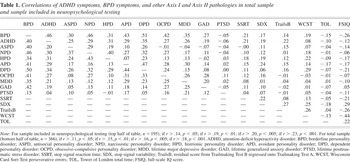
Correlations of ADHD symptoms, BPD symptoms, and other Axis I and Axis II pathologies in total sample and sample included in neuropsychological testing
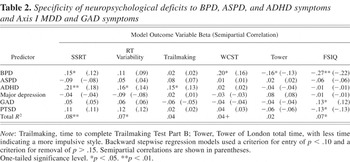
Specificity of neuropsychological deficits to BPD, ASPD, and ADHD symptoms and Axis I MDD and GAD symptoms
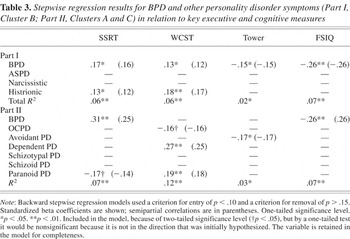
Stepwise regression results for BPD and other personality disorder symptoms (Part I, Cluster B; Part II, Clusters A and C) in relation to key executive and cognitive measures
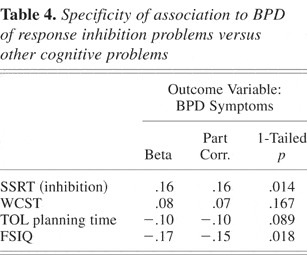
Specificity of association to BPD of response inhibition problems versus other cognitive problems
 You have
Access
- 68
- Cited by