


Are inequality and distributive conflicts a driving force in the transition to democratic rule? Are unequal democracies more likely to revert to authoritarianism? These questions have a long pedigree in in the analysis of the transition to democratic rule in Europe (Lipset Reference Lipset1960; Marshall Reference Marshall1963; Moore Reference Moore1966), and have been raised again in newer comparative historical work on democratization (Collier Reference Collier1999; Rueschemeyer, Stephens, and Stephens Reference Rueschemeyer, Stephens and Stephens1992). More recently, an influential line of theory has attempted to ground the politics of inequality on rationalist assumptions about citizens’ preferences over institutions (Acemoglu and Robinson Reference Acemoglu and Robinson2000; Reference Acemoglu and Robinson2001; Reference Acemoglu and Robinson2006; Boix Reference Boix2003; Reference Boix2008; Przeworski Reference Przeworski2009). These distributive conflict approaches conceptualize authoritarian rule as an institutional means through which unequal class or group relations are sustained by limiting the franchise and the ability of social groups to organize. The rise and fall of democratic rule thus reflect deeper conflicts between elites and masses over the distribution of wealth and income.
Despite its logic, there are several theoretical and empirical reasons to question the expectations of these new distributive conflict models. Socioeconomic inequality plays a central role in these models, but has cross-cutting effects. The more unequal a society, the greater the incentives for disadvantaged groups to press for more open and competitive politics. Yet the wider the income disparities in society, the more elites have to fear from the transition to democratic rule and the greater the incentives to repress challenges from below. Given this potential indeterminacy, theoretical models have hinged on a variety of other parameters, such as the cost of repression or the mobility of assets.
Even with these refinements, attempts to demonstrate the relationship between inequality and regime type have yielded only mixed results. In cross-section, there is a relationship between income distribution and the level of democracy: Ceteris paribus, more equal societies are more democratic. Yet the causal relationship between inequality and either transitions to democratic rule or reversions from it is much less robust.
We focus on regime change during the “third wave” of democratic transitions from 1980–2000. This period was marked by the spread of democracy to a wide range of developing and postsocialist countries. These included not only middle-income nations in Latin America, Eastern Europe, and East and Southeast Asia but also a substantial number of lower income countries, including in Africa (Bratton and van de Walle Reference Bratton and van de Walle1997). Although democratic transitions outnumber reversions from democratic rule, the period also saw a number of transitions to authoritarian rule.
Not only does this temporal focus on the third wave capture a wide-ranging sample of regime changes but it also overlaps with important changes in international context. During the Cold War era, both right- and left-wing dictators could exploit great power rivalries to win support from external patrons. During the 1980s and 1990s, the decline and ultimate collapse of the Soviet Union created a much more permissive international environment for democratic rule (Boix Reference Boix2011).
Using an extremely generous definition of “distributive conflict” transitions, we find that between 55% and 58% of the democratic transitions during this period conformed—even very loosely—to the causal mechanisms specified in the distributive conflict models. Thus, even with an expansive definition of distributive conflict, more than 40% did not conform at all. Moreover, a substantial number of the distributive conflict transitions occurred under conditions of high inequality, a result that is at odds with the expectations of the theory. Approximately 30% of all transitions occurred in countries that ranked in the top tercile in terms of inequality, and a substantial majority of these transitions resulted from distributive conflict; this finding is robust to alternative measures of inequality. These findings do not necessarily overturn distributive conflict theories, but suggest that they are underspecified with respect to scope conditions and only operate under very particular circumstances.
Given the substantial incidence of nondistributive conflict transitions, we find several alternative causal pathways to democratic rule. External actors were decisive in some cases. In many cases, however, other domestic causal factors induced incumbents to relinquish power in the absence of strong challenges from below. Elite incumbents were sometimes challenged by elite outgroups or defectors from the ruling coalition who saw gains from democratic openings. In other cases, elite incumbents ceded power in the absence of mass pressure because they believed they could control the design of democratic institutions in ways that protected their material interests.
An even smaller percentage of reversions—less than a third—conformed to the elite-mass dynamics postulated in the theory, and once again, we found little relationship between the incidence of these transitions and socioeconomic inequality. However, we did find several alternative causal mechanisms. In several cases, incumbent democratic governments were overthrown not by socioeconomic elites seeking to block redistribution, but by authoritarian populist leaders promising more redistribution. Even more commonly, however, reversions were driven by conflicts that either cut across class lines or arose from purely intra-elite conflicts, particularly conflicts in which factions of the military staged coups against incumbent office holders.
Our analysis is motivated by methodological as well as substantive concerns. In contrast to quantitative tests of the relationship between inequality and regime change, we have constructed a qualitative dataset of within-case causal process observations (Haggard, Kaufman, and Teo Reference Haggard, Kaufman and Teo2012). Our approach differs from other such designs in that it examines all discrete country-years that have been coded as transitions or reversions in two prominent datasets: Polity IV and the dichotomous coding scheme developed by Przeworski et al. (Reference Przeworski, Alvarez, Cheibub and Limongi2000) and extended by Cheibub, Ghandi, and Vreeland (Reference Cheibub, Gandhi and Raymond Vreeland2010).
Critics of “medium-N” designs have argued that such designs lack both the detail of individual case studies or smaller-N designs and the precision of well-specified larger-N econometric models. Yet we argue that they are particularly useful for evaluating whether the causal mechanisms stipulated in formal models—which typically involve complex sequences of strategic interactions—are in fact present in the cases. The approach is particularly useful for testing theories of relatively rare events, such as democratic transitions and reversions, civil wars, genocides, financial crises, and famines. In cross-national quantitative models of these phenomena, the number of country-years in the panel is large, but the number of cases to be explained is limited, permitting more intensive treatment of the relevant cases and thus more robust inference.
We begin in the first section by reviewing distributive conflict models of regime change, focusing on the contributions by Boix (Reference Boix2003; Reference Boix2008), Acemoglu and Robinson (Reference Acemoglu and Robinson2000; Reference Acemoglu and Robinson2001; Reference Acemoglu and Robinson2006), and Przeworski (Reference Przeworski2009). The next section discusses methodological issues. The remainder of the article is structured around a consideration of transitions to democracy and reversions to authoritarian rule. Our causal process observations show not only that transitions occur across cases with very different levels of inequality—as the null findings in econometric models already attest—but also that a large number of democratic transitions and reversions occur in the absence of significant redistributive conflict altogether.
The returns from this exercise are both substantive and methodological. First, the findings cast doubt on the prevalence of the core causal mechanisms at work in the underlying model, including the relationship between inequality and particular types of elite and mass behavior. In the conclusion, we raise questions about alternative approaches and suggest several ways in which the theory might be modified: There may be other channels through which inequality can destabilize democratic rule, and there might be other economic and institutional factors that condition the capacity of low-income groups to engage in collective action. Second, our methodological contribution raises important questions about the validity of reduced-form panel designs, including with respect to the coding of regime type itself. More positively, it suggests a fruitful way of combining quantitative and qualitative methods that focuses attention on alternative transition paths rather than the partial-equilibrium treatment effects of favored variables.
THEORY
Adam Przeworski (Reference Przeworski2009, 291) poses the puzzle of democratic transitions in the clearest terms: “Why would people who monopolize political power ever decide to put their interests or values at risk by sharing it with others? Specifically, why would those who hold political rights in the form of suffrage decide to extend these rights to anyone else?” The seminal work of Meltzer and Richard (Reference Meltzer and Richard1981) provides the point of departure for all current distributive conflict models of regime change.Footnote 1 The Meltzer-Richard model posits that the distribution of productivity and income is skewed to the right, with most citizens falling at the lower and middle range of the distribution and a smaller tail constituting the rich; the mean income exceeds the median. Where voting rules result in appeals to the median voter, the wider the divergence between the median and mean income, the more is to be gained from redistribution. Put differently, in countries with more skewed income distributions, the poor have more to gain from redistribution and should have more generous tax and transfer programs as a result.
In the distributive conflict theories of regime change, most notably in the work of Boix (Reference Boix2003) and Acemoglu and Robinson (Reference Acemoglu and Robinson2000; Reference Acemoglu and Robinson2001; Reference Acemoglu and Robinson2006), these expectations are modified and expanded to endogenize the very existence of democratic governments. These models differ in ways we explicate later, but both rest on complex causal chains including both structural and game-theoretic components: inequality, distributive conflict, and strategic interactions between incumbents and oppositions over the nature of political institutions. In models of democratic transitions, low-income groups—sometimes in coalition with middle-class forces—mobilize in favor of redistribution and against the authoritarian institutions that sustain inequalities. These theories are vague about how collective action problems are solved, but posit that they can be overcome by changes in information with respect to the solidity of incumbent power (Boix) or by increasing returns from mobilization as inequality rises (Acemoglu and Robinson). Faced with the threat of being displaced by force—in effect, through revolution—elites calculate the net cost of repression vs. concession, including institutional ones. At very high levels of inequality, the threats posed by democratization are too high to accept and they choose to repress. Yet at low or medium levels of inequality, redistributive demands can be managed through class compromises over institutions and policy that permit democratic transitions.
Carles Boix's (Reference Boix2003) Democracy and Redistribution is a significant exemplar of this broad approach. Boix defines a right-wing authoritarian regime as one in which the political exclusion of the poor sustains existing economic inequalities. According to Boix (Reference Boix2003, 37) “a more unequal distribution of wealth increases the redistributive demands of the population. . .. [However] as the potential level of transfers becomes larger, the authoritarian inclinations of the wealthy increase and the probabilities of democratization and democratic stability decline steadily.” The translation of these demands into a change in institutions hinges on the balance of power between the wealthy and the poor. Boix offers an informational model in which regime changes are triggered by exogenous shocks that weaken the elite or reveal its weakness (28–30). A necessary (although not sufficient) mechanism driving regime change is pressure from below: “As the least well off overcome their collective action problems, that is, as they mobilize and organize in unions and political parties, the repression cost incurred by the wealthy rise[s],” forcing elites to make institutional compromises (13).
Boix also emphasizes the role played by capital mobility in mitigating this relationship (see also Freeman and Quinn Reference Freeman and Quinn2012). High levels of capital mobility enhance the bargaining power of elites. Fixed assets, by contrast, limit the options of the wealthy and make them vulnerable to democratic redistribution and thus more resistant to it. Given the decision of the poor to mobilize, the incentives of upper-class incumbents to repress are a function of the level of inequality and mobility of assets. Transitions are most likely when inequality is low, asset mobility is high, and elites have less to lose from competitive politics. Elites have stronger incentives to repress as inequality increases and when assets are fixed.
Although broadly similar in spirit, Acemoglu and Robinson's (Reference Acemoglu and Robinson2006) Economic Origins of Dictatorship and Democracy introduces several innovations. Acemoglu and Robinson concur with Boix that regime type is a function of the balance of power between high- and low-income groups. Although elites monopolize de jure power, masses potentially wield de facto power through their capacity to mobilize against the regime. Like Boix, Acemoglu and Robinson elaborate more complex “three-class” models in which the pressure on elites comes from coalitions of middle- and low-income groups. However, the establishment of mass democracy presupposes the engagement of low-income sectors because of their sheer weight. Because they constitute the majority, masses can sometimes “challenge the system, create significant social unrest and turbulence, or even pose a serious revolutionary threat” (25).
High inequality increases the incentives for authoritarian elites to repress these political demands for redistribution. To this observation, Acemoglu and Robinson add an important point about credible commitments. When elites are confronted by mobilization from below, they can make short-run economic concessions to diffuse the threat. Yet politically and economically excluded groups are aware that elites can renege on these concessions when pressures from below subside. Because there is a cost to subsequently reversing democracy after a transition has occurred, democratic institutions provide a means for elites to credibly commit to a more equal distribution of resources not only in the present but into the future as well.
Acemoglu and Robinson agree with Boix that, although inequality increases the incentive for excluded groups to press for democracy, it also increases elite incentives to repress. High inequality is inauspicious for democracy. However, Acemoglu and Robinson argue that democratization is also unlikely to occur in authoritarian governments with low levels of inequality because the demand for it is also attenuated; despite political restrictions, excluded groups nonetheless share in the distribution of societal income. They conclude that the relationship between inequality and democratic transitions should exhibit an inverted-U pattern, with transitions to democratic rule most likely to occur at intermediate levels of inequality.
It is important to emphasize that the theory is not simply a structural one but operates through strategic interactions between elites and masses: incentives for collective action on the part of the masses and repression or concessions on the part of elites. At middle levels of inequality, grievances are sufficient to motivate the disenfranchised to mobilize, but not threatening enough to invite repression (see also Burkhart Reference Burkhart1997; Epstein et al. Reference Epstein, Bates, Goldstone, Kristensen and O'Halloran2006).
Boix (Reference Boix2003) and Acemoglu and Robinson (Reference Acemoglu and Robinson2006) extend their arguments to a consideration of the stability of democratic rule and reversion to autocracy as well. Implicit in the theory is the assumption that high-inequality democracies are rare; for that reason, less attention is given to the relationship between inequality and democratic breakdown. Nonetheless Boix postulates a direct linear relation between the degree of inequality and the likelihood of reversion to dictatorship. In high-inequality democracies, redistributive pressures from lower-class groups will be more intense, motivating elites to deploy force against incumbents in order to reimpose authoritarian rule. Although Acemoglu and Robinson posit an inverted-U shaped relation between inequality and democratic transitions, they agree that countries that do manage to democratize at high levels of inequality “do not consolidate because coups are attractive” (38). The costs for elites of mobilizing against democratic rule are less than the losses arising from redistribution under democratic rule.
METHOD: CAUSAL PROCESS OBSERVATIONS
At first glance, these theories appear amenable to relatively straightforward tests. Is the level of inequality associated with transitions to and from democratic rule or not? Yet empirical tests are complicated by the fact that different measures of inequality capture different socioeconomic cleavages and the quality of the data is notoriously poor. We also find that measures of democracy commonly used in panel designs leave much to be desired.
The problems of testing these theories are not limited to the constraints posed by the data: They are also related to the reduced-form nature of most cross-national panel designs. These quantitative models typically omit the intervening causal processes and focus directly on the relationship between some antecedent condition—in this case, levels of inequality—and the outcome variable, regime change in this instance. However, as the literature on process-tracing and causal process observation has pointed out,Footnote 2 the empirical question is not only whether antecedent conditions are linked statistically to the outcome but whether they also do so through the stipulated causal mechanisms. In this case, we want to know not only whether inequality is associated with regime change but also whether its effects operate through the particular causal mechanisms postulated in distributive conflict theory.
Our method of causal process observation includes two stages: (1) within-case analysis and coding and (2) aggregation across the population of cases (Haggard, Kaufman, and Teo Reference Haggard, Kaufman and Teo2012). Selecting on the dependent variable is a central feature of this approach, which is designed to test a particular theory and thus rests on identification of the causal mechanism leading to regime change. In contrast to the more common practice of purposeful (Gerring Reference Gerring2006; Reference Gerring2007a; Reference Gerring2007b) or random (Fearon and Laitin 2011) selection of cases for more intensive analysis, our approach is to select all transition and reversion cases in the relevant sample period (1980–2000). The cases included in our dataset come from the dichotomous coding of transitions and reversions in Cheibub, Ghandi, and Vreeland (CGV; Reference Cheibub, Gandhi and Raymond Vreeland2010) and from Polity IV. For the continuous Polity IV metric, we use a cutoff of 6 to indicate a transition, a benchmark used in the dataset itself. We have, however, examined alternative cutoff points of 7 and 8 and find that as the bar is raised, the percentage of distributive conflict transitions in our sample actually declines to 47.9 and 42.1%, respectively, suggesting that the results are in fact robust.
Within-case causal process observation involves the reconstruction of an empirical sequence of actor decisions, ultimately strategic in form, that are postulated by the theory to yield the given outcome. Within-case analysis codes whether and to what extent individual cases conform with the stipulated causal logic. This coding can then be aggregated in a second stage to consider characteristics of the whole population or subsets of it.
In constructing the dataset of causal process observations on regime change, we begin with the stipulated causal mechanisms that run from inequality through the following elements: the mobilization of distributive grievances by the poor or—more commonly—by coalitions of low- and middle-income groups; elite calculations about the costs of repressing these challenges or offering political concessions; the iterated strategic response of the masses to those elite decisions; and the ultimate outcome of regime maintenance or change (see particularly Boix Reference Boix2003, 27–36, and Acemoglu and Robinson Reference Acemoglu and Robinson2006, 181–220, for explication of the basic models). In the first instance, we seek to establish whether distributive conflict is present or not and, if so, whether and how it affects the decisions that result in or constitute regime change. For democratic transitions, we first identify the decisions made by authoritarian leaders to make political concessions or withdraw altogether. For reversions, we identify actions taken by challengers within or outside the government that result in the overthrow of democratic rule. For each transition and reversion, we then provide a narrative that reconstructs the causal process and assesses whether the key political decisions in question were a result of distributive conflicts. We then provide a justification of the coding and references used to make the decision.Footnote 3
The selection of all cases for a given time period has the advantage of permitting what we call “stage two” analysis: the aggregation of the individual causal process observations to permit analysis of the population as a whole or relevant subsets of it. For example, we pay particular attention to high- and low-inequality cases because the theory has particular expectations about how such cases should behave.
The method of causal process observation has several advantages that can enrich the testing of formal theories through quantitative empirical designs; we see it as a complement to such approaches, not a substitute. In a quantitative model, the effects of either structural variables, such as inequality, or behavioral ones such as protest are estimated across a heterogeneous set of cases, some of which transition as a result of the stipulated causal mechanism and some of which do not. The focus on average treatment effects masks the heterogeneity of transition paths; the variable in question is either significant or not. By contrast, causal process observations do not ask whether the variable in question is significant, but whether the transition path in the cases conforms with the causal process stipulated in the theoretical model.
As we see later, the quantitative work on inequality and regime change is highly inconclusive at best and is even more limited for the third wave transitions. Nonetheless, causal process observations can complement quantitative analysis in two ways that can strengthen causal inference. First, if causal process observations showed that elite-mass conflicts did drive transitions in a significant number of cases, it could reopen null statistical findings. The causal process observations would suggest, for example, the need for better specification of the quantitative model or more appropriate measures of inequality. However, if regime change was not driven by such conflicts in a significant number of cases, the finding could be considered disconfirmatory. More importantly, the finding could be disconfirmatory even if inequality were statistically significant in the quantitative analysis; this would occur if causal process observation showed that the effects of inequality work through causal channels not posited by the game-theoretic models.
In addition to its advantages in more closely testing the actual mechanisms specified in causal models, causal process observations also address a second important problem in standard quantitative panel designs: the mismatch between the temporal framework of a stipulated causal process and the constraints of country-year coding of cases. In cross-national panels, each country-year is coded as a transition or nontransition year; these codings constitute the dependent variable. The causal covariates are similarly either contemporaneous or antecedent with some lag structure. Yet the causal sequence of actor choices associated with transitions and reversions may be more compressed or extended, not constant across cases, and thus not well captured by the artifact of the country-year coding constraint typical of the panel design. As we see later, many cases that are coded as transitions prove to be dubious when a more extended but variable temporal context is taken into account, a point emphasized more generally in the work of Pierson (Reference Pierson2004).
In principle, multistage models can be constructed that work from structural causes through intervening behaviors to institutional effects (King, Keohane, and Verba Reference King, Keohane and Verba1994, 85–87). Some critics of the mechanisms approach have argued that mechanisms may be nothing more than such chains of intervening variables (Beck Reference Beck2006; Reference Beck2010; Gerring Reference Gerring2007b; Reference Gerring2010; Hafner-Burton and Ron Reference Hafner-Burton and Ron2009). Although possible in principle, the continued reliance on reduced-form specification suggests that this problem is in fact not addressed, in part because of the labor intensity of recoding existing datasets to conform more precisely with the theory being tested.
In each of the remaining sections on democratic transitions and reversions, we begin with a review of the quantitative findings on the relationship between inequality and regime change and then present both aggregate and select case study findings from the causal process observations in our dataset. We show that the support for the distributive conflict model of regime change is weak, even under highly generous coding rules. When these rules are tightened, the evidence is weaker still.
TRANSITIONS TO DEMOCRATIC RULE
Acemoglu and Robinson (Reference Acemoglu and Robinson2006) do not present systematic empirical evidence in support of their claims.Footnote 4 Much of their book is taken up with a discussion of the underlying intuition of the theory (1–47, 80–87) and the presentation of a family of formal models of democratic and nondemocratic regimes (89–172) and of regime change (173–320). Acemoglu and Robinson do present scatterplots showing a positive relationship between equality and the level of democracy across a global sample of countries (58–61) and provide short case studies of Great Britain, Argentina, South Africa, and Singapore (1–14). Yet these correlations and cases are illustrative at most.
In his analysis of democratic transitions over the very long run (1850–1980), Boix (Reference Boix2003) finds that the distribution of land, proxied by the share of family farms, has an effect on the transition to democratic rule. More unequal societies are both less likely to make a transition to democracy and less stable when they do (90–97). Boix also explores a highly uneven panel of countries for the 1950–90 period (only 587 observations), including developed ones (71–88). Using a Gini index as his measure of inequality, Boix finds some evidence that increases in the level of inequality reduce the likelihood of a democratic transition, but the findings are not altogether robust (see for example, 79: Model 2A).
More recently, other quantitative studies have taken up the challenge raised by Boix (Reference Boix2003) and Acemoglu and Robinson (Reference Acemoglu and Robinson2006), but with mixed results. Like Boix, Ansell, and Samuels (Reference Ansell and Samuels2010) consider both long-historical and postwar samples (1850–1993, 1955–2004). They find that land concentration makes democratization less likely, but that increases in income inequality make it more likely. They argue that increasing income inequality reflects the emergence of a new capitalist class that challenges landed elites, a dynamic consistent with Boix's (Reference Boix2003, 47–59) and Acemoglu and Robinson's (Reference Acemoglu and Robinson2006, 266–86) extension of their models into three-class variants.
The limited number of other tests in the literature generally fail to find a relationship between inequality and democratic transitions. A cross-sectional design by Dutt and Mitra (Reference Dutt and Mitra2008) finds a relationship between inequality measured by the Gini coefficient and “political instability,” but fails to find a relationship between inequality and transitions to democratic rule. Christian Houle (Reference Houle2009) creates a dataset using an alternative measure of inequality: capital's share of income in the manufacturing sector. Using the dichotomous coding scheme developed by Przeworski et al. (Reference Przeworski, Alvarez, Cheibub and Limongi2000) and Cheibub and Ghandi (Reference Cheibub and Gandhi2004), Houle shows that inequality bears no systematic relationship to democratic transitions over the 1960–2000 period, but is a significant predictor of reversions to authoritarian rule. In a wide-ranging study of the determinants of democratization, Teorell (Reference Teorell2010, 60) also fails to find a relationship between a Gini coefficient and democratic transitions.
Distributive Conflict and Nondistributive Conflict Transitions
In sum, the quantitative work on inequality and regime change is highly inconclusive at best, and even more limited for the third wave transitions. Many of these tests do not empirically model the underlying causal processes stipulated in the most significant formal models. Therefore, to undertake causal process observations, we need to interpret the underlying causal mechanisms at work in the theory. Two mechanisms appear central. First, elites must confront political-cum-distributive pressure from below, or a “clear and present danger” of it. In the absence of such pressures, it is not clear why elites would be motivated to cede power at all, as Przeworski's trenchant question suggests. Second, there must be some evidence—minimally in the temporal sequence of events—that the repression of these challenges appears too costly and that elites make institutional compromises as a result.
We therefore code “distributive conflict” transitions as ones in which both of the following occurred:
• The mobilization of redistributive grievances on the part of economically disadvantaged groups or representatives of such groups (parties, unions, NGOs) posed a threat to the incumbency of ruling elites.
• And the rising costs of repressing these demands appear to have motivated elites to make political compromises or exit in favor of democratic challengers, typically indicated by a clear temporal sequence (mass mobilization followed by authoritarian withdrawal).
In coding the cases, we were deliberately permissive, writing coding rules that gave the benefit of the doubt to the theory (Haggard, Kaufman, and Teo Reference Haggard, Kaufman and Teo2012). Our coding allowed us to consider a variety of distributive conflicts that may not be captured by any single inequality measure, from urban class conflicts to ethnic and regional ones. Yet such conflicts must be fought around distinctive and identifiable inequalities. The economically disadvantaged or the organizations representing them need not be the only ones mobilized in opposition to the existing regime. Although mass mobilization must partly reflect demands for redistribution, it can be motivated by other grievances as well.
An important coding issue is the question of “potential” threats in the absence of actual mobilization. As Acemoglu and Robinson (Reference Acemoglu and Robinson2006) note in distinguishing between de jure and de facto power, the poor can be considered a potential threat in virtually every case. However, the strategic basis of reforms aimed at preempting potential long-term threats rests on probability estimates and time horizons on the part of elites that differ quite substantially from those that drive elite responses to more immediate challenges. Moreover, we are also wary of the coding challenge: Virtually any case could be coded as one in which there was a “potential” challenge from below, with a corresponding decline in analytic leverage. However, we do take potential threats into account where there has been a recent history of mass mobilization demanding democratic reforms.
We coded all cases in which such threats from below did not occur at all or appeared to play only a marginal causal role as “nondistributive transitions.” Why, in the absence of significant pressure from below, would elites withdraw or make institutional compromises that risk the redistribution of assets and income not only in the present but also into the indefinite future? As others have argued (Huntington Reference Huntington1991; Linz and Stepan Reference Linz and Stepan1996; Collier Reference Collier1999; O'Donnell, Schmitter, and Whitehead Reference O'Donnell, Schmitter and Whitehead1986), there are a variety of routes from closed political systems to democracy. We identify three: those driven by international pressures, those involving intra-elite conflicts and defections, and those in which incumbent authoritarian elites withdraw in the belief that they can control the post-transition democratic order in ways that limit democracy's redistributive impact.
International factors played a decisive role in a number of third wave transitions (Boix Reference Boix2011; Whitehead Reference Whitehead1996). In a handful of cases—including Grenada (1984), Panama (1989), and Haiti (1994)—outside intervention took a military form. Yet particularly in the wake of the end of the Cold War, aid donors—both multilateral and bilateral—became less tolerant of undemocratic regimes that appeared guilty of economic mismanagement and outright corruption. Threats or withdrawal of aid played an important role in transitions in a group of low-income African countries in particular.
Even if we set aside the role of international pressures, threats from below are by no means the only domestic pressures that can cause elites to acquiesce to democratizing institutional changes. A common cause of transition in the nondistributive conflict cases is intra-elite rivalries. These rivalries may stem from competition among the political, military, and economic elites that constitute the authoritarian coalition—for example, when factions within the regime seek to displace incumbents—or from elite challenges from outside the regime altogether (Slater and Smith Reference Slater and Smith2012). In a number of cases, we found that concessions to elites rather than mass challenges appear as important as distributive conflicts pitting rich against poor.
Even when elites remain relatively unified, they may still acquiesce to—or even lead—democratic reform if they believe they can retain leverage over the political process while reducing the costs of repression. Incumbent elites can do this in several ways, including through the design of political institutions that give them effective vetoes or through the organization of political parties that exploit other cleavages to dampen distributive conflicts. Dominant parties provide incumbent political elites particular organizational advantages that can be redeployed in a more competitive context.
Note that each of the alternative domestic causal mechanisms we have sketched—intra-elite conflict or defection and authoritarian elites ceding office because of confidence in their post-transition chances—may in fact be related precisely to the weakness of immediate threats from below. Where such threats are limited, elites are more likely to control the transition. Societies in which the poor are not mobilized through programmatic parties, unions, or other organizations may be especially prone to vote buying, patronage, and other forms of clientelistic control that would guarantee elite control of politics, even in nominally democratic settings (Kitschelt and Wilkinson Reference Kitschelt and Wilkinson2006).
Inequality and the Incidence of Distributive Conflict Transitions
Table 1 shows the distributive and nondistributive transitions, using the definition of transitions in the CGV dataset; in the text, we also report the distribution of these types of cases based on Polity transition coding. The cases are arrayed according to three measures of inequality: Christian Houle's (Reference Houle2009) measure of capital's share of income in the manufacturing sector (capshare), a Gini coefficient from the University of Texas Inequality Project's Estimated Household Income Inequality (EHII) dataset (2008), and the Vanhanen (Reference Vanhanen2003) measure of land inequality. We divide the sample of all developing countries into terciles of high-, medium-, and low-inequality cases and identify the transitions that fall into each tercile.
Distributive and Nondistributive Transitions by Level of Inequality, 1980–2000

Sources: Transitions: Cheibub, Ghandi, and Vreeland (Reference Cheibub, Gandhi and Raymond Vreeland2010); transition types: Haggard, Kaufman, and Teo (Reference Haggard, Kaufman and Teo2012); capital share: Houle (Reference Houle2009); Gini: University of Texas Inequality Project (2008); share of family farms: Vanhanen (Reference Vanhanen2003).
The table shows that transitions occurred at all levels of inequality, regardless of which measure is used. Twenty-nine percent of transitions occurred in the upper third of countries ranked by capshare and Gini inequality, and about 34% occurred in the top tercile of countries ranked in terms of land distribution. More problematic, and against theoretical expectations in both Boix (Reference Boix2003) and Acemoglu and Robinson (Reference Acemoglu and Robinson2006), there was a substantial incidence of distributive conflict transitions among the high-inequality cases. When inequality is measured using the Gini, about 75% of high-inequality transitions were distributive conflict transitions; the incidence of such transitions is 60% using the land inequality measure, and 57% using capital's share of income.
Table 2 offers additional insight into the causal role of distributive conflict. Columns 2 and 3 divide the CGV transitions into distributive and nondistributive types; columns 4 and 5 replicate the exercise for Polity transitions. We also identify the non-overlapping cases. The last column shows the average Polity score from the time of the transition through either the end of the sample period or until an outright reversion to authoritarian rule.
Distributive and Nondistributive Transitions, 1980–2000

Note: In the dataset, we treat any transitions that are coded within a two-year window as the same case (for example, the CGV coding of the Philippines transition occurring in 1986, the Polity coding as 1987). Outside of this two-year window (for example, Paraguay) or where there is an intervening reversion (Sierra Leone), we treat them as separate cases. There are no Polity scores for Grenada, Sao Tome, and Suriname.
Sources: CGV transitions from Cheibub, Ghandi, and Vreeland (Reference Cheibub, Gandhi and Raymond Vreeland2010); Polity transitions from Marshall, Gurr, and Jaggers (Reference Marshall, Gurr and Jaggers2010); transition types from Haggard, Kaufman, and Teo (Reference Haggard, Kaufman and Teo2012).
The information contained in Table 2 raises serious questions about the validity of the coding of democratic transitions in these two major datasets and, as a result, casts doubt on the inferences that have been drawn in the quantitative work that employs them. Only 55.4% of the CGV transitions are also Polity cases, and 21 of the 65 CGV transitions had Polity scores of less than 6. Even where the two datasets are in agreement, moreover, our examination of the cases raises questions about the validity of the coding process. Insiders and elites repressed opposition and/or exercised disproportionate control over them in the nominallydemocratic cases of Croatia, Niger, and Thailand. Transitions in Guatemala (1986) and Honduras (1982) empowered nominally democratic governments that actually intensified repression of social movements that had redistributive objectives. Death squads continued to terrorize the opposition in El Salvador after the transition in 1984. In at least four cases—Ghana under Rawlings; Kenya under Moi; Malawi, where an “insider” won the transitional election; and Romania—the military or incumbent elites continued to exercise disproportionate influence over the allocation of resources after the transition. In all of these cases, the transitions appear to conform more closely to what Levitsky and Way (Reference Levitsky and Way2010) call “competitive authoritarianism” than to democracy. Because we seek to engage the quantitative analysis that deploys such data, however, we do not discard or reclassify cases identified as transitions in the two datasets.
What about the theoretical expectations of the role of distributive conflict in democratic transitions? We found that distributive conflict played some causal role in propelling transitions in about 55% of CGV and 58% of Polity transition cases. These are substantial, but by no means overwhelming shares of the cases. In combination with the findings in Table 1, the large percentage of nondistributive transitions suggests strongly that the link between inequality and distributive conflict transitions is conditional at best.
Yet even these findings need to be tempered by the generosity of our coding rules. Although pressure from below did play an unambiguously significant role in a number of middle-income countries such as Argentina, South Korea, and South Africa, our expansive coding rules also necessitated the classification of cases as distributive conflict where there was considerable ambiguity about its causal weight. The ambiguity in specific cases stemmed from one or more of three factors.
1. First, some distributive conflict transitions occurred in small open economies that were highly vulnerable to pressure from donors or other international actors, and this pressure may have been decisive.
2. The class basis of protest constituted a second source of ambiguity; in many cases, protest was dominated by middle- or even upper-middle-class groups, calling into question the class dynamics of the model even if we allow for cross-class coalitions including the poor.
3. A third source of ambiguity involved judgments about the role played by redistributive grievances in opposition demands; in many instances, it was difficult to separate redistributive demands from grievances that focused on a defense of privileged positions, generalized dissatisfaction with authoritarian incumbents, or nationalist claims.
Table 3 lists the cases in the dataset where international pressures, the class composition of the protestors, or the nature of their redistributive grievances made the coding of the case ambiguous. Of particular significance is the coding of several African “distributive conflict” transitions, in which incumbent regimes—in the midst of severe economic recessions—were vulnerable both to intense donor pressure and the protest of relatively well-off public employees and student groups.
Ambiguous Cases of Distributive Conflict Transitions

Niger provides an example. The pivotal decision in this case was an agreement by the military strongman, General Ali Saibou, to convene a National Conference, which then assumed the role of a transitional government and organized competitive elections. Distributive protests played a role in Saibou's decision to yield authority. Yet the opposition came primarily from the Nigerien Workers Union, which represented Niger's 39,000 civil servants, and the Union of Nigerian Scholars, which represented about 6% of the country's school-aged population (Gervais Reference Gervais, Clark and Gardinier1997, 93). Both groups bitterly opposed tough adjustment programs demanded by the International Monetary Fund, but the conflicts did not appear to engage the poor. As Gervais (Reference Gervais, Clark and Gardinier1997, 105) writes, “the political stakes raised by . . . adjustment policies tended to compromise the benefits of the organized groups of the modern sector as much as the privileges of the traditional political class.” Notwithstanding our generous coding decision, it is ambiguous at best to claim that the transition process mapped directly to the underlying Meltzer-Richard model in which the interests of the poor or even middle classes are pitted against the rich.
Similar questions can be raised about the class composition of protest in other African cases, including Benin, Congo, Lesotho, Malawi, and Mali. Even though all of these cases meet our coding rules because of the presence of mobilization “from below” that affected the transition, protest was primarily limited to civil servants, students, and other sectors of the urban middle class. Moreover, several African cases (Lesotho, Kenya, Malawi, and Niger) were also ambiguous with respect to the role of international pressures.
The nature of the grievances associated with the secession from Yugoslavia and the former Soviet Union also warrants special mention. In three such cases—Croatia, Macedonia, and Belarus—the coding was unambiguously nondistributive because mass mobilization on distributive lines was altogether absent or there is strong evidence that the political process of independence occurred as a result of intra-elite processes. Yet in the Baltic cases, as well as in Ukraine, Mongolia, and Armenia, there is ambiguity as to the nature of the claims made by groups engaged in mass mobilization. Several regional specialists whom we consulted in constructing our coding objected that these cases did not fall easily into the distributive conflict category and should be seen as the outcome of cross-class secessionist or nationalist movements and the resulting collapse of multinational empires. In these cases, we believed that the evidence of conflicts within the polity between indigenous populations and the Russians warranted a “distributive conflict” coding, but it is important to acknowledge the pivotal importance of strong nationalist aspirations that cut across class lines.Footnote 5 If we were to shift all of the ambiguous cases in Table 3 from the distributive to nondistributive categories, the incidence of distributive conflict transitions would fall to only 29.2% of the CGV transitions and to about 31% of the Polity transitions.
Even with the expansive coding of distributive conflict transitions, we found a large share of cases—44.6% using the CGV measure and 42.1% of Polity cases—in which distributive conflict played only a marginal role in the transition process. These cases followed the alternative causal pathways we identified earlier: transitions driven by international pressures or by intra-elite conflicts, and elite-led transitions in which incumbents believed they could control the democratic process to limit its redistributive impact.
We have already noted that, in several of the “ambiguous cases” discussed earlier, popular protest unfolded in the context of severe international pressure. However, in other cases, protest was weak or entirely absent, and outside intervention was unambiguously decisive. Transitions in Grenada (1984) and Panama (1989) hinged almost entirely on U.S. military operations. In Haiti (1994), the military ruler negotiated his exit as an international force of 21,000 troops prepared to land on the island. External political and economic pressures from donors or great power patrons were also decisive in Comoros (1990), Cape Verde (1990), the Central African Republic (1993), and Cyprus (1983).
Intra-elite conflicts appear significant in a number of nondistributive conflict cases. The 1989 transition in Paraguay provides an illustration. The key decision was a palace coup that ousted the aging dictator Alfredo Stroessner and initiated a process of constitutional reform and competitive presidential elections. The coup was led by General Andres Rodriguez, Stroessner's second in command, and by a faction of the ruling Colorado party that hoped to extend one-party rule by engineering a “nonpersonalist” transition. Mass protest did not pose a serious threat to the regime (Lambert Reference Lambert2000).
In Mexico the ruling PRI was challenged primarily by business elites and an opposition party (PAN) that was outside the regime and its ruling coalition and wanted less rather than more redistribution. Popular protest over alleged fraud in local elections strengthened the bargaining leverage of the PAN in its negotiations with the ruling party, but the political left played only a marginal role in pushing the regime out of power. Among other cases in which elite concessions to other elites appeared significant are the military's acquiescence in the assumption of power by parliamentary politicians in Pakistan, the Thai military's accommodation of emerging political-economic elites from the Northern part of the country, and the Kuomintang's accommodation of native Taiwanese elites.
Finally, in a number of cases incumbent authoritarian elites opened politics under the assumption—justified or mistaken—that they could effectively control the political system to limit its redistributive impact. The Turkish military transferred power to a new civilian government in 1983, but only after crushing violent left and right factions that had been a feature of Turkish politics in the late 1970s. As it gradually reopened the political space in early 1983, the military vetoed most of the new parties that had formed around established politicians and designed institutions that gave it veto power over crucial areas of policy. Although the military elite was surprised by the victory of the one opposition party it had allowed to function, there is no indication that threats of mass mobilization influenced the decision to allow the elections or to permit the results to stand.
We see similar processes of reform in Chile, where outgoing governments built in quite specific mechanisms through which the military would continue to exercise oversight and supporters of the outgoing government would be overrepresented (Haggard and Kaufman Reference Haggard and Kaufman1995). These mechanisms included the establishment of national security councils with a veto role for the military establishment, constitutional and judicial guarantees limiting the authority of incoming governments, and the allocation of Senate seats to be filled by the head of the outgoing regime. In Kenya, Mexico, and Taiwan, incumbents ceded power gradually while competing aggressively and successfully in the newly liberalized environment. Several communist transitions, including Hungary and Mongolia, also fit this pattern.
Two conclusions emerge from our discussion of democratic transitions. First, although certainly some democratic transitions are driven by distributive conflict in ways that conform with the theory, these cases do not appear to be related in any systematic way with the level of inequality, as the lack of quantitative findings already suggests. Second, the assumption that elites do not yield power in the absence of mass pressure from below is called into question by the high incidence of alternative transition paths. Taken together, these conclusions indicate that the theory is, at best, underspecified and needs to delineate more explicitly the conditions in which redistributive conflicts emerge. We return to these issues in the conclusion.
The Collapse of Democratic Rule: Causal Process Observations
Although Acemoglu and Robinson (Reference Acemoglu and Robinson2006) and Boix (Reference Boix2003) offer diverging predictions about transitions to democracy, they agree that when democracies do emerge at high levels of inequality, they are more likely to revert to authoritarian rule. As Acemoglu and Robinson put it succinctly, “in democracy, the elites are unhappy because of the high degree of redistribution and, in consequence, may undertake coups against the democratic regime” (222). This view comports with an earlier generation of theory on “bureaucratic authoritarian” installations in the Southern Cone (O'Donnell Reference O'Donnell1973; for critiques: see Collier Reference Collier1979; Linz and Stepan Reference Linz and Stepan1978; Valenzuela Reference Valenzuela1978): Brazil (1964), Argentina (1966, and 1976), and Chile and Uruguay (both 1973), with extensions to other regions as well (for example, Im Reference Im1987 on Korea).
Unlike the quantitative evidence on transitions, there is somewhat stronger cross-national evidence that inequality is incompatible with democratic stability (e.g., Dutt and Mitra Reference Dutt and Mitra2008; Reenock, Bernhard, and Sobek Reference Reenock, Bernhard and Sobek2007). Houle (Reference Houle2009) deploys his innovative measure of capital share to test the relationship and finds that high return to capital relative to labor significantly undermined democratic stability between 1960 and 2000. We replicated his model using the Gini and Vanhanen index of land inequality. Although land shows no effects, the Gini was a significant determinant of democratic breakdowns, both for the entire 1960–2000 period and for the third wave between 1980 and 2000.Footnote 6
Do these findings hold up when subjected to closer qualitative scrutiny? To what extent do the causal process observations comport with the expectations of distributive conflict theories? As with the transition cases, we considered whether political pressures for redistribution drove regime change, in this case the breakdown of democratic rule. We identified a category called “elite-reaction” reversions that conform with the distributive conflict model. In these cases, elites undermine democracy either by (a) seeking to oust incumbent governments that rely on the political support of lower class or excluded groups and are actively committed to the redistribution of assets and income or by (b) imposing restraints on political competition in order to prevent coalitions with explicitly redistributive aims from taking office. In these cases, distributive conflicts are in evidence and elites are acting against governments, parties, and organized social forces that are actively committed to greater redistribution through the democratic process.
We also identified a second type of distributive conflict reversion in which the incumbent democratic government is overthrown by authoritarian populist leaders. These types of reversion do not comport with our expectation that reversions are driven by the right, but they clearly involve redistributive conflict and are given some attention in Boix (2006, 18, 214–19). Whereas in elite-reaction reversions, challengers to democratic rule appeal to elite interests and target the masses for repression, in “populist reversions,” authoritarian challengers appeal to the masses and target the elite.
Finally, “nondistributive” reversions are unambiguous instances of the null hypothesis, but we distinguished two alternative subtypes. In some cases, support for a reversion cuts across class lines: Authoritarian challengers exploit wide disaffection with the performance of democratic incumbents and invoke broad valence issues, such as economic performance and corruption, that cut across distributive cleavages. In other cases, purely intra-elite conflicts cause reversions. The military—or factions within it—might stage a coup against incumbent office holders, or competing economic elites might mobilize military, militia, or other armed forces against democratic rule. We called these nondistributive conflict cases “cross-class” and “intra-elite” reversions, respectively.Footnote 7
Table 4 reports the incidence of distributive conflict and nondistributive conflict reversions by level of inequality. The distributive conflict column aggregates both elite-reaction and populist reversions; the nondistributive conflict column aggregates both cross-class and intra-elite reversions. Table 5 shows the types of reversion, Polity scores of the deposed regimes, and economic circumstances surrounding the change. Although there is surprisingly little overlap between the ranking of cases on the three measures of inequality, reversions do cluster at the middle and high levels of inequality; relatively few took place at the lowest levels. However, we find only a minority of cases that conform with the distributive conflict model. In the CGV dataset, four cases (Bolivia 1980, Burundi 1996, Fiji 2000, and Turkey 1980) or 21% of the cases are elite-reaction reversions. Three cases (16% of the sample)—Ecuador (2000), Ghana (1981), and Suriname (1980)—are populist reversions. A substantial majority (63%) of the reversions are nondistributive.
Distributive and Nondistributive Reversions by Level of Inequality, 1980–2000

Sources: Reversions: Cheibub, Ghandi, and Vreeland (2010); reversion types: Haggard, Kaufman, and Teo (2012); capital share: Houle (Reference Houle2009); Gini: University of Texas Inequality Project (2008); family farms: Vanhanen (Reference Vanhanen2003).
Distributive and Nondistributive CGV Reversions, Polity Scores, Prior Coups, Per Capita GDP, and GDP Growth, 1980–2000

Notes and sources: E, elite reversion; P, populist reversion. Polity scores are the country's score the year preceding the reversion (Marshall, Gurr, and Jaggers 2010). Prior coups is the number of coups (excluding attempted coups or plots) in the 10 years prior to the reversion (Marshall and Marshall Reference Marshall and Marshall2010; McGowan Reference McGowan2007). GDP/capita and GDP growth refer to the values of these variables in the year of the reversion (World Bank 2010). Reversion types are from Haggard, Kaufman, and Teo (Reference Haggard, Kaufman and Teo2012).
In the 20 reversions identified in the Polity measure (not shown here), 8 of the cases—40%—are classified as elite-reaction reversions,Footnote 8 and there are 2 populist reversions.Footnote 9 Half the cases, however, are classified as nondistributive. Missing data play more of a constraint in allocating the Polity cases across levels of inequality, but they are somewhat less concentrated at higher levels of inequality, and there is no evidence that higher inequality cases are more likely to be distributive. Fourteen Polity reversions fall into the high-inequality tercile on one or more of the three measures of inequality; if each case is counted only once, only five are distributive conflict reversions.Footnote 10
To elaborate the implications of these findings, we focus on the high-inequality cases using the capital share measure; as the distribution of cases across different inequality terciles suggests, very similar results would be obtained by using different income inequality measures.Footnote 11 According to distributive conflict models, these cases are most likely to revert as a result of elite reactions to distributive demands from below. Given the low correlation between measures of inequality, alternative measures would show a different set of high-inequality cases. However, as can be seen from Table 4 no measure of inequality generates a distribution of reversions that conforms with theoretical expectations for a clustering of distributive conflict reversions among high-inequality cases; selection of cases based on a different inequality indicator would therefore yield similar results.
Distributive Conflict I: Elite Reactions in Bolivia and Burundi
Bolivia and Burundi are the only high-inequality cases to revert to authoritarian rule through the causal process stipulated by the theory. In Bolivia, a right-wing military faction led by General Luis Garcia Meza deposed acting President Lidia Gueiler on July 17, 1980, following the victory of leftist Hernan Siles in an election held earlier that year. The coup occurred in the context of severe, ongoing conflicts between militant miners’ unions and more conservative political and economic forces after the breakdown of the long-standing Banzer dictatorship in 1978. The Meza dictatorship was in turn ousted only two years later by working-class protests that forced new elections. Significantly, severe distributive conflicts continued to threaten the stability of the new democratic regime and ended only in 1985, when the elected government harshly repressed union opposition and implemented an aggressive structural adjustment program.
In Burundi, inequality is by no means correctly captured by the capshare or other inequality measures; much more significant are the deep ethnic cleavages that divide the country. A Tutsi minority (about 15% of the population) had long dominated the military, civil service, and the economy. Hutus constituted a large and clearly less well-off majority, producing a highly fraught political environment (Lemarchand Reference Lemarchand1996). Between 1966 and 1996, the country experienced no fewer than 11 coups and attempted coups (McGowan Reference McGowan2007), with periodic episodes of wider violence. The deposed democratic government was led by moderate Hutu politician Melchior Ndadaye, but was extremely fragile; the coding of the transition to democracy is 1993 is dubious. Ndadave died in an unsuccessful coup attempt in 1994, and his successor, Cyprien Ntaryamira, was killed in a suspicious plane crash in the same year. After a massacre of more than three hundred Tutsis by radical Hutu rebels in 1996, a military coup by former president Pierre Beyoya restored the Tutsis to power.
Distributive Conflict II: Populist Reversion in Ghana
Jerry Rawlings’ coup in Ghana constitutes a clear example of a populist reversion, although once in office his military government shifted sharply to the right. In 1981, Rawlings overthrew the feckless constitutional government of Hilla Limann with the backing of militant student organizations, unions, and left social movements. By the time of the coup, the economy had deteriorated badly, and the Limann government faced strikes and confrontations with workers over back pay and a tough austerity program. On seizing power, Rawlings actively solicited the support of these forces by placing representatives of radical left organizations on the military's Provisional National Defense Council and creating a raft of populist consultative organizations (Graham Reference Graham1985; Hutchful Reference Hutchful1997). Rawlings’ populism only aggravated Ghana's economic problems, and the military regime ultimately reversed course entirely and vigorously embraced the “Washington consensus.” Yet the initial overthrow of the democratic regime clearly appealed to, and mobilized support from, populist and leftist social forces.
The Null Cases: Nondistributive Reversions
The other high-inequality reversions are Peru, Nigeria, Thailand, and Sierra Leone. Some of these involved broad appeals that cut across class lines, whereas others resulted primarily from conflicts within the elite itself. However, in none of the cases were redistributive cleavages between elites and masses central to the reversion, and in several the specific political pressures stipulated by the theory—redistributive democratic governments or social movements—were altogether absent.
Peru
Alberto Fujimori's decision to close congress and rule by decree in April 1992 drew support from a broad cross-section of Peruvian society. Military backing was, of course, essential and was motivated in part by the desire for a free hand to confront the Shining Path, an insurgency that had pretenses of representing disadvantaged peasants in some highland areas of the country. Yet in other important ways, the case does not correspond with the theory. First, the “self-coup” initially met opposition from international and some local business sectors—in short, from economic elites—who were concerned that an outright dictatorship would have adverse economic consequences. Although these sectors eventually warmed to the regime after Fujimori agreed to a façade of constitutionalism, they were by no means drivers or even supporters of the coup.
At the same time, Fujimori enjoyed surprisingly wide popular support, visible in his overwhelming victory in an early referendum on a new constitution that would cement his hold on power. The unions and the political left did oppose the coup, but their organizations had been decimated by the hyperinflation and economic collapse of the late 1980s, and they themselves enjoyed little popular support. The large majority of the Peruvian poor were attracted by a leader who promised to deal with a strong hand with the economic crisis and the insurgency. One 1992 survey showed that almost 76% of low-income people supported Fujimori's plan for constitutional reform (Rubio 1992, 7; cited in Weyland Reference Weyland1996, fn 16). While undertaking economic reforms, Fujimori also strengthened his electoral base through the expansion of clientelistic antipoverty programs (Weyland Reference Weyland1996). In the late 1990s, as the economy once again slowed and corruption scandals surfaced, Fujimori's popularity waned, and he was eventually forced to withdraw from power. Until that time, however, his government rested on a surprisingly broad cross-class coalition.
Nigeria
As in Peru, the 1983 coup in Nigeria occurred in the context of severe economic deterioration and a widespread loss of public confidence in the government. The leader of the coup, Major General Muhaamadu Buhari, was—like his predecessors—tied closely to the Muslim north and had held a high position within the deposed government. Yet there are no indications that the takeover was motivated by class or ethnic demands on the state, nor by the significant involvement of civil society. Nor is there evidence that factional rivalries within the military were connected with broader social conflicts that could be modeled in elite-mass terms, whether engaging class, ethnic, or regional interests. The most consequential divisions were within the elites, most notably, the military, clientelistic politicians, and the business class. When oil revenues collapsed, the ruling coalition fragmented under competing claims for patronage. The inability of the hegemonic party to reconcile these conflicting interests, argues Augustine Udo (Reference Udo1985, 337), came to a head in a blatantly corrupt election in 1983 that exposed “unprecedented corruption, intimidation, and flagrant abuse of electoral privilege by all parties.” The coup was a response to these democratic failures.
Thailand 1991
The 1991 coup in Thailand was undertaken by a military faction that bridled under both the existing military leadership and the efforts of the elected assembly to exercise greater control over military spending and prerogatives (Baker and Phongpaichit Reference Baker and Phongpaichit2002). Elected officials were concerned, among other things, with channeling patronage resources to disadvantaged parts of the country, but they were linked closely to upcountry business interests. Although the distribution of income had deteriorated in Thailand during the economic reforms of the 1980s, left parties remained confined to the fringes of political life, and a long-standing rural insurgency had long since petered out. The coup had the effect of galvanizing mass opposition, including groups explicitly representing the poor, and this opposition subsequently played a role in the transition back to democratic rule. Yet there is no evidence that the coup either responded to popular pressures for redistribution or reflected populist-authoritarian dissatisfaction with democracy's failure to redress redistributive grievances.
Weak Democracy Syndrome
We do not seek to elaborate an alternative theory of democratic instability during the third wave, but our analysis suggests a “weak democracy” syndrome that comports with a growing body of literature on democratic vulnerability (Diamond Reference Diamond2008; Levitsky and Way Reference Levitsky and Way2010). Before turning to this issue, however, we should underscore that at least some of the reversions may be artifacts of coding rules governing these two influential datasets. Table 5 shows that 8 of the 19 cases coded as reversions in the CGV dataset did not rise above the standard Polity cutoff score of 6 in the year preceding their collapse (Bolivia, Burundi, Comoros, Congo, Guatemala, Sierra Leone, Thailand, and Uganda). Another six cases (Fiji, Ghana, Nigeria, Pakistan, Peru, and Sudan) barely make that threshold with scores of either 6 or 7. The average Polity score for all of the CGV reversion countries in the year preceding the collapse of democratic rule is only 4.5. “Reversions” are occurring against democracies that are marginally democratic at best.
Yet the weakness of the distributive conflict theory of regime change is not simply an artifact of the coding rules; the causal mechanisms stipulated in the theory do not appear to operate either. Electoral competition in Thailand, Nigeria, Pakistan, Honduras, Ecuador, Ghana, and Guatemala was dominated by patronage parties with close ties to economic elites or the military establishment. In none of these cases do we see a significant presence of parties, interest groups, or social movements representing the interests of the poor that could serve as the basis for distributive conflict that would in turn trigger elite intervention.
Rather, conflicts within the political elite—between ins and outs—was more likely to pose a challenge to democratic rule, with the military playing a pivotal role. In the 11 cases in which distributive conflicts were implicated in the collapse of democratic rule, the military could plausibly be seen as an agent of either elites (elite-reaction reversions) or excluded social forces (populist reversions). However, in many of the other cases, the military entered politics largely on its own behalf. Such intervention was more likely to occur where prior military intervention had established a precedent. Cross-national quantitative work on both Latin America and Africa finds that the likelihood of a military coup is strongly affected by the previous history of coups (Collier and Hoeffler Reference Collier and Hoeffler2005; Lehoucq and Perez-Linan Reference Lehoucq and Perez-Linan2009). The data presented in Table 5 are consistent with these findings. Thirteen of 19 reversions came in countries that had already experienced at least one prior coup, and in 7 of these cases, the military was a repeat offender.
The data in Table 4 also highlight the poverty and poor economic performance of the countries experiencing reversion. As Londregan and Poole (Reference Londregan and Poole1990) and Przeworski et al. (Reference Przeworski, Alvarez, Cheibub and Limongi2000) have shown convincingly, the probability that democratic governments will survive is strongly affected by the level of development. Average GDP per capita for the reversion cases at the time of the collapse of democratic rule was only $980, way below the thresholds for consolidated democracies. Among the non-African cases, only Thailand, Ecuador, and Peru are middle-income countries.
The relationship between short-run economic performance and reversions has also been explored in some detail (Gasiorowsksi Reference Gasiorowski1995; Haggard and Kaufman Reference Haggard and Kaufman1995; Kricheli and Livne Reference Kricheli and Livne2011; Teorell Reference Teorell2010). Przeworski et al. (Reference Przeworski, Alvarez, Cheibub and Limongi2000) show that the odds of democratic survival decrease substantially after three consecutive years of negative economic growth. On average, the economies of the reversion countries declined by 1.6% in the year of the reversion, and a number were in the midst of full-blown economic crises (Table 5). Both low per capita income and slow growth provided openings for challengers to act with the acquiescence or even support from disaffected publics.
In sum, a close examination of the causal mechanisms driving reversal during the third wave suggests a more deep-seated syndrome in which distributive conflict plays a surprisingly minor role. Structural constraints such as low per capita income and weak institutions combined with short-run crises seem to be major factors in the breakdown of these weak democracies.
CONCLUSION
Viewed over the long run, the emergence of democracy in the advanced industrial states resulted in part from fundamental changes in class structures. Demands on the state from new social classes—first the emergent bourgeoisie and then the urban working class—played a role in the gradual extension of the franchise. These stylized facts played an important role in the new distributive conflict models of regime change.
Yet these models do not appear to travel well to the very different international, political, and socioeconomic conditions that prevailed during the third wave of democratization. Standard panel designs have found at best limited evidence for the inequality-transition logic of the distributive conflict models, and the causal process observations reported here show that it does not appear to operate even in cases in which it should. Although more refined measures of inequality may ultimately capture ethnic or regional inequalities that we are underestimating, our causal process observations are designed to capture at least the overt political manifestations of a wide array of different distributive cleavages. It therefore seems likely that the problems lie with theory as well as measurement.
How should we respond to such findings? Distributive conflict theories may simply be weaker than their proponents suggest, and we later highlight several alternative approaches to regime change. However, the core insight of distributive conflict theories is intuitively appealing, and we are inclined to look for avenues for refinement. One avenue would be to consider whether inequality influences the stability of democratic rule through channels other than those postulated by the distributive conflict theorists. High inequality may be a determinant of the “weak democracy” syndrome, for example by contributing to low growth and poverty (Persson and Tabellini Reference Persson and Tabellini1994), which are in turn related to political instability and weak, ineffective states (Londregan and Poole Reference Londregan and Poole1990). This causal path may well help explain an important class of low-income cases, as we argued in the conclusion to our discussion of reversions; we return to this group of countries later.
Yet the collective protest of citizens against elites is a core causal mechanism in distributive conflict theories, and such an approach would abandon that insight altogether. The incentives and capacity to mobilize such protest are central to the theory, yet are either assumed to be a function of levels of inequality or ignored altogether.Footnote 12 The free-rider problem highlighted by Olson decades ago (Reference Olson1965) problematizes the assumption that shared interests in redistribution will enable large groups to overcome barriers to collective action. The question of how to solve this problem has become the cornerstone of the literature not only on regime change but also on revolution, collective violence, and contentious politics.
In the absence of a capacity to overcome barriers to collective action, transitions both to and from democratic rule are more likely to reflect narrow, intra-elite conflicts. Although such conflicts certainly have a distributive component—and indeed a highly conflictual one—it is harder to root them in the class-conflict logic of the underlying Meltzer-Richard model. Although we found a surprising number of distributive conflict transitions in the high-inequality cases, the concentration of income and assets in such settings may also empower elites to shape the course of regime change; the effects of transitions on the distribution of income could as well be regressive as progressive.
We suspect that distributive conflict theories may ultimately prove to be conditional in form; that is, they are dependent on incentives and capacities for collective action that are not in fact given by the level of inequality. What are these additional factors that might enable subaltern groups to overcome barriers to collective action? We identify at least three lines of research, each of which is potentially complementary to the political economy approaches discussed in this article but may also represent competing approaches to regime change.
It may not be necessary to reach beyond a political-economy framework to clarify conditions in which distributive conflict becomes more likely to affect regime change. One such condition is economic development. At various points, both Boix (Reference Boix2003) and Acemoglu and Robinson (Reference Acemoglu and Robinson2006) suggest that capacities for collective action are likely to be greater in relatively developed countries where industrialization and urbanization provide a social basis for organization. Our case studies also suggest a contrast between middle-income countries with substantial concentrations of industrial labor and poorer countries where low-income groups are concentrated in the agricultural and urban informal sectors and face greater barriers to collective action. In relatively industrialized countries such as Argentina, Brazil, Poland, South Africa, and South Korea, distributive conflict transitions involved or were even led by workers’ movements with a relatively long history of political mobilization and collective action (Collier Reference Collier1999; Drake Reference Drake1998). Conversely, in a number of the poorer African transitions we examined, political parties and civil society groups representing the poor were often too weak to check the predatory tendencies of state elites and of other more privileged social forces; as a result regime change was better understood in terms of intra-elite processes (Bratton and van de Walle Reference Bratton and van de Walle1997). Both transitions and reversion in these cases often came at best in response to generalized protest against poor economic conditions waged by relatively better-off urban forces, many with close ties to the state apparatus.
Institutional approaches represent another point of departure for explaining collective action. Prior experience with democracy or institutionalized opportunities for collective action in semi-authoritarian regimes may be important for understanding how collective challenges are subsequently mobilized. In Latin America, corporatist unions, which had initially been financed and sponsored by the state (Collier and Collier Reference Collier and Collier1991; Schmitter Reference Schmitter1974), subsequently formed a core component of protests against authoritarian incumbents in Peru, Bolivia, and Argentina, as did a number of labor-based political parties with close links to the state.
At a more general level, differences in authoritarian institutions might shape both the actors and cleavages that lead to the establishment or reversal of democracy. Collier (Reference Collier1999) has shown this empirically with earlier democratic transitions in Europe and Latin America, and an exploding literature on varieties of authoritarian rule raises the possibility for the postwar period as well (Geddes Reference Geddes1999; Levitsky and Way Reference Levitsky and Way2010; Magaloni and Kricheli Reference Magaloni and Kricheli2010). The effects of the organizational spaces provided by such regimes on collective demands for democracy remain a subject of ongoing research. For instance, controlled competition under semi-competitive regimes might provide opportunities for mobilization that subsequently spill over into challenges to the regime itself. Yet it is also possible that controlled opening may yield advantages for incumbents by establishing organized channels for recruitment of supporters, opportunities for control, and the revelation of politically useful information, such as the identity and strength of the opposition.
Finally, the social movement and “contentious politics” literature provides the starkest alternative to political-economy approaches. Work in this area emphasizes the significance of political opportunities, resources, and cultural framing, typically casting the approach in opposition both to strictly rationalist explanations for collective action and theories that stress underlying structural conditions such as inequality (see McAdam, Tarrow, and Tilly Reference McAdam, Tarrow and Tilly2003). As noted earlier, much of the analysis of nationalist and ethnic movements in Eastern Europe and the former Soviet Union focuses on the factors emphasized in the contentious politics literature. Kubik (Reference Kubik1994), for example, provides an important account of how the Solidarity movement mobilized around a protest discourse that emerged in the wake of Pope John Paul II's return to Poland in 1979. More broadly, Beissinger's (Reference Beissinger2002) seminal work on anti-regime protest in the Soviet Union emphasizes nationalism and ethnic identities, rather than socioeconomic grievances, as the principal spur to protest against Soviet authority. As we argued in our discussion of the coding, such protest can be viewed as a reaction against other forms of inequality. Yet it can also be viewed as an alternative to the structural and rationalist foundations of distributive conflict approaches.
The relationship between these analyses of the sources of collective action and distributive conflict theories is not straightforward. Economic development, political institutions, and even the dynamics of contentious politics may simply mediate the effects of inequality emphasized in the distributive conflict approaches. However, given the agnostic nature of our findings, they might also prove to be contending explanations that move away from an emphasis on underlying inequalities altogether. An important line of research is to exploit opportunities to distinguish between competing theories that may appear observationally equivalent.
A final theoretical note concerns an important conditioning factor in our own analysis, which is limited to the third wave era. As noted in the introduction, this period encompasses important international systemic changes, and a number of our cases had a significant international dimension. The winding down of the Cold War eliminated opportunities for authoritarian rulers to secure support from great power patrons and thus altered the resources and calculus of domestic political actors, including disadvantaged groups. With more permissive international conditions, democracy could spread to countries with vastly different class structures and degrees of inequality.
Boix (Reference Boix2011) has recently explored the mediating effects of the international order and finds that economic development is more likely to drive democratization when the international order is dominated by a democratic hegemon rather than by rivalries between democratic and authoritarian powers. Against this argument, our examination of democratization during this period emphasizes the spread of democracy—at least temporarily—to poorer countries as well, partly as a consequence of pressure and encouragement from international donors. However, we also found that it was precisely in the poorer countries where transitions facilitated by positive international conditions were most likely to be reversed, suggesting that the longer run structural forces outlined earlier are likely at work.
Distributive conflict models have formalized and thus given a sharper edge to class-conflict models of political change that have long been a part of the social science canon. They have done so in part by etching more sharply the causal mechanisms that drive regime change. Yet in doing so, it is incumbent on these theories to provide compelling empirical tests of their claims, not only with respect to the relationship between inequality and regime change but with respect to the postulated causal processes as well. Although an earlier generation of case study scholarship on democratic transitions faced significant selection problems, large-N cross-national designs have their own disabilities related to measurement error and reduced-form designs that do not actually test for stipulated causal mechanisms.
The tradeoffs between small- and large-N designs are real. Yet medium-N designs based on causal process observations provide an additional means of squaring the methodological circle, particularly where the phenomena being explained are relatively rare—such as regime change, revolution, financial crisis, war, or famine—and thus amenable to intensive qualitative scrutiny. Such an approach combines within-case analysis that is sensitive to context and sequence with tests of the underlying theories and causal mechanisms that are often only implicit in larger-N designs. However, this approach rests on a willingness to open up existing datasets and recode them in line with theoretical expectations to maximize inferential leverage.
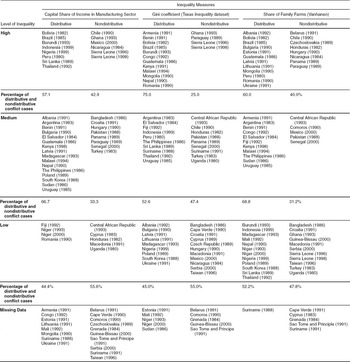
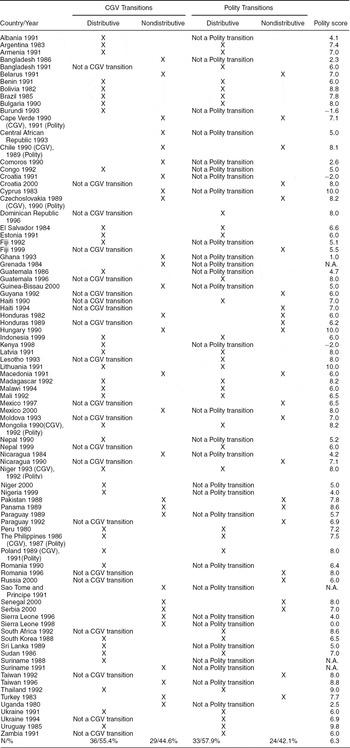
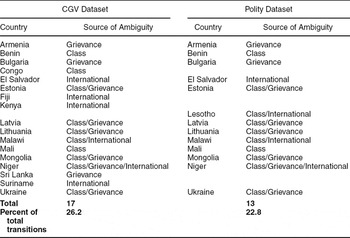
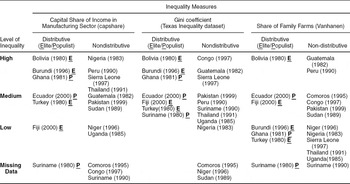
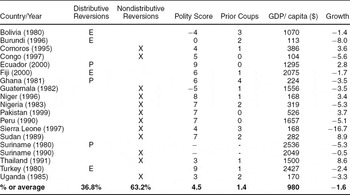




Comments
No Comments have been published for this article.