1. Introduction
Fractures are a key factor for highly productive shale-gas reservoirs, and the occurrence of fractures is vital for shale-gas reservoirs with low porosity and low permeability (Nelson, Reference Nelson1985; Curtis, Reference Curtis2002; Hill & Nelson, Reference Hill and Nelson2000a ). Natural and artificial fractures and nanoscale pores in shale can produce a large number of fracture systems (Sun et al. Reference Sun, Lu, Shu and Liu2008), and the entire system may become an effective reservoir with shale gas aggregation (Montgomery et al. Reference Montgomery, Jarvie, Bowker and Pollastro2005; Bowker, Reference Bowker2007). The characteristics of fracture development, including the main controlling factors and their effects on the hydrocarbon content in upper Palaeozoic marine shale-gas reservoirs, have been extensively researched at home and abroad (Nie, Tang & Bian, Reference Nie, Tang and Bian2009; Wang, Wang & Huang, Reference Wang, Wang and Huang2009; Long et al. Reference Long, Zhang, Tang, Nie, Liu, Hang and Zhu2011; Wu et al. Reference Wu, Ding, Zhang, Li, Zhao and Hu2011; Ding et al. Reference Ding, Li, Li, Xu, Jiu and Zeng2012a , Reference Ding, Li, Li, Xu, Jiu, Zeng and Wu2012, Reference Ding, Zhu, Cai, Gong and Chen2013; Jiu et al. Reference Jiu, Ding, Huang, Zhang and Zeng2012a , Reference Jiu, Ding, Huang, Zhang, Zhao and Hu b ; Zeng et al. Reference Zeng, Ding, Zhang, Zhang, Guo, Jiu and Li2013a , Reference Zeng, Ding, Zhang, Zhang, Guo, Jiu and Li b ). Important advances have been made in theoretical and technical methods, including determining the types and origins of shale fractures, performing qualitative and quantitative identifications and performing fracture parameter characterizations and fracture distribution predictions. The extent of natural fracture development has been recognized to not only directly affect exploration efficiency but also determine the quality and yield of shale-gas reservoirs (Decker, Coates & Wicks, Reference Decker, Coates and Wicks1992; Hill & Nelson, Reference Hill and Nelson2000b ; Hill, Lombardi & Martin, Reference Hill, Lombardi and Martin2004). For recoverable reserves, the formation of induced fractures and the generation of hydraulic fractures are controlled by fracture occurrence and density, various combination features and the opening degree within the shale reservoir beds (Zhou et al. Reference Zhou, Chen, Jin and Zhang2008; Beugelsdijk, de Pater & Sato, Reference Beugelsdijk, de Pater and Sato2000; Chen, Reference Chen2013). However, studies of fractures in continental shale reservoirs are relatively rare (Yin et al. Reference Yin, Li, Ci and Chen2002; Ding, Zhang & Li, Reference Ding, Zhang and Li2003; Jiu et al. Reference Jiu, Ding, Huang and Li2010; He, Liu & Wang, Reference He, Liu and Wang2011; Jiu et al. Reference Jiu, Ding, Huang, You, Zhang and Zeng2013a , Reference Jiu, Ding, Huang, Zhang and Zeng b ) because continental shale gas has not yet achieved significant breakthroughs and few drilling works have been completed.
In terms of mineralogy, the quartz content in marine gas-producing shale is high, although idiomorphic quartz is scarce. The primary quartz content is mainly of biogenic origin, and is frequently found in quantities greater than 50%. The amount of clay minerals is relatively low and mainly consists of illite, which frequently accounts for less than 40% of the content. The quartz content in continental shale is low, although idiomorphic quartz is abundant. The primary quartz content is mainly terrestrially transported, and its content is c. 21–35%. The amount of clay minerals is relatively high and mainly consists of an illite-smectite mixed-layer clay, which accounts for 40–60% of the content. The brittleness of marine shale is high, so structural fractures form easily under relevant tectonic stress. The total organic carbon (TOC) of marine shale is high and its thermal evolution stage is highly mature, which favours organic pores and fractures. Tectonic fractures are the main fractures found in continental shale, and they mainly include diagenetic fractures and interlayer seams. The TOC of continental shale is low and its thermal evolution stage is mature, which does not favour organic pores and fractures.
Commercial oil and gas flows and hydrocarbon shows have been found in 24 vertical and horizontal shale-gas drilled wells after fracturing in continental black shale (i.e. the Upper Triassic Yanchang Formation in the SE Ordos Basin). Fractures play a significant role in single wells drilled during early high-yield periods. Compared with the major shale-gas-bearing basins in the United States and the Palaeozoic marine black shale of South China, tectonic activity is relatively weak in the SE Ordos Basin and faults and folds have not developed. The organic-rich shale in the Upper Triassic Yanchang Formation represents a typical continental lacustrine basin deposition within a craton depression. The continental shale in the Yanchang Formation has a significantly different mineral composition from that of the Palaeozoic marine shale in the United States and South China and the Mesozoic continental shale in other basins, and it also has unique characteristics and dominant factors in relation to fracture development. Research results related to shale outcrops, shale-gas drilling, logging, drilling cores, polished sections, scanning electron microscopy and shale sample test data have therefore been utilized here, along with basic evaluation theory and fractured oil and gas reservoir methods, to identify the characteristics and main controlling factors of fracture development in the continental black shale-gas reservoirs of the representative Yanchang Formation in the Ordos Basin (residual cratonic basins). These results are of important theoretical and practical significance in the enrichment of geological theory and the development of shale-gas exploitation with respect to continental shale gas throughout the world.
2. Geological setting
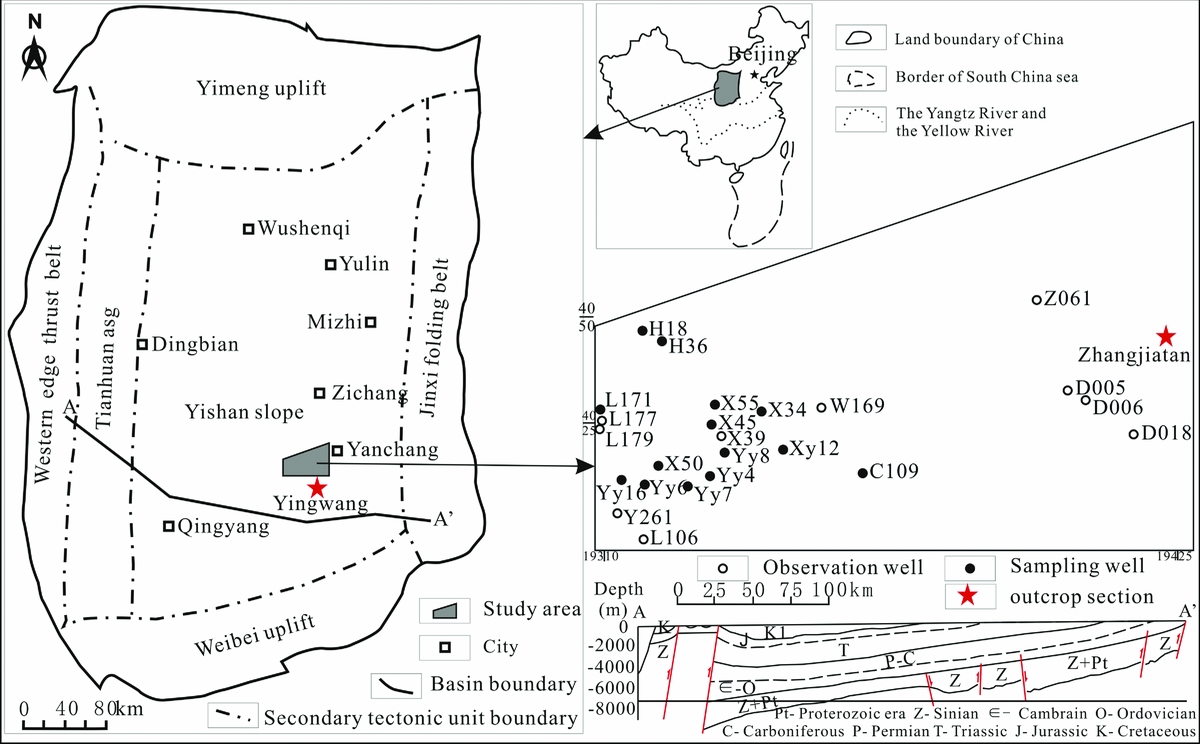
The Ordos Basin is located in the central part of the North China Plate which is bounded by Yinshan, Daqingshan and Langshan mountains to the north, the Qinling Mountains to the south, the Helan Mountains and Liupan Mountains to the west and the Luliang Mountains to the east. With a total area of c. 37 × 104 km2, the basin is a large asymmetric syncline with a broad gently dipping eastern limb and a narrow steeply dipping western limb; the Tianhuan Sag forms the axis. Tectonically, the basin can be subdivided into six substructures: the Weibei Uplift in the south; the Yimeng Uplift in the north; the Jinxi Fold Belt in the east; the Tianhuan Sag and Western Edge Thrust Belt in the west; and the Yishan Slope in the central region, which covers the greatest area of the basin. The internal structure of the basin is relatively simple with an undeveloped fault and gently sloped strata with a dip angle of generally less than 1° (Fig. 1).
Location of the study area, distribution of sampling wells and cross-sectional view of the regional tectonics.

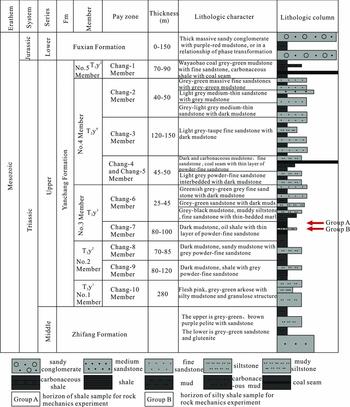
The study area is located SE of the Yishan slope. Mesozoic continental sedimentary stratigraphic development is observed where the Upper Triassic Yanchang Formation occurs as a set of terrigenous clastic deposits, which mainly formed in rivers and lakes during the peak of lacustrine basin development. The main oil-bearing strata in the basin can be divided into 10 members from top to bottom, that is, the Chang 1 – Chang 10 members. A set of continental black shale occurs in the middle and bottom of the Chang 7 member and the top of the Chang 9 member (Fig. 2). These members exhibit a strong potential for shale-gas exploration and development because of their stable distribution, large thickness, high organic matter content, moderate maturity and shallow burial depth. In previous drilling processes, gas logging anomalies were commonly registered in the black shale of the Chang 7 and Chang 9 members; in particular, vertical fracturing in more than 10 shale-gas drilling wells recently yielded various degrees of oil and gas flows. The Chang 7 and Chang 9 members are therefore the key units for shale-gas exploration and development in the Ordos Basin and the study area.
Column diagram of the Triassic continental sedimentary stratigraphy in the study area and the sampling sites of gas-bearing black shale.

3. Experimental methods
This fracture study is based on several types of data: fine-scale observations and descriptions of cores that were collected at 430 m depth within 24 shale-gas drilling wells in the study area; detailed statistical analyses of the characteristic parameters of macro- and micro-fractures; analyses and tests of corresponding fracture section samples; and fracture section identification through normal logging. We collected a total of 41 shale samples from the Chang 7 member and 11 shale samples from the Chang 9 member, which were used to generate 2 cm × 2 cm cast-thin sections from the cores of 13 shale-gas drilling wells. We also measured the TOC contents of each sample and applied the results of the X-ray diffraction of whole rocks and the analysis of clay minerals. The TOC contents were determined using the CS-200 carbon and sulphur analyser at the experimental centre in the Department of Geochemistry, Yangtze University, China and the tests were conducted according to the national standard GB/T19145–2003 (Determination of TOC in Sedimentary Rocks). The testing temperature, humidity and analysis time were 25°C, 45 seconds and 60%, respectively, and the analysis accuracy was 2 ppm. The X-ray diffraction of whole rocks and the analysis of clay minerals were performed with the PANalytical X’Pert PRO MPD X-ray diffractometer at the Beijing Research Institute of Uranium Geology at the China National Nuclear Corporation (CNNC) according to the standard tests and methods of the oil and natural gas industry of the People's Republic of China (i.e. SY/T6201–1996, Quantitative Analysis Methods of Total Clay Mineral Content and X-ray Diffraction of Common Clay Minerals in Sedimentary Rocks; and SY/T5163–1995, X-ray Diffraction Analysis Methods of Relative Clay Mineral Content in Sedimentary Rocks). The samples that were used to test the rock mechanical properties included two groups of black shale and silty shale samples that were collected from the cores of 13 shale-gas drilling wells, with 11 samples in each group for a total of 22 samples. Each sample was prepared as a cylinder with a 2.5 cm diameter and 5 cm height, a top–bottom surface parallelism error of less than 5 μm, a perpendicularity error of less than 0.1° and a surface finish of at least grade 5 (3.2 μm). The rock mechanical property experiments were performed at the State Key Laboratory of Rock Mechanics, Institute of Civil and Environmental Engineering at Beijing University of Science and Technology. The tests mainly included a rock splitting tensile test and uniaxial compression and deformation tests. A WEP-600 microcomputer-controlled, on-screen universal testing machine was used with a 30-ton pressure sensor that was controlled by the 7V14 program. A TYS-500 rock triaxial testing machine was used for the triaxial rock compression and deformation analyses at confining pressure levels of 0, 5, 10, 15 and 20 MPa, and these tests were implemented according to the industry standard of the People's Republic of China: Code for Rock Tests of Hydroelectric and Water Conservancy Engineering (SL264–2001). The main rock mechanical parameters included the rock density, elastic modulus, Poisson's ratio, tensile strength, compressive strength and shear strength parameters such as the cohesive strength and internal friction angle.
4. Results and discussion
4.a. Sedimentary environment and rock characteristics
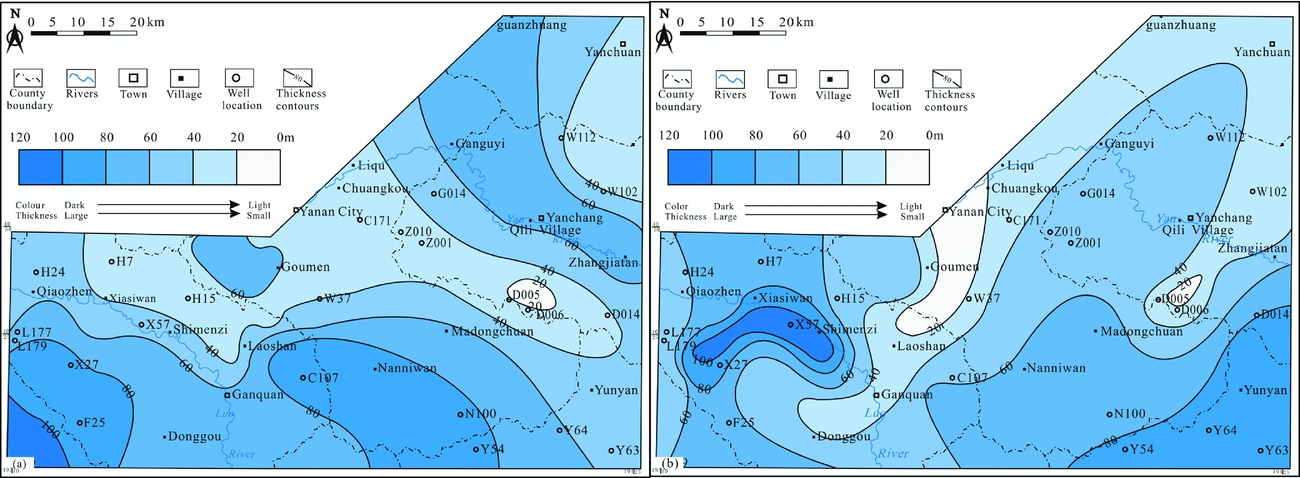
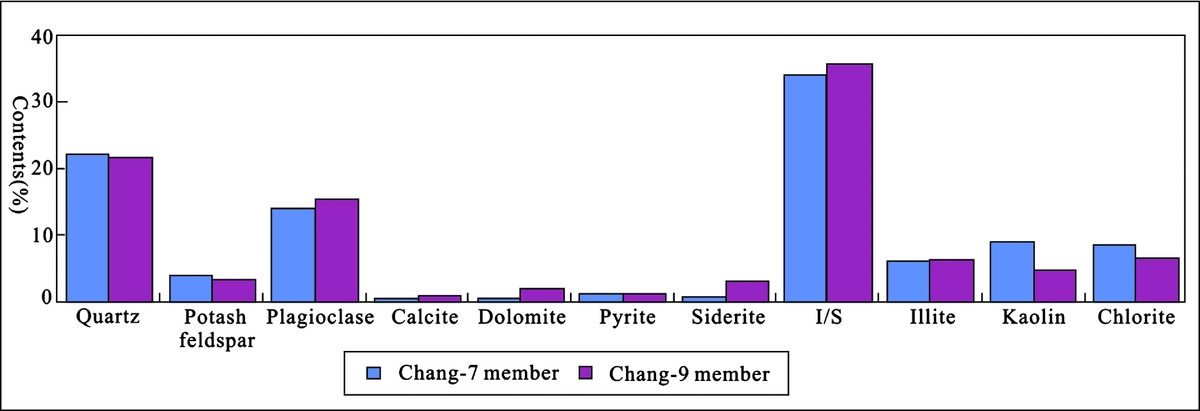
The black shale from the Chang 7 member in the Upper Triassic Yanchang Formation in the study area is 40–110 m thick and has an average thickness of 80 m (Fig. 3a). The shale mainly occurs as deep-lake to semi-deep-lake deposits and shallow-shore lacustrine deposits (Tian et al. Reference Tian, Shi, Song, Wu, Gao and Zou2009). The black shale in the Chang 9 member is relatively thin and ranges from 30 m to 95 m thick (average of 55 m) (Fig. 3b), and mainly developed in a near-shore and shallow-lake environment with the minor presence of a semi-deep-lake environment. The lithology primarily consists of black oil shale and grey-black shale. Oil shale is an organic-rich sedimentary rock with a small particle size and mainly consists of kerogen, from which liquid hydrocarbon can be extracted. Oil shale is of high purity, uniform colour and high brittleness, and easily stains skin. Oil shale occurs as sheets with bedding planes that are easily peeled and have a clean seam surface; complete plant fossils or fragments are commonly observed with occasional pyrite enrichment. Grey-black shale is organic-rich shale with scattered pyrite and siderite and noticeable lamellae. This shale is frequently present as massive structures with smooth fractures, and its water absorption is relatively poor. The analysis results from the thin-sections indicate that the terrigenous debris content is generally less than 40% in the black shale, with argillaceous and carbonaceous materials accounting for 52–96% and 1–30%, respectively. The samples with the highest carbonaceous contents are mainly carbonaceous shale, and certain samples also contain a relatively small amount (generally less than 4%) of biological debris, pyrite, calcite or dolomite. The X-ray diffraction analyses of 33 samples indicate that small differences occurred in the mineral composition and contents of the black shale from the Chang 7 and Chang 9 members, which are mainly composed of clay minerals, quartz and plagioclase. The average clay, quartz and plagioclase contents of the Chang 7 member are 57.6%, 22.1% and 13.9%, respectively, whereas the average clay, quartz and plagioclase contents of the Chang 9 member are 52.9%, 21.6% and 15.3% (Fig. 4), respectively. Both members also have a minor amount of feldspar, siderite, pyrite and carbonate minerals. The clay minerals mainly have a mixed-layer illite-smectite (I/S) content that accounts for more than 58% of the total clay minerals.
Thickness distribution of the black shale reservoirs in the (a) Chang 7 and (b) Chang 9 members within the Upper Triassic Yanchang Formation.

Histogram of the relative mineral contents of the Chang 7 and Chang 9 members within the black shale from the Upper Triassic Yanchang Formation.

4.b. Characteristics of fracture development
4.b.1. Developmental characteristics of the outcrop joints (fractures)
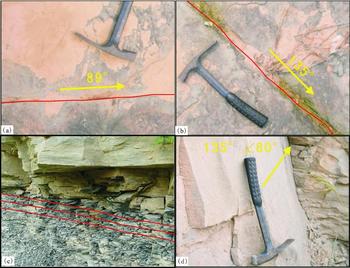
Observations of the cross-sections of the shale field outcrops from the Upper Triassic Yanchang Formation at two locations (Zhangjiatan and Yingwang) in the study area indicated that a large set of black mud shales with stable thickness developed in the Chang 7 member in the Yanchang Formation; this set exhibits horizontal rock formations and wide extensions. The Yanchang Formation developed two groups of fracture (joint) systems: a NW–SE-trending system and near-E–W-trending system (Fig. 5a, b). Thick sandstone mainly developed vertical or high-dip-angle tectonic fracture (joint) systems; low-dip-angle and horizontal fractures were not present. Shale mainly developed low-dip-angle and horizontal fractures, especially in the black shale of the Chang 7 and Chang 9 members where bedding seams occurred (Fig. 5c, d).
Cross-sectional images of the outcrop fractures in the Upper Triassic Yanchang Formation.

4.b.2. Fracture types and development characteristics in shale cores
Different types of fracture classification methods are used to examine the fracture mechanical properties, geological origins, occurrences (trend and dip angle), geometric shapes, sizes (scale), filling degrees and imaging logging (FMI) response characteristics, with the mechanical properties, geological origins and occurrences the most widely studied. The shale fractures can be divided into structural fractures and non-structural fractures, and 12 subtypes have been determined based on geological origin (Ding et al. Reference Ding, Xu, Jiu, Li, Zeng and Wu2011). In addition, variations may occur in the characteristics and formation mechanisms of the different types of fractures.
The formation mechanisms and different characteristics of fractures – including multiple tectonic and non-tectonic fractures such as high-dip-angle shear fractures, tension and shear fractures, low-dip-angle slippage fractures, nearly horizontal diagenetic fractures, bedding seams (also known as foliation seams), interlayer fractures and abnormal pressure seams – have been analysed and identified according to careful observations and descriptions of the fracture characteristics of the Yanchang Formation's black shale in 24 shale-gas drilling wells. These include a total of 570 m of cores in the study area, as well as regional sedimentary and tectonic background observations (Ding et al. Reference Ding, Xu, Jiu, Li, Zeng and Wu2011). The horizontal bedding seams are highly developed, whereas the high-dip-angle tectonic fractures are less developed. The main fracture types and characteristics are described as follows.
-
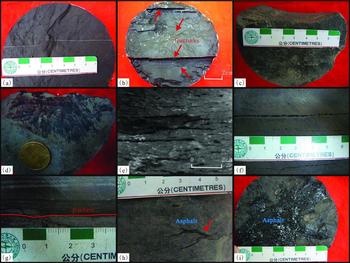
1. Shear fractures are formed under brittle deformation conditions, which are caused by local regional stress in shale beds that are rich in brittle mineral. Shear fractures that mainly occur as vertical fractures or high-dip-angle tectonic fractures extend along straight-seam surfaces and frequently possess a specific grouping, formation and directivity. The majority of shear fractures are not well filled, and certain fractures are filled with calcite (Fig. 6a, b).
-
2. Tension and shear fractures do not have flat-seam surfaces, the variations in their dip angles and opening degrees are large, and they mainly occur as open seams (Fig. 6c).
-
3. Low-dip-angle tectonic slippage fractures are mainly produced by bedding-slip shear stress under tectonic extension or compression (Zeng & Zheng, Reference Zeng and Zheng1999). Slippage fractures are the most common fracture type in plastic thick shale, and they occur roughly parallel to the rock layer. These fractures are mainly distributed in the top and bottom of the shale bed and are most extensively developed near sandstone reservoirs. The dip angle of these fractures is relatively small and generally at a horizontal- or low-dip-angle state, although the inclination varies considerably. Obvious scratches, steps, and flat and smooth mirror features frequently occur on the fracture surfaces (Fig. 6d).
-
4. Nearly horizontal diagenetic fractures develop along micro-surfaces and become intermittent and branching as the micro-surfaces bend, and the lateral connectivity is poor (Fig. 6e).
-
5. Bedding seams are composed of a series of thin shale layers that form under strong hydrodynamic conditions and rupture along the sedimentary bedding (foliation) to form bedding seams under the effects of mechanical compaction and dehydration contraction. As the most common fracture type in shale, bedding seams are present as horizontal fractures in most cases (Fig. 6f). Bedding seams are good reservoirs and the main seepage pathways for shale reservoir fluids, and they can effectively improve the aggregation and percolation capability of reservoirs (He, Liu & Wang, Reference He, Liu and Wang2011).
-
6. Interlayer seams are associated with sheet-like detritus or parting lineations between layers or fine layers, and are formed in weak zones at the junction of different lithologies. Interlayer seams are caused by the stress released from load reductions that have a certain degree of tension fracture characteristics, and they contribute to the higher porosity and permeability of reservoirs. The majority of interlayer seams are horizontal (Fig. 6g).
-
7. Abnormal pressure seams are also called overpressure seams, and these fractures are caused by shale under-compaction because of rapid sedimentation or abnormally high fluid pressure from transformation dehydration or hydrocarbon generation or clay mineral hydrothermal pressurization in a closed state (Ding, Zhang & Li, Reference Ding, Zhang and Li2003). The shape of the abnormal pressure seams in the study area is not regular, and variations in the fracture width are large with seams frequently filled with asphalt (Fig. 6h, i).
Images of fractures in the black shale cores from the Chang 7 and Chang 9 members within the Upper Triassic Yanchang Formation. (a) Well Yy7, 1143.71 m; Chang 7 member; black shale with vertical shear tectonic fractures that are filled by calcite. (b) Well Yy4, 1371.62 m; Chang 7 member; black oil shale with a group of parallel shear tectonic fractures. (c) Well C109, 868.60 m; Chang 7 segment; silty shale with tension fractures. (d) Well Yy6, 1532.93 m; Chang 9 member; black shale with slippage fractures and scratches and mirror features. (e) Well Xy12, 1338.43 m; Chang 7 member; black shale with nearly horizontal diagenetic fractures. (f) Well Yy7, 1358.7 m; Chang 7 member; black shale with bedding seams. (g) Well Yy7, 1401.55 m; Chang 7 member; black shale with sandstone and interlayer seams that are filled by carbonaceous materials. (h) Well X36, 1376.40 m; Chang 7 member; black shale with abnormal pressure seams that are filled by asphalt. (i) Well H36l, 1376.40 m; Chang 7 member; black shale with abnormal pressure seams and asphalt that is visible on the fracture surface.

4.b.3. Characteristic parameters of shale macro-fractures
The statistical analysis of the fracture parameters of cores from 24 shale-gas drilling wells in the Upper Triassic Yanchang Formation indicates that the fractures in the shale cores are dominated by bedding seams, which have an occurrence frequency of 94.2%. The typical fracture length is 10–12 cm, which corresponds to a moderate length (for a core diameter of 10–12 cm). The opening degree (width) of the fractures is mainly within the ranges of 0–0.2 mm and 0.2–0.4 mm. The dip angles mainly correspond to horizontal fractures (0°) and high-dip-angle tectonic fractures or vertical fractures (70–90°). Open seams without filling are predominant at 97.6% and a small number of fractures are filled by calcite, asphalt or carbon.
4.b.4. Characteristics of micro-fracture development
Micro-fractures play an important role in improving the aggregation and percolation capability of shale reservoirs with low matrix porosity. Micro-fractures can increase the specific surface area and reservoir space, which improves the free gas and absorbed gas content and provides effective filtration pathways to improve the effective porosity and permeability of reservoirs. Identifying the development law of micro-fractures is therefore an important subject in comprehensive shale-gas research.
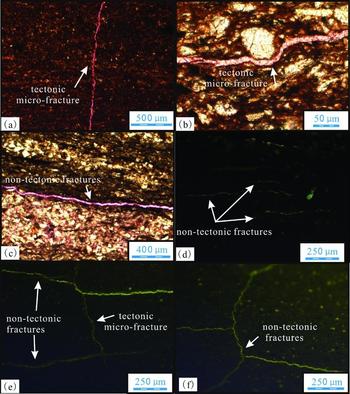
Micro-fractures can be divided into two types according to their geological origin: tectonic and non-tectonic micro-fractures. The shale from the Yanchang Formation in the study area is dominated by non-tectonic micro-fractures. Tectonic micro-fractures are produced by tectonic stress which generally occurs at a high-dip angle or perpendicular to the bedding plane (Fig. 7a); they can also develop by cutting through or bypassing brittle mineral particles (Fig. 7b). Non-tectonic micro-fractures mainly develop in bands of organic matter or along the edge (Fig. 7c) parallel to, or essentially parallel to, the bedding plane. These micro-fractures frequently occur in groups (Fig. 7d) and can connect to high-dip-angle tectonic micro-fractures to form extensive fracture networks (Fig. 7e), thereby forming the primary pathways and aggregation spaces for oil and gas migration. The extent of micro-fracture development is related to the content and distribution of organic matter (Slatt & O’Brien, Reference Slatt and O’Brien2011). In addition, micro-fractures that are related to diagenesis or abnormal pressure and have radial or otherwise irregular shapes are observed (Fig. 7f).
Images that characterize the micro-fractures that occur in the black shale in the Upper Triassic Yanchang Formation. (a) Well D005, 688.92 m; Chang 7 member; cast-thin section; single polarization; 50×; tectonic micro-fracture; (b) well W169, 1108.3 m; Chang 9 member; cast-thin section; single polarization; 200×; tectonic micro-fracture; (c) well D005, 678.12 m; Chang 7 member; cast-thin section; single polarization; 50×; micro-fractures that developed along the edges of organic matter bands; (d) well D018, 536.46 m; Chang 7 member; polished section; blue fluorescence; 50×; micro-fractures that developed within organic matter bands; (e) well D018, 517.7 m; Chang 7 member; polished section; blue fluorescence; 50×; tectonic fractures that connect with non-tectonic fractures; and (f) well D018, 532.5 m; Chang 7 member; polished section; blue fluorescence; 100×; micro-fractures that are associated with diagenesis or abnormal pressure.

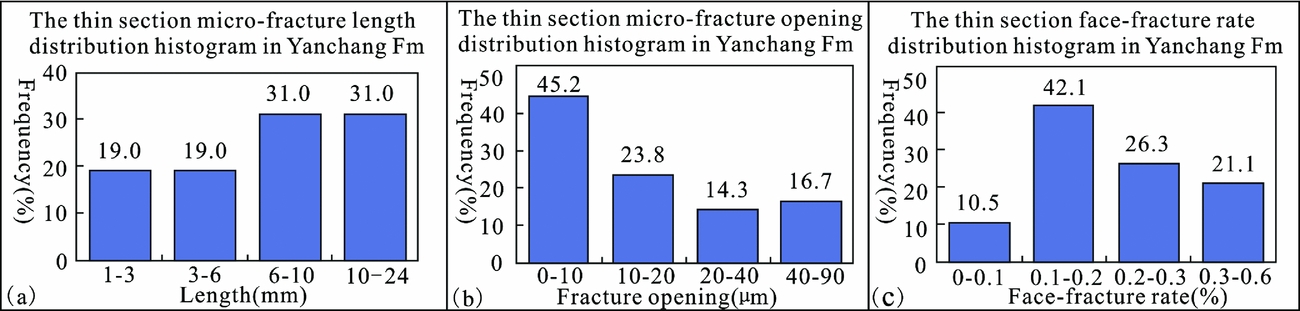
The statistical analysis of the micro-fracture parameters of cast-thin sections and polished sections indicate that the length of the micro-fractures in the black shale from the Upper Triassic Yanchang Formation falls within the range 1.14–24 mm (average 8.9 mm), with the majority of these fractures having lengths of 6–24 mm (Fig. 8a). The opening degree falls within the range 1.8–81 μm (average 19.9 μm), with the majority (69%) of these fractures having openings of 0–20 μm (Fig. 8b). The surface fracture rate of the thin-sections, or the ratio between the area of unfilled fractures and the total area of the thin-sections, is generally 0.1–0.3% (Fig. 8c), and a higher surface fracture rate corresponds to greater fracture development.
Statistical analysis of the characteristic parameters of the micro-fractures within the black shale of the Upper Triassic Yanchang Formation.

4.b.5. Origin and formation period of the fractures
4.b.5.a. Origin analysis of shale fractures
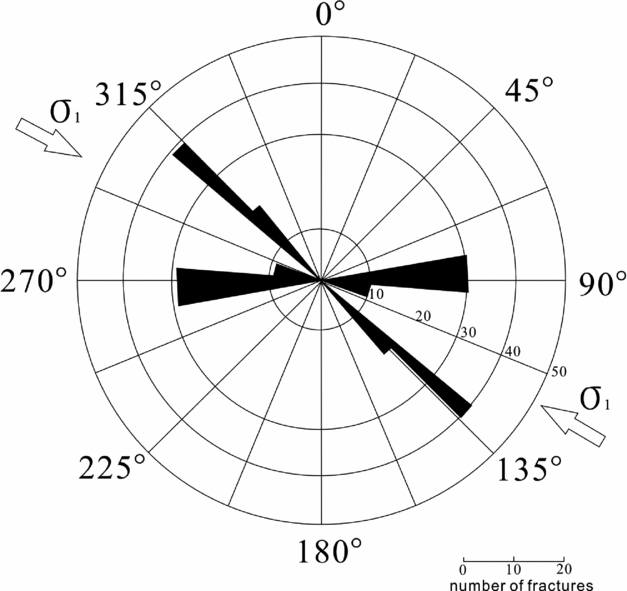
Observations of the cross-sections of the shale outcrops from the Upper Triassic Yanchang Formation at two study area locations, Zhangjiatan and Yingwang, indicate that the Yanchang Formation developed two groups of fracture (joint) systems: a NW–SE-trending system and near-E–W-trending system. In addition, the Yanchang Formation also developed two groups of NW–SE-trending and near-E–W-trending systems (Fig. 9). This finding is based on the occurrence of 70 fractures from 570 m of drilling cores from 24 shale gas wells in the Chang 7 and Chang 9 members in the Yanchang Formation and natural fractures to the SW of the study area that have been interpreted by imaging logging (FMI).
Fracture strike statistics and principal stress directions of the Chang 7 member and Chang 9 member within the Upper Triassic Yanchang Formation.

The fractured reservoir in the Upper Triassic Yanchang Formation is considered to be primarily tectonic and has characteristics of regional fractures according to: the distribution characteristics, scale, occurrence, character, shape, filling and other geological factors of the Yanchang Formation's outcrops in the Ordos Basin; macro-cracks in the drilling cores and micro-fractures in the slices; analyses of the geological background of the basin; and experimental results of the high-temperature and high-pressure triaxial rock mechanics. Regional fractures are fracture systems that are widely developed in strata with relatively limited deformations or gentle deformations with relatively small azimuth changes, no obvious faulting in the fracture surface and a perpendicular orientation to the strata. The distribution of regional fractures is related to the regional stress field which is regularly distributed over a large scale, widely developed and extended, and relatively stable.
According to the development and distribution characteristics of the fractures in the cores and outcrops of the Yanchang Formation in the Ordos Basin, the fractures in the formation's shale reservoirs are mainly vertical joints or high-angle cracks that intersect vertically or at a high angle at bedding planes (Fig. 5d). In addition, these joints or cracks may cross or bypass brittle mineral grains (Fig. 7a), are stable, extend straight and smooth along the fracture surface, have a certain directivity and are relatively lightly filled (Fig. 6a, b). Low-dip-angle tectonic slippage fractures are another type of structural fracture that are parallel to the strata developed in the relatively high ductile shale reservoir in the Upper Triassic Yanchang Formation; they are mainly distributed at the top and bottom of the layer and most extensively developed near sandstone reservoirs. The dip angle of these fractures is relatively small and generally at a horizontal- or low-dip-angle state, although the inclination varies considerably. Frequently, obvious scratches, steps, and flat and smooth mirror features occur on the fracture surfaces (Fig. 6d). This type of low-dip-angle tectonic slippage fracture is mainly produced by bedding-slip shear stress under tectonic extension or compression.
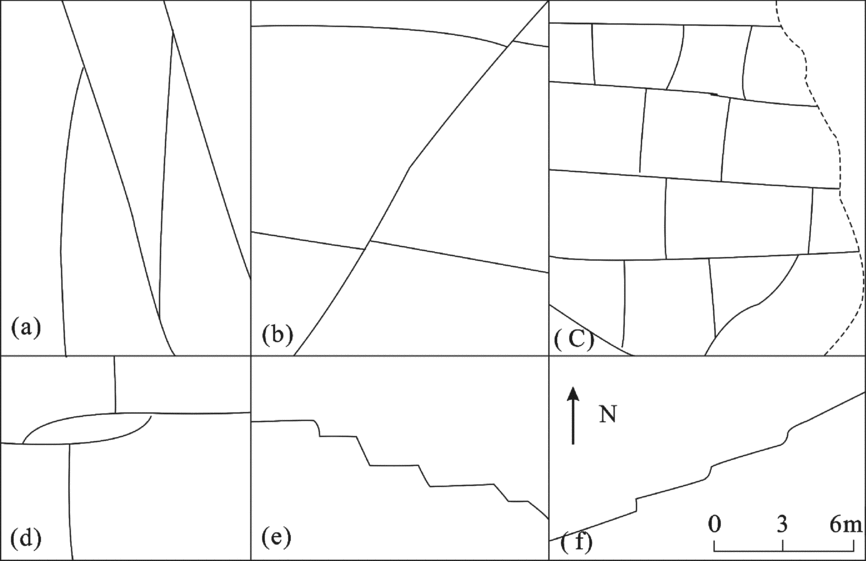
The distribution of fractures in the outcrop area indicates that there are four groups of fractures in the Upper Triassic Yanchang Formation in the Ordos Basin: E–W trending; NW–SE trending; N–S trending; and NE–SW trending. These fractures are much longer than what is observed in the outcrop area. The N–S-trending and NE–SW-trending fractures are limited by the E–W-trending and NW–SE-trending fractures, and end at the fracture surface. Certain N–S-trending fractures are incised by E–W-trending fractures, and certain NE–SW-trending fractures are incised by NW–SE-trending fractures (Fig. 10a, b).
Correlation of different sets of fractures in the Yanchang Formation, Ordos Basin (Zeng et al. Reference Zeng, Li, Shi, Wang, Zhao and Wang2007). (a) NW–SE-trending fractures that restrict N–S-trending fractures; (b) NE–SW-trending fractures that incise E–W-trending fractures; (c) E–W-trending fractures that restrict N–S-trending fractures; (d) the tail end of an E–W-trending fracture; (e) E–W-trending fractures and NW–SE-trending fractures that trace tension fractures; and (f) N–S-trending fractures and NE–SW-trending fractures that trace tension fractures.

E–W-trending fractures also appear in a parallel arrangement in the Yanhe section. Plumose markings or arrest lines are not observed along the fracture surface (Pollard & Aydin, Reference Pollard and Aydin1988), although folding tails, rhombus rings and rhombus bifurcation phenomena are present (Fig. 10d). Traces of E–W-trending, NW–SE-trending, N–S-trending and NE–SW-trending fractures appear as tension fissures (Fig. 10e, f). Two groups of conjugate shear fractures have therefore developed: E–W- and NW–SE-trending fractures; and N–S- and NE–SW-trending fractures. These fractures are formed by two different stresses: WNW–ESE-trending, early-stage horizontal compression; and NNE–SSE-trending, late-stage horizontal compression, the weaker of the two (Fig. 9). The direction and strength of the stress in these two stages are consistent with the stress field in this area during the Yanshan and Himalayan periods (Zhang, Reference Zhang1996).
The above characteristics indicate that the fractures in the study area are mainly shear fractures that formed under horizontal tectonic compression stress, and the two groups of fractures represent a pair of conjugate shear fractures in the same construction period. The reservoir fractures in the Yanchang Formation in the Ordos Basin therefore belong to tectonic fractures that developed in areas with weak tectonic deformation. The distribution of these types of regional fracture is related to the multiphase structural uplift that was primarily caused by regional horizontal compression stress on the same order as regional tectonic deformation. The development of fractures in different periods and their different orientations are controlled by the anisotropic mechanical properties of the reservoirs in the Yanchang Formation and the environmental stress field. Two groups of conjugate shear fractures occur in the study area, E–W-trending and NW–SE-trending fractures, and they are partly filled or unfilled and have high efficiency. These factors have great theoretical and practical significance for oil and gas exploration through the analysis of the developmental characteristics and major regulating factors of the fractures in the study area.
4.b.5.b. Fracture formation period
Based on the denudation quantities of the five main unconformable Mesozoic strata in the study area, recorded using the basin modelling software IES PetroMod 10.0, we have successfully recovered the ancient burial depth and thickness of the Yanchang Formation and completed a single-well burial history map. The formation depth of the fluid inclusions in the fracture fillings have also been calculated, and the formation period of the fractures has been confirmed according to the palaeogeothermal gradients and homogenization temperature tests of the quartz and calcite fluid inclusions in the fracture fillings from the Yanchang Formation in the SW portion of the study area.
The single-well burial history and palaeotectonic plane are reconstructed to estimate the amount of main unconformable strata denudation and to compact and correct the formation thickness (Ding et al. Reference Ding, Qi, Yun, Yu, Wu, Cao and You2012c ; Jiu et al. Reference Jiu, Ding, Li, Zhang and Zeng2012c ; Wu et al. Reference Wu, Ding, Zhao, Zeng and You2012).
We initially recorded the denudation quantities of the five main unconformable strata of Late Triassic, late Middle Jurassic, Late Jurassic, end Early Cretaceous and Cretaceous age in the Ordos Basin. A number of methods can be used to reconstruct denudation quantities, and many have recently been improved. Additionally, several new methods are currently under development. However, a method that can calculate denudation quantities with absolute accuracy is not currently available because of the complexity of underground geological bodies and limited data. Every method has its limitations and conditions. When reconstructing strata denudation quantities, the appropriate method should be selected according to the sedimentary features and structure of the basin and the available data (Chen et al. Reference Chen, Lou, Chen, Wang and Zhou2006a , Reference Chen, Luo, Chen, Yu and Yang b ; Yuan, Zheng & Tu, Reference Yuan, Zheng and Tu2008; Zhu et al. Reference Zhu, Ding, You, Deng and Bian2013).
Recovering denudation quantities in the study area is difficult because of the lack of seismic data for the entire area and the poor quality of seismic data for surfaces that are covered by loess. However, a number of drilling wells are widely distributed in this area. Well data can therefore be used to recover denudation quantities. In addition, the mudstone compaction trend extrapolation method and geothermic method cannot be applied because of certain preconditions such as residual Cretaceous layer thicknesses, drill wells with well-preserved mudstone formations and systemic geochemical data.
In the same structural layer, stratigraphic layers exhibit similar succession and transmutation features; the upper sedimentary thickness can therefore be estimated according to well-preserved adjoining and underlying layers. Strata should be compared to reconstruct the denudation quantities with adjoining strata that were not denuded at the same layer (or denuded strata for which denudation data can be obtained through other methods). We can obtain the original sedimentary thickness by using this method, and the denudation quantity of these strata can be obtained by subtracting the current remaining thickness from the original sedimentary thickness. The precondition of this method is sedimentation with the same thickness or scale and limited lateral variation prior to denudation; the sedimentation and construction of the study area should however satisfy this precondition. According to this theory, we obtain
 $$\begin{equation*}
\frac{{H_{\rm A} }}{{H_{\rm B} }} = \frac{{H_{\rm a} }}{{H_{\rm b} }} \Rightarrow H_{\rm a} = \frac{{H_{\rm A} }}{{H_{\rm B} }}H_{\rm b}
\end{equation*}$$
where H A, H B and H C are the original thicknesses of the strata and H a, H b and H c are the thicknesses after denudation.
The stratum thickness correlation method is adopted to determine a standard drill well that is not denuded or whose denudation data can still be obtained through other methods. Predecessors have calculated the denudation quantities of Cretaceous depocentres in the basin; these are the least-denuded drill wells and include the Yan 9 well and Huan 40 well in the Tianhuan sink (Chen et al. Reference Chen, Lou, Chen, Wang and Zhou2006a , Reference Chen, Luo, Chen, Yu and Yang2006b ). These two drill wells act as standards. The stratum thickness correlation method has been adopted to calculate the denudation quantity at the end of Early Cretaceous time. Because the data are limited, the denudation quantities during Late Triassic, late Early Jurassic and late Middle Jurassic time are shown as relative denudation quantities; the drill well in the thickest residual stratum is therefore not considered denuded and acts as a standard. The denudation quantities of other wells are calculated through contrast calculations with the standard well. Although the denudation quantity from this method may be underestimated, the effect of the underestimation on recovering the palaeostructure is small and the relative trend is guaranteed. This conclusion is based on previous research results which indicated that a relatively small denudation quantity was caused by the third phase of uplifting events, with the largest no more than 400 m.
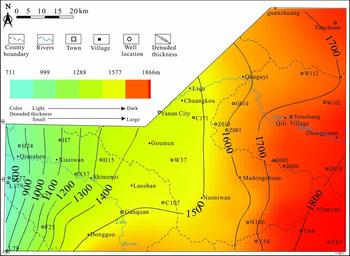
We studied 13 NE hole-linked lines and 10 NW hole-linked lines from a total of 97 drill wells in the research area. We recovered the denudation quantities of the five stages of unconformable strata of Late Triassic, late Middle Jurassic, Late Jurassic, end Early Cretaceous and Cretaceous age. In addition, scattergrams of the denudation quantities of the strata in these five construction periods have been compiled. The first three stages experienced slight uplift with vibration, and the amount of formation denudation was relatively small (c. 20–350 m). The last two periods (late Early Cretaceous – Quaternary) were dominated by continual uplift with relatively large formation denudation (c. 800–1800 m). The results show a gradual increase from west to east (Fig. 11), which indicates continual and uneven uplift and intense tectonic activity in the eastern part of the study area. The uplift in the eastern portion of the study area was larger than that in the western portion.
Distribution of strata denudation quantities during end Early Cretaceous – Quaternary time based on the strata thickness contrast method.

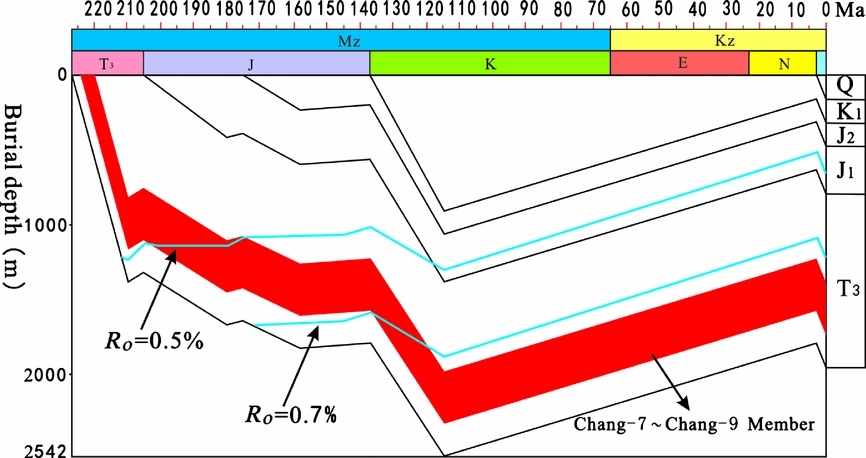
We corrected for the decompaction of the thickness of the strata by adopting Willie's formula to calculate the porosity from interval transit time data from ten wells in the study area and creating a porosity–depth relationship curve, used to correct for decompaction through calculations of the original thickness of the strata. We recovered the well burial history by using China's first continental shale-gas drilling well (L177) in the west of the study area as an example, using the top boundary of the gas-bearing shale formations in the Chang 7 and Chang 9 members of the Yanchang Formation as the reference standard. Characteristics such as the individual layer data, stratigraphic unit ages and formation compaction curves in each sedimentary strata were considered. We successfully recovered the ancient burial depth and thickness of each strata group in this well, and completed a single-well burial history map by recovering the denudation quantities of the main unconformities and by considering the compaction effects of sand and mudstone using IES PetroMod 10.0 (Fig. 12). The maximum burial depth of the Yanchang Formation (c. 2540 m) occurred at the end of Early Cretaceous time along with obvious palaeogeothermal and strata fluid pressure in the region. Two groups of conjugate shear fractures, namely E–W-trending and NW–SE-trending fractures, formed in the Yanchang group from horizontal NW–SE-trending tectonic compression (Fig. 9), a strong tectonic thermal event during Early Cretaceous time (Ren et al. Reference Ren, Zhang, Gao, Cui and Liu2006) and deep burial stress. After late Early Cretaceous time, this region was continuously uplifted and experienced denudation.
Burial history of well L177 in the Yanchang Formation.

Different analyses of palaeogeothermal research methods have shown a rational palaeogeothermal gradient in the Ordos Basin during Mesozoic time that reached 3.5–4.0°C/100 m, which is higher than the current average palaeogeothermal gradient of 2.89°C/100 m (Ren et al. Reference Ren, Zhao, Zhang and Yu1994; Zhao & Behr, Reference Zhao and Behr1996). However, the thermal evolution varies between different Mesozoic layers and across different regions of the basin. A geothermally anomalous area of Late Mesozoic age is located in the southern part of the Ordos Basin, where thermal activity is stronger in the deep lithosphere (Ren et al. Reference Ren, Zhang, Gao, Cui and Liu2006). Our study area, which contains shale fractures in the Upper Triassic Yanchang Formation in the Ordos Basin, is located in the southern part of the Ordos Basin. The upper limit of the palaeogeothermal gradient is set at 4.0°C/100 m here.
According to homogenization temperature tests for the quartz and calcite fluid inclusions in the fracture fillings from the Yanchang Formation in the SW part of the study area (Tian et al. Reference Tian, Shi, Song, Wu, Gao and Zou2009), the homogenization temperature of the fluid inclusions is 80–130°C and the average is 105°C. We therefore calculated the formation depth of the fluid inclusions in the fracture fillings by combining data on the burial history of the formation and temperature measurements of the fluid inclusions and by using the ancient land surface temperature (15°C) and palaeogeothermal gradient (4.0°C/100 m) as standards. The formation depth is c. 1300–1900 m and the corresponding formation time was Late Jurassic – late Early Cretaceous (Fig. 12). The calculated results are consistent with the previous results of similar studies, which support the relatively early formation of fractures in the Yanchang Formation (Zeng & Xiao, Reference Zeng and Xiao1999; Zeng et al. Reference Zeng, Li, Shi, Wang, Zhao and Wang2007).
4.c. Analysis of the dominant factors affecting fracture development
4.c.1. Structural factors
We have demonstrated that the shale fractures in the Yanchang Formation within the research area were mainly formed during Late Jurassic – late Early Cretaceous time because of regional WNW–ESE-trending horizontal compressive stress and a second tectonic-thermal event (Sun et al. Reference Sun, Li, Gong and Liu1997). Our results were based on: the two groups of shear fracture (joint) systems (NW–SE-trending and near-E–W-trending systems); the development characteristics of the diagenetic micro-fractures and abnormal pressure seams in the Upper Triassic Yanchang Formation within the study area; and previous research results related to variations in the tectonic stress field caused by regional tectonic movement, burial and diagenesis in the Ordos Basin (Wang & Zhang, Reference Wang and Zhang1999; Zeng et al. Reference Zeng, Li, Shi, Wang, Zhao and Wang2007). These observations also reveal that the Yanchang Formation reached its deepest burial depth during Late Jurassic – late Early Cretaceous time because of the relatively high palaeogeothermal and formation fluid pressure which developed under the superimposed stress caused by tectonic compression and deep burial effects.
4.c.2. Mineral compositions and contents
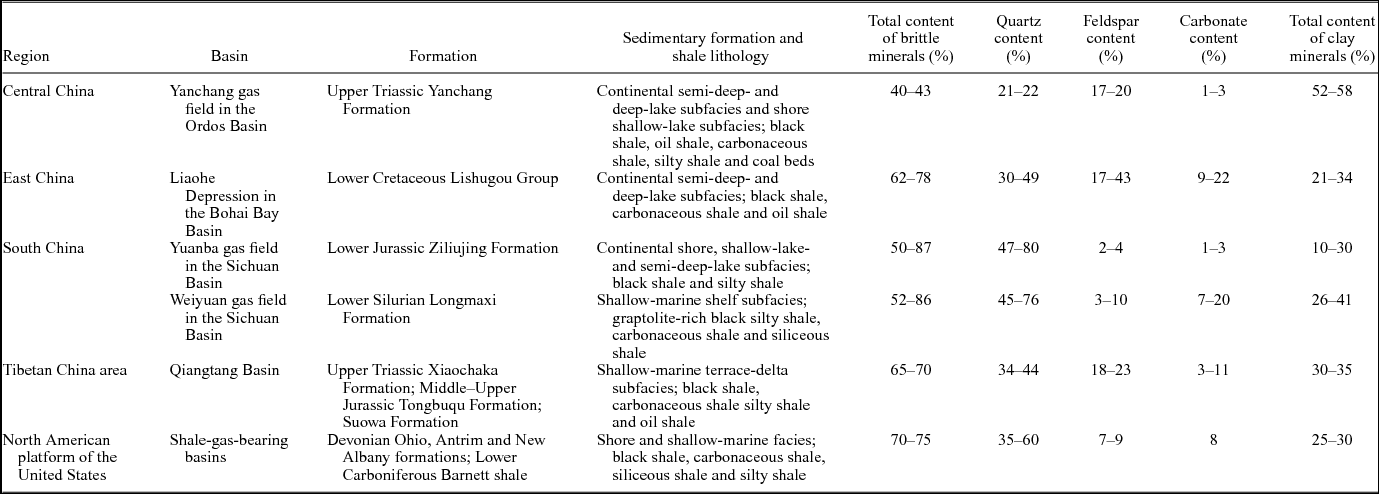
The mineral composition and content of organic-rich shale not only influence the rock mechanical properties in the study area but also directly affect the degree of fracture development. A higher amount of brittle minerals, such as quartz, feldspar, carbonate and pyrite, corresponds to a greater development of fractures. For example, generally high brittle mineral content (average value >60%) and generally low clay mineral content (average value <40%) are observed in the Palaeozoic marine shale in the United States and South China and continental shale in other basins, which also have abundant fractures. However, the continental organic-rich shale of the Upper Triassic Yanchang Formation in the Ordos Basin in Central China is characterized by low brittle mineral content and high clay mineral content (Table 1). The total content of brittle minerals such as quartz and feldspar (mainly plagioclase) is c. 41% here with quartz and feldspar accounting for 22% and 19%, respectively; the carbonate content is also low. The total content of clay minerals is high at up to 52%, and they mainly occur as an I/S mixed layer which accounts for >58% of the total clay mineral content. Through an in-depth analysis of the influence of the unique mineral composition of the continental shale in the Yanchang Formation on fracture development, we can draw the following conclusions.
Comparison of the mineral compositions of Mesozoic continental shale in the Ordos Basin and gas-bearing shale in other basins.

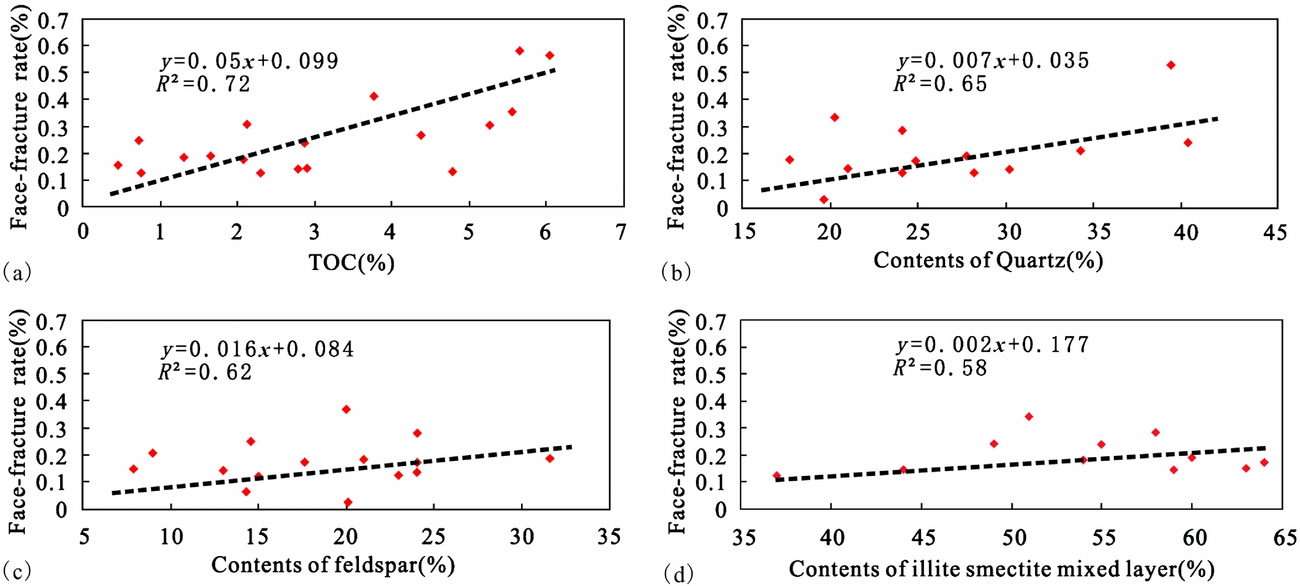
First, the influence of low brittle mineral content on the development of fractures in shale is mainly reflected in differences in the degree of tectonic or micro-fracture development. For the Ordos Basin, which experienced weak tectonic activity and has undeveloped faults and folds, the proportion of tectonic fractures is relatively small and the proportion of non-tectonic fractures is large. Although the brittle mineral content in the shale reservoirs from the Yanchang Formation is much lower than that of the Palaeozoic marine shale in the United States and South China and the Mesozoic continental shale in other basins, the brittle mineral content does not have a substantial influence on the overall degree of development and distribution of fractures in the study area. Second, the degree of fracture development in the black shale of the Yanchang Formation is correlated with the mineral content. The surface fracture rate of thin-sections in the study area has a moderate positive correlation with the quartz content (Fig. 13b) and a weak positive correlation with the feldspar content (Fig. 13c). The clay mineral composition also has a certain influence on the development of micro-fractures; a higher content of mixed-layer I/S corresponds to the greater development of micro-fractures (Fig. 13d).
Relationship between the face fracture rates of thin-sections and the TOC-mineral contents in the black shale from the Yanchang Formation.

4.c.3. Abundance of organic matter
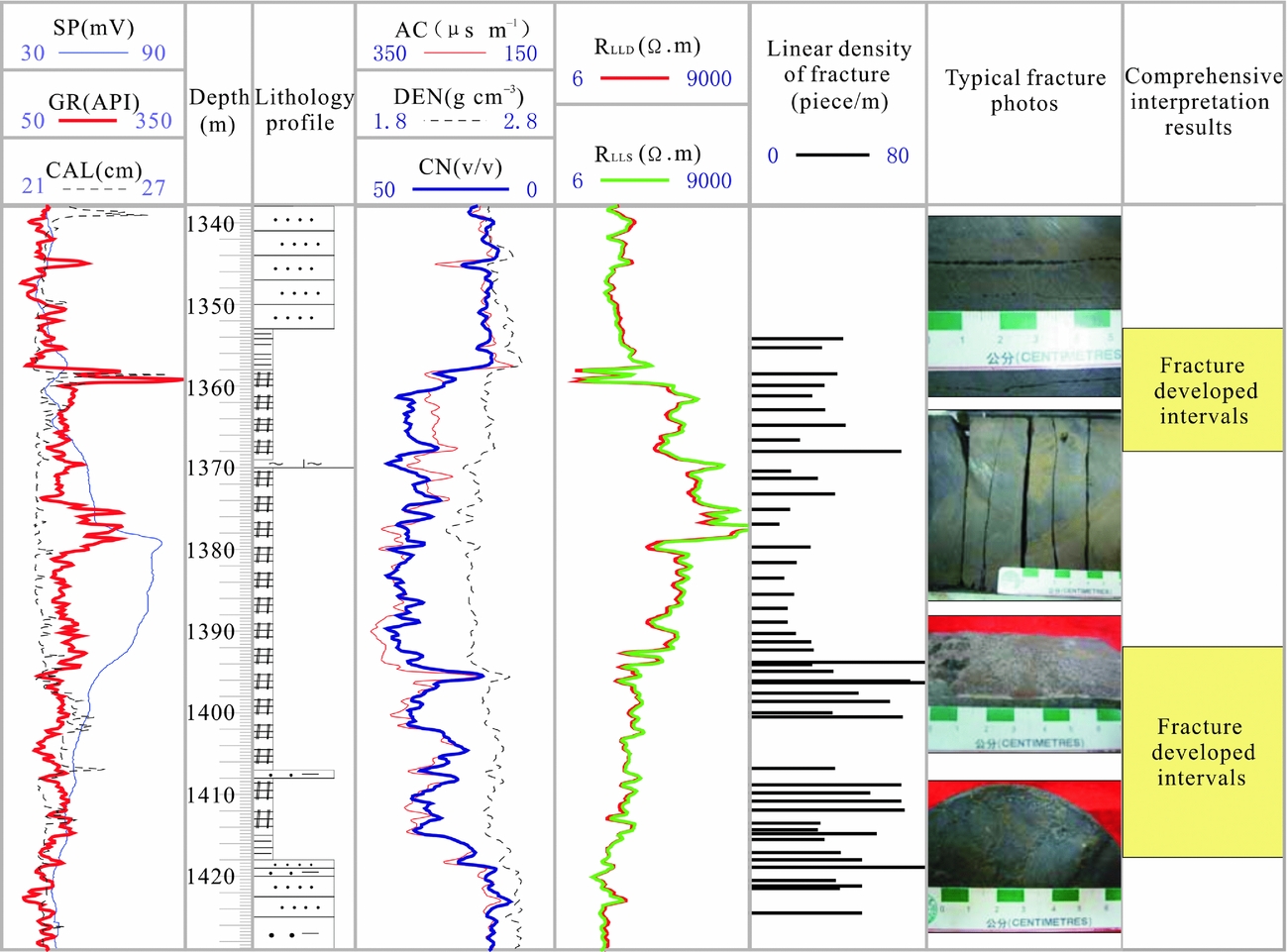
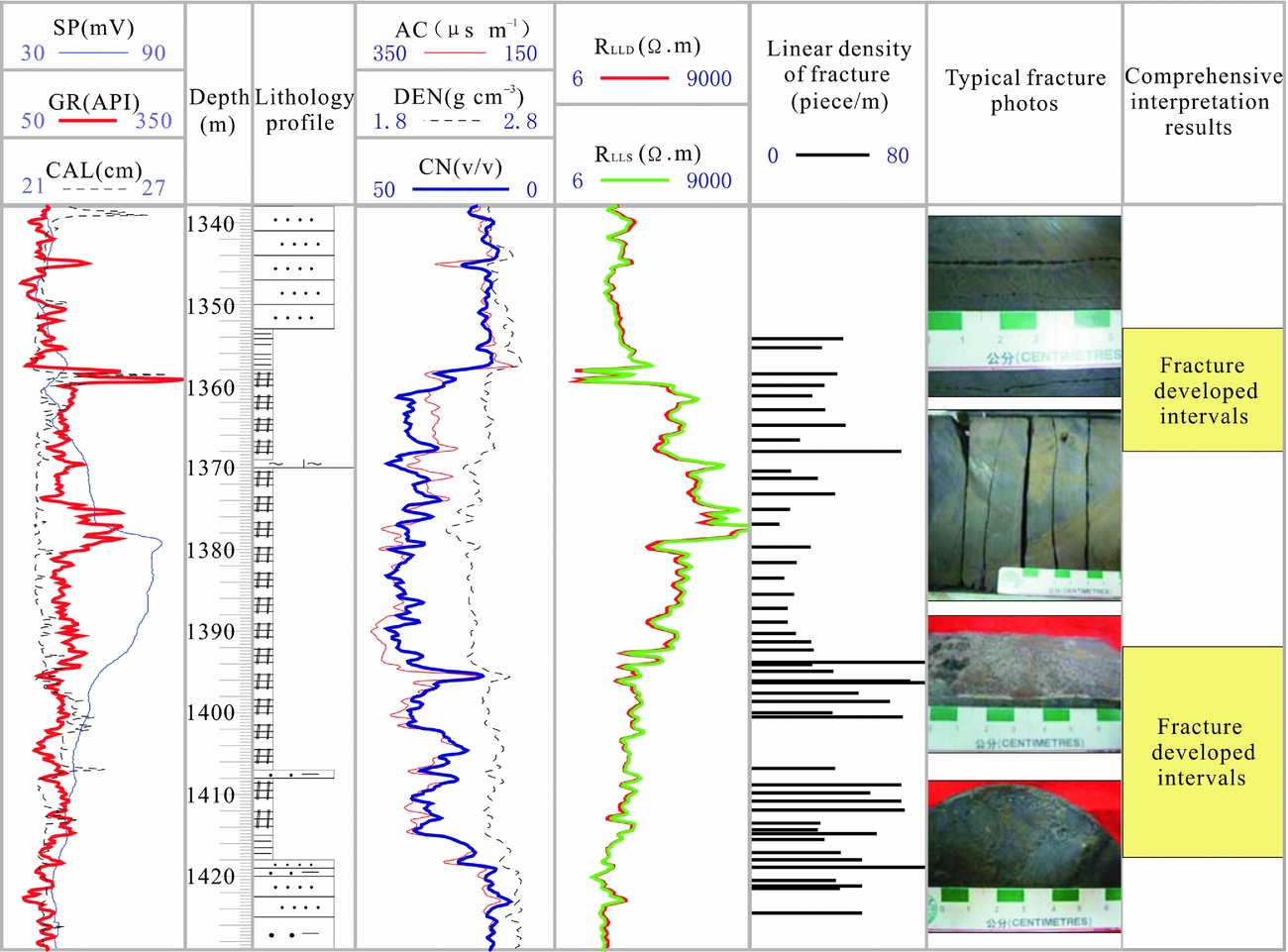
The abundance of organic matter is an important factor that influences the degree of fracture development in black shale (Hill et al. Reference Hill, Lombardi and Martin2004). Jarvie et al. (Reference Jarvie, Hill, Pollastro, Wavrek, Claxton and Tobey2003) experimentally demonstrated that when shale consumes 35% of the organic carbon during the hydrocarbon evolution process the shale porosity increases by 4.9%, indicating that a higher organic carbon content corresponds to a greater number of micro-fractures and a higher level of micro-porosity produced during the hydrocarbon evolution process (Jarvie et al. Reference Jarvie, Hill, Pollastro, Wavrek, Claxton and Tobey2003; Slatt & O’Brien, Reference Slatt and O’Brien2011). Ding et al. (Reference Ding, Xu, Jiu, Li, Zeng and Wu2011) discussed the relationship between the organic carbon content and the degree of fracture development in shale and proposed the following four categories of organic carbon content that correspond to increasing degrees of fracture development: <2%; 2–4.5%; 4.5–7%; and >7%. Similar variations are observed between the degree of fracture development in the organic-rich shale of the Yanchang Formation in the study area and the organic carbon content; the degree of fracture development is therefore generally positively correlated with the abundance of organic matter. Higher organic matter content corresponds to the greater development of macro- and micro-fractures in black shale. This relationship is demonstrated by the following two specific aspects: (1) higher organic carbon content corresponds to a greater line density of fractures (Fig. 14); and (2) the surface fracture rate gradually increases with the organic carbon content (Fig. 13a). The influence of organic matter content on the development of micro-fractures is mainly controlled by the distribution of organic matter, and organic-rich shale with a greater extent of obvious bands of organic matter more readily develops micro-fractures within or along the edges of these bands (Slatt & O’Brien, Reference Slatt and O’Brien2011).
Relationship between the line density of fractures in the black shale from the Chang 7 member in the Yanchang Formation in well L177 and the TOC content. CAL – calliper; GR – natural gamma; SP – spontaneous potential; AC – acoustic slowness; CNL – neutron porosity; DEN – density; RLLD – deep resistivity; RLLS – shallow resistivity.
5. Conclusions
The continental black shale from the Upper Triassic Yanchang Formation in the study area is dominated by deep-lake/semi-deep-lake environments and shallow-shore lake facies environments. The mineral composition is dominated by clay minerals, quartz and plagioclase, and an I/S mixed layer is predominantly found in clay minerals. Compared with the mineral compositions of Palaeozoic marine shale in the United States and South China and Mesozoic continental shale in other basins, the continental black shale in the Yanchang Formation is characterized by low brittle mineral content and high clay mineral content.
The Upper Triassic Yanchang Formation exhibits two groups of fracture (joint) systems: a NW–SE-trending system and near-E–W-trending system. Multiple types of fractures are observed, mainly including horizontal bedding seams and low-dip-angle structural fractures. Micro-fractures are primarily observed in or along organic matter bands; shale fractures were primarily formed during Late Jurassic – late Early Cretaceous time under superimposed stress caused by regional WNW–ESE-trending horizontal compressive stress and deep burial effects.
In addition to structural factors, fracture development is also influenced by multiple non-tectonic factors such as the lithology, organic matter abundance and mineral composition and content. A higher sand content corresponds to more rapid lithology changes and the greater development of fractures, whereas a higher organic matter content corresponds to the greater development of macro- and micro-fractures. A more developed foliation corresponds to a greater abundance of micro-fractures, and a higher amount of quartz, feldspar and mixed-layer I/S corresponds to a greater development of micro-fractures.
Acknowledgements
This research was supported by the National Natural Science Foundation of China (Grant Nos 41372139 and 41072098) and the National Science and Technology Major Project of China (2016ZX05046-003 and 2011ZX05018–001–002, 2011ZX05033–004 and 2011ZX05009–002–205). The authors would like to thank the staff of all of the laboratories that cooperated in performing the tests and analyses. We are also grateful to the anonymous reviewers, whose comments improved the quality of this manuscript.