


Introduction
After almost 20 years of political discussion, new legislation to restructure the Dutch health care system came into effect in 2006. The main objectives of the market-oriented reform were to foster efficiency, enhance freedom of choice and reinforce solidarity, while upholding the public values of accessibility, quality and fiscal sustainability (Van de Ven and Schut, Reference Van de Ven2008).
With the reform in its tenth year, this article presents a review of its results so far, based upon monitoring reports and empirical studies. First, an investigation of its impact on health insurance, health care purchasing and health care provision is performed, followed by an analysis of its consequences for health care expenditures, power and trust relationships as well as the relationship between the state (Minister of Health) and the Dutch Healthcare Authority in the new governance structure. Our review will hopefully contribute to understanding the practice of regulated competition which many countries in Europe (e.g. Belgium, Germany, Switzerland and Israel) are currently experimenting with (Thomson et al., Reference Streeck and Thelen2013; Van de Ven et al., Reference Van de Ven and Schut2013).
A few words on terminology. While it is customary in the Netherlands to refer to ‘market reform’ in Dutch health care, we prefer the term ‘market-oriented reform’ (see Helderman et al., Reference Helderman, Schut, Van den Grinten and Van de Ven2005) to express the hybridity of the ongoing reform. As will become clear in the following sections, market principles are combined with an extensive set of public regulations to preserve the public interests in health care and accommodate a smooth transition from the old to the new situation.
The market-oriented reform of 2006
The publication of the report Bereidheid tot Verandering (Willingness to Change) by the Dekker Commission in 1987 is commonly seen as the beginning of reform. This report revealed an institutional gridlock leading to widespread inefficiencies in health care. To break this gridlock, the Commission advocated a reform inspired by the principles of ‘regulated competition’ or ‘managed competition’ (Van de Ven, Reference Van de Bovenkamp, De Mul, Quartz, Weggelaar-Jansen and Bal1990), with at its cornerstone the integration of the Sick Fund scheme and private insurance schemes into a single basic one with competition between insurers and freedom of choice for consumers.
Incorporating the Commission’s recommendation into new legislation was controversial and in 1992 the reform appeared to be ‘politically dead’. A parliamentary commission concluded, that the government had been unable to break through the ‘clay layer’ of organized interests while the sense of urgency had been low (Commissie Willems, 1994). Two other contributing factors were a deeply institutionalized disbelief in the compatibility of market principles with the public values in health care and the fear that the integration of all insurance schemes into a single basic scheme would further tighten the government’s grip on health care.
After an intermezzo of mainly incremental adjustments (Helderman et al., Reference Helderman, Schut, Van den Grinten and Van de Ven2005), the reform was resumed around 2000 at the height of the ‘waiting list crisis’ which was viewed by its advocates as a clear indication of the exhaustion of the ‘old system’. Following five years of consultations and negotiations, the government managed to build a political majority for its reform. The 2006 Health Insurance Act meant a substantial overhaul of the health insurance landscape. The 2006 Healthcare Market Structuring Act regulated the tasks and competences of the state and the Dutch Healthcare Authority – a new regulatory agency at arm’s length of the state and in charge of various responsibilities including monitoring, oversight and regulation of the health care market.
As will be seen in the following sections, the ongoing reform must be viewed as reform in progress. For instance, the scope of free price negotiations was extended only gradually. The absolution of hospital planning followed in 2008. Government started, just in 2012, with the absolution of some temporary safety nets in health insurance which had been in place to accommodate a smooth transition from the old to the new model. New legislation was also enacted to repair some flaws in the 2006 legislation. Some legislative proposals to extend the scope of competition were turned down in Parliament, illustrating the ongoing controversial nature of this reform.
The progressive nature of the reform also became manifest during its implementation when the public values of accessibility, quality and affordability had to be assigned concrete meaning. In fact, this task was largely ‘delegated’ to the insurers, providers and supervisory/regulatory agencies (Zuiderent-Jerak et al., 2011). Paraphrasing the well-known policy scientist Wildavsky (1979), one could say that reform shaped implementation, but also that implementation shaped reform. It is during implementation that reforms acquire a ‘true’ face.
Impact on the health insurance market
The Health Insurance Act absolved the division between the former statutory health insurance scheme (sick fund scheme) covering about 63% of the population and all other (mainly private) insurance schemes. All schemes were integrated into a universal basic scheme providing coverage of a uniform and comprehensive package of health services. These included, amongst others, family care, specialist care, inpatient care, prescription drugs, maternity care and dental care for children under 18. The basic scheme is mandatory for all residents. Competing private insurers are responsible for implementing the scheme and negotiating contracts with provider agents for their clients. The insured pay a flat-rate premium set by each insurer separately plus an income-related contribution set yearly by government. The state pays the premium for children (<18 years). Since 2008, legislation includes a mandatory deductible with an exemption for the costs of family medicine and maternity care. Medical care to persons under 18 is also exempted. The deductible has increased from 150 euro in 2008 to 375 euro in 2015. In addition, the insured may opt for an extra voluntary deductible to a maximum of 500 euro. A sophisticated risk equalization scheme is in place to compensate insurers for differences in risk profiles (Van de Ven and Schut, Reference Van de Ven2008).
Competition is encouraged by allowing persons to switch to another insurer or type of basic scheme at the end of each year. Insurers are obligated to accept all applicants for the basic scheme and apply community-rating (risk-rating is forbidden). The government sets the benefit package, but legislation leaves insurers some options as to type of scheme (e.g. benefit-in kind, reimbursement, pre-selected providers) and the organization of care provision.
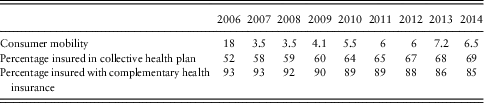
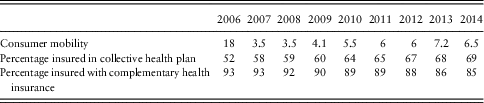
Table 1 highlights some aspects of consumer response to the reform. After 18% of the population had switched to another insurer in 2006, consumer mobility dropped to 4.1% in 2009, but afterwards increased to a peak at 7.2% in 2013, suggesting a more competitive insurance market (Vektis, Reference Van Kleef, Schut and van de Ven2014). The most important motivation for the consumer to switch is a lower premium. Young people and more highly educated persons are most likely to switch (Nza, 2012a, 2013a, 2014a), and consequently more likely to benefit from the switching option. There is also evidence that the insured with self-perceived health problems switch less frequently than those who perceive their health as good (Reitsma-Van Rooijen and De Jong, Reference Porter and Teisberg2014). The Vektis report also found that 73% of the population has not switched since 2006. Generally, non-switchers are 45 years or older and have higher average costs than frequent switchers. The drop in consumer mobility to 6.5% in 2014 is likely to be due to the decrease in the average nominal premium from 1280 euro in 2013 to 1157 euro in 2014 (Vektis, Reference Van Kleef, Schut and van de Ven2014).
Developments in health insurance, percentages, 2006–2014
Source: Vektis (Reference Van Kleef, Schut and van de Ven2014).
Health insurance legislation allows for collective (group) schemes with a maximum premium discount of 10%. Many of these schemes are employer-based, but other types do exist. The high percentage of consumers in a collective scheme in Table 1 highlights the prominent and competitive role that collective plans play. There is some controversy about the fairness of collective schemes. It is argued that discounts obtained through collective bargaining are compensated by higher premiums being paid by persons who do not either qualify or opt for a collective scheme. A recent report described the relationship between individual and collective schemes as a zero-sum game (KPMG/Plexus, 2014) which undermines solidarity. Another criticism is that collective schemes compromise transparency in health insurance.
Table 1 highlights that there is a sizeable market for private complementary health schemes, which are subscribed to voluntarily to cover additional services such as dental care for adults, physiotherapy, etc. The percentage with complementary insurance has shrunk. Some insurers require applicants to fill in a short questionnaire on their health status. While they are not obligated to accept each applicant, they nevertheless have largely abstained from risk selection thus far. However, risk selection may become common in the future. There is a wide variety of complementary schemes ranging from low-priced schemes with limited coverage to expensive schemes with broad coverage. Premiums can be age-related (Nza, 2014c).
Only 0.1% of the population were uninsured persons at the end of 2012 (CBS, 2013) which is attributable to a joint campaign conducted by government, municipalities and insurers to track uninsured persons. A serious problem, also from the viewpoint of administrative costs, is the number of defaulters, defined as persons who failed to pay their insurance premium over an uninterrupted period of six months. In response, new legislation came into force in 2009 to enforce defaulters to pay their premium. Nevertheless, by the end of 2012, the percentage of defaulters was estimated at 2.1% of the population (CBS, 2013).
There is a large variation in the insurers’ premium rates. For example, in 2014, the difference between the highest-priced and lowest-priced nominal premium was 30%. The market of low-priced (internet) plans has expanded by 23% in 2014 (7.1% of all insured had this plan in 2014), but the market of ‘budget plans’ with preselected providers has so far remained small (about 1.8% of all insured in 2014) (BS Health Consultancy, 2014; Reitsma-Van Rooijen and De Jong, Reference Porter and Teisberg2014).
Although legislation contains a formal ban on risk selection, there are indications that the current system is not ‘selection proof’. Several researchers (Duijmelinck et al., Reference Duijmelinck, Van de Ven, Van Vliet and Van Kleef2013; Van Kleef et al., Reference VanderMeulen, Beldman and Van der Kwartel2014) have argued that despite its sophisticated structure, the scheme to compensate insurers for bad risks is not foolproof. They found predictable losses for several patient categories and suggest that insurers exploit loopholes in the legislation to circumvent the ban on risk selection. Strategies include targeting young persons or persons with higher education or offering a significant discount in exchange for a voluntary deductible. Complementary health insurance may also be exploited for risk selection.
The introduction of budget schemes to attract ‘healthy risks’, the imperfect structure of risk equalization, the use of complementary insurance for market segmentation and the zero-sum relation between individual and collective schemes have raised concerns on the consequences of the reform for solidarity. In spite of the regulations to preserve risk solidarity, the dynamics of competition may trigger a process of drifting from risk solidarity. To make risk-selection unattractive, the risk equalization scheme has been revised by including additional parameters. Recently, the government announced a revision of the legislation to ban selective marketing and other subtle forms of risk selection (Letter to the Parliament, 18 December 2014).
To maintain income solidarity in health insurance, the reform includes a tax credit to limit the cost of the basic scheme for persons with low incomes. In 2013, 62% of the households qualified for a credit (KPMG/Plexus, 2014; Ministry of Health, 2013). The government’s policy is to reduce this percentage. The arrangement is criticized because of the high administrative costs and ‘pumping around money’. Left-wing politicians advocate income-adjusted contributions as a fairer and administratively less costly alternative. However, this is a politically sensitive issue instigating a crisis at the beginning of the term of the present coalition government.
A new issue is the impact of the mandatory deductible on access to insurance coverage. There are some indications that the deductible – intended to make consumers more cost conscious – may lower the demand for health care and lead to care avoidance (Ecorys, 2011; Vektis, 2014). Further research is needed to draw firm conclusions.
The reform gave a new impetus to the consolidation trend in health insurance. From 1990 to 2005 the number of insurers dropped from 82 to 59 and there were no new entrants to the market between 2006 and 2014. In 2014, there were 26 insurers which together offered 70 different basic health insurance packages (Nza, 2014). However, 19 of these 26 insurers belonged to four insurer groups, commanding a total market share of about 90% (Nza, 2014a) and raising concerns regarding market concentration. The effect of the large share by the ‘big four’ on competition is unclear, because each of the four groups offers several packages. However, provider organizations do consider the concentration in health insurance a serious threat to their market position (see sections on provision and power).
After incurring deficits from 2006 to 2008 health insurers have achieved a surplus since 2009 (see Table 2). Measured by their legally required solvency rate, the financial position of insurers is also sound. In 2013, the rate was more than twice the officially required rate of 11%. These results have prompted a political discussion on the insurers’ ‘high profits’. Presumably partly in response to this discussion, insurers lowered their premiums in 2014 by an average of 115 euro ‘to let the insured benefit from the effect of competition’.
Financial result of health insurers

Source: De Nederlandse Bank (2014).
* Preliminary data.
The reform has contributed to a lower percentage of administrative costs of health insurers which in 2005 were 4.2% for sick funds and 10.7% for private insurers. Total administrative costs, including commission costs, decreased to 3.5% in 2013. However, administrative costs are much higher (12.4%) for complementary health insurance (own calculation based upon Vektis reports). Administrative costs include the costs of marketing which critics of competition call a waste of public money.
Impact on the health care purchasing market
Health care purchasing may be considered the centerpiece of the market-oriented part of the reform. The basic assumption is that a competitive insurance market will trigger insurers to negotiate ‘value-based’ contracts (Porter and Teisberg, Reference Pollitt, Harrison, Dowswell, Jerak-Zuiderent and Bal2006) fostering efficient and patient-centered health care. While legislation permits insurers to apply selective contracting for most services, it also obligates them to guarantee customers access to all types of care covered by the basic health scheme. However, this obligation is ambiguous. For instance, does an insurer fail to fulfill the obligation if selective contracting results in longer travel distances for patients? Healthcare Authority guidelines making the insurers’ obligation operational (Nza 2011) only partially removed this ambiguity. The meaning of the public value of accessibility is largely constructed in the ‘real world’ of purchasing by insurers, the Healthcare Authority and the Minister of Health who may intervene if (s)he considers access at risk.
In contrast to insurance reform, purchasing reform is still in progress. For instance, free price negotiations were only gradually introduced in hospital care. The cautious implementation strategy adopted was not only motivated by the need for policy learning and to avoid system distortions (the official argument), but also the consequence of the divergent opinions of the government coalition partners on the merits of free prices in hospital care. Initially, free price negotiations were limited to only 10% of the hospital budget. This percentage was raised to 20% in 2008, to 34% in 2009 and to 70% in 2012. The Healthcare Authority continued to set maximum prices for hospital services exempted from free price negotiations. Maximum prices were also in place for specific services rendered by general practitioners. Furthermore, the Authority set an hour-tariff for self-employed specialists. The prices of dental care were set free in 2012, but this measure was withdrawn after only one year because of unexpected price increases.
The introduction of free price negotiations in hospital care has required the development of a new activity-based funding model. After pressure from the medical societies, the choice was made for a system of Diagnosis Treatment Combinations (DTCs). This homegrown model, a coproduction of the medical societies and insurers in collaboration with the Ministry of Health, was soon criticized for its complexity, high transaction costs and the in-built danger of upcoding (Hasaart, Reference Hasaart2012). For instance, there were more than 30,000 active DTCs. To simplify funding, these 30,000 DTCs were replaced in 2012 with around 4400 DOTs (DTCs toward Transparency). To achieve a smooth transition from the DTCs to DOTs, a three-year safety net for hospitals was used to guarantee each of them a certain amount of revenues.
The change in hospital funding is a source of administrative complexity filled with (hidden) administrative costs. Many regulations on how to apply the new model appear ambiguous and cycled through by the Healthcare Authority. Regulative ambiguity creates uncertainty on each hospital’s annual revenues and expenses and may result in inappropriate billing. Additionally, reports in the media on fraud reinforce the critical atmosphere surrounding the reform.
There is some evidence for a price effect of free negotiations. Ikkersheim and Koolman (Reference Ikkersheim and Koolman2013) found that between 2006 and 2009 hospital prices in the segment with free price negotiations rose by 4.8% compared to 9.5% in the regulated segment. The Healthcare Authority also claimed that prices in the liberated segment had increased less than prices in the regulated segment during the period from 2006 to 2011 (Nza, 2012b, 2013b, 2014b). However, this claim was disputed because of methodological flaws (VanderMeulen and Van der Kwartel, Reference Van de Ven, Beck, Buchner, Schokkaert, Schut, Shmueli and Wasem2012). Another issue is the effect of competition on volume of care and type of treatment. The Healthcare Authority (Nza 2013b, 2014b) demonstrated for several patient categories that the price effect was less than the effect of volume change (more patients treated) and treatment change (more expensive treatments or more treatments per patient). Consequently, expenditures grew faster than had been expected or hoped for. Hasaart (Reference Hasaart2012) found indications of upcoding for some patient categories, suggesting a strategic response to the fall of prices. However more research is required before firm conclusions can be drawn. For instance Kerpershoek (Reference Kerpershoek2015) found, that creative coding is not necessarily money-driven, but may also be the result of the professional’s attempt to overcome the rigidity of the hospital payment system in complex situations.
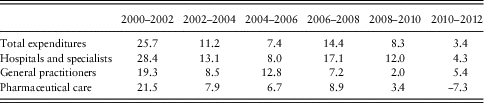
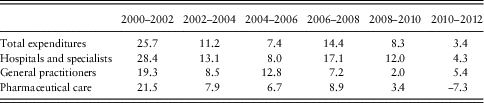
There is little empirical evidence as to how insurers negotiate quality. Insurers claim they are focusing more on quality issues, but many provider agents dispute this saying that insurers are mainly cost-driven. A similar conclusion was drawn by Zuiderent-Jerak et al. (2011). Following his analysis, insurers appeared to be interested in quality improvement programs only if they reduce costs. A remarkable event took place in 2010. An insurer announced it would no longer contract six (later four) hospitals for breast cancer surgery, because they did not meet the insurer’s quality standards on volume, patient satisfaction and a few other items. An interesting effect of this initiative was that it instigated several medical communities to (re)formulate their quality standards (structure and volume standards), indicating that physicians wanted to remain in the driving seat in setting quality standards (Maarse et al., Reference Maarse, Ruwaard and Spreeuwenberg2013). Presently, some insurers strive to concentrate high-complexity services in only a limited number of hospitals, but their initiatives meet resistance. Selective contracting is now most intensively applied in pharmaceutical care. Insurers use competitive bidding and other market strategies to contract with pharmaceutical companies on generic drugs. The trend is to pay only for the lowest-priced drugs with the same chemical substance, resulting in significantly lower outlays for pharmaceutical care (see Table 3). A similar strategy can now be observed for laboratory services, medical auxiliaries and other services.
Growth of health care expenditures, percentages, 2000–2012Footnote *
Source: www.statline.cbs.nl
* Expenditures for long-term care and mental care not included.
Despite these developments, selective contracting remains in an early stage (KPMG/Plexus, 2014). There are several explanations for this. After the new legislation came into force, insurers gave priority to their market share in health insurance through consolidations (see previous section). Furthermore, they only had scant information on the prices and quality of health services. Up to 2012, safety nets were also in place to restrict insurers’ financial risks in hospital care, offering no incentive to enter into hard negotiations with hospitals. Insurers were also afraid that selective contracting could damage their reputation on the health insurance market.
However, there are signs of increasing selective contracting. Insurers claim to now possess more information on costs and quality, although the validity and reliability of this information is often disputed by hospitals (Zuiderent-Jerak et al., 2011). As a consequence of greater exposure to financial risks due to removing some temporary safety nets, insurers’ financial risk increased to 94% in 2014 (Van Kleef et al., Reference VanderMeulen, Beldman and Van der Kwartel2014). This appears to be an effective incentive to opt for selective contracting. Many contracts now include a lump sum or a financial ceiling (Nza, 2013b). To further stimulate selective contracting, the government agreed with the national associations of hospital and insurers to relieve insurers from the obligation to reimburse 75–80% of the costs of non-contracted care. However, in December 2014 a legislative proposal to that effect was rejected by the Upper Chamber in December 2014 (insurers were obligated to reimburse 75–80% of the costs of non-contracted care after a court regulation in which the court decided that a lower percentage would severely restrict access to non-contracted services). Another stimulus for selecting contracting is the agreement signed by the government and the associations of hospitals and insurers to cap the yearly growth of net hospital expenditures (see section on health care expenditures).
Impact on the health care provision market
A notable effect of the market-oriented reform is an increase in the number of so-called independent treatment centers from ~30 in 2000 to 280 in 2010 (KPMG/Plexus, 2014). These centers, some of which are (co)-owned by hospitals, mainly provide less complex routine care in various specialties including diagnostics, ophthalmology, orthopedics and dermatology. Most of these independent centers are small with their total market share limited to 3–4% of total hospital revenues. Prices are on average 15–20% lower than those of hospitals (Nza, 2012c).
This differentiation trend is paralleled by a significant further consolidation in the hospital sector. In the period from 2009 to 2014 the number of hospitals decreased by 25% and a further drop is expected due to take-overs of hospitals in financial distress (KPMG, 2015) and bankruptcies. To date, all consolidations have been approved by the anti-trust agency. Although these consolidations have had little impact on the number of locations due to many hospitals being multi-sited (KPMG, 2015), people in regions with only a few hospitals have concerns regarding decreased accessibility.
Another development is the establishment of regional collaborative networks of provider organizations and the creation of multi-hospital specialist groups (KPMG, 2013). An important argument for these concentration initiatives is the perceived need for reinforcing the partners’ market position. In this respect hospitals particularly refer to the high market concentration in health insurance.
The reform has led hospitals to operate much more efficiently. Investments are a good indication of this trend. Before the reform, legislation required hospitals to acquire a state certificate of need for major construction works. This certificate, an important instrument in hospital planning, guaranteed full reimbursement of the costs of rent and depreciation during a 40-year period. As part of the reform, both arrangements were abolished in 2008. While hospitals are now free to make their own investment decisions, they bear the financial risk themselves. The new arrangement has resulted in a critical evaluation of investment plans and a drop in investments [Waarborgfonds voor de zorgsector (Wfz, Reference Visser and Hemerijck2014). Professional business plans have nowadays become indispensable to attract external capital resources, since banks have become even more critical due to their increased exposure to financial risks (Wfz, Reference Visser and Hemerijck2014). KPMG (2015) recently reported a close involvement of banks and insurers in consolidations. In 2014, banks played a decisive role in 40% of consolidations compared to only 9% in 2013 (KPMG, 2015). In 2013 a local hospital went into insolvency due to operational problems and lack of willingness of insurers, lenders and the government to offer any additional funds.
To make hospitals attractive for external investors, the government proposed legislation permitting hospitals to pay investors a return on investment. Because of the political sensitivity of this topic – all hospitals in the Netherlands are not-for-profit and health care legislation contains a ban on for-profit hospitals – the proposal included strict conditions to overcome the deeply rooted resistance to ‘for-profit’ hospitals. The proposal was approved by the Lower Chamber in 2014, but withdrawn in the Upper Chamber. The situation, however, has already become hybrid, since as the result of recent take-overs a few hospitals are already owned and exploited by commercial agencies.
The reform has motivated hospitals to improve client service, for instance by opening outpatient clinics, introducing evening consultation hours, facilities for one-stop provision of care, care pathways, on-line consultation reservations and many other innovations. Waiting times for first-outpatient visits and non-emergency treatments are shorter being below the maximum acceptable waiting time standard (Nza, 2013b). However, the most recent data points to an increase in waiting time for some specialties (Nza, 2014b). Hospital productivity, which had been slightly negative during 1999–2000, grew by 10.8% during 2002–2005 and by 9.7% during 2007–2010 (VanderMeulen et al., Reference VanderMeulen and Van der Kwartel2012).
The reform has had an impact on quality management. This topic introduced into the policy agenda in the 1980s has resulted, among others, in new legislation, the development of medical guidelines and the Healthcare Inspectorate’s initiative to measure quality by outcome indicators (Van den Bovenkamp et al., Reference Thomson, Busse, Crivelli, Van de Ven and Van de Voorde2014). Hospitals (and other provider organizations) are now required to submit data on patient outcomes, patient satisfaction and, as of 2014, standardized mortality. The results are published to the public on the internet. A recent step in 2014 was the establishment of the National Healthcare Institute to direct quality management (Maarse et al., Reference Maarse, Ruwaard and Spreeuwenberg2013).
The reform has added a new layer to quality management (van den Bovenkamp et al., Reference Thomson, Busse, Crivelli, Van de Ven and Van de Voorde2014), because of the purchasers’ need for ‘objective and comparable information’. Dissatisfied with the slow progress in quality measurement, various insurers started collecting their own quality data and introduced their own volume norms.
Quality of care is an ambiguous public value which must be given concrete meaning in practice (WRR, Reference Wildavsky2012). It appears to be a troublesome topic in contract negotiations between hospitals and insurers. For instance, Zuiderent-Jerak et al. (2011) concluded that in the hospitals’ view, insurers tend to equate better quality with lower costs, show little to no interest in better quality with higher costs and measure quality solely in financial terms. Thus, providers and insurers may have different conceptions of quality of care and quality-cost balance. The administrative costs of outcome measurement and its ‘logic of expansion’ (multiplication of indicators, from formative to summative indicators, connecting indicators with rewards and sanctions, and so on) (Pollitt et al., Reference Pollitt, Harrison, Dowswell, Jerak-Zuiderent and Bal2010) present another topic of dispute.
Impact on health care expenditures
Policy documents on the reform describe fiscal sustainability as a public value: health care expenditures must be kept under control. Regulated competition is assumed to be an effective instrument for cost control, because it will lower prices and so reduce health care expenditures. For this reason one might expect no further interventions to control expenditures. However, the reform did not incorporate this line of reasoning. Its introduction did not put an end to the practice of imposing a yearly global budget (the macro-budget) to cap expenditures. Instead, competition was combined with global budgeting.
To reinforce the effectiveness of the global budget, the Minister of Health acquired the formal competence to recoup excess revenues if hospitals’ revenues overran the macro-budget for hospital care. To avoid the use of this last-resort instrument, the Minister signed a collective agreement with the associations of insurers and hospitals in 2011 to restrict the annual net growth of hospital expenditures to 2.5% during 2012–2015. In a new agreement signed in 2013, this percentage was scaled back to 1.5% in 2014 and 1% during 2015–2017. Similar agreements were signed with other provider associations. The agreements signify the use of classic ‘corporatist-like’ instruments (Visser and Hemerijck, 1997; Helderman et al., Reference Helderman, Schut, Van den Grinten and Van de Ven2005) to curb expenditure growth. They demonstrate that competition is not only regulated by a formal institutional framework, but also by complementary rules of the game. These rules lack legal status but include a moral commitment of the signatories. One may argue that the peak organizations negotiated these agreements ‘under the shadow of hierarchy’ as no agreement could imply a state-imposed budget constraint. Nevertheless, the agreements mirror an element of shared responsibility which is a deeply institutionalized characteristic of public policymaking in the Netherlands. At the same time, they obviously contribute to the hybridity of the reform.
Table 3 gives an overview of health care expenditures growth. The high percentages during 2000–2002 are the result of state programs to reduce waiting lists. Expenditure growth flattened during 2002–2006. The outlier for general practitioners in 2006 is the effect of introducing a new funding model. The high growth percentage of hospital care in 2006–2008 is largely explained by increasing transaction costs and an anomaly in the new funding model of self-employed specialists (they had to pay back their excess revenues in later years). The significant fall of the growth percentage in 2010–2012 is remarkable. One of the explanations for this may be the insurers’ aggressive purchasing behavior in pharmaceutical care. The 2011 expenditure cap may also have curbed hospital care expenditure growth in 2012. If both explanations are valid, one may conclude that the success of cost control in 2010–2012 is effectuated by a combination of competition and budgetary caps. The unanswered question, however, is whether this success is just temporary or will prove to be permanent.
Power and trust
As we have seen, controversies surrounding the reform did not stop after the enactment of the new legislation in 2006. For instance, the stepwise extension of price negotiations in hospital care was not only motivated by the need for policy learning, but also a political compromise in the coalition government. The recent withdrawal and rejection of legislative proposals to complete the market reform present two further discussion points. Opponents argue that competition is not appropriate for health care provision as the ‘logic of care’ conflicts with the ‘logic of competition’ (see Mol, 2008). There is also popular discontent on what are seen as the excrescences of the new system such as managerialism, overpaid executives, powerful and money-driven health insurers, fraud, and so on.
Presently, the controversy seems to be increasingly framed in terms of power. First, there are concerns on concentration which are not only manifesting in health insurance but also in hospital care, albeit to a lesser extent. A recent evaluation concluded that the ongoing trend toward concentration in health insurance and hospital care will reduce the negotiation space of both insurers and hospitals and, as a consequence, may seriously weaken the position of the system’s end-users (insured, patients) (KPMG/Plexus, 2014).
Second, the relationship between insurers and providers is increasingly being framed as a power conflict. To a certain extent, this conflict does not come as a surprise since regulated competition intends to establish a new power balance between insurers (which are assumed to act on behalf of their customers) and providers by according insurers a countervailing role. However, in the view of many providers including general practitioners, physiotherapists and medical specialists, the power shift has gone too far. General practitioners and other private practitioners experience the insurers’ contract as a dictate. Medical specialists resist what they perceive as the increasing insurers’ interference with quality issues such as imposing volume norms.
Power has not only an objective but also a subjective or perceptual dimension. Viewed from this perspective, it is connected with legitimacy or trust which leads us to what Boonen and Schut (Reference Boonen and Schut2011) call the ‘credible commitment problem’ of insurers. Insurers are assumed to be their customers’ representatives in health purchasing, but do customers trust them? Based on survey research, Boonen and Schut found that the percentage of respondents willing to follow their insurer’s recommendation on preferred providers had declined from 50% in 2005 to 25% in 2007. The results of a survey research (data from 2012) done by Brabers et al. (Reference Brabers, Reitsma-Van Rooijen and De Jon2014) are even alarming: only 31% of the respondents said that they trusted insurers. For general practitioners and hospitals these percentages were 87% and 73%, respectively.
Lack of trust and assumed power are closely connected. The results suggest that insurers are viewed as having become too powerful. Many people perceive them as money-driven agents restricting the choice of patients. The lack of trust is manifested in the campaign against the government’s proposal permitting insurers to abstain from any cost-reimbursement of non-contracted care. The proposal was framed as a restriction of ‘free doctor choice’, although the free choice of general practitioners and some other private practitioners was guaranteed in the final legislation approved in the Lower Chamber. The argument that free choice for planned care would only be restricted in schemes with preselected hospitals (the so-called budget schemes) failed to impress the opponents. In their view restricted choice would result in a ‘two-tier’ type of health care system with free choice for those who can afford an expensive scheme and restricted choice for those who cannot.
Another illustration of a critical attitude toward insurers is the discussion on the insurers’ surplus. Table 2 highlighted that the insurers’ solvency rate is significantly higher than the legally mandated rate. The insurers’ surplus is framed as profit which is considered antithetical to the public nature of health care.
The lack of trust undermines the reform. Its success is not only contingent on the appropriateness of the regulatory framework and regulation compliance. Equally important is that the way it functions in practice is considered legitimate. It is therefore no surprise that the Advisory Council for Public Health and Care recently called attention to this issue and made proposals to establish legitimacy (RVZ, Reference Reitsma-Van Rooijen and De Jong2014).
The State-Healthcare Authority relationship
Regulated competition involves another role of the state in health care governance. Its new role is now largely defined in terms of providing an adequate regulatory framework, organizing effective oversight, safeguarding public values, developing policy initiatives and giving general direction to health care. When public values are considered at risk, the state should intervene. Many operational and regulatory tasks are delegated to the Dutch Healthcare Authority which fulfills a central role in the new structure. This has created an uneasy balance between the Ministry and the Healthcare Authority. The institutional framework for regulating the Minister-Authority relationship is complicated. Essentially, the Minister can give the Authority general instructions (e.g. the macro-budget) and the Authority is in charge of issuing specific instructions (e.g. instructions on hospital reimbursement). The Authority also decides whether hospitals with budgetary problems qualify for financial support. Furthermore, it fulfills supervisory functions and acts as an advisory body to the Minister of Health.
An interesting event occurred in 2008 when the Minister overruled the Healthcare Authority’s decision that a hospital did not qualify for financial support. The Minister, however, believed that bankruptcy of the hospital would jeopardize what he called ‘the continuity of care’. The Authority had no choice but to revise its decision. Since this event, however, the Minister has displayed more restraint to requests for financial support. These requests should be handled by insurers and the Healthcare Authority.
Nevertheless, the relation between Minister and Authority remains a delicate one. A recent evaluation of the functioning of the Healthcare Authority concluded that its relationship with the Minister is more intimate than what is suggested by the independent status of this regulatory agency. Contrary to the Healthcare Market Structuring Act which accords the Minister what is referred to as a ‘system responsibility’, the temptation to intervene in individual cases is present. Consultations and agreements with stakeholders may also directly interfere in the Authority’s activities (Commissie Borstlap, 2014).
Conclusion
This article gave a brief overview of the results of the market-oriented reform in the Netherlands. Although caution is needed when drawing causal inferences, our first main conclusion is that there are multiple indications that the reform is associated with many changes. Using the terminology of Streeck and Thelen (Reference Schut and van de Ven2004), the new legislative framework triggered a path-altering dynamic in each of the three interconnected markets (insurance, purchasing and provision) which has resulted in a gradual transformation of the Dutch health care system. According the Netherlands Bureau of Economic Policy Analysis, transaction costs would make a reversal of the reform very costly (CPB, 2015). With a few exceptions, such as the high switching percentage in 2006 and the rapid consolidation of insurers, most changes such as the uptake of the purchasing role by insurers took place gradually. Some changes have aroused suspicion such as the consolidation in health insurance, the concomitant consolidation in hospital care, the emergence of subtle practices of risk selection in health insurance and signs of inappropriate billing by hospitals. Although insurers managed to implement significant price cuts for generic medicines, the overall impact of the reform on health care expenditures is uncertain. Expenditure growth slowed down significantly during 2010–2012, but it remains to be seen whether this development is structural or only temporal. The reform also elicited a power conflict between insurers and providers. The settlement of this conflict and the structure of a new power balance are still uncertain. The low trust among consumers in regarding the new insurers’ role is alarming.
Our second conclusion concerns the hybrid structure of the reform. The multiplicity of regulations to safeguard public values, the restricted scope of free price negotiations, the temporary safety nets to accommodate the transition process, the use of complementary extra-legal arrangements to control expenditures and the delicate relationship between Minister and Healthcare Authority illustrate this hybridity. More profoundly, its hybrid structure cannot be separated from the tension between competition and public values. This is also why we preferred the term market-oriented reform.
Our third main conclusion is that the reform has remained controversial after the new legislation had come into force in 2006. There are concerns on the slow uptake of value-based purchasing, the lack of transparency and the consolidation trend. Negotiated agreements with stakeholders and compromises in the coalition government were required to expand the scope of competition. The ideological conflict on the compatibility of health care with competition continues and is manifest at each decision point in the reform process, also extending in to the evaluation of the results of the reform. While the government perceives the decrease of expenditure growth and the lowering of the average insurance premium in 2014 as signs that the reform is working, opponents remain either skeptical or negative. Their main argument is that competition is not appropriate due to the public nature of health care.
Finally, the reform lacks clearly defined standards. Efficiency, freedom of choice, solidarity, accessibility, quality and fiscal sustainability are all ambiguous concepts. The translation of these ‘aspirational goals’ into concrete arrangements is largely left to insurers, providers and supervisory/regulative bodies. Stakeholders, including politicians, the insured and patients, may have different ideas on how to give them concrete meaning and how to balance conflicting goals. Interpretations are not static but subject to change in the course of time (Zuiderent-Jerak et al., 2011). This results in a range of differing opinions as to how to assess results and on how to direct the future course of the reform (see also Schut and Van de Ven, 2011).
In their analysis of regulated competition, Van de Ven et al. (Reference Van de Ven and Schut2013) concluded that the Netherlands met most of the preconditions for regulated competition. Whereas their conclusion was supported by Mikkers and Ryan (Reference Mikkers and Ryan2014), Okma and Crivelli (Reference Okma and Crivell2013) took a more critical position by pointing to various gaps between theory and reality, and between expectations and results. An important lesson of our analysis is that the introduction of regulated competition is is associated with various problems and political controversies. We hope that our analysis contributes to a better understanding of these problems and concerns. A comparison of the real-world experiences with regulated competition in the Netherlands with the experiences in other countries (see Thomson et al., Reference Streeck and Thelen2013) may reveal whether the ‘Dutch experience’ is unique or indicative of the ‘European experience’ with regulated competition.
Acknowledgments
The authors thank two anonymous reviewers for their critical comments on an earlier version of this article.