Introduction
People are eating approximately 3000 kcal of food daily to produce energy (FAO, 2017; Roser and Ritchie, Reference Roser and Ritchie2017); however, every single bite of food increases the risk of food illnesses. Foodborne illnesses may result in mild illnesses (diarrhea, abdominal cramps, fever, and vomiting) lasting anywhere from few hours to several days, and in some cases, these symptoms can become severe and persist longer, resulting in hospitalizations and sometime deaths (Lawrence et al., Reference Lawrence, Dobmeier, Bechtel and Holstege2007). It is estimated that one in ten people fall ill after ingesting contaminated food and/or water, and over 420,000 die annually worldwide (Havelaar et al., Reference Havelaar, Kirk, Torgerson, Gibb, Hald, Lake, Praet, Bellinger, de Silva, Gargouri, Speybroeck, Cawthorne, Mathers, Stein, Angulo and Devleesschauwer2015; WHO, 2015; Hoffmann and Scallan, Reference Hoffmann, Scallan, Dodd, Aldsworth, Stein, Cliver and Riemann2017). Accordingly, foodborne illnesses represent an important economic and public health concern that needs to be addressed.
Bacterial foodborne pathogens in poultry: an endless story
Over 250 foodborne diseases are caused by the consumption of food products contaminated with infectious agents (bacteria, fungi, viruses, or parasites) or, occasionally, harmful toxins and chemicals (Lawrence et al., Reference Lawrence, Dobmeier, Bechtel and Holstege2007; Linscott, Reference Linscott2011). All food products are potential sources of foodborne illnesses; however, poultry and egg products are among the most frequent and recurrent causes of bacterial gastroenteritis worldwide (Scallan et al., Reference Scallan, Hoekstra, Angulo, Tauxe, Widdowson, Roy, Jones and Griffin2011; Behravesh et al., Reference Behravesh, Williams and Tauxe2012; Basler et al., Reference Basler, Nguyen, Anderson, Hancock and Behravesh2016; Chai et al., Reference Chai, Cole, Nisler and Mahon2017; Rouger et al., Reference Rouger, Tresse and Zagorec2017; Gonçalves-Tenório et al., Reference Gonçalves-Tenório, Silva, Rodrigues, Cadavez and Gonzales-Barron2018; Heredia and García, Reference Heredia and García2018). Two major reasons are the high prevalence and transmission of Salmonella spp. and Campylobacter spp. from poultry products and poultry farm environment to humans (EFSA Panel on Biological Hazards (BIOHAZ), 2011; Jørgensen et al., Reference Jørgensen, Bailey, Williams, Henderson, Wareing, Bolton, Frost, Ward and Humphrey2002; Pires et al., Reference Pires, de Knegt and Hald2011; Sahin et al., Reference Sahin, Kassem, Shen, Lin, Rajashekara and Zhang2015; Wales et al., Reference Wales, Breslin, Carter, Sayers and Davies2007). Previous studies conducted in the USA and in Europe reported that up to 80 and 100% of poultry flocks could harbor Salmonella spp. and Campylobacter spp., respectively (Stern et al., Reference Stern, Cox, Bailey, Berrang and Musgrove2001; Newell and Fearnley, Reference Newell and Fearnley2003; Luangtongkum et al., Reference Luangtongkum, Morishita, Ison, Huang, McDermott and Zhang2006). Furthermore, these two bacteria can extensively colonize the poultry intestinal tract (up to 109 colony forming unit (CFU) per g of cecal content) while causing little or no clinical disease, presenting high risks of carcass contamination during post-slaughter processes (Newell and Fearnley, Reference Newell and Fearnley2003; Johnson et al., Reference Johnson, Shank and Johnson2017). It is estimated that up to 50 and 33% of poultry products at the retail harbor Salmonella spp. and Campylobacter spp., respectively in the USA (Naugle et al., Reference Naugle, Barlow, Eblen, Teter and Umholtz2006; Andrews, Reference Andrews2013; Gonçalves-Tenório et al., Reference Gonçalves-Tenório, Silva, Rodrigues, Cadavez and Gonzales-Barron2018); and 20% of salmonellosis and 80% of campylobacteriosis cases in humans are associated with poultry (EFSA Panel on Biological Hazards (BIOHAZ), 2011; European Food Safety Authority (EFSA), 2004; Hoffmann and Scallan, Reference Hoffmann, Scallan, Dodd, Aldsworth, Stein, Cliver and Riemann2017). Listeria spp., Staphylococcus aureus, Escherichia coli, and Clostridium perfringens have also been associated with foodborne illnesses related to poultry; however, the occurrence of these pathogens remain isolated and sporadic in poultry compared with Salmonella and Campylobacter and/or are caused by post-harvest cross contaminations with other animal carcasses (Van Immerseel et al., Reference Van Immerseel, De Buck, Pasmans, Huyghebaert, Haesebrouck and Ducatelle2004; Ali et al., Reference Ali, Islam, Muzahid, Sikder, Hossain and Marzan2017; Rothrock et al., Reference Rothrock, Davis, Locatelli, Bodie, McIntosh, Donaldson and Ricke2017; Rouger et al., Reference Rouger, Tresse and Zagorec2017; Udhayavel et al., Reference Udhayavel, Thippichettypalayam Ramasamy, Gowthaman, Malmarugan and Senthilvel2017; Gonçalves-Tenório et al., Reference Gonçalves-Tenório, Silva, Rodrigues, Cadavez and Gonzales-Barron2018; Heredia and García, Reference Heredia and García2018; Liu et al., Reference Liu, Stegger, Aziz, Johnson, Waits, Nordstrom, Gauld, Weaver, Rolland, Statham, Horwinski, Sariya, Davis, Sokurenko, Keim, Johnson and Price2018a). In the USA, from 1998 to 2012, a total of 1,114 foodborne disease outbreaks were reported and among them, poultry was associated with 279 outbreaks (25%), accounting for the highest number of outbreaks, illnesses, hospitalizations, and the second highest number of deaths (Chai et al., Reference Chai, Cole, Nisler and Mahon2017). Similarly, a surveillance reports of foodborne disease outbreaks in USA, from 2009 to 2015, also indicated that poultry was associated with the highest number of foodborne illnesses (4860 illnesses out of 26,550 illnesses; 18%) and the second highest number of outbreaks (179 outbreaks out of 1281 outbreaks; 14%) (Dewey-Mattia et al., Reference Dewey-Mattia, Manikonda, Hall, Wise and Crowe2018).
To remedy these food-safety threats, the poultry industry is constantly upgrading its management practices (foams, formaldehyde fumigant, heat, high-pressure treatments, antibiotics, vaccines, feed additives, and antagonistic organisms) to prevent and control foodborne pathogens in the flock and the farm environment (Dawkins, Reference Dawkins2017; Mehdi et al., Reference Mehdi, Létourneau-Montminy, Gaucher, Chorfi, Suresh, Rouissi, Brar, Cote, Ramirez and Godbout2018). However, foodborne pathogens can persist for an extended period of time within hosts and agricultural environments despite decontamination efforts and therapeutic measures (Winfield and Groisman, Reference Winfield and Groisman2003; Dinçer and Baysal, Reference Dinçer and Baysal2004; Foley et al., Reference Foley, Nayak, Hanning, Johnson, Han and Ricke2011, Reference Foley, Johnson, Ricke, Nayak and Danzeisen2013). Further, evidence of the association between antimicrobial use in animal production and the emergence of cross resistance, multi-drug resistant (MDR) isolates, and other evolutionary adaptations have been reported (Kassem et al., Reference Kassem, Helmy, Kathayat, Candelero-Rueda, Kumar, Deblais, Huang, Sahin, Zhang and Rajashekara2017; Nisar et al., Reference Nisar, Kassem, Rajashekara, Goyal, Lauer, Voss and Nagaraja2017a; Deblais et al., Reference Deblais, Lorentz, Scaria, Nagaraja, Nisar, Lauer, Voss and Rajashekara2018b). Based on the National Outbreaks Reporting System (NORS) database, 54.7% of the total enteric zoonotic disease outbreaks recorded in the USA between 1996 and 2017 were associated with poultry; therefore, novel control and management practices must be established to assure food and public safety. To resolve the recurrent and expanding safety issues, current and future scientific and governmental efforts need to focus on (1) disease surveillance, monitoring, and forecasting and (2) understanding the complex interactions between the foodborne pathogens, their hosts, the environment, and management practices at the system and molecular level. Yet, such approaches need extensive manpower, data storage capacities, and technological tools.
Big problems need big solutions
Since 1980, the beginning of the digital age, technological advances tremendously expanded our capacities to store, communicate, and compute colossal sets of information, also called ‘big data’. More precisely, big data is defined by the World Health Organization (WHO) as ‘the emerging use of rapidly collected, complex data in such unprecedented quantities that zettabytes of storage may be required’ (Ward and Barker, Reference Ward and Barker2013). To date, 42 criteria have been designated to describe big data (the concept of the 42 Vs) (The 42 Vs of Big Data and Data Science, n.d.). In science, big data is also obtained with high-throughput methods (new generation sequencing, microarrays, mass spectrometry (MS), etc.), which allow the generation of detailed and complete information about a specific type of molecule (DNA, RNA, proteins, hormone, lipids, etc.) within a studied sample. The discoveries made using these techniques over the past few decades have improved our society in many ways. More precisely, in food and public safety, big data facilitates the discovery of new drug/vaccines/biocontrol candidates, and the understanding of the complex interaction between hosts and pathogens, and the implication of specific genetic and environmental factors within complex ecosystems. In this review, we describe how big data is helping in the fight against bacterial foodborne pathogens in poultry by elucidating the complex interactions between bacterial foodborne pathogens and their hosts/environment and the development of novel prevention/control strategies.
Genomics and metagenomics
Genomics is the study of an organism's whole genome at the nucleic acid level; whereas, metagenomics is the study of genomes in a microbial community or population as a whole (microbiome). Tools developed for this discipline allow in-depth and comprehensive studies of genomes (epigenomics and structural and functional genomics) and the microbial diversity within a specific environment (environmental genomics, ecogenomics, or community genomics). Over the past few decades, genomics and metagenomics have proven to be great tools to (1) understand association between health/disease and microbial communities (microbiome), (2) study the evolution of microorganisms, (3) understand the exchange of antibiotic-resistance genes (ARGs) and mobile genetic elements (MGEs) within and between species, and (4) analyze the microbial populations and their genetic background in complex environments. These discoveries led to epidemiologic breakthroughs, the designing of mitigation strategies, development of novel sanitary and therapeutic/preventive strategies, and the more judicious use of antibiotics in animals and humans. Further, unlike conventional microbiology approaches, genomics and metagenomics allow the study of difficult or unculturable organisms and do not require enrichment or isolation steps, enhanceing the quality and veracity of the results (Ranjan et al., Reference Ranjan, Rani, Metwally, McGee and Perkins2016). Genomics and metagenomics also represent key technologies for the success of surveillance systems and for the understanding of microbial communities and their interactions in an environment (Andersen et al., Reference Andersen, Kiil, Harder, Josefsen, Persson, Nielsen and Hoorfar2017). Details of major genomics and metagenomics studies presented in this review are displayed in Table 1.
Genomics and metagenomics studies

Importance of genomics and metagenomics in predicting disease and health in poultry production
The power of genomics in improving avian breeding efforts
Since the recent restrictions on prophylactic use of antimicrobials in poultry production in the USA (Guidance for Industry, #213, Food and Drug Administration) and the interdiction in the European Union (Maron et al., Reference Maron, Smith and Nachman2013), there is an increasing need for the development of alternative control methods to protect animal health. There is a thin frontier between health and sickness; however, it can be predetermined based on the host and pathogen genotypes and be reinforced by the presence of specific gut microorganisms. For example, genomics has facilitated the identification of quantitative trait loci (QTL) in chickens involved in the resistance to specific foodborne pathogens using genome wide single-nucleotide polymorphism (SNP) mapping (Hasenstein et al., Reference Hasenstein, Hassen, Dekkers and Lamont2008; Fife et al., Reference Fife, Howell, Salmon, Hocking, van Diemen, Jones, Stevens and Kaiser2011; Zhang et al., Reference Zhang, Li, Liu, Zheng, Sun, Wu, Hu, Wen and Zhao2015; Psifidi et al., Reference Psifidi, Fife, Howell, Matika, van Dieman, Kuo, Smith, Hocking, Salmon, Jones, Hum, Banos, Stevens and Kaiser2016). The genotypic analysis (1255 SNPs) of a backcross (F1 × N) population (n = 288) identified four independent QTL on chromosomes 2, 3, 12, and 25, involved in the resistance to S. Typhimurium F98 NalR (Fife et al., Reference Fife, Howell, Salmon, Hocking, van Diemen, Jones, Stevens and Kaiser2011). A similar study using 1243 SNPs was performed to identify QTL involved in the resistance to Campylobacter jejuni in White Leghorn chicken lines (Psifidi et al., Reference Psifidi, Fife, Howell, Matika, van Dieman, Kuo, Smith, Hocking, Salmon, Jones, Hum, Banos, Stevens and Kaiser2016). The authors identified QTL on chromosomes 4, 7, 11, 14, and 16 involved in the resistance to Campylobacter. Interestingly, two of these QTL on chromosome 14 (TRAP1 and AXIN1) were co-located with Salmonella resistance loci, which might facilitate the development of new breeds resistant to both foodborne pathogens (Chiang et al., Reference Chiang, Swaggerty, Kogut, Dowd, Li, Pevzner and Zhou2008; Psifidi et al., Reference Psifidi, Fife, Howell, Matika, van Dieman, Kuo, Smith, Hocking, Salmon, Jones, Hum, Banos, Stevens and Kaiser2016). Another study, using a chicken 60K high-density SNP array, identified five candidate genes (CD1b, IL4L1, TRIM27, GNB2L1, and ZNF692) on chromosome 16 associated with the total serum immunoglobulin Y (IgY) levels which are likely to play an important role in the immune response against S. Enteritidis (Zhang et al., Reference Zhang, Li, Liu, Zheng, Sun, Wu, Hu, Wen and Zhao2015). These results were further validated using quantitative reverse transcription polymerase chain reaction (RT-qPCR) to confirm the expression of the candidate genes. However, it is important to note that whole genome sequencing (WGS) data only enable the identification of potential genes involved in the resistance to specific foodborne pathogens and more studies are needed to identify specific roles. Overall, genomics revealed important information about molecular mechanisms of resistance to foodborne pathogens in chickens. This knowledge will improve the safety of poultry products by facilitating future breeding efforts for the development of novel breeds with higher resistance to foodborne pathogens.
Metagenomics to understand the importance of the gut microbiota for resistance to foodborne pathogens in poultry
As previously stated, the host genome content has a major role in regulating host resistance toward specific foodborne pathogens. In addition, recent metagenomics studies have emphasized the importance of the gut microbiota in health and disease through identification of unique gut microbial alterations caused by specific foodborne pathogens and treatments (Oakley et al., Reference Oakley, Lillehoj, Kogut, Kogut, Kim, Maurer, Pedroso, Lee, Collett, Johnson and Cox2014; Choi et al., Reference Choi, Lee and Sul2015; Wang et al., Reference Wang, Yao, Lv, Ling and Li2017a; Borda-Molina et al., Reference Borda-Molina, Seifert and Camarinha-Silva2018; Shang et al., Reference Shang, Kumar, Oakley and Kim2018). By studying the chicken cecal microbiome (n = 45), Qu et al. discovered that chicken ceca colonized with C. jejuni NCTC11168 were characterized by higher microbial diversity and evenness, and a higher Firmicutes:Bacteroidetes ratio compared with the non-challenged chickens (Qu et al., Reference Qu, Brulc, Wilson, Law, Theoret, Joens, Konkel, Angly, Dinsdale, Edwards, Nelson and White2008). Despite these microbiota changes, the functional gene content was similar in both microbiomes. Interestingly, a similar increase of Firmicutes population in S. Enteritidis CVCC3377 challenged chickens compared with the non-challenged group was observed (Liu et al., Reference Liu, Lin, Zheng, Tang, Fan, Xue, Li, Liu and Li2018b). Further, Qu et al. showed that metavirulomes of the microbiomes seemed to be affected by the host species (Qu et al., Reference Qu, Brulc, Wilson, Law, Theoret, Joens, Konkel, Angly, Dinsdale, Edwards, Nelson and White2008), which supports the metagenomic data reported by Deblais et al., where distinct prophage profiles were observed in S. Heidelberg isolates collected from chicken- and turkey-farm environments (Deblais et al., Reference Deblais, Lorentz, Scaria, Nagaraja, Nisar, Lauer, Voss and Rajashekara2018b).
Several metagenomics studies also analyzed the impact of specific treatments such as a novel anti-Salmonella growth inhibitor (PubChem ID: 2834410, 2847561, 2848076, and 9586485) (Deblais et al., Reference Deblais, Helmy, Kathayat, Huang, Miller and Rajashekara2018a), S. Typhimurium attenuated vaccines (ΔΔmetRmetD and PBAD-mviN) (Park et al., Reference Park, Kim, Rubinelli, Roto and Ricke2017), and antibiotic growth promoters (bacitracin, dimethyl salicylate, or enrofloxacin) (Li et al., Reference Li, Hao, Cheng, Liu, Ahmed, Shabbir, Hussain, Dai and Yuan2017; Kumar et al., Reference Kumar, Chen, Indugu, Werlang, Singh, Kim and Thippareddi2018) on the gut microbiota and the persistence of Salmonella spp. and Campylobacter spp. in chicken. These studies have provided detailed information about the microbiota alteration caused by the treatments. For example, Deblais et al. observed that the antimicrobial efficacy of four novel anti-Salmonella growth inhibitors tested on chickens infected with S. Typhimurium LT2 was associated with the limited impact of the compounds on the cecal microbiota (Deblais et al., Reference Deblais, Helmy, Kathayat, Huang, Miller and Rajashekara2018a). Further, the authors showed that chickens treated with #2848076 harbored a higher relative abundance of Butyricicoccus pullicaecorum in cecal contents compared with the other groups. B. pullicaecorum was previously described as a probiotic that is potentially effective against Salmonella, Campylobacter, and C. perfringens in chickens (Geirnaert et al., Reference Geirnaert, Steyaert, Eeckhaut, Debruyne, Arends, Van Immerseel, Boon and Van de Wiele2014; Eeckhaut et al., Reference Eeckhaut, Wang, Van Parys, Haesebrouck, Joossens, Falony, Raes, Ducatelle and Van Immerseel2016). Overall, discoveries related to metagenomics studies provide important information on the impact of specific pathogens and treatments on the gut microflora. This information will enhance our understanding of the contribution of gut microflora and the mechanisms associated with health and disease. Further, it will aid in improving the rational use of antimicrobial agents and the discovery of novel narrow spectrum agents.
Importance of genomics and metagenomics in the detection of antimicrobial resistance
The use of antibiotics in poultry production has facilitated the control of numerous avian bacterial diseases. The majority of the antimicrobials are almost exclusively administrated to livestock through feed or water (Mehdi et al., Reference Mehdi, Létourneau-Montminy, Gaucher, Chorfi, Suresh, Rouissi, Brar, Cote, Ramirez and Godbout2018). Bacitracin, tylosin, salinomycin, bambermycin, virginiamycin, and especially tetracycline represent the antibiotics most currently used on poultry farms in North America (Diarra and Malouin, Reference Diarra and Malouin2014; Gonzalez Ronquillo and Angeles Hernandez, Reference Gonzalez Ronquillo and Angeles Hernandez2017; Mehdi et al., Reference Mehdi, Létourneau-Montminy, Gaucher, Chorfi, Suresh, Rouissi, Brar, Cote, Ramirez and Godbout2018). However, recent studies showed that the massive use of antibiotics has consequences such as the accumulation of antibiotics in the environment, untargeted effects of the antibiotics on human, animal and environmental microbiota, and the emergence of antibiotic-resistance mechanisms (Furtula et al., Reference Furtula, Farrell, Diarrassouba, Rempel, Pritchard and Diarra2010; Forgetta et al., Reference Forgetta, Rempel, Malouin, Vaillancourt, Topp, Dewar and Diarra2012; Gonzalez Ronquillo and Angeles Hernandez, Reference Gonzalez Ronquillo and Angeles Hernandez2017; Agyare et al., Reference Agyare, Boamah, Osei and Osei2018; Mehdi et al., Reference Mehdi, Létourneau-Montminy, Gaucher, Chorfi, Suresh, Rouissi, Brar, Cote, Ramirez and Godbout2018).
Poultry, a source of extended spectrum beta-lactamase- and mcr-carrying bacteria
As previously stated, MDR bacteria have been, and continue to be, one of the major food and public safety concerns of this century. One of the emblematic examples of current antimicrobial resistance (AMR) concerns is the high prevalence of extended spectrum beta-lactamase (ESBL)/AmpC-producing Enterobacteriaceae in livestock (especially poultry) worldwide (Smet et al., Reference Smet, Martel, Persoons, Dewulf, Heyndrickx, Catry, Herman, Haesebrouck and Butaye2008; Leverstein-van Hall et al., Reference Leverstein-van Hall, Dierikx, Stuart, Voets, van den Munckhof, van Essen-Zandbergen, Platteel, Fluit, van de Sande-Bruinsma, Scharinga, Bonten and Mevius2011; Laube et al., Reference Laube, Friese, von Salviati, Guerra, Kasbohrer, Kreienbrock and Roesler2013; Blaak et al., Reference Blaak, Hamidjaja, van Hoek, de Heer, de Husman and Schets2014; Huijbers et al., Reference Huijbers, Graat, Haenen, van Santen, van Essen-Zandbergen, Mevius, van Duijkeren and van Hoek2014; Casella et al., Reference Casella, Nogueira, Saras, Haenni and Madec2017; Saliu et al., Reference Saliu, Vahjen and Zentek2017; Wu et al., Reference Wu, Wang, Shi, Wang, Ren, Shen, Wang, Lin and Wang2018). ESBL-producing bacteria are resistant to beta-lactams (eg, penicillin, cephalosporins, monobactams, and carbapenems) commonly used as therapeutics against several bacterial infections (Kong et al., Reference Kong, Schneper and Mathee2010; Shaikh et al., Reference Shaikh, Fatima, Shakil, Rizvi and Kamal2015). The resistance to beta-lactams is principally conferred via the acquisition of plasmids. Previous studies showed that in few cases similar ESBL genes could be shared between poultry and humans (Leverstein-van Hall et al., Reference Leverstein-van Hall, Dierikx, Stuart, Voets, van den Munckhof, van Essen-Zandbergen, Platteel, Fluit, van de Sande-Bruinsma, Scharinga, Bonten and Mevius2011; Overdevest et al., Reference Overdevest, Willemsen, Rijnsburger, Eustace, Xu, Hawkey, Heck, Savelkoul, Vandenbroucke-Grauls, van der Zwaluw, Huijsdens and Kluytmans2011; Wu et al., Reference Wu, Day, Mafura, Nunez-Garcia, Fenner, Sharma, van Essen-Zandbergen, Rodríguez, Dierikx, Kadlec, Schink, Chattaway, Wain, Helmuth, Guerra, Schwarz, Threlfall, Woodward, Woodford, Coldham and Mevius2013). Therefore, WGS was used to elucidate the horizontal mechanisms of transmission of these ARGs at the farm level (Agersø et al., Reference Agersø, Aarestrup, Pedersen, Seyfarth, Struve and Hasman2012; Dierikx et al., Reference Dierikx, van der Goot, Smith, Kant and Mevius2013; Blaak et al., Reference Blaak, Hamidjaja, van Hoek, de Heer, de Husman and Schets2014; Hansen et al., Reference Hansen, Bortolaia, Nielsen, Schonning, Agerso and Guardabassi2016; Daehre et al., Reference Daehre, Projahn, Semmler, Roesler and Friese2017; Pietsch et al., Reference Pietsch, Irrgang, Roschanski, Brenner Michael, Hamprecht, Rieber, Käsbohrer, Schwarz, Rösler, Kreienbrock, Pfeifer, Fuchs and Werner2018). Pietsch et al. monitored the occurrence of ESBL population in seven broiler flocks during the course of the fattening period at three time points (beginning, middle, and end) in a contaminated environment (Pietsch et al., Reference Pietsch, Irrgang, Roschanski, Brenner Michael, Hamprecht, Rieber, Käsbohrer, Schwarz, Rösler, Kreienbrock, Pfeifer, Fuchs and Werner2018). By the end of the fattening period, all the flocks were positive for ESBL/AmpC-producing bacteria and bla CMY-2 was the most frequent gene detected. The whole genome analysis confirmed that contaminated environment is a major source of transmission to the flock. Therefore, the authors reinforced the importance of proper decontamination procedures between flocks to reduce the horizontal transmission of bacterial pathogens. Another study focused on the transmission of bla CMY-2 throughout the food chain by studying the whole genome of isolates (n = 164) from livestock and food products (especially poultry), and humans collected in Germany between 2008 and 2016 (Pietsch et al., Reference Pietsch, Irrgang, Roschanski, Brenner Michael, Hamprecht, Rieber, Käsbohrer, Schwarz, Rösler, Kreienbrock, Pfeifer, Fuchs and Werner2018). The authors showed that a clonal relationship between the animal/food and human isolates was rare. However, poultry represented a very common reservoir of bla CMY-2-carrying plasmids, and could be an upcoming threat of CMY-2-producing E. coli isolates causing infections in both humans and animals. Hansen et al. investigated the possible transmission of CMY-2 across poultry, dogs, and humans in Denmark by sequencing the bla CMY-2-carrying plasmids from E. coli isolates (n = 93) collected between 2006 and 2012 (Hansen et al., Reference Hansen, Bortolaia, Nielsen, Schonning, Agerso and Guardabassi2016). The authors showed that horizontal transfer of plasmids (IncK and IncI1-Iγ) was the principal route of transmission of CMY-2-mediated cephalosporin resistance in E. coli between animals and humans in Denmark compared with clonal dissemination. However, their findings did not support the transmission of E. coli carrying bla CMY-2 from poultry meat to humans, as previously reported by Bonten and Mevius (Reference Bonten and Mevius2015).
On the other hand, a close genomic relationship has been observed with E. coli isolates from chickens and humans (n = 341) collected in China between 2008 and 2014 (Wu et al., Reference Wu, Wang, Shi, Wang, Ren, Shen, Wang, Lin and Wang2018) and in the USA in 2012 (Liu et al., Reference Liu, Stegger, Aziz, Johnson, Waits, Nordstrom, Gauld, Weaver, Rolland, Statham, Horwinski, Sariya, Davis, Sokurenko, Keim, Johnson and Price2018a). A recent study investigated the occurrence and phylogenetic relatedness of E. coli isolated from meat products (chicken, turkey, and pork; n = 1923) and humans with urinary tract infections (n = 1188; urine and blood samples) using multilocus sequence typing, fimH typing, and WGS. Among all the E. coli ST131-H22 isolates studied, 24 isolates from humans harbored the ColV plasmids, which is associated with E. coli fitness and virulence in avian hosts, and displayed the same high-resolution phylogenetic clades as the ones from the meat products. From these studies, the authors concluded that ST131-H22 is well established in poultry production worldwide. Furthermore, a study from China observed that 13% of the bla CTX-carrying isolates (both human and chickens) also harbored mcr-1 on the Incl2 plasmid, conferring the resistance to colistin (Wu et al., Reference Wu, Wang, Shi, Wang, Ren, Shen, Wang, Lin and Wang2018). The co-occurrence of both bla CTX and mcr-1 in E. coli isolates seems to be an increasing trend (McGann et al., Reference McGann, Snesrud, Maybank, Corey, Ong, Clifford, Hinkle, Whitman, Lesho and Schaecher2016; Sun et al., Reference Sun, Bi, Nilsson, Zheng, Berglund, Stålsby Lundborg, Börjesson, Li, Chen, Yin and Nilsson2017b; Ding et al., Reference Ding, Han, Li, Gao, Chen and Feng2018). Therefore, E. coli might represent an emerging foodborne antibiotic-resistant bacterial threat in the next decades. Colistin is considered as the last resort solution against Gram-negative bacterial infections (Osei Sekyere, Reference Osei Sekyere2016); however, this might not be the case. The resistance to colistin can be conferred by mobilizable mcr genes, which were first detected in E. coli from poultry meat and humans in Denmark (Hasman et al., Reference Hasman, Hammerum, Hansen, Hendriksen, Olesen, Agerso, Zankari, Leekitcharoenphon, Stegger, Kaas, Cavaco, Hansen, Aarestrup and Skov2015). It is now detected in various foodborne pathogens from a multitude of sources worldwide (Cannatelli et al., Reference Cannatelli, Giani, Antonelli, Principe, Luzzaro and Rossolini2016; Liu et al., Reference Liu, Wang, Walsh, Yi, Zhang, Spencer, Doi, Tian, Dong, Huang, Yu, Gu, Ren, Chen, Lv, He, Zhou, Liang, Liu and Shen2016; Xavier et al., Reference Xavier, Lammens, Ruhal, Kumar-Singh, Butaye, Goossens and Malhotra-Kumar2016; Borowiak et al., Reference Borowiak, Fischer, Hammerl, Hendriksen, Szabo and Malorny2017; Carattoli et al., Reference Carattoli, Villa, Feudi, Curcio, Orsini, Luppi, Pezzotti and Magistrali2017; Chiou et al., Reference Chiou, Chen, Wang, Liu, Kuo, Tu, Lin, Liao and Hong2017; Wise et al., Reference Wise, Estabrook, Sahm, Stone and Kazmierczak2018). So far, over 21 variants of the mcr genes have been characterized, which clearly show the rapid evolution of the resistance (Kluytmans, Reference Kluytmans2017; Alba et al., Reference Alba, Leekitcharoenphon, Franco, Feltrin, Ianzano, Caprioli, Stravino, Hendriksen, Bortolaia and Battisti2018). Further, the lack of molecular data limits the epidemiologic monitoring of colistin resistance (Alba et al., Reference Alba, Leekitcharoenphon, Franco, Feltrin, Ianzano, Caprioli, Stravino, Hendriksen, Bortolaia and Battisti2018; Schrijver et al., Reference Schrijver, Stijntjes, Rodríguez-Baño, Tacconelli, Babu Rajendran and Voss2018). Therefore, genomics can be used as a tool to fill this gap and mitigate the risk of mcr transfer to human in a ‘One Health’ perspective (Alba et al., Reference Alba, Leekitcharoenphon, Franco, Feltrin, Ianzano, Caprioli, Stravino, Hendriksen, Bortolaia and Battisti2018). A study from Italy analyzed the whole genome of 42 mcr-positive isolates (E. coli and Salmonella enterica) from various livestock (turkeys, pigs, and cattle) collected between 2014 and 2015 (Alba et al., Reference Alba, Leekitcharoenphon, Franco, Feltrin, Ianzano, Caprioli, Stravino, Hendriksen, Bortolaia and Battisti2018). The isolates harbored a high diversity of mcr genes (mcr-1.1 was the most frequently detected) within and across the animal sources. By combining WGS data with a conjugation approach, they confirmed that E. coli and Salmonella isolates from turkey harbored mcr-1.1 and mcr-1.2 on the IncX4 plasmid. IncX4 plasmid was first described in a human Klebsiella pneumoniae isolate (Poyart et al., Reference Poyart, Mugnier, Quesne, Berche and Trieu-Cuot1998; Di Pilato et al., Reference Di Pilato, Arena, Tascini, Cannatelli, De Angelis, Fortunato, Giani, Menichetti and Rossolini2016), suggesting that the IncX4 plasmid might be a source of colistin resistance transmissible between bacteria of different species and a significant cause of foodborne MDR infections (Sun et al., Reference Sun, Fang, Wu, Deng, Yang, Li, Li, Liao, Feng and Liu2017a; Alba et al., Reference Alba, Leekitcharoenphon, Franco, Feltrin, Ianzano, Caprioli, Stravino, Hendriksen, Bortolaia and Battisti2018), as previously suggested with E. coli ST101 in Brazil (Fernandes et al., Reference Fernandes, McCulloch, Vianello, Moura, Perez-Chaparro, Esposito, Sartori, Dropa, Matte, Lira and Lincopan2016). In addition, they observed the co-occurrence of mcr-3.2 and the ESBL bla CTX-M-55 genes in cattle isolates (Hernández et al., Reference Hernández, Iglesias, Rodríguez-Lázaro, Gallardo, Quijada, Miguela-Villoldo, Campos, Piriz, Lopez-Orozco, de Frutos, Sáez, Ugarte-Ruiz, Dominguez and Quesada2017; Roer et al., Reference Roer, Hansen, Stegger, Sönksen, Hasman and Hammerum2017; Alba et al., Reference Alba, Leekitcharoenphon, Franco, Feltrin, Ianzano, Caprioli, Stravino, Hendriksen, Bortolaia and Battisti2018). Based on these findings, the authors cautioned about the ability of the mcr cassette to jump between plasmids, which would represent a high risk for the creation of new mega-plasmids and the co-selection of the colistin resistance during the use of other antimicrobials (Alba et al., Reference Alba, Leekitcharoenphon, Franco, Feltrin, Ianzano, Caprioli, Stravino, Hendriksen, Bortolaia and Battisti2018). This study also reinforced the possibility that poultry could be a reservoir of human extra-intestinal pathogenic E. coli (ExPEC) in Europe given at least 25% of the isolates belonged to the same sequence type and displayed similar AMR profiles to human ExPEC isolates.
The increasing importance of poultry in drug-resistant infections in human
Despite the various geographic locations, hosts, and pathogens studied, the final message of these studies remain the same; the intensive and continuous use of antimicrobials in modern farming could favor the horizontal transfer of plasmidi carrying ARG organisms from animals, especially poultry, and increase the potential transmission of MDR isolates to humans. We acknowledge that the majority of the studies described above were conducted in countries (the USA, Europe, and China) with intensive poultry production systems, which might not be representative of the rest of the world; however, similar trends have been observed in countries in Africa (Kagambèga et al., Reference Kagambèga, Lienemann, Frye, Barro and Haukka2018; Falgenhauer et al., Reference Falgenhauer, Imirzalioglu, Oppong, Akenten, Hogan, Krumkamp, Poppert, Levermann, Schwengers, Sarpong, Owusu-Dabo, May and Eibach2019). One such study analyzed S. Typhimurium isolates from human (n = 2) or poultry (n = 2) collected in Burkina Faso in 2015 (Kagambèga et al., Reference Kagambèga, Lienemann, Aulu, Traore, Barro, Siitonen and Haukka2013, Reference Kagambèga, Lienemann, Frye, Barro and Haukka2018). Despite the small population studied, the isolates were very similar to each other independent of their source. In addition, all the isolates matched with the invasive sub-Saharan MDR S. Typhimurium ST313 strain (Kingsley et al., Reference Kingsley, Msefula, Thomson, Kariuki, Holt, Gordon, Harris, Clarke, Whitehead, Sangal, Marsh, Achtman, Molyneux, Cormican, Parkhill, MacLennan, Heyderman and Dougan2009; Leekitcharoenphon et al., Reference Leekitcharoenphon, Friis, Zankari, Svendsen, Price, Rahmani, Herrero-Fresno, Fashae, Vandenberg, Aarestrup and Hendriksen2013; Ley et al., Reference Ley, Le Hello, Lunguya, Lejon, Muyembe, Weill and Jacobs2014; Kariuki et al., Reference Kariuki, Okoro, Kiiru, Njoroge, Omuse, Langridge, Kingsley, Dougan and Revathi2015). ST313 was believed to be transmitted mostly person to person (Wain et al., Reference Wain, Keddy, Hendriksen and Rubino2013); however, recent genomic studies identified poultry as a leading cause of ST313 infections in sub-Saharan countries (Parsons et al., Reference Parsons, Humphrey, Salisbury, Mikoleit, Hinton, Gordon and Wigley2013; Kagambèga et al., Reference Kagambèga, Lienemann, Frye, Barro and Haukka2018). Therefore, these observations raise concerns about chickens co-existing in households with people who have a poor understanding of hygiene, and with the uncontrolled use of antimicrobials (Alonso et al., Reference Alonso, Zarazaga, Ben Sallem, Jouini, Ben Slama and Torres2017). These points were emphasized by Falgenhauer et al. in Reference Falgenhauer, Imirzalioglu, Oppong, Akenten, Hogan, Krumkamp, Poppert, Levermann, Schwengers, Sarpong, Owusu-Dabo, May and Eibach2019, where they analyzed the genomic relatedness of E. coli isolates from human (n = 33) and poultry (n = 41) feces collected in rural Ghana in 2015 (Falgenhauer et al., Reference Falgenhauer, Imirzalioglu, Oppong, Akenten, Hogan, Krumkamp, Poppert, Levermann, Schwengers, Sarpong, Owusu-Dabo, May and Eibach2019). They concluded that a high percentage (10%) of the poultry ESBL isolates were closely related to the human ESBL isolates. In addition, the whole genome analysis showed that the bla CTX-M-15 gene was predominant in both poultry (96%) and human (97%) isolates. The study from Burkina Faso also observed that all the isolates were co-resistant to four additional antibiotics (chloramphenicol, streptomycin, sulfonamide, and trimethoprim) in addition to carrying ESBL genes, which is an alarming threat for the future of human medicine in Africa (Kagambèga et al., Reference Kagambèga, Lienemann, Frye, Barro and Haukka2018). A study similar to the Burkina Faso one was conducted in Ecuador, where they studied the resistome between production and free-ranged household chickens (n = 32) (Guo et al., Reference Guo, Stedtfeld, Hedman, Eisenberg, Trueba, Yin, Tiedje and Zhang2018). As expected, household chickens raised in a more diverse environment harbored a higher microbial diversity and lower levels of ARGs and MGEs (up to 157-fold) compared with the production chickens; however, small-scale farms (more abundant in Ecuador) harbored higher levels of ARG and MGEs compared with the larger farms. Therefore, small-scale farms might play an important role in the proliferation of AMR. Another study from Asia showed that poultry manure collected from breeding farms harbored higher levels (up to three times) of ARGs compared with poultry manure collected from domestic farms (Awasthi et al., Reference Awasthi, Chen, Awasthi, Duan, Liu, Pandey, Varjani and Zhang2019). Further, the authors showed, using metagenomics, that addition of clay (6%) into the manure was an effective method to reduce the relative abundance of ARGs.
Dissemination of antimicrobial resistance worldwide revealed through genomic/metagenomic studies
To date, AMR is an increasing threat worldwide (Prestinaci et al., Reference Prestinaci, Pezzotti and Pantosti2015; Jasovský et al., Reference Jasovský, Littmann, Zorzet and Cars2016). Nevertheless, the high similarities between the isolates and/or the MGEs carrying ARGs between countries support the intercontinental dissemination of these elements despite the surveillance monitoring system efforts put in place by national and international organizations. For example, all the sequenced Salmonella isolates collected from retail chicken meat (n = 10) in Japan between 2005 and 2012 harbored IncX-type plasmids, which were identical to the pDKX1 plasmid first identified in E. coli in Denmark in 2011 (Johnson et al., Reference Johnson, Bielak, Fortini, Hansen, Hasman, Debroy, Nolan and Carattoli2012; Matsumoto et al., Reference Matsumoto, Izumiya, Sekizuka, Kuroda and Ohnishi2014). Also, the majority of the MDR Salmonella isolated from Burkina Faso (60%) belong to the sequence type ST19, which is a frequent sequence type detected in Europe and America (Kagambèga et al., Reference Kagambèga, Lienemann, Frye, Barro and Haukka2018). Therefore, to understand the factors contributing to the dissemination of MDR bacteria, Wang et al. used WGS to study the resistome (focusing especially on carbapenem and colistin resistance) from poultry, dogs, flies, sewage, and wild birds samples in China (Wang et al., Reference Wang, Zhang, Li, Wu, Yin, Schwarz, Tyrrell, Zheng, Wang, Shen, Liu, Liu, Lei, Li, Zhang, Wu, Zhang, Wu, Walsh and Shen2017b). In this study, the authors provided concrete evidence about the transmission of bla NDM-carrying E. coli between poultry farms and the environment and proposed flies as major source of close environmental contamination while migratory birds could be a risk for long distance environmental contamination. A similar observation was reported by Mather et al. (Reference Mather, Lawson, de Pinna, Wigley, Parkhill, Thomson, Page, Holmes and Paterson2016). S. Typhimurium isolates (n = 11) collected from wild Passerines in England and Wales between 2001 and 2014 were closely genetically related to other non-Passerines isolates (n = 13), based on whole genome SNP profiling. In addition, Wang et al. introduced the fact that the level of ARGs in the environment is underestimated due to the ‘phantom resistome’ (non-pathogenic bacteria harboring ARGs), which limits the understanding of the antimicrobial element exchanges between microorganisms (Wang et al., Reference Wang, Zhang, Li, Wu, Yin, Schwarz, Tyrrell, Zheng, Wang, Shen, Liu, Liu, Lei, Li, Zhang, Wu, Zhang, Wu, Walsh and Shen2017b). Therefore, more metagenomic studies should be carried out to better estimate the ‘phantom resistome’ of a specific environment, which would enhance the quality and precision of epidemiological studies and improve the understanding of specific biotic and abiotic factors. To this end, Xiong et al. provided metagenomic data about the impact of antibiotic treatments (chlortetracycline) on the microbiome and associated resistome of chicken feces (n = 27) (Xiong et al., Reference Xiong, Wang, Sun, Ma, Zeng, Jiang, Li, Zeng and Zhang2018). As expected, chlortetracycline altered the fecal microbial population of treated chickens (especially E. coli and Shigella); however, it did not modify the relative abundance of total ARGs nor did it alter the three predominant ARG types (aminoglycoside, tetracycline, and multidrug). The authors also acknowledged that the effect of chlortetracycline on the fecal microbiota may vary depending on the host (age, genotype, and health), the diet, and the environment. Escherichia, Klebsiella, Shigella, and Salmonella were the major bacteria of the fecal resistome and harbored very similar ARG profiles. Enterococcus was the only genera with vancomycin resistance genes. In the future, the acquisition of these types of data would significantly help in reducing non-judicious use of antibiotic and in targeting the best antimicrobial treatment in both animal and human medicine. Following the same strategy, Munk et al. performed a metagenomic study on the fecal resistome of pigs and poultry (n = 359) collected from nine European countries (Spain, Belgium, Bulgaria, Germany, Denmark, France, Italy, The Netherlands, and Poland) (Munk et al., Reference Munk, Knudsen, Lukjancenko, Duarte, Van Gompel, Luiken, Smit, Schmitt, Garcia, Hansen, Petersen, Bossers, Ruppé, Lund, Hald, Pamp, Vigre, Heederik, Wagenaar, Mevius and Aarestrup2018). To date, this study represents the largest metagenomic AMR monitoring study. The authors found that the geographic location had a significant impact on the resistome, which might be explained by differences in antimicrobial usage. The pig resistome was richer (higher total abundance of ARGs) while the poultry resistome was more diverse. The poultry resistome was characterized by the detection of numerous mcr-1-carrying flocks (especially Bulgaria, Italy, and Spain), which is consistent with the intensive use of colistin (ECDC/EFSA/EMA first joint report on the integrated analysis of the consumption of antimicrobial agents and occurrence of antimicrobial resistance in bacteria from humans and food-producing animals, 2015). In addition, this study allowed estimation of the propagation of a new antibiotic-resistant gene optrA, (which confers resistance to oxazolidinones and phenicols in several countries, thus helping surveillance monitoring systems in the future (Wang et al., Reference Wang, Lv, Cai, Schwarz, Cui, Hu, Zhang, Li, Zhao, He, Wang, Wang, Shen, Li, Feßler, Wu, Yu, Deng, Xia and Shen2015). Similar trends were observed by a metagenomic study from China, which showed that the poultry fecal resistome was higher in both diversity and abundance than pigs or humans, and 59.6% of the samples studied harbored colistin resistance genes (Wang et al., Reference Wang, Hu, Cao, Bi, Lv, Liu, Liang, Shi, Jiao, Gao and Zhu2019). Accordingly, these findings accentuate the impact of poultry production in the emergence, persistence, and propagation of ARGs worldwide.
Tremendous technological advances were made in relation to genomics (speed and cost of sequencing) over the past decade, which significantly increased our understanding of the CELLMAP (a design for a system to organize biological information), the importance of the gut microflora in health and disease, identification of emerging and re-emerging pathogens, and development of novel therapeutics (Brenner, Reference Brenner2010; Relman, Reference Relman2011; Pang and Weatherall, Reference Pang and Weatherall2012; Borda-Molina et al., Reference Borda-Molina, Seifert and Camarinha-Silva2018). Nevertheless, genomics and metagenomics are interdisciplinary fields requiring extensive knowledge and advanced technological tools related to DNA sequencing (PCR-based approaches, new generation, or capillary sequencing) and bioinformatics (quality control, cleaning, assembly, annotation, comparison, and statistical analyses of the reads); therefore, currently only few countries can afford to use them. However, the use of third-generation/long-read sequencing methods and online tools/servers (Galaxy/Hutlab, MG-RAST, and IMG/M) could potentially facilitate genomics and metagenomics studies in developing countries (Pal et al., Reference Pal, More, Purohit, Purohit, Kalia and More2018; van Dijk et al., Reference van Dijk, Jaszczyszyn, Naquin and Thermes2018). For example, MinION is a less expensive and portable RNA and DNA sequencing device able to generate 10–30 Gb of DNA sequence data. That said, the detection of specific genes in a given organism does not always means that it will be functional and/or expressed (pseudogene, located in a non-coding region, truncated gene, etc.); and so, can mislead phenotypic interpretation. Therefore, despite the high accuracy of the in silica AMR profiling tools, conventional microbiology and molecular approaches are still required to confirm the phenotypic antibiotic-resistance profile of suspected organisms (Nisar et al., Reference Nisar, Kassem, Rajashekara, Goyal, Lauer, Voss and Nagaraja2017; Deblais et al., Reference Deblais, Lorentz, Scaria, Nagaraja, Nisar, Lauer, Voss and Rajashekara2018b).
Transcriptomics
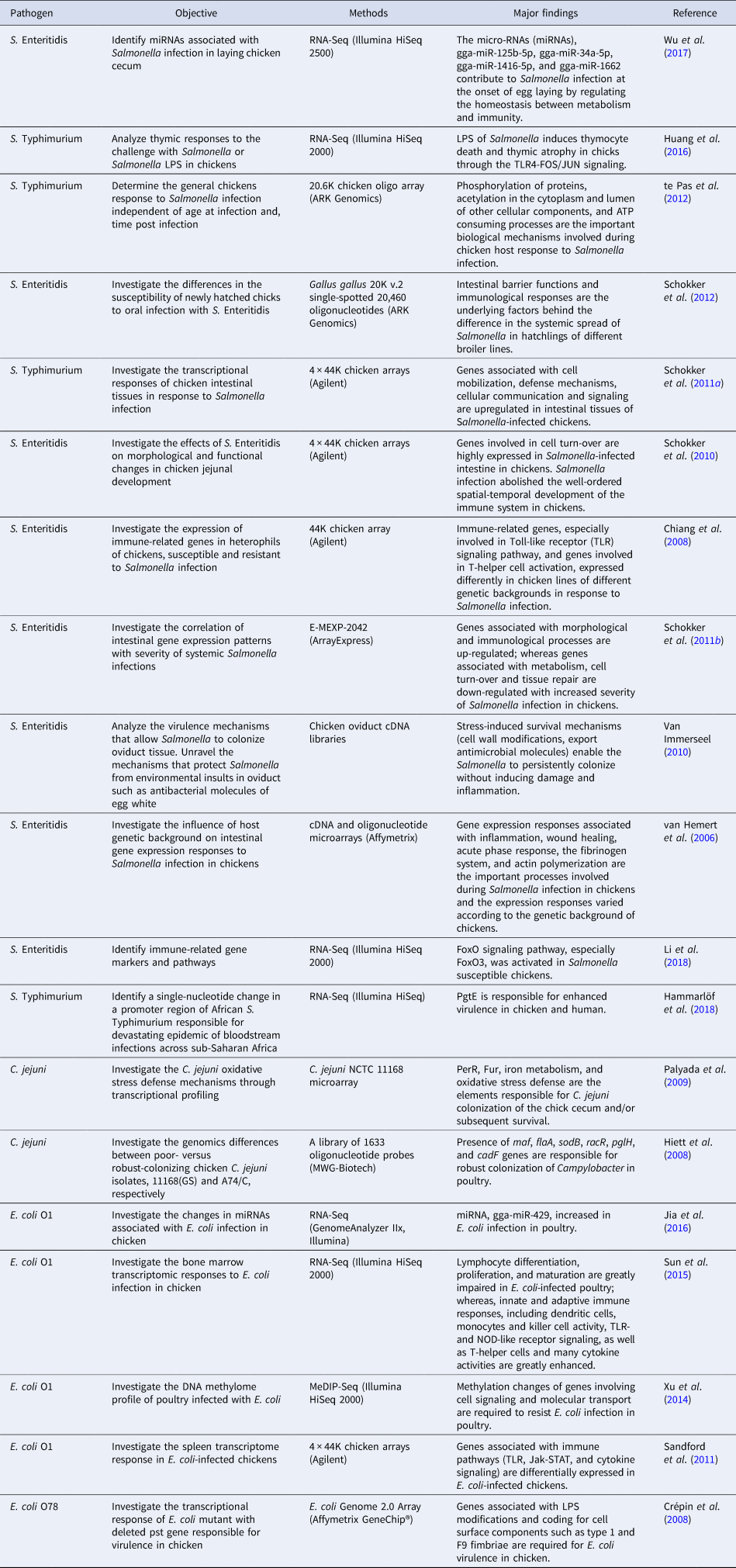
Transcriptomics is the study of all RNA molecules, especially messenger RNA, expressed at a given circumstances within a cell (Lowe et al., Reference Lowe, Shirley, Bleackley, Dolan and Shafee2017). Transcriptomic techniques (microarrays and RNA-Seq) allow study of expression of organism's genes in different tissues, conditions, or time points (Lowe et al., Reference Lowe, Shirley, Bleackley, Dolan and Shafee2017). Transcriptomics studies have led to better understanding of the pathophysiology and immunopathology of foodborne pathogens in poultry by analyzing the host cell's/tissue's responses, and local and systemic immune responses to the pathogen during infection (van Hemert et al., Reference van Hemert, Hoekman, Smits and Rebel2006; Chiang et al., Reference Chiang, Swaggerty, Kogut, Dowd, Li, Pevzner and Zhou2008; Sandford et al., Reference Sandford, Orr, Balfanz, Bowerman, Li, Zhou, Johnson, Kariyawasam, Lui, Nolan and Lamont2011; Schokker et al., Reference Schokker, de Koning, Rebel and Smits2011a, Reference Schokker, Smits and Rebel2011b; te Pas et al., Reference te Pas, Hulsegge, Schokker, Smits, Fife, Zoorob, Endale and Rebel2012; Huang et al., Reference Huang, Liu, Wu, Ansari, Wang, Huang, Zhao, Peng, Zhong and Liu2016; Sun et al., Reference Sun, Fang, Wu, Deng, Yang, Li, Li, Liao, Feng and Liu2017a). Further, it allows elucidation of key features of the complex interactions between poultry and foodborne pathogens (Crépin et al., Reference Crépin, Lamarche, Garneau, Seguin, Proulx, Dozois and Harel2008; Palyada et al., Reference Palyada, Sun, Flint, Butcher, Naikare and Stintzi2009; Van Immerseel, Reference Van Immerseel2010), and have led to the identification of host-resistance mechanisms (Hiett et al., Reference Hiett, Stintzi, Andacht, Kuntz and Seal2008; Schokker et al., Reference Schokker, Peters, Hoekman, Rebel and Smits2012; Xu et al., Reference Xu, Zhu, Hu, Li, Zhang, Nie, Nolan and Lamont2014) and the development of novel therapeutics such as microRNAs to control foodborne pathogens in poultry (Jia et al., Reference Jia, Nie, Zhang, Nolan and Lamont2016; Wu et al., Reference Wu, Qi, Liu, Yang, Xu, Liu and Li2017). Details of major transcriptomics studies presented in this review are displayed in Table 2.
Transcriptomics studies

Transcriptomics to understand the pathophysiology of foodborne pathogens
Infections by pathogens induce characteristic pathological and physiological changes, the understanidng of which, might help in the design of counter measures to modulate and prevent these pathophysiological changes; ameliorating the prognosis of the infection (Casadevall and Pirofski, Reference Casadevall and Pirofski2000; Ashida et al., Reference Ashida, Mimuro, Ogawa, Kobayashi, Sanada, Kim and Sasakawa2011). For example, several studies investigated the chicken systemic (spleen and cecal tonsil) and local (intestine) responses when challenged with S. Typhimurium using RNA microarray (20.6K chicken oligo arrays and Agilent 4 × 44K chicken arrays) (Schokker et al., Reference Schokker, Smits, Hoekman, Parmentier and Rebel2010, Reference Schokker, de Koning, Rebel and Smits2011a; te Pas et al., Reference te Pas, Hulsegge, Schokker, Smits, Fife, Zoorob, Endale and Rebel2012). The authors showed that the protein phosphorylation (especially on serine, threonine, or tyrosine), protein acetylation (in the cytoplasm and lumen of other cellular components), and adenosine triphosphate (ATP) consuming processes were the major chicken systemic responses during S. Typhimurium infection (te Pas et al., Reference te Pas, Hulsegge, Schokker, Smits, Fife, Zoorob, Endale and Rebel2012). Whereas, in jejunum genes associated with cell mobilization, cell turn-over, defense mechanisms, and cellular communication and signaling (fibronectin, adhesion/integrin) were up-regulated in Salmonella-infected chickens when compared with non-challenged chickens (Schokker et al., Reference Schokker, de Koning, Rebel and Smits2011a). Further, it was found that the Salmonella infection abolished the well-ordered spatial and temporal development of the immune system (especially genes involved in T-cell activation) in challenged chickens (Schokker et al., Reference Schokker, Smits, Hoekman, Parmentier and Rebel2010). Based on these findings, Schokker et al. correlated the intestinal gene expression profiles with the severity of systemic S. Enteritidis infection in challenged chickens. Genes associated with metabolism, cell turnover, and tissue repair in the jejunum of challenged chickens were negatively correlated with the severity data, which was consistent with previous studies (Schokker et al., Reference Schokker, Smits and Rebel2011b, Reference Schokker, Peters, Hoekman, Rebel and Smits2012). Further, the authors showed that the differences in the intestinal barrier functions and immunological responses were the underlying factors behind the varying susceptibility of different chicken breeds/lines to Salmonella infections. Similar conclusions were obtained by Hemert et al. when they investigated the influence of host genetic background on intestinal gene expression responses to S. Enteritidis infection in chickens using cDNA and oligonucleotide arrays (van Hemert et al., Reference van Hemert, Hoekman, Smits and Rebel2006). The authors found that the gene expression responses associated with inflammation (IL-8, K60, NOXO1, MHC class II), wound healing (Vanin 3, HGF1/MSP), acute phase response (avidin, antitrypsin, fibrinogen, and ovotransferrin), the fibrinogen system (fibrinogen), and actin polymerization (intestinal zipper protein) were upregulated in response to Salmonella infection in chickens. However, the expression of these genes varied according to the genetic background of the chickens. Overall, these transcriptomic studies provided insight into the chicken systemic and intestinal responses to Salmonella infection and factors behind the variable responses of chickens to infection. In the long-run, these findings can help in the development of strategies to modulate the host responses to Salmonella infection as well as develop Salmonella-resistant chicken breeds; thereby, enhancing the control of Salmonella in poultry.
Transcriptomics to understand host resistance as well as pathogen colonization and virulence mechanisms
The genetic background of both the host and pathogen are factors influencing the fate of an infection (Casadevall and Pirofski, Reference Casadevall and Pirofski2001; Doeschl-Wilson and Kyriazakis, Reference Doeschl-Wilson and Kyriazakis2012). Analyzing the transcriptome during the host–pathogen interaction would allow the identification of factors responsible for the successful or unsuccessful infection by a pathogen, that could be used to develop novel control methods. Hiett et al. showed, using C. jejuni 11168(GS) microarray, that the maf (motility accessory factor), flaA (flagellin), sodB (superoxide dismutase), racR (chemotaxis protein CheY), pglH (protein glycosylation pathway), and cadF (Campylobacter adhesion to fibronectin) genes were required for a robust colonization of chicken intestine by C. jejuni (Hiett et al., Reference Hiett, Stintzi, Andacht, Kuntz and Seal2008). It is well known that oxidative stress defense mechanisms are essential for Campylobacter colonization and survival in the chicken intestine (Hermans et al., Reference Hermans, Van Deun, Martel, Van Immerseel, Messens, Heyndrickx, Haesebrouck and Pasmans2011); however, by using the same technique as above (C. jejuni NCTC 11168 microarray), Palyada et al. discovered that PerR (peroxide-sensing regulator), Fur (ferric uptake regulator), and iron metabolism were closely associated with oxidative stress defense allowing C. jejuni colonization and survival in chicken intestine (Palyada et al., Reference Palyada, Sun, Flint, Butcher, Naikare and Stintzi2009).
Li et al. characterized the splenic transcriptomes of S. Enteritidis-susceptible and -resistant chickens and found the activated FoxO signaling pathway, especially FoxO3 in susceptible chickens (Li et al., Reference Li, Fan, Everaert, Liu, Li, Zheng, Cui, Zhao and Wen2018). This finding can be used to enhance the chicken's innate resistance against Salmonella infection. Immerseel et al. studied the virulence mechanisms that allow S. Enteritidis to colonize oviduct as well as the mechanisms protecting Salmonella from environmental insults in oviduct, such as antibacterial molecules in egg white (Van Immerseel, Reference Van Immerseel2010). Based on the studies conducted using chicken reproductive tract cDNA libraries, the stress-induced survival mechanisms (cell wall modifications and antimicrobial molecules export) enabled the Salmonella to persistently colonize the chicken oviduct without inducing damage and inflammation. Similarly, several studies showed that the virulence and colonization ability of Salmonella in chickens varied according to the host and pathogen genetic background (Foley et al., Reference Foley, Johnson, Ricke, Nayak and Danzeisen2013). A recent study, using RNA-Seq, analyzed the transcriptome of S. Typhimurium ST313, an epidemic and highly virulent Salmonella strain. They found that PgtE (an outer membrane protease) was responsible for enhanced virulence of ST313 in chickens and humans compared with Salmonella ST19 strains (Hammarlöf et al., Reference Hammarlöf, Kröger, Owen, Canals, Lacharme-Lora, Wenner, Schager, Wells, Henderson, Wigley, Hokamp, Feasey, Gordon and Hinton2018).
Besides Salmonella and Campylobacter, transcriptomic studies have also been conducted on avian pathogenic E. coli (APEC) since it is known to be a common bacterial pathogen of poultry and a potential zoonotic uropathogen (Guabiraba and Schouler, Reference Guabiraba and Schouler2015; Liu et al., Reference Liu, Stegger, Aziz, Johnson, Waits, Nordstrom, Gauld, Weaver, Rolland, Statham, Horwinski, Sariya, Davis, Sokurenko, Keim, Johnson and Price2018a). Further, APEC has been considered as an important source of ARGs to human pathogens (Osman et al., Reference Osman, Kappell, Orabi, Al-Maary, Mubarak, Dawoud, Hemeg, Mousse, Hessain, Yousef and Hristova2018). Crepin et al. analyzed the transcriptome profile of virulent and avirulent (pst mutant) APEC O78 in chickens using an Affymetrix GeneChip® E. coli Genome 2.0 array (Crépin et al., Reference Crépin, Lamarche, Garneau, Seguin, Proulx, Dozois and Harel2008). The study found that genes associated with lipopolysaccharide (LPS) modifications (eptA and yeiU) and genes coding for cell surface components such as type 1 (fimA, fimB, fimC, and fimI) and type 9 (ydeTSR, ydeQ, c1936, and c1935) fimbriae are required for APEC virulence in chickens. These genes were also crucial in facilitating APEC colonization, biofilm formation, and resistance to serum, acid, and cationic antimicrobial peptides. Transcriptomic tools also allowed for the study of the DNA methylome (the set of nucleic acid modifications in an organism's genome or in a particular cell) using MeDIP-Seq (Xing et al., Reference Xing, Zhang, Li and Wang2018). For instance, Xu et al. observed a distinct association between the functional DNA methylation changes in APEC O1-infected chickens and the severity (from mild to severe) of the infections, suggesting that methylation changes in genes involved in cell signaling and molecular transport (IL8, IL2RB, and IL1RAPL1) are required for chickens to resist APEC infections (Xu et al., Reference Xu, Zhu, Hu, Li, Zhang, Nie, Nolan and Lamont2014).
Overall, these studies identify factors and mechanisms of host resistance to pathogens as well as pathogen virulence, colonization, and survival mechanisms in the host. These findings facilitate chicken breeding strategies to develop resistant chicken lines as well as the development of novel antibacterial strategies.
Transcriptomics to understand the immunopathology of foodborne pathogens
The early stage of the interactions between a host and a pathogen elicit specific host immune response pathways, which once understood, might be used to help to modulate, prevent, and treat infection (Ashida et al., Reference Ashida, Mimuro, Ogawa, Kobayashi, Sanada, Kim and Sasakawa2011). Huang et al. analyzed the thymic responses to a S. Typhimurium challenge in chickens using RNA-Seq. The authors found that the LPS of Salmonella induced thymocyte death and thymic atrophy through the TLR4-FOS/JUN signaling pathway (a pathway that mediates the inflammatory processes during Salmonella infection), which could be a target for future therapeutic development (Huang et al., Reference Huang, Liu, Wu, Ansari, Wang, Huang, Zhao, Peng, Zhong and Liu2016). In another study, Chiang et al. investigated the expression of immune-related genes in heterophils from chickens susceptible or resistant to Salmonella infection using the 44K chicken Agilent array (Chiang et al., Reference Chiang, Swaggerty, Kogut, Dowd, Li, Pevzner and Zhou2008). The immune-related genes, especially those involved in the TLR signaling pathway and T-helper cell activation (B-G, CD4, IKK-ε, TRIF, IL-1β, IL-6, IL-8, CCL4, and K60) were upregulated in resistant chickens but were downregulated in susceptible chickens after infection. A similar approach was used by Sun et al. to study the gene expression in bone marrow of healthy and APEC O1-infected chickens (both susceptible and resistant), using RNA-Seq (Sun et al., Reference Sun, Fang, Wu, Deng, Yang, Li, Li, Liao, Feng and Liu2017a). Innate and adaptive immune responses (dendritic cells, monocytes, and killer cell activity), TLR- and NOD-like receptor signaling, T-helper cells, and many cytokines were upregulated in APEC-resistant chickens; whereas, lymphocyte differentiation, proliferation, and maturation mechanisms were greatly impaired in APEC susceptible chickens. Similarly, genes associated with immune pathways (TLR, Jak-STAT, and cytokine signaling) were down-regulated in the spleens of severely APEC-infected chickens compared with mildly APEC-infected chickens when analyzed using the Agilent 4 × 44K chicken arrays (Sandford et al., Reference Sandford, Orr, Balfanz, Bowerman, Li, Zhou, Johnson, Kariyawasam, Lui, Nolan and Lamont2011). Thus, these findings unravel the profile of immune responses and associated pathways involved during infection. These findings facilitate development of immunotherapeutics which could selectively enhance protective immune responses; thereby, protecting chickens from infections (Helbig et al., Reference Helbig, Opitz and Sander2013).
Transcriptomics to develop novel vaccine and antibacterial therapies
Apart from the abovementioned studies, transcriptomics also allow investigation of the host microRNAome (set of small non-coding RNAs with a key role in physiological and pathological processes) during bacterial infection (Staedel and Darfeuille, Reference Staedel and Darfeuille2013). The identified key microRNAs (miRNAs) could be candidates for the future vaccine and antibacterial development (Drury et al., Reference Drury, O'Connor and Pollard2017). For instance, by investigating the cecal microRNAome response to S. Enteritidis infection in chickens using Solexa Sequencing, Wu et al. identified four miRNAs (gga-miR-125b-5p, gga-miR-34a-5p, gga-miR-1416-5p, and gga-miR-1662) up-regulated in chicken cecum (Wu et al., Reference Wu, Qi, Liu, Yang, Xu, Liu and Li2017). These miRNAs are responsible for maintaining the homeostasis between metabolism and immunity; thereby, enhancing the resistance of chickens toward Salmonella infection. A similar study was performed in APEC O1-infected chickens using deep sequencing (Jia et al., Reference Jia, Nie, Zhang, Nolan and Lamont2016). The authors identified gga-miR-429 miRNA, which is associated with the enhanced susceptibility of APEC in chickens, upregulated. Therefore, suppression of gga-miR-429 expression could increase the chicken's resistance to APEC infection. Overall, these findings introduce important new areas to explore the pathophysiology of bacterial infections in poultry.
In conclusion, transcriptomics offers a wealth of opportunities to solve the problems of foodborne pathogens in poultry. Looking at the trend, the transcriptomic studies are expected to increase rapidly over the coming years. Even though transcriptome studies in the past were mostly based on microarrays, RNA-Seq is more likely to be used in the future because of the high coverage and rapid development of high-throughput technologies (Lowe et al., Reference Lowe, Shirley, Bleackley, Dolan and Shafee2017). Further, the recent advancement of single-cell RNA-Seq (measures the distribution of expression levels for each gene across a population of cells) has allowed researchers to uncover new and potentially unexpected biological discoveries compared with traditional bulk RNA-Seq (measures average expression level for each gene across a large population of input cells) (Hwang et al., Reference Hwang, Lee and Bang2018). Compared with genomics and metagenomics, which involve studying only the genome architecture, transcriptomics connect the genome to gene function and thereby provide better understanding of the complex interactions between the pathogen, host, and the environment (Manzoni et al., Reference Manzoni, Kia, Vandrovcova, Hardy, Wood, Lewis and Ferrari2018). However, like genomics, transcriptomics is costly and requires extensive bioinformatics and biostatistics tools. Bioinformatics tools that are user friendly, fast, efficient, and which do not require specialized skills are needed. Some of the recently developed bioinformatics tools such as ToPASeq (Ihnatova and Budinska, Reference Ihnatova and Budinska2015), SimBA (Mariano et al., Reference Mariano, Pereira, Aguiar, Oliveira, Benevides, Guimaraes, Folador, Sousa, Ghosh, Barh, Figueiredo, Silva, Ramos and Azevedo2016), TRAPLINE (Wolfien et al., Reference Wolfien, Rimmbach, Schmitz, Jung, Krebs, Steinhoff, David and Wolkenhauer2016), SPARTA (Johnson et al., Reference Johnson, Scholz, Teal and Abramovitch2016), SAMSA2 (Westreich et al., Reference Westreich, Treiber, Mills, Korf and Lemay2018), VIPER (Cornwell et al., Reference Cornwell, Vangala, Taing, Herbert, Koster, Li, Sun, Li, Zhang, Qiu, Pun, Jeselsohn, Brown, Liu and Long2018), PIVOT (Zhu et al., Reference Zhu, Fisher, Dueck, Middleton, Khaladkar and Kim2018), and Matataki (Okamura and Kinoshita, Reference Okamura and Kinoshita2018) have made the analysis of transcriptomics data efficient and even allow data analysis to be done on a personal computer.
Proteomics and metabolomics
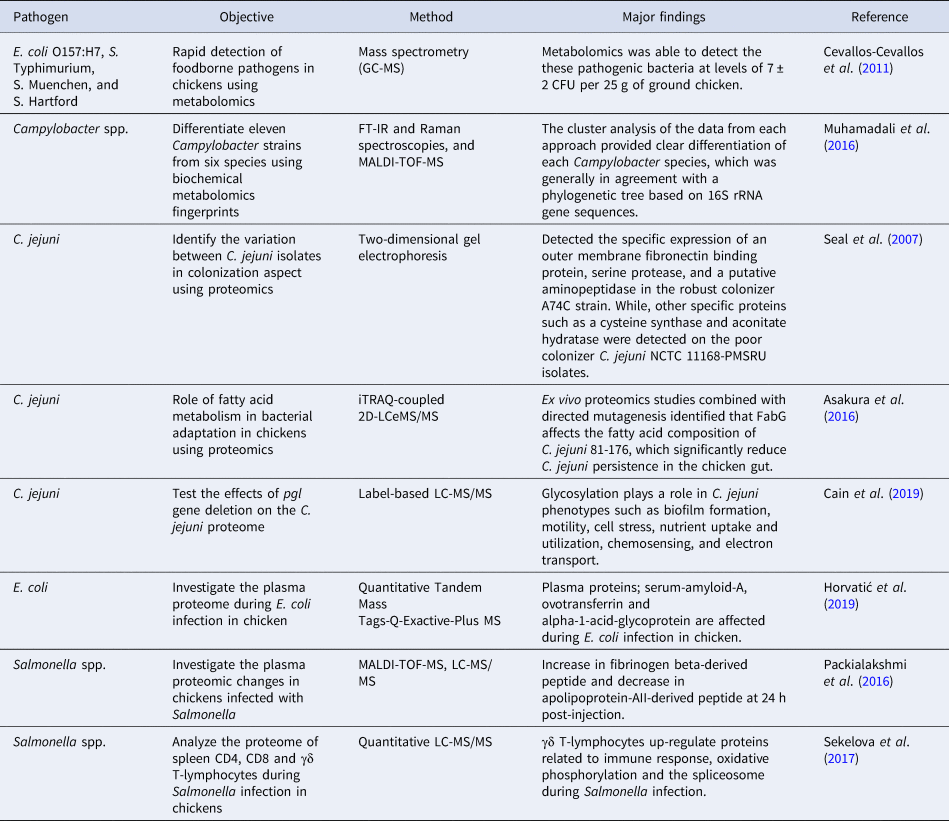
Proteomics is the study of the structure and function of proteins and peptides in an organism or cell (Martinović et al., Reference Martinović, Andjelković, Gajdošik, Rešetar and Josić2016). Proteomics programs can also be used to create a complete three-dimensional map of the cell with proteins' location (Graves and Haystead, Reference Graves and Haystead2002). The proteome can be studied using high-throughput techniques, including tandem-MS and differential in-gel electrophoresis (DIGE). On the other hand, metabolomics is the study of low molecular weight metabolites (organic acid, essential amino acids, sugars, and intra- and extra-cellular signaling molecules) in an organism or cell. These metabolites are required for the cellular maintenance, growth, and development (Fiehn, Reference Fiehn2002; Deidda et al., Reference Deidda, Piras, Dessalvi, Locci, Barberini, Torri, Ascedu, Atzori and Mercuro2015). The metabolome can be studied using MS (Singhal et al., Reference Singhal, Kumar, Kanaujia and Virdi2015), vibrational spectroscopy (Ellis et al., Reference Ellis, Eccles, Xu, Griffen, Muhamadali, Matousek, Goodall and Goodacre2017), and nuclear magnetic resonance spectroscopy (Garcia-Perez et al., Reference Garcia-Perez, Posma, Gibson, Chambers, Hansen, Vestergaard, Hansen, Beckmann, Pedersen, Elliott, Stamler, Nicholson, Draper, Mathers, Holmes and Frost2017). To date, the use of proteomics and metabolomics in food safety is limited and underestimated; however, an increasing number of studies demonstrate the benefit of these techniques for the rapid detection and identification of low level of metabolites in complex samples. These techniques offer great advantages for food-safety risk monitoring (pathogen detection), characterization of the complex pathogen–host interactions, epidemiology, immunopathology, and antibiotic-resistance studies (Ramos et al., Reference Ramos, Silva, Hébraud, Santos, Nunes-Miranda, Pinto, Pereira, Capelo, Poeta and Igrejas2016; Jadhav et al., Reference Jadhav, Shah, Karpe, Beale, Kouremenos and Palombo2019). Details of major proteomics and metabolomics study cases presented in this review are displayed in Table 3.
Proteomics and metabolomics studies

Proteomics and metabolomics to detect, characterize, and differentiate foodborne pathogens
For decades, the identification of potential foodborne pathogens in a complex sample has been done using time-consuming culture-based techniques (Jasson et al., Reference Jasson, Jacxsens, Luning, Rajkovic and Uyttendaele2010; Li and Zhu, Reference Li and Zhu2017), and onerous immunological and molecular techniques (Anderson et al., Reference Anderson, Buchan, Riebe, Parsons, Gnacinski and Ledeboer2012). However, the development of novel metabolomics and proteomics tools have enhanced the rapidity, viability, and veracity of foodborne pathogen detection (Bergholz et al., Reference Bergholz, Moreno Switt and Wiedmann2014; Ramos et al., Reference Ramos, Silva, Hébraud, Santos, Nunes-Miranda, Pinto, Pereira, Capelo, Poeta and Igrejas2016; Jadhav et al., Reference Jadhav, Shah, Karpe, Morrison, Kouremenos, Beale and Palombo2018). For example, gas chromatography mass spectrometry (GC-MS) allowed the detection of changes in the metabolite profile of foodborne pathogens (E. coli O157:H7, S. Typhimurium, S. Muenchen, and S. Hartford) in chicken meat during incubation in nonselective culture media. Principal component analysis showed different metabolites and based on the overall metabolite profile of each bacteria, GC-MS was able to detect the presence of E. coli O157:H7 and Salmonella spp. at a limit of detection (LOD) of 7 ± 2 CFU per 25 g of ground chicken within 18 h post-processing (Cevallos-Cevallos et al., Reference Cevallos-Cevallos, Danyluk and Reyes-De-Corcuera2011). This approach is more rapid than conventional culture-based methods (LOD ranged between 102 and 104 CFU ml−1), which are also laborious, time consuming, require up to 1 week for the confirmation of pathogens' species, and have higher probability of giving false results (Lee et al., Reference Lee, Kwon, Oh, Chang, Chun and Choi2014; Zhao et al., Reference Zhao, Lin, Wang and Oh2014). In another study, Fourier transform infrared (FT-IR), Raman spectroscopies, and matrix-assisted laser desorption ionization-time of flight-mass spectrometry (MALDI-TOF-MS) were used as a metabolic and proteomic fingerprinting approach for the rapid differentiation and characterization of closely related Campylobacter species isolated from humans and chickens (Muhamadali et al., Reference Muhamadali, Weaver, Subaihi, AlMasoud, Trivedi, Ellis, Linton and Goodacre2016). This study clearly showed that the combined metabolic and proteomic fingerprinting approach was more rapid and sensitive than 16S rRNA sequencing. Both FT-IR and MALDI-TOF-MS techniques differentiated C. fetus subspecies fetus from C. fetus subspecies venerealis, while the 16S rRNA sequencing data could not. Additionally, MALDI-TOF-MS showed higher sensitivity and provided information for identification of specific proteins and peptides related to each species. Taken together, these studies suggest that metabolomics and proteomics allow early, rapid, and accurate detection, differentiation, and characterization of potential foodborne pathogens in animal and food products, which could result in reduction of (1) foodborne pathogen outbreaks, (2) testing and holding costs, and (3) product recalls; thus improving product safety and quality.
Proteomics and metabolomics to understand host interaction, colonization, survival, and adaptation of foodborne pathogens
All organisms produce thousands of proteins and metabolites with various functions at any given time; however, only few of them are essential during the interactions between the pathogen and the host (Jean Beltran et al., Reference Jean Beltran, Federspiel, Sheng and Cristea2017). Therefore, comparative proteomics (i.e., the comparison of the proteome of two distinct samples) can be used to identify factors essential for the pathogen or the host at a given time point and location. For example, C. jejuni A74C is a robust colonizer of the chicken intestine (up to 107 CFU ml−1) while C. jejuni 11168-PMSRU is a poor colonizer (up to 104 CFU ml−1). Seal et al. compared the proteome from both strains using 2D-gel electrophoresis and MALDI-TOF/TOF analysis to identify the differentially expressed C. jejuni proteins (Seal et al., Reference Seal, Hiett, Kuntz, Woolsey, Schegg, Ard and Stintzi2007). Three proteins (a branched outer membrane fibronectin [Fn] binding protein [CadF], putative serine protease [htrA], and a putative aminopeptidase P) were detected only in A74C. Proteins (a cysteine synthase B [cysM], aconitate hydratase [acnB], and ketol-acid reductoisomerase [ilvC]) specific to 11168-PMSRU methods were also identified. Previously, Fn was shown to mediate C. jejuni adherence to the epithelial cells via CadF (Ziprin et al., Reference Ziprin, Young, Stanker, Hume and Konkel1999; Monteville et al., Reference Monteville, Yoon and Konkel2003). Similarly, HtrA was shown to play a role in intracellular replication of adherent and invasive E. coli strain LF82 within J774-A1 macrophages (Bringer et al., Reference Bringer, Barnich, Glasser, Bardot and Darfeuille-Michaud2005), AcnB is known to control the flagella biosynthesis in S. enterica (Tang et al., Reference Tang, Guest, Artymiuk, Read and Green2004), while cysM was reported to play a role in the survival and growth of S. aureus and E. coli, respectively (Garvis et al., Reference Garvis, Tipton and Konkel1997; Lithgow et al., Reference Lithgow, Hayhurst, Cohen, Aharonowitz and Foster2004). Comparative proteomics methods were also used to identify and compare the total proteins of S. Enteritidis, S. Typhimurium, and S. Gallinarum isolated from humans and chickens using two-dimensional gel electrophoresis (2-DIGE) and MS (Sun and Hahn, Reference Sun and Hahn2012). The MALDI-TOF analysis identified proteins (β-lactamase, RfbH protein, and shikimate kinase) that are related to virulence. For example, β-lactamase expression was induced (7–8-fold) in the human S. Enteritidis isolate relative to the chicken isolate. Further, RfbH was highly expressed in S. Gallinarum and human S. Enteritidis, while shikimate kinase was highly expressed in S. Typhimurium. Comparison of the proteomics profiles of the serovars from different hosts may provide insight into the potential roles of the identified proteins in the host adaptation and pathogenicity of Salmonella.
Using green fluorescent protein (GFP)-expression and iTRAQ-coupled 2D-LC-MS/MS, Asakura et al. showed that the fatty acid metabolism is an important feature for the persistence of C. jejuni 81-176 in a chicken's ceca (Asakura et al., Reference Asakura, Kawamoto, Murakami, Tachibana, Kurazono, Makino, Yamamoto and Igimi2016). Ten proteins (FabG, HydB, CJJ81176_0876, MscS, CetB, FlhF, PurH, PglJ, LpxC, and Icd) were significantly up-regulated (>1.4-fold) after infection. Through fatty acid methyl ester analysis and directed mutagenesis, the authors showed that the fabG deletion significantly reduced the unsaturated fatty acids abundance (1.3-fold) as well as the bacterial burden in chicken's ceca. This study provided evidence implicating fatty acid metabolism in C. jejuni 81-176 colonization of chicken.
N-glycosylation encoded by pgl is essential for C. jejuni colonization in chickens and virulence in humans, which makes it an ideal antimicrobial target (De Schutter et al., Reference De Schutter, Morrison, Morrison, Ciulli and Imperiali2017). However, the limited knowledge concerning the biological functions of N-glycosylation has limited drug-discovery approaches. Cain et al. studied the proteome response of a C. jejuni pglB (oligosaccharyl transferase) deletion mutant using label-based liquid chromatography/tandem mass spectrometry (LC-MS/MS) and DIASWATH-MS to understand the molecular mechanisms associated with pglB (Cain et al., Reference Cain, Dale, Niewold and Cordwell2019). Overall, this study showed that glycosylation mediates several C. jejuni phenotypes including biofilm, motility, cell stress, nutrient uptake and utilization, chemo-sensing, and electron transport. Specifically, the deletion of pglB significantly increased the abundance of stress-associated proteins (ClpB, GroEL, GroES, GrpE, and DnaK), reduced transducer-like (Tlp) proteins and depleted respiration/electron transport-associated proteins (MfrABC, SdhABC, FrdABC, and SucCD).
In conclusion, proteomics facilitates the identification and characterization of proteins and molecular mechanisms essential for the survival of foodborne pathogens in specific environments, which will aid the development of novel targeted intervention strategies (attenuated vaccines and narrow spectrum antimicrobials) (Kumari et al., Reference Kumari, Kumar, Samant, Sundar, Singh and Dube2008; Jagusztyn-Krynicka et al., Reference Jagusztyn-Krynicka, Dadlez, Grabowska and Roszczenko2009; DelVecchio et al., Reference DelVecchio, Sabato, Trichilo, Dake, Grewal and Alefantis2010).
Proteomics to identify immunological biomarkers of infection
The interactions between hosts and pathogens induce specific changes in host protein quality, expression, and/or abundance (Sethi and Brietzke, Reference Sethi and Brietzke2015). These modifications, even minimal, can be detected using proteomics-based technologies, which allow the identification of biomarkers of early infection (Kaddurah-Daouk et al., Reference Kaddurah-Daouk, Kristal and Weinshilboum2008; Kusebauch et al., Reference Kusebauch, Hernández-Castellano, Bislev, Moritz, Røntved and Bendixen2018). Using the quantitative Tandem Mass Tags approach Q-Exactive-Plus mass-spectrometer (TMT-based LC-MS), Horvatic et al. quantified the changes in the proteome of chicken plasma after treating chickens with E. coli LPS (Horvatić et al., Reference Horvatić, Guillemin, Kaab, McKeegan, O'Reilly, Bain, Kules and Eckersall2019). These authors identified that pathways related to blood coagulation, exocytosis and protein excretion, vasoconstriction were activated while others related to apoptosis, extracellular matrix organization, peptidase/hydrolase regulation, drug transport were inhibited during the early period of inflammation. Previous studies reported the therapeutic potential of fibrinogen complex, which plays an important role in blood coagulation and innate and T-cell mediated immune responses, against bacterial pathogens such as S. aureus (Davalos and Akassoglou, Reference Davalos and Akassoglou2012). Accordingly, the 87 regulatory proteins identified by Horvatić et al. which were significantly increased after 12 h post-LPS injection (including serum-amyloid-A, ovotransferrin, and alpha-1-acid-glycoprotein), might represent novel targets for therapeutic approaches (Horvatić et al., Reference Horvatić, Guillemin, Kaab, McKeegan, O'Reilly, Bain, Kules and Eckersall2019). A similar study performed using MALDI-TOF and LC-MS/MS on chickens after injection with S. Typhimurium LPS (Packialakshmi et al., Reference Packialakshmi, Liyanage, Lay, Makkar and Rath2016) revealed a significant increase in fibrinogen beta-derived peptide and a decrease in apolipoprotein-AII-derived peptide in the blood samples at 24 h post-LPS injection. Further, LC-MS/MS data showed a significant increase of α1-acid glycoprotein, a chemokine CCLI10, and cathelicidin-2, and a significant decrease in an interferon-stimulated gene-12-2 protein in the LPS treated group.
Sekelova et al. studied the proteome of chicken's splenic lymphocytes (CD4, CD8, and γδ T-lymphocytes) before and after intravenous infection with S. Enteritidis using LC-MS/MS (Sekelova et al., Reference Sekelova, Polansky, Stepanova, Fedr, Faldynova, Rychlik and Vlasatikova2017). Overall, 171 proteins were differentially expressed in response to S. Enteritidis infection in at least one of the T-lymphocyte type. CD4 T-lymphocytes respond to S. Enteritidis infection by inducing ribosomal proteins and inhibiting the lysosomal functions, MHCII and lysosomal (cathepsin) functions. In cytotoxic CD8 T-lymphocytes, the expression of the STAT1 and MCM (minichromosome maintenance complex proteins) proteins were increased. The expression of γδ T-lymphocytes is regulated through oxidative phosphorylation and epigenetic histone modification. The T-lymphocyte specific proteins identified were identified involved in cell differentiation, cell activation, and regulation of programed cell death (Berndt and Methner, Reference Berndt and Methner2001; Matulova et al., Reference Matulova, Stepanova, Sisak, Havlickova, Faldynova, Kyrova and Rychlik2012). Identification and characterization of new proteins using proteomics is a promising approach to study proteins involved in immune response and which can be used as candidate biomarkers of inflammation and Salmonella infection in chickens.
In conclusion, increasing number of studies demonstrated the great potential of proteomics and metabolomics for the rapid detection and identification of foodborne pathogens in food products (Martinović et al., Reference Martinović, Andjelković, Gajdošik, Rešetar and Josić2016). For example, rapid identification of foodborne pathogens via the identification of species-specific proteomics profiles can lower the risks associated with the consumption of contaminated food (Seng et al., Reference Seng, Drancourt, Gouriet, La Scola, Fournier, Rolain and Raoult2009). In the future, the combination of high-throughput methods with MS techniques would facilitate the increased use of these technologies and make them more efficient for routine analyses of foodborne pathogens. For example, RapidFire® MS is a low cost high-throughput solid phase extraction automated system allowing analysis of up to 384 samples 10 times faster than the traditional MS/MS approach, which is ideal for drug-discovery purposes (Leveridge et al., Reference Leveridge, Collier, Edge, Hardwicke, Leavens, Ratcliffe, Rees, Stasi, Nadin and Reith2016; Veach et al., Reference Veach, Mudalige, Barnes and Baker2019). Further, the recent development of PANDA-view, a comprehensive and flexible tool, will facilitate the analysis and data visualization of quantitative proteomics data (Chang et al., Reference Chang, Li, Guo, Ding, Xu, Han, He and Zhu2019). In summary, all of these technological advances will facilitate the replacement of time consuming, less reliable and less sensitive, and laborious conventional food-safety detection methods by proteomics and metabolomics approaches.
Conclusion and future prospective
‘Omics’ metthods will likely be key to a new era in food safety. High-throughput genomic technologies, especially WGS, have revolutionized the ability to detect and attribute the source of foodborne pathogens in poultry. WGS also makes it feasible to understand the genetic diversity and evolution (Rantsiou et al., Reference Rantsiou, Kathariou, Winkler, Skandamis, Saint-Cyr, Rouzeau-Szynalski and Amézquita2018), surveillance of the antibiotic resistance and associated resistant genes (Oniciuc et al., Reference Oniciuc, Likotrafiti, Alvarez-Molina, Prieto, Santos and Alvarez-Ordóñez2018), and elucidate the transmission dynamics of foodborne pathogens in poultry (Le and Diep, Reference Le and Diep2013). In the USA, GenomeTrkar, a genomic reference database of foodborne pathogens, based on WGS data has been successfully used for real-time surveillance of foodborne pathogens in food and environmental sources (Timme et al., Reference Timme, Sanchez Leon and Allard2019). WGS has tremendous potential for global epidemiological surveillance of foodborne pathogens, outbreak detection, and infection control in the future (Rantsiou et al., Reference Rantsiou, Kathariou, Winkler, Skandamis, Saint-Cyr, Rouzeau-Szynalski and Amézquita2018). Transcriptomic technologies have been crucial in uncovering a myriad of information regarding persistence, virulence, host–pathogen interactions, and pathogenicity of foodborne pathogens in poultry (Salazar et al., Reference Salazar, Wang, Zhang, Deng, den Bakker and Hendriksen2017). Transcriptomics have also been used to identify the colonization and survival mechanisms of foodborne pathogens in host as well as markers of host resistance to foodborne pathogens (Salazar et al., Reference Salazar, Wang, Zhang, Deng, den Bakker and Hendriksen2017). Thus, transcriptomic data have great potential to be utilized for rational development of new and improved control strategies for foodborne pathogens in poultry (Bergholz et al., Reference Bergholz, Moreno Switt and Wiedmann2014). Beyond the genomic and transcriptomic technologies, MS-based proteomic and metabolomic technologies have aided in identifying biomarkers of foodborne pathogen infections in host as well as rapid detection of foodborne pathogens in complex samples, even at low abundance levels (Jadhav et al., Reference Jadhav, Shah, Karpe, Morrison, Kouremenos, Beale and Palombo2018, Reference Jadhav, Shah, Karpe, Beale, Kouremenos and Palombo2019). This information could guide development of new rapid diagnostic tests as well as new therapeutic drugs and vaccines to control foodborne pathogens in poultry by identifying molecules essential for the survival of the pathogen under specific conditions.
‘Omics’ approaches are powerful tools requiring specific equipment and skill sets, and their use is highly associated with the cost of these approaches. For example, WGS technologies have not been widely adopted in developing countries because of the high cost related to establishing and maintaining a sequencing facility, lack of skilled personnel, and limited access to tools for genomic data manipulation and analysis (Helmy et al., Reference Helmy, Awad and Mosa2016). Further, the numerous types of equipment, analytic tools, and databases with different velocities and veracities that can be used to process the big data, can will affect the quality of the results and the biological conclusions (Brenner, Reference Brenner2010; Press, Reference Pressn.d.; Ruiz, Reference Ruiz2017). Accordingly, standardized guidelines should be developed and freely available to normalize and facilitate future metagenomics studies. Similarly, the transcriptomics approach has not achieved its full potential because of the lack of faster, less computationally intensive, and easier to use bioinformatics tools (Salazar et al., Reference Salazar, Wang, Zhang, Deng, den Bakker and Hendriksen2017). The development of user-friendly analysis tools in the future will help in the utilization of transcriptomic tools to yield solutions to foodborne pathogen infections in poultry. Proteomic and metabolomic approaches produce bounteous data and therefore require analysis of large and complex datasets using intensive computational methods (Gatto et al., Reference Gatto, Hansen, Hoopmann, Hermjakob, Kohlbacher and Beyer2015). It is important to keep in mind that the use of ‘omics’ approaches in science is very recent and the field is evolving rapidly; therefore, the interpretation of the results might change with the evolution of the tools available. In summary, omics technologies have the potential to transform the fields of food safety and public health but the technology requires more “user-friendly” bioinformatics analysis tools as well as easier access of omics data at the global level. In-depth understanding of foodborne pathogens in poultry using omics technologies will enhance the food safety and thereby improve public health.
Acknowledgement
This research was supported by state and federal funds appropriated to the Ohio Agricultural Research and Development Center, The Ohio State University.