INTRODUCTION
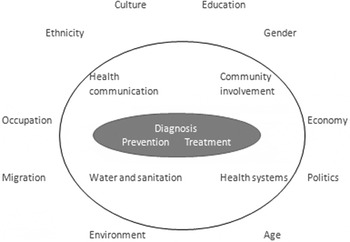
Irrespective of the availability of efficacious tools for control of neglected tropical diseases (e.g. anti-parasitic drugs) such diseases cannot be successfully controlled without careful consideration of local socio-cultural, economic and political determinants. This is particularly true for schistosomiasis where several of these factors may influence the application and/or acceptance of control measures. In this article, we outline some social science perspectives on schistosomiasis control in Africa based on a review of the literature. The article is a condensed version of a chapter from a book on socio-cultural aspects of schistosomiasis, which also includes studies from outside Africa as well as studies of social determinants of schistosomiasis at micro- and macro-levels (Bruun and Aagaard-Hansen, Reference Bruun and Aagaard-Hansen2008). Within the broad range of disciplines constituting social science, we focus on anthropology, sociology, education and selected parts of health systems research (others are economics, political science and demography that will not be dealt with here). With few exceptions, this article draws upon the social science literature published since 1990 that addresses diagnosis and screening, access to treatment and mass drug administration, provision of safe water supply and sanitation, health communication and community involvement, and will have a particular focus on Africa. In addition, it will include studies of schistosomiasis control seen in a health systems perspective. Fig. 1 outlines these elements of schistosomiasis control (which will determine the structure of this article) as well as some of the broader social determinants.
Conceptual framework outlining the main elements of schistosomiasis control. The inner group comprises the essential elements of prevention, diagnosis and treatment. The middle group contains cross-cutting intervention elements, whereas the outer group outlines more general social determinants of relevance.

METHODOLOGY
The review is based on literature search in a number of databases (Cochrane Database of Systematic Reviews; Database of Abstracts of Reviews of Effects; NHS Economic Evaluation Database; POPLINE; PubMed; Web of Science), as well as a specific selection of journals (Culture, Medicine and Psychiatry; Eastern Mediterranean Health Journal; Health Policy and Planning; Social Science and Medicine) and the electronic bibliography entitled ‘25 years of social science research at TDR: a basic bibliography’ (UNICEF/UNDP/World Bank/WHO Special Programme for Research & Training in Tropical Diseases, 2004 – CD-ROM). The search was conducted in English, French and Portuguese domains. For detailed search strategy, see Bruun and Aagaard-Hansen (Reference Bruun and Aagaard-Hansen2008).
The core social science references were selected based on the criteria of ‘rich contextualization of main findings’, ‘well-founded generalizations in the discussion’, ‘explicit and well-founded theoretical basis’ or ‘critical and/or innovative use of methods’. Additional references were added as they were identified in the lists of references or were subsequently published. As the original literature search had a much broader scope, mainly the references of relevance to schistosomiasis control in Africa have been included in this article. In addition to the core social science publications, some more public health oriented references have been included in order to unfold the practical control implications.
DIAGNOSIS AND SCREENING
Diagnosis is often regarded as a purely technical endeavour to be handled by health professionals. However, it may also be viewed much broader as the ‘interface’ between infected individuals and their communities with the health care system represented by health professionals and researchers (Feldmeier and Krantz, Reference Feldmeier and Krantz1993). This interface will be influenced by social and cultural factors. For example, Feldmeier and Krantz (Reference Feldmeier and Krantz1993) identify a number of potential gender-related biases in the diagnosis and morbidity assessments of schistosomiasis in women. These include the use of stool and urine samples which may be culturally inappropriate and may lead to low compliance in screening programmes. Vlassoff and Bonilla (Reference Vlassoff and Bonilla1994) provide an overview of gender-related differences in relation to schistosomiasis in which they specifically highlight the risk for misdiagnosis and inferior treatment. In a rural area of Egypt, Talaat et al. (Reference Talaat, Watts, Mekheimar, Farook and Hamed2004) mention three reasons why female genital schistosomiasis (FGS) was under-diagnosed: neglect of women's health; misconceptions about reproductive health and family planning; and limited access to, and use of formal health care.
People's willingness to participate in screenings and surveys is not well understood, but the few studies on the topic describe community compliance as dynamic ranging from acceptance to rejection. As an example of erosion of study compliance, Traoré (Reference Traoré1989) observed how the population near a hydroelectric dam in Mali became progressively more tired of being surveyed for the past eight years on their economic, social and health conditions. A likely reason may be the inefficient ways in which test results were made available to people during previous surveys exhibiting researchers' failure to engage with the community.
The World Health Organization guidelines (WHO, 2002) recommend that disease screening is carried out in schools and the Red Urine Study Group (1995) outlined the ways in which screening can be done using questionnaires for rapid identification of high-risk communities of urinary schistosomiasis (for a review see Lengeler, Utzinger and Tanner, Reference Lengeler, Utzinger and Tanner2002). A largely unexplored area is the link between disease screening and health education. In a context of limited health system resources, El Katsha and Watts (Reference El Katsha and Watts1998) conducted an action research study in the Nile delta of Egypt, which led to a better way of screening schoolchildren. Not only did it make the procedure more effective in identifying Schistosoma mansoni cases, but it also overcame the particular points of embarrassment that made the girls absent themselves on the screening days.
TREATMENT WITH PRAZIQUANTEL
A key component of vertical control programmes today is chemotherapy with praziquantel where targeting, adherence and equity of access are essentially social issues. Most control programmes operate with one of three approaches to treatment: (1) mass treatment of whole populations without individual diagnosis; (2) selective treatment of groups defined by age or occupation without individual diagnosis; and (3) selective treatment of individuals upon diagnosis. Current strategies have been developed considering the balance between the need for regular treatment due to high re-infection rates and the cost of interventions (WHO, 2006).
Prevalence and intensity of schistosomiasis is often higher among children than among adults. Since the reversion of morbidity following treatment is often better in school-aged children than in adults, targeting school-aged children brings forth better impact of preventive chemotherapy. For logistic reasons, praziquantel treatment is primarily targeted towards school-aged children taking advantage of the educational infrastructure and resources. It is known, however, that attendance rates in African schools vary (Ainsworth and Filmer, Reference Ainsworth and Filmer2002) and if the proportion of non-attending children is high, treatment coverage may be increased through community delivery of drugs (Olsen, Reference Olsen1998 in Kenya; Mafe et al. Reference Mafe, Appelt, Adewale, Idowu, Akinwale, Adeneye, Manafa, Sulyman, Akande and Omotola2005 in Nigeria). It should be noted that the children who regularly fail to attend school may or may not have a higher prevalence and intensity of infection (Husein et al. Reference Husein, Talaat, El Sayed, El Badawi and Evans1996; Useh and Ejezie, Reference Useh and Ejezie1999; Fentiman, Hall and Bundy, Reference Fentiman, Hall and Bundy2001). In areas with high levels of attendance, community leaders and teachers can be contacted and schoolchildren can be informed about the next deworming campaign and invited to bring their siblings. Talaat, Omar and Evans (Reference Talaat, Omar and Evans1999) showed that particularly girls and younger children benefited from this approach in Egypt. Operational problems included teachers' concern about the discipline of non-enrolled children and lack of clean water for administering tablets (Talaat et al. Reference Talaat, Omar and Evans1999). Recent studies have shown that pre-school children, and even infants, can also be infected (Mafiana, Ekpo and Ojo, Reference Mafiana, Ekpo and Ojo2003; Odogwu et al. Reference Odogwu, Ramamurthy, Kabatereine, Kazibwe, Tukahebwa, Webster, Fenwick and Stothard2006; Stothard and Gabrielli, Reference Stothard and Gabrielli2007) – a fact of importance to studies of morbidity dynamics and reduction of contamination, as well as for the targeting of control programmes. As WHO guidelines have now moved towards the integration of schistosomiasis control with other neglected tropical diseases (WHO, 2002), the identification of target groups within the setting of poly-parasitism and how to reach them still needs further consideration (Brooker et al. Reference Brooker, Kabatereine, Gyapong, Stothard and Utzinger2009).
Adherence to treatment depends on many social factors that have rarely been studied systematically in relation to praziquantel. Adherence should be seen in the context of the fact that people often alternate between or combine treatments obtained through formal health care providers and informal sources, such as informal drug retailers and traditional herbalists (Mwanga et al. Reference Mwanga, Magnussen, Mugashe, Gabone and Aagaard-Hansen2004). Adherence and health seeking behaviour is not only about level of knowledge and education or money for transport and treatment, but also the anticipated quality of the medicine and the health care offered by the programme or health facility. In a highly endemic area in northern Cameroon, a control programme with health communication as a key element successfully introduced user fees for (subsidized) praziquantel (Cline and Hewlett, Reference Cline and Hewlett1996; Hewlett and Cline, Reference Hewlett and Cline1997). In north-western Uganda, Parker, Allen and Hastings (Reference Parker, Allen and Hastings2008) found fears of side-effects of praziquantel, which were not addressed by the treatment programme, and which had a negative effect on the national schistosomiasis and soil-transmitted helminth control programme.
There has been little formal documentation concerning the equity of access to treatment for schistosomiasis. A study from Cameroon observed how inclusion of villages or areas in intervention projects was also a matter of political and religious intra-community priorities which lead to inequity in health care delivery and services (Hewlett and Cline, Reference Hewlett and Cline1997). The issue of geographical accessibility of people in more remote areas to resources and technical assistance for control is rarely addressed, but poses a potential equity issue (Kloos, Reference Kloos1995). At community level, women's access to treatment may be hampered by lack of access to cash and possible restrictions on their movements, resultant from household chores, hindering visits to health facilities for health problems that are not considered life threatening. Women may wait longer than men in reporting ill, due to a mix of guilt, feelings of responsibility as well as preference for self-treatment and consultations with traditional specialists (Vlassoff and Bonilla, Reference Vlassoff and Bonilla1994). Muela, Mushi and Ribera (Reference Muela, Mushi and Ribera2000) conducted a study in Ifakara, Tanzania on ability and willingness to pay for health care. Though it focused on malaria rather than schistosomiasis, it allows some important general conclusions to be drawn. Thus, they state that the perceived illness causality (‘normal’ versus ‘personalistic’) plays a key role in determining how many resources can be mobilised and to what extent the patient's social network is involved when seeking treatment.
WATER AND SANITATION
Safe and adequate water supply and sanitation have the potential to prevent not only schistosomiasis but also many other diseases resulting from sub-standard living conditions (Wood, Sawyer and Simpson-Hebért, Reference Wood, Sawyer and Simpson-Hebért1998; Asaolu and Ofoezie, Reference Asaolu and Ofoezie2003; Utzinger et al. Reference Utzinger, Bergquist, Shu-Hua, Singer and Tanner2003). Studies exploring the effect of installing safe water supply, sanitation and drainage on behaviour and infection rates show varying results, partly due to the very different indicators used for evaluating effect.
In one of the earliest studies of the link between environmental factors and infection, Farooq et al. (Reference Farooq, Nielsen, Samaan, Mallah and Allam1966) recommended that access to safe water should be prioritized as a preventive measure in Egypt. Noda et al. (Reference Noda, Shimada, Muhoho, Sato, Kiliku, Gatika, Waiyaki and Aoki1997), who conducted a study of an intervention in Kenya comprising installed community stand pipes and a shower unit at the local school, observed that the new water sources had a great influence on some villagers' water contact behaviour and very little on the rest of the villagers. They observed that children's bathing for leisure decreased and people began to wash more at river banks and less in streams. The quality of water supplied for drinking and washing clothes plays an important role in levels of utilization (Chimbari et al. Reference Chimbari, Ndlela, Nyati, Thomson, Chandiwana and Bolton1992). Other studies have shown similar trends (White, Bradley and White, Reference White, Bradley and White1972; Tchuem Tchuenté et al. Reference Tchuem Tchuenté, Southgate, Webster, De Bont and Vercruysse2001; Sow et al. Reference Sow, Polman, Vereecken, Vercruysse, Gryssels and de Vlas2008). Convenience of location, break-down of pumps, privacy to bathe, availability of washing slabs and a chance to socialize are also factors involved in people's choice of water sources for different purposes (El Katsha and Watts, Reference El Katsha and Watts1997; Watts et al. Reference Watts, Khallaayoune, Benselia, Laamrani and Gryseels1998).
On balance, improved sanitation is considered more effective than reducing general contact with infected water (Espino, Koops and Manderson, Reference Espino, Koops and Manderson2004) although for a number of reasons the provision of latrine facilities does not imply that they are always used as intended (Asaolu and Ofoezie, Reference Asaolu and Ofoezie2003). Small children, for example, may avoid using latrines for fear of falling into them, whereas people working in their fields will not return home in the middle of the day to relieve themselves, and latrines in the fields may not be well located for convenience nor well maintained (Chimbari et al. Reference Chimbari, Ndlela, Nyati, Thomson, Chandiwana and Bolton1992 – for Zimbabwe). A survey in two villages in Egypt showed that overall infection levels were higher in the village without a sewerage system. When measured at household level, there was a statistically significant relationship between infection levels and the absence of sewerage connections, but in the better drained village there was no similar significant correlation (El Katsha and Watts, Reference El Katsha and Watts1997; see also El Katsha and Watts, Reference El Katsha and Watts2002).
HEALTH COMMUNICATION
Kloos (Reference Kloos1995) has conducted an elaborate review and critique of the common concepts and models for health education. Summarising some main points, health education has often been seen as ‘health instruction’, a one-directional technical instrument, often with a moralistic content, for making individuals comply with interventions. Thus, health education can be framed as an issue of ‘depositing’ technical information in passive individuals (see Sow et al. Reference Sow, de Vlas, Mbaye, Polman and Gryseels2003 for an evaluation of such an approach in Senegal). More rarely, health education is viewed as health communication – highlighting the dialogue between individuals, communities and institutions with different agendas, needs and priorities. Health communication can also be seen as creating ‘a critical perception of the social, cultural, political and economic forces that structure reality’ so that people will be encouraged to ‘take action against those forces that are oppressive’ (Porter, Ogden and Pronyk, Reference Porter, Ogden and Pronyk1999). Unfortunately, health communication interventions are often conceptually unclear and without explicit objectives (Kloos, Reference Kloos1995). Furthermore, without the means for behaviour change (e.g. access to safe water supply and appropriate sanitation) health communication may only have limited impact on prevalence and intensity levels. Likewise, in areas where water contact is part of occupational exposure, health communication on treatment may be more relevant than messages on prevention.
In his comprehensive review of the literature on health education in relation to schistosomiasis, Kloos (Reference Kloos1995) observed that health education began to acknowledge local socio-cultural contexts in the 1970s when large-scale snail control was abandoned and the impact of interventions began to depend more on collaboration with local communities. While there is no doubt that health education, which is found relevant by local communities, will receive more attention and have a higher chance of impact on behaviour (if the means of change are available), there is no guarantee that it will lead to changed practices.
One of the most thoroughly documented processes of adapting health education to local conditions is the study by Hewlett and Cline (Reference Hewlett and Cline1997) from northern Cameroon. Their model had four components: health education; diagnosis and treatment; snail control; and a cost recovery system. Health education activities were designed to relate to local knowledge and practices. Knowledge increased, particularly among children, who were the main target of health education. The number of reported cases at the health centre grew six-fold and the overall prevalence fell from 21% to 7% between 1991 and 1993.
El Katsha and Watts (Reference El Katsha and Watts1994) developed a model for health education in Egyptian villages that was not only directed at reducing levels of schistosomiasis, but also reflected local concerns regarding childhood diarrhoea, eye diseases and environmental sanitation. The model was developed and thoroughly tested with the involvement of community members as well as health staff and government agencies at local levels.
Making a case for linking helminth control and ‘health-promoting schools’, Taylor et al. (Reference Taylor, Coovadia, Kvalsvig, Jinabhai and Reddy1999) explored risk factors for helminth and schistosome infections among schoolchildren in KwaZulu-Natal, South Africa. They organised findings using Green and Kreutzer's Health Promotion Model, which labels factors for improving health as predisposing, reinforcing or enabling. Water contacts, lack of clean water, health-seeking behaviour and interest in health communication were included among enabling factors. On the basis of this group of factors, it was possible to measure and monitor their role in transmission in a systematic way. Studies of the impact of health education usually measure changes in knowledge and sometimes also (reported) changes in practices (Gwatirisa, Ndamba and Nyazema, Reference Gwatirisa, Ndamba and Nyazema1999; Garba et al. Reference Garba, Aboubacar, Barkire, Vera, Sellin and Chippaux2001), but more rarely linkages to prevalence (Huang and Manderson, Reference Huang and Manderson1992). When lower prevalences are observed, it is, however, often difficult to assess how health education and other components in control programmes each contribute to improvements over time.
A study of the impact of action-oriented health education in primary schools in rural Tanzania showed that behaviour change was still evident a year after all project activities had ended. Changes were evident in children's knowledge of health and school environments improved considerably. There were mixed experiences with children acting as change agents regarding health and hygiene habits in their homes (Lansdown et al. Reference Lansdown, Ledward, Hall, Issae, Yona, Matulu, Mweta, Kihamia, Nyandindi and Bundy2002). In Zanzibar, there has been a recent evaluation of the health education booklets pertaining to urinary schistosomiasis finding that tangible impact is difficult to detect (French et al. Reference French, Rollinson, Basáñez, Mgeni, Khamis and Stothard2007). See also Mwanga (Reference Mwanga2004) on a community-integrated and action-oriented health education intervention on schistosomiasis and other illnesses among children of primary school-age in Magu district, Tanzania.
Outside the school setting, a study compared the impact of three different approaches to health education on infection rates in Ghanaian villages over three years. This study found that the area receiving the most intensive health education and community mobilization had a lower prevalence of infection than the two others (Nsowah-Nuamah et al. Reference Nsowah-Nuamah, Mensah, Aryeetey, Wagatsuma and Bentil2001). In Egypt, where prevalence is high, passive case detection is an element of schistosomiasis control. The strategy is to make praziquantel available in all clinics in Egypt, to broadcast television spots to make people aware of the symptoms of schistosomiasis, and to encourage them to seek treatment at clinics. Since not all Egyptians have access to television, and levels of illiteracy may be high, it was suggested that the assumptions behind this strategy needed reassessment, particularly in newly reclaimed areas where access to information is very limited and where health facilities are lacking (Mehanna et al. Reference Mehanna, Rizkalla, el Sayed and Winch1994). Another observation regarding the mass media-based social marketing strategy in Egypt is that the various health messages appear to make people take more medications instead of changing behaviour (Kloos, Reference Kloos1995). El Katsha and Watts's (Reference El Katsha and Watts1998) study from Egypt exploring ways of improving the screening procedures in schools also recommended that the related health education should be given more emphasis.
COMMUNITY INVOLVEMENT IN SCHISTOSOMIASIS CONTROL
Health education and community involvement (or participation) has sometimes been seen as one and the same intervention. This lack of precision in terminology – and the very different ways of evaluating the two approaches – contributes to the lack of knowledge regarding the effects of health communication and community involvement, respectively. Community involvement was one of the principles – if not the core principle – of the primary health care framework formulated at the Alma Ata conference in 1978 (WHO and UNICEF, 1978). Since its inception, however, there has been an inherent paradox. Not only is the concept of community problematic in itself (Mehanna et al. Reference Mehanna, Rizkalla, el Sayed and Winch1994; Nathan cited by Cline, Reference Cline1995; Espino et al. Reference Espino, Koops and Manderson2004), but community involvement, ideally steered by communities to address their own priorities, is often initiated and driven by external agencies. These agencies usually focus on outputs rather than the quality of processes, and they are not necessarily inclined to let go of authority and influence (Espino et al. Reference Espino, Koops and Manderson2004). Thus, there is a fundamental and often unresolved tension between the need for quick results and the long-term and often slow build up of local capacity, which may be more sustainable. Furthermore, control interventions create new social relations and thereby new ‘communities’. Expanding the notion of ‘community’ to include implementing agencies and their local representatives make it possible to understand the reasons why activities may or may not be sustained once an external intervention comes to an end (Espino et al. Reference Espino, Koops and Manderson2004).
Control programmes have mainly relied on the passive co-operation of community members or even enforced active participation in external professionals' short-term interventions (Kloos, Reference Kloos1995). There is no single, universal way to motivate community involvement. Success largely depends on factors that differ from village to village, e.g. the authority of the village chief, the internal cohesion of the village community, the general economic situation and the economic stratification as well as previous experience with health interventions by the state and/or outside donors (Parker et al. Reference Parker, Allen and Hastings2008). There has been some experimentation with involving local communities more actively in control programmes, but it is a misconception to think that such control programmes require less intensive field activities (Chandiwana, Taylor and Matanhire, Reference Chandiwana, Taylor and Matanhire1991; Kloos, Reference Kloos1995).
The study by Hewlett and Cline (Reference Hewlett and Cline1997) from northern Cameroon provided a detailed example of a model intervention to control urinary schistosomiasis which built on already existing formal or informal structures in the village. The distribution channels for praziquantel were adapted to local conditions, either by including it in existing village pharmacies or through local health personnel. Health education and community involvement were placed as the driving forces for all other components, such as diagnosis and treatment, snail control and cost recovery (Cline and Hewlett, Reference Cline and Hewlett1996). A study in Kenya underlines the importance of a multi-sectoral approach and the way local and outside resources complemented each other in the implementation of the project (Katsivo et al. Reference Katsivo, Muthami, Kimani, Karama and Kingori1993).
In Tanzania, the role of teachers in administering questionnaires for community diagnosis has been emphasized as a form of community participation involving non-specialists (Magnussen et al. Reference Magnussen, Ndawi, Sheshe, Byskov, Mbwana and Christensen2001). In Nigeria, a study of the acceptability of a school-based schistosomiasis and intestinal helminths control programme showed that children, adults and various local authorities were positive towards a school-based control programme, but that they also had concerns regarding affordability, management and sustainability (Nwaorgu et al. Reference Nwaorgu, Okeibunor, Madu, Amazigo, Onyegegbu and Evans1998).
Two large-scale, government-run, school-based health programmes in Ghana (75 schools) and Tanzania (30 schools) were evaluated after the first round of treatments. Brooker et al. (Reference Brooker, Marriot, Hall, Adjei, Allan, Maier, Bundy, Drake, Coombes, Azene, Lansdown, Wen, Dzodozmenyo, Cobbinah, Obro, Kihamia, Issae, Mwanri, Mweta, Mwaikemwa, Salimu, Nitimbwa, Kiwelu, Turuka, Nkungu and Magingo2001) noted that not only local communities needed to be positive about the programme for sustainability, but also district and national authorities, who could use studies like these for planning and cost analysis. A new approach to morbidity control has been developed in Uganda for the distribution of drugs for onchocerciasis. The approach is characterized as ‘community-directed’ treatment to underline the active participation of locals, as opposed to the often nominal involvement in the much broader category of ‘community-based’ interventions (Katabarwa et al. Reference Katabarwa, Habomugisha, Richards and Hopkins2005). A study evaluated integrated, community-directed treatment (praziquantel for schistosomiasis, ivermectin for onchocerciasis and mebendazole for soil-transmitted helminthiasis) compared to routine community-driven distribution of ivermectin and school-based treatment of helminths. The coverage of children was higher in the integrated, community-directed treatment scheme compared to school-based treatment, because out-of-school children were also reached (Ndyomugyenyi and Kabatereine, Reference Ndyomugyenyi and Kabatereine2003). A recent multi-country study (UNICEF/World Bank/WHO TDR, 2008) explored various aspects of community-directed interventions in sub-Saharan Africa which may also prove relevant to schistosomiasis control, including potential challenges such as drug shortages, motivation of community health workers and health staff as well as the importance of health system support. The study of Parker et al. (Reference Parker, Allen and Hastings2008) from north-western Uganda showed the potential difficulties that a more conventional control programme may run into. They identified problems with the motivation of the ‘volunteers’, and concluded that the drug delivery ‘methods tend to be resented and resisted because they make manifest social, political and economic hierarchies’ (Parker et al. Reference Parker, Allen and Hastings2008).
With the transition from area-wide chemical control to focal snail control backed up by environmental management, community involvement became a desired component. Barriers were reported to be high illiteracy rates and hostility between villagers and local authorities due to locals' fear of effects of synthetic molluscicides. Still, snail control is considered the key to the ultimate elimination of schistosomiasis, for instance in Morocco (Laamrani et al. Reference Laamrani, Mahjour, Madsen, Khallaayoune and Gryseels2000b), mainly through environmental management (Ault, Reference Ault1994). Exploring the ecology of snails in local settings can be the entry point for community involvement. In the Akka oasis in Morocco a participatory rapid appraisal identified several methods for schistosomiasis control. The authors concluded that the early involvement of locals in problem definition and identification of counter measures stimulated the development of locally appropriate interventions for control (Boelee and Laamrani, Reference Boelee and Laamrani2004; see also Laamrani et al. Reference Laamrani, Khallaayoune, Madsen, Mahjour and Gryseels2000a). For chemical control of snails, the processing and application of the ‘soap berry plant’ (Phytolacca dodecandra) was tested in Ethiopia, where the plant is known as endod. The social aspects of the use of endod have been studied by a number of groups (Ndamba, Chandiwana and Makaza, Reference Ndamba, Chandiwana and Makaza1989; Clark, Appleton and Kvalsvig, Reference Clark, Appleton and Kvalsvig1997; Esser, Semagn and Wolde-Yohannes, Reference Esser, Semagn and Wolde-Yohannes2003).
Unforeseen consequences of control programmes are largely unexplored. Noda et al. (Reference Noda, Shimada, Muhoho, Sato, Kiliku, Gatika, Waiyaki and Aoki1997) observed how changes in water contact practices in a Kenyan village were much more drastic than the installation of five water standpipes and a shower unit could account for. Chimbari et al. (Reference Chimbari, Ndlela, Nyati, Thomson, Chandiwana and Bolton1992) observed how people's knowledge of symptoms and causes of schistosomiasis was fairly extensive even though there was no health education intervention in a project in Zimbabwe. Furthermore, it has been observed that women generally maintain a higher and more constant level of enthusiasm in surveys and control projects than men (Feldmeier and Krantz, Reference Feldmeier and Krantz1993).
SCHISTOSOMIASIS CONTROL IN A BROADER HEALTH SYSTEMS PERSPECTIVE
There is a growing understanding that advances in drug development, vaccines and diagnostics are not enough to improve health on their own. The systems within which these technical means are implemented needs scrutiny.
For many years control of schistosomiasis was practised as vertical programmes with separate budgeting often supported by donor organisations. The vertical programmes produced rapid results which were, however, not sustainable due to a combination of rapid reinfection, low adherence after repeated treatment campaigns and the high costs of control programmes, which could not be met by deteriorating health systems. Furthermore, vertical approaches have been criticized for wasting resources when many vertical programmes operate in the same areas (Porter et al. Reference Porter, Ogden and Pronyk1999).
In the context of integrating schistosomiasis control into regular health services in Ghana, a study has explored and described decision making processes for obtaining health care in relation to symptoms suggestive of schistosomiasis as well as the determinants of reporting to existing regular health care facilities (Danso-Appiah et al. Reference Danso-Appiah, de Vlas, Bosompem and Habbema2004). Some observe that schistosomiasis control must be integrated into the health care services at district level and that inter-sectoral co-ordination is necessary for sustainability (Magnussen, Reference Magnussen2003). Training of staff at local, district and central levels is an important but often overlooked component of control programmes (de Vlas et al. Reference de Vlas, Danso-Appiah, van der Werf, Bosompem and Habbema2004). A study from Egypt tested the quality of diagnostic procedures in six rural health units, where schistosomiasis control had been integrated into primary health care for many years, and found that technicians' skills varied significantly as did technicians' opportunities and willingness to update their skills (Sayed et al. Reference Sayed, el Dusoki, el Ayyat, Kamel, Tawfik, el Nahal, Sabry and Amer2000). With increasing prevalence of S. mansoni infection in the Nile delta, a readjustment of protocols for diagnostic and treatment services was needed, including training of staff to test and follow-up the disease (El Katsha and Watts, Reference El Katsha and Watts1995b).
A study from Ghana, where there was no national control programme for schistosomiasis, showed that the probability of undergoing treatment with praziquantel upon registering blood in urine or stool was very low. Even if drugs were available at all levels of the health-care delivery system and health education was carried out to encourage treatment seeking, the probability of being treated might not exceed 30%. The study concluded that additional control activities, especially for high-risk groups, were still needed for control to have an effect (de Vlas et al. Reference de Vlas, Danso-Appiah, van der Werf, Bosompem and Habbema2004). Another paper reporting from the same study remarks that if passive case detection remained the national strategy for schistosomiasis control, it would be necessary to improve availability of praziquantel in endemic areas and to train staff in case detection and management (van der Werf, Borsboom and de Vlas, Reference van der Werf, Borsboom and de Vlas2003). A study from Mali (that has had a national schistosomiasis control programme since 1982) showed that the majority of cases presenting with blood in the urine would receive praziquantel from health-care staff whereas only a few of those presenting with blood in the stools would receive praziquantel (Landouré et al. Reference Landouré, van der Werf, Traoré and de Vlas2003). Passive case detection is most effective for morbidity control in areas with very high prevalence levels and where most cases of both blood in urine and blood in stools are caused by schistosomiasis (van der Werf et al. Reference van der Werf, de Vlas, Landoure, Bosompem and Habbema2004). Such a situation was described in northern Senegal, where the health system has successfully invested in capacity building to handle the high prevalence due to the newly established dam in the area (van der Werf et al. Reference van der Werf, Mbaye, Sow, Gryseels and de Vlas2002).
Upgrading of the capacity of health personnel for schistosomiasis control can be an entry point to increasing overall utilization of and trust in local health care facilities (Hewlett and Cline, Reference Hewlett and Cline1997). By the end of the project in northern Cameroon there had been a 20% increase in utilization of the health-care centres and the percentage of consultations for schistosomiasis had increased from 1–2% to 11% (Cline and Hewlett, Reference Cline and Hewlett1996). Not only health-care staff, but also health communicators need training. For several years mass media health education campaigns and health workers in Egypt continued focusing on infections with S. haematobium and ignored infections by S. mansoni even though the proportion of infections with S. mansoni was growing (El Katsha and Watts, Reference El Katsha and Watts1995a; Mehanna et al. Reference Mehanna, Winch, Rizkalla, el Sayed and Abaza1997). It has been observed that priority setting in international health is a complex and at times almost anarchic process. Shiffman, Beer and Wu (Reference Shiffman, Beer and Wu2002) analysed the social history of how polio, malaria and tuberculosis came to be global health policy priorities and proposed that the up-surge of attention to these diseases was not only the result of rational assessments of burden of disease and the availability of cost-effective interventions. Their emergence on the global health agenda was also driven by symbols and emotionally engaging images of disease threats and what role various agencies and technologies could have in combating them (Shiffman et al. Reference Shiffman, Beer and Wu2002). Mubyazi et al. (Reference Mubyazi, Kamugisha, Mushi and Blas2004) studied the implications of health sector reform on health planning in four districts in Tanzania. They found that schistosomiasis ‘was recognized by the community as a major problem in three of the four districts and a medium level problem in the fourth. Yet, schistosomiasis did not appear in any of the four plans’ (Mubyazi et al. Reference Mubyazi, Kamugisha, Mushi and Blas2004).
The safety, efficacy and low price of praziquantel has undoubtedly played a role in the current visibility of schistosomiasis as a public health problem. At the same time the availability of this particular (technical) solution may also have undermined the political will to continue classic prevention efforts (entailing complex social processes). However, reductions in drug price do not ensure access to treatment, let alone equity of access (Reich and Govindaraj, Reference Reich and Govindaraj1998; WHO, 2002).
It has been suggested that lack of knowledge is no longer the problem in schistosomiasis control. Instead, the lack of co-ordination of knowledge and its application to environmental and social problems needs attention. Particularly inter-sectoral co-ordination and cross-disciplinary analysis in the health, education and irrigation/water sectors would serve development planning. ‘[W]earing blinders of sectoral dominance results in asymmetrical allocations of priorities and financial resources that lead to failure and negative outcome’ (Hunter, Reference Hunter2003). In Egypt, it has been observed that because schistosomiasis control falls under different directorates and ministries with little integration at regional, district and village level, control is not effective (El Katsha and Watts, Reference El Katsha and Watts1997).
FUTURE DIRECTIONS
Though several important studies on the social science aspects of control of schistosomiasis have been conducted, there are still gaps in our knowledge. There are a number of key areas in which social science research can contribute, as summarized in Box 1.
Box 1. Key areas in relation to schistosomiasis control where more social science is needed
Diagnosis and screening
1. Improve the identification of the most vulnerable groups and define strategies to ensure access to diagnostic services.
2. Improve acceptability of diagnostic and screening procedures.
3. Explore how improved feedback of test results affects control programmes.
Treatment
4. Describe determinants for treatment seeking practices and adherence (short term and long term) in various drug distribution modalities (e.g. mass drug administration, selective treatment with or without individual diagnosis).
5. Identify modalities for defining appropriate target groups and strategies ensuring equitable access to treatment.
Water and sanitation
6. Explore social determinants and processes of relevance to water and sanitation programmes.
7. Assess people's perceptions of integrated control measures, combining improved access to clean water and adequate sanitation with improved access to treatment.
Health communication
8. Identify the most locally appropriate, effective and efficient health communication strategies.
Community involvement
9. Study potential fatigue and valid concerns in target populations exposed to conventional control programmes (‘socio-vigilance’).
10. Explore which are the most locally appropriate modalities of community involvement in schistosomiasis control maybe integrated with other community-directed distribution schemes.
Health systems
11. Explore relevant knowledge, skills and attitudes of health personnel as well as incentives and disincentives for engaging in schistosomiasis control.
12. Explore factors influencing collaboration between schistosomiasis control programmes, other control programmes and health systems in general (e.g. vertical versus horizontal approaches and various aspects of integration).
13. Identify financial and managerial determinants for success and sustainability of control programmes.
All of these future research priorities will vary according to the unique combinations of social determinants such as ethnicity, gender, migration, political conditions, religion, socio-economic status and many others within the local contexts.
CONCLUSION
The present article has argued that social science perspectives are needed for successful and sustainable control of schistosomiasis in Africa and elsewhere. Examples have been provided on ways in which diagnosis and screening, treatment, provision of water and sanitation as well as health communication is not only a question of implementing efficacious technologies. Due consideration of relevant social determinants and the ways schistosomiasis control programmes interact with communities and health systems at large is essential. Though much evidence for this argument has already been gathered, there are still many unanswered questions that need to be researched.
ACKNOWLEDGEMENTS
The original literature review on which this article is based has been generously supported by the Schistosomiasis Research Programme (SRP) under the Schistosomiasis Control Initiative (SCI). We are indebted to our colleagues at DBL – Centre for Health Research and Development and National Institute for Medical Research as well as the participants at the Scientific Working Group Meeting on Schistosomiasis, convened by TDR November 2005. Also heartfelt thanks to anonymous reviewers as well as Profs. Jürg Utzinger and Russell Stothard for constructive suggestions.
Conflict of interest statement
The authors have no conflicts of interest concerning the work reported in this paper.