Introduction
Cannabis is one of the most commonly used illicit substances in both the general population (Australian Institute of Health and Welfare, 2016; European Monitoring Centre for Drugs and Drug Addiction, 2016) and in people with schizophrenia (Green et al., Reference Green, Young and Kavanagh2005; Toftdahl et al., Reference Toftdahl, Nordentoft and Hjorthøj2016). Generally, research links cannabis to detrimental effects such as development of schizophrenia, impaired cognition, and worse prognosis once diagnosed with schizophrenia (Meier et al., Reference Meier, Caspi, Ambler, Harrington, Houts, Keefe, McDonald, Ward, Poulton and Moffitt2012; Wobrock et al., Reference Wobrock, Falkai, Schneider-Axmann, Hasan, Galderisi, Davidson, Kahn, Derks, Boter, Rybakowski, Libiger, Dollfus, López-Ibor, Peuskens, Hranov, Gaebel and Fleischhacker2013; Large et al., Reference Large, Mullin, Gupta, Harris and Nielssen2014; Jørgensen et al., Reference Jørgensen, Nordentoft and Hjorthøj2018). A large prospective register-based study found that co-morbid cannabis-use in people with schizophrenia was associated with increased risk of all-cause mortality, but a decreased risk of dying from diseases in the digestive organs (Hjorthøj et al., Reference Hjorthøj, Østergaard, Benros, Toftdahl, Erlangsen, Andersen and Nordentoft2015).
Cannabis has been used to alleviate symptoms such as abdominal pain, nausea, and diarrhea, and research is ongoing into using cannabinoids against various gastrointestinal conditions such as inflammatory bowel disease, irritable bowel syndrome, and disorders related to secretion and motility (Goyal et al., Reference Goyal, Singla, Gupta and May2017; Kafil et al., Reference Kafil, Nguyen, MacDonald and Chande2018a, Reference Kafil, Nguyen, MacDonald and Chande2018b). Conversely, studies suggest that long-term use of cannabis can worsen the prognosis in Crohn's patients (Storr et al., Reference Storr, Devlin, Kaplan, Panaccione and Andrews2014) and increase the risk of pancreatitis (Han et al., Reference Han, Gfroerer and Colliver2010) and cannabinoid hyperemesis syndrome (Galli et al., Reference Galli, Sawaya and Friedenberg2011). Further, in people with hepatitis C, regular cannabis smoking increases the risk of fibrosis and steatosis (Hézode et al., Reference Hézode, Roudot-Thoraval, Nguyen, Grenard, Julien, Zafrani, Pawlostky, Dhumeaux, Lotersztajn and Mallat2005; Hézode et al., Reference Hézode, Zafrani, Roudot-Thoraval, Costentin, Hessami, Bouvier-Alias, Medkour, Pawlostky and Lotersztajn2008; Mallat et al., Reference Mallat, Hezode and Lotersztajn2008). Some studies, one of which was conducted on patients with schizophrenia-spectrum disorders, have also linked cannabis use with a lower body mass index, lower percentage of body fat, fasting insulin, fasting glucose, and lipids (Ngueta et al., Reference Ngueta, Bélanger, Laouan-Sidi and Lucas2015; Scheffler et al., Reference Scheffler, Kilian, Chiliza, Asmal, Phahladira, du Plessis, Kidd, Murray, Di Forti, Seedat and Emsley2018). However, other studies have failed to find these associations (Danielsson et al., Reference Danielsson, Lundin, Yaregal, Östenson, Allebeck and Agardh2016; Jin et al., Reference Jin, Rangan, Mehlsen, Andersen, Larsen and Heitmann2017).
The major psychotropic phytocannabinoid, Δ9-tetrahydrocannabinol (Δ9−THC) targets the cannabinoid receptors, CB1 and CB2, within the endocannabinoid system (Ligresti et al., Reference Ligresti, De Petrocellis and Di Marzo2016). Conversely, cannabidiol may act as an indirect inverse agonist of both CB1 and CB2 receptors, e.g. by acting as a negative allosteric modulator (Ligresti et al., Reference Ligresti, De Petrocellis and Di Marzo2016; Straiker et al., Reference Straiker, Dvorakova, Zimmowitch and Mackie2018). Among other functions, the endocannabinoid system plays a complex role in diverse biological pathways that may serve protective functions in the gastrointestinal tract and digestive organs. The endocannabinoid system is implicated in gut homeostasis, modulating gastrointestinal motility, visceral sensation, secretion, and inflammation (Massa et al., Reference Massa, Storr and Lutz2005; Alhouayek and Muccioli, Reference Alhouayek and Muccioli2012; Goyal et al., Reference Goyal, Singla, Gupta and May2017). Furthermore, the endocannabinoid system may be dysfunctional in patients with schizophrenia, possibly mediated through the use of antipsychotics (McPartland et al., Reference McPartland, Guy and Di Marzo2014; Lu and Mackie, Reference Lu and Mackie2016; Fakhoury, Reference Fakhoury2017).
Establishing whether cannabis protects against certain disorders may guide future efforts pertaining to prevention of these disorders. Thus, in the present study, we aimed a priori to investigate the association between cannabis use disorders and development of disorders of the digestive organs. Further, we aimed to investigate if such a link might differ between people with and without schizophrenia.
Methods
This was a register-based prospective cohort study based on the unselected, nationwide Danish health registers.
Population
Two different populations were created. We identified all people born in Denmark since 1955 who had been diagnosed with schizophrenia (ICD-8: 295.x9 except 295.79, ICD-10: F20.x) in the secondary health care sector as registered in the Psychiatric Central Research Register (Mors et al., Reference Mors, Perto and Mortensen2011). This register contains information on all inpatient admissions to psychiatric hospitals since 1969, and was updated to also include outpatient and emergency room contacts since 1995. We then matched each schizophrenia case with 10 controls, matched for sex, age (born the same month as the case), no diagnosis of schizophrenia, and alive and residing in Denmark at the time of the case's incident diagnosis of schizophrenia. Controls were identified using the Danish Civil Registration System, in which all persons alive and living in Denmark at some point since 1968 are registered (Pedersen et al., Reference Pedersen, Gøtzsche, Møller and Mortensen2006; Pedersen, Reference Pedersen2011).
Exposures
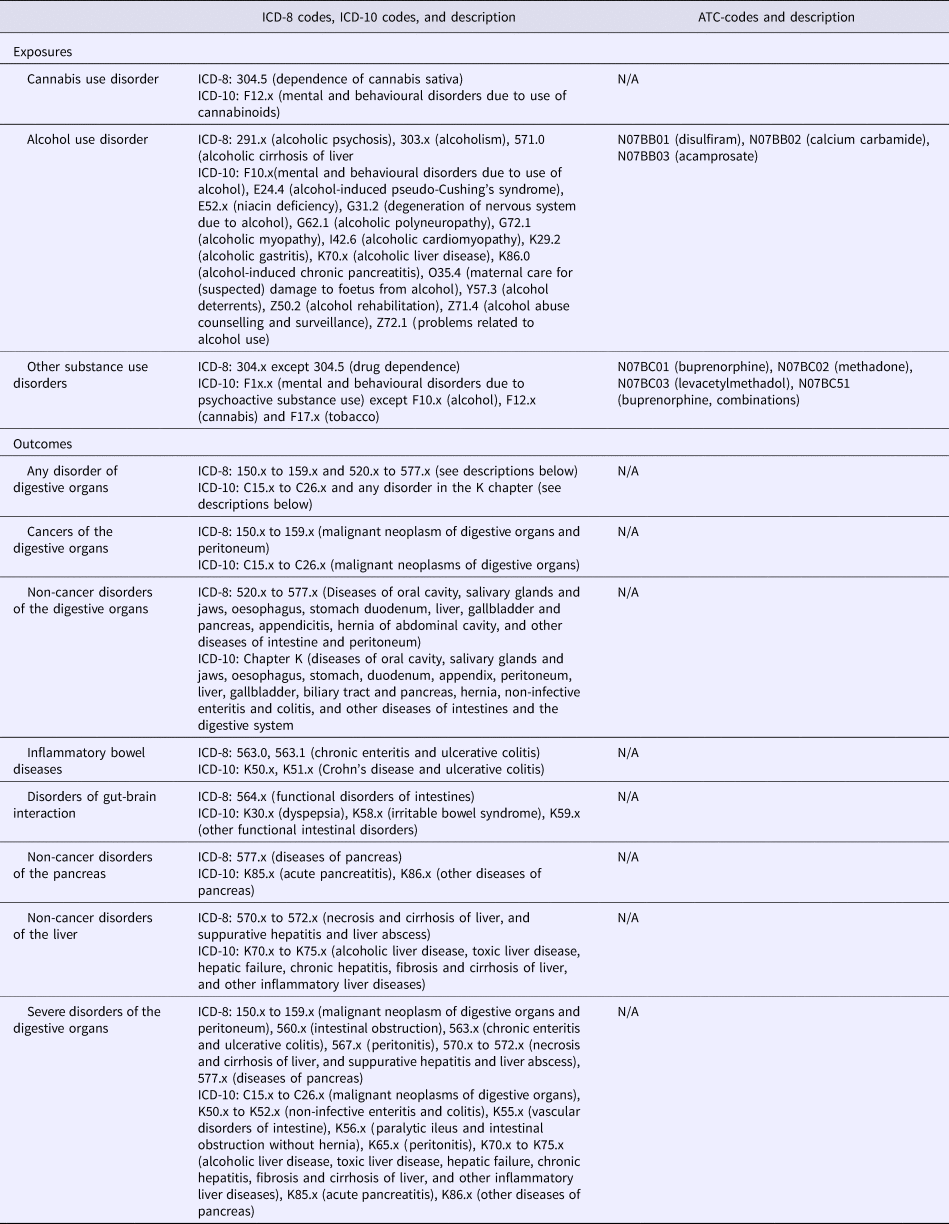
The diagnostic and ATC-codes used to define cannabis use disorder, alcohol use disorder, and other substance use disorders in the Psychiatric Central Research Register, the National Patient Register (containing inpatient information since 1977 and outpatient and emergency room information since 1995) (Lynge et al., Reference Lynge, Sandegaard and Rebolj2011), and since 1995 the National Prescription Registry (Kildemoes et al., Reference Kildemoes, Sørensen, Hallas, Sorensen and Hallas2011) are presented in Table 1. Parental highest level of education was used as a proxy for socioeconomic position based on information from registers at Statistics Denmark (Petersson et al., Reference Petersson, Baadsgaard and Thygesen2011). Parental information was preferred over that of the individual's own educational level, which could have been a product of morbidity rather than a predictor thereof.
Diagnostic codes used to define exposures and outcomes

Outcomes
The primary outcome was incident disorders of the digestive organs defined using the National Patient Registry with the ICD-8 and ICD-10 codes listed in Table 1, as diagnosed in the secondary health care sector. We investigated any disorder of the digestive organs, cancers of the digestive organs, non-cancer disorders of the digestive organs, inflammatory bowel diseases, disorders of gut–brain interaction (sometimes referred to as functional gastrointestinal disorders), non-cancer disorders of the pancreas and of the liver, and disorders of the digestive organs deemed to be severe. Please refer to Table 1 for a full description of the disorders included in each domain.
Statistics
Data were analyzed using Cox regression in Stata/MP 15.1. The cohort was at risk of incident disorders of the digestive system from the date of incident schizophrenia of the case. Since the controls were individually matched to schizophrenia cases, they were thus considered at risk since the date their corresponding case was incidentally diagnosed with schizophrenia. Individuals with the digestive disorder being investigated before this date were excluded from the analyses, which in some cases meant that there were fewer than 10 controls per case. The cohort was then followed until incident diagnosis of the digestive disorder being investigated, death, emigration, or 10 April 2017, whichever came first. To determine if cases with schizophrenia were more likely than controls to develop disorders of the digestive organs, we first conducted stratified Cox regression, which is automatically adjusted for sex and birthday due to the matching procedure, and which we further adjusted for calendar-year (continuous, time-varying variable) and case-status. We then conducted separate Cox regressions for cases with schizophrenia and for controls. In model 1 of these analyses, we entered cannabis use disorders as a time-varying variable. In model 2, we added alcohol use disorders and other substance use disorders as time-varying variables, as well as the two categorical variables regarding highest level of parental education. Both of these models were adjusted for sex, date of birth, and calendar-year. We did this to give both an idea of the raw association with cannabis (model 1), and the potential causal association with cannabis accounting for competing risk factors (model 2). Cox regression operates under the assumption of proportional hazards, i.e. that the associations between independent variables and outcomes are constant over time. We tested this assumption using visual inspection of plots of Schoenfeld's residuals.
Ethical considerations
According to Danish law, register-based studies do not require consent from patients. All analyses were run on data using encrypted personal identification numbers, meaning that individuals could not be identified by the researchers.
Results
The primary analysis of any disorder in the digestive organs was based on 198 001 individuals (21 066 with schizophrenia and 176 935 controls – 5151 cases were matched to 10 controls, 10 901 to eight or nine, 4873 to five to seven, and 141 to fewer than five controls). The cohort was followed for 2 756 192 person-years, eventually giving rise to 42 945 cases of incident disorders of the digestive organs. Among cases with schizophrenia, 13 099 (62.2%) were men and the mean (s.d.) age at incident schizophrenia was 27.0 (8.3) years. Among the matched controls, 109 952 (62.1%) were men and the mean (s.d.) age at the match-date was 26.7 (8.1) years. Among cases with schizophrenia, 4206 (20.0%) were diagnosed with cannabis use disorder, 6447 (30.6%) were diagnosed with alcohol use disorder, and 4173 (19.8%) were diagnosed with other substance use disorders, prior to receiving any diagnosis of disorders of the digestive organs. Among controls without schizophrenia, the corresponding figures were that 1054 (0.6%) were diagnosed with cannabis use disorder, 10 849 (6.1%) were diagnosed with alcohol use disorder, and 2169 (1.2%) were diagnosed with other substance use disorders.
Associations between case status and disorders of the digestive organs
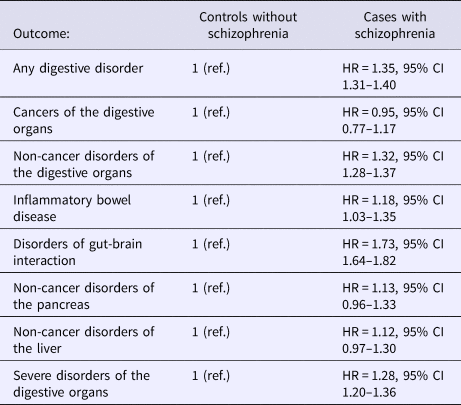
Table 2 shows the associations between case-status and incident digestive disorders. Except for cancers, and disorders of the pancreas or liver, cases with schizophrenia were significantly more likely to develop all disorders of the digestive organs than controls.
Association between schizophrenia and incident disorders of the digestive organs

Ref., reference group; HR, hazard ratio; CI, confidence interval.
Adjusted for sex, year of birth, calendar year, parental education, cannabis use disorder, alcohol use disorder, and other substance use disorders
Associations between cannabis use disorder and disorders of the digestive organs in cases with schizophrenia
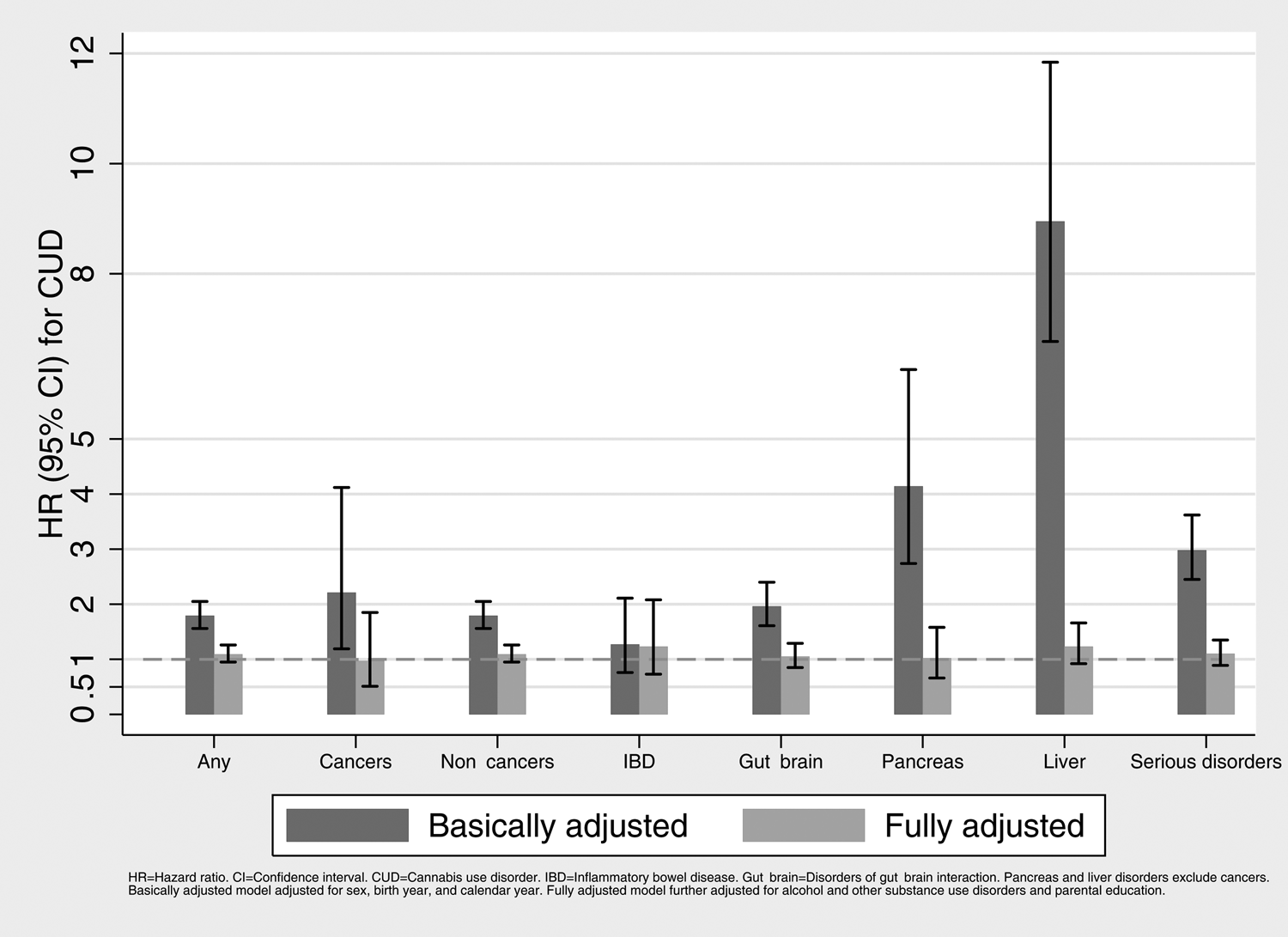
Figure 1 shows the associations between cannabis use disorders and various disorders of the digestive organs, among cases with schizophrenia. In the basically adjusted model 1, cannabis use disorders were significantly associated with increased risks of any digestive disorder, cancers, and non-cancers alike, as well as serious disorders of the digestive organs and non-cancer disorders of the pancreas or liver. In all instances, these associations were accounted for by the additional variables entered into model 2 (Fig. 1).
Associations between cannabis use disorders and disorders of the digestive organs among cases with schizophrenia.

In the fully adjusted model 2, cannabis use disorders were associated with a decreased risk of developing disorders of gut–brain interaction among cases with schizophrenia (HR = 0.84, 95% CI 0.74–0.94, p = 0.003) (Fig. 1). In the basically adjusted model 1, cannabis use disorders were associated with a decreased risk of inflammatory bowel disease in cases with schizophrenia (HR = 0.70, 95% CI 0.49–0.99, p = 0.045). In the fully adjusted model 2, this association was unchanged, except that it now fell just above conventional thresholds of statistical significance (HR = 0.71, 95% CI 0.48–1.03, p = 0.07) (Fig. 1). Cannabis use disorders also displayed a tendency toward a decreased risk of serious disorders of the digestive organs among cases with schizophrenia (HR = 0.89, 95% CI 0.77–1.02, p = 0.09) in the fully adjusted model 2 (Fig. 1).
Among cases with schizophrenia, alcohol use disorders were not associated with cancers of the digestive organs (p = 0.18), but were associated with increased risks of all other outcomes (all p < 0.001 except for inflammatory bowel disease, p = 0.045). Other substance use disorders were significantly associated with an increased risk of all outcomes except inflammatory bowel disease (p = 0.22, all other p ⩽ 0.001) (data not shown).
Associations between cannabis use disorder and disorders of the digestive organs in controls
Figure 2 shows the associations between cannabis use disorders and digestive disorders among controls without schizophrenia. In the basically adjusted model 1, cannabis use disorders were associated with increased risk of all outcomes except inflammatory bowel disease. In all instances, these associations were accounted for by the additional variables entered into model 2. Among controls, alcohol use disorders and other substance use disorders were associated with increased risk of all outcomes (all p < 0.001) except possibly inflammatory bowel disease (HR = 1.17, 95% CI 0.99-1.37, p = 0.07 for alcohol use disorders and HR = 0.93, 95% CI 0.63-1.37, p = 0.70 for other substance use disorders) (data not shown).
Associations between cannabis use disorders and disorders of the digestive organs among controls without schizophrenia.

Absolute risks of disorders of the digestive organs
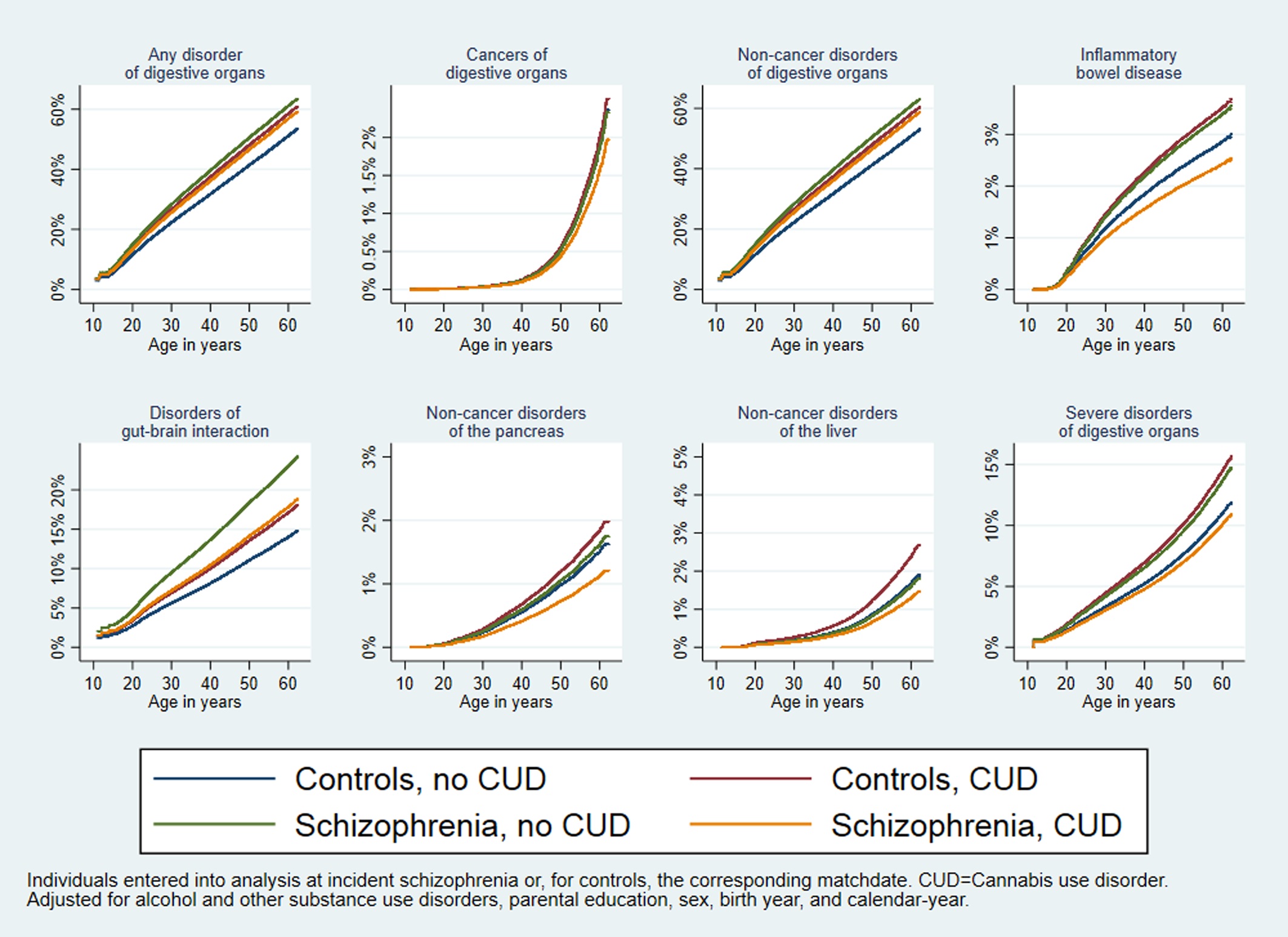
Figure 3 shows fully adjusted Cox curves for developing the different categories of digestive disorders, stratified by whether individuals were schizophrenia cases or controls, and whether they had cannabis use disorders or not. By age 60, cases with schizophrenia had a 61.1% risk of developing any disorder of the digestive organs if they did not have a cannabis use disorder, and 56.9% if they had a cannabis use disorder. The corresponding risks for controls were 51.2% and 58.5%. Cases with schizophrenia had a 23.0% risk of developing disorders of gut–brain interaction by age 60 in the absence of cannabis use disorders, and 17.8% if they had cannabis use disorders. For controls, the corresponding risks were 14.0% and 17.1%. Cases with schizophrenia had 3.4% risk of developing inflammatory bowel disease by age 60 in the absence of cannabis use disorders, and 2.4% if they had cannabis use disorders. For controls, the corresponding risks were 2.9% and 3.5%. Cases with schizophrenia had 13.7% risk of developing serious disorders of the digestive organs by age 60 in the absence of cannabis use disorders, and 10.1% if they had cannabis use disorders. The corresponding risks for controls were 11.0% and 14.5%.
Absolute adjusted risks for disorders of the digestive organs among schizophrenia cases and matched controls with and without cannabis use disorders.

Visual inspection of plots of Schoenfeld's residuals did not reveal any problematic violations of the assumption of proportional hazards (data not shown).
Discussion
We showed clearly different associations between cannabis use disorder and development of disorders of the digestive organs between people with and without schizophrenia. In particular, in fully adjusted analyses exclusively on people with schizophrenia, cannabis use disorder were associated with decreased risks of disorders of gut–brain interaction, i.e. functional gastrointestinal disorders. In the basically adjusted model, cannabis use disorder was also associated with decreased risk of inflammatory bowel disease in cases with schizophrenia, but this just failed to reach statistical significance in the fully adjusted model. There was also a tendency toward reduced risk of serious disorders of the digestive organs among cases with schizophrenia. None of these results were paralleled in the non-schizophrenia controls.
A number of explanations may be put forward. The endocannabinoid system is involved in inflammation (Pandey et al., Reference Pandey, Mousawy, Nagarkatti and Nagarkatti2009; Alhouayek and Muccioli, Reference Alhouayek and Muccioli2012; Fabisiak and Fichna, Reference Fabisiak and Fichna2017), hinting at a possible mechanism toward protective effects. The endocannabinoid system disruptions seen in schizophrenia, possibly mediated through use of antipsychotics (McPartland et al., Reference McPartland, Guy and Di Marzo2014; Lu and Mackie, Reference Lu and Mackie2016; Fakhoury, Reference Fakhoury2017), may thus be at least partially countered by use of cannabis, alleviating the increased risk of disorders of the digestive organs otherwise associated with schizophrenia. This would also explain why the same association was not seen in controls, as their endocannabinoid system would not be similarly disrupted. It could also be that the threshold for identifying cannabis use disorders is different in patients with schizophrenia than in controls, making it more difficult to observe these associations in controls. Further, cannabinoid receptors are known to be present in non-neuronal tissue as well, including immune cells and smooth muscle tissue (Pertwee, Reference Pertwee2008; Bermudez et al., Reference Bermudez, Visina and Walker2017). Another explanation may lie in an interaction between the endocannabinoid system and other transmitter systems also known to be disrupted in schizophrenia, such as the dopaminergic, glutamatergic, or GABAergic systems (Schlicker and Kathmann, Reference Schlicker and Kathmann2001; Covey et al., Reference Covey, Mateo, Sulzer, Cheer and Lovinger2017), and which may then also be alleviated by cannabis use in patients with schizophrenia. Research has also suggested that cannabis may be linked to reduced weight gain and lower fasting glucose and lipids following uptake of antipsychotic medication, which may be a further mechanism for the protective associations we observe (Scheffler et al., Reference Scheffler, Kilian, Chiliza, Asmal, Phahladira, du Plessis, Kidd, Murray, Di Forti, Seedat and Emsley2018). Indeed, obesity such as that potentially induced by antipsychotics may be considered a chronic inflammatory disorder, lending further credibility to this potential pathway to explain our findings (Monteiro and Azevedo, Reference Monteiro and Azevedo2010; Ellulu et al., Reference Ellulu, Patimah, Khaza'ai, Rahmat and Abed2017). However, non-causal mechanisms should also be considered. For instance, patients with schizophrenia may receive inadequate physical health examinations, and this may be further exacerbated in the presence of cannabis use disorders (Roberts et al., Reference Roberts, Roalfe, Wilson and Lester2006). This would suggest that the apparent protective effect of cannabis in schizophrenia is actually explainable by under-diagnosis. We do not believe that this will fully explain our findings, for two reasons. First, we find particularly strong associations for inflammatory bowel disease and other serious disorders of the digestive organs. These are probably less prone to under-diagnosis. Second, we have previously shown that people with schizophrenia are also at decreased risk of dying from disorders of the digestive organs if they misuse cannabis (Hjorthøj et al., Reference Hjorthøj, Østergaard, Benros, Toftdahl, Erlangsen, Andersen and Nordentoft2015). It seems unlikely that this should also be explainable by under-diagnosis. However, further research is required both to establish whether the link we observed is causal, and if so, which may be the underlying mechanisms. If such mechanisms are identified, this may provide important clues into treatment and prevention of disorders of the digestive organs.
One of the clearest associations we observed was the reduced risk of disorders of gut–brain interaction in patients with schizophrenia who also have a cannabis use disorder. These disorders include functional disorders of the intestines, dyspepsia, and irritable bowel syndrome. Irritable bowel syndrome and inflammatory bowel disease are some of the disorders for which some evidence for a potential therapeutic effect of cannabis has been shown (Goyal et al., Reference Goyal, Singla, Gupta and May2017). To our knowledge, ours is the first study to also implicate cannabis as having a potential role in primary prevention of these disorders.
Nicotine is also known to have an influence on the gastrointestinal system, possibly even of a positive nature, for instance in ulcerative colitis (Thomas et al., Reference Thomas, Rhodes and Ingram2005; Verschuere et al., Reference Verschuere, De Smet, Allais and Cuvelier2012). We were not able to control for nicotine, which could thus be an important confounder or mediator, since use of cannabis and nicotine are very strongly correlated (Agrawal et al., Reference Agrawal, Budney and Lynskey2012). However, the same should be true for the non-schizophrenia controls, which makes it less likely that the associations are explained by this unmeasured confounding.
We found that patients with schizophrenia had a slightly increased risk of various disorders of the digestive organs than did the matched controls. To our knowledge, few studies have examined this association before, with indications of an increased risk of Crohn's disease and irritable bowel syndrome, no association for ulcerative colitis, and a reduced risk of several types of gastrointestinal ulcers (Gupta et al., Reference Gupta, Masand, Kaplan, Bhandary and Hendricksa1997; Ozdemir et al., Reference Ozdemir, Jamal, Osapay, Jadus, Sandor, Hashemzadeh and Szabo2007; Benros et al., Reference Benros, Pedersen, Rasmussen, Eaton, Nordentoft and Mortensen2014). This is an area for further investigation, including whether cannabis may counter some of this increased risk.
Strength and limitations
The use of nationwide registers means that the study is free from selection biases and information bias related to use of self-reports. We were able to adjust for a variety of potential confounders, including alcohol and other illicit substances than cannabis. However, there are also limitations to consider. First, only disorders diagnosed in the secondary health sector are available in the registers. While this is probably unproblematic in terms of schizophrenia and the more severe gastrointestinal disorders, milder gastrointestinal disorders, and substance use disorders may thus be under-diagnosed. This is likely to have biased results toward the null hypothesis. Further, we were only able to obtain information on substance use disorders, rather than use of the substances themselves. Thus, the exposure investigated in this study probably reflects a quite intense use of cannabis, alcohol, or other substances, and the effect of more moderate amounts of these substances remains unclear. The same is true for people with misuse of substances who are not seen in the secondary health sector. Furthermore, we considered people as exposed to cannabis use disorders from the time this was first diagnosed. The registers do not easily allow to us to establish when such disorders may be in remission. It is likely that the increases or decreases in risk we observe are dose-dependent, but we cannot establish this from the present study. It is unclear to which extent our results may be generalized to populations of non-European ethnic origin. Moreover, while use of antipsychotic medication may have an influence on our results, we did not incorporate information on type, dose, etc., of such medication. Finally, we did not adjust for multiple testing. As the outcomes investigated are likely not independent, a true Bonferroni adjustment would probably be too conservative. Regardless, a few associations displayed p-values at levels that would not survive adjustment for multiple testing. However, our primary finding pertaining to disorders of gut–brain interaction, at p = 0.003, is likely not an artifact of multiple testing.
Conclusion
In people with schizophrenia, cannabis use disorder is associated with decreased risk of disorders of gut–brain interaction and inflammatory bowel disease, and possibly also other serious disorders of the digestive organs. The same tendencies were generally not observed in controls without schizophrenia. Although our findings would first need to be replicated and the exact mechanisms be explored, our findings could lead to new targets for treatment and prevention of disorders of the digestive organs. However, it is important to note that cannabis has a range of known detrimental effects as well, which would need to be considered first. For instance, all-cause mortality and use of psychiatric services is increased in patients with schizophrenia in the presence of cannabis use disorders (Wobrock et al., Reference Wobrock, Falkai, Schneider-Axmann, Hasan, Galderisi, Davidson, Kahn, Derks, Boter, Rybakowski, Libiger, Dollfus, López-Ibor, Peuskens, Hranov, Gaebel and Fleischhacker2013; Large et al., Reference Large, Mullin, Gupta, Harris and Nielssen2014; Hjorthøj et al., Reference Hjorthøj, Østergaard, Benros, Toftdahl, Erlangsen, Andersen and Nordentoft2015; Jørgensen et al., Reference Jørgensen, Nordentoft and Hjorthøj2018). Consequently, even if our results are ultimately considered true findings, clinical use of cannabis for patients with schizophrenia still needs to weigh the potential benefits against the potential harms.
Author ORCIDs
Carsten Hjorthøj, 0000-0002-6943-4785
Financial support
This work was supported by The Lundbeck Foundation. All authors declare that we have no conflicts of interest.
Conflicts of interest
None.