Most cases of ventricular tachycardia in children are associated with structural abnormalities of the heart, cardiomyopathies or channelopathies such as prolonged QT syndrome or catecholaminergic polymorphic ventricular tachycardia. On the other hand, idiopathic ventricular tachycardia is very rare.Reference Friedland-Little, Zampi, Gajarski and Allen 1
Munchausen syndrome is a relatively rare psychosis in which the patient presents with signs and symptoms mimicking real diseases to attract medical attention.Reference Park, Borsch, Dyer and Peiris 2 Cases of ventricular tachycardia resulting from behaviours caused by this psychosis are extremely rare. This report represents the first case of a patient with new onset ventricular tachycardia at rest caused by self-injurious behaviour due to Munchausen syndrome.
Case
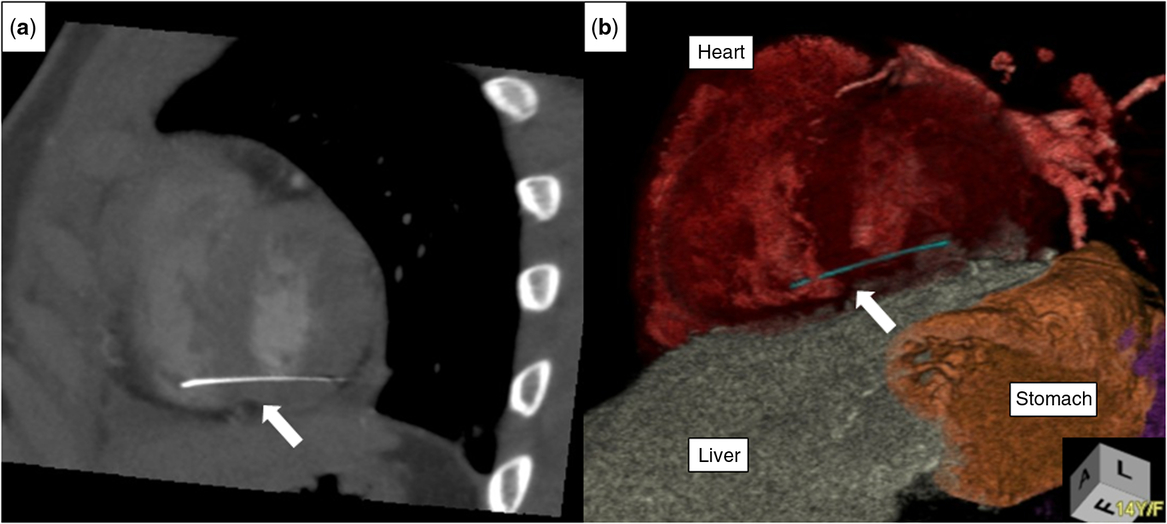
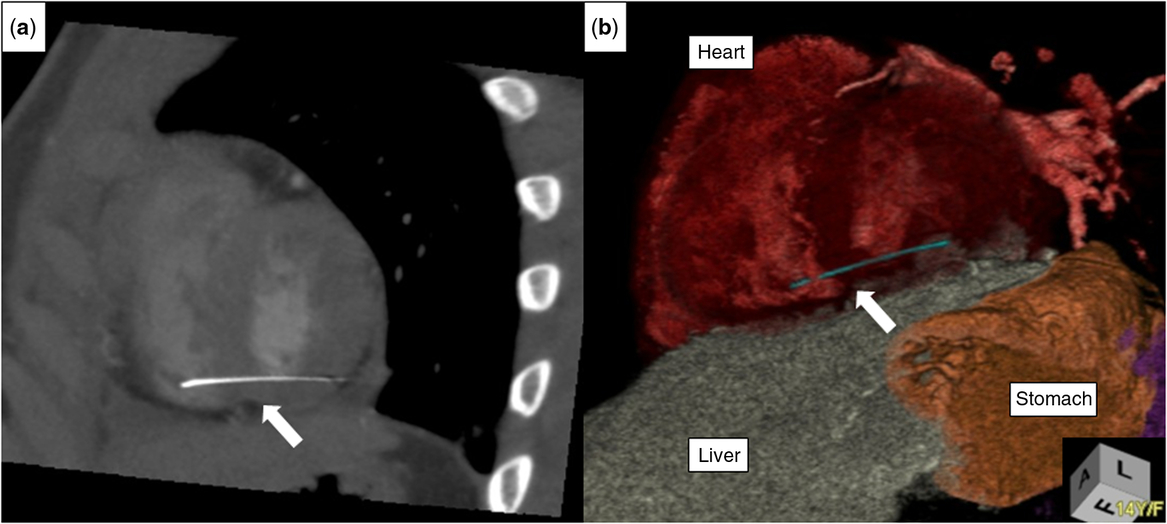
A 14-year-old girl with no history of cardiovascular disease or thoracic surgery was referred to our hospital for surgery of an intractable lower limb injury for which frequent debridements had been performed because of repeated exacerbations and infections over the course of more than a year. Four weeks after surgical treatment under general anaesthesia in our hospital, she complained of chest pain at rest. Her general condition was good, and all vital signs were within normal ranges. No abnormal findings were found on chest auscultation. Chest X-ray, 12-lead electrocardiography, echocardiography and blood biochemical examination showed no abnormalities, and symptoms improved within a short time. However, the following week, she again complained of severe chest pain at rest, and non-sustained ventricular tachycardia was detected on the electrocardiogram monitor for the first time (Fig. 1). On re-examination, creatine kinase and troponin T levels increased to 188 U/L and 0.18 ng/ml, respectively. Contrast-enhanced CT performed as screening for coronary artery disease revealed an acicular foreign body close to the heart (Fig 2a and b). In addition, a scar suggestive of a needle hole was confirmed in the left anterior chest. Considering the possibility of the presence of foreign body in the heart, we set-up the cardiopulmonary bypass and the patient underwent emergency surgery. By surgery, an 8-cm needle, with the tip inside the pericardium, was removed without using cardiopulmonary bypass. Post-operatively, sinus rhythm resumed and blood test data also normalised. Notably, although the post-operative course was good, the patient appeared disappointed as the level of medical urgency improved. Careful interview elicited that she had inserted the needle by herself. Furthermore, the cause of the initial intractable injury was suspected to be due to self-injurious behaviour. Based on the above findings, Munchausen syndrome was diagnosed.
Electrocardiogram of the second episode of chest pain shows non-sustained ventricular tachycardia.

CT at the time of the second episode of chest pain reveals an acicular foreign body in the heart (arrow). (a) Two-dimensional image. (b) Three-dimensional image.
Discussion
Munchausen syndrome is a relatively rare mental disorder characterised by disguising diseases. Patients with this condition want to attract medical attention and conversely become disappointed as the medical attention decreases with improvements in signs and symptoms. Cardiovascular complications associated with Munchausen syndrome were first reported as “cardiopatia fantastica,” typically involving complaints of acute coronary syndrome such as chest pain, but this patient displayed arrhythmias and abnormalities in blood biochemistry.Reference Park, Borsch, Dyer and Peiris 2 Among the cases of ventricular tachycardia due to Munchausen syndrome reported in recent years, one involved caffeine overdose and another resulted from self-injection of epinephrineReference Vaglio, Schoenhard, Saavedra, Williams and Raj 3 , Reference Norcliffe-Kaufmann, Gonzalez-Duarte, Martinez and Kaufmann 4 ; but no reports have described self-inserted foreign bodies in the pericardium.
The most important clue to the diagnosis in this case was the existence of objective abnormalities like ventricular tachycardia and increased serum levels of creatine kinase and troponin T in the second episode of chest pain. In children, most cases with chest pain are benign, but chest pain accompanied by objective abnormal findings should be explored for rare underlying aetiologies. The diagnosis of Munchausen syndrome is greatly facilitated by a carefully elicited history. This patient showed a clinical course of intractable injury requiring frequent debridement because of repeated exacerbations and infections of unknown cause. Such a clinical course is also suggestive of Munchausen syndrome. In conclusion, in cases presenting with a rare cardiac event, psychiatric disease should be considered among the differential diagnoses.
Author ORCIDs
Hidenori Yamamoto, 0000-0001-7950-6482
Acknowledgements
The authors would like to thank our colleagues who contributed to the care of this patient, and we would like to thank Dr Masato Mutsuga, cardiac surgeon, who performed the surgery.
Financial Support
This research received no specific grant from any funding agency, commercial or not-for-profit sectors.
Conflicts of Interest
None.
Ethical Standards
The authors assert that all work reported complies with the ethical standards of the Helsinki convention, and institutional and national research committee.