Pulmonary artery sling is a rare congenital malformation in which the left pulmonary artery arises from the right pulmonary artery, compressing surrounding structures. Complete tracheal rings and congenital tracheal stenosis commonly co-occur, further obstructing the airway and pre-disposing patients to respiratory insufficiency in the setting of infection, extubation, or airway disease. Reference Berdon, Baker and Wung1–Reference Backer, Mongé and Popescu4
Symptomatic patients with pulmonary artery sling undergo re-implantation of aberrant left pulmonary artery to the main pulmonary artery to relieve extrinsic airway compression. Tracheal reconstruction is typically considered for patients with moderate to severe symptoms, significant stenosis on imaging, presence of complete tracheal rings, or unsatisfactory result after pulmonary artery sling repair. Reference Hong, Zhou and Liu5–Reference Antón-Pacheco and Cano8 However, the benefits of tracheoplasty must be balanced with the risk of complications, including anastomotic leak, obstructive granulation tissue, pulmonary hypertension, airway re-intervention, ventilator dependence, and residual tracheomalacia or stenosis. Reference Xue, Liang and Wang9–Reference Yokoi, Hasegawa and Oshima11 Adoption of slide tracheoplasty technique has reduced these complications, Reference Xue, Liang and Wang9,Reference Tsang, Murday and Gillbe12–Reference Zhang, Wang and Lu14 but risks of airway re-intervention (≤20%) and mortality (≤15%) remain high. Reference Xue, Liang and Wang9,Reference Hofferberth, Watters and Rahbar10
Controversy persists in selecting pulmonary artery sling patients that require tracheoplasty to reduce risk of respiratory failure and which may be managed by vasculature repair alone. Significant variation, in practice, persists in determining patient management, as no widely accepted quantitative measure of tracheal stenosis exists. Various surrogates for tracheal stenosis are employed, including the presence or absence of complete tracheal rings, concomitant congenital heart disease, and lung pathology. We aim to describe mid-term outcomes of a diverse group of patients with this rare lesion to identify patterns in their presentation, management, and outcomes.
Methods
The Institutional Review Board at Baylor College of Medicine approved this retrospective study with waiver of consent.
Patient selection
The congenital heart surgery service database at Texas Children’s Hospital was reviewed, and 23 patients with pulmonary artery sling diagnosis from August 1996 to December 2019 were identified. Medical records of 18 of these patients who underwent operative pulmonary artery sling were identified and retrospectively reviewed to examine surgical outcomes (Table 1). Of the five patients who did not receive surgery, one had no respiratory symptoms at the time of evaluation and continues to be managed non-operatively, two asymptomatic patients were referred to our institution to establish care and were lost to follow up upon assessment, and two patients were operated for concomitant severe congenital heart diseases and died without having their pulmonary artery sling repaired. Pre-operative imaging helped evaluate and diagnose patients with pulmonary artery sling, whose left pulmonary artery abnormal course compressed surrounding airway structures (Fig 1).
Summary of patient courses and comorbidities.

(Op Age = age at time of pulmonary artery sling operation in months; CHD = presence of additional congenital heart disease in addition to pulmonary artery sling; CTR = complete tracheal rings; TS = tracheal stenosis, defined as at least one level in which measured tracheal diameter in anterior-posterior and transverse were both <50% of expected; EEA = end-to-end anastomosis; Slide = slide tracheoplasty; Reint = re-intervention; PA = pulmonary artery; Reint time = time to first re-intervention (if any) in days (d) or years (y); PO Sympt = symptomatic at most recent follow up; PO Arrest = cardiopulmonary arrest after pulmonary artery sling repair.)
Flowchart summary of patients with tracheal stenosis, operative management, and airway re-interventions.

Radiographic quantification of tracheal stenosis
A paediatric radiologist reviewed tracheal imaging of 17 patients (15 CT, two MRI) to quantify tracheal narrowing. Pre-operative studies performed closest to pulmonary artery sling operation were selected if they met sufficient quality to obtain the necessary measurements, with one exception. Due to incidental finding and repair of pulmonary artery sling during operation for tetralogy of Fallot, case 15 did not have pre-operative imaging. For this patient, a CT done after pulmonary artery sling repair and prior to tracheoplasty was analysed.
Tracheal stenosis is defined as tracheal diameter ≤50% of expected. Reference Backer and Mavroudis15 Expected tracheal diameters were based on normative values for patients with congenital heart disease, as outlined by Chen and colleagues. Reference Chen, Shih and Liu16 Using predictive equations based on patient height, we calculated expected transverse tracheal diameters for each patient at the thoracic inlet, aortic arch, and carina. Expected cross-sectional areas at these three levels were extrapolated using expected cross-sectional areas = π * (0.5 * expected diameter). Reference Backer, Idriss and Holinger2 An average expected tracheal diameter was calculated as the arithmetic mean of the expected tracheal diameters at the three levels.
Anterior–posterior and expected transverse diameters of the tracheal lumen were measured on axial sections at four levels: thoracic inlet, aortic arch, carina, and pulmonary artery sling. The minimum and maximum tracheal diameters at any point in the trachea were also recorded.
Total thoracic tracheal length was measured from thoracic inlet to carina on sagittal and coronal sections. Length of stenotic segment was measured as the cranio-caudal length of a region where tracheal diameter was <50% of the average expected tracheal diameter. We refer to the “stenotic proportion” as the percentage of the total length that is stenotic (ratio of stenotic segment length to total tracheal length).
Multi-disciplinary assessment
At our institution, decision to pursue tracheoplasty is a clinical case-by-case decision finalized in the operating room weighing the patient’s clinical manifestations and their anatomy. Multi-disciplinary collaboration with otorhinolaryngology surgeons, who perform pre-operative airway assessment, plays a role in this decision-making process. The complex airway program at our institution consists of collaborations among the congenital heart surgery, otorhinolaryngology, pulmonology, radiology, occupational therapy, and physiology departments that meet on a regular basis to discuss patient status and therapeutic assessment. Patients with tracheal reconstruction and significant residual airway symptoms are followed as outpatients in a multi-disciplinary fashion by our surgical and otorhinolaryngology departments requiring all patients to undergo post-operative direct laryngoscopy and bronchoscopy.
Statistical analysis
Data were analyzed with R version 3.3.2 (R Foundation for Statistical Computing, Vienna, Austria). Continuous variables were compared between groups using the Wilcoxon Rank Sum Test. Univariate Cox regression modelling was used to evaluate perioperative variables and imaging measurements for association with freedom from re-interventions. Freedom from re-intervention was examined using Kaplan–Meier survival modelling.
Results
Demographic characteristics
Demographic characteristics and comorbidities are summarized in Tables 1 and 2. Median gestational age at birth was 37 weeks (interquartile range 36–39). There were 12 (67%) Caucasian, five (28%) Black, and one (5%) Asian patients. Seven patients (39%) were of Hispanic ethnicity. Nine patients (50%) had clinically or genetically diagnosed syndromes.
Summary of patient demographics.

(ASD = Atrial septal defect; CAVC = Complete atrioventricular canal; CHD = Congenital heart disease. Of note, some patients had multiple additional CHD lesions; TAPVR = Total anomalous pulmonary vein return; TOF = Tetralogy of Fallot; VR/RAA-ALSCA = Vascular ring/Right aortic arch–aberrant left subclavian artery; VSD = Ventricular septal defect.)
*Pre-term births defined as <38 weeks gestational age at birth. All percentages calculated out of the total 18 patients.
Patient age at surgery ranged from 20 days to 3 years (median 6.9 months, interquartile range 3.5–19.3 months). There were two neonates (age <30 days, 11%), eight infants (1–12 months, 44%), seven toddlers (1–3 years, 39%), and one child (age ≥3 years, 6%). Median weight at time of pulmonary artery sling repair was 9.5 kg (interquartile range 6.6–14.6), and median body surface area was 0.32 m2 (interquartile range 0.24–0.41).
Patient presentation
All 18 patients who underwent pulmonary artery sling repair were symptomatic pre-operatively with at least one of the following: stridor (n = 14, 78%), recurrent upper respiratory infection (n = 12, 67%), respiratory distress (n = 12, 67%), cough (n = 6, 33%), wheezing (n = 5, 28%), dyspnoea (n = 5, 28%), dysphagia (n = 4, 22%), or respiratory arrest (n = 3, 17%) (Fig 2).
Frequency of symptoms pre-operatively and at most recent-follow up. (PAS = Pulmonary artery sling (repaired); CTR = complete tracheal rings.)

All patients underwent echocardiography and bronchoscopy prior to operation, with the assistance of otorhinolaryngology and cardiology departments. Fifteen (83%) received pre-operative CT thorax and 11 (61%) underwent pre-operative MRI. Ten (56%) underwent bronchoscopy immediately following pulmonary artery sling repair.
Ten patients (56%) had surgical procedures prior to their pulmonary artery sling repair, including four patients (22%) with prior cardiac or thoracic operations. Case 2 had re-implantation of oesophageal bronchus. Case 8 had video-assisted thoracoscopic resection of a mediastinal neuroblastoma. Case 9 had a patent ductus arteriosus ligation via lateral thoracotomy. Case 13 had a systemic to pulmonary artery shunt placed with subsequent re-operation for diaphragm plication at an outside institution.
Operative technique and decision-making
All 18 patients underwent primary repair of pulmonary artery sling via median sternotomy under cardiopulmonary bypass. The left pulmonary artery was transected from the right pulmonary artery, translocated anterior to the trachea, and anastomosed to the main pulmonary artery with (n = 4, 22%) or without (n = 14, 78%) pericardial patch augmentation (Fig 3).
Pulmonary artery sling. ( a ) The left pulmonary artery arises from the right pulmonary artery and courses between the oesophagus and trachea creating airway compression. ( b ) Illustration shows surgical division of the left pulmonary artery from its aberrant origin and re-implantation onto the main pulmonary artery. *Tracheal repair may be necessary for symptomatic patients whose careful evaluation suggests significant tracheal stenosis. “Printed with permission from Texas Children’s Hospital which owns the copyrights.”

Excluding isolated ligation of patent ductus arteriosus, 11 patients (61%) had concurrent repair of congenital heart lesions, including atrial septal defect (n = 9), ventricular septal defect (n = 5), tetralogy of Fallot (n = 3), complete atrioventricular septal defect (n = 1), vascular ring with rightward aortic arch (n = 1), truncus arteriosus (n = 1), and total anomalous pulmonary venous return (n = 1). Aortopexy was performed in two cases (11%).
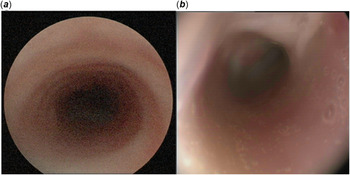
Concurrent tracheal repair was performed in five patients (28%) by slide tracheoplasty (n = 3) or segmental resection with end-to-end anastomosis (n = 2). Case 15 had delayed primary slide tracheoplasty at post-operative day 24. All six tracheoplasty patients had complete tracheal rings and tracheal stenosis by imaging, and five required airway re-intervention or re-operation. Patients with extended stenosis into the main stem bronchi and complete tracheal rings are managed by performing a segmental resection of the involved main stem bronchi, and we then bring the two ends together posteriorly and slide the trachea anteriorly (Fig 4).
Trachea of a patient before and after tracheal reconstruction. ( a ) The left image is DL&B of a patient with pre-tracheal reconstruction showing complete tracheal rings. ( b ) The image on the right shows a DL&B post-tracheal reconstruction at the site of anastomosis with absence of complete tracheal rings. (DL&B = Direct Laryngoscopy and Bronchoscopy.)

For the 12 patients who did not undergo tracheoplasty, rationale for deferring reconstruction was documented in operative reports or clinical notes. Bronchoscopy, respiratory parameter assessment, and direct visual inspection were used as indicators of airway patency and relief of compression after pulmonary artery sling repair. Reasons for opting not to perform tracheoplasty included sufficient relief of airway compression at time of pulmonary artery sling repair (n = 8, 67%), minimal clinical symptoms (n = 7, 58%), subjectively mild tracheal narrowing (n = 7, 58%), no discrete stenotic segment (n = 4, 33%), and operative risk disproportionate to benefit (n = 2, 17%).
Radiographic tracheal stenosis
We classified patients as having significant tracheal stenosis if their measured anterior–posterior and transverse tracheal diameters were less than 50% of the expected tracheal diameter at any level (thoracic inlet, aortic arch, or carina). No patients had significant stenosis at the level of the thoracic inlet. Of the 17 patients with available imaging, seven (41%) met these criteria, all of whom had complete tracheal rings. Four (80%) of the six patients who underwent tracheoplasty met this imaging criteria.
Compared to those without complete tracheal rings, patients with complete tracheal rings had smaller cross-sectional luminal area at the levels of the thoracic inlet (median 17.4 mm [interquartile range 14.5–23.9] versus median 29.6 mm [interquartile range 27.8–37.2], p = 0.003) and aortic arch (median 5.7 mm [interquartile range 4.3–8.9] versus median 25.3 mm [15.1–28.4], p = 0.003).
Median tracheal length was 31.3 mm (interquartile range 31.0–35.5). Using anterior–posterior diameters as criteria, median stenotic segment length was 7.5 mm (interquartile range 2.2–12.8) with a stenotic proportion median of 23% (interquartile range 7–47%) of total tracheal length.
Types of re-interventions
Following pulmonary artery sling repair, eight patients (44%) underwent a median of 3.5 (interquartile range 2.5–5.5) re-intervention procedures. Median time to any re-intervention was 41.5 days (interquartile range 24 days–1.9 years) post-operatively. Kaplan–Meier curve for freedom from re-intervention is shown in Figure 5.
Kaplan–Meier curve for re-intervention-free survival in years, where the event is defined as re-intervention.

Three patients underwent pulmonary artery re-interventions, including percutaneous balloon angioplasty (n = 3, 17%), percutaneous stent placement (n = 1, 6%), and surgical arterioplasty (n = 1, 6%). None of the patients with pulmonary artery re-interventions underwent tracheoplasty, and none of them required subsequent required airway re-intervention.
Five patients (28%) underwent airway re-interventions, including operative tracheoplasty (n = 1, case 15), tracheostomy placement (n = 3), and bronchoscopic tracheal clearance (n = 5).
These five patients had all previously undergone tracheoplasty. One patient with tracheoplasty (case 7) did not require airway re-intervention.
Median time to airway re-intervention was 33 days (interquartile range 24–50). Two patients underwent early airway re-intervention within 30 days of pulmonary artery sling surgery: tracheal balloon dilation (case 13, post-operative day 23) and primary slide tracheoplasty (case 15, post-operative day 24). Case 15 was a patient with a diagnosis of tetralogy of Fallot and an unknown pulmonary artery sling lesion. During the tetralogy of Fallot repair, the surgical team discovered the pulmonary artery sling and repaired it concomitantly. This patient continued to have hypoventilation symptoms and persistent airway obstruction after the pulmonary artery sling repair and a slide tracheoplasty were performed.
Additional re-interventions not classified as airway re-interventions or pulmonary artery re-interventions included bronchoscopic laryngeal cleft repair (case 18), aortopexy (case 14), and extracorporeal membrane oxygenation circulatory support (case 15).
Two patients who did not receive initial tracheal repair required re-operation. Case 14 underwent aortopexy via lateral thoracotomy due to persistent respiratory symptoms and tracheomalacia (16 months post-operatively) and bilateral pulmonary arterioplasties during a re-operation for other cardiac defects (3 years post-operatively). Case 15 underwent delayed primary tracheal reconstruction on post-operative day 24 by slide tracheoplasty via repeat median sternotomy. Their post-operative course was complicated by extracorporeal membrane oxygenation support (initial post-operative days 25–29), revision of anastomotic leak (post-operative day 28), dehiscence repair with pericardial patch (post-operative day 35), tracheostomy placement (post-operative day 52), and multiple subsequent bronchoscopic interventions.
Re-interventions
Overall, patients requiring re-intervention had smaller tracheas than those who did not. At the level of the pulmonary artery sling, median tracheal cross-sectional area in patients requiring re-intervention was significantly smaller (median 3.4 mm [interquartile range 3.0–3.8] versus median 5.9 mm [interquartile range 3.5–9.2], p = 0.003). The stenotic proportion was greater in patients requiring re-intervention (median 42.1% [interquartile range 23.9–54.7%] versus median 9.2% [interquartile range 0–23.3%], p = 0.023).
A receiver-operating characteristics curve was developed for tracheoplasty within 30 days of pulmonary artery sling repair in patients with complete tracheal rings. The receiver-operating characteristics curve had an area under the curve of 0.833. An anterior–posterior tracheal diameter of 1.9 cm had a positive predictive value of 75% and a negative predictive value of 100% for avoiding tracheal intervention with complete tracheal rings. An anterior–posterior tracheal diameter of 2.45 cm had a positive predictive value of 100% and a negative predictive value of 60% for no tracheoplasty. Despite the high area under the curve, negative predictive value, and positive predictive value, we would advise extreme caution in interpreting these results due to the small sample size (Fig 6).
A receiver-operating characteristics curve was developed for tracheoplasty within 30 days of pulmonary artery sling repair in patients with complete tracheal rings. A minimum tracheal diameter of 1.9 cm had a positive predictive value of 75% and a negative predictive value of 100% for avoiding tracheal intervention with complete tracheal rings. A minimum tracheal diameter of 2.45 cm had a positive predictive value of 100% and a negative predictive value of 60% for avoiding tracheoplasty.

Morbidity, mortality
Median length of hospital stay was 20 days (interquartile range 7–69). Median intensive care unit stay was 7 days (interquartile range 1–35). Outliers included case 14 (227 hospital days, 175 intensive care unit days) with prolonged ventilator dependence and case 15 (100 hospital days, 52 intensive care unit days) with multiple re-operations. As expected, compared to patients who did not require re-intervention, patients requiring re-intervention had significantly longer intensive care unit (2, interquartile range 0–5 versus 23, interquartile range 3–46, p = 0.006) and hospital lengths of stay (median 24, interquartile range 20–92 versus 8, interquartile range 5–21, p = 0.004).
Three patients (17%) had a post-operative respiratory arrest with a median time to arrest of 24 days. Two patients (cases 10 and 15) had early arrests prior to postop discharge. Case 14 had an arrest during a readmission for acute respiratory failure and underwent aortopexy in the same admission for persistent left bronchial obstruction.
One patient (case 10) died 55 days post-operatively in the same hospitalization as repair due to acute hypoxic respiratory failure. Their course following repair with end-to-end anastomosis tracheoplasty was complicated by multiple arrests, including one immediately post-operatively, and frequent therapeutic bronchoscopy.
Follow-up
Median post-operative follow-up was 4.5 years (interquartile range 8.9–12.5) for all patients and 6.3 years (interquartile range 11 months–13 years) for the survivors. Ten of the 17 surviving patients (59%) had residual airway symptoms at most recent follow-up. The most common persistent symptom was recurrent respiratory infections (n = 7, 41%), followed by stridor (n = 4, 24%) (Fig 3). Overall, fewer patients were experiencing dysphagia and respiratory symptoms at the most recent follow-up (Fig 3). Of note, seven (41%) patients had history of reactive airway disease, and nine (53%) had developmental delay.
Of the six patients who underwent tracheal reconstruction, there were five survivors, of whom four had residual symptoms at last follow-up. Two (12%) were tracheostomy-dependent. Median post-operative follow up time for patients who underwent a tracheal reconstruction was 1.1 years (interquartile range 0.7–2.6).
Discussion
Our data support the consensus of recent literature regarding management of pulmonary artery sling. Isolated pulmonary artery sling repair has low morbidity and mortality and may safely be performed concurrently with repair of other cardiac lesions. Reference Hong, Zhou and Liu5,Reference Backer, Russell and Kaushal17,Reference Fiore, Brown and Weber18 Certain patients, including some with complete tracheal rings, may be managed safely without tracheoplasty, Reference Hong, Zhou and Liu5,Reference Hong, Liu and Zhou6,Reference Usui, Ono and Baba19 and those that do undergo tracheoplasty have an increased risk of re-intervention and mortality.
In our population of 18 patients who underwent pulmonary artery sling repair, there was one patient death (6%). Among those who did not undergo tracheoplasty (n = 12), three (25%) required catheter interventions for pulmonary artery stenosis, and none required airway re-intervention or re-operation; 50% of the patients with complete tracheal rings did not require tracheoplasty or airway intervention. By comparison, of the six patients who underwent tracheoplasty, five required airway re-interventions (83%), and one died (17%).
These data support conservative management of pulmonary artery sling without tracheoplasty in select patients. They refute former recommendations to perform tracheoplasty on all patients with pulmonary artery sling and complete tracheal rings. Reference Backer, Russell and Kaushal17 Overall, our measurements demonstrated that, as expected, patients with smaller tracheal dimensions and more extensive stenosis were more likely to have re-interventions, as were patients with tracheoplasty. Given our small sample size, we were unable to establish a reliable threshold dimension for tracheal stenosis that was consistent with need for re-intervention or tracheoplasty. This is in keeping with the controversy and inconsistency in the literature surrounding objective criteria for conservative management.
Tracheoplasty is generally recommended for patients with pulmonary artery sling and associated significant tracheal stenosis; Reference Backer, Mongé and Popescu4 however, no consensus exists for what constitutes significant tracheal stenosis. More extensive or severe narrowing has been associated with increased morbidity and mortality as well as increased need for airway re-intervention. Reference Huang, Wu and Wang7,Reference Usui, Ono and Baba19,Reference Hoffer, Tom and Wetmore20 Current diagnostic criteria for tracheal stenosis do not allow for adequate differentiation of the confounding sources of airway narrowing with pulmonary artery sling.
Backer and Mavroudis Reference Backer and Mavroudis15 proposed the widely accepted standard for tracheal stenosis as a tracheal diameter <50% of expected. Normative data for tracheal dimensions lack sufficient inclusion of infants, in whom the most severe disease typically presents, making it difficult to identify what the expected tracheal size should be for a given patient. Clinically, estimates of appropriate endotracheal tube size are used as expected tracheal diameter, but this estimate lacks granularity for infants under 12 months, and it does not account for the normal variation in diameter throughout the trachea. We attempted to standardize this measure using normative data for children with congenital heart defects Reference Chen, Shih and Liu16 to obtain expected tracheal sizes. However, our small sample size and heterogeneous quality of retrospectively reviewed imaging limit the interpretation and extrapolation of our results to patients with this rare lesion.
Other conglomerate measures based on patient habitus, age, and tracheal dimensions have been proposed as cutoff points for clinically significant stenosis, Reference Arcieri, Giordano and Murzi3,Reference Hong, Zhou and Liu5,Reference Hong, Liu and Zhou6,Reference Antón-Pacheco and Cano8,Reference Chen, Shih and Liu16 but these have not been consistently replicated or verified. Our attempts to replicate trends demonstrated by Hong et al., Reference Hong, Liu and Zhou6 for example, were unsuccessful in correlating patient tracheal size to outcomes including need for tracheoplasty or airway re-intervention.
Usual diagnostic methods have significant limitations specific to the multi-factorial nature of the airway narrowing in pulmonary artery sling patients. CT dynamic airway studies provide excellent information about airway calibre and surrounding anatomy and can identify whether an obstruction is fixed or dynamic in nature. However, they cannot definitively identify the presence or absence of complete tracheal rings, nor differentiate between intrinsic tracheal stenosis and extrinsic vascular compression by the sling. Reference Zhong, Jaffe and Zhu21 Bronchoscopy can confirm complete tracheal rings, but is less amenable to quantification of the narrowing and cannot visualize beyond severe blockage.
The majority of patients (59%) had residual airway symptoms at last follow-up, including 80% of survivors with tracheoplasty and 50% of those without tracheoplasty. This suggests the coincidence of congenital tracheal stenosis, complete tracheal rings, tracheo-broncho-malacia, and reactive airway disease may play an underappreciated role in persistent symptoms. Several factors may contribute to modes of failure and recurrent stenosis. A high recurrent rate of stenosis may be due in part to a small airway diameter at baseline or leaving a complete ring or series of rings behind after tracheal reconstruction. Also, tension–ischemia at the anastomotic site and variable degrees of scar formation may lead to failure of reconstruction.
Application of existing diagnostic criteria for tracheal stenosis is fundamentally flawed in patients with pulmonary artery sling, and there remains opportunity for improvement in management of this rare and complex anomaly. Prospective studies comparing CT dynamic airway imaging of patients with pulmonary artery sling and tracheal narrowing with those of healthy controls could better delineate objective criteria for significant stenosis in this population. Comparisons of bronchoscopies prior to pulmonary artery sling repair, following pulmonary artery sling repair, and following tracheoplasty would also provide insight into the sources of compression.
This study and our statistical analyses were limited by small sample size due to rarity of this lesion. Frequently, pulmonary artery sling is analysed in conjunction with vascular rings; however, we feel that isolated characterization of this defect is warranted. Sharing information across multiple centers could increase power in future studies. The retrospective analysis of patient imaging was significantly limited by variability in study quality, timing with respect to surgery, and small sample sizes for normative data on expected tracheal diameter applicable to our population. Prospective studies could provide more standardized data with which to characterize normal and abnormal tracheal size in children with congenital heart disease.
Conclusion
Pulmonary artery sling repair relieves extrinsic airway compression; however, respiratory symptoms may persist due to multi-factorial airway pathology. As expected, patients requiring tracheoplasty had a high rate of re-intervention, and those with re-intervention had smaller tracheal dimensions. The decision to pursue tracheal repair should involve careful risk-benefit analysis and multi-disciplinary evaluation for moderate to severely symptomatic patients with significant airway obstruction. Select patients with mild or absent respiratory symptomatology and acceptable degrees of tracheal stenosis may benefit from close monitoring of their airway without tracheal repair. Further investigation is necessary to delineate objective criteria for conservative management of patients with pulmonary artery sling and tracheal narrowing.
Acknowledgements
The authors would like to acknowledge and thank David Aten, MA, Sr. medical illustrator, for the illustrations prepared in this publication.
Financial support
This research received no specific grant from any funding agency, commercial or not-for-profit sectors.
Conflicts of interest
None.
Ethical standards
The authors assert that all procedures contributing to this work comply with the ethical standards of the relevant national guidelines on human experimentation and with the Helsinki Declaration of 1975, as revised in 2008, and has been approved by the institutional review board of the Baylor College of Medicine.