Appropriate management of outbreaks relies considerably on laboratory support. For the declaration of an outbreak, laboratory testing is often required, even if done only with the most basic of diagnostic tests. Additionally, for many diseases, biochemical monitoring of patients may be required, which is also dependent on a functional laboratory infrastructure. However, in developing countries, which are most often affected by outbreaks, laboratory designs are often basic. This lack of infrastructure presents particular challenges in outbreaks of highly communicable, high-lethality diseases such as Ebola virus disease (EVD), in which risk of exposure and heavy workloads place large demands on laboratory staff.
In the 2014 to 2016 West African Ebola outbreak, the first EVD cases arose in Guinea in December 2013 before spreading into neighboring Liberia and Sierra Leone. The magnitude of the outbreak in West Africa was unprecedented; by the time the World Health Organization lifted the Public Health Emergency of International Concern on March 29, 2016, a total of 28 616 cases and 11 310 deaths had been reported.1 During the outbreak—as well as in previous, smaller-scaled outbreaks—laboratories primarily focused on diagnosing EVD with polymerase chain reaction at biosafety level 3. Often these laboratories were located off-site from Ebola treatment centers (ETCs), which made it was necessary to transport the samples; this led to logistical complexities and long turnaround times for the results.
In an attempt to streamline laboratory procedures (safety, turnaround times, sample throughput, etc), Médecins Sans Frontières (MSF) developed an innovative laboratory design, consisting of a transportable container that was integrated into the ETC itself, set up across the so-called low-risk (for staff) and high-risk (for suspected and confirmed patients) zones of the ETC. In this fashion, diagnosis of EVD infection, as well as basic biochemistry, hematology, and diagnostic laboratory services, were provided on-site for patient monitoring and management. Existing literature on laboratories implemented during the West Africa Ebola outbreak does not mention this approach. This paper describes the arrangement and practical considerations of this innovation, which may be of relevance for actors requiring a flexible laboratory design for the contexts of highly communicable, high-lethality disease outbreaks.
ASPECT OF INTEREST
Establishing an ETC
An essential step in an EVD outbreak intervention is establishing an ETC as close as possible to the epicenter of the outbreak. An ETC is divided into 2 risk zones: a high-risk zone or “hot zone” (HRZ) and a low-risk zone or “warm zone” (LRZ), with a “cold zone” external to the treatment center. Activities that occur in the HRZ include patient care, preparation of the deceased for safe burial, and disposal of contaminated waste. Only patients and designated staff are permitted within the HRZ. The LRZ houses the auxiliary services (such as laundry and pharmacy). Personal protective equipment (PPE) must be worn at all times within the ETC: within the LRZ, surgical scrubs and boots are to be worn, while in the HRZ, a gown/coverall, apron, gloves, high filtration mask, head cover, goggles, and boots (“full PPE”) are mandatory.2, 3 The HRZ and LRZ are kept strictly separate by fencing, and the donning of full PPE when transiting from the LRZ to the HRZ is strictly enforced.
Médecins Sans Frontières built an ETC at the Donka Hospital in March 2014 in response to the declared outbreak in Conakry, Guinea. The Donka ETC closed in the beginning of July 2015 following the opening of new ETC in Nongo, Conakry, which remained operational until December 2015. Over the 16-month operational period of the 2 ETCs, Médecins Sans Frontières admitted 2565 patients, of whom 836 were confirmed to have EVD.
Laboratory Structure
The first container laboratory became operational during week 10, March 2015, at the Donka ETC. A second container laboratory was built for the Nongo ETC with modifications to improve the size and capacity of the laboratory. The laboratory at the Nongo ETC remained open until the ETC closed in week 48, December 2015. The images presented in this paper are of the laboratory within the Nongo ETC.
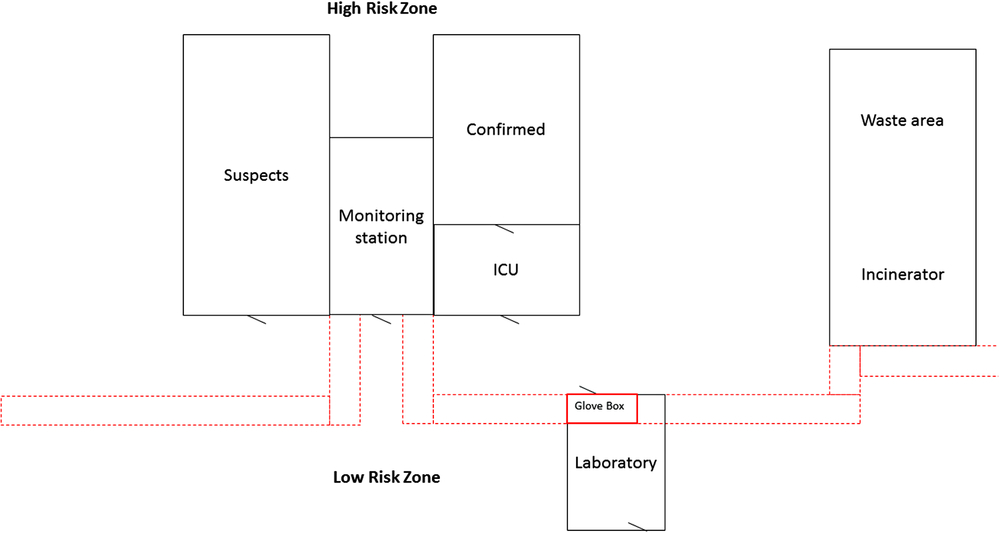
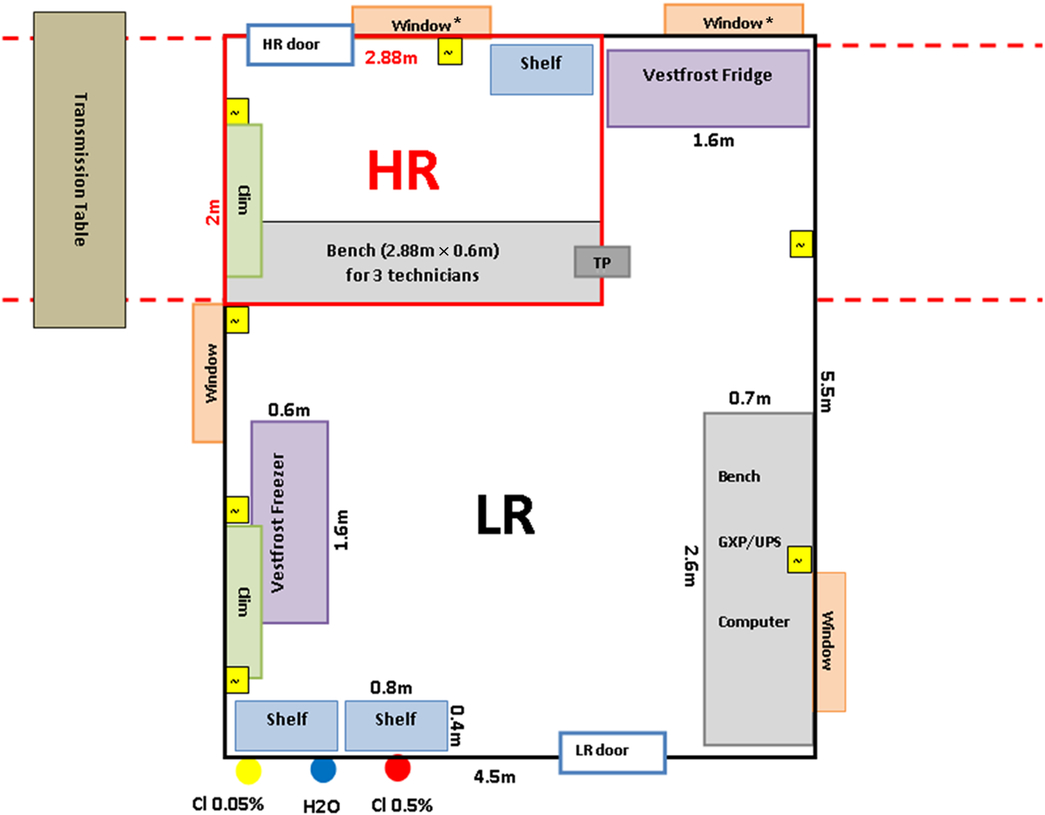
At the Donka ETC, the laboratory was composed of one metal shipping container (2.25 × 5.5 m), whilst at the Nongo ETC, the laboratory was composed of two 2.25 × 5.5-m metal shipping containers joined side-by-side, for a total area of 4.5 × 5.5 m. In both instances, containers were positioned to span the barrier between the HRZ and LRZ, with a door for each area (Figure 1). Access to the laboratory was through a designated staff-only area.
Location of Laboratory Within the Médecins Sans Frontières Nongo Ebola Treatment Center

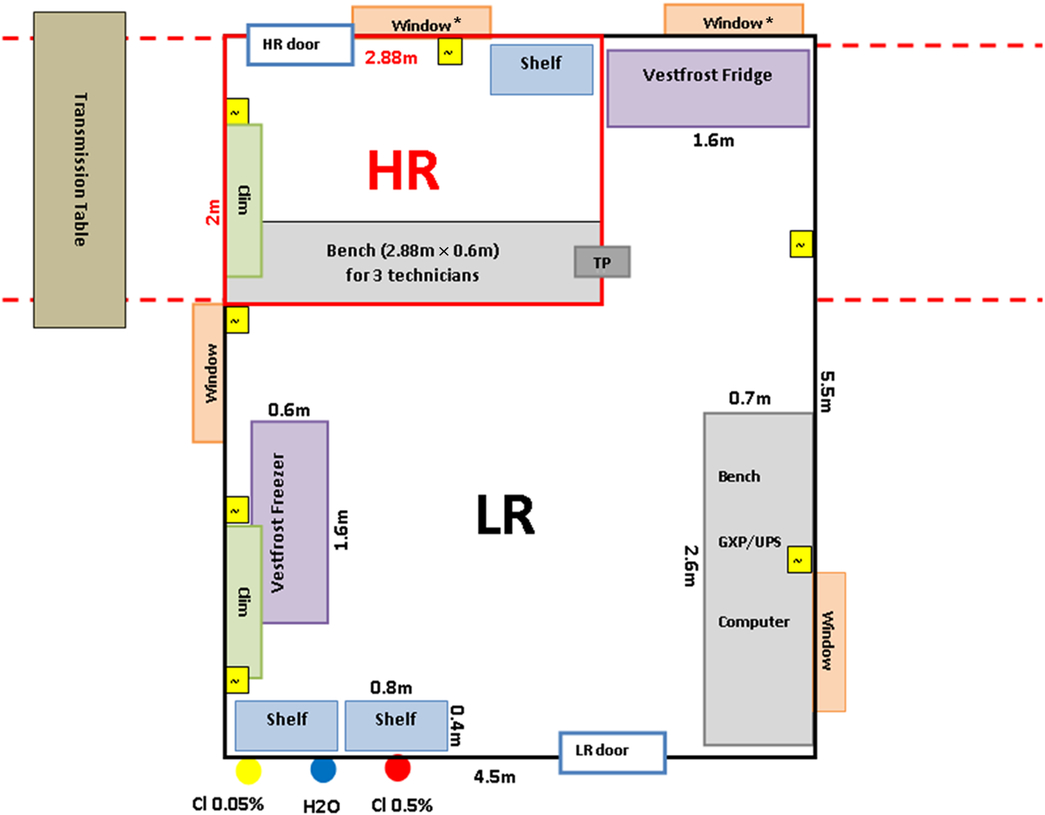
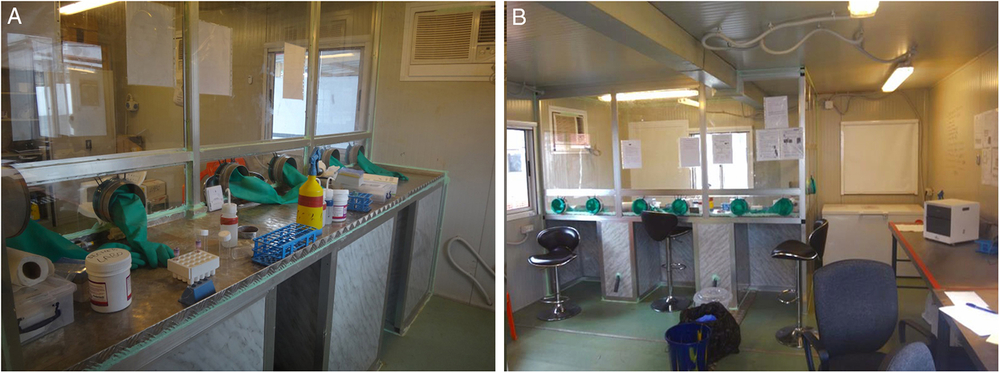
Within the laboratory, the HRZ was physically isolated from the LRZ by a wall with a plexiglass partition and glove box with work stations (Figure 2). This layout allowed laboratory technicians to remain in the LRZ while manipulating potentially contaminated blood samples in the HRZ (Figures 2 and 3 ). In the Donka ETC there was only space for 2 technicians to work simultaneously; in the Nongo ETC laboratory the space was increased to allow for 3 technicians.
Plan of Laboratory Container at the Médecins Sans Frontières Nongo Ebola Treatment Center
Laboratory Within the Médecins Sans Frontières Nongo Ebola Treatment Center.

The HRZ laboratory area contained a bench, an i-STAT analyzer (Abbott Laboratories, East Windsor, NJ), waste disposal, laboratory materials (pipettes, etc), and an air conditioning system (Figures 2 and 3). The LRZ contained a refrigerator, a freezer, and a GeneXpert analyzer (Cepheid, Sunnyvale, CA). Within the bench in the HRZ laboratory, there was a tube through which decontaminated samples could be dropped to a bucket of 0.5% chlorine solution within the LRZ laboratory (Figure 3B). The bench also contained a transfer portal that was sealed with a hermetic cap at each end; the 2 caps could not be opened at the same time (ie, an airlock procedure).
Externally, the Nongo ETC laboratory had water taps added out the front which allowed for buckets of fresh chlorine to always be available (Figure 2). Furthermore, the Nongo ETC laboratory was protected from the rain by the addition of a low sloping metal roof.
Laboratory Testing Setup
The tests available at the Nongo ETC were the i-STAT analyzer with CHEM8+ and CG4+ cartridges, the GeneXpert Ebola setup for EVD diagnosis, malaria testing, pregnancy testing, and urinalysis (Table 1).
Tests Available, When Tests Were Performed, and When the Tests Were First Implemented Within the Laboratory for the Donka and Nongo Ebola Treatment Centers

a The use of convalescent plasma and subsequent monitoring was a specific activity which occurred at the Donka Ebola treatment center between February 17, 2015, and August 5, 2015. For further information regarding the evaluation of convalescent plasma, see van Griensven et al.Reference Van den Bergh, Chaillet and Sow4
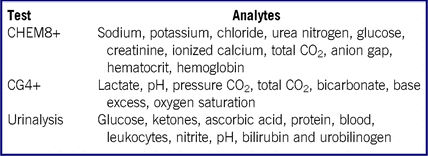
Table 2 lists the biochemical and hematological parameters that could be analyzed within the Médecins Sans Frontières setup with the above-mentioned analyzers.
Biochemical Analytical Tests Available From the 3 Analyzers Used in the Laboratories of the Donka and Nongo Ebola Treatment Centers

In the Donka laboratory, consumables for the tests were stored in the pharmacy, whilst the increased available space in the Nongo laboratory allowed for the storage of consumables within the LRZ. Consumables for the laboratory were transferred into the HRZ via the transmission table external to the laboratory or through the transfer portal to the side of the bench (Figure 2). The transfer portal was decontaminated with chlorine after every use.
Malaria screening was performed on admission to the ETC with the SD Bioline Malaria RDT (Standard Diagnostics, Suwon City, Republic of Korea). Pregnancy tests were also performed on every female patient of childbearing age upon admission. Urinalysis was performed with Combi 10L strips (Macherey-Nagel, Germany) upon request from clinicians. A field evaluation of the GeneXpert as primary diagnosis tool for EVD was conducted from weeks 19 to 28 at the Donka ETC,Reference Van den Bergh, Chaillet and Sow4 after which the analyzer was implemented as part of the screening process for admission to both ETCs.
All but 1 test were performed directly in the HRZ; samples for the GeneXpert were inactivated, externally decontaminated, and transferred to the LRZ for testing. This was achieved by first inactivating an aliquot of the sample with guanidine thiocyanate, as per the GeneXpert Ebola analyzer protocol. The external surface of the closed vial was then sprayed with 0.5% chlorine solution and then passed to the LRZ through the tube into a bath of 0.5% chlorine solution, where it was left for a few minutes.Reference Van den Bergh, Chaillet and Sow4
Within the LRZ of both laboratory designs there was a medical office with a laboratory register and computer for paperwork associated with laboratory requests. Blood tubes were labeled with the patient ID and time of bedside collection. Laboratory request forms were brought to the laboratory with the samples and remained in the HRZ and were read through the plexiglass partition. Results from the i-STAT tests were printed in the LRZ via an infrared connection through the plexiglass partition. Laboratory results were written on the laboratory request forms within the HRZ and returned to the clinicians. When urgent, radio transmissions of results were possible.
Laboratory Testing Activities
Prior to the validation of the GeneXpert Ebola platform for laboratory diagnosis of EVD, samples were sent to the Laboratoire National des Fièvres Hémorrhagiques, Gamal Abdel Nasser University of Conakry (Conakry, Guinea), supported by the Institut Pasteur (Dakar, Senegal). The transfer of samples out of the ETC required triple packaging (a leak-proof primary container, secondary protective packaging, and outer packaging with required markings), which resulted in delays. At that time, biochemical analyses that needed to be conducted shortly after sampling and could not be performed on inactivated samples were carried out within the ward, which unnecessarily exposed laboratory technicians and clinical staff.
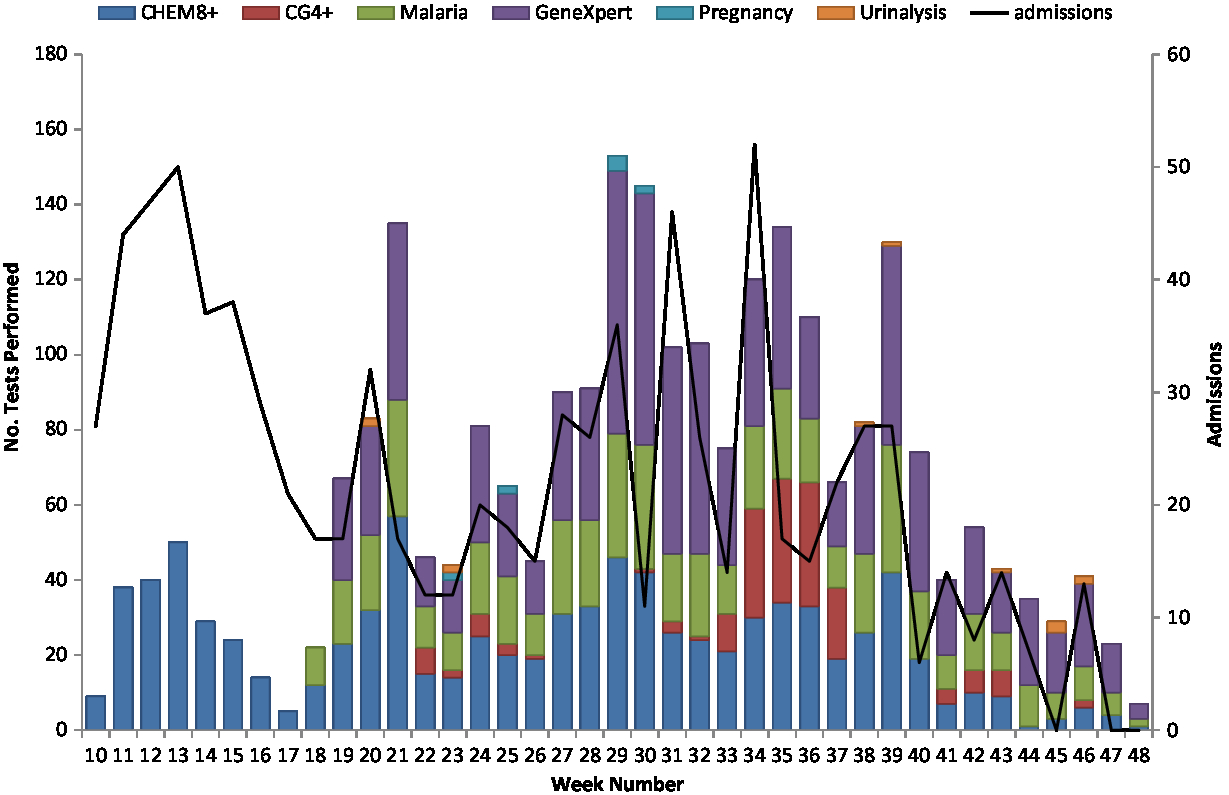
Over the 38 weeks of operation (epi weeks 10-48, 2015), 862 patients were admitted to the 2 ETCs (Figure 4). A total of 2544 laboratory tests were performed, with an average of 66.9 tests per week. The maximum number of tests performed in a week was 153 tests (week 29), whilst the peak of admissions in this period was in week 34, during which 52 patients were admitted. At no point were capacity problems observed in handling this volume of testing. However, it should be noted that the laboratory only became operational in March 2015, after the main peak of the outbreak in December 2014, during which 80 or more weekly admissions to the ETC were not uncommon. The decline in testing from week 40 onwards is in correlation with the reduction of patients within the ETC and in the overall outbreak in Guinea (Figure 4).
Number of Tests Performed by Test Type and Number of Patients Admitted by Week at the Médecins Sans Frontières’s Donka and Nongo Ebola Treatment Centers (2015)

Safety and Waste Management
Standard biosafety precautions apply to all laboratories involving infectious agents. Laboratory technicians working in the HRZ are obliged to wear the same full PPE as clinical staff. However, such full PPE is cumbersome, restricts movement, and can only be worn for limited stretches of time (because of the risk of overheating). In the laboratory design presented here, technicians were able to wear PPE in accordance with biosafety level 2 conditions (protective laboratory coats, eye and face protection, gloves, footwear) with an additional pair of surgical gloves worn while handling samples through the sealed glove box.Reference Wilson and Chosewood5 To avoid risk of accidental exposure, it was forbidden for staff to enter the HRZ laboratory side, even in full PPE, while technicians were working with open tubes containing potentially infectious material through the glove box. To ensure this, a window was installed in the wall of the HRZ to allow people in the HRZ to look into the laboratory before entering. These windows overlooking the HRZ were kept locked at all times (Figures 2 and 3B)
All material used for the testing of samples in the HRZ, such as blood-containing waste, pipette tips, i-STAT cartridges, and all waste generated from the GeneXpert® Ebola analyzer, were placed in a solid plastic box in the HRZ and sprayed with chlorine 0.5% before being incinerated. Other laboratory waste, such as absorbent paper, plastic bags, and pads, were incinerated directly. Chlorine solutions were changed daily to ensure proper decontamination and cleaning of the materials and surfaces. Hygienist staff inside the HRZ cleaned the laboratory daily as per infection prevention and control protocols.
DISCUSSION
This paper describes the implementation of a laboratory in an ETC during the West Africa Ebola outbreak that allowed for on-site differential diagnosis of EVD, as well as monitoring of patients’ biochemical and hematological levels for targeted clinical management.
The clinical implications of the on-site laboratory were considerable. Firstly, the timeliness of differential diagnosis of EVD is an essential parameter in clinical management and outbreak control. The capacity to rapidly distinguish Ebola virus from other infectious diseases, such as malaria, was crucial to the clinical management of suspected EVD cases,Reference Wambani, Ogola and Arika6 as this allowed clinicians to provide targeted treatment to patients with EVD and rapidly discharge patients who do not have EVD from the high-risk environment of the ETC. During the validation of the GeneXpert at the Donka ETC from weeks 19 to 28, Van den Bergh et al also evaluated turnaround times and observed a reduction in turnaround times for EVD diagnosis from 334 minutes, when samples were sent to the routine laboratory for molecular diagnosis, to 163 minutes. As per manufacturers’ recommendations, samples were tested using the i-STAT within 30 minutes.7 These short turnaround times impact clinical management, admission, and discharge decisions.
Secondly, the clinical progression of EVD is not yet well-documented, and was even less so in the midst of the West African outbreak. Additionally, because of the physical demands of the PPE and the number of patients during the peaks of the outbreak, clinicians only had limited contact time for clinical observation of their patients.Reference Chertow, Kleine and Edwards8 Clinicians thus depended extensively on the monitoring of biochemical abnormalities in order to recognize early signs of severe disease or complications such as lactic acidosis, acid-base deficits, kidney dysfunction, or low venous oxygen saturation. Published studies document multiple electrolyte abnormalities during the progression of EVD, including hyponatremia, hypokalemia, and hypocalcemia.Reference Hunt, Gupta-Wright and Simms9–Reference Bah, Lamah and Fletcher12 Clinical management of EVD is primarily through supportive treatment procedures, such as intravenous fluid resuscitation, electrolyte replacement to correct metabolic abnormalities, and prevention of complications associated with shock.Reference Hunt, Gupta-Wright and Simms9, Reference Uyeki, Mehta and Davey10, Reference Lamontagne, Fowler and Adhikari13 It could be speculated that the ability to rapidly diagnose and treat biochemical abnormalities may be associated with improved survival.
As reported by other laboratories,Reference Flint, Goodman and Bearden14 there were concerns regarding the handling of small vials in the glove box with the thick, oversized gloves required to maintain a safe barrier between the HRZ and LRZ, particularly because the glove ports blocked the technicians’ field of view while they manipulated samples. The laboratory technicians also reported reduced capacity for dexterity and concerns regarding the contamination of the rims of the vials used in the GeneXpert analyzer. As reported in Van den Bergh et al,Reference Van den Bergh, Chaillet and Sow4 material on the rim of the vial had not been inactivated and thereby posed a considerable biohazard. To avoid further risk of exposure, a “buddy system” was implemented: each activity was systematically supervised and the rim of each vial was visually double-checked before the vial was decontaminated and passed to the LRZ. Concerns about contamination decreased over time with the improvement of staff skills.
The chlorine solution used for disinfection is known to corrode and weaken the thick gloves.Reference Flint, Goodman and Bearden14 Therefore, it was mandatory to change the gloves in the glove box every month. To do this, the tubes and gloves were first decontaminated with chlorine in the HRZ before sealing the tube with a cap, hermetically sealing the partition between the zones. The gloves were then detached from the tubes in the LRZ and replaced with new ones. The hermetic caps were then removed from the tubes in the HRZ and the gloves were pushed back through.3
The initial premise of the laboratory was to provide a setup in which a room temperature below 30°C could be maintained, this being the required temperature zone for i-STAT and GeneXpert analyzers to operate accurately. It was hoped that negative pressure to the glove box could be obtained with the air conditioning system, by achieving a substantial temperature difference between the HRZ and LRZ. However, as the container was not airtight and had too many thermal bridges, negative pressure was never obtained. This was because the junctions between the walls and the roof of the container were not sealed. However, despite not being airtight, the division between the HRZ and LRZ was hermetic and impermeable by any liquid.
In conclusion, we describe an innovative laboratory setup straddling the high and low risk zones of an ETC, which produces timely diagnostic and clinical results for informed case management of EVD in real-life conditions. The setup may be of relevance for other actors in charge of an ETC, and/or for interventions for other pathogens requiring a high level of biosafety.
Conflicts of Interest
The authors have no conflicts of interest.
Acknowledgment
We would like to acknowledge the Médecins Sans Frontières scientists who worked in the Nongo ETC: Marc-Antoine de La Vega and Vesselina Yosifova.