




No CrossRef data available.
Article contents
Spatial and temporal variation of life-history traits documented using capture-mark-recapture methods in the vector snail Bulinus truncatus
Published online by Cambridge University Press: 09 October 2003
Abstract
The population biology of the schistosome-vector snail Bulinus truncatus was studied in an irrigation area near Marrakech, Morocco, using demographic approaches, in order to estimate life-history parameters. The survey was conducted using 2 capture-mark-recapture analyses in 2 separate sites from the irrigation area, the first one in 1999 and the second one in 2000. Individuals larger than 5 mm were considered. The capture probability varied through time and space in both analyses. Apparent survival (from 0·7 to 1 per period of 2–3 days) varied with time and space (a series of sinks was considered), as well as a square function of size. These results suggest variation in population intrinsic rate of increase. They also suggest that results from more classical analyses of population demography, aiming, for example at estimating population size, should be interpreted with caution. Together with other results obtained in the same irrigation area, they also lead to some suggestions for population control.
Keywords
Information
- Type
- Research Article
- Information
- Copyright
- © 2003 Cambridge University Press
INTRODUCTION
Control of vector populations requires an intimate knowledge of population demography which includes estimating parameters such as survival, recruitment and ultimately population rate of increase. In populations of vector snails, these parameters have classically been estimated from temporal size-structured surveys of populations. Such inferences can be performed using various techniques which are based on strong, but not always tested assumptions (see e.g. Ebert, 1999). Laboratory or semi-natural (using cages in natural environments) experiments can also be conducted in parallel to demographic surveys, allowing for less biased estimates of demographic traits (e.g. survival or growth). However, it remains often unclear how to interpret results in terms of population demography in the wild. A better understanding of population demography should, therefore, be based on experiments or surveys conducted under natural conditions, which can be conducted using capture-mark-recapture (CMR) approaches (Lebreton et al. 1992; Lebreton, Pradel & Clobert, 1993; Schwarz & Seber, 1999). These have been widely used in populations of vertebrates (Schwarz & Seber, 1999), and to a lesser extend in invertebrates (e.g. Woolhouse, 1988; Hanski, Alho & Moilanen, 2000). However, most studies in invertebrates, especially in vector snails, have not drawn advantage from studying several populations at once (Woolhouse, 1988; Woolhouse & Chandiwana, 1990). This allows documenting spatial variation in parameters that are classically estimated in only 1 population. Additionally, migration among populations can be formally quantified, without confusion between survival and emigration parameters (Ims & Yoccoz, 1997; Nichols & Kaiser, 1999). We here estimate variation in apparent (local) survival in populations of the freshwater snail Bulinus truncatus.
B. truncatus belongs to the group of freshwater snails serving as intermediate hosts for schistosomes, the agents of human and cattle bilharziasis in Africa and the Neotropics. The biology of these snails, especially B. truncatus, has therefore been intensely studied. A large number of population biology studies have been conducted in an effort to collect information for disease control (reviewed by Brown, 1994; Dillon, 2000; Rollinson, 2001). They generally relied on the classical approaches mentioned above, based on the temporal census of cohorts (e.g. O'Keeffe, 1985; Loreau & Baluku, 1987). The potential of studies based on CMR techniques has remained unappreciated, with a few exceptions (O'Keeffe, 1985; Woolhouse, 1988; Woolhouse & Chandiwana, 1990). These authors essentially used these techniques for estimating local population size, but also obtained some estimates of dispersal. A problem is that estimates of population size document fluctuations in population size, but are not informative about the demographic processes regulating populations. Moreover, significant methodological and statistical improvements have been done since then in the field of CMR studies (Lebreton et al. 1992; Schwarz & Seber, 1999; Seber & Schwarz, 2002). Two further points are that (i) surprisingly few data are available on the variation of life-history traits in natural populations of tropical snails, while a substantial number of studies have been conducted under laboratory conditions (Brown, 1994; Dillon, 2000). This certainly hinders our capacity to evaluate key parameters in population control. (ii) No study documents life-history traits and their variation in natural populations of B. truncatus, even based on size distributions. Life-history traits have been studied in few laboratory studies (e.g. Doums, Delay & Jarne, 1994). This is surprising since B. truncatus is one of the major hosts of Schistosoma haematobium in Africa.
Populations of B. truncatus were studied at short spatial and temporal scale from a demographical perspective. Our study was conducted in an irrigation perimeter near Marrakech, Morocco, that is at a spatial scale of a few kilometers. Two CMR experiments were conducted in 2 different sites from the same irrigation perimeter. Our aims were to evaluate variation in survival and dispersal at short spatial and temporal scales. Note that the analysis of dispersal is fully documented by Chlyeh et al. (2002) who also provide data documenting gene flow.
MATERIALS AND METHODS
The species studied and sampling area
Our study focused on the freshwater snail B. truncatus (Gastropoda, Pulmonata) with a distribution which spans over most of Africa, several Mediterranean islands and part of the Middle East. Two main aspects of its biology are relevant to the current study. (i) Its habitats are usually submitted to annual variation in water availability, which imposes wide fluctuations in snail density (Brown, 1994; Madsen et al. 1988) and has marked influence on the distribution of genetic variability (Viard, Justy & Jarne, 1997). In the artificial habitat analysed here, water is running all year round, and there is limited variation in water availability in the sinks studied. (ii) B. truncatus is one of the major vectors of various species of Schistosoma, and serves as the intermediate host of S. haematobium in Morocco (Brown, 1994; Laamrani et al. 2000). Urinary bilharziasis is still detected in the area studied, though at very low prevalence (Chlyeh, 2002). No infected snail has been detected over a monthly, 2-year survey in 9 sinks distributed over the whole irrigation system studied here (Chlyeh, 2002). Note that few demographic data have been obtained in vector snails occupying artificial habitats, although the role of such habitats in the recent extension of bilharziasis is not negligible (see e.g. Brown, 1994).
The whole study was conducted within the irrigation system of Oulad Sid'cheikh, 20 km South of Marrakech. A schematized map of this system is presented in Fig. 1. Water is pumped from the ground water in several stations, and directed towards irrigated fields and orchards through a series of primary and secondary concrete canals. Pairs of sinks, 0·5 to 2 m deep, are located along these canals, about every 100 m. Sinks from a pair are separated by about 10 m. As water may run as fast as 0·4 m/s in the canals, water turbulence within the first sink of a pair is much higher than in the second one. This mostly limits the populations of B. truncatus to the second sink (settled populations of B. truncatus were never found in the canals). Variation in water current (from 0 to 0·4 m/s) is observed as a consequence of local water management for irrigation. As water is pumped at several pumping stations, some of the sites studied (see below) are directly connected by running water, allowing for potential dispersal following water currents. Not all sites are connected (Fig. 1). A consequence of water current is that snail dispersal between pairs of sinks occurs downstream.

Fig. 1. Schematized map of the Oulad Sid'cheikh irrigation scheme, located along the Marrakech – Essaouira road, giving the location of the CMR experiments (CMR1 and CMR2), the connections between sinks (empty squares) through half-pipes and the movements of water (arrows within pipes). Filled squares are pumping stations. A detailed map of the series of sinks in which the CMR2 experiment was conducted is given below the main map. Note that the map is not to scale, and the largest distance along the Marrakech – Essaouira axis is 3 km.
Population dynamics analysis
The dynamics of B. truncatus populations was analysed using CMR methods (Lebreton et al. 1992) in 2 separate surveys. CMR studies were conducted on 2 successive years in 2 different sites (Fig. 1). Snail sampling in sinks was performed using a metallic dredge (Khallaayoune & Laamrani, 1992), making possible the sampling of individuals larger than 5 mm in shell length. Moreover individuals smaller than 5 mm cannot be marked using plastic tags (see below).
The first experiment was conducted in Winter 1999 in sink S1 (Fig. 1). B. truncatus individuals were sampled on 3 February 1999, measured (shell length from apex to last spire), marked using coloured nail varnish, and released in S1. Recaptures were performed every 2 days on 3 occasions (5–9 February): all snails captured were again measured, marked (one varnish colour per marking occasion), and released in S1. A last recapture was performed on 9 March 1999. In total, 1309 snails were marked. This protocol allowed analysis of local 2-day survival. The general model fitted to data was Φ(t) P(t) where Φ is the survival probability, P is the capture probability and t is time (Lebreton et al. 1992).
The second experiment was conducted in Spring 2000 in a series of sinks (Fig. 1), following a different protocol. Two sessions of capture (3 occasions per session, separated by 3 days) were separated by a period of 19 days, the first and second session beginning on 21 April and 16 May respectively. On 21 April, sinks S′1, S′3, S′5 and S′7 were sampled using the same dredge as above. All captured individuals were measured, marked using numbered, coloured plastic tags, and released. The same process was followed on each session. Unfortunately, the last 2 recapture occasions (19 and 22 May) resulted in no recapture of living individuals, because of molluscicide treatment by the Marrakech SIAAP (Service d'Infrastructure et d'Action Ambulatoire Préfectoral) on 18 May. Marked individuals were also searched for in sinks S′9 and S′11 in all sessions. A preliminary survey indicated that even-numbered sinks (S′0 to S′10) harboured very low number of snails, and they are not considered here. In total, 1025 individuals were marked.
The statistical analysis was performed using data from S′3, S′5 and S′7, since the number of individuals marked in S′1 was too low to provide accurate estimates of survival. The trait analysed is survival. The analysis followed the classical unisite parameterization (Lebreton et al. 1992) and was performed using the software MARK (White & Burnham, 1999). The logit-link function was used to normalize the probability of the parameters studied. The general model fitted to data was Φ(s+t+L) P(s*t) where Φ and P are the survival and capture probabilities, and s, t and L represent the sink, time and individual size effects. Size was considered as a categorical individual covariate. Survival is likely to vary with sinks since they vary in depth and habitat structure (presence of stones or wooden debris), and with time since the speed of water current varies with time. Survival is also likely to vary with age, and therefore size (see Dillon, 2000 for references in freshwater snails). Not all interactions were tested since some had no biological meaning; for instance, an interaction between time and sink effects was unlikely since water discharges, which may explain temporal changes of survival, affect all sinks at the same time. Additionally, the number of individuals in the dataset should be at least 40 times higher than the number of parameters, in order to avoid selecting over-parameterized misleading models (Burnham & Anderson, 1998). Size was introduced into the models under 3 alternative classifications: (i) snail size was in between 5 and 18 mm, and 5 size classes, each 2·7 mm wide, were constructed. Size in the model was parameterized using a linear or quadratic constraint on size classes, on a logistic scale. (ii) In order to test for a trade-off between survival and growth, individuals were separated into 2 classes. The first class included fast-growing individuals (under 7·5 mm; N=77), and the second slow-growing individuals (above 7·5 mm; N=948). The threshold was chosen as the inflexion point of growing curves drawn from laboratory-raised individuals (Ostrowski, 2002). (iii) The distribution of individual size over all sinks revealed the occurrence of 2 cohorts (Fig. 2). A cohort effect was therefore tested attributing individuals to either of these 2 cohorts, with a threshold at 12 mm (N=749 and 276 for individuals smaller and larger than 12 mm respectively).

Fig. 2. Size distribution of individual Bulinus truncatus captured and marked during the second CMR experiment (N=1025). Two cohorts can be distinguished with an arbitrary limit set at 12 mm.
In the 2 experiments, goodness-of-fit of models were tested using contingency table tests implemented in the software U-care 1.2 (Choquet et al. 2001). Models were compared based on their AICc (Akaike information criterion corrected for small sample size; Burnham & Anderson, 1998). Models differing by 2 points of AICc were considered as statistically not different (Lebreton et al. 1992; Burnham & Anderson, 1998). The probability of these models, given the data and relative to the other models considered, was discussed on the basis of Akaike weights (Burnham & Anderson, 1998). Effects were also tested comparing nested models by likelihood-ratio tests (LRT) where LRT=2(Ln(L)model 1−Ln(L)model 2) follows a χ2 distribution with N1–N2 degrees of freedom (Ni being the number of independent parameters estimated in model i; Lebreton et al. 1992), since they are of more common use.
Dispersal was also studied in both experiments (downstream to S1 and S′1 respectively) and results are reported in Chlyeh et al. (2002). Note though that dispersal in the second experiment was analysed using the methodology developed for multisite CMR designs (e.g. Hestbeck, Nichols & Malecki, 1991). Size-specific dispersal was tested using data from the second experiment. Size distributions were compared between dispersing and non-dispersing individuals using Kolmogorov-Smirnov two-sample and Wilcoxon tests.
RESULTS
First experiment
Model Φ(t) P(t) appropriately fitted the data (χ2=2·425, D.F.=4, P=0·658) and had the lowest AICc. Recapture probability varied through time (χ2=6·291, D.F.=1, P=0·012; Table 1), as well as the survival probability (χ2=5·815, D.F.=1, P=0·016; Table 1). As the recapture and survival probabilities were time-dependent, separate estimates for the last recapture occasions cannot be obtained (Lebreton et al. 1992).

Second experiment
Model Φ(s*t) P(s*t) appropriately fitted the data (χ2=12·958, D.F.=12, P=0·372). However, this model did not include the effect of size which was thought to be biologically important. On the other hand, the interaction between sink and time effects was not considered (see Materials and methods section). Hence model selection started with model Φ(s+t+L) P(s*t) (Table 2). The preferred model (model 1) was Φ(s+L2) P(s*t). Size corresponds here to case (i) in the Materials and Methods section, that is when 5 size classes were considered with a linear or quadratic constraint. The influence of time, sink and size are now discussed successively for recapture and survival probabilities. Models are compared to the preferred model. A significant interaction between the time and sink factors (model 1 versus model 4; χ2=13·397, D.F.=4, P=0·009) indicated that the recapture probability varied independently across time and sinks. An effect of individual size on recapture probability was less likely (lower Akaike weights of models 2 and 3). The estimates of the recapture probability ranged between 0·264 (0·106) in S′3 on May 16 and 0·691 (0·076) in S′7 on April 24. On the other hand, no effect of size was detected (models 2 and 3; Table 2).
Table 2. Comparison of models explaining variation in survival (Φ) and recapture (P) probabilities in the CMR2 experiment (2000) (s, t and L represent sink, time and size. The preferred model (model 1) is Φ(s+L2) P(s*t), based on both Akaike information criterion (AICc) and deviance. AICc is AIC corrected for small sample size, dAICc the difference in AICc with the model with the smallest AICc, np the number of parameters estimated, Dev. the deviance and ω the Akaike weight. Note that model 1 is reported 3 times for facilitating comparison and models are given in order of increasing AICc.)

The survival probability differed slightly among sinks (model 1 versus model 6; χ2=6·021, D.F.=2, P=0·049) and varied with individual size (model 1 versus model 7; χ2=7·340, D.F.=2, P=0·025). The quadratic term on size (model 1 versus model 10; χ2=6·920, D.F.=1, P=0·008) indicates that survival significantly decreased with size. Small and large individuals indeed exhibited lower survival than medium-size individuals, and this trend was identical among sinks (Fig. 3). The weekly survival probability was likely to be time-dependent (model 5 had the highest Akaike weight). However, according to statistical significance (model 1 versus model 5; χ2=2·900, D.F.=1, P=0·089) and the parsimony principle, we considered it as roughly constant across weeks. Other models including size as a log term (model 10 in Table 2), as a linear term (model 11), as 2 growing stages (model 9) or as 2 cohorts (model 12) performed significantly worse than the preferred model.

Fig. 3. Size-specific survival probabilities estimated under the preferred model (see text) in 3 sinks (S′3, S′5 and S′7) in the CMR2 experiment. The size effect is constrained to be identical among sinks.
Size-specific dispersal was tested using data from the second experiment. The size distribution of dispersing (mean 10·71 mm, S.E. 0·602, N=19) and non-dispersing (mean 10·66 mm, S.E. 0·125, N=435) individuals did not differ significantly (Kolmogorov-Smirnov 2-sample test, D=0·14, P>0·1; Wilcoxon test, Z=0·410, P=0·682).
DISCUSSION
The use of CMR for analysing population demography in vector snails has been employed in very few studies (O'Keeffe, 1985; Woolhouse & Chandiwana, 1990). Moreover, these authors were essentially interested in estimating population size, and the CMR methodology has significantly improved, e.g. allowing for the analysis of processes responsible for changes in population size. It may be useful to recall some basic assumptions of these models (see Lebreton et al. 1992). A first group of assumptions is intrinsic to the models. First, the capture and survival probabilities should be identical within a given group. Second, individuals have independent histories of capture. These assumptions have been tested in the datasets studied (see Materials and Methods section). A second group of assumptions is more related to the biological model and question addressed, and should be tested independently. First, the loss of marks is negligible. This has been checked under laboratory conditions over periods longer than the ones considered here (Chlyeh, 2002). Similar marks have also been used in other snail species by our research group, and negligible loss was detected in Physa acuta (Henry, 2002). Second, marking does not affect the traits measured, especially survival. Most studies on snails using similar marking techniques have reported that this assumption holds (Gosselin, 1993; O'Keeffe, 1985; Woolhouse, 1988), and laboratory-based analyses have indicated that this is also true in both B. truncatus and P. acuta (Chlyeh, 2002; Henry, 2002). The assumption of no effect of marking on capture probability was not tested here. It is likely that marking had no effect on emigration probability at release, since we checked that marked snails remained in the sink in which they were released. Moreover, no effect of marking on capture probability and on movement in aquaria was reported by Woolhouse (1988) in B. globosus. As assumptions of CMR techniques are fulfilled, our results should not be subject to significant bias.
Both CMR analyses indicated that the probability of capture could not be considered as constant as usually assumed in most studies using field data without correcting for the confounding effect of variable detectability. The first analysis indicated variation in time with a difference of 12% between the 2 estimates, while the second documents both variation in time and space (among sinks) with a difference of more than 40% among estimates. Interestingly, no significant effect of size on the capture probability was detected (for snails larger than 5 mm). Woolhouse & Chandiwana (1990) reported no size variation in capture probability, but a direct comparison of absolute values is not possible because they studied river populations while the populations studied here occupy artificial habitats. On the other hand, time and size variation of capture probability has been reported in marine snails (Catchpole et al. 2001). Most studies of population demography in vector snails have been based on the survey of size distribution in natural populations, sometimes aided by laboratory experiments to monitor traits such as growth and fecundity (e.g. Marti, 1986; Loreau & Baluku, 1987). That the capture probability does not vary with size is an important result for studies of population demography based on size distributions. Note, though, that this result might be due to the sampling method used here, and should be evaluated when using other methods. On the other hand, that the capture probability varies through time invalidates studies aiming at estimating temporal variation of population size that fail to include estimates of capture probability.
Variation in survival probability was documented in both analyses. Given that this result is based on a limited part of the irrigation area, even more variation is expected at the scale of the whole area. In the first experiment, a difference of 20% was detected between the two successive periods with basically no mortality during the second period. No temporal variation was detected in the second analysis. Survival was strongly influenced by size, the best model considering a squared effect of size, small and large individuals surviving worse than medium-sized individuals. That small individuals survive poorly is not surprising, but decreased survival of large individuals is more puzzling. This may be due to senescence (Rose, 1991), a subject that has been hardly addressed in freshwater molluscs (e.g. there is no entry on the subject in Dillon, 2000). Size-specific dispersal is an alternative. However, the comparison of size between dispersing and non-dispersing individuals did not indicate such an effect. Woolhouse & Chandiwana (1990), using a simpler CMR approach than the one used here, found a mean daily survival of about 0·96 in Bulinus globosus. Their design did not allow to model size effects. They did not find spatial variation between the 2 sites studied, though they documented variation of survival as a function of water temperature. The daily survival observed here is rather lower, ranging between 0·75 and 0·97 depending on size and sink. For comparison, Doums et al. (1994) found values at least equal to 0·995 in laboratory populations of B. truncatus. Other studies in freshwater snails, based on analysis of size distribution in natural populations and/or on laboratory experiments, have documented variation in survival probability with an effect of size, age or site (e.g. Lam & Calow, 1989; Marti, 1986; O'Keeffe, 1985; reviewed by Dillon, 2000). However, as mentioned above, such estimates should be manipulated with caution when inferring population growth parameters.
Survival was documented in the present study. Dispersal was studied in a companion paper from both a genetical and demographical perspective (Chlyeh et al. 2002). The demographic study was conducted on the same protocol as the one used here. A conservative estimate of dispersal distance for those individuals which had moved and survived was about 100 m per month. Another way to put it is that the probability that an individual spends its whole reproductive life in a sink is 0·3 only. The irrigation system of Oulad Sid'cheikh therefore harbours from 1 to a few populations (Chlyeh et al. 2002). Both studies add to our knowledge of life-history traits in B. truncatus, a species which has hardly been studied from a demographical point of view. They also highlight the strength of the CMR approach when unbiased estimates of life-history parameters are required. On the other hand, at least 2 aspects of the life-cycle have not been considered. (i) Survival was here analysed in snails large enough to be marked with limited consequences on fitness. Most studies, whether under laboratory or semi-natural conditions, have shown that survival is extremely low and growth marked in juveniles (reviewed by Dillon, 2000). It would therefore be useful to develop methods monitoring life-history traits through CMR in this class of individuals. Gosselin (1993) showed that marking marine snails as small as 1 mm is possible, though it would prove labour-intensive to mark large numbers of snails. Quite probably, it would generate few data because of low recapture probability if these small individuals are to be monitored in their natural habitat. (ii) Fecundity was not followed here, because it proved technically difficult to use cages. As a consequence, it is not possible to estimate population growth parameters, such as the intrinsic rate of increase (see Doums et al. 1994 for laboratory estimates under various densities, and Brown, 1994; Dillon, 2000 for reviews in freshwater snails). Such estimates could be obtained from a combination of CMR studies and surveys of cage populations. An alternative would be to use CMR methods for monitoring the dynamics of the reproductive part of the population (e.g. intrinsic rate of increase), alleviating the problem of limited access to classes of juvenile/very small snails, based on the model of Pradel (1996) (see also Nichols & Hines, 2002). A limitation of this method is the dependence of the parameters (e.g. survival) to be estimated on individual covariates (e.g. size).
How could these results be used to improve the control of snail populations? Chemical control of snails, which has been performed by the SIAAP over the last 30 years in the irrigation system of Oulad Sid'cheikh, has been locally very efficient (populations were almost completely eliminated in the sinks surveyed), though not as a long-term strategy, to control populations. Although population growth parameters were not estimated, the fact that adult survival which may be locally high is one reason why populations can recover fast from a few individuals surviving mollusciciding (underground canals between pairs of sinks serve as havens). A second, more likely reason, is significant movements among sinks and therefore extremely fast recolonization (Chlyeh et al. 2002). This calls for large-scale and spatially structured treatments. A possible strategy would be to apply molluscicide in the most upstream sinks of the irrigation area, in order to eliminate source populations, and then eliminate persisting downstream populations. Targeting those large populations serving as large sources of migrants would constitute a further solution, assuming that recolonization does not occur too fast from small populations. These large populations may be detected by searching for sinks harbouring large amounts of macrophytes and algae. They have indeed been shown to be associated with high density of B. truncatus individuals (Chlyeh, 2002). Such a strategy might prove useful in the significant effort made by the Moroccan administration to control vector snail populations (Laamrani et al. 2000).
This project was supported by funds from FICU (99/PAS/29 to G. C.) and from bilateral exchange programs between CNR and CNRS (PICS program). P.-Y. Henry was awarded a fellowship from the MENRT. The authors thank Driss El Ouardi and Aicha Sadir for technical help, M.-F. Ostrowski for access to unpublished data, R. Pradel for important advices with demographic analyses, B. Delay and K. Khallaayoune for support and two anonymous referees for comments.
References
REFERENCES
BROWN, D. S.
(1994).
Freshwater Snails of Africa and their Medical Importance.
Taylor & Francis Ltd,
London.
BURNHAM, K. P. &
ANDERSON, D. R.
(1998).
Model Selection and Inference: a Practical Information-Theoretical Approach.
Springer Verlag,
New York.CrossRef
CATCHPOLE, E. A.,
FREEMAN, S. N.,
MORGAN, B. J. T. &
NASH, W. J.
(2001).
Abalone I: analyzing mark-recapture-recovery data incorporating growth and delayed recovery.
Biometrics
57, 469–477.CrossRefGoogle Scholar
CHLYEH, G.
(2002).
Dynamique et génétique des populations de mollusques hôtes intermédiaires de parasitoses eau-dépendantes (bilharzioses et fascioloses).
Thèse de doctorat d'état, Institut Agronomique et Vétérinaire Hassan II, Rabat, Morocco.
CHLYEH, G.,
HENRY, P.-Y.,
SOURROUILLE, P.,
DELAY, B.,
KHALLAAYOUNE, K. &
JARNE, P.
(2002).
Population genetics and dynamics at short spatial scale in Bulinus truncatus, the intermediate host of Schistosoma mansoni, in Morocco.
Parasitology
125,
1–8.Google Scholar
CHOQUET, R.,
REBOULET, A.-M.,
PRADEL, R. &
LEBRETON, J.-D.
(2001).
U-care (Utilities – CApture-REcapture) User's Guide.
CEFE, CNRS, Montpellier,
France.
DILLON, R. T.
(2000).
The Ecology of Freshwater Molluscs.
Cambridge University Press,
Cambridge.CrossRef
DOUMS, C.,
DELAY, B. &
JARNE, P.
(1994).
A problem with the estimate of self-fertilization depression in the hermaphrodite freshwater snail Bulinus truncatus: the effect of grouping.
Evolution
48,
498–504.Google Scholar
EBERT, T. A.
(1999).
Plant and Animal Populations. Methods in Demography.
Academic Press,
San Diego.
GOSSELIN, L. A.
(1993).
A method for marking small juvenile gastropods.
Journal of the Marine Biological Association of the UK
73,
963–966.CrossRefGoogle Scholar
HANSKI, I.,
ALHO, J. &
MOILANEN, A.
(2000).
Estimating the parameters of survival and migration of individuals in metapopulations.
Ecology
81,
239–251.CrossRefGoogle Scholar
HENRY, P.-Y.
(2002).
Dynamique des populations et évolution du système de reproduction. Etude chez le gastéropode hermaphrodite Physa acuta (pulmoné). Thèse de doctorat, Université Montpellier II, France.
HESTBECK, J. B.,
NICHOLS, J. D. &
MALECKI, R. A.
(1991).
Estimates of movement and site fidelity using mark-resight data of wintering canada geese.
Ecology
72,
523–533.CrossRefGoogle Scholar
IMS, R. A. &
YOCCOZ, N. G.
(1997).
Studying transfer processes in metapopulations: emigration, migration and colonization. In
Metapopulation Biology: Ecology, Genetics, and Evolution (
ed. Hanski, I. A. &
Gilpin, M. E.),
pp. 247–265.
Academic Press, San Diego.CrossRef
KHALLAAYOUNE, K. &
LAAMRANI, H.
(1992).
Seasonal patterns in the transmission of Schistosoma haematobium in Attaouia, Morocco.
Journal of Helminthology
66,
89–95.CrossRefGoogle Scholar
LAAMRANI, H.,
MAHJOUR, J.,
MADSEN, H.,
KHALLAAYOUNE, K. &
GRYSEELS, B.
(2000).
Schistosoma haematobium in Morocco: moving from control to elimination.
Parasitology Today
16,
257–260.CrossRefGoogle Scholar
LAM, P. K. S. &
CALOW, P.
(1989).
Intraspecific life-history variation in Lymnea peregra (Gastropoda: Pulmonata) I. Field study.
Journal of Animal Ecology
58,
571–588.CrossRefGoogle Scholar
LEBRETON, J. D.,
PRADEL, R. &
CLOBERT, J.
(1993).
The statistical analysis of survival in animal populations.
Trends in Ecology and Evolution
8,
91–95.CrossRefGoogle Scholar
LEBRETON, J.-D.,
BURNHAM, K. P.,
CLOBERT, J. &
ANDERSON, D. R.
(1992).
Modeling survival and testing biological hypotheses using marked animals: a unified approach with case studies.
Ecological Monographs
62,
67–118.CrossRefGoogle Scholar
LOREAU, M. &
BALUKU, B.
(1987).
Population dynamics of the freshwater snail Biomphalaria pfeifferi in Eastern Zaire.
Journal of Molluscan Studies
53,
249–265.CrossRefGoogle Scholar
MADSEN, H.,
DAFFALA, A. A.,
KAROUM, K. O. &
FRANDSEN, F.
(1988).
Distribution of freshwater snails in irrigation schemes in the Sudan.
Journal of Applied Ecology
25,
853–866.CrossRefGoogle Scholar
MARTI, H.
(1986).
Field observations on the population dynamics of Bulinus globosus, the intermediate host of Schistosoma haematobium in the Ikakara area, Tanzania.
Journal of Parasitology
72,
119–124.CrossRefGoogle Scholar
NICHOLS, J. D. &
HINES, J. E.
(2002).
Approaches for the direct estimation of lambda, and demographic contributions to lambda, using capture-recapture data.
Journal of Applied Statistics
29,
539–568.CrossRefGoogle Scholar
NICHOLS, J. D. &
KAISER, A.
(1999).
Quantitative studies of bird movement: a methodological review.
Bird Study
46,
S289–S298.CrossRefGoogle Scholar
O'KEEFFE, J. H.
(1985).
Population biology of the freshwater snail Bulinus globosus on the Kenya coast. I. Population fluctuations in relation to climate.
Journal of Applied Ecology
22,
73–84.Google Scholar
OSTROWSKI, M.-F.
(2002).
L'évolution de traits binaires plastiques: le cas de l'aphallie chez le gastéropode Bulinus truncatus.
Thèse de doctorat, Université Montpellier II,
France.
PRADEL, R.
(1996).
Utilization of capture-mark-recapture for the study of recruitment and population growth rate.
Biometrics
52,
703–709.CrossRefGoogle Scholar
ROSE, M. R.
(1991).
Evolutionary Biology of Aging.
Oxford University Press,
New York.
SCHWARZ, C. J. &
SEBER, G. A. F.
(1999).
A review of estimating animal abundance III.
Statistical Science Journal
14,
427–456.Google Scholar
SEBER, G. A. F. &
SCHWARZ, C. J.
(2002).
Capture-recapture: before and after EURING 2000.
Journal of Applied Statistics
29,
5–18.CrossRefGoogle Scholar
VIARD, F.,
JUSTY, F. &
JARNE, P.
(1997).
The influence of self-fertilization and bottlenecks on the genetic structure of subdivided populations: a case study using microsatellite markers in the freshwater snail Bulinus truncatus.
Evolution
51,
1518–1528.CrossRefGoogle Scholar
WHITE, G. C. &
BURNHAM, K. P.
(1999).
Program MARK: survival estimation from populations of marked animals.
Bird Study
46,
120–139.CrossRefGoogle Scholar
WOOLHOUSE, M. E. J.
(1988).
A mark-recapture method for ecological studies of schistosomiasis vector snail populations.
Annals of Tropical Medicine and Parasitology
82,
485–497.CrossRefGoogle Scholar
WOOLHOUSE, M. E. J. &
CHANDIWANA, S. K.
(1990).
Population biology of the freshwater snail Bulinus globosus in the Zimbabwe Highveld.
Journal of Applied Ecology
27,
41–59.CrossRefGoogle Scholar

Fig. 1. Schematized map of the Oulad Sid'cheikh irrigation scheme, located along the Marrakech – Essaouira road, giving the location of the CMR experiments (CMR1 and CMR2), the connections between sinks (empty squares) through half-pipes and the movements of water (arrows within pipes). Filled squares are pumping stations. A detailed map of the series of sinks in which the CMR2 experiment was conducted is given below the main map. Note that the map is not to scale, and the largest distance along the Marrakech – Essaouira axis is 3 km.
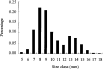
Fig. 2. Size distribution of individual Bulinus truncatus captured and marked during the second CMR experiment (N=1025). Two cohorts can be distinguished with an arbitrary limit set at 12 mm.

Table 1. Recapture and daily survival probabilities, with standard deviation into parentheses, in the CMR1 experiment (1999)

Table 2. Comparison of models explaining variation in survival (Φ) and recapture (P) probabilities in the CMR2 experiment (2000)
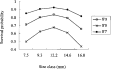
Fig. 3. Size-specific survival probabilities estimated under the preferred model (see text) in 3 sinks (S′3, S′5 and S′7) in the CMR2 experiment. The size effect is constrained to be identical among sinks.
 You have
Access
- 10
- Cited by