It is widely accepted that Amazonia was an independent centre of plant domestication (Piperno Reference Piperno2011; Clement et al. Reference Clement, Denevan, Heckenberger, Junqueira, Neves, Woods and Teixeira2015). Archaeological and ethnographic data on plant cultivation and management in this region, however, show that it is often difficult to determine what is domestic and what is not (Lévi-Strauss Reference Lévi-Strauss1952: 252). This situation has led to a proliferation of terms to characterise different stages of domestication. Clement et al. (Reference Clement, de Cristo-Araújo, Coppens d'Eeckenbrugge, Pereira and Picanço-Rodrigues2010: 73), for example, refer to 52 crops with domestic populations, 41 with semi-domestic populations and 45 with incipiently domesticated populations in Amazonia. Do these categories represent different stages of a universal linear domestication process, or do they index a different mode of relating to plants and the environment?
In the 1980s, archaeologists anticipated finding evidence for Amazonian agricultural intensification (Roosevelt Reference Roosevelt1980), yet this has never happened. Despite archaeological evidence of large-scale landscape management, very little data indicate agricultural intensification; some cases actually suggest a minimal reliance on agriculture (Schaan Reference Schaan, Silverman and Isbell2008). This does not mean that food production stalled at an intermediate incipient stage, or that environmental limitations prevented the full development of agriculture. Rather, we need to rethink how the relationship between Amazonian plants and people unfolded over time.
We here propose that a very basic conceptual and practical framework concerning the relationship between plants and people in the tropical forest has existed since at least the Middle Holocene. Previously, we have applied this framework to kinship, shamanism, warfare and pet-keeping (Fausto Reference Fausto1999, Reference Fausto2012a; Costa Reference Costa2017). Here we suggest that it also provides an alternative model to domestication, in which the relationship with plants is part of a general concern for ‘making kin out of others’ (Vilaça Reference Vilaça2002), as is typical of contemporary Amazonian indigenous societies. If valid, the adoption of such a framework may help us to understand apparent disjunctions between evidence for early plant domestication and what appears to be an Amazonian Neolithic that never fully developed.
The Formative as a New World Neolithic
The conceptualisation of a stage known as the ‘Formative’ was an attempt by archaeologists to define a developmental scheme for the Americas in a manner comparable to that of the Old World (Willey & Philips Reference Willey and Phillips1958). Ford (Reference Ford1969: 9) defined the Formative as:
the 3000 years (or less in some regions) during which the elements of ceramics, ground stone tools, handmade figurines, and manioc and maize agriculture were being diffused and welded into the socioeconomic life of the people living in the region extending from Peru to the eastern United States.
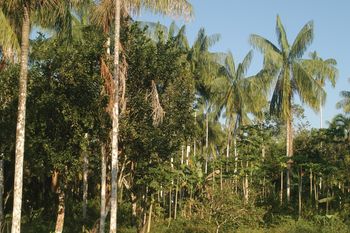
It seems, however, as if the Amazonian Formative never ended. Despite the colonial-era introduction of exotic species, such as bananas (Musa sp.), and the progressive increase in the importance of crops such as manioc (Manihot esculenta Crantz), the knowledge and practice of contemporary Amazonian cultivation systems seem to be similar to that of the Middle Holocene, involving mixed agroforestry strategies combining the cultivation of perennial non-domesticated trees with domesticated annuals (Watling et al. Reference Watling, Shock, Mongeló, Almeida, Kater, De Oliveira and Neves2018) (Figure 1).
Tree orchard on the archaeological site, which also includes the cultivation of local and exotic tree crops such as Açaí palm (Euterpe precatoria), papaya (Carica papaya), banana (Musa spp.) and lime (Citrus spp.). (Lago do Limão, central Amazon (2005), photograph by Eduardo G. Neves.)

In the Americas, the relationship between the beginning of plant domestication and the emergence of agriculture followed its own path: while the former developed at the beginning of the Holocene, from 7000–6000 BC, societies relying on agriculture emerged much later (Piperno Reference Piperno2011; Killion Reference Killion2013). It is also interesting to note that there is a clear pattern in the archaeological record showing that, in South America, all centres of early ceramic production were located in the tropical lowlands. For example, the Taperinha fluvial shellmound in the Lower Amazon has yielded some of the oldest ceramics of the Americas, dating to 5000 BC (Roosevelt et al. Reference Roosevelt, Housley, Imazio da Silveira, Maranca and Johnson1991). All other sites with early ceramics are located along an arc across the north of South America: Mina-phase shell mounds at the mouth of the Amazon, dating to 3500 BC (Roosevelt Reference Roosevelt, Barnett and Hoopes1995); the Valdivia sites of coastal Ecuador with ceramics dating to 3500 BC (Marcos Reference Marcos2015); sites on the Caribbean coast of Colombia such as Puerto Hormiga and San Jacinto with ceramics dating to 4000 BC (Oyuela-Caycedo Reference Oyuela-Caycedo, Barnett and Hoopes1995; Oyuela-Caycedo & Bonzani Reference Oyuela-Caycedo and Bonzani2005; and Alaka shell mounds of coastal Guiana with ceramics dating to 4000 BC (Roosevelt Reference Roosevelt, Barnett and Hoopes1995; Williams Reference Williams1997).
With the exception of those on the Ecuadorian coast, these sites lie far from the early continental centres of plant domestication. Unfortunately, there are few archaeobotanical data for these sites except for San Jacinto, which shows no correlation between early ceramic production and food processing (Oyuela-Caycedo Reference Oyuela-Caycedo, Barnett and Hoopes1995). In the Amazon, such correlation appears much later and seems to be associated with the formation of anthropic dark earths starting around 500 BC (Neves et al. Reference Neves, Guapindaia, Lima, Costa, Gomes and Rostain2014). Again, there is a gap of more than 3000 years between the dates for early pottery production and the establishment of sedentary societies. The application of concepts such as the Formative to Amazonian contexts may, therefore, risk subsuming sophisticated forms of knowledge, based on the production of diversity that still unfold today, within a long ‘transitional’ stage (Neves Reference Neves2007; Arroyo-Kalin Reference Arroyo-Kalin2010). Referring to such productive strategies of plant management or cultivation as an ‘incipient’ stage along a developmental course hinders our capacity to understand them fully. In order to grasp the complex interactions between humans and plants in Amazonia, a radically new heuristic strategy is required—one based on contemporary indigenous ontologies.
Plants as pets
Amazonian Indians did not practise animal husbandry before the Conquest, nor was it subsequently adopted (Descola Reference Descola, Latour and Lemonnier1994; Vander Velden Reference Vander Velden2012; Stahl Reference Stahl and Rostain2014). Their disinterest in controlling the reproduction of animals presents a striking contrast with their passion for keeping pets. Modern villages abound with animals of all kinds. These ‘wild pets’ are captured by hunters and cared for by their wives, breastfed and adopted as children. They are never eaten and rarely reproduce in captivity.
All Amazonian languages possess a term to designate these ‘wild pets’, whose reciprocal term is normally a word meaning ‘owner’ or ‘master’. These reciprocal pairs designate a great number of relationships, besides actual pet-keeping: those between adoptive parents and adopted children, captors and captives, warriors and their victims, shamans and their auxiliary spirits, chiefs and followers, and cultivators and their plants (Fausto Reference Fausto, Brightman, Grotti and Ulturgasheva2012b). All of these relationships are conceived as resulting from two moments: one of appropriation, the other of incorporation. As the former is often depicted as a violent process by indigenous peoples, we call it ‘predation’, and as the latter is considered a process of making kinship, we called it ‘familiarisation’. In combination, this produces the concept of ‘familiarising predation’, which characterises the process by which alterity is apprehended from the outside to produce kinship on the inside (Fausto Reference Fausto2007). As is well known in the literature on Amazonian indigenous peoples, kinship is not taken as a given, natural phenomenon, but as a process in which people are constructed as akin to each other, in the sense of becoming both kin and alike. The input that triggers this process comes always from the outside in the form of souls, animals, enemies and captured children (Vilaça Reference Vilaça2002).
In our previous work, we did not apply this concept to cultivation; domesticated plants seemed clearly different from non-domesticated pets. We had simply followed the ethnological maxim: Amazonian Indians are ‘Neolithic people with a Palaeolithic mind’. Yet, what if there never was a Neolithic in Amazonia? Would it be possible to understand the relationship between peoples and plants under the single principle of familiarising predation? If so, would this help to understand the deep history of these permanently ‘intermediate’ stages?
Permanent ‘intermediate’ stages?
Agriculture is often defined as “productive strategies with the near- or total reliance upon domesticated plants” (Winterhalder & Kennett Reference Winterhalder, Kennett, Kennett and Hinterhalder2006: 3), yet although interrelated, agriculture, cultivation and domestication are distinct processes. Populations may rely partially on the cultivation of domesticated plants without being farmers, or, similarly, may cultivate non-domesticates. Considering this, is the concept of domestication at all useful for Amazonian contexts, or should one search for alternative ways to understand these co-evolutionary histories? In the New World, there was a long temporal gap between plant domestication and the adoption of ceramics and agriculture (Piperno Reference Piperno2011). In eastern North America this extends from 3000 cal BC–AD 900 (Smith Reference Smith2001: 18). In the Amazon, there was a 4000-year interval between the first evidence for plant domestication and the emergence of permanent settlements (Neves Reference Neves, Brondízio and Moran2013). In coastal Ecuador, squash (Cucurbita sp.) seeds associated with pre-ceramic Las Vegas occupation have been dated to c. 8000 cal BC (Piperno & Stothert Reference Piperno and Stothert2003), whereas the evidence for agriculture dates to c. 3500 BC. In the Ñanchoc Valley of coastal Peru, the presence of Cucurbita moschata, peanuts (Arachis sp.) and cotton (Gossypium barbadense) pre-dates the emergence of sedentarism by 3000 (Piperno & Dillehay Reference Piperno and Dillehay2008). Conversely, macro-remains of maize (Zea mays) are associated with pre-ceramic contexts dating to 5000 cal BC at Huaca Prieta and the Paredones mounds (Grobman et al. Reference Grobman, Bonavia, Dillehay, Piperno, Iriarte and Holst2012). Such long ‘intermediary’ strategies have been labelled ‘mixed subsistence’ (Killion Reference Killion2013) or “low level food production systems” (Smith Reference Smith2001: 33). There is mounting evidence, however, that Amazonian societies have consistently maintained such mixed strategies from the Early Holocene to the present day. Arguably, the transition from plant domestication to agriculture was never completed (Neves Reference Neves, Brondízio and Moran2013; Moraes Reference Moraes2015).
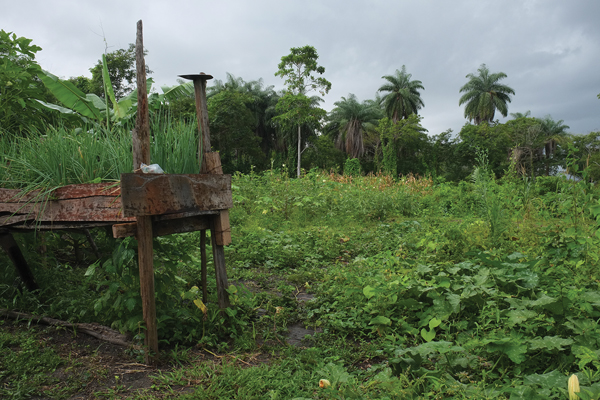
Ancient Amazonian productive strategies were based on the cultivation of domesticated and non-domesticated crops, the management of long-lived non-domesticated tree species, hunting and fishing. Such mixed agroforestry systems worked beyond subsistence level, generating stable and long-lasting productive economies (Hermenegildo et al. Reference Hermenegildo, O'connell, Guapindaia and Neves2017). Lathrap (Reference Lathrap and Reed1977) called attention to the importance of house gardens comprising transplanted plants as settings for management, selection and early domestication. The management of trees as sources of food and other resources is an example of non-domestication cultivation, or NDC (Piperno Reference Piperno2011: 463). As with house gardens, NDC falls within a general scheme including tending, tillage and transplantation (Ford Reference Ford and Ford1985). In Amazonia, NDC includes the management of tree crops such as Brazil nut (Bertholletia excelsa), açaí (Euterpe oleracea and E. precatoria) and pequi (Caryocar brasiliense), among others. Tree cultivation differs from grain, legumes and tuber cultivation, due to their long productive cycles. A Brazil nut stand, for example, takes years to start producing and remains productive for centuries (Scoles & Gribel Reference Scoles and Gribel2011; Shepard & Ramirez Reference Shepard and Ramirez2011). A pequi stand bears fruit after 5–7 years, and produces for the subsequent 50–70 years (Smith & Fausto Reference Smith and Fausto2016) (Figure 2).
House garden on the archaeological site showing the cultivation of local and exotic short-term crops such as maize (Zea mays), squashes (Cucurbita spp.) and onions (Allium schoenoprasum), as well as tree species such as the mucajá palm (Acrocomia aculeata) in the background. (Parintins, central Amazon (2016), photograph by Eduardo G. Neves.)

Brazil nut and pequi are examples of megafaunal fruits (Guimarães et al. Reference Guimarães, Galetti and Jordano2008)—species whose current dispersal patterns, fruit traits and phenologies can be explained by interactions with extinct Pleistocene fauna. In the Amazon, where trees comprise more than two-thirds of cultivated crops (Clement et al. Reference Clement, de Cristo-Araújo, Coppens d'Eeckenbrugge, Pereira and Picanço-Rodrigues2010), a long history of megafaunal behaviour prior to the human settlement of the Americas probably had an important role in selecting for traits, such as fleshiness, which were later favourable for human consumption without the need of further domestication. During the Holocene, tree-management strategies played a vital role in promoting further changes in the entire structure of Amazonian forests (Levis et al. Reference Levis2017). A compilation of modern tree inventories from the Amazon shows 227 ‘hyperdominant’ species accounting for half of all trees (Ter Steege et al. Reference Ter Steege2013). Among the top-ten species, six are palms, all of which are of economic and symbolic importance. Apart from the peach palm (Bactris gasipaes), however, no Amazonian palm was domesticated (Clement et al. Reference Clement, de Cristo-Araújo, Coppens d'Eeckenbrugge, Pereira and Picanço-Rodrigues2010).
Hyperdominance may have resulted from widespread NDC by ancient indigenous societies. A review of palm remains from archaeological sites in the Americas shows their widespread presence from c. 7000 years BC onwards (Morcote-Ríos & Bernal Reference Morcote-Ríos and Bernal2001). These findings complement research showing that native Amazonians systematically modify their surroundings, and that contemporary Amerindians explore and rely on previously managed areas composed of secondary forests (Balée Reference Balée, Posey and Balée1989; Politis Reference Politis2007). NDC was probably more important before the Conquest than it is today. If these data are correct, how can we account for the widespread evidence of manioc cultivation among contemporary Amazonian Indians?
The tropical forest pattern as a modern system
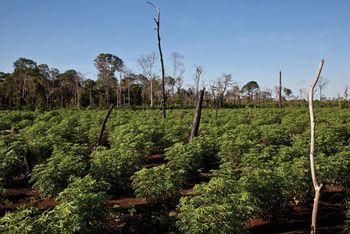
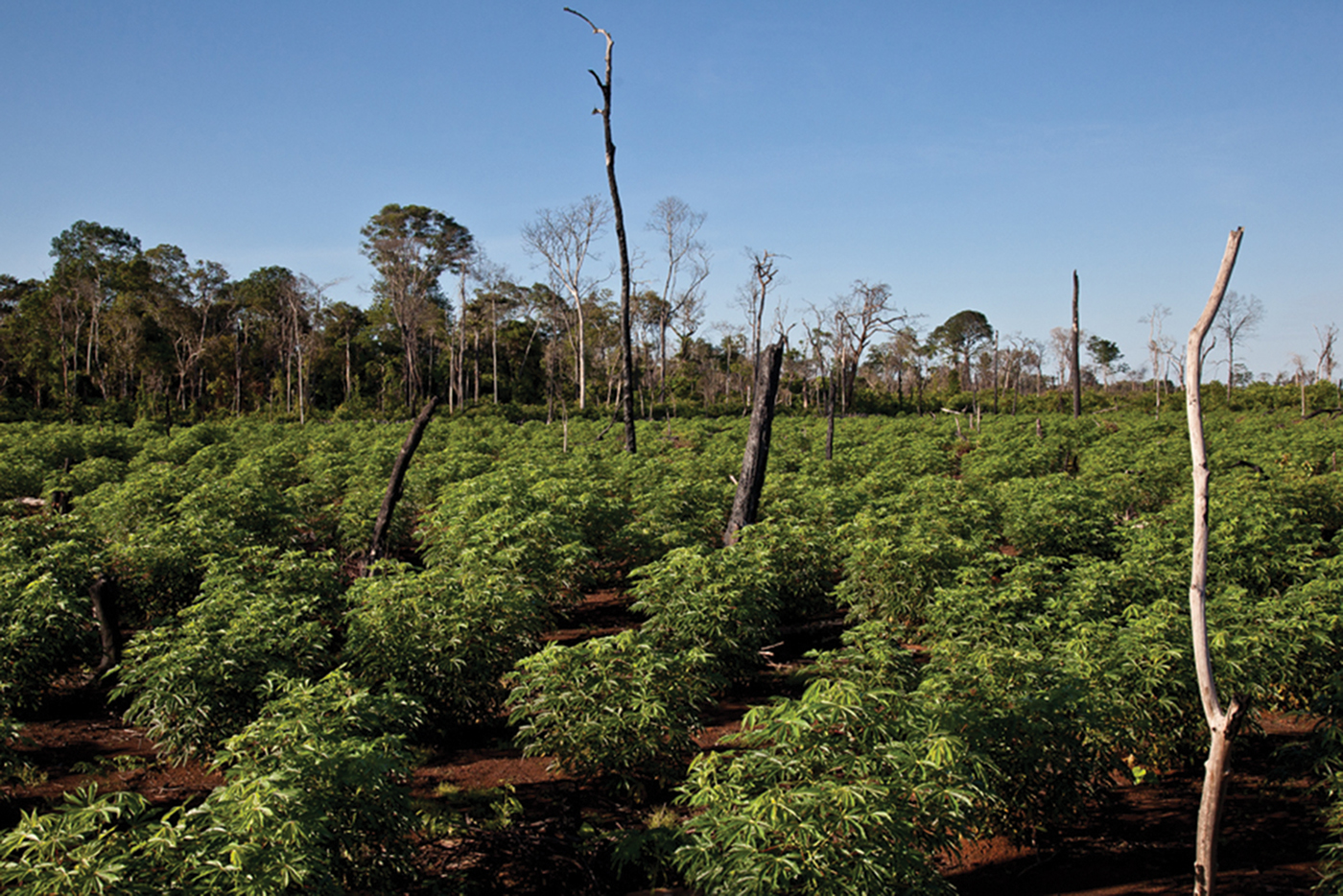
Manioc cultivation is fundamental in the modern Neotropics. It thrives in leached and poor soils, can be cultivated in short or long cycles, can be stored for some years in gardens and can be used to produce diverse foodstuffs from bread to beer (Figure 3). Genetic and archaeological data show that manioc was domesticated in South-west Amazonia (Olsen & Schaal Reference Olsen and Schaal1999; Watling et al. Reference Watling, Shock, Mongeló, Almeida, Kater, De Oliveira and Neves2018); by c. 5000 years BP, it was already being grown elsewhere in South America (Aceituno & Loaiza Reference Aceituno and Loaiza2014). Today, slash-and-burn manioc cultivation is so widespread and appears so traditional that one assumes that its prominence dates, unaltered, back to pre-colonial times. The evidence for widespread manioc cultivation in ancient Amazonia, however, is scant. This may be due to its poor archaeological visibility; manioc is a shrub, and its cultivation leaves few hard fragments that could survive archaeologically. Food processing such as boiling may destroy starch grains, and phytoliths are only just becoming a secure proxy for the presence of manioc. The best evidence so far comes from contexts found along ecotones in South-west Amazonia and coastal French Guiana (Iriarte et al. Reference Iriarte, Glaser, Watling, Wainwright, Birk, Renard, Rostain and McKey2010; Dickau et al. Reference Dickau, Bruno, Iriarte, Prümers, Betancourt, Holst and Mayle2012).
A new manioc (Manihot esculenta) garden. (Kuikuro, central Brazil (2013), photograph by Carlos Fausto.)
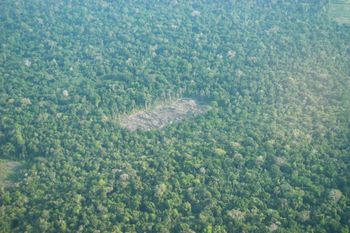
The contemporary ‘tropical forest pattern’ based on shifting slash-and-burn manioc cultivation may have resulted from changes caused by the post-AD 1492 introduction of metal tools. Not only did agriculture became more itinerant due to the relative ease of opening new gardens (Denevan Reference Denevan1992), but the importance of crops may also have been altered. In coastal French Guiana, the archaeological evidence suggests the replacement of maize by manioc after the sixteenth century AD (Van den Bel Reference Van den Bel2015). The stress of enslavement, warfare and massive dislocation on native populations following European colonisation, together with the growing demand for flour, may have favoured the adoption of extensive manioc cultivation. In summary, the ‘traditional’ pattern of extensive slash-and-burn manioc cultivation may be an adaptation to changes resulting from European colonisation, which shifted the relative importance of certain crops and reduced the range of cultivation and management practices. Even if that is the case, we propose that there have been no major ruptures between pre-colonial and contemporary traditional cultivation practices. This is probably due to the fact that manioc cultivation does not depend on intensive and constant labour input, nor on strict control of the plant's reproduction—it is cloned, not sown (Figure 4).
Geometric garden seen from the air—rectangular garden plot in the forest for slash-and-burn cultivation. Although seemingly traditional, the regular shape of such a garden results from the use of metal axes or chain saws introduced in the modern era. It is probable that pre-Columbian gardens had an irregular shape. (Maués, central Amazon (2004), photograph by Eduardo G. Neves.)

Contemporary practices can better clarify what we understand by the notion of familiarisation. Space precludes the presentation of all the cases on which our argument is based: see, among others, Hugh-Jones (Reference Hugh-Jones1979), Taylor (Reference Taylor, Rival and Whitehead2001), Santos (Reference Santos2006), Maizza (Reference Maizza2014), Miller (Reference Miller2015) and Otero dos Santos (Reference Otero dos Santos2015). Suffice to say, these cases refer to peoples from diverse regions speaking unrelated languages, thereby supporting our argument for a widespread and ancient pattern.
Familiarisation as a traditional system
Contemporary Amazonian productive strategies include a much larger area of managed agroforestry than meets the eye. There is much to be addressed beyond the realm of the house (the ‘domus’ of domestication). Let us give a first example: the Wayãpi are a Tupi-Guarani people in North-eastern Amazonia who cultivate numerous manioc varieties alongside other products and combine garden work with forest trekking and hunting. Men are responsible for clearing new plots, while planting and tending is the work of women, who are said to be the garden's ‘owners’ (-jarã) (de Oliveira Reference de Oliveira2006: 70). The opening of a garden is a dangerous act, as it requires the appropriation of a forested domain that has its own previous other-than-human owners (de Oliveira Reference de Oliveira2006: 73–76).
The frontier between the garden and the forest remains fluid. Even the species reproduced in the gardens—those planted by the Wayãpi—are not exclusively owned by them, but fall also within the domain of a spirit-owner. This is why the mother with a newborn child does not go into a garden, lest the ‘manioc owner’ (mani'ojarã) attacks the baby (de Oliveira Reference de Oliveira2006: 80). There is always tension between the spirit-owner and the human-owner, as the latter is appropriating the offspring (the manioc tubers) of the former in order to produce human kinship by means of food production (Fausto Reference Fausto2007). This appropriation is a form of co-parenthood, as the manioc tubers are also the children of those who planted them. In Amazonia, manioc is raised rather than cultivated or planted (Emperaire Reference Emperaire2005: 37), as are children and pets.
From an initial male act of predation (clearing the garden) that transforms a forest place into a human domain (Descola Reference Descola1986: 170), there follows the female act of familiarisation, which translates into a maternal bond between the cultivator and her plants. Manioc roots are cared for by their owners (both the spirit and the woman) until they are fully grown and ready to be extracted and made available as food for humans. When the whole process is complete, the garden begins to transform itself into fallows that, in due time, become forest again—a forest with a new vegetational composition, hosting a number of tree crops, especially palms.
The second example concerns sweet potato cultivation among the Ge-speaking Krahô, in the state of Tocantins, northern Brazil. The vegetation is savannah-like (cerrado), interspersed with gallery forests along the rivers. The sexual division of labour varies according to the species planted. Women plant sweet potatoes, men plant maize, while both plant manioc (Morim de Lima Reference Morim de Lima2016: 208). The act of planting triggers a liminal state, so that cultivators must afterwards follow a series of interdictions, such as abstention from sex or certain foods. According to a Krahô woman, the reason for this practice is that “we consider our gardens as family” (Morim de Lima Reference Morim de Lima2016: 87). The Krahô affirm that cultivars are ‘persons’ but not humans. They think and talk, and this is why they can be dangerous. Cultivators must be careful because the plant's ‘chief’ can either favour, or turn against, them. The tubers growing along potatoes’ roots are deemed to be the chief's children. Women who abstain from sex and certain foods after planting potatoes are co-producing these tubers. Morim de Lima (Reference Morim de Lima2016: 150) calls the potato's chief ‘the genetrix’, and the cultivator the ‘raising-mother’, pointing to the same entanglement of motherhood relations noted above.
Negotiating ownership
The peanut is a domestic plant cultivated from seeds. It represents the core cultivar of the Kayabi (Kawaiweté), a Tupi-Guarani people of South-eastern Amazonia. As of the mid 2000s, they cultivate 20 varieties of peanuts. Self-pollination (with a low rate of cross-pollination) is the peanut's dominant reproductive behaviour, with a low rate of cross-pollination (Silva Reference Silva2009: 206). Hence, peanut varieties are relatively stable, especially if the seeds are stored and planted separately, which is exactly what the Kayabi do (Silva Reference Silva2009: 200). How, then, do new varieties appear?
The Kayabi are attentive to the appearance of off-types resulting from cross-pollination. Although this type of reproduction is rare, it plays a crucial role in allowing variation, which depends on the women's proficient knowledge for identifying off-types (Silva Reference Silva2009: 207). The Kayabi, however, do not explain variation in terms of cross-pollination. They say that the ‘owner of the cultivars’—an old lady named Kupeirup—is responsible for giving them the new varieties, depending both on the proper behaviour of the cultivators and on the shamans’ mediatory role. All cultivars came from Kupeirup's incinerated body. A myth recounts that her sons only ate palm fruits, which they planted as crops. As these trees took a long time to grow and produce fruits, Kupeirup sacrificed herself in order for her sons to have abundant and fast-growing food. She told them to open a garden and burn her there; from her body, all the cultivars appeared (Silva Reference Silva2009: 448–49). This myth recounts a similar story to our current explanation for the emergence of food production in the Amazon.
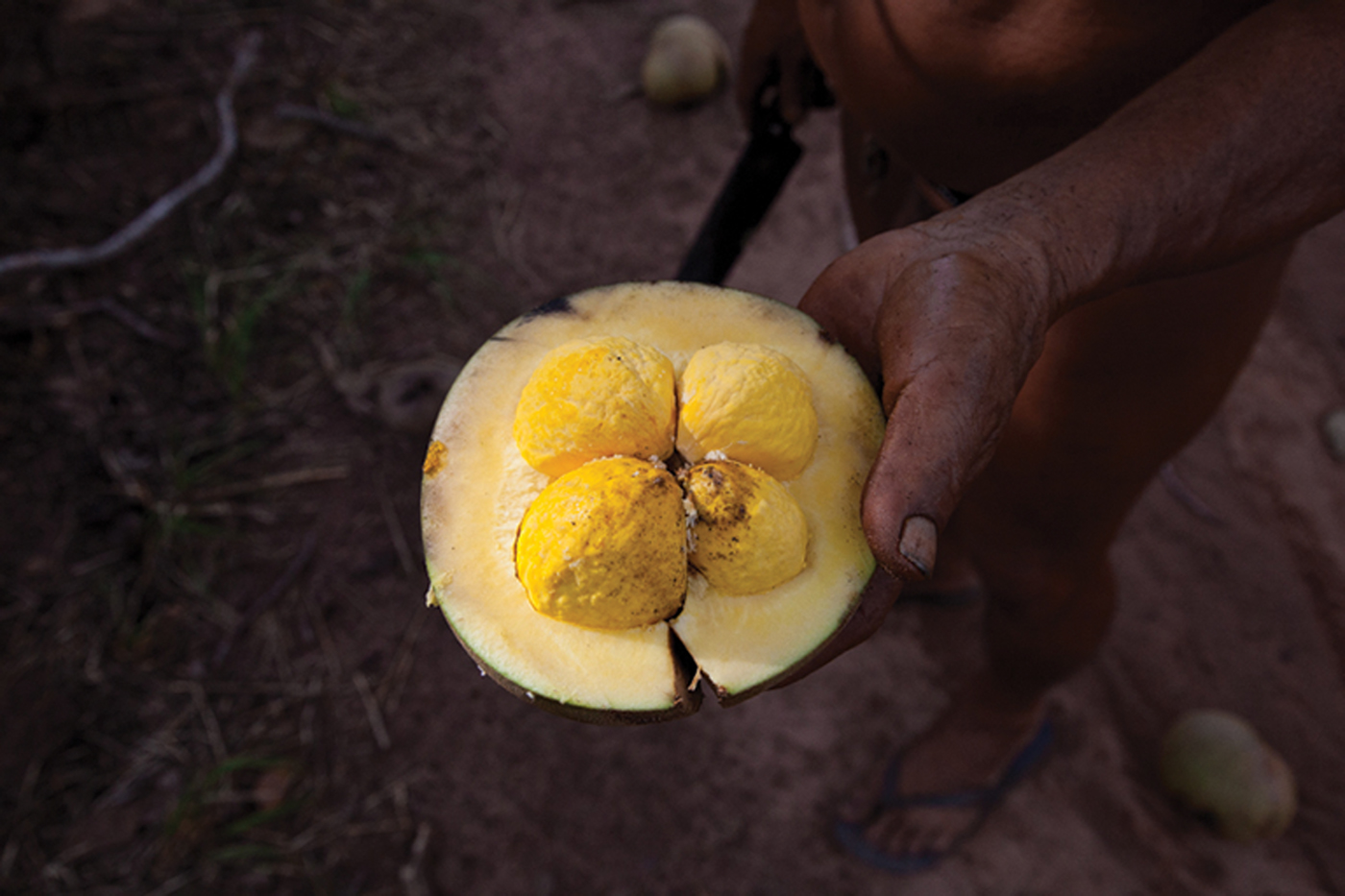
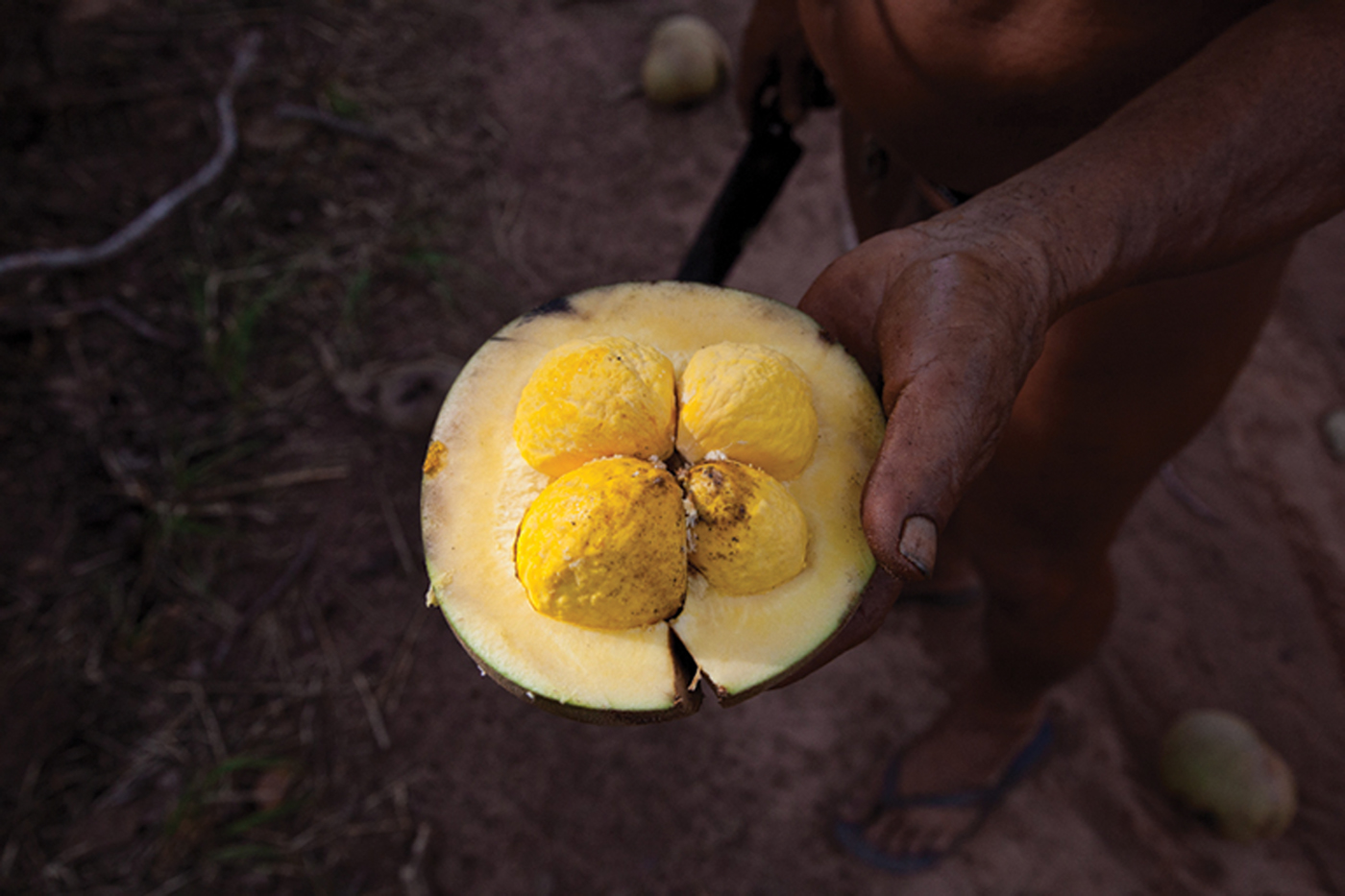
The final example is a tree crop: pequi (Caryocar sp.). Among the Kuikuro of the Upper Xingu in central Brazil, old gardens often become orchards of pequi trees planted by the garden owner for his/her descendants. Pequi is a cross-pollinating species, whose individuals can live for many decades, making it difficult to stabilise locally adapted varieties (Smith Reference Smith2013). Wild and cultivated pequi present different flowering and fructification cycles, as well as different fruit sizes and tastes (Smith & Fausto Reference Smith and Fausto2016: 99–100) (Figure 5). The Kuikuro recognise 16 different types of cultivated pequi, of which half seem to correspond to biological varieties. This includes a spineless one, which has recently received attention for its potential economic value (Smith Reference Smith2013; Smith & Fausto Reference Smith and Fausto2016). The Kuikuro, however, have no interest in planting an orchard with this single variety. Instead, they mix different seeds, not caring which kind of pequi will germinate as long as there is a diversity of fruits: those good to eat, to produce oil, to make jelly and so on. Pequi orchards remain productive for decades and, as with peach palms, they provide an index of previous human occupation. The orchards are not, however, an exclusively human space: the pequi has its other-than-human owners, who can cause illness in humans. If cured from this illness, the human patient becomes the master of these pequi owners, and will treat them as their spirit-pets, ritually feeding them for years to come by sponsoring their festival.
Pequi fruit (Caryocar brasiliense), variety tungui (spineless). (Kuikuro, central Brazil (2013), photograph by Carlos Fausto.)
The breach: slowing down entropy
The above examples provide ethnographic substance to our understanding of plant cultivation in Amazonia as part of a general movement of appropriation and familiarisation. We also correlate this movement to agro-biodiversity, which can be approached on two levels. More abstractly, it relates to Lévi-Strauss’s (Reference Lévi-Strauss1991) ‘openness to the other’—a general orientation of Amerindian societies towards alterity rather than self-identity. This orientation promotes a recurrent outside-inside movement, in which life is created through the incorporation and preservation of small differences. Carneiro da Cunha (Reference Carneiro da Cunha2015) translates this idea in terms of the laws of thermodynamics, suggesting that it slows down entropy by reinstating difference (agro-biodiversity) into the system.
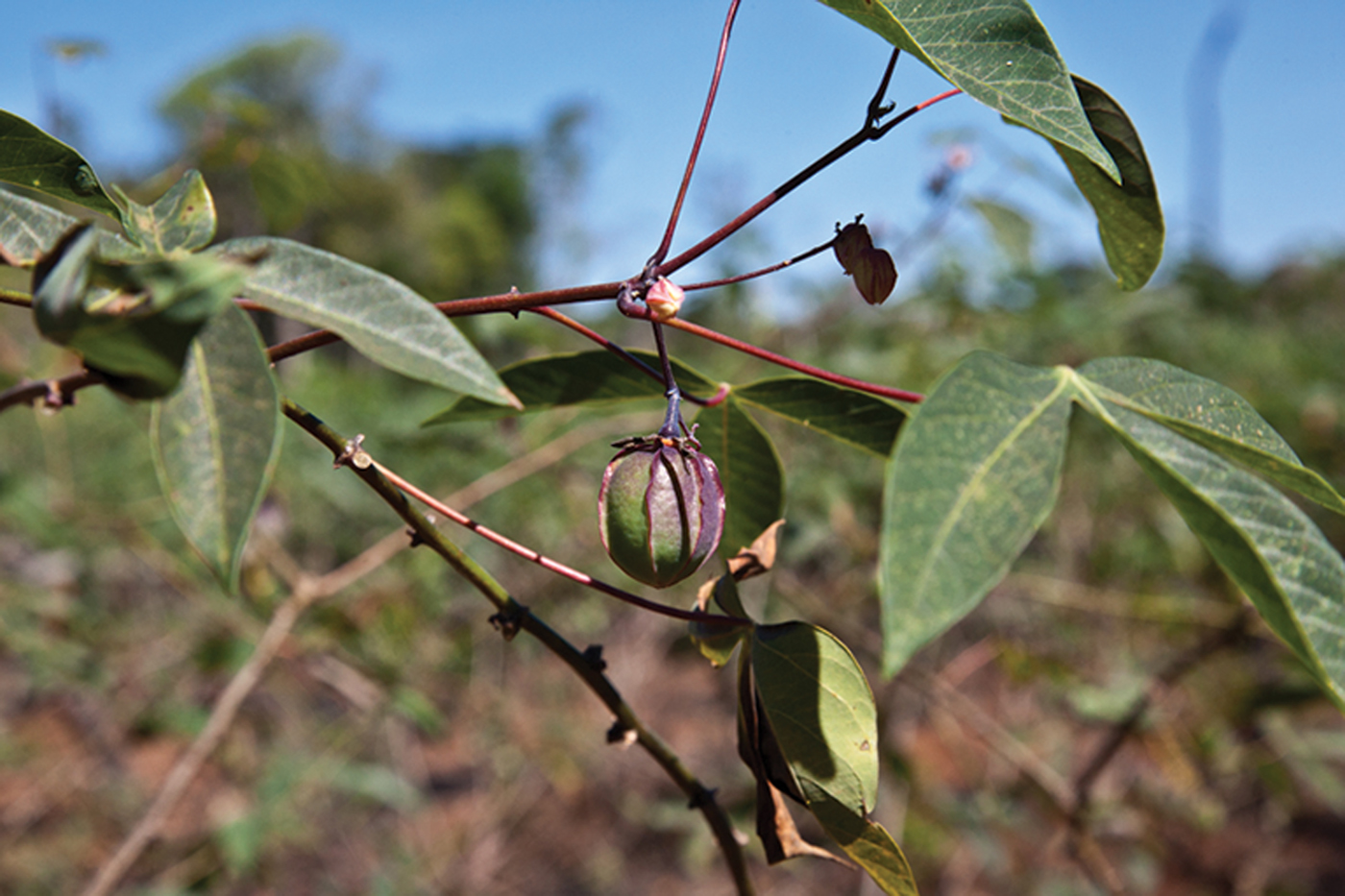
On a more tangible level, generating diversity through plant cultivation requires the maintenance of a breach, which allows communication with that which is outside the system. Consider the paradox of cloning and variation in manioc cultivation: how can there be so many varieties of manioc in Amazonia when manioc is cloned? Although Amazonian people privilege manioc's vegetative reproduction, they neither control nor inhibit sexual reproduction (Emperaire et al. Reference Emperaire, Pinton and Second1998; Elias et al. Reference Elias, Rival and McKey2000); they just let it happen, experimenting with new varieties that emerge from cross-pollination. Some of these varieties sprout in fallows, as the result of a series of translation acts involving seeds, ants and fire (Pujol et al. Reference Pujol, Gigot, Laurent, Pinheiro-Kluppel, Elias, Hossaert-McKey and McKey2002; Rival & McKey Reference Rival and McKey2008) (Figure 6).
Manioc fruit (Manihot esculenta), variety küake (Atta sp.). (Kuikuro, central Brazil (2014), photograph by Carlos Fausto.)

Amazonian manioc cultivation aims to reproduce identical landraces, as much as to introduce new ones. In other words, it produces difference in small intervals: not new species but new varieties of the same species. This is made possible both by privileging vegetative propagation and by not controlling sexual reproduction. There is always a breach in which fallows play a central part. Instead of a marked discontinuity between cultivated land and forest, we have a chromatic succession caused by human ‘creative disturbances’ that result in further diversity (Balée Reference Balée, Posey and Balée1989; Zent & Zent Reference Zent and Zent2012). While the concept of domestication often implies a rupture between nature and culture, familiarisation may provide us with a more nuanced perspective to approach such interactions.
Concluding remarks
It may seem implausible to argue that present practices can inform us about a pattern that would have prevailed in pre-Conquest Amazonia. Can plants be incorporated into the model of ontological animism (Descola Reference Descola2005; Rival & McKey Reference Rival and McKey2008: 124)? Can they be considered an ‘Other’, as animals are? We think so. Cultivation in Amazonia is a technical activity that presupposes social skills for engaging in an extended network of relations with human and other-than-human persons. It implies the entanglement of different agents, crosscutting the nature-culture divide, and making it a risky cross-species enterprise of appropriation and familiarisation. This is why we argue for the necessity of reinserting it within a broader framework, as well as proposing the notion of familiarisation as an alternative and more inclusive concept than domestication. We also argue that the generation of diversity is a key aspect of such a mode of production.
In Amazonia, the lack of evidence for agricultural intensification—or for agriculture altogether—stems from the long-term successful operation of complex systems of knowledge. There is no convincing reason to suppose that Amazonian cultural history should replicate (albeit at a slower pace) what happened in the Old World cradles of plant domestication. Indeed, the pattern described here may hold true for other tropical settings away from the Americas (Barton & Denham Reference Barton and Denham2016). Far from being backwaters, the tropics may reveal something deeply different from our past.
Acknowledgements
We wish to thank Nuria Sanz, Manuela Carneiro da Cunha, Colin McEwan, Sadie Weber, Manuel Arroyo-Kalin and Tim Denham for their constructive criticism and comments.