1. Introduction
Theoretically, land tenure security induces assurance, collateralization and realizability effects, and thus stimulates farmers' investments in improving soil quality. First, willingness to invest in land improvement and conservation measures depends on the future returns on these long-term investments (Beekman and Bulte, Reference Beekman and Bulte2012), which increase with tenure security. Second, financial institutions seem more likely to provide farmers with more land-related credit if land rights on farm plots are secure due to predictable increase in land values (Feder and Nishio, Reference Feder and Nishio1998); this constitutes the collateralizing effect of tenure security. Third, a realizability effect of secure land rights may emerge as more secure land rights facilitate land transfer to farmers who are most capable of investing, thereby increasing farm productivity (Besley, Reference Besley1995).
Empirical investigations confirmed the positive link between tenure security and long-term investments. For instance, Gebremedhin and Swinton (Reference Gebremedhin and Swinton2003), Abdulai et al. (Reference Abdulai, Owusu and Goetz2011) and Sklenicka et al. (Reference Sklenicka, Molnarova, Salek, Simova, Vlasak, Sekac and Janovska2015) show that investments in soil conservation are larger on owner-cultivated land compared to leased or borrowed land. After controlling for the endogeneity of leasing decisions, Jacoby and Mansuri (Reference Jacoby and Mansuri2008) provide similar evidence. Holden et al. (Reference Holden, Deininger and Ghebru2009) also argue that land certification contributes to increased investments in trees and better management of soil conservation structures. Lovo (Reference Lovo2016) finds that informal short-term tenancy contracts as well as customary gender-biased inheritance practices are negatively correlated to soil conservation investments. These studies have mainly tested the assurance effect of land tenure security, while its credit effect has received less attention. We note the work of Markussen (Reference Markussen2008) as an exception; it shows that property rights inscribed in paper-documented ownership have a poor effect on access to credit.
The positive relationship between land tenure security and long-term investments has also been studied in the Chinese context. For example, land reallocation has proved to be negatively correlated to land investments (Jacoby et al., Reference Jacoby, Li and Rozelle2002; Bai et al., Reference Bai, Kung and Zhao2014; Rao et al., Reference Rao, Spoor, Ma and Shi2016). Other studies relate farm-level investments to the holding of land certification (Ma et al., Reference Ma, Heerink, van Ierland, van den Berg and Shi2013; Rao et al., Reference Rao, Spoor, Ma and Shi2016) or different types of land property (Li et al., Reference Li, Rozelle and Brandt1998; Feng et al., Reference Feng, Heerink, Ruben and Qu2010; Gao et al., Reference Gao, Huang and Rozelle2012) and end up with analogous results.
With the development of industrialization and urbanization, large-scale production units (LSPUs) are emerging in rural China (Long et al., Reference Long, Zou and Liu2009, Reference Long, Zou, Pykett and Li2011). These new production units rent farmland from smallholders either directly or indirectly via intermediary organizationsFootnote 1 and distinguish themselves by the larger size of their operations (Wang et al., Reference Wang, Chen, Sui, Gao, Qin, Zhang and Wu2014). By 2016, the number of various types of LSPUs had reached 2.8 million nationwide and the land area cultivated by moderate-scaled operations accounted for more than 30 per cent of total rural contracted land.Footnote 2 As LSPUs have become an important force in Chinese agricultural production, their farming systems deserve more academic attention.
With this paper, we intend to add to the emerging literature on LSPUs by analyzing the contractual systems through which LSPUs access land, and by investigating how contract type influences investments in soil-improving activities, based on a LSPU- and plot-level dataset from Jiangsu and Jiangxi Provinces in China. Firstly, the study contributes to the description of LSPUs as emerging farming units in China. These forms of land consolidation have scarcely been researched to date. Secondly, attention is given to the contractual arrangements – specifically focusing on contract type (i.e., oral agreement or written contract) – with which farmland is included in the LSPUs. The stability (and security) of the contractual arrangements for land access are arguably critical to the LSPUs. Thirdly, the study of soil-improving investments, which include the application of organic fertilizer, green manure and straw, should contribute to knowledge on what drives LSPUs towards more sustainable agriculture. As a final contribution, we consider a collateralization effect of contract type on land investments, which as far as we know has not yet been researched for China.
2. Background and theory
2.1 Emerging large-scale production units in China
With rapid industrialization and urbanization, livelihoods and socioeconomic structures in rural China have undergone tremendous changes. Many young rural workers have left traditional farming to join non-farming industries, resulting in a weaker agricultural sector, run by part-time farmers (Yang et al., Reference Yang, Wang, Jin, Chen, Riedinger and Peng2016). In response, the Chinese government has introduced policies encouraging migrant farmers to transfer their farmland operation rights to LSPUs.
LSPUs are ‘large-scale and market-oriented agricultural operation organizations or individuals, engaging in specialized production, intensive management and social services’ (Chen, Reference Chen2014) and mainly include professional farmers, family farms, agricultural cooperatives and agricultural enterprises (Song and Zhao, Reference Song and Zhao2014). Professional farmers, family farms and cooperatives originate and develop out of small farms rather spontaneously, while agricultural enterprises emerge through the investment of commercial capital in the agriculture industry. Due to different structural and organizational characteristics, investment decision-making processes of agricultural cooperatives and agricultural enterprises are more complex and specific. In this paper, the focus is on professional farmers and family farms, which we pool as LSPUs.
LSPUs acquire farmland by either accessing it directly from small-scale farmers or renting it via intermediary organizations (Yu et al., Reference Yu, Wu, Verburg, van Vliet, Yang, Zhou and Tang2013; Wang and Zhang, Reference Wang and Zhang2017). On the one hand, LSPUs rent plots from their relatives and acquaintances based on kinship or geopolitical networks, especially in areas where both land and labor markets are underdeveloped. Plots acquired through this type of transfer, however, are often small-scale and scattered; moreover, the contract conditions in this case are generally agreed upon by both sides verbally and the lessors can reclaim their land at any time (Meng, Reference Meng2012). In a more formalized land market, on the other hand, LSPUs may choose to access farmland from intermediary organizations which not only integrate scattered plots and save LSPUs transaction costs by reducing their number of transactions with individual small farmers, but also guide the signing of written contracts and rent out land through more formal contractual arrangements.
2.2 Contract type and soil-improving investments
The soil-improving investments of particular interest in this paper are organic fertilization, green manure planting and straw application, all of which improve soil quality and enhance productivity over more than one agricultural season. These investments are relationship-specific in that they are incorporated into the soil and thus are not transferable once applied; in addition, unlike fixed investments such as the construction of irrigation infrastructures which can be distinguished and verified to some extent, these three investments are non-contractible (Jacoby and Mansuri, Reference Jacoby and Mansuri2008; Abdulai and Goetz, Reference Abdulai and Goetz2014).
The content and type of contracts through which farmland is transferred to LSPUs reflect the levels of land tenure security (Place et al., Reference Place, Roth, Hazell, Bruce and Migot-Adholla1994; Guriev and Kvasov, Reference Guriev and Kvasov2005). Our theoretical analysis on the relationship between contract type and soil-improving investments is embedded in the broader framework of tenure security effects. Specifically, we distinguish two effects through which contract type in farmland transfer may contribute to long-term farm investments (Beekman and Bulte, Reference Beekman and Bulte2012). First, through an assurance effect, LSPUs are more willing to invest with a written contract since their land operational rights are legally endowed and protected in this situation. In case of insecure tenure where the tenancy arrangement for a particular plot is oral, the rights and obligations of the contracting parties are less clear; hold-up problems may arise due to the threat of opportunistic expropriation by leaseholders (Abdulai and Goetz, Reference Abdulai and Goetz2014). Consequently, without formal contracts established, short-run production gains and soil harvesting may be preferred over long-term investments in soil conservation, resulting in unsustainable practices; on the contrary, with written contracts, LSPUs are able to overcome the hold-up problems by adjusting investments to the point where they fully recover the returns, grounded on the conditions (e.g., contract duration) prescribed beforehand (Jacoby and Mansuri, Reference Jacoby and Mansuri2008; Yoder et al., Reference Yoder, Hossain, Epplin and Doye2008).
An indirect effect of contract type on long-term investment is its impact on access to credit. Due to the lack of qualified collateral, Chinese farmers face widespread financing problems (Feder and Onchan, Reference Feder and Onchan1987; Feder et al., Reference Feder, Lau, Lin and Luo1992; Bandiera, Reference Bandiera2007). LSPUs are more likely to become eligible for borrowing from formal financial institutions if their operated farmland is leased through a formal (long-term) contract. In such cases, land tenure security will most likely also result in larger investments through the indirect effect of improved credit access (Feder and Onchan, Reference Feder and Onchan1987).
3. Data, model specification and empirical strategy
3.1 Data collection and research area
Data were collected at the LSPU and plot level through a survey conducted in 40 townships in Jiangsu and Jiangxi Provinces in August and September 2016. Both provinces are important rice production areas in China. While Jiangsu Province is part of China's more developed coastal area, Jiangxi Province, located in Southeast China, is less developed. We consider the chosen two provinces as good representatives of major rice-producing areas in China, or even in other countries with similar socioeconomic characteristics.
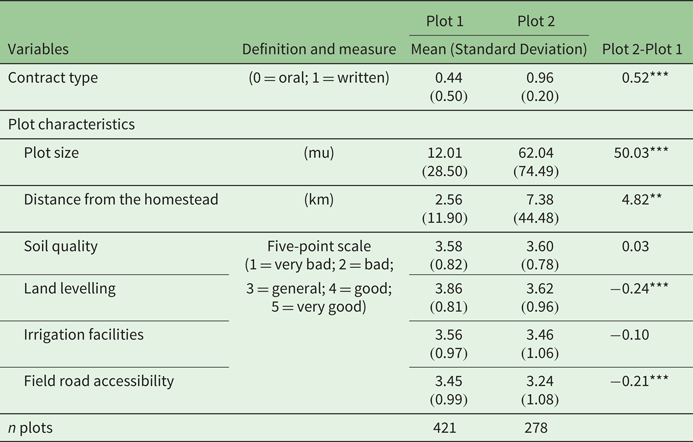
In Jiangsu Province, Southern Jiangsu is considered more economically developed, followed by Middle Jiangsu and Northern Jiangsu. In Jiangxi Province, the Nanchang-Jiujiang Zone is most developed followed by the Jingdezhen-Yingtan Zone, Xinyu-Pingxiang Zone and Ganzhou Zone (Peng, Reference Peng2007).Footnote 3 For each province, a multi-stage stratified random sampling method was applied for townships and LSPUs in order to capture a diversity of levels of economic development, land endowment and geographical conditions. The number of countiesFootnote 4 in the sample was first determined for each economic zone in proportion to its arable land area after eliminating counties in which arable land area is less than 10 per cent of the total land area; sampled counties were then randomly selected within each economic zone. Next, sampled townships were selected following the same procedure within each county. In each township, 10 to 20 LSPUs were then randomly selected from a list of LSPUs provided by local township governments. In this paper, we consider family farms and professional farmers with at least 30 mu (2 ha),Footnote 5 which is 10 times the average area of local cultivated land per household.Footnote 6 For each LSPU, we plan to collect information on the two largest plots,Footnote 7 one rented directly from small farmers and another indirectly accessed via intermediaries.
We used a structured questionnaire that asked for detailed information on household and employment status, household assets, land endowment, land transfer, farm inputs, investments and production. The resulting dataset has nested information at the plot and LSPU level. For each LSPU, contract-related data were collected at the plot level allowing inferences to be drawn about the relationship between contract type for a specific plot, the investment activities on this plot, and its characteristics such as plot size and soil quality.
In total, 743 plots from 705 LSPUs were surveyed in Jiangsu (JS) and Jiangxi (JX) Provinces. After data cleaning, deleting observations with missing values and ignoring outliers, the final sample for this analysis consists of 699 plots (375 plots in JS and 324 plots in JX) from 664 LSPUs (346 LSPUs in JS and 318 LSPUs in JX). Among these, only 40 LSPUs choose to access land through two channels and thereby information on two plots were collectedFootnote 8; for the remaining LSPUs, in which 381 only rent in land directly from smallholders, while 243 only access land with the involvement of intermediary organizations, we only collected information on one plot for each LSPU.
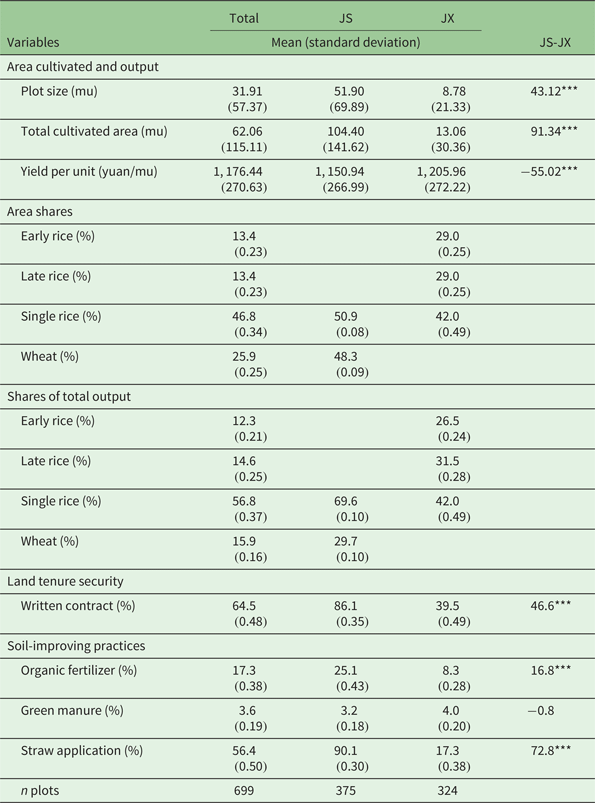
Specifically, the farm size operated by the LSPUs sampled ranges from 30 mu (2 ha) to 2005 mu (133.7 ha) with a mean of 237.45 mu (15.8 ha); in terms of quantiles based on the distribution of farm size, the farm size in the 10–90 per cent quantiles ranges from 53 mu (3.5 ha) to 502 mu (33.5 ha), averaged at 194.16 mu (12.9 ha). Characteristics of the sampled plots in terms of crop composition, farmland tenure security, and investment in soil fertility are given in table 1. A notable finding is that plot sizes in JS are on average six times larger than those in JX. Rice-wheat cropping systems predominated on plots in JS, whereas single rice and early-late rice cropping systems account for 42 and 58 per cent, respectively, of the total cultivated area in JX. Average yields are higher on plots in JX compared to those in JS, which may result from differences in cropping systems between the two provinces. In total, 64.5 per cent of the plots are transferred through a written contract. Furthermore, more plots in JS are transferred on the basis of written contracts compared to those in JX. Straw is applied to 56.4 per cent of the plots; organic fertilizer is applied to 17.3 per cent of the plots. The number of plots on which green manure is applied is as low as 3.6 per cent. Organic fertilizer and straw are more frequently applied in JS and the use of green manure is equally low in both provinces.
Descriptive statistics at plot level
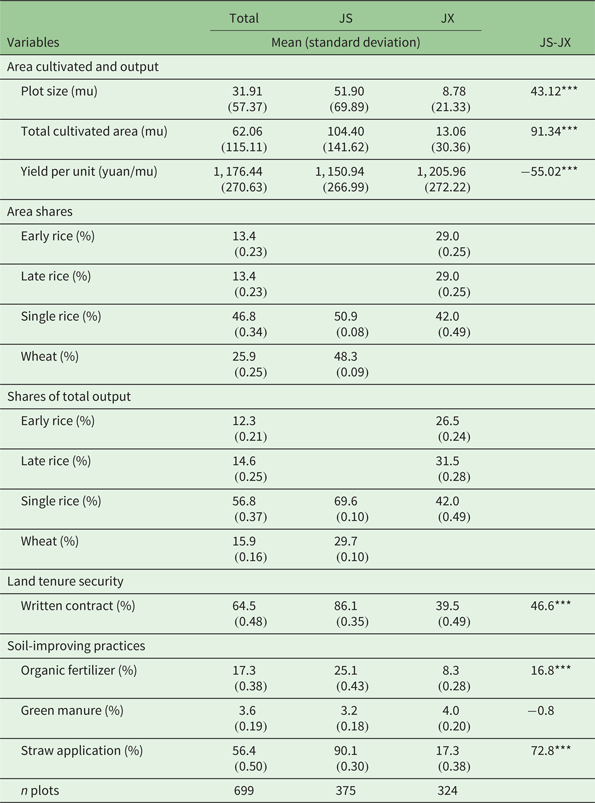
Notes: The χ2 and t-test are used to test the differences between the two provinces for the categorical and continuous variables, respectively. *** Significant at 1%. 1 mu = 1/15 ha; US$1 = Yuan6.68 in September 2016.
3.2 Model specification
We assume that decisions on long-term investments in soil-improving measures depend not only on land tenure security but also on household and farm characteristics, plot characteristics and geographic location (Place and Hazell, Reference Place and Hazell1993; Knowler and Bradshaw, Reference Knowler and Bradshaw2007; Ali et al., Reference Ali, Abdulai and Goetz2012). Proxies for these characteristics are used to test the effect of contract type on investments in soil-improving activities at the plot level as follows:

where Inv* is a latent variable implying the application of organic fertilizer, green manure and straw on that particular plot in 2015 and Inv refers to the observed binary variable. For organic fertilizer, we consider the application of farmyard waste and commercial organic fertilizer. The bulkiness of farmyard waste makes this application particularly labor-intensive. Green manure refers to the planting of a crop used primarily as a soil improver and nutrient source for subsequent crops (Cherr et al., Reference Cherr, Scholberg and McSorley2006). Fabaceae or Astragalus sinicus are often planted as green manure. These crops are easy to plant and manage and are low on labor demand. In the study area, straw application is done mechanically by crushing the stubble after harvest and the crushed straw is ploughed back into the soil. This makes straw application a capital-demanding investment.
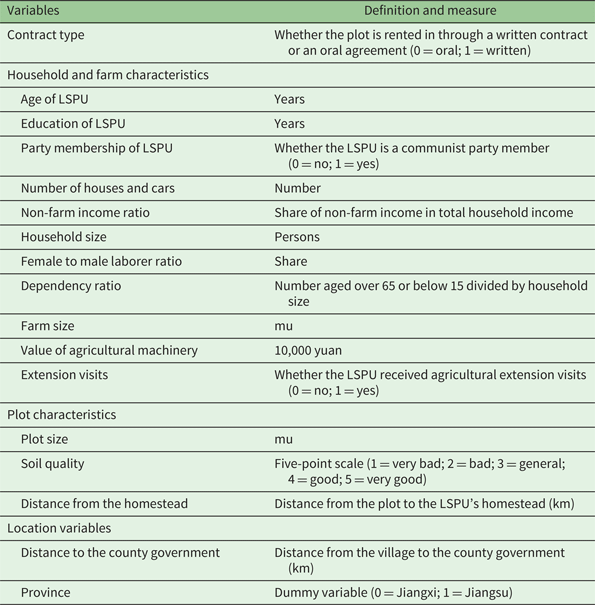
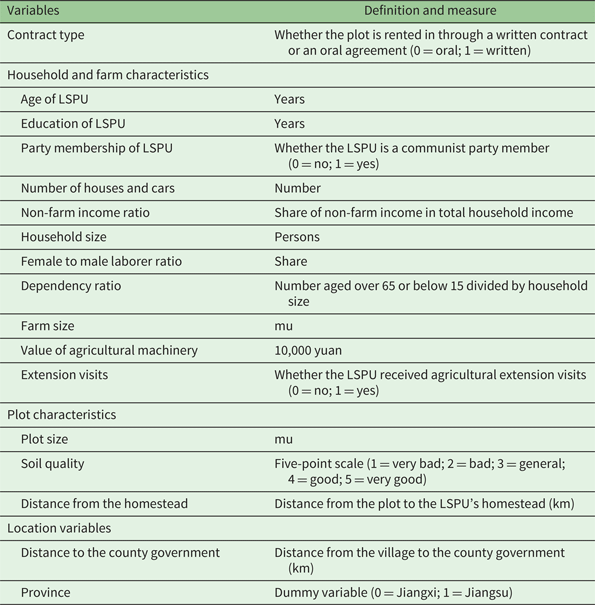
We treat the variable of interest, contract type W, as a binary variable which equals one when the contract is concluded in written form and zero otherwise. As previously discussed, the written nature of contracts is expected to positively affect long-term investments through two combined channels: the assurance effect and the collateralization effect. We exploit the nested data available at the plot and LSPU level to define the control variables, including household and farm characteristics (Xh), plot characteristics (Xp) and location variables (Xl) (see table A1 in the appendix).
The number of houses and cars owned is used as a proxy for households' financial capitalFootnote 9 (Ma et al., Reference Ma, Heerink, van Ierland, van den Berg and Shi2013), which is assumed to be positively related to investment. Non-farm income provides LSPUs with additional resources and eases their liquidity constraints, allowing more production factors to be invested on plots. However, as an alternative income source, availability of more non-farm income could result in higher opportunity costs of agricultural activities (Knowler and Bradshaw, Reference Knowler and Bradshaw2007). The direction of the correlation of share of non-farm income to total income and land-related investment decisions therefore has to be determined empirically (Sumner, Reference Sumner1982). Household size may positively affect investments on plots since larger households may need more food; however, they also have more family labor at their disposal for farm activities on certain plots (Feng et al., Reference Feng, Heerink, Ruben and Qu2010; Abdulai and Goetz, Reference Abdulai and Goetz2014). We also control for different household characteristics such as age, education and Communist Party membership, dependency ratio, and female-to-male labor availability in the household. Farm characteristics added to the model include total farm size, agricultural machinery assets, and access to extension services.
To control for plot-level effects, we add plot size to the model, and account for the distance between the plot and LSPU's homestead. Because it is often hypothesized that returns of soil-improving investments are higher on fertile land (Ali et al., Reference Ali, Abdulai and Goetz2012), we also include a perceived soil quality variable. Finally, we add location variables such as the province and the distance from the village to the county government. Generally, more soil-improving practices may be adopted by LSPUs on plots located in remote rural areas since the importance of farm activities is higher for them.
3.3 Empirical strategy
The three types of soil-improving investments (organic fertilizer, green manure and straw application) compete for labor and capital in each LSPU. As a result, the investment decision in one type of soil-improving measure within one LSPU is not independent of investment in the other. This means that instead of estimating the models that test the likelihood of investing in each type separately, considering these investments as a system is more efficient as error terms of individual models may not be independent and need to be assessed as correlated (Vellema et al., Reference Vellema, Buritica Casanova, Gonzalez and D'Haese2015). A multivariate probit model developed by Cappellari and Jenkins (Reference Cappellari and Jenkins2003) is used to account for the joined decision-making process on land investments. In addition, cluster-robust standard errors are needed to account for problems of clustering that might arise on 40 LSPUs on which two plots are sampled.
All explanatory variables in the model are considered exogenous. However, contract type may be potentially endogenous as it may depend on unobservable characteristics and be changed by the LSPU with the investment decision. To capture this potential endogeneity, a two-step control function approach suggested by Wooldridge (Reference Wooldridge2014) is considered. The first step consists of estimating a probit model of the contract type following equation (2):
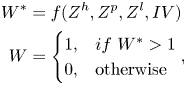
where Zh, Zp and Zl are respectively household and farm characteristics, plot characteristics and location variables. We add an instrumental variable (IV) indicating whether there is at least one farmland transfer intermediary organization in the county (0 = no; 1 = yes). With the presence of intermediaries, LSPUs are more likely to access plots via these organizations and thus increase their opportunities to sign written contracts given that intermediary organizations not only reduce transaction costs involved in farmland transfer, but also ensure the stability of transaction relationships between small farmers and LSPUs (Shi et al., Reference Shi, Chen, Ma and Lan2018). Moreover, intermediary organizations mainly play a role in land acquisition, i.e., publishing farmland transfer information, proposing land rental price, and providing guidance on contract signing, and therefore should not have direct effects on land investments. The significance of IV in equation (2) indicates the strength of the instrument (Liu et al., Reference Liu, Rommel, Feng and Hanisch2017).
The generalized residual R is obtained from equation (2) and introduced as a regressor in equation (1) as the second step estimation:

The significance statistics on the coefficient of R are sufficient to test the null hypothesis that contract type is exogenous. To test the validity of the IV, an alternative version of equation (3) is estimated with the IV included, following Abdulai et al. (Reference Abdulai, Owusu and Goetz2011):

If the coefficient of IV is not significantly different from zero, the IV can be excluded from equation (3), indicating that the instrument affects land investments only via contractual arrangements.
4. Results
4.1 Descriptive statistics
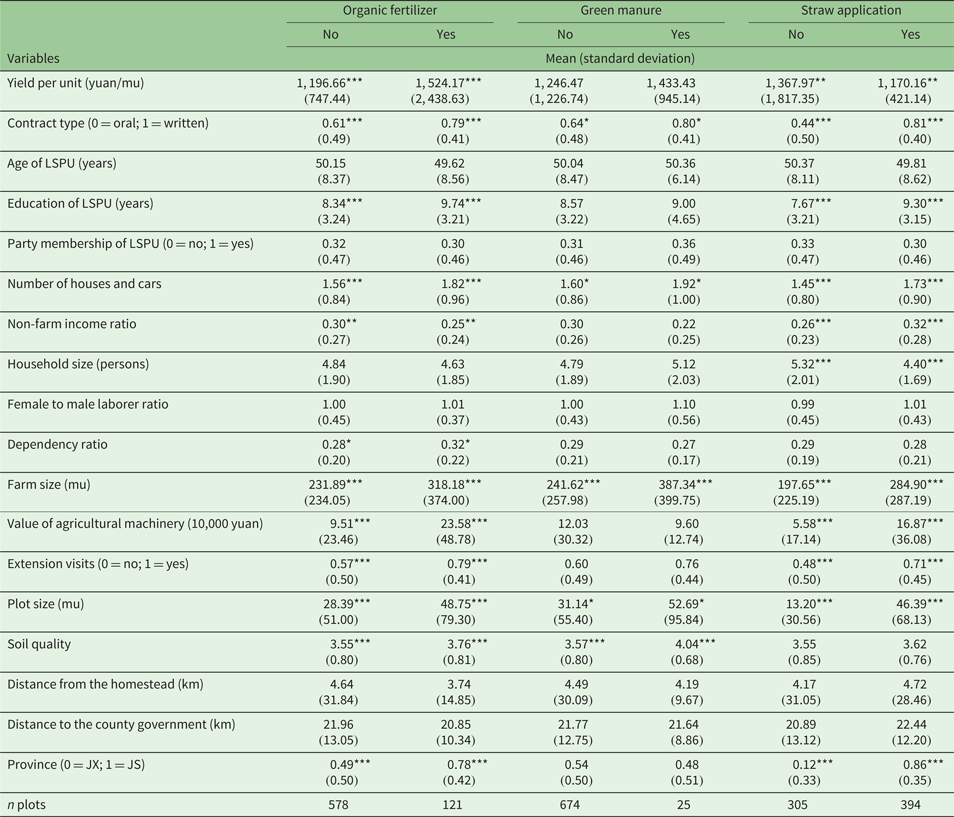
Table 2 gives the descriptive statistics of the sampled plots compared by investment decisions. For three types of land investments, the proportion of plots on which soil-improving investments are made is higher if the rented-in plot has a written contract. These plots are larger and farmed by LSPUs that are relatively wealthier and operate larger farms. Furthermore, plots where organic fertilizer and straw are applied are more likely to be located in Jiangsu Province.
Statistics on selected independent variables by investment decisions
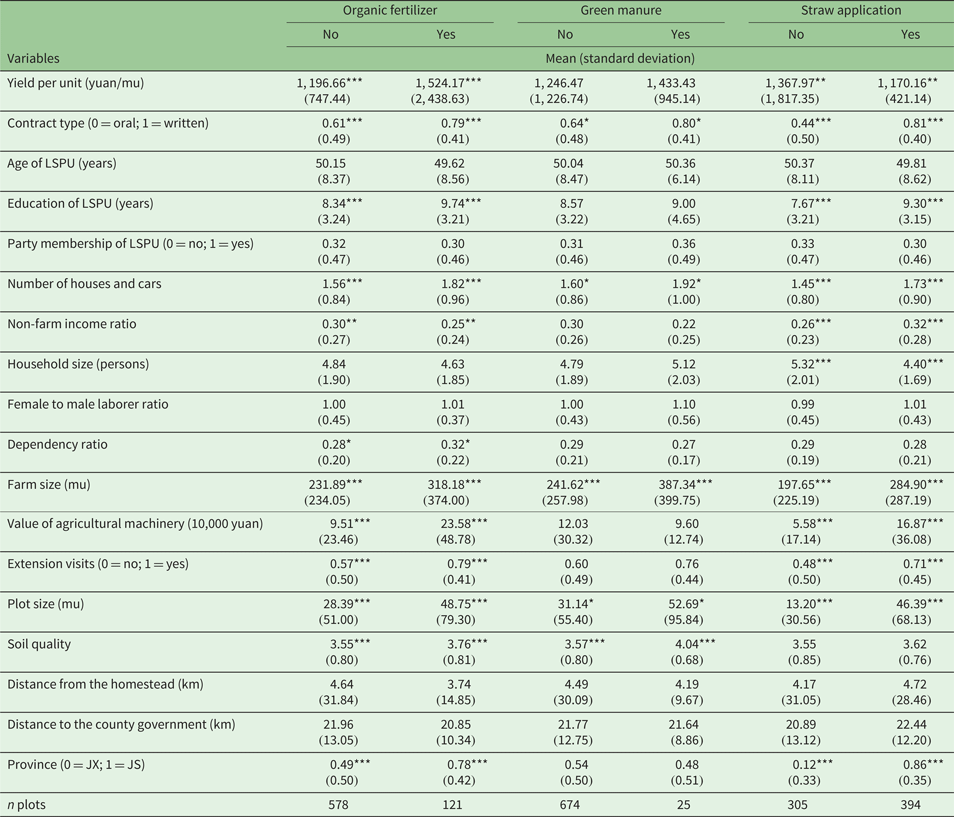
Notes: The χ2 and t-test are used for the categorical and continuous variables respectively to test for differences of adoption decisions within each type of investment. Significance levels of differences in means: ***1%, **5%, *10%. 1 mu = 1/15 ha; US$1 = Yuan6.68 in September 2016.
Source: Authors' survey.
4.2 Estimation results
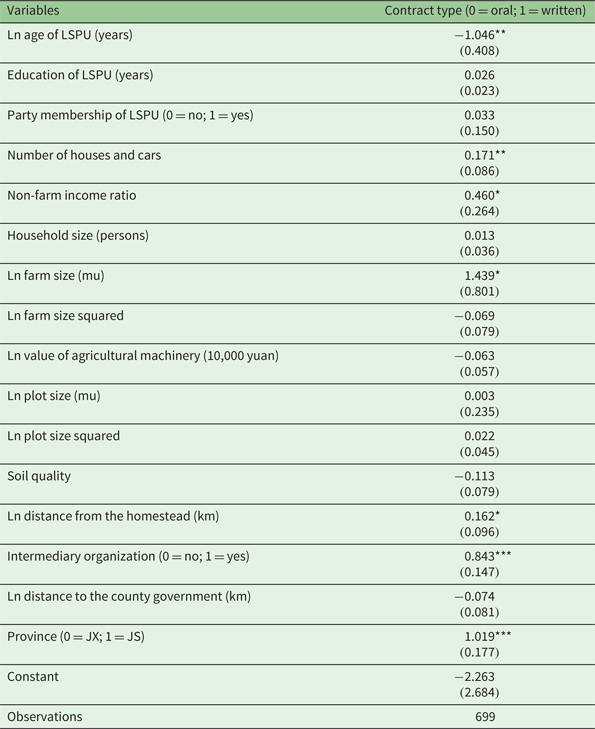
We first estimate equation (2) to account for potential endogeneity of contract type (table 3). The significance of the presence of intermediary organizations confirms the relevance of the IV, indicating its important role in contractual arrangements. Estimation results suggest that plots located in more institutionalized systems and farmed by younger and wealthier LSPUs with larger farms and a higher proportion of non-farm income in the household are more likely to be rented in with a written contract. Moreover, plots in JS are more likely to have a written contract, suggesting that land transfer in Jiangsu operates in a more formal and institutionalized way.
First-stage estimation of determinants of contract type
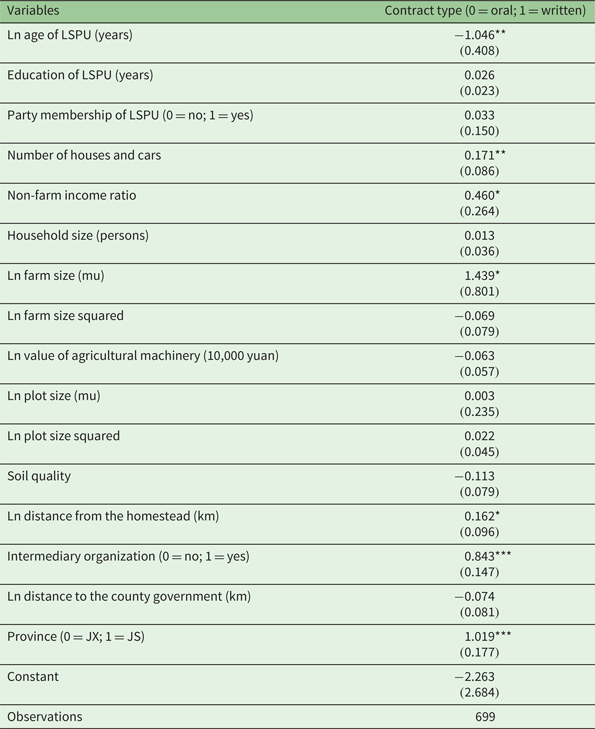
Notes: *** Significant at 1%, ** significant at 5%, * significant at 10%. Cluster-robust standard errors in parentheses. 1 mu = 1/15 ha; US$1 = Yuan6.68 in September 2016.
Source: Authors' survey.
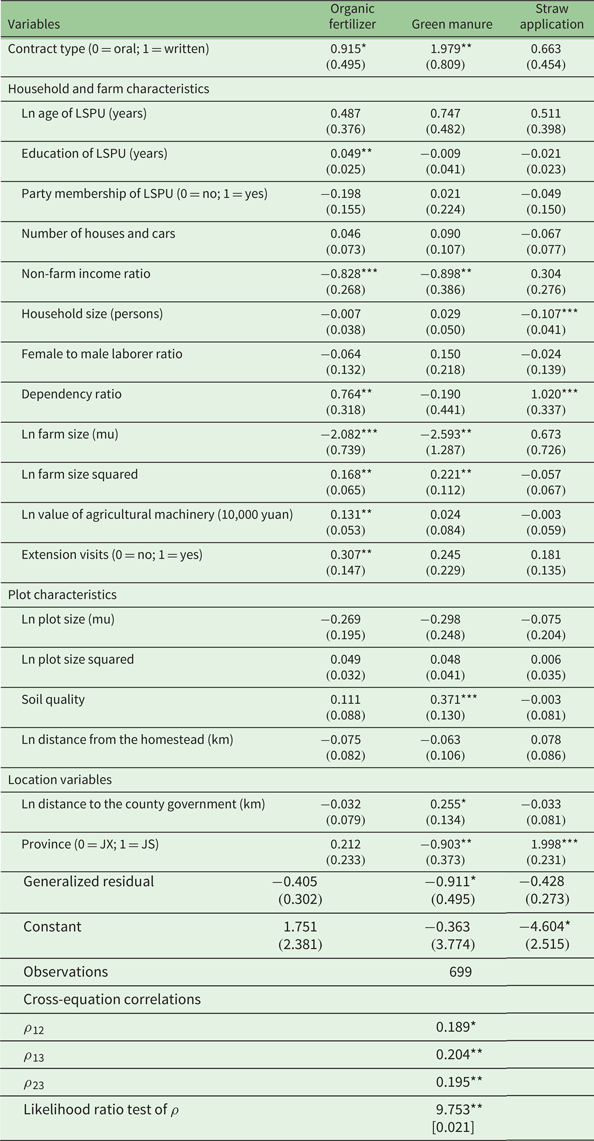
The estimation results of the (second-stage) investment specification equation (3) are shown in table 4. The likelihood ratio test rejects a series of independent probit regressions in favor of the multivariate probit model at the 5 per cent significance level, confirming that adoption decisions of the three types of soil-improving investments are made jointly rather than independently of each other (shown in the last rows of table 4). Furthermore, the t-statistic of the IV fails to reject the exclusion restriction that the instrument affects land investments only via contract type. Except for the model that tests the decision to apply green manure, the generalized residuals derived from the first-stage regression of contract type are not significantly different from zero. This suggests that contract type is exogenous to the decision to apply organic fertilizer and straw, but may be endogenous for the planting of green manure. Cluster-robust standard errors at the LSPU level are reported in order to address possible correlation of errors.
Multivariate probit model on the adoption of soil-improving investments
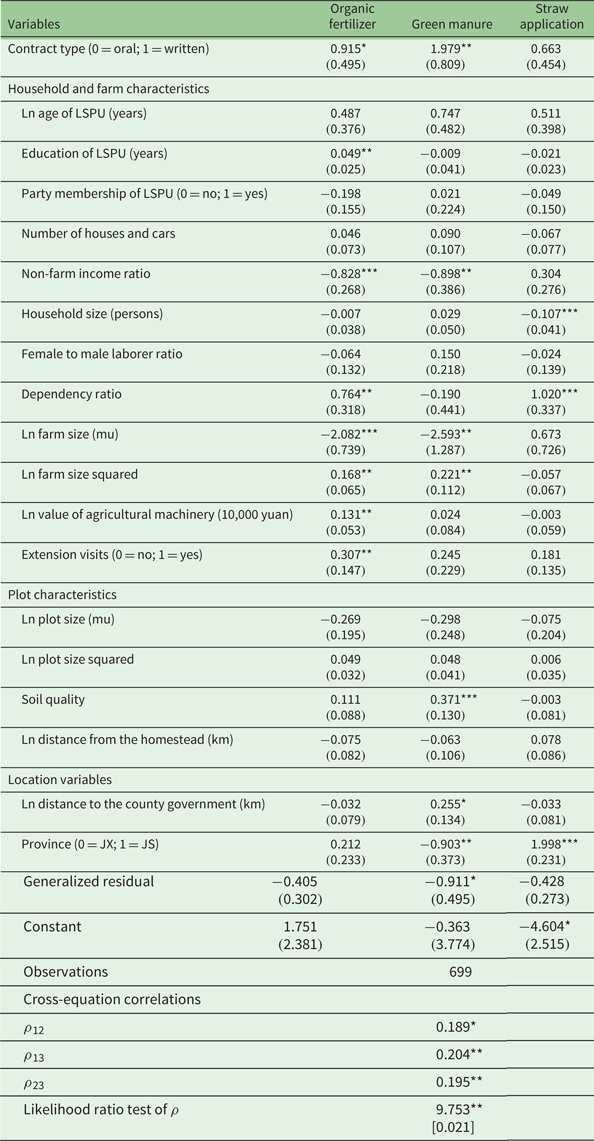
Notes: *** Significant at 1%, ** significant at 5%, * significant at 10%. Cluster-robust standard errors in parentheses and χ2-statistics in squared brackets. 1 mu = 1/15 ha; US$1 = Yuan6.68 in September 2016.
Source: Authors' survey.
A first noteworthy finding is that plots with written contract are more likely to apply organic fertilizer and green manure, which resonates with the descriptive statistics and theoretical expectations. However, contract type seems not to influence the decision to apply straw, which might be explained by the policies that govern the use of straw and the social embeddedness of the practice. The government forbids burning of straw and simultaneously subsidizes machines that are used to crush straw and to plough it back into the soil. The mechanized nature of straw application also explains why plots farmed by LSPUs with smaller household sizes or with a relatively high proportion of dependents are more likely to apply straw.
As regards household and farm characteristics, plots cultivated by better educated LSPUs are more likely to apply organic fertilizer. This is consistent with the research by Feng et al. (Reference Feng, Heerink, Ruben and Qu2010), who find positive effects of education on investment decisions. The negative coefficients for the non-farm income ratio in models for the decision to use organic fertilizer and green manure contrast with the results of Oseni and Winters (Reference Oseni and Winters2009), who discover that income from off-farm employment dominates the lost-labor effect and thus results in a net positive effect of off-farm employment on organic manure use. We also find that organic fertilizer is more likely to be adopted on plots within households with a higher dependency ratio.
Results suggest a U-shaped relationship between farm size and the application of organic fertilizer and green manure. This finding differs from that of Holden et al. (Reference Holden, Deininger and Ghebru2009) and Teshome (Reference Teshome2014), who find no significant relationship between farm size and soil conservation investments on smallholder farms. Plots cultivated by LSPUs that have more assets in agricultural machinery and receive more agricultural extension visits seem more likely to apply organic fertilizer.
There is little evidence that plot characteristics affect land investments in our survey, except that plots with higher soil quality are more likely to be planted with green manure. Finally, we also check the importance of location. Plots located farther away from the county government are found to undergo more green manure planting. In JX, more green manure is planted, while little investment is made in straw application. The latter result may be due to the hilly nature of JX, where it is likely to be more costly to organize mechanized straw application.
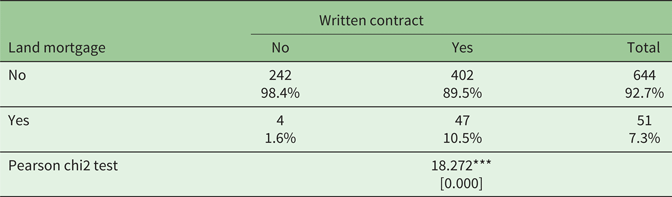
Table 5 provides some suggestive evidence on the relationship between contract type and credit access. Overall, we find that a small number of plots in the sample are used as collateral for credit. However, significantly more plots with a written contract are mortgaged. Specifically, 10.5 per cent of plots with a written contract are mortgaged to access credit, whereas a mortgage is only taken out on four plots with oral agreement.
Contract type and credit access (number of plots and share)
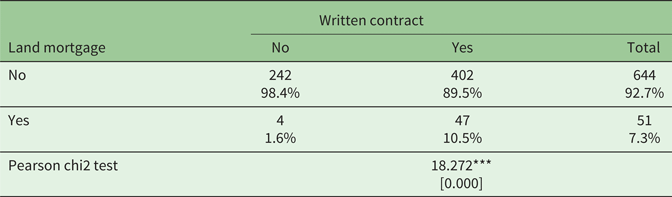
Notes: *** Significant at 1% in Pearson's χ2 test. χ2-statistics in squared brackets.
Source: Authors' survey.
4.3 Further considerations
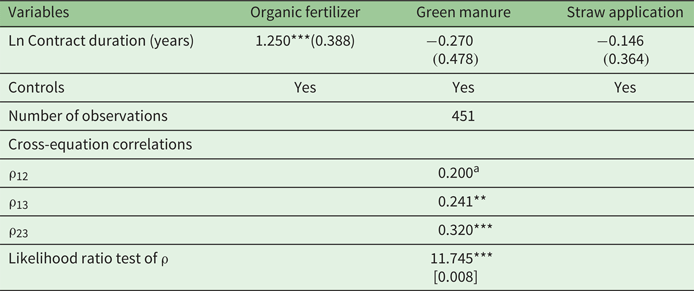
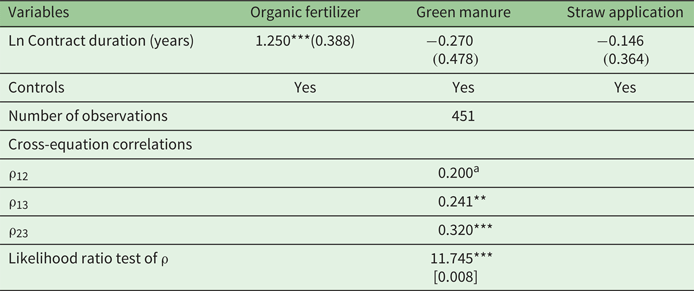
By using the subsample of written contracts, we further examine whether contract duration matters in adopting soil-improving investments.Footnote 10 Among 451 observations in the subsample, 26 have no specified contract duration; for the rest of the plots with specified duration, the exact length ranges from 1 to 30 years, averaged at 7 years. We follow the strategy by Terza (Reference Terza2017) to fix the potential endogeneity of the censored specification of contract duration.Footnote 11 Results given in table A3 in the appendix show that plots with longer contract duration apply more organic fertilizer, which corroborates the conclusions of Jacoby and Mansuri (Reference Jacoby and Mansuri2008) that longer duration tenancies are indeed associated with larger investments. This result also extends and deepens our findings above and confirms that formal contractual arrangements, either in terms of the written nature of the contract or the specified longer duration, encourage LSPUs to apply soil-improving investments.
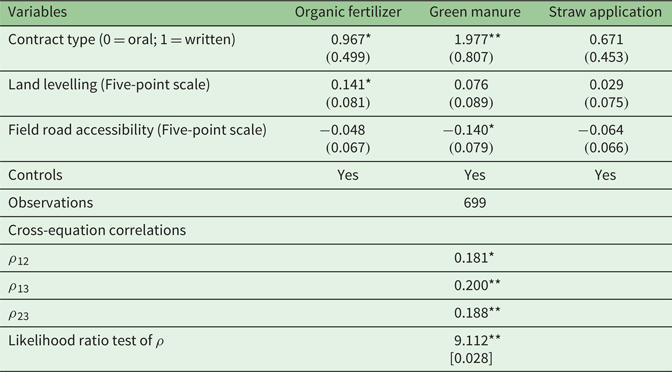
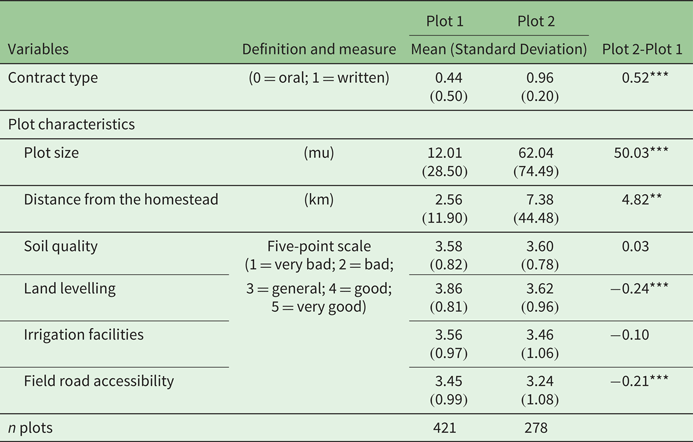
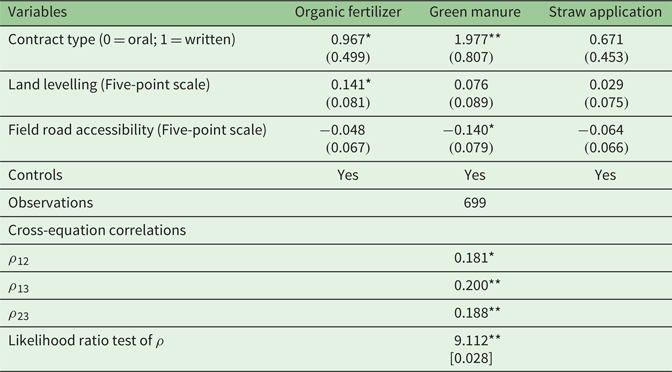
Moreover, a robustness check is conducted to deal with the possible heterogeneity between plots sourced in two different ways. We assume that the presence of intermediaries facilitates the formalization of a plot's contract type by increasing intermediary participation. However, one may argue that other systematic differences in plot quality could arise due to the involvement of intermediary organizations. As such, the instrumental variable would capture not only the endogenous variable, but also unobserved plot characteristics. To fix this, we re-estimate equations (2) and (3) by controlling for two other variables of plot quality, namely land levelling status and field road accessibility.Footnote 12 Results show that the IV significantly affects the selection of a written contract and the estimate results from the second stage remain consistent (table A4 in the appendix).
5. Conclusion
In recent years, LSPUs have become increasingly important actors in the Chinese agricultural transformation. In this paper we test to what extent the contractual arrangements governing rental of these plots impact on LSPUs' sustainable land investments. Using household and plot-level data from 40 townships in Jiangsu and Jiangxi Provinces, we seek to understand the effect of contract type on LSPUs' long-term investments in terms of organic fertilizer application, green manure planting and straw application. Given that Jiangsu and Jiangxi Provinces represent major rice-producing areas in developed and less developed regions respectively, the findings of this paper can be generalized to other main rice production areas in China, or more widely, in other countries with similar socioeconomic characteristics.
Our analysis indicates that plots with a written contract are rented in by younger LSPUs that are larger in size, with better family economic conditions and a higher proportion of non-farm income, and located in more institutionalized systems with the establishment of intermediary organizations. Empirical results further confirm that organic fertilizer and green manure are more likely to be applied on plots with written contracts. One explanation is that a formal contract may help reduce risks of land disputes and overcome hold-up problems. LSPUs are only likely to invest in soil quality on the rented plots if they expect to receive future returns on their investments; these returns are thought to be more secure with written contracts that are prescribed in advance and protected by law. A secondary but undeniably important effect of the written nature of contracts is its mediating effect on access to credit. Descriptive analyses provide some, albeit weak, evidence on the importance of having a written contract for the land to be used as collateral for a loan.
Furthermore, we find a U-shaped relationship between farm size and the application of organic fertilizer and green manure on the plots, suggesting the existence of a medium-size ‘trap’ in large-scale farming. Specifically, LSPUs with smaller landholdings are more dependent on soil quality, which may account for their greater incentive to improve the land they have rented. As farm size increases, it seems that the incentive to improve land quality becomes less important. Conversely, for larger farm sizes, diminishing marginal returns on land may incentivize farmers to invest in soil improvements. In addition, the number of agricultural extension visits received is found to correlate significantly with the application of organic fertilizer.
Several conclusions and policy implications can be drawn from our results. First, the positive effects of written contracts on the use of organic fertilizer and green manure suggest that promoting further land rental market development and assisting LSPUs in accessing farmland may not necessarily lead to soil mining. Second, policies aimed at improving transaction platforms and intermediary organizations in farmland transfer that facilitate LSPUs' access to farmland with secure tenancy contracts may play an important role in encouraging LSPUs to develop sustainable soil practices. Third, as social service organizations, such as those which offer agricultural extension, are of great significance to agricultural development by providing LSPUs with information and technological guidance, the government should support the establishment and improvement of agricultural social service systems.
This research is obviously exploratory due to the limited literature available on LSPUs. First, for most LSPUs in our sample, only one plot was surveyed. We may need data from more plots per LSPU to successfully account for household-level unobserved variables that may be correlated with both contractual arrangements and land-improving investments. However, these effects may be unlikely, as shown by Abdulai et al. (Reference Abdulai, Owusu and Goetz2011) who find that unobserved household effects were not responsible for the positive and significant impact of secured property rights they found on investment decisions. Second, due to institutional obstacles of using farmland as collateral in China, and resulting delays in policy experimentation and transformation, very few LSPUs interviewed had accessed credit via land mortgage, limiting the data available to examine the collateralization effect of contractual arrangements using econometric methodology. Future researchers may wish to compare the soil quality investment on different plots within LSPUs, or explore the collateralization effect in greater depth.
Acknowledgements
This work was supported by the National Natural Science Foundation of China (grant numbers 71673144 and 71773046), the Specialized Research Fund for the National Social Science Fund of China (grant number 18VSJ060), the National Key R&D Program of China (grant number 2016YFE0103100) and the 111 Project (B17024). Special thanks go to the China Scholarship Council for supporting this research project.
Appendix
Variables used in land investment specification model
Differences of contract type and plot characteristics between two ways of land acquisition
Multivariate probit model on the adoption of soil-improving investments: contract duration
Multivariate probit model on the adoption of soil-improving investments: controlling for land-levelling status and field road accessibility