Cortisol is the principal hormone that is released in stressful situations and its measurement is important as it allows us to further understand its consequences on health. This makes cortisol key in broadening knowledge about how stress is related to different health and disease processes (Smith & Cidlowski, Reference Smith and Cidlowski2010).
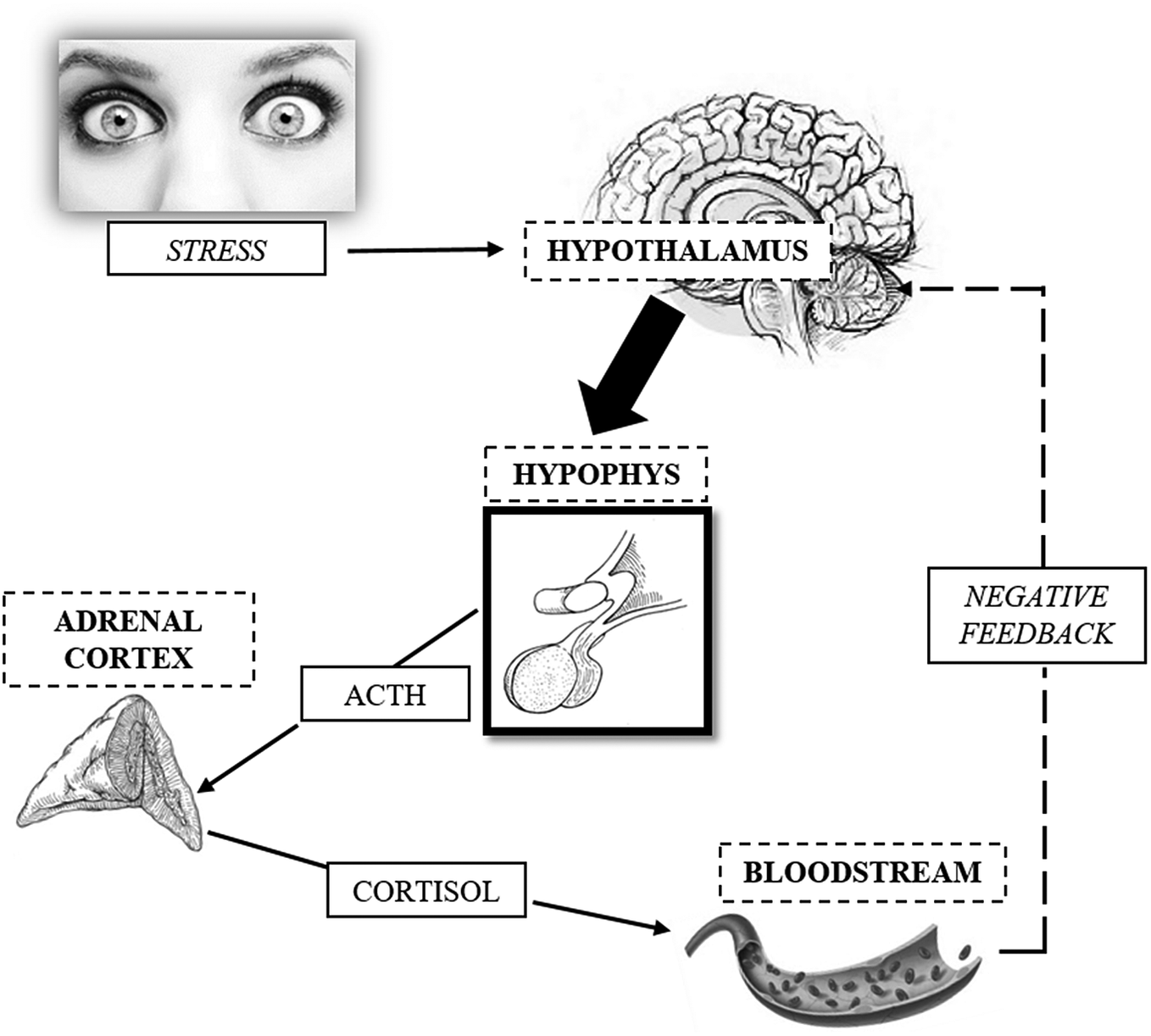
There are two neuroendocrine pathways that are activated in response to stress: One located in the sympathetic-adrenal-medullary axis, which is rapidly activated when a situation is perceived as a threat, and the other, the hypothalamic-pituitary-adrenal (HPA) axis that it is activated more slowly, so that the hypothalamus releases the corticotropin hormone, which stimulates the dispensing of the release of adrenocorticotropin by the pituitary gland into the systemic circulation, triggering the release of cortisol through the adrenal cortex (Andrews et al., Reference Andrews, D’Aguiar and Pruessner2012; Marques et al., Reference Marques, Silverman and Sternberg2010). (See Figure 1)
Mechanisms of Cortisol Release

Traditionally, cortisol extraction has been obtained through urine, blood or saliva samples, which collect the circulating standard values of cortisol at a specific time or throughout the day; however, these values relate to the concentration of this hormone at the time of collection, being very affected by the person's circadian rhythms. In addition, the invasive nature of blood extraction can even alter the concentrations of this hormone (Wosu, et al. Reference Wosu, Valdimarsdóttir, Shields, Williams and Williams2013).
For this reason, the technique of extracting cortisol from hair with respect to that of traditional techniques is a great contribution, as it gives us a retrospective measure with the advantage of being able to evaluate the levels of cortisol accumulated over a period of time. Therefore, this technique allows us to relate the cortisol results obtained with the chronic stress experienced in recent months, and, in turn, with other psychological and physical variables that occur during such period (Wosu, et al., Reference Wosu, Valdimarsdóttir, Shields, Williams and Williams2013).
At present, numerous studies have carried out the analysis of cortisol measures in hair with other sociodemographic, psychological and physical variables in order to assess how they correlate with each other; as well as its relationship with self-report measures such as chronic stress and the perceived stress index (García-León et al., Reference García-León, Peralta-Ramírez, Arco-García, Romero-González, Caparrós-González, Sáez-Sanz and González-Pérez2018; García-León et al., Reference García-León, González-Gómez, Robles-Ortega, Padilla and Peralta-Ramírez2019). However, there is no consensus for this relationship as, on the one hand, different studies have found a relationship between the level of cortisol in hair and the subjective perception of stress in general, while, on the other hand, other studies have not found this relationship. Moreover, there is no consensus either for sociodemographic and/or environmental variables (O'Brien et al., Reference O'Brien, Tronick and Moore2013), being age the only sociodemographic variable where different researchers agree that the greater the age, the lower the cortisol levels found (Manenschijn et al., Reference Manenschijn, Spijker, Koper, Jetten, Giltay, Haffmans, Hoencamp and van Rossum2012). This does not occur with the sex variable, as most studies have not found any differences between men and women in the amount of cortisol in hair. However, Larsson et al. (Reference Larsson2009) did find that this hormone is present at higher levels in women than in men.
Other aspects of hair, such as color and frequency of washing, do not interfere with the concentration of cortisol that can be measured in the section of analyzed hair (Dettenborn et al., Reference Dettenborn, Tietze, Kirschbaum and Stalder2012).
Other conditions to take into account when assessing cortisol in hair are the psychopathological disorders that the participants may present. In these cases, the hypothalamic-pituitary-adrenal axis is deregulated in disorders such as post-traumatic stress (Garber et al., Reference Garber, Compas and Morris2012), generalized anxiety (Steudte et al., Reference Steudte, Stalder, Dettenborn, Klumbies, Foley, Beesdo-Baum and Kirschbaum2011) and major depression (Pochigaeva et al., Reference Pochigaeva, Druzhkova, Yakovlev, Onufriev, Grishkina, Chepelev, Guekht and Gulyaeva2017; Wells et al., Reference Wells, Tremblay, Flynn, Russell, Kennedy, Rehm, Uum, Koren and Graham2014), showing in such cases, higher levels of this hormone. However, in other psychopathological disorders such as generalized anxiety and post-traumatic stress, the levels are lower.
Although the effectiveness of this method of stress assessment is widely corroborated, there is no agreement on the relationship between cortisol in hair and self-report measures of stress, as well as the type of stress to which it refers. Therefore, different publications suggest that cortisol in hair is a measure that estimates the release of cortisol accumulated in a period of time where a vitally stressful event has occurred and is more representative of this type of stress than of perceived stress (Karlén et al., Reference Karlén, Ludvigsson, Frostell, Theodorsson and Faresjö2011; Stalder et al., Reference Stalder, Steudte-Schmiedgen, Alexander, Klucken, Vater, Wichmann, Kirschbaum and Miller2017). However, other authors relate it more to situations of chronic stress such as a job change (Manenschijn et al., Reference Manenschijn, Spijker, Koper, Jetten, Giltay, Haffmans, Hoencamp and van Rossum2012), unemployment (Dettenborn et al., Reference Dettenborn, Tietze, Bruckner and Kirschbaum2010) or socioeconomic status (Ursache et al., Reference Ursache, Merz, Melvin, Meyer and Noble2017). We hypothesize that, in both cases, there is an increase in cortisol secretion that is reflected in cortisol levels in hair.
Given the lack of consistency between self-report measures of stress and psychopathological symptomatology and their relationship with cortisol in hair, as well as the absence of consistent data on the role of different sociodemographic variables in cortisol secretion, the objective of the present study was to verify how sociodemographic, psychological stress, resilience and psychopathological symptoms measured through self-report are related to cortisol levels in hair in a sample of Spanish population.
Method
Participants
In total, 360 healthy adults from Granada participated in this study. Participants were sought through informative brochures and mailings to different faculties and work centers, associations, etc., therefore, it is an incidental or convenience type sampling.
All participants were asked if they had any specific physical illness or psychopathology. Participants who had been diagnosed with chronic autoimmune, allergic and major depression diseases, or with diseases that modulate HPA axis activation, were excluded. Specifically, a total of 3 participants were excluded. In addition, those participants who reported having used drugs were excluded, representing 8.64% of the sample, of which the substances ingested were alcohol, tobacco and marijuana.
Sixteen participants with outlier cortisol scores were eliminated from the study. After eliminating the outliers, 117 men and 230 women remained, representing 33.1% and 66% respectively. The mean age was 33.99 (SD = 12.63) years.
All participants, after reading the information sheet, signed an informed consent form in which they were informed of their rights as participants of the study and of the confidentiality of the data provided following the Helsinki agreement. This study was approved by the ethical committee of Universidad of Granada.
Instruments
Psychological assessment of stress and other psychopathological symptoms
Semi-structured interview to collect the main sociodemographic and lifestyle habits variables. In addition, a question was included about the possibility of having experienced a situation of extraordinary stressful life events in the past three months. The following data were included:
Date of birth (Age); Sex, Weight and Height; BMI; Country of origin (in the case of being a foreigner, indicate the number of years of residence in Spain); Religion; Education level; Occupation; Civil status; Number of children and/or people under their care; Drug consumption and contraceptive use; Hair appearance (straight or curly); whether they suffer from any illness.
The Perceived Stress Scale, PSS, (Remor & Carrobles Reference Remor and Carrobles2001): It is a self-administered scale that assesses the level of perceived stress and the degree to which people find their lives unpredictable, uncontrollable or overloaded. It consists of 14 items with four response options. The highest scores correspond to the highest level of perceived stress. The Spanish version of the PSS shows an adequate level of reliability internal consistencty (α = .81) and test-retest (r = .73), concurrent validity and sensitivity (Remor, Reference Remor2006).
Analog-visual Test in relation to the perceived stress in the past three months (García-Campayo et al., Reference García-Campayo, Alda, Sobradiel, Olivan and Pascual2007). The participants report on their subjective perception of stress in the past three months, on a scale ranging from 0 (no stress) to 10 (unbearable). For the measurement of stressful life events, the question read: “Have you felt stress in the past three months?”
List of symptoms SCL–90–R (Derrogatis, 1994), designed to detect possible psychopathologies. It is a self-administered scale composed of 90 items and five response options. It is evaluated and interpreted according to nine primary dimensions (somatizations, obsessions and compulsions, interpersonal sensitivity, depression, anxiety, hostility, phobic anxiety, paranoid ideation, and psychoticism) and three global indices of psychological distress (global severity index, total positive symptoms, and index of positive symptoms of distress). It has a high internal consistency (.73 to .88) and temporary stability (.40 to .82). For the overall score, a coefficient of .97 was obtained in the Cronbach's alpha. And for each of the subscales respectively: Somatization (.87); Obsession-Compulsion (.87); Interpersonal Susceptibility (.83); Depression (.89); Anxiety (.84); Hostility (.84); Phobic Anxiety (.88); Paranoid Ideation (.80) and Psychoticism (.76).
Resilience Scale, CD–RISC10 (Connor & Davidson, Reference Connor and Davidson2003) Spanish version (García-León et al., Reference García-León, González-Gómez, Robles-Ortega, Padilla and Peralta-Ramírez2019). In its original version, it consists of 25 items structured on a Likert-type summative scale (0 not at all, 1 rarely, 2 sometimes, 3 often and 4 almost always) where they are grouped into five dimensions. The reduced version (CD–RISC10) only measures resilience globally. Similarly, the sum of the items provides the global measure of resilience, which increases in direct proportion to the scores. The questionnaire showed good psychometric properties in the validation study on the Spanish population (α = .85) and a test-retest correlation index of .71.
In its original version, it consists of 25 items structured on a Likert-type summative scale (0 not at all, 1 rarely, 2 sometimes, 3 often and 4 almost always) where they are grouped into five dimensions. The reduced version (CD–RISC10) only measures resilience globally. Similarly, the sum of the items provides the global measure of resilience, which increases in direct proportion to the scores. The questionnaire showed good psychometric properties in the validation study on the US population (α = .89).
Cortisol in hair
A sample of hair was taken from all participants to extract the amount of cortisol secreted in the three months prior to the study. The participants' hair samples were taken from the posterior vertex of the head, always in the middle of the head and cut as close as possible to the root, as recommended by the authors O'Brien et al., (Reference O'Brien, Tronick and Moore2013). Each sample of hair was kept in aluminum foil and in an airtight bag, ensuring that no light or moisture entered. Subsequently, they were sent for analysis to Department of Pharmacology and CIBERehd (University of Granada).
The sample was carefully sectioned in lengths of the segments that approached the time period of interest (for example, the most proximal 3 cm for the last 3 months of cortisol production). Next, the hair was finely cut with a ball mill, and incubated in a solvent, methanol.
The remaining solution was evaporated to dryness and then reconstituted in a solution such as a phosphate buffered saline (Sauve et al., Reference Sauvé, Koren, Walsh, Tokmakejian and van Uum2007). The method used was the ELISA kit © (AlpcoDiagnostics®, Windham, NH) according to the manufacturer’s instructions with the reagents provided.
The ELISA kit Cortisol © method is a validated technique for assessing cortisol levels in hair, which is highly correlated with the liquid mass spectrometry of the chromatograph (LC-MS/MS) [32] and has been used successfully used during pregnancy [2]. The sensitivity of the Cortisol ELISA kit is 1.0 ng/ml as reported by the manufacturer and the cross-reactivity is as follows: Prednisolone 13.6%, Corticosterone 7.6%, Deoxycosticosterone 7.2%, Progesterone 7.2%, Cortisone 6.2%, Deoxycortisol 5.6%, Pednisone 5.6% and Dexamethasone 1.6%. No cross reaction was detected with DHEAS and Tetrahydrocortisone.
Procedure
Potential participants were sought through mailings sent to the university community and associations. Those who were interested in taking part in the study were informed of the objective of the study, as well as the procedure to follow and after signing the informed consent, they completed the semi-structured interview with their personal data, as well as the questionnaires related to stress, resilience and psychopathology described in the previous section.
Next, a strand of hair was cut from the occipital part of the head with the help of a thick thread to tie the hair as close to the root as possible. The strand of hair was subsequently wrapped in foil and stored in a freezer bag to ensure optimal conditions for maintenance (without moisture or sunlight). The average duration of the entire procedure (psychological evaluation and interview and administration of instruments) is estimated at about 50 minutes.
Data Analyses
First, the 16 outlier participants were eliminated using the box diagram of the SPSS statistical package. This method allows us to interpret the data for the variables, through which we can observe quartiles, minimum and maximum values, median and outliers. It is represented with a box with 2 extensions and some dots and stars - outliers and extremes. The box diagram shows the five statistics: The median, the 25th and 75th percentiles, minimum and maximum that are key to show the distribution of a scale variable and a series of values (atypical and extreme). These values together with the median and the box itself provide the necessary information on the degree of dispersion of the data and the degree of asymmetry of the distribution. The maximum cortisol value included in the study was 433.1.
Then, in order to verify whether there were differences in cortisol levels in hair in the main sociodemographic variables, the average cortisol levels were obtained and different statistical means of comparison of means such as Student's t and ANOVAs were carried out for the quantitative variables. For the qualitative variables, the Chi-square statistic was used. Since cortisol scores did not meet the assumption of normality, a logarithmic transformation of this variable was performed.
In order to verify which variables were predictors of cortisol in hair, a hierarchical regression was performed. In order to examine the predictive capacity of the self-reported psychological stress variables in cortisol levels in hair, different blocks were proposed following the “forward regression” strategy. To do this, first the predictive variables with the lowest weight (sociodemographic, hair characteristics and habits, psychopathological variables) were included. The last block included the variables that we hypothesized would have the greatest weight, such as the psychological stress variables in the different modalities. The blocks in which the possible predictor variables were established were: Block 1, Sociodemographic; Block 2, Hair characteristics and life habits. These two blocks constitute the control variables. Subsequently, Block 3, Psychopathological symptoms and Block 4, Psychological stress were included. As predictors of the first block, the sociodemographic variables: Age, sex, academic level and marital status were included. In the second block, the cortisol control variables were added: Contraceptive intake and hair characteristics. The third block included psychopathological symptoms: Somatizations, obsessions and compulsions, interpersonal sensitivity, depression, anxiety, hostility, phobic anxiety, paranoid ideation, and psychoticism. Finally, in the fourth block, the self-report measures of stress and related variables were introduced: Perceived stress, experienced stressful life experiences, analog-visual scale of stress and resilience.
Results
Description of the sample in relation to its cortisol values in hair and sociodemographic variables, habits and life and hair qualities
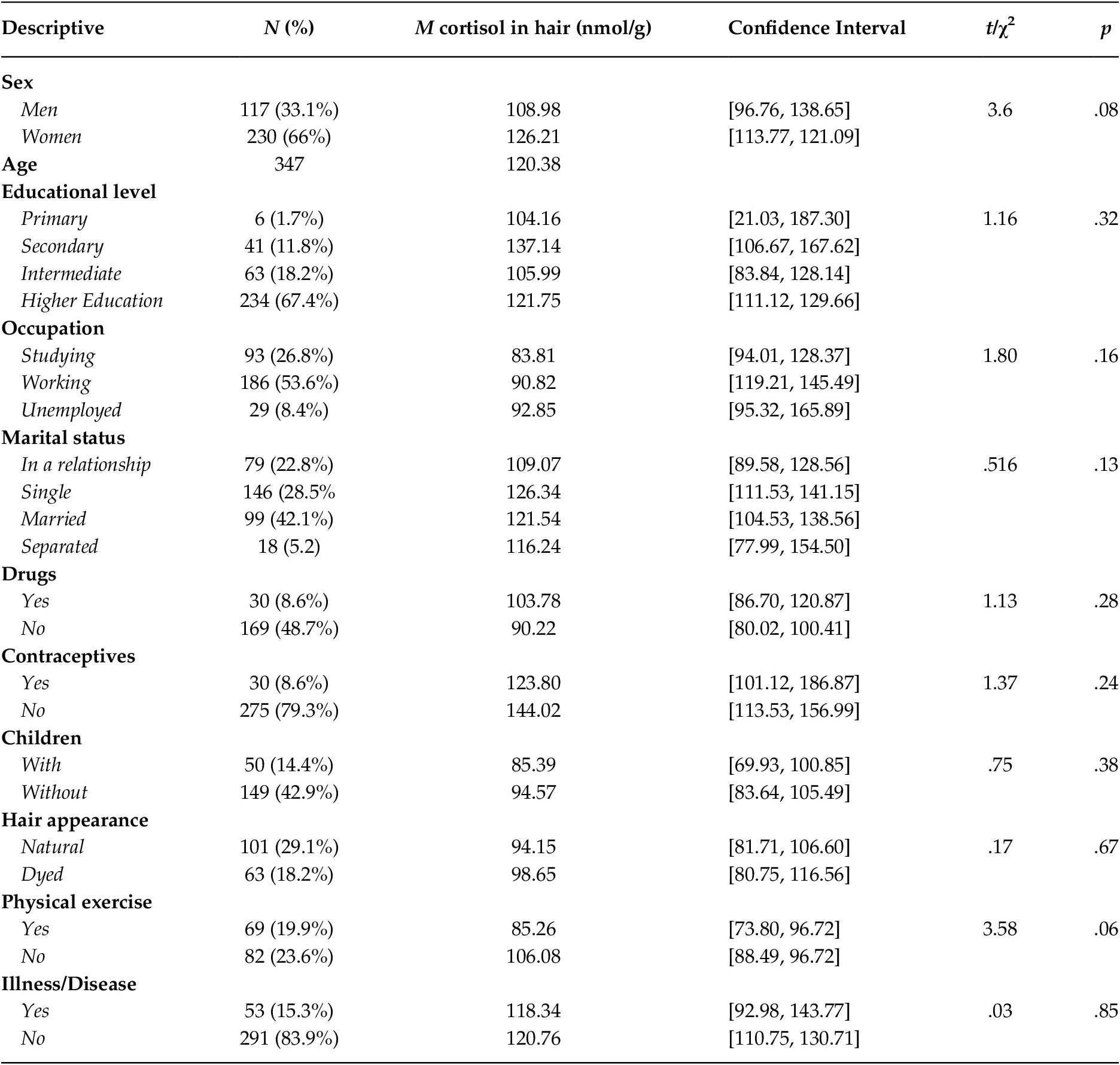
The mean age of the participants of the sample was 33.99 years (SD = 12.64), in a range of at least 18 years to 78. In relation to this sample, the average cortisol in hair for the Spanish population was 120.38 nmol/g (SD = 87.26), with an average of 108.93 (SD = 66.43) in men and 126.22 (SD = 95.75) in women.
Regarding the sociodemographic variables, habits and qualities of the appearance and care of the hair, no significant differences were found for any of these variables with respect to the amount of cortisol in hair. (See Table 1). (See Table 2)
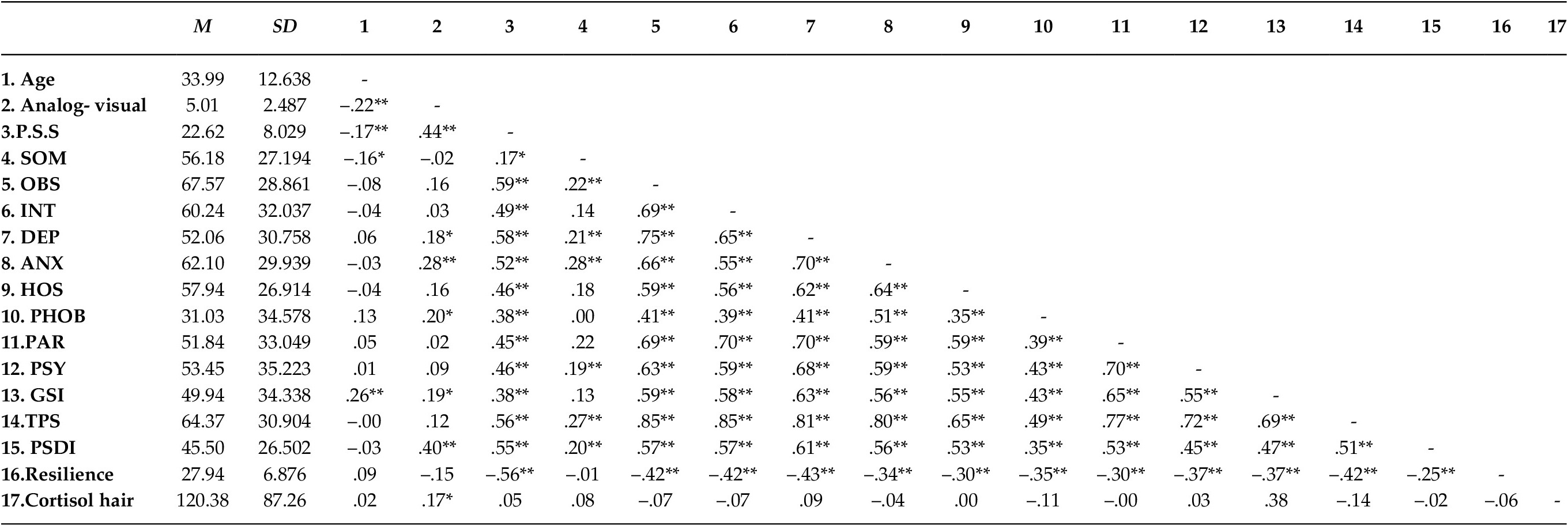
Means, Standard Deviations and Correlations between Variables of the Variables included in the study. Sociodemographic and Psychological Variables Predicting Cortisol in Hair

Sociodemographic variables, habits, psychopathological and psychological stress variables that predict cortisol in hair
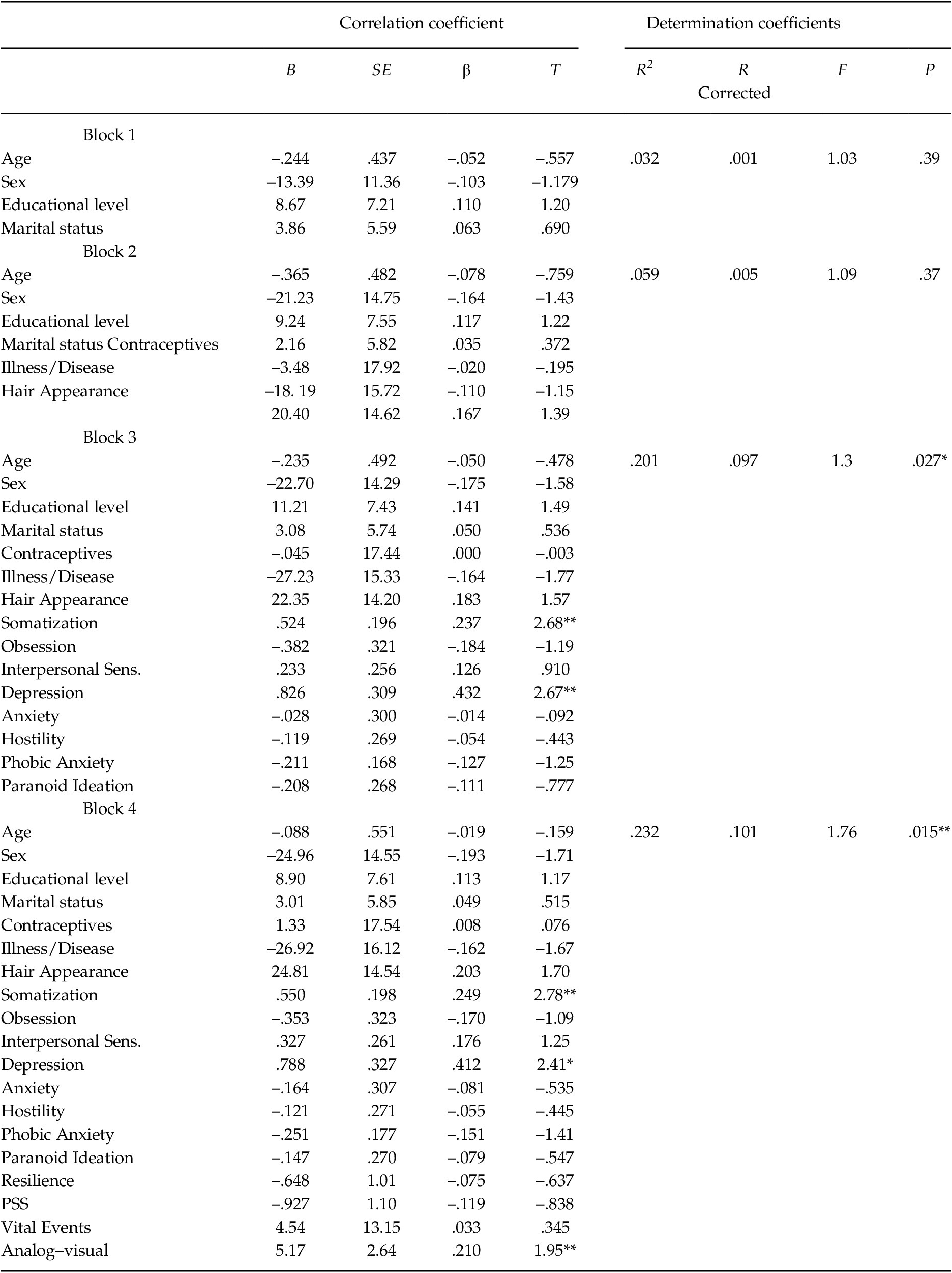
To check which variables could act as predictors of cortisol in hair, a hierarchical regression analysis was carried out in four blocks. In the first model, which included the sociodemographic variables, age, sex, academic level and marital status, there was no significant predictive model. The second model, which included, in addition to the previous variables, taking contraceptives, suffering from some disease and appearance of the hair, did not show predictive variables. However, the third model, which also included psychopathological variables such as somatization, obsession, interpersonal sensitivity, depression, anxiety, hostility, phobic anxiety and paranoid ideation, explained 9.7% of the amount of cortisol in the hair, in a 99% confidence interval. The model shows that somatization and depression are predictive variables of cortisol in hair. The fourth model presented an improvement of 10.1% in the variance explained by maintaining somatization and depression as predictive variables of cortisol and introducing a new variable such as analog-visual scale scores. (See Table 3). “Regression tolerance rates range from 0.49 to 0.99, which implies values greater than 0.10, so the existence of collinearity between independent variables is ruled out, as was already anticipated in the correlational analyses”.
Means, Standard Deviations and Correlations between Variables of the Variables included in the study. Sociodemographic and Psychological Variables Predicting Cortisol in Hair

Note. PSS = Perceived Stress Scale; SOM = Somatization; OBS = Obsession; INT = Interpersonal Sensibility; DEP = Depression; ANX = Anxiety; HOS = Hostility; PHOB = Phobia; PAR = Paranoid Ideation; PSI = Psychoticism; GSI = Global Severity Index; TPS = Total Positive Symptoms and PSDI = Positive Symptoms of Distress Index.
*p ≤ .05. ** p ≤ .02.
Hierarchical Regression of Cortisol in Hair Prediction of the Main Sociodemographic, Psychopathological Variables, Hair Habits and Qualities and Psychological Stress

Note. PSS = Perceived Stress Scale.
*p ≤ .05; **p ≤ .02.
Discussion
The main objective of this study was to verify whether cortisol levels in hair can be explained based on their relationship with other measures of psychological stress, such as the daily stress inventory, the analog-visual scale, having experienced extraordinary stressful events and psychopathological symptoms. The results showed that cortisol in hair is related to the analog-visual scale of stress, somatization and depression. The other sociodemographic, psychopathological and stress variables were not related to cortisol in hair.
Previous studies have shown that there is a relationship between high concentrations of cortisol in hair, due to an overstimulation in the HPA axis, and recognizing having experienced serious and/or highly emotional/stressful vital events; Thus, these authors concluded that cortisol in hair is more associated with the evaluation of vital stressors than with daily stress (Karlén et al., Reference Karlén, Ludvigsson, Frostell, Theodorsson and Faresjö2011; Stalder et al., 2017). However, the results obtained in our study do not point in this direction, showing greater relationship with the perceived stress as shown by Dettenborn et al. (Reference Dettenborn, Tietze, Bruckner and Kirschbaum2010). This relationship of the data found between both variables is of great interest, as we can corroborate the main idea of our study and the explanation given to the psychophysiological mechanisms that are put in place under stressful situations.
Along those lines, our work shows that the release of cortisol in stressful situations is higher in people with higher scores in depressive symptomatology, and in somatic type, similarly to the results of other authors (Heinze et al., Reference Heinze, Lin, Reniers and Wood2016; Pochigaeva et al., Reference Pochigaeva, Druzhkova, Yakovlev, Onufriev, Grishkina, Chepelev, Guekht and Gulyaeva2017). A possible explanation comes from the fact that the hypothalamic-pituitary-adrenal axis undergoes hyperactivity in the pathophysiology of major depressive disorder, resulting in significantly higher amount of released cortisol. However, it is important to highlight that our population does not have a diagnosis of major depression, we simply refer to higher levels of depressive symptomatology. Although these data cannot be extrapolated to our population as it is a non-clinical population, it is possible that the pathophysiological process goes in that direction. This finding yields an integrative perspective of the different responses that occur in the experience of stress: Cognitive, physical and psychological.
The results found in this study suggest that cortisol concentrations in hair released due to a situation experienced as stressful are related to the scores collected on the analog-visual scale and, therefore, with the experience of stress as such, as Lesage et al. (Reference Lesage, Berjot and Deschamps2011) suggested. This scale turns out to be a fairly simple instrument as it simply represents on a scale of 0 to 10 the degree of stress that the person believes he/she has had in the past three months. In addition, it is of interest from an applied point of view, as the simple perception of the person of having perceived stress in recent months is an important indicator of the scores of the stress biomarker, thus becoming a useful tool to discriminate stress. And, on the other hand, it is important to note that perceived stress is not shown as a predictor of cortisol in hair, hence, once again we verified that self-report stress measures do not relate to the stress biomarker. These data are congruent with those found by Milam et al., (Reference Milam, Slaughter, Verma and McConnell2014).
In spite of the findings observed, this study shows different limitations, such as the sample not being matched with respect to the sex variable, or including more women than men. Another limitation of this study has been that the sample was not representative in age or in sociodemographic variables of the Spanish general population, showing a greater number of young people and a smaller number of elderly people. It would also have been interesting to evaluate chronic stress through self-report, but we currently do not have Spanish-validated assessment instruments that evaluate this construct.
The main contribution of this study has been to relate cortisol in hair as a biomarker of stress with more subjective variables, such as questionnaires or scales. Verifying the relationship of the perception of stress with its consequent activation of the pituitary hypothalamic axis brings us closer to a better approach to psychological stress. This opens up the possibility of working on psychological stress in order to reduce its negative impacts and to know more about what happens at the organism level when a person perceived him/herself as stressed in relation to prevention and treatment.