


Introduction
The inclusion of environmental sustainability in Health Technology Assessment (HTA) is a growing topic of interest (Reference Greenwood Dufour, Weeks and De Angelis1). HTA agencies are increasingly aware of the rising concerns associated with the impacts of drugs, technologies, and health services on the environmental footprint of health and social care systems (Reference Antonazzo, Gribaudo and Ye2;Reference Holtorf, Pegg, Mueller and McMeekin3;Reference Reising, El Alili, Kimman and Hiligsmann4). While several HTA agencies have shown an interest in environmental sustainability and some have begun work in this area (Reference Goetghebeur M, Yi and Perleth5), few of them have published a strategy for integrating environmental considerations into their core activities (Reference Parker and Miller6). This is an important gap because a strategy makes explicit not only where an organization aims to go but also how it intends to get there (Reference Martin and Review7).
Recognizing that the methods that may be used to address environmental considerations in HTA were still under discussion (Reference Bobini and Cicchetti8), the Institut national d’excellence en santé et services sociaux (INESSS) (Québec, Canada) chose to develop a strategy. Figure 1 summarizes the key components of the strategy INESSS implemented. A strategy goes beyond the writing of a strategic plan, which typically focuses on factors under an organization’s control (e.g., production processes) and sets targets for improvement that are based on existing activities (Reference Martin and Review7). A strategy sets in motion an organization towards a future-looking goal (where it wants to go), while it actively transforms its operations to evolve and meet this goal (how it intends to get there). A strategy thus focuses on ways to adequately position the organization within its external environment so it can deliver new products or services that do not yet exist. It should rely on a logical set of hypotheses and integrated choices meant to operationalize new organizational behaviors that can deliver compelling value for stakeholders (Reference Lafley, Martin and Riel9).
The goal, objectives, rationales, and means of the strategy.
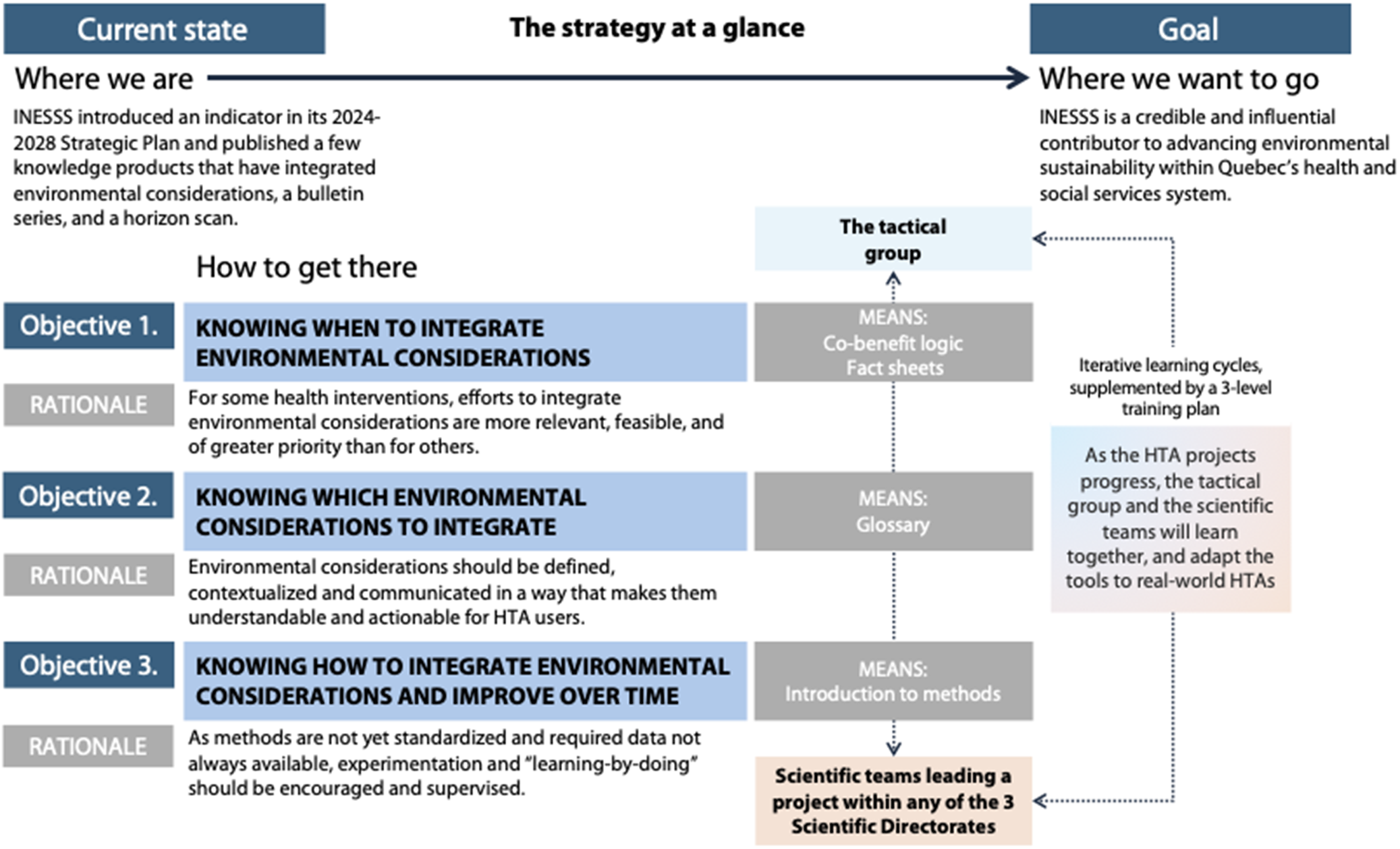
Figure 1. Long description
The diagram is organized into three main horizontal sections.
At the top, a horizontal arrow points from left to right. On the left is Current state: Where we are, noting that I N E S S S introduced an indicator in its 2024-2028 Strategic Plan. On the right is Goal: Where we want to go, stating that I N E S S S aims to be a credible contributor to environmental sustainability in Quebec health services.
Below this, the section How to get there is divided into three rows of objectives.
Objective 1. KNOWING WHEN TO INTEGRATE ENVIRONMENTAL CONSIDERATIONS. The RATIONALE states that efforts are more relevant for some interventions than others. The MEANS are Co-benefit logic and Fact sheets.
Objective 2. KNOWING WHICH ENVIRONMENTAL CONSIDERATIONS TO INTEGRATE. The RATIONALE states considerations should be defined and actionable for H T A users. The MEANS is a Glossary.
Objective 3. KNOWING HOW TO INTEGRATE ENVIRONMENTAL CONSIDERATIONS AND IMPROVE OVER TIME. The RATIONALE notes that methods are not yet standardized, requiring learning-by-doing. The MEANS is an Introduction to methods.
A vertical column on the right connects these rows. At the top is The tactical group. At the bottom is Scientific teams leading a project within any of the 3 Scientific Directorates. A central box explains that as H T A projects progress, the tactical group and scientific teams will learn together and adapt tools. A dotted line indicates iterative learning cycles supplemented by a 3-level training plan.
The aim of this article is to describe INESSS’ strategy, its implementation process, and the lessons learned. INESSS has a broad mandate covering the evaluation of: drugs and technologies for public reimbursement; social services and mental health interventions; and physical health interventions (ranging from primary to specialized care). The strategy development work started in September 2024, when INESSS had only begun publishing a few knowledge products integrating environmental considerations. The lessons learned in the past 2 years of operation may thus inspire or benefit other HTA agencies.
Below, we describe the methods used to develop INESSS’ strategy. Then, the objectives and means of the strategy as well as the steps taken to implement the strategy are presented. We conclude by outlining the lessons learned and how the tools and implementation process described in this paper could be adapted to suit the needs of other HTA agencies.
Methods
INESSS developed its strategy through a step-by-step process, which included consultation with four groups of stakeholders. A preliminary draft of the strategy (a 10-page document) was shared to support the consultation process. It was informed by the scientific and grey literature publications curated by INESSS and publicly shared through a bulletin series dedicated to environmental issues (8 bulletins published between March 2023 and November 2024) as well as a strategic horizon scan, published by INESSS in November 2024 (for the search strategy and selection criteria, please refer to the appendix (Reference Kostovic and Wagner10)). The horizon scan summarized actions that HTA agencies had already taken to include environmental aspects, types of interventions assessed, the methods used, and opportunities and challenges (Reference Kostovic and Wagner10). The strategy was also informed by the 2023–2028 Sustainable Development Action Plan of the Quebec Ministry of Health and Social Services (MSSS) (11) and its Responsible Procurement Reference Framework, which adopts a triple bottom line approach (12), recognizing “the indissociable nature of environmental, social and economic dimensions of development activities (trad. lib.) (13).”
With the aim of consolidating our understanding of key sustainability concepts, analytical methods, and metrics, we first consulted environmental sciences experts, that is, academic research groups specializing in environmental assessment methods (e.g. lifecycle analyses, measurement tools, predictive models) as well as toxicologists, public health physicians, and environmental scientists at the Quebec National Institute of Public Health (INSPQ).
Second, to identify blind spots and areas for improvement in our strategy, we turned to knowledge synthesis and HTA practitioners. The academic pan-Canadian initiative CASCADES mobilizes a solid network of researchers and clinical leaders. It develops training and evidence-informed tools to support clinical and system-level change towards sustainable health care. At the international level, regular participation in HTA communities of practice proved particularly helpful (INAHTA’s Environmental Sustainability in HTA Working group, the Environmental Sustainability in HTA Working Group of HTAi, the International science, and methods exchange group).
Third, to gather the views of patients, caregivers, and citizens, we organized a meeting where all patients, caregivers, and citizens who sit on different committees at INESSSS were invited, i.e., citizens from four Deliberative Committees, the Concertation Table, and the Scientific Council, and persons with lived experience from the Panel of users and caregivers. The strategy was shared alongside concrete examples of initiatives meant to reduce the environmental footprint of health and social care systems (e.g., reducing energy consumption in radiology departments, switching from single-use to reusable supplies in emergency rooms, optimizing IV bags and single-use supplies in hemodialysis units).
Fourth, aiming to identify the knowledge gaps where INESSS could make a valuable contribution, we reached out to potential users. We met with the clinical leaders of “Eco-CMDPSF” ( Conseils des médecins, dentistes, pharmaciens et sages-femmes ) and the Quebec chapter of the Canadian Association of Physicians for the Environment, who aim to facilitate the implementation of best green clinical practices. We consulted a network of sustainable development officers, whose work covers 30 health and social care facilities in 16 regions, ranging from waste management to energy efficiency, and responsible procurement. Minister of Health staff, responsible for a wide range of clinical areas, were invited to share their expectations towards INESSS and help identify potential synergies with Quebec’s Sustainable Development Action Plan.
INESSS’ Board of Directors and its Scientific Council shared insights throughout the strategy development process and approved its final version.
Results
Overview of the strategy
As Figure 1 shows, the future-looking goal is to position INESSS as a credible and influential contributor to advancing environmental sustainability within Quebec’s health and social services system (HSSS). From a public policy perspective, this is aligned with INESSS’ mission, which is to promote clinical excellence and the efficient use of resources in the HSSS, as well as with the MSSS’ sustainable development approach, which aims to meet “the needs of the present without compromising the ability of future generations to meet their own needs (trad. Lib.) (13).” The strategy recognizes that beyond the importance of the direct green house gas (GHG) emissions attributable to hospitals (heating, ventilation, food services, etc.), a large share of indirect GHG emissions is linked to health and social care interventions (Reference Braithwaite, Zurynski and Carolynn14).
The future-looking goal will be achieved by focusing on three operational objectives: (a) knowing when to integrate environmental considerations into knowledge products; (b) knowing what environmental considerations to integrate; and (c) knowing how to integrate them into a growing number of knowledge products and improve over time. The rationales behind the selected objectives are as follows:
-
• When: For some health interventions, efforts to integrate environmental considerations are more relevant, feasible, and of greater priority than for others;
-
• What: Environmental considerations should be identified, contextualized, and communicated in a way that makes them understandable and actionable for HTA users;
-
• How: As methods are not yet standardized and required data are not always available, experimentation and “learning-by-doing” should be encouraged and supervised.
Lastly, the strategy relies on means to transform INESSS’ operations. Its Methods, Data, and Ethics Bureau (BMDE) already supports the scientific teams by developing methods and tools in the data, evaluation, information, and implementation sciences. To implement the strategy across the organization, the BMDE is tasked with the production of key tools to support each objective (described below).
Knowing when to integrate environmental considerations
For this strategy to be effective and support organizational efficiency, the question of “when” to integrate environmental considerations is central. A logical starting point is to focus on hotspots, i.e., interventions that are major contributors to environmental harms because of the magnitude of their impact and volume of use (Reference Hensher15).
In practice, identifying interventions with a high environmental impact is challenging. The metrics used to quantify impacts and the level of analysis vary (Reference Greenwood Dufour, Weeks and De Angelis1). At the hospital level, a report by the Assistance Publique – Hôpitaux de Paris found that more than 50 percent of GHG emissions in 2022 were associated with care delivery: medicines (33 percent), laboratory consumables (14 percent), medical devices (7 percent), medical gases (2 percent), and single-use products (2 percent) (16). Such mapping of the largest contributors is particularly informative for hospital-based HTA agencies. Provincial and national HTA agencies may prefer a health system level analysis, recognizing that interventions representing the largest sources of emissions are likely to vary across settings (Reference Eckelman, Sherman and MacNeill17;Reference Tennison, Roschnik and Ashby18).
A complementary way to identify interventions where significant environmental gains could be made is to look at “co-benefits,” that is, where environmental, clinical, and economic gains could go hand in hand (Reference Parker, Hunter, Born and Miller19). Braithwaite, Zurynski (Reference Braithwaite, Zurynski and Carolynn14) suggest that a significant portion of CO2 emissions is attributable to low-value care (30 percent) and harmful care (10 percent), an area where HTA agencies can directly contribute. Guiding decisions aiming to control costs AND reducing the environmental footprint that are aligned with clinical quality and relevance seem sensible (Reference Braithwaite, Zurynski and Carolynn14) and compatible with the emerging “good care is green care” clinical discourse (Reference Eckelman, Sherman and MacNeill17;Reference Nowlan and Miller20;Reference Thornber, Adshead and Balayannis21). “Do not” recommendations regarding routine clinical care that are unnecessary or potentially harming patients issued by 21 Canadian societies representing a variety of clinical specialties converge with a co-benefit approach (Reference Levinson and Silverstein22). A responsible innovation in health approach also emphasizes the need to support equity and a system-wide transformation by prioritizing interventions that are environmentally, socially, and economically sustainable (Reference Lehoux, Rivard and Silva23).
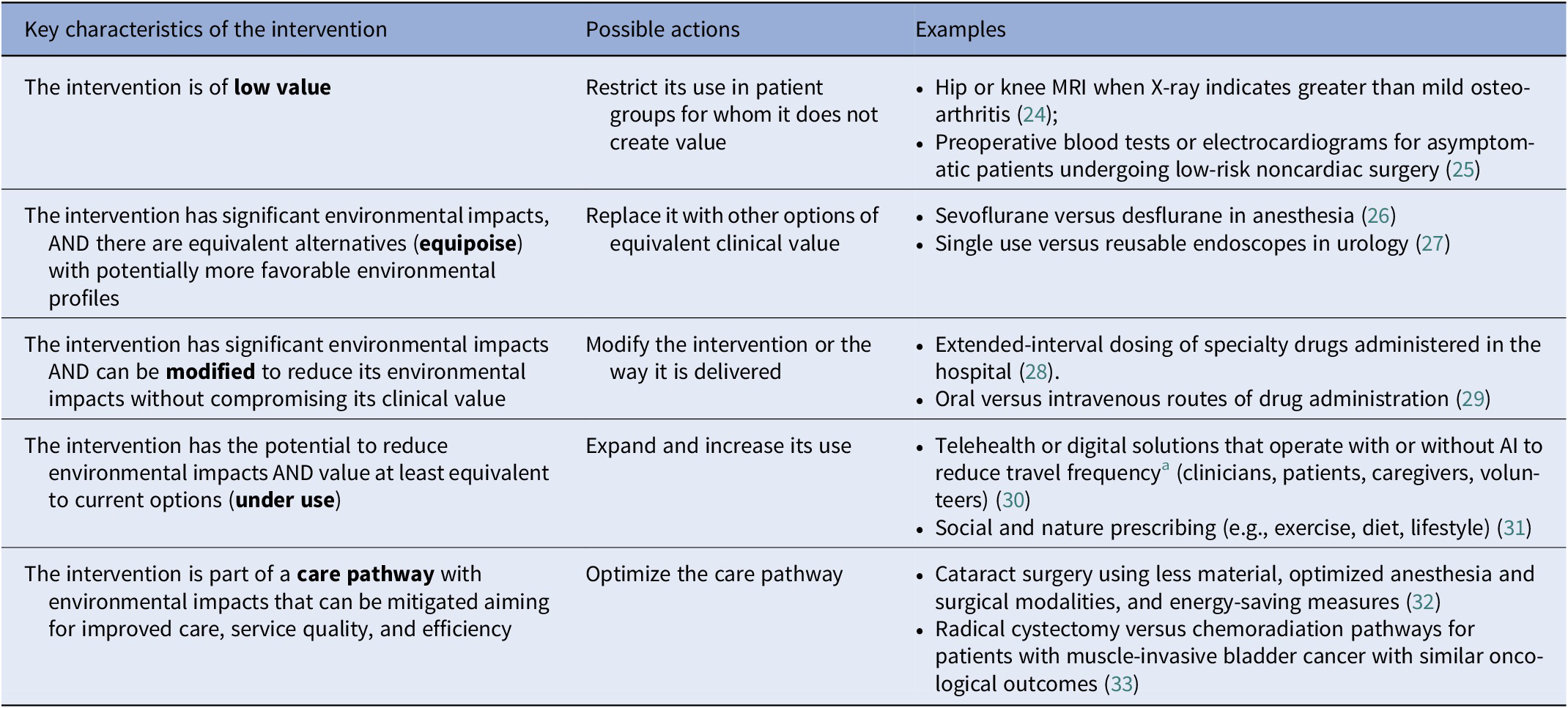
Table 1 provides examples of interventions that could be prioritized, including digital solutions, a topic of growing interest in environmental impact assessment since their use may reduce unnecessary patient travels (Reference Rivard, Lehoux, de Oliveira and Alami34;Reference Lehoux, Rivard and de Oliveira35). Screening criteria for priority-setting will be refined by examining Quebec clinical and administrative databases (e.g., volume of use, costs) and through consultations with health and social care managers and clinicians. Though INESSS strategy is not limited to interventions where co-benefits are likely to be observed, starting with them offers a clearer path insofar as they simplify decision-making while generating concrete gains. For instance, for almost two-thirds of the Canadian health professionals (n = 100) surveyed by Barber, Rainham (Reference Barber, Rainham and Tyedmers36), “prioritizing environmentally sustainable healthcare would have a neutral effect on the quality of patient care.” A co-benefit approach thus temporarily avoids pitting health benefits against environmental gains or environmental gains against higher costs (Reference Rivard, Lehoux and Miller37).
Types of interventions that could be prioritized according to a co-benefit approach
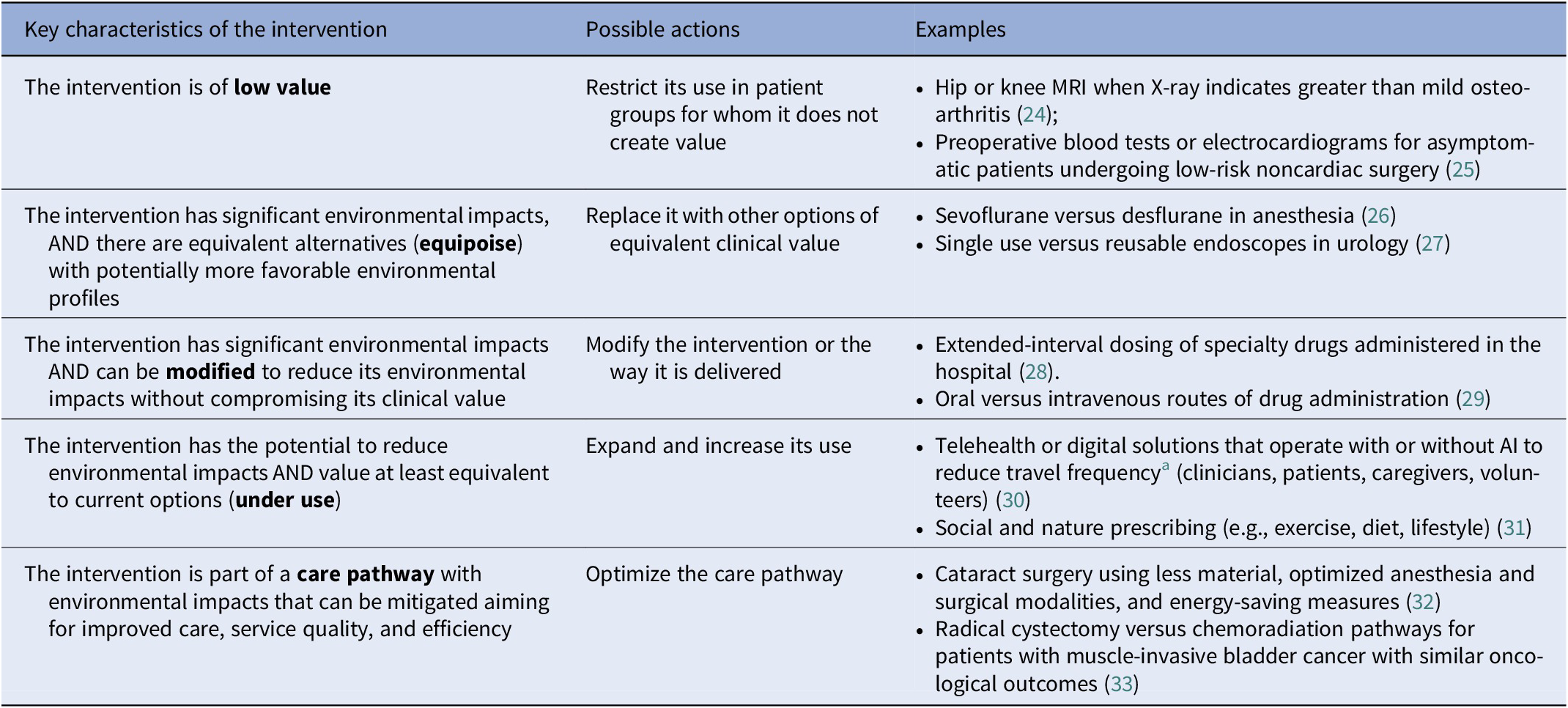
Table 1. Long description
The table is organized into three columns: Key characteristics of the intervention, Possible actions, and Examples.
* Row 1: Characteristics: The intervention is of low value. Action: Restrict its use in patient groups for whom it does not create value. Examples: Hip or knee M R I when X-ray indicates greater than mild osteoarthritis; preoperative blood tests or electrocardiograms for asymptomatic patients undergoing low-risk noncardiac surgery.
* Row 2: Characteristics: The intervention has significant environmental impacts, AND there are equivalent alternatives (equipoise) with potentially more favorable environmental profiles. Action: Replace it with other options of equivalent clinical value. Examples: Sevoflurane versus desflurane in anesthesia; single use versus reusable endoscopes in urology.
* Row 3: Characteristics: The intervention has significant environmental impacts AND can be modified to reduce its environmental impacts without compromising its clinical value. Action: Modify the intervention or the way it is delivered. Examples: Extended-interval dosing of specialty drugs administered in the hospital; oral versus intravenous routes of drug administration.
* Row 4: Characteristics: The intervention has the potential to reduce environmental impacts AND value at least equivalent to current options (under use). Action: Expand and increase its use. Examples: Telehealth or digital solutions that operate with or without A I to reduce travel frequency; social and nature prescribing such as exercise, diet, and lifestyle.
* Row 5: Characteristics: The intervention is part of a care pathway with environmental impacts that can be mitigated aiming for improved care, service quality, and efficiency. Action: Optimize the care pathway. Examples: Cataract surgery using less material, optimized anesthesia and surgical modalities, and energy-saving measures; radical cystectomy versus chemoradiation pathways for patients with muscle-invasive bladder cancer with similar oncological outcomes.
a Note: One must remain vigilant, as the environmental footprint of digital technology tends to grow rapidly (e.g., energy required to train AIs, cooling of computational infrastructures, programmed obsolescence of devices) (Reference Rivard, Lehoux, de Oliveira and Alami34).
Along with an ability to prioritize the right interventions, there is a need to define those for which the effort of evaluating environmental impacts would yield little benefit, thus representing an inefficient use of HTA resources. This could include, for instance, interventions where a very marginal environmental gain could be observed between two products or more, or where the environmental harm would be offset by a substantial clinical gain when no alternatives exist (Reference Holtorf, Pegg, Mueller and McMeekin3). Though such assessments could be informative, their results could contribute to greenwashing if they support choosing the least environmentally harmful product within a range of highly deleterious products or they could reinforce a sense of powerlessness or guilt when having to choose between human health or planetary health (Reference Rivard, Lehoux and Miller37).
Knowing what environmental considerations to integrate
The second objective of the strategy is to properly define and operationalize the environmental considerations that should be part of HTAs. This requires being sufficiently precise about the breadth and depth of the impacts that scientific teams should look for and are likely to find in the literature. By breadth, we mean the different categories of environmental impacts typically examined in environmental sciences (e.g., GHG emissions, acidification, ecotoxicity, resource depletion). Depth refers to the level of analysis desired in an HTA report (e.g., shall the entire causal chain be analyzed, from the wastewater residue of a gadolinium-containing contrast agent to its teratogenic effects on freshwater species, and ultimately to its impact on biodiversity?).
To increase the proficiency of INESSS’ scientific teams, the BMDE developed the following tools:
-
1) a glossary of key terms used in environmental sciences related to environmental impacts and to environmental impact assessment methods;
-
2) a series of fact sheets describing key environmental considerations associated with broad categories of interventions (e.g., drugs, surgical procedures, digital health); and
-
3) an introduction to the quantitative and qualitative methods proposed in HTA to integrate environmental considerations.
The glossary aims to equip scientific teams with the appropriate scientific vocabulary and a concise understanding of methodological terminology (e.g., lifecycle analysis, cradle-to-cradle, circular economy). The fact sheets offer a structured starting point when scientific teams assess an intervention falling into one of the categories. The introductory methodological tool enables scientists to describe qualitatively (narratively) the main impacts summarized in the literature and synthesize quantitative measures of these impacts where available (the carbon footprint is usually measured in CO2 equivalent emissions, but many other metrics are also being used).
These tools are used in conjunction to gradually consolidate the skills of INESSS’ scientific teams. Its 2024–2028 Strategic Plan includes an indicator on the integration of environmental aspects into its knowledge products, as well as an indicator related to a 3-year training plan designed to build internal capabilities across three levels of proficiency (from beginners to advanced) (38). It is also worth noting that, in addition to ethical considerations, environmental considerations were recently included as a transversal component in INESSS’ multidimensional global value appraisal framework (Reference Plamondon39), which is structured around five value domains: clinical, populational, organizational, economic, and sociocultural. By positioning environmental considerations as cutting across all five value dimensions, the intent is to support a lifecycle understanding of environmental sustainability and provide the latitude required to integrate environmental considerations within the value dimension(s) more directly affected.
For example, including in a clinical guideline a drug’s pharmacokinetic effects on human health that are observed during heatwaves (e.g., thermoregulation and other physiological imbalances) aligns with safety (clinical dimension) (Reference Bélanger, Bustinza and Gosselin40). The positive or negative impact of an intervention’s environmental footprint could be translated into costs or savings, and such estimates could be included in a cost-effectiveness analysis (economic dimension) (Reference Williams, Moraga Masson and McGain41). Likewise, end-of-life management of single-use products could affect population health (e.g., air pollution due to incineration would be addressed within the population dimension), telehealth services could reduce the carbon footprint of a clinical care pathway (e.g., estimates of patient travel would be included in the organizational dimension), and public perceptions could affect a transition to reusable surgical equipment (e.g., preferences and perceived risks would be addressed within the sociocultural dimension) (Reference Robinson, Surendran, Lim and Robinson42). Lastly, ethical tensions that arise around environmental sustainability could also be further explored (e.g., intergenerational equity).
Overall, the strategy aims to harmonize terminology while using INESSS’ global value appraisal framework in a way that remains holistic and consistent with a lifecycle analysis perspective (Reference Eckelman, Sherman and MacNeill17).
Knowing how to integrate environmental considerations and improve over time
Focusing on the “how” question, an international survey of 26 HTA agencies underscored that those working on the integration of environmental sustainability (n = 9; 35 percent) faced five key methodological obstacles: (a) scarce availability of data or difficulty in tracing data back to a specific technology (average score of importance: 9.0/10); (b) labor intensive and time-consuming environmental data collection (8.3); (c) unfamiliarity with the approaches available (8.1); (d) absence of scientific consensus on the most appropriate integrative approach to capture environmental impacts of a technology (8.0); and (e) lack of awareness about the relevance of including environmental sustainability into HTA (7.1) (Reference Bobini and Cicchetti8).
Such methodological obstacles are unlikely to be resolved in a short time. This is one of the reasons why a tactical group bringing together INESSS’ scientists working on HTA projects that incorporate environmental considerations and methodology experts of the BMDE is part of the strategy (see Figure 1). Frequent feedback loops will support learning-by-doing and strengthen capacity over time. Lessons learned from one project to the next will be consolidated by sharing practical tips regarding key project steps, including framing the evaluation questions, conducting literature searches, consulting experts, extracting data, interpreting results, and communicating findings.
INESSS’ strategy hence recognises that there is no “one-size-fits-all” approach. The triangulation of the scientific literature with organizational, clinical, and experiential knowledge will remain central (43). The environmental sciences literature is getting more abundant, more mature, and is developing measures going beyond the carbon footprint. However, more abundant literature does not automatically mean that robust data or data that is easy to synthesize are always available (Reference Eckelman, Weisz and Pichler44). The choices researchers make vary (e.g., the perimeter of a lifecycle analysis), and the data sources available in different countries also vary (Reference Nicolet, Mueller and Paruta45). The results to be found in the literature may not only be of variable quality but may also exhibit significant variations both within and between different jurisdictions (Reference Holtorf, Pegg, Mueller and McMeekin3). Criteria and tools to assess the quality of the studies and the transferability of their results are not fully validated (Reference Goetghebeur M, Yi and Perleth5).
Another key aspect of the “how” refers to the environmental content and ways to communicate it effectively to decision-makers and clinicians (Reference Levinson and Silverstein22;Reference Luo, Razvi and Kaur46). Depending on the topic and the available data, it is possible to (a) qualitatively summarize environmental considerations; (b) present quantitative analyses of the environmental footprint; and (c) formulate implementation strategies that may reduce environmental impacts. In any case, thinking through how the environmental content being shared by INESSS can inform a decision or guide an action matters, and gathering feedback from HTA users will prove essential (Reference Huynh, Bonan and Pineau47).
One can distinguish “informative” from “actionable” content. Informative content using specialized language (e.g., CO2e) may or may not be understandable, depending on the reader’s level of familiarity. It may become more intuitive if the metrics are made more concrete (e.g., translating a quantity of CO2e into a more familiar unit with the same footprint, such as a transatlantic flight). For audiences with little or no knowledge of environmental impacts, it may be necessary to counter common misconceptions, e.g., “that climate-resilient and low-carbon measures are cost prohibitive” (Reference Barber, Rainham and Tyedmers36). Actionable content targets elements that users can act on or that are under their responsibility. For instance, content is actionable insofar as it informs a clinician of (a) the choices that can be made to reduce the carbon footprint (e.g., substituting one drug formulation for another) and (b) the effect this choice could have (e.g., a 30 percent reduction in GHG emissions compared with the alternative formulation) (48). The key point here is that informative content may be useful in raising awareness and eventually inspiring further action, whereas actionable content is more likely to orient clinical day-to-day action (Reference Huynh, Bonan and Pineau47).
A scoping review summarized what is known about the effectiveness of communication strategies aiming to encourage policymakers to act at the interface of health and climate change (Reference Ettinger, Fine and Thier49). Interestingly, the number of studies retrieved (n = 139) indicates an 8.5-fold increase between 2000 and 2023. The most frequent recommendations included: tailoring messaging strategies to target audiences (35 percent); sharing data and evidence, especially economic data (28 percent); making research understandable and concise (16 percent); and understanding how policy making works (16 percent). At the clinical level, communication should seek to reduce potential feelings of powerlessness or information fatigue, which may have counter-productive effects (Reference Levinson and Silverstein22).
Overall, until the methodological obstacles documented in the HTA field get resolved, INESSS’ strategy is pragmatic: its “how” ability will be improved gradually through learning-by-doing and by gathering users’ feedback.
Discussion
A paradoxical tension is at play between the growing contribution of the health care sector to climate change and the raising health and social care needs that result from climate change (Reference Romanello, Walawender and Hsu50). The chronic exposure to climate change-related health stressors as well as the acute exposure to extreme weather events affect physical and mental health (Reference Romanello, Walawender and Hsu50). The literature also underscores the disproportionate impacts of climate change on marginalized groups and calls for climate justice (Reference Dominelli51).
In view of the mounting scientific evidence (Reference Moutet, Bernard and Green52), INAHTA’s white paper encouraged HTA agencies to advance environmental sustainability through HTA (Reference Goetghebeur M, Yi and Perleth5). The above-mentioned survey of 26 HTA agencies indicates that, while 69 percent of them were in favor of incorporating environmental sustainability into HTA, only 23 percent had formally included this objective in their strategic plan, and 35 percent had begun work in this area (Reference Bobini and Cicchetti8). We thus hope that the objectives and tools we described may inspire other HTA agencies.
Before we outline the lessons learned at INESSS, two types of limitations should be underscored: (a) those associated with the methods used to develop the strategy, including the consultation process; and (b) those associated with the strategy itself. On the one hand, the draft strategy (the 10-page document) did not aim for comprehensiveness and may have missed key evidence; the step-by-step consultation process may have introduced a confirmation bias, and the four stakeholder groups may not have been sufficiently diverse (e.g., patients, caregivers, and citizens already knew INESSS). On the other hand, strategic work is inherently risky: it implies making a set of choices in a context of uncertainty, and no matter the quality of the evidence used, future success is unpredictable (Reference Martin and Review7). Although the strategy offers a roadmap, INESSS faces sizeable challenges, including a steep learning curve for its scientific and management staff and the need to set priorities. More fundamentally, the full integration of environmental considerations alongside other value dimensions into HTA recommendations will require scientific consensus on methods as well as social consensus on the tradeoffs that could be considered legitimate.
Practical implications
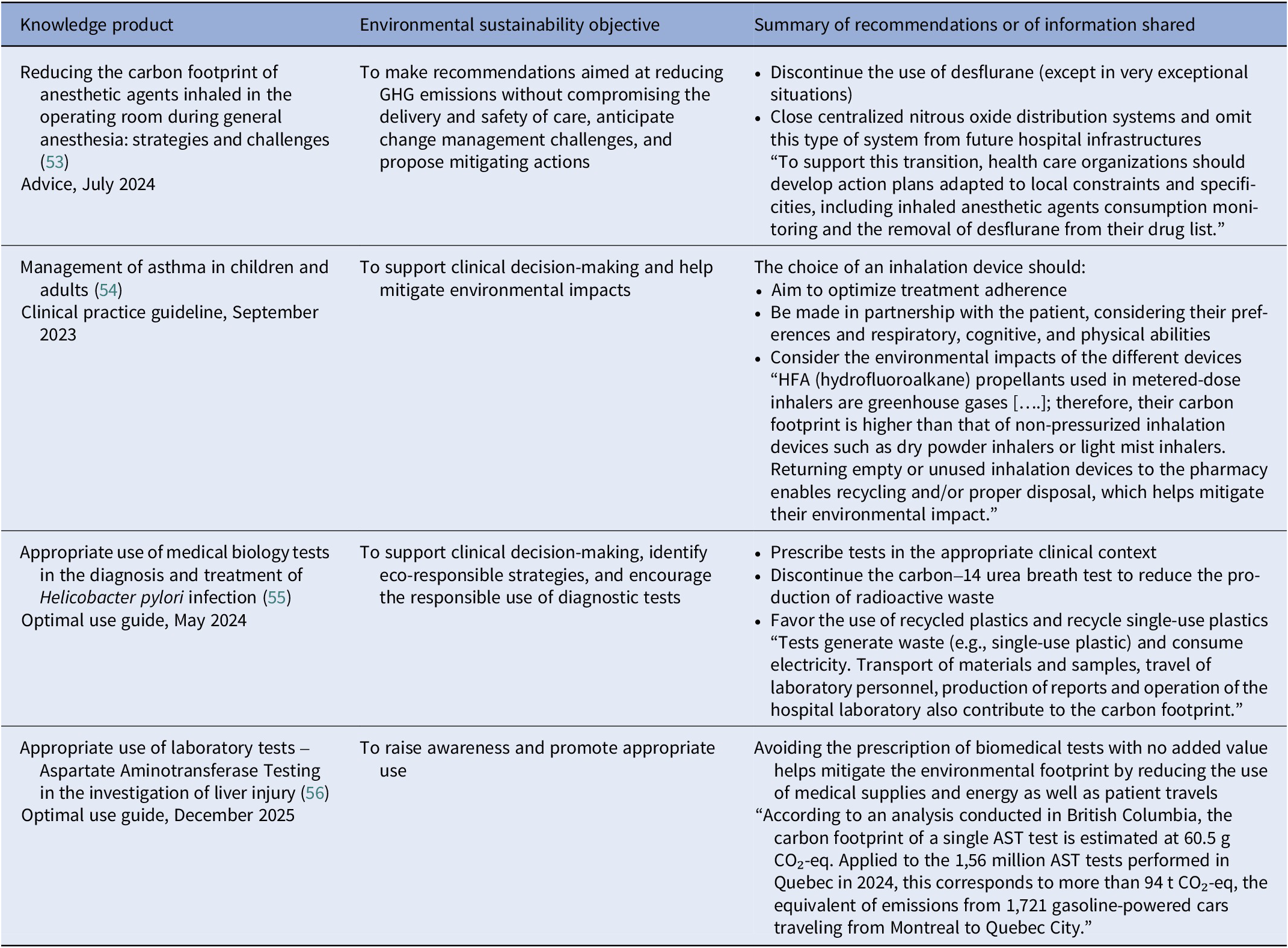
Making visible an HTA agency’s commitment towards environmental sustainability in a strategic plan represents a sound first step (Reference Parker and Miller6). Setting in INESSS’ 2024–2028 Strategic Plan an annual target that increases incrementally and is reviewed periodically by the management team helps keep the organization moving in the right direction. Table 2 summarizes examples of the knowledge products published so far.
Examples of INESSS reports that have integrated environmental considerations
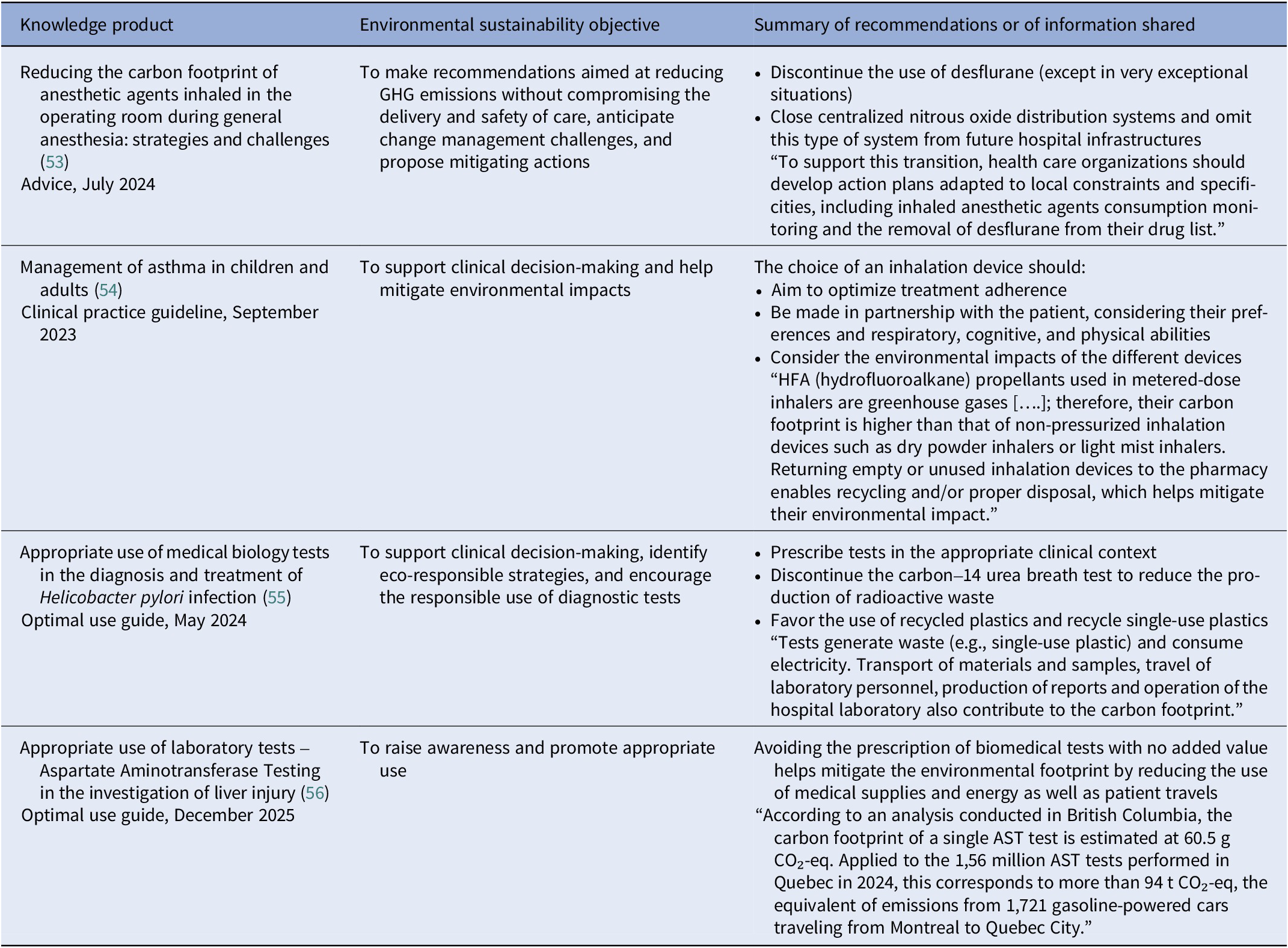
Table 2. Long description
The table consists of three columns and four rows of data.
Row 1:
- Knowledge product: Reducing the carbon footprint of anesthetic agents inhaled in the operating room during general anesthesia: strategies and challenges, Advice, July 2024.
- Environmental sustainability objective: To make recommendations aimed at reducing G H G emissions without compromising care safety, anticipate change management, and propose mitigating actions.
- Summary: Recommends discontinuing desflurane use and closing centralized nitrous oxide distribution systems. Suggests health care organizations develop action plans for monitoring consumption.
Row 2:
- Knowledge product: Management of asthma in children and adults, Clinical practice guideline, September 2023.
- Environmental sustainability objective: To support clinical decision-making and help mitigate environmental impacts.
- Summary: Device choice should optimize adherence, be made in partnership with patients, and consider environmental impacts. Notes that H F A propellants in metered-dose inhalers are greenhouse gases with a higher footprint than dry powder or light mist inhalers. Encourages returning devices to pharmacies for recycling.
Row 3:
- Knowledge product: Appropriate use of medical biology tests in the diagnosis and treatment of Helicobacter pylori infection, Optimal use guide, May 2024.
- Environmental sustainability objective: To support clinical decision-making, identify eco-responsible strategies, and encourage responsible use of diagnostic tests.
- Summary: Prescribe tests in appropriate contexts, discontinue carbon-14 urea breath tests to reduce radioactive waste, and favor recycled plastics. Notes that tests generate waste and consume electricity.
Row 4:
- Knowledge product: Appropriate use of laboratory tests - Aspartate Aminotransferase Testing in the investigation of liver injury, Optimal use guide, December 2025.
- Environmental sustainability objective: To raise awareness and promote appropriate use.
- Summary: Avoiding tests with no added value reduces medical supplies, energy, and patient travel. Estimates the carbon footprint of one A S T test at 60.5 g C O sub 2-eq. Applied to 1.56 million tests in Quebec, this equals 94 t C O sub 2-eq, or 1,721 gasoline cars traveling from Montreal to Quebec City.
Yet positioning an HTA agency as a credible and influential contributor to advancing environmental sustainability requires effective change management for management and scientific teams, deliberative committees, and HTA users. High-level buy-in can foster a supportive organizational culture and behavior (Reference Martin and Review7). A realistic anticipation of the time and efforts needed to transform operations towards attainable objectives is key to mitigate the risk of overload. For instance, INESSS currently employs around 280 employees with diverse backgrounds. While all employees will receive introductory-level training on environmental considerations, a smaller number of scientists are expected to become proficient.
A strategy unfolds through factors that are not under the control of an organization and calls for strategic management capabilities (Reference Cory57). An HTA agency should explore which organizations play a role in environmental sustainability in its jurisdiction to identify potential synergies. For instance, collaborations with various experts (e.g., toxicology, public health, carbon neutrality, green clinical champions) could help build capacity and identify data sources and metrics appropriate for HTAs (Reference Qin, Muskat, Ambrosini, Mair and Chih58). Prioritizing topics that respond to real-world informational needs is also key. Many professional groups (in medicine, pharmacy, respiratory therapy, nursing, etc.) are advocating for carbon neutrality. For example, a qualitative study with physicians (n = 19) recruited through the Canadian Association of Physicians for the Environment provided examples of physicians’ involvement in environmental sustainability activities. Beyond the reduction of unnecessary care (e.g., following Choosing Wisely guidelines), activities that may converge with an HTA agency’s knowledge products include: reducing the need for health care services (e.g., interventions that reduce postoperative surgical site infections); reducing health care waste (e.g., ways to reduce or replace single-use care items); informing patients (e.g., documenting the benefits of low-carbon interventions); and changing organizational policy, practice, and culture (e.g., environmentally preferable purchasing) (Reference Luo, Razvi and Kaur46).
HTA agencies may further clarify the key role they intend to play within their own health system and in relation to what other groups are currently doing. Roles for HTA may include (a) information sharing and awareness-raising (akin to the “information conduit” described by Toolan, Walpole (Reference Toolan, Walpole and Shah59)); (b) guiding and empowering clinicians in their choices; and (c) making recommendations to reduce an intervention’s environmental impacts. Moving towards carbon neutrality calls for system-wide change supported by multiple groups, strategies, and levers. A scoping review identified three forms of complementary leadership that are needed to drive environmentally sustainable health care: collaboration, education, and advocacy (Reference Phillips, Patrick and Kayak60). Though HTA agencies may prefer to refrain from advocacy activities to preserve their neutrality, they possess the expertise and skills needed to facilitate collaboration and inform evidence- and value-based decision-making.
Conclusion
Overall, INESSS strategy relies on a step-by-step approach adapted to the novelty and complexity of integrating environmental considerations into HTA. Its strategy is sensitive to the uncertainty that these considerations may create among scientists, deliberative committees, and stakeholders. It is designed to enable the organization to move forward while allowing the time needed to consolidate internal capacities and expose HTA stakeholders more regularly to these emerging issues. Navigating through novelty and uncertainty calls for scientific humility and well-calibrated ambitions, recognizing that INESSS will be in a learning and continuous improvement process for the years to come. Collaboration with other HTA agencies is essential to collectively adapt the methods and tools to the complexity of real-world HTAs, and to do so without incurring undue criticism, as HTA efforts must contribute to and not undermine a transition towards carbon neutral health and social care systems.
Acknowledgments
The authors would like to thank colleagues at INESSS who provided helpful criticisms throughout the strategy development process and who contributed to reports that have integrated environmental considerations: Milaine Alarie, Frédérique Baril, Anne Bergeron, Marie-Claude Breton, Clémentine Brun, Caroline Cambourieu, Aurélie Corduan, Sarah-Maude Deschênes, Olivier Demers-Payette, Andrée Fortin, Véronique Gagné, Kevin Gonthier, Nathalie Jobin, Christian Kouakou, Corélia Kostovic, Ann Lévesque, Renaud Lussier, Alexandre Martens, Mario Méthot, Catherine Olivier, Véronique Provost, Geneviève Robitaille, Hubert Robitaille, Amélie Rousseau, Éric Shink, Mélanie Tartif, Caroline Tétreault, Françoise Thomas, Eric Tremblay and Émilie Viel.
We are also grateful to the many individuals who contributed to the consultation process as patients and citizens participating in INESSS’ committees, as members of the Board of Directors and of the Scientific Council, as well as representatives of the following organizations:
-
• Canadian Drugs Agency – L’agence des médicaments du Canada (CDA-AMC)
-
• CASCADES and the Pan-Canadian Network on Health System Response to Climate Change
-
• Community of Practice of the Eco-councils of Physicians, Dentists, Pharmacists, and Midwifes (Communauté de Pratique des Éco-CMDPSF)
-
• Health Technology Assessment international – Environmental Sustainability in Health Technology Assessment (ESHTA) Working Group
-
• Institut national de santé publique du Québec (INSPQ)
-
• International Network of Agencies for Health Technology Assessment (INAHTA) – Environmental Sustainability in Health Technology Assessment Working group
-
• International science and methods exchange group
-
• Ministère de l’Environnement, de la Lutte contre les changements climatiques, et de la Faune et des Parcs du Québec – Centre d’expertise en analyse environnementale
-
• Ministère de la Santé et des Services sociaux du Québec
-
• Ouranos – Consortium sur la climatologie régionale et l’adaptation aux changements climatiques
-
• Santé Québec
The authors also thank the Deputy Editor, the Associate Editor, and two reviewers for their constructive comments.
Author contribution
All listed authors have contributed to the manuscript substantially and have agreed to the final submitted version.
Funding statement
No external funding sources supported the development of this paper.
Competing interests
The authors declare that they have no financial, professional, contractual, or personal relationship conflicts. The first author transitioned on August 1st, 2023, to INESSS as Vice-President of Scientific Affairs while keeping her appointment at the Université de Montréal as full professor 20 percent of her time.

 Open access

