


Introduction
Improving racial and cultural equality in treatment outcomes is a key healthcare focus (Department of Health, 2005), and a main principle of the Health and Social Care Act (UK Public General Acts, 2012) and the NHS Constitution (Department of Health, 2023). The authors are aware that this paper is presented in the context of a greater debate on the terminology used to discuss ethnicity in research as the language used can have consequences in real life (Kunorubwe, Reference Kunorubwe2023). For example, collective terms such as BAME and BME can be unhelpful as they can highlight some minorities while excluding others (Milner and Jumbe, Reference Milner and Jumbe2020; UK Government: Writing about ethnicity, 2024). The national Patient and Carer Race Equality Framework suggests using ‘ethnically and culturally diverse’ as it ‘refers to people with distinct cultural or ethnic identities, which can include diverse language groups and communities upholding specific cultural customs and spiritual beliefs’ (NHS England, 2024c; ‘A note on language’ section, para. 3). Therefore, the Talking Therapies service where this research was conducted adopted ‘culturally and ethnically diverse (CED)’ to describe non-White British (WB) clients. Recent data from NHS Talking Therapies for anxiety and depression (Baker and Kirk-Wade, Reference Baker and Kirk-Wade2024) demonstrated less favourable outcomes for CED clients compared with WB ones, with lower improvement (63.9% vs 67.5%) and recovery rates (46.8% vs 51%). The national positive practice guideline ‘Improving Access to Psychological Therapies (IAPT): Black, Asian and Minority Ethnic Service User Positive Practice Guide’ (Andrew et al., Reference Andrew, Saiqa, Michelle and Maja2019) highlighted the need for staff training on working within cultural and ethnic diversity. It proposed that in services where staff do not reflect the ethnic make-up of the community they serve, practitioners must be supported in delivering culturally responsive therapy (CRT). This involves recognising, valuing, and working within diversity by utilising personal skills and the support of colleagues and supervisors. Research reviewing the existing frameworks for culturally adapted therapy highlights these as key factors in successfully adapting therapy (Naeem et al., Reference Naeem, Sajid, Naz and Phiri2023). Consequently, this could enable practitioners to successfully adapt evidence-based therapies to fit with each client’s culture. This is crucial, as service users’ perceptions of therapists’ skills in working flexibly and competently across cultures positively affect treatment outcomes (Soto et al., Reference Soto, Smith, Griner, Rodríguez and Bernal2019). For example, confidently discussing clients’ ethnicity can improve engagement (Beck, Reference Beck2016). However, practitioners often hesitate to ask such questions due to concerns about appearing racist or culturally insensitive (Dogra et al., Reference Dogra, Vostanis, Abuateya and Jewson2007).
Several studies and systematic reviews reported cultural competence training leading to improvements in healthcare providers’ knowledge, skills, attitudes, and confidence in working across cultures (Beach et al., Reference Beach, Price, Gary, Robinson, Gozu, Palacio, Smarth, Jenckes, Feuerstein, Bass, Powe and Cooper2005; Paez et al., Reference Paez, Allen, Beach, Carson and Cooper2009). It was also shown to enhance patient perceptions of practitioners’ cultural competence (Vella et al., Reference Vella, White and Livingston2022) and patient satisfaction (Govere and Govere, Reference Govere and Govere2016; Lie et al., Reference Lie, Lee-Rey, Gomez, Bereknyei and Braddock2011). However, these studies focused on physicians and nurses rather than CBT practitioners. One pilot project delivering cultural competency training to CBT therapists in the UK showed improved self-reported cultural competence (Kunorubwe and Switzer, Reference Kunorubwe and Switzer2025). Peer-reviewed research is needed to further establish the impact of such training in a CBT context. Moreover, due to variations in the theoretical models underpinning training, direct evidence linking training to improved recovery data is lacking (Betancourt and Green, Reference Betancourt and Green2010; Vella et al., Reference Vella, White and Livingston2022).
Nonetheless, various theoretical frameworks have been proposed to help identify and evaluate training needs to facilitate service improvement. The framework underpinning this project is the COM-B model of behaviour by Michie et al. (Reference Michie, van Stralen and West2011), which has been used in research in NHS settings (e.g. Barker et al., Reference Barker, Atkins and de Lusignan2016; Lau-Zhu et al., Reference Lau-Zhu, Anderson and Lister2022). The model was created by reviewing 19 existing behavioural change frameworks to develop a comprehensive one that incorporates the common elements while improving the inconsistencies. It posits that for a behaviour to happen, people require capability, opportunity, and motivation. Capability encapsulates knowledge and skill. Opportunity describes the physical and social opportunities that encourage or make a behaviour possible. Motivation captures the brain processes prompting and directing behaviours, including conscious analytical decision making and habitual-emotional processes. The COM-B model was selected because it provides a robust way of understanding the conditions needed for behaviour change from both personal and system perspectives. Therefore, it is suitable for projects aiming to understand and address barriers to delivering desired clinical practice, as it enables targeted exploration and recommendations based on where specific gaps and needs are identified.
Service context
In England, Talking Therapies for Anxiety and Depression (formerly Improving Access to Psychological Therapies) is a national programme within the National Health Service (NHS) aimed at providing timely, evidence-based psychological support for people experiencing depression and anxiety disorders. It was established in 2008 with the aim of improving access to psychological therapies for the general public. Having met this aim, it was renamed ‘NHS Talking Therapies for Anxiety and Depression’ and commissioning shifted to focusing on recovery rates (Future NHS, 2023). The service offers a stepped-care approach, tailoring treatment intensity to the severity of the individual’s condition. Low-intensity interventions include guided self-help and psychoeducational approaches, while high-intensity intervention involve individual therapy approaches such as cognitive behavioural therapy, interpersonal psychotherapy, and dynamic interpersonal therapy.
The current national reliable recovery target is 48%, and is set to increase to 53% by 2028–2029 (NHS England, 2024b; NHS England, 2025). Improvement and recovery are determined using the depression and anxiety measures utilised in Talking Therapies across all therapeutic modalities [e.g. Patient Health Questionnaire-9 (PHQ-9; Kroenke et al., Reference Kroenke, Spitzer and Williams2001) and General Anxiety Disorder-7 (GAD-7; Spitzer et al., Reference Spitzer, Kroenke, Williams and Löwe2006)] based on clinical cut-off scores and reliable change indices in the NHS Talking Therapies Manual (NHS England, 2024a). The manual defines the meaning of reliable improvement, recovery, and reliable recovery. Clients are considered reliably improved if their scores on the depression and/or relevant anxiety measure have reduced by a reliable amount and neither measure has shown a reliable increase Clients who are classified as a ‘clinical case’ at the start of treatment, based on scores above the clinical threshold on measures of depression or relevant anxiety, are considered to have recovered if, at the end of treatment, they are no longer classified as a clinical case. This is defined by their scores falling below the clinical threshold on the relevant measure at the end of treatment. Reliable recovery is defined as meeting the criteria for both recovery and reliable improvement. National target aim is to achieve comparable recovery rates for WB and CED clients, i.e. those from a non-WB background (NHS England, 2024b). In the Talking Therapies service of interest the 2023–2024 reliable recovery rate was 44% for WB and 43% for CED, which was flagged as a clinically significant difference by the service (Berkshire Talking Therapies, 2024). The service’s CED workstream’s target was to increase recovery rates for CED clients. As one of the first steps, they aimed to enable and empower staff to deliver CRT by developing a previously not offered, relevant and informative staff training as a key step. This project informed the development of this training.
Aims and research questions
This project, utilising a practice-oriented, co-produced methodology, aimed to produce recommendations for a novel staff training and disseminate these in a way that supports their implementation. The research questions were: (1) do recovery rates differ significantly between CED and WB clients in 2024–2025?; (2) what factors might be contributing to the recovery rates within the CED population?; and (3) what are staff views on their capability, opportunity, and motivation regarding CRT, and what additional training do they want?
Method
Design
The project was a primarily quantitative design supplemented by qualitative insight through a survey that enabled addressing the research questions from complementary angles. First, routinely collected data were audited. A chi-squared test of independence examined whether recovery rates differed significantly between CED and WB clients. A logistic regression investigated what factors contributed to the recovery rates within the CED population. Second, a staff survey incorporating Likert-scale and open-ended questions analysed with content analysis (Berelson, Reference Berelson1952) explored the third research question about staff views on capability, opportunity, motivation, and training needs. Together, the quantitative audit provided a basis for understanding the unequal recovery between CED and WB clients, while the survey data explored staff needs to address this problem.
Step 1: Quantitative audit of routinely collected data
Part 1: Comparing recovery rates of WB and CED clients
Participants. Clients discharged in the financial year of 2024–2025 who attended at least two sessions (necessary for calculating recovery outcomes) were included (9560 clients); 255 clients whose ethnicity was not stated or recorded were excluded, resulting in 6203 WB and 3102 CED clients.
Procedure and design. The researchers aimed to establish the extent of the difference in recovery rates between CED and WB clients. While clinical experience within the service suggested an existing disparity, this was not yet verified empirically. Quantifying this disparity provided an evidence based rationale for the service improvement project.
To compare WB and CED recovery rates, routinely collected anonymised data were included. A chi-squared test of independence was conducted with reliable recovery status (recovered vs not recovered) as the dependent variable and ethnicity as the independent variable (WB vs CED).
Part 2: Exploring factors affecting recovery rates
Participants. Additional clients were excluded if the problem descriptor or intensity level of care were not recorded, 15 and 748 clients, respectively. This resulted in 5729 WB and 2813 CED clients.
Procedure and design. To explore what factors could affect recovery rates, routinely collected data were further examined. A binary logistic regression was conducted to identify which clinical and demographic factors significantly predicted reliable recovery with reliable recovery status as the dependent variable (recovered vs not recovered). The identified significant predictors highlighted areas that could specifically be targeted in the staff training to ensure that factors most likely to influence recovery outcomes are addressed. The independent variables included in the analysis were selected based on existing research demonstrating their potential influence on treatment outcomes in psychological therapy settings. Ethnicity was included as evidence suggests that cultural background can affect engagement with services and response to interventions (NHS Race and Health Observatory, 2023). The language of therapy and the presence of an interpreter were chosen because language barriers can affect the quality of communication between clinician and client, potentially influencing treatment effectiveness (NHS Race and Health Observatory, 2023). Last treatment type received (Step 2 or 3) was included as Step 2 had a higher reliable recovery mandate than Step 3 (58% vs 46%), suggesting that it could impact recovery rate. Number of clinical sessions was chosen due to previous research in IAPT indicating that increased sessions had a positive impact on treatment outcomes (Saunders et al., Reference Saunders, Cape, Leibowitz, Aguirre, Jena, Cirkovic, Wheatley, Main, Pilling and Buckman2020). Clinical presentation (e.g. depression) and symptom severity (measured by scores on the PHQ-9 and GAD-7 at the start of treatment) were included due to a meta-analysis showing that individuals presenting with depression compared with anxiety experienced greater improvement and that those with mild/moderate difficulties improved more compared with those with severe problems (Gaskell et al., Reference Gaskell, Simmonds-Buckley, Kellett, Stockton, Somerville, Rogerson and Delgadillo2023).
Step 2: Staff survey
Participants
All Step 2 and Step 3 practitioners were invited (324 staff members). Sixty per cent of invited practitioners identified as WB. Based on past surveys and staff ethnic backgrounds, a 12% response rate was predicted, with the ethnic breakdown of responders estimated to be approximately 24 WB and 16 CED.
Procedure and design
An anonymous online survey assessing the needs and preferences of staff was distributed. The anonymous nature of the survey encouraged participants to be truthful about gaps in their competencies without fear of judgement. Surveys are also a fast method of data collection, which suited the target population of busy practitioners with limited time (Goodfellow, Reference Goodfellow2023). The survey instructions presented the aim of the project and preliminary findings from the quantitative audit (see Appendix B in the Supplementary material).
The survey collected demographic data: role, ethnicity, years of working in Talking Therapies, and years of clinical practice. Ethnicity was categorised based on Census categories (Office for National Statistics, 2021) (Asian or Asian British/Black, Black British, Caribbean or African/mixed or multiple ethnic groups/White British/White other/other), differentiating between WB and White other to account for Talking Therapy’s definition of CED clients, which includes non-British White clients. This ensured that it could be verified whether the responders were representative of the service staff make-up while maintaining anonymity.
The survey development was guided by the COM-B model, healthcare survey guidelines (Burford et al., Reference Burford, Hesketh, Wakeling, Bagnall, Colthart, Illing, Kergon, Morrow, Spencer and van Zwanenberg2009), and adaptations from a previous study assessing staff perspectives on COM-B aspects (Hang et al., Reference Hang, Francis-Coad, Burro, Nobre and Hill2016). First, questions were created by the main researcher targeting the three aspects of the COM-B: capability, opportunity, and motivation (Michie et al., Reference Michie, van Stralen and West2011). These were validated and improved by collaborating with service managers and CED workstream staff members (Burford et al., Reference Burford, Hesketh, Wakeling, Bagnall, Colthart, Illing, Kergon, Morrow, Spencer and van Zwanenberg2009). The final survey included a quantitative element involving 12 questions rated on a scale (four questions for each COM-B aspect) and a qualitative element involving three open-ended questions about perceived barriers, training needs, and needs from the service (Appendix B, Supplementary material). The quantitative questions provided an overview of staff competencies and identified areas where staff consistently reported strengths and gaps. For these questions a 5-point Likert scale ranging from strongly disagree to strongly agree was chosen as it has been successfully utilised for similar aims (Hang et al., Reference Hang, Francis-Coad, Burro, Nobre and Hill2016) and it is the most widely used tool for assessing opinions and attitudes in psychological settings (Hartley, Reference Hartley2014). The open-ended questions enabled practitioners to expand on their experiences, describe perceived barriers to CRT, and suggest training content. This complemented the quantitative questions by enriching the data with staff views on what they felt inhibited and helped them in delivering high quality care to CED clients. Responses to the open-ended questions were analysed using content analysis (Berelson, Reference Berelson1952). Following the step-by-step instructions of Bengtsson (Reference Bengtsson2016), an inductive, manifest analysis approach was taken, which meant that analysis was done without previously setting categories and staying close to the text rather than interpreting meaning. This involved several steps. Firstly, the researcher familiarised herself with the data by reading it through several times and noting down initial reflections. Secondly, condensed meaning units were created for each response. Thirdly, these were collated into subcategories and lastly into categories, with the frequency of their occurrence counted to allow for inferring their significance.
Self-reflexivity is key in qualitative research in supporting researchers’ awareness of personal biases affecting analyses (Dodgson, Reference Dodgson2019). The primary researcher of the current study was an ethnically White Eastern European woman working as a high-intensity practitioner in the service, which likely introduced biases in the analysis. For example, she anticipated that staff would highlight lacking appropriate reflection spaces as this was something she also experienced. Moreover, based on personal experience and reading literature on the topic she expected that fear of offence will be identified as a barrier to CRT. She enhanced trustworthiness, transparency, and validity through regular meetings with the research supervisors and collaboratively validating created themes.
Dissemination of findings
This project aimed to create recommendations and disseminate these appropriately to aid their implementation. Recommendations for the Talking Therapies service’s staff training were based on audit and survey findings. The focus was on areas with the most ‘strongly disagree’ and ‘disagree’ responses and questions with equally distributed responses between the categories were addressed, as they indicated varying levels of capability, opportunity, and motivation. Addressing these was key to ensuring consistent and high-quality care for CED clients, regardless of the allocated practitioner. All recommendations were adopted and implemented by the service within 6 months.
The project was presented in the senior leadership team meeting and CED workstream meeting in Talking Therapy. Lastly, the clinical audit team wrote up a report, which was circulated widely in the Clinical Effectiveness Group in the Trust.
Results
Step 1: Qualitative audit
Part 1: Chi-squared test
A chi-squared test of independence explored the relation between ethnicity (WB vs CED) and reliable recovery. Forty-nine per cent of WB and 46.3% of CED clients reliably recovered. WB clients were significantly more likely to reliably recover than CED clients, χ2 (1, N = 9305) = 6.1, p = .013.
Part 2: Logistic regression
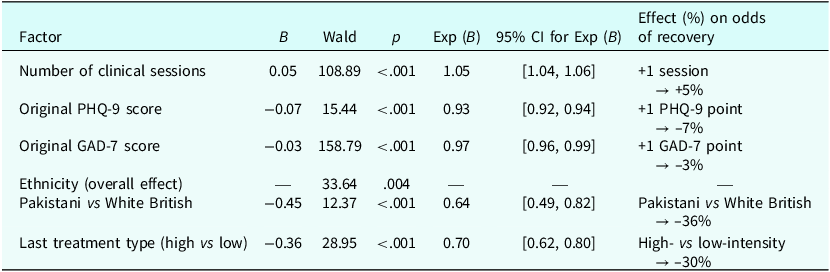
A logistic regression examined the effects of ethnicity, language of therapy, interpreter presence, last treatment type, number of clinical sessions attended, clinical presentation, and original PHQ-9 and GAD-7 scores on the likelihood of reliable recovery. The demographics of the sample of clients is presented in Appendix C (Supplementary material). The model included both WB and CED clients and was statistically significant, χ2 (8) = 22.47, p = .004. It explained between 8.8% (Cox & Snell R 2) and 11.7% (Nagelkerke R 2) of the variance in reliable recovery, indicating that the included predictors accounted for a modest yet meaningful proportion of variance in outcomes. The model correctly classified 62.41% of cases. As shown in Table 1, greater number of clinical sessions, lower baseline PHQ-9 and GAD-7 scores, and receiving low-intensity treatment significantly predicted reliable recovery. In contrast, ethnicity was also a significantly predictor, showing that Pakistani clients were significantly less likely to recover compared with WB clients. Although clinical presentation was significant overall (Wald = 157.17, p < .001), none of the individual categories was significantly associated with recovery. This suggests the overall effect may be driven by a few categories with small sample sizes, potentially inflating the test’s significance despite a lack of meaningful group-level differences.
Factors significantly associated with reliable recovery
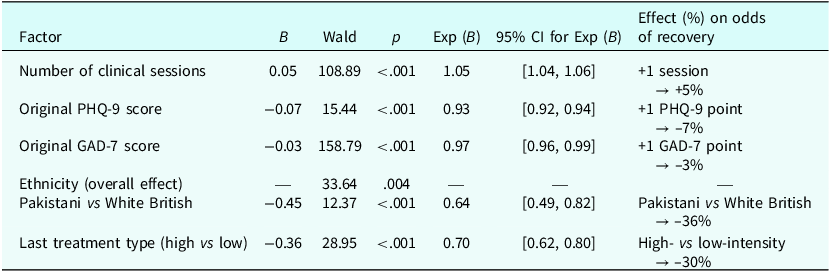
Table 1 Long description
A table titled ‘Factors significantly associated with reliable recovery’ with six rows and eight columns. The columns are labeled ‘Factor’, ‘B’, ‘Wald’, ‘p’, ‘Exp (B)’, ‘95% CI for Exp (B)’, and ‘Effect (%) on odds of recovery’. The rows list different factors and their associated statistical values. The factors include ‘Number of clinical sessions’, ‘Original PHQ-9 score’, ‘Original GAD-7 score’, ‘Ethnicity (overall effect)’, ‘Pakistani vs White British’, and ‘Last treatment type (high vs low)’. Each row provides specific values for ‘B’, ‘Wald’, ‘p’, ‘Exp (B)’, and ‘95% CI for Exp (B)’, along with the effect percentage on the odds of recovery. Notable trends include the positive effect of additional clinical sessions and the negative effect of higher PHQ-9 and GAD-7 scores on recovery odds. Ethnicity also shows a significant impact, with Pakistani clients less likely to recover compared to White British clients. The table highlights the importance of these factors in predicting reliable recovery.
Step 2: Results of the staff survey
The prediction of 12% response rate was correct as overall 37 staff members (11.42% of invited practitioners; 18 WB, 19 CED; 14 Step 2; 23 Step 3) filled out the survey. The number of years of Talking Therapies experience ranged from 0.7 to 14, with an average of 5.63. The number of years of clinical experience ranged from 2 to 24, with an average of 8.88. Detailed information regarding the role and length of experience of participants is presented in Appendix D (Supplementary material).
Questionnaire
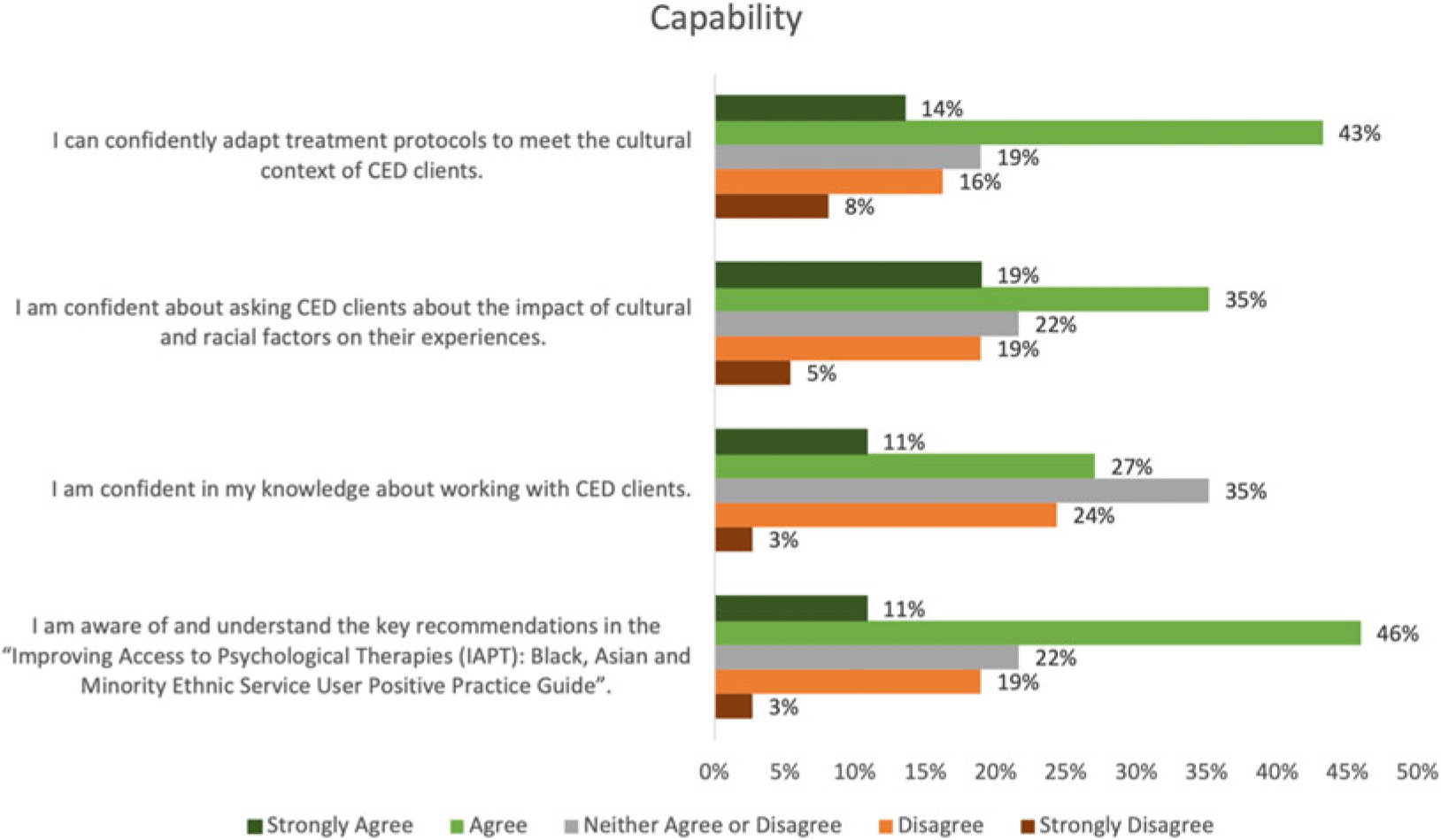
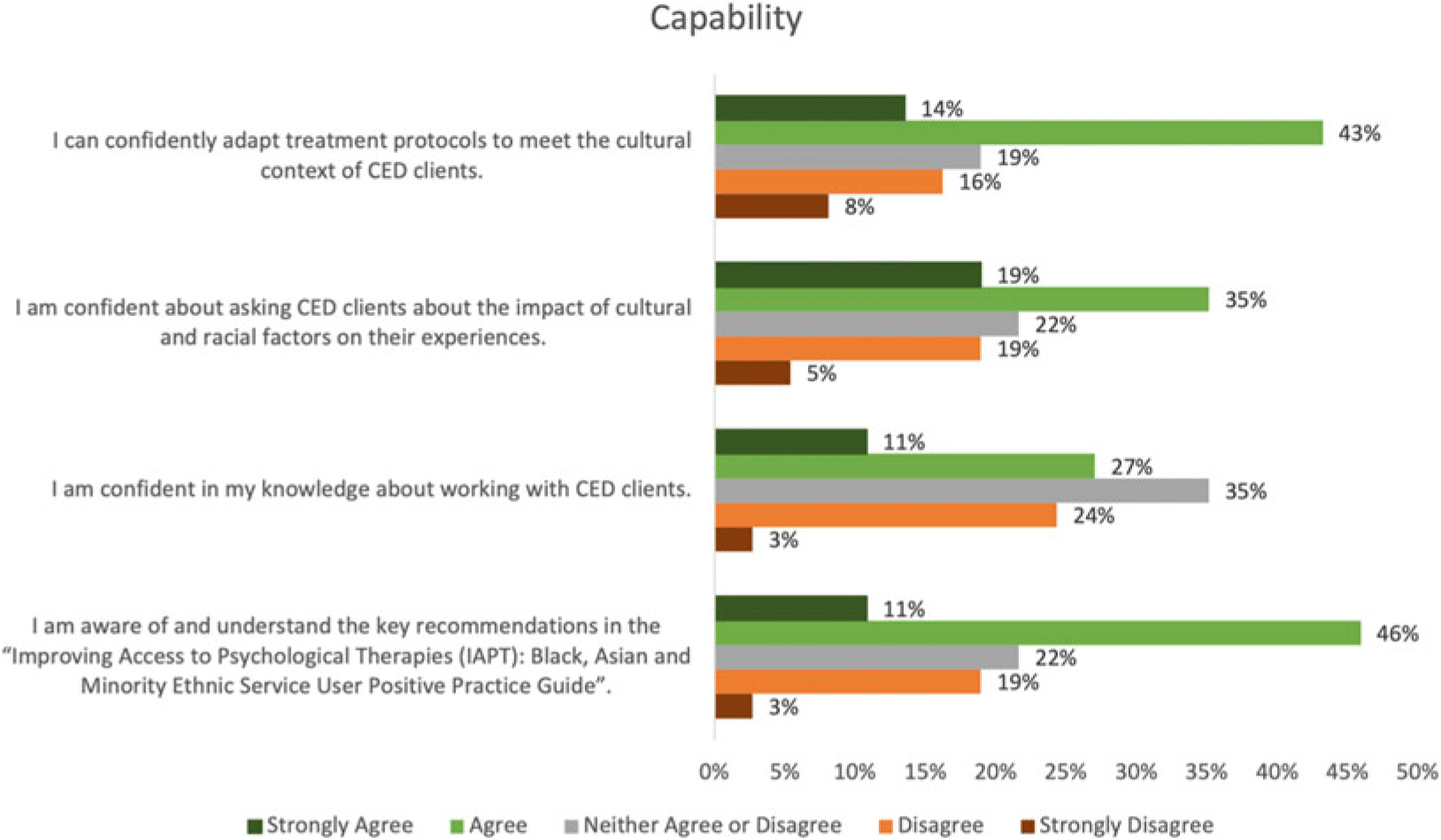
Capability ratings (Fig. 1) varied greatly, with approximately only half of respondents rating their capabilities highly. Approximately half of the respondents felt they could confidently adapt treatment protocols, felt confident asking clients about cultural and racial factors, and knew about and understood the service recommendation guideline. Confidence in knowledge about working with CED clients was even lower at 38%. Among those who did not rate their capabilities highly, responses were approximately evenly split between disagreeing and neither agreeing nor disagreeing. These results imply that a significant portion of staff were either uncertain or felt that they lacked these competencies.
Capability questions rating.
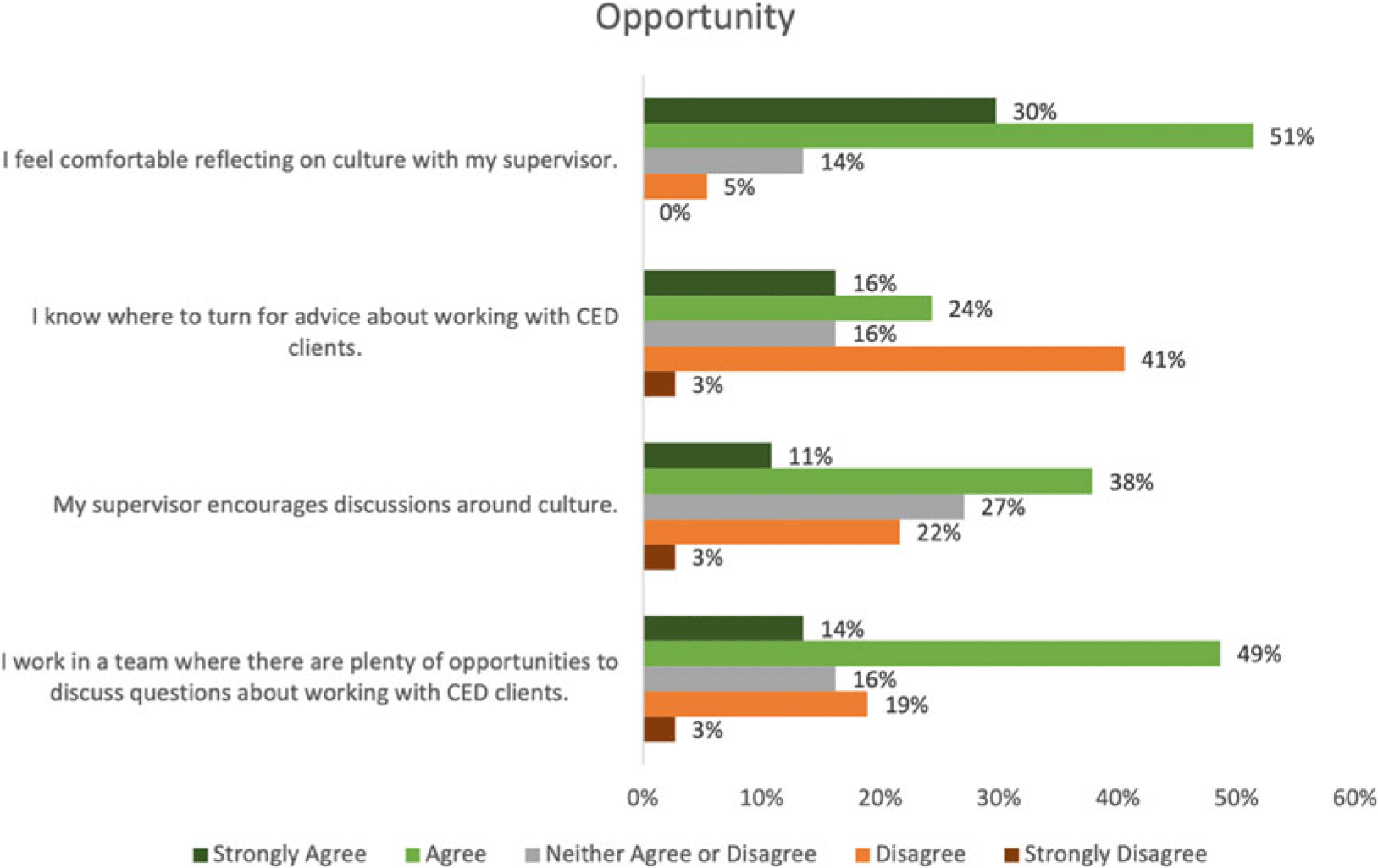
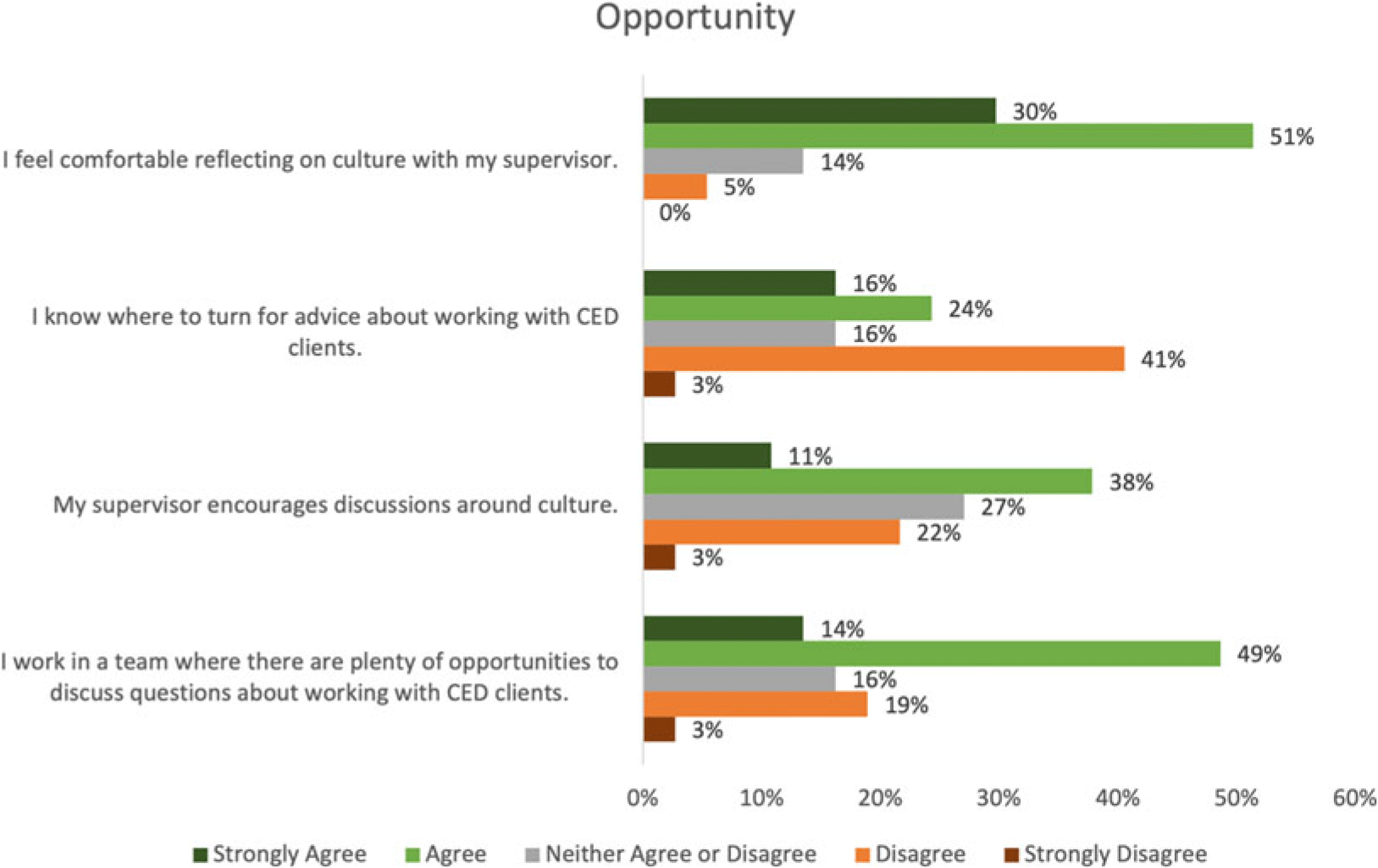
Opportunity ratings (Fig. 2) suggested mixed perceptions of service level barriers and facilitators to CRT. While 81% of respondents reported feeling comfortable reflecting on culture with their supervisor, only 49% said that their supervisor actively encouraged these discussions. Moreover, although 63% reported working in a team with plenty of opportunities to discuss CED work, only 40% knew where to turn for advice on working with CED clients. This pattern suggests that while staff appear to personally feel comfortable about engaging with topics linked to ethnicity and culture, the structures and practices provided by the service did not facilitate these discussions consistently.
Opportunity questions ratings.
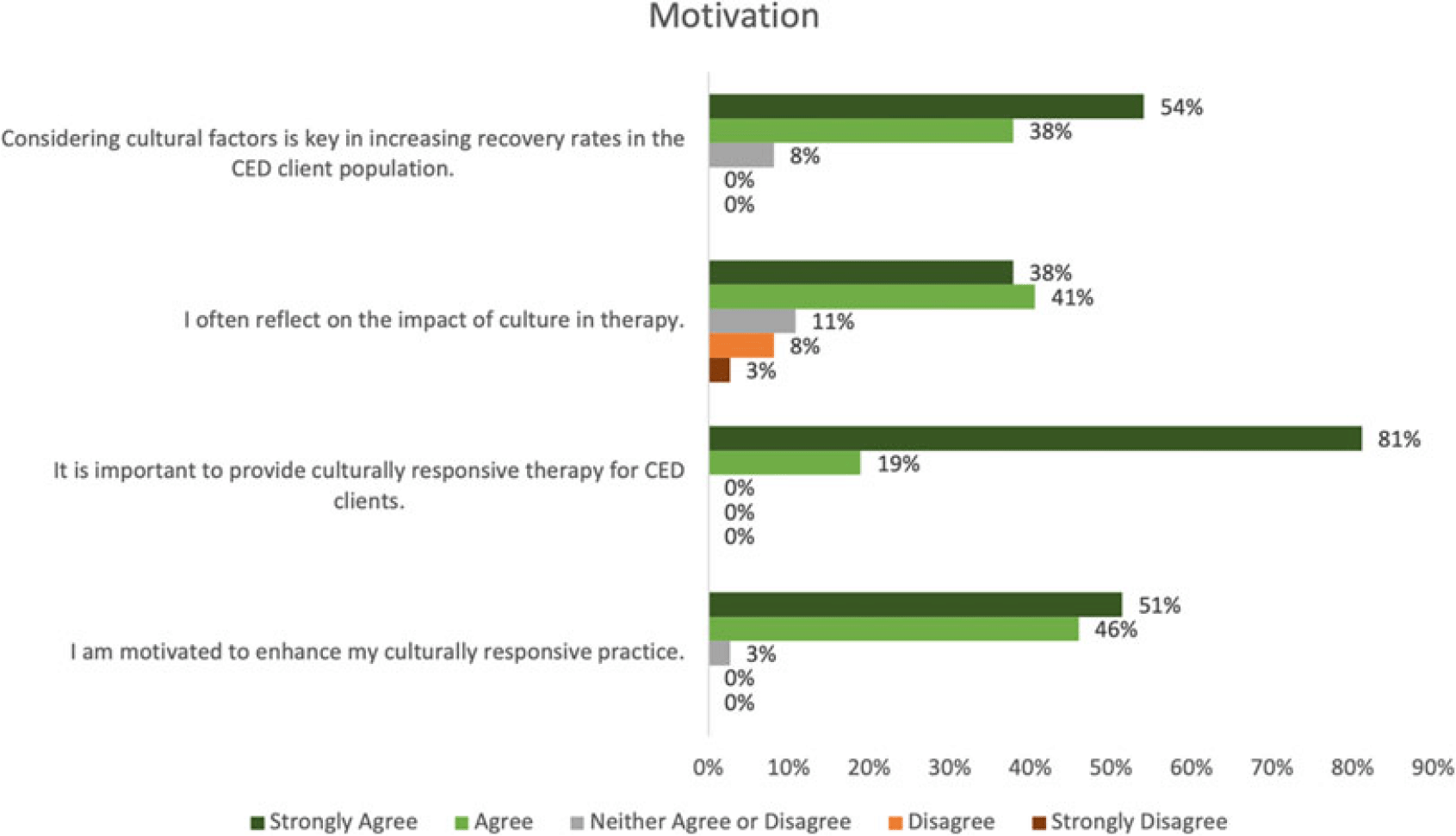
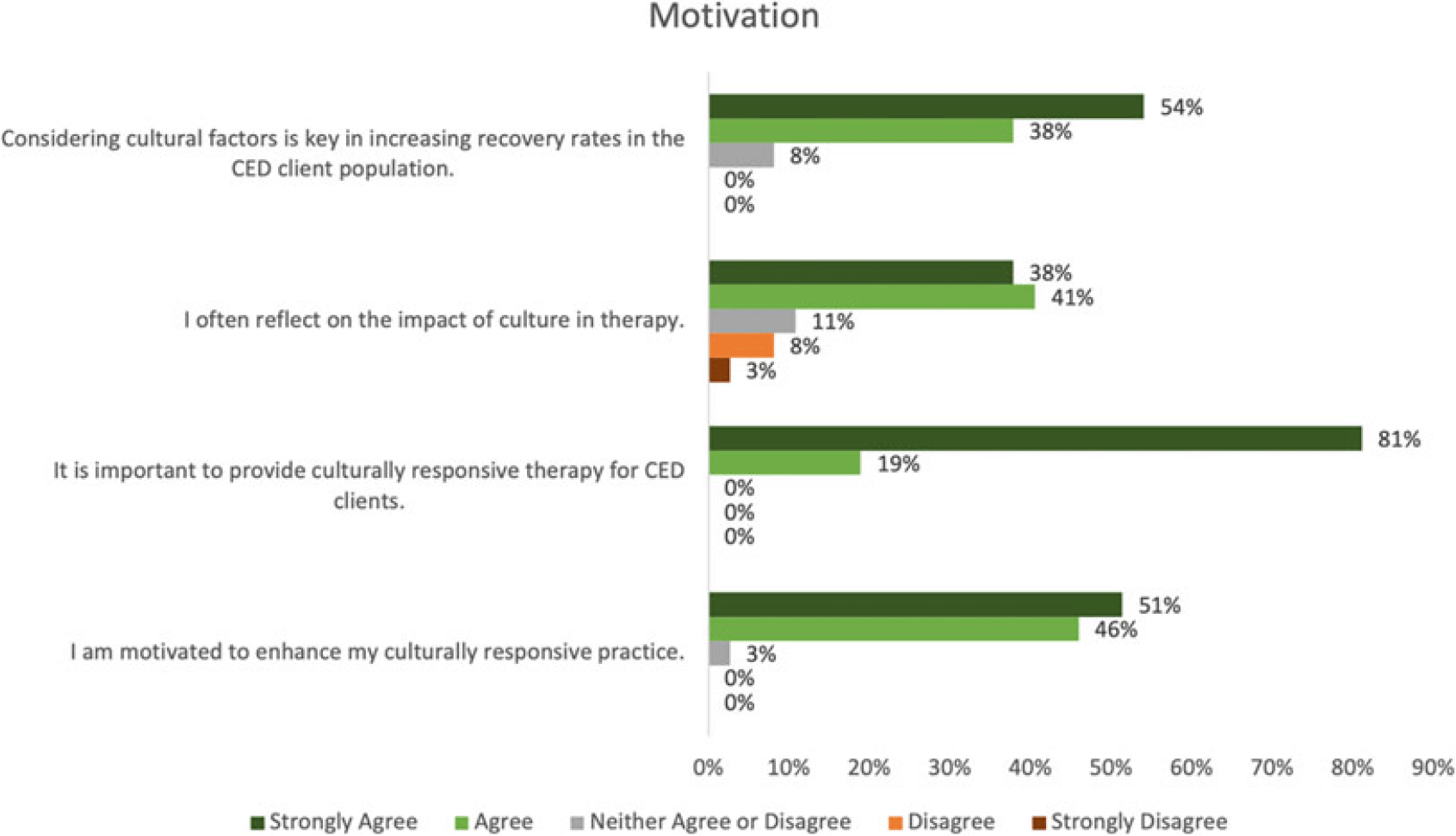
Motivation ratings (Fig. 3) were a striking contrast, with 100% of respondents reporting believing in the importance of delivering CRT, and over 90% being motivated to enhance their culturally responsive practice and agreeing that considering cultural factors is key to increasing recovery. The only item showing some variation was reflecting habitually on the impact of culture in therapy, with 79% reporting frequent reflection and 11% reporting not reflecting often. The pattern of high motivation alongside lower ratings on capability and opportunity suggests that these latter domains need to be targeted to improve CRT.
Motivation questions ratings.
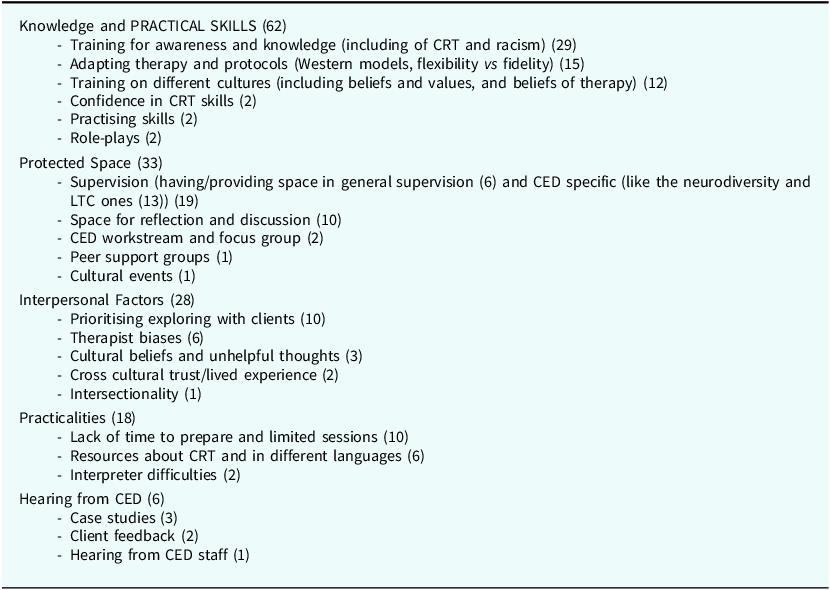
Using content analysis on the responses to the open-ended questions, five categories with three to five subcategories in each were created (Table 2). See Appendix E (Supplementary material) for an example excerpt of the analysis process.
Content analysis categories and subcategories (occurrence frequency)
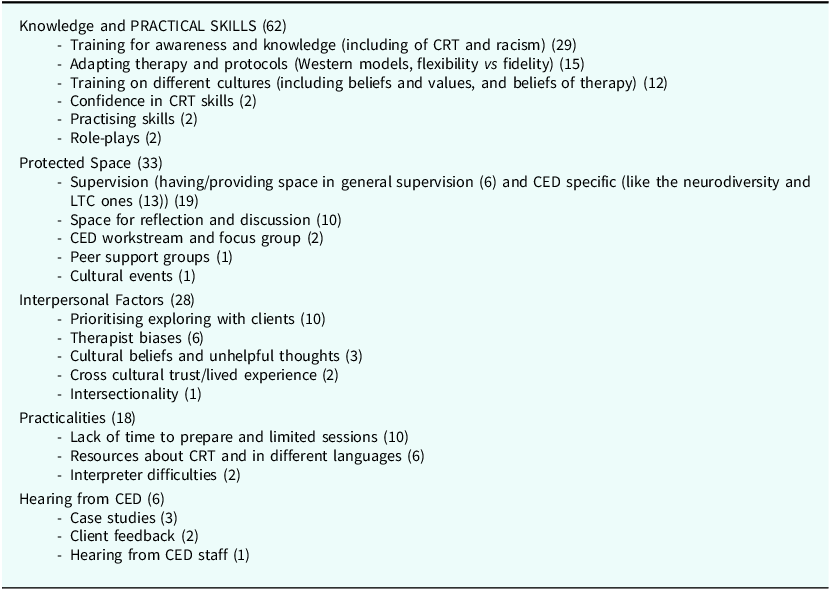
Table 2 Long description
The table categorizes content analysis results into five main categories: Knowledge and Practical Skills, Protected Space, Interpersonal Factors, Practicalities, and Hearing from CED. Each category has three to five subcategories with their occurrence frequencies. The table has five rows and five columns. Column headers are Knowledge and Practical Skills, Protected Space, Interpersonal Factors, Practicalities, and Hearing from CED. Row labels include subcategories under each main category. Row 1: Knowledge and Practical Skills, Training for awareness and knowledge (including CRT and racism) (29), Adapting therapy and protocols (Western models, flexibility vs fidelity) (15), Training on different cultures (including beliefs and values, and beliefs of therapy) (12), Practising skills (2), Role-plays (2). Row 2: Protected Space, Supervision (having/providing space in general supervision (6) and CED specific (like the neurodiversity and LTC ones) (13)) (19), Space for reflection and discussion (10), CED workstream and focus group (2), Peer support groups (1), Cultural events (1). Row 3: Interpersonal Factors, Prioritising exploring with clients (10), Therapist biases (6), Cultural beliefs and unhelpful thoughts (3), Cross cultural trust/lived experience (2), Intersectionality (1). Row 4: Practicalities, Lack of time to prepare and limited sessions (10), Resources about CRT and in different languages (6), Interpreter difficulties (2). Row 5: Hearing from CED, Case studies (3), Client feedback (2), Hearing from CED staff (1).
The most frequently occurring category was ‘Knowledge and Practical Skills’ which corresponded to the research question about staff views on capability. This category captured specifically what staff wished to gain from attending staff training on CRT. Subcategories reflected staff need for ‘training that helps practitioners to understand and realise the importance of the role that culture brings to therapy, providing me the knowledge and skills’ and the desire to learn about ‘adapting treatment protocols and use of culturally adapted/sensitive formulation’. Specifically, staff wished to receive ‘Support and information around different cultures, their shared understandings’. Staff expressed that a primary goal would be to ‘gain the competence/confidence’ in working across cultures. They preferred to meet this aim by utilising ‘practical application’, for example, through ‘role plays of how to have conversations or approach topics with clients’.
The second most frequently occurring category of ‘Protected Space’ was linked to staff views on opportunity. It highlighted staff’s need to have consistent time and space for ongoing development and reflection about CRT. Supervision was emphasised as the best place to provide this, specifically if a specialised supervision group was set up. One practitioner captured this by writing ‘dedicated supervision groups for discussing culturally responsive practice, like we have for neurodivergent supervision would really help. often in normal supervision we have only limited time … group supervision dedicated to culturally responsive therapy would give more chance to learn from peers and maintain learning and practice of this’. Other ideas included ‘forming peer support groups’, celebrating ‘cultural events’, and utilising the CED ‘work streams’.
The third most frequent category, ‘Interpersonal Factors’, corresponded to staff views on capability and motivation, reflecting on what factors hinder and encourage CRT within sessions. They wrote about the need to prioritise ‘exploring’ culture and ‘what is relevant and what may not be for the treatment itself’ with clients. Several practitioners mentioned that they perceived their lack of lived experience and being White British a barrier to this as they feared ‘offending people’. Staff talked about how continuous and consistent learning and reflective spaces could help with ‘increasing self-awareness and start to erode unconscious biases’. Some staff expressed concerns around understanding and challenging unhelpful beliefs rooted in cultural identities, for example ‘when religions is part of OCD presentation’. One practitioner highlighted the often overlooked need to consider culture in the context of intersectionality, for example with ‘clients who may have language barriers and also LTCs’.
The fourth most frequently occurring category, ‘Practicalities’, was linked to staff views on opportunity and captured the system level barriers to delivering CRT. Several practitioners expressed not having adequate time to ‘prepare for sessions or reflect afterwards’ and ‘read and study’ about different cultures, religions, and ideas on adaptations. Staff also highlighted that not having ‘resources in the right languages (guides, questionnaires etc)’ can inhibit them from working in person-centred way. Moreover, difficulties with ‘having reliable interpreters’ can make it both practically difficult to conduct sessions and affect therapeutic alliance.
The last category of ‘Hearing from CED’ suggested that placing more value on lived experience could motivate staff to deliver CRT. Ideas on how to do this included ‘case studies and feedback from clients who have accessed our service and what worked for them’, and hearing from CED staff, for example, through ‘videos … to give a short insight into their culture’.
Discussion
The Talking Therapies service recognised the need to develop standardised yet relevant and engaging staff training on CRT to improve care quality for CED clients and meet commissioning guidance. Therefore, this service improvement project, rooted in the COM-B model of behaviour (Michie et al., Reference Michie, van Stralen and West2011) was developed. It explored differences in reliable recovery between CED and WB clients and staff views on CRT, aiming to create recommendations for a novel staff training on CRT. Research has shown that such training positively affects staff capabilities and attitudes (Beach et al., Reference Beach, Price, Gary, Robinson, Gozu, Palacio, Smarth, Jenckes, Feuerstein, Bass, Powe and Cooper2005; Paez et al., Reference Paez, Allen, Beach, Carson and Cooper2009) and clients’ satisfaction (Govere and Govere, Reference Govere and Govere2016; Lie et al., Reference Lie, Lee-Rey, Gomez, Bereknyei and Braddock2011). It is hypothesised that the training could ultimately contribute to improved recovery in the CED population (Soto et al., Reference Soto, Smith, Griner, Rodríguez and Bernal2019).
Findings
Part 1 of a quantitative audit which focused on the first research question showed that CED clients are less likely to recover than WB clients. This finding is in misalignment with the NHS Talking Therapies aim of achieving comparable outcomes for WB and CED clients (NHS England, 2024b). This significant disparity is consistent with existing literature demonstrating worse outcomes for racial and ethnic minorities in mental health settings in the UK (Kapadia, Reference Kapadia2023). In Talking Therapies, this disparity is likely partially maintained by mistrust of services, reduced likelihood of being offered an adequate treatment course, and stigma (Harwood et al., Reference Harwood, Rhead, Chui, Bakolis, Connor, Gazard, Hall, MacCrimmon, Rimes, Woodhead and Hatch2023). It may also reflect that the modalities offered in NHS Talking Therapies are underpinned by research conducted predominantly on WEIRD (Western, Educated, Industrialised, Rich, Democratic) populations. Naeem et al. (Reference Naeem, Sajid, Naz and Phiri2023) argue that when Western values underpin therapy, treatment protocols may carry irrelevant or incorrect assumptions for CED populations, thus reducing the benefits of therapy.
Part 2 of the audit answered the second research question of what factors contribute to recovery rates. Several significant factors emerged which were consistent with the expected influence: more sessions, lower baseline symptoms, and receiving low intensity care all predicted greater recovery rates. This likely reflects that these factors are linked to less severe difficulties and more time devoted to supporting clients. As CED clients are less likely to be offered adequate treatment length and to experience more mental health difficulties (Bansal et al., Reference Bansal, Karlsen, Sashidharan, Cohen, Chew-Graham and Malpass2022; Harwood et al., Reference Harwood, Rhead, Chui, Bakolis, Connor, Gazard, Hall, MacCrimmon, Rimes, Woodhead and Hatch2023) these may have contributed to lower recovery rates in this population. Ethnically Pakistani clients were highlighted as the most significantly less likely to improve compared with WB clients, suggesting that inequality in care outcomes is further compounded in specific ethnic populations (Bansal et al., Reference Bansal, Karlsen, Sashidharan, Cohen, Chew-Graham and Malpass2022). It is important to note data quality issues: although ‘Ethnicity’, ‘Intensity of level of care’, and ‘Problem descriptor’ are required fields to be completed, they were missing for 2.67%, 7.82%, and 0.16% of the discharged clients, respectively. This highlights inconsistencies in routine data recording, which may especially be a problem if it disproportionately affects particular client groups (e.g. those from specific ethnic backgrounds) (Office for National Statistics, 2023). Incomplete mandatory data introduces selection bias to research conducted using the dataset, which may mean that information is more likely to be missing for particular groups which could lead to inaccurate representation for these groups in audits and research. Moreover, disproportionally unrecorded data can mask the extent of health inequalities as differences in treatment outcomes may be under-estimated.
A collaboratively developed questionnaire assessing staff capability, opportunities, and motivation regarding CRT was completed by 37 therapists to answer the third research question. Quantitative results suggested that motivation amongst participants was very high; however, there was great variability in staff-reported capabilities and opportunities. The COM-B model posits that this pattern means that the inhibitor to behaviour change is rooted in structural insufficiencies rather than staff attitude, but motivation alone is not enough to create behavioural change (Michie et al., Reference Michie, van Stralen and West2011). Moreover, as capability and opportunity tend to affect motivation, without improving these, motivation may reduce over time. Thus, these findings imply that the key need was to focus on improving staff knowledge and skills and creating opportunities for them to learn and reflect on their work with CED clients. Based on the model, such efforts have the potential to maintain or further improve motivation as well.
The qualitative results gave insight into each aspect of the COM-B model through staff perspectives. Regarding capability, participants wished to learn about the meaning and format of CRT and how to confidently adapt therapy to clients’ cultural needs. This aligned with guidelines and research suggesting that adequate staff training is key to employing skilled and confident practitioners (Bentley et al., Reference Bentley, Jovanovic and Sharma2008; NHS Race and Health Observatory, 2023). Research also suggests that low confidence can fuel fear that addressing culture in therapy could be offensive, especially for practitioners without lived experience of cultural diversity (Dogra et al., Reference Dogra, Vostanis, Abuateya and Jewson2007; Naz et al., Reference Naz, Gregory and Bahu2019). Accordingly, survey results underscored the need to practise and reflect on interpersonal skills. Participants wanted to explore how to have curious conversations about cultural beliefs and values. In terms of opportunity, staff highlighted the barrier of lacking protected spaces for reflecting on experiences of working within cultural diversity. Research has documented the key role of culturally informed supervision in creating a safe environment that promotes deeper consideration of clients’ cultural contexts (Watkins et al., Reference Watkins, Hook, Zhang, Wilcox, Winkeljohn Black, DeBlaere, Davis and Owen2025). Specifically, culturally responsive supervision can promote better client outcomes by facilitating reflective discussions and modelling cultural responsiveness (Vekaria et al., Reference Vekaria, Thomas, Phiri and Ononaiye2023). Given that the majority of staff at the Talking Therapies service where this project was conducted were WB, creating such spaces is particularly important as WB participants reported that lacking opportunities to reflect on cultural diversity heightened their apprehension about exploring this topic with clients. The challenge of having reliable interpreters highlighted by staff mirrored the findings by Kunorubwe et al. (Reference Kunorubwe, O’Leary and Wynne2025) who identified that the problem of inconsistent quality in interpreter-mediated therapy is a systemic challenge in Talking Therapies and thus requires a service level response rather than individual solutions by practitioners. Additionally, staff reflected on the substantial barrier of lacking time and resources to adequately prepare and attend to the additional considerations of CRT (e.g. reading up on specific cultures). In light of the increasing demand and lack of proportional funding for mental health care (British Medical Association, 2025), it is understandable that therapists find this challenging and frustrating. Lastly, relating to motivation, some staff members expressed that hearing the perspectives and feedback of CED clients and staff could increase motivation. Using insights from service users to aid training and treatment delivery can improve the quality of care provided and aligns with NICE guideline recommendations (National Institute for Health and Care Excellence, 2013).
Service improvement clinical implications
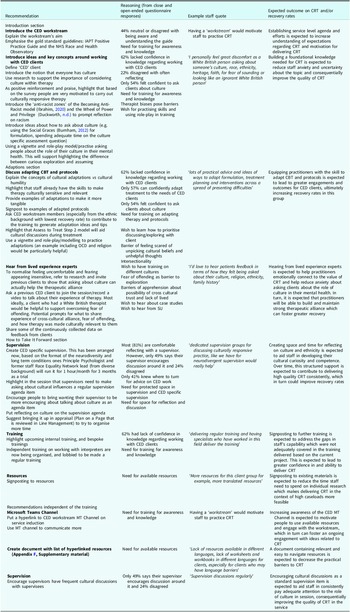
Recommendations were made based on the staff survey and were collaboratively refined with the CED workstream lead in the context of NHS Guidelines (NHS, 2019) and the notion that cultural adaptations are key to equality, diversity, and inclusion based service delivery (Haripriya et al., Reference Haripriya, Bhattacharjee and Calia2023) (Table 3). They were broken down into recommended sections for the staff training to enable their straightforward implementation and recommendations for outside of the training.
Recommendations based on the staff survey
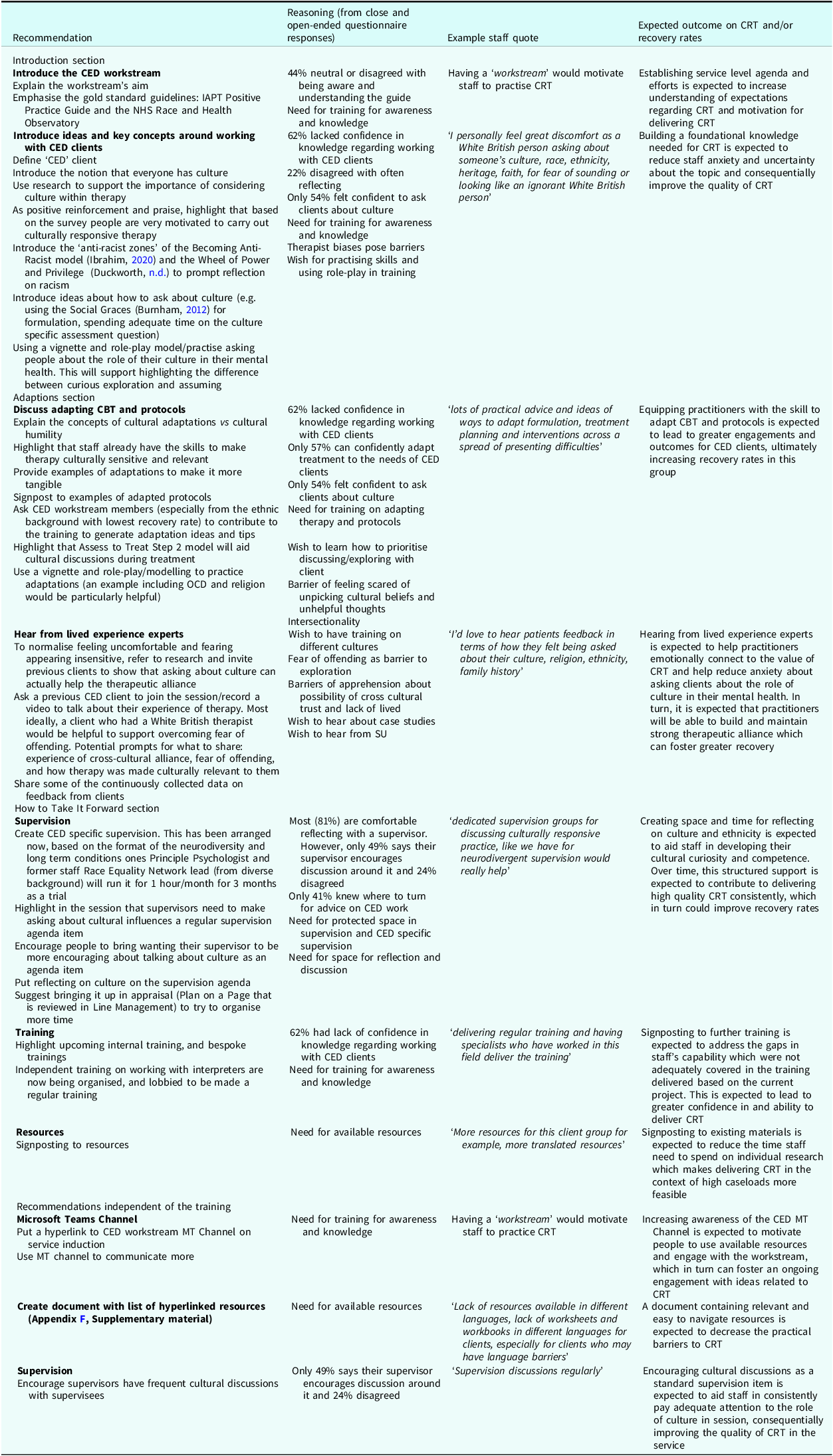
Table 3 Long description
Panel A: Table with recommendations for staff training. Panel B: Table with recommendations for outside of training. Each panel includes sections like Introduction, Adapting CRT and protocols, Learning from lived experiences experts, Staff Training, Resources, and Supervision. The tables list reasoning, example staff quotes, and expected outcomes on CRT and/or recovery rates.
Firstly, information on how the service conceptualises culture could establish a shared understanding and set clear expectations for CRT. Secondly, training on adapting cognitive behavioural therapy to meet cultural needs could enhance staff confidence in their ability to deliver person-centred care for CED clients. Consequently, staff could develop the skill to balance fidelity to the cognitive behavioural models whilst flexibly incorporating cultural adaptations. Thirdly, introducing CED supervision sessions, modelled on other successful supervision for working with specific minorities (e.g. neurodiversity clients) in the Talking Therapies service of interest, could demonstrate the service’s commitment to overcoming the staff-identified barrier of lacking protected spaces. Lastly, highlighting available and upcoming training, alongside developing a resource pack for practitioners, could increase how equipped staff feel. Providing readily accessible guidance and tools, could also reduce the time practitioners need to spend on individual research. The identified recommendations represent staff’s needs, and align with national guidance and research on the effectiveness of cultural competency training. Therefore, when implemented, they have the potential to improve the care given to CED clients in the Talking Therapies service of interest.
The findings also have implications for training providers and the accreditation body of the British Association of Behavioural and Cognitive Psychotherapies (BABCP). Although the BABCP’s minimum training standards require attending cultural competence training and awareness of diversity, the absence of specific guidelines regarding the content and structure of the training allows for wide array of interpretation by training providers (BABCP, 2025). This inconsistency may contribute to gaps in practitioners’ skills and knowledge. Moreover, the BABCP does not require trainees to work with clients from diverse cultural backgrounds and case studies are not explicitly assessed for equality, diversity, and inclusion related considerations (BABCP, 2024a; BABCP, 2024b). These may result in trainees passing their accreditation despite omitting these considerations in practice and could mean that qualified professionals lack the capability to confidently work with CED clients.
Limitations and strengths
Several limitations should be considered when reading this study. Firstly, the staff survey findings might be confounded by self-selection bias, as only 11% of invited staff completed the survey. Low response rates are a common challenge in healthcare research (Medina-Lara et al., Reference Medina-Lara, Grigore, Lewis, Peters, Price, Landa, Robinson, Neal, Hamilton and Spencer2020; Ricci-Cabello et al., Reference Ricci-Cabello, Avery, Reeves, Kadam and Valderas2016). In Talking Therapies, demanding caseloads, survey burnout due to frequent survey requests, and potential lack of motivation to participate in research likely contributed to the low response rate (VanGeest et al., Reference VanGeest, Johnson and Welch2007). Additionally, 51% of the responders were CED members compared with only 40% of all staff being CED. It is likely that those already most dedicated due to lived experience or personal and professional interest in delivering CRT participated. This may reflect the broader issue of the extra burden experienced by staff members from minority groups who often carry the extra labour and responsibility linked to initiatives focusing on minorities whilst facing systemic barriers such as discrimination in the workplace (Ross et al., Reference Ross, Jabbal, Chauhan, Maguire, Randhawa and Dahir2020). Besides, some staff members may have been actively opposed to participating culture-focused work (NHS, 2024). Therefore, the study may have missed the opinions of less motivated and actively dismissive staff, thus limiting our understanding of their views and needs. Additionally, the perspectives of CED clients were not directly sought, thus their ideas and needs might have been missed.
Furthermore, the logistic regression was vulnerable to the effect of unmeasured confounding variables contributing to the differing recovery rates. Besides, neither statistical analyses allowed for causal inference, which makes it impossible to attribute recovery rates to specific variables. Besides, data post-training delivery could not be collected within the time frame of this project, therefore, it was impossible to assess whether the proposed staff training can lead to measurable improvement in recovery rates.
Lastly, aggregation of all non-WB groups into a single CED category meant that within-group differences were masked, implying that distinct factors and themes linked to specific groups were missed.
Several strengths of this project are presented. Combining a large scale audit with a theoretically grounded survey enabled the exploration of the research aims for complementary angles. Theoretical grounding enhanced the validity of findings and allowed for identifying specific target barriers to behavioural change. Collaboration with the CED workstream enhanced the clinical relevance of the methods and recommendations. All recommendations were implemented within six months of completing the project which demonstrated the real-life impact of the research. Finally, this research helped to fill in the research gap on culturally responsive practice in CBT and provided a replicable model for other Talking Therapies services with similar initiatives.
Future directions
The current study provides useful preliminary insights to guide future directions for research and practice. On a service level, improving data quality, i.e. ensuring that mandatory data are recorded, could aid high quality research. Furthermore, longitudinal follow-up projects could compare recovery data before and after training implementation to establish the effect of CRT training on recovery outcomes. Future research could also explore the mechanisms behind the variance observed in outcomes, for example the reason behind ethnically Pakistani clients’ low recovery. Moreover, as the current project did not include the perspectives of CED clients, gaining this in the future could provide depth to the service’s understanding regarding client needs. More broadly, NHS Talking Therapies services could benefit from incorporating modalities and approaches developed with and for a wider group rather than solely relying on adapting current offers developed based on research with WEIRD populations.
Conclusion
This service improvement project found lower recovery rates for CED clients compared with WB clients in the Talking Therapies service of interest, identified key factors contributing to recovery likelihood, and developed evidence-based staff training recommendations. The staff survey suggested high motivation but varied capability and opportunity for CRT. The recommendations included a standardised understanding of CRT, cultural adaptations of therapy, CED supervision, and accessible resources. These align with national guidelines, research, and staff priorities. Despite self-selection bias and the lack of clients’ perspectives, close collaboration with the Talking Therapies service’s CED workstream ensured clinical relevance. Implementing the recommendations could help address staff needs and recovery disparities for CED clients.
Key practice points
-
(1) Culturally and ethnically diverse clients are less likely to reliably recover than White British clients in Talking Therapies, indicating the need for improved culturally responsive therapy.
-
(2) Therapists at the Talking Therapies service of interest report lacking appropriate opportunities to hone their knowledge and skills regarding working within diverse cultures.
-
(3) Training staff on key concepts regarding culturally diverse therapy, flexible adaptations of protocols, creating accessible resources, and improving supervision can support the process of improving recovery rates of culturally and ethnically diverse clients.
Supplementary material
To view supplementary material for this article, please visit https://doi.org/10.1017/S1754470X26100853
Data availability statement
Data availability is not applicable to this article as no new data were created or analysed in this study.
Acknowledgements
We are grateful to the service managers and the members of the Cultural and Ethnic Diversity workstream, whose feedback on the survey was invaluable in shaping it into something both relevant and meaningful for staff and service delivery. We wish to show appreciation to the clients whose data made the audit element of this project possible.
Author contributions
Kata Katona: Conceptualization-Equal, Data curation-Equal, Formal analysis-Lead, Methodology-Equal, Project administration-Lead, Resources-Lead, Software-Equal, Validation-Lead, Writing - original draft-Lead, Writing - review & editing-Lead; Grace Jell: Conceptualization-Equal, Data curation-Lead, Methodology-Supporting, Project administration-Supporting, Resources-Equal, Supervision-Equal, Writing - original draft-Supporting; Canan Bektas: Conceptualization-Supporting, Formal analysis-Supporting, Methodology-Supporting, Supervision-Equal, Writing - original draft-Supporting, Writing - review & editing-Supporting; Rani Griffiths: Conceptualization-Equal, Methodology-Supporting, Project administration-Supporting, Resources-Equal, Supervision-Supporting, Writing - original draft-Supporting.
Financial support
This research received no specific grant from any funding agency, commercial or not-for-profit sectors.
Competing interests
The authors declare none.
Ethical standards
The authors of this paper abided by the BPS Code of Ethics and Conduct (BPS, 2021) and BABCP Standards of Conduct, Performance & Ethics (BABCP, 2022). To ensure confidentiality and data protection, all client data were fully anonymised with no identifiable data used in the analysis or the report. To ensure informed consent in the survey, the aim of the project and the voluntary participation were clearly stated in a participation information sheet. Responses were collected anonymously using Microsoft Forms Surveys. Data security procedures followed GDPR guidelines (Data Protection Act, 2018), and data were stored on password-protected OneDrive servers of the Talking Therapies service. The project was registered as a service evaluation with the appropriate NHS Trust.
Use of AI
We disclose using Grammarly version 1.136.5.0, on 1 August 2025 to check for spelling and grammatical errors. We declare that the authors are entirely responsible for the scientific content of the paper and that the paper adheres to the journal’s authorship policy.


 Open access


Comments
No Comments have been published for this article.