

Introduction
In 2010 the Italian film director Michelangelo Frammartino released his evocative and critically acclaimed work Le Quatro Volte, set in rural Calabria and seemingly taking place in the present, but actually in a rather unspecified temporal universe. Drawing on ideas by the 6th-century B.C. philosopher Pythagoras, especially on his notions of the transmigration of ‘souls’ through four different existential states (human, animal, plant, mineral), the director portrays the last days in the life of a goat herder. Or so it seems from our anthropocentric perspective. For it is not clear in the film if the herder is the one who is in fact ‘looking after’ the goats, or whether it is the goats (and his dog) who are keeping an eye on the elderly and evidently sick herder. The morning he dies, the whole herd, with the help of the dog, breaks out of the pen and climbs up the stairs to his bedroom to keep vigil during his last moments.
Frammartino is not, of course, the only cultural producer to have explored human–animal relationships from a non-anthropocentric standpoint. To offer just another example, Franz Kafka, in his 1917 monologue A Report to an Academy (Ein Bericht für eine Akademie), posits the ape Red Peter in front of a scientific conference. The subject of his presentation is his metamorphosis from a captive animal in West Africa to an almost-human being, who decided to mimic humans when he realized that his choices were either ‘the zoological garden or the music hall’. The essence of humanity here is portrayed as a matter of mimetic performance (the story features prominently in J.M. Coetzee's novel Elizabeth Costello; see also Weil Reference Weil2010).
This article is also an inquiry on the interface between humans and other animal beings, through zooarchaeological means. More specifically, we wish to show that zooarchaeology is a particularly appropriate field for such an inquiry, provided that it realizes its potential, and severs its links from anthropocentric ontologies; reductionist epistemologies; and the associated, often problematic, methodological assumptions. We start by outlining our framework for a transformed social zooarchaeology, before we proceed to illustrate this framework with two case studies that deal with the interactions between swans and humans in the Danish Later Mesolithic: the whooper swan faunal assemblage from the Ertebølle site of Aggersund in North Jutland, and the whooper swan remains found associated with a human burial from the site of Vedbæk.
What is social zooarchaeology?
Zooarchaeology is a rich and dynamic subdiscipline with its own organizations, working groups, conferences and specialist journals, and one that has produced an enormous quantity of specialized knowledge and information. It occupies a privileged position in that it has access to the material traces of animals that came into contact with humans over the last 2.5 million years, and possesses a large and increasingly sophisticated array of methodologies to study them; as such, it is in a unique position to illuminate the rich and diverse story of the engagement of humans with other animals. Yet this potential has only been realized to a limited extent, as the findings and ideas generated through zooarchaeology rarely enter mainstream archaeological discussion. Furthermore, there is little overlap between theoretical concerns of many archaeologists and those of many, if not most, zooarchaeologists. While there is, increasingly, much diverse and innovative work being carried out within zooarchaeology, some of the recent debates on personhood, materiality, agency, the human body, corporeality, the senses and embodied memory have had limited impact within the subfield. Moreover, while there has been some groundbreaking work on interspecies interaction in disciplines such as philosophy, anthropology, sociology, feminist studies, human geography, animal studies and science studies (e.g. Derrida Reference Derrida and Wills2008; Haraway Reference Haraway2003; Reference Haraway2008; Knight Reference Knight2005; MacFarland and Hediger Reference MacFarland and Hediger2009a; Whatmore Reference Whatmore2002; Wolfe Reference Wolfe2003; and works discussed below), a development which has been called the animal turn (e.g. Weil Reference Weil2010), zooarchaeology has largely failed to engage in a dialogue with it, gain inspiration from it, fertilize it with its unique data and information, and challenge and critique it. Zooarchaeology seems to be equally absent from the contemporary public debates on animal rights, on the ethics of eating meat, on cloning and genetic engineering, and on pets and their social roles.
The reasons for the phenomenon are many and diverse, and are to do as much as with history and epistemology (such as zooarchaeology's reliance on and ancestral links with zoology, and with certain versions of ecology and economics), as with the nature of the recent archaeological debate, which often involved a rather indiscriminate rejection on the part of archaeological theorists of scientific approaches in archaeology. Our intention here is not to analyse the historical trajectory and the causes of this phenomenon, worthwhile as such an exercise may be, but rather to discuss the possibilities and the challenges of another zooarchaeology, which we choose to call social zooarchaeology. We are of the conviction that a transformed social zooarchaeology which can occupy a central place within archaeological discourse is needed, and that an intense and sustained debate on its formation and development must commence.
Zooarchaeology as zoontology: beyond anthropocentrism
While the limitations of conventional zooarchaeological approaches which focus on subsistence and ‘economy’ (narrowly defined) have been extensively critiqued by a growing number of zooarchaeologists and others, a reconfigured social zooarchaeology is yet to emerge. A common response to the critique of these ‘economic’ approaches and a common path chosen by many of the critics themselves is to focus on ‘ritual’ and ‘symbolic’ explanations, or at least acknowledge their role and importance (e.g. more recently Russell Reference Russell2012, an exhaustive and valuable study). Another response is to add to the research agenda of zooarchaeology aspects such as social status, gender, ethnicity and so on (cf deFrance Reference DeFrance2009), in addition to the conventional ones of environment, subsistence and technology.
Neither of the two responses, however, constitutes a social zooarchaeology as we define it here, nor do they offer a way out of the established ontologies and epistemologies. While such studies have at times produced valuable insights, more often than not they are trapped within dichotomous thinking, and more specifically within the pervasive nature–culture divide and its various reincarnations: economic versus symbolic, mundane versus ritual, staple versus luxury, high-status versus low-status, to name but a few. In such social zooarchaeologies, the ‘social’ usually refers to the ways in which animal remains are used to elucidate explicitly human–human social relations. Moreover, most of the time, their logic is representational (e.g. certain animals or practices stand for, symbolize or represent some sort of identity signifier). This representational logic is problematic not only because it obscures the diversity, the physicality and the embodied and sensory dimensions of engagement between humans and other animals, but, more importantly, because it assumes and implies a deeply entrenched anthropocentrism, and a passivity on the part of non-human animals. Specific animal species are portrayed as symbolic/totemic entities for the benefit of humans. As such, these approaches do not really differ that much from subsistence and narrowly economic approaches: animals are classified as resources to be used, be they of ‘economic’ or symbolic nature.
Our own version of social zooarchaeology breaks with anthropocentricity, be it that of functionalism or that of interpretative, structuralist or postprocessual approaches. Recent theoretical approaches in archaeology have focused on the agency of things and artefacts, yet it is curious that while we are prepared to grant agentic qualities to non-sentient beings, we have mostly failed to do the same for sentient, living beings; that is, non-human animals. Following Haraway (e.g. Reference Haraway2008, 42 and passim; also 2003) and others we advocate that the history of the engagement between human and non-human animals is one of co-shaping, and of ‘mutual becomings’ (cf. Birke, Bryld and Lykke Reference Birke, Bryld and Lykke2004, 174; see also Argent Reference Argent2010; Armstrong Oma Reference Armstrong Oma2007; Reference Armstrong Oma2010). While this engagement is often asymmetrical, non-human animals have the power and ability to elicit responses from people, including emotive responses, and engage in communicative relationships. The anthropocentric discourse in Western thinking has not only been a biased one, but also one that has performed a colonial act of homogenization upon non-human animals. The very term ‘animal’, denoting the entities of ‘nature’ that, unlike plants or minerals, possess ‘breath’ or ‘soul’, not only is embedded into a dichotomous nature–culture discourse, but also obscures the huge diversity of non-human animal species (cf. McFarland and Hediger 2009b, 10, discussing ideas of Derrida). One of the detrimental effects of this homogenization is that it prevents us from studying each species in its own right, and approaching each interspecies engagement in its distinctiveness and specificity. The implications for zooarchaeological methods of classification and analysis are obvious here (cf. Ingold Reference Ingold2011, 165–75). In this social zooarchaeology, the recognition that animals are not just an ‘economic’ resource is not enough; instead it is vital that we acknowledge that animals are agentic entities that engage in human–non-human social relationships.
A way of bypassing anthropocentrism and the nature–culture divide of Western thinking is to embark on alternative ontologies (or zoontologies – cf. Wolfe Reference Wolfe2003). A theme that has proved fruitful in developing these alternative zoontologies is hunting, especially in ‘farming’ societies. Here, the interspecies engagement often recognizes the agency of non-human animals, and the performative, agonistic or even erotic interspecies interaction that takes place between ‘hunter’ and ‘prey’ (cf. Hamilakis Reference Hamilakis, Kotjabopoulou, Halstead, Gamble and Elefanti2003; Marvin Reference Marvin, Szersyznski, Heim and Waterton2003; Sykes Reference Sykes and Liddiard2007a; Reference Sykes and Pluskowski2007b; Reference Sykes2010). In ‘Mycenaean’ (Late Bronze Age, mainland) Greece, for example, hunting wild boar, deer and, perhaps in rare but highly important occasions with mythical significance, lions, was, at least for the elites, an arena for the production and reaffirmation of gender and other social roles, but also a rich medium for the perception and negotiation of time, space and (human and animal) otherness. The confrontation with rare and fierce animals in particular would have rendered hunting episodes intimate and interpersonal, and not simply interspecies, encounters. Interestingly, the iconographic and material memorialization of the practice (in wall paintings, seals and sealings, and in objects such as the boar tusk helmet) seem to have been more important than the actual practice itself. The boar tusk helmet in particular, headgear that was made of many half-tusks arranged in rows, was not so much a protective device as a material mnemonic of several real or imagined successful hunts, embodying at the same time a spatio-temporal heroic geography: the hunting trips ventured, the places traversed, the successful confrontations with fierce animals (Hamilakis Reference Hamilakis, Kotjabopoulou, Halstead, Gamble and Elefanti2003). In another context, later medieval England, the engagement with fallow deer was not a matter of narrowly defined economics but rather embodied, in a sensorial way and through the emotional interaction between humans and the living fallow deer, understandings of time, landscape and identity (Sykes Reference Sykes and Liddiard2007a).
Another promising set of ideas is the one that has become known as Amerindian perspectivism, after the work of Vivieros de Castro (Reference Vivieros de Castro1998; Latour Reference Latour2009), who carried out ethnographic fieldwork in Amazonian South America (see also Kohn Reference Kohn2007) but whose proposed ontology has been shown to be relevant in other contexts, such as the Siberian Yukaghir (Willerslev Reference Willerslev2004; 2007). More specifically, Vivieros de Castro has shown that in Amerindian cosmologies the category of the person is neither bounded nor limited to humans; instead it can include non-human animals and other sentient beings, such as spirits. In Western contexts we often assume a unity of nature and a diversity of culture where all animals are seen as basically the same, yet humans, having ‘culture’, are internally diverse. By contrast, in Amerindian societies the opposite is true: humans, other animals, and even non-animate beings all possess a soul, and are therefore understood as intrinsically the same, differing from each other simply on how their spirit is bodily expressed. This is the phenomenon that Vivieros de Castro calls spiritual unity and corporeal diversity, presenting not a unified nature, but what he terms ‘multi-naturalism’. Willerslev (Reference Willerslev2007), who carried out work amongst Siberian Yukaghir hunters and who acknowledges his debt to Vivieros de Castro, has identified the same ontological and cosmological principles in operation, and adds that these principles are bodily and sensorially expressed: the Yukaghir mimic other animals, imitate the sound or attempt to acquire their smell, often as part of hunting strategies. Hunting here is not a subsistence strategy, not even a shamanistic affair, but an interpersonal engagement between similar animate beings, or even an erotic encounter between the ‘hunter’ and the ‘hunted’. But there is a danger, however, that these humans who engage in mimetic practices will become altogether something different: they will become the animals that they imitate, they will become transformed not only in body but also in spirit. By the same token, other animals can also be humans, as they share a spirit, and the ‘hunted’ animal which has been transformed into food may turn out to be a human.
Kohn (Reference Kohn2007), inspired by Amerindian perspectivism but wishing to take it further, contends that a different conception of interspecies engagement is not simply a matter of alternative ontologies, but also of alternative epistemologies, in the sense that we have to recognize in non-human animals the ability of ‘knowing’ and of representing other species, including humans. Among the Upper Amazonian Runa with whom he worked, humans engage with dogs as if they were persons who could dream and even predict their own death, whereas humans themselves could become jaguars, especially when they encountered one in the forest: humans must not look away but rather return the gaze of the jaguar. In his own words, by ‘returning the gaze of jaguars, the Runa deny felines the possibility of treating them as prey and they, thus, maintain ontological parity with them as predators’ (Kohn Reference Kohn2007, 15). These ethnographically derived insights evoke and resemble Derrida's philosophical thoughts, when he is confronted by the gaze of his cat, which forces him to admit that it ‘has its point of view regarding me’ (2008, 11).
These studies should not be read as an attempt to resurrect some sort of pan-animal spiritualism, or as a simplistic and grossly generalized imposition of contextually specific ethnographic evidence upon global, anthropological and archaeological diversity. Their potential lies in the heuristic opportunity they afford us to bypass the nature–culture divide, to reimagine concepts of human and animal selfhood, and re-examine their assumed stability and permanence. They also allow for a hybridic understanding of humanity and animality as corporeal, contingent and transient stages, rather than as bounded, permanent, essentialist conditions. Archaeological studies inspired by this ethnographic work have already shown how promising such alternative conceptions of ontology can be. For example, Conneller (Reference Conneller2004) has reinterpreted the red deer animal ‘masks’ from Mesolithic Star Carr in northern England as artefacts that possessed agency, and allowed humans to engage in bodily transformations – becoming, that is, corporeally deer. Paula Jones (Reference Jones2009), in re-examining some of the earliest remains of felines closely associated with humans in Neolithic Cyprus, as well as a stone figurine with human/feline features from Shillourokambos, raises the possibility of hybridic ‘cat people’, beings who wished to incorporate, in a mimetic manner, feline features in their subjectivity, and perhaps acquire some of the feline abilities, especially in hunting.
Many conventional zooarchaeological approaches conceive of the live animal as simply a walking larder, a provider of secondary products, rather than as an agency-bearing being. A shift, thus, of emphasis to the live animal as an autonomous being with its own agency and even its known perspective on other species is long overdue. But even in the treatment of dead animals by humans, and more specifically in the use of animals as food, conventional zooarchaeological approaches have been largely problematic. For a start, it is rarely acknowledged by such approaches that the position of animals within distinctive zoontologies and the interspecific relationships developed between human and non-human animals while they are alive would have had a serious impact on how animals were treated after their death, both in the arena of consumption and in the deposition and treatment of the remnants. Moreover, the linguistic homogeneity denoted by the term ‘animal’ is also transferred in the arena of consumption, where meat is often treated by zooarchaeologists and others on the basis of nutritional or calorific equivalence. Discussions of food taboos and totemic/symbolic relationships are clear exceptions to this; however, they are mostly approached through a binarist and simplistic structuralist/representational lens. Feasting has become a focus of late, and while much work produced within this theme is interesting and worthwhile, more often than not it is seen as a power mechanism within cultural-evolutionist narratives, and is juxtaposed, in a binary manner, to ‘routine’ daily consumption, deemed more or less functional in nature. Our proposed social zooarchaeology sees instead the arena of consumption as a key moment in interspecies engagement, and recognizes the embodied, incorporating character of eating and its sensory and mnemonic dimensions (cf. Hamilakis Reference Hamilakis, Hamilakis, Pluciennik and Tarlow2002; Reference Hamilakis, Hitchcock, Laffineur and Crowley2008; Reference Hamilakis2014; Reference Hamilakis and Insoll2011; Hamilakis and Harris Reference Hamilakis and Harris2011; Hamilakis and Konsolaki Reference Hamilakis and Konsolaki2004). In consuming meat, but also other animal substances, humans continue the embodied engagement with animals, and at the same time they recall sensorially previous moments in that engagement, be it that of hunting, or of tending and raising animals.
To recap so far, social zooarchaeology avoids anthropocentrism; begins from a zoontology of species co-shaping; reinstates the agency of animals, both in life and in death; and appreciates the embodied and sensory nature of interspecies interaction. Such social zooarchaeology can also revisit ‘economic’ questions from a more productive angle. For a start, it will recognize that much of the discussion to date has been in fact not on the economy – that is, on relationships of entitlement, access and inequality – but on economizing – that is, on formalist and rather mechanist allocation and management of narrowly defined ‘resources’, an approach which obscures the socially embedded and corporeally embodied nature of the economy. Furthermore, the tackling of such economic questions within a social zooarchaeological framework will be based on individual species-to-species or even (and more pertinently), person-to-person (animal, human or other) engagement, rather than on homogenizing, ‘human–animal’ relationships. It will also accept that even in contexts where humans have treated animals as ‘resources’ to be exploited, such a relationship cannot be disentangled from the effect of the bodily, sensuous, and often emotive encounters between humans and other species, and the agentic power of each species to shape the other species’ life and world: as living bodies, and as body substances and parts which are incorporated through eating; hoarded, valued and preserved as mnemonic remnants; or transformed into circulating, powerful objects, be they bone tools, trophies or animal masks. Finally, it should have become evident from the above, that the ‘social’ in our version of social zoorchaeology does not declare some sort of exceptionalist status or a dichotomous separation that sets this approach apart from ecological, economic or other zooarchaeologies. It denotes instead an inclusive, non-anthropocentric framework, where sociality conveys interspecies engagement, an engagement that is mediated, of course, by the totality of the material world and its agency. In the following section, we will show how this framework can help us reinterpret a specific archaeological context in the Danish Mesolithic.
Human–whooper swan interaction at Aggersund
Movement, occupation and rhythm
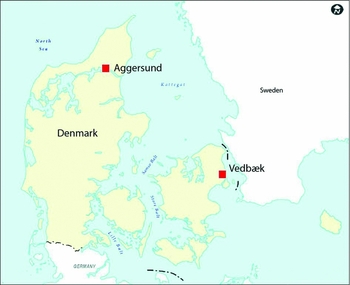
The site of Aggersund is located in North Jutland, Denmark, on the north shore of the Limfjord (figure 1) and was excavated in 1975, revealing an oval pit containing flint, animal bone and crushed shells (Andersen Reference Andersen1978, 50), dated to between 4501 and 4052 B.C., falling within the later Mesolithic Ertebølle period. Initial analysis of the faunal material by Ulrik Møhl in 1978 suggested that the site was occupied during the winter months for the specific exploitation of whooper swans (Cygnus cygnus) (Møhl Reference Møhl1978, 57). This interpretation, however, was embedded within the paradigm of subsistence and economizing, with its deeply engrained dichotomies between nature and culture, and between humans and animals. The original framework of analysis focused on the relative value and utility of the faunal remains in terms of the nutrients they provided, characterizing the site as a ‘special-purpose camp for hunting swans’ (Møhl Reference Møhl1978, 72–73) due, in part, to the high relative frequency of swan remains in comparison with other species recovered, thus explicitly correlating importance with calories and material yield. In the present study, we move away from an interpretation of the assemblage based on the passive conception of animals as neutral raw materials, employing instead a non-anthropocentric theoretical framework in exploring the interspecies engagements and relationships between humans and whooper swans that underpinned the treatment of swan remains at Aggersund.
Map of Denmark indicating the location of sites discussed in text.

Whilst the reanalysis of this assemblage was undertaken as an exercise in a novel framework of social zooarchaeology, as outlined above, this is not to say that entirely new methods had to be created. Although most analytical zooarchaeological methods currently in use are implemented within a framework that considers animals as static facts, figures and economic worth, the same procedures (with some possible alterations) can be deployed as part of an alternative, or complementary, framework, leading to different interpretations, and allowing current zooarchaeology to realize its full potential. As such, the methods used for identification, ageing, sexing and quantification of species remain close to those used in the original report, although full advantage was taken of the advances made in the interceding 30 or so years. The only major methodological change was in recording the anatomical element representation in the assemblage, as this information is used directly to calculate the minimum number of individuals present within an assemblage, a key concern for social zooarchaeological studies that aim to consider individual agents. Previous methods assigned zones to each skeletal element (Cohen and Serjeantson Reference Cohen and Serjeantson1996; Dobney and Reiley Reference Dobney and Reilly1988; Serjeantson Reference Serjeantson, Needham and Spence1996) and permitted a more accurate estimation of the minimum number of elements by establishing the total based on the most frequent zone, as opposed to a simple aggregation of all the fragments of an element, which would wildly inflate the figure. The zones suggested by all the methods were, to a greater or lesser degree, arbitrary ‘areas’, the limits of which are difficult to visualize on a fragment; this increases human subjectivity in the recording stage, and has the potential to distort the results. For this study, a new method was created, using distinct and easily recognizable landmarks on the bones (Overton Reference Overton2010), the same features that zooarchaeologists use to identify the skeletal element itself, as opposed to more subjective ‘areas’. Much of the recording, however, can be recognized as adhering to standard practices; all specimens, where possible, were identified as to species, element and side, using the reference collection present at the University of Copenhagen Zoology Museum, supplemented by additional identification manuals for avian (Bacher Reference Bacher1967; Cohen and Serjeantson Reference Cohen and Serjeantson1996) and mammalian species (Hillson Reference Hillson1992; Schmid Reference Schmid1972). Ageing of larger mammalian species, specifically red deer and wild boar, was done using dental development and wear, according to methods set out by Brown and Chapman (Reference Brown and Chapman1991) for red deer, and Grant (Reference Grant, Wilson, Grigson and Payne1982) and Bull and Payne (Reference Bull, Payne, Wilson, Grigson and Payne1982) for wild boar. Sexing of whooper swan remains was achieved through metric data, taken according to von den Driesch (Reference Von den Driesch1976), used in conjunction with comparative data, as set out by Bacher (Reference Bacher1967).
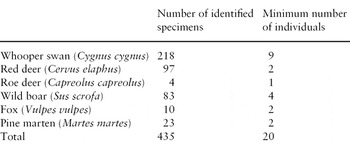
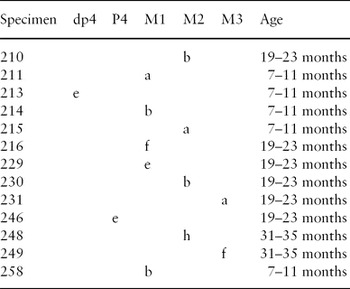
Whilst whooper swans were the most numerous species (table 1), the presence of a number of mammalian species indicates that the site of Aggersund was used primarily, but not exclusively, for the hunting of whooper swans. Analysis of dental eruption stages and dental wear of wild boar (Sus scrofa) (table 2) suggests that the site was occupied during the winter months, a conclusion corroborated by the presence of whooper swans, a winter visitor to north-western Europe, and a conclusion that agrees with the original analysis (Møhl Reference Møhl1978). Further conclusions concerning the tasks carried out there are limited by the small size of the assemblage and the poor preservation, resulting in a heavily biased skeletal-element representation that lacks smaller or more fragile elements such as phalanges or scapulae, and shows higher numbers of more robust elements such as molars and limb bones. The very low numbers of wild boar humeri, radii and ulnae, however – all robust elements expected to survive more readily – suggest that carcasses were butchered on-site, and the more transportable and meat-bearing elements were taken elsewhere.
Number of identified specimens and corresponding minimum number of individuals per species.

Dental eruption and wear data for wild boar. Scores according to Grant (Reference Grant, Wilson, Grigson and Payne1982), estimated ages from Bull and Payne (Reference Bull, Payne, Wilson, Grigson and Payne1982). Key: dp4: deciduous 4th premolar; P4: permanent 4th premolar; M1–M3: permanent first to third molars.

Furthermore, the presence of cut marks on the distal parts of the limb bones of fox and pine marten indicates skinning for fur (Richter Reference Richter2005). Whilst earlier analysis by Møhl also acknowledged the presence of terrestrial mammal ‘resources’, he still suggested Aggersund to be a ‘special-purpose camp for hunting swans’ (1978, 72–73).
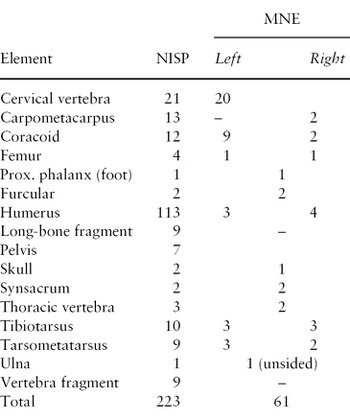
The skeletal-element representation of whooper swans (table 3) broadly echoes that of the mammalian assemblages; larger or more robust elements such as the coracoid or humerus have survived more readily than the smaller or more fragile elements, such as the phalanges or pelvis. Table 3 also serves to show the dangers of quantifying skeletal-element frequency by the number of identified specimens (NISP) alone; although 113 fragments of humerus were identified, they only represented seven whole elements, a discrepancy caused by the propensity for the humerus to fragment heavily due to its pneumatized construction (Higgins Reference Higgins1999, Reference Higgins1453). One pattern that is of note is the very low numbers of ulna, and the complete lack of radius, two of the most robust elements in the skeleton (Hanson Reference Hanson1991, 305). Indeed, this pattern strongly contradicts the widespread pattern in avian assemblages, as highlighted by Bovy (Reference Bovy2010, 965), of wing elements outnumbering axial elements. The skeletal-element representation, therefore, cannot be explained purely in terms of preservation and recovery bias; the skeletal elements present, from across the skeleton, suggest that whole swans were brought to the site to be processed before the osseous remains were deposited. The conspicuous absence of the more robust distal wing elements, however, suggests that as part of carcass processing, the distal wings were detached and removed from the site.
Number of identified specimens (NISP) and minimum number of elements (MNE) of whooper swan.

This reanalysis suggests that humans occupied Aggersund at a specific time of the year that facilitated the hunting of whooper swans, which was accompanied by a variety of other tasks, including the hunting of larger game and smaller, fur-bearing mammalian species, a conclusion that agrees broadly with those derived by Møhl (Reference Møhl1978). The conclusion that Aggersund was a ‘special-purpose camp for hunting swans’ (Møhl Reference Møhl1978, 72–73), however, suggests that the killing of the mammalian species was on a random, ad hoc basis; this is not supported by the number of individuals present in the assemblage. Whilst humans travelled to Aggersund to coincide with the presence of swans, the relative significance of other tasks performed there should not be underestimated.
The intention of this case study is to explore human understandings of and relationships with whooper swans, not based on assumed Mesolithic ontological ascriptions, but by considering the processes by which humans came to know swans. Traditional narratives of human interaction with animals in the past, therefore, namely those commencing with the act of killing, the point when they are supposed to cease to be natural animals and become culturally meaningful objects, are unsuitable. Such understandings, more often than not, rely on assumptions deriving from modern, formalist economics, as mentioned above. Instead, our approach requires an exploration of how humans and swans may have sensorially experienced each other from the time of first sight, or first recognized sound, and how this may have produced an understanding that would underpin any actions that followed.
Whooper swans are a migratory and habitual species, travelling between the same winter and summer sites (Brazil Reference Brazil2003). As such, humans at Aggersund would have experienced them arriving repeatedly at the same time each year, and would have timed their own movements to the site to correspond with the arrival or the winter presence of the swans. As whooper swans summer in Iceland and the Russian tundra, Mesolithic humans would only have come into contact with them in the winter months. For the Mesolithic humans, the swans’ arrival and their subsequent departure may have elicited parallels between the seasonal movements of the swans and those undertaken by themselves, both of which resulted in the occupation of Aggersund.
Swan behaviour would not, however, have been conceived of simply as a mirror or emulation of human action; nor do we wish to suggest that any human understanding was born simply from a seemingly detached observation. To occupy the small, specialized coastal site of Aggersund, a larger, more perennial site would be left (Price Reference Price1983, 768); humans travelled across the landscape, new flints were knapped, activities were undertaken and other species were hunted. The action of these material preparations for the arrival of the swans continually referenced humans’ understanding that the swans, located in an unknown elsewhere at that time, were consciously undertaking their own journey towards Aggersund. Indeed, would these movements and preparations have occurred at all unless Mesolithic humans believed that these swans possessed the agency to determine their own movements to the site? Whilst modern studies using radio transmitters show whooper swan migration as a direct route from summer and winter grounds (WWT 2008), thus differing greatly from understood patterns of human mobility in the Mesolithic, there is no way Mesolithic humans would have known this. In exploring how Mesolithic humans understood these swans, the archaeologist is required to examine how appropriate modern knowledge is; by experiencing a species arriving and departing Aggersund in a similar manner to themselves, it is reasonable to consider Mesolithic humans regarding swan mobility and their own as fundamentally similar. However, whilst the acknowledgement that the swans were undertaking their own journeys presented an intrinsic similarity between the habitual movements of humans and swans, the details of the swans’ actions, the places they visited, the spaces they used and the activities they undertook were unknown to humans, defining them as specific to the swans. Humans at Aggersund, therefore, would have experienced whooper swans simultaneously as similar to and different from themselves, engaging in processes of seasonal movement broadly analogous to human mobility, but manifest in ways specific to the swans.
In travelling to Aggersund, whilst humans intended to hunt and kill swans, the swans did not simply arrive to be killed; through the process of hunting swans at Aggersund, humans would have experienced the swans bound up in their own intentional activities. Whooper swans have distinctive diurnal feeding rhythms, moving from their roosts on the water to terrestrial feeding grounds during the day, and to marine resources when tidal restrictions permit (Brazil Reference Brazil2003, 244). The tempo of these daily feeding rhythms constantly changes as swans adapt to changing lengths of day, temperature and weather (Brazil Reference Brazil2003, 262–74). In hunting any species, humans have to engage in specific and different rhythms (Hamilakis Reference Hamilakis, Kotjabopoulou, Halstead, Gamble and Elefanti2003, 240). To follow and hunt the swans, humans would have to leave their own habitual rhythms to become wrapped up in those of the swan, engaging with the environment in a manner distinctively different from their own, travelling at times particular to the swans and taken to places not usually visited. By hunting the swans, humans would have experienced the environment in different and distinctive ways, engaging in patterns of practice across the landscape dictated by the activities of the swans. However, this is not to suggest that humans and swans existed in separate spheres; marine mussels (Mytilus edulis), sweet grass (Glyceria fluitans) and reed species (Phragmites sp.), are all known foodstuffs for whooper swans (Brazil Reference Brazil2003, Appendix 3) and have been identified as human dietary materials on Danish Ertebølle sites (Møhl Reference Møhl1978, 65; Kubiak-Martens Reference Kubiak-Martens1999, 118). Whilst the tempo and rhythms of the swans may have differed from those of humans, thus eliciting alternative human perspectives of the environment, some places and substances consumed were common to both, linking swan and human actions to the same, shared environment.
Through their experiences of the swans, and of their environment as they travelled to Aggersund and engaged in hunting the swans, humans would have understood them as bound up in their own practices, undertaking movements to places known and unknown, gathering similar and different materials at tempos simultaneously similar to but distinct from their own. The connectedness of human and swan actions, and at the same time the specific manner in which they were performed, understood by humans as resultant from the individual agencies of the swans and their distinctive bodily configuration, would have elicited amongst humans a sense of ‘otherness’. As neither a natural or inert being, nor a mirror of human behaviour, swans were an ‘other’, living through their own existence, akin to humans, but in their own distinctive way, for their own reasons.
Whooper swans as individuals
In exploring the ‘otherness’ of whooper swans as a species, there is a danger of implicitly suggesting homogeneity, in which all swans, whilst understood as having agency, were considered intrinsically the same. There are, however, many ways in which humans would have experienced differences between individuals within a flock. Whooper swans arrive at winter sites in tight family groups, consisting of an adult mating pair and the offspring from that summer, also accompanied by non-breeding adults (Brazil Reference Brazil2003, 82), all of which are identified in modern studies by unique numerical leg-rings. This knowledge of familial interrelation would presumably be beyond the possibilities of Mesolithic humans at Aggersund; the range of differing ages and sexes, however, would have presented a number of identifiable differences that would have indicated to humans that the flock was not a homogeneous unit. Although whooper swans are not clearly sexually dimorphic, they do differ in subtle ways: the male has a noticeably longer, more slender neck than the female (Brazil Reference Brazil2003, 80), whilst the juveniles, generally smaller with ash-grey plumage and pink and black bills, are easily distinguished from the adults, which are white with black and yellow bills (Wilmore Reference Wilmore1974, 103). Males and females also differ in their call; the male produces both shriller and lower notes in specific calls (Wilmore Reference Wilmore1974, 96; Brazil Reference Brazil2003, 98), whilst the juveniles, without a fully formed windpipe, have high-pitched, wavering voices (Wilmore Reference Wilmore1974, 103). These differences have been recorded in modern flocks, and it would be a mistake to automatically assume that they can be transferred by way of formal analogy to the material from Aggersund. Zooarchaeology, however, can trace these differences through the study of faunal assemblages; metrical analysis of long bones illustrated the highly likely presence of both male and female adults in the Aggersund collection, suggesting that these interindividual differences were present within the individuals at Aggersund (Overton Reference Overton2010). The smaller size, broken voice and murky plumage may have more clearly marked juveniles out as still developing. These differences would have acted as indicators that the flock was not a generic mass. Furthermore, each swan has the potential to be recognized as an individual. The bill of the whooper swan is yellow and black, and manifests itself in four general forms: the ‘pennyface’, ‘darky’, ‘black-based yellowneb’ and ‘yellow-based yellowneb’; each individual's bill, however, whilst fitting into one of these groups, is subtly unique, although modern ornithologists require high-powered optics to record these details. Nevertheless, the presence of four different pattern forms would at least make the observer aware of inherent differences between individuals. Moreover, flocks are usually predominantly one type; modern Danish flocks are 74 per cent ‘black-based yellownebs’ (Brazil Reference Brazil2003, 87), which would make individuals with the other three bill types far more distinctive. Whether Mesolithic humans at Aggersund could identify and recognize every single individual by their bill pattern is questionable. The real issue, however, is not whether they were able to or not; it is whether they believed they could. The differences between sexes and ages, and the presence of varying bill patterns, would continually elicit the understanding that the flock was made up of a number of individuals, further reinforced by the presence of single recognizable, known individuals.
It is not just physical bodily attributes of specific swans, however, that conveys a sense of individuality, nor that a flock could only be seen as a group of separate individuals. By occupying Aggersund and engaging in the practice of hunting the swans, humans would see interactions between swans within the flock. The most enigmatic feature of their communication would be their call, a loud and distinctive emanation that has been likened to a bugle, a trombone or even silver bells (Young Reference Young2008, 21). However, whooper swans do not have one single call, but a whole vocabulary. Pairs often engage in duets (Wilmore Reference Wilmore1974, 96), whilst others use quieter calls as contact notes, locating other individuals in their close family (Brazil Reference Brazil2003, 82) before the presence of danger is announced by a loud ‘kwock’. Once again we do not consider human understanding of swans in the Mesolithic to have been the same as that of modern studies. What would have been experienced by Mesolithic humans, however, is swans conversing, engaging with one another through verbal utterances that, if between humans, we would not hesitate to describe as ‘language’. Moreover, calls are combined with physical gestures; the pre-flight calls are associated with head bobbing and wing flapping, which is echoed by other individuals before the group take flight (Brazil Reference Brazil2003, 288). In other instances individuals will display aggressive behaviour at one another, holding their wings open with end sections shaking violently; or couples, meeting on land, greet each other effusively, their breasts swelling together and their wings open, beating together, in a whirl of reciprocatory pleasure (Wilmore Reference Wilmore1974, 97). Would this assemblage of vocal utterances and bodily acts seem that foreign in comparison to the mechanics of intra-group communication that humans experienced themselves using? Whilst similar to human methods, however, the ‘language’, the movements and the meanings were all specific to whooper swans. As such, humans would experience these performances as similar to their own, but also private, as intentional actions directed not at humans, but at other swans. Moreover, while these interactions reinforce the individuality of each swan, the whole flock would have been using a similar ‘vocabulary’ of vocal and bodily gestures, binding the swans together within a wider social group, a feature similar to humans, but manifest and mediated in forms specific to the swans.
At Aggersund, Mesolithic humans would have experienced whooper swans as active agents undertaking their own intentional seasonal and daily movements within a shared environment and landscape, bound up within a tightly knit social group, using verbal and non-verbal means to communicate, in a manner simultaneously both similar and different to themselves. Moreover, humans would not have just observed from a distance the inherent abilities or features of swans; understanding was developed through material engagements and sensorial interactions, as they engaged in different rhythms, travelled to new places and experienced performances and acts that elicited a perception of swans as parallel social actors, existing alongside humans and sharing the same environment. Furthermore, experiences of specific individuals’ behaviour, activities and practices would continually develop human understanding, adding to a growing biography of human experiences which considered swans as persons, not ‘like persons’, but individuals in their own right who acted independently, with their own reasons, constantly negotiating their personhood. These human perceptions and understandings of swans would have shaped future human–swan interactions once individuals were hunted, killed, consumed and deposited.
Killing, consuming and depositing swans as meaningful, continuing interactions
The majority of zooarchaeological studies of faunal remains simply take the killing of the animals present in the assemblage for granted, as an action with no meaning other than as a means to an end, i.e. the procurement of meat and other animal ‘resources’. If, however, humans did not conceive of animals as material and calorific resources, but as sentient and social individuals, then their capture and killing requires a different conceptualization.
The mechanics involved in the hunting and capture of swans in the Mesolithic is of some debate; it has been suggested that they were approached in boats whilst the birds were roosting on open water, and simply taken (Mannermaa Reference Mannermaa2008a, 70). Modern studies of whooper swans, however, suggest that it would probably not be possible to approach without detection, upon which the birds would easily evade capture, either through flight or diving (Brazil Reference Brazil2003, 97). More plausible is the use of arrows to take the birds on the wing (Clark Reference Clark1948, 117; Mannermaa Reference Mannermaa2008a, 70), and most likely is the combination of projectiles to disable the individual, before using nets to allow it to be approached and dispatched (Verhart Reference Verhart1988; Wilmore Reference Wilmore1974, 107).
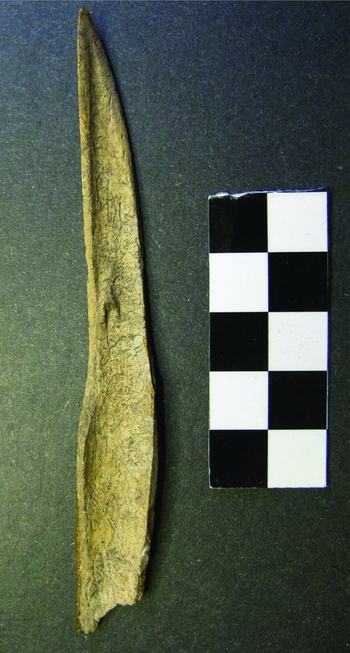
Whilst direct evidence for hunting strategy is scant, the discovery of the tip of a flint point embedded within a humerus of a whooper swan at Vedbæk (Noe-Nygaard Reference Noe-Nygaard1974, 236) suggests that projectiles certainly played some part. However, a bone artefact within the assemblage may offer another clue; figure 2 shows what would normally be described as a swan ‘bone point’, eliciting connotations of projectiles and weapons. However, a discrepancy between the high amounts of wear and polish on the point compared to the seemingly ‘unfinished’ rough distal end suggests that this was a tool created and used for another purpose. The interpretation suggested here (cf. Overton Reference Overton2010) is that of a netting needle, used to construct and repair nets, requiring a point to weave within the holes of the netting, resulting in the surface lustre that we witness today. Therefore this would suggest that the swans may have been captured with nets, prior to dispatch, possibly by projectile point, a method that has been identified within the Russian Early Mesolithic (Zhilin and Karhu Reference Zhilin and Karhu2002, 114). Furthermore, as extremely messy eaters, whooper swans attract numerous species of duck that feed on aquatic vegetative material otherwise out of their reach (Brazil Reference Brazil2003, 258). Therefore, if the swans were netted on water, one would expect to find some remains of the ducks that were also caught; the lack of any such wildfowl would suggest that the swans were captured on land, where terrestrial feeding grounds may have facilitated ambush from closer proximity.
‘Bone point’ from Aggersund, made from the humerus of whooper swan, scale size 5 cm.

However, this process would not be as serene as described; whooper swans use their wings to batter any attackers (Wilmore Reference Wilmore1974, 98), and are easily capable of breaking human limbs (Young Reference Young2008, 19), whilst their spiny tongue, serrated bill and strong jaw muscles (Brazil Reference Brazil2003, 241) are, from the authors’ personal experience, formidable weapons resulting in blood being drawn and painful effects. Furthermore, when swans die, their lungs will collapse, emitting a ‘feeble, flute-like and strangely melancholy’ call (Wilmore Reference Wilmore1974, 107), distinct from any other they produce. The capture and killing of a swan, understood not as a resource but as a sentient social agent, would be an emotive and theatrical event (cf. Hamilakis Reference Hamilakis, Hitchcock, Laffineur and Crowley2008, 10), a very specific, sensorial and affective experience: the clamorous and terrified movements of a stricken swan or the cacophonous and tremulous swirl of sound emitted by desperate swans as they were trapped, would have made the occasion distinctive, poignant and memorable. One of us has argued that the close proximity and continuous contact of humans and domestic animals in prehistory would make their killing by humans a highly charged, emotional drama (Hamilakis Reference Hamilakis, Hitchcock, Laffineur and Crowley2008, 7–8). Although the relationships between humans and swans at Aggersund are not born out of the cohabitation that is afforded in societies living with domestic animals, human understanding of the swans as individual, possibly even recognized, social actors would have transformed the killing into a highly significant event. Prior to killing, humans may have believed they recognized specific individuals from previous engagements, possibly even from different years; with this memory comes an acknowledgement that they are, like humans, individual and sentient beings, adding considerable weight to the process of killing them. Moreover, these experiences would have contributed to the developing biographies of these known individual swans, created through past engagements.
Once killed, the swans at Aggersund were butchered; analysis of the osseous remains revealed cut marks on the coracoid, furcular and tibiotarsus, which conform to a pattern that has been suggested by Laroulandie (Reference Laroulandie, Bourgignon, Ortega and Frere-Sautot2001) to be evidence of ‘filleting’ in avian assemblages, to remove meat from the bones, as opposed to disarticulating the carcass. Furthermore, none of the specimens exhibited evidence of burning, supporting the suggestion that the carcasses were ‘filleted’ to remove the meat prior to cooking. The removal of meat from the bones may be further supported by a number of long-bone specimens that lacked one or both ends and exhibited irregular, ragged edges and associated longitudinal cracks, which may be evidence of marrow extraction, a process that presumably necessitated the removal of surrounding meat before the bone was fractured to remove the marrow. Any conclusions with regard to carcass processing and treatment must remain, however, tentative: the small size of the assemblage and the difficulty in observing butchery marks and fracture patters due to poor preservation make firm conclusions impossible.
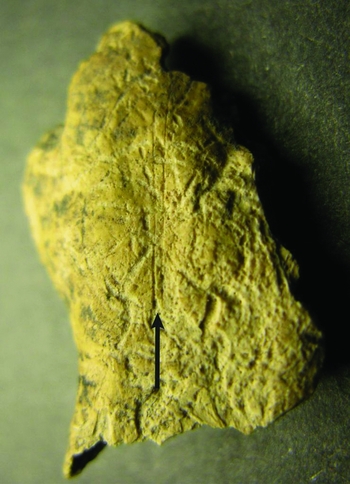
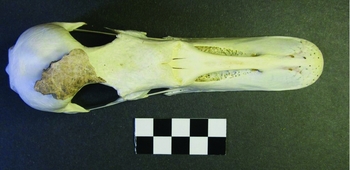
There were, however, some additional interesting and clearly recognizable features: one specimen exhibited cut marks to the skull (figure 3), a location that is not necessarily associated with the processing of an individual for the recovery of meat. This, combined with cut marks to the distal humerus and the previously highlighted lack of distal wing bones, may suggest that, before butchery, the feathered skin, including the distal portion of the wing, was removed (Overton Reference Overton2010). Whilst rare in archaeological discourses, there are many ethnographic examples of birds being skinned as a method of gathering feathers, or as a warm alternative to mammal skins (Serjeantson Reference Serjeantson2009, 203), and in some cases the distal wings are removed with the feathered skin (Ubelaker and Wedel Reference Ubelaker and Wedel1975, 446).
Close-up of a swan skull fragment from Aggersund, exhibiting two cut marks running down the length (arrowed), approx. 4 cm in length.

Location of fragment on skull.

As with killing, we must consider the sensorial aspects of the treatment of the carcass (cf. Gamble and Gaudzinski Reference Gamble, Gaudzinski, Gamble and Porr2005): the evocative scent and the visual impact of red blood on the white plumage, and the sight of visceral, skinned corpses with soft white skins would have made this an emotionally charged and distinctive event. Moreover, these would not have been just random sensorial reactions; these were significant as continuing engagements within the developing biography of the relationship between humans and known swans. Not only are the processes of killing and butchery distinctive, they were also, through their sights, smells, sounds and textures, and the associated affective and emotional weight, embodied and sensuous processes that produce strong mnemonic effects and would have created bodily memories (Hamilakis Reference Hamilakis, Hamilakis, Pluciennik and Tarlow2002, 124; Reference Hamilakis, Lilios and Tsamis2010, 193). By understanding the swans as sentient social actors, the processes of killing and butchery were not a neutral necessity; instead they were powerful, emotive and distinct events, constantly mediating human relationships with swans, in turn creating strong memories that bound human understandings, the biographies of individual swans and places in the landscape to the material remains of the swans. As a result, consumption and deposition were arenas where relationships could be further negotiated.
At Aggersund, the consumption of swans was not a generic act of eating, but a charged event where sensory experiences evoked specific meanings and places, and mediated the formation of new relations, both human–swan, and human–human. The flesh may have been from a known individual, intimately connecting it to past engagements, the human who killed it and the place where it was killed. Meanings specific to certain individuals, therefore, inherent within the remains, would have mediated human social relations, as the meat was shared and consumed within the group. Moreover, consumption, as a highly sensorial activity, also creates new memories (Hamilakis Reference Hamilakis, Hitchcock, Laffineur and Crowley2008, 16; Sutton Reference Sutton2001; Reference Sutton2010), in which previous understandings are entwined with new experiences. The memories created through consumption would have gathered together many spatial and temporal elements, experiences from different places and different times, intimately binding humans and swans together in what can be termed a shared ‘sensory horizon’ (Hamilakis Reference Hamilakis, Hamilakis, Pluciennik and Tarlow2002, 124).
Strong parallels can also be drawn between consumption and the use of tools made from the remains of swans. Traditionally, bone tools have been interpreted along functionalist lines, with little consideration of the animal that has provided the source material. The ‘bone point’ netting needle (figure 2) becomes more significant when it is considered that swans may have been hunted using nets, as outlined above; in using remains of a swan to fabricate the means to capture others, the tool thus evoked memories of the individual it originated from and of the engagements and places that are bound up with that individual, intimately connecting them at the same time to future engagements with other swans. The deposition of this tool with the remains of other swans, possibly those caught by the nets the tool was used in making, connects materially these activities, and demonstrates a recognition of the tool as swan, retaining, as Conneller has described it, its ‘animalness’, not as a symbol of the animal, but actually incorporating part of the animal agency (Conneller Reference Conneller2004, 45–47). Consumption and utilization of remains, therefore, were more than just economic strategies for survival and existence; they served as processes that reaffirmed and reworked the relationships connecting humans, swans, activities and places within the landscape.
After butchery and consumption, the remains of the swans were deposited, accompanied by mammalian remains, crushed shells, knapped flints and burnt material, into a small oval pit, close to the shoreline at Aggersund. Considered only as food, the deposition of the remains of swans can be explained simply as the disposal of objects with no further nutritional or economic value. Attempts to offer alternatives have suggested that the intentional deposition of animal remains showed respect (Chatterton Reference Chatterton, Conneller and Warren2006, 107), or that depositions were left as tangible traces for others to see, as a way of understanding the environment (Edmonds Reference Edmonds1997, 101). In all these explanations, however, the remains are deemed objects at the end of their life, discarded in one final act of human involvement (McFadyen Reference McFadyen2007, 119). Instead, the remains at Aggersund, understood as retaining and eliciting recollections of past experience and engagements, are bound up in a network of memories, places and activities, and their deposition can embody and materialize something else. In an activity that requires serious time and effort, deliberate deposition re-collects and preserves the fragments of a communal and emotive event (Hamilakis Reference Hamilakis, Hitchcock, Laffineur and Crowley2008; Reference Hamilakis, Lilios and Tsamis2010, 195; Hamilakis and Harris Reference Hamilakis and Harris2011), creating a material reminder of experiences. At Aggersund, the deposition of whooper swan remains into a pit shortly after butchery created a mnemonic record of places, engagements and experiences, interlinking Aggersund with tasks undertaken elsewhere, connecting thus the existences of humans and swans through material memories. By considering the remains not as discarded, but as active within Mesolithic humans’ world, Aggersund also becomes a ‘condition of possibility’ (McFadyen Reference McFadyen2007, 124), not just a record of the past, but a still-active space that may be returned to. For groups of people who are understood to have lived a largely mobile existence, the marking of places materially and mnemonically through sensorial experiences and engagements, in other words the material production of locality (cf Appadurai Reference Appadurai and Fardon1995), would have been key in their understanding of the landscape. What would have been produced, then, out of an unknown expanse, was a network of familiar locales, created through relationships, engagements and practices, sustained through memories and future promises and possibilities.
Reinterpreting Vedbæk Grave 8
Aggersund, whilst frequently referenced in studies of Late Mesolithic mobility strategies and site use (e.g. Price Reference Price1983; Rowley-Conwy Reference Rowley-Conwy and Rowley-Conwy1987), is by no means the only example of whooper swan remains in the Ertebølle. Although whooper swans have been recovered from many coastal Ertebølle sites, such as Havnø, Klintesø and Ertebølle (Grigson Reference Grigson and Bonsall1990), it is the remains from the cemetery site of Vedbæk-Bøgebakken that are probably best known. Originally, 17 graves were excavated at Vedbæk-Bøgebakken (Albrethsen and Brinch Petersen Reference Albrethsen and Brinch-Petersen1976), which contained the remains of a wide range of different species, including red deer, roe deer, wild boar, aurochs and whooper swan, a feature that has been echoed in more recently discovered contemporary graves in the local area (e.g. Brinch-Petersen, Meiklejohn and Alexandersen Reference Brinch Petersen, Meiklejohn and Alexandersen1993). Here we wish to focus upon the evocative remains of Grave 8, discovered in the original excavations, which contained the skeletons of a richly adorned female and a newborn child, thought to have been placed upon the wing of a whooper swan (Albrethsen and Brinch Petersen Reference Albrethsen and Brinch-Petersen1976) which has, unlike any other site or find, established and promoted the presence of whooper swans in the Danish Mesolithic.
Previously, the swan's wing was interpreted in terms of ‘cult’ activity (Møhl Reference Møhl1978, 68), as a cradle or shroud, and most commonly as a means through which the spirit of the child would have been carried to the afterlife (Mannermaa Reference Mannermaa2008b, 216; Serjeantson Reference Serjeantson2009, 345). The association of wings with an afterlife is predicated on the assumption that it is in some way ‘above’, requiring the ability to fly to reach it, very reminiscent of Judaeo-Christian belief systems that allude to the presence of heaven or an afterlife in the sky or above the material earth. Interpretations of this context that explicitly consider belief systems reference notions of a tripartite universe, and the perceived ability of water birds to move between all three zones, including the underworld, situated underwater, understood as the world of the dead; these interpretations often rely on ethnographic studies of circumpolar peoples (Mannermaa Reference Mannermaa2008b, 217; cf. also Zvelebil Reference Zvelebil, Larsson, Kindgren, Knutsson, Loeffler and Åkerlund2003a, 67; Reference Zvelebil, Bevan and Moore2003b, 7). Whilst the concept of a tripartite universe offers further opportunity to articulate the connectedness of humans and swans in a single, shared world, previous explanations of the wing within this framework have relied on characterizing the wing in terms of its essential but generic ability for movement through the different zones. Other, less ethnocentric and essentialist and thus more interesting, interpretations (e.g. Fowler Reference Fowler2004, 74–76) consider the swan's wing as a partible object that confers specific animal-like qualities onto humans, stressing at the same time its role in engaging with the environment and with other animals. The broader assumption here is that the deposition of the swan's wing would have linked animal and human biographies, although it is not explained in any detail how such an interweaving would have been materialized, and therefore appears as a largely essentialist interpretation of the wing. The alternative interpretation offered here diverges from previous, symbolic and ethnocentric attempts, moving at the same time away from generic discussions that treat these remnants as representations of swan-ness, standing for a homogeneous animal species. Instead, it considers them as the remains of an individual swan, imbued with understandings and relationships borne through specific unfolding interactions between humans and itself.
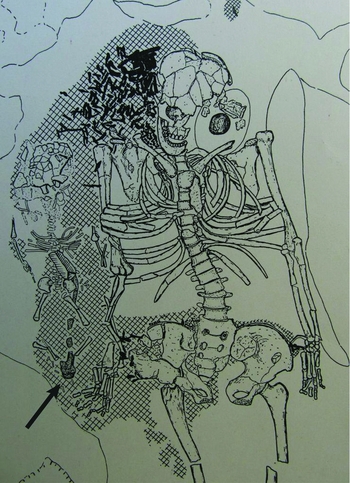
Since their discovery, the swan remains upon which the child was resting have been described as a ‘wing’ (e.g. Albrethsen and Brinch Petersen Reference Albrethsen and Brinch-Petersen1976, 9; Bogucki Reference Bogucki and Bahn1996, 62; Mannermaa Reference Mannermaa2008b, 202; Møhl Reference Møhl1978, 68; Nilsson Stutz Reference Nilsson Stutz2003, 286; Serjeantson Reference Serjeantson2009, 345). Whilst the remains are preserved ‘in situ’ at Søllerød museum after the whole grave was block-lifted, thus making hands-on study of the osseous remains unfeasible, close inspection of the excavation plans and photographs and visual examination of the grave itself allows for a different interpretation. The original plan of the grave (figure 4), later modified versions (e.g. Fowler Reference Fowler2004), and published photographs (e.g. Nilsson Stutz Reference Nilsson Stutz2003, 233, photo 19) present the ‘wing’ remains orientated with the bulky proximal end of the carpometacarpus at the feet of the child and the distal end towards the pelvis area. Oriented in this way, however, the bulk of the wing, made up of the radius, ulna and humerus, articulating at the proximal end of the carpometacarpus, would not extend under the child, but away from the child. In reality, the child was not placed upon a whole wing, but just the tip. This questions the validity of the wing as representing transport to the afterlife; if the intention were to allow the soul to fly, would a whole wing not have been more suitable than just the tip?
Original plan of Grave 8 at Vedbæk. The bulky proximal end of the carpometacarpus is indicated by the arrow in the bottom left-hand corner (Albrethsen and Brinch Petersen Reference Albrethsen and Brinch-Petersen1976).

In a manner analogous to the deposition of remains at Aggersund, the placement of the wingtip in the grave incorporated memories of places and experiences from a range of temporal and spatial scales. The very limited number of elements and the inability to examine the remains closely restrict what can be said about the individual from which the wingtip originated; whilst difficult, however, this is not to say that an exploration of human–swan engagements in this case is entirely futile. As previously outlined, whooper swans use their wings in very specific ways, outstretching them in scenes of welcome and greeting, vigorously beating them to batter other adults into submission during territory disputes (Wilmore Reference Wilmore1974, 98), or in the highly social practice of ‘carpal flapping’, where the wings are held outstretched shaking their tips in expression of bonding between individuals (Brazil Reference Brazil2003, 294). Mesolithic humans, therefore, may have understood the wings based not on their inherent ability to facilitate flight, but on their communicative and highly social roles. Furthermore, the wingtip may have elicited memories of the experiences and places of hunting, killing, butchery and consumption, and formed a material link with the other elements of swans deposited elsewhere, which existed as still significant places, as ‘conditions of possibility’ (Ingold Reference Ingold2011, 85; McFadyen Reference McFadyen2007, 124), intimately imbricated within a network of tasks and memories. Moreover, this deposition may also cite other tasks undertaken within the environment; the ideal feathers used to flight arrow shafts are the primary flight feathers, attached to the carpometacarpus and phalanges (Serjeantson Reference Serjeantson2009, 191), the very same feathers that the child was laid upon. The wing is intimately bound, therefore, to practices of hunting with bow and arrow, eliciting memories of previous hunts, of social and, no doubt, affective engagements with different species and individuals in various places, drawing the sensorial landscape together within the practice of depositing the child upon the wingtip. Furthermore, these remains were not simply linked to places, tasks and materials, they were also linked to those individuals who engaged in such travels and practices; the deposition of the wing in Grave 8 may also reference ties the human individuals buried in the grave, or their relatives, had with the practice of hunting swans, and the swans themselves.
The child in Grave 8 was not buried on a generic ‘wing’, it was placed on the wingtip of a swan that was known and remembered by Mesolithic humans, hunted, killed and consumed at places that may have remained sites of possibility in the individual and collective memory and within the broader landscape, and potentially referenced specific ties the interred individual people had with these tasks, places and individual swans. It may be no coincidence that the wing is treated with such significance at a site that also provided evidence for the hunting of whooper swans, in the form of skeletal remains, including a humerus with the tip of a flint projectile point embedded within it (Noe-Nygaard Reference Noe-Nygaard1974, 236). Moreover, the child was placed on a specific part of the swan, an appendage that had a strong and important role in social interaction between swans, made up of the long primary and secondary feathers used to fletch arrows. The wing was placed in the grave not as a symbolic afterthought, but as a material acknowledgement of the intimate relationship between humans and whooper swans, the enmeshing of their worlds and the development of understanding both of themselves and of the surrounding world, through their continual and repeated engagements.
Conclusions
In this paper, we did not set out to demolish a dominant, monolithic zooarchaeological paradigm and replace it with another, equally monolithic one. We rather proposed to rethink the whole zooarchaeological operation, and reflect on the reasons for the limited impact of the subfield in comparison with its potential, despite the several recent encouraging works that explore alternative frameworks and expand into new areas. Moreover, we showed by way of example how one such novel, non-anthropocentric zooarchaeological framework can emerge. In the Mesolithic case studies we reanalysed, we demonstrated the richness of interpretative insights and the possibilities that can be opened to us once such a framework is adopted, even with the relatively meagre faunal remains available.
In concluding, we would like to sum up this exercise by stressing four interlinked points that we offer up for further debate. The first is that the ‘social’ in our title does not imply some sort of rejection of the ‘environmental’, the ‘economic’ or the ‘subsistence’ element in our work. It rather suggests an ongoing, intercorporeal interaction, a life process, a status of continuous enfolding and becoming, where human and non-human animals are intricately linked in a complex web of associations and are mutually constituted as sentient, active beings. This is a hybridic sociality, which, of course, includes elements of economizing and exploitation, more often than not on the part of humans. Zooarchaeology ought to write the whole history of this process of mutual becoming, not just some aspects to do with human economizing and subsistence.
The second stresses the need to redress the balance in zoorchaeology by considering in detail living and acting non-human animals, and not simply as ‘walking larders’, passive indirect storage devices, mere sources of meat or secondary products which are manipulated and programmed by humans for their own benefit. Non-human animals are embodied beings that, through their sensorial life processes, co-shape with humans the worlds we inhabit. In our case studies, we showed that in the Danish Mesolithic, while humans were clearly benefiting from the captured and killed swans in using their meat, feathers, bones and so on, it was primarily the living and sensorially acting swans that humans were engaging with, an engagement which must have shaped subsequent handlings of dead swans and swan parts. Moreover, our case studies have shown how much we can gain by studying closely animal ethology.
The third point relates to the potential of a social zooarchaeology that places at the centre of study and reflection not only species-to-species interaction, but also interpersonal, or rather intercorporeal, interactions between human and non-human organisms. In many cases this will not be easy to investigate zooarcaeologically, but it is worth the effort. As we showed here, the question often is not whether humans could recognize and relate to individual animals, but whether they believed they could. Rather than aiming at elucidating individualizing, anecdotal and perhaps irrelevant cases, such an effort aims at evoking collectively experienced, valorized, celebrated and perhaps memorialized stories of unique, perhaps fabulous, encounters, contests and confrontations that carried affective and mnemonic weight.
Our final point is methodological. We have suggested here that, while we do not propose the abandonment of all received and well-established zooarchaeological methodologies (and in our case we made profitable use of many of them), it is about time we questioned the suitability of certain previous methods and working assumptions, and considered, for example, just how suitable for a social zooarchaeology specific methods of quantification are, especially since they were designed as parts of a framework that homogenized non-human animals, and endeavoured to investigate resource acquisition and output maximization on the part of humans. Furthermore, zooarchaeological classifications based on purely zoological taxonomic terms cannot fully account for the complexity of human–animal encounters and relationships (cf. Serjeantson Reference Serjeantson and Rowley-Conwy2000), propagating at the same time an implicit, anthropocentric hierarchy, and obscuring associations across the taxonomic spectrum. To paraphrase Tim Ingold (Reference Ingold2011, 160), we have to bypass the classifications that ‘split apart’, in order to get to the ‘stories, that always, and inevitably, draw together’.
Acknowledgements
The theoretical framework of this paper was initially developed during the inaugural seminar series (2003–4) of the University of Southampton's Laboratory of Social Zooarchaeology, for which Yannis Hamilakis acted as coordinator. The core participants in the seminar, in addition to the coordinator, were Kerry Harris, Kristin Armstrong Oma, Dale Serjeantson and Naomi Sykes. All of them contributed, in their own ways, to the formulation of these ideas. This framework was subsequently debated with successive generations of MA students as part of the ‘Bones in context. Human–animal interactions’ module (MA programme in osteoarchaeology), at the same university. Nick Overton was one such student during the 2009–10 academic year. The case studies presented here are based on his unpublished MA dissertation completed that year, and he wishes to acknowledge that this research would not have been possible without funding from the Arts and Humanities Research Council, to whom he extends his great thanks. He also wishes to thank Dale Serjeantson for advice and guidance throughout the research process; Kim Aaris-Sørensen and his staff at the University of Copenhagen Zoology Museum, for making the viewing of the Aggersund collection so easy; and Andy Jensen, for his excellent translation of Danish academic texts, crucial to this research. Finally he wishes to thank Lawrence Billington, who shared in conversations that formed the embryonic beginnings of this research. Seven referees made constructive suggestions, and we wish to thank them all; those who chose to disclose themselves were Liv Nilsson Stutz, Garry Marvin, Mark Pluciennik and Naomi Sykes.