Introduction
Non-financial reporting (NFR) refers to a series of reporting initiatives not related to the financial transactions and financial standing of an organization. Rather, it refers to a series of reporting initiatives related to environmental and social matters such as respect for human rights, corruption, and bribery (BEIS, 2020; European Parliament, 2014). Different terminologies that are used to express the concept of NFR (Tarquinio & Posadas, Reference Tarquinio and Posadas2020) include sustainability reporting (Hahn & Kühnen, Reference Hahn and Kühnen2013; Kolk, Reference Kolk2003), corporate sustainability reporting (Siew, Reference Siew2015; Tsalis, Malamateniou, Koulouriotis, & Nikolaou, Reference Tsalis, Malamateniou, Koulouriotis and Nikolaou2020), and non-financial disclosure (Gao, Dong, Ni, & Fu, Reference Gao, Dong, Ni and Fu2016; Jackson, Bartosch, Avetisyan, Kinderman, & Knudsen, Reference Jackson, Bartosch, Avetisyan, Kinderman and Knudsen2020). In this article, we consider NFR as an umbrella term to include all the different terminologies used to refer to NFR initiatives.
There is a growing interest in NFR by policymakers, academics, and practitioners. Policymakers need to include both financial and non-financial aspects in their policies to move toward sustainable development (European Council, 2022; European Parliament, 2014; United Nations, 2021). Academics and practitioners are increasingly discussing the role of NFR in diverse contexts, such as the utilities sector (Imperiale, Pizzi, & Lippolis, Reference Imperiale, Pizzi and Lippolis2023; Valenza & Damiano, Reference Valenza and Damiano2023), the maritime industry (Hojnik, Biloslavo, Cicero, & Cagnina, Reference Hojnik, Biloslavo, Cicero and Cagnina2020), and the airline industry (Zieba & Johansson, Reference Zieba and Johansson2022). The Sustainable Development Goals (SDGs) play a relevant role in this context (Macht, Chapman, & Fitzgerald, Reference Macht, Chapman and Fitzgerald2020). In particular, SDG 12 (Responsible Consumption and Production) encourages enterprises to implement NFR initiatives (United Nations, 2015).
It is, in some cases, a requirement for large enterprises to disclose non-financial information. For instance, in the European context, the EU Directive on NFR (2014/95/EU) sets out the goal of mandatory publication of non-financial reports (European Parliament, 2014). The Directive aims to enhance the consistency and comparability of non-financial information disclosed by large enterprises (European Parliament, 2014). The content of the Directive is strengthened by the Corporate Sustainability Reporting Directive (CSRD), approved by the European Council in 2022 (European Council, 2022), which aims to ensure a more detailed NFR.
On the contrary, small and medium-sized enterprises (SMEs) often disclose non-financial information voluntarily. It is worth noting that the CSRD applies to ‘listed’ SMEs. Their inclusion indicates the growing interest in NFR in the context of SMEs.
SMEs can play a pivotal role in the path toward sustainable development and, therefore, should not be neglected (Dalton, Reference Dalton2020; Pizzi, Corbo, & Caputo, Reference Pizzi, Corbo and Caputo2021). Indeed, SMEs represent 90% of firms and contribute to about 50% of employment worldwide (The World Bank, 2022). It is evident that the context surrounding large enterprises and SMEs is substantially different. For instance, SMEs are often responsible for fewer and different stakeholders and have different regulations guiding their modus operandi (Caputo, Pizzi, & Santini, Reference Caputo, Pizzi and Santini2022; Kinderman, Reference Kinderman2020). However, considering the total weight of SMEs as an aggregate making up 99% of all firms contributing to over half of the value added (OECD, 2019), and considering a series of SMEs in a specific context as an aggregate, would enable a heterogeneous set of local stakeholders to play a relevant role (Russo & Tencati, Reference Russo and Tencati2009). This gives an idea of the relevance of SMEs toward sustainable development (Caputo, Pizzi, & Santini, Reference Caputo, Pizzi and Santini2022; Dabić, Maley, Dana, Novak, Pellegrini, & Caputo, Reference Dabić, Maley, Dana, Novak, Pellegrini and Caputo2020). Hence, SMEs should also be key actors in the implementation of NFR initiatives.
Several sets of guidelines for supporting the disclosure of non-financial information, such as the ones provided by the Global Reporting Initiative (GRI, 2021) and the International Integrated Reporting Initiative (IIRC, 2021), are available for both large enterprises and SMEs. However, extensive research contends that SMEs are less committed to NFR than their larger counterparts and has investigated the reasons behind this low commitment (Krechovská & Procházková, Reference Krechovská and Procházková2014; Vrontis, Iazzi, Maizza, & Cavallo, Reference Vrontis, Iazzi, Maizza and Cavallo2020). More generally, there has been much research on sustainability initiatives in the context of SMEs, particularly in the last decade. There are several articles in the literature about sustainability initiatives in SMEs (Bartolacci, Caputo, & Soverchia, Reference Bartolacci, Caputo and Soverchia2020; Johnson & Schaltegger, Reference Johnson and Schaltegger2016; Martins, Branco, Melo, & Machado, Reference Martins, Branco, Melo and Machado2022; Prashar & Sunder, Reference Prashar and Sunder2020). However, to the best of the authors’ knowledge, no study has systematically and critically analyzed the literature about NFR in SMEs.
Based on a systematic literature review, this article aims to provide an overview of the mechanisms underlying NFR initiatives by SMEs. The focus on the mechanisms underlying NFR initiatives is motivated by the need to identify the elements that could smooth the implementation of such initiatives. It is worth stressing that this article focuses on all the initiatives carried out by SMEs to disclose non-financial information. Therefore, the unit of analysis is the process of producing documents reporting non-financial information.
By leveraging a thematic analysis, four drivers that motivate SMEs in implementing NFR initiatives emerged. These are legitimacy-based motivations, competitive advantage, stakeholder pressure, and stakeholder engagement. Furthermore, specific guidelines and a series of tools for NFR emerged as relevant enabling factors. The thematic analysis also led to the identification and examination of the following challenges: lack of capabilities, limited financial resources, limited awareness, lack of standardization, and lack of specific organizational units. Additionally, based on the findings of the thematic analysis, i.e., what we know, and drawing on what we do not know about NFR in the context of SMEs, this article provides a novel conceptualization of NFR as a process characterized by three main phases, namely planning, data management, and dissemination. Therefore, the primary application of this conceptualization is expected to be in the context of SMEs, but this might also be a valuable approach for scholars researching in the context of large enterprises. This conceptualization, which is detailed in the Discussion section, can increase the degree of specificity of future research about NFR and contribute to the collective understanding of how enterprises can implement NFR initiatives.
Moreover, by starting from the analysis of the retrieved information and the novel conceptualization, this article triggers an exciting research agenda.
The rest of the article is structured as follows. Methodology section presents the methodology adopted. Findings section summarizes what we know about the mechanisms underlying NFR initiatives implemented by SMEs. Discussion section discusses the findings and presents the novel conceptualization of NFR as a process. Conclusions, limitations, and future research opportunities section concludes the article and suggests future research opportunities.
Methodology
A systematic literature review was conducted combining methodologies used in previous studies (Di Maddaloni & Davis, Reference Di Maddaloni and Davis2017; Mignacca & Locatelli, Reference Mignacca and Locatelli2020; Nave, Ferreira, Fernandes, Paço, Alves, & Raposo, Reference Nave, Ferreira, Fernandes, Paço, Alves and Raposo2022; Tarquinio & Posadas, Reference Tarquinio and Posadas2020; Vaquero Martín, Reinhardt, & Gurtner, Reference Vaquero Martín, Reinhardt and Gurtner2016). A systematic literature review can be defined as a ‘specific methodology that locates existing studies, selects and evaluates contributions, analyzes and synthesizes data, and reports the evidence in such a way that allows reasonably clear conclusions to be reached about what is and is not known’ (Denyer & David, Reference Denyer, David, Buchanan and Bryman2009, p. 671).
In this case, the documents (the research studies) were extracted from the scientific search engines Scopus and Web of Science due to the scientific merit of their indexed literature (Ferrer-Serrano, Fuentelsaz, & Latorre-Martinez, Reference Ferrer-Serrano, Fuentelsaz and Latorre-Martinez2022; Morais & Ferreira, Reference Morais and Ferreira2020; Tarquinio & Posadas, Reference Tarquinio and Posadas2020). There were three main stages in selecting the documents.
By leveraging discussions with senior academics (Di Maddaloni & Davis, Reference Di Maddaloni and Davis2017) and relevant literature on NFR (Tarquinio & Posadas, Reference Tarquinio and Posadas2020), the first stage led to the identification of a list of keywords.
In the second stage, the keywords were combined with the Boolean operators * AND */* OR * and used in Scopus and Web of Science as follows:
‘non-financial report*’ OR ‘non-financial disclosure*’ OR ‘non-financial statement’ OR ‘non-financial information’ OR ‘sustainability report*’ OR ‘sustainable development goal report*’ OR ‘SDG report*’ OR ‘integrated report*’ OR ‘social and environmental report*’ OR ‘GRI’ OR ‘global reporting initiative’
AND
‘small business’ OR ‘medium business’ OR ‘small and medium-sized’ OR ‘small enterprise’ OR ‘medium enterprise’ OR ‘SME’ OR ‘small firm’ OR ‘medium firm’ (Search date: 01/02/2023).
In the second stage, non-English documents and conference reviews were excluded (Mignacca, Locatelli, & Velenturf, Reference Mignacca, Locatelli and Velenturf2020; Nave et al., Reference Nave, Ferreira, Fernandes, Paço, Alves and Raposo2022; Vicente-Saez & Martinez-Fuentes, Reference Vicente-Saez and Martinez-Fuentes2018), obtaining 158 unique documents after removing the duplicates in Scopus and Web of Science. The search was not limited in terms of publication date, so the range is from 1991 to 2023.
Two main steps characterize the third stage (Mignacca & Locatelli, Reference Mignacca and Locatelli2020: (1) A careful reading of the title and abstract to filter out documents not related to the research aim, which left 112 documents, and (2) A careful reading of the introduction and conclusion of these 112 documents to eliminate those that are not related to the research aim, leaving 38 documents to be analyzed.
The research aim ‘to provide an overview of what we know about the mechanisms underlying NFR initiatives by SMEs’ guided the selection of the documents in Step 1 and Step 2. In other words, if the central aspect of the research was not NFR with a focus on SMEs, the document was excluded. A similar approach was adopted by Nave et al. (Reference Nave, Ferreira, Fernandes, Paço, Alves and Raposo2022). However, with respect to Nave et al. (Reference Nave, Ferreira, Fernandes, Paço, Alves and Raposo2022), this selection was not influenced by the methodology adopted in the retrieved study. Additionally, historical articles or studies on specific industries or geographical areas were not excluded.
Because decisions about the exclusion criteria are relatively subjective (Tranfield, Denyer, & Smart, Reference Tranfield, Denyer and Smart2003), Step 2 was conducted by more than one researcher, following the approach of Di Maddaloni and Davis (Reference Di Maddaloni and Davis2017). Step 1 was conducted by only one researcher, but if the researcher implementing Step 1 was not sure about the relevance of the study, the other authors were consulted to reach a consensus (Vaquero Martín, Reinhardt, & Gurtner, Reference Vaquero Martín, Reinhardt and Gurtner2016).
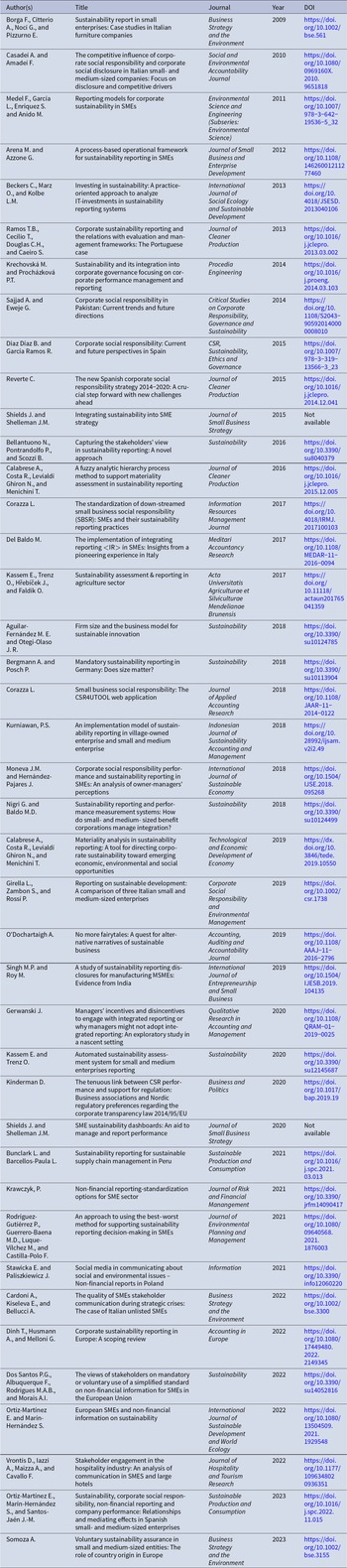
Figure 1 summarizes the selection process, and Table A1 in the Appendix shows the final sample of the retrieved documents.
Selection process. Layout adapted from Di Maddaloni & Davis, (Reference Di Maddaloni and Davis2017) and Mignacca, Locatelli, & Velenturf (Reference Mignacca, Locatelli and Velenturf2020).

Figure 2 shows the number of final retrieved documents per year. The distribution of the documents is as follows: 16% between 2009 and 2013, 34% between 2014 and 2018, and 50% between 2019 and 2023. The publication trend suggests a growing interest in NFR initiatives in the context of SMEs.
Number of documents per year.

The authors conducted a thematic analysis of the collected information. Thematic analysis is a method for ‘identifying, analyzing and reporting patterns (themes) within data’ (Braun & Clarke, Reference Braun and Clarke2006, p. 79). In conducting a thematic analysis, the frequency of a theme is not related to its relevance. In contrast, the researcher relates the frequency of a theme with its relevance in content analysis (Vaismoradi, Turunen, & Bondas, Reference Vaismoradi, Turunen and Bondas2013). Considering the relatively low quantity of information about NFR in the context of SMEs and the exploratory nature of this research, the authors conducted a thematic analysis to avoid missing potentially relevant themes.
A three-step coding process was used to identify themes and subthemes. Table 1 provides an example of the coding process. Table A2 in the Appendix presents the preliminary coding and the final coding (subthemes and themes). The identified themes and subthemes are presented in the next section.
Example of the coding process – Layout adapted from Mignacca and Locatelli (Reference Mignacca and Locatelli2021)

Findings
The thematic analysis led to the identification and examination of three themes, namely drivers, enabling factors, and challenges, and 11 subthemes. The ‘drivers’ theme includes four subthemes: legitimacy-based motivations, competitive advantage, stakeholder pressure, and stakeholder engagement. The ‘enabling factors’ theme includes two subthemes: specific guidelines and tools for NFR. The ‘challenges’ theme includes five subthemes: lack of capabilities, limited financial resources, limited awareness, lack of standardization, and lack of a specific organizational unit. This section presents the themes and subthemes.
Drivers
Legitimacy-based motivations
The analysis of the retrieved studies highlights how legitimacy-based motivations are relevant reasons for SMEs to embark on voluntary NFR initiatives (Casadei & Amadei, Reference Casadei and Amadei2010; Rodríguez-Gutiérrez, Guerrero-Baena, Luque-Vílchez, & Castilla-Polo, Reference Rodríguez-Gutiérrez, Guerrero-Baena, Luque-Vílchez and Castilla-Polo2021). Legitimacy-based motivations refer to the general ‘legitimacy theory’, which is an organizational theory that ‘predicts that corporations will do whatever they regard as necessary to preserve their image of a legitimate business with legitimate aims and methods of achieving it’ (de Villiers & van Staden, Reference de Villiers and van Staden2006). According to Rodríguez-Gutiérrez et al. (Reference Rodríguez-Gutiérrez, Guerrero-Baena, Luque-Vílchez and Castilla-Polo2021), legitimacy is generally a differentiating factor that SMEs pursue by disclosing non-financial reports. Gerwanski (Reference Gerwanski2020) highlights that, first, SMEs can leverage non-financial information as a ‘protective shield’ in case of events that could damage their reputation; and, second, they can leverage NFR to gain legitimacy by improving their corporate image to reach investors. These findings are in line with the ‘general’ environmental legitimacy-based explanations for voluntary disclosure (O’Donovan, Reference O’Donovan2002).
Competitive advantage
SMEs often disclose non-financial information to achieve a competitive advantage. For instance, SMEs may disclose non-financial information to improve their market situation (Beckers, Marz, & Kolbe, Reference Beckers, Marz and Kolbe2013), and transparency, and to enhance brand value and reputation (Nigri & Baldo, Reference Nigri and Baldo2018). According to Beckers, Marz, and Kolbe (Reference Beckers, Marz and Kolbe2013), disclosing non-financial information enables other benchmark indicators, which leads to further comparison with competitors, thereby potentially obtaining a competitive advantage. SMEs can also leverage the monitoring of non-financial aspects to motivate employees, thereby increasing their commitment toward the goals of the enterprise (Del Baldo, Reference Del Baldo2017; Nigri & Baldo, Reference Nigri and Baldo2018). Using a partial least squares structural equation model on a sample of 126 Spanish SMEs, Ortiz-Martínez, Marín-Hernández and Santos-Jaén (Reference Ortiz-Martínez, Marín-Hernández and Santos-Jaén2023) show that SME managers can improve corporate performance by increasing sustainability reporting.
Stakeholder pressure
Stakeholders often motivate SMEs to implement NFR initiatives. For instance, large enterprises could choose an SME as a supplier based on their NFR initiatives (Bunclark & Barcellos-Paula, Reference Bunclark and Barcellos-Paula2021; Rodríguez-Gutiérrez et al., Reference Rodríguez-Gutiérrez, Guerrero-Baena, Luque-Vílchez and Castilla-Polo2021; Sajjad & Eweje, Reference Sajjad and Eweje2014). According to Rodríguez-Gutiérrez et al. (Reference Rodríguez-Gutiérrez, Guerrero-Baena, Luque-Vílchez and Castilla-Polo2021), in some cases, large enterprises demand-specific requirements in terms of economic, environmental, and social performance from their SME suppliers, ultimately shaping the behavior of SMEs in terms of NFR (Bunclark & Barcellos-Paula, Reference Bunclark and Barcellos-Paula2021). In the specific case of export-oriented SMEs, the relevance of NFR initiatives can be even higher due to the pressure of foreign buyers on SMEs that need to comply with specific codes of conduct (Sajjad & Eweje, Reference Sajjad and Eweje2014). In addition, Dinh, Husmann and Melloni (Reference Dinh, Husmann and Melloni2022) stressed that lending institutions and customers that are subject to regulations could increase the pressure on SMEs to report sustainability information.
However, according to O’Dochartaigh (Reference O’Dochartaigh2019), the pressure from stakeholders can lead to misconduct by the enterprise. Indeed, both SMEs and large enterprises often disclose information targeted at specific stakeholders rather than reporting their actual activities (O’Dochartaigh, Reference O’Dochartaigh2019).
Stakeholder engagement
SMEs can implement NFR initiatives to increase the level of stakeholder engagement. Non-financial reports can be relevant tools for involving entities that may be affected by SME activities. SMEs can choose from different ways of disseminating their non-financial reports, for example, online publications, websites, and mailing lists (Casadei & Amadei, Reference Casadei and Amadei2010; Ramos, Cecílio, & Douglas, Caeiro, Reference Ramos, Cecílio, Douglas and Caeiro2013; Stawicka & Paliszkiewicz, Reference Stawicka and Paliszkiewicz2021). The choice depends on the target audience, which may include, for instance, employees, financial partners, the local community, suppliers, and/or customers (Casadei & Amadei, Reference Casadei and Amadei2010).
Such dissemination activities allow the SME to reach a wide range of stakeholders, potentially improving the relationships between them and their stakeholders (Medel, García, Enriquez, & Anido, Reference Medel, García, Enriquez and Anido2011). However, according to Moneva and Hernández-Pajares (Reference Moneva and Hernández-Pajares2018), the dissemination of NFR initiatives is not one of the main strategies for engaging with stakeholders in the context of SMEs.
Enabling factors
Specific guidelines
Relevant enabling factors favoring the implementation of NFR initiatives are specific sets of guidelines tailored to SME characteristics. Borga, Citterio, Noci and Pizzurno (Reference Borga, Citterio, Noci and Pizzurno2009) and Krawczyk (Reference Krawczyk2021) highlight how the complex application of existing guidelines is not in line with SME characteristics, such as the limited human and financial resources for NFR. To overcome such limitations, Borga et al. (Reference Borga, Citterio, Noci and Pizzurno2009) propose a set of guidelines with four main sections: company identity, economic impact, social impact, and environmental impact. Moreover, Singh and Roy (Reference Singh and Roy2019) propose another set of guidelines starting from the GRI guidelines (G4 version). They suggest limiting the number of disclosures to 47, considering that many of the current 91 disclosures are not in line with SME characteristics.
Tools for NFR
This section presents the tools that can support SMEs in implementing the NFR initiatives that emerged from the literature.
Materiality analysis
A potential tool facilitating NFR can be the materiality analysis, which can support SMEs in identifying NFR initiatives that should be implemented (and, therefore, the content of non-financial reports) based on their relevance for the enterprise and its stakeholders (Calabrese, Costa, Levialdi, & Menichini, Reference Calabrese, Costa, Levialdi and Menichini2016; Calabrese, Costa, Levialdi Ghiron, & Menichini, Reference Calabrese, Costa, Levialdi Ghiron and Menichini2019; Font, Guix, & Bonilla-Priego, Reference Font, Guix and Bonilla-Priego2016). The materiality analysis supports NFR initiatives by balancing the information included in non-financial reports according to the relative importance for an SME and its stakeholders. Calabrese et al. (Reference Calabrese, Costa, Levialdi and Menichini2016) propose a fuzzy analytic hierarchy process to support the materiality analysis. The proposed method addresses the issues of subjectivity and completeness in non-financial reports by quantitatively establishing a prioritization of the aspects to be considered. The proposed method includes four main steps: (1) conversion of a fuzzy comparison matrix into a crisp comparison matrix; (2) calculation of the consistency index; (3) calculation of the weight of each element to include in the materiality analysis; (4) aggregation of local priority weights in global priorities. Furthermore, Bellantuono, Pontrandolfo and Scozzi (Reference Bellantuono, Pontrandolfo and Scozzi2016) propose an approach based on multi-attribute group decision-making techniques to involve stakeholders in the materiality analysis. This approach consists of six main steps: (1) definition of potential aspects to be included in the report; (2) identification of the stakeholders to engage with; (3) adoption and calibration of a set of verbal labels (e.g. adjectives and adverbs); (4) evaluation of the aspects identified through step 1 by a representative of the enterprise and each stakeholder group through calibrated labels; (5) combination of stakeholders’ assessment through the multi-attribute group decision-making methodology; and (6) determination of the final elements to include in the report.
Calabrese et al. (Reference Calabrese, Costa, Levialdi Ghiron and Menichini2019) propose a further method supporting SMEs in planning the allocation of resources to NFR activities. This method suggests the use of an ‘adequacy matrix’ combined with the GRI materiality matrix. The term ‘adequacy’ refers to the ability of an enterprise to communicate transparent information supporting stakeholders’ assessments and decisions (Calabrese et al., Reference Calabrese, Costa, Levialdi Ghiron and Menichini2019). The comparison between the position of GRI aspects in the two matrices allows the identification of the most critical sustainability issues. In this way, it is possible to plan the allocation of resources to NFR activities. The method includes a consistency test to overcome uncertainty and subjectivity, which often affect judgments. Additionally, Corazza (Reference Corazza2018) suggests the CSR4UTOOL web application that SMEs could use to test their practical skills in terms of corporate social responsibility; it could also be leveraged, to some extent, to plan the allocation of resources to NFR activities.
Strengths–Weaknesses–Opportunities–Threats analysis
The Strengths–Weaknesses–Opportunities–Threats (SWOT) analysis can be a useful management tool favoring the implementation of NFR initiatives. In general, the SWOT analysis is represented as a two-by-two matrix in which internal enterprise capabilities are divided into strengths and weaknesses, while trends and factors in the external environment are grouped into opportunities or threats (Shields & Shelleman, Reference Shields and Shelleman2015). According to Shields and Shelleman (Reference Shields and Shelleman2015), this can be a relevant tool for SMEs to implement NFR initiatives. For example, one of the outputs of the SWOT analysis may be the identification of potential weaknesses of an SME in terms of how and to what extent NFR initiatives are implemented. Therefore, the analysis can push an SME to change its modus operandi to overcome such weaknesses.
Sustainability dashboards
According to Shields and Shelleman (Reference Shields and Shelleman2020), sustainability dashboards – visual displays of relevant information for achieving sustainability objectives – are appropriate tools to support NFR initiatives. They stress their relevance in planning and controlling activities related to NFR by facilitating data visualization in the decision-making process. A well-structured sustainability dashboard can facilitate the control of parameters to manage and improve sustainability performance. Sustainability dashboards enable the displaying of a variety of information, for example, community engagement and contribution, greenhouse gas emission, level of recycled inputs, and supplier audits. This tool is characterized by a low cost, which overcomes the constraint of limited financial resources of SMEs.
Best–worst method
The best–worst method is a methodological approach based on best–worst multi-criteria decision-making, which is a method for evaluating and prioritizing different sustainability reporting standards. This method allows SMEs to evaluate the costs and benefits of different sustainability standards, for example, GRI and IIRC (Rodríguez-Gutiérrez et al., Reference Rodríguez-Gutiérrez, Guerrero-Baena, Luque-Vílchez and Castilla-Polo2021). The best–worst method requires fewer questions (pairwise comparisons) than the analytic hierarchy process. This aspect is particularly relevant for SMEs, considering their limited resources.
Process-based operational framework
Arena and Azzone (Reference Arena and Azzone2012) propose a process-based operational framework for NFR. The framework facilitates the derivation of a set of sustainability indicators from GRI, which are in line with the characteristics of SMEs. SMEs should include such indicators in their non-financial reports. Four main steps are followed to derive the indicators: (1) competitive analysis: management experts derive a core subset of indicators from GRI, identifying relevant sustainability issues for the specific industrial sector; (2) process and technology analysis: a process/sustainability map in the form of a matrix is derived by third-party technology experts, evaluating aspects that can be improved for each process and technology; (3) a preliminary set of key sustainability indicators: by leveraging the sustainability map, the technology experts propose possible key sustainability indicators; (4) cost/benefit analysis and choice of the final set of key sustainability indicators: a sample of SMEs involved in the related industrial sector is selected to evaluate the preliminary set of key sustainability indicators and select the final set of indicators. The final set of sustainability indicators complies with the traditional requirements of international sustainability reporting frameworks.
An automated sustainability reporting system for SMEs
Kassem and Trenz (Reference Kassem and Trenz2020) propose an automated sustainability reporting system for SMEs that is characterized by three implementation phases. The first phase leads to the identification of a set of key sustainability performance indicators encompassing long-term issues, including those that may apply to SMEs in the European context. The second phase leverages a multi-criteria model involving four main pillars of sustainability assessment (economic, environmental, social, and governance) to evaluate performance indicators. In the third phase, an automated information system (WEBRIS) (Kassem, Trenz, Hřebíček, & Faldík, Reference Kassem, Trenz, Hřebíček and Faldík2017), which provides ‘a suitable environment for SME sustainability reporting’, is developed.
Challenges
Lack of capabilities
The literature highlights that the lack of capabilities can hinder the implementation of NFR initiatives in the context of SMEs (Moneva & Hernández-Pajares, Reference Moneva and Hernández-Pajares2018; Shields & Shelleman, Reference Shields and Shelleman2015). For instance, Shields and Shelleman (Reference Shields and Shelleman2015) stress how SMEs need to develop organizational capabilities, particularly in terms of environmental performance reporting. A key motivation behind the current lack of capabilities is the limited training of employees and owners (Moneva & Hernández-Pajares, Reference Moneva and Hernández-Pajares2018). The lack of capabilities often hinders the process of data collection and analysis, along with the evaluation of indicators. Moreover, proper communication with stakeholders is often hindered by the limited capabilities of SMEs in terms of how to collect, analyze, and report non-financial information (Moneva & Hernández-Pajares, Reference Moneva and Hernández-Pajares2018). Focusing on the specific case of SMEs in Poland, Stawicka and Paliszkiewicz (Reference Stawicka and Paliszkiewicz2021) show how SMEs present a lack of knowledge about NFR, limiting their NFR to a few advertising activities.
Limited financial resources
A much-discussed challenge for the implementation of NFR initiatives by SMEs is their limited financial resources (Borga et al., Reference Borga, Citterio, Noci and Pizzurno2009; Calabrese et al., Reference Calabrese, Costa, Levialdi and Menichini2016; Corazza, Reference Corazza2017). As elaborated in the Enabling factors section, specific sets of guidelines and tools have been proposed in the literature to overcome this challenge. Although the literature mostly agrees that limited financial resources hinder the implementation of NFR initiatives, Reverte (Reference Reverte2015) provides a peculiar perspective. Reverte (Reference Reverte2015) points out that SMEs overestimate the cost of NFR; SMEs could bear the actual cost, but the perception of a higher cost that is not in line with their financial capabilities hinders NFR initiatives.
Limited awareness
Another challenge is the limited awareness of the advantages and disadvantages of NFR. For instance, SME managers believe that the opportunities created by NFR to achieve competitive advantage are scarce, particularly in the short- and mid-term (Borga et al., Reference Borga, Citterio, Noci and Pizzurno2009; Ramos et al., Reference Ramos, Cecílio, Douglas and Caeiro2013; Vrontis et al., Reference Vrontis, Iazzi, Maizza and Cavallo2020). The limited awareness prevents NFR from becoming a standard business practice like financial reporting (Díaz Díaz & García Ramos, Reference Díaz Díaz and García Ramos2015; Krechovská & Procházková, Reference Krechovská and Procházková2014). Moreover, as previously mentioned, SMEs can overestimate the cost of NFR, thereby limiting their commitment (Reverte, Reference Reverte2015). Additionally, Kurniawan (Reference Kurniawan2018) points out that it would be easier for SMEs to implement NFR initiatives if they perceived the benefits of sustainability reporting for their business.
Lack of standardization
SMEs disseminate different types of reports following different sets of guidelines, such as the ones provided by GRI and IIRC (Girella, Zambon, & Rossi, Reference Girella, Zambon and Rossi2019). This lack of standardization in the content and structure of the report does not allow a proper comparison (Ortiz-Martínez & Marín-Hernández, Reference Ortiz-Martínez and Marín-Hernández2022). The literature highlights that the purpose of NFR initiatives is to provide comparable, reliable, and relevant information (Borga et al., Reference Borga, Citterio, Noci and Pizzurno2009; Dos Santos, Albuquerque, Rodrigues, & Morais, Reference Dos Santos, Albuquerque, Rodrigues and Morais2022). However, this lack of standardization is in contrast with the purpose of NFR. On this matter, Dos Santos et al. (Reference Dos Santos, Albuquerque, Rodrigues and Morais2022) point out that the mandatory use of simplified non-financial standards for SMEs can enhance the level of standardization, thereby allowing a proper comparison and evaluation of the reports. Additionally, SMEs present different approaches to the assurance of information. According to the study conducted by Ortiz-Martínez and Marín-Hernández (Reference Ortiz-Martínez and Marín-Hernández2022), only a quarter of the European SMEs verify their non-financial information. Furthermore, Somoza (Reference Somoza2022) shows how legal origin is a highly relevant factor in this context, with Scandinavian countries presenting the highest rates of sustainability report assurance. These different approaches toward assurance could further hinder a proper comparison among the reports.
Lack of a specific organizational unit
The limited commitment in NFR can also be due to a low degree of formalization of the organizational structure. Indeed, SMEs often do not have an appropriate and specific organizational unit for NFR (Beckers, Marz, & Kolbe, Reference Beckers, Marz and Kolbe2013). The fact that, in some cases, the person responsible for NFR is the owner can result in a lack of objectivity and rigor in reporting (Corazza, Reference Corazza2017). Moreover, Bergmann and Posch (Reference Bergmann and Posch2018) state that it can be easier for SMEs that have already developed a formalized corporate social responsibility approach to comply with reporting requirements. In the same vein, Cardoni, Kiseleva and Bellucci (Reference Cardoni, Kiseleva and Bellucci2022) argue that one of the reasons behind the low-quality communication of SMEs lies in a lack of organizational resources, pointing out how the reporting process is often managed by an external consultant, who usually adopts a culture of compliance.
Figure 3 summarizes the themes and subthemes that emerged from the analysis of the literature.
Summary of the findings. Layout adapted from Locatelli, Greco, Invernizzi, Grimaldi, and Malizia, (Reference Locatelli, Greco, Invernizzi, Grimaldi and Malizia2020) and Vermicelli, Cricelli, Grimaldi, Mignacca, and Strazzullo (Reference Vermicelli, Cricelli, Grimaldi, Mignacca and Strazzullo2022).

Discussion
Based on a systematic literature review, this article synthetizes what we know about the mechanisms underlying NFR initiatives implemented by SMEs.
Legitimacy-based motivations, competitive advantage, stakeholder pressure, and stakeholder engagement are relevant elements motivating SMEs to implement NFR initiatives. The literature suggests that ‘economic’ reasons often motivate SMEs. It is the need for improving and/or preserving their market situation that mainly pushes SMEs to disclose non-financial information voluntarily. In this way, the content of non-financial reports disseminated to specific stakeholders can be influenced by the main purpose for the dissemination. The relevance of the role of stakeholders in influencing the dissemination of non-financial information is also discussed in the context of large enterprises (Skouloudis, Evangelinos, & Kourmousis, Reference Skouloudis, Evangelinos and Kourmousis2010; Stolowy & Paugam, Reference Stolowy and Paugam2018; Zarzycka & Krasodomska, Reference Zarzycka and Krasodomska2022). Importantly, it is substantially different from that of SMEs. Indeed, as also pointed out by Krištofik, Lament and Musa (Reference Krištofik, Lament and Musa2016), the most relevant stakeholders influencing the implementation of NFR initiatives in large enterprises are different from those influencing SMEs. These include governments, investors, and financial institutions. In contrast, SMEs are often responsible for fewer and different stakeholders and follow different regulations guiding their modus operandi. Therefore, stakeholders influence the behavior of an enterprise in terms of NFR in both large enterprises and SMEs. However, the stakeholders are often different actors. This represents a key takeaway in terms of the particular aspects of large enterprises. This reasoning confirms, to some extent, the need for verifying the information in non-financial reports to ensure that the information disseminated by both large organizations and SMEs is reliable (Somoza, Reference Somoza2022; Tarquinio & Rossi, Reference Tarquinio and Rossi2017). Indeed, Somoza (Reference Somoza2022) argues that the reasons behind the implementation of NFR initiatives (e.g., stakeholder pressure) might lead to inaccurate information in the report, so an external ‘assurance’ of the information is essential. This is an initiative that several large enterprises have already implemented, and the related literature is relatively large and growing (Hodge, Subramaniam, & Stewart, Reference Hodge, Subramaniam and Stewart2009; Tarquinio & Rossi, Reference Tarquinio and Rossi2017; Turzo, Marzi, Favino, & Terzani, Reference Turzo, Marzi, Favino and Terzani2022).
In terms of enabling factors, the literature suggests that specific guidelines and tools for NFR can play a pivotal role in increasing the degree of implementation of NFR initiatives. The literature also highlights how the existing reporting guidelines that have been developed for large enterprises include elements that are not relevant for SMEs. Two main proposed guidelines emerged from the literature: one suggested by Borga et al. (Reference Borga, Citterio, Noci and Pizzurno2009) and one suggested by Singh and Roy (Reference Singh and Roy2019). These two different proposals share the same goal, that is, overcoming the specific constraints of SMEs, such as the limited human and financial resources, thereby favoring the implementation of NFR initiatives. This represents another key takeaway in terms of how the specific needs of SMEs concerning large enterprises. Policymakers could consider the guidelines proposed by the aforementioned authors as a starting point for developing guidelines tailored to SMEs.
Additionally, several tools facilitating the implementation of NFR initiatives emerged from the literature: materiality analysis, SWOT analysis, sustainability dashboards, the best–worst method, and the process-based operational framework. These general tools are often used in other contexts, including NFR initiatives, by large enterprises. However, the literature suggests that they can be relevant in favoring NFR by SMEs by, for example, decreasing the cost of the related activities. SMEs can leverage such tools in the implementation of NFR initiatives.
The thematic analysis highlights several challenges hindering the implementation of NFR initiatives, namely lack of capabilities, limited financial resources, limited awareness, lack of standardization, and lack of specific organizational units. Although it is not explicitly stated in the studies, these challenges are often interrelated. For example, the lack of capabilities may be due to a lack of financial resources, which hinders the possibility of specific training for NFR. Moreover, the limited awareness of the costs, advantages, and disadvantages of NFR could lead to making the wrong decision about whether to implement NFR initiatives or not. In terms of the lack of an organizational unit, the 95/2414/EU Directive has been pivotal in motivating large enterprises to change internal organizational practices, internal processes, and procedures to include a specific organizational unit to manage NFR initiatives (Lombardi, Cosentino, Sura, & Galeotti, Reference Lombardi, Cosentino, Sura and Galeotti2021). Something similar could motivate SMEs to dedicate a specific organizational unit to NFR. However, the Corporate Sustainability Reporting Directive (CSRD) approved by the European Council in 2022 (European Council, 2022) includes only ‘listed’ SMEs, neglecting the relevant role of SMEs in general in this context.
In addition, the lack of standardization is often stressed as a relevant challenge. Standardization seems a buzzword in several contexts, including NFR in general and NFR in the context of SMEs in particular. In the specific context of SMEs, standardization is pivotal for at least three reasons: (1) It allows a proper comparison among different reports. (2) It facilitates first reports by SMEs because it can leverage lessons learned by other SMEs. (3) NFR initiatives (e.g., data collection and data analysis) can be duplicated every year, thereby potentially reducing the cost of producing a report every year. However, currently, many SMEs disseminate different types of reports using different sets of guidelines. SMEs can learn useful lessons about how to increase standardization in NFR from their larger counterparts. The 95/2414/EU Directive only partially increased the degree of standardization, consistency, and comparability of non-financial reports disseminated by large enterprises (Caputo, Pizzi, Ligorio, Leopizzi, & Jonico In Sistemi Giuridici Ed Economici Del Mediterraneo, Reference Caputo, Pizzi, Ligorio, Leopizzi and Jonico in sistemi giuridici ed economici del mediterraneo2021; Pizzi, Venturelli, & Caputo, Reference Pizzi, Corbo and Caputo2021). Therefore, another similar directive or instrument at either a world or European level might not be enough to harmonize NFR practices among SMEs. Moreover, in the European context, standardization is further hindered by the possibility of changing specific elements of the Directive in the national law of EU countries (La Torre, Sabelfeld, Blomkvist, Tarquinio, & Dumay, Reference La Torre, Sabelfeld, Blomkvist, Tarquinio and Dumay2018).
In addition to identifying and examining drivers, enabling factors, and challenges for the implementation of NFR initiatives, the thematic analysis (along with several discussions between the authors about the gaps in the literature) led to the identification of three main phases characterizing the NFR process. These are (1) the planning phase, (2) the data management phase, and (3) the dissemination phase. This novel conceptualization of NFR as a process with a ‘product’ at the end (e.g., non-financial reports and/or information) has been developed by critically examining both what we know and what we do not know about NFR in the context of SMEs. We noticed how the identified elements, i.e., what we know, referred to specific aspects of NFR, and that it was not possible to categorize those elements based on the literature. An example might clarify this thought exercise. The element ‘lack of capabilities’, i.e., what we know, might negatively influence the process of data collection and analysis, but it might not influence the process of preparing and disseminating the report per se. Hence, the lack of capabilities represents a challenge, but it is unclear which activities are precisely influenced by such a challenge, that is, what we do not know. Clarifying these points will require a higher degree of specificity in future research recognizing NFR as a process that is characterized by different phases. We provide a first novel conceptualization of NFR as a process characterized by three main phases. The first phase (the planning phase) answers questions such as ‘Which data should be collected to report non-financial information?’ and ‘How should such data be collected?.’ The second phase (the data management phase) answers questions such as ‘How should data be analyzed?’, ‘Who is responsible for the data analysis?’, or ‘What capabilities are needed to analyze the data that should be part of the final report?’. The third phase (the dissemination phase) answers questions such as ‘How should the enterprise present its non-financial information in the report?’ and ‘How should the report be disseminated?’.
We argue that it is relevant to leverage the different phases to increase the degree of specificity of future research. To fulfill our duties as scholars, it is essential to direct future research toward specific phases to provide clear direction and support for practitioners, along with precise contributions to the body of knowledge. The structure of the phases is preliminary, but it can be used to increase the degree of specificity in the research about NFR. For instance, future studies could clearly state to which phase or phases of the NFR process they are referring, thereby identifying specific challenges and proposing ad hoc remedies.
For example, Figure 4 shows the relationship between the identified drivers, enabling factors and challenges of the conceptualized main phases of the NFR process. It shows how the identified drivers motivate the start of the process by SMEs, and how challenges and enabling factors can be related to specific phases. The novel conceptualization of NFR in Figure 4 as a process can be considered the main theoretical contribution of this article. As highlighted in Figure 4, the authors noticed how some of the identified elements were not related to the same part of the ‘process’ and how the report represents ‘only’ the final output of the process. This novel conceptualization is particularly relevant for scholars researching SMEs. Indeed, considering the recent growing interest in NFR in the context of SMEs, a precise research frame, right at the start, might prove to be essential. The conceptualization has been derived by critically examining both what we know and what we do not know about NFR in the context of SMEs. Therefore, the primary application of this conceptualization is expected to be in the context of SMEs. However, it might also be valuable for scholars examining NFR initiatives in large enterprises. It is worth noting how the peculiarities of SMEs, as compared with other organizations, could influence the three phases of the NFR process. Indeed, as stressed in the introduction, the context surrounding large enterprises and SMEs is substantially different (Caputo, Pizzi, & Santini, Reference Caputo, Pizzi and Santini2022; Kinderman, Reference Kinderman2020). Therefore, as further elaborated in the Conclusions, limitations, and future research opportunities section, future research should empirically examine how the peculiarities of SMEs could influence the three phases of the conceptualization for other organizations.
Non-financial reporting (NFR) process: drivers, enabling factors, and challenges.

Conclusions, limitations, and future research opportunities
There is a growing interest in NFR initiatives in the context of SMEs. However, the literature is dispersed and disorganized, and there is a need for a review that critically summarizes recent developments.
Based on a systematic literature review, this article provides an overview of what we know about NFR initiatives by identifying and examining the drivers and enabling factors for, and challenges to, the implementation of NFR initiatives by SMEs. The authors identified and analyzed four drivers, namely legitimacy-based motivations, competitive advantage, stakeholder pressure, and stakeholder engagement. The enabling factors identified include specific guidelines and tools for SMEs to implement NFR. Challenges that hinder the implementation of NFR initiatives include lack of capabilities, limited financial resources, limited awareness, lack of standardization, and lack of a specific organizational unit.
In addition, drawing on the thematic analysis and on what we do not know about NFR in the context of SMEs, this article provides a conceptualization of the three main phases characterizing the NFR process. The conceptualization can be pivotal to increasing the degree of specificity of future research, as discussed in the Discussion section.
Furthermore, managerial and policy implications can be derived from this article. In terms of managerial implications, practitioners can benefit from the identification and examination of the factors influencing the implementation of NFR. For instance, SME practitioners could leverage the list of identified tools to facilitate the implementation of NFR initiatives. This is particularly relevant for SMEs due to their limited knowledge of the available tools. It is clear that SMEs require specific capabilities or skills to implement NFR initiatives. Therefore, first, SME managers and owners should identify which capabilities are needed in their enterprise to implement NFR initiatives. Second, specific training should be implemented to develop such capabilities. Moreover, practitioners can consider establishing a specific organizational unit (or section of a unit) to implement NFR initiatives. Remarkably, the support for NFR that SME practitioners have received from scholars has been limited and fragmented so far. However, this research should facilitate greater specificity in future research, which could substantially support managerial practices in the future.
In terms of policy implications, policymakers should develop guidelines in accordance with the idiosyncrasies of SMEs. Guidelines (and – more generally – standards) should take into consideration the limited financial resources for NFR that often characterize SMEs. Support should be provided to facilitate both the development of specific capabilities (e.g., environmental reporting capabilities) and increase awareness about the potential advantages of NFR. Standardization should be promoted to facilitate comparisons among the reports and smooth the process of NFR in general. In promoting standardization, policymakers should consider that the 95/2414/EU Directive only partially increased the degree of standardization of non-financial reports disseminated by large enterprises (Caputo et al., Reference Caputo, Pizzi, Ligorio, Leopizzi and Jonico in sistemi giuridici ed economici del mediterraneo2021; Pizzi, Venturelli, & Caputo, Reference Pizzi, Corbo and Caputo2021). Therefore, another similar instrument might not be enough to harmonize NFR practices among SMEs. Last, policymakers can consider the novel conceptualization of NFR as a process for framing ad hoc policies for each phase.
There are at least two main limitations to this study, both related to the generalizability of the findings: (1) We neglected the differences among the sectors; this is also often neglected in the literature. However, there are sectors in which the attention paid to NFR is much higher than others, and therefore the drivers, enabling factors, and challenges may differ according to the context. 2) The general term ‘SME’ includes very different dimensions. In other words, we neglected the fact that SMEs are not a homogenous group of enterprises. The implementation of NFR can be very different for SMEs of different sizes.
This article shows the growing interest in NFR initiatives in the context of SMEs; however, the literature is still fragmented and limited, and future research is essential. This article opens fruitful avenues for future research. The most relevant research opportunities, according to the authors, are presented in the following sections.
Exploring NFR initiatives at the process level
As detailed in the Discussion section, three main phases characterize the NFR process, namely planning, data management, and dissemination. Future research might focus on one or more distinct phases to empirically identify and examine the elements that influence each phase or more than one phase. In this context, it would be relevant, for instance, to examine how and to what extent human and financial resources are managed in each phase. Future research could investigate which skills are needed to implement each phase to, ultimately, disseminate non-financial information.
Empirically examining challenges and remedies for NFR initiatives
The analysis of the literature highlighted how, in general, the factors influencing the implementation of NFR initiatives in the context of SMEs need further investigation. Some factors, particularly the challenges, were often not examined in detail. Therefore, future research could empirically examine the challenges hindering the implementation of NFR initiatives and identify and examine remedies to overcome such challenges. Ranking the challenges and remedies could help to define the first steps needed to facilitate the disclosure of non-financial information.
Investigating to what extent standardization can be promoted
As stressed in the Discussion section, standardization seems to be a buzzword in several contexts, including NFR for SMEs. However, it is unclear to what extent standardization in the way SMEs disseminate their non-financial information can be promoted, considering, for instance, the differences in the size of SMEs and the peculiarities of the sectors. Future research could investigate to what extent standardization can be promoted, what degree of standardization could be reached, and which elements influence the opportunity of standardizing NFR initiatives.
Investigating the role of a different context
A different context might influence the implementation of NFR initiatives. For instance, the motivation behind the implementation of NFR initiatives in an SME with 20 employees could be different from that of an SME with 249 employees, other things being similar. Furthermore, the factors influencing the implementation of NFR initiatives could be different for European SMEs and non-European SMEs. Another example could be to examine how SMEs in different industries, (e.g., the automotive industry vs. the luxury clothing industry) implement NFR initiatives. In general, future research could investigate how a different context influences the implementation of NFR initiatives.
Analyzing the differences between SMEs and large enterprises
An overlap emerged in the literature between the elements influencing NFR for large enterprises and NFR for SMEs. In other words, there are some elements in common in NFR initiatives for both SMEs and large enterprises. This article highlighted some elements that are particularly relevant for SMEs. However, future research could examine the peculiarities of each domain and/or the differences between the two domains.
Examining the novel conceptualization from different perspectives
As highlighted in the Discussion section, the peculiarities of SMEs as compared with other organizations could influence the three phases of the NFR process. For instance, the identified drivers, challenges, and enabling factors could have a different impact on the phases or could impact different phases of the NFR process based on the size of the organization or other characteristics. Future research should empirically examine how the peculiarities of different types of organizations influence the three phases of the conceptualization and the elements influencing the three main phases of the process.
Conflicts of interests
The authors declare none.
Appendix
List of the retrieved documents

Preliminary coding, subthemes, and themes. Layout adapted from Greco, Strazzullo, Cricelli, Grimaldi and Mignacca (Reference Greco, Strazzullo, Cricelli, Grimaldi and Mignacca2022)

Silvia Lisi is a PhD Candidate in Business Engineering at the University of Rome Tor Vergata (Italy). She obtained her MSc (Master of Science) in Management Engineering (2-year program) at the University of Cassino and Southern Lazio (Italy) in 2021 with the highest classification in the Italian ranking (i.e., 110/110 cum laude). In 2018, she obtained her bachelor’s degree in industrial engineering at the University of Cassino and Southern Lazio.
Benito Mignacca is a Lecturer in Management Engineering at the University of Cassino and Southern Lazio. Benito obtained his PhD at the University of Leeds (UK) in 2021, where he received the ‘2021 Postgraduate Award (Academic Performance Category)’ and the ‘2022 Postgraduate Award (Outstanding Thesis Category)’. During his PhD, he investigated the link between circular economy and modularity in complex systems. In 2021, Benito also worked as Research Fellow at the University of Leeds. In 2022, he received the ‘Research Award’ from the School of Management Engineering at the University of Cassino and Southern Lazio, where he is currently researching on the initiatives of circular economy, innovation, and sustainability in the context of small- and medium-sized enterprises. In 2022, in addition to the PhD bursary, he attracted around 65,000€ circular economy-related research funding from the Major Project Association (Long-Term Grant 2018-21, 4,000£), the European Commission (Horizon-Euratom 2022-25, 55,000€), and the Italian Association of Management Engineering (Francesco Galati Award, 5,000€). His research has been published, among others, in Energy Policy, Journal of Management in Engineering, Renewable and Sustainable Energy Reviews, and European Journal of Innovation Management, Energy, Applied Energy.
Michele Grimaldi is an Associate Professor at the University of Cassino and Southern Lazio (Italy). He holds a PhD in Industrial and Management Engineering from the University of Rome ‘Tor Vergata’. Michele Grimaldi has published extensively on knowledge management in academic and professional journals including Technological Forecasting and Social Change, International Journal of Production Economics, Journal of Business Research, Industrial Marketing Management, European Management Journal, and Journal of Intellectual Capital.