Introduction
Unipolar depression and bipolar disorder, of which the main illness polarity is depression,Reference Calabrese, Hirschfeld, Frye and Reed 1 – Reference Judd, Akiskal and Schettler 3 are among the most debilitating disorders worldwide.Reference Ekman, Granstrom, Omerov, Jacob and Landen 4 – Reference Parker, McCraw, Hadzi-Pavlovic and Fletcher 6 While antidepressants are the mainstay of the pharmacologic management of unipolar depression,Reference Lam, Kennedy and Grigoriadis 7 , 8 the treatment of bipolar depression is much more contentious.Reference Pacchiarotti, Bond and Baldessarini 9 , Reference Yatham, Kennedy and Parikh 10 Since antidepressants may increase the risk of switch to mania,Reference Liu, Liang and Liao 11 – Reference Viktorin, Lichtenstein and Thase 13 bipolar depression is often treated with conventional mood stabilizers, such as lithium, antiepileptics, or second-generation antipsychotics,Reference Kim, Lee, Lee and Cho 14 , Reference Vieta and Valenti 15 either alone or in combination. However, depressive symptoms often respond insufficiently in bipolar disorder,Reference Baldessarini, Vieta, Calabrese, Tohen and Bowden 16 and even in unipolar depression.Reference Bennabi, Aouizerate and El-Hage 17 Moreover, differentiating bipolar depression from unipolar depression can be a major clinical challenge, resulting in common misdiagnoses,Reference Cardoso de Almeida and Phillips 18 – Reference Rastelli, Cheng, Weingarden, Frank and Swartz 20 and consequently in inadequate treatment. Lamotrigine could be a valid option for both conditions. In fact, if the unipolar or bipolar nature of depressive symptoms cannot be determined, the use of antidepressant monotherapy, especially tricyclic antidepressants, is not recommended, according to the primum non nocere principle and guidelines.Reference Yatham, Kennedy and Parikh 10
Lamotrigine is one of the agents that has been studied and used in both bipolar and unipolar depression due to its lack of mania induction,Reference Reid, Gitlin and Altshuler 21 but there is contrasting evidence about its efficacy and safetyReference Desarkar and Sinha 22 , Reference Leverich, Altshuler and Frye 23 in both bipolar depression and in unipolar depression.Reference Ketter, Miller, Dell’Osso, Calabrese, Frye and Citrome 24 – Reference Tundo, de Filippis and Proietti 26
Several meta-analyses have investigated the role of lamotrigine in bipolar disorder and unipolar depression,Reference Geddes, Calabrese and Goodwin 27 – Reference Vieta, Locklear and Günther 29 but to the authors’ knowledge, none of these prior meta-analyses assessed the utility of lamotrigine when combining studies in both unipolar and bipolar depression. Considering both unipolar and bipolar disorder together can help to either determine significant differences in the effect sizes achieved with lamotrigine or, alternatively, in the absence of significant differences, can allow for the pooling of the data, thus providing more power for subgroup and meta-regression analyses.
The aim of this meta-analysis was therefore to investigate the efficacy and safety of lamotrigine in patients with unipolar and bipolar depression, either in monotherapy or used in combination with other psychotropic medications, compared to placebo or to other medications with antidepressant activity. Our hypothesis was that the efficacy of lamotrigine would not be significantly different in unipolar or bipolar depression, and that it would a well-tolerated and efficacious therapeutic option for both unipolar and bipolar depression.
Methods
This systematic review adhered to the PRISMA statement,Reference Moher, Liberati, Tetzlaff and Altman 30 following a predetermined, but unpublished, protocol.
Search strategy
An electronic literature search was conducted in PubMed and SCOPUS from database inception until October 1, 2015, by 2 independent reviewers (M.S. and N.V.), using the search terms “(lamotrigine) AND (random* OR placebo) AND (depression OR depressed OR depressive OR bipolar)” to identify randomized controlled trials investigating the efficacy and safety of lamotrigine in patients diagnosed with unipolar or bipolar depression.
Inclusion and exclusion criteria
Included were randomized, controlled studies that (i) compared lamotrigine with placebo or another medication with antidepressant activity, (ii) included patients diagnosed with bipolar depression or unipolar depression, (iii) reported antidepressant efficacy data using a standardized rating scale, such as the Montgomery–Åsberg Depression Rating Scale (MADRS)Reference Montgomery and Asberg 31 or Hamilton Depression Scale (HAMD)Reference Hamilton 32 , Reference Hamilton 33 17, 21, or 31 items, and/or side effect data. Studies were excluded if they (i) were not randomized, (ii) did not have a control group, (iii) included patients who were not depressed, or (iv) did not report meta-analyzable data.
Outcomes
The primary outcome was depressive symptom change. Secondary outcomes included response, remission, all-cause and specific-cause discontinuation, and adverse events.
Data extraction
Two authors (M.S. and N.V.) independently extracted data from the included studies into a standardized Microsoft Excel spreadsheet. Any disagreement was resolved by consensus. The following information was extracted: author; year; country; study design; inclusion and exclusion criteria; trial duration; sample size of efficacy and safety analyses; comorbidity; previous treatments; age at first depressive episode or number of previous depressive episodes; duration of current depressive episode; administered type and dose of medication(s); population demographics; baseline, follow-up, and change in depression rating scales; definition and rates of study completion; response; remission; side effects; study sponsor; funding source; and quality indicators. Whenever data were not reported or we needed clarification, we contacted the authors at least twice requesting additional information.
Quality assessment
Evaluation of methodological study quality was conducted by 2 independent authors (M.S. and N.V.) using the Cochrane Collaboration tool for assessing risk of bias.Reference Higgins, Altman and Gøtzsche 34 The tool includes 6 domains that can indicate low, unclear, or high risk of bias. Considering the 6 domains, a study is defined as having low risk of bias when all domains indicate low risk of bias, unclear risk of bias when 1 or more domains indicates unclear risk of bias, and high risk of bias when high risk of bias is present for 1 or more key domains.
Data analysis
The meta-analysis was performed using Review Manager (RevMan) version 5.1 for Windows (http://tech.cochrane.org/revman). All outcomes were meta-analyzed when at least 2 studies provided data for a given outcome. When combining studies, the random effects modelReference DerSimonian and Laird 35 was used to account for study heterogeneity. For continuous data, we calculated standardized mean difference (SMD) with its 95% confidence interval (CI) as the effect size; for dichotomous data, we used risk ratio (RR) with its 95% CI. Study heterogeneity was measured using the chi-squared and I-squared statistics, with chi-squared p<0.05 and I-squared ≥50% indicating significant heterogeneity.Reference Higgins, Thompson, Deeks and Altman 36
We compared baseline-to-endpoint depression rating scale value change (preferring last-observation-carried-forward change values), study-defined response and remission rates, and side-effect rates in studies comparing lamotrigine vs placebo and lamotrigine vs other agents with antidepressant activity.
In the lamotrigine vs placebo studies, 3 subgroup analyses were conducted (lamotrigine monotherapy, lamotrigine augmentation of mood stabilizers, and lamotrigine augmentation of antidepressants). In the studies of lamotrigine vs other agents with antidepressant activity, subgroup analyses were conducted according to lamotrigine monotherapy vs lamotrigine augmentation therapy of mood stabilizers (2 subgroups) and according to active comparator (up to 5 subgroups). In addition, in the lamotrigine vs placebo analyses, results were also compared in the unipolar vs bipolar depression subgroups. Since the most used depression rating scale was MADRS, MADRS values were used preferentially in the analysis when more than 1 depression rating scale was used in order to decrease heterogeneity. Since too few head-to-head studies existed for the comparison of lamotrigine vs other agents with antidepressant activity, subgroup analyses comparing results in studies of unipolar vs bipolar depression could not be conducted.
In the case that the change in depression symptoms (primary outcome) did not differ significantly and that the results were not significantly heterogeneous (ie, χ2 p<0.05 and I2<50%) in the 2 main subgroup analyses, ie, (i) by comparator (ie, lamotrigine as monotherapy vs augmentation of mood stabilizers vs augmentation of antidepressants) and (ii) by depression subgroup (ie, unipolar depression vs bipolar depression), we considered the pooled results across all placebo-controlled studies and separately all active-controlled studies as valid, allowing us to subsequently conduct a series of pre-planned, exploratory subgroup analyses using RevMan and mixed effects meta-regression analyses using Comprehensive Meta-Analysis V3 (http://www.meta-analysis.com). The subgroup analyses included double blind vs other studies, and also industry sponsorship: yes vs no. Meta-regression analyses investigated the following potential moderator variables: age, sex, white race, total baseline MADRS and total baseline HAMD scores, study duration, sample size, lamotrigine target dose, and mean endpoint lamotrigine dose.
Finally, for depressive symptom reduction and treatment response, funnel plots were visually inspected to assess for publication bias, Egger’s testReference Egger, Davey Smith, Schneider and Minder 37 and Begg–Mazumdar Kendall’s tauReference Begg and Mazumdar 38 were used to determine if a publication bias was likely, and a leave-one-out sensitivity analysis was used in case of severe outliers to adjust the results for such possible outliers.
Results
Search results
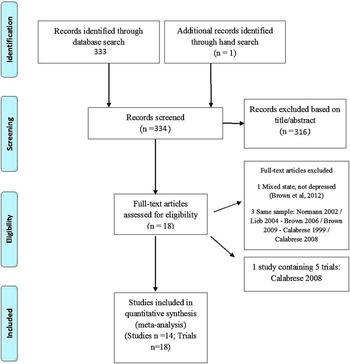
The search strategy yielded 333 articles. After exclusion of 315 references at the title and abstract level, 18 papers were full-text reviewed. Altogether, 4 articles were excluded, either due to referring to the same sample (studies=3Reference Normann, Hummel, Scharer, Horn, Grunze and Walden 39 – Reference Calabrese, Huffman and White 44 ) or because of reporting on patients with mixed mania (study=1Reference Brown, Sunderajan, Hu, Sowell and Carmody 45 ). One articleReference Calabrese, Huffman and White 44 reported on pooled data from 5 trials (GW602/SCAB2001, GW603/SCAA2010, SCA100223, SCA30924, SCA40910), resulting in 14 articles reporting on 18 trials that were meta-analyzed (Figure 1).
PRISMA Flow Diagram of Study Selection Process.

Included studies, treatments, and participants
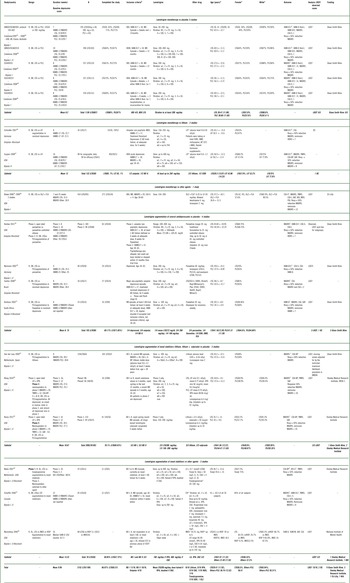
The detailed features of the included studies are described in Table 1. In the 18 trials (n=2152), 1109 patients were randomized to lamotrigine and 1043 were randomized to placebo or an active comparator. All studies were randomized, 14 studies were double blind (n=1970), 2 single blindReference Schindler and Anghelescu 46 , Reference Suppes, Marangell and Bernstein 47 (n=124), and 2 were open labelReference Nierenberg, Ostacher and Calabrese 48 , Reference Nolen, Kupka and Hellemann 49 (n=67). The mean duration of the trials was 9.83±2.77 weeks. The mean age of the sample was 39.47±11.92 years old for lamotrigine-treated patients and 38.19±12.52 years old for the respective control groups. In the lamotrigine group, participants were 56.5% female and 82.84% were white, and in the control groups, 56.41% were female and 83.31% were white.
Study, patient, illness, and treatment characteristics on the meta-analyzed studies

a = where 2 phases, data are referred to phase in bold.
AD = antidepressant; AP = antipsychotic; BD = bipolar disorder; BD # = bipolar disorder DSM-IV criteria; BSI = Brief Symptom Inventory; CBZ = carbamazepine; CGI-S/I/BP = Clinical Global Impression – Severity / Improvement / Bipolar Version; CIT= citalopram; DB = double-blind; FLX = fluoxetine; GAF = Global Assessment of Functioning scale; HAM-D17 = Hamilton Depression Rating Scale 17 Items; IDS = Inventory of Depressive Symptomatology; INOS = inositol; LIT = lithium; LOCF = last observation carried forward; LTG = lamotrigine; MADRS = Montgomery–Åsberg Depression Rating Scale; MOS = Medical Outcomes Study Short Form; OC = observed cases; OL = open label; OLZ = olanzapine; PGI = Patient Global Impression of Improvement; PLC = placebo; R = randomized; RISP = risperidone; SB = single blind; SUM-D = Sum of all Depressive items within Clinical Monitoring Form; SUM-M = Sum of all Manic items within Clinical Monitoring Form; TCA = tricyclic antidepressants; YMRS = Young Mania Rating Scale; VPA = valproic acid; * = active control drug; 1 = primary outcome.
Studies included 1948 patients with bipolar depression in 14 studies (bipolar I disorder only: studies=4, n=1121; bipolar II disorder only studies=2, n=319; either bipolar I or bipolar II disorder: studies=8, n=525), patients with either bipolar or unipolar depression in 1 study (n=40),Reference Normann, Hummel, Scharer, Horn, Grunze and Walden 39 and patients with only unipolar depression in 4 studies (n=187).Reference Schindler and Anghelescu 46 , Reference Barbee, Thompson and Jamhour 50 – Reference Santos, Rocha and Hara 52
Altogether, 8 trials tested lamotrigine monotherapy, including (i) trials vs placeboReference Calabrese, Huffman and White 44 (studies=5, n=1138), (ii) trials vs lithiumReference Schindler and Anghelescu 46 , Reference Suppes, Marangell and Bernstein 47 (studies=2, n=132), and (iii) trials vs olanzapine + fluoxetineReference Brown, McElroy and Keck 41 (study=1, n=410). The remaining 10 trials (n=472) tested lamotrigine as (i) augmentation mood stabilizers vs other active agentsReference Nierenberg, Ostacher and Calabrese 48 , Reference Nolen, Kupka and Hellemann 49 , Reference Schaffer, Zuker and Levitt 53 (studies=3, n=70), (ii) augmentation of lithium vs placeboReference Kemp, Gao, Fein and Chan 54 – Reference Wang, Gao and Kemp 56 (studies=3, n=209), and (iii) augmentation of antidepressants (studies=4, n=193), including paroxetine,Reference Normann, Hummel, Scharer, Horn, Grunze and Walden 39 , Reference Barbee, Thompson and Jamhour 50 of a mixture of selective serotonin reuptake inhibitors (SSRIs), tricyclic antidepressants (TCAs), selective serotonin-noradrenalin reuptake inhibitors (SNRIs), and bupropion,Reference Santos, Rocha and Hara 52 or of fluoxetineReference Barbosa, Berk and Vorster 51 vs placebo.
Target doses of lamotrigine included 400 mg/day (studies=4) (GW603/SCAA2010Reference Calabrese, Huffman and White 44 , Reference Suppes, Marangell and Bernstein 47 , Reference Nolen, Kupka and Hellemann 49 , Reference Barbee, Thompson and Jamhour 50 ), 250 mg/day (study=1)Reference Schindler and Anghelescu 46 , 200 mg/day (studies=11), and 100 mg/day (study=1).Reference Barbosa, Berk and Vorster 51 Patients were taking lithium (studies=8), SSRIs (studies=7), valproate (studies=5), carbamazepine (studies=3), inositol (study=1), tranylcypromine (study=1), and olanzapine + fluoxetine (study=1). Altogether, 10 studies were industry-sponsored (Glaxo Smith Kline: studies=9, Eli-Lilly: study=1), 4 were government- or foundation-sponsored (Stanley Medical Research Institute: studies=3, National Institute for Health: study=1), and 4 did not report any specific funding source.
Efficacy rating scales
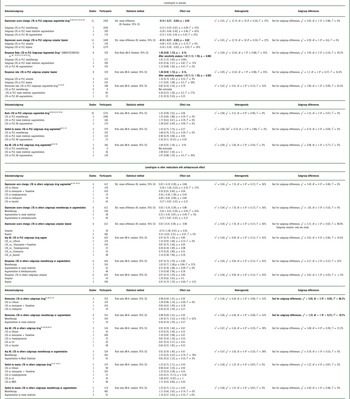
Nine studies used MADRS and HAM-D, 5 only MADRS, 2 only HAM-D, with HAM-D being used in 11 studies (61.1%) [HAM-D 17 items: studies=10 (55.5%), HAM-D 21 items: study=1 (5.5%), HAM-D 31 items: studies=5 (27.7%)]. Eleven studies (61.1%) used the Inventory of Depression Symptomatology, and 1 study used the Sum of All Depressive, Maniac Items within Clinical Monitoring Form (SUM-D) (Sachs et al., 2002)Reference Sachs, Guille and McMurrich 57 (5.5%). Study-defined definitions of response and remission are reported in Table 1. All efficacy outcomes are reported in Table 2.
Results of all meta-analyzed outcomes
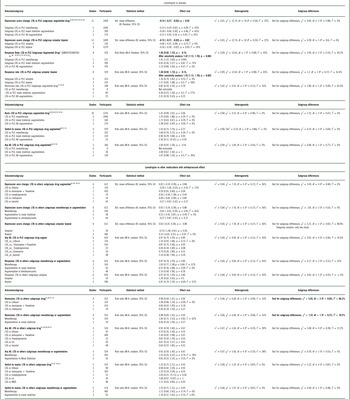
* Becomes significant after leave-one-out sensitivity analysis (Kemp et al Reference Kemp, Gao, Fein and Chan 54 excluded).
AD = antidepressant, LTG = lamotrigine, N/A = not applicable, PLC = placebo.
Study quality
As reported in Supplementary Table 1 (available online), the risk of bias of the studies according to the Cochrane Collaboration tool for assessing risk of biasReference Higgins, Altman and Gøtzsche 34 was low in 7 of the included studies (trials reported in Reference Normann, Hummel, Scharer, Horn, Grunze and Walden 39 , Reference Calabrese, Huffman and White 44 , Reference van der Loos, Mulder and Hartong 55 ), with high risk of bias in the remaining studies.
Trials of lamotrigine vs placebo
Primary outcome: depression score change
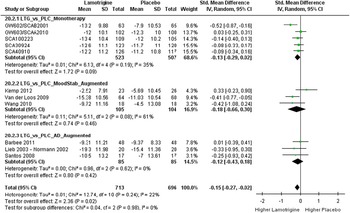
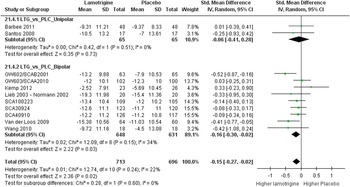
Lamotrigine showed significantly greater improvement in depression severity compared to placebo pooling data from 11 trialsReference Normann, Hummel, Scharer, Horn, Grunze and Walden 39 , Reference Calabrese, Huffman and White 44 , Reference Barbee, Thompson and Jamhour 50 , Reference Santos, Rocha and Hara 52 , Reference Kemp, Gao, Fein and Chan 54 , Reference van der Loos, Mulder and Hartong 55 , Reference Wang, Gao and Kemp 56 (SMD=–0.15, 95% CI=–0.27, –0.02, p=0.02; heterogeneity: p=0.24, I2=22%) (Figure 2). Results were not significantly different across subgroups of trials of lamotrigine monotherapy vs augmentation of mood stabilizers vs augmentation of antidepressants (test for subgroup differences: χ2=0.04, df=2, p=0.98, I2=0%) (Figure 2). Similarly, results were not significantly different in trials of patients with unipolar depressionReference Barbee, Thompson and Jamhour 50 , Reference Santos, Rocha and Hara 52 vs bipolar depressionReference Normann, Hummel, Scharer, Horn, Grunze and Walden 39 , Reference Calabrese, Huffman and White 44 , Reference Kemp, Gao, Fein and Chan 54 – Reference Wang, Gao and Kemp 56 (test for subgroup differences: χ2=0.28, df=1, p=0.60, I2=0%) (Figure 3).
Lamotrigine vs Placebo Subgroup Drug: Depression Score Change. LTG=Lamotrigine; PLC=placebo; MoodStab=mood stabilizers; AD=antidepressive.

Lamotrigine vs Placebo Subgroups Uni-Bipoler: Depression Score Change

Since the results in placebo-controlled trials were not significantly different in the main 2 subgroup analyses and not significantly heterogeneous, we conducted further subgroup and meta-regression analyses on the primary outcome.
Subgroup analysis: study design and sponsorship effect
Double-blind vs single-blind/open studiesReference Schindler and Anghelescu 46 – Reference Nolen, Kupka and Hellemann 49 did not differ regarding depression score change (test for subgroup differences: χ2=0.00, df=1, P=0.95, I2=0%). Similarly, industry-sponsoredReference Normann, Hummel, Scharer, Horn, Grunze and Walden 39 , Reference Brown, McElroy and Keck 41 , Reference Calabrese, Huffman and White 44 , Reference Barbee, Thompson and Jamhour 50 , Reference Barbosa, Berk and Vorster 51 , Reference van der Loos, Mulder and Hartong 55 vs non-industry–sponsored studies did not differ regarding depression score change (test for subgroup differences: χ2=0.00, df=1, P=0.95, I2=0%).
Meta-regression analyses
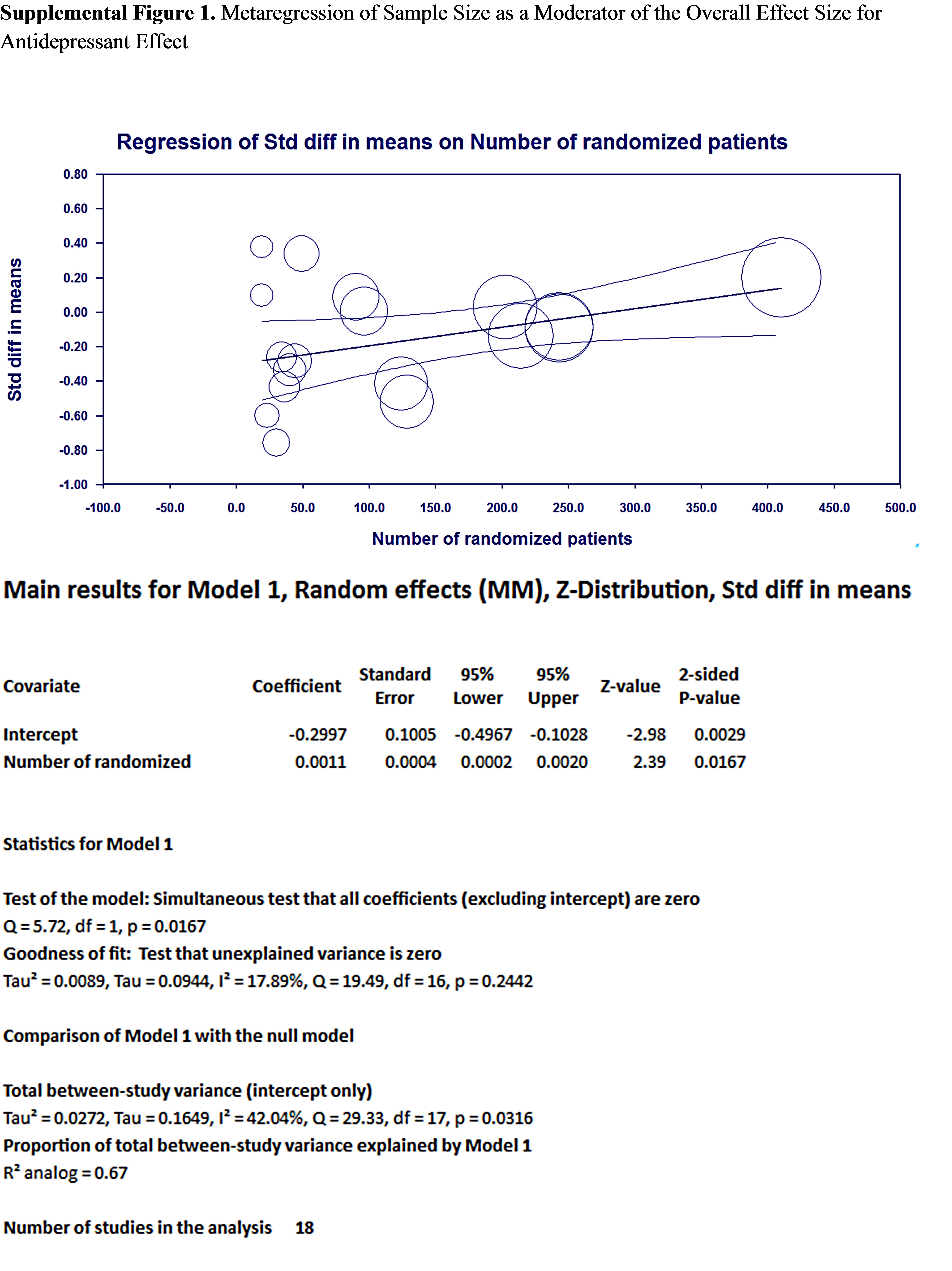
The effect of lamotrigine vs placebo on depression ratings was not significantly moderate by age (p=0.42), sex (p=0.22), race (white vs other) (p=0.683), total baseline MADRS score in lamotrigine (p=0.74) or placebo (p=0.93), or total baseline HAMD scores in lamotrigine (p=0.85) or placebo groups (p=0.62), study duration (p=0.64), lamotrigine target dose (p=0.10), or lamotrigine endpoint dose (p=0.68). Also, differences in MADRS (p=0.50) or HAMDS scores (p=0.40) between lamotrigine and placebo groups did not seem to affect our results. However, smaller sample size was associated with significantly larger effect size (p=0.017), with smaller studies reporting larger effect sizes (Supplemental Figure 1, available online).
Publication bias: lamotrigine vs placebo
As reported in e-Table 2, the publication bias, assessed with Egger’s testReference Egger, Davey Smith, Schneider and Minder 37 and Begg–Mazumdar Kendall’s tau,Reference Begg and Mazumdar 38 was unlikely for depressive symptom reduction and treatment response.
Secondary outcomes: treatment response
Treatment response
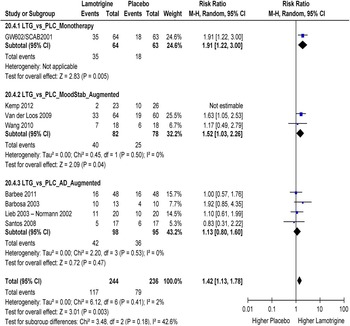
Lamotrigine only showed trend significance toward higher response rates compared to placebo pooling data from all 8 trialsReference Normann, Hummel, Scharer, Horn, Grunze and Walden 39 , Reference Barbee, Thompson and Jamhour 50 , Reference Barbosa, Berk and Vorster 51 , Reference Santos, Rocha and Hara 52 , Reference Kemp, Gao, Fein and Chan 54 – Reference Wang, Gao and Kemp 56 (GW602/SCAB2001 in Reference Calabrese, Huffman and White 44 ) (RR=1.26, 95% CI=0.92, 1.73, p=0.15; heterogeneity: p=0.08, I2=45%), without significant subgroup differences across lamotrigine monotherapy, lamotrigine augmentation of mood stabilizers, or lamotrigine augmentation of antidepressants (test for subgroup differences: χ2=3.94, df=2, p=0.14, I2=49.2%). Similarly, results did not differ across studies of patients with unipolar depressionReference Barbee, Thompson and Jamhour 50 – Reference Santos, Rocha and Hara 52 vs bipolar depressionReference Normann, Hummel, Scharer, Horn, Grunze and Walden 39 , Reference Calabrese, Huffman and White 44 , Reference Kemp, Gao, Fein and Chan 54 – Reference Wang, Gao and Kemp 56 (test for subgroup differences: χ2=0.08, df=1, p=0.77, I2=0%). A funnel plot visual inspection and leave-one-out sensitivity analysis identified 1 extreme outlier.Reference Kemp, Gao, Fein and Chan 54 After removing this study from the meta-analysis, the response rate became significantly higher in the lamotrigine group vs placebo, and heterogeneity was almost absent (RR=1.42, 95% CI=1.13, 1.78; p=0.003, heterogeneity: I2=2%) (Figure 4). After removal of the outlier, the number needed to treat (NNT) for response in favor of lamotrigine went from 10 (95% CI=5.3–43) to 7 (95% CI=4.3–17.3).
Depression Response Rates in Studies Comparing Lamotrigine vs. Placebo: Subgroup analysis by Monotherapy vs. Mood Stabilizer Augmentation vs. Antidepressants Augmentation (After Removal of One Extreme Outlier analysis.

Secondary outcomes: remission
Only 3 studies provided information about remission. Remission rates were not significantly different in lamotrigine vs placebo treated patients (RR=0.82, 95% CI=0.30, 2.24, p=0.70, heterogeneity: p=0.11, I2=55%).
Secondary outcomes: all-cause and specific-cause discontinuation
Overall, 66.07% of participants completed the study (lamotrigine=65.57%, placebo=72.8%). Lamotrigine did not differ significantly from placebo regarding all-cause discontinuation (RR=0.99, 95% CI=0.93, 1.05, p=0.73; heterogeneity, p=0.8, I2=0%, studies=12), discontinuation due to inefficacy (RR=0.71, 95% CI=0.27–1.88, p=0.49; heterogeneity, p=0.26, I2=25%, studies=3), or discontinuation due to adverse events (RR=0.93, 95% CI=0.45, 1.92, p=0.84; heterogeneity, p=0.69, I2=0%, studies=12).
Secondary outcomes: safety and tolerability
The number of patients with any adverse event, number of patients switching to mania, and number of patients affected by rash were not significantly different in the lamotrigine and placebo groups (Table 2). Moreover, neither monotherapy nor augmentation therapy, nor unipolar vs bipolar depression significantly moderated the results.
Lamotrigine vs other psychotropic agents with antidepressant activity
Primary outcome: depression score change
Depression score change did not differ between lamotrigine and pooled active control groups or individual agents, ie, lithium, vs olanzapine + fluoxetine, vs citalopram, or vs inositol (Table 2). Pooled results for depression symptom change were not significantly different in monotherapy vs augmentation trials (test for subgroup differences: χ2=3.49, df=4, p=0.48, I2=0%) (Table 2). The availability of only 1 study of patients with unipolar depression rendered the comparison with bipolar depression not meaningless. Since the results in active-controlled trials were not significantly different and not significantly heterogeneous, we considered the pooled results valid and would have conducted subgroup and meta-regression analyses on the primary outcome; yet too few studies provided data. Based on funnel plot inspection, publication bias was unlikely.
Secondary outcomes: response and remission rates
Similar to the primary outcome, response and remission rates were also not different between the lamotrigine and active control groups (Table 2). Again, neither the comparison of lamotrigine vs lithium, vs olanzapine + fluoxetine, vs citalopram, nor vs inositol showed any significant group difference (Table 2).
Secondary outcomes: all-cause and specific-cause discontinuation
Overall, 66.1% of participants completed the study (lamotrigine=62.6%, active controls=63.7%). Lamotrigine did not differ significantly from other agents with antidepressant activity regarding all-cause discontinuation (RR=0.97, 95% CI=0.81, 1.18, p=0.78; heterogeneity, p=0.17, I2=35%, studies=6), discontinuation due to inefficacy (RR=2.12, 95% CI=0.95–4.71, p=0.07; heterogeneity, p=0.74, I2=0%, studies=4), or discontinuation due to adverse events (RR=1.45, 95% CI=0.62, 3.40, p=0.39; heterogeneity, p=0.79, I2=0%, studies=6).
Secondary outcomes: safety and tolerability
The number of patients with any adverse event, number of patients switching to mania, and number of patients affected by rash were not significantly different in the lamotrigine and active comparator groups (Table 2). Moreover, neither monotherapy, augmentation therapy, nor the comparison to any specific active comparator significantly moderated the results.
Discussion
Results of this meta-analysis of 18 studies and 2152 patients with unipolar or bipolar depression, treated for a mean duration of 9.83 weeks with lamotrigine or placebo or active agents with antidepressant activity, yielded the following results:
-
1. In placebo-controlled trials, depression rating scale scores improved significantly more with lamotrigine vs placebo, but the effect size was small.
-
2. After removing 1 outlying study, lamotrigine was associated with significantly higher response rates than placebo, translating into a clinically meaningful NNT of 7.
-
3. Depression rating improvement was not moderated by type of depression (unipolar vs bipolar) or lamotrigine monotherapy vs augmentation therapy, and these results were homogeneous.
-
4. None of the reported adverse effects nor all-cause or specific-cause for discontinuation differed significantly between lamotrigine and placebo.
-
5. In active-controlled trials, lamotrigine did not differ significantly regarding efficacy and safety from lithium, olanzapine + fluoxetine, citalopram, and inositol, separately and when pooling the active comparator groups together.
The finding of superior antidepressant efficacy compared to placebo, unmoderated by unipolar vs bipolar depression subtype and monotherapy vs augmentation strategy, suggests lamotrigine’s utility in clinical care. The NNT for response of 7 is similar to that of quetiapine-IR monotherapy and lurasidone adjunctive therapy.Reference Gao, Yuan and Wu 58 In addition, the analyzed studies included patients with more severe course of illness, such as rapid cycling and substance use disorder. Lamotrigine’s safety vs placebo is an additional argument for its potential clinical utility. Nevertheless, the small overall effect size poses a problem. Because of the small effect size, we conducted several exploratory subgroup and meta-regression analyses in order to identify patient, illness, and treatment characteristic that may help clinicians to individualize lamotrigine treatment through use in subgroups or in manners that could yield larger effect sizes. However, none of the subgroup or meta-regression analyses yielded significant results, except that smaller studies yielded significantly larger effect sizes than larger studies. However, the potential publication bias suggested by the meta-regression was ruled out by specific analyses regarding publication bias.
In contrast to response, remission rates were not different between lamotrigine and placebo. However, only a few studies contributed data, and the need for the slow titration of lamotrigine may have played a role in this nonsignificant difference. Moreover, although bipolar vs unipolar depression did not appear to influence lamotrigine’s acute antidepressant efficacy, the type of depression could possibly play a role in achieving the long-term goal of achieving and maintaining remission, a treatment phase where lamotrigine is often used.Reference Carvalho, Quevedo and McIntyre 59 , Reference Gitlin and Frye 60 Thus, further data are needed regarding the antidepressant maintenance treatment effect with lamotrigine.
Results from the active-controlled studies indicated no significant differences between lamotrigine and lithium and, especially, olanzapine + fluoxetine, which have both been shown to be effective for unipolar depressionReference Lin, Tsai and Wang 61 and bipolar depression,Reference Gao, Yuan and Wu 58 lending further support for the efficacy of lamotrigine in unipolar and bipolar depression.
Several factors should be considered when interpreting these results. First of all, the meta-analyzed studies had a mean duration of around 10 weeks, but as recently pointed out,Reference Parker and McCraw 62 such a short treatment duration is complicated by lamotrigine’s slow up-titration, which may have led to a reduced signal as opposed to results in longer-term studies, and which does not allow the assessment of lamotrigine’s potential maintenance and relapse preventive effects. This latter point is relevant, as for acute mania, lamotrigine has not been found to be more effective than placebo,Reference Bowden and Singh 63 , Reference Rosa, Fountoulakis, Siamouli, Gonda and Vieta 64 while it has clear relapse prevention efficacy for both bipolar mania and bipolar depression in long-term maintenance treatment studies.Reference Vieta and Valenti 15 , Reference Gitlin and Frye 60 , Reference Rihmer, Gonda and Kalman 65
Nevertheless, even during the relatively short mean treatment duration of around 10 weeks, lamotrigine was effective and safe, albeit with a small effect size for the acute treatment of depression, but without the well-known risks of switch from depressive phase to manic phase possibly occurring with antidepressants,Reference Pacchiarotti, Bond and Baldessarini 9 , Reference Viktorin, Lichtenstein and Thase 13 , Reference Bhowmik, Aparasu, Rajan, Sherer, Ochoa-Perez and Chen 66 , Reference Park, Shon, Lee, Joo, Youngstrom and Kim 67 and of weight gain and metabolic abnormalities that often are relevant with olanzapine and quetiapineReference Maayan and Correll 68 , Reference Zhang, Gallego, Robinson, Malhotra, Kane and Correll 69 beginning even in the first few weeks of treatment.Reference Musil, Obermeier, Russ and Hamerle 70 Unfortunately no data about weight gain were available in the meta-analyzed studies. However, it is noteworthy that we did not find any difference in rash (Table 2) with lamotrigine vs placebo, since Stevens–Johnson syndrome is the most feared potential side effect of lamotrigine,Reference Blaszczyk, Lason and Czuczwar 71 , Reference Calabrese, Sullivan and Bowden 72 which generally occurs early in the treatment and titration phase with lamotrigine. Moreover, our subgroup analyses did not yield significant differences in the efficacy of lamotrigine, whether it was given as monotherapy or augmentation treatment and also independent of the specific drug that lamotrigine was added to. These results suggest that lamotrigine can be used in various combinations, obviously following the guidelines of using lower doses and titrating lamotrigine much slower when it is added to valproate due to the subsequently higher lamotrigine blood levels and increased risk for Stevens–Johnson syndrome.Reference Johannessen Landmark and Patsalos 73 , Reference Patsalos and Perucca 74 Finally, including both unipolar and bipolar depression in our analysis and showing that the type of depression did not influence the efficacy of lamotrigine vs placebo indicate that lamotrigine is a safe and useful pharmacologic treatment, even in those cases where clinicians are uncertain about the type of depression.
The results of this meta-analysis clearly need to be interpreted in light of several limitations. First, the number of studies targeting unipolar depression or comparing lamotrigine with other active agents was small, the treatment duration was modest, and lamotrigine doses as well as target doses may not have always been optimal, given the need for slow titration of lamotrigine. Hence, the generalizability of the results should be considered within these constraints. Second, study design and patient population characteristics, rating scales, and outcome definitions differed considerably, which introduced variability. However, despite this clinical heterogeneity, none of the results reached statistical significance for the chi-squared test of heterogeneity. Moreover, including diverse study designs and treatment strategies allowed us to assess if these variables moderated the overall antidepressant efficacy of lamotrigine, and the results, at least of the currently available database searches, seem to suggest that lamotrigine’s efficacy and safety apply to a relatively broad representation of patients that clinicians are likely to encounter in clinical care. Third, detailed data about characteristics of depressive symptoms and about the frequency of specific comorbidities were missing, although some studies allowed comorbid anxiety disorders, which precluded examination of these factors as potential moderators. Finally, the risk of bias assessment showed that only 7 studies had a low risk of bias, with high risk of bias in the remaining studies mainly due to lack of information about allocation concealment.
In summary, lamotrigine seems to be a valid management option to treat depression, possibly regardless of the baseline treatment and the type of depression. However, since at least the acute effect size was small, the mean trial duration was short, and, given the additional limitations detailed above, clearly more information is needed regarding potential subgroup and treatment characteristics as well as longer-term effects that could help individualize the management of depression with lamotrigine and yield higher effect sizes.
Disclosures
Marco Solmi, Nicola Veronese, Leonard Zaninotto, Marc L. M. van der Loos, Catherine Reis, and Ion-George Anghelescu have nothing to disclose. Claus Normann reports grants from Glaxo Smith Kline, during the conduct of the study; grants and personal fees from Servier; grants from Lundbeck; grants and personal fees from Roche; grants and personal fees from Otsuka; and grants from Alkermes. Keming Gao has been on a speakers’ bureau of Suvonion. Ayal Schaffer reports personal fees from Bristol-Myers Squibb, Eli Lily Canada, Lundbeck Canada, Otsuka, and Sunovion; and grants from Ontario Mental Health Foundation, American Foundation for Suicide Prevention, and Brenda Smith Bipolar Disorders Research Fund, outside the submitted work. Christoph U. Correll reports grants from Bristol-Myers Squibb, Otsuka, Lundbeck, and Takeda during the conduct of the study; and personal fees from Janssen/J&J, AbbVie, Acadia, Actavis, Alkermes, Eli Lilly, Forum, Genentech, Gerson Lehrman Group, IntraCellular Therapies, Lundbeck, MedAvante, Medscape, Otsuka, Pfizer, ProPhase, Reviva, Roche, Sunovion, Supernus, Takeda, and Teva, outside the submitted work.
Supplementary Material
For supplementary material/s referred to in this article, please visit http://dx.doi.org/doi:10.1017/S1092852916000523