Protein-losing enteropathy is a disorder characterised by abnormal and often profound enteric protein loss. Despite protein-losing enteropathy being most familiar to paediatric cardiologists as a complication of Fontan procedures for palliation of complex congenital cardiac disease, it is a clinically heterogeneous disease process that is described in association with multiple cardiac and non-cardiac medical illnesses. In most cases, protein-losing enteropathy is not a primary disease per se, but rather is a secondary disorder of enteric protein loss due to enteric mucosal injury, systemic inflammation, and venous or lymphatic obstruction. In many cases, such as protein-losing enteropathy in association with Fontan palliations, the link between the primary disease and secondary protein-losing enteropathy remains difficult to discern. This difficulty continues to hamper attempts at therapy, which remain empiric and seldom are successful in providing lasting resolution. As a result, protein-losing enteropathy in association with patients with congenital cardiac disease and Fontan circulations carries significant mortality despite aggressive treatment. The most comprehensive analyses of protein-losing enteropathy in this patient population are now over a decade oldReference Feldt, Driscoll and Offord1, Reference Mertens, Hagler, Sauer, Somerville and Gewillig2, and re-evaluation of the prevalence and progress in treatment of this disease is needed. This report describes a single institution experience with the evaluation, management, and treatment of protein-losing enteropathy in patients with congenital cardiac disease in the current era, follows with a comprehensive review of protein-losing enteropathy, focused upon what is known and not known about the pathophysiology of protein-losing enteropathy in this patient population, and concludes with suggestions for prevention and treatment.
Study design
This is a retrospective case series of patients with congenital cardiac disease and protein-losing enteropathy followed at Children's Hospital, Boston. Following approval by departmental and institutional review boards, patients were identified through search of computerised departmental and hospital databases for the period spanning 1960–2009. For inclusion in this study, patients were required to have congenital cardiac disease, to have been followed at this hospital for the entirety of their cardiac care, and to have available complete documentation of all major medical and surgical interventions. Protein-losing enteropathy was defined as hypoalbuminemia and hypoproteinemia with no identifiable mode of protein loss other than the gastrointestinal tract, and documented clinical signs or symptoms consistent with protein-losing enteropathy, including but not limited to oedema, ascites, and pleural effusions. Documentation of enteric protein loss by nuclear scintigraphy or stool alpha 1-antitrypsin was not required for the diagnosis but ultimately was documented in all cases. Upon patient identification, all hospital records were reviewed, including clinic notes, surgical and catheterisation procedure notes, anaesthesiology records, hospital progress notes, and radiology reports and communications from other hospitals regarding direct patient care. A portion of the patients identified for this study were previously reported in a prior analysis of perioperative risk factorsReference Powell, Gauvreau, Jenkins, Blume, Mayer and Lock3 and a case-control study.Reference Meadows, Gauvreau and Jenkins4
Considerations of response to attempted treatment of protein-losing enteropathy were made with the acknowledgement that the time to response of all attempted therapies is unknown. For the purpose of classification, an attempt at therapy was considered to have failed, if protein-losing enteropathy persisted beyond 3 months and/or if additional modes of therapy were attempted. Long-term success was defined as resolution of signs and symptoms of protein-losing enteropathy and normalisation of serum protein concentrations, in the absence of exogenous administration, lasting a minimum of 6 months and until last follow-up. Temporary resolution was defined clinically as that of long-term success but including recurrence of protein-losing enteropathy at any point.
Results
Clinical characteristics of protein-losing enteropathy patients
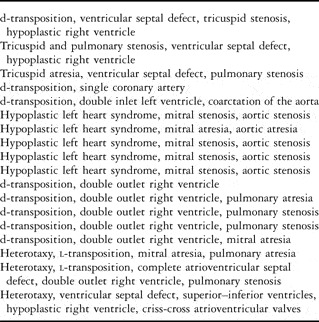
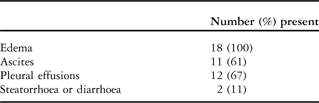
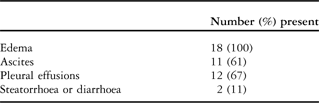
Of all patients with congenital cardiac disease evaluated at Children's Hospital, Boston, 26 cases of protein-losing enteropathy were identified. There was one patient who had undergone Senning procedure for d-transposition of the great arteries, with two normal-sized ventricles and a complex single coronary anatomy. The remaining 25 patients had undergone Fontan procedures. During the study period, a total of 1321 patients had undergone a Fontan procedure at this institution for a minimum period prevalence of 1.9%. Of the 26 protein-losing enteropathy patients, 18 met the inclusion criteria of having complete clinical documentation available for analysis and form the group reported here. Anatomic diagnoses are given in Table 1. In those with single ventricle physiology, the systemic ventricle was left in 5 and right in 12. The median age of patients at the time diagnosis of protein-losing enteropathy was 10 years ranging from 23 months to 36 years. The diagnosis of protein-losing enteropathy was made at a median of 3.6 years ranging from 3 months to 21 years following Fontan in 17 and Senning in 1. Physical findings at the time of diagnosis are displayed in Table 2.
Anatomic diagnoses of patients with protein-losing enteropathy.

Physical findings.
Laboratory findings at the time of diagnosis are displayed in Table 3. Abnormal enteric protein loss was documented at the time of diagnosis in all 14 patients in whom it was assessed by either “spot” or quantitative clearance of stool alpha 1-antitrypsin. Prior to routine availability of alpha 1-antitrypsin testing, two patients had documented enteric protein loss by nuclear scintigraphy. The remaining patients had abnormal alpha 1-antitrypsin documented during subsequent evaluations.
Laboratory findings.

Medication data were available for 17 of 18 patients at the time of protein-losing enteropathy diagnosis. There were 67% of patients who were receiving diuretics: 76% were receiving digoxin and 71% were receiving angiotensin-converting enzyme inhibitors; 33%of patients were receiving antiarrhythmic medications, all for atrial arrhythmias. There were 14 patients who were receiving some form of anticoagulation: 13 receiving aspirin and one receiving Coumadin.
Non-invasive evaluation
Echocardiography and/or magnetic resonance imaging were performed in 16 of 18 patients within 2 months of initial protein-losing enteropathy diagnosis. Abnormalities of ventricular function or atrioventricular valve regurgitation were rare. Only one patient had greater than mild ventricular dysfunction. No patient had greater than mild atrioventricular valve regurgitation. In contrast, anatomic obstructions were identified in eight patients. Obstruction of the central Fontan pathway was identified in two patients; two patients had echocardiographic evidence of obstruction to systemic flow (subaortic obstruction and coarctation); four patients had evidence of obstruction to pulmonary venous flow (pulmonary venous baffle in Senning (one), residual atrial septum (one), pulmonary vein compression by dilated atrium (two)).
Cardiac catheterisation
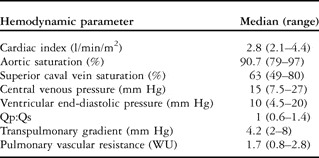
Cardiac catheterisation was performed in all patients within 9 months of the diagnosis of protein-losing enteropathy. Haemodynamic findings are displayed in Table 4. Non-invasive imaging findings of obstruction to systemic arterial flow were confirmed in two patients. Obstruction to pulmonary venous flow was confirmed in three patients and excluded in one patient. Significant obstruction, warranting intervention, of the Fontan or systemic venous pathway was found in three patients (17%), with minor degrees of obstruction in three additional patients.
Hemodynamic findings at protein-losing enteropathy diagnosis*.

*Data for Fontans only
Attempts at treatment of protein-losing enteropathy
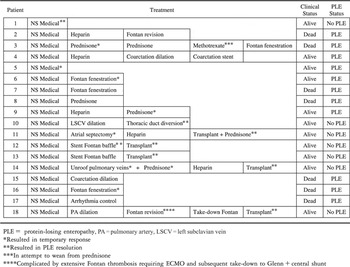
Therapeutic approaches in the treatment of protein-losing enteropathy can be characterised as non-specific medical – diet, diuretics, digoxin, angiotensin-converting enzyme inhibitors; specific medical – heparin or corticosteroid therapy; transcatheter; or surgical. All patients in this series received non-specific medical therapy: half of the patients underwent more than one attempt at additional treatment with six patients undergoing two attempts at treatment, five patients undergoing three attempts at treatment, and five patients undergoing four or more attempts. Temporary amelioration of protein-losing enteropathy was possible eight times in seven patients (39%) with recurrence occurring at a range of 13 months to 6 years. Long-term resolution of protein-losing enteropathy, until the most recent follow-up, was obtained in seven patients (39%) following non-specific medical therapy (one), surgical diversion of an obstructed thoracic duct (one), and cardiac transplantation (five); Table 5.
Treatment course of PLE patient cohort.

Non-specific medical therapy
All patients with protein-losing enteropathy underwent intensification of non-specific medical care aimed at decreasing central venous pressure and improving cardiac function, with diuretic therapy and the variable addition of digoxin and angiotensin-converting enzyme inhibitors. Dietary modification was frequently undertaken but was insufficiently documented to allow assessment of its effects. Only one patient in this series experienced long-term response to non-specific medical therapy. There was one additional patient who experienced initial resolution of protein-losing enteropathy with normalisation of serum proteins and stool alpha 1-antitrypsin, but who relapsed 6 years later and remains symptomatic with protein-losing enteropathy.
Heparin and corticosteroid therapy
There were seven patients in this series who underwent treatment with either heparin or corticosteroids. Of the seven patients, three were treated with both. No patient experienced long-term benefit with either heparin or prednisone alone; one patient had persistent protein-losing enteropathy after cardiac transplantation but remains in remission after a trial of prednisone; three patients experienced short-term improvement on prednisone therapy, one in conjunction with surgical relief of pulmonary venous obstruction, time to response 2 weeks to 9 months, but all developed recurrence, time to relapse 17 months to 6 years; one patient sustained multiple opportunistic infections and ultimately died after being unable to wean from prednisone therapy.
Catheter-based therapy
There were 10 patients who underwent some form of attempted transcatheter intervention. Baffle fenestration, performed in four patients, resulted in temporary improvement in half of them, but with no long-standing remission. There was one additional patient who experienced temporary resolution of protein-losing enteropathy following balloon dilation and stenting of the central Fontan pathway obstruction. In contrast, dilation and stenting of Fontan obstruction in two patients, dilation of systemic venous obstruction in another, and dilation of arch obstruction in two patients were technically successful but ineffective in resolving protein-losing enteropathy. Finally, one patient died following several unsuccessful attempts at transcatheter radiofrequency ablation of intractable atrial arrhythmias.
Surgical therapy
Surgical procedures were performed in seven patients. Temporary improvement was obtained in two patients following surgical relief of obstruction to pulmonary venous return, one being in conjunction with steroid therapy; however, protein-losing enteropathy recurred in both. There was one patient who died during an attempt at Fontan conversion from an atrial-ventricular connection to a lateral tunnel; one patient had a complicated surgical course in which revision to an extracardiac Fontan was complicated by extensive Fontan thrombosis, need for extracorporeal life support, and subsequent take-down to a Glenn and central shunt. This patient experienced resolution of protein-losing enteropathy following cardiac transplantation. There were two additional patients who underwent cardiac transplantation following failure of heparin, prednisone, and transcatheter therapy and who remain free of protein-losing enteropathy. As described above, one patient with persistent protein-losing enteropathy after cardiac transplantation responded to a trial of prednisone and remains in remission. There was one patient with d-transposition of the great arteries who had undergone a Senning procedure and was found to have thoracic duct obstruction by lymphangiography. Subsequent cardiac catheterisation confirmed innominate vein thrombosis. The patient's protein-losing enteropathy resolved after surgical diversion of the thoracic duct and dietary protein repletion.
Overall survival
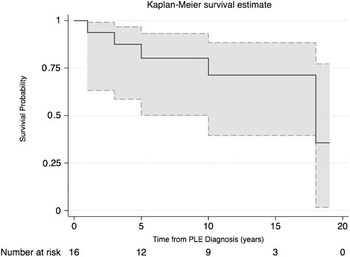
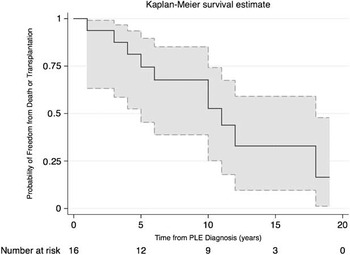
There were seven patients who died during a median follow-up of 8 years (range: 7 months to 19 years). The estimated 5- and 10-year survival was 78% (95% CI: 51–91%) and 71% (95% CI: 44–87%; Figure 1). The estimated freedom from death or transplantation at 5 and 10 years was 72% (95% CI: 45–87%) and 60% (95% CI: 33–78%; Figure 2).
Kaplan–Meier probability of survival. Shaded areas represent 95% confidence intervals.

Kaplan–Meier probability of freedom from death or cardiac transplantation. Shaded area represents 95% confidence intervals.

Discussion
Protein-losing enteropathy was first described in association with cardiac disease in patients with constrictive pericarditis and severe cardiac failure.Reference Davidson, Waldmann, Goodman and Gordon5, Reference Wilkinson, Pinto and Senior6. The more contemporary association of protein-losing enteropathy with patients having undergone Fontan procedures for palliation of complex congenital cardiac disease did not become apparent until the 1980s.Reference Crupi, Locatelli, Tiraboschi, Villani, De Tommasi and Parenzan7, Reference Hess, Kruizinga, Bijleveld, Hardjowijono and Eygelaar8 From these and subsequent studies, the complexity of protein-losing enteropathy as a disease process is apparent, and so too are the consequences. Mortality associated with protein-losing enteropathy in this population is high,Reference Feldt, Driscoll and Offord1, Reference Mertens, Hagler, Sauer, Somerville and Gewillig2 the morbidity is incalculable, and attempts at therapy remain frustratingly ineffective. Despite significant advances in medical and surgical management of patients with congenital cardiac disease, there is no evidence that protein-losing enteropathy is less common; and while some progress was made in understanding the epidemiology and prognosis of protein-losing enteropathy, our understanding of the pathophysiology remains limited. Further progress will require both a thorough understanding of the current body of knowledge and an extension of consideration beyond familiar cardiovascular factors towards non-cardiac organ systems and physiology.
Signs and symptoms
Despite strictly defined protein-losing enteropathy being the excessive loss of serum proteins into the gastrointestinal lumen, the simplicity of this definition belies the complexity of the disease process, the manifestations of which are not limited to hypoalbuminemia but also include a host of haematologic and immunologic abnormalities and secondary clinical phenomena. As such, the signs and symptoms of protein-losing enteropathy are diverse and may be protean.Reference Feldt, Driscoll and Offord1, Reference Mertens, Hagler, Sauer, Somerville and Gewillig2 Non-specific symptoms of dypsnoea or fatigue are common. Some degree of peripheral oedema is nearly always present. Ascites and pleural or pericardial effusions are less common, but may be clinically underappreciated unless specifically sought for. Gastrointestinal findings such as diarrhoea or steatorrhoea are relatively uncommon. Unchecked protein-losing enteropathy may present rarely with additional secondary signs of malabsorption syndromes.
Laboratory findings
Laboratory abnormalities in patients with protein-losing enteropathy reflect a complex and dynamic balance between the underlying disease process, the laboratory manifestations of a severe hypoproteinemic and oedematous state, and the effects, intended and otherwise, of attempts at palliation and treatment.
Hypoproteinemia
The development of hypoproteinemia in patients with protein-losing enteropathy is a relatively complex process, leading to a characteristic protein deficiency state that differs in many respects from other hypoproteinemic disorders. Unlike other protein-losing states, such as the nephrotic syndrome, the loss of serum proteins in patients with protein-losing enteropathy is independent of molecular weight. Therefore, which specific protein deficiencies become manifest is dependent in significant part upon the body's ability to detect and compensate for specific protein deficiencies. For example, the body's response to albumin loss is primarily to increase hepatic albumin synthesis; however, its ability to do so is critically dependent upon adequate nutrition, is variable from patient to patient, and may be limited in situations of enteric loss. For example, in a study of hepatic albumin synthesis, rates in patients with non-cardiac-related enteric protein loss albumin synthesis rates were increased only 24%, with significant variability between patients.Reference Wochner, Weissman and Waldmann9 Nevertheless, once the clinical manifestations of protein-losing enteropathy become apparent, the balance and counterbalance of protein loss and production are tipped. As a result, when taken together, the dilutional effect of the volume-loaded state common to many patients with congenital cardiac disease and protein-losing enteropathy, as well as the possible altered hepatic synthetic function as a result of intercurrent medical or infectious liver disease and chronic hepatic congestion, and the profound degree of hypoproteinemia encountered in patients with this disorder, is perhaps not surprising.
However, before enteric protein loss in patients with Fontan physiology and protein-losing enteropathy can be fully appreciated, it must be taken in the context of an understanding of what is “normal” for patients with this unique physiology. Davis et alReference Davis, Driscoll and Perrault10 studied enteric protein loss in patients early after Fontan procedures. In doing so, they found normal spot faecal alpha 1-antitrypsin levels and calculated alpha 1-antitrypsin clearance in all patients during a testing period between 2 and 8 weeks post-operative, and again normal levels in 16 of 17 patients available for follow-up at 2–4 months post-operative. Only a single patient demonstrated elevated faecal alpha 1-antitrypsin levels and intermittent clinical protein-losing enteropathy. In contrast, Fujii et alReference Fujii, Shimizu and Takahashi11 studied 12 patients at two later time intervals, between 12 and 44 months after Fontan operations, and again 14–20 months later. In comparing these patients with controls, they found elevated faecal alpha 1-antitrypsin levels in Fontan patients at both time points, with a trend towards greater levels of enteric protein loss over time. Finally, Thorne et alReference Thorne, Hooper, Kemp and Somerville12 studied patients greater than 2 years out from their Fontan procedure and compared them to patients without Fontan physiology but elevated systemic venous pressure and with normal controls. Faecal alpha 1-antitrypsin levels were elevated in both Fontan patients and those with elevated systemic venous pressure compared to controls. When taken together with the knowledge that there is a relatively high prevalence of asymptomatic hypoproteinemia and hypoalbuminemia in late survivors of Fontan surgery, only a small minority of whom have clinical protein-losing enteropathy,Reference Kaulitz, Luhmer, Bergmann, Rodeck and Hausdorf13 it is apparent that both enteric protein loss and hypoproteinemia may be underappreciated in patients having undergone Fontan procedures. However, the relation and significance of these findings remain unclear. It is unknown, if asymptomatic enteric protein loss represents a balanced compensatory state, a transient flux in a persistently stressed lymphatic system, or whether it heralds forthcoming clinical protein-losing enteropathy.
Haematologic and immmunologic abnormalities
In addition to hypogammaglobulinemia, there are a number of additional haematologic and immunologic abnormalities identifiable in patients with protein-losing enteropathy. Among these, lymphocytopenia appears quite frequently. Eosinopenia may be seen as well but is less commonly appreciated. In addition to absolute reductions in lymphocyte counts, there appear to be specific alterations in lymphocyte subsets. Reductions in CD3+ (T-cell) and CD4+ (helper/inducer) appear disproportionate to those of CD8+ (suppressor/cytotoxic) lymphocytes, with reversal of normal CD4+/CD8+ ratios.Reference Chakrabarti, Keeton, Salmon and Vettukattil14–Reference Muller, Wolf, Gottlicher, Zielinski and Eidl17 Whether this reflects a selective loss of specific lymphocyte subtypes or, more likely, is the result of a dynamic balance between lymphocyte production, sub-type lifespan and/or the complex interplay between individual lymphocyte cell lines is unclear. Fortunately, despite these quantitative humoral and cellular deficiencies, reports of opportunistic or unduly severe infections in patients suffering from protein-losing enteropathy are rare.Reference Cheung, Tsang and Kwok15
Diagnosis
The diagnosis of protein-losing enteropathy is made from appropriate consideration of the patient's underlying risk for this disorder, individual clinical signs and symptoms, and basic laboratory evaluation. Alternate modes of protein loss must be excluded, including hepatic dysfunction and proteinuria.
Historically, the laboratory gold standard for diagnosing protein-losing enteropathy was the measurement of faecal loss of intravenously radiolabelled macromolecules, such as 51Cr-albumin. Despite being an accurate means of diagnosis, this method of testing carries many disadvantages. As a result, alternative methods for detection of enteric protein loss were developed. Specifically, alpha 1-antitrypsin has emerged as the most clinically convenient and useful marker of intestinal protein loss.Reference Fujii, Shimizu and Takahashi11, Reference Thomas, Sinatra and Merritt18, Reference Mbonda, Forget, Saye and Leclercq-Foucart19 Alpha 1-antitrypsin is a 50 kilodalton glycoprotein (similar in size to albumin) that is synthesised in the liver. Within the gastrointestinal tract, it is resistant to proteolysis and is neither actively absorbed nor secreted to an appreciable extent.Reference Florent, L'Hirondel, Desmazures, Aymes and Bernier20 Accordingly, concentrations present in stool are normally quite low and the faecal excretion of alpha 1-antitrypsin can be used to assess abnormal enteric protein loss. Measurement of alpha 1-antitrypsin clearance is ideal, and can be determined by collection over several days, although this is time consuming and can be difficult in children.Reference Florent, L'Hirondel, Desmazures, Aymes and Bernier20, Reference Bernier, Florent, Desmazures, Aymes and L'Hirondel21 Alternatively, a “spot” alpha 1-antitrypsin concentration may be obtained and compared to control values. This method correlates well with enteric protein loss of many kinds in children, and may be followed as an indicator of disease activity.Reference Thomas, Sinatra and Merritt18 The results are comparable to both traditional radiolabelled techniques and the more time-intensive and laborious assessment of alpha 1-antitrypsin clearance,Reference Thomas, Sinatra and Merritt18 but sensitivity may be lower.Reference Quigley, Ross, Haeney, Holbrook and Marsh22
Accurate interpretation of alpha 1-antitrypsin studies requires that the physician understand factors that can meaningfully affect the results.Reference Choudhary, Gibson, Deacon and Young23 Faecal alpha 1-antitrypsin levels vary during infancy depending upon the type of feeding. The synthesis and secretion of alpha 1-antitrypsin can be increased in inflammatory states, and conversely stool alpha 1-antitrypsin measurements may underestimate enteric loss when the site of loss is high within the intestinal tract (e.g. the stomach). Diarrhoea can increase alpha 1-antitrypsin clearance, and must be taken into account when interpreting results. Finally, the interpretation of alpha 1-antitrypsin clearance can be difficult in patients with gross faecal blood loss since this results in direct loss of plasma proteins into the gastrointestinal tract.
Imaging and protein-losing enteropathy
Imaging in protein-losing enteropathy historically is restricted to the evaluation of the gastrointestinal tract for the purpose of diagnosis. As such, the radiographic appearance of protein-losing enteropathy is well described.Reference Puri, Aggarwal and Gupta24, Reference Werbeloff, Bank and Marks25 Beyond the realm of diagnosis, nuclear scintigraphy, most commonly with either technetium-99m (99mTc)-labelled human serum albumin or (99mTc)-labelled dextran, is employed as a means of both diagnosis and localisation of enteric protein loss. Despite lymphatic engorgement and protein loss typically being shown to be quite diffuse, leading some to use the term diffuse intestinal lymphangectasia, there are rare instances of focal lymphatic leaks responsive, at least in part, to resection.Reference Connor, Angelides and Gibson26 There remain upon the horizon emerging modalities for imaging in protein-losing enteropathy for means of both localisation of protein loss and more accurate characterisation of the lymphatic system in disease states. The latter holds significant promise in aiding our understanding of the pathogenesis and maintenance of protein-losing enteropathy physiology. Indeed, the state of the major lymphatic vessels in patients with congenital cardiac disease and protein-losing enteropathy, or even those with well functioning Fontan physiology, is unknown. As discussed below, there is reason to believe some degree of lymphatic engorgement and/or chronic insufficiency exists, but this has not been documented.
Pathology in protein-losing enteropathy
Gross and microscopic pathologic examination of the intestine in patients with protein-losing enteropathy demonstrates several characteristic findings consistent with lymphatic engorgement, stasis, and insufficiency. Gross endoscopic examination during fasting and examination of pathologic specimens show the margins of the intestinal villi to be somewhat obscure and whitish with dilated mucosal lacteals and scattered collections of chylomicrons and precipitated lymph proteins.Reference Asakura, Miura and Morishita27–Reference Zellers and Brown29 The collecting and central lymphatic channels are dilated and frequently there is evidence of gross lymphatic valvar incompetence. These findings are comparable with those found in animal models of lymphatic obstruction.Reference Blalock, Robsinson, Cunningham and Gray30–Reference Casley-Smith, Clodius and Piller32
Further data from animal models of lymphatic obstruction have shed light into additional histologic and enzymatic changes associated with long-term lymphatic stasis and obstruction and which, by extension, are likely to be present in those with protein-losing enteropathy. In these cases, there are chronic inflammatory changes and evidence of lymphatic endothelial incompetence and altered intracellular junctions, suggesting an additional burden of impaired lymphatic concentrating abilityReference Casley-Smith, Clodius and Piller33 upon the previously mentioned structural abnormalities. Moreover, more recent experiments suggest that these morphologic changes are associated with altered enzymatic activity, further impairing lymphatic function.Reference Ji and Kato31 Thus, the substrate appears for a vicious spiral. Lymphatic engorgement leads to increases in intraluminal lymphatic pressures. There is lymphatic dilation and valvar incompetence leading to structural and functional incompetence of the concentrating function of the smaller collecting lymphatics, all of which favour further loss of lymphatic luminal contents into the surrounding tissue. Scattered focal collections of inflammatory cells, predominantly mononuclear, are seen which may contribute to sustaining this process, although the role of these cells is clearly established.
Risk factors
Important retrospective examinations of patients with congenital cardiac disease and protein-losing enteropathy have demonstrated variable risk factors for protein-losing enteropathy. Driscoll et alReference Driscoll, Offord, Feldt, Schaff and Puga34 and Feldt et alReference Feldt, Driscoll and Offord1 examined the Mayo Clinic experience with patients having undergone Fontan operations and identified heterotaxy syndrome, ventricular anatomy other than left, and elevated pre-operative ventricular end-diastolic pressure and pulmonary vascular resistance as risk factors for the development of protein-losing enteropathy. Perioperative predictors of protein-losing enteropathy were those suggestive of a difficult operative and perioperative course, including total bypass time, length of stay, and post-operative renal failure 1. Likewise, an earlier review of perioperative risk factors for protein-losing enteropathy at the Children's Hospital Boston could identify only longer bypass time and systemic right ventricle as significant risks factors for subsequent protein-losing enteropathy.Reference Powell, Gauvreau, Jenkins, Blume, Mayer and Lock3 However, in a subsequent controlled analysis, no anatomic, pre-operative, or perioperative characteristics were unique to those patients who ultimately developed protein-losing enteropathy. Presumably, if anatomic or perioperative factors played a role in protein-losing enteropathy, they would do so through identifiable haemodynamic abnormalities; however, this was not demonstrable. The literature is replete with patients having excellent haemodynamics (in a relative sense) yet devastating protein-losing enteropathy, whereas there are those with horrific haemodynamics with no suggestion of clinical protein-losing enteropathy. Thus, while we have a short list of perceived risk factors for protein-losing enteropathy, deductions from the usual retrospective mechanisms for examining rare disease processes have failed to present thus far a cohesive picture of this complicated disease process.
Treatment
As is evident, the greater part of the literature concerning the results of therapy in protein-losing enteropathy is comprised of single case reports and small case series, including our own. To date, only a single publication has compiled a multi-centre experience with medical, interventional, and surgical therapy in protein-losing enteropathy.Reference Mertens, Hagler, Sauer, Somerville and Gewillig2 This excellent summary of the effects of intervention on the clinical course of protein-losing enteropathy documented high levels of mortality irrespective of the mode of therapy. Stepwise and multimodal approaches to care preclude direct comparison of therapeutic modalities but the overall results are sobering, with 5-year mortality rates of 50%.
Non-specific medical and supportive therapy
The broad diversity of palliative and therapeutic interventions employed in patients with protein-losing enteropathy reflects the inadequacy as well as a proportional degree of frustration with them all. The most basic of supportive measures includes dietary modification, typically diets high in protein and low in fat, and tailored anti-congestive cardiovascular medical regimens. Most patients are placed upon significant amounts of diuretics, commonly including furosemide, which, in addition to its known renal and cardiovascular affects, may directly augment lymphatic flow.Reference McCaffrey and Levy35 Beyond furosemide, there are two case reportsReference Ringel and Peddy36, Reference Grattan and McCrindle37 and modest anecdotal experience for the use of spironolactone in the setting of protein-losing enteropathy, although a known mechanism for any specific effect in protein-losing enteropathy is wanting. The addition of periodic albumin infusions usually provides symptomatic relief, often to an impressive degree, but is widely recognised as temporising. Neither dietary changes nor albumin and diuretics were carefully studied in terms of affecting long-term outcome in patients with congenital cardiac disease and protein-losing enteropathy, but there is a rational basis for their implementation and they form the foundation of therapy for most patients. The multi-centre protein-losing enteropathy study group compiled the sobering results of non-specific medical therapy in protein-losing enteropathy, finding remission in 25% but a 46% mortality rate in those receiving no other form of therapy. That only two patients in our experience received non-specific medical therapy alone may reflect acknowledgement of this experience. Of the two patients treated at our institution in this manner, one experienced lasting remission of protein-losing enteropathy while another sustained recurrence following 6 years of remission of protein-losing enteropathy symptoms.
Specific medical therapy
In addition to non-specific medical optimisation, both unfractionated heparin and corticosteroids found early acceptance at many institutions following limited reports of response of protein-losing enteropathy during their use. Subsequent enthusiasm is tempered by recognition of their often-transient effects and important side effects.
Heparin
Following an initial case report documenting the resolution of protein-losing enteropathy in patients with Fontan physiology while receiving heparin,Reference Donelly, Rosenthal, Castle and Holmes38 several additional reports followed, documenting greater or lesser degrees of success.Reference Bendayan, Casaldaliga, Castello and Miro39–Reference Ryerson, Goldberg, Rosenthal and Armstrong41 Our experience is discouraging, with no patient experiencing either temporary or lasting resolution of protein-losing enteropathy through the administration of heparin. The means by which heparin might affect protein-losing enteropathy are unclear. This is, in part, because the biochemical profile of heparin enables it to bind numerous ligands resulting in complex and promiscuous pharmacodynamics. From the standpoint of assessing an empiric therapy, it is therefore difficult to deduce the mechanisms by which meaningful improvement in protein-losing enteropathy may result. Beyond its known function as an anticoagulant via binding to and activation of antithrombin III, heparin is also known to bind complement, tissue plasminogen activator, and several growth factors, by which it is shown to be involved at critical junctions in the regulation of mitogenesis, angiogenesis, and metastasis.Reference Vlodavsky, Abboud-Jarrous and Elkin42 In tissue cultures, heparin potentiates growth factor-mediated lymphangiogenesis in a dose-dependent manner.Reference Tan43 Heparin also increases the permeability of most blood vessel walls and has potent anti-inflammatory effects via mediation of inflammatory cell migration, adhesion, and activation.Reference Tyrrell, Horne, Holme, Preuss and Page44 Heparin is a potent inhibitor of aldosterone production and thereby affects natriuresis and decreased potassium excretion.Reference Oster, Singer and Fishman45 Finally, heparin increases osteoclast number and activity leading to one of the most significant undesirable effects of long-term heparin use, osteopenia.Reference Muir, Andrew and Hirsh46
As might be expected from this broad range of effects, there are multiple proposed mechanisms by which heparin is thought to aid in the resolution of protein-losing enteropathy. Among these, considerable interest was given to a report of protein-losing enteropathy associated with congenital enterocyte heparan sulphate deficiency,Reference Murch, Winyard and Koletzko47 subsequent reports of entrocyte heparan deficiency in a patient with protein-losing enteropathy,Reference Westphal, Murch and Kim48 and laboratory studies of the role of heparan in intestinal permeability.Reference Bode and Freeze49, Reference Bode, Salvestrini and Park50 These have emboldened the hope that exogenously administered heparin might be incorporated into and thereby restore intestinal basement membrane electrostatic integrity and selective permeability. Despite the possibility of clearly protein-losing enteropathy associated with a congenital deficiency of sulphated glycosaminoglycans differing importantly from protein-losing enteropathy associated with long-standing complex congenital cardiac disease, it remains possible that the pathophysiologic path of each of these disease processes intersects at some point. Indeed, to a degree, many of the proposed mechanisms are plausible, but none were rigorously tested; therapy remains empiric and the number of reported successful responses to heparin therapy remains low while the literature is replete with alternative attempts at treatment after failure to respond to heparin.Reference Ryerson, Goldberg, Rosenthal and Armstrong41
Corticosteroids
The treatment of protein-losing enteropathy with corticosteroids was first published in 1991.Reference Rothman and Snyder51, Reference Rychik, Piccoli and Barber52 Since that time, there are a small number of additional case reportsReference Zellers and Brown29, Reference Therrien, Webb and Gatzoulis53 documenting the resolution of protein-losing enteropathy with steroids, usually within 2–3 weeks’ time. Similar to heparin, a precise mechanism by which steroids might affect protein-losing enteropathy is unclear. Anti-inflammatory effects are postulated but it remains unclear to what extent inflammation contributes to this disease. Similarly, while it is demonstrated that moderate doses of corticosteroids result in profound decreases in circulating peripheral blood lymphocytes,Reference Schuyler, Gerblich and Urda54 as well as thoracic duct lymphocyte number and overall thoracic duct flow,Reference Hedman and Lundin55 it is unclear if the magnitude and duration of these effects are sufficient to affect clinical response in protein-losing enteropathy. Unfortunately, as with heparin therapy, the side effects of corticosteroid use can be prohibitive. The experience at this institution is similar to that published elsewhere,Reference Mertens, Hagler, Sauer, Somerville and Gewillig2, Reference Therrien, Webb and Gatzoulis53 with transient improvement in protein-losing enteropathy in a small number of patients through the use of corticosteroids, although recurrence is the rule and opportunistic infection a clinically significant issue. As such, regardless of the possible therapeutic mechanisms, the temporary nature of these treatments and their important side effects should be considered prior to their implementation in patients with protein-losing enteropathy.
Transcatheter therapy
Traditional catheterisation-based therapies include dilation and/or stenting of obstructions to systemic arterial, and systemic or pulmonary venous flow, and coil embolisation of significant aortopulmonary collaterals. For those patients with elevated systemic venous pressures, no right-to-left shunts, and no other identifiable haemodynamic lesions, a Fontan fenestration was created with occasionally encouraging short-term results, although at the expense of hypoxaemia and increased stroke risk.Reference Fraisse and Bonnet56–Reference Lemes, Murphy, Osterman, Laschinger and Kan58 The multi-centre protein-losing enteropathy study group forms the largest compilation of experience with transcatheter therapy.Reference Mertens, Hagler, Sauer, Somerville and Gewillig2 Despite results appearing to be somewhat better than those of medical or surgical treatment, mortality remains high. In a small number of patients (nine), all of whom underwent concurrent transcatheter intervention and medical therapy, the greatest success was seen with fenestration creation with three of five patients significantly improved and two of five mildly improved. Despite there being no mortality with fenestration creation, there were two strokes, including one despite anticoagulation. Even less encouraging results with fenestration were published by authors at the Mayo Clinic where fenestration creation in 16 patients resulted in no lasting resolution of protein-losing enteropathy.Reference Vyas, Driscoll, Cabalka, Cetta and Hagler59 Importantly, spontaneous fenestration closure occurred relatively quickly in 62%. Balloon dilation and/or stenting of the Fontan pathway and/or pulmonary arteries comprised the majority of remaining transcatheter therapies reported in the multi-centre protein-losing enteropathy study, with only two of eight patients experiencing remission with these therapies alone. Experience at this institution with baffle fenestration performed in four patients resulted in temporary improvement in two, with recurrence in one occurring after spontaneous fenestration closure. Dilation of the central Fontan pathway obstruction was performed in two patients at this institution and was successful in producing remission in one patient while the other received no benefit. Dilation of recurrent coarctation on three occasions in two patients had no effect despite haemodynamic success. Successful transcatheter electrophysiologic techniques are rarely reported in protein-losing enteropathy. Aggressive attempts at transcatheter ablation of atrial arrhythmic foci in one patient at this institution were both technically and clinically unsuccessful. Pacing, ostensively as a means to improve haemodynamics, is reported as successful,Reference Cohen, Rhodes, Wernovsky, Gaynor, Spray and Rychik60–Reference Dodge-Khatami, Rahn, Pretre and Bauersfeld62 but was not attempted at this institution.
Surgery and transplantation
Enthusiasm for surgical approaches in protein-losing enteropathy is tempered by the operative risk in this patient population with multiple prior sternotomies and tenuous baseline haemodynamic status. Nevertheless, in those patients with identifiable haemodynamic lesions not addressable in the catheterisation laboratory, surgery is often the only option. Surgical therapy in these cases is again directed at either optimisation of Fontan physiology through relief of venous and arterial obstructions, repair of regurgitant atrioventricular valves, conversion of older-style Fontans to that of an extracardiac or lateral tunnel,Reference Sheikh, Tang and Roman63–Reference Kreutzer, Keane and Lock67 or take-down of the Fontan. The surgical results at this institution are disappointing, mirroring those of prior studies.Reference Mertens, Hagler, Sauer, Somerville and Gewillig2, Reference Weinstein and Chan65 There were two technically successful attempts at relieving pulmonary venous obstruction that resulted in only transient improvement in both patients. In contrast to a reported 61% surgical mortality rate,Reference Mertens, Hagler, Sauer, Somerville and Gewillig2 only one patient in our series died following attempted surgical therapy (Fontan revision). Cardiac transplantation at this institution was successful in the small number of patients in whom it was performed (five). Indeed, there is a growing body of literature supporting transplantation as a final mode of “therapy”,Reference Brancaccio, Carotti, D'Argenio, Michielon and Parisi68–Reference Lamour, Addonizio and Galantowicz73 and although this is not without its own short- and long-term costs,Reference Lamour, Addonizio and Galantowicz73 the recurrence of protein-losing enteropathy does appear uncommon. It is notable that the only patient in our series not to experience immediate benefit from cardiac transplantation responded after a short course of steroids and remains in remission. It is also notable that, in our experience, the only surgical procedure other than transplantation that provided lasting resolution of protein-losing enteropathy was diversion of an obstructed thoracic duct to an alternate systemic vein. To our knowledge, although this technique was not reported previously in protein-losing enteropathy, the response in this case bears striking similarity to clinical improvements seen in studies of thoracic duct externalisation and drainage in adults with congestive heart failureReference Witte, Dumont, Clauss, Rader, Levine and Breed74 or thoracic duct-to-pulmonary vein shunting in an animal model of right heart failure,Reference Cole, Witte, Kash, Rodger, Bleisch and Muelheims75 and supports the concept of a physiologically taxed but potentially treatable lymphatic system. Notably, full clinical improvement in this patient was not apparent until protein repletion had occurred through rigorous dietary attention, highlighting the profound degree of protein depletion that can occur in patients with chronic protein-losing enteropathy and the need to address both protein loss and production to achieve meaningful improvement in this disease.
Survival
The most comprehensive descriptions of protein-losing enteropathy have suggested five-year survival of approximately 50% after diagnosis.Reference Feldt, Driscoll and Offord1, Reference Mertens, Hagler, Sauer, Somerville and Gewillig2 However, these are now historical data since more than 12 years have passed since their publication, and it is therefore important to reexamine the matter. In our contemporary series, 5-year survival was 78%. Despite the temptation to postulate an improved prognosis due to improvement in therapies, such an inference should be tempered by several considerations. The lower limit of our estimate's 95% confidence interval approaches the historical point estimate of 50%, and therefore while a trend may seem apparent, it is difficult to say with certainty that a difference truly exists. Of equal importance, the effects of cardiac transplantation are underrepresented in the historic literature and comparison of our cohort in whom 28% ultimately underwent cardiac transplantation is difficult, unless one considers transplantation as a legitimate form of treatment, rather than an acquiescence of treatment failure. Nevertheless, examination of Figure 2 does reinforce optimism of a trend towards improved prognosis as freedom from the combined end-point of death or transplantation remains high relative to historic outcomes.
Towards an understanding of the pathogenesis and pathophysiology of protein-losing enteropathy
Insight into protein-losing enteropathy in patients with congenital cardiac disease was hampered by the complexity and relative infrequency of this disease. A firm understanding of the magnitude and consequences of protein-losing enteropathy was gleaned from large and small case series focused upon cardiovascular abnormalities, but little progress is reported in understanding the pathophysiology involved, and how to alter or prevent it. Fortunately, this is beginning to change with recent investigations focused on understanding and treating associated altered physiology. For example, important work by Rychik et alReference Rychik, Piccoli and Barber52 has demonstrated abnormal mesenteric vascular resistance in patients following Fontan procedures.Reference Rychik and Spray76, Reference Ostrow, Freeze and Rychik77 Further understanding of the significance of these findings may provide additional insight into the mechanisms of this disease process. Similarly, continued investigation into the roles of inflammation and endothelial disruption and dysfunction in the initiation or maintenance of protein-losing enteropathy may yield further promise.Reference Donelly, Rosenthal, Castle and Holmes38, Reference Bode, Murch and Freeze78 These approaches, which begin to extend consideration beyond familiar cardiovascular and clinical parameters, have begun to shed light on the physiology that maintains protein-losing enteropathy. Further illumination will also require consideration of the lymphatic system and how its physiology is most likely altered in patients with Fontan circulations, both with and without protein-losing enteropathy.Reference Glockler, Severin and Arnold79
The lymphatic and cardiovascular systems are intimately related, and alterations in mean arterial or central venous pressures have direct consequences on both lymphatic production and return. Indeed, lymphatic homoeostasis can be seen as maintained by a simple balance between lymph production and lymph return to the central venous system via the lymphatic ducts. Imbalance in this system beyond compensatory mechanisms, either by increased production or decreased return or both, can result in a state of lymphatic engorgement and stasis. In fact, lessons relevant to patients with Fontan circulations were learned from careful studies of lymphatic imbalance in both animals and humans. These studies show clearly that elevated central venous pressure, particularly in the perihepatic interstitium, increases lymphatic production,Reference Witte, Dumont, Clauss, Rader, Levine and Breed74, Reference Drake, Gabel and Laine80 at times drastically. Simultaneously, elevated central venous pressure retards lymphatic return to the central venous system in a very predictable manner.Reference Wegria, Zekert and Walter81–Reference Drake and Abbott84 Consequently, in patients with Fontan circulations, numerous factors had conspired to develop an unfortunate physiologic spiral of increased lymph production, decreased drainage, lymphatic stasis and engorgement, and ultimately insufficiency and failure. The result, as suggested by others,Reference Mertens, Hagler, Sauer, Somerville and Gewillig2 most likely is a lymphatic system that operates at, or in the case of protein-losing enteropathy, beyond its physiologic limit. Viewed in this manner, it is not surprising that the original descriptions of protein-losing enteropathy in patients with cardiac disease came from patients with similar extracardiac physiology – constrictive pericarditis. Nor is it surprising, as discussed above, that there is a high prevalence of sub-clinical enteric protein loss in Fontan patients. Similarly, it seems logical that the common variable in nearly all therapy reported to be successful in protein-losing enteropathy is a decrease in central venous pressure.
Of course, if central venous pressure is so vital to protein-losing enteropathy, it remains to be answered why there exists such great disparity between haemodynamic findings and the development or manifestation of protein-losing enteropathy. Several explanations are likely. Initially, nearly all patients diagnosed with protein-losing enteropathy undergo extensive medical intensification prior to presentation to the catheterisation laboratory for haemodynamic assessment. As such, a low central venous pressure in a patient with protein-losing enteropathy who has received aggressive diureses and afterload reduction may not be an accurate reflection of this patient's haemodynamic status at the onset of protein-losing enteropathy. Furthermore, the clinical manifestations of protein-losing enteropathy do not typically manifest until significant hypoproteinemia is evident. As such, individual patient ability to compensate for ongoing protein loss, either through increased hepatic protein production or reduced intrinsic degradation, must play a role in the balance of this disease process and is, in turn, critically dependent upon net protein balance. In addition, there is the likelihood of individual variation in the ability to develop accessory lymphaticovenous channels in response to lymphangiogenic factors, either to decompress in the setting of obstruction or to serve as a greater reservoir in the setting of lymphatic stasis. Finally, it is important to remember that even in patients considered to have “good” Fontan haemodynamics, central venous pressure is markedly abnormal and likely to result in some degree of lymphatic engorgement and susceptibility to lymphatic insufficiency. As such, unpredictable precipitating factors may complicate any apparent or unapparent association.
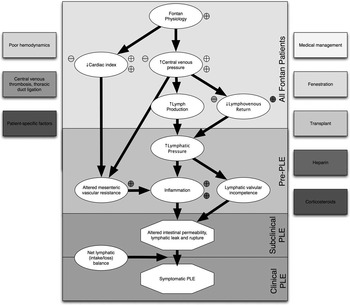
Approaching protein-losing enteropathy as a disorder of lymphatic insufficiency may allow the design of mechanisms to prevent and treat this devastating disease (Figure 3). Using the simplified paradigm of the lymphatic system presented above, we recently completed a matched case-control study focused upon identifying whether central venous thrombosis might play a role in complete physical obstruction to lymphatic return in patients with congenital cardiac disease and protein-losing enteropathy. In doing so, we found 4 of 16 (25%) cases to have evidence of physical obstruction to lymphatic return, while this existed in only 1 of 32 (3%) control patients, p = 0.06.Reference Meadows, Gauvreau and Jenkins4 Other examined variables, including haemodynamic data from catheterisation prior to Fontan, operative, and perioperative Fontan data, and further haemodynamic data at the time of protein-losing enteropathy diagnosis, failed to reveal discriminating differences between the study groups. Despite the findings of this study presenting neither an aetiologic smoking gun nor a magic therapeutic bullet, they do suggest that this paradigm may yield fruitful information. Central venous thrombosis, and other forms of central venous obstruction,Reference Menon, Hagler, Cetta, Gloviczki and Driscoll85 may be an important and seldom recognised contributive or causative factor to protein-losing enteropathy in this already vulnerable patient population. Despite our inability to find an association between protein-losing enteropathy and central venous lines, when taken together with what we know about the state of the lymphatic circulation in patients with chronically elevated central venous pressure, we have, for the first time, some knowledge that may aid in treatment or prevention of protein-losing enteropathy in those with congenital cardiac disease. Given that central venous thrombosis is vastly under-recognised, the index of suspicion for this complication must first be elevated in these patients, and treatment of documented cases of thrombosis must be swift. With the knowledge that central lines (including peripherally inserted central catheters) are the leading risk factor for central venous thrombosis in children,Reference Andrew, David and Adams86, Reference Schmidt and Andrew87 the second consideration should be their location of placement and duration. Moreover, new arguments may be added to the contentious debate that surrounds anticoagulation in Fontan patients; third, considering the stressed lymphatic system in Fontan patients, other considerations, less founded in evidence but weighted in logic also, may be apparent. For example, following Fontan surgery, many patients are gradually weaned from most or all cardiac medications. With the knowledge that even “good” central venous pressure in Fontan patients most likely taxes the lymphatic system to a significant degree, one might question anew the appropriateness of this approach. Certainly, those physicians taking care of the growing population of adults with congenital cardiac disease can attest to organ systems other than the lymphatics that suffer from chronically elevated central venous pressure, including the hepatic and renal systems. Finally, in situations of documented thoracic duct obstruction, novel surgical approaches may yield favourable results, such as that experienced by an unusual patient at this institution who underwent a Senning procedure for transposition of the great arteries and subsequently developed protein-losing enteropathy. Lymphangiography demonstrated thoracic duct occlusion, and innominate vein thrombosis was shown at cardiac catheterisation. Following diversion of his thoracic duct to a cervical vein, protein-losing enteropathy resolved and the patient remains free of protein-losing enteropathy today.
A PLE disease paradigm – integrating contributory anatomic and physiologic factors, disease progression and possible modes of treatment, or palliation. A positive sign within a circle denotes possible mechanisms by which improvement occurs in the referenced abnormality by the colour-referenced therapy (right column). A negative sign within a circle denotes a worsening possible mechanism by which worsening occurs in the referenced abnormality by the colour-referenced factor (left column). Note that patient-specific factors most likely play a role at all levels.

Conclusion
Protein-losing enteropathy remains a devastating complication of Fontan procedures for palliation of complex congenital cardiac disease. Despite advances in surgical and medical therapy, there is no evidence that protein-losing enteropathy is less common in the current era. A trend towards improved prognosis may exist, but clearly there remains much room for further progress. Despite the pathogenesis and pathophysiology of protein-losing enteropathy remaining poorly understood, there is ample evidence to implicate lymphatic insufficiency as central to the disease process. Further characterisation of the lymphatic system coupled with recognition of the means by which to improve lymphatic insufficiency may provide the best hope for avoidance and treatment of this devastating complication of Fontan procedures.
Acknowledgements
The authors have no relevant sources of financial support, industry affiliations, or conflicts of interest to disclose. They would like to thank Maliha Rehman, Heidi Moses, and Kim Gauvreau for their contributions to data collection and analysis for this study.