

Milk fat is composed of approximately 90% triglycerides, and these are assembled in the mammary gland, in part, from long-chain NEFA originating from the circulation (Taylor & MacGibbon, Reference Taylor, MacGibbon, Roginski, Fuquay and Fox2002). More than 90% of the fatty acids in blood are present as triglycerides, but triglycerides cannot enter the mammary gland. Therefore, NEFA are very important for milk fat production. Lipoprotein lipase (LPL), an enzyme bound to capillary endothelium, breaks down circulating triglyceride, releasing NEFA so that they can be absorbed into tissue or escape back into the circulation (Frayn et al. Reference Frayn, Coppack, Fielding and Humphreys1995; Teusink et al. Reference Teusink, Voshol, Dahlmans, Rensen, Pijl, Romijn and Havekes2003). Hormone sensitive lipase (HSL), an enzyme present in adipose tissue, hydrolyses triglycerides allowing release of NEFA and glycerol from the adipocyte into the circulation (Frayn et al. Reference Frayn, Coppack, Fielding and Humphreys1995; Ferranini et al. Reference Ferrannini, Camastra, Coppack, Flisher, Golay and Mitrakou1997).
Blood NEFA concentrations may fluctuate considerably in the short term in response to feeding or stress (Frohl & Blum, Reference Frohl and Blum1988; Boisclair et al. Reference Boisclair, Johnston, Bauman, Crooker, Dunshea and Bell1997). The principal way in which NEFA concentrations are regulated involves the inhibition of HSL by insulin (Ferrannini et al. Reference Ferrannini, Camastra, Coppack, Flisher, Golay and Mitrakou1997). When the concentration of glucose in plasma increases above a background level, insulin is released from the pancreas. Insulin mediates glucose disappearance from blood by increasing the availability of glucose transporters (GLUT-4) on the cell surface which enhances the uptake of glucose by tissue. Elevated plasma insulin levels also reduce the rate of hepatic endogenous glucose production. Although NEFA is not controlled to a similar intensity as glucose, the metabolism of NEFA and glucose are related because they are both influenced by insulin (Sechen et al.Reference Sechen, McCutcheon and Bauman1989; Frayn et al. Reference Frayn, Coppack, Fielding and Humphreys1995). Furthermore, NEFA and glucose metabolism are also linked because elevated plasma NEFA concentrations have a major role in inhibiting glucose metabolism (the Randle fatty acid cycle; Randle et al. Reference Randle, Garland, Hales and Newsholme1963) and because glucose and NEFA are known to be reciprocally regulated (the Sherringtonian metaphor; Tepperman & Tepperman, Reference Tepperman and Tepperman1970).
Metabolism of NEFA, insulin and glucose in animals in general and dairy cows in particular has been extensively investigated (Frohl & Blum, Reference Frohl and Blum1988; Sechen et al. Reference Sechen, McCutcheon and Bauman1989; Lemsoquet et al. Reference Lemsoquet, Rideau, Rulquin, Faverdin, Simon and Verite1997) but a quantitative approach is required to gauge the relative importance of the various interactions. Kinetic compartmental models are useful since they not only enable quantification of the processes involved, but also facilitate the conceptualization of the system under consideration and may enable new insights into the physiological system (France & Thornley, Reference France and Thornley1982; Baldwin et al. Reference Baldwin, France, Beever, Gill and Thornley1987). The glucose Minimal Model (MM) (Bergman et al. Reference Bergman, Ider, Bowden and Cobelli1979; Bergman & Cobelli, Reference Bergman and Cobelli1980), for example, facilitated elucidation of the interaction between glucose and insulin, led to advances in diabetes research and has been the subject of over 700 scientific publications (Bergman, Reference Bergman2005).
The glucose MM, when applied to data from the intravenous glucose tolerance test (IVGTT), allows estimation of a number of diagnostically useful parameters and indices. The MM is aptly named in that it is made up of the minimal number of compartments and rate constants that are necessary to describe in exquisite detail, the time course of plasma glucose and insulin following a glucose challenge. The usefulness of the MM approach is that it is based on concepts that can be described by simple differential equations. From a practical viewpoint, glucose MM analysis provides estimates of parameters and indices that have been shown to be useful for quantifying the glucose and insulin status of individuals and even populations. Although cows rely on absorbed ruminally derived volatile fatty acids (VFA) as their major energy substrate, they have glucose MM parameters of similar magnitude to those reported for humans (Boston et al. Reference Boston, Moate and Stefanovski2006), suggesting that in ruminants, as in humans, MM parameters are related to fundamental processes concerning glucose metabolism and its control by insulin.
The glucose MM has already been shown to contain parameters linked to metabolic diseases, and the disposition index (DI) obtained from the MM, has been shown to be genetically determined (Bergman, Reference Bergman2005). Therefore, it seems reasonable to hypothesize that a model that contains parameters that are more closely related to lipolysis in adipose tissue and oxidation of fatty acids, and in which the parameters might also be genetically determined, would be useful for elucidating the causes of fatty liver syndrome, low milk-fat syndrome, high milk fat production or identifying at an early age animals likely to be predisposed to these conditions.
An examination of the literature indicates that there has only been one model developed (Thomaseth & Pavan, Reference Thomaseth, Pavan, and Berdanier2003), which aims to describe the dynamic short term changes that occur in vivo, in plasma NEFA concentrations in response to a glucose tolerance test. This model (hereafter called the Thomaseth model), employs MM-type compartmental methodology to describe the time course of plasma NEFA concentrations in humans following either a standard or an insulin-modified IVGTT (IMIVGTT), or an oral glucose tolerance test (OGTT). The Thomaseth model is in fact the glucose MM as well as two additional differential equations and the ancillary system equations to describe NEFA disposition and its control by a remote insulin compartment.
Unlike the glucose MM, the Thomaseth model, despite its considerable potential, has not been widely adopted as a tool for metabolic investigations. In fact, since the initial publication of the Thomaseth model, there has been no publication that we can ascertain in the refereed scientific literature reporting its ability to model NEFA kinetics in either humans or animals. Our overall objective is to use dynamic compartmental modelling to elucidate NEFA metabolism in dairy cows. Before deciding whether or not it is necessary to develop a completely novel model, it seemed logical to assess whether the existing Thomaseth model might be applied to dairy cows.
The aims of the work presented here were to examine the mathematical features of the Thomaseth model, to employ typical IVGTT datasets derived from the standard IVGTT protocol (each dataset containing 24 measurements of glucose, insulin and NEFA) to evaluate the ability of the Thomaseth model to predict detailed features of NEFA kinetics in lactating dairy cows, and to expose any practical problems associated with fitting the Thomaseth model to data.
Materials and Methods
Background
Since the Thomaseth model can be considered an extension of the glucose MM, a description of the Thomaseth model must begin with a description of the glucose MM. The glucose MM was developed to facilitate analysis of data on plasma glucose and insulin concentrations obtained from the IVGTT. The glucose MM is encapsulated in two differential equations (1A and 2A) and ancillary system equations (1B, 2B and 2C):


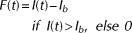

where G(t) [mg/dl] is the predicted glucose concentration; the initial glucose concentration, G(0), is assumed to be the sum of the basal glucose concentration, G b, and the glucose dose, D (300 mg/kg) divided by the normalized distribution volume, V G [dl/kg]; Glucose effectiveness (S g) [min−1] is a first order rate constant which describes the ability of glucose itself to enhance its own disappearance from plasma independent of the effect of insulin; X(t) [min−1] is a state variable describing the action of insulin (in a compartment remote from blood, possibly the interstitium), to enhance the removal of glucose from plasma; X(t) is to some degree a time delayed reflection of plasma insulin concentration. P 2 [min−1] is a parameter describing the rate of decline of insulin action; and P 3 [(mU⋅l−1)−1⋅min−2] is a parameter describing the movement of circulating insulin to the interstitial space. I(t) [μU/ml] is a function in time describing the plasma insulin concentration, and it is obtained by linear interpolation of the plasma insulin concentration data. Since I(t) is known, it serves as a driver of the MM. The measured basal insulin concentration is denoted by I b [μU/ml] and F(t) [μU/ml] is a function that represents the elevation of plasma insulin concentration above basal insulin. Insulin sensitivity S I [(mU/l)−1min−1] which is defined by equation 2C, represents the net capacity for insulin to promote the disposal of glucose.
Two other useful indices are: acute insulin response to glucose (area under the insulin response to glucose, AIRg) [mUl−1⋅10 min−1] and the Disposition Index, DI [unit-less]. DI is the product of AIR g and S I. It has been shown to be useful for quantifying the glucose/insulin status of individuals and even populations, and in humans is genetically determined (Bergman, Reference Bergman2005). In humans, S I, is reduced in individuals with fatty liver (Perseghin et al. Reference Perseghin, Bonfanti, Magni, Lattuada, de Cobelli, Canu, Esposito, Scifo, Ntali, Costantino, Bosio, Ragogna, del Maschio, Chiumello and Luzi2006) and the presence of specific genotypes associated with hepatic lipases has also been associated with S I (Teran-Garcia et al. Reference Teran-Garcia, Santoro, Rankinen, Bergeron, Rice, Leon, Rao, Skinner, Bergman, Despres and Bouchard2005). In cattle, decreased feed intake or even fasting such as that which sometimes occurs in the periparturient period, especially in sick or ‘downer’ cows suffering from milk fever or grass tetany, may cause elevated triglyceride content in the liver and reduced S I, (Oikawa & Oetzel, Reference Oikawa and Oetzel2006).
A schematic depiction of the Thomaseth NEFA model which incorporates the Bergman glucose minimal model (grey area).

The Thomaseth Model
The Thomaseth model (see Fig. 1), consists of the Bergman Minimal Model (equations 1A, 1B, 2A, 2B and 2C) and the following equations:


where FFA(t) is the predicted plasma NEFA concentration [μmol/l]. The basal NEFA concentration (FFA b) [μmol/l], is also the initial NEFA concentration (FFA(0)) (Equation 3B). The parameter K FFA [min−1] is a first order fractional turnover rate constant related to the disposition of NEFA (oxidation of NEFA by tissues and sequestration of NEFA into adipose tissue or the mammary gland). Y(t) [μU/ml], is a delayed profile of I(t), and Y(t) is related to X(t) in equation 2A of the Glucose MM by Equation 3C. Y′(t) [μU/ml], is a remote insulin compartment acting to regulate NEFA, and it is defined by Equation 3D. Thomaseth states ‘starting from basal FFA production at basal insulin, FFA production decreases with slope S FFA [ml/μU] for supra-basal increases in remote insulin up to a value beyond which FFA production becomes constant’. The magnitude of the effect that supra-basal increases in remote insulin have on reducing the production of FFA is given by the parameter S FFA [ml/μU], while ρFFA [a unit-less fraction of the basal FFA production] is the maximum inhibitory capacity of insulin on FFA production. The function: max (1-S FFAY′(t), ρFFA) can be explained by: max (a, b)=a if a⩾b and b if a <b. In Equation 4, P 2T [min−1] is a parameter describing the rate of decline of insulin action a propos NEFA production. In the Thomaseth model, it is assumed that the same dynamics of remote insulin applies to both the Glucose and NEFA models and therefore P 2T=P 2. In this paper, S I, S g and P 2 refer specifically to glucose MM parameters, while S IT, S gT and P 2T refer to the corresponding parameters in the Thomaseth model.
Experimental data
Ten multiparous Holstein-Friesian dairy cows (4·6±1·43 years old; 539±72·6 kg body weight, BW; mean±sd) from two diverse genetic strains (North American; n=3 or New Zealand; n=7) and three feeding treatments (a generous allowance of pasture (>45 kg DM/cow per d measured to ground level) plus either 0, 3 or 6 kg concentrate DM/cow per d; n=5, 3 and 2 cows, respectively) and producing 31·9±5·96 kg milk/d, 1·4±0·19 kg fat/d, 1·1±0·20 kg protein/d and 1·6±0·28 kg lactose/d (4·46±0·655, 3·43±0·094 and 4·87±0·115% fat, protein and lactose, respectively) were subjected to a standard IVGTT without exogenous insulin. The cows were in early lactation (21±3·5 days in milk) and were intentionally selected for a diversity of origin and nutrition treatments to ensure as far as possible a diverse range of NEFA responses. Prior to this experiment the cows had been involved in other experiments and were well used to being handled and having multiple samples of blood collected over a short duration.
Indwelling catheters were placed in the left jugular vein of each cow 24 h before the IVGTT, and cows were fasted for 12 h before glucose infusion. Glucose (300 mg/kg BW) was infused via the left jugular vein into each cow over a 2-min period and the line was flushed with saline solution. Blood samples from each cow were withdrawn 5 min before (−5 min) and immediately prior to (0 min) glucose infusion. Further samples were collected at 2, 4, 6, 8, 10, 12, 15, 18, 20, 23, 26, 30, 35, 40, 50, 60, 90, 120, 150, 180, 210 and 240 min relative to the time of infusion. Blood was collected in 10-ml heparin-coated blood tubes (100 IU heparin/ml blood), the tubes immediately placed on ice, and the tubes centrifuged at 1120 g at, 4°C for 10 min within minutes of collection; plasma was extracted and frozen to await analysis for glucose, insulin and NEFA. Analyses for NEFA (colorimetric method) and glucose (hexakinase method) were performed on a Hitachi 717 analyzer (Roche, Basel, Switzerland) at 30°C by Alpha Scientific Ltd., Hamilton, New Zealand. The inter-assay and intra-assay CV was <2%. Plasma insulin concentrations were measured using a double antibody RIA (Hales & Randle, Reference Hales and Randle1963) with inter-assay and intra-assay CV <10%.
Model fitting and data analysis
The Thomaseth model was implemented using WinSAAM version 3.07 (which can be downloaded from WinSAAM.org) (Stefanovski et al. Reference Stefanovski, Moate and Boston2003). Using I(t) as the model driver, the Thomaseth model was fitted to the NEFA and glucose data using generalized least squares. The Bergman glucose MM was independently fitted to the glucose and insulin data using MinMod Millennium version 6.02 (obtained from MinMod Inc. 2006), (Boston et al. Reference Boston, Stefanovski, Moate, Sumner, Watanabe and Bergman2003). Data on S I (as estimated by MinMod Millennium (S I) and the Thomaseth model (S IT)) and Sg (as estimated by MinMod Millennium (Sg) and the Thomaseth model (Sg T)) were compared using Lin's concordance correlation coefficient (Lin, Reference Lin1989). The Thomaseth model was also fitted to individual cow NEFA data using a two-step ‘constrained’ approach. In the first step, glucose data were fitted to the glucose MM using MinMod Millennium and in the second step, the Thomaseth model was fitted to the NEFA data, but the values for Sg T, S IT and P 2T were set fixed to the corresponding Sg, SI and P 2 values as determined by MinMod Millennium. Analyses of variance, paired t tests and concordance analyses were carried out using STATA software (Stata, 2006).
Results and Discussion
Figure 2 presents three typical examples of the Thomaseth model predictions to individual IVGTT datasets. Table 1 presents the best fit mean estimates of the Thomaseth model parameters for lactating cows and the best fit parameters to the Bergman glucose MM. Table 1 also presents estimates of the Thomaseth model parameters for NEFA disposition (K FFA, S FFA and ρFFA) when Sg T, S IT and P 2T have been fixed at their corresponding Sg, S I and P 2 values as determined by MinMod Millennium.
Three different examples of NEFA (●, μmol/l), and insulin (■, μU/dl) data fitted to the NEFA minimal model developed by Thomaseth & Pavan (Reference Thomaseth, Pavan, and Berdanier2003). Note that in these graphs, the×axis is time in minutes, and for display purposes, the units for insulin are μU/dl rather than the more conventional and model specific μU/ml.

Parameter estimates for the Thomaseth NEFA model and the glucose minimal model for lactating dairy cows

† NEFA parameters obtained when Sg, SI and P2 fixed to the individual glucose minimal model estimates obtained from MinMod Millennium
In this investigation, we observed that the Thomaseth model had a number of compelling attributes as well as serious failings. The Thomaseth model could describe the general shape of the NEFA response to an IVGTT (Fig. 2A). In particular, it could generally describe the major initial down-slope in NEFA which is related to the rate of utilization of NEFA (Fig. 2). The Thomaseth model could also describe the nadir in NEFA, even when the NEFA concentrations remained at a low level for an extended period of time (Fig. 2B).
In this investigation, we observed in at least three of the cows, an initial latency period which occurred before the precipitous fall in NEFA concentrations (Figs 2C and 2D). During the latency period, NEFA concentrations either remained constant or even substantially increased. Although this latency phenomenon does not appear to have been previously investigated in dairy cows, it has been reported in humans (McLachlan et al. Reference McLachlan, Boston and Alford2005; Sumner et al. Reference Sumner, Bergman, Vega, Genovese, Cochran, Pacak, Watanabe and Boston2004). Epinephrine release caused by the animals being frightened or by a ‘flurry of activity’ surrounding the start of an experiment might be expected to cause a transitory rise in plasma NEFA. However, the cows were well used to being handled and showed no signs of stress at any time during the IVGTT. Whatever the cause of this initial rise in plasma NEFA and the initial latency period, the structure of the Thomaseth model assumes that immediately after time zero, Y’(t) will increase and NEFA will necessarily always decline. Indeed, Thomaseth & Pavan (Reference Thomaseth, Pavan, and Berdanier2003) admit: ‘Some problems were encountered with an unmodelled early initial increase of FFA concentrations’. The failure of the Thomaseth model to describe the initial latency period must be regarded as a serious problem since it has the potential to adversely affect the accuracy with which K FFA may be estimated.
Perhaps the most serious problem with the Thomaseth model is that it failed to accurately predict the rebound in NEFA concentration (see Figs 2B and 2C for typical examples). The Thomaseth model assumes that after NEFA concentrations reach their nadir, they will slowly rebound to a plateau concentration which corresponds to their pre-IVGTT basal FA concentration (FFA b). In this investigation, the rebound NEFA plateau concentration was substantially higher than FFA b in 8 of the 10 cows. In another experiment, 10 out of 20 cows exhibited supra-basal NEFA concentrations at 240 min after an intravenous glucose challenge (JR Roche et al. unpublished data). In humans, the plasma concentration of NEFA during the rebound plateau phase has sometimes been observed to be significantly higher than the pre-IVGTT basal FA concentration (Sumner et al. Reference Sumner, Bergman, Vega, Genovese, Cochran, Pacak, Watanabe and Boston2004), and sometimes been observed to be either not different or significantly lower than the pre-IVGTT basal FA concentration (Wueston et al. Reference Wueston, Balz, Bretzel, Kloer and Hardt2005). In previous reports of IVGTT in cattle, the plasma concentration of NEFA during the rebound plateau phase has generally been approximately equal to the pre-IVGTT basal FA concentration, although this might be attributed to the fact that in these previous studies, plasma samples were collected for only 75 (Lemsoquet et al. Reference Lemsoquet, Rideau, Rulquin, Faverdin, Simon and Verite1997) or 120 min (Sechen et al. Reference Sechen, McCutcheon and Bauman1989) after administration of the glucose challenge.
The inability of the Thomaseth model to describe the initial latency period and the rebound plateau concentration means that for individual subjects, some parameter estimates, especially K FFA and Sg T, were poorly estimated. For example, in the case of cow 1949 (see Fig. 2C) her parameter estimates were: K FFA 51·6±20·1, SFFA 0·0629±0·0017, ρFFA 0·36±0·014, SgT 0·0088 ±0·0043, SIT∗10−4 21·0 ±2·0, P2T 0·055±0·0024, G0T 220±8·8.
In Table 1, we see that the mean values for Sg T, S IT and P 2T are not too different numerically from their corresponding parameters from the glucose minimal model Sg, S I and P 2. However, what is disturbing is that there is a general lack of concordance between each of the glucose minimal model parameters and their corresponding parameters from the Thomaseth model. For Sg T and Sg, Lin's concordance correlation coefficient was 0·35 and Pearson's r=0·42. For S IT and S I, Lin's concordance was 0·31 and Pearson's r=0·45. For P 2T and P 2, Lin's concordance correlation coefficient was just 0·18 and Pearson's r=0·53. Because MinMod Millennium has been thoroughly tested with datasets obtained from many different species and many different experimental treatments, the estimates for Sg, S I and P 2 obtained from this software must be considered to be more reliable. Therefore, we consider that the Thomaseth model, by simultaneously trying to estimate both the glucose MM parameters and the ‘NEFA’ parameters compromised the estimation of all the parameters.
When the Thomaseth model was fitted to data from individual subjects and values for Sg T, S IT and P 2T constrained to be equal to their corresponding values of Sg and S I and P 2 in the glucose MM (as estimated by using MinMod Millennium), then the individual subject estimates for K FFA, S FFA and ρFFA became poorly determined with large error estimates (data not shown), and the mean estimates for these parameters deviated substantially from the corresponding estimates determined when Sg T and S IT were unconstrained (Table 1).
The failings of the Thomaseth model were all due to the fact that it is based on assumptions and a mathematical structure that do not have the flexibility to perfectly describe the NEFA response especially in the period after the nadir in NEFA concentrations. In the Thomaseth model, the main inhibitor of production of NEFA is insulin action and it is assumed that this insulin action is closely related to the insulin action that drives glucose utilization. Failure of the Thomaseth model to describe the rebound in NEFA suggests that NEFA production is inhibited by a different ‘insulin action’ from that which promotes glucose disposal. This seems plausible since the liver and muscles are the primary sites where insulin acts to control glucose utilization, whereas, it is in adipose tissue that insulin acts to inhibit NEFA production. When the Thomaseth model was fitted to an individual subject's data and Sg T and S IT and P 2T constrained to their corresponding values as determined using MinMod Millennium, the predicted rebound in NEFA concentration were in some instances substantially delayed (Fig. 3). This suggests that if insulin does indeed inhibit NEFA production, then P 2T (the rate at which insulin action in adipose tissue declines) must be larger in magnitude than P 2 (the rate of decline of insulin action apropos glucose utilization in liver and muscle). This possibility is consistent with the fact that insulin clearance in various tissues is controlled by insulin degrading enzyme (IDE), and the activity of IDE is known to vary greatly in different tissues (Mora et al. Reference Mora, Scarfone, Calvani and Greco2003). The fact that a common P 2 cannot be used satisfactorily to model both glucose and NEFA disposition indicates the need for a model where these two effects are independently modelled.
Plasma NEFA (●, μmol/l), glucose (▲, mg/dl) and insulin (■, μU/ml) during an intravenous glucose tolerance test in cow 9970 (see also Fig. 2A). The dashed line for glucose is the predicted response obtained from the MinMod Millennium implementation of the Bergman glucose minimal model. The solid line for the NEFA response was predicted from the Thomaseth model with P2T, SIT and SGT constrained to values estimated by MinMod Millennium. This example demonstrates that insulin action as estimated by the glucose minimal model cannot, in this case, be used in the Thomaseth model to account for the rebound in NEFA concentrations.

The Thomaseth model is capable of describing the nadir in NEFA kinetics, even when the approach to nadir and the rebound from nadir appears discontinuous as in Fig. 2B. Whilst this capability of the Thomaseth model is to be lauded, it must be acknowledged that models that contain abrupt discontinuities, e.g., the ‘max’ function in Equation 3, may prove problematic for data fitting. The detailed analysis presented here of the capabilities of the Thomaseth model to describe NEFA kinetics in lactating cows was facilitated by the fact that we utilized a standard IVGTT sampling protocol and had 23 samples of glucose, insulin and NEFA for each cow. In contrast, when developing their NEFA model, Thomaseth and Pavan used IVGTT datasets in which NEFA measurements were made at just 8 sampling times per subject (0, 10, 40, 80, 100, 140, 180 and 240 min after start of the IVGTT) and OGTT datasets with just 9 NEFA sampling times per subject (0, 10, 20, 30, 60, 90, 120, 150 and 180 min after the start of the OGTT). The NEFA response to an IVGTT has been shown to consist of at least four phases (Sumner et al. Reference Sumner, Bergman, Vega, Genovese, Cochran, Pacak, Watanabe and Boston2004), each of which may reveal important insights into the mechanisms that control NEFA metabolism. We surmise that because of the sparse datasets employed by Thomaseth and Pavan in developing their NEFA model, they may not have detected substantial systematic localized departures of their model predictions from the actual trajectory of NEFA concentrations, and the outcome was a model which lacks the capabilities to predict important features of the NEFA response.
In this paper we have evaluated the suitability of the Thomaseth model to describe NEFA kinetics in lactating cows. The Thomaseth model must be regarded as seminal to this field in that it describes the general features of the NEFA response to an IVGTT and provides a number of parameters that can be used to quantify NEFA production and utilization. This acknowledged, it must also be concluded that the Thomaseth model has some serious deficiencies that call into question the very basis of the model. Our analysis highlights the fact that the Thomaseth model could not predict the latency phase in the NEFA response or the rebound plateau concentration of NEFA. The parameters of the Thomaseth model were poorly estimated and the parameters associated with glucose disposal (Sg T, S IT and P 2T) were distorted from their corresponding MinMod Millennium estimates. The next logical step would be to fix the Thomaseth model. The deceptively simple differential equations of the Thomaseth model might lead one to think that by simply adjusting a parameter or introducing another parameter to the Thomaseth model this could easily be achieved. However, over 2 years, we have tried a large number of physiogically plausible modifications, and have as yet not achieved a satisfactory model. It is concluded that a model to accurately describe NEFA kinetics in dairy cows will necessarily be radically different from the Thomaseth model.
The authors acknowledge the technical assistance of A Sheahan, J Lee, K Watkins, P Gore and P Aspin, all the help afforded them by Dexcel's Lye dairy farm staff, and the laboratory expertise of Alpha Scientific, Hamilton, New Zealand. This work was partly funded by New Zealand Dairy Farmers, through the Dairy InSight research fund.



