Adolescence is a developmental period marked by a sharp increase in depression, as well as the time when the well-established sex difference in depression emerges (Hankin & Abramson, Reference Hankin and Abramson2001). Adolescence also is characterized by multiple challenges, disruptions, and developments in biological, psychological, and social domains (Cicchetti & Rogosch, Reference Cicchetti and Rogosch2002). Among these are bodily changes associated with pubertal maturation (for a review, see Hayward, Reference Hayward2003b). Adolescents also experience a shift in social contexts to a greater emphasis on the peer domain (Savin-Williams & Berndt, Reference Savin-Williams, Berndt, Feldman and Elliott1990) while also experiencing more stress and disruption in peer relationships (Brown, Reference Brown, Feldman and Elliott1990). Although adolescent depression, and the sex difference therein, have been linked to pubertal development (Angold, Costello, & Worthman, Reference Angold, Costello and Worthman1998) and to stress in the peer realm (Gore, Aseltine, & Colten, Reference Gore, Aseltine and Colten1993; La Greca & Harrison, Reference La Greca and Harrison2005; Rudolph, Reference Rudolph2002), research examining the integration of these two factors in predicting the sex difference in depression is limited. The present study explored how pubertal development and peer stress contribute to the emerging sex difference in adolescent depression both concurrently and over time. In particular, this research investigated the developmental timing and the psychosocial context of the emerging sex difference in adolescent depression by exploring the extent to which development in relation to peers, and in the context of stressful peer relationships, explains the sex difference in adolescent depression.
Sex Differences in Adolescent Depression
Prior to adolescence, rates of depression are similar for boys and girls (for reviews, see Hankin & Abramson, Reference Hankin and Abramson2001; Hammen & Rudolph, Reference Hammen, Rudolph, Mash and Barkley2003; Rudolph, Hammen, & Daley, Reference Rudolph, Hammen, Daley, Wolfe and Mash2006) or slightly favor boys (Anderson, Williams, McGee, & Silva, Reference Anderson, Williams, McGee and Silva1987; Hankin et al., Reference Hankin, Abramson, Moffitt, Silva, McGee and Angell1998). Depression increases sharply in adolescence, particularly for girls (Kessler, Avenevoli, & Merikangas, Reference Kessler, Avenevoli and Merikangas2001). Findings for boys are mixed, with some studies reporting slight increases (Angold & Rutter, Reference Angold and Rutter1992; Hankin et al., Reference Hankin, Abramson, Moffitt, Silva, McGee and Angell1998; Weissman et al., Reference Weissman, Gammon, John, Merikangas, Warner and Prusoff1987), and others reporting stable rates (Ge, Lorenz, Conger, Elder, & Simons, Reference Ge, Lorenz, Conger, Elder and Simons1994; Twenge & Nolen-Hoeksema, Reference Twenge and Nolen-Hoeksema2002; Wichstrom, Reference Wichstrom1999) or even decreases (Angold & Erkanli, Reference Angold and Erkanli1996). By midadolescence, a female/male ratio of approximately 2:1 in diagnostic-level depression is evident (ages 13–16; Angold et al., Reference Angold, Costello and Worthman1998; Hankin et al., Reference Hankin, Abramson, Moffitt, Silva, McGee and Angell1998; McGee et al., Reference McGee, Feehan, Williams, Partridge, Silva and Kelly1990). Inconsistent evidence regarding the precise age of onset of this emerging sex difference might be explained by findings that pubertal development, rather than chronological age, accounts for the difference (Angold et al., Reference Angold, Costello and Worthman1998; Hayward, Gotlib, Schraedley, & Litt, Reference Hayward, Gotlib, Schraedley and Litt1999).
Pubertal Development and the Sex Difference in Depression
Pubertal development is a multifaceted process, involving physical and biological changes, as well as psychological and social experiences and implications (Graber, Reference Graber and Hayward2003; Petersen, Crockett, Richards, & Boxer, Reference Petersen, Crockett, Richards and Boxer1988). Both morphological development (e.g., growth of secondary sex characteristics) and physiological development (e.g., changes in hormonal concentrations) have been implicated in the sex difference in depression (for a review, see Angold et al., Reference Angold, Costello and Worthman1998). Because of our interest in how pubertal changes elicit psychological and social reactions from adolescents and those around them, the present study focused on morphological development and other bodily manifestations of puberty (e.g., skin and voice changes, growth spurt). Given that physiological development also plays a key role in adolescent depression (Angold, Costello, Erkanli, & Worthman, Reference Angold, Costello, Erkanli and Worthman1999; Paikoff, Brooks-Gunn, & Warren, Reference Paikoff, Brooks-Gunn and Warren1991), an interplay between somatic and biological changes likely contributes to the emerging sex difference in depression.
Reflecting its multifaceted nature, the pubertal transition might heighten risk for depression for various reasons. First, puberty is physically disruptive, and marks a physical transition to adulthood at a time when adolescents are socially far from it. Second, pubertal changes bring about negative psychological (e.g., body image) and social effects (e.g., exclusion, victimization), which in turn heighten risk for depression. Puberty also brings hormonal changes linked to negative affect and depression (Angold et al., Reference Angold, Costello, Erkanli and Worthman1999; Susman, Dorn, & Chrousos, Reference Susman, Dorn and Chrousos1991). Just as pubertal hormones differ for boys and girls, the psychological and social effects of puberty differ greatly, and these sex differences might play a central role in the emerging sex difference in adolescent depression.
Consistent with this idea, several studies show that pubertal status (i.e., objective degree or stage of physical maturation at a single point in time; Graber, Petersen, & Brooks-Gunn, Reference Graber, Petersen, Brooks-Gunn, Graber and Brooks-Gunn1996; Susman & Rogol, Reference Susman, Rogol, Lerner and Steinberg2004) is a key predictor of rising adolescent depression and the sex difference therein. More mature pubertal status in girls, but not in boys, consistently is related to higher rates of depressive disorders (Angold et al., Reference Angold, Costello and Worthman1998), symptoms, and mood (Benjet & Hernández-Guzmán, Reference Benjet and Hernández-Guzmán2002; Ge, Elder, Regnerus, & Cox, Reference Ge, Elder, Regnerus and Cox2001; Hayward et al., Reference Hayward, Gotlib, Schraedley and Litt1999; Patton et al., Reference Patton, Hibbert, Carlin, Shao, Rosier and Caust1996; Siegel, Aneshensel, Taub, Cantwell, & Driscoll, Reference Siegel, Aneshensel, Taub, Cantwell and Driscoll1998; Wichstrom, Reference Wichstrom1999). Ge, Conger, and Elder (Reference Ge, Conger and Elder2001a) found that the association between sex and depressive symptoms disappeared when pubertal status was accounted for, indicating that pubertal development explains a significant portion of the sex difference in adolescent depression. Similarly, Angold and colleagues (Reference Angold, Costello and Worthman1998) found that morphological pubertal status, not age, accounted for the sex difference in depression; yet, in a later paper (Angold et al., Reference Angold, Costello, Erkanli and Worthman1999), the effect of morphological pubertal status on depression in girls was explained by hormone levels (cf. Paikoff et al., Reference Paikoff, Brooks-Gunn and Warren1991). Thus, despite strong evidence for the role of pubertal status in adolescent depression, the precise mechanisms are still unclear.
In addition to the stress of going through puberty, one's timing relative to peers (i.e., pubertal status relative to age; Susman & Rogol, Reference Susman, Rogol, Lerner and Steinberg2004; Weichold, Silbereisen, & Schmitt-Rodermund, Reference Weichold, Silbereisen, Schmitt-Rodermund and Hayward2003) also has implications for adolescent well-being, perhaps even more so than pubertal status per se (Tobin-Richards, Boxer, & Petersen, Reference Tobin-Richards, Boxer, Petersen, Brooks-Gunn and Petersen1983). Adolescents who develop early might be underprepared for such changes. They also might feel deviant and insecure about their difference and lack the social support of peers going through the same process (Peskin, Reference Peskin1973; Petersen, Reference Petersen and Golub1983; Ruble & Brooks-Gunn, Reference Ruble and Brooks-Gunn1982). Adolescents who develop late relative to their peers might similarly feel insecure about their physical difference, and they might feel left behind, both physically and socially, as their more developed peers transition into adolescence. Thus, adolescents who develop off-time in either direction might be at risk for psychosocial distress (for a review, see Weichold et al., Reference Weichold, Silbereisen, Schmitt-Rodermund and Hayward2003).
Indeed, research links pubertal timing with depression, particularly in girls. Compared to their on-time or late-maturing peers, early-maturing girls typically exhibit more depressive symptoms and mood (Benjet & Hernández-Guzmán, Reference Benjet and Hernández-Guzmán2002; Brooks-Gunn & Warren, Reference Brooks-Gunn and Warren1985; Ge, & Elder, Regnerus, & Cox, 2001a; Hayward et al., Reference Hayward, Killen, Wilson, Hammer, Litt and Kraemer1997; Kaltiala-Heino, Kosunen, & Rimpela, Reference Kaltiala-Heino, Kosunen and Rimpela2003; Siegel, Anmeshensel, Taub, Cantwell, & Driscoll, Reference Siegel, Aneshensel, Taub, Cantwell and Driscoll1998; Stattin & Magnusson, Reference Stattin and Magnusson1990), internalizing symptoms (Caspi & Moffitt, Reference Caspi and Moffitt1991; Hayward et al., Reference Hayward, Killen, Wilson, Hammer, Litt and Kraemer1997), and general psychological distress (Ge, Conger, & Elder, Reference Ge, Conger and Elder1996; Petersen & Crockett, Reference Petersen and Crockett1985). There is some evidence that late maturation in girls also has negative psychological effects, suggesting a curvilinear pattern (Dorn, Susman, & Ponirakis, Reference Dorn, Susman and Ponirakis2003; cf. Petersen & Crockett, Reference Petersen and Crockett1985). Among boys, late maturation often is associated with elevated depressive symptoms compared to early and on-time maturation (Benjet & Hernández-Guzmán, Reference Benjet and Hernández-Guzmán2002; Crockett & Petersen, Reference Crockett, Petersen, Lerner and Foch1987; Dorn et al., Reference Dorn, Susman and Ponirakis2003; Huddleston & Ge, Reference Huddleston, Ge and Hayward2003; Weichold et al., Reference Weichold, Silbereisen, Schmitt-Rodermund and Hayward2003). Yet, some research finds that early-maturing boys also exhibit elevated depression (Alsaker, Reference Alsaker1992; Kaltiala-Heino et al., Reference Kaltiala-Heino, Kosunen and Rimpela2003; Susman et al., Reference Susman, Nottelmann, Inoff-Germain, Dorn, Cutler and Loriaux1985, Reference Susman, Dorn and Chrousos1991), suggesting a curvilinear relation between pubertal timing and depression for boys as well (for reviews, see Huddleston & Ge, Reference Huddleston, Ge and Hayward2003; Weichold et al., Reference Weichold, Silbereisen, Schmitt-Rodermund and Hayward2003).
Despite growing evidence for the effects of pubertal timing on depression, there is inconsistency in the pattern of reported effects. Furthermore, Angold and colleagues (Reference Angold, Costello and Worthman1998) failed to find an effect of early timing, or its interaction with sex, on diagnostic-level depression. These discrepancies are likely accounted for, in part, by variability in how depression and pubertal timing are operationalized. For example, whereas some studies use continuous measures of pubertal timing, others use dichotomous variables, such as “early timing” versus all other youth (thus lumping together on-time and late developers; e.g., Angold et al., Reference Angold, Costello and Worthman1998).
Adolescents' perceived pubertal timing (i.e., subjective appraisals of whether they are on time, behind, or ahead of their peers; e.g., Graber, Lewinsohn, Seeley, & Brooks-Gunn, Reference Graber, Lewinsohn, Seeley and Brooks-Gunn1997; Weichold et al., Reference Weichold, Silbereisen, Schmitt-Rodermund and Hayward2003) also may influence well-being because of its implications for peer interactions and perceived normality (e.g., Alsaker, Reference Alsaker and Rutter1995; Dorn et al., Reference Dorn, Susman and Ponirakis2003; Dubas, Graber, & Petersen, Reference Dubas, Graber and Petersen1991; Tobin-Richards et al., Reference Tobin-Richards, Boxer, Petersen, Brooks-Gunn and Petersen1983). Perceived early timing in girls consistently is linked to heightened depressive disorders (Graber et al., Reference Graber, Lewinsohn, Seeley and Brooks-Gunn1997; Graber, Seeley, Brooks-Gunn, & Lewinsohn, Reference Graber, Seeley, Brooks-Gunn and Lewinsohn2004), mood or symptoms (Ge, Conger, et al., Reference Ge, Conger and Elder2001a; Kaltiala-Heino et al., Reference Kaltiala-Heino, Kosunen and Rimpela2003; Michael & Eccles, Reference Michael, Eccles and Hayward2003; Siegel et al., Reference Siegel, Aneshensel, Taub, Cantwell and Driscoll1998; Siegel, Yancey, Aneshensel, & Schuler, Reference Siegel, Yancey, Aneshensel and Schuler1999; Wichstrom, Reference Wichstrom1999), and there is some evidence that perceived late timing in girls also has negative psychological effects (Alsaker, Reference Alsaker1992; Dubas et al., Reference Dubas, Graber and Petersen1991; Siegel et al., Reference Siegel, Aneshensel, Taub, Cantwell and Driscoll1998; Tobin-Richards et al., Reference Tobin-Richards, Boxer, Petersen, Brooks-Gunn and Petersen1983). Perceived late timing in boys is associated similarly with depressed mood or symptoms (Graber et al., Reference Graber, Lewinsohn, Seeley and Brooks-Gunn1997; Siegel et al., Reference Siegel, Aneshensel, Taub, Cantwell and Driscoll1998, Reference Siegel, Yancey, Aneshensel and Schuler1999), although some curvilinear patterns also have been noted (Alsaker, Reference Alsaker1992; Graber et al., Reference Graber, Lewinsohn, Seeley and Brooks-Gunn1997). Although perceived timing predicts depression in a similar way as actual timing, perceived timing tends to be more strongly associated with the psychosocial consequences of puberty, including depression, and to show more curvilinear effects (i.e., perceiving oneself to be off-time is a liability for boys and girls; Alsaker, Reference Alsaker1992; Dubas et al., Reference Dubas, Graber and Petersen1991; Michael & Eccles, Reference Michael, Eccles and Hayward2003; Siegel et al., Reference Siegel, Aneshensel, Taub, Cantwell and Driscoll1998).
It is important to note several areas of overlap among age, pubertal status, timing, and perceived timing. First, pubertal status, as a measure of maturational progression, is intimately linked to age. Second, because pubertal timing is, by definition, pubertal status adjusted for age, these three dimensions of development are interdependent. Third, actual and perceived pubertal timing overlap to some extent; however, research often finds stronger links for perceived timing, suggesting that adolescents' appraisals of their pubertal timing go beyond a straightforward calculation of pubertal stage adjusting for chronological age, likely considering psychological and social–contextual factors as well. As such, this study attempted to explore the similar and different contributions of these maturational variables to adolescent psychosocial adjustment.
The Social Context of Puberty and the Sex Difference in Depression
Given the social focus and tendency toward conformity in adolescence, and the “social stimulus value” that pubertal maturation creates (Petersen & Taylor, Reference Petersen, Taylor and Adelson1980, p. 137), pubertal development and its ensuing physical changes should be viewed within a social context. As adolescents begin to place a heightened emphasis on their peer relationships (Berndt, Reference Berndt1982; Brown, Reference Brown, Feldman and Elliott1990; Csikszentmihalyi & Larson, Reference Csikszentmihalyi and Larson1984; Furman & Buhrmester, Reference Furman and Buhrmester1985, Reference Furman and Buhrmester1992; Savin-Williams & Berndt, Reference Savin-Williams, Berndt, Feldman and Elliott1990), relationship disruptions that occur during this time (Brown, Reference Brown, Feldman and Elliott1990) may set the stage for increasing depression. In fact, the link between peer stress and depression (e.g., Goodyer, Wright, & Altham, Reference Goodyer, Wright and Altham1990; Puig-Antich et al., Reference Puig-Antich, Kaufman, Ryan, Williamson, Dahl and Lukens1993; Rubin et al., Reference Rubin, Rubenstein, Stechler, Heeren, Halton and Housman1992; Rudolph et al., Reference Rudolph, Hammen, Burge, Lindberg, Herzberg and Daley2000) is heightened during adolescence (Wagner & Compas, Reference Wagner and Compas1990). Thus, the peer domain is a natural context for examining trajectories of development and depression in adolescence.
The heightened importance placed on peer relationships in adolescence is particularly evident in girls, who have stronger interpersonal caring orientations, connection-oriented goals, and concerns about peer evaluation than do boys (for a review, see Rose & Rudolph, Reference Rose and Rudolph2006). Because girls particularly value having close peer relationships, experiences of conflict, low social support, and other forms of peer stress are likely to provide a salient context for understanding the rise in depression among adolescent girls. Consistent with these ideas, girls typically have a stronger depressive response to peer stress, or more broadly to interpersonal stress, compared to boys (Hankin, Mermelstein, & Roesch, Reference Hankin, Mermelstein and Roesch2007; Leadbeater, Blatt, & Quinlan, Reference Leadbeater, Blatt and Quinlan1995; Oldenburg & Kerns, Reference Oldenburg and Kerns1997; Rudolph, Reference Rudolph2002; Rudolph & Hammen, Reference Rudolph and Hammen1999; Schraedley, Gotlib, & Hayward, Reference Schraedley, Gotlib and Hayward1999).
Reflecting a developmental psychopathology framework (for a review, see Cicchetti & Cohen, Reference Cicchetti and Cohen2006), several researchers have proposed interactional models of puberty and peer relationships (Compas, Hinden, & Gerhardt, Reference Compas, Hinden and Gerhardt1995; Graber, Reference Graber and Hayward2003; Magnusson, Reference Magnusson1988; Montemayor & Flannery, Reference Montemayor, Flannery, Montemayor, Adams and Gullotta1990; Petersen, Reference Petersen and Parsons1980; Simmons & Blyth, Reference Simmons and Blyth1987). According to these models, an adolescent's relative level of peer stress versus support might exacerbate or buffer the adverse effects of puberty (Benjet & Hernández-Guzmán, Reference Benjet and Hernández-Guzmán2002; Tobin-Richards et al., Reference Tobin-Richards, Boxer, Petersen, Brooks-Gunn and Petersen1983). Drawing from these Person × Environment models, we anticipated that puberty and peer stress would likely work together to explain the sex difference in adolescent depression. Specifically, we expected that pubertal development would be more strongly associated with depression in the context of high peer stress than in the context of low peer stress, and this interactive effect would be most salient in girls.
Some research supports the idea that puberty interacts with life stress and the peer context to predict the sex difference in adolescent depression. For example, early pubertal maturation in girls interacted with having mixed-sex friends (Ge et al., Reference Ge, Conger and Elder1996) and with greater exposure to life stress (Ge, Conger, et al., Reference Ge, Conger and Elder2001a; also see Silberg et al., Reference Silberg, Pickles, Rutter, Hewitt, Simonoff and Maes1999) to predict heightened psychological distress and depressive symptoms over time. Notably, the sex difference in depressive symptoms disappeared after adjusting for the effects of pubertal timing, life stress, and their interaction (Ge, Conger, et al., Reference Ge, Conger and Elder2001a). Brooks-Gunn and Warren (Reference Brooks-Gunn and Warren1989) found that the interaction between morphological pubertal status and life stress accounted for more variance in adolescent girls' negative affect than did either variable alone, or hormonal status. In contrast, Angold and colleagues (Reference Angold, Worthman, Costello and Hayward2003) did not find an interaction between physiological pubertal status and mean life event counts in a sample of girls. Once again, the discrepant findings across studies are likely accounted for, in part, by differing methodologies (e.g., aspects of puberty and domains of life stress assessed, interview vs. checklist assessments). At the same time, these discrepancies highlight the need for further research into the intersecting roles of puberty and psychosocial factors in determining risk for depression.
Overview of the Present Study
This study examined how puberty interacts with stressful peer experiences to contribute to the sex difference in depression, both concurrently and over time. To identify which specific aspects of maturation are critical for understanding the emerging sex difference, we compared the roles of pubertal status, pubertal timing, and perceived pubertal timing. We made three sets of predictions: Hypotheses 1–3.
Hypothesis 1
We predicted that more mature pubertal status would predict heightened depression in girls, but not in boys. Among girls, early actual and perceived pubertal timing (i.e., being ahead of one's peers) should be associated with the highest levels of depression, late timing (i.e., being behind one's peers) with lower but moderately elevated levels of depression, and on-time development with the lowest levels of depression. Thus, both positive linear and positive curvilinear (i.e., J-shaped quadratic) associations were expected between pubertal timing (actual and perceived) and depression in girls. Among boys, actual and perceived late timing, and to a lesser extent, early timing, were expected to be associated with more depression relative to on-time development (i.e., negative linear and positive curvilinear associations with depression were predicted, yielding a J-shaped curve opposite that of girls). Given prior findings, we expected similar patterns of results for actual and perceived timing, but stronger effects for the latter.
Hypothesis 2
Puberty and peer stress were expected to interact in predicting depression such that the depressive effects of puberty (as described in Hypothesis 1) would hold at high levels of peer stress more so than at low levels of peer stress. Specifically, we predicted that more mature pubertal status in girls, and actual and perceived off-time pubertal development in both girls (early timing and, to a lesser extent, late timing) and boys (late timing and, to a lesser extent, early timing), would be more strongly associated with depression in adolescents who experienced high levels of stress in their peer relationships. Hypotheses 1 and 2 were expected to hold both concurrently and longitudinally.
Hypothesis 3
Given the predicted pattern of interactions, we expected that girls would be more depressed than boys among adolescents who were (a) more pubertally mature (i.e., advanced pubertal status), (b) early developing relative to peers (i.e., early pubertal timing), and (c) self-perceived as early developing (i.e., early perceived pubertal timing). Although prior findings are inconsistent, we also predicted that boys might be more depressed than girls among adolescents who were (a) less pubertally mature, (b) late developing relative to peers, and (c) self-perceived as late developing. To examine whether the sex difference in depression was specific to puberty, or could be equally well predicted by age, we also explored whether there was a sex difference at any particular age.
Method
Participants
The present study consisted of data from the first two waves of a longitudinal investigation examining the development of depression during the transition to adolescence (for previous reports on this study, see Krackow & Rudolph, Reference Krackow and Rudolph2008; Rudolph, Reference Rudolph2008; Rudolph & Flynn, Reference Rudolph and Flynn2007; Rudolph, Flynn, Abaied, Groot, & Thompson, in press). Participants in the longitudinal study included 167 families drawn from a mid-sized Midwestern city and several rural towns. The present research focused on a subsample of 158 youth (94.6%) who had pubertal development, peer stress, and depression information available at the initial assessment. Among this subsample (mean age = 12.39, SD = 1.21, range = 9.6–14.8; 51.9% female; 76.6% White, 13.3% African American, 10.1% other), socioeconomic status was diverse, with total family income below $30,000 for 16.7% of the sample and above $75,000 for 19.2% of the sample.
Recruited youth for the longitudinal study had participated in schoolwide screenings using the Children's Depression Inventory (CDI; Kovacs, Reference Kovacs1982). Youth who participated in these screenings represented approximately 80% of targeted participants. For these screenings, researchers read the CDI aloud during classroom administrations, while youth wrote their answers. From the screening sample (n = 1985), we selected potential participants (n = 468) along the range of the CDI, oversampling slightly at the high end (i.e., whereas 15.8% of the screening sample had CDI scores above 18, 20.3% of the participants we targeted for recruitment fell into this category). Participants from the screening sample were recruited for the longitudinal study based on several factors, including CDI scores, a maternal caregiver in the home, and proximity to the university until the targeted sample was successfully recruited. Participants in the longitudinal study did not differ from nonparticipants in terms of sex, χ 2 (1) = .39, ns, ethnicity/race (White vs. minority), χ 2 (1) = .02, ns, or depressive symptoms at the time of screening, t (280) = 1.11, ns. Participants (M = 12.41) were slightly, but not meaningfully, younger than nonparticipants (M = 12.65), t (275) = 2.28, p < .05.Footnote 1
Of the 158 families who participated at Wave 1 (W1), Wave 2 (W2) data were available for 152 (96.2%). Participants at W2 did not differ from nonparticipants in terms of sex, χ 2 (1) = .01, ns, age, t (7.39) = .51, ns, ethnicity (White vs. minority), χ 2 (1) = 2.46, ns, or any of the W1 puberty, stress, or depression variables, ts (156) < 1.59, ns.
Procedure
Primary female caregivers were telephoned and told about the study. Caregivers provided written informed consent and youth provided written assent; participants then completed in-person sessions with two interviewers. Interviewers included a clinical psychology faculty member, several trained psychology graduate students, a post-BA research assistant (all of whom conducted diagnostic or stress interviews), and several advanced undergraduate research assistants (who conducted stress interviews and administered paper and pencil questionnaires). The assessments lasted approximately 3 to 4 hr. The families completed a follow-up assessment as close to 1 year later as possible (mean time interval = 1 year, 1 week). At each assessment, families received a cash stipend, and youth received a gift certificate.
Measures
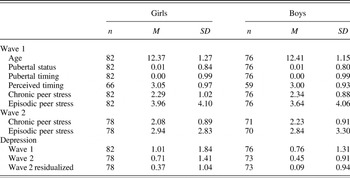
Table 1 presents descriptive information for the measures used in the present study.
Descriptive statistics of all variables

Note: Wave 1 depression scores are based on the past year and Wave 2 depression scores are based on the past month. Wave 2 residualized depression consists of Wave 2 depression, adjusting for Wave 1 depression (both measures over the past month).
Assessment and coding of depression
The Kiddie Schedule for Affective Disorders and Schizophrenia for School-Age Children—Epidemiologic Version 5 (Orvaschel, Reference Orvaschel1995) is a semistructured interview assessing youth psychopathology. Interviewers conducted separate interviews with youth and their caregivers. At W1, participants reported symptoms that had occurred over the youth's lifetime, with a particular focus on the past year. At W2, participants reported symptoms over the past year.
All diagnostic interviews were coded in consultation with a clinical psychology faculty member. A best-estimate approach (for a description, see Klein, Lewinsohn, Rohde, Seeley, & Olino, Reference Klein, Lewinsohn, Rohde, Seeley and Olino2005; Klein, Ouimette, Kelly, Ferro, & Riso, Reference Klein, Ouimette, Kelly, Ferro and Riso1994) was used to combine caregiver and youth information regarding the nature, severity, frequency, and resulting impairment of the reported symptoms according to the Diagnostic and Statistical Manual of Mental Disorders criteria (American Psychiatric Association, 1994). For each episode and type of depression (e.g., major depression, dysthymia),Footnote 2 interviewers provided ratings on a continuous 5-point scale: 0 = no symptoms, 1 = mild symptoms, 2 = moderate symptoms, 3 = diagnosis with mild impairment, and 4 = diagnosis with severe impairment. Separate ratings were given for the entire past year and for the current month at the time of assessment. Ratings across episode and type of depression were summed, such that higher ratings reflect more severe symptoms within a single diagnostic category, the presence of symptoms from multiple categories, and/or multiple episodes of depression (see also Davila, Hammen, Burge, Paley, & Daley, Reference Davila, Hammen, Burge, Paley and Daley1995; Hammen et al., Reference Hammen, Burge, Daley, Davila, Paley and Rudolph1995; Hammen, Shih, Altman, & Brennan, Reference Hammen, Shih, Altman and Brennan2003; Hammen, Shih, & Brennan, Reference Hammen, Shih and Brennan2004; Rudolph et al., Reference Rudolph, Hammen, Burge, Lindberg, Herzberg and Daley2000). Thus, these scores represent composite indexes of several different markers of depression severity. Validity of these scores was established through significant correlations with several self-report measures of depressive symptoms (rs = .47–.57, ps < .001). Independent raters coded audiotapes of 25% of the W1 interviews. One-way random-effects intraclass correlation coefficients (ICCs) for depression ratings were strong for the past year (ICC = .95) and the past month (ICC = .97). Depression scores showed high stability for the past year (r = .70, p < .001) and the past month (r = .67, p < .001).
At W1, 49 youth (31.0%) had some depression over the past year (i.e., a score above zero for at least one type of depression), and 22 of these youth (13.9%) had a clinical diagnosis of depression or dysthymia. At W2, 52 youth (34.4%) had some depression over the past year, and 17 of these youth (11.3%) had a diagnosis. Scores on the depression summary index ranged from 0 to 9 at W1 and 0 to 7 at W2. There were no significant differences between W1 and W2 depression scores, either for the past month, t (151) = .16, ns, or the past year, t (152) = .62, ns. Using McNemar's test there were also no significant changes in the number of depression cases from W1 to W2, χ2s (1) ≤ .84, ns.
Assessment and coding of peer stress
To assess peer stress, the Youth Life Stress Interview (Rudolph & Flynn, Reference Rudolph and Flynn2007), a revised version of the Child Episodic Life Stress and Chronic Strain Interviews (Rudolph & Hammen, Reference Rudolph and Hammen1999; Rudolph et al., Reference Rudolph, Hammen, Burge, Lindberg, Herzberg and Daley2000), was used. This semistructured interview elicits information from youth and their caregivers (in separate interviews) about the nature and intensity of chronic and episodic stress the youth experienced over the past year. This study focused on stress in peer relationships.
To assess chronic peer stress, interviewers asked standardized questions about stressful aspects of friendships (e.g., lack of friendships, poor quality friendships, infrequent contact with friends; lack of closeness, trust, or support; presence and severity of conflict, poor conflict resolution) and general peer relationships (e.g., fights with peers, being teased by peers, social isolation or exclusion from social activities). In addition to a series of structured prompts, interviewers asked follow-up questions as needed to elicit a detailed picture of each youth's degree of chronic stress in the peer domain.
To assess episodic peer stress, interviewers asked a general open-ended question about the youth's experience of stressful events with peers and gave specific prompts about particular types of events. Interviewers also asked follow-up questions to elicit detailed information about each reported event, including what occurred, the timing and duration of the event, and any objective consequences (such as sitting alone in the lunchroom for a week because of a falling out with a best friend).
Interviewers presented narrative information to a team of trained coders who had no knowledge of the youth's diagnostic status or subjective response to the stress (e.g., felt sad). Coders provided consensual ratings based on youth and caregiver reports. The relative weight of each report was determined based on the detail and credibility of objective information provided by the two informants. Chronic stress over the past year was rated on a 5-point scale: 1 = no stress, 2 = mild stress, 3 = isolated stress, 4 = serious stress, 5 = severe stress. Higher chronic peer stress ratings reflect higher levels of stressful conditions (e.g., teasing, fighting, exclusion) and lower levels of positive conditions (e.g., low support, poor quality of friendships). For episodic stress, coders rated the stressfulness or negative impact of each event, from 1 (none) to 5 (severe), reflecting how stressful the event would be for a typical child in the described circumstances. If only the youth or the caregiver reported an event, that information was used for coding. Episodic peer stress scores were calculated as the total of the objective stress ratings for each peer event with a stress rating above 1.
To determine reliability, information from 41 interviews (including 160 episodic stress events) was presented to two teams of coders, who gave independent ratings. One-way random-effects ICCs evidenced high reliability for the chronic peer stress rating (ICC = .96) and the objective episodic stress rating (ICC = .90). Cohen's kappa for agreement on whether an event was peer related or not was 1.00. As might be expected, stability was strong for chronic stress (r = .67, p < .001) and moderate for episodic stress (r = .37, p < .001).
Assessment of pubertal status and timing
Given this study's focus on how somatic changes associated with puberty influence depression, we followed precedent from past research by assessing secondary sex characteristics and other physical changes of puberty (Dubas et al., Reference Dubas, Graber and Petersen1991; Ge, Elder, et al., Reference Ge, Conger and Elder2001; Hayward, Reference Hayward and Hayward2003a; Petersen et al., Reference Petersen, Crockett, Richards and Boxer1988). Youth and their caregivers completed two assessments of youth's pubertal status.Footnote 3 The first measure consisted of a series of drawings illustrating the stages of pubertal development specified by Tanner (Reference Tanner and Gardner1969), and adapted by Morris and Udry (Reference Morris and Udry1980). Each set of drawings consists of five stages, of breast development and pubic hair growth in girls, and of genital development and pubic hair growth in boys. Informants were instructed to indicate which of the drawings in each group most closely matched with the youth's current stage of development. Because of the sensitive and private nature of the drawings, caregivers first were asked for permission to give the questionnaire to youth, and then youth themselves were given the option of completing it. Complete or partial data were available for 118 of the youth respondents, and 140 of the caregivers.
Youths' self-ratings on the Tanner stages correlate well with physician ratings, and show strong kappa coefficients (e.g., between .81 and .91; Duke, Litt, & Gross, Reference Duke, Litt and Gross1980; also see Dorn, Susman, Nottelmann, Inoff-Germain, & Chrousos, Reference Dorn, Susman, Nottelmann, Inoff-Germain and Chrousos1990; Morris & Udry, Reference Morris and Udry1980; Schlossberger, Turner, & Irwin, Reference Schlossberger, Turner and Irwin1992). In the present sample, youth and caregiver reports correlated well for girls' breast (r = .83, p < .001; 97% agreement within one category) and pubic hair development (r = .69, p < .001; 86% agreement within one category), and moderately well for boys' genital (r = .47, p < .01; 83% agreement within one category) and pubic hair development (r = .65, p < .001; 78% agreement within one category), similar to other studies (e.g., Dorn et al., Reference Dorn, Susman, Nottelmann, Inoff-Germain and Chrousos1990). Youth and caregiver reports were averaged into consensual ratings; for 49 cases, information was available from only one informant, and this information was used instead of a composite. It should be noted that the present sample included girls and boys across the full range of the Tanner stages: 29.6% of girls and 38.6% of boys had an average Tanner score between 1.0 and 2.0, 43.2% of girls and 42.9% of boys fell between 2.25 and 3.75, and 27.2% of girls and 18.6% of boys were rated between 4.0 and 5.0.
The second measure, the Pubertal Development Scale (PDS; Petersen et al., Reference Petersen, Crockett, Richards and Boxer1988), assesses growth spurt, body hair, skin changes (all youth), voice changes and facial hair (boys), and breast development and menarcheal status (girls). Each item is rated on a 1–4 scale (1 = no development, 2 = development has just begun, 3 = development is definitely underway, 4 = development is complete), with the exception of the menarche item (1 = no, 4 = yes). The PDS has been well validated, with interitem reliability ranging from the .50s to the .80s (median α = .71 across three studies; Brooks-Gunn, Warren, Rosso, & Gargiulo, Reference Brooks-Gunn, Warren, Rosso and Gargiulo1987; Petersen et al., Reference Petersen, Crockett, Richards and Boxer1988; Tobin-Richards et al., Reference Tobin-Richards, Boxer, Petersen, Brooks-Gunn and Petersen1983). The PDS also has shown moderate correlations with physician ratings of the Tanner stages (r range = .61–.67; Brooks-Gunn et al., Reference Brooks-Gunn, Warren, Rosso and Gargiulo1987).
Complete or partial PDS data were available for 132 youth and 140 caregivers. Youth and caregiver reports on the PDS were strongly correlated in the present sample (rs = .88 for girls, .72 for boys; ps < .001) and were averaged into consensual ratings for each item. The five PDS items showed strong internal consistency (α = .86 for girls and boys). For 24 youth, data were available from only one informant, and this information was used instead of a composite.
Creation of pubertal status and timing variables
Pubertal status
Based on a confirmatory factor analysis,Footnote 4 a composite score for pubertal development was created by averaging the five PDS items and the two Tanner stage drawings (each item standardized within sex). These seven items showed strong reliability as a single scale, both for girls (α = .92) and boys (α = .91). All seven items were available for the majority of participants (135 of 158), and an additional 11 participants had five or six of the seven items. Given that the Tanner stages often are used alone as an index of pubertal development (Brooks-Gunn & Warren, Reference Brooks-Gunn and Warren1989; Dorn et al., Reference Dorn, Susman, Nottelmann, Inoff-Germain and Chrousos1990; Hayward et al. Reference Hayward, Killen, Wilson, Hammer, Litt and Kraemer1997; Morris & Udry, Reference Morris and Udry1980), composite scores for an additional 12 participants with Tanner stage data alone (n = 4), or with the Tanner stages and an additional one to two items from the PDS (n = 8), were calculated.
Pubertal timing
To capture pubertal timing, residualized scores of pubertal status, adjusting for age, were computed separately for girls and boys (Alsaker, Reference Alsaker and Rutter1995; Dorn et al., Reference Dorn, Susman and Ponirakis2003).
Perceived pubertal timing
Youths' perceived pubertal timing, relative to their peers, was assessed with the question: “Do you think your development is any earlier or later than most other [girls/boys] your age?” Response options included much earlier, somewhat earlier, about the same, somewhat later, and much later, yielding a continuous score ranging from 1 to 5. Responses were recoded so that higher scores reflected earlier pubertal timing, similar to the calculated pubertal timing item. Similar items have been used in other studies, and have strong predictive validity in relation to depression (Alsaker, Reference Alsaker1992; Dubas et al., Reference Dubas, Graber and Petersen1991; Graber et al., Reference Graber, Lewinsohn, Seeley and Brooks-Gunn1997, Reference Graber, Seeley, Brooks-Gunn and Lewinsohn2004; Michael & Eccles, Reference Michael, Eccles and Hayward2003; Siegel et al., Reference Siegel, Aneshensel, Taub, Cantwell and Driscoll1998, Reference Siegel, Yancey, Aneshensel and Schuler1999; Wichstrom, Reference Wichstrom1999).
Results
Overview of analyses
A series of hierarchical multiple regression (HMR) analyses was conducted to examine the interacting contributions of puberty and peer stress to depression among girls and boys, both concurrently and over time, and to identify at what specific stages of maturation a sex difference in depression occurred. Concurrent analyses explored the associations among sex, W1 puberty, W1 peer stress, and depression occurring over the past year. Longitudinal analyses examined the associations among sex, W1 puberty, peer stress occurring between W1 and W2, and W2 current depression. Longitudinal analyses were conducted both with (adjusted) and without (unadjusted) adjusting for W1 depression.Footnote 5 Preliminary analyses revealed similar patterns for chronic and episodic peer stress. Thus, a composite score reflecting both types of peer stress was used.
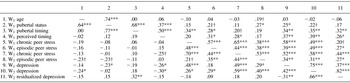
Correlations among puberty, peer stress, and depression for girls and boys

Note: W1, Wave 1; W2, Wave 2. Correlations for girls are above the diagonal, and correlations for boys are below the diagonal. Total numbers (N) range from 66 to 82 for girls and from 56 to 76 for boys, because participants did not complete the perceived pubertal timing rating or did not complete W2 stress or depression interviews.
† p < .10. *p < .05. **p < .01. ***p < .001.
Linear effects
We first examined the hypothesized interactions among sex, puberty, and peer stress in predicting depression (Hypotheses 1–3). The three main effects were entered at the first step, all two-way interactions at the second step, and the three-way interaction at the third step. All continuous predictors were centered prior to analysis and calculation of the interaction terms. Significant interactions were interpreted and depicted following Aiken and West (Reference Aiken and West1991), using 1 SD above and below the mean to represent high and low levels of the independent and moderator variables. For depiction purposes, significant two-way interactions were reanalyzed without the third variable or its interactions in the regression equations. To address Hypothesis 1, the two-way interactions between sex and puberty were interpreted in terms of differences in slope (i.e., sex differences in the association between puberty and depression). To address Hypothesis 2, we examined whether the interactive effects of sex and maturation were moderated by exposure to peer stress (i.e., the three-way interactions). To address Hypothesis 3, the concurrent interactions between sex and puberty were used to identify sex and maturational differences in depression. Specifically, these interactions were further analyzed with the Johnson–Neyman procedure for calculating regions of significant difference (see Pedhazur, Reference Pedhazur1997) to ascertain whether, and at which level of maturation, a sex difference in depression occurred.
Curvilinear effects
To fully test Hypotheses 1 and 2, we also examined curvilinear associations between pubertal timing, both actual and perceived, and depression. HMR was employed with both linear and curvilinear (quadratic term) pubertal timing variables entered in one step to predict depression. Given the hypothesized sex differences, these analyses were performed separately by sex. In cases where curvilinear effects were found, two- and three-way interactions among the curvilinear puberty variable, sex, and peer stress in predicting depression were examined for exploratory purposes, with recognition that the sample size limited power to detect such high-order effects.
Descriptive and correlational findings
Table 1 presents descriptive statistics for each of the variables, separately for boys and girls. There were no sex differences in puberty, peer stress, or depression, ts (123–156) < 1.68, ns. Table 2 presents correlations among the variables, separately by sex. These correlations provide a general picture of the associations among these variables in girls and in boys. Most notably, there were several associations between puberty (status, timing, and perceived timing) and depression that were positive in girls but negative (though many were nonsignificant) in boys. In general, more mature pubertal status and earlier pubertal timing, both actual and perceived, were associated with higher levels of depression in girls, but lower levels of depression in boys (with a few exceptions in boys; see Table 2). These correlations provide some initial support for Hypothesis 1. It also is interesting to note that unlike the puberty variables, age was uncorrelated with depression in girls, but was associated with lower levels of depression (particularly W2 depression) in boys.
Sex, puberty, and peer stress predicting depression
Main effects
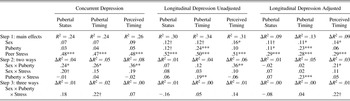
As seen in Table 3, there were some main effects of sex, puberty, and peer stress on depression. There was a consistent trend for girls to exhibit higher levels of depression than boys at W2. In addition, more mature pubertal status and earlier actual pubertal timing were associated with heightened depression in both sets of longitudinal analyses. In all analyses, higher levels of peer stress predicted heightened depression, both concurrently and longitudinally. These main effects, however, were qualified by several interactions.
Main effects and interactions among sex, puberty, and peer stress in predicting depression concurrently and longitudinally

Note: Except where R 2 is indicated, the values are standardized beta coefficients from the step of entry in hierarchical regression analyses.
† p < .10. *p < .05. **p < .01. ***p < .001.
Sex × Puberty
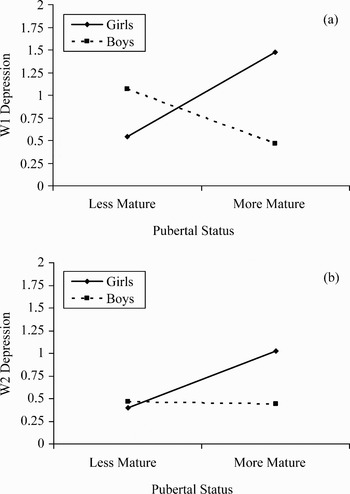
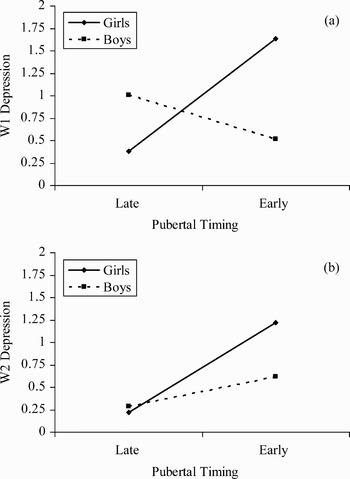
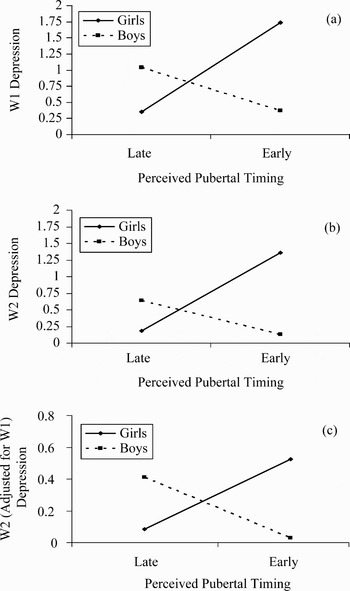
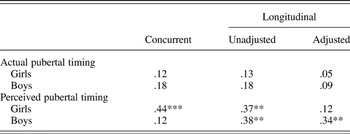
Hypothesis 1 was supported by the Sex × Puberty interactions predicting depression concurrently (for all puberty variables) and longitudinally, both with and without adjusting for prior depression (for perceived timing only). Table 4 presents these interactions without peer stress in the models (note that the longitudinal-unadjusted analyses for pubertal status and actual timing became marginally significant when peer stress was dropped from the models; thus, these interactions were depicted as well), Figures 1 through 3 illuminate the nature of these interactions. As depicted in Figure 1, more mature pubertal status was associated with higher levels of depression in girls both concurrently (β = .25, p < .05) and over time (β = .22, p = .05), whereas less mature pubertal status was associated with higher levels of depression in boys concurrently (β = −.23, p < .05) but not over time (β = −.02, ns). A similar pattern held for pubertal timing (see Figure 2): earlier timing relative to peers was associated with higher levels of W1 and W2 depression in girls (βs > .34, ps < .01), whereas in boys the association was nonsignificant, in the opposite direction from girls at W1 (β = −.19, ns), and in the same direction at W2 (β = .18, ns). A stronger and more consistent pattern emerged for perceived pubertal timing (see Figure 3). Among girls, perceived early timing was associated with higher levels of depression both concurrently and longitudinally without adjusting for prior depression (βs > .37, ps < .01), whereas among boys, perceived late timing was associated with higher levels of depression (βs < −.26, ps < .05). The same pattern held longitudinally when adjusting for prior depression, although the individual slopes were smaller both for girls (β = .15, p = .11) and boys (β = −.22, p = .07).
Sex × Pubertal Status interaction predicting (a) concurrent and (b) longitudinal depression.

Sex × Pubertal Timing interactions predicting (a) concurrent and (b) longitudinal depression.

Sex × Perceived Timing interactions predicting (a) concurrent, (b) longitudinal, and (c) longitudinal-adjusted depression.

Sex × Puberty interactions predicting depression

Note: Values are standardized beta coefficients from the step of entry in hierarchical regression analyses.
† p<.10. *p < .05. **p < .01. ***p < .001.
Puberty × Peer Stress
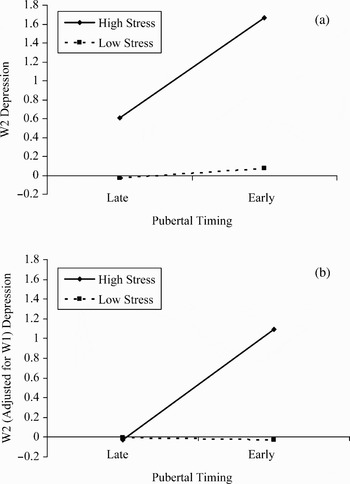
Hypothesis 2 was supported by the significant Pubertal Timing × Peer Stress interactions predicting depression longitudinally (both with and without adjusting for prior depression), although these effects were not moderated by sex. The effects remained significant without sex in the model (βs > .19, ps < .01). As shown in Figure 4, earlier pubertal timing was associated with heightened depression among youth exposed to high (βs > .43, p < .001) but not low (βs < .04, ns) levels of peer stress.
Pubertal Timing × Peer Stress interaction predicting (a) longitudinal and (b) longitudinal-adjusted depression.

Sex × Puberty × Peer Stress
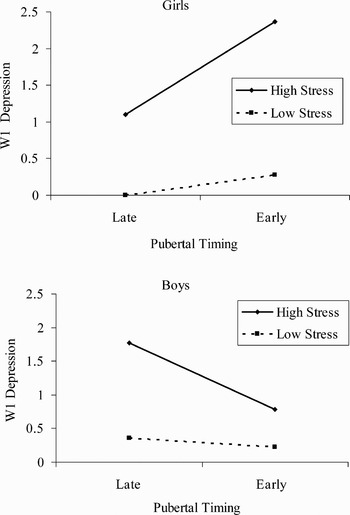
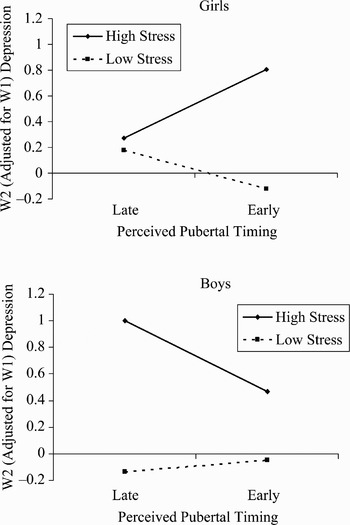
Further support for Hypothesis 2 was provided by two marginal three-way interactions between sex, pubertal timing, and peer stress predicting depression concurrently, and between sex, perceived timing, and peer stress predicting depression longitudinally (adjusting for prior depression). As shown in Figure 5, at high levels of peer stress, earlier pubertal timing in girls (β = .34, p < .05), and later pubertal timing in boys (β = −.38, p < .05), were associated with higher levels of concurrent depression. At low levels of peer stress, the association between pubertal timing and depression was nonsignificant for girls (β = .08, ns) and boys (β = −.05, ns). A similar pattern emerged for perceived timing and depression in the longitudinal-adjusted analysis (see Figure 6). At high levels of peer stress, earlier perceived timing in girls (β = .18, p = .05), and later perceived timing in boys (β = −.31, p < .05), predicted higher levels of depression over time, adjusting for prior depression. At low levels of peer stress, the association between perceived timing and depression was nonsignificant for both girls (β = −.10, ns) and boys (β = .05, ns).
Sex × Pubertal Timing × Peer Stress interaction predicting concurrent depression.

Sex × Perceived Timing × Peer Stress interaction predicting longitudinal-adjusted depression.

Curvilinear effects of puberty on depression
Sex differences
Table 5 presents the standardized beta coefficients for the effects of curvilinear (i.e., quadratic) pubertal timing on depression, separately for girls and boys. As shown, actual pubertal timing did not have a curvilinear relation with depression for either sex. Perceived pubertal timing, on the other hand, showed some curvilinear effects on depression for both girls and boys.
Curvilinear effects of actual and perceived pubertal timing on depression

Note: Values are standardized beta coefficients from hierarchical regression analyses.
** p < .01. ***p < .001.
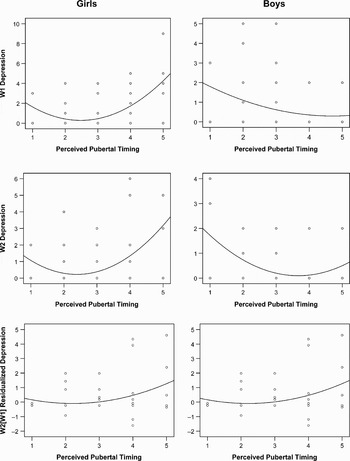
Figure 7 presents the nature of the curvilinear relations between perceived pubertal timing and depression. Consistent with Hypothesis 1, perceived early timing in girls was associated with the highest levels of depression, followed by perceived late timing. In contrast, perceptions of being on time were associated with low levels of depression. Although this curvilinear relation held both concurrently and over time, the longitudinal association was not significant when adjusting for prior depression. Similar to girls, boys' perceived off-time development in either direction was associated with elevated levels of depression longitudinally, both with and without adjusting for prior depression. However, consistent with Hypothesis 1, perceived late timing was associated with the highest levels of depression among boys, followed by perceived early timing.
Curvilinear associations between perceived pubertal timing and depression.

In sum, among both girls and boys, perceiving oneself to be off-time relative to peers was associated with elevated depression, whereas perceiving oneself to be on-time was associated with lower levels of depression. Thus, whereas both girls and boys evidenced a positive curvilinear pattern (i.e., off-timing in either direction was problematic), the linear association between puberty and depression was positive in girls (early timing worse) and negative in boys (late timing worse).
Curvilinear associations in tests of moderation
Exploratory analyses were conducted to examine whether the curvilinear associations between perceived pubertal timing and depression were moderated by peer stress. All four main effects (sex, linear perceived pubertal timing, curvilinear perceived pubertal timing, and peer stress) were entered in the first step (or second, in the longitudinal analyses that adjusted for W1 depression), followed by an additional step for the five two-way interactions, and a final step for the two three-way interactions. A main effect for curvilinear perceived timing was found to predict depression both concurrently and longitudinally, even after adjusting for prior depression (βs ≥ .15, ps < .05). In the analysis predicting concurrent depression, this main effect was qualified by a Sex × Curvilinear Perceived Timing interaction (β = .31, p < .01). This is not surprising given that the curvilinear association between perceived timing and W1 depression was significant in girls but not in boys (see Figure 7 and Table 5). The main effect on W2 (adjusted for W1) depression was qualified by a marginal Curvilinear Perceived Timing × Stress interaction (β = .17, p < .07). Follow-up analyses revealed that the curvilinear association between perceived timing and depression held at high (β = .27, p = .08) but not low (β = −.07, ns) levels of peer stress. The remaining two- and three-way interactions with curvilinear perceived timing were not significant (βs < .17, ns).
Sex and maturational differences in depression
The final set of analyses investigated the stages of maturation at which the sex difference in depression occurred (Hypothesis 3). These analyses were based on the concurrent Sex × Maturation interactions displayed in Table 4.
Pubertal status
The Johnson–Neyman procedure revealed that at less mature stages of pubertal development, boys and girls did not significantly differ in terms of depression. More precisely, the procedure projected that only at the very extreme low end of pubertal development (1.75 SD below the mean, or the least-developed 4% of the sample) would boys be more depressed than girls, and this projected value was too rare in the present sample to interpret (see Figure 1a). However, at increasingly more mature stages of pubertal development, girls were increasingly more depressed than boys. Specifically, among youth in the upper quartile of pubertal development (starting at 0.72 SD above the sample mean in pubertal status), rates of depression were significantly higher in girls than in boys. Follow-up analyses revealed that girls were more depressed than boys among youth whose PDS average was 2.0 or greater (on a 1–4 scale; pubertal development, on average, had barely started, was definitely underway, or seemed completed), t (70) = 3.17, p < .01, and among youth whose Tanner average was 3.0 or greater (on a 1–5 scale), t (67) = 2.42, p < .05.
Pubertal timing
Figure 2a illustrates that among later developing adolescents, boys experienced higher levels of depression, but among earlier developing adolescents, girls experienced higher levels of depression. The Johnson–Neyman procedure confirmed this pattern, such that among very late-developing youth (i.e., the latest 8% in this sample, or 1.38 SD below the mean and lower), boys were more depressed than girls, and among early-developing youth (i.e., the earliest 26% in this sample, or 0.65 SD above the mean and higher), girls were more depressed than boys.
Perceived pubertal timing
Figure 3a depicts a similar association between perceived timing and depression. According to the Johnson–Neyman procedure, among adolescents who responded that their pubertal development was “somewhat later” or “much later” than their peers, boys were more depressed than girls, and among adolescents who reported that their pubertal development was “somewhat earlier” or “much earlier” than their peers, girls were more depressed than boys.
Chronological age
To examine whether the sex difference in depression was specific to puberty, or could be equally well-predicted by age, we also explored whether there was a sex difference at any particular age. There were no main effects for age (|β|s ≤ .10, ns) and no interactions between sex and age (|β|s ≤ .13, ns), indicating that there was no particular age during which the sex difference in depression was significant in this sample.
In sum, the two-way interactions between sex and maturation predicting depression provide support for Hypothesis 3: girls typically were more depressed than boys at more mature stages of pubertal development and when their pubertal timing, whether actual or perceived, was earlier than that of their same-sex peers. In addition, among adolescents who were late in their pubertal timing, or who perceived themselves to be later than their peers, boys were more depressed than girls. These analyses reveal that pubertal development, rather than chronological age, is the key maturational process involved in the emerging sex difference in adolescent depression.
Discussion
This study elucidated the complex nature of sex and maturational differences in depression, revealing important distinctions among various components of development in the emerging sex difference in depression. Whereas the preponderance of past research on puberty and depression focuses on girls, this study contributes to a small but growing body of research on these processes in boys (Ge, Conger, & Elder, Reference Ge, Conger and Elder2001b; Huddleston & Ge, Reference Huddleston, Ge and Hayward2003). Following the principles of developmental psychopathology (Cicchetti, Rogosch, & Toth, Reference Cicchetti, Rogosch, Toth, Reynolds and Johnston1994; Petersen & Hamburg, Reference Petersen and Hamburg1986; Sameroff, Reference Sameroff and Eisenberg1987), as well as recommendations in the field of puberty research (Graber, Reference Graber and Hayward2003; Hayward & Sanborn, Reference Hayward and Sanborn2002; Susman & Rogol, Reference Susman, Rogol, Lerner and Steinberg2004), this research took a contextualized approach to understanding the developmental processes linking sex and puberty to depression. Of importance, this study's longitudinal design allowed for examining how these processes unfold over time.
The present findings confirmed the majority of the study hypotheses: (a) pubertal status and timing (both actual and perceived) predicted depression differentially for girls and boys, (b) the sex-differentiated effects of puberty on depression were partly dependent on a context of stressful peer relationships, and (c) the sex difference in depression was evident in particular maturational groups of adolescents (but, notably, not at a particular chronological age).
Sex and maturational differences in depression
By utilizing regions of significance tests to pinpoint the maturational turning point at which the sex difference in depression is evident, the present study advances current understanding of this complex developmental phenomenon. These tests also identified the particular points of actual and perceived pubertal timing at which a sex difference in depression exists. Consistent with Angold and colleagues (Reference Angold, Costello and Worthman1998), girls were more depressed than boys starting at Tanner Stage III; the present research also identified this sex difference among early-developing adolescents and among self-perceived early developers. In contrast, among very late-developing adolescents and adolescents who rated their own development to be late, boys were more depressed than girls.
Sex differences were evident not only in the levels of depression experienced within particular pubertal development groups, but also in the associations between puberty and depression. In general, the effects of puberty on depression often were opposite in girls and boys. Whereas rates of depression were higher at progressively more mature stages of pubertal development among girls, they were either similar or lower across pubertal maturation for boys. Moreover, although perceived off-timing was detrimental for both sexes, perceived early timing in girls, but perceived late timing in boys, had the strongest consequences for depression. Indeed, the associations depicted in Figure 7 show a striking pattern of sex differences that are nearly mirror images.
Accounting for the sex difference in depression
Puberty, not age, emerged as a consistent predictor of the sex difference in depression. Furthermore, given that pubertal timing was calculated by adjusting pubertal status for age, the effects of pubertal timing on depression indicate that pubertal status influences depression above and beyond the influence of age. Although an effect of age would likely have been found with a sample spanning a larger age range, it is likely that age effects found in other research are, in part, because of their co-occurrence with pubertal maturation effects. These findings contribute to a growing body of research documenting differential roles of puberty versus age in the sex difference in adolescent depression (Angold et al., Reference Angold, Costello and Worthman1998; Patton et al., Reference Patton, Hibbert, Carlin, Shao, Rosier and Caust1996).
The differential roles of actual versus perceived pubertal timing
Perhaps one of the most interesting findings that emerged from the present study is that actual and perceived pubertal timing showed different patterns of influence on depression. Of note, a recent study by Michael and Eccles (Reference Michael, Eccles and Hayward2003) revealed nearly identical patterns as the current study regarding the influence of actual timing (i.e., linear) versus perceived timing (i.e., curvilinear) on girls' psychological distress (including symptoms of depression and eating disorder). Together, findings from these two studies and others (Alsaker, Reference Alsaker1992; Dubas et al., Reference Dubas, Graber and Petersen1991) suggest that actual and perceived timing operate in different ways to affect adolescent adjustment, and raise an important question for continuing research: how and why might adolescents' ratings of perceived pubertal timing differ from their actual pubertal timing?
Most likely, the peer group that adolescents reference to compare their level of development consists of classmates, playmates, or schoolmates of varying ages, not just peers of the same sex and age (Gargiulo, Attie, Brooks-Gunn, & Warren, Reference Gargiulo, Attie, Brooks-Gunn and Warren1987; Silbereisen & Kracke, Reference Silbereisen, Kracke, Schulenberg, Maggs and Hurrelman1997). Thus, perceived timing is likely to be determined not only by adolescents' pubertal status and age, but also by their age relative to peers in their social and academic circles. For example, two fully developed 12-year-old girls, one in fifth grade in an elementary school, and one in sixth grade in a middle school, are likely to perceive their pubertal timing quite differently. Moreover, there is evidence that earlier developing girls tend to socialize with older peers (Magnusson, Reference Magnusson1988), thus influencing their perceived timing to be less early than their actual timing. Further research accounting for friends' ages, as well as grade and school variables, might help disentangle the differences between perceived and actual timing.
It also is possible that adolescents who rate themselves to be very off-time in their pubertal development (i.e., in the present study, only 13.7% of girls and 15.3% of boys rated themselves to be much earlier or later than their peers) include those who experienced some social adversity because of their off-timing, thus drawing attention to their development as distinct from their peers. Because perceived timing is influenced not only by actual timing but also by the peer context, it makes for a strong predictor of depression particularly when combined with peer stress. Indeed, in the present study perceived off-timing was linked to depression particularly in the context of stressful peer relationships.
Perceived timing also is likely to be influenced by the physical, psychological, and social salience of particular aspects of pubertal development, more so than actual timing is (Graber et al., Reference Graber, Petersen, Brooks-Gunn, Graber and Brooks-Gunn1996; Silbereisen & Kracke, Reference Silbereisen, Kracke, Schulenberg, Maggs and Hurrelman1997). Each of the different physical changes associated with puberty has unique personal, social, and cultural meanings, as well as consequences, for developing adolescents. For example, height and muscle mass are likely to be particularly important to boys, whereas breast development, body fat, and menarche might be particularly relevant to girls (Silbereisen & Kracke, Reference Silbereisen, Kracke, Schulenberg, Maggs and Hurrelman1997). Thus, whereas calculations of actual timing are based on several pubertal factors of varying degrees of salience, adolescents are likely to base their self-ratings of timing on one or two that are personally or socially salient. It is also notable that the bodily changes of puberty might be more publicly visible and, therefore, socially salient among girls (e.g., breast development and body fat) than among boys (e.g., genital development and body hair); this difference might explain the stronger correlation between actual and perceived pubertal timing in girls, compared to boys, in the present study. Finally, the different components of pubertal development unfold in varying order from one adolescent to another, and thus adolescents might be on-time in some respects but off-time in others (Brooks-Gunn, Reference Brooks-Gunn, Lerner and Foch1987; Marshall & Tanner, Reference Marshall and Tanner1970; Tanner, Reference Tanner1955, Reference Tanner and Gardner1969). As a result, adolescents might perceive their timing to be more or less off-time because of a delay or advance in particular aspects of their development.
In addition to these theoretical explanations, a recent study by Michael and Eccles (Reference Michael, Eccles and Hayward2003) provides a potential empirical explanation for the difference between perceived and actual late timing: girls' perceived late timing was associated with feeling less attractive, less popular, and not fitting in with peers. In contrast, studies of actual timing in girls typically have not linked lateness to these types of perceived peer problems. Thus, it appears that being subjectively behind their peers contributes to slightly negative effects of late perceived timing in girls. Michael and Eccles also found that perceived early timing contributed to girls' weight concerns and other body image problems, which also have been reported for actual early timing (Tobin-Richards et al., Reference Tobin-Richards, Boxer, Petersen, Brooks-Gunn and Petersen1983). These findings might help explain why in the present study and elsewhere, both actual and perceived early timing have been linked to depression and maladjustment in girls, whereas for late timing, only perceptions of being late contribute to slightly elevated adjustment difficulties. Further research on the differential roles of actual and perceived pubertal timing, and the factors that influence the latter, might help explain sex differences in the association between puberty and depression. Indeed, identifying adolescents who misperceive their pubertal timing, perhaps related to the cognitive distortions of depression, might prove to be a fruitful focus in explaining elevated rates of adolescent depression.
The social context of the emerging sex difference in adolescent depression
In a recent review, Graber (Reference Graber and Hayward2003) noted the importance of considering the social context in which puberty unfolds (see also Weichold et al., Reference Weichold, Silbereisen, Schmitt-Rodermund and Hayward2003). Conducted in this spirit, the present study confirmed the prediction that the depressogenic effects of pubertal development would depend on social context, specifically, a context of stress in the peer domain. Multiple regression analyses revealed that several of the pathways between pubertal timing and depression held at high, but not low, levels of peer stress. Specifically, the concurrent associations between early pubertal timing and depression in girls, and between late pubertal timing and depression in boys, were intensified by the experience of stressful peer relationships, but tempered in the context of low-stress peer relationships. Similarly, the longitudinal associations between perceived early timing and subsequent (adjusted for prior) depression in girls, and between perceived late timing and depression in boys, were exacerbated by a context of peer stress, but muted in the context of low-stress peer relationships. Across both sexes, the longitudinal association between early pubertal timing and elevated depression, both with and without adjusting for prior depression, held at high, not low, levels of peer stress. Furthermore, the curvilinear association between perceived timing and subsequent (adjusted for prior) depression held in the context of high but not low peer stress.
Interpreting these findings in a diathesis-stress framework (Weichold et al., Reference Weichold, Silbereisen, Schmitt-Rodermund and Hayward2003; Zuckerman, Reference Zuckerman1999) suggests that off-time pubertal development, both actual and perceived, is a diathesis for depression that is activated when it occurs in the context of stressful peer relationships. In contrast, peer contexts that are positive and supportive might buffer against the depressive effects of actual and perceived pubertal deviance. In the present study, although actual and perceived early-developing girls and late-developing boys were prone to elevated rates of depression in general, adolescents who had supportive, low-stress peer relationships were resilient against the otherwise depression-inducing effects of off-time development.
Concurrent versus longitudinal patterns of findings
Comparing results from concurrent versus longitudinal analyses reveals important differences among the three puberty variables. The pattern of two-way interactions between sex and puberty, or the main effects of puberty when it did not interact with sex (Table 4), indicate that the depressive effects of pubertal status waned over time. Specifically, the interaction with sex was significant concurrently, marginal longitudinally, and nonsignificant when adjusting for prior depression. Although there was a main effect for pubertal status in the longitudinal-adjusted analyses, the effect size was relatively smaller. In contrast, the pubertal timing variables had a more enduring and robust effect on depression, concurrently and over time, even after adjusting for prior depression. Whereas perceived timing interacted with sex consistently in predicting depression, the interaction between sex and actual timing tapered off in the longitudinal analyses, leaving a strong main effect for timing on depression, even when adjusting for prior depression. In a similar pattern, pubertal status did not interact with stress (either with or without further moderation by sex) in predicting depression, but the two timing variables did.
Given that pubertal timing, actual or perceived, is a peer-referenced variable, it is not surprising that timing interacted with peer stress, and demonstrated longer lasting mental health outcomes, even when accounting for prior adjustment. In contrast, as an objective, nonsocially normed variable, it makes sense that pubertal status did not interact with peer stress, and its effect held concurrently (similar to past research) but was less powerful over time. Although research on the long-term effects of puberty on diagnostic-level depression is sparse, a recent investigation found that compared to their self-perceived on-time peers, self-perceived early-developing girls evidenced higher lifetime rates of major depressive disorder in the years between adolescence and young adulthood (age 24; Graber et al., Reference Graber, Seeley, Brooks-Gunn and Lewinsohn2004). Thus, the present findings contribute to growing evidence for pubertal timing as having an enduring effect on depression.
Contributions and Future Directions
The present research benefited from several methodological strengths; at the same time, there are areas for improvement. First, the broad age range of participants and the longitudinal design allowed for capturing rich variations in the developmental effects of age and puberty across a range of maturational stages. However, many of the participants in this sample were still undergoing pubertal changes at the time of the second assessment, and thus the present study was not able to capture much of the postpubertal end of their developmental trajectories. Furthermore, because boys, as a group, mature later than do girls (Tanner, Reference Tanner and Gardner1969), the age range of the present sample might have restricted the range of development more in boys than in girls. In a related vein, as puberty is a dynamic, developmental process, future research would benefit from examining the influence of trajectories of puberty over time.
Second, the present sample was representative in terms of race (US Census Bureau, 2000) and diverse in terms of socioeconomic status. Despite this diversity, the sample was not large enough to test for ethnic or socioeconomic group differences. Although research examining ethnic differences in the associations among sex, puberty, peer stress, and depression is limited, there is enough evidence of both biological differences (e.g., differential timing of pubertal events) and sociocultural differences (e.g., different cultural meanings and values attached to pubertal development) to suggest that ethnicity, socioeconomic status, nationality, or related factors might further moderate the associations among puberty, peer stress, and depression (e.g., Ge et al., Reference Ge, Kim, Brody, Conger, Simons and Gibbons2003; Hayward et al., Reference Hayward, Gotlib, Schraedley and Litt1999; Michael & Eccles, Reference Michael, Eccles and Hayward2003; Siegel et al., Reference Siegel, Yancey, Aneshensel and Schuler1999).
Third, the present study incorporated multi-informant assessment of pubertal development, peer stress, and depression. Building on previous checklist-based research, this study used semistructured diagnostic and life stress interviews that provide more in-depth information and are less subject to informant biases (Rudolph & Hammen, Reference Rudolph and Hammen1999; Rudolph et al., Reference Rudolph, Hammen, Burge, Lindberg, Herzberg and Daley2000). Although the use of diagnostic interviews provided a strong measure of depression, our sample size prevented us from predicting depression diagnoses. Instead, we used a continuous index of depression that incorporated multiple markers of severity into a single composite. Thus, our longitudinal regressions predicted youths' level of depression over time relative to their peers, rather than onsets or recurrences of depression diagnoses. Future research is needed to examine the interactive roles of sex, puberty, and peer stress in predicting diagnoses.
Another methodological strength is that both chronic and episodic stress were assessed, which were noted to be of central importance in studying adolescent stress and psychological adjustment (Compas, Reference Compas1987). Finally, as recommended by Hayward (Reference Hayward and Hayward2003a), the present study assessed multiple aspects of pubertal development, with a particular focus on the bodily changes of puberty. This was essential for examining the study hypotheses, which centered on how the psychological and social experience of puberty contributed to depression. At the same time, there is evidence that hormones are a key factor in accounting for elevated depression among adolescent girls (Angold, Worthman, & Costello, Reference Angold, Worthman, Costello and Hayward2003) and even that the effects of pubertal status are accounted for by hormonal differences (Angold et al., Reference Angold, Costello, Erkanli and Worthman1999; cf. Paikoff et al., Reference Paikoff, Brooks-Gunn and Warren1991). Further research is needed to tease apart the relative, unique, and joint contributions of hormonal versus somatic changes in explaining the emerging sex difference in adolescent depression (Susman & Rogol, Reference Susman, Rogol, Lerner and Steinberg2004).
Finally, because the present study slightly oversampled youth at the high end of the CDI (above 18), the results might not generalize to all youth. Yet, it is noteworthy that to the extent that other studies have examined some of the same issues, the present findings are quite consistent (e.g., the sex difference in depression that emerged at Tanner Stage III, consistent with Angold et al.'s [1998] findings using a representative sample). This consistency suggests that the oversampling procedure is unlikely to have skewed the present results to any great degree.
Implications and applications
The present research contributes to our growing understanding of adolescent development, including the associations among sex, puberty, peer stress, and depression, and of the epidemic of elevated rates of depression in adolescent and adult women. In addition to these theoretical contributions, this research also provides a few practical applications. First, perceived pubertal timing emerged as a powerful predictor of the sex-differentiated pattern of depression that appears in adolescence. This suggests a potentially useful, yet simple, method for psychologists and other professionals to identify youth at risk for adjustment problems. Furthermore, the findings for actual and perceived pubertal timing indicate that social comparisons regarding pubertal maturation have strong psychosocial influences on adolescent adjustment; these findings might have implications for how pubertal development could be discussed in psychoeducational contexts, such as sex education curricula, to foster more social acceptance of these common variations that often are regarded by adolescents as socially deviant. Finally, findings suggesting that feeling underprepared for puberty might put adolescents at risk for depression have implications for how parents and professionals might best educate youth about, and help prepare them for, this important life transition.