When Esperanto became a fad in Japan the year after the Russo-Japanese War (1904–5), leading newspapers took notice. In Asahi shinbun's widely read annual assessment of leading trends, the newspaper announced that the international auxiliary language Esperanto and naniwa bushi, a popular style of singing, were the biggest crazes of 1906. Esperanto had just been introduced that year, and the public responded immediately with enthusiasm. The interest in Esperanto was so intense that nine new Esperanto textbooks were published (Mukai 1980, 18) and the first Esperanto-Japanese dictionary, Sekaigo (World language), flew off bookshop shelves (Nihon Esperanto undō gojusshūnen kinen gyōji iin kai 1956, 11–12). That well-known textbook's author was none other than Futabatei Shimei, a prominent Meiji-era (1868–1912) crafter of modern Japanese language and literature who is widely remembered as the writer of “Japan's first modern novel,” the phrase Marleigh Grayer Ryan used as the title of her translation of his Ukigumo (Futabatei 1887–88; Ryan Reference Ryan and Ryan1965).
An impressive array of leading intellectuals were swept up in the mania for Esperanto. Among them were Japan's foremost ethnographer (Yanagida Kunio), a leading cosmopolitanist and educator (Nitobe Inazō), a renowned liberal critic and journalist (Hasegawa Nyozekan), a well-known proponent of “Taishō Democracy” (Yoshino Sakuzō), a popular songwriter (Kitahara Hakushū), a celebrated children's author (Miyazawa Kenji), and an influential leading anarchist (Ōsugi Sakae) (Nojima 1996; Okamura and Satō 2010; Satō 2004; Stegewerns Reference Stegewerns2007, 151, 156, 316). Despite the prestige of such figures, Esperantism above all offers a case of the horizontal flow of knowledge at the grassroots level. Esperanto did not spread via classrooms of state schools and imperial universities to shape the popular Japanese mind. Rather, it was studied and discussed by elites and nonelites alike in noninstitutional spaces such as in rural homes and coffee shops, often at night,Footnote 1 after institutions privileged by state and financial power had closed. By looking at these hidden space-times outside the realms of state guidance, we become privy to an imagination and practice of peace and world order that operated outside the nation-state's main institutions.
The objectives of this essay are twofold: to make evident the intellectual foundations of a special form of internationalism, and to demonstrate how its vision of world order began to link “Japan” with the “world.” The sudden rise of Japanese fascination with this artificial language purportedly dehydrated of national history, culture, and state power was an expression of a forgotten grassroots movement that I call “worldism.” Worldism developed in competition with the state-centered vision of world order epitomized by the war effort.
This essay does not pretend to offer a total picture of the Japanese Esperanto movement. The expansive use of Esperanto in later years suggests that the language came to mean diverse things to different people. The later uses of the language clearly require their own study. Here, I simply examine the intellectual origins and impetus for Esperanto's rise in Japan as a means to delineate “worldism,” a popularly circulated imagination of world order practiced by early Esperanto supporters in Japan that was distinct from nation-state centered notions of world order and international relations that held sway in the twentieth century. Esperanto was viewed as a communicative transnational tool that, ostensibly without culture or territorial belonging, enabled the free and spontaneous formation of transnational societies and associations. Esperanto was to amplify the diversity of and equality between local cultures and vernacular languages irrespective of their belonging to the nation-state.Footnote 2 It was viewed as the linguistic glue connecting disparate individuals, groups, and associations as it promoted the expansion of cultural encounter, mutual influence, and differentiation among cultural entities. This nonhierarchically (dis)ordered transnational and translocal circulation of ideas and culture was understood to be at the root of civilizational progress.
The near perfect contrast between the popularity of Esperanto and the absence of serious discussion of Esperantism in the historiography of modern Japan is striking. This distinctive moment in the history of Japanese intellectual and cultural life has virtually disappeared from our historical narratives. It has been assumed that Japan's waging of an impressive modern war with a European power strengthened Japanese nationalism. Yet the sudden popularity of Esperanto immediately after the Russo-Japanese War fits awkwardly with this assumption, and with the historiographical meaning given to the war as a key moment in Japan's development and global recognition as a civilized, sovereign nation-state.
The war had also helped spark the rise of nationalist decolonizing sentiments in the rest of Asia and Africa (Duara Reference Duara and Duara2004).Footnote 3 Interestingly, however, the internationalism manifest in the Esperanto movement was ideologically opposed to the most basic assumptions of decolonization movements, which sought to liberate the nation from imperialism by transferring power to indigenous hands in order to found a sovereign nation-state modeled after the West. The Esperanto movement's imagination of free transnational, nonstate associations of “the people” around the world expressed an ideology of emancipation from that very territorial utopia of Western modernity founded on the modern nation-state. The history of this movement offers us a rare window into popular consciousness and the imagination of world order in an uncolonized country in modern Asia. It was an imagination formed outside the colonized realm that was neither Eurocentric nor anti-West.
Because many Esperantists, including many of its best-known figures, never became members of an Esperanto organization, this article approaches Esperantism as a nongovernmental movement rather than a nongovernmental organization. Although the history of the Japan Esperanto Association, founded in 1906 by the anarchist Ōsugi Sakae, offers us some insight into Esperanto's history in Japan, many significant Esperantist activities took place outside the organizational rubric of both this association and the World Esperanto Association. As a movement that was locally self-organized and motivated, Esperantism escaped the cultural imperialism embedded in the very organizational composition of many of the international NGOs of the day originating in Europe and the United States (see, e.g., Tyrrell Reference Tyrrell1991). The meanings given to the language can be more meaningfully traced in the thought and practices of Esperanto's best-known representatives, who themselves were highly reliant on popular support and ideologically joined networks for their own practices. By tracing instances of Esperantists' extra-organizational practices, such as their reception of and interactions with people from other countries in Japan, we arrive at a method to “reassemble the social” realm (Latour Reference Latour2007) shared between worldists in Japan and beyond.
A common judgment of Esperanto is that it was a failed project that has survived as a “utopian curiosity” kept alive by a “handful of intelligentsia” (Scott Reference Scott1998, 257). In early twentieth-century Europe, leading Esperantists largely conceived the language as part of a utopian project based on the notion of linguistic Darwinism, the evolutionary elimination of all dialects and their replacement with the most advanced language. Political scientist James Scott attributes Esperanto's failure to the fact that it was “an exceptionally thin language, without any of the resonances, connotations, ready metaphors, literature, oral history, idioms, and traditions of practical use that any socially embedded language already had.” Without a powerful state to enforce their utopian dreams, Esperanto “failed to replace the existing vernaculars or dialects of Europe” (Scott Reference Scott1998, 257). While Japanese Esperantism maintained some of the ideals of the original creator of Esperanto, Lazar Ludwik Zamenhof, it had its own specific logic. If social Darwinism projected that the more powerful cultures would eventually eliminate the weaker cultures, Esperanto in Japan was a liberation of vernacular culture and language from that very Eurocentric cultural hierarchy.
The early history of Esperantism in Japan revises our understanding of internationalism in Japan, too often seen simply as a product of World War I and shaped exclusively by the democratic and internationalist promises made by the Allied nations at that time (see, e.g., Shea Reference Shea1964, 40). By tracing the rise of Esperantism to the Russo-Japanese War, we resituate the origins of worldism in Japan to an indigenous intellectual and cultural critique of Japanese imperialism and the corresponding hierarchical, nation-state centered world order. It was an imagination and practice of world order that was distinct from visions of cosmopolitanism based on territorial sovereignty. While worldism was deeply ingrained in the Japanese socialist and anarchist movement, this article also distinguishes the worldism of many Japanese socialists and anarchists from the Eurocentric, class-centered, Marxist internationalism of their counterparts in the West.
Inventing “the People”
Esperanto was referred to in post-Russo-Japanese War Japan as a “world language” (sekaigo). Today, Esperanto is often referred to as “minsaigo,” meaning an “inter-people's language” or “popular language.” In both cases, new terms were manufactured to distinguish Esperanto from the “kokusaigo,” or “international language” of kokusaikankei (international relations), the sphere of diplomatic interactions between territorially grounded sovereign states. Minsaigo pointedly refers to Esperanto's facilitation of direct, nonstate, global interactions on the grassroots level between individuals, social groups, and associations absent notions of civilizational, racial, national, or ethnic hierarchy and of belonging to the territorial nation-state that have been representative of Western modernity. The usage of “minsaigo” today reflects the persistence of the understanding of populist internationalism that the language carried a century ago.
In its reference to a transnational arena beyond the nation-state, the minsai of “minsaigo” also contrasts with “society,” or shakai, a translated term that often referred then to human collective behavior and relations bounded by the nation-state and the state policies that organize that behavior. This global imagination emerged with an invention of “the people” during the Russo-Japanese War that was neither the Marxist proletarian masses of class struggle, nor the American invention of the democratic political subject of the nation-state. This invention constituted an imagination of “heimin,” or “the people” without the state as the subject and object of the Nonwar Movement during the war.
In 1906, the Nobel Peace Prize was awarded to Theodore Roosevelt for his part in negotiating the end of the Russo-Japanese War. The awarding of the Peace Prize represented the vision of world order upon which many of the international institutions of the twentieth century would be founded. Roosevelt's Nobel Lecture spoke of a vision of peace and world civilizational order anchored to the territorial space of the sovereign nation-state that had been dominating and would continue to dominate world politics and policies throughout the twentieth century. In the name of peace, Roosevelt urged the building of a core community of world powers or civilized nation-states adjudicated by international law and an international court of justice, peace treaties that declared the mutual recognition of the integrity of national territory and sovereignty among member states, and the formation of a League of Peace among key world powers as an international policing force to “prevent, by force if necessary,” the breaking of peace by “others” (Roosevelt Reference Roosevelt1906). At a banquet in his honor following his acceptance of the prize, he added to this vision the idea of the now familiar civilizing mission. According to Roosevelt, civilized nations had a responsibility for the stewardship of barbarous ones until they developed to the point that “anarchy” is replaced by “peace” and “prosperity” through the erection of a modern national government. Together, the two speeches elucidated his vision of international progress. Roosevelt's Nobel addresses outlined the utopian promise of Nobel peace in the spatial order centered on and ruled by the civilized nation-states of the West that was embedded in the construct of “international relations” of the twentieth century. Zygmunt Bauman has noted that Western modernity is characterized by the utopian imagination of a different, alternative world founded on territoriality (Bauman Reference Bauman2003, 12–15). In turn, the notion of “international peace” and “justice” in that utopia has been inseparable from the geographical space of the nation-state. Throughout much of the twentieth century, the sovereignty of the nation-state remained the core category around which international problems and their solutions were conceived (Maier Reference Maier2000; Weitz Reference Weitz2008). The Japanese government and supporters of its war effort presented Japan's war against Russia in terms borrowed from this utopianist language of Western modernity.
A competing ideological formulation of “peace and world order,” that of the Nonwar Movement, emerged concurrently in a critique of the Russo-Japanese War. The movement is viewed today as a watershed moment for antimilitarism and has served as an inspirational model for peace movements in Japan ever since. Strikingly, however, neither the Portsmouth Peace brokered by Roosevelt nor the Nobel Peace Prize consequently awarded to him was a part of the discussions of peace among participants in the Japanese Nonwar Movement. Indeed, the movement kept the so-called “international community” of governments in the West at arm's length. One could even say that members of the movement were indifferent to the formal peacemaking achievements of the international community of the time.Footnote 4
Despite Nonwar participants' apparent reticence in relation to the “international community,” the movement's ideological redrawing of the concept of “peace” attracted many people in Japan. The very absence of the Portsmouth Peace and the Nobel Prize in participants' discussions is significant for our understanding of the Nonwar Movement. This absence suggests that Nonwar participants had formulated their own independent idea of peace and world order that competed with the territorial ideal of the nation-state. Their vision of peace and world order absent the territorial ideal of Western modernity became the foundation for the popularity of Esperanto as a translingual expression of popular worldism following the war.
Nonwar supporters viewed war as representing a retrogression of human progress and civilization. Their thought contrasted with the Western modern construct of international relations that sanctioned, if not heroized, Japan's entry into the community of nation-states through war and empire building. The dissatisfaction with the war effort on the home front due to dire economic conditions and distress caused by the deaths of many tens of thousands of men contributed to popular support for the Nonwar Movement.
Indeed, the movement privileged the very people who were most sorely affected by the war. The Nonwar Movement revolved around the language and imagery of “heimin” (people). As indicated by the title of the organ for the Nonwar Movement, Shūkan heimin shinbun (Weekly people's newspaper) published by the Heimin Company, “heimin” was the representative banner for the movement. Heimin, consisting of the Japanese characters hei (plains, level, or horizon) and min (people), served to replace national, social, and ethnic hierarchy with a concretized notion of humanity that extended beyond the territory of the nation-state.
This particular invention of the people without reference to the nation-state may be contrasted with revolutionary America, for example, where “the people” were invented as the participatory subjects of representative national government (Morgan Reference Morgan1988). While ethnicity was considered matter-of-factly to be one unavoidable determinant of culture, language, and society, “the people” as heimin were not considered to be biologically divided nor hierarchically ordered by their ethnicity. “Heimin” became a widely used new moral vocabulary for the modern subject to counter the wartime promotion of “kokumin” (subject of the nation-state) as the national subject.
In 1905, the Nonwar newspaper Chokugen defined heimin as all people outside the so-called “cliques” of elites as representatives of the state. According to Chokugen, there were six interlinked cliques: the political party clique (Tōbatsu), the capitalist-entrepreneurial clique (Zaibatsu), the scholars-intellectuals' clique (Gakubatsu), the clique of religious leaders (Shūbatsu), the aristocratic clique (Monbatsu), and the Satsuma-Chōshū clan clique (Hanbatsu) (Chokugen 1905). According to representatives of the Nonwar Movement, the “society of cliques” was in partnership with the state and the larger international system of Western modernity, while the remainder, “the people,” stood outside that fold. Heimin had become an inclusive term embracing “everyone.” It excluded not only the minority of elites, but also the particular world order they represented.
Kōtoku Shūsui's Imperialism, the Monster of the Twentieth Century expressed some of the central ideas of nonwar that would be voiced with increasing frequency, volume, and intensity during the Russo-Japanese War. This influential work responded to Japan's growing imperialist tendencies. Kōtoku distinguished between the free associations of individuals as people on the nonstate level from the relations between nation-states as the basis for international relations (Kōtoku 2004). Already apparent in Imperialism's critique of Western international relations were aspects of the rough contours of an imagination of “the people” independent of the state. Kōtoku would become a leading formulator of Nonwar ideas as cofounder and an editor of the Shūkan heimin shinbun.
In Imperialism, Kōtoku questioned Malthusianism and the law of competition in social Darwinism, and endorsed a more ethical human transnational community predicated on the empathetic nature of human beings. For Kōtoku, empathy as a naturally occurring sentiment in all human beings was the most natural foundation for the conduct of international relations. In his writings, Kōtoku used the Japanese word for compassion or empathy, sokuin dōjō. Borrowing from the intellectual tradition of Mencius, sokuin dōjō infers that compassion “happens to you” by and from nature. Kōtoku saw compassion to be a natural basis for human identity and humanity that would further the universal development of liberty and social progress. Patriotism and nationalism artificially bound and territorialized ethics that ought to naturally and spontaneously arise without regard for the other's nationality, he argued (Kōtoku 2004, 20). On this basis, during the war Kōtoku launched a series of epistemological critiques against imperialism and militarism. His wartime writings criticized the state of international affairs in which imperialism was the dominant force in ordering states' relations to one another. He viewed nationalism and imperialism as going against progress and enlightenment, which were supposed to embody humanism, justice, and righteousness. Sentiments like patriotism promoted in individuals by war were not natural to historical progress, but were what he called “myths,” products of ideology and human fabrication and thereby alterable (Kōtoku 1904a, 16–17; 1904b, 17; 1904d, 9; 1904e, 15).
The Nonwar discussions found in Shūkan heimin shinbun and other newspapers amounted to a critique of “international relations,” or kokusai kankei, as a utopian construct of Western modernity. Formulators of Nonwar thought described the idealized temporal and spatial order pursued in Western modern international relations as a place that does not and would likely never exist. The movement denaturalized these constructs by respatializing the international arena with its invention of “the people” as “heimin” outside the territorial utopia. Kōtoku and others who decried the war believed it was fought in accordance with a utopian vision that was full of contradictions. They argued that Japan could not attain order and well-being through war. Kōtoku's writings during the war sought to “wake (the people) from their (utopian) dream,” as he put it (Kōtoku 1904c), by unmasking the ideal of Western modern international relations as dystopian and immoral. The Western language of “peace” was just a jargon of diplomacy used to mask the intent of territorial gain. Kōtoku and many others in the Nonwar Movement realized that “peace” was in fact the utopian ideal of imperialist expansion. Shūkan heimin shinbun similarly predicted that Japan's territorial gains in the war, the very products of Japan's international treaties and alliances, would only lead Japan closer to an eventual war with an expanding United States over conflicting economic interests in Pacific territory (Kōtoku 1906; Shūkan heimin shinbun March 20, 1904). Here, Nonwar participants dismantled the common distinction between imperialist expansionism and peaceful cooperation within the international community. For Nonwar participants, “peace and cooperation” among nation-states were indistinguishable from war. Kōtoku observed ironically that Alfred Mahan linked imperialist expansion with peace by claiming that imperialist acquisition was fundamental to the strengthening of naval power, which in turn promoted peace (Kōtoku 2004, 54–57).
Many historians believe that the internationalism that began to take shape among representatives of the Heiminsha (People's association), the Nonwar society founded by Kōtoku and other likeminded cultural figures, was heavily influenced by European socialism. Historian John Crump wrote that “socialist thought as it emerged in Japan in the Meiji era was essentially a collection of imported doctrines taken from the West” (Crump Reference Crump1983, 29) and categorized the Nonwar Movement as part of this larger socialist movement. However, while the Nonwar Movement was undoubtedly open to and interested in learning new ideas from the West, its “internationalism” was hardly a product of Western thought.
Despite what would appear to be strong parallels between the internationalism in the Nonwar Movement and Marxist-inspired internationalism, there were important contrasts. Marx and Engels idealized the unity of workingmen, sought the development of the progressive nation-state, and claimed that the heart of progress lay in modern industrialized Europe (Forman Reference Forman1998, 19–65). The Nonwar Movement, however, saw the progressive, modern nation-state not as the solution to social problems and the problem of war and peace, but rather as the source of the problems. Finally, while Engels wrote, “We must co-operate in the work of setting the West European proletariat free and subordinate everything else to that goal” (Engels Reference Engels, Marx and Engels1975, 205), the Nonwar Movement never identified modern, industrialized Europe as the source of liberation. If anything, it was the wartime ties between what Marx identified to be the relatively backward and less industrialized Russian and Japanese common people that Nonwar advocates viewed as a source of liberation. Nonwar Movement supporters saw the formation of transnational ties beyond the nation-state as one end in itself. Departing radically from the teleology of Marxism-Leninism, which claimed the inevitability of imperialism and class war, advocates of the Nonwar Movement denied this inevitability in history. While Marxism's theoretical and analytical discourse about revolutionary strategy led to a focus on an international brotherhood of workers and party politics as an instrument to achieve the abolition of capitalism and the overturning of elite power, the Nonwar Movement focused on ethical questions of war and its effects on people's everyday lives.
Moreover, the Nonwar Movement sought to promote the multiple and simultaneous identities of the common people to whom it spoke. As we will see below, the worldism that developed out of the Nonwar Movement sought to expand diversity in languages and cultures as the source of human innovation and civilizational progress. However, in Marxist theory, it was the relatively undifferentiated working class that was to be the subject of revolution. According to Marx, capitalism was the advanced stage of human development in which ties between nations were more highly developed. At this stage, differences in culture and modes of existence “no longer had any distinctive social validity for the working class. All were instruments of labor” (Forman Reference Forman1998, 45).
The discourse of heimin may also be distinguished from anticolonial pan-Asianist and nationalist movements that defined themselves against a strategically essentialized “West” through a nativization of national culture. Consistent with the idea of a deterritorialized people, Russians were conceived by the Nonwar Movement not as the other, the enemy, but as part of a natural extension of heimin bonded by empathy, contact, and communication beyond the linguistic and cultural community of Japanese. Shūkan heimin shinbun portrayed Russian common people as instruments of exploitative elites and the government in Russia. Readers of the paper would have discovered that the enemy was in fact the social and political elites that exploited both the Russian and Japanese people, regardless of nationality.Footnote 5 As such, Shūkan heimin shinbun's wartime manufacturing of images of a Japanese-Russian transnational community denaturalized the Western modern idea of “international relations.”
Japanese Nonwar sentiment produced a series of publications of Russian literature and articles about the revolutionary movement and antiwar practices in Russia during the war. In this context of war with Russia, Futabatei Shimei's fame as Japan's most popularly known Russian translator greatly expanded. The influential public intellectual and Esperantist Ishikawa Sanshirō recalls that, during the war, the public devoured the literary works of Tolstoy, Gorky, Dostoevsky, Turgenev, and Leonid Andreev (Ishikawa 1978, 22). Futabatei was called on to translate Russian stories for publication in Shūkan heimin shinbun and other newspapers. By publishing translations of Russian literature that showed the senselessness and cruelty of the war, he demonstrated that common people's experiences and their exploitation by elite cliques during the war were shared transnationally, helping to craft an idea of “the people” that transcended nation-state borders.
The Emergence of Worldism
The Nonwar Movement had provided an intellectual foundation for rising interest in Esperanto. While Futabatei and Ōsugi, who founded the Japan Esperanto Association, had been visible contributors to the Nonwar Movement, we do not have historical evidence that many participants in that struggle went on to learn Esperanto. Nonetheless, it appears that it was the Nonwar Movement's fashioning of a notion of “the people” beyond the territorial confines of the nation-state that inspired the Esperanto movement. In this way, we can understand why, following the war, diverse people in Japan embraced and promoted Esperanto.
Esperantists in the immediate post-Russo-Japanese War period came from all social sectors, from ordinary farmers like Ogawa Masaji, a loyal member of the Japan Esperanto Association, to urban laborers, merchants, students, white-collar workers, medical and legal professionals, soldiers, the self-employed, teachers, small-shop owners, monks, writers, students, and even government officials (Miyake 1995, 18; Suzuoki 2002, 2). Unlike high-prestige languages like French or English, Esperanto was a carrier of populist notions of cultural contact and association with the wider world.
The Esperanto boom occurred simultaneously in towns and cities across Japan. In Tokyo, when a speech was given in Esperanto about Esperanto in August 1906, it attracted a crowd of 300 (Nihon Esperanto undō gojusshūnen kinen gyōji iin kai 1956, 11–12). At the first Esperanto meeting in Tokyo in 1906, 130 people attended (Suzuoki 1990, 6); the next year, that number jumped to 300 (Japana Esperanto Instituto 2010). Such responses were impressive in the capital, but the simultaneous and spontaneous gatherings of much smaller groups in regional towns and cities around the country, like the twenty people in Kobe who became members of the Japan Esperanto Association in 1906, and the twenty people in the southern city of Nagoya who began studying the language that year, were perhaps even more striking. It was these original small, local gatherings that would carry the Esperanto movement. From the small group in Nagoya, for example, the number of Esperanto speakers would continue to grow in the city to many thousands, if not tens of thousands. By 1927, Nagoya's radio station would broadcast the first Esperanto language lecture series in Japan. Initially, 3,000 copies of an accompanying self-study Esperanto language textbook were printed, yet the text sold out immediately and had to be reprinted several times. In all, 11,000 copies were sold (Suzuoki 1990, 3; 2002, 2). Since printed materials were often passed on hand-to-hand at the time, it may be assumed that many more Nagoyans made use of the texts that year.
Esperanto had been a conscious attempt from its inception to generate cultural integration and create a world society via personal transnational communication and interactions. Zamenhof, a native of the city of Bialystok in the former Russian empire, invented the planned language in the late 1870s and early 1880s in response to the religious tension and ethnic strife he observed between Russians, Poles, Germans, and Jews in his hometown. However, the meaning and role of Esperanto in various places and times throughout the world has differed considerably.
Japanese Esperantism was a popular practice that uprooted the seminal place of language in the nation-state's project to adopt Western modernity. At a time when “culture” often meant race (Stocking Reference Stocking1994), and race was integral to the discourse of civilization, Esperanto in Japan was seen as a language without culture or civilization. The lack of a national culture and racial identifier connected Esperanto ideologically with the absence of nationally administered territory in the Nonwar Movement's formulations of “the people” as the subject of peace and world order. Esperanto was viewed as a tool for the transnational interactions among “the people,” irrespective of nationality, race, ethnicity, class, or education.
Japanese worldists recognized Esperanto as a very simple and strictly rule-based language, theoretically devoid of culture. Futabatei's introduction of Esperanto in his dictionary claimed confidently that one could master the basic rules of the language in only a few days of study, for the language necessitated only a grammatical pursuit, not a mastery of another culture. The book was advertised as a scientific language that functioned much like a simple mathematical formula (Futabatei 1906). With no cultural particularities, everyone was capable of mastering it.
Beyond his literary contributions to the wartime invention of heimin, Futabatei also helped shape social thought on “language” and “culture” in post-Russo-Japanese War Japan. Futabatei had earlier constructed a modern Japanese language by often relying on his own translations of nineteenth-century Russian literature. His translation practice initiated the modern vernacular language movement in Meiji Japan. Many intellectuals in the two decades preceding the Russo-Japanese War had been deeply affected by Futabatei's language production. Young aspiring writers memorized his translations by heart. Tokutomi Roka, a popular writer of early twentieth-century Japan, for example, admired Futabatei's style so much that he copied Futabatei's translation from Turgenev's A Hunter's Sketches by hand, to learn it by heart. Roka would later become an Esperantist, suggesting that the knowledge universe shaped by Futabatei's prewar translation practices intersected with that of the Esperanto movement after the war.
Futabatei created his language from a combination of Russian-language Populist (Narodnik) literature and his studies of commoners' vernacular language of late Edo (Tokyo). As his own practice and language politics suggest, for Futabatei, “Japanese language” was the product of unstable and diverse cultural productions. Rather than being ideal and static, language was to constantly change, adapt, and differentiate in its contact with cultures of diverse times and spaces. Echoing this notion of modern language, the Esperanto movement recognized and promoted the temporary and ever-changing nature of language and culture in the constant encounter and contact of languages and cultures.
As such, language for Futabatei could serve as a revolutionary force. Translation and language creation could make people conscious of inequalities of class, race, and nationality. From his studies of Russian novels, he came to view literature and the ever-changing vernacular language as tools to shape subjectivity and redirect society. Futabatei wrote:
The government of Russia at that time was unreasonable and tyrannical, and a heavy oppression lay on the people. While politicians studied this as a political problem, novelists studied it as a human problem. . . . One small work by Turgenev is said to have influenced the freeing of the serfs. . . . To awaken the people, they had made the pen into the point of a spear. There was only the difference of one step between the pen and a bomb. (Futabatei 1966, 283–84)
His crafting of a new Japanese language from his translations of nineteenth-century Russian literature was to have served as a revolutionary tool. Language could shape the course of human history. This idea was also echoed in Japanese Esperantism. Futabatei's construction of Japanese language and his introduction of Esperanto thus may be functionally superimposed on one another. Both were manufactured languages that mediated between the vernacular and the international spheres.
This linguistic project gained a sense of urgency during the Russo-Japanese War, for Japanese had by then assumed the status of “national language” (kokugo). Linguist of kokugo Ueda Kazutoshi wrote in 1894 that Japanese language purportedly contained a spiritual essence that was “the national blood” (see Twine Reference Twine1991 on Ueda). Japanese language as kokugo had become an integral discipline in Japanese schools, in the nation's effort to instill the linguistic determinant of nationhood. Japanese was taught in Japan's colonies as a discipline to spiritually educate the colonial subject in the virtues of being “Japanese” under the unifying power of the emperor.Footnote 6 It was locked in national ideology as a trinity of one nation-state, one ethnicity, and one language.
As opposed to the preservation of linguistic purity, Esperanto as the world language of the heimin promoted the endless variety of the vernacular languages and cultures in the world by serving as an intermediary between multiple vernaculars. The supporters of Esperanto aspired to promote the interaction between the forever-evolving multiple dialects and languages of the periphery, of the colonized, ethnic minorities, and the lower classes that transcended the territorial boundaries of the state.
As he set out for St. Petersburg as a correspondent for Asahi shinbun, Futabatei explained his goal in going there at a going-away party:
The last war was not against the Russian people, but against the Russian government. Neither of the two peoples, and indeed no one in the world, loves wars, hence the only way to avoid future confrontation is to make a situation where people would not fight even when the government wanted a war. To achieve this, we must communicate with each other. We must let the Russians know what we think and how we feel. Literature is most suitable for this purpose. . . . (Futabatei 1985, 276–77; translated in Aoyama Reference Aoyama, Wells and Wilson1999, 74–75)
In the absence of the possibility for direct, face-to-face contact between peoples, Futabatei underscored his belief that translated literature was the most suitable means to communicate thoughts and feelings transnationally. This transnational communication via translation in turn was to serve as a means to resist the government when it waged war.
It was at this time that the term “sekai” (world) increasingly began to be used, in such neologisms as “sekai fujin” (international woman), “sekaigo” (Esperanto), “sekaijin” (worldist), and “sekaishugi” (worldism) (Futabatei 1906; Sekai fujin 1907–9; Sekaijin 1916; Tanemaku hito 1921–23). The Nonwar Movement had infused the word “world” (sekai) with a new meaning. “The world” now denoted transnational relations between the newly fashioned “people” as heimin. It is hardly a coincidence that one of the most influential women's journals of the time expressed the notion of worldism in its very title. Fusing worldism and the women's movement, Ishikawa Sanshirō, a student of Esperanto, and Fukuda Hideko jointly founded and edited the women's journal Sekai fujin (Women of the world) in 1907, whose leading contributor was Futabatei. The journal, which was dedicated to women's issues following the massive destabilization and devastation in women's everyday lives in the war, actively connected ideas expressed in the Nonwar Movement, worldism, and the emerging women's movement. The journal's use of the word “sekai,” which could also be interpreted to mean the prosaic everyday life or “world” of women, linked everyday life with global concerns. “Sekai” would also be used in the title of the later journal Sekaijin (Worldist) established by Japan Esperanto Association founder Ōsugi Sakae and fellow anarchist Itō Nōe in 1916.
In the minds of early twentieth-century Japanese, worldism promised liberation not only from the nation-state, but also from racial barriers and ethnic hierarchy. Here, the distinction between the embrace of a heterogeneous and ethnically diverse Japan by intellectuals like anthropologist Tsuboi Shōgorō in order to celebrate and justify Japanese imperialist expansion (Oguma 2002, 55) and the pursuit of ethnic diversity among the people without regard for the nation-state was essential for grasping the anti-imperialist and subversive nature of worldism in Japan during this period.
At first glance, worldism would appear to have echoed the thought of Western European Esperantists at the time. In a report presented to the International Anarchist Congress in Amsterdam in August 1907, Belgian anarchists Emile Chapelier and Gassy Marin encouraged the adoption of Esperanto as the international language of anarchists. Chapelier and Marin claimed that Esperanto was the international language that would enable international society to catch up with the abundant victories of science. The latest technological inventions and discoveries had seemed to bring people closer together, they noted. Yet those very people found themselves unable to communicate the simplest of ideas to the people of other countries that they were suddenly exposed to, Chapelier and Marin pointed out. They claimed that the spread of Esperanto was a solution that would enable the attainment of universal solidarity by permitting direct communication between people, as well as the transnational spread of information directly from the source, rather than through the state and capitalist-run medium of the press (Chapelier and Marin Reference Chapelier and Marin1908, 4).
Despite apparent similarities, however, Chapelier and Marin's views differed significantly from early twentieth-century Japanese Esperantists. Chapelier and Marin imagined world solidarity within the limited framework of a purportedly rational Western civilization. They viewed Esperanto as the most advanced language. In their social Darwinist understanding of linguistic evolution, languages progressed from the words spoken by “primitive” island peoples, to the most advanced cultural and linguistic orders of Western Europe, and finally ending with Esperanto, the product of scientific enquiry. The Belgian Esperantists explained this scheme by the logic of progression toward simplification and rationality. They observed that “primitive” peoples spoke a language that was full of intricacies and rich in roots. Chapelier and Marin explained that this was because the mind of the primitive man “was only able to grasp detail, and could neither comprehend nor express synthetic ideas” (8). They believed that this richness in vocabulary of the primitive languages enabled their speakers to express only a very small number of ideas. The more advanced languages in Europe, on the other hand, had a diminished number of words and a diminished complexity, leading to a vastly increased flexibility of expression. They claimed that German, with fewer roots and rules than “Aryan” languages, enabled the expression of twenty times more ideas. By accentuating these principles of simplification and accordingly maximizing the richness of expression, Esperanto was the most precise, the most logical, and therefore the most harmonious language, they claimed (9). It was based on this logic of linguistic rationalization within a Eurocentric world hierarchy of cultures that they asserted Esperanto to be the most advanced language.
Chapelier and Marin's claims about Esperanto fit larger trends occurring in the global Esperanto movement at the time. Following the language's rapid decline in Russia due to government prohibition of the language, the European center of the Esperanto movement moved to France. French intellectuals led by Louis de Beaufront rejected the value-oriented idealism of pacifism and brotherhood between men that had originally gained the language its rapid ascent, in favor of a focus on the scientific and practical use of Esperanto. According to Esperanto historian Peter Forster, among French intellectuals interested in Esperanto, “the Positivist faith in intellectual and social evolution remained influential. In such a milieu the adoption of a language like Esperanto could be seen as a contribution to social evolution and the rationalization of society” (Forster Reference Forster1982, 78).
From its beginnings, Esperantism in Japan departed from leading ideological trends in the Esperanto movement in Western Europe. While Japanese Esperantists shared with other Esperantists the belief that Esperanto was the most scientific and modern language, the development of Esperantism in Japan led to an ideological division among world Esperantists. An intellectual rift between Chinese anarchists-Esperantists based in Paris and those based in Tokyo reveals the ideological divide between the two sources of Esperanto discourse. Influenced by their interactions with the Esperanto movement in France, Chinese anarchists in Paris argued that Esperanto should effectively replace the Chinese language in China. Consistent with the prevailing trend of Esperantism in the West, they believed that because Chinese was not modern, it should be abandoned. Chinese students in Tokyo in contrast believed that anarchism itself should come from within Chinese culture, and argued that Esperanto would promote Chinese language and culture (Müller and Benton Reference Müller and Benton2006, 47–48). Chinese anarchists in Tokyo had been heavily influenced by Ōsugi, with whom they studied Esperanto and anarchism. The democratic and anti-imperialist promise of Esperanto in the wake of the Russo-Japanese War had become a foundation for Japanese-Chinese nonstate relations among burgeoning anarchists in Tokyo.
While Japanese Esperantists' anti-imperialist persuasion led them to have intimate transnational ties with proponents of decolonization from abroad, however, they often held very different visions of the future. Ultimately, Esperantists' popular internationalism diverged from many decolonization supporters who sought to liberate their people by modernizing along Western models of the nation-state using the language of Western liberalism or of Marxism. Both decolonization movements in Asia and Japanese Esperantism were inspired by the Russo-Japanese War. This war, predating World War I by a decade, represented racial, ethnic, and civilizational struggle for much of the world. The excitement over the war is indicative of both the intellectual and the emotional origins of the decolonization movement at large on the global stage. Their passionate celebration of Japan's imperialist war of expansion in the non-West suggests that decolonizers had accepted from the very start of the decolonization movement the primary Eurocentric and binary constructs of Western modernity (civilized vs. uncivilized, East vs. West, modern vs. tradition, etc.) that had given such positive meaning to Japan's military victories in the war. In other words, from the very beginning, many decolonizers largely thought inside the terms of Western modernity. In this intellectual context, it is not surprising that decolonizers sought to fashion their own nation-states and promote their national cultures and languages modeled after the very Western modern nation-state from which they tried to liberate themselves. Despite their differences, the temporary merging of such divergent currents as decolonization and Japanese Esperantism enables us to see the broader emancipatory impulse that they shared.
This history of Esperanto in Japan refutes the existing understanding that Japanese had imported Esperanto from the West as a means to learn about the West (Lins Reference Lins2008, 48). Kōtoku Shūsui indicated the rising interest in the issue of linguistic equality in Japan at this time. He began his speech in 1907 at the opening meeting of the Chinese Society for the Study of Socialism with the promise that the day of an international language was near (Scalapino and Yu Reference Scalapino and Yu1961, 31). In the immediate post-Russo-Japanese War period, Kōtoku and Ōsugi established intimate networks with Chinese students eager to adopt anarchism, on the premise of the necessity for an equitable linguistic relationship. Ōsugi's founding of the first school for the Esperanto language that same year was the occasion that first drew the Chinese students to Ōsugi's cause. The Chinese students in Tokyo appear to have been attracted to Japanese anarchism's promotion, through Esperanto, of a form of civilizational progress that was premised on the traditions and thoughts internal to each society. Linguistic equality was foundational for achieving anarchists' world vision of global interdependence and equality between cultures, societies, ethnicities, and races.
The Proliferation of Esperanto
From the moment of its emergence, the linguistic phenomenon of Esperanto spread via social networks. Nighttime Esperanto meetings and public lectures facilitated its dissemination. The language became a focal point for nonstate associations and organizations of all kinds throughout Japan. By the early 1910s, the popularity of Esperanto and the effectiveness of its network enabled the dissemination of other cultural and even religious trends. New networks and nongovernmental and religious associations expanded in Japan by riding along those already preexisting networks of Esperantists.
One such case was the successful propagation of the internationalist faith of Bahá'í via Esperanto networks. When Bahá'í missionary Agnes Baldwin Alexander came to Japan in 1914 to propagate Bahá'ísm, she discovered that the faith was very quickly and successfully disseminated via established Esperanto networks (Alexander Reference Alexander1977). Alexander was an early propagator of the Bahá'í faith who had grown up in Hawaii in a prominent Christian missionary family. Not only did the Bahá'í faith use Esperanto as the language of religious practice in Japan, but it also relied on Esperantists, who were often nonbelievers, to spread the faith. This religious propagation by the unfaithful reflected both the proliferation of Esperanto networks in Japan and the ideological means with which they functioned.
Bahá'ís claimed a number of aims that appeared to merge with the interests of Japanese Esperantists. They claimed to seek to create a global society based on the principles of the elimination of all forms of prejudice and the oneness of humanity. The faith's strong associations with and translation via Esperanto in Japan consolidated the perception that it shared Esperantism's idea of emancipation from the imperialism and capitalism promoted by the state and its elites. Converted and unconverted Japanese Esperantists alike assisted Alexander's missionary efforts.
The blind Russian writer and Esperantist Vasilii Eroshenko became the first and most consistent supporter of Alexander's missionary efforts in Japan, by introducing her to the already expansive Esperanto network. Alexander had first heard of Eroshenko while attending an Esperanto conference in Geneva. She referred to these initial portals into the Esperantist network in Japan as “the first fruits of my joining the Universal Esperanto Association” (Alexander Reference Alexander1977, 13). On the Bahá'í religious holiday Naw-Ruz in 1915, Alexander wrote of her surprise that, rather than the students in her Bahá'í class, it was the Japanese Esperanto community that observed the religious holiday with her. Alexander recorded in her letter from that day:
The first surprise I had was in the morning when an elderly professor . . . came bringing in his own hands a beautiful potted plant. This was a great surprise for I had only met the gentleman a few times at the Esperantist meetings. It seems that my blind Russian friend, Mr. Eroshenko had told him of the day. In the afternoon came others, some bringing gifts which I shall always deeply treasure. It seems strange that all the remembrances I received on that day came from Esperantists, and all the greetings were written in Esperanto. One of the greetings came from a group of Esperantists in another province. . . . They all wrote on a card wishing me greetings as they said they knew it was a day dear to my heart as a Bahá'í. . . . (14–15)
From that time onward, she would direct her missionary efforts towards the various nighttime Esperanto meetings in Tokyo and across Japan as the most productive means to spread her faith (14). The Esperanto publications in Japan turned out to be an enthusiastic medium to publish her writings.
My blind friend comes every Wednesday night now and takes me to their meeting, for I want to use every opportunity to spread the fragrances, and I surely find opportunity among these dear people. They have been exceedingly kind to me. They have invited me to their dinners, etc. and I have always gone for the sake of the Beloved. . . . At one of these meetings I met a professor from the west of Japan (Hiroshima) . . . and he asked me to come there and give the Bahá'í Message. . . . One of the Japanese Esperanto publications, La Orienta Azio, is going to print something from the Bahá'í teachings in each number now. (15)
Esperantists took the initiative to spread the faith for Alexander.
For the well-known writer Akita Ujaku, Esperanto imbued Bahá'í with the meaning of nonhierarchical worldism that English and its representation of the hierarchical civilizational order of international relations could not offer. Following his reading of Eroshenko's translation of Alexander's English-language translation of the Bahá'í scriptures into Esperanto, Akita wrote in Esperanto to Alexander:
Yesterday was very interesting to me. I wish to express my great pleasure to you. That night I spent in reading your translation of the Hidden Words. They give me entirely new strength and every word resounds more profound to me than when I read them in the English translation. I feel proud to know that this translation is finished by the patient work of our dear Eroshenko. Live Eroshenko! Kore via, U. Akita. (15)
For Akita, only the language of Esperanto could serve as the vessel to convey the meaning of brotherhood that he saw in Bahá'í. As we can see in Akita's note, Alexander's English translation of the Bahá'í scriptures was ineffective in converting him. The faith garnered great meaning for Akita only when Eroshenko translated the English version into Esperanto. From Bahá'u'lláh to Alexander, Alexander to Eroshenko, Eroshenko to the Japanese Esperantists, the religious teaching gathered a new level of meaning at each point of translation. In the end, the success of Bahá'í in Japan relied on Esperanto as its language of translation to give it the added meaning of worldism.
Eroshenko, the Blind Face of Esperanto
Japanese had made Eroshenko himself the face of Esperanto, turning him into a massively popular celebrity figure. In his travels across the country, he drew tremendous crowds. One of Eroshenko's first speaking engagements was a lecture given in Esperanto. The talk was part of the nighttime Heimin kōenkai (People's lecture series) hosted by the leading Esperantist and anarchist Ōsugi, and was dutifully attended and recorded by the Tokkō, or the Special Higher Police Force (Fujii 1989, 4). In April 1920, an estimated 1,200–1,300 people turned out to hear him (13). When he lectured at Waseda University, 3,000 people attended (35). When he spoke in Osaka in December 1919 at a small music concert given to promote Esperanto, 800 people came (Hatsushiba 1998, 38). As a representative of Japanese Esperantism, Eroshenko had become one of the most widely known cultural figures from abroad staying in Japan during the Taishō period (1912–26).
Fearing subversive activity by foreigners following the Russian Revolution, the Japanese government gathered information about foreigners in Japan. An examination of the top-secret (goku-hi) surveillance files on foreigners maintained by the Foreign Ministry reveals that the government devoted its best intelligence sources and expended considerable financial resources to trace Eroshenko's every move. The frequent references to Eroshenko in the file labeled “Materials on the Surveillance and Control of Radical and Other Dangerous Doctrines: Foreigners Section” in Foreign Ministry archives demonstrate that the state considered this blind bard and composer of poems and children's stories one of the most dangerous foreigners in Japan (Gaimushō Gaikō Shiryōkan [GGSb] n.d.). Surveillance files devoted to his activities also list the names of all Japanese with whom he met and interacted (e.g., GGSb, 4.3.2.1-2-2, September 25, Taishō 8 [1919], no. 1, no. 655). Police described his relations with Esperantists and prominent intellectuals as “disturbing to stability and order” (GGSa, 4.2.6.21-1, May 6, Taishō 10 [1921], no. 25-305-2; 4.2.6.21-1, June 6, Taishō 10 [1921], no. 806). Ultimately, Eroshenko was deported from Japan in a highly controversial event widely discussed in Japan's leading newspapers. The government's fear of Esperantists' subversive activity would only grow in the 1930s (Lins Reference Lins1990, 177–78), and it was not unique to Japan. Esperantists elsewhere were heavily persecuted, particularly in Stalin's Russia and Hitler's Germany (Lins Reference Lins1990).
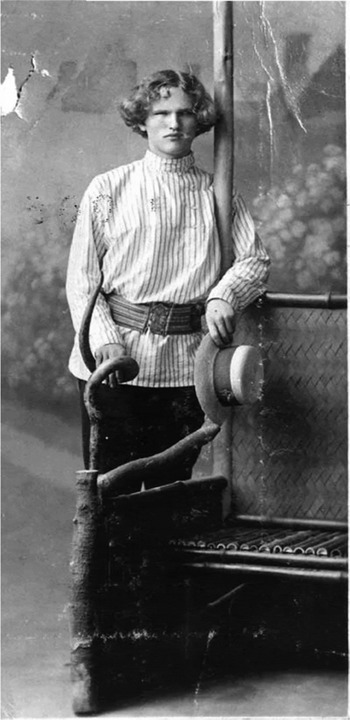
There was something exceedingly awkward about Eroshenko's widely publicized deportation, for he did not fit the typical profile of a Bolshevik conspirator or terrorist. In reading the detailed files on Eroshenko kept by the Foreign Ministry, I have seen no indication that police found weapons, socialist propaganda, or anti-state speeches. They discovered no hint of violence in Eroshenko's intentions or actions, nor found evidence that he carried any institutional power or was affiliated with any party or government (Gaimushō Gaikō Shiryōkan [GGSa]; GGSb). Eroshenko was known to have distanced himself from the communist movement, and expressed his dislike for communist intolerance (Müller Reference Müller2001, 494). He famously wore the hand-sewn cotton shirt of the ordinary “heimin,” a humble Russian peasant's blouse called the “rubashka,” that would become a politicized fashion of its own in Taishō Japan.Footnote 7 With his sightless eyes, he was dependent on those around him for assistance. The childlike bard often sang Russian folk songs, recited his own poetry, and drew his lectures from the numerous children's stories he had written and that were becoming well-known in Japan. According to one account, his friends Arishima and Akita asked police why they were deporting Eroshenko, claiming that he “is a mere poet.” The police replied, “Yes, in fact, that is precisely what is wrong with him.” The reply caused Arishima and Akita to burst into laughter (Fujii 1989, 31). If Futabatei had successfully introduced Esperanto in Japan, Eroshenko now served as the virtuous and poetic messenger of the worldism of the heimin.
Police made a detailed report of public opinion about Eroshenko after his deportation in an effort to gauge public reactions and sentiments about the incident. They cautioned that behind what appeared to be the harmless poetry reading of a blind person lay the highly emotional support for him by people across Japanese society, including women, socialists, writers, artists, and members of numerous Japanese associations (GGSa, 4.2.6.21-1, June 6, Taishō 10 [1921], no. 806).
The emotional manner in which the Japanese public embraced Eroshenko was amplified by his blindness, combined with the fact that he was Russian in this post-Russo-Japanese War period. His blindness was seen as more than a physical attribute; it was thought a moral one as well, for many understood him to be blind to racial hierarchies. Unable to see skin color or other physical attributes, the striking naturalness with which Eroshenko was known to have assimilated to life in Tokyo seemed to give critical commentary to racial boundaries that often separated Europeans and Americans in Japan. He was widely known to live in the home of Sōma Kokko and Aizō, who owned and ran the famous Nakamuraya sweetshop in Tokyo. Kokko assumed a motherly relationship with Eroshenko, adopting him into the family beyond racial and national lines. Such a relationship of virtual adoption in the private space of the home actively inverted the inequality between “Orientals” and “Westerners.” Eroshenko was involved in activities for the blind in Japan, and his blindness was his trademark. It made an imprint on popular perceptions that he was innocent of hierarchical ideologies of race, ethnicity, and nation.
Vasilii Eroshenko in Japan, 1916.

The second floor of Nakamuraya became a nighttime salon for networking and conversation among supporters of worldism. In addition to Eroshenko, the Sōmas also harbored the Indian anticolonialist revolutionary Rash Bihari Bose, who eventually married Sōma's daughter. As the copious notes in the top-secret police files detail, Eroshenko served as a hub to connect many Japanese. As noted by police reports, he met frequently with former Nonwar Movement participants (GGSb, 4.3.2.1-2-2, September 25, Taishō 10 [1921], no. 1, no. 655). A letter from Eroshenko to his friends in Japan, intercepted by police, demonstrates that the Esperanto Association in China took care of him after his deportation (GGSa, 950, June 24, Taisho 10 [1921]). Through these networks, Eroshenko found a post as a lecturer of Esperanto language and Russian literature at Peking University (GGSa, July 8, Taisho 11 [1922]). An important new contact that Eroshenko made in China was the writer Lu Xun, one of China's founding modernist writers and an Esperantist who had studied in Tokyo.
When he first came to Japan in 1914 to study Japanese social practices involving the blind, Eroshenko had been a totally unknown figure both in Japan and Russia. Propelling him to center stage of the Esperanto movement, Japanese selectively made Eroshenko into a celebrity who represented worldism. The government's decision to dedicate resources tracking Eroshenko's actions is understandable, for it had caught onto a subversive and competing form of internationalism in people's affection for him. The worldism Eroshenko represented was threatening, for it advanced a sentiment that went against both the cosmopolitanism aligned with the Western modern construct of international relations reliant on the modern nation-state, and against nationalist Pan-Asianisms.
Following the end of World War I and the Russian Revolution in 1918, Esperanto reached greater heights. Indeed, by 1928, Japan had by far the highest number of Esperanto speakers outside Western Europe (Forster Reference Forster1982, 24).Footnote 8 It not only became the language spoken at numerous clubs, associations, and organizations, it became the purpose and mode for membership solidarity.Footnote 9 It involved an impressive number of people and groups with a wide array of innovative social thoughts and practices to link Japan to the wider world in the first part of the twentieth century.
The subtitle of the well-known literary magazine Tanemaku hito, founded in 1921 in a small town in northern Japan, described the magazine as a “Worldist Literary Journal” (“Sekaishugi bungei zasshi”) (Tanemaku hito 1921–23).Footnote 10 The heavy involvement in the journal by Esperantists Akita, Eroshenko, and Ishikawa Sanshirō and articles on Esperanto confirmed the publication's worldist tendencies.Footnote 11 The internationalism in Tanemaku hito in its initial years was founded on a vision of direct relations between “the people” as heimin, distinct from both the militant industrial laborer taken from MarxismFootnote 12 and from Kantian cosmopolitanism.Footnote 13
We see in this period the foundation of increasing numbers of scientific organizations centered on Esperanto. In 1924, leading medical schools and departments in Japan founded the Japan Esperanto Medical League. Esperanto was used as the language of discussion for various conferences on medical problems beyond national borders, such as the Far Eastern Heat Sickness Conference in 1925 (Hatsushiba 1998, 65).
In an attempt to ride the growing wave of interest in Esperanto, in 1921–23 the Japan Esperanto Study Association initiated an Esperanto promotion campaign, sending students across Japan to promote the language. In 1923, for example, the campaigners traveled to thirteen different towns to give lectures that were attended by 19,200 people, and successful left-leaning publishers like Sōbunkaku accompanied the campaigns to advertise their books (Hatsushiba 1998, 54). Reflecting the popularity of Esperantism, between 1919 and 1923, periodicals such as Demokurashii (Democracy), Warera (We), Kaihō (Liberation), and Kaizō (Reinvention) used subtitles in Esperanto. Many more carried articles about Esperanto (Miyake 1995, 28). The newly formed Cosmo Club in Tokyo was a part of this second wave of Esperantism, yet many of the participants were of the first wave, such as Ishikawa, Eroshenko, and a number of Chinese and Koreans who lectured at the club. In 1921, the club held a meeting attended by Chinese, Japanese, Korean, French, and Russian participants and watched by police, in which a declaration was read on Asian Liberation Ideology written by members of the club (Takasugi 1997, 111–15). The Esperantist Takasugi Ichirō also gave a talk on how Japanese had perceived Korea since 1910. Echoing the concerns of Ōsugi and Kōtoku a decade earlier, Tokyo University students learned Esperanto in 1919 in order to create a linguistic basis of equality for their ongoing discussions with Chinese and Korean students (Lins Reference Lins2008, 49; Yoshino Reference Kawakami1921, 90).
A number of women became Esperantists in this period, including Yamaguchi Koshizu, who became active in Formosa (Taiwan) struggles for the ethnic liberation of the native Taiwanese under Japanese colonization. Formosa Esperantists, in the heart of the Japanese empire, also collaborated to support the Russia Famine Relief Movement (Miyake 1995, 26–28) organized in Japan in 1922 on the nonstate level that, in keeping with the worldist idealism of the time, served to subvert the Japanese state's military intervention in the Russian Civil War through spontaneous nonstate efforts to organize transnational support of “the people” in Russia.
As the use of Esperanto further expanded, the language came to be used for various causes. Nonetheless, the principal notions fundamental to worldism as it emerged in the wake of the Russo-Japanese War continued to influence Esperantists. These principles included the notion of “heimin” as the vehicle for twentieth-century history; free and voluntary associations of “the people” across class, gendered, racial, and national borders; and nonhierarchical interaction and mutual adaptation of cultures and languages. The ways in which the principles of Esperantism were to be achieved differed, and as in earlier periods Japan's Esperanto speakers came from various specializations and backgrounds. Yet the principle of looking across nation-state divides and fostering a less hierarchical basis for cultural exchange remained unchanged.
Acknowledgments
I would like to thank the anonymous reviewers, the editor, and the associate editor of Japan at the Journal of Asian Studies for their comments and suggestions. Research for this article was supported by grants from the Esperantic Studies Foundation, the Northeast Asia Council of the Association of Asian Studies, and the William and Flora Hewlett Foundation. I am grateful for their support.