Introduction
The purpose of the rumen is to convert dietary material into microbial biomass and end products that can be utilised by the animal. Rumen microorganisms anaerobically ferment complex lignocellulosic plant material, which otherwise would be unable to be utilised by ruminants. Fermentation of dietary material generates microbial biomass and valuable microbial end products, the outflow/diffusion of which provides the ruminant with usable forms of protein and energy. The efficiency and sustainability of ruminant production relies on driving the ecosystem carrying out this conversion to follow an optimal network of metabolic processes. Microbial protein from the rumen accounts for more than half of the total protein entering the intestines (Broudiscou and Jouany, Reference Broudiscou and Jouany1995), with three main taxonomic groups accounting for the majority of this microbial biomass (bacteria, protozoa and fungi) (Hobson and Stewart, Reference Hobson and Stewart1997). Despite this symbiotic host–microbe relationship, conversion of dietary material by ruminants into saleable product is an inefficient process.
A large part of this inefficiency is due to ruminal processes, resulting in ruminants typically converting only ∼20% of dietary protein into meat and/or milk (MacRae et al., Reference MacRae, Campbell and Eadie1975; Dewhurst et al., Reference Dewhurst, Davies and Merry2000). Ruminal recycling of microbial protein and excessive production of ammonia result in poor nitrogen use efficiency (Ulyatt et al., Reference Ulyatt, Beever, Thomson, Evans and Haines1980) while the excretion of methane (Monteny et al., Reference Monteny, Bannink and Chadwick2006) and unincorporated dietary protein (Marini and Van Amburgh, Reference Marini and Van Amburgh2005) pose significant environmental problems. These issues form the basis of one of the main challenges that face this industry, namely to reduce the environmental impact of livestock agriculture. Similarly, ruminal processes are also important in terms of improving the quality of animal products. Consumers are becoming increasingly aware of the relationships between diet and health, resulting in a greater impetus to enhance the nutritional value of ruminant meat and milk. In response to current dietary guidelines (WHO, 2003), research into functional food components has focused on modifying the quantities of those nutrients present naturally in ruminant products, which are considered to play important roles in health. Current targets include increasing the n-3 polyunsaturated fatty acid content of meat (Scollan et al., Reference Scollan, Hocquette, Nuernberg, Dannenberger, Richardson and Moloney2006) and milk (Vlaeminck et al., Reference Vlaeminck, Fievez, Tamminga, Dewhurst, van Vuuren, De Brabander and Demeyer2006). Manipulation of microbial processes in the rumen could have a major impact on our ability to meet these challenges, however recent methodological advances have highlighted that our knowledge of ruminal microorganisms is limited. Current understanding of rumen microbial fermentation is based on the sum of the metabolic activities of the dominant species cultivated from this ecosystem (Krause and Russell, Reference Krause and Russell1996) and not of the hundreds of species now acknowledged to exist (Edwards et al., Reference Edwards, McEwan, Travis and Wallace2004). However, understanding a microbial ecosystem requires more than just comprehending the sum of the activities of the microorganisms present. Consideration must also be given to what is known about the range of microbial taxa present within the ecosystem.
Improving the efficiency and sustainability of ruminant agriculture relies on the rumen ecosystem following an optimal network of metabolic activities. This review aims to broaden our current thinking of rumen function by considering the central properties of the rumen in the context of an ecosystem in which diversity, stability, structure, dynamics (microbial and nutrient) and biomass (dietary and microbial) are the key elements. Enhancing our understanding of the rumen ecosystem will enable targeted and sustainable manipulation of rumen function to be more effectively realised in the future, including exploiting approaches to manipulate rumen function with dietary forage-based approaches.
Current understanding of rumen microbial diversity
Historically, cultivation-based techniques have enabled identification of a large number of species present in the rumen (Hungate, Reference Hungate1966; Mackie and White, Reference Mackie and White1997). More recently, application of cultivation-independent methodologies to complex ecosystems has highlighted that the number of bacterial species present is underestimated by these approaches (Rappe and Giovannoni, Reference Rappe and Giovannoni2003). Reports of analogous findings relating to the main microbial taxa resident in the rumen (Moon-van der Staay et al., Reference Moon-van der Staay, van der Staay, Javorský, Jouany, Michalowski, Nsabimana, Machebeouf, Kišidayová, Varadyova, McEwan, Newbold and Hackstein2002; Edwards et al., Reference Edwards, McEwan, Travis and Wallace2004; Tuckwell et al., Reference Tuckwell, Nicholson, McSweeney, Theodorou and Brookman2005; Wright et al., Reference Wright, Toovey and Pimm2006) confirms that the rumen ecosystem is no exception.
The ability of very simple methodological steps, such as incubation time and inoculum size (Davis et al., Reference Davis, Joseph and Janssen2005), to limit cultivation of certain microorganisms goes some way in explaining why only 11% of the bacterial taxa present within the rumen has been recovered in culture (Figure 1) (Edwards et al., Reference Edwards, McEwan, Travis and Wallace2004). Based on 16S rDNA-based analysis it has been suggested that 300 to 400 different bacterial species actually exist within the rumen (Edwards et al., Reference Edwards, McEwan, Travis and Wallace2004; Yu et al., Reference Yu, Yu and Morrison2006), as well as other mammalian gut ecosystems (Eckburg et al., Reference Eckburg, Bik, Bernstein, Purdom, Dethlefsen, Sargent, Gill, Nelson and Relman2005). Use of novel and informed cultivation techniques together with molecular-based approaches that can encompass the whole ecosystem (i.e. metagenomics) have highlighted the potential to overcome some of these limitations (Hugenholtz, Reference Hugenholtz2002). Only by utilising novel ‘-omic’ approaches in tandem with new cultivation techniques (Connon and Giovannoni, Reference Connon and Giovannoni2002; Kaeberlein et al., Reference Kaeberlein, Lewis and Epstein2002; Zengler et al., Reference Zengler, Toledo, Rappe, Elkins, Mathur, Short and Keller2002), can we effectively start to comprehend the functional role of microorganisms present within the rumen.
The uncultivated bacterial diversity of the rumen. The percentage of operational taxonomic units (OTU) represented by uncultivated (light grey) and cultivated bacteria (dark grey) for the atotal rumen bacterial biota is shown (Edwards et al., Reference Edwards, McEwan, Travis and Wallace2004). The phylum distribution of these are shown for the two predominant phyla, bBacteroidetes (Cytophaga-Flexibacter-Bacteroides phylum) and cFirmicutes (low G + C Gram-positive bacteria), along with dother minor phyla and OTU of unknown phylum association.

There is a need to define how important a diverse range of microorganisms really is to rumen function. Diversity is not only the ‘variety’ of individuals present within an ecosystem but also their abundance (Magurran, Reference Magurran1988). Numbers have consequences; e.g. the presence of rumen lactic acid producing bacteria (i.e. Streptococcus bovis and Lactobacillus spp.) does not by itself induce acute acidosis, but a tenfold increase in their number as a result of rapid dietary change does (Coe et al., Reference Coe, Nagaraja, Sun, Wallace, Towne, Kemp and Hutcheson1999). Similarly, numbers of individual species do not necessarily equate to importance. High specific activities can result in functional significance despite low numbers, as is the case with hyper-ammonia-producing bacteria, e.g. Peptostreptococcus anaerobius and Clostridium sticklandii (Russell et al., Reference Russell, O’Connor, Fox, Van Soest and Sniffen1992; Russell and Rychlik, Reference Russell and Rychlik2000). Hence, our comprehension of rumen microbial diversity needs to move beyond a species inventory towards considering the significance of diversity, and its impact on ecosystem stability.
Ecosystem stability
Stability in microbial ecosystems is a trait derived from two key system properties, resistance and resilience. Resistance is the ability of a system to withstand change. Diverse ecosystems are thought to buffer perturbations through the capacity of multiple components to carry out related functions. Microbial diversity in the rumen can be predicted to enhance the resistance of the network of metabolic pathways by increasing the number of genes encoding the pathway, as has been observed in other systems (Cohen et al., Reference Cohen, Erez, ben-Avraham and Havlin2000; Buchanan, Reference Buchanan2002). By increasing the gene pool, alternative metabolic pathways also become available, enabling the ecosystem to stabilise more rapidly after change to a new equilibrium (e.g. change in diet). The more resistant the metabolic pathways, and the more diverse the resource of novel pathways, the more resilient the microbial ecosystem will become.
Resilience is the speed with which a system can return to its original or a new equilibrium following perturbation. System resilience, however, is a complex concept. It is widely accepted that diversity plays a key role in determining resilience, as diversity has been demonstrated to stabilise community and ecosystem processes (Girvan et al., Reference Girvan, Campbell, Killham, Prosser and Glover2005). However, it is also apparent that systems of equivalent diversity do not always have the same stability (Griffiths et al., Reference Griffiths, Kuan, Ritz, Glover, McCaig and Fenwick2004), and that diversity itself can also destabilise population processes (Tilman, Reference Tilman1996). System resilience is therefore concluded not to be a consequence of diversity alone.
Describing the rumen in terms of system stability should help to increase our ability to comprehend the ecosystem and its fundamental structure. Stability, as a function of resistance and resilience, has been previously related to specific components within a community (Griffiths et al., Reference Griffiths, Kuan, Ritz, Glover, McCaig and Fenwick2004). However, complex microbial ecosystems often contain more than one species capable of carrying out the same role. Due to this redundancy, it is clear that linking resilience to individual system components is of limited value in complex microbial ecosystems like the rumen, particularly as no role has been assigned to the majority of the taxa present.
Structural organisation of rumen microbiota
Together with increased understanding of the metabolic pathways that occur within the rumen ecosystem, we must also consider the physical location of the microbial consortia resident within the rumen, which are responsible for these processes. Traditionally, the structure of the rumen bacterial population is considered to be the sum of three pools of microorganisms; those that are solid associated, liquid associated and tissue associated. It is clear that these populations are different from each other (LaRue et al., Reference LaRue, Yu, Parisi, Egan and Morrison2005; Cho et al., Reference Cho, Cho, Shin, Lim, Hong, Choil, Kang, Lee, Kim, Kim and Yun2006; Sadet et al., Reference Sadet, Martin, Meunier and Morgavi2007), and that, of these, the solid-associated microbial biomass is the largest (Craig et al., Reference Craig, Broderick and Ricker1987) and plays the most important role in feed digestion (McAllister et al., Reference McAllister, Bae, Jones and Cheng1994).
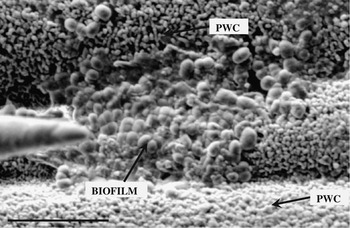
Recent microscopical evidence has also shown that attached bacterial communities are commonly enclosed in an extracellular polymeric matrix, thus defining them as biofilm communities (Figure 2) (Mayorga et al., Reference Mayorga, Huws, Kim, Kingston-Smith, Newbold and Theodorou2007). Organisation of bacteria into biofilms has two main advantages. Firstly, the self-produced extracellular polymeric substances (EPS) that coat biofilm communities trap and concentrate nutrients and enzymes, enabling microbes within the biofilm to readily exchange substrates (Minato et al., Reference Minato, Endo, Ootomo and Uemura1966; Wolin et al., Reference Wolin, Miller and Stewart1997; Michalet-Doreau et al., Reference Michalet-Doreau, Fernandez, Peyron, Millet and Fonty2001). Secondly, mature ‘stable’ multi-species biofilms are resistant to detachment (McAllister et al., Reference McAllister, Bae, Jones and Cheng1994; Harrison et al., Reference Harrison, Turner, Marques and Ceri2005; LaRue et al., Reference LaRue, Yu, Parisi, Egan and Morrison2005) and so microbes are structurally protected from a range of forms of attack including antibodies (Costerton et al., Reference Costerton, Irvin and Cheng1981), antimicrobial agents (Gilbert and Brown, Reference Gilbert and Brown1995; Allison et al., Reference Allison, McBain and Gilbert2000) and bacteriophage (Costerton et al., Reference Costerton, Cheng, Geesey, Ladd, Nickel, Dasgupta and Marrie1987). It has also been considered that biofilms offer protection from predation (Costerton et al., Reference Costerton, Cheng, Geesey, Ladd, Nickel, Dasgupta and Marrie1987), although data now suggests that many protozoa have mechanisms of efficiently predating these attached communities (Lawrence and Snyder, Reference Lawrence and Snyder1998; Pederson, Reference Pederson1990; Huws et al., Reference Huws, McBain and Gilbert2005). Therefore, due to the structural stability of biofilm communities, it is important to consider this phenotype in the context of the rumen microbial ecosystem, particularly when developing novel strategies to manipulate rumen microbiota.
Microbial feed-associated biofilms. Scanning electron microscopy image of a biofilm community present on the adaxial surface of Lolium perenne following 2 h of incubation in the presence of rumen fluid and under in vitro conditions mimicking the rumen ecosystem (Mayorga et al., Reference Mayorga, Huws, Kim, Kingston-Smith, Newbold and Theodorou2007). The plant waxy cuticle (PWC) and the scale bar of 10 μm are also indicated on the image.

Microorganisms attach rapidly to dietary substrates in the rumen (Bonhomme, Reference Bonhomme1990; McAllister et al., Reference McAllister, Rode, Major, Cheng and Buchanan-Smith1990; Edwards et al., Reference Edwards, Huws, Kim and Kingston-Smith2007). Association of microbes with feed particles occurs either randomly or through response to chemoattractants such as soluble carbohydrates (McAllister et al., Reference McAllister, Bae, Jones and Cheng1994; Dehority and Orpin, Reference Dehority and Orpin1997). Attachment itself can occur in a range of ways, from specific mechanisms requiring binding proteins and receptors to non-specific mechanisms that rely on physico-chemical forces such as van-der Waals forces (McAllister et al., Reference McAllister, Bae, Jones and Cheng1994; Miron et al., Reference Miron, Ben-Ghedalia and Morrison2001).
The specific order in which various microorganisms colonise the surface of feed is thought to influence the spatial organisation within a biofilm community (McAllister et al., Reference McAllister, Bae, Jones and Cheng1994), although the rate of initial attachment of rumen bacteria to forage in the rumen is thought to be similar between colonising species (Koike et al., Reference Koike, Pan, Kobayashi and Tanaka2003; Edwards et al., Reference Edwards, Huws, Kim and Kingston-Smith2007). Primary colonising microorganisms attached in favourable nutrient niches proliferate to form functional micro-colonies, where high concentrations of specific digestive enzymes are produced (Cheng et al., Reference Cheng, McAllister and Costerton1995; Saginala et al., Reference Saginala, Nagaraja, Lechtenberg, Chengappa, Kemp and Hine1997). Release of nutrients or end products by the primary colonisers attract secondary microorganisms to the site of digestion, with the EPS produced facilitating their attachment (McAllister et al., Reference McAllister, Bae, Jones and Cheng1994; McAllister and Cheng, Reference McAllister and Cheng1996). Utilisation of nutrients by primary and secondary colonisers stimulates further proliferation and subsequent development and maturation of the biofilm into a structured consortium (Costerton et al., Reference Costerton, Cheng, Geesey, Ladd, Nickel, Dasgupta and Marrie1987). Formation of mature biofilms on fresh forage has recently been shown to be maximal after 2 h of incubation, under conditions mimicking the rumen (Mayorga et al., Reference Mayorga, Huws, Kim, Kingston-Smith, Newbold and Theodorou2007).
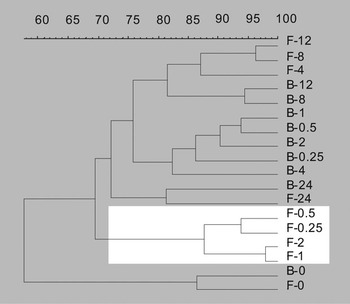
The diverse range of ruminant dietary material available provides a wide variety of substrates for colonisation in the rumen. This will affect the development of biofilm communities, as will the physical structure of forage. Structurally complex lignocellulosic substrates undergo a complex and sequential microbial attack (Cheng et al., Reference Cheng, Fay, Howarth and Costerton1980), involving both bacteria and anaerobic fungi (Theodorou et al., Reference Theodorou, Mennim, Davies, Zhu, Trinci and Brookman1996; Gordon and Phillips, Reference Gordon and Phillips1998). Furthermore, the mechanical process of ingestive mastication increases the accessibility of dietary nutrients and increases the surface area available for microbial attachment and enzymatic attack (Bowman and Firkins, Reference Bowman and Firkins1993; McAllister et al., Reference McAllister, Bae, Jones and Cheng1994; Pan et al., Reference Pan, Koike, Suzuki, Ueda, Kobayashi, Tanaka and Okubo2003). In sacco studies with fresh forage have shown that mastication has an effect on microbial colonisation. Early rumen bacterial populations (<4 h) colonising on intact perennial ryegrass were observed to differ from those colonising on masticated perennial ryegrass (Figure 3) (Kim et al., Reference Kim, Edwards, Sanderson, Kingston-Smith, Scollan and Theodorou2006).
Effect of mastication on rumen bacteria colonising fresh perennial ryegrass. Bacterial 16S rDNA denaturing gradient gel electrophoresis profiles of rumen in sacco incubated samples of intact (F) and masticated (B) perennial ryegrass were analysed (Kim et al., Reference Kim, Edwards, Sanderson, Kingston-Smith, Scollan and Theodorou2006). Branch labels indicate sample type and incubation time (h), with the scale indicating the percentage of similarity between bacterial populations which have colonised the bag residues. White shading highlights the early incubation intact forage samples (0.25 to 2 h), which formed a separate and distinct cluster.

Impact of diet on rumen microbial biomass
Rumen microbial fermentation essentially occurs under continuous-culture conditions, whereby a frequent input of dietary material and removal of microbial biomass and end products enables the continual growth of rumen microbes. Diets influence ruminal turnover through differences in the relative rates of fermentation and energy/nutrient density, e.g. readily fermentable processed barley grains v. bulky barley straw. However, the greater the flow rate of nutrients through the rumen, the smaller the window of opportunity for microbial digestion and growth (Robinson et al., Reference Robinson, Sniffen and Van Soest1985). On this basis it could be suggested that decreasing the ruminal passage of dietary material may improve the efficiency of its conversion into rumen microbial biomass. In addition to the type of diet, however, differences in intake, feeding regimes and the way the diet is presented (i.e. ground v. chopped) also influence the rate of passage (Russell et al., Reference Russell, O’Connor, Fox, Van Soest and Sniffen1992), making the practical optimisation of ruminal flow rate complex.
As protein is one of the most expensive dietary components, much work has focussed on maximising the amount of protein reaching the ruminant hindgut (Russell et al., Reference Russell, O’Connor, Fox, Van Soest and Sniffen1992). Rumen microbial biomass can account for more than 50% of the protein entering the intestines (Broudiscou and Jouany, Reference Broudiscou and Jouany1995) with the remainder derived from endogenous nitrogen sources (8% to 10%) (Bartram, 1987) and undegraded protein. Generally two main approaches have been used to increase the supply of utilisable protein entering the intestines: enhancing the efficiency of rumen microbial biomass production and protecting dietary protein from ruminal degradation. Efforts to increase the efficiency of microbial growth have centred on improving the supply of nutrients to the rumen microbial population through a variety of different approaches, e.g. synchrony/balance (Rooke et al., Reference Rooke, Lee and Armstrong1987; Dewhurst et al., Reference Dewhurst, Davies and Merry2000), forage quality (Beever and Siddons, Reference Beever and Siddons1986; Lee et al., Reference Lee, Harris, Moorby, Humphreys, Theodorou, MacRae and Scollan2002; Merry et al., Reference Merry, Davies, Lee, Dewhurst, Moorby, Leemans, Scollan and Theodorou2006) and concentrate supplementation (Thomas et al., Reference Thomas, Chamberlain, Kelly and Wait1980; Harstad and Vik-Mo, Reference Harstad and Vik-Mo1985). To increase the amount of undegraded dietary protein entering the intestines, diets high in non-degradable protein sources have been used, as well as processing (i.e. heat or chemical treatment) and the addition of protective agents such as tannins, which complex with protein to decrease degradation. In some situations this leads to a deficiency of fermentable energy for rumen microorganisms and a consequent reduction in microbial growth (Siddons et al., Reference Siddons, Paradine, Gale and Evans1985; Rooke et al., Reference Rooke, Alvarez and Armstrong1986; Christensen et al., Reference Christensen, Cameron, Klusmeyer, Elliot, Clark, Nelson and Yu1993). Conversely though, it has been noted that responses of microbial protein synthesis to protein supplements differ according to the type of energy supplied in the diet (Dewhurst et al., Reference Dewhurst, Aston, Fisher, Evans, Dhanoa and McAllan1999).
In addition to the passage and fermentation rates of the feed, consideration should be paid to the temporal availability of feed nutrients to the rumen microbiota. For example, in fresh-forage-based systems not all of the soluble nutrients are immediately available as a result of mastication (Boudon and Peyraud, Reference Boudon and Peyraud2001; Kim et al., Reference Kim, Edwards, Sanderson, Kingston-Smith, Scollan and Theodorou2006) or as a result of exposure of ingested viable plant cells to the rumen environment (Kingston-Smith et al., Reference Kingston-Smith, Bollard, Thomas, Brooks and Theodorou2003b). Although it has been clearly demonstrated that dietary protein can be directly utilised or broken down in the rumen by microbial taxa (Wallace et al., Reference Wallace, Onodera and Cotta1997), in situ the plant protein may be protected from degradation by complexing with phenolic compounds (Theodorou et al., 2000; Winters and Minchin, Reference Winters and Minchin2001) or can be inaccessible due to being compartmented within plant cells (Kingston-Smith and Theodorou, Reference Kingston-Smith and Theodorou2000).
Plant cells are complex, containing numerous single- and double-membrane-bound organelles (e.g. plant chloroplast, mitochondria and vacuoles). Spatial separation has an important role in coordinating plant metabolism. The majority of plant protease activity exists in lytic vacuoles away from the cytosolic proteins, which are potential substrates, thereby minimising the futile cycling of proteins (Thomas and Stoddart, Reference Thomas and Stoddart1980; Feller, Reference Feller1986). During stress or herbivory, proteins can be degraded in response to cellular signals or physical loss of compartmentation. As recent estimates suggest that approximately half of the plant cells are intact and viable in ingested fresh forage (Gay, Kim and Kingston-Smith, unpublished), it is clear that plant structure plays an important role in determining nutrient availability (Kingston-Smith et al., 2008). Furthermore, the ability of the plant cell’s own enzymatic complement to access the nutrients in intact plant cells before they can be accessed by ruminal microorganisms also gives fresh forage a dynamic and temporal metabolite fingerprint distinct from that of conserved forages or concentrate feeds (Zhu et al., Reference Zhu, Kingston-Smith, Troncoso, Merry, Davies, Pichard, Thomas and Theodorou1999; Kingston-Smith et al., Reference Kingston-Smith, Bollard, Armstead, Thomas and Theodorou2003a and Reference Kingston-Smith, Merry, Leemans, Thomas and Theodorou2005). Therefore, the role of dietary material type can have an impact on the rumen microbial biomass beyond the chemical analysis of the nutrients it contains.
Manipulation of rumen microbial processes
The complexities of rumen function indicated above make manipulation of rumen microbial processes a significant challenge. Some goals for the ruminant livestock industry target the optimisation of metabolic processes within the rumen ecosystem as a whole, whereas others are focussed on particular metabolic pathways within the ecosystem. Improvements in the balance of rumen microbial metabolic processes to date have been achieved either by indirectly perturbing the microbial populations by exploiting specific characteristics of feed or supplements, or by intervening directly to modulate numbers of ruminal microorganisms with desirable traits.
Differences in the chemical composition of plants mean that different feeds provide distinct opportunities for microbial fermentation because of the presence of specific niches. Understanding of substrate-based microbial population shifts, and why they occur, will enable us to apply the appropriate techniques to modify ruminal microbial populations and fermentation end products. For example, significant shifts in the microbial population can be achieved according to silage type (grass v. red clover) combined with dietary supplementation with fish oil at 2% and 3% of dry matter intake (Huws et al., Reference Huws, Lee, Muetzel, Wallace and Scollan2006). The latter result could explain how increased substrate supply and altered microbial lipid metabolism resulting from dietary fish oil supplementation increases the deposition of beneficial n-3 polyunsaturated fatty acids into ruminant products (Shingfield et al., Reference Shingfield, Ahvenjarvi, Toivonen, Arola, Nurmela, Huhtanen and Griinari2003; Lee et al., Reference Lee, Tweed, Moloney and Scollan2005).
Direct manipulation of ruminal microorganisms can be achieved by use of feed additives such as ionophores, antibiotics and methane inhibitors (Nagaraja et al., Reference Nagaraja, Newbold, Van Nevel and Demeyer1997). The modes of action of these additives vary but in general they result in beneficial changes in ruminal metabolism mediated through their effects on a wide or specific range of taxa. Ionophores act on a wide range of Gram-positive bacteria and generally cause an increase in the ruminal production of the glucogenic precursor propionate relative to a decrease in acetate, as well as decreasing the ruminal production of lactate, methane and ammonia (Russell and and Strobel, Reference Russell and Strobel1989). Some antibiotics change ruminal fermentation parameters more specifically, e.g. virginiamycin decreases lactate production (Coe et al., Reference Coe, Nagaraja, Sun, Wallace, Towne, Kemp and Hutcheson1999). Other antibiotics act by inhibiting bacteria that are detrimental to ruminant health, such as Fusobacterium necrophorum (Nagaraja et al., Reference Nagaraja, Sun, Wallace, Kemp and and Parrott1999; Wallace et al., Reference Wallace, Newbold, Bequette, MacRae and Lobley2001; Edwards et al., Reference Edwards, McEwan, McKain, Walker and Wallace2005). Other direct approaches to modify ruminal microbiota have involved either the removal or addition of microorganisms, e.g. by defaunation (Demeyer and Van Nevel, Reference Demeyer and Van Nevel1979) or introduction of probiotic microorganisms with and without genetically enhanced metabolic capabilities (Gregg, Reference Gregg1995; Kamra and Pathak, Reference Kamra and Pathak2005). The practical implementation of these latter approaches, however, has had limited success to date within the livestock industry (Kobayashi et al., Reference Kobayashi, Forster and Teather2000 and Reference Kobayashi, Koike, Taguchi, Itabashi, Kam and Ha2004).
Since the ban on the use of antimicrobial feed additives for growth promotion within the EU, there has been a move to the development and use of plant secondary metabolites as alternative manipulators of rumen function (Wallace, Reference Wallace2004). Plant secondary metabolites can exert their effect directly on microbial taxa and their metabolism. Saponins (Shi et al., Reference Shi, Arunasalam, Yeung, Kakuda, Mittal and Jiang2004) and catecholamines (Lafontan et al., Reference Lafontan, Berlan, Stich, Crampes, Riviere, De Glisezinski, Sengenes and Galitzky2002) directly affect ruminal lipid metabolism by inhibiting the action of lipolytic bacteria. Indirect effects can also occur when the availability of dietary metabolites is modified, e.g. by condensed tannins (Theodorou et al., 2000; Min et al., Reference Min, Barry, Attwood and McNabb2003). Harnessing the plant enzyme polyphenol oxidase (PPO) decreases the extent of red clover proteolysis both in silo (Sullivan and Hatfield, Reference Sullivan and Hatfield2006) and in the rumen (Albrecht and Broderick, Reference Albrecht and Broderick1992) through the complexing of leaf proteins (Winters and Minchin, Reference Winters and Minchin2001) and/or the denaturation of plant proteases (Jones et al., Reference Jones, Muck and Hartfield1995; Lee et al., Reference Lee, Winters, Scollan, Dewhurst, Theodorou and Minchin2004). Similar mechanisms have also been proposed for observed beneficial effects on rumen lipolysis and biohydrogenation (Lee et al., Reference Lee, Martinez and Scollan2003, Reference Lee, Winters, Scollan, Dewhurst, Theodorou and Minchin2004 and Reference Lee, Parfitt, Scollan and Minchin2007). Modifying plant enzymatic capabilities is another promising area, with recent advances resulting in the generation of forage that can breakdown its own cell-wall structure upon cell death (Buanafina et al., Reference Buanafina, de O Langdon, Hauck, Dalton and Morris2006). Clear potential exists for sustainable improvements in nutrient use efficiency and product quality through the further exploitation of plant secondary metabolites and metabolism.
Summary and conclusions
Comprehension of the rumen microbial ecosystem based on the sum of activities of dominant rumen microbiota is limited, particularly in light of the lack of phenotypic knowledge of the wealth of microbial taxa now acknowledged to populate this ecosystem. Microbial diversity and its implications for metabolic pathways in the rumen should be carefully considered if targeted modification of ruminal metabolism is to be effectively realised, especially when processes occur within biofilms. Understanding of rumen metabolism needs to incorporate temporal and spatial dynamics of ruminal microbiota, together with the dynamics associated with dietary material and nutrient availability. Combined knowledge of the optimal balance of microbial taxa, their metabolic processes and factors affecting the properties of the rumen ecosystem is limited. A more holistic approach to comprehending the rumen microbial ecosystem is urgently required.
Methodological advances in metabolite, microbial and sequence-based analyses provide the potential for identification of key ecosystem components. However, the power of this increasing toolbox of techniques can only be realised when they are combined with a strong experimental base to allow ecosystem changes with a significant impact to be identified. This will generate novel targets requiring the ability to manipulate key processes through modifying the relevant microbial species, metabolites and related ecosystem properties. Further identification of key metabolites and plant-based traits/activities that can be modified in important agronomical forage crops will offer novel means to manipulate dietary material through selective plant breeding and modification. By comprehending more fully the ecosystem processes that occur within the rumen, targeted manipulation of rumen function will be more effectively realised, while gaining valuable insight into the biology of this system.
Acknowledgements
The authors gratefully acknowledge BBSRC, DEFRA and the EU for funding their research. Thanks are also given to Mike Theodorou for his support and encouragement of this work. The scanning electron microscopy expertise of Barry Thomas is also gratefully acknowledged.