Coca-Cola, the world’s best-known soft drink, was created by Atlanta pharmacist John Pemberton in 1886. It soon became the “national drink” of the United States as a result of aggressive marketing strategies and the tireless efforts of Asa G. Candler and his successors. In the 1920 and 1930s, Coca-Cola began to expand its business abroad. However, the early activities of this best-selling American beverage company on the international front were not rewarded, and sales in overseas markets were usually meager. Footnote 1 Coca-Cola first arrived in France in early 1919, when it was sold to the US military and American tourists. Footnote 2 Its business in France at that time was conducted through licensing with French bottling plants because of Europe’s postwar economic crisis. Footnote 3 In 1930 the Coca-Cola Export Corporation set up a French company, the Société Française des Breuvages Naturels. This concessionaire, which included American participation, imported the concentrate from Holland and bottled it in France. Footnote 4 However, like their European neighbors, the French were not completely accepting of Coca-Cola and were not well acquainted with this famous American beverage. Other than catering to US troops in Europe, the contoured bottles were found at this time only in certain cafés that served American tourists in major French cities such as Paris, Marseille, and Nice. Footnote 5
The history of Coca-Cola in Europe is closely related to both World Wars. During World War II, Robert Woodruff, Coca-Cola’s longtime president, established the company’s wartime policy: “We will see that every man in a uniform gets a bottle of Coca-Cola for five cents, wherever he is and whatever it costs.” Footnote 6 Following the advance of US troops, Coca-Cola rapidly spread its brand awareness overseas and even became a powerful symbol of the United States. Its business was booming; by the end of World War II, Coca-Cola already owned sixty-three overseas bottling plants. Footnote 7 By the end of 1945, the Société Française des Breuvages Naturels had been dissolved. Footnote 8 Following the “Libération” in May 1946, Coca-Cola Export Corporation established an office, the Bureau d’Étude, to study the French and European markets. By investing ninety million francs, Coca-Cola planned to resume its French activities. Footnote 9 However, Coca-Cola’s preparations to resume its business in France were only one piece of an ambitious expansion plan involving all of Europe. This ambition was laid out on maps plastered on the walls of the company’s headquarters; these maps outlined Coca-Cola’s expansion project all over Europe, and even North Africa. Footnote 10 Based on their success in thirty-eight countries, Coca-Cola’s executives boasted that it would take them less than three years to convince each French citizen to consume an average of forty bottles of Coca-Cola annually. Footnote 11
Although this world-renowned multinational corporation crossed the Atlantic with great confidence and prepared to replicate its success in the domestic markets of the Old Continent, its ambition was nonetheless frustrated in wine-producing France. The Coca-Cola affair, as it came to be known, involved enormous controversy and disturbance in France. French communists and leftist intellectuals argued that Coca-Cola was an emissary of “American imperialism” that was preparing for a cultural invasion and economic colonization. In addition, French wine producers and other beverage interests put pressure on the government to legislatively prohibit the entry of Coca-Cola into the French market. The French government rejected Coca-Cola’s investment project, claiming that its proposal was unattractive. Coca-Cola submitted its investment application at the end of 1947 but did not obtain governmental approval until 1952. During these five years, the company was forced to navigate through administrative obstructions, government lawsuits, attacks in the arena of public opinion, and diplomatic run-arounds; the situation even provoked a trade conflict between the United States and France. The Coca-Cola affair was a type of “overture” in the conflicted and thorny history of American investment in France.
Instead of studying the incident’s historical background, most authors who have examined this incident have typically focused on the attack led by French communists, the political arm-twisting spurred on by local beverage companies, and/or parliament’s exclusionary legislation aimed at Coca-Cola. However, by failing to situate the affair within its broader historical framework, a casual observer might conclude that Coca-Cola’s investment project failed mainly because of the pressure applied at the behest of the French beverage industry as well as the communists’ virulent anti-Americanism, and would be unable to discern the real cause of the French government’s initial rejection and subsequent approval of Coca-Cola’s investment plan.
By examining French and American archival materials, this article attempts to offer another perspective on the Coca-Cola affair to explain that the rejection by the French government was, in fact, based on underlying practical financial considerations. The communists’ anti-American tide and the political pressure from domestic beverage interests were no doubt the sources of the French government’s concerns in this affair, but, first, it was far more concerned about the storage problem caused by alcohol overproduction. To protect France’s alcohol market, the French government had to acquire a large excess of alcohol production, which caused a heavy financial burden. The alcohol surplus problem became more serious after War World II, and the French authorities were naturally unwilling to permit Coca-Cola to share the French beverage market, which would certainly exacerbate the problems of excess storage and loss.
Compared with the alcohol surplus problem, the French government gave much more weight to two other key elements: the long-term balance of payments deficit problem and the repatriation of profits from France. France was suffering from severe economic and social crises in the immediate postwar period. The evaporation of overseas income, inefficient production capacity, export shortfalls, immense debts, galloping inflation, and a poor harvest, among other difficulties, left France’s balance of payments with the dollar zone in a very serious debit position. This serious dollar shortage problem even forced France to suspend all imports for a time; meanwhile, Coca-Cola, which did not consider its impact on France’s current economic situation, submitted an unattractive investment project. The French government was afraid that a substantial portion of the profits from this popular soft drink would be repatriated from France, which would weigh heavily on France’s balance of payments, and eventually it refused entry to Coca-Cola. Ironically, however, its subsequent approval of Coca-Cola’s investment plan was based on the same reason.
Coca-Cola and the American public attacked the French government for succumbing to pressure from French beverage interests and the communists’ anti-American campaigns and for adopting discriminatory measures against American products. However, the fact that the French authorities welcomed Pepsi Cola’s investment project, which conformed to French regulations, on the one hand, disproves this allegation; on the other hand, it also justifies the argument that the French government’s decision was primarily based on practical financial considerations. The Coca-Cola affair must be viewed within the broader framework of postwar France’s economic reconstruction and of the Cold War to clearly examine the true causes of its defeat in France. Paris and Washington, DC, had their own respective considerations in this affair, all of which were closely related to what they viewed as their most important national objectives in the postwar years.
By the end of 1947, Coca-Cola Export Corporation had decided to launch a project in France that would entail an investment of $500,000 to set up a branch for purposes of producing concentrate and then bottling the soft drink. French authorities hesitated out of fear that the venture might worsen France’s serious dollar shortage and its long-term balance of payments deficit with the United States. In attempting to assuage the fears of the French government, Coca-Cola initially promised not to repatriate any profits for a period of three years and to procure all the necessary raw materials and equipment in France or in the French Union, Footnote 12 but the Comité des Investissements Étrangers (Committee on Foreign Investment) continued to worry that sales of the popular soft drink would lead to the large-scale repatriation of dollars from France to the United States. The committee asked the company to set up a subsidiary—instead of a branch of the American company—in which French investors controlled more than 51 percent of the shares and not to repatriate any profits for a period of five years. Footnote 13 Coca-Cola accepted the latter condition but refused to create a subsidiary for tax reasons and out of fear of revealing its “secret formula.” Footnote 14 Coca-Cola’s response thus did not satisfy the committee, which rejected the investment project as a result. Footnote 15 The company made more concessions and attempted to negotiate with the government, but the government remained concerned about the profit repatriation problem; moreover, it foresaw that Coca-Cola’s mass advertising campaign would lead to attacks in the arena of French public opinion, which would criticize the government for wasting precious dollars to buy a product that was of “very secondary utility.” French authorities eventually rejected the Coca-Cola’s project. Footnote 16
One year later, Coca-Cola Export Corporation rallied its forces and tried again to resume its prewar operations in France. With the authorization of the French Ministry of Industry and the Bouches du Rhône (Mouths of the Rhône) Department, it successfully established a branch in Marseille to produce “Coca-Cola” concentrate and aimed to supply all of its bottling factories in Europe with this concentrate. Footnote 17 In addition, Coca-Cola also cooperated with four French companies to undertake Coca-Cola’s bottling and distribution in the French market. Despite Coca-Cola’s declaration that its exploitation would be exceedingly beneficial to France’s economic growth and employment, Footnote 18 the Direction des Finances Extérieures (Ministry of Finance’s External Finance Division) still viewed Coca-Cola’s French business unfavorably.
In early 1949, the Bureau d’Étude demanded an import permit worth $15,000 for the import of Coca-Cola’s secret formula, which would have to be imported exclusively from the US laboratories of the Coca-Cola Company. Footnote 19 The import permit was key to Coca-Cola’s French operations; the Marseille plant could not maintain its normal operations without the secret formula, Footnote 20 and the company would likely turn to Italy to complete the project. Footnote 21 One month later, the French Ministry of Finance rejected Coca-Cola’s import request. Footnote 22 The European representative of Coca-Cola Export Corporation at the time was Prince Alexander Makinsky, a white Russian émigré of royal origin and a genuine “aristocrat diplomat.” Footnote 23 This anti-communist American citizen was vice president of Coca-Cola Export Corporation from 1948 to 1953, and was linked with Reginald Teague-Jones, an important secret agent for British Security Coordination in the United States. Footnote 24 Makinsky privately indicated that Coca-Cola’s modest investment was probably the main reason for its rejection. Footnote 25 The company expressed its discontent to the Ministry of Finance, but it was informed that the government must first receive approval from the Ministry of Public Health. Coca-Cola contested the sudden suspension of its import license by the French authorities, and complained that the beverage had been sold in France without any problem for thirty years; furthermore, its syrup was in compliance with French laws, and had been officially recognized by the French government’s central laboratories in 1922. Footnote 26
The Direction des Relations Économiques Extérieures, Service Amérique (External Economic Relations Directorate, American Service) attempted to speak on Coca-Cola’s behalf by requesting the Direction des Finances Extérieures to grant the permission, but this gesture turned out to be a mistake. The Direction des Finances Extérieures insisted that the government had rejected Coca-Cola’s investment project two years earlier because it firmly believed that the disadvantages of the plan outweighed its advantages, both economically and politically. The Direction des Finances Extérieures was “extremely astonished to learn that, despite these decisions rejecting the project, the Marseille branch had secured ‘all the administrative authorizations required’ to be established.” The reply of the director of External Finance, Guillaume Guindey, was far from optimistic, and even indicated that it would inquire further into the establishment of the Marseille plant; Footnote 27 in other words, it intended to exclude Coca-Cola from Marseille. However, the Direction des Finances Extérieures soon discovered that it was impossible to prohibit the entrance of Coca-Cola because only the creation of a subsidiary required authorization from the Ministry of Finance as a legal matter; any foreign company could set up a branch in France without the Ministry of Finance’s permission. In that case, the only way that the Direction des Finances Extérieures could block Coca-Cola’s venture was to cut off its essential “lifeline,” which was to reject its secret formula import request. Footnote 28
A report to the minister revealed the worries of the Direction des Finances Extérieures and the reasons why it was denying Coca-Cola’s import request. Per his previous concerns, Director Guindey believed that Coca-Cola had no value for France because it would enable the French people to form a new habit of drinking this beverage, and, as a result, France would spend large amounts of dollars to import the ingredients, but all the profits would be repatriated from France. Footnote 29 Although Coca-Cola responded that the concentrate made by the Marseille plant would be exported to other European countries and would bring substantial dollars into France, Footnote 30 the Direction des Finances Extérieures was unwilling to accept this reasoning because, from the French officials’ perspective, Coca-Cola could just replace the Marseille plant at any time and establish a new branch in another (or other) European country(ies). Footnote 31 Thus, the position of the Direction des Finances Extérieures was determined, but that of the Finance Minister’s Cabinet was more pragmatic because it knew that France was unable to prevent the sale of Coca-Cola, as it could still import the concentrate from its Morocco plant, which, according to then-current decrees, was completely legal. In addition, the cabinet also understood that it would be of little interest to let Coca-Cola import its secret ingredients from Morocco because France would not be able to take advantage of Coca-Cola’s European ventures, while the French people still consumed the soft drink. Moreover, the measures taken to prevent the entry of Coca-Cola into France based on health reasons were a “clumsy camouflage” and doomed to failure because the beverage had previously been authorized by French health authorities, not to mention that this type of maneuver would certainly cause the United States to retaliate. Footnote 32
Despite the pragmatic remarks of the Finance Minister’s Cabinet, French authorities did not intend to give up their obstructive stance toward Coca-Cola; however, its obstructionism was unable to halt the Marseille plant’s operations. Unsurprisingly, after the import request for the Marseille plant was rejected, Coca-Cola bypassed France’s prohibition by importing its secret ingredients from its Morocco plant. Footnote 33 The restraint on the import of Coca-Cola’s concentrate failed, but the French government did not retreat. It began to attack Coca-Cola on two flanks: through jurisdiction and legislation. Footnote 34 First, the Conseil Supérieur de l’Hygiène (Superior Council of Public Hygiene, Ministry of Public Health) and the Service de la Répression des Fraudes (Repression of Frauds Department, Ministry of Agriculture) immediately intervened in the matter by conducting an inquiry into Coca-Cola’s ingredients. Both inspection reports indicated that Coca-Cola contained phosphoric acid. Although the level of phosphoric acid was insignificant, it was nonetheless prohibited by existing French legislation and might be open to abuse, which could endanger the public health. Moreover, the reports also warned that the beverage had addictive properties with respect to consumers. The Ministry of Public Health immediately asked the Laboratoire National de la Santé Publique (National Public Health Laboratory) to undertake a further study to analyze Coca-Cola’s ingredients—and its famous “7X” (secret formula) in particular—for purposes of identifying its addictive substances and to determine whether Coca-Cola contained toxic elements. Footnote 35
Later, Paul Boulet, the deputy mayor of Montpellier and spokesman for the Hérault region’s winegrowers, who was also a professor of medicine and a member of the centrist Le Mouvement Républicain Populaire (MRP; Popular Republican Movement Party), introduced a project of law into the National Assembly to regulate nonalcoholic beverages containing plant or vegetable extracts that could adversely affect public health. Whether such beverages have toxic substances was to be determined by the Conseil Supérieur de l’Hygiène Publique and the Académie Nationale de Médecine (National Academy of Medicine). Footnote 36 The Boulet bill did not specify Coca-Cola, but its main target was obviously the American multinational. On the same day, the resolution of another project of law was to ban the import and sale of Coca-Cola in France. The vice president of Coca-Cola Export Corporation, John Talley, immediately visited the US State Department to express his displeasure. He strongly believed that French beverage interests inspired these discriminatory regulations, which were obviously aimed at Coca-Cola. Footnote 37 After mediation efforts by the US undersecretary of State and the French prime minister, the Boulet bill was temporarily halted. Footnote 38
Coca-Cola was convinced that the difficulties it encountered in France stemmed from political, not technical, reasons. In support of this proposition, it cited two examples to demonstrate the bias of the French government. While rejecting Coca-Cola’s import request based on deficits regarding the balance of payments, the French government authorized an import permit worth $50,000 to a German spring water company owned by British interests. However, worse and more intolerable was that it granted almost $55,000 to Coca-Cola’s main American competitor to import its concentrate. Coca-Cola asserted that both cases revealed an indisputable fact: the reason why the French government made every effort to prevent the entry of Coca-Cola into the French market was solely because it was under pressure from French beverage interests. Footnote 39 There were diverse views on the Coca-Cola affair within the French alcoholic beverage industry. Winegrowers were naturally reluctant to see Coca-Cola resume its prewar operations in France and to share the beverage market, particularly when there was a serious wine surplus in France at the time; Footnote 40 Coca-Cola’s entry would certainly exacerbate the problem. However, French wine exporters, who were afraid that French wine might be boycotted by the United States, took a more reserved approach. Footnote 41 In any case, there is no denying that most of the French wine, beer, mineral water, fruit juice, and soft drink interests would be the principal victims of Coca-Cola, and they did press the French government through varied channels to bar the entry of Coca-Cola into the French market. Footnote 42
Another force that acted against Coca-Cola’s resumption of operations in France consisted of leftist political parties, in particular the communists and leftist intellectuals. The American ambassador reported to Washington that the French communists’ attack on Coca-Cola and the reaction of French society to this affair were “very intense.” Footnote 43 Some small, independent, socialist parties such as the Mouvement Socialiste Unitaire et Démocratique (Movement of Socialist Unity and Democracy; it subsequently became the Socialiste Unifié [Unified Socialist Party]), which considered itself the “real left-wing party,” attacked the socialists who held office by saying that they were corrupted by capitalism and that they had involved the socialist parties in the Marshall Plan, which subordinated them to American imperialism. They regarded the Marshall Plan as an implement of Washington to satisfy the appetites of American capitalists to expand capitalism. Footnote 44
The communists, whose attacks were even more violent, treated the Marshall Plan as the “Trojan horse” of American imperialism and as an instrument aimed at colonizing Europe. On the one hand, they reproached the Fourth Republic for sacrificing national independence and sovereignty to secure US aid. On the other hand, they savaged the Marshall Plan as the symbol of an American expansionist policy that would force European economies to depend on American aid such that the United States could control the industries of these countries and secure adequate markets for American production and capital, thus reducing France and Western Europe to the role of military bases for the next US war. Footnote 45 The famous book, La France deviendra-t-elle une colonie américaine? (Will France Become an American Colony?), by the communist journalist Georges Soria, is a good representative of the communists’ anti-American perspective. Footnote 46 In this book, Soria explicitly accused the Marshall Plan of being “a plan that involves the veritable economic colonization of both France and of Western Europe.” Footnote 47 According to a survey at the time, 87 percent of French communists considered the Marshall Plan to be a malevolent project, whereas only 2 percent had a positive view of it. However, not only the communists doubted the motives behind the Marshall Plan; in fact, nearly half of the French people (47 percent) suspected that the Marshall Plan was motivated by the United States’ domestic need to export to avoid an economic crisis. Moreover, 15 percent believed that the principal motivation for the Marshall Plan was an attempt to interfere in European affairs, and only 18 percent recognized the sincerity of American aid. Footnote 48
For the communists, the best way for Americans to enslave Western Europe was to “Marshallize” it. Footnote 49 The colonization of Western Europe in terms of culture was the definition of Americanization, and the first step toward Americanization was to introduce the “American way of life” to Europeans. The two most iconic and representative products of this for French communists were, obviously, Hollywood films and Coca-Cola. Coca-Cola was even described as “the most American thing in America.” Footnote 50 Every bottle contains the “essence of capitalism,” Footnote 51 and it was part of the Marshall Plan’s strategy to colonize France (and was the commercial spy for Washington) Footnote 52 ; it was also “clear evidence of a bourgeois imperialist plot by decadent Wall Street capitalists to Americanize France and enslave it.” Footnote 53 For French intellectuals, particularly communists, progressives, and centrists, France should not only defend French culture but should also prevent “big business” and superficial American mass culture from infiltrating France through mass advertising, the press, comics, and movies to stuff French people’s heads, alter their tastes, denaturalize their minds and morals, and destroy and replace France’s priceless traditional culture. Most importantly, France must defend itself against “Coca-colonization.” Footnote 54 The beverage was not simply a product, but also had cultural implications.
France’s drinking history can be traced back to the Gallo–Roman era. Whether winegrowers, communists, or intellectuals, it is certain that most of France agreed that France was a country with a long history of wine production and consumption. The French newspaper of the intelligentsia, Le Monde, praised French wines as follows: “Wine is France’s most ancient feature. It precedes religion and language and has survived all types of political regimes. It has served to unify the nation.” Footnote 55 Wine is not only a beverage but also a symbol of French culture: an art, a taste, a value, a tradition, and also France’s pride. Footnote 56 A soft drink such as Coca-Cola was not only unhealthy but also addictive; Footnote 57 it was “just aerated water, a little caramel and a few chemical ingredients, and voilà!” Footnote 58 It was not the small amount of sales of Coca-Cola in France but the “idea”—the image of this product—that gave rise to the controversial issues of the time. An All-American image and a high-consumption society promoted by mass advertising frightened the French, who were unhappy about the potential emergence of an “Americanized Europe.” Footnote 59 All of the attacks on Coca-Cola stemmed from an accumulation of grievances against the United States—particularly regarding its foreign policies—and against the American cultural invasion. In other words, Coca-Cola was, in fact, only one of the outlets for these grievances and acts of resistance.
A few days after the introduction of the Boulet bill, communist deputies joined the camp. The French communists’ proposal was straightforward in its aim to ban the sale of Coca-Cola. The communists enumerated some of Coca-Cola’s ingredients (such as caffeine, phosphoric acid, and sodium benzoate) that might be harmful to public health and declared that Coca-Cola is a “narcotic and intoxicating beverage.” Footnote 60 Moreover, they accused Coca-Cola of using extensive advertising and free tasting devices for promotions to make people addicted to this chemical beverage; such promotion strategies were a lethal threat to French wine and to all other types of beverages. As a result, they suggested that the government prohibit the importation, production, and sale of Coca-Cola in France and in all the countries of the French Union. Footnote 61 The communists’ anti-American purpose and methods were apparently too drastic and brutal to garner the support of the majority; as long as France still required American aid and had trade agreements with the United States, the communist proposal had little chance to be ratified. However, it cannot be said that the parliamentary majority wished to see Coca-Cola enter France. The deputies preferred the disguised ban of the Boulet bill, which was supported by MRP deputies and many deputies from the rural constituencies, to the communists’ immediate outright ban. Footnote 62
Two days later, another project of law, the Thibault bill, which was as destructive as the Boulet bill, was introduced into the National Assembly with the aim of launching a fatal attack on Coca-Cola. The Thibault bill was introduced by Deputy Édouard Thibault, who, like Paul Boulet, was a member of the MRP and a spokesman for a winegrowers’ region. Because Coca-Cola advertised itself as a “tonic” with “wholesomeness,” the company’s opponents had a good excuse to attack it. The Thibault bill proposed an outright prohibition of the sale of beverages made with therapeutic extract, whether synthetic or vegetal. Footnote 63 Without mentioning the name Coca-Cola, Thibault’s real purpose was well hidden under this ingenious camouflage; if the bill passed, it would successfully exclude Coca-Cola from France. Apparently, Coca-Cola’s headquarters was deeply concerned about these unfavorable bills. In addition to Talley’s efforts in the State Department, Makinsky also went to the Economic Cooperation Administration (ECA) and the American Embassy in Paris to seek governmental support. Coca-Cola’s executives were extremely anxious because the Boulet bill and the Thibault bill had been amalgamated into one bill. Worst of all, it had passed the Commission for the Family, Population, and Public Health in the National Assembly by an overwhelming majority, and the joint bill would definitely have passed the National Assembly had it been put to a vote. Makinsky urged the ECA to interfere in this affair because it possessed a “weapon” that was persuasive. Footnote 64
By the end of 1949, following a series of legal tests conducted by the Répression des Fraudes that proved that Coca-Cola contained detectable amounts of phosphoric acid and caffeine, the French Ministry of Agriculture accused Coca-Cola of violating the French health code and was ready to bring a legal action against the company. Footnote 65 Although the scientific experts declared that these ingredients were neither preservative nor noxious, and that they did not violate the public health law of 1912, the Ministry of Agriculture still insisted that the addition of phosphoric acid, in spite of its insignificant amount, was prohibited by the existing health code. Footnote 66 In early 1950, another legal test in Paris confirmed the presence of phosphoric acid in Coca-Cola, and the prosecutor for Paris took immediate legal action by accusing the chief executive officer of Coca-Cola of violating French law. Footnote 67 Although the Boulet bill had been temporarily halted due to lobbying by the US undersecretary of State, a few months later, in order to prove that the French prime minister and the MRP Party were not as “pro-American” as the leftist parties asserted, the French prime minister decided to halt his intervention in the Coca-Cola affair. In February 1950, the Boulet bill was again introduced into the National Assembly. Although the minister of Public Health, Pierre Schneiter, adopted a reserved attitude toward this project of law and appealed to the deputies to retain the French people’s right to choose their own beverages, the bill still passed by an overwhelming majority. Footnote 68 Shortly thereafter, the Morocco plant’s import permit was suspended. Footnote 69
The French government’s obstructionism put the Ministry of Foreign Affairs in an embarrassing situation. Since the end of 1949, it had constantly received notices from the embassy in Washington alerting it that there was a significant voice in the US Congress that strongly opposed France’s discriminatory actions against Coca-Cola. The French authorities’ legal actions and the passage of the Boulet bill exacerbated the situation. After hearing the resolution of the French National Assembly, James Farley, chairman of the board of Coca-Cola Export Corporation, resentfully accused France of ingratitude the following day. He referred to the Boulet bill as “the weirdest bit of political shenanigans I’ve ever encountered”; as for the fact that France considered Coca-Cola to be injurious to public health, he retorted indignantly, “Coca-Cola wasn’t injurious to the health of the American soldiers who liberated France from the Nazis so that the communist deputies could be in session today.” He asserted that Coca-Cola “was the favorite drink by choice of the men who saved France,” and that banning Coca-Cola in the country was nothing short of complete ingratitude for America’s assistance in France’s liberation and with the Marshall Plan. Footnote 70
With Farley’s remarks, news of Coca-Cola’s unpleasant experience in France began to spread throughout American society, inciting controversy and extensive outrage. The media violently criticized or bitterly sneered at the French resolution. Footnote 71 Fueled by widespread media coverage, a number of American people began an overwhelming wave of boycotts of French products. American restaurants allied themselves with retailers to ban French champagne, the Hotel Association of New York refused to advertise French products in their professional publication, and French dealers in New York received a cold reception from their American clients. Footnote 72 The Broadway showman Billy Rose set himself up as an example by suspending the sale of French champagne in his nightclub and appealed to the public to boycott French products. Rose’s appeal was carried widely in 417 different newspapers; such press campaigns seriously affected the sales of French products. Footnote 73
Farley patiently clipped many articles concerning the media assaults about the affair from newspapers and magazines and sent the clippings to the French Embassy, which made the French ambassador nervous. The ambassador immediately wrote to Paris to inform the government of the gravity of the situation and to request the active intervention of the French Ministry of Foreign Affairs. He alerted the minister that France’s campaign against Coca-Cola would be considered to violate free trade agreements and would be interpreted as “a sign of clear hostility toward the United States.” Footnote 74 In addition, he also warned Paris about the substantial influence of Coca-Cola in the United States. He asserted that Coca-Cola was the most popular beverage on the American continent and that the company had stockholders in every part of the country. France’s attack on Coca-Cola not only aroused the indignation of the American public, but also it seriously jeopardized French economic interests; moreover, it had offended Farley, the former “right-hand man” of President Roosevelt, and who continued to exert great influence in both American politics and religion. Footnote 75 A few months later, Coca-Cola’s executives went to visit the Direction des Finances Extérieures—the government institution that was most hostile to Coca-Cola’s resuming its production in France—for the purposes of reaching an agreement with the French government in the matter. Director Guindey muddled through the affair by repeating the text of France’s public health legislation; however, he insisted that if Coca-Cola would agree to limit the repatriation of its profits from France, the French government would agree to its proposal. Footnote 76
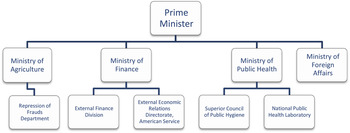
Although the French government’s decision making was highly centralized and concentrated in the hands of the prime minister, the president, and/or particular ministries, the influence of outside interests was relatively weak compared with the pattern in the United States. Footnote 77 However, the assumption that the French government’s decision making in the Coca-Cola affair was possibly influenced by certain key administrators’ particular political leanings is unfounded. The rejection and subsequent approval of Coca-Cola’s project were made by the same government institutions, where the key administrators were neither anti-American nor left wing. Figure 1 shows the main French government ministries that were involved in the Coca-Cola affair.
French government ministries in the Coca-Cola affair.

First, Premier Bidault and Pierre Schneiter, the minister of Public Health, both belonged to the pro-American centrist MRP Party, and both had spoken on behalf of Coca-Cola. Footnote 78 Director Guindey, of the Direction des Finances Extérieures—the institution that was the most hostile opponent of Coca-Cola’s proposal—was not a leftist but a veritable “modernizer” and an “austéro-libéral” (austere liberal) who sought to balance the public finances and establish a small government and free trade system. Footnote 79 Finance Minister Maurice Petsche came from a very rich family and belonged to the right-wing party, and he showed no hostility toward Coca-Cola’s project; on the contrary, he promised his assistance in the affair to James Curtis, the president of the Coca-Cola Export Corporation. Moreover, the Finance Minister’s Cabinet and the Direction des Finances Extérieures shared the same position with respect to France’s balance of payments deficit problem. Both Petsche and René Mayer, the former finance minister, had persevered with the rehabilitation of France’s economy and struggled to restore the state to financial equilibrium. Footnote 80
There were different opinions on this issue within the French government. The Direction des Finances Extérieures, of the Ministry of Finance, had been opposed to Coca-Cola’s resumption of operations from the beginning. The Ministry of Agriculture, under pressure from domestic beverage interests, also stood on the side of Coca-Cola’s opponents. The position of the Ministry of Public Health was rather neutral; its only duty was to examine whether the products sold in France complied with relevant French legislation. Except for Coca-Cola’s first request in 1947 and the constant warnings about the serious reactions of American society, the Ministry of Foreign Affairs stood aloof in the affair. Footnote 81 France’s first foreign investment regulation was established in 1947, Footnote 82 but it was ambiguous and complicated and only provided general provisions. This type of approach allowed government officials great latitude in examining each investment application. In general, while the French government’s attitude toward foreign investment cannot be considered oppositional, it was also not enthusiastic and was generally more or less restrictive. Footnote 83
Whether or not opinions within the French government converged, or whether or not its attitude toward foreign investment was positive or negative, there were certain critical factors that it had to consider with Coca-Cola’s proposal. First, even without pressure from French beverage interests, French authorities were still troubled by the serious alcohol surplus problem at that time. Intervention and protection of the domestic alcohol industry by the French government dated back to the nineteenth century. Footnote 84 French authorities also interfered in the alcohol industry during World War I because the government used a large quantity of alcohol as a solvent in the manufacture of certain explosives and because it had an interest in stabilizing the market for alcohol. Footnote 85 Since 1935, the French government had acquired all the distilled industrial alcohols in France and became the country’s monopolist in that regard; after 1941, its monopoly extended to all natural alcohols that were more than 70 percent alcohol by volume. Footnote 86
French alcohol production declined sharply, but demand increased considerably during wartime; the alcohol markets experienced shortages, which led to an alcohol surplus after the war. Footnote 87 To protect alcohol and agricultural producers and to stabilize the alcohol market, the French government had to acquire a large amount of the alcohol production, and it therefore bore an excessive burden. Footnote 88 In fact, it acquired twice as much alcohol than it could absorb every year, and the Trésor (French Treasury) lost nearly 20 billion francs each year. Footnote 89 For example, the storage of alcohol during 1947–1948 was 540 thousand hectoliters, whereas by 1948–1949, it had risen to 2.289 million hectoliters; in other words, storage skyrocketed by 1.749 million hectoliters in just one year, and even reached as high as 3.471 million hectoliters in 1949–1950. Footnote 90 In spite of the exceptional amount of exports to the United States, which relieved some of the storage pressure after the outbreak of the Korean War, the alcohol surplus problem persisted; moreover, the French government also lost 25 billion francs pursuant to these transactions. Footnote 91 The storage problem caused by alcohol overproduction was a difficult issue to solve, and another anti-alcohol campaign in the immediate postwar period put more pressure on the French authorities. Footnote 92 The problems of excess storage and of loss were already two significant headaches for the French government; if Coca-Cola was allowed to enter France and to share the French beverage market, these problems would certainly be exacerbated.
Another problem that concerned the French government far more than the alcohol surplus was its long-term balance of payments deficit and the dollar shortage problems in the postwar years. These two headaches were, in fact, two sides of the same coin. Footnote 93 Director Guindey explicitly told the finance minister that the balance of payments deficit problem was “the most worrying element” about the French economy. Footnote 94 In 1947, the year that Coca-Cola submitted its resumption plan, France was in complete distress and was facing severe economic and social crises. Inflation had continued to soar, huge strikes followed one after another, and a poor harvest resulting from an extreme winter led food prices to rise to unimaginable levels; for example, in 1947 the price of bread in Paris jumped 77 percent from the previous year. France depended even more on imported food, but its gold and foreign exchange reserves were already exhausted. To the regret of Raymond Aron, a well-known French philosopher and political scientist, France’s fortunes had vanished with the war, Footnote 95 and the conqueror was left with nothing but debt. In fact, its public debt reached as high as 2.499 billion francs in 1947. Footnote 96
Due to its lack of financial resources, imports were at risk of being interrupted; moreover, the insufficiency of production capacity made exports even more difficult, which in turn made France even less capable of paying for imports. Footnote 97 In 1947 France ran a current account dollar deficit of $1.7 billion. Footnote 98 As for exports over imports, in the same year its exports covered only 9.1 percent of imports from the dollar zone. Footnote 99 As a result of its lack of means to pay for imports, France was compelled to suspend all imports—except for staples such as wheat and coal—for several months. Footnote 100 Under such circumstances, Coca-Cola chose precisely this time to submit its inadequate investment project. The company offered only $500,000 of investment and intended to repatriate a large amount of profits three years later; moreover, it refused to set up a subsidiary in France and expected to import its essential raw materials from the United States. These unattractive conditions and the company’s ignorance of their effects on France’s current economic situation inevitably frustrated the investment plan.
The problems encountered by Coca-Cola in France were not exceptional; in fact, they were similar to deterrents encountered by other American investors in Europe in the postwar years. Europe’s persistent deficit in its balance of payments inevitably increased the problem of dollar-exchange availability. Dollar shortages were a common issue in postwar Europe. The ravages of World War II left many European countries in precarious and critical condition. Their productive facilities were seriously damaged, resources were generally scarce, and their production capacity was largely insufficient; even worse was the fact that there was a poor harvest in 1947 due to severe weather, and, of course, trade with the East had been interrupted. Western Europe was in urgent need of substantial food, fuel, and raw material imports from other areas of the world, particularly from the dollar zone. Footnote 101 Europe’s overseas income before the war came chiefly from its foreign investments, financial services, and ocean shipping. European countries’ earnings were now decimated because of the wartime destruction. A substantial amount of domestic capital was absorbed by war damage, and disinvestment abroad and the breakdown of the production systems in their colonies led to the disappearance of overseas income. Thus, European capital and assets were evaporating quickly, and debt was multiplying rapidly. Footnote 102
In France, the evaporation of income from overseas investments, tourism, and insurance and shipping services added to other disadvantages—such as inefficient production and export shortfalls—and left its balance of payments in deficit through the 1940s and 1950s. Footnote 103 From the perspective of the balance of payments on current accounts between Metropolitan France and other countries, the 1949 balance showed a deficit of $539 million, but by 1951 that deficit had increased to $970 million. Except for 1954 and 1955, years in which the large “offshore” expenditures in France were made by the American government, France’s balance of payments remained in deficit throughout the 1950s. As viewed from the perspective of capital movement, France’s balance with the dollar zone was also in a serious debit position; in 1949, for example, the deficit reached $868 million. Footnote 104
To solve their own serious dollar shortage problems, European countries exerted all necessary efforts to discriminate against intra-European trade. Thus, each country exported goods and services to other European countries to earn dollars without any intention of paying for imports from these countries in dollars. Footnote 105 France was no exception. The French government at that time was well on its way to taking every dollar it could get and was determined not to let any escape. Footnote 106 Most European governments maintained controls over international trade for purposes of conserving their dollar exchange. They tightened their import restrictions, limited the remittance of profits, and restricted the repatriation of capital. The 1949 report of the National Industrial Conference Board (NICB)—an important organization in the American business community—took aim at the obstacles encountered by American investors abroad and confirmed this trend. According to the report, among the list of deterrents to foreign investment, the three most important difficulties were “Export or import quotas” (57.5 percent), “Limitation on remittance of profits” (43.5 percent), and “Control of capital movements” (34.1 percent). Footnote 107 The US authorities suggested to American investors that there were certain types of American investments that usually would be received favorably in France: those involving the purchase of equipment or real estate in France and those that would increase France’s exports or reduce its imports. Footnote 108 Although the French government technically allowed foreign companies to repatriate their profits from France in its foreign investment regulation of 1947, the provision gave no intimation in this respect except to indicate that it would authorize only those cases that “present positive interest for the national economy.” Footnote 109 This ambiguous provision gave the French authorities enormous room for maneuvering.
The Direction des Finances Extérieures, the most hostile opponent of Coca-Cola’s proposal, claimed that the company would repatriate its profits, which would weigh heavily on France’s balance of payments. French authorities refused Coca-Cola’s proposal because they were afraid that the soft drink would be as popular in France as it was in the United States; that the French branch of Coca-Cola would unceasingly import ingredients; and that a substantial portion of the profits, which “could hardly be estimated,” according to Director Guindey, Footnote 110 would be repatriated from France. Considering the high trade imbalance and the financial difficulties of the time, the French government’s insistence on controlling the dollar drain is completely comprehensible. While proclaiming firmly that the French government must maintain equilibrium in France’s balance of payments with the dollar zone, the Direction des Finances Extérieures also explicitly emphasized that American investments must bring dollars to France and must lead to equipment purchases in France. Conversely, if an American subsidiary or branch must import from the United States, it would be better to use “license without payment” mechanisms to prevent a dollar drain; in addition, American investors had to limit the repatriation of their profits from France. Obviously, Coca-Cola’s investment project did not conform to these criteria. Footnote 111
Coca-Cola strongly believed that the main reason that the French government had refused its proposal was due to instigation and pressure from French beverage interests. Meanwhile, the American public and media were convinced that the refusal amounted to discrimination against American products. However, the success of Pepsi Cola’s investment project provides proof to the contrary. In early 1950, Pepsi Cola proposed to establish a plant for bottling and manufacturing concentrate in France. In contrast to Coca-Cola’s proposal, Pepsi Cola expected to set up a subsidiary, rather than a branch, which conformed to the French government’s preferences. Coca-Cola insisted on importing its secret formula from the United States, and even bypassed French protestations to import such ingredients from Morocco, whereas Pepsi Cola would exclusively use French and French Union raw materials and complete the entire production process in France. While promising to limit the repatriation of profits from France, Pepsi Cola declared that all its products would be exported to other European countries, even to Near and Middle East countries, which would allow France to earn (and gain) $7 million each year, Footnote 112 whereas Coca-Cola’s selling interest was in France, and it showed little interest in exporting its products outside of France. Footnote 113
In contrast to its oppositional stance in the Coca-Cola affair, the Direction des Finances Extérieures was substantially in favor of Pepsi Cola’s proposal. It emphasized that, in comparison with Coca-Cola, which had bypassed French rules, Pepsi Cola’s proposal perfectly conformed to French regulations. Footnote 114 It even asked for favors for Pepsi Cola when the Comité des Investissements Étrangers attempted to refuse the investment project because of profit repatriation. Pepsi Cola eventually obtained the approval of the French government to establish a subsidiary and a factory in France. Footnote 115 French authorities wished to make Americans aware that France was not consistently hostile to US soft drink companies—as long as the investment proposal was acceptable, France always welcomed such investments. Footnote 116 In addition, according to French authorities, Pepsi Cola’s acceptance of these conditions, which applied to all foreign soft drink companies, proved that France’s policies and regulations were neither unreasonable nor discriminatory. Footnote 117
In addition to considerations involving the balance of payments deficit problem, the French government was meticulous about the dollar drain because it also involved a more important object that is difficult to clarify when interpreting the Coca-Cola affair solely based on the surface controversy and the ideological conflict. Although it cannot be denied that the political pressure exerted by French beverage interests and the attacks by French communists affected the surface elements of the affair, the context of the entire issue becomes clear only when the case is placed within the broader framework of postwar France’s economic reconstruction. World War II not only brought France enormous material damages and human loss, but also a cruel reality: its great power position was ending with the termination of the war. In just a few years after the war, this former colonial empire realized that it had been reduced to a second-class power in the new world order. Footnote 118 The alternative that France faced in the immediate postwar period was that famous question posed by Jean Monnet: “Modernization or decline?” Footnote 119
On January 20, 1946, Charles de Gaulle resigned over disagreements involving the military budget. His departure confirmed France’s consensus of the time: the primary task of the nation was reconstruction, and only establishing a powerful economy could assure France of being a “real power” in the future. Germany was divided into two parts that could no longer threaten France. Moreover, the United States’ protection in Western Europe offered total security to France, so there was, therefore, no need to put substantial resources into the present “illusory power” of the military. Footnote 120 From the perspective of Jean Monnet and the reformers, the loss of France’s past glory was not mainly due to the war but to the accumulated backwardness of its economy since the late nineteenth century. Footnote 121 The two World Wars made France realize that the primary characteristics of the great powers were no longer politics or culture but strong economies, and this change made France even more aware of the importance and imperatives of national economic reconstruction. Footnote 122 The Monnet Plan had to be combined with the continental recovery scheme to ensure France’s reconstruction, and its ultimate objective was to replace Germany by making France the political and industrial pivot of Europe. Footnote 123
“Reconstruction” alone cannot restore the power of the past; only “Modernization” can achieve the goal. Footnote 124 However, modernization requires resources, and the war had completely exhausted France’s. Over the 1939–1945 period, the country’s material losses were estimated at 26,698,180 million francs. Footnote 125 In 1944–1945, France’s GDP amounted to only half its 1938 total, whereas the United States’ GDP in 1944 was almost twice that of 1938. Footnote 126 France’s infrastructure, materials, and transport networks were all in critical condition. Accompanying this disaster was an entire series of recurrent economic and financial difficulties: debt, fiscal deficits, food and material scarcities, black market economies, inflation, the destruction of credit and savings facilities, capital flight, persistent balance of payments deficits, and exhausted gold reserves. The majority of French citizens knew that France could not stand up to get out of its own way. Footnote 127 Monnet, a pragmatic person and “strongly committed to the market economy,” Footnote 128 was keenly aware that the only way to restore France’s greatness was to rebuild a strong economy within a short time. Given the circumstances in the country at the time, only American aid could make it possible to achieve the objectives of reconstruction and modernization, and France needed a precise economic plan to obtain American aid. Thus was born the Monnet Plan. Footnote 129
In the beginning, Washington kept its distance from the Coca-Cola affair. Footnote 130 The US government’s position in the case was, in fact, one of embarrassment. In addition to the wave of public opinion that urged the government to enact sanctions against France, Washington had to withstand pressure from Coca-Cola executives who were asking it to intervene in the affair. Meanwhile, it was also facing criticism from Coca-Cola’s American competitors, who questioned why Coca-Cola should benefit from taxpayer money that had been allocated to the Marshall Plan. Footnote 131 If the reason why the French government was so meticulous about the balance of payments equilibrium was to accomplish an important objective, the US government had its own considerations. A nondiscriminatory and multilateral world trading system has been a constant component of US foreign economic policy; Footnote 132 however, a global, multilateral world based on free trade would only be possible if a trade equilibrium could be maintained between Europe and the dollar zone. To achieve this objective, it was first necessary to rebuild and integrate the European economies by establishing an “economic United States of Europe.” Footnote 133
Moreover, as US Secretary of State Dean Acheson stated: “[T]he recovery and prosperity of other countries are essential to our national security and prosperity,” especially the prosperity of Europe, which was the major trading partner of the United States. Footnote 134 Under the circumstances of a heightened Cold War atmosphere, postwar European economic problems, a perpetual dollar shortage, and the impact of these serious crises on European economies in 1947, the United States quickly became aware that an economic collapse in Western Europe would cause another economic depression that would likely lead to another war that would inevitably threaten the American economy and American security. Footnote 135 Therefore, the United States altered its standard policy by tolerating temporary discriminatory policies against American goods and allowing Europe to impose restrictions on dollar exchanges in the interest of improving Western Europe’s productivity and rapidly reconstructing its economy. Footnote 136
From a security perspective, in an increasingly bipolar world as a result of the Cold War, the United States was convinced that a vulnerable Europe would be an incubator for communism and totalitarianism. Footnote 137 In a letter to Gordon Gray, the secretary of the Army, President Truman stated clearly, “economic security is an essential element of political security.” Footnote 138 Only a powerful Europe would be able to prevent the USSR from filling the vacuum in Central and Western Europe left by the defeat of Germany and the decline of France and the United Kingdom. Footnote 139 An integrated economic and political order in Europe might create a framework for achieving political stability, harnessing Germany, assuring France, containing communist inroads into all of Europe, and establishing a multilateral world trading system. Most importantly, it also represented a guarantee of attaining a greater Atlantic economic and political community. Footnote 140 The Marshall Plan, which was implemented in 1948, attempted to achieve these goals.
Although France and the United States had different perspectives and objectives involving the concept of the new economic order in Europe—in addition to many different views on political and defense issues—they nonetheless agreed that rebuilding the French economy within the shortest time and the restoration of France’s past power were essential to Europe’s postwar stability. In the postwar years, forging a balance of power in the West and making France a “bulwark of democracy” and a fulcrum of Western Europe characterized American foreign policy toward Europe. Footnote 141 To achieve this objective, Washington, like France, wished to see France restored to equilibrium in its balance of payments as soon as possible. Per the description of Robert Frank: “The union of French modernization and American aid is aimed at helping France strike an equilibrium in its balance of payments.” Footnote 142 To reconstruct France’s economy, or that of Western Europe in general, the West first had to solve the imbalance problems in world trade and payments. Only by European countries making an effort to improve their productivity, increase their exports, and regain equilibrium in their balance of payments could they stand up on their own feet when American aid came to an end. Moreover, the containment of communism and a global, multilateral world based on free trade—which embodied the very targets at which US policy aimed—were thus realizable. Footnote 143 Washington’s ultimate objectives for France can explain why it was unwilling to interfere in the Coca-Cola affair at the beginning.
In 1948, when the Marseille plant was established, Coca-Cola made a request to the ECA to secure $7 million of guarantees. However, the ECA insisted that foreign assistance funds must be spent on basic product needs; Coca-Cola was not an essential supply and was even considered a “luxury good.” Moreover, it made no contribution to improving the recipient countries’ exports and might even have an unfavorable effect on these countries’ self-sustaining economic ability. For all these reasons, the ECA rejected Coca-Cola’s request. Footnote 144 By the end of 1949, when Coca-Cola was trapped in a series of challenges and lawsuits, it again asked the American government to pressure the French government; however, the American government again refused the company’s demand after considering its overall interests. Footnote 145
Conclusion
Although Washington maintained a nonintervention position in the Coca-Cola affair, it was eventually unable to resist the pressure of American public opinion. Its long-term objectives regarding Western Europe’s economy and policy apparently made it cautious when addressing this matter. In December 1949, when the Thibault and Boulet bills had been amalgamated into one and reintroduced into the National Assembly, the ECA told French officials that passage of the bill would have “undesirable repercussions” for Franco–American trade and investment. Footnote 146 Two days later, Secretary of State Acheson instructed the US Embassy in Paris to negotiate with France by orally relaying Washington’s concerns about the bill but without mentioning the Friendship, Commerce, and Navigation treaties. Nonetheless, Acheson wanted the embassy:
[To] emphasize the unfavorable reaction of U.S. public opinion which would result from passage of the bill and the Department’s growing embarrassment [in connection with] its efforts to sustain and expand the interest in France’s recovery, which involves considerable sacrifice by [both] U.S. individuals and business in [terms of] taxation. Footnote 147
While Acheson’s confidential telegram was sent to the US Embassy in Paris, the French Embassy in Washington also informed Paris on the same day:
There is no doubt that the [US] Congress will be alerted at once and that this affair will be fully used against our country when the Assistance Act to Europe is renewed. Furthermore, our full attention must be given to the consequences that adopting this project of law—I don’t know the terms—might have for our imports to the United States and that might lead the American Government to undertake retaliatory measures […] Adopting legislation that is considered to be hostile to the U.S. among the American business community would put us in an uncomfortable and embarrassing situation at the very moment that we are proceeding with the relevant [US] departments to remove certain inconvenient formalities with regard to customs involving France’s imports to the United States. Footnote 148
Although the Boulet bill was passed by the National Assembly in early 1950, it still had to be examined by the Conseil de la République (Council of the Republic) before it went into effect; Footnote 149 however, it was impossible to block the violent public outcry and the wave of boycotts against French products in the United States. Farley accused the French of discriminating against Coca-Cola in the American media and continued to pressure the French Embassy. Footnote 150 French ambassadors alerted Paris that the outraged reaction under way in the United States would inevitably harm French exports to the United States. Footnote 151 Makinsky asked for the ECA’s intervention in the affair because it possessed a persuasive “weapon,” that is, the Marshall Plan. In the face of the postwar economic and social crises, France recognized that its first step to recovery had to depend on American aid, and the Marshall Plan indeed played a key role in France’s reconstruction, paving the way for its modernization. Footnote 152 In 1949, 88 percent of the Monnet Plan’s resources came from American aid, Footnote 153 and in 1948–1949, the Marshall Plan granted $1.215 billion to France in one year. Footnote 154 The Marshall Plan largely financed the development of France’s electrical industry in the postwar period. Footnote 155 The Marshall Plan represented a guarantee of France’s future great power position and independence; in any case, France could not lose it at that crucial moment. The boycott actions against French products in America and the anti-French campaigns worried the French government deeply because it needed exports above all else.
The ECA’s “persuasive weapon” did prove to be effective with France. The French authorities realized that prohibiting Coca-Cola’s secret ingredient imports would have a substantial impact on French exports and would likely affect the Marshall Plan; thus, it soon lifted the embargo on Coca-Cola’s imports. Two months later, the Conseil de la République rejected the Boulet bill. Footnote 156 The company also won another victory in a legal battle. In September 1952, after a legal action lasting three years, la Répression des Fraudes ultimately withdrew its suit; later, the court ordered a non-lieu (no cause for prosecution), and the case was definitively closed. Footnote 157 Communist deputies lashed out violently against Coca-Cola and American imperialism in the National Assembly for seven hours, and left-wing activists attacked and overturned Coca-Cola’s trucks and smashed hundreds of cases of Coca-Cola. Everywhere in French cities the walls were daubed with the slogan “U.S., Go Home!” designed by the Communist Party; nevertheless, Coca-Cola still formally entered this “country of wine.” Footnote 158 Although the company had stepped into the “land of the Gauls,” it still had a thorny path before it. Until the 1990s, France’s level of consumption of Coca-Cola was continually far below that of other European countries. The competition with Pepsi Cola and other rivals, the French government’s intervention, lawsuits, boycotts, and the reputational crisis exhausted the century-old company. Footnote 159
Previous studies of this affair typically focus on the perspectives of France’s anti-Americanization and French beverage interests’ defense against Coca-Cola. These factors, indeed, were reasons for Coca-Cola’s difficulties resuming operations in France; however, if we place the affair within the framework of France’s postwar economic reconstruction and the Cold War, the underlying and deeper causes—the key elements—can actually be found in France’s balance of payments problem. The crux of all the issues was the “dollar.” With regard to Coca-Cola’s investment project or that of Pepsi Cola, the main reason for the French government’s disapproving attitude was its concern about the profit repatriation problem, which would weigh heavily on France’s balance of payments. Additionally, if the balance of payments issue continued to deteriorate, as warned by the Direction des Finances Extérieures, it could compromise the renewal of American aid. Footnote 160 Paradoxically, under the threats of American boycotts and the interruption of the Marshall Plan, the French government’s concession in the Coca-Cola affair also resulted from the “dollar” issue. A boycott of French products by American restaurants and retailers would have seriously affected French exports and, as a result, would have worsened France’s balance of payments deficits and made it even more difficult to earn dollars. In addition, interrupting the Marshall Plan would also have cut off France’s essential “lifeline” in its reconstruction.
The French government, in this affair, had deeper considerations than just Coca-Cola. Compared with the pressure from French beverage interests, it was far more concerned about its own serious alcohol surplus problem, and compared with the communists’ anti-American crusade, the French government gave much more weight to the long-term balance of payments deficit problem. In other words, the French government’s position was not determined by the French beverage industry’s pressure or by the communists’ anti-Americanism; instead, it was through practical financial considerations. These considerations, in fact, were closely related to its ultimate and key objective, which was the restoration of its lost great power position. Although the American government did use cultural diffusion to curb the communist influence during the Cold War in Europe, Footnote 161 Washington maintained a nonintervention stance during the Coca-Cola affair most of the time. It is an exaggeration to presume that the American government used Coca-Cola to colonize French consumption culture. Washington had its own considerations in the entire case—blocking communist expansion and achieving a global, multilateral world trading system—and it thus aimed to help France and all of Western Europe achieve equilibrium in their balance of payments within a short period of time. Importantly, only after Europe’s trade gap with the dollar zone had sharply narrowed could the recovery of the European economy be accomplished, which would enable the United States to realize its ultimate objective: an Atlantic community strong enough to stand up to communist expansion westward.
The international circumstances of the postwar period led France and the United States to form a symbiosis; however, within this symbiosis, cultural differences and significant gaps in national strength between the countries inevitably led to conflict. Footnote 162 French anti-Americanism reached its peak in the 1960s due to de Gaulle’s obstructionism and France’s foreign policy stance. Footnote 163 Indeed, the 1960s marked tumultuous years for American investment in France. A series of notorious scandals involving American enterprises in France not only provoked acute controversy and anti-American campaigns, but also they led to panic in French society, making American enterprises the main target of attack at that time. The Coca-Cola affair was only an overture to the history of American investment in France, which is riddled with conflict and antagonism and is but a concrete example of the turbulent Franco–American symbiotic system.