Introduction
Glyphosate is a non-selective herbicide with a unique mechanism of action (Malik et al., Reference Malik, Barry and Kishore1989). The herbicide is often used for weed control in glyphosate-resistant crop fields, orchards, no-tillage farmlands, and other scenarios. Since 1996, the emergence of glyphosate-resistant crops has dramatically reduced the costs of weed management in farmlands. Thus, this technology has been rapidly accepted by growers, resulting in an explosive increase in the use of glyphosate (Dill, Reference Dill2005). However, the over-reliance of farmers on glyphosate for weed control has led to the long-term use of a single herbicide, which in turn makes weeds resistant and markedly reduces its value (Heap and Duke, Reference Heap and Duke2018). Despite this, glyphosate is still the mainstream choice for weed control by farmers and will remain the most widely used pesticide for the world in the next few years (Benbrook, Reference Benbrook2016). Although there have been some studies, the potential effects of glyphosate on arthropods remain unclear. To identify environmental risks and guide the scientific use of glyphosate, it is therefore crucial to examine the effects of glyphosate on non-target arthropods, including natural enemies (Patriarcheas et al., Reference Patriarcheas, Momtareen and Gallagher2023; Zilnik et al., Reference Zilnik, Bergeron, Chuang, Diepenbrock, Hanel, Middleton, Moretti and Schmidt-Jeffris2023).
Chrysopa pallens (Neuroptera: Chrysopidae) is a common dominant natural predator in agroforestry ecosystems distributed in Asia and Europe. The larvae and adults of C. pallens are predators, thereby reducing pest populations (Fang et al., Reference Fang, Li, Xu, Wang, Yang, Mi, Jin, Desneux and Wang2022). During field activities, C. pallens can be exposed to various pesticides. As C. pallens is easy to culture laboratory, it has been used as a research object for environmental risk assessment of transgenic crops or pesticides (Ali et al., Reference Ali, Zhang, Muhammad, Iqbal and Cui2018; Du et al., Reference Du, Shan, Hu, Wu, Wang, Song, Ma, Xi, Ren, Ma and Ma2024b; Feng et al., Reference Feng, Zhang, Chen, Wang, Liu, Li, Song and Mao2021; Guo et al., Reference Guo, Wan, Dong, Lövei and Han2008; Su et al., Reference Su, Ren, Ma, Wang, Hu, Song, Cui, Ma and Yao2022, Reference Su, Ren, Hu, Song, Ma, Wang, Yao, Ma and Cui2023). The effects of glyphosate on predators have been reported. Continuous feeding on glyphosate preparations significantly inhibited the metamorphosis of Chrysoperla carnea (Neuroptera: Chrysopidae) and reduced adult emergence (Defarge et al., Reference Defarge, Otto and Hilbeck2023). In contrast, short-term feeding of glyphosate did not affect the growth and development, population parameters, and biological control ability of Harmonia axyridis (Coleoptera: Coccinellidae) (Saska et al., Reference Saska, Skuhrovec, Lukas, Vlach, Chi, Tuan and Honek2017). Glyphosate feeding significantly reduced the survival rate and increased the fecundity of H. axyridis (Gao et al., Reference Gao, Hu, Cui, Zhu, Wang, Zhang, Li, Ji, Luo and Cui2023). After exposure to glyphosate-based herbicide (GBH), Pardosa milvina (Araneae: Lycosidae) changed its behaviour and predatory ability (Behrend and Rypstra, Reference Behrend and Rypstra2018; Niedobová et al., Reference Niedobová, Skalský, Ouředníčková, Michalko and Bartošková2019). At present, there is a lack of research on the effects of GBH on C. pallens.
Glyphosate is an endocrine disruptor that can affect the secretion of oestrogen in female animals, thereby affecting reproduction (Almeida et al., Reference Almeida, Teixeira, Soares, Cunha, Silva, Vieira Filho and Wanderley-Teixeira2017; Ingaramo et al., Reference Ingaramo, Alarcón, Muñoz-De-Toro and Luque2020; Ren et al., Reference Ren, Li, Liu, Huang, Wu, Li and Li2018). So far, most studies on the risk assessment of glyphosate on predatory insects have focused on ecological and biological parameters, while their molecular response to glyphosate has not been well characterised. Current research has elucidated the mechanisms of oogenesis and reproduction in C. pallens, highlighting the significant roles of insulin signalling pathway-related genes and vitellogenin genes (Vg). The oogenesis and oviposition of C. pallens are co-ordinately regulated via two insulin receptors through distinct signalling pathways (Han et al., Reference Han, Zhang, Feng, Liu, Zhang, Chen, Zeng, Wang, Liu, Li, Cui, Li and Mao2020). Vg is a prerequisite for egg production and embryonic development after oviposition in insects (Wu et al., Reference Wu, Yang, He and Zhou2020). In insects, pesticides can affect insulin signalling and Vg expression (Chen et al., Reference Chen, Tian, Lin, Yu, Xie, Li, Chen, Lin, Gu and Wei2023; Cheng et al., Reference Cheng, Li, Chen, Wang, Mao, Li, Hu and Li2019; Zhang et al., Reference Zhang, Wu, Wen, Lai, Kuang, Zhang, Xu, Jin, Xu, Yu and Shao2023; Zhou et al., Reference Zhou, Yang, Yang, Long and Jin2020). GBH, however, only has a few reports on its molecular biological effects on predators.
Individuals of C. pallens, across different life stages, may encounter GBH during field activities. Previous study has already explored the potential effects of GBH ingestion on C. pallens (Du et al., Reference Du, Ren, Ma, Wang, Song, Hu, Wu, Shan, Ma and Ma2024a). However, while most studies focus on assessing the impact of GBH through contaminated prey, it is essential to investigate the direct exposure of predators to GBH spraying in field conditions. Therefore, this study aims to investigate the effects of direct GBH spraying during the larval or adult stages of C. pallens on the population parameters of the parental generation and the first filial generation (F1), as well as the transcriptional levels of insulin signalling genes and Vg1 in the F0 generation. Therefore, the gene expression related to insulin signalling and Vg1 were analysed in C. pallens, and subsequently assessed the potential reproductive toxicity mechanisms of GBH. The results provide a basis for a comprehensive understanding of the possible toxicity of varying concentrations of GBH to C. pallens.
Materials and methods
Insects
Chrysopa pallens were purchased from the Beijing Kuoye Tianyuan Biotechnology Co., Ltd. (Beijing, China). C. pallens and Megoura crassicauda (Hemiptera: Aphididae) were reared for more than ten generations in the laboratory without exposure to any pesticides. A sufficient quantity of M. crassicauda was provided during the experiment according to the age of C. pallens. All insects were reared under controlled laboratory conditions at 25 ± 2°C, 70 ± 10% relative humidity, and a 14:10 h (L:D) photoperiod.
Glyphosate-based herbicide
Roundup® (The aqueous solution contains 41% glyphosate isopropyl amine salt as the active ingredient, corresponding to 30% glyphosate, Monsanto Company) was purchased from the local market. As per the recommended usage guidelines of Roundup® specified by the manufacturers on China Pesticide Information Network, four treatments were administered using this formulation diluted in deionised water. The concentrations used were 5 mL/L (low), 10 mL/L (medium), and 20 mL/L (high), while a control group was treated with only deionised water.
Experimental process
Effects of exposure to GBH at the larvae stage on parental generation and the offspring of C. pallens
The second instar larvae of C. pallens were selected to test the potential toxicity of different concentrations of GBH. Twenty healthy larvae (<24 h) were placed in a Petri dish (9 cm diameter) and anesthetised on ice for 30 s. Various concentrations of GBH (0, 5, 10, and 20 mL/L) were prepared and 1 mL of each solution were sprayed on larvae at 138 kPa using a spray tower (Burkard Manufacturing Co. Ltd., Rickmansworth, England). Each individual served as a biological replicate, with each treatment performed in 80 replicates. The treated larvae (parental generation, L-F0) were placed in a Petri dish separately for rearing until pupation. After emergence, the male and female were paired, placed in a disposable plastic cup (upper diameter 7 cm and height 7 cm), sealed with sterile gauze. After the beginning of the experiment, an adequate amount of fresh M. crassicauda was replaced daily for feeding. The changes in instar, survival, and fecundity of each individual were recorded until all individual death. The laboratory conditions were 25 ± 2°C, relative humidity 70 ± 10%, and 14:10 h (L:D) photoperiod.
To clarify the transgenerational effects of GBH on the offspring of the L-F0 (L-F1), a total of 80 eggs produced by the L-F0 generation of each treatment group were transferred to a new Petri dish for separate observation and were fed with adequate amount of M. crassicauda post-incubation. The feeding conditions and investigation methods of L-F1 were identical to those used for L-F0.
Effects of exposure to GBH at the adult stage on parental generation and the offspring of C. pallens
Adults with a consistent emergence time (<24 h) were placed in Petri dishes and anesthetised on ice for 30 s. The adults (parental generation, A-F0) were sprayed with 1 mL of the solution (5, 10, and 20 mL/L) of GBH at 138 kPa using a spray tower, and the control group was treated with water. The treated adults were paired, and 40 pairs were employed for each treatment. The pairs were reared in plastic cups and fed enough M. crassicauda. Survival and egg production were recorded daily until the individual died. The feeding conditions and investigation methods of A-F0 were the same as those of L-F0.
For the offspring of A-F0 (A-F1) analysis, 80 eggs produced by the A-F0 generation from each treatment group were transferred to a fresh Petri dish for separate observation. After hatching, the larvae were fed with adequate amount of M. crassicauda. The feeding conditions and investigation methods for A-F1 were the same as those for L-F0.
Sample collection, RNA extraction, and cDNA synthesis
All treatments’ (L-F0 and A-F0) samples of C. pallens were collected on the fifth day of adulthood for reverse transcription-quantitative polymerase chain reaction (RT-qPCR) analyses. Each treatment was performed in triplicate, with three adults comprising a replicate.
TrizolTM reagent (Invitrogen, CA, USA) was used to extract RNA following the manufacturer’s instructions. The NanoDropTM 2000c (Thermo Scientific, MA, USA) was employed to measure the quality of the extracted RNA. cDNA was synthesised using the MonScriptTM RTII All-in-One Mix with dsDNase (Monad Biotech Co. Ltd., Wuhan, China), according to the manufacturer’s instructions. The concentration and quality of the cDNA were determined using the NanoDropTM 2000c.
RT-qPCR analysis
The effects of GBH on the expression of genes involved in insulin signalling pathway and vitellogenin in C. pallens using RT-qPCR. Two insulin receptor genes (InR1, InR2), a serine/threonine kinase (Akt), an extracellular-signal-regulated kinase (erk), and vitellogenin (Vg1) were investigated, along with the ribosomal protein S26e and Actin, which were used as the housekeeping genes (Han et al., Reference Han, Zhang, Feng, Liu, Zhang, Chen, Zeng, Wang, Liu, Li, Cui, Li and Mao2020) by RT-qPCR. The primers utilised are listed in Table S1. Each 20 μL of the reaction mixture contained 10 μL of qPCR mix, 0.4 μL of each primer (10 mM), 1 μL of cDNA (10–200 ng), and 8.6 μL of nuclease-free water. The qPCR was performed on a StepOnePlusTM Real-Time PCR System (Applied Biosystems, CA, USA) using the following program: initial denaturation at 95°C for 3 min, 40 cycles of 95°C for 5 s, and 60°C for 30 s. The relative gene expression was calculated using the 2−ΔΔCT method (Livak and Schmittgen, Reference Livak and Schmittgen2001).
Statistical analysis
The life history data of C. pallens were analysed using TWOSEX-MSChart (Chi, Reference Chi1988; Chi and Liu, Reference Chi and Liu1985; Chi et al., Reference Chi, Kavousi, Gharekhani, Atlihan, Özgökçe, Güncan, Gökçe, Smith, Benelli, Guedes, Amir-Maafi, Shirazi, Taghizadeh, Maroufpoor, Xu, Zheng, Ye, Chen, You, Fu, Li, Shi, Hu, Zheng, Luo, Yuan, Zang, Chen, Tuan, Lin, Wang, Gotoh, Ullah, Botto-Mahan, Bona, Bussaman, Gabre, Saska, Schneider, Ullah and Desneux2023; Chi et al., Reference Chi, You, Atlıhan, Smith, Kavousi, Özgökçe, Güncan, Tuan, Fu, Xu, Zheng, Ye, Chu, Yu, Gharekhani, Saska, Gotoh, Schneider, Bussaman, Gökçe and Liu2020). The standard error (SE) values of all life table parameters were estimated by the bootstrap procedure with 100,000 replicates. A paired bootstrap test was used to detect the differences among the different treatments based on confidence interval overlap. The expression of genes in C. pallens was analysed using SPSS Statistics V22.0 (IBM®, NY, USA) with one-way ANOVA and Tukey tests (P < 0.05) between the GBH and control treatments.
Results
Effects of exposure to GBH at the larvae stage of C. pallens
Effect of GBH on L-F0 of C. pallens
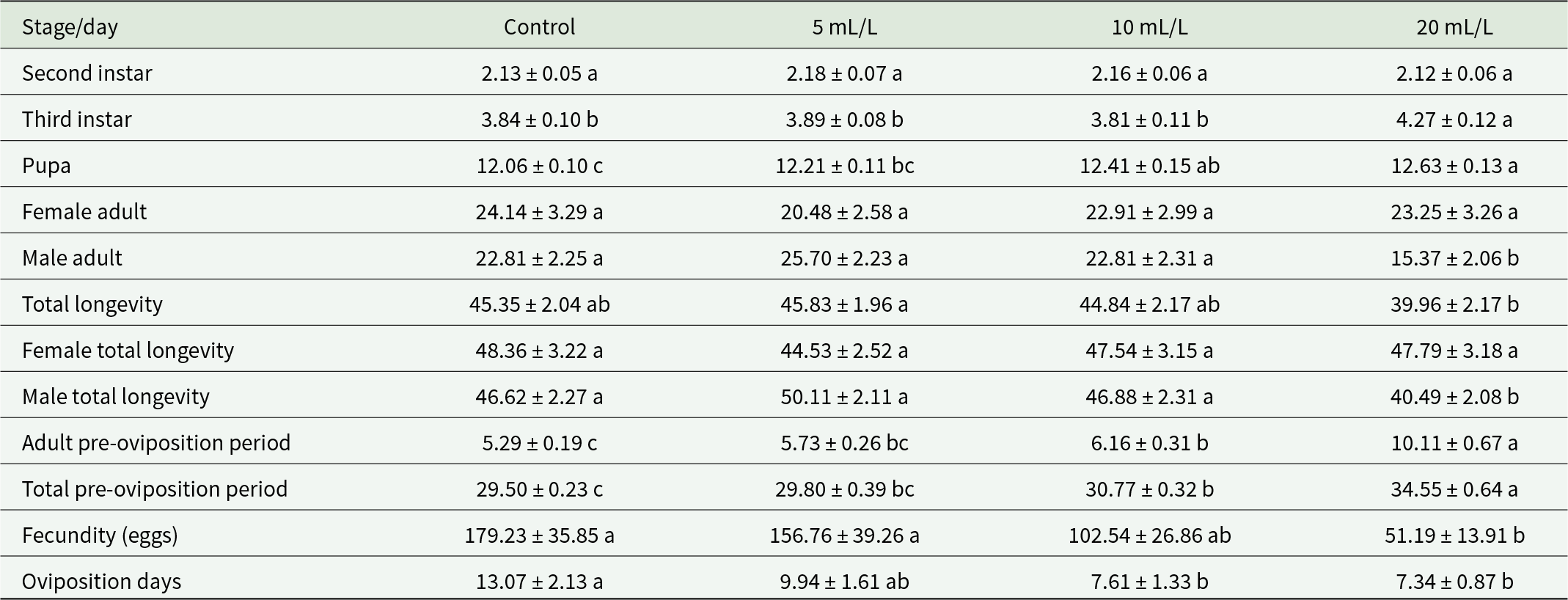
The results of the effects of GBH exposure at larval stage on the L-F0 of C. pallens are summarised in table 1. Compared to the control group, low concentration of GBH elicited no significant alterations on the growth and reproduction of C. pallens. In contrast, medium concentration of GBH markedly prolonged the pupal stage (12.41 d, P = 0.047), female adult pre-oviposition period (APOP) (6.16 d, P = 0.019) and total pre-oviposition period (TPOP) (30.77 d, P = 0.002), while shortened the oviposition days (7.61 d, P = 0.029), but had no effect on the other parameters. High concentration of GBH extended the third instar duration (4.27 d, P = 0.002), pupal stage (12.63 d, P < 0.001), APOP (10.11 d, P < 0.001), and TPOP (34.55 d, P < 0.001); shortened the male adult stage (15.37 d, P < 0.001), male total longevity (40.49 d, P = 0.048), and oviposition days (7.34 d, P = 0.013); and reduced fecundity (51.19 eggs/female, P = 0.048). Other parameters remained unaffected.
Developmental time and fecundity of the larvae parental generation (L-F0) of Chrysopa pallens treated with GBH at different doses

Note: Means ± SE in the same row followed by different lowercase letters represent significant differences between treatments using a paired bootstrap test (P < 0.05).
The population parameters of the L-F0 at different concentrations of GBH were compared (table 2). In contrast to the control group, low and medium concentrations did not significantly affect the population parameters (P > 0.05). However, the net reproductive rate (R 0) (17.60 offspring/individual, P = 0.016), intrinsic rate of increase (r) (0.0705 d−1, P = 0.003), and finite rate of increase (λ) (1.07 d−1, P = 0.003) were markedly lower at high concentration than those of the control group (66.08 offspring/individual, 0.1137 d−1, 1.1204 d−1, respectively). In addition, the mean generation time (T) (39.48 d−1, P = 0.008) at high concentration of GBH was remarkably longer than that of the control group (36.48 d−1).
Population parameters of the L-F0 generation of C. pallens treated with GBH at different doses

Note: Means ± SE in the same row followed by different lowercase letters represent significant differences between treatments using a paired bootstrap test (P < 0.05).
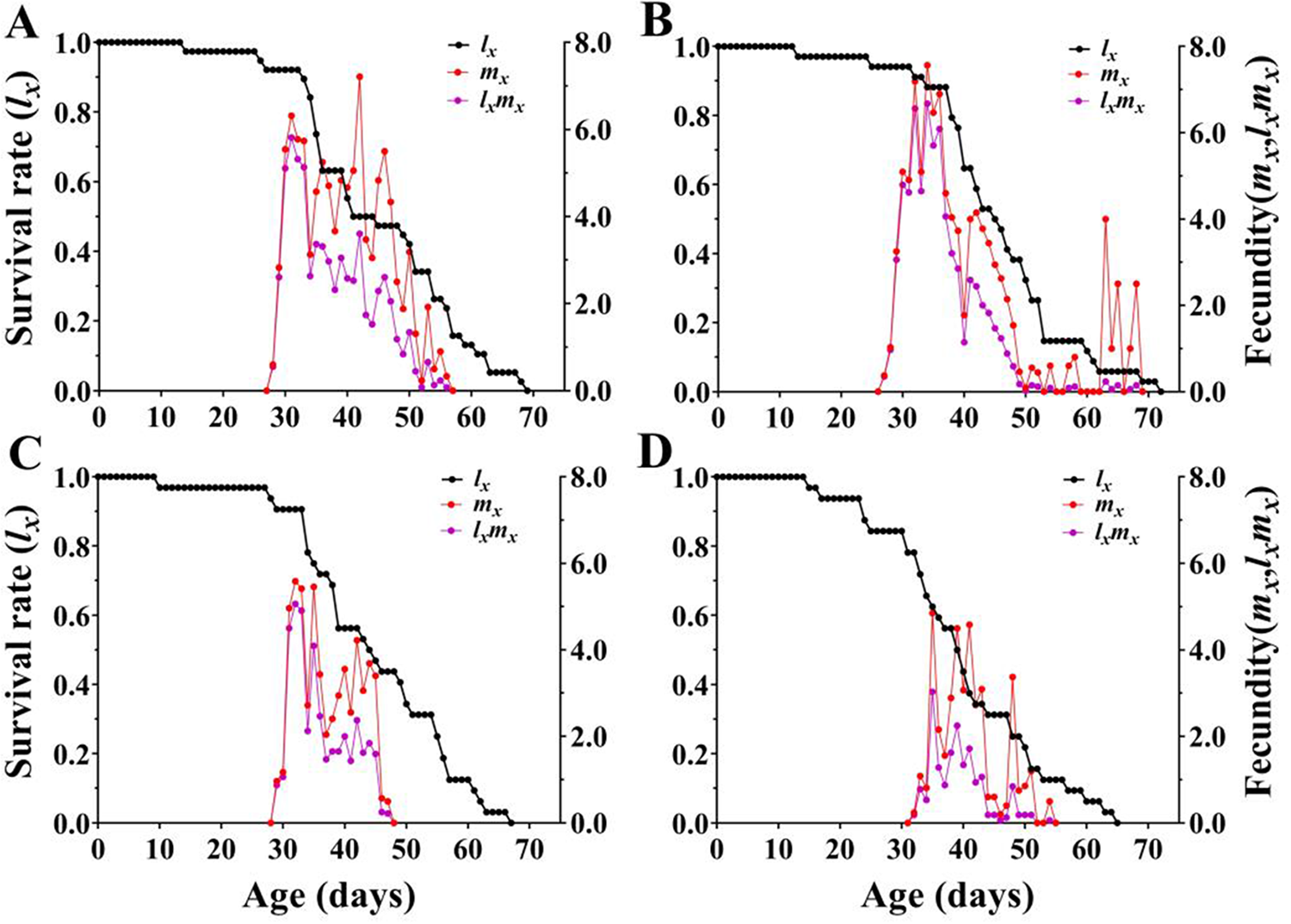
The population age-specific survival (lx) curves, population age-specific fecundity (mx), and reproductive values of all surviving individuals at age x (lxmx) are presented in fig. 1. The mx in the control group peaked at 7.21 on day 42; in the low concentration group peaked at 7.57 on day 34; in the medium concentration group peaked at 5.59 on day 32; in the high concentration group peaked at 4.58 on day 35. The mx peak in the medium and high concentration groups was lower than that of the control group, and the spawning peak occurred earlier. The lxmx in the control group peaked at 5.82 on day 31; in the low concentration group peaked at 6.68 on day 34; in the medium concentration group peaked at 5.06 on day 32; in the high concentration group peaked at 3.03 on day 35. The lxmx of the high concentration group was significantly lower than that of the control group.
Survival rate (lx), age-specific fecundity (mx), and age-specific maternity (lxmx) of the larvae parental generation (L-F0) of Chrysopa pallens treated GBH at different doses. The lx curve represents the probability that a newborn nymph will survive to age x; the mx curve represents the fecundity of individuals at age x. (A) Control; (B) 5 mL/L; (C) 10 mL/L; (D) 20 mL/L.

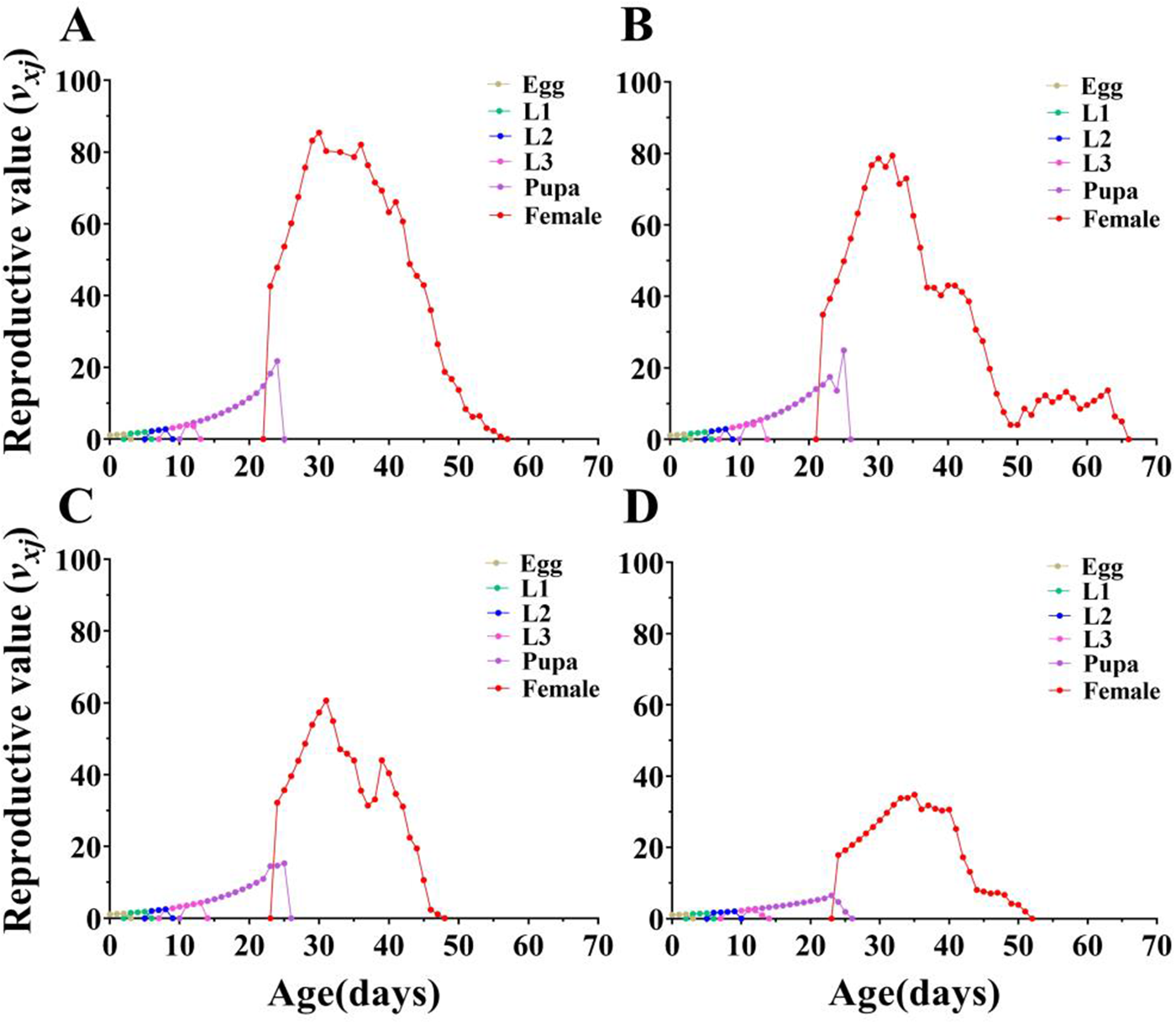
The specific age-stage reproductive value (Vxj) refers to the contribution of individuals at the x age j stage to future population dynamics. High concentration of GBH delayed the occurrence of the peak and reduced the peak of the Vxj curve (fig. 2). In the control group, Vxj reached its maximum at 85.44 d−1 on day 30. For the low concentration group, it peaked at 79.41 d−1 on day 32. The medium concentration group peaked at 60.65 d−1 on day 31, while the high concentration group peaked at 34.79 d−1 on day 35. Notably, the Vxj in both the medium and high concentration groups were lower compared to the control group.
Age-stage-specific reproductive (vxj) values of the L-F0 generation of C. pallens treated GBH at different doses. (A) Control; (B) 5 mL/L; (C) 10 mL/L; (D) 20 mL/L.

Effect of GBH on L-F1 of C. pallens
The life table parameters of the L-F1 generation of C. pallens were shown in Table S2. In comparison to the control group, low and medium concentrations did not significantly affect the growth and reproductive ability of the L-F1 (P > 0.05). However, at high concentrations, the third instar (4.31 d, P = 0.019) and female adult stage (32.89 d, P = 0.023) were prolonged, compared to the control group (3.90 and 24.90 d, respectively).
The effects of varying concentrations of GBH on the population parameters of L-F1 were compared (Table S3). It was shown that there was no significant impact on the pre-adult survival rate, R 0, r, λ, and T of L-F1.
The lx of L-F0 did not differ significantly among the various treatment groups (Fig. S1). Multiple peaks were observed in mx and lxmx treated with different concentrations of GBH; however, no remarkable variations were noted overall.
Upon comparing the Vxj of L-F1, it was indicated that there were minimal variations in the peak period and peak value of the Vxj curve reproduction among the different treatment groups (Fig. S2). The control group achieved its peak at 116.24 d−1 on day 35, while the low concentration group peaked at 115.77 d−1 on day 34. The medium concentration group reached its peak at 116.29 d−1 on day32, and the high concentration group peaked at 80.87 d−1 on day 35.
Effects of exposure to GBH at the adult stage of C. pallens
Effect of GBH on A-F0 of C. pallens
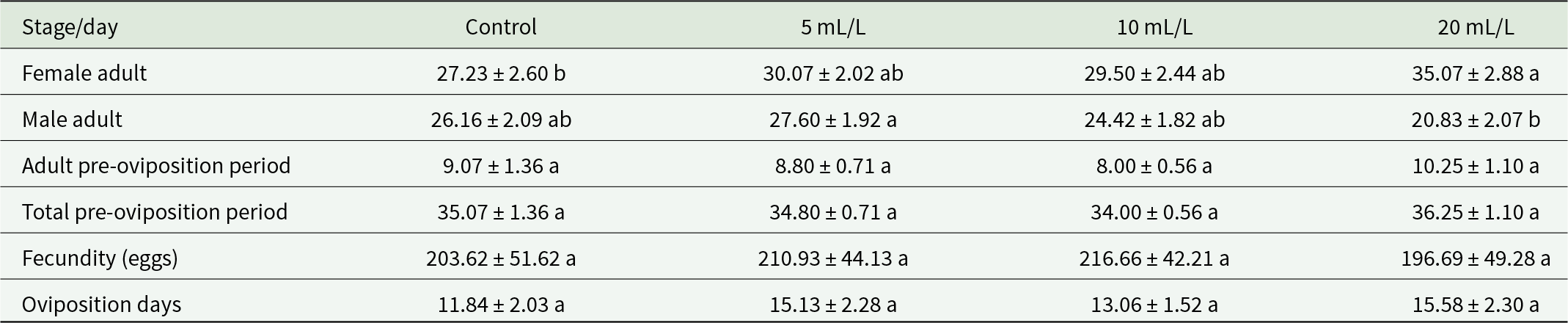
The life table parameters of the A-F0 generation were investigated (table 3). In comparison to the control group, both low and medium concentrations of GBH exhibited no significant influence on the longevity and fecundity of A-F0 (P > 0.05). Notably, the high concentration prolonged the female adult stage (35.07 d, P = 0.042) compared to the control group (27.23 d), but it had no significant effect (P > 0.05) on the other parameters of A-F0 in C. pallens.
Developmental time and fecundity of the adult parental generation (A-F0) of C. pallens treated with GBH at different doses

Note: Means ± SE in the same row followed by different lowercase letters represent significant differences between treatments using a paired bootstrap test (P < 0.05).
The population parameters of A-F0 of C. pallens were investigated (table 4). The different concentrations of GBH did not remarkable influence on R 0, r, λ, and T of A-F0.
Population parameters of the A-F0 generation of C. pallens treated with GBH at different doses

Note: Means ± SE in the same row followed by different lowercase letters represent significant differences between treatments using a paired bootstrap test (P < 0.05).
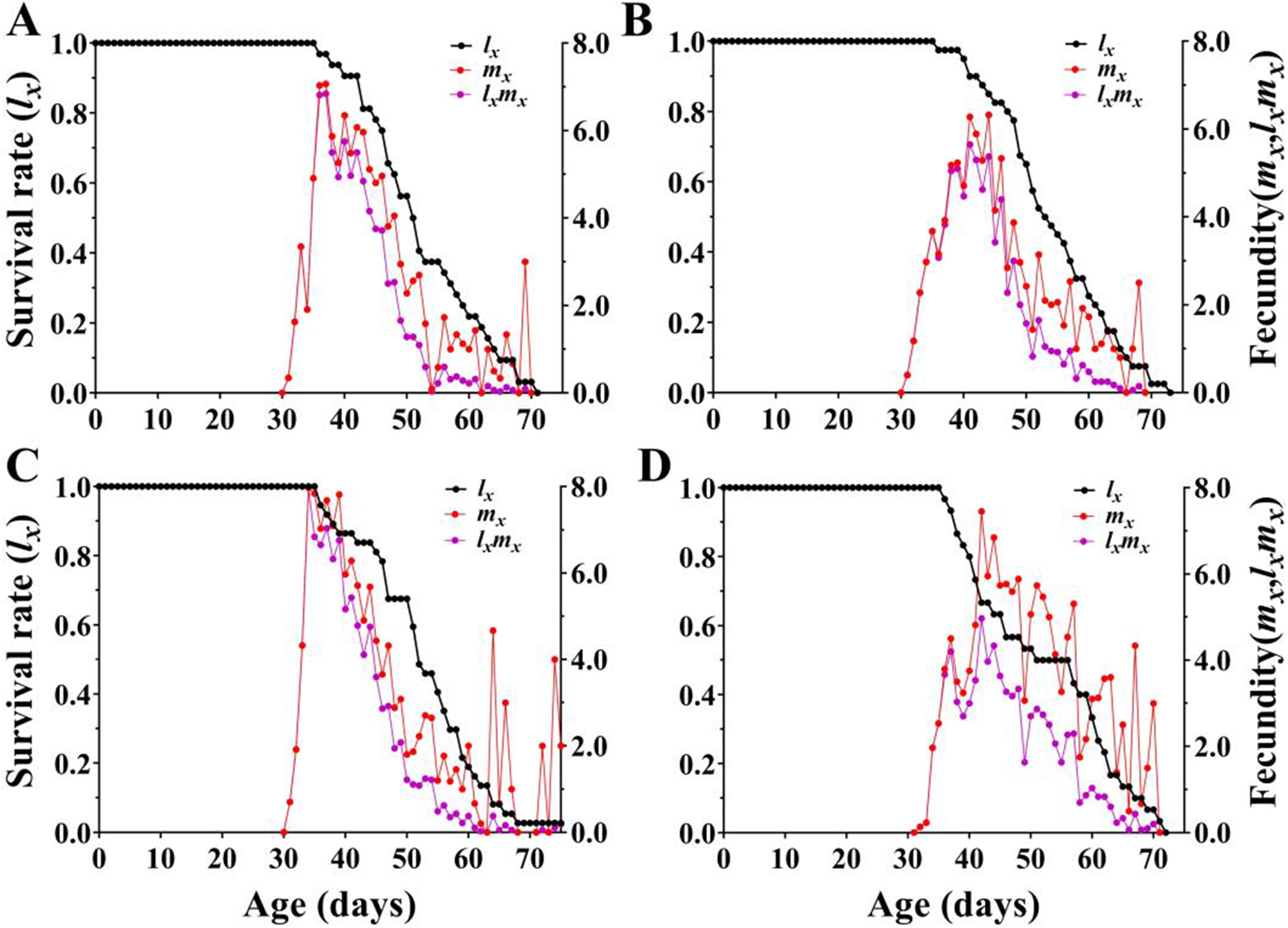
There was no difference in the lx values among the different treatment groups (fig. 3). Multiple peaks were observed in mx and lxmx treated with varying concentrations of GBH. However, there was no significant difference overall.
Survival rate (lx), age-specific fecundity (mx), and age-specific maternity (lxmx) of the adult parental generation (A-F0) of C. pallens treated GBH at different doses. The lx curve represents the probability that a newborn nymph will survive to age x; the mx curve represents the fecundity of individuals at age x. (A) Control; (B) 5 mL/L; (C) 10 mL/L; (D) 20 mL/L.

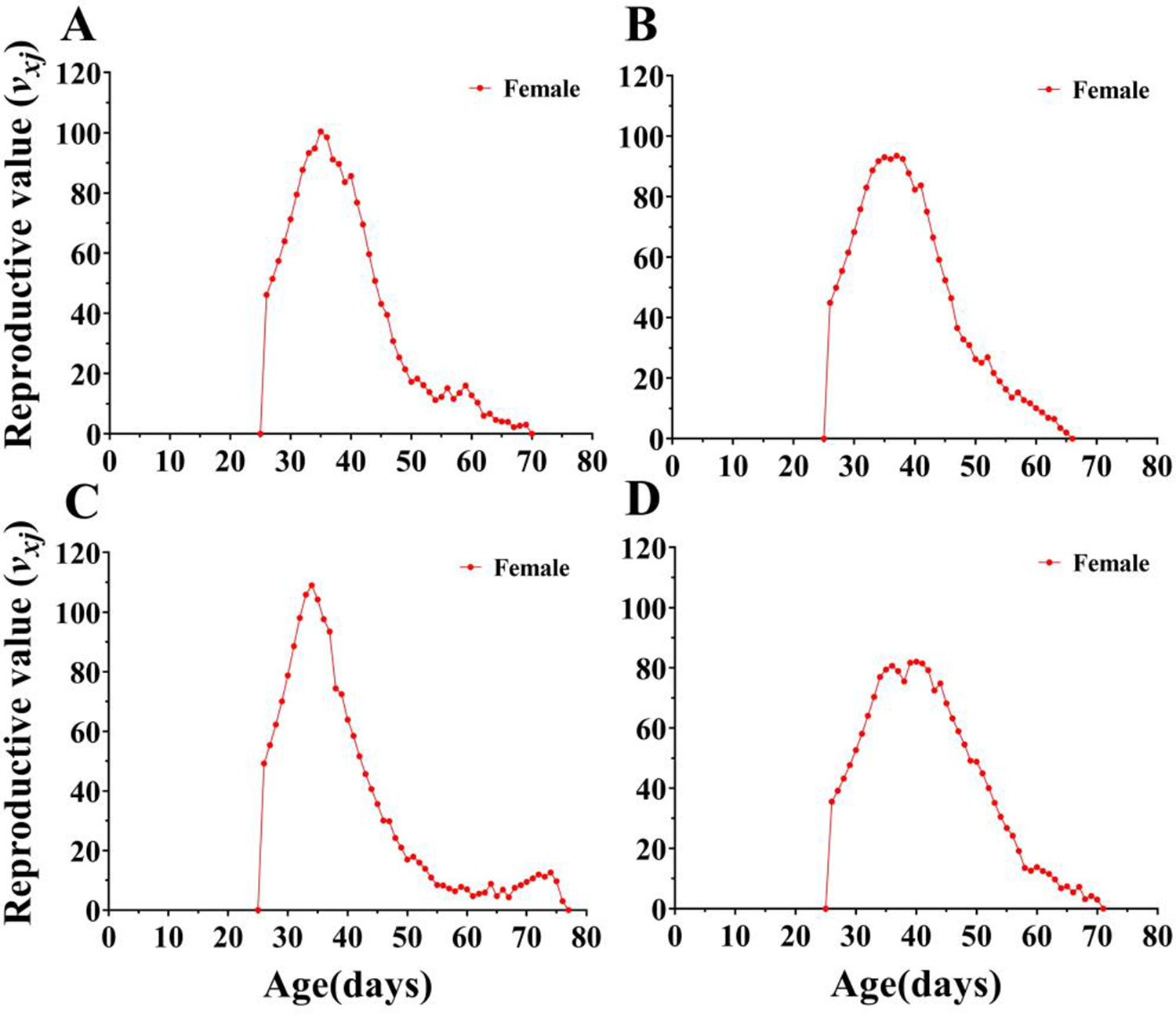
There was no marked variation in the Vxj values among the different treatment groups (fig. 4). In the control group, the peaked value at 100.43 d−1 on day 35. For the low concentration group, it peaked at 93.51 d−1 on day 37, while the medium concentration group reached its peak at 109.04 d−1 on day 34. In the high concentration group, the peak was noted at 82.00 d−1 on day 40.
Age-stage-specific reproductive (vxj) values of the A-F0 generation of C. pallens treated GBH at different doses. (A) Control; (B) 5 mL/L; (C) 10 mL/L; (D) 20 mL/L.

Effect of GBH on A-F1 of C. pallens
The life table parameters for the A-F1 generation of C. pallens are indicated in Table S4. Low and medium concentrations of GBH exhibited no impact (P > 0.05) on the growth and reproductive capability of the A-F1 generation. Compared to the control group, the high concentration of GBH prolonged the period of the second instar (2.92 d, P = 0.0117) while significantly reducing the duration of the first instar (2.79 d, P = 0.0003) and the pupal stage (12.78 d, P = 0.0001). However, it did not significantly affect the duration of the remaining life stages, longevity, or reproductive capacity.
The comparison of different concentrations of GBH on the population parameters of the A-F1 generation of C. pallens was conducted (Table S5). The results indicated that GBH did not exert any significant impact (P > 0.05) on the pre-adult survival rate, R 0, r, λ, and T of the A-F1.
The lx values among the different treatment groups remained consistent (Fig. S3). Within A-F1, several peaks of mx and lxmx were observed across different GBH concentrations, although no significant overall difference was noted. Specifically, the mx in the control group reached its peak at 5.00 on day 52. In the low concentration group, the mx peaked at 6.90 on day 35, while the medium concentration group exhibited a peak at 7.59 on the same day. The high concentration group experienced a peak at 5.50 on day 43. Regarding lxmx, the control group’s peak was at 3.49 on day 36. The low concentration group peaked at 5.78 on day 35, the medium concentration group at 6.57 on day 35, and the high concentration group peaked at 3.72 on day 33.
The peak period and peak value of the Vxj curve reproduction across the different treatment groups were not highly varied upon comparing the Vxj of the A-F1 generation (Fig. S4). In the control group, Vxj reached a peak at 72.83 d−1 on day 33. The low concentration group peaked at 81.40 d−1 on day 33, the medium concentration group also peaked at 72.59 d−1 on the same day, and the high concentration group attained a peak at 81.44 d−1 on day 32.
Effects of GBH on gene expression in L-F0 and A-F0 of C. pallens
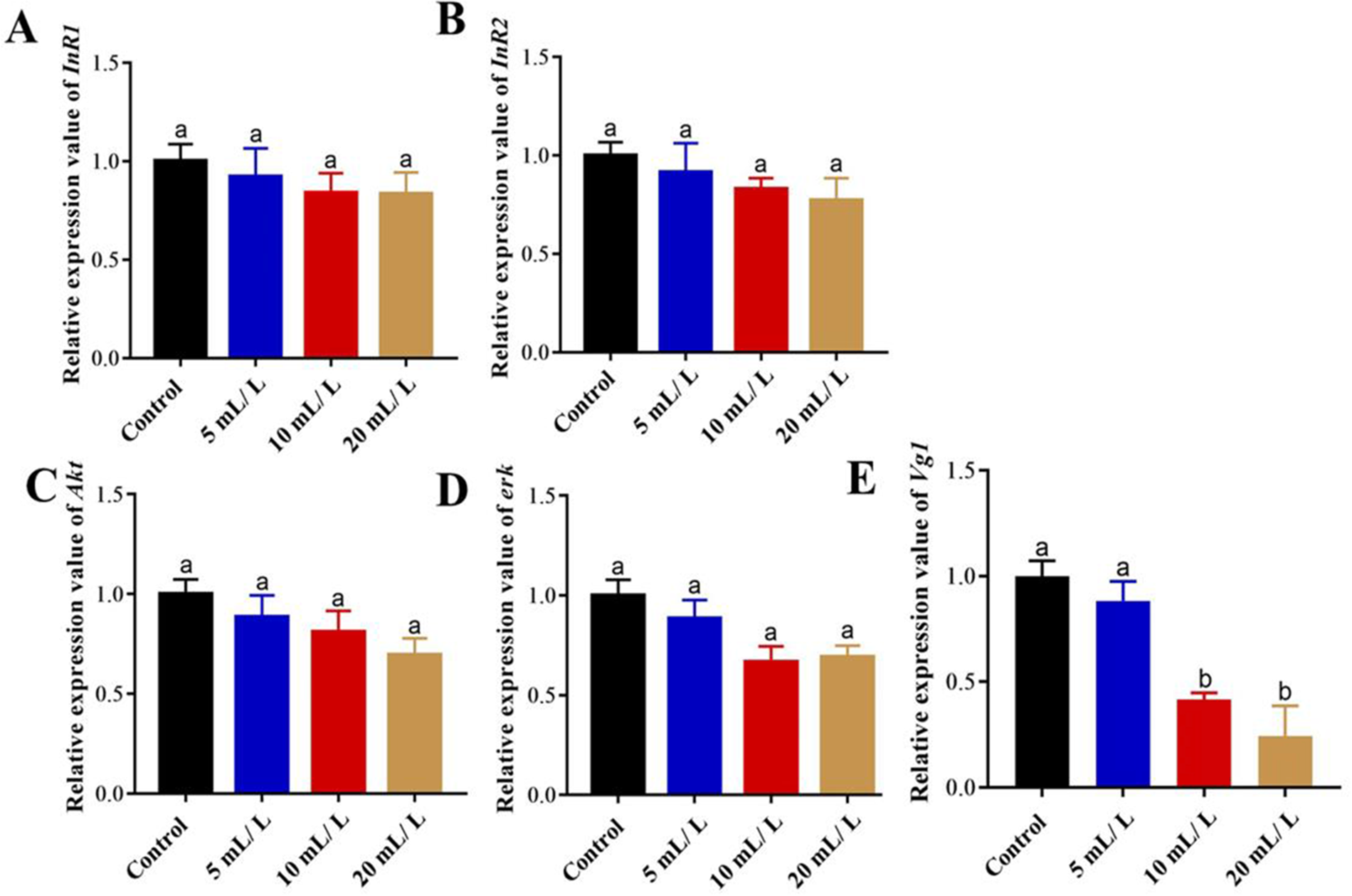
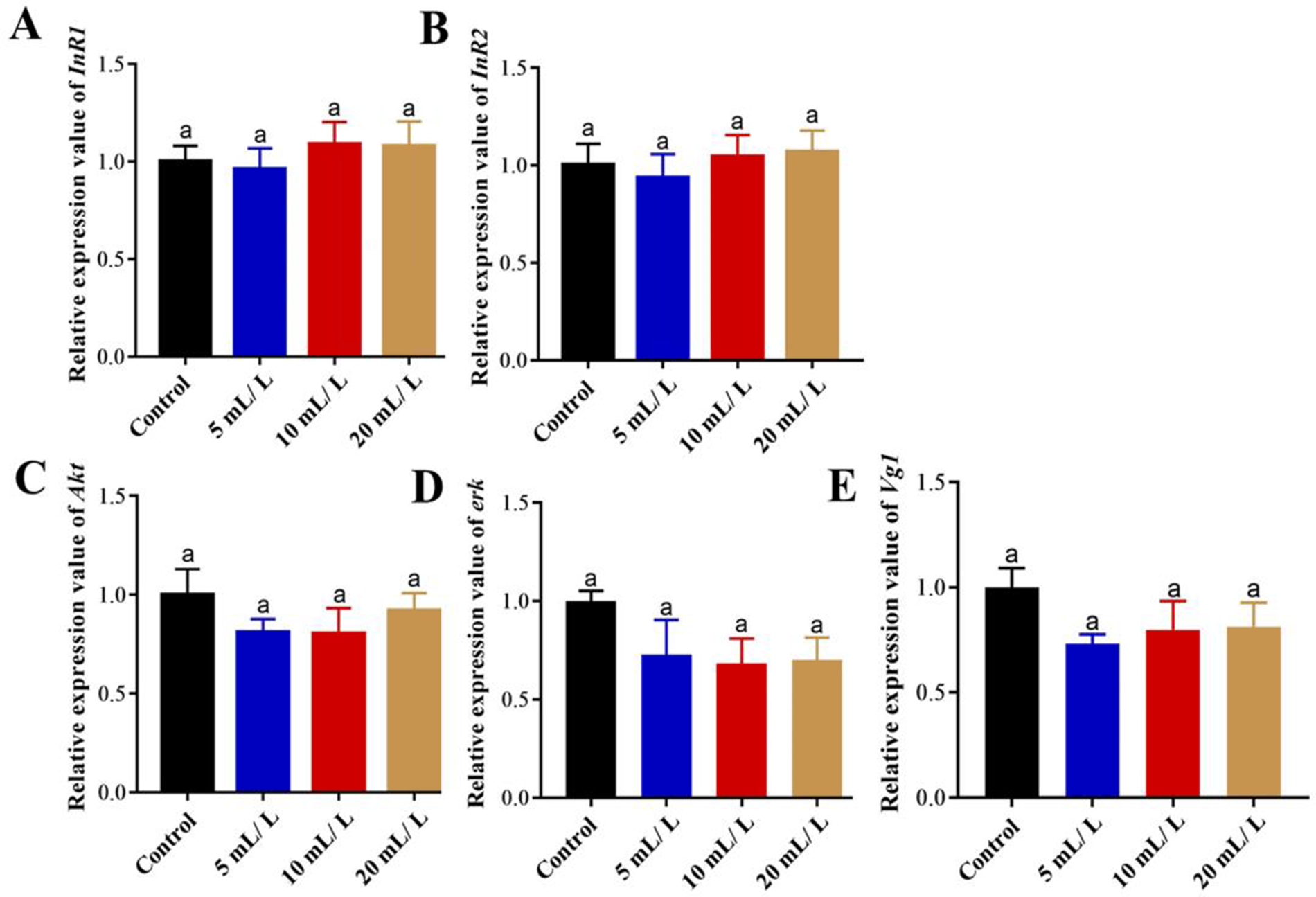
RT-qPCR analysis indicated no significant differences in the transcriptional levels of InR1, InR2, Akt, and erk in L-F0 across various concentrations of GBH (P > 0.05). Similar to the control, low concentration of GBH did not significantly affect the transcriptional level of Vg1 (P > 0.05). However, the Vg1 showed a notable decrease (P < 0.05), specifically by 2.4-fold and 4.1-fold at medium and high concentrations of GBH, respectively, compared to the control group (fig. 5). GBH exhibited no influence on the expression levels of InR1, InR2, Akt, erk, and Vg1 in A-F0 (fig. 6).
The expression levels of genes involved in insulin signalling and Vg1 in L-F0 generations of C. pallens treated GBH at different doses. Results shown are expressed as means ± SE. (A) InR1; (B) InR2; (C) Akt; (D) erk; (E) Vg1.

The expression levels of genes involved in insulin signalling and Vg1 in A-F0 generations of C. pallens treated GBH at different doses. Results shown are expressed as means ± SE. (A) InR1; (B) InR2; (C) Akt; (D) erk; (E): Vg1.

Discussion
While the application glyphosate enhances agronomic efficiency in weed management, it also poses risks of acute or potential toxicity to non-target organisms. Currently, the toxicity risk associated with glyphosate has emerged as a significant focus of research (Ghisi et al., Reference Ghisi, Zuanazzi, Fabrin and Oliveira2020). In this study, we applied GBH concentrations manufacturer-recommended in China, including both the highest and lowest concentrations. Our investigation not only examined the influence of GBH on the F0 generation but also explored its transgenerational effect on the F1 generation of C. pallens. Furthermore, we performed RT-qPCR to assess the effect of GBH on the expression of genes related to the insulin signalling pathway in C. pallens. Pesticides, inducing cascading disruptions, can affect non-target organisms through various mechanisms such as droplet drift, soil adsorption, and environmental residues, ultimately disrupting the balance of the ecosystem and food chains (Damalas and Eleftherohorinos, Reference Damalas and Eleftherohorinos2011). Consequently, rigorous assessment the environmental safety of pesticides on non-target species remains a critical priority.
This study assessed the sublethal effects of three concentrations of GBH sprayed on C. pallens. We documented significant developmental delays in the pupal stage of L-F0 when exposed to medium concentrations, as well as in the third instar and pupal stages when treated with high concentrations. Concurrently, there was a significant reduction in both total longevity and male total longevity. These findings align with previous reports indicating growth and developmental delays in insects exposed to exogenous substances. For instance, glyphosate concentrations ranging from 1.25 to 5.0 mg/L have been shown to delay molting and impact the development of Apis mellifera ligustica Spinola (Hymenoptera: Apidae) (Vázquez et al., Reference Vázquez, Ilina, Pagano, Zavala and Farina2018), potentially disrupting the growth processes of insects. The detoxification mechanisms that insects employ in response to xenobiotics and stresses can consume energy, resulting in insufficient energy for growth and development, thus causing delays (He et al., Reference He, Zhao, Zheng, Desneux and Wu2012; Skouras et al., Reference Skouras, Brokaki, Stathas, Demopoulos, Louloudakis and Margaritopoulos2019). Furthermore, our study revealed that medium and high concentrations of GBH significantly extended APOP and TPOP, while also reducing the oviposition period. Notably, high concentrations of GBH markedly diminished the fecundity of C. pallens. Similarly, exposure to glyphosate has also been shown to reduce the fecundity of C. externa (Schneider et al., Reference Schneider, Sanchez, Pineda, Chi and Ronco2009). However, it is worth noting that while GBH significantly reduced the fecundity of F0 in our study, the fecundity of H. axyridis remained unaffected after feeding on glyphosate concentrations of 5–10 mg/L (Gao et al., Reference Gao, Hu, Zhang, Luo, Zhu, Wang, Zhang, Li, Ji, Niu, Wu and Cui2021). This disparity likely stems from the different predator species selected for these experiments, emphasising the taxon-specific susceptibility patterns.
Variations in population parameters can significantly impact overall population size and demographic characteristics, providing essential insights into the dynamics of insect population dynamics (Chi and Liu, Reference Chi and Liu1985; Underwood, Reference Underwood2007; Zhang et al., Reference Zhang, Zhu, Shi, Liu, Han and Zhao2021). Our study demonstrated that exposure to high concentrations of GBH resulted in notable decreases in the R 0, r, and λ of C. pallens, while also leading to a substantial prolongation of T. Furthermore, medium and high GBH concentrations significantly reduced biparental life table metrics, including mx and Vxj. Previous research indicated that glyphosate significantly decrease R 0 and r in C. externa (Schneider et al., Reference Schneider, Sanchez, Pineda, Chi and Ronco2009). Additionally, our results suggest that GBH extends T, corroborating earlier findings that glyphosate prolongs offspring generation time. Specifically, GBH was found to prolong the average generation time of Zygogramma bicolorata Pallister (Coleoptera: Chrysomelidae) (Hasan and Ansari, Reference Hasan and Ansari2016). Insect developmental stages exhibit strong temporal correlations to the extension of T. However, in contrast to the control group, no treatment-induced alterations were observed in the growth, development, fecundity, population parameters, or demographic parameters of A-F0 following treatment with various GBH concentrations. These results indicate that GBH elicited no significant sublethal effects on adult C. pallens, unlike on the larvae, possibly due to varying responses.
The study aimed to investigate the potential mechanisms underlying reduced fecundity in C. pallens, focusing on reproduction-related genes to assess the risks associated with GBH exposure. Two insulin receptors and two signalling pathways co-ordinately regulate oogenesis and oviposition in C. pallens (Han et al., Reference Han, Zhang, Feng, Liu, Zhang, Chen, Zeng, Wang, Liu, Li, Cui, Li and Mao2020). While GBH exposure did not significantly alter the expression of genes linked to insulin signalling in C. pallens, medium and high concentrations significantly downregulated the expression of Vg1. Intriguingly, at the adult stage, GBH exposure did not significantly change the expression of genes related to insulin signalling or Vg1. Therefore, RNAi-induced knockdown of Vg resulted in decreased fecundity in Rhynchophorus ferrugineus (Coleoptera: Dryophthoridae) (Rasool et al., Reference Rasool, Mehmood, Tufail, Husain, Alwaneen and Aldawood2021) and Vg silencing suppressed ovarian development and fecundity in Bemisia tabaci (Hemiptera: Aleyrodidae) (Huang et al., Reference Huang, Shi, Shi, Zhang, Fang, Zhang, Pan, Zheng, Gao, Zhang, Tan, Liu and Zhou2021). These results demonstrate that the medium and high concentrations of GBH inhibited fecundity in C. pallens larvae, but this effect is not synergistically regulated by two insulin receptors through two signalling pathways. This study suggests that glyphosate may inhibit the reproductive capacity of C. pallens through alternative pathways.
Pesticides may exhibit transgenerational effects on insects (Veronica et al., Reference Veronica, Ivan and Francisco2022). This study evaluated the impact of glyphosate on both the parental and F1 generation of C. pallens. The findings assessed significant alterations in developmental stages when the larvae of the parental generation were exposed to varying concentrations of GBH. Specifically, at higher concentrations, the third instar and female adult stages of L-F1 were significantly extended. Conversely, in A-F1, the first instar and pupal stages were considerably shortened, while the second instar was unexpectedly prolonged. These observations suggest that GBH can influence the growth and development of the F1 generation. Similarly, the herbicide quizalofop-p-ethyl markedly enhanced the survival rates of the second and third generations of the predator Propylaea japonica (Coleoptera: Coccinellidae) (Chang et al., Reference Chang, Xue, Ji, Wang, Zhu, Zhang, Li, Gao, Niu, Gao, Luo and Cui2023). Such variations in the experimental results may be due to differences in the agents and test insects. Based on these findings, it is evident that GBH exerts long-term and heritable effects on numerous non-target organisms.
Organisms undergo a developmental window period where they exhibit enhanced vulnerability to endocrine disruptors, leading to lasting consequences (Castro et al., Reference Castro, Lotfipour and Leslie2023). The second instar of C. pallens appears to be such a sensitive phase, with exposure to GBH resulting in persistent developmental delays. Previous studies have demonstrated that GBH reduces both the activity of aromatase and the expression levels of mRNA in animals (Richard et al., Reference Richard, Moslemi, Sipahutar, Benachour and Seralini2005). Aromatase is an enzyme responsible for catalysing the conversion of androgens to oestrogens, which in turn regulates the expression of Vg (Shen et al., Reference Shen, Lin, Yang, Xing, Zhang, Chen, Han, Liu, Zhang and Xia2015). In our study, we observed a reduction in Vg1 mRNA levels, likely resulting from GBH’s inhibition of aromatase activity, which subsequently hinders oestrogen synthesis and ultimately lowers Vg1 expression. Furthermore, exposure to GBH can adversely affect impact ovarian development and differentiation, ultimately impacting reproductive capacity (Almeida et al., Reference Almeida, Teixeira, Soares, Cunha, Silva, Vieira Filho and Wanderley-Teixeira2017; Ren et al., Reference Ren, Li, Liu, Huang, Wu, Li and Li2018). Consequently, larvae treated with GBH exhibited a decline in reproductive abilities. Moreover, glyphosate is recognised as an endocrine disruptor, and exposure to GBH during pregnancy can alter offspring development (Ingaramo et al., Reference Ingaramo, Alarcón, Muñoz-De-Toro and Luque2020). Our findings corroborate this phenomenon, revealing that the growth and development of the F1 generation were adversely affected when exposed to GBH during the adult stage of the F0 generation.
In a previous study conducted by our laboratory, we evaluated the potential effects of short-term feeding of GBH on C. pallens (Du et al., Reference Du, Ren, Ma, Wang, Song, Hu, Wu, Shan, Ma and Ma2024a). The findings revealed that larvae feeding on GBH influenced growth and development, while having no significant impact on reproduction and the transcription of genes involved in insulin signalling. However, when adults were fed GBH, it altered their development, longevity (F0), and the growth of their offspring (F1 generation). Additionally, there was a temporary suppression of insulin signalling genes in C. pallens. In this current study, we observed significant effects on the growth, reproduction and population parameters of C. pallens when the larvae were exposed to GBH through spraying. Moreover, GBH exposure significantly reduced the transcriptional levels of Vg1 in C. pallens. Although spraying GBH on adults C. pallens had no immediate significant effect, transgenerational impacts were observed. The variations in our findings can be attributed to differences in GBH exposure methods. It is plausible that adults exposed to GBH through feeding on contaminated prey may have been subjected to higher exposure levels compared to those exposed through spraying. In conclusion, further investigation is needed to quantify exposure thresholds associated with different application methods.
In summary, the results show that GBH, at concentrations permitted in agricultural ecosystems, adversely affect the growth, reproduction, and various demographic parameters of C. pallens. Specifically, this study utilised the second instar larvae and newly emerged adults for exposure experiments. The findings reveal that larvae exposed to GBH exhibit a marked decrease in fecundity and alterations in population parameters. In contrast, exposure of adults results solely in changes to longevity, with no significant effects observed on fecundity or population parameters. Nevertheless, exposure to GBH, regardless of the developmental stage, may impact the growth and development of subsequent offspring. The overuse of GBH leads to the emergence of resistant weeds, which may necessitate higher concentrations and dosages, thereby increasing the exposure risks for predators (Cerdeira and Duke, Reference Cerdeira and Duke2006). Hence, when applying GBH in the field, it is imperative to consider its potential harmful effects on predators, given their crucial role in pest control. To minimise predators’ exposure, GBH should be used judiciously, aligning application times with predator occurrence patterns and avoiding frequent applications.
Conclusion
The findings of this study indicate that the concentration range of GBH utilised in agricultural fields poses a threat to C. pallens, adversely affecting its biological traits, including development, reproductive capacity, and population parameters. Furthermore, it is evident that the down-regulation of Vg1 has contributed to a reduction in C. pallens reproduction. In conclusion, these results underscore the impact of glyphosate on non-target insects and emphasise the necessity for agricultural practices to fully account for their ecological effects.
Supplementary material
The supplementary material for this article can be found at https://doi.org/10.1017/S0007485325100175.
Acknowledgements
This research was supported by the Biological Breeding-Major Projects (2023ZD04062), the Agricultural Science and Technology Innovation Program (ASTIP) (CAAS-ZDRW202412), Technology Innovation Program of Chinese Academy of Agricultural Sciences, and earmarked fund for China Agriculture Research System (CARS-15-21).
Author contributions
Qiankun Du: Writing – review & editing, Writing – original draft, Conceptualization, Formal analysis. Dan Wang: Validation, Formal analysis, Data curation. Xianpeng Song: Data curation, Formal analysis, Investigation, Validation. Hongyan Hu: Conceptualization, Methodology. Changcai Wu: Methodology, Writing – original draft. Yongpan Shan: Investigation, Data curation. Yajie Ma: Investigation, Data curation. Xiangliang Ren: Conceptualization, Resources, Writing – review & editing, Writing – original draft, Supervision. Yan Ma: Resources, Writing – original draft, Writing – review & editing, Funding acquisition, Visualization.
Competing interest
The authors declare that they have no known competing financial interests or personal relationships that could have appeared to influence the work reported in this paper.