Indonesia accounted for 199 of the 850 reported human cases of highly pathogenic avian influenza (HPAI) A(H5N1) occurring globally between November 2003 and April 2016. 1 Cumulative mortality from the virus is substantially higher in Indonesia (83.9%) compared with the global case fatality proportion (53.1%). 1 Signs and symptoms of HPAI H5N1 virus infection are often nonspecific, initially appearing as an influenza-like illness or pneumonia.Reference Arabi, Gomersall, Ahmed, Boynton and Memish 2 Fever (temperature ≥38 ° C) and cough are observed in most patients, and they may be accompanied by difficulty breathing. Risk factors for mortality associated with HPAI H5N1 virus infection are late initiation or no antiviral treatment, delayed presentation to health care, and delayed clinical suspicion of HPAI H5N1 virus infection.Reference Kandun, Tresnaningsih and Purba 3 - Reference Adisasmito, Aisyah and Aditama 5 Early antiviral therapy (within 2 days of onset of signs and symptoms) has been shown to be the most effective treatment.Reference Adisasmito, Chan and Lee 4 , Reference Chan, Lee and Zaman 6
Ill persons who meet the case definition for suspected HPAI H5N1 in Indonesia are routed through a hospital referral system for intensive care and case management. The suspect case definition for HPAI H5N1 includes patients presenting with fever (≥38°C), cough, sore throat, and shortness of breath, as well as recent exposure to poultry or suspected human cases within the previous 7 days. 7 Currently, there are 100 HPAI H5N1 referral hospitals throughout the country that are supplied with antivirals (oseltamivir) for treatment and management of patients with suspected HPAI H5N1 transferred from other facilities.Reference Adisamito, Suwandono and Aisyah 8 Oseltamivir is administered in strongly suspected or confirmed cases of HPAI H5N1 according to national clinical guidelines.Reference Schünemann, Hill and Kakad 9
Interventions to reduce HPAI H5N1 virus transmission between poultry and humans have sought to encourage the adoption of protective behaviors and biosecurity standards among Indonesian poultry producers and consumers. 10 Simultaneous efforts have increased individuals’ recognition of potential HPAI H5N1 signs and symptoms and encouraged people to seek health care promptly. Raising public awareness of the need for prompt medical treatment in the event of potential HPAI H5N1 virus infection necessitates health care provider readiness and health system capacity. Additionally, it is important to determine health care providers’ ability to recognize indicators of HPAI H5N1 virus infection, particularly because people may seek treatment for influenza-like illness without being aware of the possibility of HPAI H5N1 virus infection. Attempts to reduce the case fatality proportion of HPAI H5N1 patients in Indonesia must consider the role of HPAI H5N1–related knowledge and practices among clinicians, as well as any barriers they perceive in providing prompt and effective treatment for symptomatic patients.
Poultry contact is common among patients seeking treatment for respiratory disease in Jakarta. Between October 2011 and September 2012, 34% of 3278 patients with influenza-like illness and 21% of 1787 patients with severe acute respiratory infection reported poultry contact in the previous 7 days.Reference Storms, Kusriastuti and Misriyah 11 A smaller proportion (12% of patients with influenza-like illness and 8% of patients with severe acute respiratory infection) reported exposures to poultry that met the suspected case definition for HPAI H5N1 in Indonesia (touching sick or dead poultry, touching poultry products, killing/slaughtering poultry, or contact with chicken manure).Reference Storms, Kusriastuti and Misriyah 11
A previous study on health care–seeking behaviors for respiratory illness among households in the Java districts of East Jakarta and Bogor found that nearly two-thirds (61%) of households with mild respiratory symptoms self-treat using home care and/or obtain medication from pharmacies rather than seeking care at a health care facility. Additionally, households that experienced severe respiratory illness were evenly divided between those opting for self-care and those seeking treatment at a health care facility (47% for each), and hospitalizations for these symptoms were rare.Reference Praptiningsih, Lafond and Wahyuningrum 12 It is unclear how perceptions of health care services and HPAI H5N1 risk informed decisions to self-treat or seek care and to what extent these perceptions are accurate.
While clinician knowledge and practices for seasonal influenza, the 2009 pandemic H1N1, and HPAI H5N1 in Indonesia have been previously reported,Reference Mangiri, Iuliano and Wahyuningrum 13 the literature is lacking information on clinicians’ own assessments of their HPAI H5N1 knowledge and treatment capacity, whether clinical capacity varies by location in Indonesia, and whether capacity is sufficient in facilities where patients are most likely to seek care for potential HPAI H5N1 illness. The purpose of this study is therefore to investigate perspectives about the health care system among household respondents who experienced signs/symptoms of potential HPAI H5N1 virus infection. The study will then describe clinicians’ knowledge, practices, and clinical capacity related to HPAI H5N1 in the various types of health care facilities used by the public.
Methods
Health Care Utilization Survey
Data on the public’s use of health care facilities were obtained from a health care utilization survey (HUS) (N=2520), a population-based face-to-face survey of households in urban East Jakarta District (DKI Jakarta) and rural Bogor District in West Java (conducted February 8 to March 1, 2012). The West Java region was selected because it is an area with intensive large-scale poultry production, household rearing of poultry, and a relatively high prevalence of human cases of HPAI H5N1. 10 Subdistricts in East Jakarta were identified using a purposive sampling design, and comparison areas in Bogor were sampled using probability proportionate to size. Population-normalized weights based on the sample design used in each district were applied to statistical analyses. Surveys were administered to the adult who was most knowledgeable about the health conditions of household members using face-to-face interviews conducted in the Bahasa Indonesia language.
The survey assessed health care facilities used by households if members had ever experienced nonspecific (sudden fever/cough) or acute (sudden fever/cough plus difficulty breathing) symptoms of influenza-like illness. Respondents who had ever experienced signs/symptoms in their household reported use of health care facilities (outpatient community health centers known as puskesmas, government hospital, private hospital, or private outpatient clinic), purchasing treatments at a pharmacy, visiting traditional healers, self-care (medicine or fluids at home), or doing nothing. Respondents who sought treatment at a health care facility indicated their reasons for choosing a given facility (answering yes or no to each provided reason).
All respondents, regardless of illness history, were asked questions about perceptions of health care services and intentions to seek treatment in hypothetical scenarios where they developed HPAI H5N1 signs/symptoms. Confidence in their health care provider’s ability to treat HPAI H5N1 (“If I have avian flu, I am confident that my health care provider will give me the proper treatment”) and belief that visiting puskesmas facilities can prevent HPAI H5N1 mortality (“People infected with avian flu can recover if brought to the puskesmas quickly”) were measured on a 6-point Likert-type scale (0=completely disagree, 5=completely agree). Respondents reported their intention to seek treatment on a 6-point Likert-type scale (0=not at all likely, 5=very likely) if they were to develop: fever; fever and cough; fever, sore throat, and difficulty breathing; fever, sore throat, and difficulty breathing after having contact with birds in the previous 2 weeks; fever, sore throat, and difficulty breathing after having been to a wet market in the previous 2 weeks. (“Wet markets” are commonly used live-animal markets that slaughter and sell poultry, fish, mammals, and reptiles directly to consumers.) Respondents were asked whether a health care provider had ever wanted to test them for avian flu and whether they had ever requested testing for it (yes/no). All respondents were asked if they had ever heard of oseltamivir; persons responding “yes” were asked whether they believed it was effective in treating avian flu (yes/no/don’t know).
Human subjects review for the HUS study was conducted and approved by the Ethics Committee of the Faculty of Public Health, University of Indonesia, with additional approval by the Centers for Disease Control and Prevention Institutional Review Board, Atlanta, Georgia.
Clinician Knowledge, Attitudes, and Practices Survey
This study used data from a cross-sectional survey, conducted between March 2012 and June 2012, of licensed physicians in health care facilities (outpatient community health centers known as puskesmas, government hospitals, private hospitals, and private outpatient clinics). Participants were selected using purposive sampling to identify general practitioners and subspecialists from a list of registered physicians from the District Health Offices in Jakarta and Bogor. Face-to-face structured interviews were conducted in the Bahasa Indonesia language by study personnel.
The survey instrument measured knowledge of: the World Health Organization suspect HPAI H5N1 case definition for Indonesia; influenza clinical management practices such as antiviral treatment and referral procedures; risk factors for illness and death from HPAI H5N1 virus infection; and self-reported likelihood of testing for HPAI H5N1 virus based on signs/symptoms and history of recent poultry exposures. To classify as a suspected HPAI H5N1 case as defined by the Indonesian Ministry of Health (slightly adapted from the World Health Organization’s standard definition), a patient must present with: a temperature of 38°Celsius or higher and at least one of the following signs and symptoms: cough, sore throat, shortness of breath, or rhinorrhea. Additionally, patients must have been exposed through contact within 1 m with a person with a suspected or confirmed case of HPAI H5N1 within 7 days before symptom onset, close contact with poultry within 7 days of symptoms, or close contact with any other animal confirmed to be infected with H5N1 virus; or the patient must have handled human or animal laboratory specimens of the HPAI H5N1 virus; been diagnosed with leukopenia; had x-ray confirmed rapidly progressing pneumonia; possessed an H5 antibody titer for an HI test using horse erythrocytes or enzyme-linked immunosorbent assay for influenza A virus (unsubtyped). 14 , Reference Kusriastuti 15 Physicians who reported making a clinical diagnosis of suspected HPAI H5N1 in outpatients were asked how they managed the patient (prescribed antiviral treatment; referred to a designated referral hospital; or contacted local district health office, provincial health office, or Ministry of Health); response options were not mutually exclusive. If the patient was not prescribed antiviral treatment, the physicians were asked to identify reasons for not doing so. Physicians were asked if they had ever ordered HPAI H5N1 virus testing on a patient with a suspected case or collected clinical specimens for testing. If not, they were asked to provide the reasons.
All clinicians were asked if they had heard of the suspect HPAI H5N1 case definition and whether they thought a patient with HPAI H5N1 virus infection could die of the illness (yes/no). Physicians were asked to recall (unaided) the clinical features of HPAI H5N1 virus infection in outpatients who present with respiratory disease. Physicians mentioned (unaided) which questions about exposure they would ask patients who presented with fever, cough, and shortness of breath. They indicated their intention to test for HPAI H5N1 virus if patients reported the various types of poultry exposure within the previous 7 days, using a Likert-type scale ranging from 1 (very unlikely) to 4 (very likely). Clinicians’ knowledge of the recommended antiviral treatment for HPAI H5N1 virus infection was assessed using unaided recall (correct answers were oseltamivir and zanamivir). Clinicians indicated whether they thought their own knowledge was adequate to diagnose and treat HPAI H5N1, as well as whether they had adequate equipment and resources to diagnose and treat HPAI H5N1 (yes/no).
As a public health survey, the study was determined to be non-research, not requiring institutional review board approval by the US Centers for Disease Control and Prevention.
Results
Reasons for Seeking or Declining Treatment for Symptomatic Household Members
The HUS respondents were evenly divided between East Jakarta and Bogor districts (n=1,260 in each district, for a total sample of 2520). Fever/cough was more commonly experienced (n=400) than fever/cough/difficulty breathing (n=70). As reported in a previous study, health care facilities were not heavily used for nonspecific symptoms, and slightly less than two-thirds (61%) of households with sick individuals chose to treat themselves at home or visit a pharmacy for over-the-counter remedies.Reference Praptiningsih, Lafond and Wahyuningrum 12 Preference for traditional healers (dukun) had a very low prevalence in this population; less than 6% expressed a preference for this source in general and even fewer cited traditional treatment from dukun as appropriate for treating fever/cough (3.4%) or fever/cough/difficulty breathing (<1.0%) in family members.
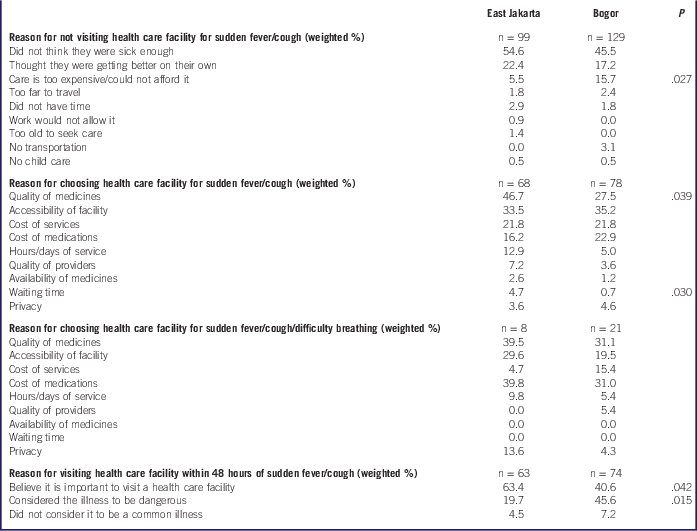
Low concern about symptoms was the primary reason respondents with fever/cough declined to visit a health care facility. Approximately half of households with sudden fever/cough who did not visit a health care facility did not think they were sick enough (55% in East Jakarta, 46% in Bogor), or thought they were getting better on their own (22% in East Jakarta, 17% in Bogor). A significantly greater proportion of respondents in Bogor (16%) did not visit a health care facility for sudden fever/cough because they could not afford it compared with those in East Jakarta (6%) (P=.027). Travel distance to facility, lack of transportation, lack of time, or inability to leave work to seek care were only rarely cited as barriers to seeking treatment for these signs/symptoms (Table 1).
Reasons for Health Care Seeking and Facility Selection Among Households With Potential Symptoms of Highly Pathogenic Avian Influenza (HPAI H5N1) (Health care Utilization Survey, N=2250)

Among those who did seek treatment, the reasons for choosing a particular health care facility varied depending on illness severity and urbanicity (Table 1). Perceived quality of medicines was an important determinant of choice in treatment facility regardless of illness severity for respondents in East Jakarta; nearly half (47%) of respondents with fever/cough cited this as a driving factor in their choice of health care facility, and a slightly lower proportion of those with fever/cough/difficulty breathing (40%) cited this as a reason. Significantly fewer respondents in Bogor identified quality of medicines as a reason for choosing a health care facility for fever/cough (28%) compared with those in East Jakarta (P=.039), though the proportions were more similar for respondents who experienced fever/cough/difficulty breathing in Bogor (31%) compared with East Jakarta. Access was the second most frequently reported driver of choice of facility for households with fever/cough (34% in East Jakarta, 35% in Bogor), but fewer households with fever/cough/difficulty breathing cited this as a reason for facility choice (30% in East Jakarta, 20% in Bogor). Instead, for households with the acute symptoms of fever/cough/difficulty breathing, cost of medications and perceived quality of medicine were cited equally as the second most important reasons for choosing a facility (nearly 40% in East Jakarta, 31% in Bogor). Cost of services was cited as the third most common reason for choice of facilities in households that sought treatment for fever/cough (22% in both districts), followed by cost of medications (16% in East Jakarta, 23% in Bogor). Whether medicines were available was not cited as a consideration in either district.
Household Perceptions of Clinical Capacity
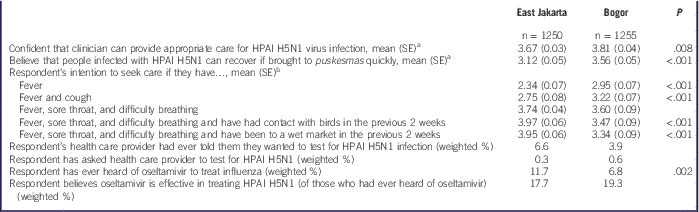
Among all household respondents (regardless of history of symptoms) (N=2250), there was a relatively high degree of confidence in clinicians’ ability to diagnose and treat HPAI H5N1 if necessary, though respondents from Bogor expressed significantly higher confidence (mean=3.81, standard error [SE]=0.04) compared with those in East Jakarta (mean=3.67, SE=0.03) (Table 2). Though belief was strong in both districts that a person infected with HPAI H5N1 could recover if brought to a puskesmas quickly, Bogor respondents expressed significantly higher agreement with this statement (mean=3.56, SE=0.05) compared with those in East Jakarta (mean=3.12, SE=0.05).
Household Perceptions of Clinical Case Management of Highly Pathogenic Avian Influenza (HPAI H5N1) (Health care Utilization Survey, N=2250)

Abbreviation: SE, standard error.
a 0=completely disagree, 5=completely agree.
b 0=not at all likely, 5=very likely.
Among all household respondents (regardless of previous experience with symptoms), those in Bogor reported that they would seek treatment if they had a fever (mean=2.95, SE=0.07) to a greater extent than those to East Jakarta (mean=2.34, SE=0.07) (P<.001). These measures of intention to seek treatment increased progressively according to whether they have a fever and cough (East Jakarta mean=2.75, SE=0.08; Bogor mean=3.22, SE=0.07) (P<.001) or fever, sore throat, and difficulty breathing (East Jakarta mean=3.74, SE=0.04; Bogor mean=3.60, SE=0.09). Respondents in Bogor had lower self-reported likelihood of seeking treatment when fever, sore throat, and difficulty breathing arose along with contact with birds within the previous 2 weeks (mean=3.47, SE=0.09), significantly less so than East Jakarta (mean=3.97, SE=0.06) (p<.001). Similarly, Bogor respondents had even lower self-reported likelihood of seeking treatment for these symptoms following a visit to a wet market within the previous 2 weeks (mean=3.34, SE=0.09), while self-reported likelihood in East Jakarta remained significantly higher (mean=3.95, SE=0.06) (P<.001).
Household respondents rarely recalled health care providers ever wanting to test for HPAI H5N1 virus (East Jakarta, 7%; Bogor, 4%), and the proportion of respondents who had asked for an HPAI H5N1 virus test was nearly zero (Table 2). Awareness of the existence of oseltamivir treatment for influenza was low among households in East Jakarta (12% had ever heard of it) and Bogor (7%) (P<.002).
Clinician Knowledge of HPAI H5N1 Signs, Symptoms, and Treatment Strategies
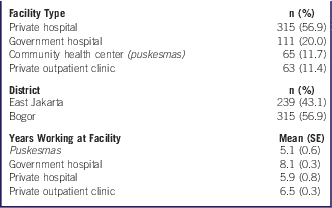
A total of 554 clinicians completed survey interviews. As reported elsewhere, the majority were general practitioners (88.3%), and the remainder were distributed across subspecialties, including obstetrics/gynecology, pediatrics, and internal medicine.Reference Praptiningsih, Lafond and Wahyuningrum 12 Over half of the sample worked at private hospitals (57%). Those working in government hospitals made up the second largest group (20%), and there were smaller numbers from puskesmas (12%) and private outpatient clinics (11%). (Table 3).
Characteristics of Clinician Participants (N=554)

Abbreviation: SE, standard error.
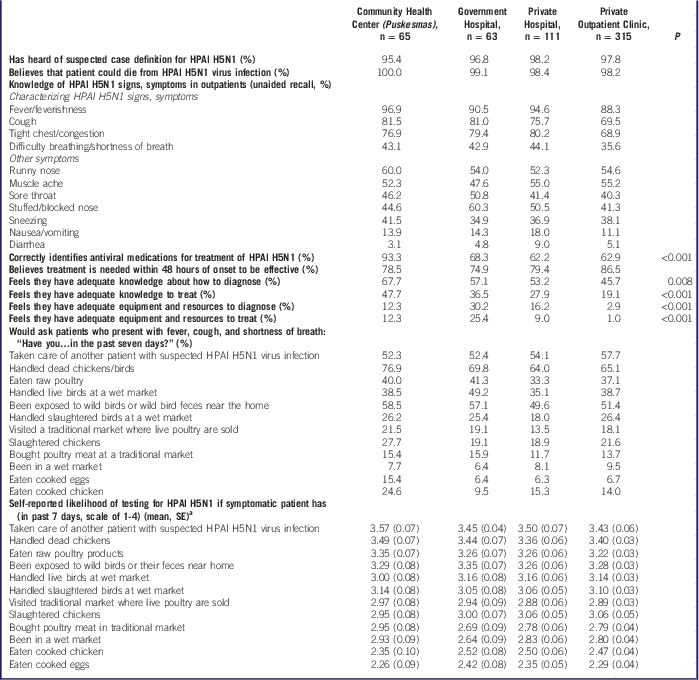
Nearly all physicians claimed that they were aware of the suspect case definition for HPAI H5N1, ranging from 95% in puskesmas to 98% in private hospitals. Physicians almost universally recognized the high risk of mortality from HPAI H5N1 virus infection, and 99% of clinicians across all facilities believed that a patient with HPAI H5N1 virus infection could die of the illness. Fewer physicians in private outpatient clinics correctly recalled key signs/symptoms compared with physicians practicing in government facilities (Table 4). Fever was the most prominently identified sign or symptom for HPAI H5N1 (recalled by 91% of clinicians across all facilities). The majority of respondents recognized tight chest and congestion as a symptom (73% across all facilities), but only slightly more than one-third (39%) mentioned difficulty breathing/shortness of breath.
Knowledge of HPAI H5N1 Signs and Symptoms, Likelihood of Testing According to Potential Highly Pathogenic Avian Influenza (HPAI H5N1) Exposures, and Perceived Adequacy of Diagnostic and Treatment Capacity Among all Clinicians (n=554), by Facility Type

Abbreviation: SE, standard error.
a 1=very unlikely, 4=very likely.
Nearly all (>90%) of the physicians in puskesmas facilities were able to correctly identify antiviral medications (oseltamivir or zanamivir) recommended for treatment of HPAI H5N1. In contrast, fewer physicians in other facilities were able to recall these antiviral medications; 68% of physicians in government hospitals, 62% in private hospitals, and 63% in private outpatient clinics had knowledge of the recommended use of these antivirals for treatment of HPAI H5N1 patients (P<.001).
For each facility type, some differences in knowledge of symptoms existed between East Jakarta and Bogor (data not shown in tables). Bogor physicians reported difficulty breathing/shortness of breath as a symptom more than those in East Jakarta; these differences were significant in puskesmas (63% of 30 Bogor physicians compared with 26% of 35 physicians in East Jakarta; P=.002) and private hospitals (59% of 54 Bogor physicians compared with 30% of 57 East Jakarta physicians; P=0.002). There were no significant differences between the two districts in identifying fever, cough, or tight chest/congestion.
When asked what questions about exposures over the previous 7 days clinicians would ask when encountering a patient with fever, cough, and shortness of breath, slightly more than two-thirds of physicians would ask if the patient had handled dead chickens or wild birds (ranging from 65% in private outpatient clinics to 77% in puskesmas), whether the patient had cared for another patient with suspected HPAI H5N1 virus infection (ranging from 52% in puskesmas to 58% in private outpatient clinics), or whether the patient had been exposed to wild birds or wild bird feces near the home (ranging from 51% in private clinics to 59% in puskesmas). Exposures such as handling live or slaughtered birds at a wet market, eating raw poultry, visiting traditional live bird markets, or slaughtering poultry were mentioned less frequently (Table 4). Simply going to a wet market within the previous 7 days was rarely mentioned as a question physicians would ask (<10% in all facilities); all other questions about visiting markets that also included information about handling of poultry or poultry meat were asked only slightly more frequently (≤25% or less of respondents in each facility, per question) (Table 4).
Case Management of Suspected HPAI H5N1 by Clinicians
All clinicians (N=554) reported their intentions to test for HPAI H5N1 virus if they learned that a patient had specific exposures during the previous 7 days (Table 4). In each facility, physicians reported the highest intention to test after learning that a patient had been a caregiver to another patient with suspected HPAI H5N1; the average score across facilities was 3.47 (SE=0.03) on a 4-point scale. Appropriately, physicians were least concerned about testing for ingestion of cooked chicken or eggs. Wet markets are considered a source of exposure since HPAI H5N1 virus is prevalent among birds and poultry and feces with HPAI H5N1 virus is a source of contamination, yet physicians expressed lower intentions to test for HPAI H5N1 virus in symptomatic patients who reported a recent visit to a wet market (mean across all facilities=2.81, SE=0.03).
Physicians in Bogor puskesmas had lower intentions to test patients who had recently been exposed to poultry compared with their counterparts in Jakarta puskesmas (data not shown in tables). These differences were significant when patients had been in a wet market (East Jakarta mean=3.22, SE=0.09; Bogor mean=2.76, SE=0.15; P=.041); handled live birds in a wet market (East Jakarta mean=3.22, SE=0.09; Bogor mean=2.73, SE=0.14; P=.001), handled slaughtered birds in a wet market (East Jakarta mean=3.34, SE=0.11; Bogor mean=2.90, SE=0.12; P=.004), visited a traditional market where live poultry are sold (East Jakarta mean=3.17, SE=0.10; Bogor mean=2.73, SE=0.13; P=.005), bought poultry meat at a traditional market (East Jakarta mean=3.14, SE=0.10; Bogor mean=2.73, SE=0.12; P=.005), and slaughtered chickens (East Jakarta mean=3.12, SE=0.09; Bogor mean=2.77, SE=0.11; P=.009).
Clinician Perceptions of Diagnostic and Treatment Capacity
Clinicians were more confident in their knowledge about recognizing and treating patients with HPAI H5N1 virus infection than in their facilities’ diagnostic and treatment resources (Table 4). The highest proportion of physicians reporting that they thought their knowledge of diagnosis and treatment approaches was adequate were among those working in puskesmas (68% reported knowledge of diagnosis, P=.008; 48% for knowledge of treatment, P<.001). Physicians expressing the least confidence in their knowledge worked in private outpatient clinics (46% thought they had knowledge of how to diagnose; 19% thought they had knowledge of treatment approaches).
Physicians were less confident in the diagnostic and treatment resources in their facilities. The largest proportion of physicians who believed they had adequate resources to diagnose and treat HPAI H5N1 was among those working in government hospitals, but this proportion was still relatively low (30% thought they had adequate diagnostic equipment; 25% thought they had adequate treatment resources). At least three-quarters of physicians in each facility type believed treatment should be administered within 48 hours in order to be effective, and this belief was most prevalent among clinicians working in private outpatient clinics (87%) (Table 4).
Too few clinicians claimed to have encountered suspected HPAI H5N1 cases (n=21) to compare the frequency of sending patients to referral hospitals or prescribing antivirals among facilities. Similarly, too few health care providers ordered HPAI H5N1 tests (n=6) or collected samples (n=2) to be able to draw inferences about the reasons for doing so; this may be an artifact of the relatively low proportion of clinicians surveyed in facilities with the testing equipment.
Discussion
This study found that household respondents were confident in clinician capabilities to treat HPAI H5N1, believed in the likelihood of recovery if treatment was obtained quickly, and cited high-quality, affordable medication and access as priorities in choosing health care facilities. Although on average, household members reported that they would hypothetically be somewhat likely to seek treatment for fever or fever/cough, the majority of those who had experienced nonspecific symptoms (fever and cough) declined to seek treatment, stating primarily that they did not believe their symptoms warranted treatment and would get better on their own. Respondents in Bogor expressed significantly lower intentions to seek treatment compared with those in East Jakarta if they were to have acute symptoms along with recent exposure to poultry. Respondents expressed low awareness of the availability of antiviral therapy for HPAI H5N1, and very few had ever been tested for the virus. Clinicians were knowledgeable about HPAI H5N1 virus infection but felt limited in their ability to test or treat for it across facilities; potential gaps in service delivery were identified in some facility types.
Households
Household caregivers attempted to self-treat signs/symptoms that are characteristic of HPAI H5N1 virus infection more frequently than they reported seeking treatment at a health care facility. It does not appear that the prevalence of self-treatment is due to a public perception of clinical shortcomings in the two districts sampled. The data do not demonstrate that an anticipated lack of HPAI H5N1 virus testing or treatment directly informs patients’ lack of treatment seeking. Patients and caregivers may believe home care is just as effective unless they are severely ill. This belief is accurate and advised under most circumstances, except that routine contact with poultry is a continuous source of potential exposure to HPAI H5N1 virus in Indonesia; therefore, vigilance in monitoring signs and symptoms is needed.
Intentions to seek treatment for severe symptoms (fever, sore throat, and difficulty breathing) that arise after recent exposure to poultry or wet markets were lower in the rural area of Bogor compared with urban East Jakarta, and compared with Bogor respondents’ intentions to seek care for less acute symptoms or similarly severe symptoms without recent exposure to poultry. This may suggest that regular contact with poultry lowers perceived risk of HPAI H5N1 and, therefore, intentions to seek treatment for potential signs/symptoms following exposure, and thus warrants further study. This pattern is echoed among physicians in rural Bogor, who reported lower intentions to test for HPAI H5N1 virus infection upon learning that patients had recent contact with poultry compared with physicians in more urban East Jakarta.
This survey was conducted before the 2014 launch of universal health care in Indonesia. 16 Visits to community clinics (puskesmas) and medications were free for those qualifying as low income, and private insurance or government schemes (ie, Jamkesmas) provided coverage for visits and medications in other facilities. Before the introduction of universal health care, a substantial segment of the population (eg, the self-employed or those working in the informal sector, including agriculture) was not covered by any insurance because their income was too high to qualify for government schemes, but they were unable to afford their own insurance.Reference Harimurti, Pambudi, Pigazzini and Tandon 17 Cost of services and medications were mentioned by some respondents as a consideration in facility selection or self-treatment, but universal health care will further mitigate these barriers. Data on the insured status of respondents in this sample are not available.
Clinicians
Clinicians did not demonstrate considerable gaps in knowledge of HPAI H5N1 severity or signs/symptoms of HPAI H5N1, but they expressed only a moderate degree of knowledge about which questions to ask to assess exposures related to HPAI H5N1 virus transmission. Knowledge of treatment (specifically with antiviral medications) was not high in facilities besides puskesmas, and purported access to testing and treatment was low. Private outpatient clinics seem particularly underresourced in terms of access to antivirals and testing, and clinicians in these facilities had the lowest levels of knowledge about HPAI H5N1 signs/symptoms of any facility. Along with puskesmas, private outpatient clinics are among the most heavily used health care facilities by households experiencing fever, cough, and difficulty breathing.Reference Praptiningsih, Lafond and Wahyuningrum 12 Therefore, private outpatient clinics may represent a gap in service delivery. These frequently used facilities are the least equipped to recognize and treat patients with HPAI H5N1. Physicians in private outpatient clinics demonstrated the lowest recall of potential HPAI H5N1 signs/symptoms compared with doctors in other facilities, and any delay in disease recognition may contribute to high mortality.Reference Kandun, Tresnaningsih and Purba 3 , Reference Adisasmito, Aisyah and Aditama 5 These delays could interfere with the expedited transfer of patients with suspected HPAI H5N1 to designated referral facilities to enable recommended clinical management.
Clinicians’ assessments of inadequacy may reflect a deficit in health system capacity. Given the extent to which contact with poultry is common in households, physicians may see patients who would meet the HPAI H5N1 case definition when they present with early signs/symptoms (ie, fever, cough), but it is not feasible to test or treat all such patients as suspected cases.
Clinicians exhibited some confusion about their role in testing for HPAI H5N1 virus before referring patients to hospitals. Although increased access to HPAI H5N1 virus testing for Indonesian health care providers (beyond referral hospitals) has been recommended,Reference Kandun, Tresnaningsih and Purba 3 clinicians’ confidence in their own diagnostic and testing-related knowledge was consistently higher than their perceptions of the resources available to them, among every facility type. The self-reported likelihood of HPAI H5N1 virus testing by clinicians may be artificially low if it reflects clinicians’ lack of access to tests or understanding of processes, rather than a willingness to test upon learning of potential HPAI H5N1 virus exposure. This represents a disconnect that may be addressed by physician education about the referral process, but it also requires clinician access to proper testing. In practice, testing every suspected case may be too costly in terms of time and supplies due to the high prevalence of patients with early signs/symptoms who also have recent exposure to poultry.
Recommendations for Health Communication and Medical Education
Health communication efforts can remind the general public that early influenza-like signs/symptoms must be observed closely for rapid progression to more severe signs and symptoms (fever with difficulty breathing) that require urgent medical intervention. Messages can also serve as prompts to consider recent exposures, such as visiting wet markets, when signs or symptoms develop. Early treatment with oseltamivir has been associated with improved survival among those infected with HPAI H5N1 virus, and delaying intervention increases risk of mortality.Reference Kandun, Tresnaningsih and Purba 3 , Reference Adisasmito, Chan and Lee 4 , Reference Abdel-Ghafar and Chotpitayasunondh 18 Therefore, household members who wait until signs/symptoms are severe to seek treatment may miss an optimal period in which oseltamivir treatment can be most clinically beneficial, placing patients at increased risk of death from H5N1 HPAI virus infection. Household members were found to have confidence in their health care providers, but awareness of antivirals was very low, which may influence perceived importance of seeking treatment.
Raising public awareness of antivirals is of limited utility if antivirals are not available in all health care facilities, especially if this is the result of policy and supply factors outside the control of clinicians or health care facility administration. 19 Currently in Indonesia, oseltamivir treatment is only recommended for patients hospitalized for strongly suspected or confirmed HPAI H5N1 virus infection at designated referral hospitals,Reference Schünemann, Hill and Kakad 9 , Reference Uyeki 20 which is consistent with our findings among clinicians in nonreferral facilities who believed they had a lower capacity to treat potential HPAI H5N1 cases. Such a strategy is a reasonable approach in the context of limited treatment resources, but it magnifies the importance of severely ill patients presenting early for treatment (within 48 hours of illness onset).
Physicians expressed awareness of the suspect case definition of HPAI H5N1, but identifying potential cases requires knowledge of recent patient exposures. About two-thirds of all clinicians mentioned asking whether a symptomatic patient had recently handled dead chickens or birds, but there is room for improvement in clinicians’ knowledge of other types of poultry exposure (eg, contact with live birds or visiting markets where live poultry is sold). Given the very limited human-to-human transmissibility of HPAI H5N1 virus to date, clinician respondents may be overemphasizing the likelihood of a patient’s contact with another person with suspected HPAI H5N1. Training clinicians on the suspect HPAI H5N1 case definition and providing more education about the risk of transmission from poultry exposures is advised.
Based on the results of this study, it appears that patients mentioning poultry exposures could trigger clinician concern about HPAI H5N1 virus exposure and is the key to increasing likelihood of testing for HPAI H5N1 virus. Yet, daily contact with poultry is ubiquitous in Indonesia, and many patients and physicians may consider at least certain types of contact unremarkable. It may be necessary to increase clinician knowledge of the relative risk of locations where HPAI H5N1 virus has high prevalence among poultry, such as wet markets.
Limitations
Only two districts were sampled for both surveys and are not nationally representative, limiting generalizability. Selection bias was likely present in the clinician survey due to issues related to limited access and clinician availability. For the HUS, households were only represented by one adult family member and their responses may not have accurately reflected the care-seeking attitudes and behaviors of every person in the household. Sample sizes for households that experienced acute signs/symptoms were small, further limiting the generalizability of results.
Conclusions
Lack of health care–seeking behavior is not attributable to public perceptions of clinical capacity. Clinicians are knowledgeable about human infections with HPAI H5N1 virus, but knowledge and diagnostic or treatment capacity vary by facility type. Public health campaigns can encourage members of the public to recall possible exposures to poultry when they experience signs/symptoms and to mention them to clinicians, and they can also raise awareness of the effectiveness of antivirals as a treatment strategy.
Human Subjects Statement
Health Care Utilization Survey: Human subjects review was conducted and approved by the Ethics Committee of the Faculty of Public Health, University of Indonesia, with additional approval by the Centers for Disease Control and Prevention Institutional Review Board, Atlanta, Georgia.
Clinician Knowledge, Attitudes, and Practices Survey: As a public health survey, the study was determined to be nonresearch and not requiring institutional review board approval by the US Centers for Disease Control and Prevention.
Authorship Contributions Statement
J. M. Kreslake, T. M. Uyeki, and J. D. Storey designed this study. J. M. Kreslake conducted data analysis and led the writing of the manuscript. Y. Wahyuningrum, A. D. Iuliano, A. D. Storms, K. E. Lafond, A. Mangiri, C. Y. Praptiningsih, B. Safi, T. M. Uyeki, and J. Storey constructed survey instruments, facilitated data collection, and made written contributions and critical revisions to the manuscript.